All 40 Pokemon Designed But Cut Before Red and Blue Released
When Pokemon Red and Green launched in Japan on February 27, 1996, players had no idea how many creatures almost made it into the game. Years of development, hundreds of designs, and countless revisions left dozens of Pokemon on the cutting room floor. Thanks to prototype data leaks, biographical manga, developer interviews, and preserved documents from the game’s early “Capsule Monsters” era, we now know about 40 Pokemon that were designed but never released. Some were cut for balance, others for redundancy, and a few were replaced by Pokemon we know today. Here is every documented Pokemon that was designed but cut before Red and Blue released.
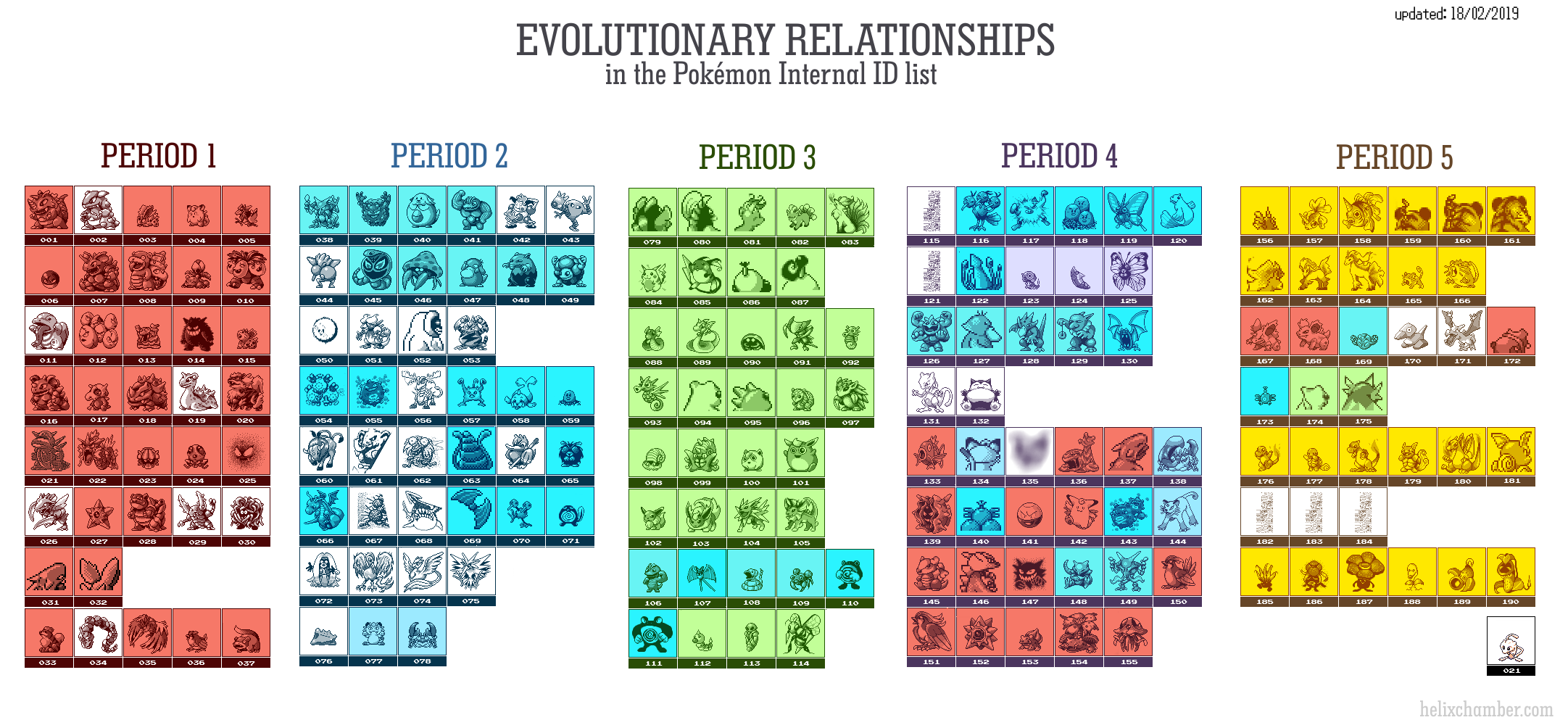
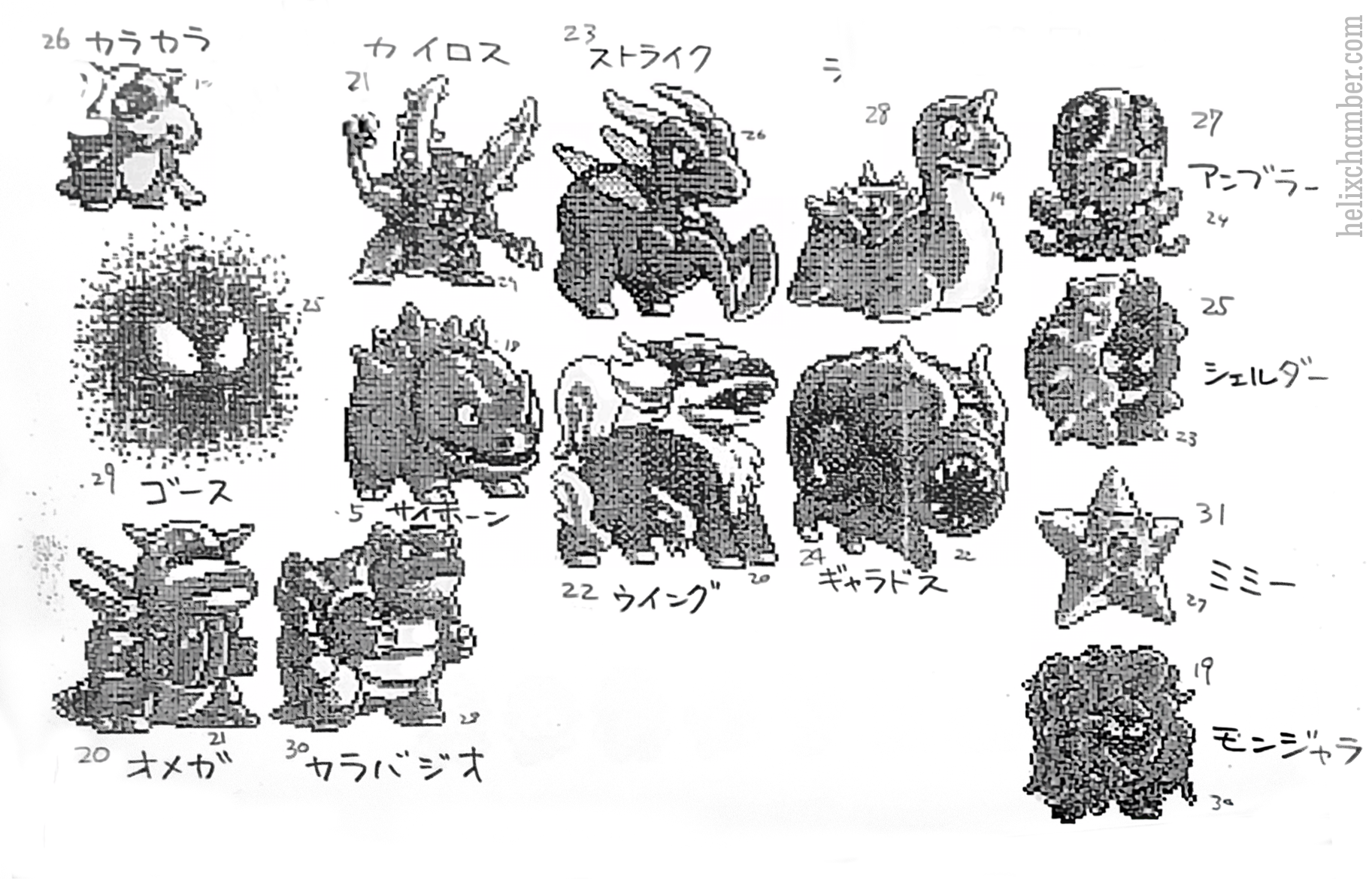
The first 34 Pokemon on this list come from the 2019 prototype data leak, when researchers at Helix Chamber analyzed early development files and revealed backsprites, evolution chains, and cry data for numerous cut creatures. The final six (35-40) come from the even earlier “Capsule Monsters” era-designs from Satoshi Tajiri’s original pitch documents that predate the Pokemon name itself.
Buhī
Omega
Omega was a robotic kaiju-inspired Pokemon that drew heavy influence from Mechagodzilla and similar mechanical monsters from Japanese tokusatsu films. Its design appeared in the original Capsule Monsters pitch documents, showing Game Freak’s early love for the kaiju genre that would later influence Pokemon like Tyranitar and Aggron.
Omega’s slot in the game’s index was eventually overwritten by Mew, the mythical Pokemon famously added to the game in its final weeks of development. While Mew became one of the most beloved Pokemon in franchise history, Omega was lost to time-its robotic design perhaps deemed too mechanical for a world of organic creatures.
The name “Omega” and its design were revealed in an NHK broadcast about Pokemon’s development history, making it one of the few cut Pokemon confirmed through official media rather than data mining alone.
Gyaoon
Gyaoon was a dinosaur-like kaiju that served as one of the earliest Pokemon designs, appearing as the second sprite in the original Capsule Monsters concept documents. Its fearsome appearance featured a bipedal stance, sharp claws, and an aggressive posture that would feel right at home among Pokemon’s most intimidating creatures.
The prototype data revealed that Gyaoon originally had Ivysaur’s cry, suggesting significant reshuffling occurred during development. Its design underwent changes between the Capsule Monsters era and later development, with its backsprite showing alterations from its original manga appearance.
Many fans and researchers have noted that Gyaoon may have inspired Tyranitar, which debuted in Pokemon Gold and Silver. Both share a similar dinosaur-kaiju aesthetic, bipedal stance, and intimidating presence. While this connection has never been officially confirmed by Game Freak, the visual similarities are striking enough that Gyaoon’s influence on later designs seems likely.
Nidorino Lookalike
This mysterious Pokemon appears to be an earlier version of Nidorino, identified by its similar body shape, ears, and general proportions. However, it features two horns on its back-a trait shared with Nidorina in the final games-raising questions about the Nidoran line’s original design.
The existence of this variant suggests that Nidorino and Nidorina may have once been more similar or even a single Pokemon that split into gendered versions later in development. This wouldn’t be unprecedented, as Pokemon like Shellos and Gastrodon were originally planned to have different regional forms in Generation III before being delayed to Generation IV.
The final Nidorino and Nidorina occupy very late slots in the game’s index (right after Raticate), suggesting major reorganization occurred. This lookalike may have been an intermediate design that was refined into the Nidorino we know today.
Barunda
Barunda was a balloon-like creature that competed directly with Jigglypuff during Pokemon’s development. According to the Tajiri biographical manga, Game Freak held internal votes to decide between competing designs, and Barunda lost to Jigglypuff’s rounder, cuter appearance.
The name “Barunda” appeared on a ballot shown in “Satoshi Tajiri: The Man Who Created Pokemon,” where employees voted on which designs would make the final cut. Jigglypuff’s victory in this vote would prove prescient-the pink puffball became one of the franchise’s most recognizable Pokemon, starring in the anime, Super Smash Bros., and countless merchandise lines.
Barunda’s balloon-like design wasn’t entirely abandoned, however. Elements of inflatable, floating Pokemon would appear in later generations with creatures like Drifloon and Drifblim, suggesting the concept remained appealing to designers even after Barunda itself was cut.
Buu
Buu was a yeti-like creature that researchers have dubbed the “Ice Punch Yokai.” Its design was heavily inspired by Woo, a kaiju from the Ultraman television series-a female yeti-like monster with a dark face and white fur. This Ultraman influence was common in early Pokemon designs, reflecting Game Freak staff’s love of tokusatsu media.
The Pokemon’s position in the game’s index is particularly telling: it sits between Electabuzz (Elebuu in Japanese) and Magmar (Buuber in Japanese), with all three sharing the “buu” sound in their names. This suggests Buu was intended to form a trio with these two Pokemon, possibly as an Ice-type counterpart to Electabuzz’s Electric-type and Magmar’s Fire-type.
Many researchers theorize that Buu was intended as Jynx’s male counterpart or an evolution, though this has never been officially confirmed. Its removal may have been related to design concerns, as the Ultraman inspiration was quite direct. Whatever the reason, the Ice/Electric/Fire trio concept would eventually be realized in Generation IV with the addition of Electivire, Magmortar, and the retconned connections to baby forms.
Deer
Deer was exactly what its name suggests-a deer Pokemon that was fully designed and programmed into the prototype but cut before release. Its backsprite appeared in the prototype data, and its name was visible in the Tajiri biographical manga, confirming it was far along in development.
The most intriguing aspect of Deer is what came after. When Pokemon Gold and Silver released in 1999, they introduced Stantler-a deer Pokemon. While Game Freak has never confirmed a connection between the two, the timing and concept are suspicious enough that many fans believe Deer’s design was shelved and later reworked into Stantler.
This pattern of cut Pokemon inspiring later generations appears multiple times in Pokemon’s history, suggesting that Game Freak maintains archives of unused designs that designers can revisit for future projects.
Elephant
This four-tusked elephant Pokemon was partially visible in the Tajiri biographical manga, though its full name was cut off in the image. Researchers can only confirm the ending of its Japanese name (possibly “ko” or “ro”), leaving its intended identity somewhat mysterious.
The backsprite reveals a distinctive design featuring four tusks-two large ones pointing forward and two smaller ones-giving it a more fantastical appearance than a realistic elephant. This multi-tusked design may have been considered too busy or complex for the Game Boy’s limited graphics.
Interestingly, the Pokemon franchise wouldn’t get an elephant Pokemon until Generation III’s Donphan (if counting its pre-evolution Phanpy) and more directly with Copperajah in Generation VIII. The long gap between this cut design and an official elephant Pokemon suggests the concept proved difficult to execute satisfactorily.
Crocky
Crocky was a crocodile Pokemon whose design evolved during development. The Tajiri manga shows an earlier version with hair on its head, while the backsprite found in the prototype data shows spikes instead-evidence that designers were actively iterating on the concept.
Despite being fully designed with a backsprite, Crocky never made it to release. The Pokemon franchise would eventually get crocodilian Pokemon with Totodile’s line in Generation II and Sandile’s line in Generation V, but Crocky’s specific design-with its distinctive head ornamentation-was never directly revisited.
The existence of both a manga sprite and a prototype backsprite with different details suggests Crocky was actively being developed rather than simply sketched and abandoned. Something about the design apparently wasn’t working, leading to its removal despite significant development investment.
9-10. Squid and Squid Evolution
These two Pokemon formed an evolutionary line based on squid or octopi. The first stage (#63) resembled a small, possibly ink-based creature, while its evolution (#122) grew into a larger squid with a design reminiscent of Blooper from Mario or similar video game cephalopods.
The connection between these two Pokemon is inferred from their visual similarities rather than confirmed evolution data, but researchers are confident they were designed as a pair. Their positions in the index-separated by nearly 60 slots-suggest they were added at different times during development.
Supporting evidence for an ink-based concept comes from an unused move: “Flash” was originally called “Squid Ink” in development, suggesting squid Pokemon were planned to play a role in the game’s cave navigation mechanics. When the squid line was cut, the move was renamed but its original purpose forgotten.
Octillery, introduced in Generation II, would eventually fill the cephalopod niche that these Pokemon were designed for.
Cactus
Cactus was a desert-dwelling Pokemon that may have been designed for an unused desert area found in Pokemon’s concept art. Its design was shown in the Tajiri manga, and remarkably, its cry data still exists in the final game-one of several “ghost” cries that hint at Pokemon that were cut late in development.
The retention of Cactus’s cry suggests it was removed fairly late, after audio assets had already been finalized. This late-stage cutting may have been due to the removal of its intended habitat rather than problems with the Pokemon itself.
The Pokemon franchise would eventually embrace cactus Pokemon with Cacnea and Cacturne in Generation III, set in the desert-heavy Hoenn region. Like Deer potentially becoming Stantler, Cactus may have provided inspiration for these later designs, with Game Freak finally finding the right context for a cactus creature.
Jagg
Jagg was a shark-like Pokemon featuring a prominent dorsal fin, as revealed by its backsprite in the prototype data. Its design was also shown in the Tajiri manga, confirming it reached a fairly advanced stage of development.
The name “Jagg” likely references the jagged teeth characteristic of sharks, fitting Pokemon’s tradition of somewhat literal naming conventions (especially in early generations). Its design appears more straightforward than many cut Pokemon-a recognizable shark that would fit naturally among Water-types.
Sharpedo, introduced in Generation III, would eventually become the franchise’s primary shark Pokemon. Whether Jagg directly influenced Sharpedo’s design is unknown, but the concept of a shark Pokemon was clearly appealing enough that Game Freak revisited it years later.
Zubat Pre-evolution
The mystery of Zubat’s cry finally has an answer. For years, fans noticed that Zubat’s cry seemed oddly deep for such a small Pokemon, and the prototype data revealed why: Zubat originally had a pre-evolution that was cut, and Zubat inherited its cry.
The baby Zubat’s backsprite is somewhat difficult to interpret-researchers have described it as looking like a “Halloween decoration,” with what appears to be mostly just a mouth. The simplistic design may have been why it was cut, as it potentially didn’t translate well to the Game Boy’s limited sprite capabilities.
This cut pre-evolution explains a quirk that had puzzled fans for decades. It also demonstrates how much reorganization occurred during Pokemon’s development, with cries, index slots, and evolutionary relationships all being shuffled as designs were added and removed.
14-15. Flying Fish
These two Pokemon appear to be based on flying fish or betta fish, with fin-like wings that suggest aerial capabilities despite being aquatic creatures. Their designs have also been compared to Cheep-Cheeps from the Mario series, reflecting the video game influences present in early Pokemon development.
Unlike many cut Pokemon that exist only as backsprites, these two have some additional data: movesets were found for both, indicating they reached a fairly advanced stage of development with actual gameplay mechanics planned.
The concept of flying fish Pokemon would eventually appear in the franchise with Finneon and Lumineon in Generation IV, though those designs went in a more elegant, deep-sea direction rather than the cartoonish style of these prototypes.
Mikon
Mikon was a baby Vulpix-and its existence solves a long-standing Pokedex mystery. Vulpix’s Pokedex entries have always mentioned that it is born with a single white tail that splits as it grows older, eventually becoming six tails. But players never saw this single-tailed form-until Mikon’s backsprite was discovered.
The prototype data confirms Mikon was fully designed with its own cry data, suggesting it was cut fairly late in development. Its removal left Vulpix’s Pokedex entries referencing a form that players couldn’t obtain, creating one of the franchise’s earliest bits of unexplained lore.
Interestingly, this concept would be revisited in Pokemon Legends: Arceus with Hisuian Growlithe, whose Pokedex entries discuss how its fur changes as it matures. Game Freak clearly remained interested in showing Pokemon growth stages that differ from their evolved forms.
17-18. Japanese-Themed Creatures
These two Pokemon are among the most difficult to identify from the prototype data. Their backsprites show creatures with topknots-a distinctly Japanese hairstyle-leading researchers to theorize they may have been based on sumo wrestlers, frogs, or some combination thereof.
The orbs visible on what appears to be their heads could be eyes (if they’re frogs) or decorative elements (if they’re sumo-themed). Their placement in the index near Ninetales (based on the kitsune of Japanese folklore) and Pikachu (originally based on daifuku, a Japanese dessert) suggests a cluster of Japan-inspired designs.
Without front sprites or additional documentation, the true nature of these Pokemon remains speculative. They represent the limits of what can be determined from backsprite data alone-tantalizing hints of designs that may never be fully understood.
19-21. Dragon Family
This three-stage evolutionary line appears to be based on lizards or dragons, possibly Chinese water dragons given their placement near Sandshrew and Sandslash (based on pangolins, native to Asia). The family consists of a small baby form (#94), a middle stage (#95), and a final evolution (#174).
The final stage (#174) was added very late in development-its high index number suggests it was one of the last Pokemon programmed before the game was finalized. Despite this late addition, all three stages were ultimately cut.
The first two stages have their own cries, while the third does not, further supporting the theory that #174 was a late addition that never received full implementation before being removed. The design of the final stage has been compared to characters from Bubble Bobble or Kirby, suggesting a cuter, rounder aesthetic than typical dragons.
Psyduck Middle Evolution
Psyduck was originally designed as a three-stage evolutionary line, with a middle form between Psyduck and Golduck. This middle evolution was fully implemented with evolution data and a complete moveset, making it one of the most developed cut Pokemon.
The existence of this middle stage suggests the Psyduck line was originally conceived similarly to other three-stage lines like Poliwag’s family. Its removal was likely due to redundancy or balance concerns-having too many Pokemon that required extensive leveling to reach their final forms.
Researchers have theorized the Japanese name may have been “Zuduck,” mirroring the Zubat line’s naming convention (Kobat → Zubat → Golbat / Koduck → “Zuduck” → Golduck). This parallel naming structure would have connected two bat/duck families in an elegant way that was lost when the middle duck was cut.
Konya
Konya was a pre-evolution for Meowth-a baby cat Pokemon that appeared not only in the prototype data but also at Nintendo’s Spaceworld ’97 event, where early Generation II content was showcased. This dual appearance confirms Konya survived multiple rounds of cuts before finally being removed.
The prototype backsprite shows Konya standing upright, while the Spaceworld version depicted it lying down, indicating ongoing design revisions. The Pokemon also appeared briefly in GCCX (Game Center CX) footage showing early development materials.
Despite appearing at Spaceworld alongside what would become Pokemon Gold and Silver, Konya was cut before those games released. The Meowth line would remain a two-stage family until Perrserker was added as a regional evolution in Generation VIII-though that went in a very different direction than the baby cat Konya represented.
Baby Gyaoon
This pre-evolution of Gyaoon shares its cry base with the larger dinosaur Pokemon, confirming their evolutionary relationship. Its backsprite shows a smaller, almost cute version of the fearsome kaiju, with an expression that researchers have described as “disgusted” or “grumpy.”
Interestingly, Baby Gyaoon bears a resemblance to the Substitute doll-the small decoy that appears when a Pokemon uses the move Substitute. Whether this similarity influenced the Substitute doll’s design or is merely coincidental remains unknown, but the visual connection is notable.
The existence of Baby Gyaoon means Gyaoon was planned as a two-stage line at minimum, making its removal even more significant. Entire evolutionary families were lost when Gyaoon was cut, representing substantial design and programming work that never reached players.
Magneton Variant
This mysterious Pokemon resembles Magneton but with key differences-most notably, it appears to lack the magnets on its outer orbs that characterize the final Magneton design. Its purpose in the evolutionary line is unclear, as Magneton was positioned very early in the index while this variant sits in the middle, and Magnemite was placed fairly late.
Researchers have proposed several theories: it could have been a middle evolution between Magnemite and Magneton (similar to the cut Psyduck middle stage), an alternate form, or an earlier design iteration that occupied a placeholder slot.
The Magnemite line wouldn’t receive an official third stage until Generation IV’s Magnezone, but this variant suggests Game Freak considered expanding the family much earlier. Whatever its intended purpose, it was removed before release without clear documentation of why.
Marowak Evolution
This may be the most emotionally significant cut Pokemon ever discovered. The backsprite shows what appears to be a larger Marowak-like creature holding or protecting a smaller baby-almost certainly a Cubone. This design finally confirms what fans had theorized for years: the Cubone/Kangaskhan connection was real.
The long-standing fan theory suggested that Cubone was originally a baby Kangaskhan, with the skull on its head being its deceased mother’s. The existence of this Marowak evolution-a parent Pokemon caring for its Cubone child-proves this concept was actively developed at Game Freak.
Why was it cut? The evolution data exists, confirming it would have evolved from Marowak. The emotional implications-a Marowak finally moving past its grief to become a nurturing parent-would have been powerful. Perhaps it was deemed too complex for the original games’ limited storytelling capabilities, or perhaps the darker elements of the Cubone story were considered sufficient without a happier resolution.
Gyopin
Gyopin was a fish Pokemon that not only had a backsprite but also a complete moveset and evolution data-making it one of the most fully implemented cut Pokemon. Its design also appeared at Spaceworld ’97, showing it survived deep into development.
The prototype version appears to be earlier than the Spaceworld design, with differences in details that suggest ongoing refinement. Gyopin may have formed a trio with the Kotora and Puchicorn families, as all three appear near each other in the index and share a similar “baby Pokemon” aesthetic.
Despite being more complete than many Pokemon that made the final cut, Gyopin was removed-likely as part of the extensive trimming that reduced the original roster to 151 Pokemon.
28-30. Kotora and Raitora
The Kotora family is one of the most famous cut Pokemon lines, having appeared at Spaceworld ’97 and been spotted in GCCX development footage. What the prototype data revealed, however, was shocking: Kotora originally had THREE evolutionary stages, not two.
Kotora (#159) was the baby electric tiger. Raitora occupied both #160 and #161-meaning there were originally two separate evolved forms that were later merged into one for the Spaceworld version. This mirrors Pikachu’s development history, which also originally had three stages before Gorochu was cut.
The electric tiger concept would eventually appear in Generation II with Raikou, the legendary beast. While Raikou is a legendary Pokemon rather than a standard evolutionary line, its electric tiger design may have been influenced by the cut Kotora family that almost appeared in the first generation.
Puchicorn
Puchicorn was a baby unicorn Pokemon whose name combines “puchi” (small/petite in Japanese) with “unicorn.” Its backsprite shows a small, cute quadruped with what appears to be a horn-exactly what you’d expect from a baby unicorn.
Like Mikon (baby Vulpix), Puchicorn’s existence explains Pokedex entries that reference forms players never saw. Ponyta and Rapidash are described as being born with weak flames that grow stronger-and a baby unicorn pre-evolution would have shown this early stage.
Researchers believe Puchicorn, Kotora, and Gyopin may have been designed as a trio of baby Pokemon families, possibly intended for early-game captures that would evolve into powerful late-game Pokemon. Their collective removal significantly reduced the number of three-stage families in the original games.
Blastoise Pre-evolution
This Pokemon’s identification is based on visual analysis rather than confirmed documentation. Its backsprite appears to show a small turtle-like creature with bubble cannons on its back-the signature feature of Blastoise. If this interpretation is correct, it reveals something surprising about the Squirtle line’s original design.
The existence of a Blastoise pre-evolution separate from Squirtle suggests that Blastoise was originally not Wartortle’s evolution. Instead, Blastoise may have been its own Pokemon line that was merged with the Squirtle family during development (see also: Wartortle’s Original Evolution below).
This identification remains somewhat speculative, as the bubble cannon shapes could potentially be interpreted as other features. However, the Pokemon’s position in the index and its turtle-like shape strongly support the Blastoise connection.
Gorochu
Gorochu is the most famous cut Pokemon, and for good reason: it was a third evolution for Pikachu, confirmed directly by developer Junichi Masuda in interviews. Pikachu would have evolved into Raichu, which would have then evolved into Gorochu-a powerful electric Pokemon inspired by Raijin, the Japanese god of thunder.
The backsprite shows a creature with at least one horn (early descriptions mentioned two) and what may be a cloud or specialized tail at its back. The Raijin inspiration would have given it a mythological weight that Raichu lacks, potentially making the Pikachu line one of the most powerful in the game.
Gorochu was cut for game balance reasons. With Pikachu already positioned as a mascot Pokemon, having its final evolution be overwhelmingly powerful would have created gameplay problems. The name “Gorochu” comes from “gorogoro,” the Japanese onomatopoeia for thunder rumbling-a fitting name for a thunder god Pokemon.
Wartortle’s Original Evolution
Perhaps the most surprising revelation from the prototype data: Blastoise was not originally Wartortle’s evolution. Index #181 contains a different Pokemon entirely-Wartortle’s true final form-while Blastoise existed as a separate creature.
This explains a design inconsistency fans had noticed for years: Wartortle has fluffy ears and a feathered tail that don’t appear anywhere on Blastoise. The original Wartortle evolution presumably continued these design elements, creating a more coherent evolutionary line.
At some point during development, the original evolution was cut and Blastoise was grafted onto the Squirtle line instead. This may have been done because Blastoise’s design was considered stronger, or simply due to time constraints requiring the merging of separate concepts. Either way, somewhere in Game Freak’s archives exists a Wartortle evolution that players never got to see.
Buhī was a cat-like creature assigned the number 124 in Capsule Monsters documents-the same number that would eventually belong to Jynx. Little is known about its design or intended role, but its existence in these early documents confirms that Pokemon’s roster was constantly shifting throughout its lengthy development.
Papyō
Papyō was a bug-like creature numbered 211-the same as Qwilfish in the final games. Like Buhī, documentation is limited to its appearance in Capsule Monsters materials, without clear indication of what typing or abilities it might have possessed.
Godzillante
Godzillante was a fire-breathing kaiju whose name combines “Godzilla” and “Biollante”-two famous movie monsters from Toho’s film series. Its design was shown breathing fire in Capsule Monsters artwork, and it appeared to be a large, powerful creature befitting its namesakes.
The kaiju influence in early Pokemon development was substantial, with Godzillante being one of the most direct homages. Legal concerns about such obvious references may have contributed to its removal, as Nintendo would have been wary of potential trademark issues with Toho.
Gorillaimo
Gorillaimo was a gorilla wearing what appears to be a hat, bearing resemblance to both Donkey Kong (a Nintendo character) and Ninten (from the game Mother, developed by Ape Inc., which had connections to Game Freak). The name suggests a combination of “gorilla” and possibly “kaiju” naming conventions.
The Pokemon franchise would eventually include many ape-inspired Pokemon-Mankey, Primeape, Aipom, Chimchar’s line, and others-but none quite match Gorillaimo’s hat-wearing, Donkey Kong-esque design. This concept of a more “characterized” ape was apparently abandoned in favor of more naturalistic designs.
Dragon4
Dragon4 was a draconic creature with wings, short arms, and two horns on its head. Its Capsule Monsters documentation included a move called “Fire Breath” requiring 70 TP (an early version of PP), indicating it reached at least partial gameplay implementation.
The design bears some resemblance to both an early Scyther concept and elements that would later appear in Charizard. Its number, 124, was shared with Buhī, suggesting placeholder numbering that would have been reorganized as development progressed.
Kabīn
Kabīn appears to be an early version of Snorlax based on both its design and name-“Kabīn” is similar to “Kabigon,” Snorlax’s Japanese name. The design shows a roughly humanoid head on a round body, with the simplified features that would eventually become Snorlax’s sleeping face.
Snorlax itself was famously based on Game Freak programmer Kōji Nishino, and Kabīn’s design supports this-it resembles a simplified caricature that would be refined into the beloved sleeping giant. Unlike many Capsule Monsters designs that were completely abandoned, Kabīn successfully evolved into a Pokemon that made the final game.
The 40 Pokemon documented here represent just a fraction of the designs that Game Freak created during Pokemon’s lengthy development. From robotic kaiju to baby tigers, from thunder gods to parent Marowaks, these cut creatures reveal a Pokemon world that could have been very different.
Some of these designs-like Deer, Gyaoon, and the Kotora family-may have influenced Pokemon that appeared in later generations. Others, like Gorochu and Wartortle’s original evolution, were cut for balance or design reasons that we can only speculate about. And a few, like the mysterious Japanese-themed creatures at slots 86 and 87, may never be fully understood without additional documentation coming to light.
What’s certain is that every Pokemon that made it into Red and Blue earned its place through a rigorous selection process. For every Pikachu and Charizard that became iconic, there was a Buu or a Barunda that was left behind. These cut Pokemon are a testament to the creative ambition that made Pokemon possible-and a reminder that even discarded ideas can shape the franchises we love.