Every Hogwarts Professor in Harry Potter
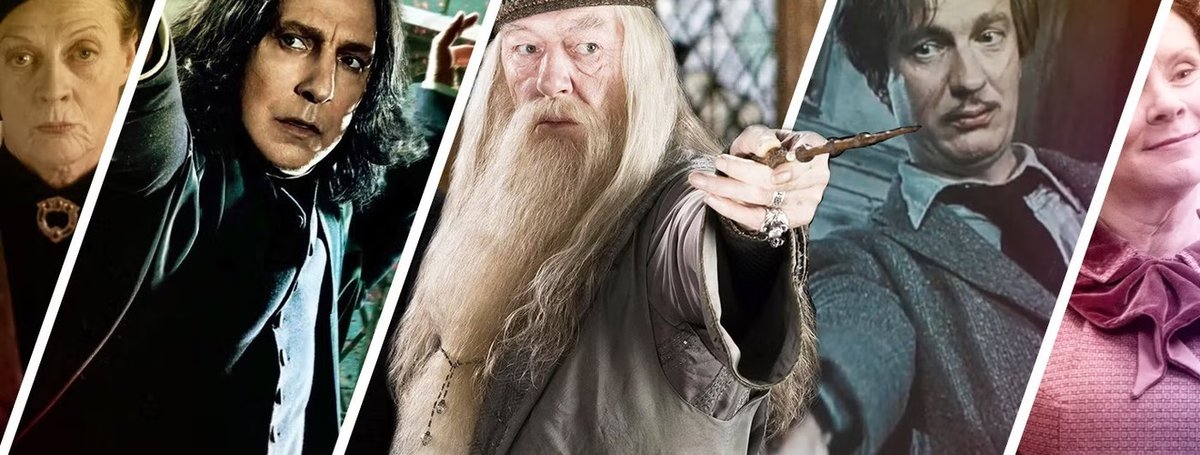
Hogwarts School of Witchcraft and Wizardry has always been defined as much by its teachers as by its students. Over a thousand years of magical education, the castle has employed brilliant scholars, dangerous frauds, secret Dark wizards, a centaur, a ghost, and at least one professor whose greatest talent was erasing other people’s memories and claiming their achievements as his own. The quality of instruction at Hogwarts varies wildly – sometimes within the same school year.
What makes the Hogwarts teaching staff so fascinating is how deeply they shape the story. Harry Potter’s education isn’t just background detail; his professors are mentors, antagonists, mystery figures, and occasionally the entire plot. The Defence Against the Dark Arts position alone cycles through seven teachers in seven books, each one reflecting the state of the wizarding world at that moment – from Voldemort’s parasite to the Ministry’s authoritarian crackdown.
This list covers every named professor and instructor confirmed across the seven novels, Pottermore, J.K. Rowling’s companion writings, and select corroborated interview statements. We’ve excluded video game-only characters (like Patricia Rakepick from Hogwarts Mystery) and stuck to Rowling’s canon. Where a professor served in multiple roles – Severus Snape held three different positions – we’ve grouped them under their primary entry.
- Hogwarts employs roughly a dozen professors at any given time, covering subjects from Transfiguration to Divination
- The Defence Against the Dark Arts position was cursed by Voldemort – no teacher lasted more than one year from 1957 to 1998
- Cuthbert Binns is the only known ghost to teach at Hogwarts, having continued lecturing after his death without apparent interruption
- 28 named professors and instructors appear across the seven novels and confirmed canon sources
- Severus Snape held three distinct positions: Potions Master (1981-1996), DADA Professor (1996-97), and Headmaster (1997-98)
- Neville Longbottom became Herbology professor after the series, confirmed by J.K. Rowling and Pottermore
Galatea Merrythought
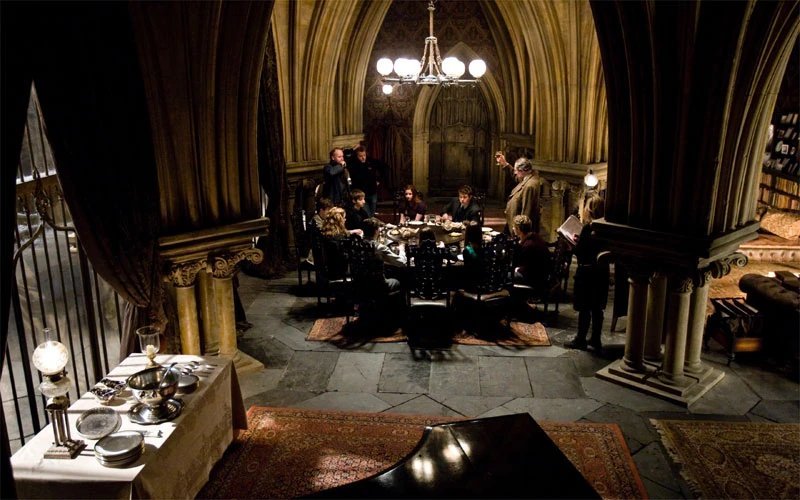
Galatea Merrythought is the earliest named DADA professor at Hogwarts, and by all accounts she was a proper one. She taught the subject for approximately fifty years, a tenure that predates Voldemort’s curse on the position and suggests she was genuinely accomplished. Merrythought appears in Half-Blood Prince through Horace Slughorn’s memory of a young Tom Riddle asking about Horcruxes. In that same memory, Slughorn mentions that Merrythought was planning to retire, and Riddle expressed interest in the soon-to-be-vacant DADA position – an interest Dumbledore would later deny. Merrythought’s long, stable tenure stands in sharp contrast to every DADA professor who followed once the curse took hold. She represents what the position could have been without Voldemort’s interference: a consistent, decades-long teaching career in one of Hogwarts’s most important subjects.
Quirinus Quirrell
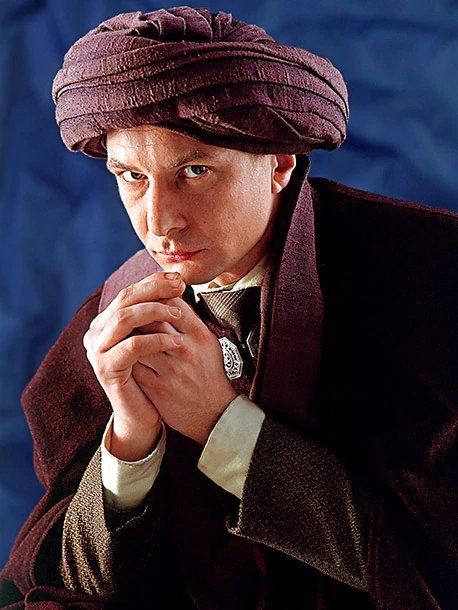
Before taking the DADA post, Quirrell taught Muggle Studies at Hogwarts – a detail that makes his later corruption all the more disturbing. He took a year’s sabbatical to gain “first-hand experience” and encountered Voldemort in Albania, who possessed him and used the back of his head as a literal hiding place beneath a turban. As the DADA professor during Harry’s first year, Quirrell appeared nervous, stammering, and incompetent – all of it an act. He was simultaneously attempting to steal the Philosopher’s Stone for Voldemort while teaching classes about Dark creatures. His lessons were considered a joke by most students, heavy on garlic and light on substance. Quirrell died at the end of Philosopher’s Stone when Harry’s touch, protected by Lily Potter’s sacrificial magic, destroyed his Voldemort-possessed body. He was the first DADA teacher to fall to the position’s curse – and the first to reveal how dangerous the role had become.
Gilderoy Lockhart
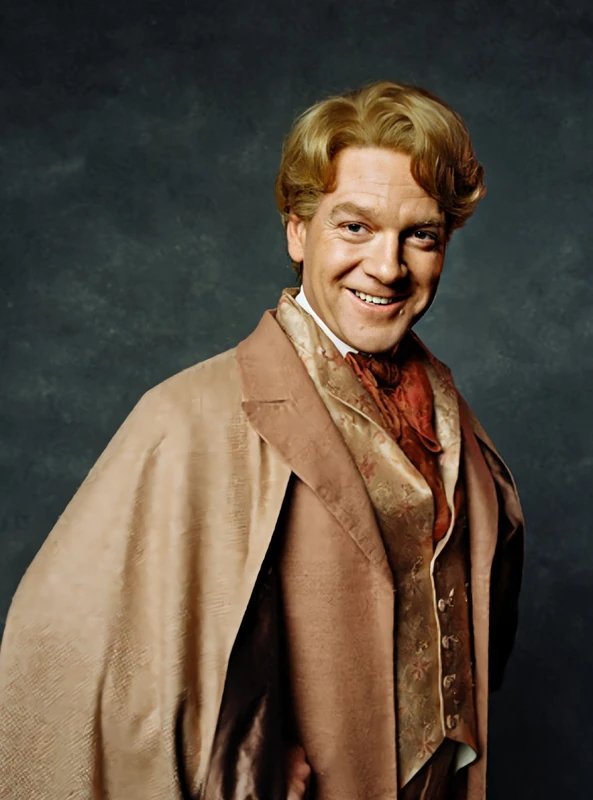
Gilderoy Lockhart is one of the great frauds in wizarding history. A five-time winner of Witch Weekly‘s Most Charming Smile Award, Lockhart built his career by tracking down witches and wizards who had performed genuine feats of magical heroism, then Memory Charming them and publishing their stories as his own. Dumbledore hired him for the DADA post – likely knowing he was a fraud, since Lockhart was the only applicant – and his year at Hogwarts was a masterclass in incompetence. He set loose a cage of Cornish Pixies and fled, assigned his own books as the entire curriculum, and reenacted scenes from his fabricated adventures with Harry as an unwilling prop. When finally confronted with actual danger in the Chamber of Secrets, he attempted to Memory Charm Harry and Ron with Ron’s broken wand, which backfired and permanently erased his own memory. He spent the remainder of the series in the long-term ward at St Mungo’s Hospital for Magical Maladies and Injuries, happily signing autographs for no one.
Remus Lupin
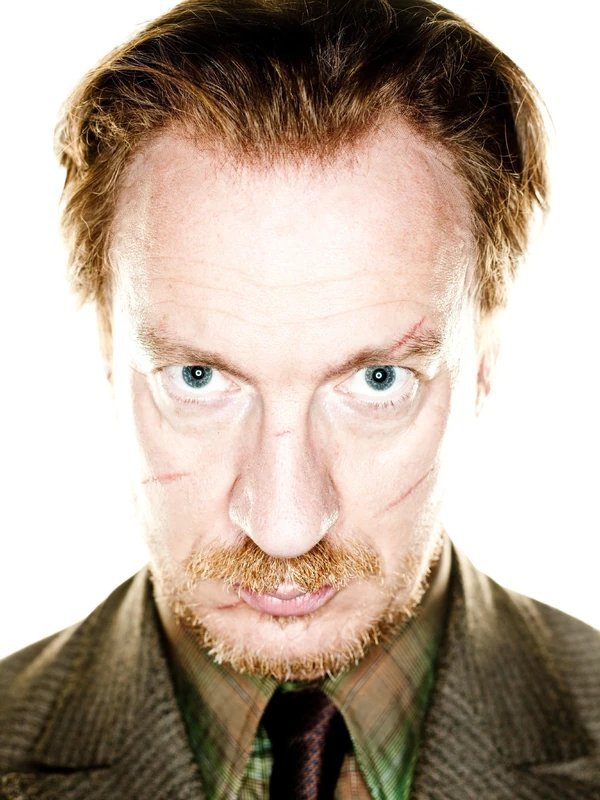
Remus Lupin is widely regarded as the best DADA teacher Harry ever had, and the books make the case convincingly. He taught practical defence from day one – his very first lesson had third-years facing a Boggart in a wardrobe, turning their fears into something ridiculous. Lupin’s classes were engaging, hands-on, and genuinely useful: Grindylows, Hinkypunks, Red Caps, and Kappas all featured in a curriculum designed to prepare students for real threats. He was also the first adult to teach Harry the Patronus Charm, a piece of advanced magic that would save Harry’s life multiple times. Lupin was a werewolf, bitten as a child by Fenrir Greyback. Dumbledore had allowed him to attend Hogwarts as a student by planting the Whomping Willow over a tunnel to the Shrieking Shack, where Lupin transformed monthly. As a professor, Snape brewed him Wolfsbane Potion to keep him safe during full moons – and then, after Lupin forgot a dose and transformed dangerously on the grounds, Snape “accidentally” revealed his condition to the school. Lupin resigned before he could be fired. He was killed at the Battle of Hogwarts alongside his wife, Nymphadora Tonks.
Bartemius Crouch Jr.
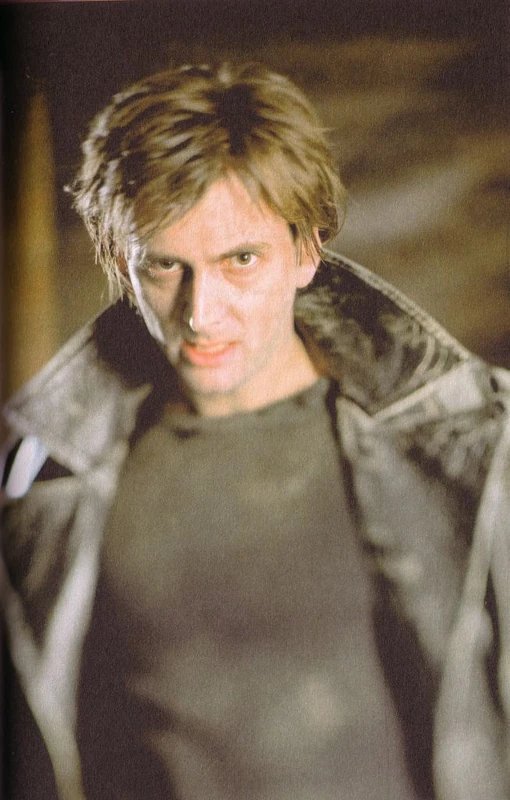
One of the most unsettling entries on this list. Bartemius Crouch Jr., a convicted Death Eater who had been smuggled out of Azkaban by his dying mother using Polyjuice Potion, kidnapped the real Alastor Moody and impersonated him for an entire school year. The deception was so thorough that even Dumbledore didn’t detect it until the climax of Goblet of Fire. The real Moody – a legendary Auror – never taught a single class. Crouch Jr. did all the teaching, and ironically, he was excellent at it. He demonstrated the three Unforgivable Curses to fourth-year students (highly controversial, but effective education), taught counter-jinxes and defensive techniques, and maintained Moody’s trademark “constant vigilance” philosophy. His actual mission was to manipulate Harry into the Triwizard Tournament and ensure he reached the Portkey that transported him to the graveyard where Voldemort was reborn. After his exposure, Crouch Jr. was subjected to the Dementor’s Kiss before he could stand trial – a decision Minister Fudge made over Dumbledore’s objections.
Dolores Umbridge
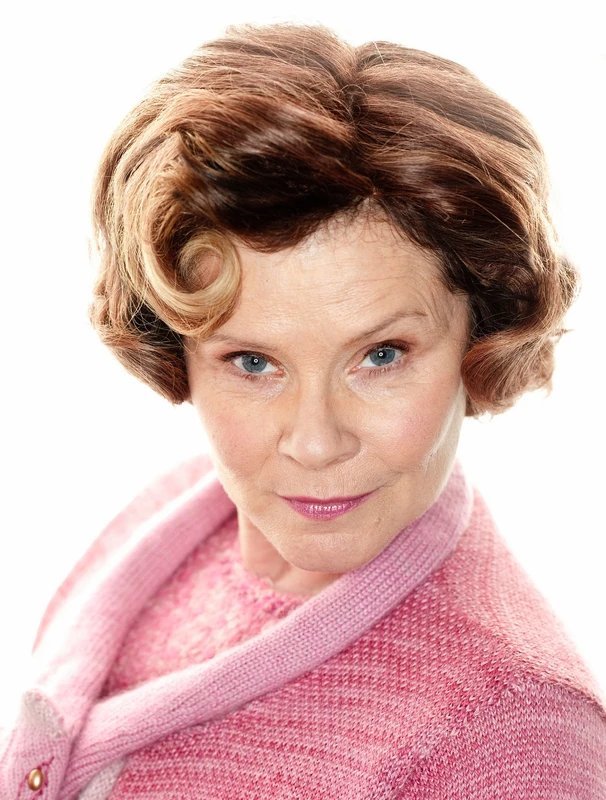
Dolores Umbridge is arguably the most hated character in the entire Harry Potter series, and she earned every bit of it. Installed at Hogwarts by the Ministry of Magic to suppress Dumbledore’s influence and deny Voldemort’s return, Umbridge was the first DADA teacher who refused to teach any practical defensive magic at all. Her curriculum consisted entirely of reading a Ministry-approved textbook – Wilbert Slinkhard’s Defensive Magical Theory – in silence. No wand work, no spell practice, no preparation for the threats that were already gathering. When students protested, she punished them. Harry was forced to write “I must not tell lies” with a Blood Quill that carved the words into the back of his hand. Umbridge’s reign expanded beyond DADA: she became Hogwarts High Inquisitor, then briefly Headmistress after Dumbledore’s departure, issuing Educational Decrees that strangled student life. Her tyranny directly inspired the formation of Dumbledore’s Army, the student defence group that Harry led in secret. She was ultimately carried off by centaurs in the Forbidden Forest – an encounter she never fully recovered from.
Severus Snape
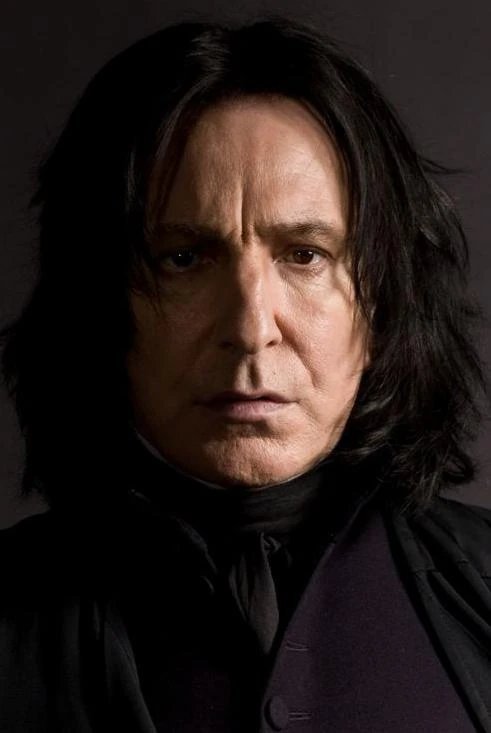
Severus Snape is the most complex professor in the series and the only one to hold three distinct positions at Hogwarts. For fifteen years he taught Potions while openly coveting the DADA position, which Dumbledore repeatedly denied him – perhaps to keep the curse from claiming a double agent he needed alive. Snape was a gifted Potions teacher in terms of knowledge, but a terrible one in terms of pedagogy: he bullied students (Neville Longbottom worst of all), showed blatant favouritism to Slytherin, and made his classroom a place of fear rather than learning. When he finally got the DADA post in Half-Blood Prince, he taught nonverbal spells and dark creature defence with genuine competence. His tenure ended when he killed Dumbledore atop the Astronomy Tower – an act that appeared to be the ultimate betrayal but was later revealed as a mercy killing planned between them. As Headmaster during the Death Eater occupation of 1997-98, Snape maintained the appearance of Voldemort’s loyalist while secretly protecting students through the Sword of Gryffindor and strategic interference. He died in the Shrieking Shack, killed by Nagini on Voldemort’s orders, and used his final moments to give Harry the memories that revealed his lifelong devotion to Lily Potter and his role as Dumbledore’s most trusted agent.
Amycus Carrow
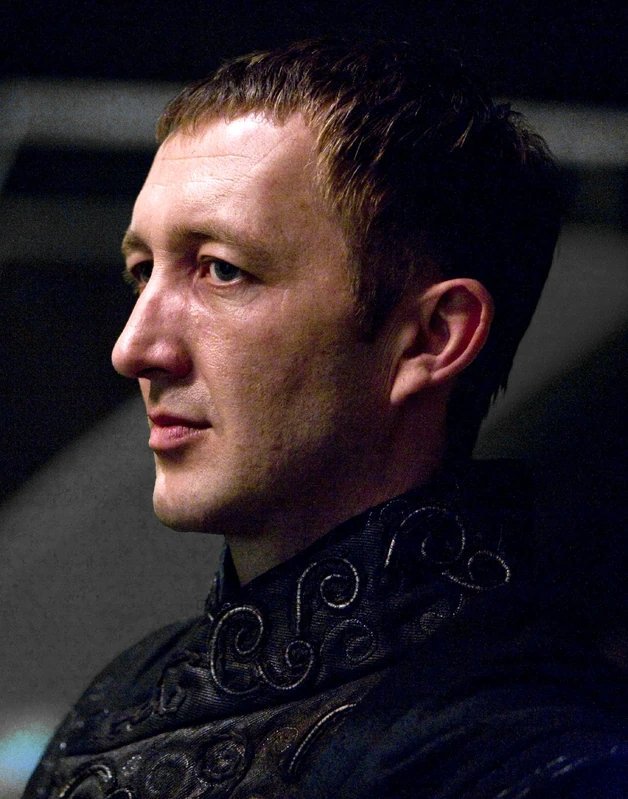
Note the subject name: not “Defence Against the Dark Arts” but simply “Dark Arts.” During the Death Eater occupation of Hogwarts in Deathly Hallows, Amycus Carrow was installed as the Dark Arts professor alongside his sister Alecto. His curriculum was the DADA position inverted: instead of teaching students to defend against Dark magic, he forced them to practise Unforgivable Curses on fellow students who had earned detention. The Cruciatus Curse became a punishment tool. Neville Longbottom, who led the student resistance, bore visible injuries from Carrow’s regime. Amycus also served as Deputy Headmaster under Snape’s nominal authority. At the Battle of Hogwarts, he spat in Minerva McGonagall’s face, prompting Harry – hidden under his Invisibility Cloak – to use the Cruciatus Curse on Carrow in one of the series’ most morally charged moments. Both Carrows were subsequently subdued and presumably imprisoned after Voldemort’s defeat.
Bathsheba Babbling
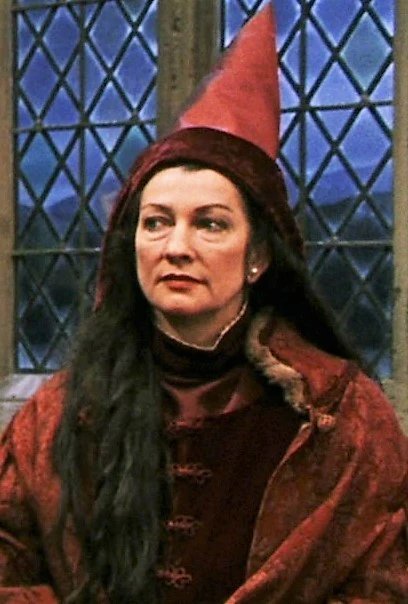
Professor Babbling is one of Hogwarts’s most lightly sketched faculty members. She taught Ancient Runes, the elective Hermione chose instead of Divination – a choice Hermione considered obviously superior. Ancient Runes involved the study of runic scripts used in magical writing and spellwork, and Babbling’s classes are mentioned across several books without her ever appearing directly in a scene. She exists at the edge of the narrative, named in passing and on class schedules, representing the larger Hogwarts curriculum that operates beyond Harry’s direct experience. Her long tenure suggests competence, if not fame.
Septima Vector
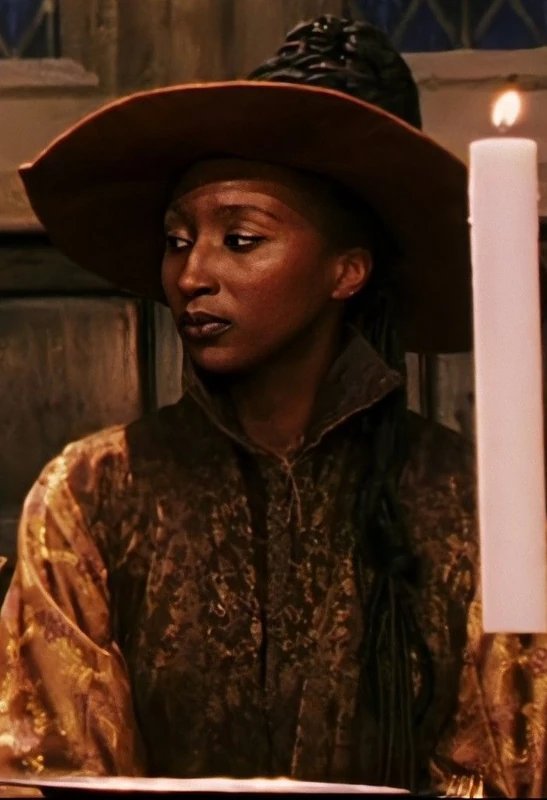
Like Bathsheba Babbling, Professor Vector teaches one of the elective subjects Hermione pursued with enthusiasm – and that Harry ignored entirely. Arithmancy is the magical discipline of numerology, exploring the magical properties of numbers and their applications in spellwork. Hermione frequently cited Vector’s class as one of her favourites, and Arithmancy homework appears throughout the series as something Hermione is always either doing or stressing about. Vector herself remains a background figure, named but never given dialogue in the novels. She represents the academic side of Hogwarts that exists independently of Harry’s adventures.
Aurora Sinistra
Professor Sinistra taught Astronomy from the top of the Astronomy Tower, where students studied the night sky, charted star movements, and learned to identify celestial bodies through their telescopes. Her classes took place at midnight – a scheduling detail that made Astronomy both atmospheric and unpopular with students who had early morning lessons the next day. Sinistra is mentioned by name in Philosopher’s Stone and appears in passing across the series. The Astronomy Tower itself became one of the most significant locations in the saga – it’s where Dumbledore was killed at the end of Half-Blood Prince – but Sinistra’s teaching role remains largely in the background. Her surname, appropriately, references the Latin word for “left” or the astrological term for threatening celestial configurations.
Rubeus Hagrid
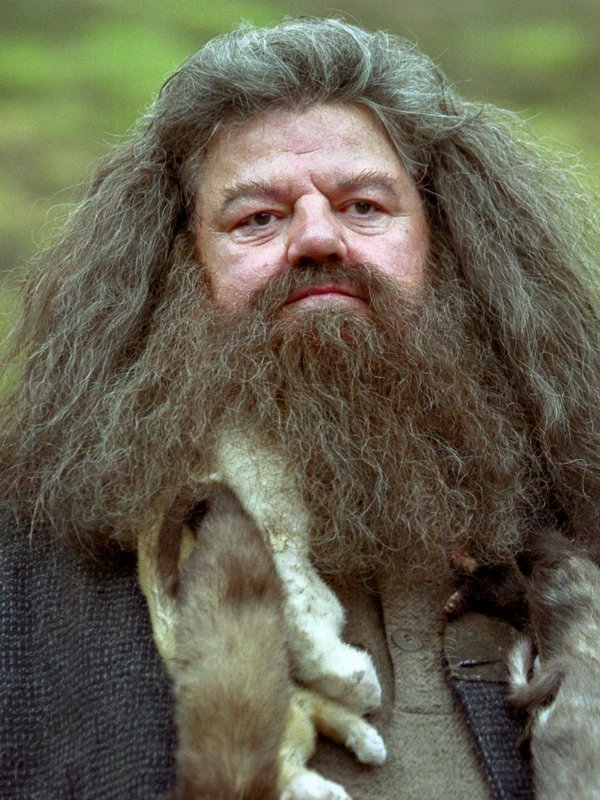
Hagrid’s appointment as Care of Magical Creatures professor in Prisoner of Azkaban was one of the most heartwarming moments in the series – and one of the most pedagogically questionable. Hagrid’s deep love for dangerous magical creatures was precisely what made him wonderful as a character and unreliable as a teacher. His very first lesson featured Buckbeak the Hippogriff, which went beautifully for Harry and disastrously when Draco Malfoy ignored the instructions and got slashed. Subsequent lessons included Blast-Ended Skrewts (Hagrid’s own crossbreed – illegal, dangerous, and educational value unclear), Flobberworms (so boring they were likely chosen to avoid another injury incident), and Thestrals. Hagrid’s passion was genuine, his knowledge of magical creatures encyclopaedic, and his grading generous to a fault. But his inability to recognise that creatures he considered “interesting” were genuinely life-threatening made him a constant source of anxiety for Hermione and ammunition for Malfoy’s complaints to the school governors. He was also Keeper of Keys and Grounds for decades, the person who delivered Harry’s Hogwarts letter, and one of the most loyal members of the Order of the Phoenix.
Wilhelmina Grubbly-Plank
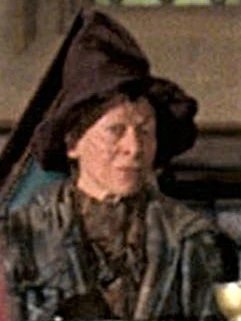
Professor Grubbly-Plank filled in for Hagrid during his absences in Goblet of Fire and Order of the Phoenix, and the contrast was immediately obvious. Where Hagrid’s lessons were chaotic and hazard-filled, Grubbly-Plank’s were well-structured, appropriately levelled, and – to Harry’s discomfort – noticeably better received by the class. She taught Bowtruckles and Unicorns, creatures that were fascinating without being life-threatening. Even Hermione had to admit the lessons were good, though she remained loyal to Hagrid. Grubbly-Plank’s competence served an important narrative function: she showed what Hagrid’s classes could look like with a more conventional teacher, raising real questions about whether passion alone is enough to make someone a good professor. She was professional, prepared, and entirely unmemorable – which, at Hogwarts, might be the highest compliment a substitute can earn.
Filius Flitwick
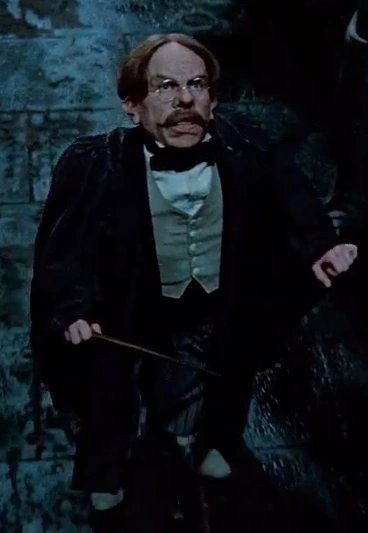
Professor Flitwick is one of Hogwarts’s most enduring and likeable teachers. Tiny in stature – he stood on a pile of books to see over his desk – Flitwick taught Charms with genuine enthusiasm and patience. His classes produced some of the most iconic moments in the series: it was in Flitwick’s lesson that Hermione corrected Ron’s pronunciation of “Wingardium Leviosa” (“It’s Levi-OH-sa, not Levio-SAH”), a scene that has become one of the most quoted in the entire franchise. Flitwick was a former Duelling Champion, a detail mentioned casually but one that hints at serious magical ability beneath the cheerful exterior. He was also Head of Ravenclaw House, embodying the house’s values of intelligence and creativity. During the Battle of Hogwarts, Flitwick cast protective enchantments over the castle alongside McGonagall and Slughorn, proving that his charm expertise extended well beyond the classroom. He remained at Hogwarts throughout the series and, unlike many of his colleagues, managed to avoid controversy, political entanglement, or death – a rare achievement for a Hogwarts professor.
Sybill Trelawney
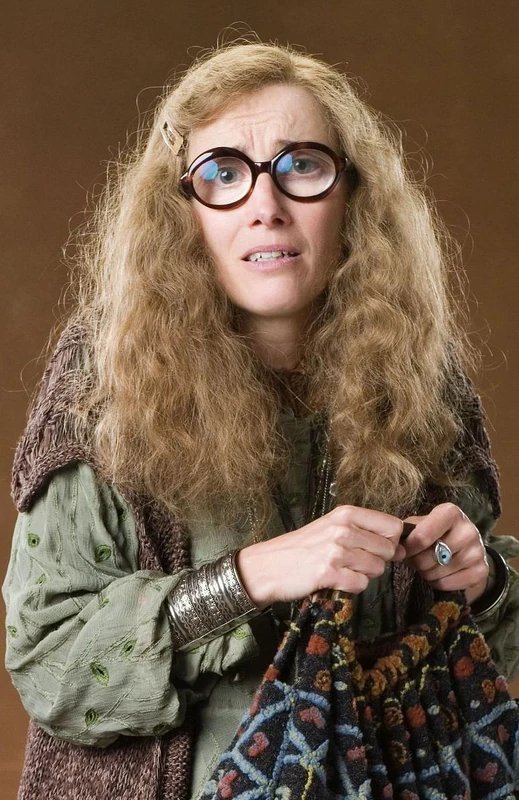
Sybill Trelawney is one of the great paradoxes of Hogwarts. She was, by almost every measure, a terrible teacher – her Divination classes consisted largely of peering into crystal balls, reading tea leaves, and making melodramatic predictions of Harry’s imminent death that became a running joke among students. McGonagall considered Divination a woolly discipline at best, and Hermione famously walked out of Trelawney’s class permanently in Prisoner of Azkaban. And yet Trelawney made two genuine prophecies of enormous significance. The first, delivered during her job interview with Dumbledore, predicted the birth of the one with the power to vanquish Voldemort – the prophecy that set the entire series in motion. The second, made involuntarily in front of Harry, foretold Peter Pettigrew’s return to Voldemort. Dumbledore kept Trelawney employed at Hogwarts primarily to protect her, since Voldemort – who had heard only part of the first prophecy – would have hunted her for the rest. Her dismissal by Umbridge in Order of the Phoenix is one of the most emotionally affecting scenes in the series, as Trelawney stood weeping in the Entrance Hall with her trunks while McGonagall comforted her and Dumbledore overruled Umbridge’s attempt to remove her from the castle entirely.
Firenze
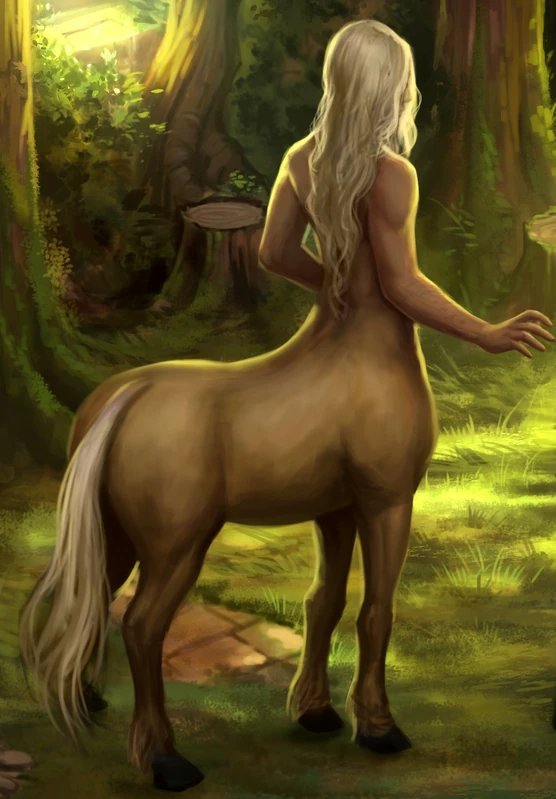
Firenze is the only centaur known to have taught at Hogwarts, and his appointment by Dumbledore was as politically significant as it was academically unusual. After Umbridge sacked Trelawney, Dumbledore hired Firenze to teach Divination – a move that infuriated the centaur herd in the Forbidden Forest. Centaurs viewed working for humans as a profound betrayal of their independence, and Firenze was violently expelled from the herd for accepting the position. His approach to Divination was radically different from Trelawney’s: where she relied on crystal balls and tea leaves, Firenze taught students to read the stars, burn sage and mallowsweet, and interpret the movements of the planets over years and decades rather than trying to predict next Tuesday’s events. He held classes in a ground-floor room enchanted to resemble the forest, with mossy floors and a ceiling showing the night sky. After Trelawney was reinstated by Dumbledore (who refused to sack Firenze after what the centaurs had done to him), both professors taught Divination simultaneously to different year groups. Firenze eventually reconciled with the herd after the Battle of Hogwarts, according to Deathly Hallows.
Rolanda Hooch
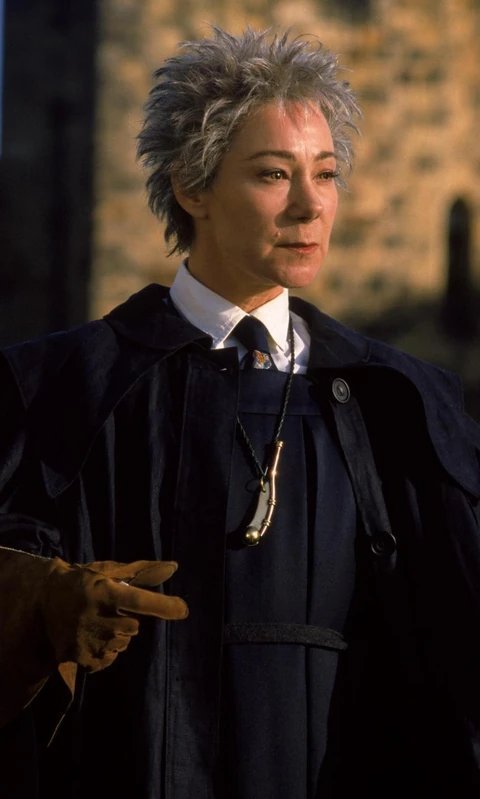
Madam Hooch taught first-year flying lessons and refereed Quidditch matches throughout the series. She’s most memorable from her very first appearance in Philosopher’s Stone, overseeing the broomstick lesson where Neville Longbottom broke his wrist, Malfoy stole the Remembrall, and Harry discovered he was a natural flyer – a sequence that led directly to his appointment as the youngest Seeker in a century. Hooch was strict, hawk-eyed (literally described as having yellow, hawk-like eyes), and no-nonsense. She maintained order on the Quidditch pitch through all the inter-house rivalries, fouls, and occasional acts of violence that characterised Hogwarts Quidditch. While she never became a major character, her presence was consistent and her role essential: she was the gatekeeper to the broomstick, and for many students, the first adult who let them fly.
Pomona Sprout
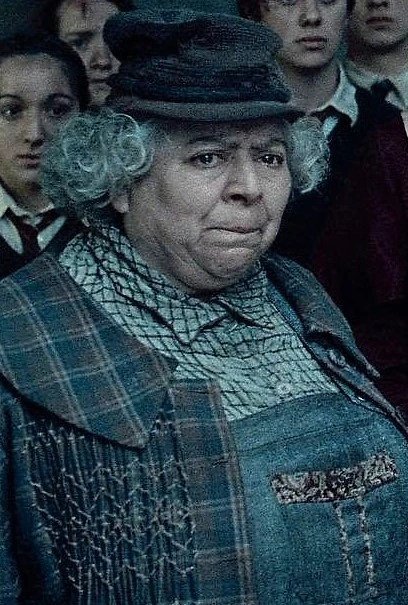
Professor Sprout taught Herbology in the Hogwarts greenhouses, dealing with some of the most dangerous plants in the magical world with the cheerful practicality of someone who genuinely loved getting dirt under her fingernails. She was described as squat, with flyaway hair often escaping from under a patched hat, and her lessons were consistently among the most hands-on in the curriculum. Students repotted Mandrakes (whose cries could knock a person unconscious or kill them), harvested Bubotuber pus (useful but disgusting), and learned to handle Venomous Tentacula and Devil’s Snare. Sprout’s Mandrake crop in Chamber of Secrets was essential to reviving the Petrified students, making her Herbology expertise directly plot-critical. As Head of Hufflepuff House, Sprout embodied the house’s values of hard work, patience, and loyalty without any of the flash associated with the other houses. She fought in the Battle of Hogwarts, hurling dangerous plants at Death Eaters from the castle walls.
Herbert Beery
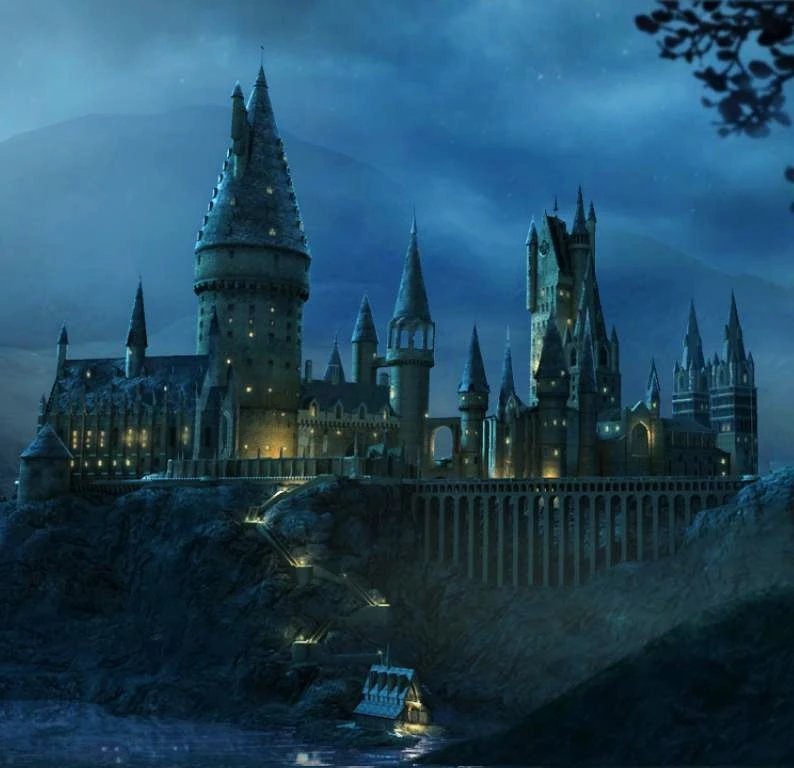
Professor Beery is a deep-cut entry, mentioned only in J.K. Rowling’s footnotes to The Tales of Beedle the Bard. He taught Herbology at Hogwarts in the early twentieth century and is best remembered for staging a disastrous Yuletide production of “The Fountain of Fair Fortune” for the school. The performance went catastrophically wrong – an Ashwinder emerged from the prop wand during the show, the enchanted “fountain” flooded the Great Hall, and the play was so chaotic that the Head of the day banned all future theatrical productions at Hogwarts. Beery eventually left Hogwarts to pursue his real passion for dramatic arts, teaching at the Wizarding Academy of Dramatic Arts instead. He’s a minor but charming footnote in Hogwarts history, proof that not every professor’s legacy is defined by the subject they taught.
Neville Longbottom
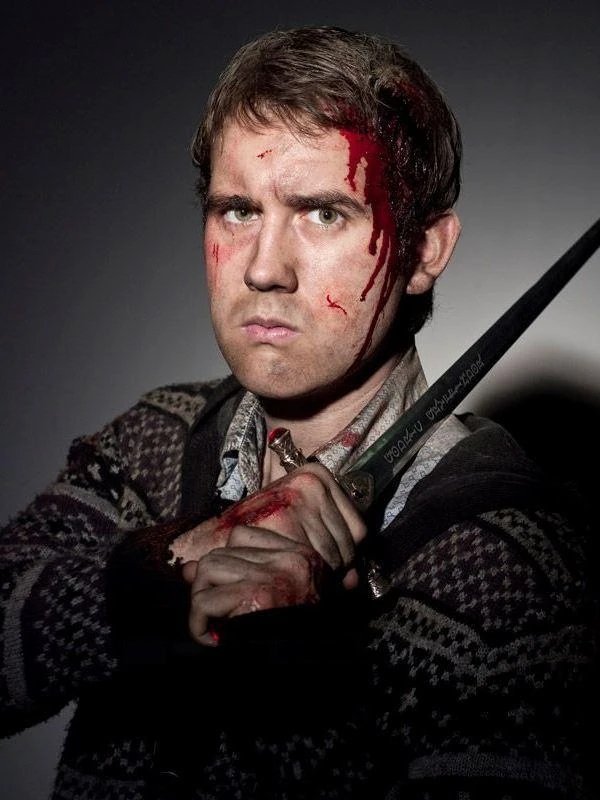
The student who melted more cauldrons than anyone in Snape’s Potions class grew up to become a Hogwarts professor himself. Neville’s journey from anxious, forgetful first-year to the wizard who killed Nagini with the Sword of Gryffindor and then returned to Hogwarts to teach Herbology is one of the most satisfying character arcs in the series. Herbology was always Neville’s best subject – the one class where his confidence was natural and his talent obvious, a fact Professor Sprout recognised long before anyone else did. According to Rowling, Neville served as Herbology professor for several years before eventually leaving to become a full-time Auror, though Pottermore later confirmed his Hogwarts teaching career. He married Hannah Abbott, who became landlady of the Leaky Cauldron. This is a post-series development not depicted in the novels themselves, but it’s among the most widely known and beloved pieces of extended canon.
Cuthbert Binns
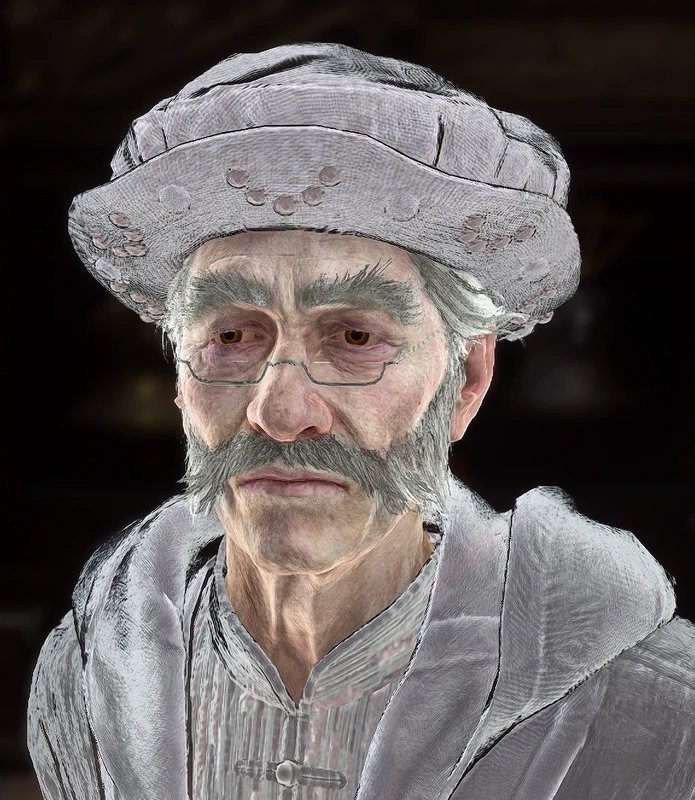
Professor Binns holds two unique distinctions at Hogwarts: he is the only ghost on the teaching staff, and he is universally considered the most boring professor in the school’s history. According to school legend, Binns was extremely old when he fell asleep in front of the staff-room fire, died, and got up the next morning to teach his class as though nothing had happened. He has apparently been doing so ever since. His lectures – delivered in a flat, droning monotone – cover goblin rebellions, giant wars, and other major events in magical history, all rendered so numbingly dull that most students use his class as naptime. Even Hermione, the most dedicated student in the series, struggled to stay engaged. Binns’s one moment of genuine interest comes in Chamber of Secrets, when Hermione asks him about the legend of the Chamber – a question so unprecedented that he appears momentarily startled before providing a genuinely informative (if dismissive) account. He couldn’t remember any student’s name correctly, calling Harry “Perkins” among other variations. His continued employment raises interesting questions about Hogwarts’s hiring practices and whether anyone has the authority – or the heart – to fire a ghost.
Charity Burbage
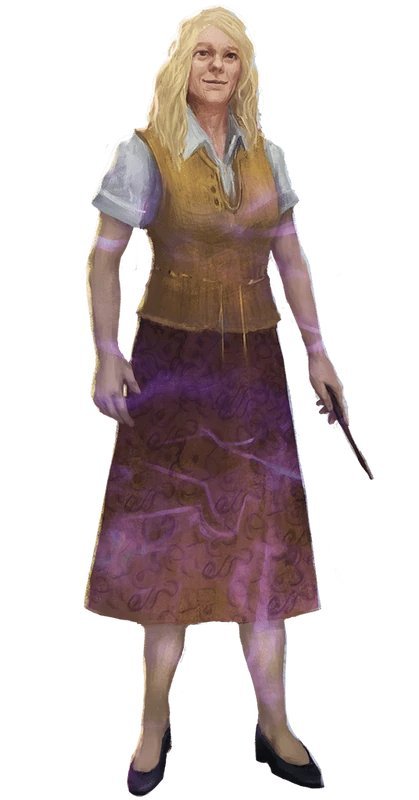
Professor Burbage taught Muggle Studies at Hogwarts, a subject that educated wizarding students about non-magical people and their culture. She appears only briefly in the novels, but her death is one of the most chilling moments in the series. In the opening chapter of Deathly Hallows, Burbage is shown suspended above Voldemort’s conference table at Malfoy Manor, having been captured for publishing a Daily Prophet article defending Muggle-born wizards and arguing that the decline of pure-blood families was something to celebrate rather than mourn. She pleaded with Snape – whom she had considered a colleague and friend – to help her, but Snape, maintaining his cover as a loyal Death Eater, gave no response. Voldemort killed her with the Killing Curse and fed her body to Nagini. Her murder served as both a statement of Voldemort’s ideology and a demonstration of the impossible position Snape occupied as a double agent.
Alecto Carrow
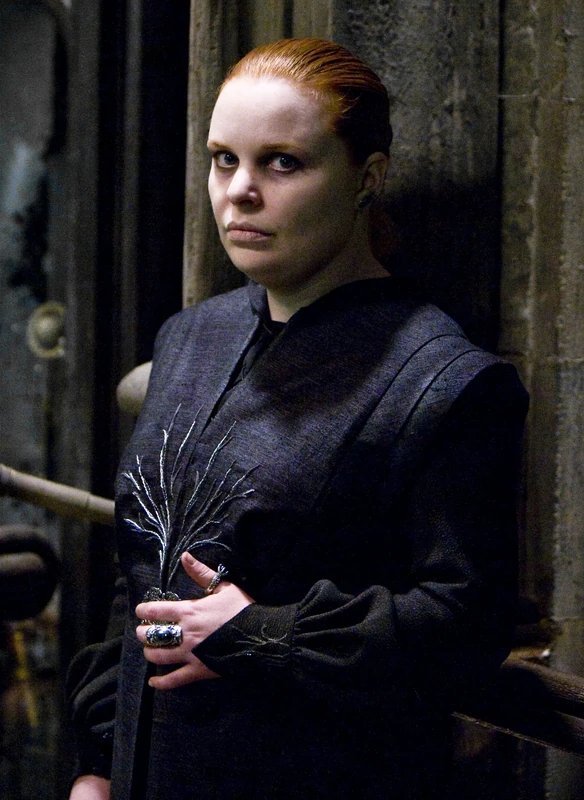
Alecto Carrow replaced the murdered Charity Burbage as the Muggle Studies professor during the Death Eater occupation of Hogwarts, but her version of the subject bore no resemblance to its predecessor. Under Alecto’s curriculum, Muggle Studies was inverted into anti-Muggle propaganda: students were taught that Muggles were subhuman, that Muggle-borns were thieves who had stolen magic from “real” witches and wizards, and that the wizarding world’s separation from Muggles was justified by wizarding superiority. Attendance was made compulsory for all students, ensuring maximum exposure to the ideology. Alecto, like her brother Amycus, was a committed Death Eater who relished the power the occupation gave her. She was stationed at Hogwarts partly as a teacher and partly as an enforcer of the regime. During the events of Deathly Hallows, she touched her Dark Mark to summon Voldemort when she discovered Harry in Ravenclaw Tower, and was Stunned by Luna Lovegood before she could act further.
Horace Slughorn
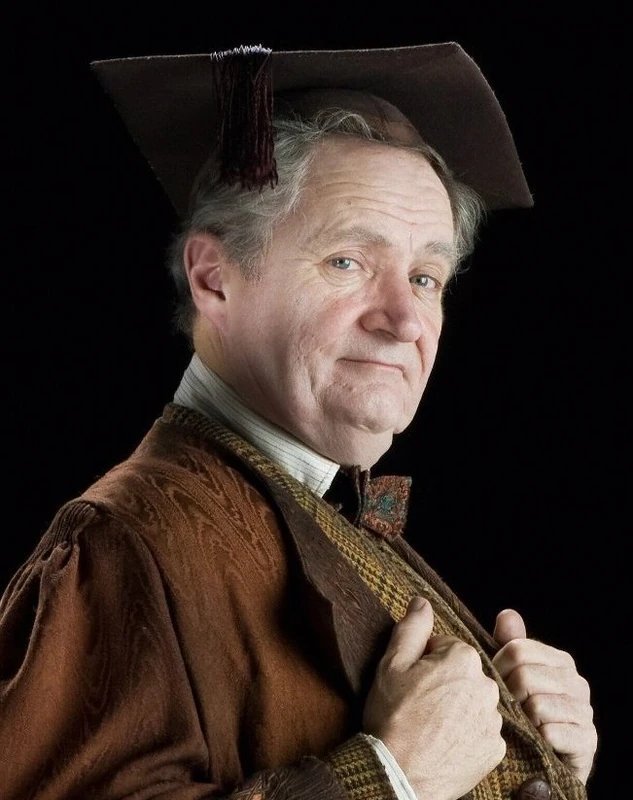
Horace Slughorn is the ultimate networker. A talented Potions Master and Head of Slytherin House, Slughorn’s defining characteristic wasn’t his teaching ability (which was considerable) but his relentless cultivation of well-connected students through his invitation-only “Slug Club.” He collected promising pupils the way some people collect rare stamps – seeking out students with famous relatives, exceptional talent, or obvious future potential, then maintaining those relationships for decades to enjoy the reflected glory and useful connections. Slughorn retired from Hogwarts around 1981 and spent years living comfortably off his former students’ generosity. Dumbledore lured him back in Half-Blood Prince for two reasons: Hogwarts needed a Potions teacher (with Snape moving to DADA), and Dumbledore needed the unaltered version of a memory Slughorn had been hiding for decades. That memory – in which a young Tom Riddle asked Slughorn about Horcruxes, and Slughorn provided the crucial information – was the key to understanding Voldemort’s immortality. Slughorn had been so ashamed of his role that he had modified his own memory. Extracting the true version became one of Harry’s most important missions. Despite his vanity and social climbing, Slughorn was fundamentally decent: he fought at the Battle of Hogwarts, duelling Voldemort alongside McGonagall and Kingsley Shacklebolt.
Albus Dumbledore
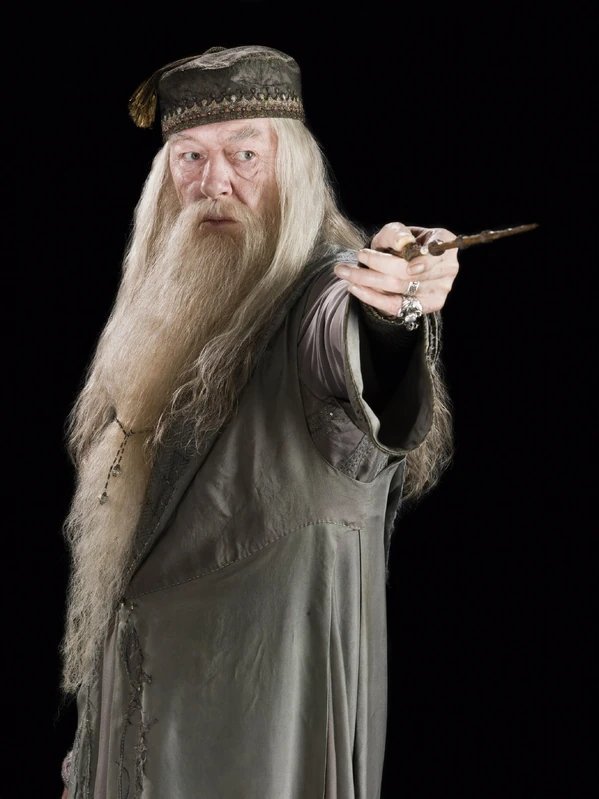
Before he became the most famous Headmaster in Hogwarts history, Albus Dumbledore taught Transfiguration. He visited the young Tom Riddle at Wool’s Orphanage to deliver his Hogwarts acceptance letter – a meeting shown in Half-Blood Prince that reveals Dumbledore’s early awareness of the boy’s darkness. As a professor, Dumbledore was already recognised as the most brilliant wizard of his age, the defeater of the Dark wizard Grindelwald in 1945, and a towering figure in magical academia. His transition from professor to Headmaster came around 1971, when Armando Dippet stepped down. As Headmaster, Dumbledore shaped every aspect of the series: he placed Harry with the Dursleys, orchestrated his protection through Lily’s sacrificial magic, founded the Order of the Phoenix, and spent Harry’s sixth year methodically teaching him about Voldemort’s Horcruxes. He was killed atop the Astronomy Tower by Snape in a pre-arranged act – Dumbledore was already dying from the cursed ring Horcrux and chose the manner of his death to protect Draco Malfoy’s soul and cement Snape’s position as Voldemort’s trusted servant. He remains the greatest Headmaster Hogwarts has known and one of the most complex characters in modern literature.
Minerva McGonagall
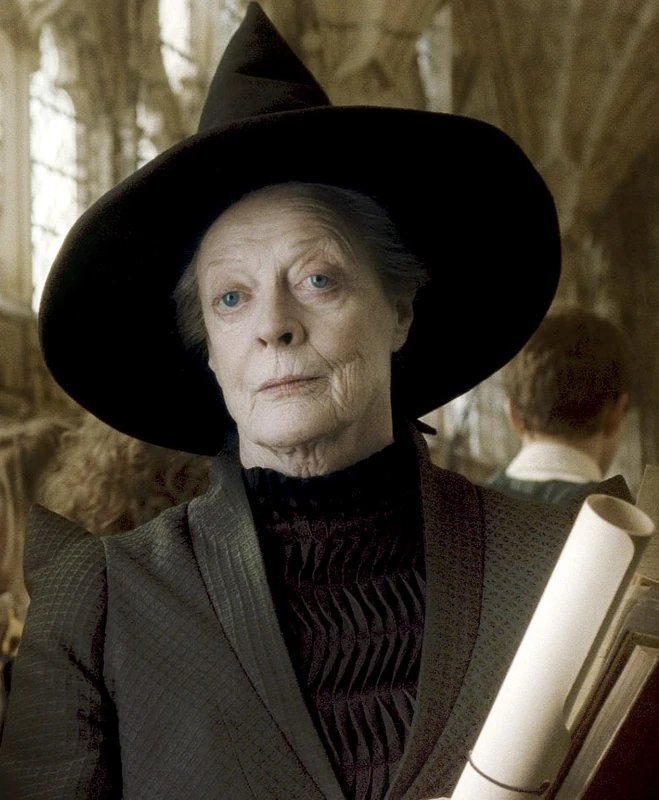
Minerva McGonagall is the backbone of Hogwarts. A strict, formidable, deeply principled Scottish witch, she taught Transfiguration for over four decades and served as Deputy Headmistress under Dumbledore, Acting Headmistress during Umbridge’s usurpation, and ultimately confirmed Headmistress after the Second Wizarding War. Her teaching style was exacting and no-nonsense – she turned her desk into a pig on the first day to demonstrate the subject’s possibilities, then immediately made clear that anyone messing around in her class would leave and not return. She was one of only seven registered Animagi in the twentieth century, capable of transforming into a tabby cat with spectacle markings around its eyes. McGonagall’s role extended far beyond the classroom. She stood up to Umbridge repeatedly, openly wept when Dumbledore was killed, and led the defence of Hogwarts in the final battle, bringing suits of armour to life and casting protective enchantments over the castle with the iconic instruction: “Hogwarts is threatened. Man the boundaries, protect us, do your duty to our school!” Her duel with Snape at the start of the Battle of Hogwarts – which she won, driving him out of the castle – was one of the most cathartic moments in the series.
The following Headmasters are known primarily through portraits, Pensieve memories, or historical references. Their teaching subjects – if they taught before becoming Headmaster – are unconfirmed in canon.
Armando Dippet
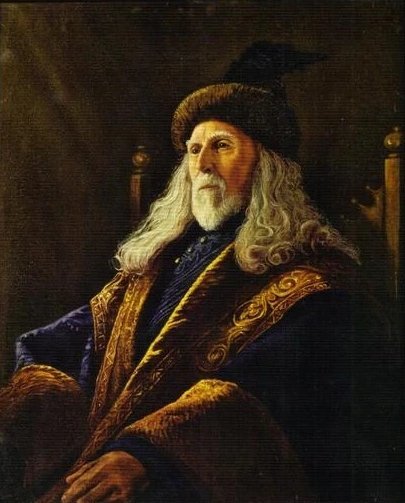
Armando Dippet appears in Chamber of Secrets through Tom Riddle’s diary memory, where he is shown as a well-meaning but easily manipulated Headmaster. When the Chamber of Secrets was first opened in the 1940s and a student (Moaning Myrtle) was killed, Dippet accepted Riddle’s framing of Hagrid and his Acromantula Aragog without sufficient investigation, resulting in Hagrid’s expulsion and the snapping of his wand. Dippet was described as elderly and somewhat frail, and his failure to see through Riddle – the actual Heir of Slytherin – is one of the great institutional failures in Hogwarts history. Whether Dippet taught any subject before becoming Headmaster is not confirmed in any canon source. He stepped down around 1971, and Dumbledore succeeded him.
Phineas Nigellus Black
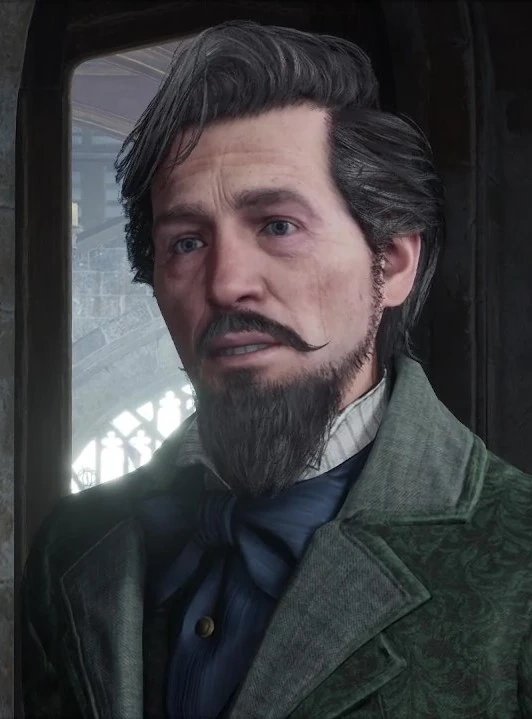
Phineas Nigellus Black is described as “the least popular headmaster Hogwarts ever had,” and his portrait – which hangs in both the Headmaster’s office and 12 Grimmauld Place – does nothing to dispute this reputation. Sarcastic, elitist, and openly contemptuous of students, his portrait provides comic relief and reluctant intelligence throughout Order of the Phoenix and Deathly Hallows. As a portrait, he could move between his two frames, making him a useful (if unwilling) communication link between Dumbledore and the Order, and later between Snape and Hermione’s beaded bag (where she had stashed the Grimmauld Place portrait). Phineas Nigellus was a Slytherin and an ancestor of Sirius Black, and he embodied the worst of pure-blood arrogance while remaining – in his grudging, insulting way – ultimately loyal to the office of Headmaster and to Hogwarts itself. Whether he taught any subject before becoming Headmaster is unconfirmed.
- Rowling, J.K. Harry Potter and the Philosopher’s Stone (1997)
- Rowling, J.K. Harry Potter and the Chamber of Secrets (1998)
- Rowling, J.K. Harry Potter and the Prisoner of Azkaban (1999)
- Rowling, J.K. Harry Potter and the Goblet of Fire (2000)
- Rowling, J.K. Harry Potter and the Order of the Phoenix (2003)
- Rowling, J.K. Harry Potter and the Half-Blood Prince (2005)
- Rowling, J.K. Harry Potter and the Deathly Hallows (2007)
- Rowling, J.K. The Tales of Beedle the Bard (2008)
- Wizarding World (Pottermore) – character profiles and extended canon
- Rowling, J.K. – post-publication interviews (2007), including Bloomsbury Live Chat and Today Show appearance