All 28 Titans in Greek Mythology
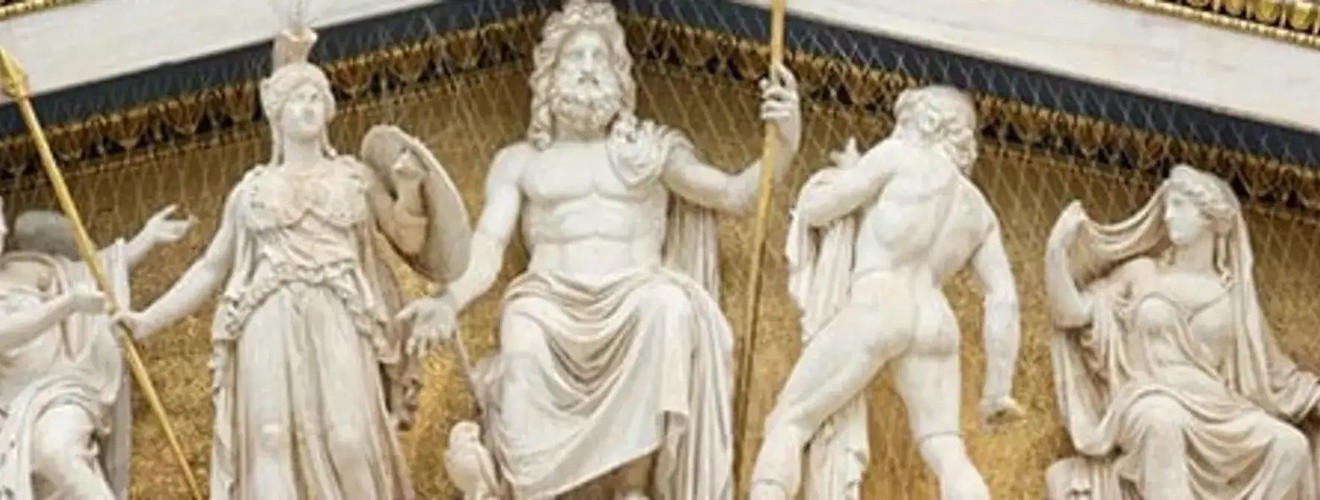
The number everyone quotes is twelve. Twelve Titans, twelve original gods, neat and clean. It is the kind of satisfying round number that mythology teachers write on whiteboards and tourists read on plaques at Greek ruins. It is also, by any reasonable reading of the ancient sources, wrong – or at least incomplete by roughly half.
Hesiod, the 8th-century BC farmer-poet who gave us the most systematic account of Greek creation, listed twelve children of Heaven and Earth. But in the very same text – the Theogony – he then went on to describe their children: the four sons of Iapetus who became Titans in their own right, the three children of Hyperion who lit up the sky, the three children of Coeus who included the mother of Apollo and Artemis, and the three children of Crius who presided over stars and destruction. Apollodorus added another. Other sources named others still.
The Titans were not a fixed cabinet of twelve. They were a dynasty – a generation of elder gods who ruled the cosmos before the Olympians, fought the Olympians for ten years in the most cataclysmic war in mythological history, and mostly lost. Some were hurled into the pit of Tartarus, a void so deep that Hesiod measured it by a bronze anvil falling nine days from heaven to reach it. Some made their peace with Zeus and retained their powers. A few got worse punishments than Tartarus entirely.
What follows is every Titan documented in the ancient Greek sources, from the original twelve children of Uranus and Gaia, to the second-generation Titans whose stories most people know better than the first-generation who produced them.
- Original Titans per Hesiod’s Theogony: 12 (6 male, 6 female Titanesses)
- Total Titans documented across ancient sources: 28
- War with the Olympians: the Titanomachy, fought for 10 years in Thessaly
- Prison of the defeated Titans: Tartarus – described as nine days’ fall below the earth
- Titans who sided with Zeus: Prometheus, Metis, Styx, Helios, Hecate
- Titan whose Roman equivalent became the basis of the word “Saturday”: Cronus (Saturn)
- Oldest primary source: Hesiod’s Theogony, c. 700 BC
- Only Titan to sit on Olympus as Zeus’s wife before Hera: Themis
Cronus
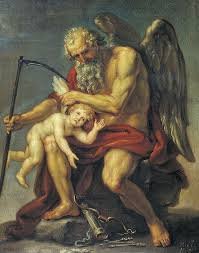
He ate his own children. Not as an act of cruelty, exactly – more as a precaution. A prophecy had told Cronus that one of his sons would overthrow him, the same way he had overthrown his own father. So each time his wife Rhea gave birth, Cronus swallowed the infant whole. Hestia, Demeter, Hera, Hades, Poseidon – all went down. You can see the logic, even if the parenting style was extreme.
Cronus was the youngest of the twelve original Titans, children of Uranus (Sky) and Gaia (Earth), and Hesiod calls him “the wily” – which is a reasonable description for someone who orchestrated the castration of his own father. Uranus had been stuffing his monstrous children back into Gaia’s belly to keep them imprisoned; Gaia persuaded her Titan sons to rebel. Four of them held Uranus down while Cronus cut him with an adamantine sickle. From the blood that fell on the sea, Aphrodite was born. Cronus then ruled the cosmos in what Greek and Roman writers later called the Golden Age – a time of peace, abundance, and no taxes.
The downfall came when Rhea, tired of watching her children disappear, wrapped a stone in swaddling clothes and handed it to Cronus. He swallowed the stone. Zeus – the real baby – grew up in a cave on Crete, returned, and forced his father to vomit up every sibling he had consumed. Ten years of war followed. Cronus lost. He was imprisoned in Tartarus, though later versions of the myth – followed by Pindar and Aeschylus – have Zeus eventually releasing him to become king of the Elysian Islands, the paradise of the blessed dead. His Roman equivalent, Saturn, gave his name to Saturday and to a festival the Romans celebrated every December by suspending all social hierarchies for a week. Which suggests someone remembered the Golden Age fondly.
Oceanus
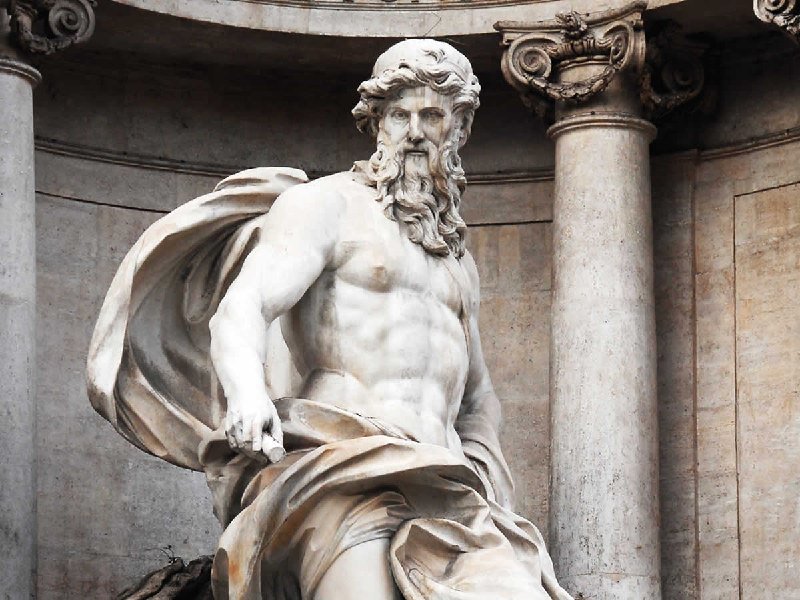
Oceanus was the only Titan who refused to help castrate his father. While his brothers held Uranus down and Cronus did the cutting, Oceanus simply declined to participate. He also sat out the Titanomachy entirely, maintaining a studied neutrality while the rest of his family fought the Olympians. As survival strategies go, it worked remarkably well. He ended up one of the few Titans who was never imprisoned in Tartarus.
In the earliest Greek cosmology, Oceanus was not a sea – he was the great river that encircled the entire flat disc of the earth. Everything that moved through the sky rose from his waters in the east and descended back into them in the west. The sun, the moon, the stars – all emerged from Oceanus each day and returned to him each night. He was, in a very real sense, the boundary of the known world. When Homer has Hera visit Oceanus and Tethys in the Iliad, she is going to the very edge of existence.
By Tethys, Oceanus fathered an extraordinary number of children: the Potamoi, gods of all the rivers of the world (Hesiod says “three thousand”), and the Oceanids, nymphs of springs, streams, and fountains. Among the Oceanids was Metis, who later became Zeus’s first wife. In later Greek thought, as sailors actually explored the Atlantic and Indian Oceans, the old notion of a freshwater river-world-boundary became awkward, and Oceanus was gradually reimagined as the sea itself. In mosaic art he appears as a great ocean deity with crab-claw horns and a school of fish – a long way from the cautious, neutral river-god of Hesiod.
Hyperion
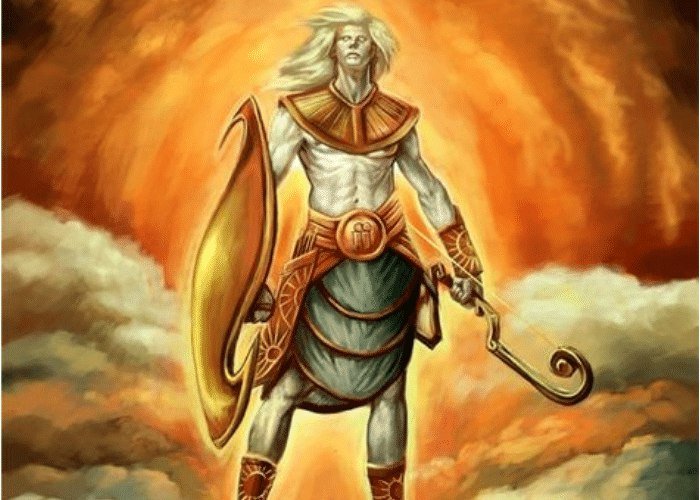
His name means “he who goes above” or “watcher from above,” which is a reasonable description for the Titan of heavenly light whose three children – the Sun, the Moon, and the Dawn – between them lit up every hour of every day. Hyperion was the senior figure in his family’s lighting operation: he fathered the actual sources of light, but he himself presided over the broader principle of celestial radiance.
Unlike Oceanus, Hyperion was one of the four Titans who held their father Uranus down during the castration. In the cosmological interpretation, the four brothers – Hyperion, Crius, Coeus, and Iapetus – were stationed at the four corners of the flat earth: east, south, north, and west respectively. This is not just mythology; it is an early attempt at cosmological mapping, the Titans serving as anchors for the cardinal directions of a world that was still being defined.
Hyperion was married to his sister Theia. Their union produced Helios (the Sun), Selene (the Moon), and Eos (the Dawn) – the three great lights of heaven. Homer uses “Hyperion” in the Iliad and Odyssey not as a name but as a title for Helios himself: “Helios Hyperion,” the sun seen from above. This overlap confused later readers and caused some ancient writers to treat father and son as the same figure. They were not, but the fact that the son’s radiance eclipsed the father’s identity in the poetic tradition tells you something about which family members proved more memorable. His Roman equivalent is Sol, though later sources sometimes called him simply Hyperion as well.
Coeus
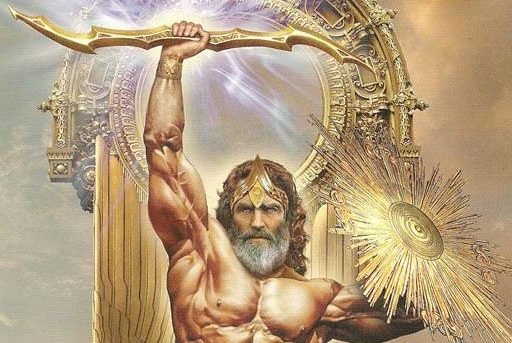
Coeus was the Titan of intelligence and the axis of heaven, which sounds like a remarkable job description until you realize that “the axis of heaven” was a concrete concept for the ancient Greeks: the pole around which all the northern constellations visibly revolve. His alternative name was Polus, meaning “pole,” and he was associated with the north pillar of the sky. Every clear night, anyone watching the stars could see them wheeling around a fixed point – and that point was Coeus’s domain.
He was one of the four brothers who held Uranus during the castration, stationed at the north. By his sister Phoebe, Coeus fathered Leto and Asteria – which made him the grandfather of Apollo and Artemis, two of the most important Olympians. This is the perpetual irony of the Titans: the defeated generation produced the next victorious one. Coeus’s granddaughter Hecate, daughter of his other child Asteria, sided with Zeus in the Titanomachy and emerged with her powers fully intact.
After the Titanomachy, Coeus was imprisoned in Tartarus with his brothers. One late source – the Roman mythographer Hyginus – notes that Coeus eventually escaped from Tartarus and was only recaptured after Apollo pursued him. This fragment, cited nowhere else, is either a genuine surviving tradition or an entertaining invention, but it suggests Coeus had the intelligence his domain implied and tried to use it.
Crius
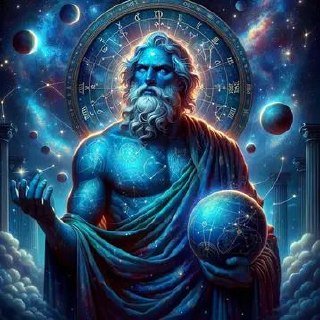
Crius (sometimes Kreios) was the Titan of the heavenly constellations and the measure of the year, and he is the one member of the original twelve about whom ancient sources say the least. His name probably connects to the constellation Aries, the Ram – in Greek, “krios” – whose spring rising marked the beginning of the new year in ancient Greek reckoning. All the other constellations followed in the Ram’s wake, so Crius as lord of constellations was also lord of the passage of time through the heavens.
He was one of the four brothers who held Uranus during the castration, stationed at the south. His wife was Eurybia, daughter of Pontus (the sea), which gave him an interesting family connection outside the standard Uranus-Gaia lineage. Their three sons – Astraeus, Pallas, and Perses – became Titans in their own right, presiding over the stars and winds, warfare, and destruction respectively. Astraeus fathered the four directional winds and the five wandering stars (the planets) by his wife Eos the Dawn.
That is essentially everything the ancient sources preserve about Crius personally. He was cast into Tartarus after the Titanomachy and, unlike some of his brothers, left no legacy myths of clever escapes or second careers as guardian of paradise. He is, in the taxonomy of Titans, the one who holds the whole structure of the year together and receives no particular thanks for it.
Iapetus
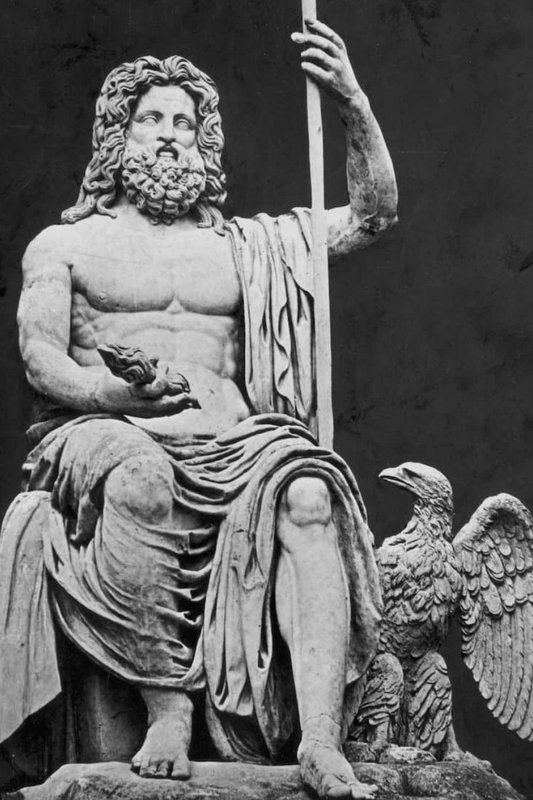
Iapetus is worth paying attention to primarily because of his children, who include both the creator of mankind and the man condemned to hold up the sky. But Iapetus himself – the Titan god of mortality and the allotment of human lifespan – was not a minor figure. He was the Titan of the west pillar, stationed at the western edge of the flat earth when his brothers held Uranus down, and his domain is arguably the most personal of the four cardinal Titans: he governed not stars or seasons but the span of human life itself.
His wife was the Oceanid Clymene (in some accounts Asia), and by her he had four sons who became the Iapetionides, the second-generation Titans: Atlas, Prometheus, Epimetheus, and Menoetius. The names together read like a moral taxonomy: Prometheus means “forethought,” Epimetheus means “afterthought,” Atlas means “endurance,” and Menoetius means “doomed might.” Three of the four came to bad ends. Atlas had to hold up the sky. Prometheus was chained to a mountain and had his liver eaten daily by an eagle. Menoetius was blasted into Erebus by Zeus’s thunderbolt for his “hubris and hardy boldness.” Only Epimetheus – the one whose name meant afterthought, and who therefore was constitutionally incapable of planning ahead – escaped serious punishment, largely by accepting Pandora without asking too many questions.
Iapetus himself was cast into Tartarus after the Titanomachy. Plato, in the Gorgias, mentions him as one of the Titans judged in the underworld. Unlike his son Prometheus, he attracted no romantic myths, no cult worship, no second chances. His legacy is entirely his children.
Rhea
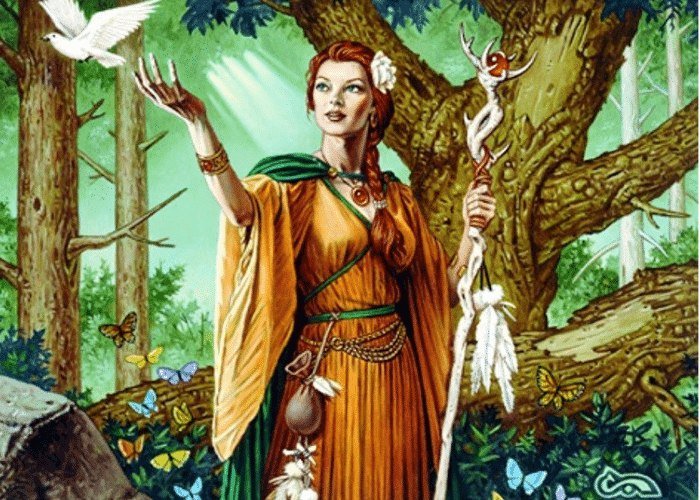
Rhea had six children with Cronus, and Cronus ate five of them. The sixth she saved by handing her husband a rock. That single act of deception – substituting a stone wrapped in swaddling for the infant Zeus – is arguably the most consequential trick in Greek mythology, setting in motion everything that followed: Zeus’s survival, the Titanomachy, the entire Olympian order. All of it began with Rhea deciding that enough was enough.
She was the Queen of the Titans, goddess of female fertility and the mountain wilds, and her counterpart in nature was the earth itself in its role as mother and nurturer. She was closely identified with Gaia (Earth), and also with the Phrygian goddess Cybele, the Great Mother of the gods, with whom she shared drum-beating attendants, lions, and a general atmosphere of ecstatic mountain worship. In Crete, where she hid the infant Zeus from Cronus, her attendants were the Curetes – armed dancers who clashed their shields together to drown out the sound of the baby’s cries.
Unlike most of the Titanesses, Rhea remained in active mythological circulation after the Titanomachy. She appeared in stories involving Dionysus, whom she rescued from madness by initiating him into her own mysteries. In later cult practice she was worshipped as Meter Theon, the Mother of the Gods, alongside Zeus. Her Roman equivalent was Ops. She is one of the few figures in Greek mythology who successfully played both sides of the generational war – she was a Titan, mother of Olympians, and honored by both.
Theia
Theia was the Titan goddess of sight and the shining ether of the bright-blue sky, and Pindar – writing in the 5th century BC – described her as the source of the brilliance of gold and silver and precious gems. Without Theia’s light, nothing that was luminous would shine. This is a remarkably broad portfolio: she was not just the sky, but the principle by which valuable things look valuable.
She was Hyperion’s wife and sister, and together they produced three children who covered the entire scope of sky-light: Helios the Sun, Selene the Moon, and Eos the Dawn. Her role in mythology is mostly to be the mother of those three. She has no major myth of her own, no dramatic encounter with Zeus, no long suffering or extraordinary punishment. Hesiod names her among the twelve Uranides in the Theogony and then moves on. She was also called Euryphaessa (“wide-shining”) in the Homeric Hymn to Helios, which is more a description of her function than a separate name.
Diodorus Siculus, writing in the 1st century BC, does not include Theia in his list of Titans – he names only five Titanesses, omitting her. This is the only significant ancient source to do so, and it is likely a scribal oversight rather than a deliberate exclusion. Every other source that enumerates the female Titans includes her. She is also – notably – the only one of the twelve original Titans for whom no Roman equivalent exists under a separate name, which suggests she was so thoroughly absorbed into the concept of heavenly light itself that the Romans found no gap she needed to fill.
Themis
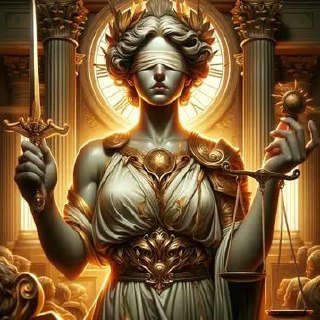
Before Hera, Zeus was married to Themis. This fact is buried in Hesiod’s Theogony and tends to get overlooked in most popular retellings, which focus on Zeus’s many affairs and somewhat skip over his domestic arrangements. But Themis was Zeus’s first proper consort, seated beside his throne, and she presided over something more fundamental than the Olympians’ domestic politics: she was the goddess of divine law, the customs and rules established at the foundation of the cosmos, the ancient order that preceded human legislation and could not be repealed.
She was also, before Apollo, the guardian of the Oracle at Delphi. According to Aeschylus’s Eumenides and Pausanias, the sequence of Delphi’s custodians ran: Gaia, Themis, Phoebe, and finally Apollo. Themis held the oracle as the divine voice of cosmic order; Apollo inherited it from her grandmother Phoebe. The fact that two Titans owned Delphi before the famous Olympian took it over is a detail the site’s later worshippers did not publicize.
By Zeus, Themis mothered the Horai (the three Seasons: Eunomia/Order, Eirene/Peace, and Dike/Justice) and the Moirai (the three Fates: Clotho, Lachesis, and Atropos). The Fates governed the lifespan of every mortal. The fact that they were daughters of the goddess of divine law is not an accident – in Greek theology, the limit of a human life was not arbitrary but lawful. Themis remained on Olympus throughout the Olympian era, one of the counselors of Zeus, her Titan origins apparently no obstacle to a permanent seat at the gods’ table.
Mnemosyne
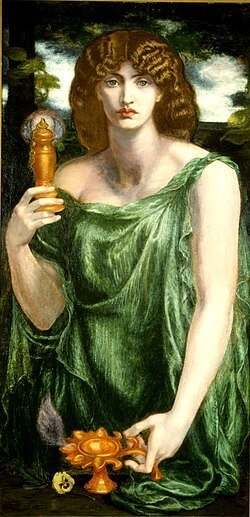
Memory is not usually imagined as a goddess. It is imagined as a faculty, a cognitive function, the way the brain stores the past. The ancient Greeks understood this differently. Memory, for them, was a divine force – the thing that allowed civilization to exist at all, because without it there was no tradition, no song, no story, no accumulated knowledge of how things should be done. Memory was Mnemosyne, and she was one of the twelve original Titans.
She was also, by Zeus, the mother of the nine Muses. For nine nights Zeus came to her in Pieria, and the result was all the arts of human creativity: epic poetry, lyric poetry, history, comedy, tragedy, dance, sacred song, astronomy, and erotic poetry. The Muses drew from Mnemosyne’s waters – quite literally, since the spring of Memory at the oracle of Trophonius in Boeotia was a sacred destination for those seeking prophetic knowledge. You drank from Mnemosyne’s spring before consulting the oracle; you drank from the spring of Lethe (Forgetting) to erase the burden of the past before reincarnation.
Mnemosyne appears in the Orphic tradition as one of two rivers in the underworld. The dead who achieved enlightenment were told to drink from Mnemosyne rather than Lethe – to retain their memories rather than lose them, to persist as individuals through death. The gold tablets found in Greek burial sites from the 4th century BC onward contained instructions for navigating the underworld, including the specific words to say at Mnemosyne’s spring. Memory, in other words, was the literal key to a better afterlife.
Phoebe

Phoebe was the Titan goddess of intellect and prophetic power, and she held the Oracle at Delphi before her granddaughter passed it to Apollo. This detail appears in Aeschylus’s Eumenides, where the first line of the play has Apollo’s own oracle at Delphi explain its lineage: first Earth, then Themis, then Phoebe, then Apollo. Phoebe received the oracle as a birthday gift from the Earth and Themis before her, and gave it to Apollo as a gift when he was born.
She was married to her brother Coeus, the Titan of the north pillar and intellect. Their two daughters were Leto (who became the mother of Apollo and Artemis) and Asteria (who became the mother of Hecate). The genealogical logic is tidy: Phoebe the prophetic goddess passes her oracle to Apollo via Leto, and gives her name – “bright,” “radiant” – to Apollo himself, who was called Phoebus Apollo. The Titan grandmother’s title lived on in the most famous Olympian oracle in the ancient world.
Her name means “bright” or “radiant” in Greek, the same root as “Phoebus,” and she was associated with the moon before Selene took over that role more completely. In some traditions she is identified with the moon itself in its prophetic, night-time aspect – the illuminating light that reveals hidden things in darkness. She received cult worship, and Pausanias notes altars to her at Olympia.
Tethys

Tethys was married to Oceanus and together they produced the fresh water of the world. Hesiod credits them with three thousand river gods and three thousand Oceanid nymphs – a number almost certainly meant as “innumerable” rather than literally countable. Tethys was the distribution system for all fresh water on earth: rivers, springs, rain clouds, underground streams. Her name means “Nurse” or “Grandmother,” appropriate for the figure who nourished everything that lived on land.
She appears in the Iliad in a surprising context: when Hera wants to persuade Oceanus and Tethys to help her scheme against Zeus, she refers to a quarrel between the old couple – Tethys and Oceanus are estranged and have not shared a bed in some time. This fragment of domestic mythology suggests that the ancient Greeks imagined even the most cosmic forces as having complicated marriages and silent resentments. Hera’s diplomatic mission to the edges of the cosmos, to patch things up between the two primordial water-gods, is a genuinely odd episode in an already strange poem.
In the Orphic tradition, Tethys was paired with Oceanus as a cosmogonical principle: before the Olympians, before even the Titans, there was Water, and Water was Oceanus and Tethys. They were the world-parents in this tradition, paralleling the Mesopotamian primordial pair Apsu and Tiamat. Whether this was an original Greek idea or absorbed from Near Eastern cosmology is a question scholars have argued about for over a century.
Atlas
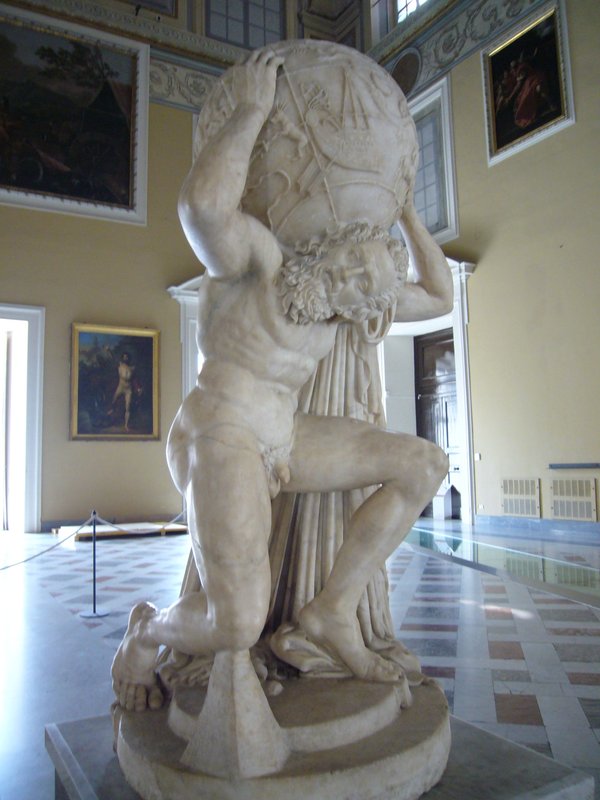
The image everyone knows – a muscular figure straining under the weight of a globe – is wrong on one significant point. In Hesiod’s original text, Atlas does not hold the earth. He holds the sky. He stands at the western edge of the world, where the earth meets the horizon, and carries the heavens on his shoulders so they do not collapse onto the earth below. The globe-bearing Atlas that became ubiquitous in cartography from the 16th century onward was a visual confusion between the concepts, and it stuck so thoroughly that the world’s greatest atlas collections are named after a Titan who was actually doing the opposite job.
Atlas was one of the Iapetionides, sons of the Titan Iapetus, and he was the leader of the Titans in the Titanomachy – which is why his punishment was severe. Zeus reserved the sky-bearing for Atlas specifically. The other Titans went to Tartarus; Atlas got something arguably worse: the eternal weight of the heavens, standing alone at the edge of the world with no company except the Hesperides tending their golden apple tree nearby.
Homer’s Atlas, in the Odyssey, “holds the tall pillars which keep earth and sky asunder” – suggesting he had been reassigned from holding the sky directly to maintaining the pillars that separated the two. Heracles encountered him during the quest for the Golden Apples: Atlas fetched the apples while Heracles held the sky, then tried to leave Heracles stuck with the job. Heracles asked Atlas to take the sky back for a moment while he adjusted his shoulder pad, then walked away. Later tradition has Perseus turn Atlas into the Atlas Mountains of North Africa by showing him the Medusa’s head. These are three different outcomes for the same Titan across three different mythological strands, which tells you how important he was to the Greek imagination.
Prometheus
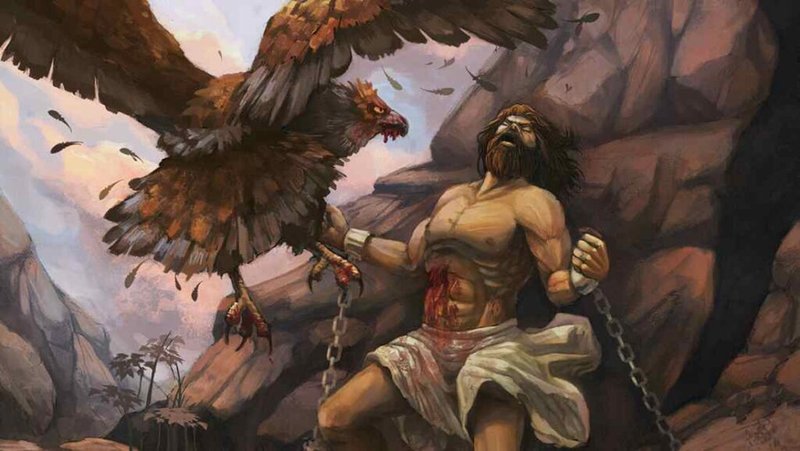
The ancient Greeks had a word, “prometheia,” meaning forethought – the ability to plan ahead. Prometheus was named for this quality, and he lived up to it in ways that made Zeus furious for what amounts to geological timescales. He helped the Olympians win the Titanomachy by switching sides. Then he cheated the gods out of the best portion of the first sacrificial feast. Then he stole fire from heaven in a fennel stalk. Zeus chained him to a rock in the Caucasus Mountains and sent an eagle to eat his liver every day. Every night the liver regenerated. The eagle came back in the morning. This continued for thousands of years until Heracles shot the eagle and freed him.
Prometheus was a son of Iapetus, making him a second-generation Titan, but the primary sources consistently call him a Titan and treat him as such. Hesiod’s Theogony and Works and Days both give him extensive treatment. Aeschylus wrote an entire tragedy – Prometheus Bound – on his imprisonment. He is the Titan who created humanity from clay (per later versions) or at minimum advocated for and protected it: in Aeschylus, he lists what he gave mankind – fire, hope (instead of foreknowledge of death), architecture, astronomy, mathematics, writing, animal husbandry, navigation, medicine, metallurgy. In short, civilization.
No other Titan has attracted as much philosophical and literary attention across the centuries. Shelley wrote Prometheus Unbound. Marx called him “the most eminent saint and martyr in the philosophical calendar.” He became the emblem of human defiance against divine authority, the noble rebel who suffers for the benefit of others. Whether Hesiod would recognize this interpretation is debatable – in the original texts, Prometheus is clever and troublesome and genuinely subversive, but his motives are not entirely selfless. He tricked the gods first, before they punished him. He had the forethought to see how it would all end and proceeded anyway. That is either admirable or reckless depending on your perspective.
Epimetheus
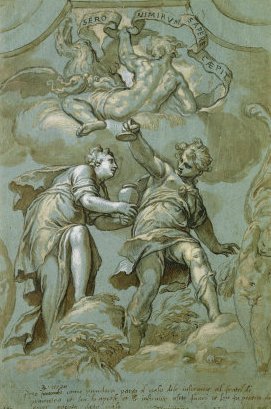
Prometheus means “forethought.” Epimetheus means “afterthought.” You can see where this is going.
Epimetheus was assigned, together with his brother Prometheus, to equip all the animals and humans of the earth with their necessary attributes. Prometheus got man; Epimetheus got the animals. When Epimetheus had finished giving all the good things – speed, strength, shells, venom, wings, fur – to the animals, he found he had nothing left for humans. They were slow, weak, naked, and toothless. Prometheus then stepped in and gave them fire as a compensatory gift, which led to everything described in the previous entry.
Epimetheus’s role in Pandora’s story is equally on-brand. Prometheus had warned him never to accept gifts from Zeus. Zeus sent Pandora – the first woman, shaped from clay, endowed with every charm, carrying a jar of every evil in the world. Epimetheus looked at her, forgot his brother’s warning, and accepted her. Pandora opened the jar. Disease, labor, old age, despair, and every other human misery flew out into the world. Hope remained at the bottom, which the Greeks apparently considered a mercy, though the philosophers have been arguing about that last point ever since.
Hesiod presents Epimetheus without contempt – he is not stupid, just the kind of person who understands events fully only after they have happened. This is, Hesiod seems to suggest, more common than the alternative. Epimetheus fathered Pyrrha by Pandora; Pyrrha later married Deucalion, Prometheus’s son, and together they repopulated the earth after the great flood. The afterthought’s daughter and the forethought’s son: even the Greek flood story has a character irony built in.
Menoetius
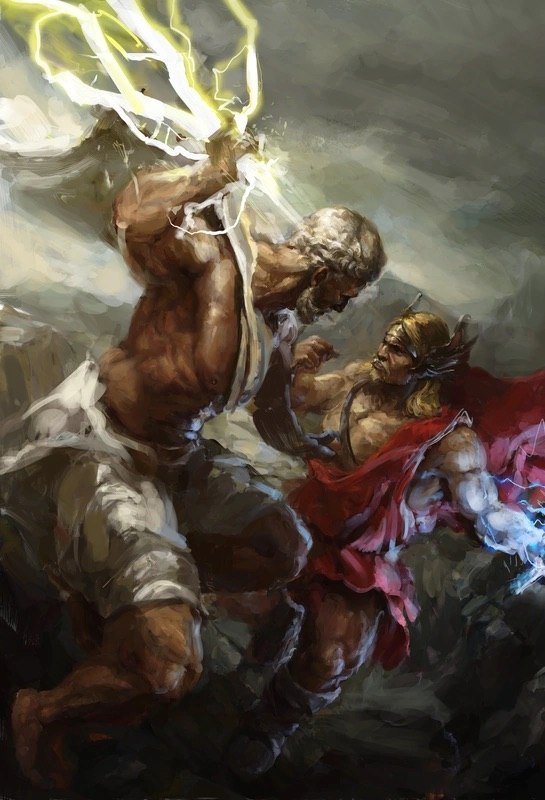
Menoetius, the fourth son of Iapetus, had a name that translated roughly as “doomed might” or “ruined strength,” and he seems to have fulfilled this etymology with some determination. According to Hesiod, Zeus blasted him into Erebus with a thunderbolt for his hubris and “hardy boldness.” This happened either during the Titanomachy itself or as a separate incident – sources are inconsistent. Erebus was not Tartarus; it was the deep darkness beneath the earth, and in Homer’s usage, a synonym for the underworld generally. Either way, Menoetius did not make it out.
He is the only one of Iapetus’s sons who receives almost no individual mythological attention. Atlas has the sky; Prometheus has fire and civilization; Epimetheus has Pandora. Menoetius has hubris and a thunderbolt. His name appears primarily in the lists: Hesiod’s Theogony at line 510, where he is described as “bold Menoetius,” and Apollodorus’s summary, which notes his arrogance. That is approximately it for his mythology. He is the cautionary tale in a family of cautionary tales, the one whose fault was simply thinking too well of himself in Zeus’s presence.
There was another Menoetius in Greek mythology – a mortal, the father of Patroclus, who died in the Trojan War. The coincidence of names across generations was not unusual in Greek myth, where many figures share names across the mortal and divine registers.
Helios
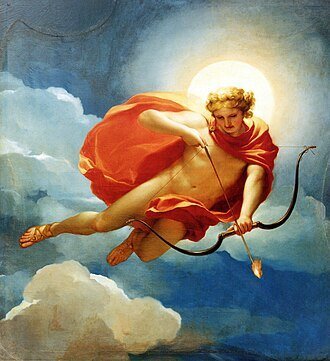
Helios drove a chariot drawn by four fire-breathing horses from east to west across the sky every day, descended into the Ocean in the west, and sailed in a golden bowl back to his starting point in the east each night to do it again tomorrow. This was his job, and he did it without a day off for the entirety of Greek mythology. He was, in a very practical sense, the most hardworking deity in the entire pantheon.
He was a son of Hyperion and Theia, and while Homer sometimes uses “Hyperion” as a title for Helios, Hesiod makes the two separate and the Theogony is clear: Helios is the second-generation Titan who actually drives the sun. His significance in cult was considerable: Rhodes, the island, claimed descent from Helios and celebrated him with a famous Colossus – one of the Seven Wonders of the Ancient World – that stood perhaps 33 meters tall at the harbor entrance, though contrary to popular belief, it did not straddle the harbor mouth.
Helios was the god who saw everything, since the sun’s position in the sky gave him an unobstructed view of the earth below. When Demeter searched frantically for the abducted Persephone, it was Helios who told her what had happened. When Hephaestus wanted to know who was sleeping with Aphrodite, Helios reported it. He was essentially a cosmic informant, which made him useful to other gods and a somewhat uneasy presence in the mythology of human privacy. His son Phaethon famously borrowed the solar chariot without adequate driving experience, lost control, and nearly set the earth on fire before Zeus shot him down with a thunderbolt.
Selene
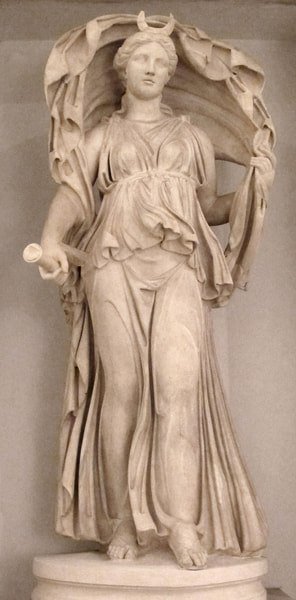
Selene drove the moon across the sky in a silver chariot, and at some point developed a habit of visiting the sleeping shepherd Endymion on Mount Latmos every night. Endymion, by various accounts, either slept eternally at Selene’s request so she could visit him undisturbed, or was granted eternal sleep by Zeus as a punishment, or asked for it himself in exchange for immortality. The details vary. The core image – a goddess of the moon watching over a sleeping mortal she loved – was compelling enough that Endymion’s cave on Latmos was still a pilgrimage destination in the time of Pausanias, centuries after the myth was first told.
She was the daughter of Hyperion and Theia, sister of Helios and Eos. Like Helios, she was a working Titan – her job was the nightly crossing of the sky in a chariot pulled by two white horses or oxen. By Endymion she bore fifty daughters, sometimes identified with the fifty lunar months of the four-year cycle. By Zeus she bore Pandia, goddess of the full moon. She was also sometimes identified with Hecate and Artemis as aspects of a triple moon goddess – a concept that became more prominent in later Hellenistic and Roman religious practice than it was in the earlier Greek tradition.
The distinction between Selene (the Titan moon-goddess) and Artemis (the Olympian lunar huntress) was real in classical Greek religion, though the two were sometimes conflated. Selene was the moon as a cosmic force; Artemis was the goddess of the hunt who happened to be associated with the moon. The Hellenistic period and then Rome largely collapsed this distinction, with Luna (Selene’s Roman equivalent) becoming an aspect of Diana (Artemis).
Eos
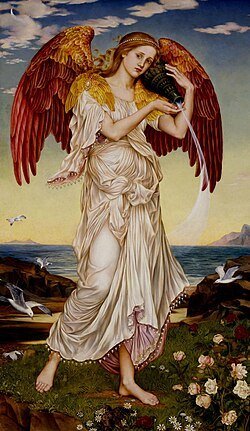
Every morning, Eos opened the gates of heaven so her brother Helios could drive the sun across the sky. This is her primary function in Greek mythology, and it appears throughout Homer: the famous Homeric epithets “rosy-fingered Dawn” and “saffron-robed Dawn” describe her as she opens the sky each day. She is, in the Greek imagination, the transition from night to morning – the moment of change itself, personified.
She was also famously and repeatedly in love with mortal men, which the ancient sources attribute to a curse placed on her by Aphrodite after Eos had an affair with Ares. The notable cases: Tithonus, a Trojan prince whom she abducted and for whom she requested immortality from Zeus – but forgot to ask for eternal youth as well. He aged indefinitely while remaining alive, eventually shriveling into such a state that, in later accounts, the gods transformed him into a cicada. Eos also loved Cephalus, Cleitus, Orion, and others. The pattern of a powerful goddess falling helplessly for mortal men who were then destroyed or transformed by the arrangement is a recurring Greek observation about what happens when gods and humans mix romantically.
By the Titan Astraeus, Eos bore the four directional winds – Boreas (North), Notus (South), Zephyrus (West), and Eurus (East) – and the five wandering stars, meaning the planets visible to the naked eye: Mercury, Venus, Mars, Jupiter, and Saturn. The goddess of dawn was, by this genealogy, the mother of meteorology and observational astronomy.
Leto
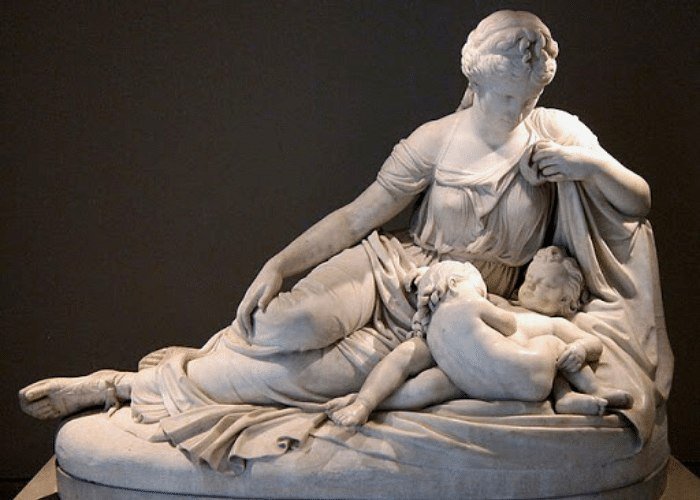
Leto’s crime, from Hera’s perspective, was being pregnant with Zeus’s children. This was not unusual – Zeus had children with a considerable number of figures, divine and mortal – but Leto was carrying twins who would become two of the most powerful Olympians: Apollo and Artemis. Hera’s response was to pursue Leto across the entire earth, forbidding any land from giving her shelter and any nymph from attending her in childbirth. Leto wandered while heavily pregnant, rejected everywhere she turned.
The solution was the floating island of Delos, which technically was not land – it moved – and therefore fell outside Hera’s prohibition. Delos anchored itself on four pillars when Leto touched it, and she gave birth there after nine days and nine nights of labor (Artemis arrived first and then served as midwife for Apollo’s birth, which explains her later association with childbirth). The grateful island became one of the holiest sites in the Greek world, the birthplace of Apollo and center of his cult throughout the Aegean.
She was a daughter of Coeus and Phoebe, making her a second-generation Titan on both sides. Her name means something close to “the hidden one” or “gentle,” suggesting a quiet, unassuming character rather than an assertive divine presence. She appears in Homer as a figure of sympathy – gentle Leto, the Trojans’ ally, watching her children fight in the Iliad with the helpless concern of a mother who has raised two very powerful, very dangerous gods.
Asteria
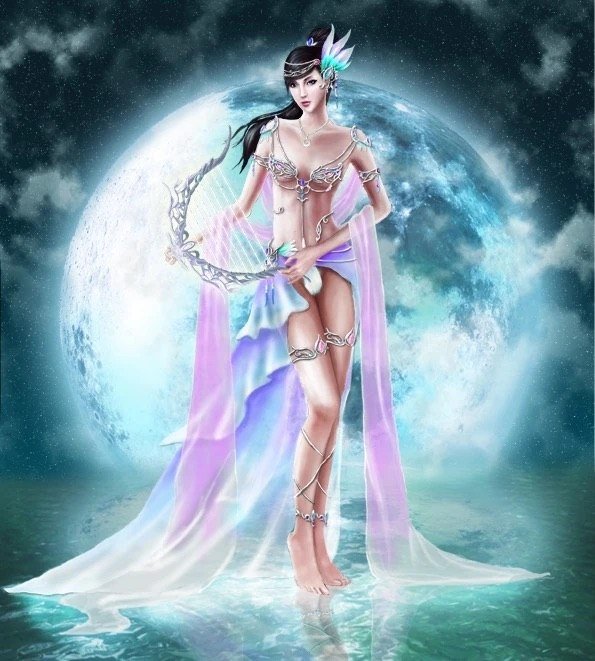
Asteria was the Titan goddess of falling stars and nocturnal oracles – divination by shooting stars, by dreams, by the behavior of the night sky. She was also one of the few figures in Greek mythology who successfully ran away from Zeus and got away with it. When Zeus pursued her, she transformed herself into a quail and leaped into the sea rather than be caught. She was transformed into the floating island of Ortygia, which later became the island of Delos – the island where her sister Leto would eventually give birth to Apollo and Artemis. The island that was created by Asteria’s flight from Zeus became the birthplace of the divine archers. Greek mythology is full of these structural ironies.
She was a daughter of Coeus and Phoebe, sister of Leto, and by the Titan Perses (son of Crius) she mothered Hecate, the goddess of witchcraft, crossroads, and the night. Hecate’s complex and powerful role in later Greek religion – as a liminal deity, guardian of thresholds, protector of households, guide of the dead – reflects both her Titan ancestry and her unusual status as a Titan who sided with Zeus and was rewarded by keeping all her powers intact across the generational change.
Asteria herself does not appear extensively in the surviving sources beyond her genealogy and the Delos transformation myth. She was worshipped in some local cults, particularly in association with her daughter Hecate, but she never developed the rich independent mythology of her sister Leto or her daughter Hecate.
Hecate
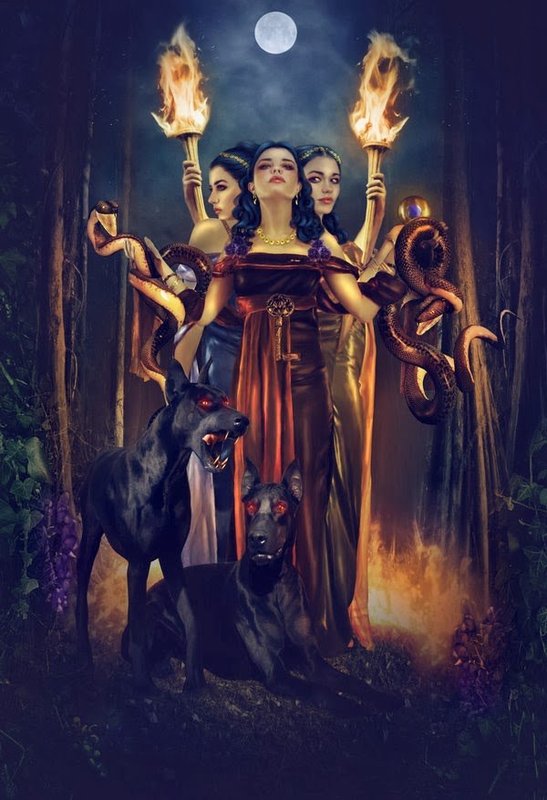
Hecate is one of the most unusual figures in all of Greek religion: a Titan daughter who sided with the Olympians in the Titanomachy and was rewarded by Zeus with a scope of power that exceeded most of the twelve Olympians themselves. Hesiod’s Theogony devotes an extraordinary passage to her (lines 411-452), explaining that she received “a share of earth, the sky, and the sea” – all three realms – and that “whoever among men on earth prays to her and honors her with sacrifice according to custom, he easily finds her favor.” Zeus did not take her privileges from her; he kept them all intact. She is the only figure in Hesiod’s cosmology explicitly described as retaining rights across both the Titan and Olympian orders.
Her domains were remarkably diverse and evolved across Greek history: magic, witchcraft, crossroads, ghosts, the night, the underworld, the moon, childbirth, and dogs, which accompanied her. She was depicted in later art as triple-formed, three bodies facing three directions, appropriate for a goddess of crossroads. In Athenian households, a small shrine to Hecate was placed at the front door – she was a protective deity of the home’s threshold, the boundary between inside and outside.
She appears in the Homeric Hymn to Demeter as the only goddess who heard Persephone’s cries when she was abducted and came to Demeter with the information (before Helios confirmed it). She later became Persephone’s companion in the underworld. That a Titan goddess was essentially the most useful divine figure in the story of the most important Olympian goddess’s daughter says something about how the Greek religious imagination dealt with the old order: it never really went away.
Pallas (Titan)
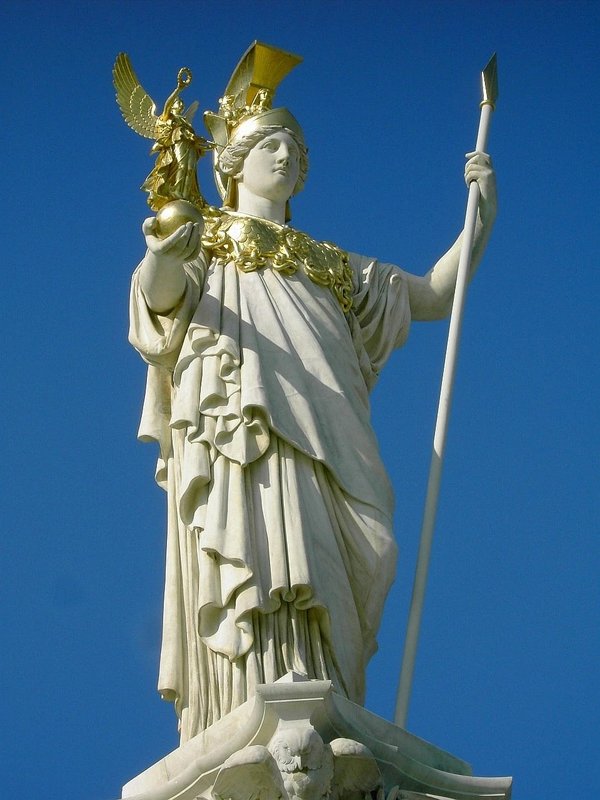
There are two figures named Pallas in Greek mythology, and the confusion between them is understandable but worth clarifying. The more famous is Pallas Athena – Athena herself, who acquired the name after killing a figure called Pallas during her youth. That figure, in some accounts, was either a childhood friend (a mortal girl, or a daughter of the sea-god Triton) or – in the Titan version – the Titan Pallas himself, son of Crius and Eurybia.
The Titan Pallas was the god of warcraft and the military campaign season. Apollodorus, in the Bibliotheca, gives the version in which Athena killed Pallas in the Gigantomachy and made her aegis (the divine shield) from his skin. This is presented matter-of-factly, as if stripping a divine opponent and wearing them as armor was a reasonable post-combat behavior for the goddess of wisdom. The aegis, in this version, is a spoil of war made from a Titan’s hide.
His more significant contribution to mythology may be through his children. By the Oceanid Styx, Pallas fathered Nike (Victory), Zelos (Rivalry), Kratos (Strength), and Bia (Force). When Styx brought her children to Zeus’s side at the start of the Titanomachy, this quartet of personified powers became Zeus’s permanent household companions. Nike became his personal charioteer. Kratos and Bia appear at the opening of Aeschylus’s Prometheus Bound, dragging the chained Prometheus to his rock.
Astraeus
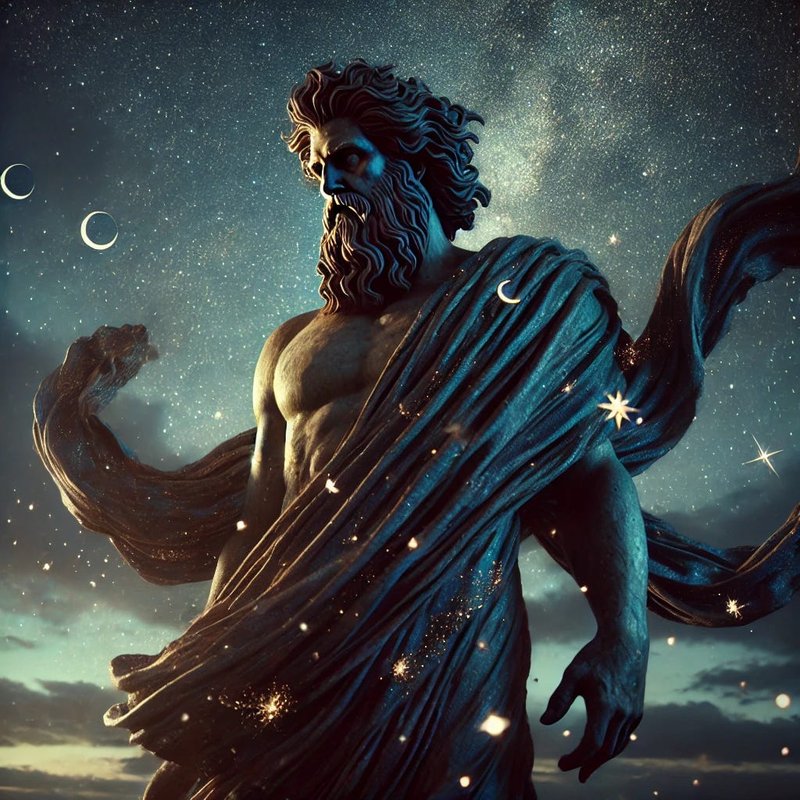
Astraeus was the Titan god of the stars and astrology – more specifically, of the art of reading the stars for signs about earthly affairs, which the Greeks called “astrology” without distinguishing it from what we would now call astronomy. He was a son of Crius and Eurybia, and by his wife Eos (the Dawn) he fathered the four directional winds and the five wandering stars – the planets visible to the ancient Greek naked eye.
The four winds – Boreas (North, the cold one), Notus (South, the rain-bringer), Zephyrus (West, the gentle spring wind), and Eurus (East, the variable one) – were personified as gods with their own cults and distinct personalities. Boreas famously abducted the Athenian princess Oreithyia; the Athenians considered themselves his in-laws and invoked him before battles. Zephyrus killed the youth Hyacinthus by deflecting Apollo’s discus, apparently from jealousy. The winds in Greek mythology were not merely meteorological but personal, emotional, and capable of grievance.
The five planets that Astraeus fathered by Eos were the wandering stars that the Babylonians, and then the Greeks, had identified as moving differently from the fixed stars: what we now call Mercury, Venus, Mars, Jupiter, and Saturn. The Greek names for these planets derived from later tradition; Hesiod simply calls them the “planetai” – the wanderers. The Titan god of astrology was literally the father of the planets, which gives astrology in Greek religion a family pedigree that the modern practice can no longer claim.
Perses
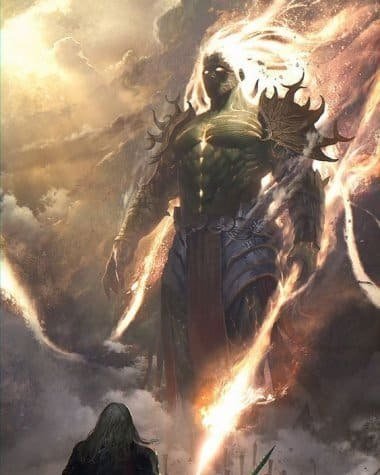
Perses was the Titan god of destruction – specifically the destruction associated with summer drought and the scorching heat of the dog-star Sirius, which the Greeks connected to the burning, withering quality of high summer. His name means “the destroyer” or “the ravager,” and his domain was the specific kind of destruction that happens not through violence but through desiccation: crops failing, wells drying, the landscape turning hostile in the height of summer heat.
He was a son of Crius and Eurybia, and by the Titaness Asteria he fathered Hecate. The connection between the destroyer and the keeper of crossroads and the night makes a kind of theological sense: Hecate’s liminal, uncanny power – her association with the dangerous and the chthonic – reflects something of her father’s character, the capacity for things to be stripped down, exposed, undone.
Beyond his parentage and his connection to Hecate, Perses appears rarely in the surviving sources. He is named in Hesiod and in Theoi’s comprehensive index, but he did not develop an independent mythological narrative the way his Titan cousins Prometheus and Atlas did. He is one of the supporting-cast Titans, significant in the genealogy, obscure in story. His primary legacy is his daughter, whose influence on Greek and later Roman religion was profound and lasting.
Dione
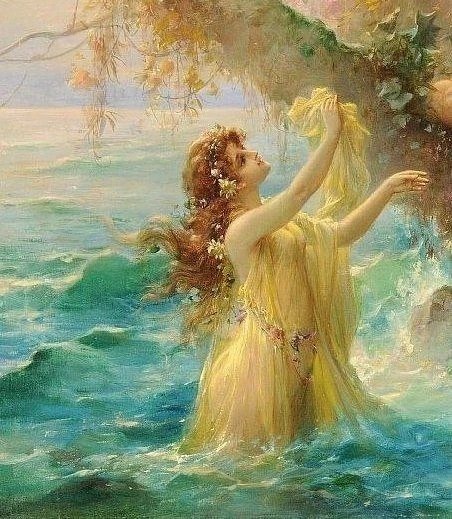
Dione’s status as a Titan is the most contested in this list, and the sources genuinely disagree in instructive ways. Hesiod’s Theogony does not include her among the twelve original Titans; his list runs to twelve precisely and Dione is not in it. But Apollodorus, writing several centuries later, lists her explicitly as a daughter of Uranus and Gaia alongside the other Titanesses, adding her as a thirteenth child where Hesiod had twelve. Hyginus also lists her among the Titan children of Uranus. Homer names Dione in the Iliad as the mother of Aphrodite by Zeus – a notable alternative to the better-known origin story in which Aphrodite emerges from the seafoam that gathered around Uranus’s severed genitals.
The name “Dione” is the feminine form of “Zeus” (both derive from the Proto-Indo-European root for sky or god), which suggests she was an extremely ancient goddess whose identity became partially subsumed into Zeus’s mythology as the tradition developed. At the oracle of Dodona – which was the oldest oracle in Greece, predating Delphi and considered by some sources to be its superior – Dione was worshipped alongside Zeus as his consort. The Iliad passage in which Aphrodite goes to her mother Dione for comfort after being wounded on the battlefield is one of the most domestic and emotionally unusual scenes in Homer.
Decision note: Included here because Apollodorus explicitly lists her as a Titan daughter of Uranus, making her inclusion legitimate from a primary source standpoint. The absence from Hesiod’s twelve should be noted rather than resolved – these are genuinely different ancient traditions.
Status: Listed as Titan by Apollodorus and Hyginus; absent from Hesiod’s canonical twelve. Consort: Zeus (per Homer and Dodona tradition). Children: Aphrodite by Zeus (per the Homeric tradition). Fate: Worshipped at Dodona alongside Zeus throughout antiquity.
Metis
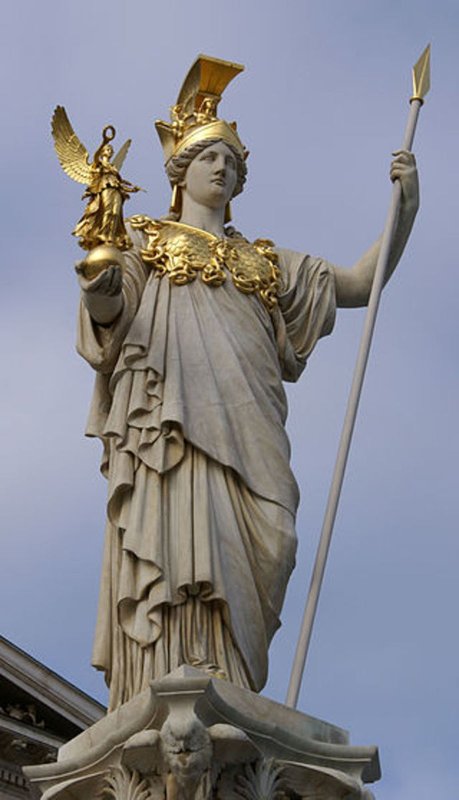
Metis was the goddess of wisdom, cunning counsel, and deep thought – qualities the Greeks considered distinct from raw intelligence, closer to the kind of shrewd, adaptive thinking that wins wars and solves problems nobody else can see. She was a daughter of Oceanus and Tethys, making her technically an Oceanid rather than a Uranid Titan. But Hesiod’s Theogony treats her in terms that place her firmly in the Titan generation, and she is explicitly named in Theoi’s comprehensive index of the Titans as a Titaness. Her exclusion from strict Titan lists is a question of genealogical definition, not of her divine generation or character.
Zeus married her first, before Hera, before Themis. Then a prophecy arrived – the same kind of prophecy that had undone Uranus and then Cronus before him – that Metis would bear children who surpassed their father in power. Zeus’s response was to swallow Metis whole while she was pregnant. Some time later, he developed an extraordinary headache. Hephaestus split his skull with an axe, and Athena emerged fully grown, in full armor, already shouting her battle cry. Metis, inside Zeus, became his permanent counselor, feeding him wisdom from within. It is, by any measure, one of the stranger solutions to an anxiety problem in mythological history.
The story says something interesting about how the Greeks thought about wisdom: it cannot be eliminated, only absorbed. Zeus does not destroy Metis; he incorporates her. Her counsel becomes indistinguishable from his own judgment. And her daughter, who emerged from his head, became the goddess of wisdom, craft, and strategic warfare – carrying forward everything her mother represented, but now wholly Olympian.
Note: Metis is listed as a Titaness in ancient sources including Theoi’s comprehensive index, though she is an Oceanid by parentage (daughter of Oceanus and Tethys) rather than a Uranid. She is included here because she belongs clearly to the Titan generation and is treated as such in the tradition.
Anytus
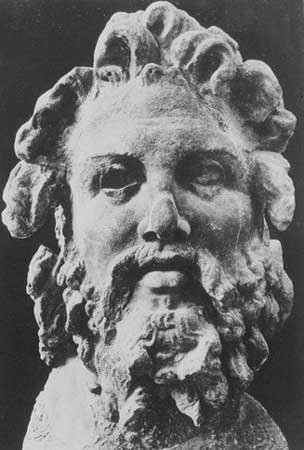
Anytus is the least-known figure in this list by some distance, and the evidence for his Titan status rests on a single passage in Pausanias’s Description of Greece, written in the 2nd century AD. Pausanias, visiting Arcadia, describes a sanctuary at Thelpusa where a cult statue showed Anytus in armor alongside Despoene, a goddess who was a daughter of Poseidon and Demeter. According to the local tradition Pausanias recorded, it was Anytus who raised Despoene after her birth – he was her foster-father. The people of Thelpusa, Pausanias notes, said that Anytus was a Titan.
That is essentially the entire dossier. No Hesiod, no Homer, no Apollodorus. Just Pausanias passing on what the Arcadians told him about a local cult figure in armor. Anytus is not mentioned in connection with the Titanomachy, has no surviving genealogy, and plays no role in any of the major mythological narratives. He is the most regional and obscure of all the figures documented as Titans in ancient sources.
His significance is not narrative but theological: he represents the tradition of local Titan cults that persisted in rural Greece long after the major myths had been codified. The Arcadians were famously proud of their antiquity – they called themselves “pre-lunar people,” claiming to have existed before the moon was in the sky – and their retention of a Titan figure in a living cult context into the Roman period is a genuine piece of religious history, even if Anytus himself remains almost entirely mysterious.
Note: Anytus appears in a single source – Pausanias, Description of Greece – as a local Arcadian Titan associated with the cult of Despoene. He is included here for completeness, with the caveat that he is attested nowhere else in the surviving ancient literature.
- Hesiod, Theogony (c. 700 BC) – primary source for the twelve original Titans; genealogies and Titanomachy
- Hesiod, Works and Days (c. 700 BC) – Prometheus, Epimetheus, and Pandora; the Golden Age under Cronus
- Homer, Iliad and Odyssey (c. 750 BC) – Oceanus, Cronus, Iapetus, Tethys, Dione, Themis; Helios as informant; Eos; Atlas
- Homeric Hymns – Hymn to Helios (Hyperion and Theia); Hymn to Apollo (Leto and Delos)
- Apollodorus, Bibliotheca (c. 2nd century AD) – adds Dione to the twelve; Iapetionides genealogy; Atlas in the Gigantomachy; Pallas’s skin as Athena’s aegis
- Pindar, Pythian Ode 4 (c. 462 BC) – Titans released from Tartarus by Zeus; Atlas bearing heavens
- Aeschylus, Prometheus Bound and Eumenides (c. 460 BC) – Prometheus’s gifts to mankind; Delphi lineage (Themis)
- Pausanias, Description of Greece (c. 2nd century AD) – Titan Anytus at Arcadia; altars to Titanesses at Olympia; Oracle at Delphi succession
- Diodorus Siculus, Library of History 5.66 (c. 1st century BC) – alternative Titan list (six men, five women); Titans as cultural benefactors
- Hyginus, Fabulae and Preface (c. 1st-2nd century AD) – Roman mythographer; adds Dione; Atlas, Hyperion, Polus, Saturn, Ops, Moneta among Titan children of Uranus
- Ovid, Metamorphoses (c. 8 AD) – Atlas transformed to mountain by Perseus; Prometheus as creator of mankind; extensive Titan treatments
- Theoi.com / Aaron Atsma’s Greek Mythology Encyclopedia – comprehensive sourced index of all Titans, cross-referencing all primary sources above