Every Animagus in Harry Potter Canon
Most people, if asked to name all the Animagi in Harry Potter, can get to four. James Potter was a stag. Sirius Black was a dog. Peter Pettigrew was a rat. And Professor McGonagall, who demonstrated the ability in Harry’s third-year Transfiguration class and then apparently spent decades watching students attempt it. Rita Skeeter, if you’ve read Goblet of Fire closely, makes five – the unregistered journalist beetle who listened to private conversations from flower pots.
Five is the number most readers land on. It’s the number that matters for the main plot. But the wizarding world’s documented history of Animagi goes back much further, and the official registry – a Ministry requirement since the creation of the transformation’s formal classification – contains names and animal forms that most Potter fans have never encountered.
What follows is every confirmed Animagus in the canon of J.K. Rowling’s wizarding world: those from the seven books, those from Rowling’s Pottermore writings and Famous Wizard Cards, and, in a separate section, those introduced through official video games. Each tier of canon is clearly labelled.
- An Animagus is a witch or wizard who can transform at will into a specific animal, retaining their human mind throughout
- Unlike werewolves, Animagi choose when to transform and are not subject to lunar cycles
- The animal form cannot be chosen – it reflects the witch or wizard’s inner character
- Animagi are required to register with the Ministry of Magic; unregistered transformation is illegal
- Only seven Animagi were registered in the entire 20th century – three of those are well-known characters
- The process to become an Animagus takes years and is extraordinarily difficult
- The earliest documented Animagus in wizarding history is Falco Aesalon, an ancient Greek wizard
- Primary book source: Harry Potter and the Prisoner of Azkaban (Chapters 17-18, 20)
Minerva McGonagall
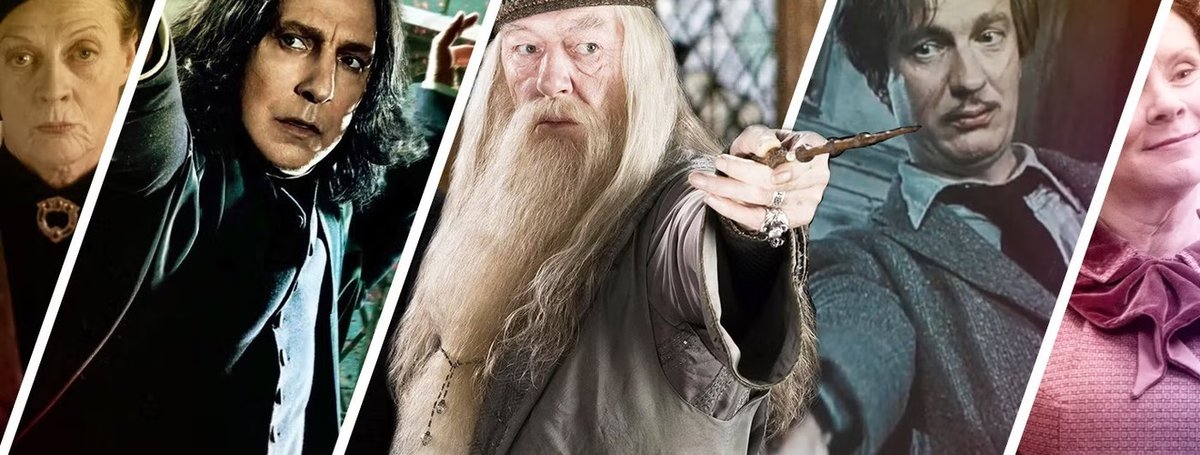
The Animagus that most readers encounter first, and the one who makes the ability look almost effortless. McGonagall demonstrates her transformation in Harry’s third-year Transfiguration class by sitting on her desk as a tabby cat – the same cat, Harry later realises, that had been sitting on the Dursleys’ garden wall in Privet Drive the day his parents died. The cat had spectacle markings around its eyes that became McGonagall’s square spectacles in human form. This detail is one of Rowling’s most economical narrative tricks: the cat from Chapter One of Philosopher’s Stone and the Transfiguration professor are the same person, and the connection pays off two books later.
McGonagall is registered with the Ministry, which distinguishes her from the other significant Animagi in the story. She became an Animagus young – the transformation appears to have been something she mastered early in her magical career – and has presumably been registered for decades by the time Harry arrives at Hogwarts.
Animal form: Tabby cat with spectacle markings
Registry status: Registered
James Potter
James Potter became an Animagus illegally, as a teenager, alongside his friends Sirius Black and Peter Pettigrew – not because they were studying the subject, but because their friend Remus Lupin was a werewolf. As Remus’s condition meant he transformed every full moon into something dangerous and uncontrolled, James, Sirius, and Peter spent several years mastering an extraordinarily difficult magical skill so that they could keep him company. An Animagus, unlike an untransformed human, could be around a werewolf without triggering the wolf’s aggression toward people. They called themselves the Marauders, and gave themselves map-names accordingly: Moony (Lupin), Wormtail (Pettigrew), Padfoot (Sirius), and Prongs (James).
James’s stag form gave him the name Prongs. It also, indirectly, saved Harry’s life: the Patronus is shaped by the caster’s deepest positive emotion, and Harry’s Patronus takes the form of a stag – inherited, symbolically, from a father he never knew.
Animal form: Stag
Registry status: Unregistered (illegal)
Sirius Black
The most plot-critical Animagus in the series. Sirius spent twelve years in Azkaban for a crime he did not commit – the murder of Peter Pettigrew and thirteen Muggles – and escaped by transforming into his dog form. The Dementors of Azkaban feed on human happiness and emotions; in his animal form, Sirius was something smaller and harder for them to reach. He was “thin enough to slip through the bars” of his cell in dog form, Rowling explains – after over a decade in a prison designed to contain wizards. This is the series’ most literal use of Animagus transformation as survival.
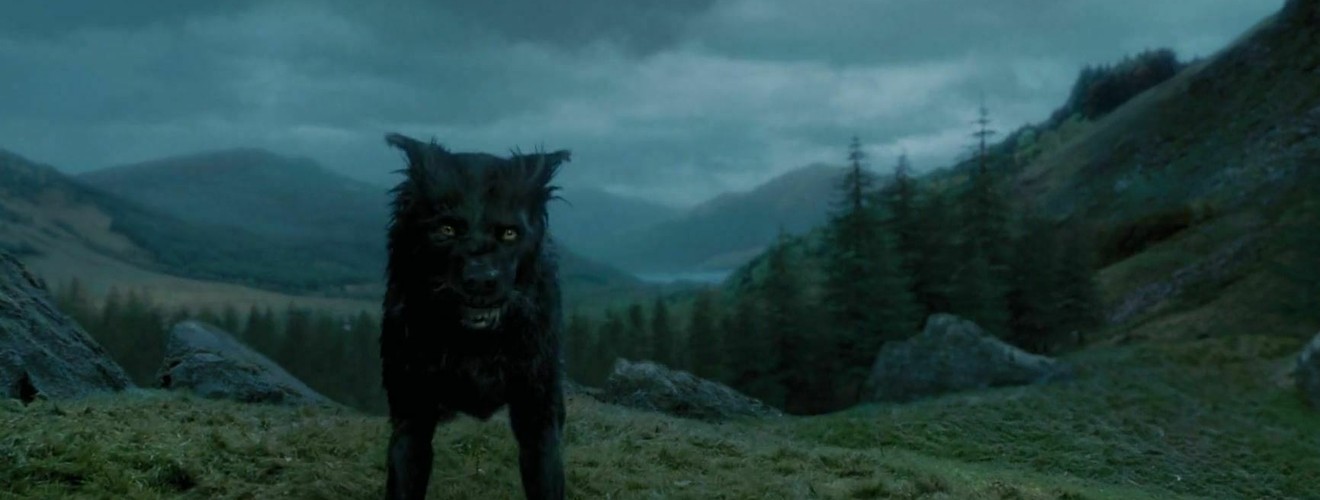
Sirius’s dog form was a large, shaggy black dog that both Hagrid and Harry initially mistook for a Grim – the spectral dog that wizarding folklore considers an omen of death. The irony is deliberate: the man being hunted as a murderer moves through the world wearing the shape of a death omen, and nobody looks twice.
Animal form: Large black dog (Padfoot)
Registry status: Unregistered (illegal)
Peter Pettigrew
The most consequential Animagus in the series, and the most despicable. Peter Pettigrew – known to the Marauders as Wormtail – spent twelve years living as a family’s pet rat. Ron Weasley’s rat, Scabbers, who sat in his pocket through two years of Hogwarts. Who gnawed at his homework and chewed through the bedpost and was described, even by Ron, as old and useless. Who was actually a forty-something grown wizard hiding in animal form because he had betrayed James and Lily Potter to Voldemort, framed Sirius Black for the crime, faked his own death by cutting off his own finger, transformed, and run.
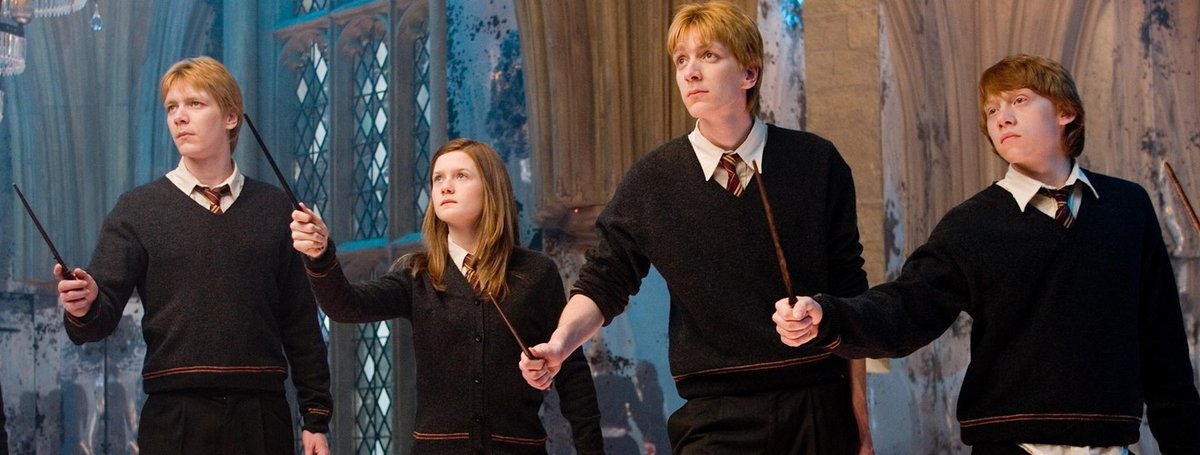
The genius of Pettigrew is that he is always there. Percy got him as a hand-me-down pet. Fred and George had him for years before that. He sat in that household for twelve years, watching Harry grow up through news coverage of a child he helped orphan. His transformation is the series’ most sustained and sickening piece of cowardice.
Animal form: Rat (Wormtail/Scabbers)
Registry status: Unregistered (illegal)
Rita Skeeter
The Animagus who doesn’t fight Dark wizards or die in a war – she just commits serial violations of wizarding privacy in pursuit of a good story. Rita Skeeter is an unregistered beetle Animagus, a fact that Hermione discovers in Goblet of Fire and uses to blackmail her into silence for the entire fifth book. As a beetle, Skeeter can fit in windowsills, flower arrangements, and the general perimeter of any conversation she wants to report on. Her Quick-Quotes Quill does the rest.
The transformation is first hinted at in Chamber of Secrets with the description of “jewelled spectacles” (the reflective markings on her beetle wings), and confirmed explicitly in Goblet of Fire when Hermione presents a beetle in a jar to the assembled students of Hogwarts: “Look what I found in the hospital wing on the day Harry and Cedric arrived back. A rather large beetle. Now – what does this remind you of?” The beetle’s unregistered status means every piece of private intelligence Skeeter has gathered in the course of her career was obtained illegally.
Animal form: Beetle
Registry status: Unregistered (illegal)
The following Animagi appear in J.K. Rowling’s Pottermore writings, Famous Wizard Cards, and supplementary canonical content – not in the seven novels, but in material authored by Rowling herself.
Falco Aesalon
The oldest documented Animagus in wizarding history. Falco Aesalon was an ancient Greek wizard whose name appears in Rowling’s Pottermore content as the first known practitioner of the transformation – the earliest recorded example of a wizard successfully achieving an animal form. His animal form was a falcon. The name is itself a hint: “Falco” means falcon in Latin, and “Aesalon” is the Latin name for the merlin falcon. Whether Rowling intended this as a piece of naming wordplay or a genuine historical detail of wizarding antiquity is probably both at once.
Animal form: Falcon
Source: Pottermore supplementary content
Cliodna
An Irish druidess of the ancient world, documented in Rowling’s Famous Wizard Cards. Cliodna – the name is derived from Irish mythology, where Clíodhna is a goddess of the sea and otherworldly beauty – was an Animagus whose form was a sea bird. In wizarding history she is noted for her work in healing and her study of magical birds; the Famous Wizard Cards describe her as “the most accomplished Irish witch of her age.” Her Animagus form connects both to her Irish heritage and to the coastal mythology surrounding the historical Clíodhna.
Animal form: Sea bird
Source: Pottermore Famous Wizard Cards
Morgan le Fay
The Morgan le Fay of Arthurian legend is, in Rowling’s wizarding world, real – a powerful medieval witch who was a contemporary of Merlin and, in magical history, something of a counterpart to him. She appears in Famous Wizard Cards, where her entry notes that she was an Animagus. Her specific animal form is identified as a bird, though the species is not named in available sources. Morgan le Fay as a figure in wizarding history is described as a Dark sorceress and an enemy of Muggles, though Rowling is careful not to simply transplant the full Arthurian mythology wholesale.
Animal form: Bird (species unspecified)
Source: Pottermore Famous Wizard Cards
Morrigan
A figure from Celtic mythology incorporated into wizarding world history via the Famous Wizard Cards. The Morrigan – goddess of war, fate, and death in Irish mythology, often associated with crows and ravens – appears in Rowling’s Pottermore content as a confirmed Animagus whose form was a crow. Whether Rowling intended this as the literal Celtic goddess existing in the wizarding world or as a witch who adopted the name and mythology is not specified. The crow connection is consistent with the historical mythological figure.
Animal form: Crow
Source: Pottermore Famous Wizard Cards
Adrian Tutley
One of the seven Animagi registered in the entire 20th century – a figure of Ministry record rather than narrative. Tutley’s gerbil form is his only notable characteristic in the available sources. He does not appear in the novels. His presence in the registry is mentioned in Pottermore content establishing how few registered Animagi there are, and how the process of registration discourages most wizards from pursuing the transformation legally.
Animal form: Gerbil
Registry status: Registered
Source: Pottermore registry content
Unidentified Witch
An unidentified witch listed on the official Animagus Registry in Pottermore content. She is one of only seven Animagi registered in the entire 20th century. Nothing else is known about her beyond her animal form.
Animal form: Black cat
Registry status: Registered
Source: Pottermore Animagus Registry content
Talbott Winger (Hogwarts Mystery)
An eagle Animagus who appears in the official mobile game Hogwarts Mystery, set during the 1980s at Hogwarts. Talbott learned to transform after years of secret practice, motivated by a personal connection to his late mother – who was herself an unregistered Animagus (a white swan). His story is one of the more developed Animagus storylines outside the main novels.
Animal form: Eagle
Registry status: Unregistered
Talbott Winger’s mother (Hogwarts Mystery)
A white swan Animagus revealed in the backstory of Talbott Winger in Hogwarts Mystery. She was unregistered and kept her ability secret; her transformation and its consequences are central to Talbott’s character arc in the game.
Animal form: White swan
Registry status: Unregistered
Soren Flockhart (Hogwarts Mystery)
A hawk Animagus who appears in Hogwarts Mystery. Flockhart is one of several adult wizards the player character encounters who have mastered the transformation outside the Ministry’s official channels. His choice of a hawk reflects a predatory intelligence that shapes how he operates in the game’s storyline. Like most unregistered Animagi encountered in Hogwarts Mystery, his reasons for keeping the ability secret are connected to the dangerous events surrounding Jacob’s sibling’s investigation of the cursed vaults.
Animal form: Hawk
Registry status: Unregistered
Patricia McManners (Hogwarts Mystery)
A calico cat Animagus encountered during Hogwarts Mystery. McManners is one of the more distinctive figures in the game’s extended Animagus storyline, which runs across multiple years of the player character’s time at Hogwarts. The calico cat form is notable for its specificity — unlike many of the more dramatic animal forms chosen by powerful dark wizards, McManners’s transformation suggests a character oriented toward concealment and observation rather than confrontation.
Animal form: Calico cat
Registry status: Unregistered
Olivier Kikkert (Hogwarts Mystery)
A frog Animagus who appears in Hogwarts Mystery. Kikkert is among the more unusual cases in the game’s Animagus storyline — a frog form is genuinely rare in the documented history of the transformation, and its appearance as anyone’s animal self says something interesting about the wizard who achieved it. In Hogwarts Mystery’s extended narrative, Kikkert appears as part of the broader network of practitioners whose abilities the player character uncovers during the cursed vault investigation.
Animal form: Frog
Registry status: Unregistered
Harold Ruddle (Hogwarts Mystery)
A ferret Animagus encountered in Hogwarts Mystery. The ferret is a form associated in wizarding lore with quick movement, cunning, and a certain disregard for boundaries — appropriate for an unregistered practitioner operating outside Ministry oversight. Ruddle appears in the game’s storyline as one of several adult wizards the player character must engage with during the investigation of the cursed vaults, each of whom has reasons for keeping their transformation ability outside official records.
Animal form: Ferret
Registry status: Unregistered
Jacob’s Sibling (Hogwarts Mystery)
The player character in Hogwarts Mystery, set at Hogwarts in the 1980s. Jacob’s sibling can become an Animagus over the course of the game, with the player choosing their animal form from three options: a brown dog, a black and white cat, or a falcon. As a player-character Animagus, the transformation is unregistered.
Animal form: Brown dog, black and white cat, or falcon (player’s choice)
Registry status: Unregistered
Natsai Onai (Hogwarts Legacy)
A gazelle Animagus who appears in Hogwarts Legacy, the 2023 game set in 1890. Natsai is a fifth-year Gryffindor student and one of the main companions; her Animagus ability is tied to her family heritage and her father’s own transformation.
Animal form: Gazelle
Registry status: Unregistered
Natsai Onai’s father (Hogwarts Legacy)
A giraffe Animagus revealed in the backstory of Natsai Onai in Hogwarts Legacy. His transformation and its circumstances are connected to events that shape Natsai’s story in the game.
Animal form: Giraffe
Registry status: Unregistered
- Harry Potter and the Prisoner of Azkaban, Chapters 17-20 – J.K. Rowling (1999). Primary source for McGonagall, James Potter, Sirius Black, Peter Pettigrew.
- Harry Potter and the Goblet of Fire, Chapter 37 – J.K. Rowling (2000). Primary source for Rita Skeeter’s Animagus status.
- Pottermore Famous Wizard Cards – J.K. Rowling (2015-present, WizardingWorld.com). Source for Cliodna, Morgan le Fay, Morrigan, Falco Aesalon.
- Pottermore Animagus Registry content – J.K. Rowling (WizardingWorld.com). Source for Adrian Tutley and registry statistics.
- Harry Potter: Hogwarts Mystery (Jam City, 2018). Source for game-only Animagi: Talbott Winger, Soren Flockhart, Patricia McManners, Olivier Kikkert, Harold Ruddle, Jacob’s sibling.
- Hogwarts Legacy (Avalanche Software/Warner Bros., 2023). Source for game-only Animagi: Natsai Onai, Natsai Onai’s father.
- HP Lexicon – Animagus – hp-lexicon.org. Cross-reference for registry entries and historical Animagi sourcing.
- HP Wiki (harrypotter.fandom.com) – Animagus. Cross-reference for full table of known Animagi and canon tier classification.