Every Magical Creature in Harry Potter

The wizarding world of Harry Potter teems with magical creatures – from the terrifying to the adorable, from ancient beasts lurking in forbidden forests to tiny pests hiding in household attics. J.K. Rowling built an entire taxonomy of magical life, drawing on centuries of real-world mythology and folklore while inventing dozens of species entirely her own. The result is a creature canon that rivals the depth of any fantasy bestiary ever written.
At the heart of this ecosystem sits the Ministry of Magic’s creature classification system, which sorts every known magical species into three categories: Beasts (any magical creature that does not have sufficient intelligence to understand wizarding laws or participate in their creation), Beings (creatures with enough intelligence to bear responsibility in a magical community), and Spirits (the deceased who continue to exist in some form). This tripartite system was established in 1811 by Minister Grogan Stump, after previous attempts – including one disastrous meeting that invited all “beings” and saw trolls wreck the chamber while fairies and pixies demanded inclusion – had failed spectacularly. Beasts are further rated on a danger scale from X (boring) to XXXXX (known wizard killer, impossible to train or domesticate).
Much of what we know about magical creatures in the wizarding world comes from Newt Scamander’s seminal textbook Fantastic Beasts and Where to Find Them, a Hogwarts set text required for all first-year students. Scamander spent years traveling the globe documenting magical species, and his work remains the definitive reference for magizoologists. At Hogwarts, students encounter many of these creatures firsthand in Care of Magical Creatures – a subject taught with memorable enthusiasm (and questionable safety standards) by Rubeus Hagrid, who never met a dangerous animal he didn’t want to adopt.
- The Ministry of Magic classifies magical creatures as Beasts, Beings, or Spirits – a system established by Minister Grogan Stump in 1811
- Beast danger ratings range from X (boring) to XXXXX (known wizard killer)
- Centaurs and merpeople are classified as Beasts at their own request, having refused “Being” status in protest of sharing it with hags and vampires
- Newt Scamander’s Fantastic Beasts and Where to Find Them is the standard Hogwarts textbook on magical creatures
- Care of Magical Creatures is an elective subject at Hogwarts, taught during Harry’s time by Rubeus Hagrid and occasionally Professor Grubbly-Plank
- Over 75 distinct magical species appear across the Harry Potter novels, companion books, and related works
Acromantula
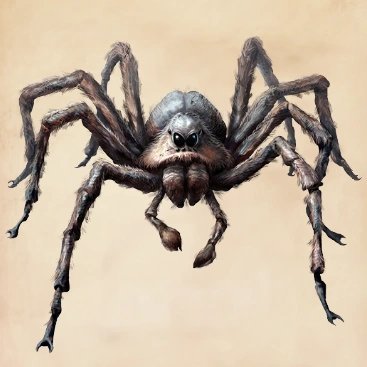
The Acromantula is a monstrous species of giant spider capable of human speech, believed to have been wizard-bred – likely created to guard dwellings or treasure. Native to the rainforests of Borneo, Acromantulas can grow to the size of carthorses, with leg spans reaching up to fifteen feet. They are covered in thick black hair, possess eight eyes, and produce venom of extraordinary value – a single pint can fetch one hundred Galleons.
Despite their intelligence and ability to communicate, Acromantulas are classified XXXXX due to their carnivorous nature and near-impossible domestication. They live in large colonies led by a dominant male and female, spinning dome-shaped webs on the forest floor. Their eggs – large, soft, and beach-ball-sized – are classified as Class A Non-Tradeable Goods by the Ministry.
The most famous Acromantula in Harry Potter canon is Aragog, who was raised from an egg by a young Rubeus Hagrid in the 1940s. After being wrongly blamed for opening the Chamber of Secrets, Aragog was released into the Forbidden Forest, where he founded an enormous colony. Harry and Ron encountered the colony in Chamber of Secrets, barely escaping with their lives when Aragog’s children ignored his orders not to eat them. Following Aragog’s death in Half-Blood Prince, Horace Slughorn attended his “funeral” primarily to harvest his invaluable venom.
Basilisk
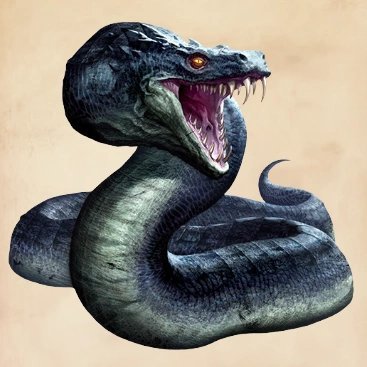
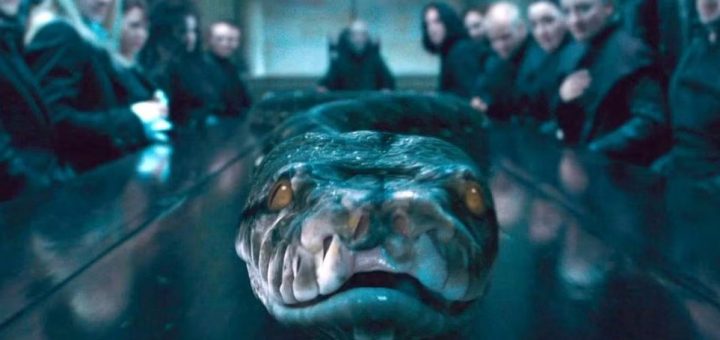
The Basilisk, known as the King of Serpents, is among the deadliest creatures in the wizarding world. Created by hatching a chicken egg beneath a toad, this enormous serpent can grow to over fifty feet in length, live for at least nine hundred years, and kill with a single direct glance from its large, yellow eyes. Even an indirect look – via reflection or through a ghost – will cause full-body Petrification rather than death. The Basilisk’s fangs carry venom so lethal that it is one of the few substances capable of destroying a Horcrux.
Spiders flee before the Basilisk, and it in turn fears only the crowing of a rooster, which is fatal to it. The creation of Basilisks has been illegal since the medieval period, though enforcing this law is nearly impossible since the beasts can only be controlled by a Parselmouth – a wizard who speaks the language of snakes.
The most famous Basilisk in the Harry Potter series was bred by Salazar Slytherin himself, placed within the Chamber of Secrets beneath Hogwarts roughly a thousand years before the events of the novels. In Chamber of Secrets, Tom Riddle’s memory – preserved in a diary Horcrux – used Ginny Weasley to unleash the serpent, which Petrified several students and the resident ghost Nearly Headless Nick before Harry killed it with the Sword of Gryffindor. Harry was bitten in the process, surviving only because Fawkes the phoenix shed healing tears on the wound.
Blast-Ended Skrewt
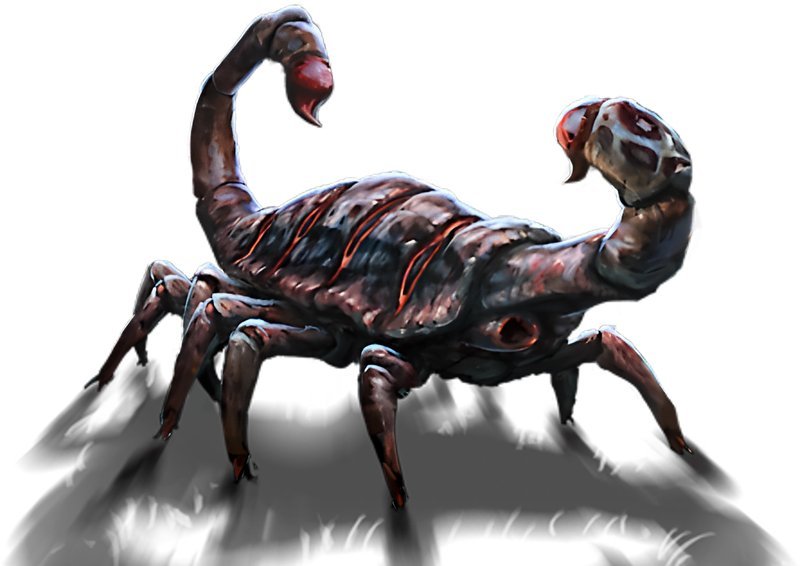
The Blast-Ended Skrewt is one of Hagrid’s most notorious creations – an illegal cross between a Manticore and a Fire Crab, bred by the Hogwarts gamekeeper during his tenure as Care of Magical Creatures professor. These grotesque creatures resemble pale, slimy, deformed shell-less lobsters, with legs sticking out at odd angles and no visible heads. They propel themselves forward with fiery blasts from their rear ends (hence the name), and the females sport sucker-like appendages on their bellies while the males bear stingers.
Skrewts are among the most disagreeable creatures ever encountered at Hogwarts. As babies they smell of rotting fish, they bite, sting, and burn anyone who handles them, and nobody – Hagrid included – seems entirely sure what they eat (though they’ll reluctantly accept ant eggs and frog livers). They grow at an alarming rate, reaching several feet in length within months and developing thick, nearly impenetrable armour.
In Goblet of Fire, Hagrid’s class was forced to tend to these creatures all year, a task the students uniformly despised. A fully-grown Skrewt – roughly ten feet long, heavily armoured, and blazing fire from its end – was placed in the maze during the Third Task of the Triwizard Tournament, where Harry had to battle past it. Since Skrewts are illegal hybrids with no Ministry classification, their continued existence after Hagrid’s experiment is uncertain.
Boggart
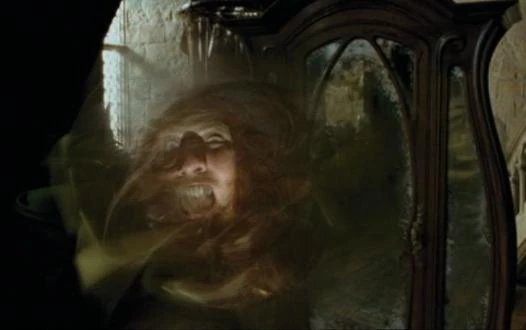
A Boggart is a shape-shifting non-being that lurks in dark, enclosed spaces – wardrobes, gaps beneath beds, grandfather clocks, and even the occasional filing cabinet. Nobody knows what a Boggart looks like in its natural form because the moment it encounters a person, it instantly transforms into whatever that individual fears most. This makes the Boggart a uniquely personal menace: it becomes a giant spider for one wizard, a mummy for another, and the full moon for a werewolf.
The standard defence against a Boggart is the Riddikulus charm, which forces the caster to reimagine their fear in an amusing form – turning a spider’s legs into roller skates, for instance, or a snake into a jack-in-the-box. Laughter weakens a Boggart, and the creature is most easily defeated in groups, since it struggles to frighten multiple people simultaneously and becomes confused trying to decide what form to take.
Boggarts feature prominently in Prisoner of Azkaban, where Professor Lupin uses one for a memorable Defence Against the Dark Arts lesson – the first truly effective DADA lesson Harry’s class experiences. The students line up to face the Boggart one by one, and Harry is prevented from participating because Lupin fears the Boggart will take the form of Lord Voldemort in front of the class (it would actually have become a Dementor). Boggarts reappear during the Order of the Phoenix, including one at 12 Grimmauld Place that takes the form of dead loved ones for Molly Weasley.
Bowtruckle
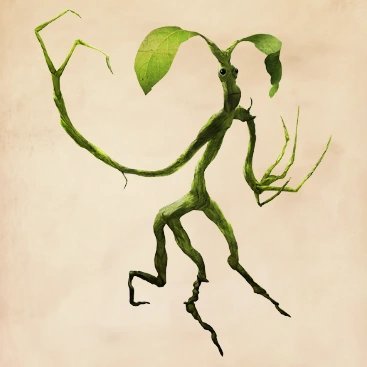
The Bowtruckle is a small, tree-dwelling creature that serves as a guardian of its home tree – specifically, trees whose wood is of wand quality. Standing no more than eight inches tall, a Bowtruckle appears to be made entirely of twigs and bark, with flat, bark-like faces and two small brown eyes. They are peaceful and extremely shy, but will attack anyone who threatens their tree with their surprisingly sharp fingers, which they ordinarily use for digging out wood lice.
Bowtruckles are particularly useful to wandmakers, as they can be bribed with wood lice or fairy eggs to allow access to their trees for wand wood harvesting. However, a wandmaker who takes too much will find the Bowtruckle becomes violent. Bowtruckles are found primarily in western England, southern Germany, and certain Scandinavian forests, wherever trees suitable for wandmaking grow.
In the Harry Potter series, Bowtruckles appear in Hagrid’s Care of Magical Creatures lessons in Order of the Phoenix, where students learn to identify and handle them. The creature gained enormous popularity through the Fantastic Beasts films, where Newt Scamander keeps a particularly devoted Bowtruckle named Pickett in his breast pocket – a tiny companion who proves invaluable as a lock-picker.
Bundimun
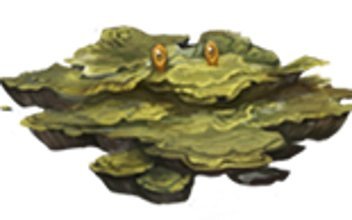
The Bundimun is a magical pest found worldwide, resembling a greenish fungus with eyes. It creeps along floors on its numerous squat legs, and its primary characteristic is its appalling stench – a powerful odour of decay that can make a room uninhabitable. Bundimuns are parasitic creatures that feed on the structure of the houses they infest, secreting a substance that rots the foundations. Left unchecked, a Bundimun infestation can destroy an entire building.
The creature’s secretions do have one practical use: when diluted, they serve as an ingredient in certain magical cleaning products. Scouring Charms are the standard method for removing a Bundimun infestation, though severe cases may require the intervention of the Department for the Regulation and Control of Magical Creatures.
While Bundimuns don’t play a significant role in the main Harry Potter narrative, they appear in Newt Scamander’s textbook and represent the more mundane side of magical creature management – the wizarding equivalent of termites or dry rot. They’re a reminder that not every magical beast is glamorous; some are just nuisances with particularly bad breath.
Centaur
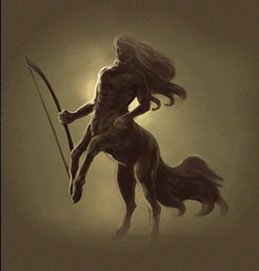
Centaurs possess the upper body of a human and the lower body of a horse, and they are among the most intelligent and proudest magical creatures in the wizarding world. They are gifted in astronomy, Divination (reading signs in the movements of planets and the burning of herbs), archery, and healing, and they live in forest herds led by elders. Centaurs are deeply distrustful of humans and fiercely independent.
The Ministry of Magic offered centaurs “Being” status, but they refused it, choosing “Beast” classification instead as a deliberate rejection of the magical government – they did not wish to share “Being” status with creatures like hags and vampires. This refusal reflects centaurs’ broader disdain for wizard politics and their insistence on self-governance. They consider themselves above wizarding law.
The Forbidden Forest colony plays a significant role throughout the series. In Philosopher’s Stone, Firenze saves Harry from Voldemort but is condemned by his herd for lowering himself to carry a human. In Order of the Phoenix, the herd violently drives out Dolores Umbridge after she insults them as “filthy half-breeds” – a satisfyingly karmic moment. Firenze breaks permanently from his herd to teach Divination at Hogwarts after Dumbledore offers him the position, an act his colony considers unforgivable betrayal. The centaurs ultimately join the Battle of Hogwarts in Deathly Hallows, fighting Voldemort’s forces.
Chimaera
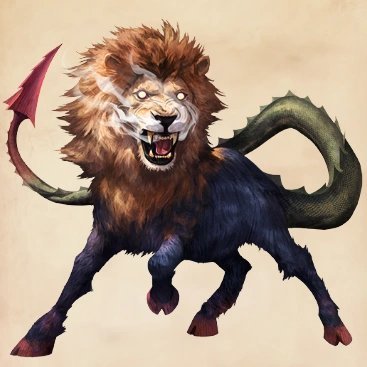
The Chimaera is one of the rarest and most dangerous magical creatures in existence. It has the head of a lion, the body of a goat, and the tail of a dragon, and it is a vicious, bloodthirsty creature native to Greece. There is only one known instance of a Chimaera being slain by a wizard – by Doris Purkiss’s great-grandfather – though the unlucky wizard reportedly died of exhaustion shortly after his victory.
Chimaera eggs are classified as Class A Non-Tradeable Goods, and the creature’s ferocity has earned it a XXXXX Ministry rating alongside Basilisks, dragons, and Acromantulas. The Chimaera is rarely seen and almost never captured alive. Even trained magizoologists generally avoid seeking them out, as the creature attacks anything that enters its territory.
In the Harry Potter series, the Chimaera is referenced primarily through Newt Scamander’s textbook and plays a background role in establishing the danger scale of the wizarding world’s fauna. The Blast-Ended Skrewt – Hagrid’s illegal hybrid – borrows some of its terrifying qualities from the Chimaera’s cousin, the Manticore. The Chimaera’s existence in the wizarding world, drawn directly from Greek mythology, illustrates Rowling’s approach of anchoring her magical bestiary in classical tradition.
Cornish Pixie
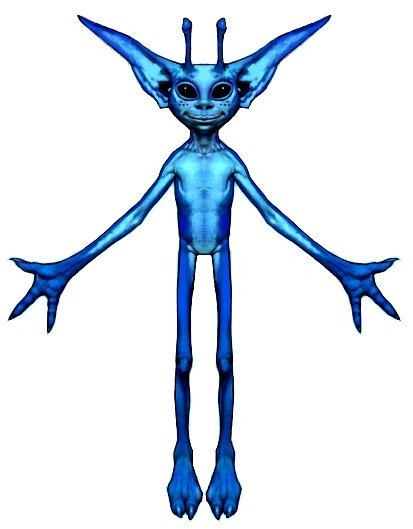
Cornish Pixies are small, electric-blue creatures about eight inches tall with pointed faces and voices so shrill they can only be understood by other pixies. Despite their diminutive size, they are enormously strong for their stature, capable of lifting and carrying objects (or people) many times their own weight. They are mischievous rather than truly malicious, but their idea of fun – disassembling classrooms, hanging students from chandeliers, and generally causing havoc – makes them a genuine nuisance.
The Cornish Pixie’s most memorable appearance comes in Chamber of Secrets, during Gilderoy Lockhart’s catastrophic first Defence Against the Dark Arts lesson. Lockhart releases a cageful of freshly caught Cornish Pixies into the classroom as a “practical lesson,” then proves completely incapable of recapturing them – his attempt at the spell “Peskipiksi Pesternomi” has no effect whatsoever. The pixies immediately wreak absolute havoc, destroying the classroom, throwing books and ink everywhere, and famously hoisting Neville Longbottom up to the chandelier by his ears. Hermione eventually subdues them with a Freezing Charm while Lockhart flees.
This scene is among the most comedic in the series and perfectly establishes Lockhart as a fraud. Cornish Pixies are considered a subspecies of the broader Pixie family but are distinguished by their vivid blue colouring and particular fondness for chaos.
Crup
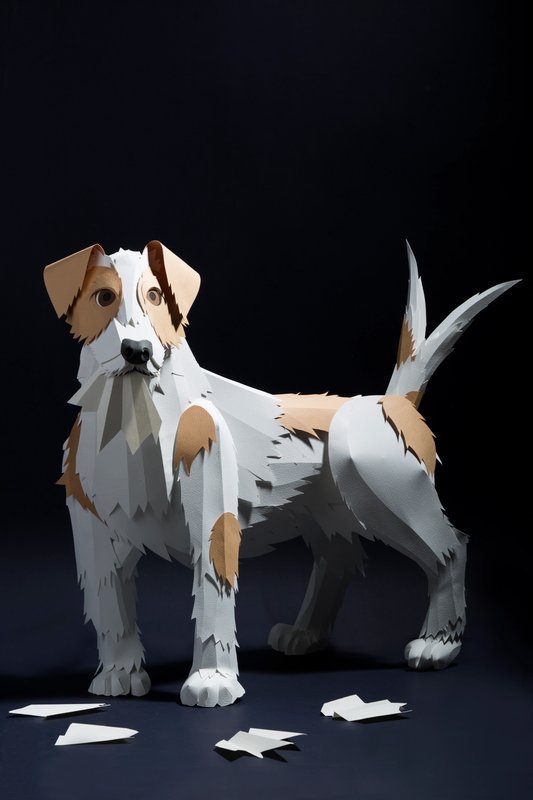
The Crup closely resembles a Jack Russell terrier in almost every respect, save for one notable difference: it has a forked tail. This magical dog breed is undyingly loyal to wizards and ferociously aggressive toward Muggles, which is why Crup owners are required by law to remove the creature’s forked tail with a painless Severing Charm before the animal is six to eight weeks old – preventing Muggles from noticing anything unusual.
Crups make excellent wizard pets and are relatively easy to care for. They will eat almost anything, from gnomes to old tyres. A licence from the Department for the Regulation and Control of Magical Creatures is required for Crup ownership, and the owner must pass a simple test demonstrating they can control the animal in Muggle-inhabited areas.
While Crups don’t feature prominently in the main Harry Potter plot, they appear in the Fantastic Beasts textbook and Pottermore, serving as a charming example of how the wizarding world has its own breeds of familiar animals. They occupy a similar niche to Kneazles and Puffskeins as popular magical pets, and the tail-docking requirement highlights the constant tension between the magical and Muggle worlds that underpins so much of Harry Potter’s worldbuilding.
Dementor
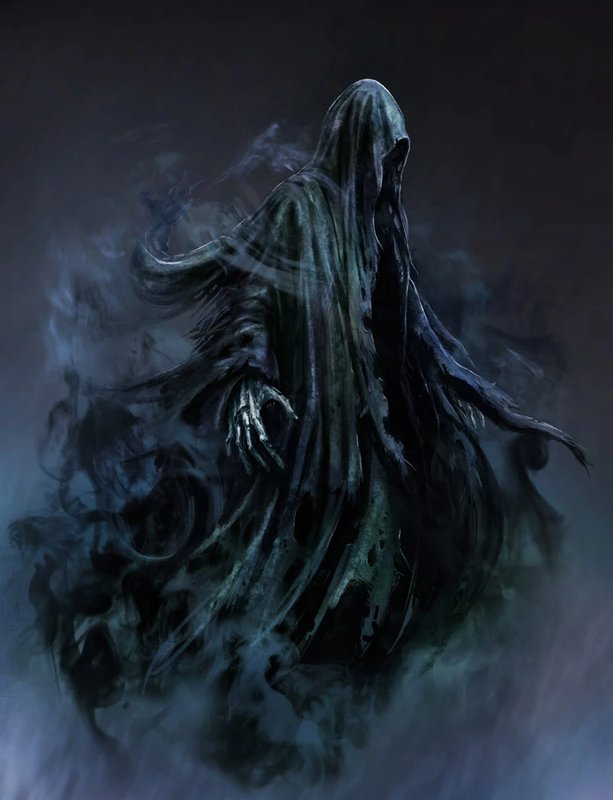
Dementors are among the foulest creatures that walk the earth. They are dark, cloaked figures that glide rather than walk, their faces hidden beneath hoods, their bodies decayed and scabbed. Where they pass, they drain peace, hope, and happiness from the air. In their presence, every good memory fades and is replaced by the worst experiences of one’s life. Their most terrible weapon is the Dementor’s Kiss – the removal of a victim’s soul through their mouth, leaving the body alive but empty, a fate widely considered worse than death.
Dementors cannot be killed. They breed by feeding on human despair, multiplying in conditions of misery and darkness. They fall outside the Ministry’s standard Beast/Being/Spirit classification entirely – they are non-beings, entities of pure darkness that exist to consume. The only known defence against them is the Patronus Charm, which produces a guardian of concentrated positive emotion – one of the most difficult spells in the wizarding repertoire.
For centuries, Dementors served as guards of Azkaban prison, where their presence drove many prisoners insane. The Ministry considered this arrangement acceptable until the Second Wizarding War, when the Dementors defected to Voldemort’s side – proving that their “loyalty” had only ever been transactional, based on whoever could offer them the most souls to feed upon. Harry encounters Dementors repeatedly throughout the series, beginning in Prisoner of Azkaban when they are stationed at Hogwarts to search for Sirius Black. Harry is particularly vulnerable to their effects because of the depth of trauma in his past. His learning of the Patronus Charm from Professor Lupin – and his eventual ability to produce a fully corporeal stag Patronus – represents one of the most significant achievements in his magical education.
Dragon
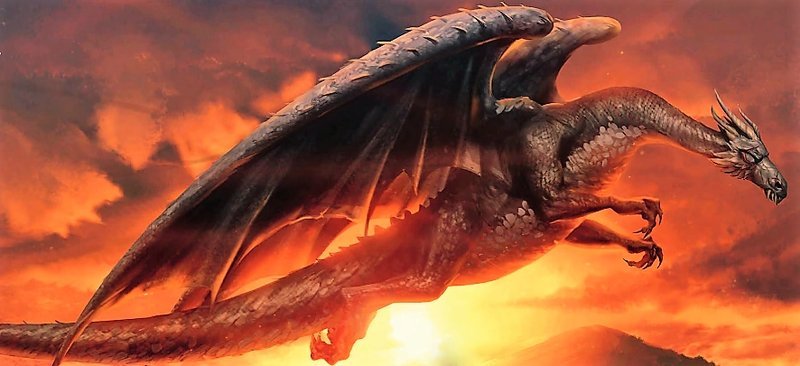
Dragons are the largest and most spectacular of all magical creatures – enormous, winged, fire-breathing reptiles that have captivated wizards and Muggles alike for millennia. All dragon species are classified XXXXX by the Ministry, and the breeding, keeping, and trading of dragons is governed by strict international law. Despite this, dragon products – heartstring for wand cores, blood with its twelve magical uses (discovered by Albus Dumbledore), hide for protective clothing – are among the most valuable materials in the wizarding economy.
There are ten recognized breeds of dragon worldwide. The Common Welsh Green is relatively docile by dragon standards and nests in high mountain areas. The Chinese Fireball (also called the Liondragon) has a distinctive scarlet body with gold fringe, and unusually shoots mushroom-shaped flame bursts. The Swedish Short-Snout is a silvery-blue dragon known for its extremely hot blue flame. The Romanian Longhorn has deep green scales and long, golden horns prized as potion ingredients, and is the subject of the most extensive breeding programme. The Peruvian Vipertooth is the smallest and fastest of all dragons, with venomous fangs and a particular taste for humans. The Antipodean Opaleye, native to New Zealand, is considered the most beautiful dragon, with shimmering, pearly scales and multicoloured, pupil-less eyes. The Hebridean Black is Britain’s more aggressive native breed, reaching up to thirty feet in length. And the Ukrainian Ironbelly is the largest of all dragon breeds, capable of reaching sixty feet and equipped with metallic grey scales of extraordinary toughness.
Dragons feature prominently in Goblet of Fire, where the First Task of the Triwizard Tournament requires each champion to steal a golden egg from a nesting mother dragon. Gringotts Wizarding Bank uses a Ukrainian Ironbelly to guard its deepest vaults – the same dragon Harry, Ron, and Hermione later ride to freedom in Deathly Hallows, one of the series’ most exhilarating escape sequences.
Dugbog
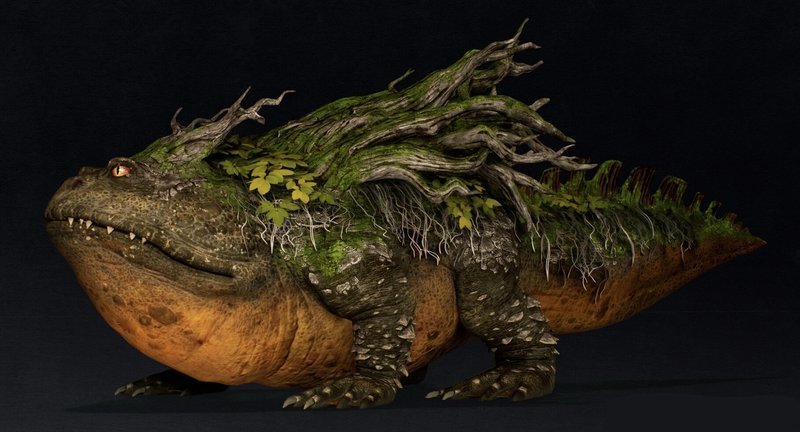
The Dugbog is a marsh-dwelling creature found in Europe and North and South America. Resembling a piece of dead wood when stationary, the Dugbog is easy to overlook – which is precisely how it prefers things. When a victim approaches, the Dugbog glides across the surface of the water on its finned paws and attacks, using its sharp teeth. While Dugbogs are not particularly dangerous to wizards who are paying attention, they pose a genuine threat to the unwary, especially to anyone reaching for what they think is a fallen branch.
Dugbogs have a particular fondness for Mandrakes, and gardeners in marshland areas must be vigilant when cultivating these valuable plants. A Mandrake bed infested with Dugbogs can be devastated quickly, as the creatures gnaw on the roots, leaving the gardener to discover plants that appear to have been chewed beyond recovery.
The Dugbog appears in Scamander’s textbook and is one of those creatures that populates the background of the wizarding world – not dramatic enough to feature in the main narrative, but lending texture and depth to the ecosystem Rowling created. Its camouflage ability and preference for ambush makes it a classic example of how magical creatures, like their Muggle counterparts, evolve survival strategies.
Fire Crab
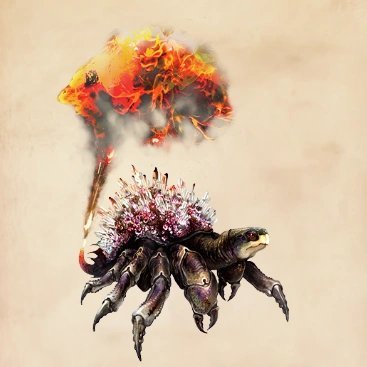
Despite its name, the Fire Crab more closely resembles a large tortoise with a jewel-encrusted shell. Native to Fiji, the Fire Crab defends itself by shooting flames from its rear end when threatened – a trait it passed on to the Blast-Ended Skrewt when Hagrid illegally crossbred it with a Manticore. The Fire Crab’s shell is covered in precious gems, making it a target for poachers and treasure hunters, and its coastal habitat in Fiji is now a protected reservation.
Fire Crabs are surprisingly popular as exotic pets despite the obvious fire hazard, and they require a special licence from the Ministry. Their temperament is generally placid if left alone, but they will not hesitate to blast flame at anyone who threatens them or their territory.
The Fire Crab’s primary significance in the Harry Potter series is its role as one half of Hagrid’s disastrous Skrewt experiment. The combination of Fire Crab flame-projection with Manticore aggression and armour produced one of the most dangerous creatures ever to exist on Hogwarts grounds – a testament to why the crossbreeding of magical species is so strictly regulated by the Ministry.
Flobberworm
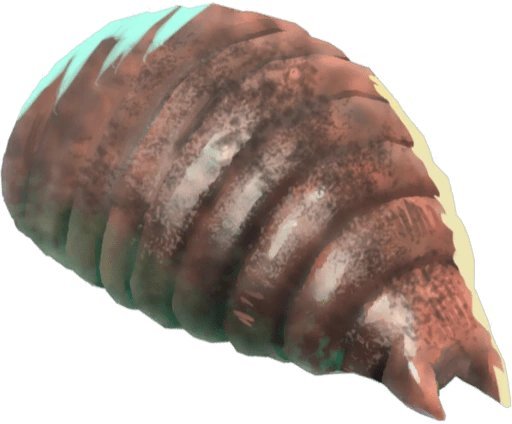
X (Boring)
The Flobberworm is, by all accounts, one of the most boring magical creatures in existence – so unremarkable that it has earned the distinction of being the only creature rated X on the Ministry’s danger scale, meaning it poses no threat whatsoever and requires no special treatment. Flobberworms are thick, brown, ten-inch worms that have a distinct head and tail, though they rarely bother to move in either direction. They subsist on vegetation, particularly lettuce, and produce mucus that is occasionally used as a potion thickener.
Hagrid made Flobberworms the subject of his Care of Magical Creatures lessons during his particularly cautious period in Prisoner of Azkaban, after the Buckbeak incident. The students spent an entire lesson trying to find the “interesting” thing about Flobberworms and failed completely. The creatures also turned up during O.W.L. examinations.
The Flobberworm’s greatest contribution to wizarding culture may be its role as a punchline – proof that for every majestic phoenix and terrifying dragon, the magical world also contains creatures of absolutely staggering mundanity. It sits at the opposite end of the spectrum from a Basilisk, a humbling reminder that not everything magical is exciting.
Fwooper
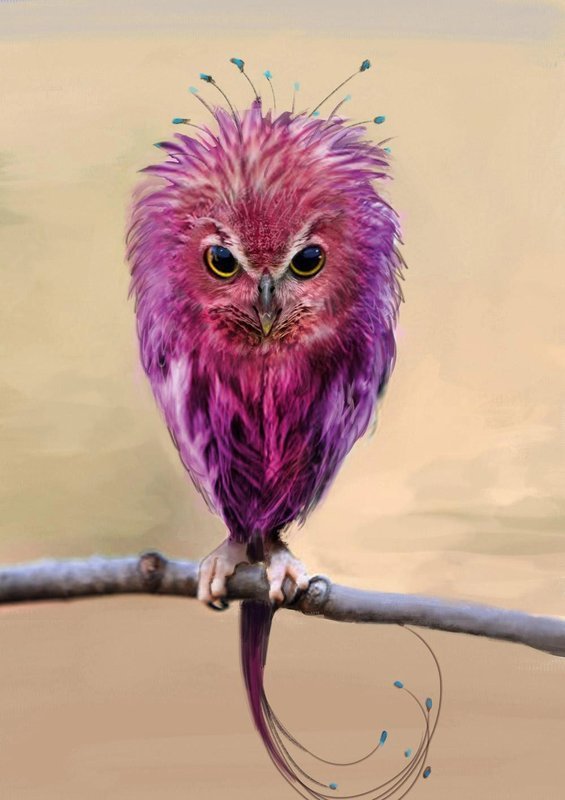
The Fwooper is an African magical bird with extremely vivid plumage – they come in orange, pink, lime green, and yellow varieties. Though visually stunning, the Fwooper’s most notable characteristic is its song: a high, quavering note that, while initially pleasant, will eventually drive the listener insane. For this reason, Fwoopers sold commercially must be fitted with a Silencing Charm, which requires monthly renewal.
Fwoopers are popular in the wizarding world despite (or perhaps because of) their dangerous song, primarily for their spectacular feathers, which are used in fancy quills. The noted magizoologist Uric the Oddball once attempted to prove that Fwooper song was beneficial to wizards’ health by listening to one for three months straight. The subsequent paper he presented to the Wizards’ Council – written entirely in ancient runes and delivered while wearing nothing but a badger on his head – was considered sufficient evidence that the song was indeed harmful.
The Fwooper appears primarily in Scamander’s textbook and Pottermore, serving as one of those delightful details that give the wizarding world its texture. The idea that a bird’s song could literally drive you mad is classic Rowling – taking something beautiful and giving it a dangerous twist.
Ghoul
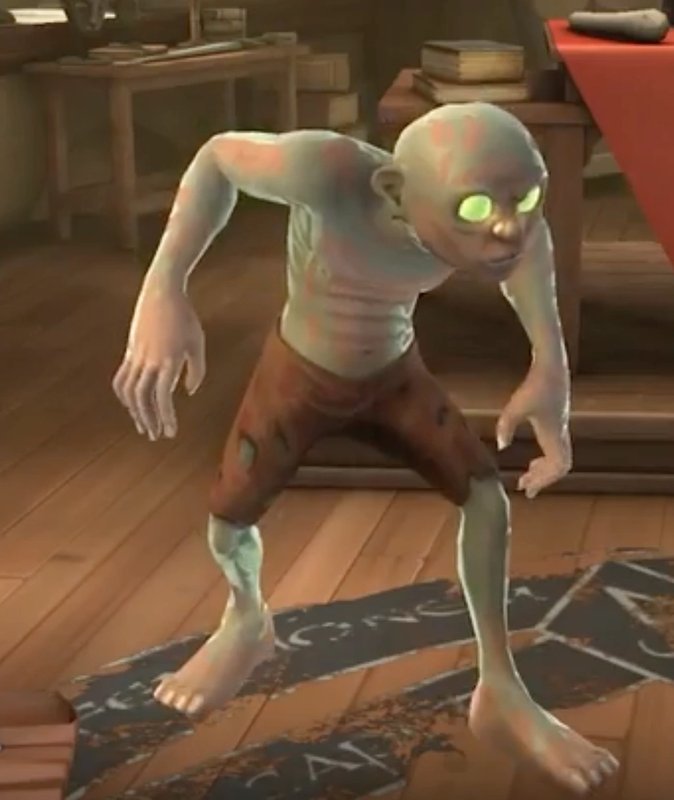
Ghouls are ugly, slimy creatures that resemble buck-toothed ogres and typically reside in attics or barns of wizarding households. Despite their fearsome appearance, ghouls are essentially harmless – dim-witted creatures that moan, groan, throw things around, and occasionally bang on pipes, but pose no real danger. Many wizarding families simply tolerate the ghoul in their attic as a minor inconvenience, much like Muggles might live with noisy plumbing.
The most notable ghoul in the Harry Potter series is the one living in the attic of the Burrow, the Weasley family home. The Weasley ghoul becomes plot-relevant in Deathly Hallows, when the family transforms it to look like Ron afflicted with a severe case of spattergroit – a cover story to explain Ron’s absence while he is off hunting Horcruxes with Harry and Hermione. The ghoul is dressed in Ron’s pyjamas and enchanted to produce boils and a ghastly appearance, fooling anyone who checks on the “sick” Weasley boy.
This clever use of an otherwise minor creature is a perfect example of Rowling’s worldbuilding paying off – the ghoul mentioned casually in earlier books becomes an essential plot device when it matters most.
Giant
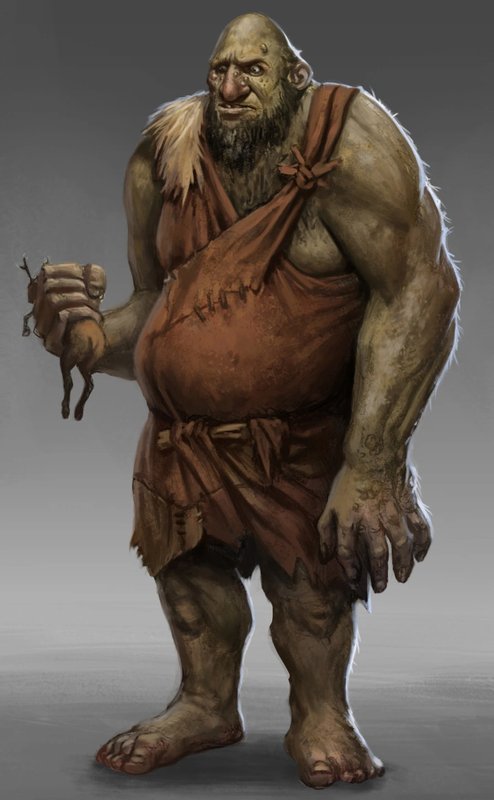
Giants are among the largest magical creatures, standing up to twenty-five feet tall with immense strength and notoriously violent temperaments. They live in mountainous tribal communities ruled by a chief called a Gurg, and their society is brutally hierarchical – disputes are settled through combat, and the strongest giant rules. Giants are of human-like intelligence but have been historically resistant to integration with wizarding society.
Once, giants were far more numerous and lived across Europe, but centuries of infighting – giants kill each other regularly – and persecution by both wizards and Muggles have driven them to a single remaining community in remote mountains. Their population dwindled from over a hundred known tribes to a single colony of roughly seventy to eighty individuals by the time of the series.
Giants play a significant role in the Second Wizarding War. Dumbledore sends Hagrid and Madame Maxime on a diplomatic mission to the giants in Order of the Phoenix, hoping to recruit them before Voldemort does. The mission fails, as the giants – manipulated by Death Eaters – largely side with the Dark Lord. Hagrid’s half-giant heritage (his mother was the giantess Fridwulfa) is a source of prejudice throughout the series, and his half-brother Grawp – a “small” giant at sixteen feet – provides comic and dramatic tension when Hagrid smuggles him into the Forbidden Forest.
Giant Squid
The Giant Squid of Hogwarts is one of the most unusual magical creatures in the series – a colossal cephalopod that lives in the Black Lake on the Hogwarts grounds. Unlike Muggle giant squids, the magical variety appears to be semi-domesticated (or at least remarkably tolerant of humans), and the Hogwarts squid is known for its gentle, almost playful behaviour with students.
The squid is frequently spotted basking in the shallow waters of the lake, and students have been known to tickle its tentacles on warm days. In Goblet of Fire, it is seen lazily drifting in the lake while students relax nearby. Dennis Creevey falls into the lake from his boat during the first-year crossing and claims the squid pushed him back in. The creature appears to be a permanent fixture of Hogwarts, likely having lived in the Black Lake for centuries.
Despite its Muggle-familiar appearance – giant squids exist in the non-magical world as well – the Hogwarts Giant Squid is classified as a Beast by the Ministry of Magic. Its seemingly docile nature around students, its longevity, and its apparent intelligence make it one of the more enigmatic creatures in the wizarding world. Whether it was placed in the lake by a Hogwarts founder or arrived on its own remains a mystery.
Goblin
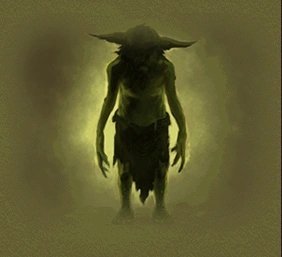
Goblins are small, highly intelligent humanoid creatures with long fingers, dark eyes, and a sophisticated understanding of metalwork, gem-cutting, and finance that far surpasses that of most wizards. They run Gringotts Wizarding Bank, the only bank in the British wizarding world, and their skill in forging enchanted metals – goblin-wrought silver, most notably – is legendary. Goblin-made armour and weapons are imbued with special properties, absorbing only that which strengthens them.
Relations between goblins and wizards have been fraught for centuries, marked by periodic Goblin Rebellions that punctuate wizarding history. The central point of contention is fundamentally cultural: goblins believe that the maker of an object is its true owner, and that selling it merely constitutes a loan – a concept that clashes irreconcilably with the wizard understanding of ownership. This philosophical divide fuels deep mutual distrust.
Gringotts – with its underground vaults, cart-rail system, and dragon-guarded high-security chambers – is one of the most memorable locations in the series. The goblin Griphook plays a crucial role in Deathly Hallows, helping Harry, Ron, and Hermione break into the Lestrange vault to retrieve Hufflepuff’s Cup (a Horcrux), only to betray them by claiming the Sword of Gryffindor – which he considers rightfully goblin property. This betrayal, while infuriating from the trio’s perspective, is entirely consistent with the goblin worldview that Rowling carefully establishes.
Grindylow
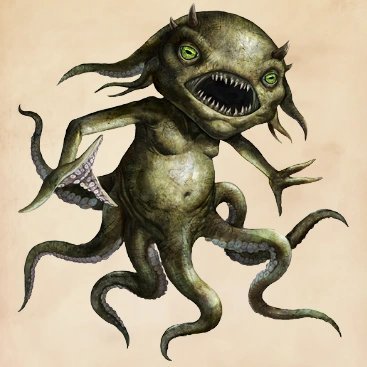
Grindylows are small, pale green water demons with horns, long, spindly fingers, and sharp teeth. They inhabit the weedy beds of lakes across Britain and Ireland, lurking among the underwater plants and grabbing at anything that passes by. While individually a Grindylow poses little threat to a competent wizard, they are dangerous in numbers and are particularly aggressive when their territory is disturbed.
In Prisoner of Azkaban, Professor Lupin keeps a Grindylow in a tank in his office and uses it as a teaching aid for his Defence Against the Dark Arts classes. The creature serves as one of the many hands-on demonstrations that make Lupin the best DADA teacher Harry ever has. The trick to escaping a Grindylow’s grip is to break their fingers – strong but brittle.
Grindylows return in Goblet of Fire during the Second Task of the Triwizard Tournament, where they attack Harry as he swims through the Black Lake to rescue Ron. The creatures swarm him in the lake’s weed beds, grabbing at his legs and attempting to drag him down. Harry fights them off with a jet of boiling water from his wand. Inspired by a creature from Yorkshire folklore – the grindylow was a water bogeyman used to scare children away from dangerous ponds – Rowling’s version preserves the aquatic menace while adding it to the magical bestiary.
Hippogriff
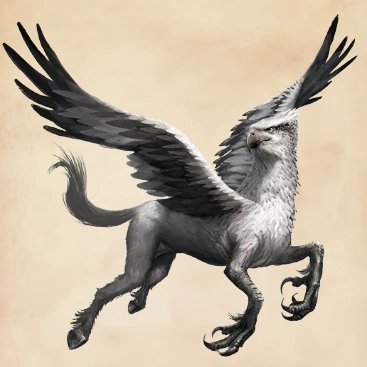
The Hippogriff is a proud, magnificent creature with the front half of a giant eagle – including wickedly sharp talons and a steel-coloured beak – and the hindquarters of a horse. Hippogriffs are fiercely proud and easily offended, and approaching one requires strict etiquette: you must bow and wait for the creature to bow back before making contact. Failure to show proper respect may result in a mauling.
Hippogriffs are the centrepiece of one of the series’ most emotionally charged storylines. In Prisoner of Azkaban, Hagrid introduces the Hippogriff Buckbeak (later renamed Witherwings) in his first lesson as Care of Magical Creatures professor. Harry successfully approaches and rides Buckbeak in a euphoric scene, but Draco Malfoy ignores the bowing protocol and is slashed by Buckbeak’s talons. The Malfoy family’s subsequent campaign to have Buckbeak executed drives much of the book’s plot, culminating in Harry and Hermione using the Time-Turner to rescue Buckbeak from execution and Sirius Black from the Dementor’s Kiss in the same night.
Buckbeak subsequently lives with Sirius at 12 Grimmauld Place, where he is kept in an upstairs room and fed dead rats. After Sirius’s death, Buckbeak passes to Harry’s care and is eventually returned to the Hogwarts herd. The Hippogriff breeding industry is well-established in the wizarding world, suggesting these creatures are commonly kept by experienced handlers.
Hinkypunk
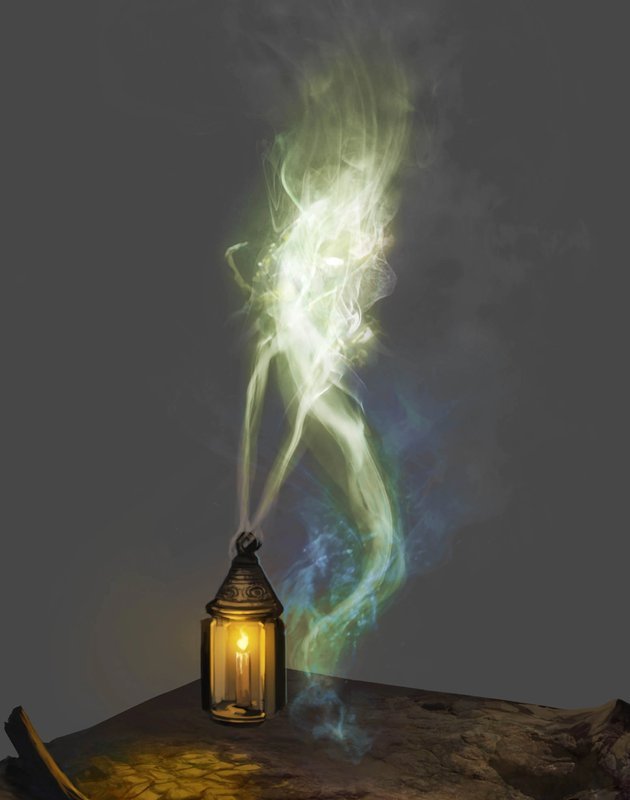
The Hinkypunk is a small, one-legged creature that appears to be made of wisps of smoke or vapour, carrying a small lantern. Found in bogs and marshes across northern Europe, the Hinkypunk uses its light to lure unwary travellers off safe paths and into treacherous bogland, where they become stuck or drown. It is essentially the wizarding world’s version of a will-o’-the-wisp, and it is far more dangerous than its wispy appearance suggests.
Professor Lupin covers Hinkypunks in his third-year Defence Against the Dark Arts class in Prisoner of Azkaban, keeping one in his office alongside the Grindylow. The Hinkypunk’s deceptive nature and ability to lead people astray makes it a perfect study subject for a Defence class – the lesson being that danger in the magical world doesn’t always come in the form of something obviously threatening.
The Hinkypunk draws on British and Irish folklore, where will-o’-the-wisps and similar marsh lights have been explained as everything from swamp gas to fairy trickery. Rowling’s version literalises the folklore, giving it a body (of sorts) and malicious intent. It’s one of several creatures in the series that demonstrates Rowling’s talent for mining mythology and giving it a concrete magical form.
House-Elf
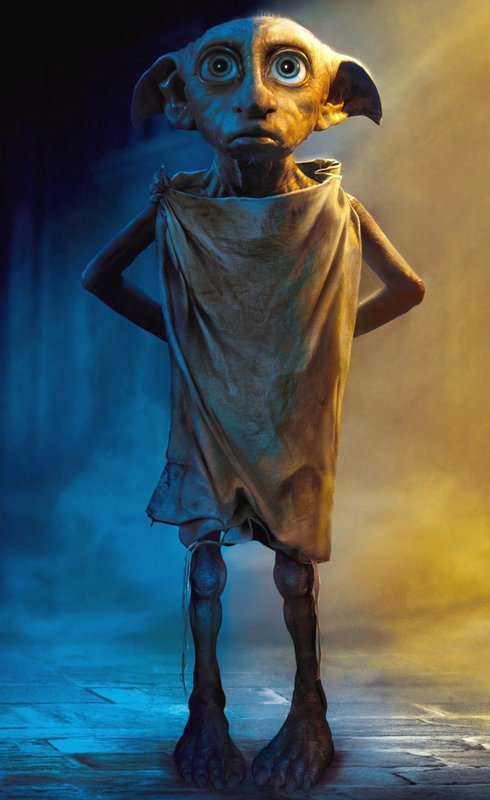
House-elves are small, humanoid creatures with bat-like ears, enormous eyes, and high-pitched voices, magically bound to serve wizarding families. They possess enormously powerful magic of their own – capable of Apparition even where wizards cannot, of overriding wizard enchantments, and of performing complex spells without wands – but are culturally conditioned to use this power only in service to their masters. A house-elf’s bondage is symbolised by the household items they wear; they can only be freed if their master presents them with clothing.
House-elves are among the most morally complex creatures in the series. Dobby, who first appears in Chamber of Secrets, is desperately loyal yet tormented by his service to the Malfoy family, punishing himself whenever he speaks against them. His liberation by Harry (via a sock hidden in Tom Riddle’s diary) is one of the book’s most triumphant moments. Dobby becomes one of Harry’s most devoted allies and dies saving Harry and his friends from Malfoy Manor in Deathly Hallows – a death that is among the series’ most emotionally devastating.
Hermione’s founding of S.P.E.W. (the Society for the Promotion of Elfish Welfare) in Goblet of Fire raises uncomfortable questions about wizarding society’s acceptance of what amounts to slavery. The Hogwarts kitchens are staffed by over a hundred house-elves, including the disgraced Winky, who spirals into Butterbeer-fuelled depression after being freed. Kreacher, the Black family elf, begins as a hateful antagonist but becomes loyal to Harry after being shown kindness – a powerful demonstration that house-elves’ behaviour reflects how they are treated.
Hungarian Horntail
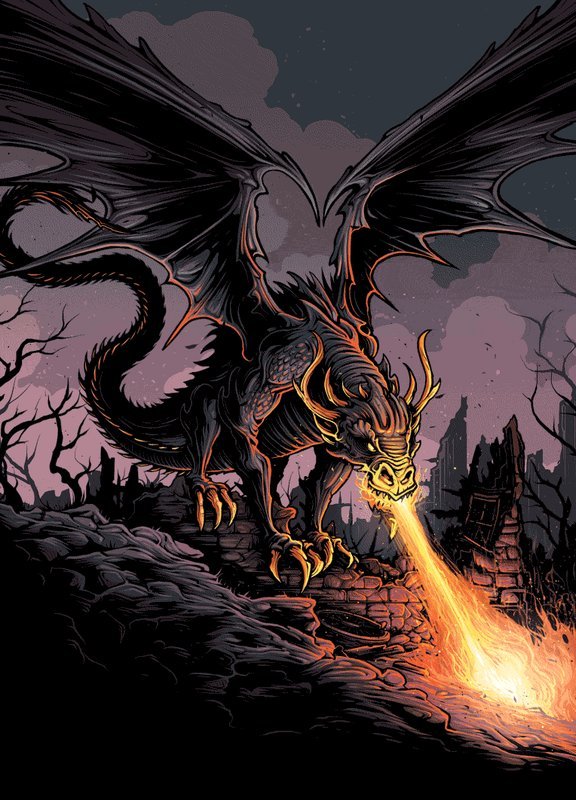
The Hungarian Horntail is widely considered the most dangerous of all dragon breeds – and that is saying something in a family of creatures where every member is classified XXXXX. It has black scales, yellow eyes, bronze horns, and similarly coloured spikes that protrude along its tail, which it swings with devastating accuracy. Its fire can reach up to fifty feet, and it is more aggressive than virtually any other dragon species, making it the breed least likely to tolerate human presence.
The Hungarian Horntail is the dragon Harry faces in the First Task of the Triwizard Tournament in Goblet of Fire – naturally, he draws the most dangerous breed of the four. The nesting mother Horntail is fiercely protective of her golden egg, and Harry must outfly her on his Firebolt broomstick in what becomes one of the most spectacular action sequences in the series. The Horntail breaks free from her chain and chases Harry across the Hogwarts rooftops, and he ultimately outmanoeuvres her through sheer flying skill and nerve.
Charlie Weasley, Ron’s brother, works with dragons on a reserve in Romania, and his expertise with these creatures provides much of the background dragon lore in the series. The Hungarian Horntail also appears in various wizarding world supplementary materials as the gold standard for draconic danger – the dragon other dragons would be afraid of, if dragons were afraid of anything.
Imp
II (Harmless)
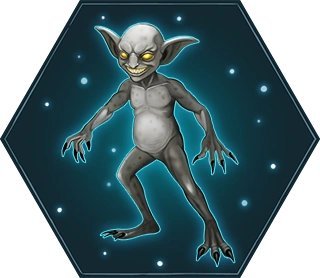
The Imp is a small magical creature roughly six to eight inches tall, similar in appearance to a Pixie but lacking the ability to fly. Imps are dark brown to black in colour and inhabit marshland areas, where they amuse themselves by tripping and pushing the unwary – their sense of humour is crude and physical. They have a particular fondness for damp, boggy areas and can occasionally be found in riverside locations.
Imps breed prolifically and are often considered pests, though their lack of any significant magical power beyond basic mischief makes them more of an annoyance than a genuine danger. They feed on insects and have no known magical properties that are useful to wizards, making them one of the less commercially significant magical species.
While Imps do not feature prominently in the Harry Potter narrative, they appear in the Fantastic Beasts textbook and serve to populate the lower end of the magical creature hierarchy. They occupy a similar ecological niche to gnomes and Doxys – small, mischievous creatures that exist at the margins of the wizarding world, more likely to be swatted away than studied.
Inferi
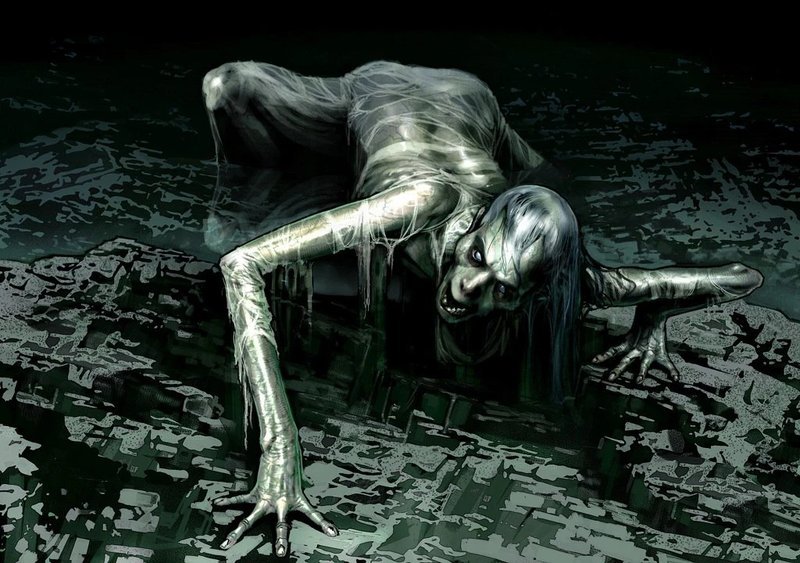
Inferi are reanimated corpses – dead bodies controlled through Dark Magic by a living wizard. They are not technically a “species” in the traditional sense but rather the product of the darkest branch of Necromancy. Inferi are pale, waterlogged-looking figures with milky white eyes, and they move with an eerie, puppet-like gait. They do not think or feel; they are simply weapons, carrying out the will of the Dark wizard who created them.
Inferi are repelled by fire and warmth – they instinctively recoil from flame, which is the most effective weapon against them. This weakness exists because, as Dumbledore explains, Dark wizards historically prefer cold and darkness, and their creations reflect this. Inferi were used extensively by Voldemort during both Wizarding Wars. During the First Wizarding War, the terror of Inferi attacks caused widespread panic, with people unable to be certain that their dead loved ones wouldn’t be turned against them.
The most dramatic Inferi encounter occurs in Half-Blood Prince, when Harry and Dumbledore visit the cave where Voldemort hid Slytherin’s locket Horcrux. The lake within the cave is filled with hundreds of Inferi lying dormant beneath the surface, who rise and attack when Harry touches the water. Only Dumbledore’s ring of fire – conjured even in his severely weakened state – drives them back. It is one of the most terrifying sequences in the series, made more haunting by the implication that these corpses were once Voldemort’s victims.
Kelpie
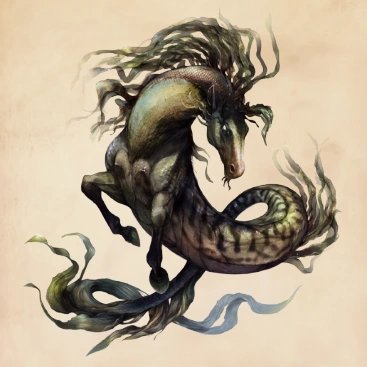
The Kelpie is a shapeshifting water demon native to Britain and Ireland, most commonly taking the form of a horse with a mane of bulrushes. It lurks in rivers and lakes, enticing travellers to ride on its back before diving beneath the surface and drowning its victim. The Kelpie can also take other forms, and the world’s largest known Kelpie inhabits Loch Ness – the wizarding world’s explanation for the Loch Ness Monster, which is actually a Kelpie that favours the form of a sea serpent.
A Kelpie can be rendered docile by placing a Bridle Charm over its head, after which it becomes submissive and harmless. This knowledge has been employed by wizards for centuries, though the initial capture of a Kelpie remains extremely dangerous. The creature’s ability to shapeshift makes identification difficult, and many Muggle drownings attributed to strong currents or undertow are, in the wizarding world, suspected Kelpie attacks.
The Kelpie appears in Scamander’s textbook and in Pottermore writings, and the creature is drawn from Scottish and Irish folklore where water horses (each-uisge and kelpies) are among the most feared supernatural beings. The Loch Ness connection is a typically playful Rowling touch – reimagining one of the Muggle world’s most famous mysteries as a straightforward magical creature sighting.
Knarl
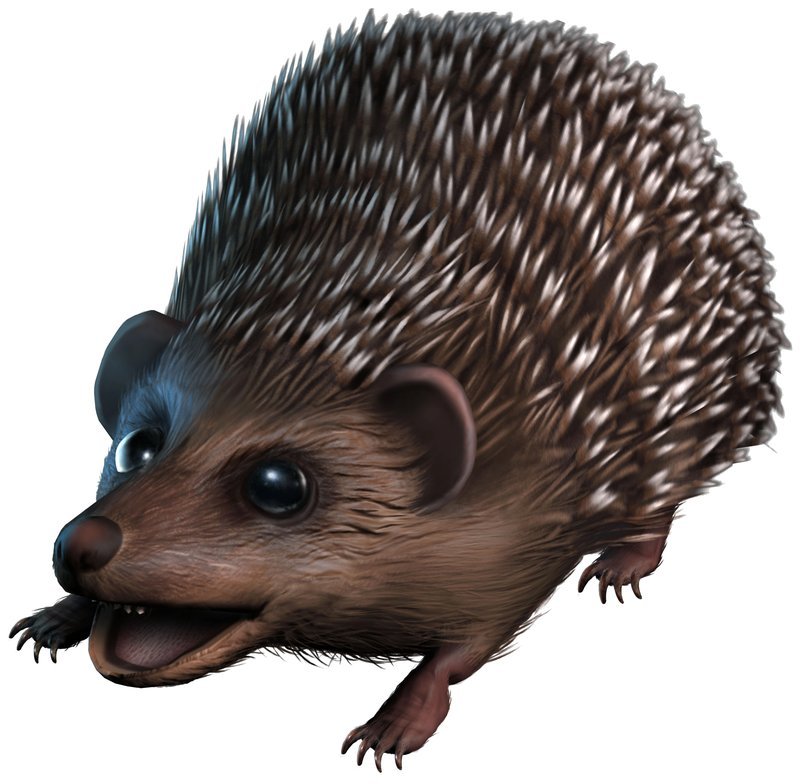
The Knarl is a magical creature that is virtually indistinguishable from a hedgehog, which leads to frequent confusion and occasional embarrassment. The key difference – and the one that matters – is behavioural: if you leave food out for a hedgehog, it will eat it gratefully and move on. If you leave food out for a Knarl, it will interpret the offering as an attempt to lure it into a trap and will proceed to destroy the garden of the offending party.
Knarls are found throughout northern Europe and North America. Their suspicion of human kindness makes them problematic for Muggle gardens, where well-meaning householders leave out saucers of milk for what they think is a hedgehog, only to wake up to find their flower beds demolished by an outraged Knarl. The Department for the Regulation and Control of Magical Creatures regularly responds to such incidents.
The Knarl’s ability to test a student’s observation skills makes it a popular creature in Hogwarts examinations. During the O.W.L. practical exams in Order of the Phoenix, students are asked to identify a Knarl among a group of hedgehogs – a task that requires patience and knowledge of the creature’s suspicious temperament. It’s a small, charming detail that adds depth to the magical creature curriculum.
Kneazle
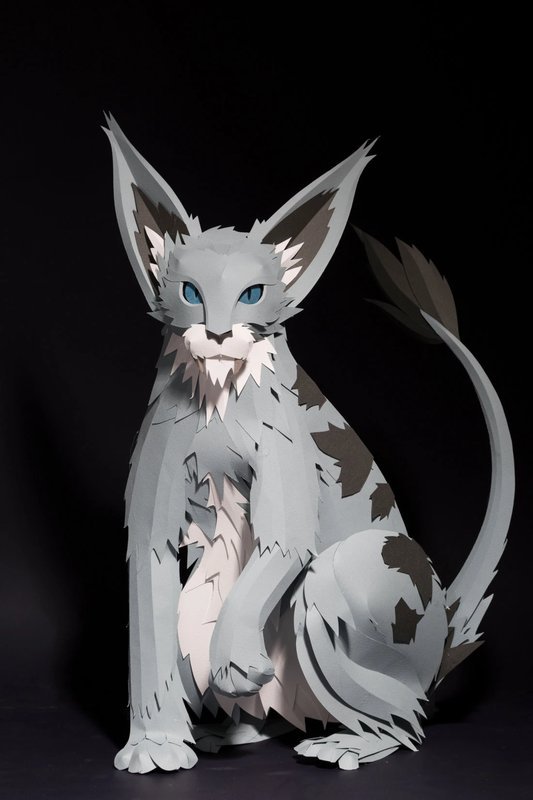
The Kneazle is a small, cat-like creature with large ears, a lion-like tail, and spotted or speckled fur. Highly intelligent and perceptive, Kneazles have an uncanny ability to detect untrustworthy or suspicious individuals, making them excellent companions for wizards who value their judgment. If a Kneazle takes a disliking to someone, it’s generally wise to pay attention. They can also guide their owners home safely if lost.
Kneazles can interbreed with domestic cats, producing offspring that retain many Kneazle traits. The most famous Kneazle-cat hybrid in the series is Crookshanks, Hermione’s ginger, bandy-legged pet purchased from the Magical Menagerie in Prisoner of Azkaban. Crookshanks demonstrates classic Kneazle intelligence throughout the book: he immediately identifies Scabbers (actually Peter Pettigrew in Animagus form) as fraudulent and relentlessly pursues him, and he develops a cooperative relationship with Sirius Black’s dog form, helping Sirius reach Pettigrew.
A licence is required to own a Kneazle, though Kneazle-cat hybrids are common enough that the licensing requirement is often overlooked for crossbreeds. The creature originates from Scamander’s textbook and represents another of Rowling’s elegant magical variations on familiar animals – a cat, but better, and with opinions.
Leprechaun
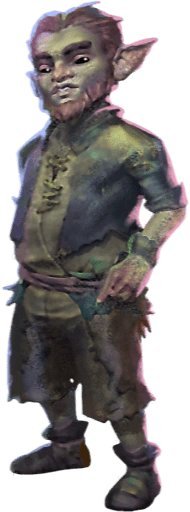
Leprechauns are small, green, humanoid creatures native to Ireland, standing roughly six inches tall. They are more intelligent than fairies and less malicious than Imps, possessing a mischievous but generally good-natured temperament. Leprechauns are best known for their ability to produce gold – handfuls of gleaming gold coins that they shower upon anyone who amuses them. However, this gold is famously unreliable: it vanishes after a few hours, making Leprechaun gold worthless as currency.
Leprechauns make their most significant appearance in Goblet of Fire at the Quidditch World Cup, where they serve as the mascots for the Irish National Quidditch Team. They fly onto the pitch in formation, creating a giant green shamrock that drifts over the crowd and rains gold coins down on the spectators. Ron joyfully pockets handfuls of the gold, later attempting to use it to pay Harry back for his Omnioculars – only to discover it has disappeared. The Leprechaun gold incident also plays into the Ludo Bagman subplot, as Bagman pays off gambling debts with the worthless coins.
The Leprechaun’s vanishing gold is a clever adaptation of Irish folklore into the wizarding world, and the Quidditch World Cup scene gives the creature a memorable and visually spectacular introduction.
Mandrake
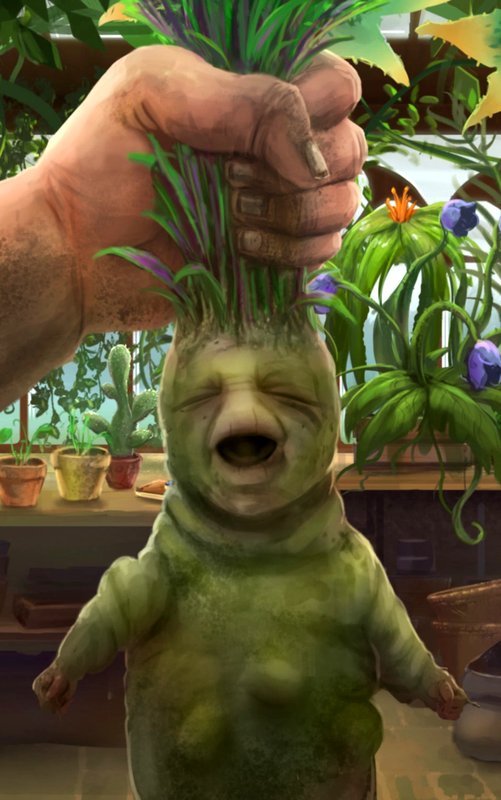
The Mandrake, or Mandragora, occupies a unique position in the wizarding bestiary: it is technically a plant, but one that behaves remarkably like a sentient creature. When young, Mandrakes resemble small, ugly babies with mottled greenish-purple skin, emerging from soil where their leaves grow. As they mature, they become moody teenagers, throw tantrums, and eventually form social attachments – they even throw a loud, acne-riddled party phase. A fully mature Mandrake’s cry is fatal to any human who hears it; even a young Mandrake’s wail can knock a person unconscious for several hours.
The Mandrake’s primary magical use is its restorative properties. A stew of mature Mandrakes is the only known cure for Petrification, making it an essential potion ingredient for reversing the effects of Basilisk gazes, curse exposure, and certain other magical conditions. This property drives a key plot point in Chamber of Secrets, where the school’s Mandrake crop – painstakingly grown by Professor Sprout in the Hogwarts greenhouses – is the only hope for the Petrified students.
Harvesting Mandrakes requires protective earmuffs (to block the deadly cry) and considerable fortitude (the plants thrash and fight when pulled from the soil). The Herbology lessons where second-year students repot baby Mandrakes are among the most memorable classroom scenes in the series.
Merpeople

Merpeople are intelligent aquatic beings with the upper body of a human and the lower body of a large fish. Like centaurs, they were offered “Being” status by the Ministry of Magic but chose “Beast” classification as a political statement, refusing to share a category with creatures they considered beneath them. Their intelligence, language, and culture are unquestionable – they have their own architecture, music (adapted for underwater hearing), and social hierarchy.
The Hogwarts merpeople colony inhabits the Black Lake and features prominently in Goblet of Fire during the Second Task of the Triwizard Tournament. The champions must dive into the lake to rescue hostages held in the merpeople’s village. Harry encounters them up close and discovers that, far from the beautiful mermaids of Muggle fairy tales, they resemble fierce, grey-skinned warriors with yellow eyes, wild green hair, and broken teeth. Their chieftain, Murcus, negotiates the terms of the Task with Dumbledore, who speaks Mermish.
Mermish is a language that sounds like screeching when spoken above water but becomes intelligible below the surface – a detail Rowling uses cleverly when the golden egg from the First Task produces a screaming sound in air but delivers a clear, song-like message when opened underwater. The merpeople’s song, warning the champions of their one-hour time limit, is one of the series’ most atmospheric moments.
Mooncalf
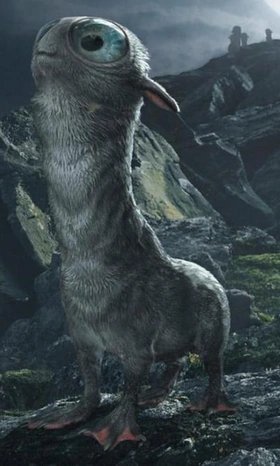
The Mooncalf is an extremely shy magical creature that emerges from its burrow only during the full moon. It has a smooth, pale grey body, enormous round eyes perched atop its head, and four long, spindly legs ending in large, flat feet. Under the light of the full moon, Mooncalves perform elaborate dances on their hind legs in isolated areas, creating intricate geometric patterns in fields – patterns that have baffled Muggle farmers for centuries as mysterious crop circles.
Mooncalf dung, if collected before sunrise, makes an exceptional fertiliser for magical plants and herbs, causing them to grow rapidly and with unusual vigour. This makes the creature valuable to herbologists and potion-makers, despite its timid nature making it difficult to farm conventionally.
The Mooncalf appears in Scamander’s textbook and in various Pottermore writings. Its role as the wizarding world’s explanation for crop circles is vintage Rowling – taking a real-world mystery and providing a whimsical magical answer. The creature’s extreme shyness and moonlit dances give it a gentle, poetic quality that sets it apart from the more aggressive entries in the magical bestiary.
Niffler
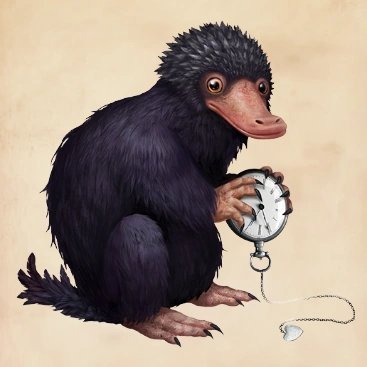
The Niffler is a small, furry creature with a long snout and a duck-billed, platypus-like appearance, native to Britain. Nifflers have an obsessive, near-pathological attraction to anything shiny – gold, jewellery, coins, or any glittering object – and possess an enchanted pouch-like belly that can hold a seemingly impossible quantity of treasure. They burrow deep into the earth with remarkable speed, and their talent for finding precious metals makes them popular with Gringotts goblins, who use them to hunt for buried treasure.
Despite their useful abilities, Nifflers are terrible house pets. Their compulsive theft of anything glittering makes them destructive to any furnished environment, and they will cheerfully dismantle a room in search of valuables. In Goblet of Fire, Hagrid uses Nifflers in a memorable Care of Magical Creatures lesson, burying Leprechaun gold in the ground and setting the creatures loose to find it – one of the rare lessons where every student has a genuinely good time.
The Niffler’s popularity exploded with the Fantastic Beasts films, where Newt Scamander’s Niffler provides much of the comic relief, repeatedly escaping to steal valuables at the worst possible moments. The creature’s appeal – essentially an adorable kleptomaniac with a magical pocket dimension in its stomach – has made it one of the wizarding world’s most beloved animals.
Norwegian Ridgeback
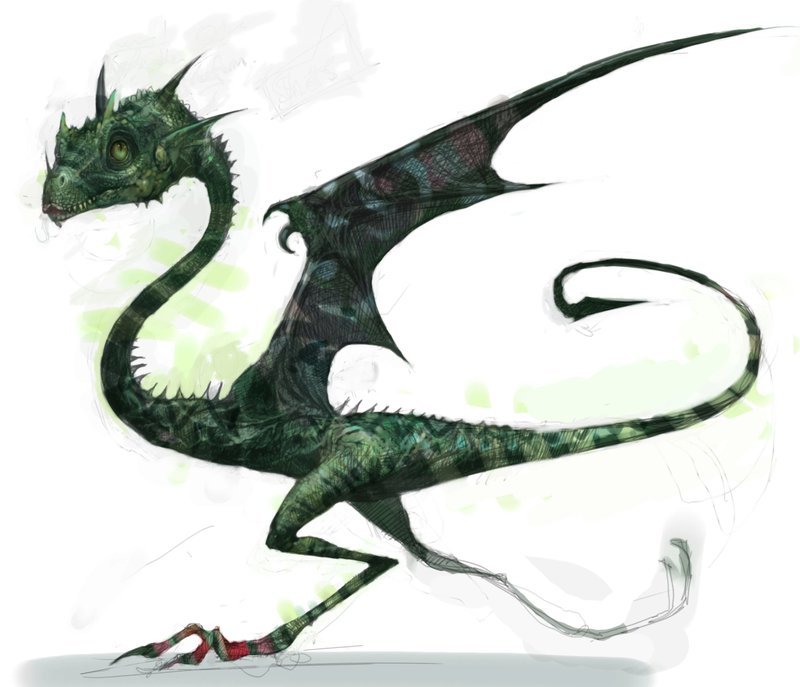
The Norwegian Ridgeback is a breed of dragon that closely resembles the Hungarian Horntail in appearance, though it is somewhat less aggressive (relatively speaking – it’s still a XXXXX-rated creature). It has black scales, bronze horns along its spine, and is one of the few dragon breeds whose young are aggressive enough to be dangerous from birth, developing the ability to breathe fire at just one to three months old.
The Norwegian Ridgeback holds a special place in Harry Potter lore as the breed of Norbert – later revealed to be Norberta, a female – the dragon Hagrid wins as an egg from a mysterious stranger in a pub during Philosopher’s Stone. The “stranger” was actually Professor Quirrell (possessed by Voldemort), who was extracting information from Hagrid about how to get past Fluffy, the three-headed dog guarding the Philosopher’s Stone. Hagrid, whose lifelong dream is to own a dragon, hatches the egg in his fireplace and attempts to raise the rapidly growing creature in his wooden hut – a situation that quickly becomes untenable.
Harry, Ron, and Hermione eventually arrange to have Norbert secretly smuggled to Charlie Weasley’s dragon reserve in Romania via friends arriving on broomstick at the top of the Astronomy Tower. This midnight operation – and the detention they receive when caught – sets up the Forbidden Forest sequence that is one of the first book’s climactic scenes. The Norwegian Ridgeback thus serves as the catalyst for some of the most pivotal events in the entire series.
Phoenix
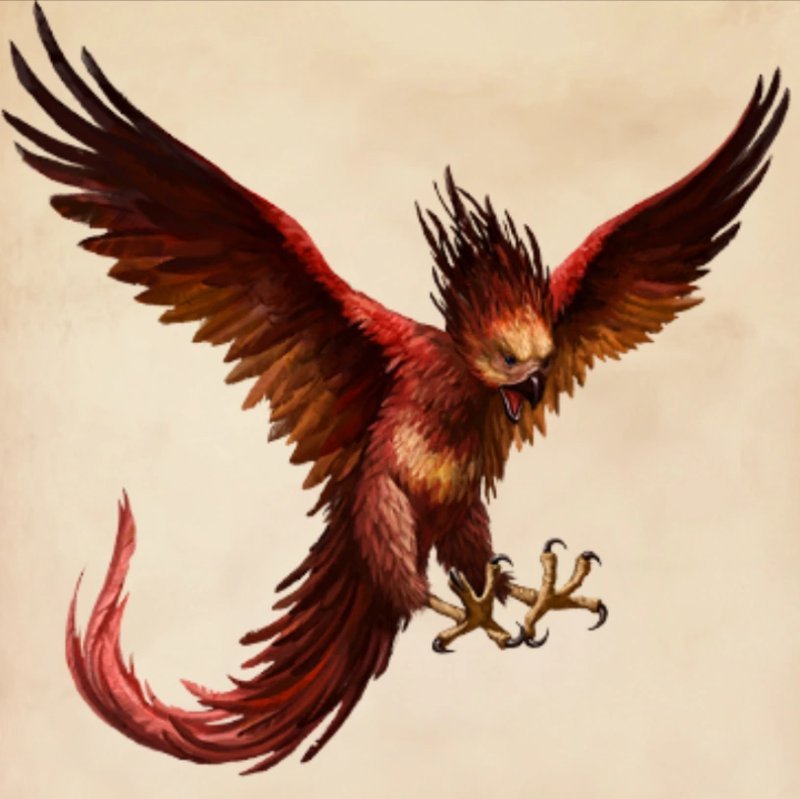
The Phoenix is a magnificent swan-sized bird with crimson and gold plumage, capable of carrying immensely heavy loads, vanishing and reappearing at will, and – most remarkably – dying in a burst of flames only to be reborn from the ashes. Phoenix tears have extraordinary healing powers, capable of curing any wound or poison, and their tail feathers make exceptionally powerful wand cores. The Phoenix gains its XXXX rating not because it is dangerous but because it is nearly impossible to domesticate – very few wizards have ever succeeded.
Fawkes, Albus Dumbledore’s phoenix, is one of the most important magical creatures in the entire series. Fawkes first appears in Chamber of Secrets, where Harry witnesses a Burning Day – the moment when a phoenix dies and is reborn. Fawkes then flies to Harry’s aid in the Chamber itself, blinding the Basilisk, delivering the Sorting Hat (from which Harry pulls the Sword of Gryffindor), and healing Harry’s fatal Basilisk bite with his tears. It is one of the most emotionally powerful sequences in the series.
Fawkes also provides the tail feathers that form the cores of both Harry’s and Voldemort’s wands – phoenix feather from the same bird – creating the Priori Incantatem effect that saves Harry’s life in Goblet of Fire. The phoenix’s ability to be reborn from its own destruction makes it a powerful symbol of hope and resilience that resonates throughout the entire Harry Potter narrative. After Dumbledore’s death, Fawkes sings a lament over Hogwarts and departs, never to return.
Pixie
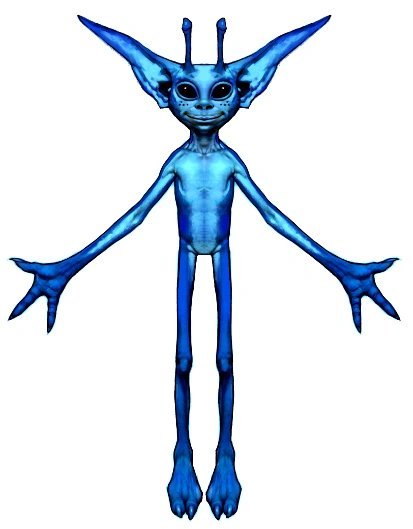
Pixies are small, mischievous magical creatures found primarily in Cornwall, England. In their natural form, they are electric blue, roughly eight inches tall, and capable of flight despite having no visible wings. Pixies are intelligent enough to communicate with each other (in a shrill, rapid chatter unintelligible to most humans) and to execute surprisingly complex coordinated pranks, but they lack the higher intelligence attributed to Beings.
Pixies are notorious troublemakers. They delight in grabbing humans by the ears and depositing them atop tall trees or buildings, stealing and hiding objects, and generally causing mayhem. Despite their small size, their collective strength is considerable – a group of pixies can easily overpower an unwary wizard, as Gilderoy Lockhart memorably discovered.
Beyond the Cornish Pixie incident in Chamber of Secrets (detailed in that entry), pixies appear throughout the wizarding world as a common pest. They nest in hedgerows and bushes, breed rapidly, and are considered a moderate nuisance by the Department for the Regulation and Control of Magical Creatures. De-pixying is a common household and grounds-keeping task, and the creatures are sometimes used by enterprising witches and wizards as a (chaotic) form of pest control against garden gnomes.
Poltergeist
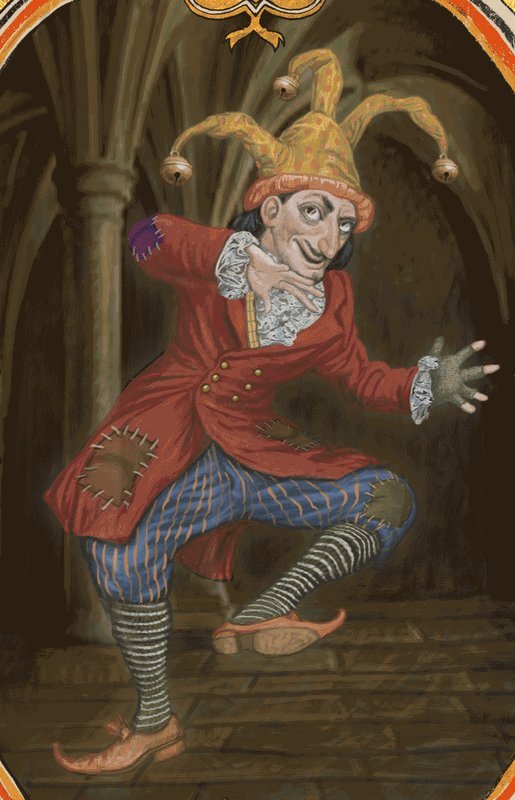
A Poltergeist is a non-being – an entity that has never been alive but is generated by environments of chaos, usually in places where many young people gather. Unlike ghosts, who are the transparent remains of once-living wizards, poltergeists are spirits of chaos itself, feeding on disorder and mischief. They are invisible at will, can manipulate physical objects, and are essentially indestructible – they cannot be removed from a location once they have manifested.
Peeves is the Hogwarts poltergeist and one of the most memorable recurring characters in the series (though, frustratingly for fans, he was cut entirely from the films). He has haunted Hogwarts for nearly as long as the castle has existed, terrorising students and staff alike with water balloons, rude songs, chalk-throwing, and relentless mockery. He answers to almost no one – the Bloody Baron can control him through fear, and Dumbledore commands his respect – but he torments everyone else with gleeful abandon.
Peeves has his finest hour in Order of the Phoenix, when Fred and George Weasley leave Hogwarts and instruct him to “give her hell.” Peeves salutes and proceeds to make Umbridge’s tenure as Headmistress a living nightmare, and for once, the staff do nothing to restrain him. In the Battle of Hogwarts, Peeves fights for the school, dropping Snargaluff pods on Death Eaters and singing a victory song when Voldemort falls. The poltergeist of chaos, it turns out, has more loyalty to Hogwarts than many of its human inhabitants.
Puffskein
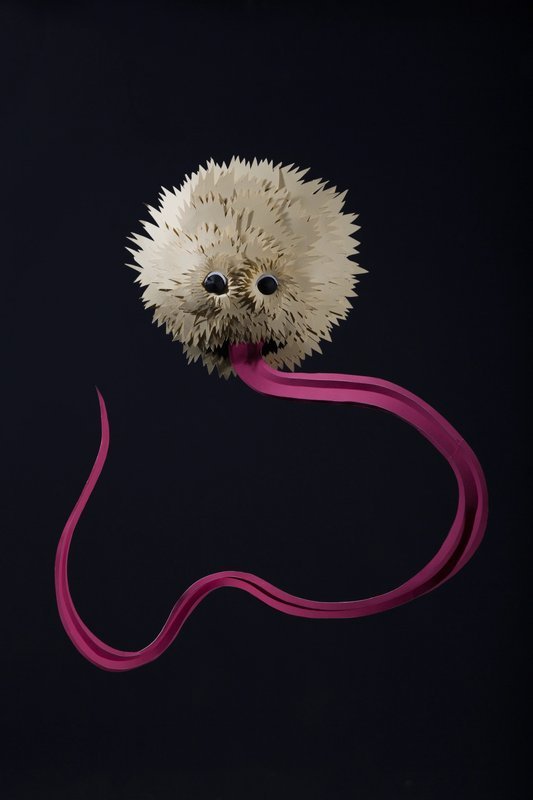
The Puffskein is a spherical, custard-coloured creature covered in soft fur, roughly the size of a tennis ball (though some grow larger). It is one of the most popular magical pets in the wizarding world, largely because it is docile, easy to care for, and genuinely affectionate – it will happily sit in a lap humming contentedly for hours. Puffskeins eat almost anything, but they have a particular fondness for sticking their long, thin tongues up the noses of sleeping wizards to eat their bogeys.
Despite this somewhat disgusting dietary preference, Puffskeins are beloved household companions. They don’t object to being cuddled, tossed around, or even used as Bludger substitutes in informal Quidditch games (though this last activity is frowned upon). The Weasley family keeps Puffskeins, and Ron’s at one point was used as Bludger practice by Fred.
A miniature breed called the Pygmy Puff was developed by Fred and George Weasley for sale at Weasleys’ Wizard Wheezes in Half-Blood Prince. Available in pink and purple, Pygmy Puffs became enormously popular – Ginny Weasley names hers Arnold. The Puffskein’s journey from textbook entry to toy shop sensation is a nice example of how magical creature lore feeds into the wizarding economy.
Re’em
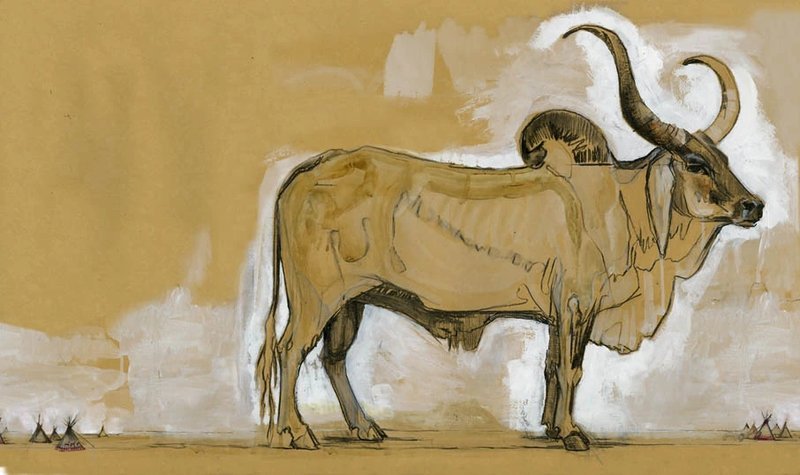
The Re’em is an extremely rare giant ox found in the wild areas of North America and the Far East. It stands enormously tall, with a golden hide that shimmers in sunlight. Re’em blood confers immense physical strength on the drinker, making it one of the most sought-after (and heavily regulated) magical substances in existence. The difficulty of obtaining Re’em blood – given the creature’s size, rarity, and remote habitat – keeps it out of most wizards’ hands.
The Re’em is mentioned in Scamander’s textbook and exists at the intersection of magical zoology and potion-making. Its blood’s strength-enhancing properties make it conceptually similar to dragon blood (which has twelve known magical uses) as one of those creature products that drives wizarding commerce and research. The regulation of Re’em blood is strict, reflecting the broader theme in the wizarding world of powerful magical substances requiring careful oversight.
While the Re’em doesn’t appear directly in the main Harry Potter narrative, its presence in the textbook adds depth to the magical creature ecosystem – a world where even obscure, seldom-seen beasts have properties that wizards covet and regulate. The creature’s name draws from the biblical Re’em, a powerful beast often translated as “unicorn” or “wild ox,” grounding Rowling’s invention in real-world mythological tradition.
Sphinx
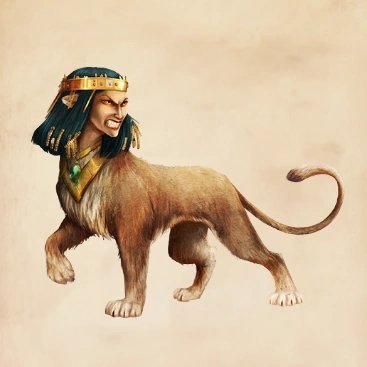
The Sphinx is a magical creature with the body of an over-large lion and the head of a human woman, native to Egypt. Known for their extraordinary intelligence and love of puzzles, riddles, and enigmas, Sphinxes are dangerous not because of mindless aggression but because of a very specific code of conduct: they will pose a riddle to anyone who approaches, and if the person answers incorrectly (or not at all), the Sphinx attacks. A correct answer earns safe passage.
Sphinxes have been used for centuries by wizards to guard treasure and secret rooms, their combination of physical power and intellectual challenge making them ideal sentinels. They are classified XXXX due to their capacity for violence against those who fail their tests, but they are entirely reasonable with anyone who can match wits with them.
The Sphinx’s most memorable appearance in the Harry Potter series is during the Third Task of the Triwizard Tournament in Goblet of Fire. Harry encounters a Sphinx in the maze who blocks his path to the Triwizard Cup and poses a riddle: the answer is “spider.” Harry solves it, and the Sphinx steps aside – one of the few obstacles in the maze that can be overcome through intelligence rather than magical power. The scene highlights the Sphinx’s unique position in the magical bestiary as a creature that values brains over brawn.
Streeler
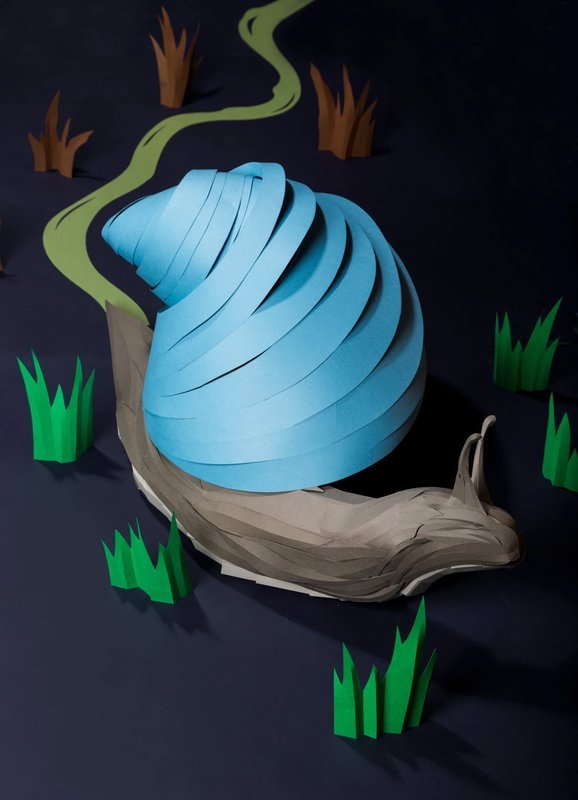
The Streeler is a giant snail that changes colour on an hourly basis, leaving behind a trail of venom so toxic that it kills and shrivels all vegetation it passes over. Native to several African countries, the Streeler’s constantly shifting colours make it visually striking – a rainbow of hues cycling through its shell throughout the day – but its venom makes it genuinely dangerous to both plants and incautious handlers.
Streeler venom is one of the few substances known to kill Horklumps (sentient fungi-like creatures), and it has some applications in potion-making when properly diluted and handled. The creature’s shell is occasionally kept as a decorative item, though the challenge of removing the venom makes this a specialist pursuit.
The Streeler appears in Scamander’s textbook and adds colour (literally) to the wizarding world’s fauna. It’s one of those creatures that illustrates a recurring theme in Rowling’s bestiary: beauty and danger often coexist. A creature whose shell cycles through gorgeous colours while leaving a trail of death behind it is both aesthetically memorable and thematically resonant with the broader magical world, where appearances are frequently deceiving.
Thestral
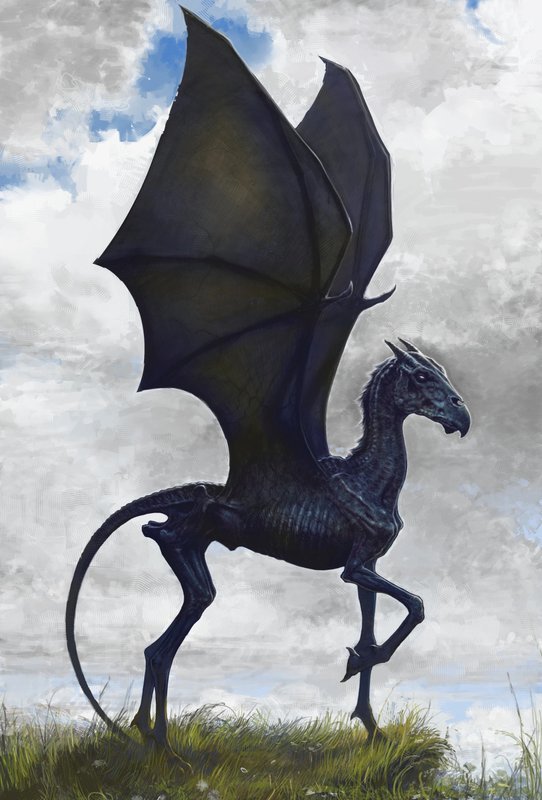
Thestrals are large, skeletal winged horses with white, pupil-less eyes, dragonish faces, and leathery black wings. They are completely invisible to anyone who has not witnessed and emotionally processed a death, which means most people cannot see them at all – to the unseeing, Thestral-drawn carriages appear to move by themselves. This eerie quality has given Thestrals an undeserved reputation as omens of bad luck.
In reality, Thestrals are gentle, intelligent creatures with an excellent sense of direction – they instinctively understand where their rider wants to go and can navigate vast distances unerringly. Their ability to fly long distances at speed makes them one of the fastest forms of magical transportation. Thestrals are carnivorous, attracted to the smell of blood, and they pull the carriages that transport Hogwarts students from the train station to the castle.
Harry first sees the Thestrals at the start of Order of the Phoenix, having gained the ability to see them after witnessing Cedric Diggory’s death. Luna Lovegood can also see them, having witnessed her mother’s death. The Thestrals’ visibility serving as a marker of trauma gives them enormous symbolic weight in the series. In Order of the Phoenix, Harry and his friends ride Thestrals from Hogwarts to the Ministry of Magic in the climactic rescue attempt. Hogwarts maintains a domesticated herd in the Forbidden Forest, tended to by Hagrid, making it one of the only known herds in Britain.
Troll
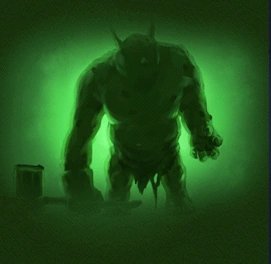
Trolls are large, powerful, and spectacularly stupid magical creatures, standing up to twelve feet tall and weighing over a tonne. There are three recognised varieties: Mountain Trolls (the largest and most dangerous), Forest Trolls (slightly smaller, pale green), and River Trolls (the smallest, with short horns). All varieties share an extremely low intelligence, a terrible smell, and a tendency toward violence – trolls will attack anything they encounter, swinging crude clubs fashioned from tree trunks.
The Mountain Troll that Professor Quirrell lets into Hogwarts on Halloween in Philosopher’s Stone is one of the most iconic scenes in the series – and the event that cements Harry, Ron, and Hermione’s friendship. Ron’s levitation of the troll’s club using Wingardium Leviosa (guided by Hermione’s earlier correction of his technique) knocks the creature out and is the first real demonstration of the trio working together under pressure.
Trolls have a long and inglorious history in the wizarding world. The 1811 creature classification conference famously attempted to include trolls in the “Being” category, with disastrous results. Troll whiskers are occasionally used in wand cores (though this practice is considered inferior), and security trolls are sometimes employed as guards – Dumbledore stationed trolls to guard the Philosopher’s Stone, and Gringotts uses them as vault security. Their combination of physical power and mental vacancy makes them useful as brute-force obstacles.
Unicorn
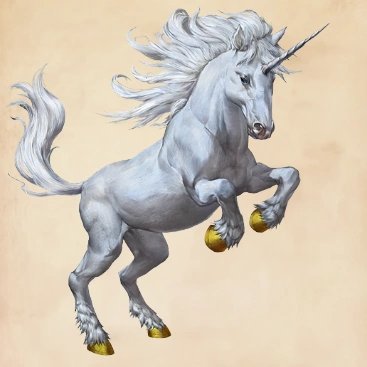
The Unicorn is a beautiful, pure-white horse with a single spiralling horn, and it is among the most magical creatures in the wizarding world. Unicorn foals are born gold, turning silver at about two years old, and achieving their full brilliant white by adulthood (around seven years). Unicorns are incredibly fast, elusive, and tend to prefer the company of women – female witches can approach them far more easily than males.
Every part of a Unicorn has magical properties. Their hair is a powerful wand core material (one of the three supreme cores identified by Ollivander, along with phoenix feather and dragon heartstring), and their silvery blood can sustain a person on the brink of death – but at a terrible cost. Drinking unicorn blood will keep you alive even if you are an inch from death, but the act of slaying something so pure curses the drinker to a half-life, a cursed existence.
This lore drives a pivotal scene in Philosopher’s Stone, when Harry discovers Voldemort (possessing Quirrell) drinking unicorn blood in the Forbidden Forest to sustain his weakened form. The image of the hooded figure crouching over a slain unicorn, silver blood on its lips, is one of the most haunting in the series. Unicorn tail hairs are used in various potions and as wand cores – Harry’s own mother’s wand contained a unicorn hair core. Hagrid keeps watch over the Unicorn herd in the Forbidden Forest and teaches students about them in Care of Magical Creatures.
Vampire
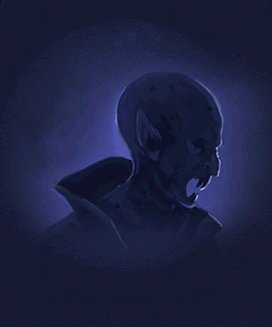
Vampires exist in the Harry Potter universe but occupy an unusually peripheral role – they are mentioned in passing, referenced in textbook chapters, and occasionally spotted at parties, but never serve as central antagonists or significant plot drivers. They are classified as Beings by the Ministry of Magic, suggesting sufficient intelligence and social awareness to participate in wizarding society, though their blood-drinking tendencies make them unwelcome in most circles.
In Half-Blood Prince, the vampire Sanguini attends Slughorn’s Christmas party as the guest of the author Eldred Worple, who is writing his biography. Sanguini is described as tall, emaciated, with dark shadows under his eyes, and Slughorn keeps a close eye on him to ensure he doesn’t approach any students. The scene is played mostly for dark comedy – a vampire at a party, politely restrained from biting anyone.
Vampires are covered in Defence Against the Dark Arts classes, and various anti-vampire products (garlic, stakes) appear throughout the series. Quirrell’s turban is initially claimed to be a gift from an African prince for fighting off a zombie, and vampire essays feature as DADA homework. Rowling has stated that she deliberately kept vampires in the background to avoid them dominating her magical world – they serve as atmospheric texture rather than narrative focus, a deliberate choice in a genre where vampires often overshadow everything else.
Veela
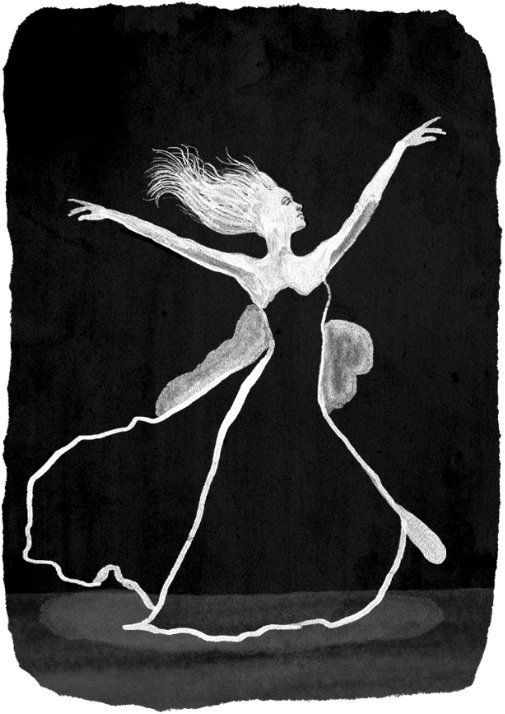
Veela are strikingly beautiful humanoid creatures that appear as young women with moon-bright skin and white-gold hair that fans out behind them despite any wind. Their beauty is supernaturally potent – when Veela dance, they emit an entrancing magical effect that renders most men (and some women) completely besotted, causing them to do foolish and dangerous things to attract the Veela’s attention. However, when angered, Veela transform: their faces elongate into sharp, cruel-beaked bird heads, and they throw balls of fire.
Veela serve as the mascots for the Bulgarian National Quidditch Team at the World Cup in Goblet of Fire, where their dance causes Harry, Ron, and most of the male spectators to lose their composure completely. The Veela mascots also get into a spectacular fight with the Irish Leprechaun mascots during the match, hurling fireballs across the pitch.
The most significant Veela connection in the series is through Fleur Delacour, the Beauxbatons Triwizard Champion, who is quarter-Veela (her grandmother was a full Veela). Fleur’s part-Veela heritage gives her extraordinary beauty and the ability to make most men act foolishly in her presence. She marries Bill Weasley, and their daughter Victoire presumably carries Veela blood as well. Veela are drawn from Slavic mythology, where they appear as forest spirits and weather deities, and Rowling preserves their essential duality – beautiful and dangerous in equal measure.
Werewolf
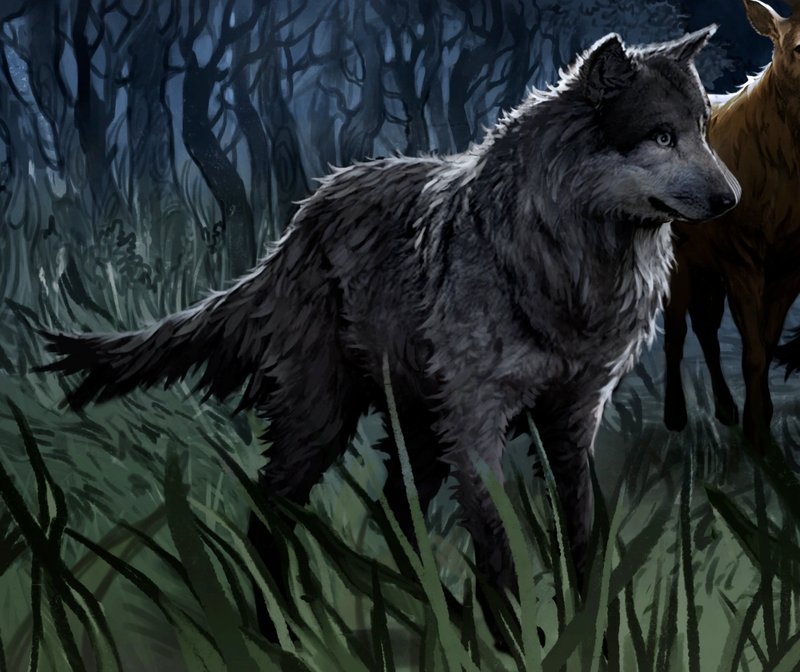
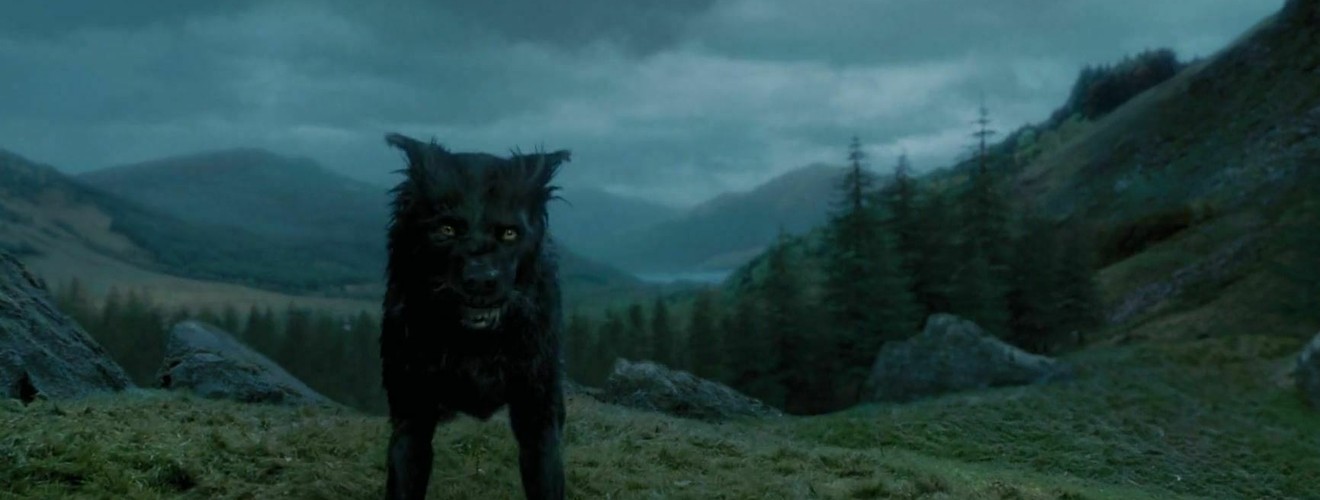
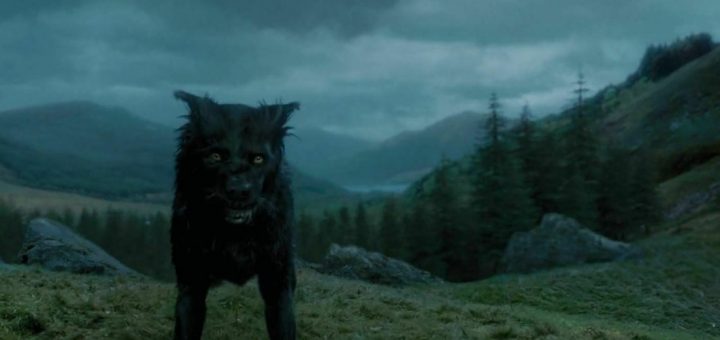
Werewolves are humans afflicted with lycanthropy, a condition transmitted through the bite of another werewolf during transformation. Under the full moon, a werewolf transforms into a large, wolf-like creature that retains no human awareness – it will attack anyone nearby, including its closest friends and family. The transformation is excruciatingly painful, and werewolves in the wizarding world face severe social stigma, employment discrimination, and legal restrictions that make their lives miserable even during the twenty-seven days per month when they are fully human.
The Wolfsbane Potion, a relatively recent (and extremely difficult) invention, allows a werewolf to retain their human mind during transformation, though it does not prevent the physical change. Without it, a transformed werewolf is mindlessly violent and cannot distinguish friend from foe.
Remus Lupin, one of the series’ most beloved characters, is a werewolf – bitten as a young child by the vicious Fenrir Greyback as revenge against Lupin’s father. Dumbledore’s kindness in allowing Lupin to attend Hogwarts (with the Shrieking Shack and Whomping Willow built specifically to contain his monthly transformations) is an act of profound compassion. Lupin’s eventual outing as a werewolf by Snape forces his resignation as DADA professor in Prisoner of Azkaban. Fenrir Greyback represents the opposite extreme – a werewolf who embraces his condition, positioning himself near victims at every full moon, and who bites to convert, including children. Werewolves’ treatment in the wizarding world serves as one of Rowling’s most pointed metaphors for real-world prejudice and social stigma.
The Fantastic Beasts film series, written by J.K. Rowling and set decades before Harry’s story, expanded the wizarding world’s creature catalogue dramatically. Newt Scamander – the magizoologist whose textbook Harry studies at Hogwarts – takes centre stage, and his suitcase full of magical creatures introduced audiences to species barely mentioned (or entirely absent) from the original seven novels. The following creatures are primarily known from the Fantastic Beasts films and related materials, though some also appear in the original textbook.
Augurey
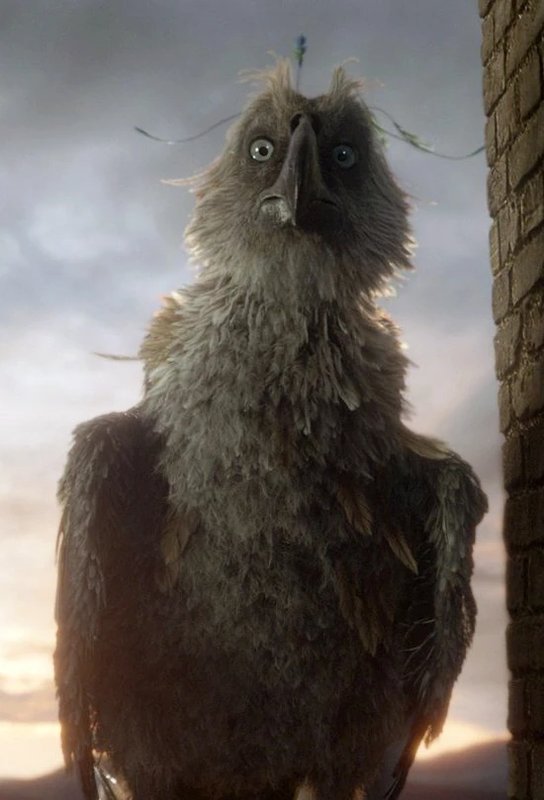
The Augurey, also known as the Irish Phoenix, is a thin, mournful-looking bird native to Britain and Ireland. Resembling a small, underfed vulture with greenish-black plumage, the Augurey was once feared by wizards who believed its cry foretold death. In reality, the Augurey’s distinctive low, throbbing cry simply predicts rain – making it a surprisingly useful, if depressing, weather forecaster.
Augureys are intensely shy creatures that nest in brambles and thorns, flying only in heavy rain. They feed on large insects and fairies, hunting the latter in downpours when fairy wings become too heavy for flight. Their feathers repel ink, making them useless for writing – a fact that disappointed more than one would-be quill maker.
The Augurey appears in Newt Scamander’s textbook and is mentioned across several Pottermore writings. While it plays no major role in the central Harry Potter narrative, the creature’s melancholy nature and rain-predicting abilities make it a quintessentially British addition to the wizarding bestiary. The species gains additional significance in Fantastic Beasts lore, where it appears as one of Ilvermorny’s house symbols.
Graphorn
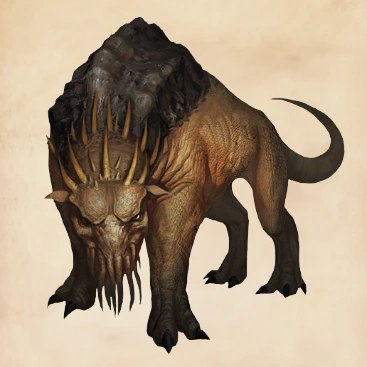
The Graphorn is a large, hump-backed creature with greyish-purple skin, two golden horns, and four thumb-like feet. Native to the mountains of Europe, Graphorns are extremely aggressive, and their hide is even tougher than a dragon’s – most spells simply bounce off them. Mountain Trolls can occasionally be seen riding Graphorns, though the beasts don’t seem to enjoy the arrangement and are frequently seen covered in troll-inflicted scars.
Graphorn horns, when powdered, are used in potions, and they are highly valuable – driving poaching that has made the species increasingly rare. In the Fantastic Beasts films, Newt Scamander keeps a Graphorn in his enchanted suitcase and shows great care for the species. The creature’s combination of raw physical power and near-impenetrable defence makes it one of the most formidable beasts in the wizarding world, earning its XXXX classification comfortably.
Lethifold
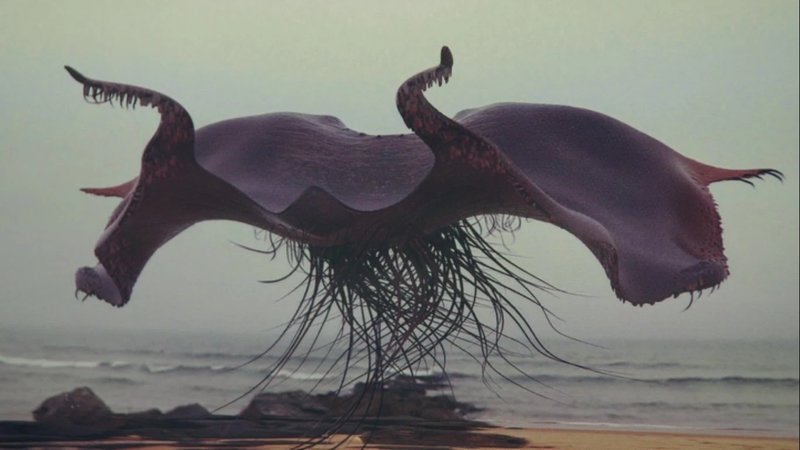
The Lethifold, also known as the Living Shroud, is a carnivorous creature that resembles a black cloak roughly half an inch thick. It glides along the ground at night, seeking sleeping victims, and suffocates and digests them in their beds – leaving no trace whatsoever. Found exclusively in tropical climates, the Lethifold is one of the most terrifying creatures in the wizarding world because its attacks leave no evidence: the victim simply vanishes.
The only known defence against a Lethifold is the Patronus Charm – the same spell used against Dementors – making it one of the few creatures that requires advanced defensive magic to survive. The connection between Lethifolds and Dementors (both repelled by the Patronus) has led some magizoologists to speculate about a possible relationship between the species.
The Lethifold appears in the Fantastic Beasts textbook (making it canon across both the original series and the films) and is featured in a first-person account by Flavius Belby, who survived a Lethifold attack in Papua New Guinea. Its existence adds a genuinely chilling dimension to the magical world – a creature that can eat you in your sleep without anyone ever knowing what happened.
Leucrotta
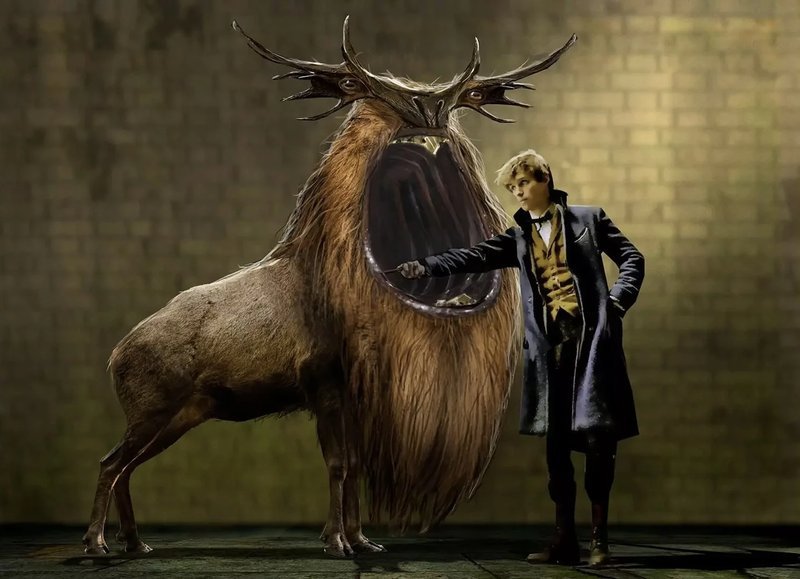
The Leucrotta is a large, moose-like creature with an enormous jagged mouth and pale skin. It appears in Fantastic Beasts: The Crimes of Grindelwald and is one of the more obscure creatures introduced in the film series. The Leucrotta is based on a creature from classical Roman natural history – Pliny the Elder described the leucrocotta as the swiftest of all wild beasts, with a mouth that stretched from ear to ear.
In the Fantastic Beasts films, the Leucrotta appears briefly, and relatively little canonical information exists about its magical properties or Ministry classification. It represents one of many creatures that the films introduce visually without extensive lore development, leaving room for future expansion in wizarding world materials.
Matagot
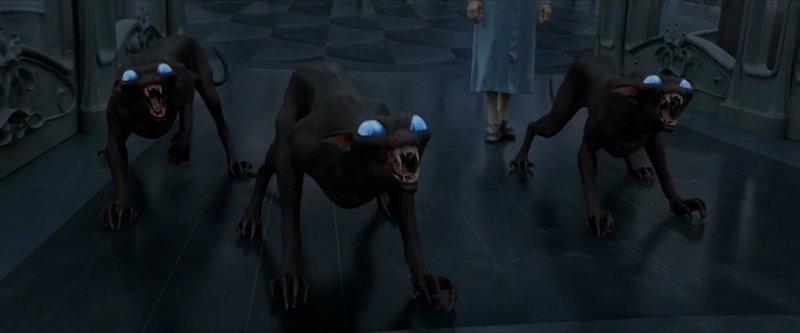
The Matagot is a cat-like spirit creature from French folklore, adopted into the wizarding world in Fantastic Beasts: The Crimes of Grindelwald. Matagots appear as large, hairless, blue-black cats with glowing eyes, and they are used by the French Ministry of Magic as guards and security creatures. In their docile state they are relatively harmless, but when provoked, they multiply and attack ferociously.
Matagots feature in the climactic sequence at the French Ministry headquarters (the Ministère des Affaires Magiques), where Newt and his companions must evade the multiplying cat-guards. In French folklore, a matagot is a spirit that takes animal form and can bring wealth to its owner if properly treated – Rowling adapts this into a more sinister security application.
Occamy
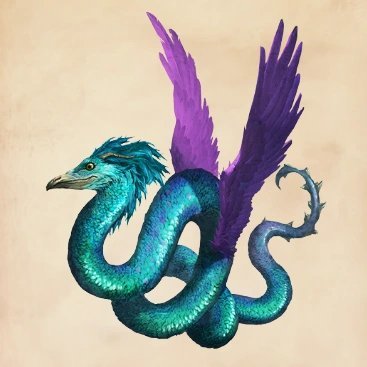
The Occamy is a plumed, serpentine creature with wings, native to the Far East and India. Its most remarkable property is that it is choranaptyxic – meaning it will shrink or grow to fit available space. An Occamy in a large room will fill that room; one placed in a teapot will shrink to teapot size. Their shells are made of the softest, purest silver, making them extremely valuable and heavily poached.
Occamys are aggressive, particularly when defending their eggs, and they require careful handling. They appear in both the Fantastic Beasts textbook (making them part of the original series canon) and prominently in the first Fantastic Beasts film, where Newt Scamander must recapture an escaped Occamy in a department store – ultimately luring it into a teapot by exploiting its choranaptyxic nature.
Swooping Evil
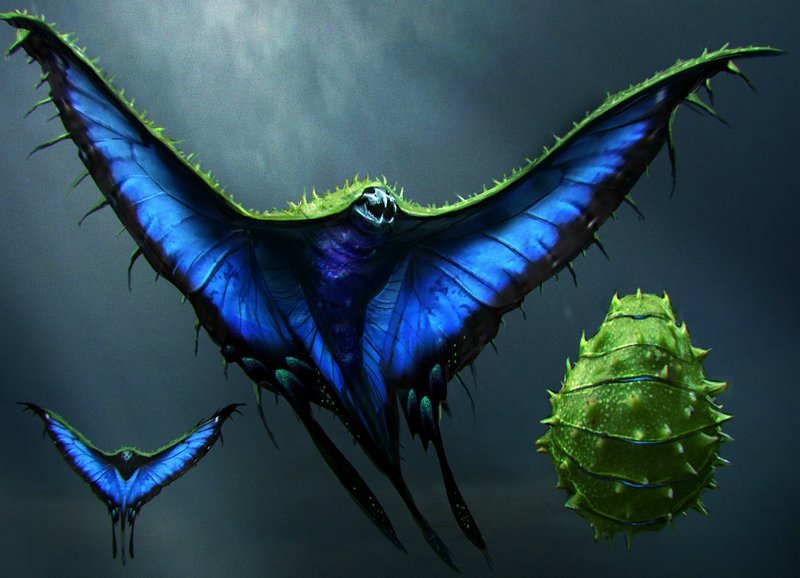
The Swooping Evil is a butterfly-like creature that, when not in flight, encases itself in a green, spiny cocoon. When released, it unfurls into a large, blue-and-green winged creature that feeds on brains – specifically, it can extract and consume bad memories. Its venom, when properly diluted, can be used to erase unpleasant memories, making it potentially useful (and potentially dangerous) as a component in Obliviation magic.
The Swooping Evil is one of Newt Scamander’s most useful creatures in the first Fantastic Beasts film. He uses it as both a weapon (swooping it at attackers) and ultimately employs its diluted venom – mixed with rain conjured by the Thunderbird Frank – to erase the memories of all Muggles in New York who witnessed the Obscurus’s rampage. It’s a new creature invented for the films with no textbook precedent.
Thunderbird
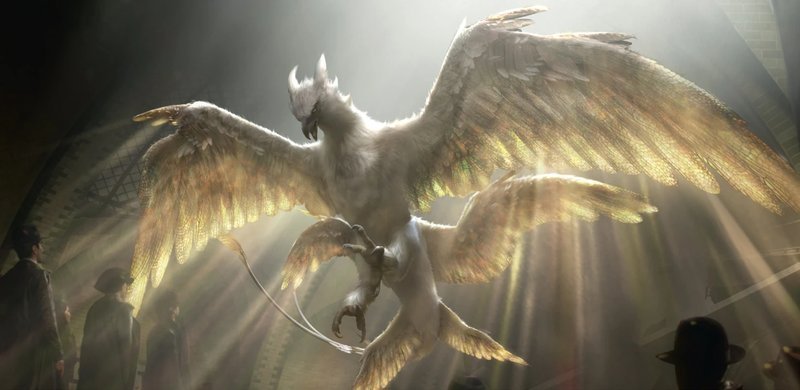
The Thunderbird is a large, powerful avian creature native to the deserts of Arizona, closely related to the Phoenix. It has multiple pairs of powerful wings, and its flight creates storms – beating its wings produces thunder, and it can sense approaching danger. Thunderbirds are majestic, fiercely independent creatures with an affinity for weather magic.
The Thunderbird is one of the four house symbols of Ilvermorny School of Witchcraft and Wizardry (the American equivalent of Hogwarts), representing the soul and favouring adventurers. In the first Fantastic Beasts film, Newt Scamander rescues a Thunderbird he names Frank from traffickers in Egypt and travels to America specifically to release Frank in his native Arizona habitat. Frank ultimately plays a crucial role in the film’s climax, spreading the Swooping Evil’s memory-erasing venom across New York through a rain storm generated by his wings.
Zouwu
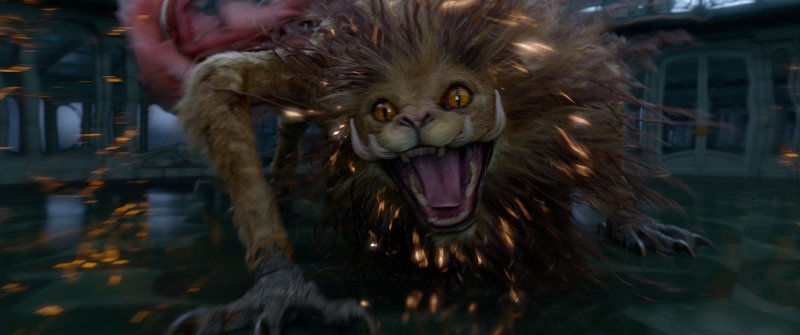
The Zouwu is an enormous, cat-like creature from Chinese mythology – described in the Fantastic Beasts textbook as an elephant-sized feline with a striped body, an enormous multicoloured tail, and the ability to travel a thousand miles in a single day. It is incredibly fast and powerful, but can be calmed and controlled with a toy resembling a ball of light on a string – essentially, even the most fearsome magical cat is still a cat.
The Zouwu features prominently in Fantastic Beasts: The Crimes of Grindelwald, where a distressed Zouwu is rampaging through a Paris circus. Newt Scamander tames it using a cat toy-like instrument, demonstrating his signature approach to magical creatures: understanding rather than force. The Zouwu subsequently becomes one of Newt’s travelling companions and assists in the film’s climactic confrontation.
- Rowling, J.K. Harry Potter and the Philosopher’s Stone (1997)
- Rowling, J.K. Harry Potter and the Chamber of Secrets (1998)
- Rowling, J.K. Harry Potter and the Prisoner of Azkaban (1999)
- Rowling, J.K. Harry Potter and the Goblet of Fire (2000)
- Rowling, J.K. Harry Potter and the Order of the Phoenix (2003)
- Rowling, J.K. Harry Potter and the Half-Blood Prince (2005)
- Rowling, J.K. Harry Potter and the Deathly Hallows (2007)
- Scamander, Newt (Rowling, J.K.). Fantastic Beasts and Where to Find Them (2001)
- Rowling, J.K. Pottermore / Wizarding World writings
- Harry Potter Wiki (harrypotter.fandom.com) – creature classifications and lore verification