Every Named Wand in Harry Potter
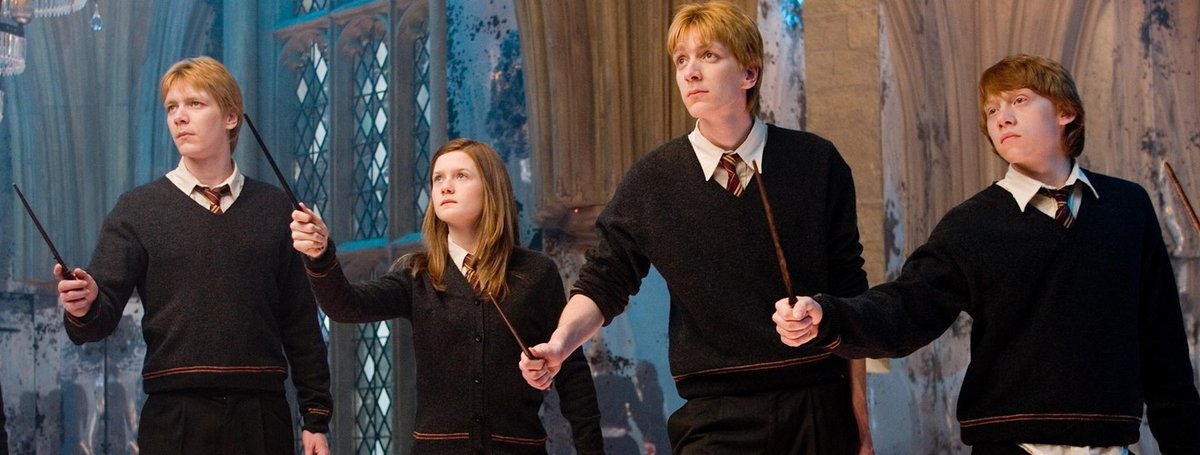
“The wand chooses the wizard. That much has always been clear to those of us who have studied wandlore.” With those words, spoken to an eleven-year-old Harry Potter inside his cramped shop on Diagon Alley, Garrick Ollivander introduced one of the most fascinating pieces of magic in the entire Harry Potter series. Wands are not mere tools – they are semi-sentient partners that select their owners based on deep, often mysterious compatibility. Every wand is unique, defined by three core elements: the wood from which it is carved, the magical substance at its core, and the precise measurements and flexibility that give it character.
Ollivander works exclusively with three “Supreme Cores” – unicorn hair, dragon heartstring, and phoenix feather – each with distinct magical properties. Unicorn hair produces the most consistent magic and resists the Dark Arts. Dragon heartstring yields the most powerful wands, capable of the most flamboyant spells. Phoenix feather, the rarest core, offers the greatest range of magic but is the pickiest about choosing an owner. The wood, meanwhile, carries its own personality: holly is protective, yew carries the power of life and death, elder scorns all but the most extraordinary wizards. When wood, core, and owner align, the result is a bond that transcends ordinary magic.
What follows is every named wand in the Harry Potter series – from the holly-and-phoenix-feather wand that helped defeat Lord Voldemort to the snapped oak wand hidden inside a pink umbrella. These are the wands that shaped the wizarding world.
- 26 named wands are documented across the Harry Potter series, Pottermore, and Wizarding World writings
- Dragon heartstring is the most common core, appearing in at least 11 wands on this list
- Unicorn hair is the second most common core, featured in at least 7 wands
- Phoenix feather is the rarest core among named wands – only Harry’s and Voldemort’s wands share it (both from Fawkes)
- Ash and willow are the most frequently appearing wand woods, each used in 3 known wands
- Wand lengths range from Dolores Umbridge’s compact 8 inches to Lucius Malfoy’s imposing 18 inches
- Nearly all wands on this list were made by Garrick Ollivander, with the notable exceptions of the Elder Wand (Antioch Peverell/Death), Fleur Delacour’s wand (likely continental), and Viktor Krum’s wand (made by Gregorovitch)
Harry Potter’s Wand
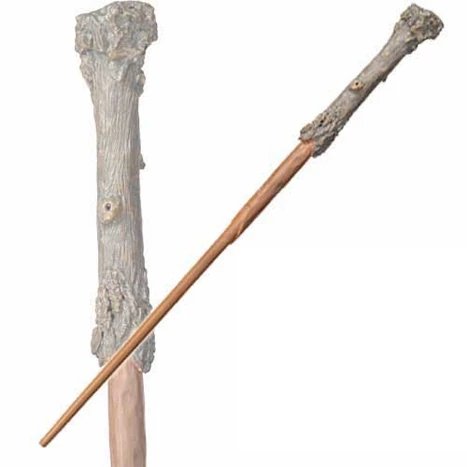
Harry Potter’s wand is made of holly wood with a phoenix feather core, measuring eleven inches, and described by Ollivander as “nice and supple.” It was the last wand Harry tried during his first visit to Ollivander’s shop in August 1991, and the moment he held it, a warmth spread through his fingers as red and gold sparks shot from its tip. That phoenix feather came from Fawkes, Albus Dumbledore’s phoenix – the same bird that gave exactly one other feather, which sat at the heart of Lord Voldemort’s yew wand. This connection, known as the Priori Incantatem effect, would prove decisive in the graveyard at Little Hangleton when the two wands locked and refused to work against each other.
According to Ollivander’s notes on Pottermore, holly is one of the rarer wand woods, traditionally considered protective. It works most happily for those who need help overcoming a tendency to anger and impetuosity – a fitting description of Harry, whose temper flares throughout the series, particularly in Order of the Phoenix. Ollivander also notes that holly is “a notoriously difficult wood to team with phoenix feather, as the wood’s volatility conflicts strangely with the phoenix’s detachment.” But when such a pairing finds its ideal match, “nothing and nobody should stand in their way.” Harry’s wand was broken during the escape from Godric’s Hollow in Deathly Hallows when Hermione’s deflected curse shattered it, and the loss devastated him far more than the loss of any possession. He later repaired it using the Elder Wand before choosing to relinquish that wand’s power – returning to the holly wand that had chosen him at age eleven.
Hermione Granger’s Wand
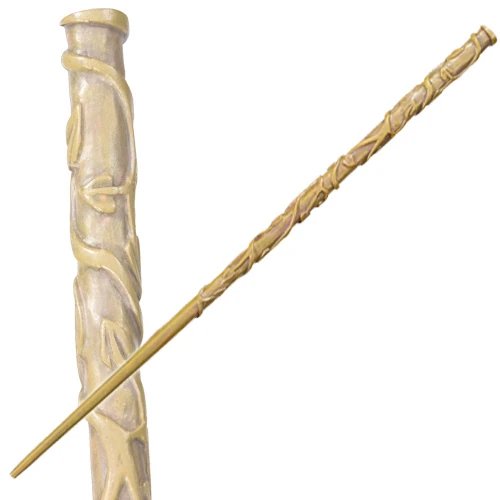
Hermione Granger’s wand is made of vine wood with a dragon heartstring core, measuring ten and three-quarter inches. According to Ollivander’s Pottermore writings, vine wands are among the less common types, and their owners are “nearly always those witches or wizards who seek a greater purpose, who have a vision beyond the ordinary and who frequently astound those who think they know them best.” Vine wands are strongly attracted to personalities with hidden depths – an apt description of the Muggle-born girl who arrived at Hogwarts already knowing more spells than most of her pure-blood classmates.
The dragon heartstring core gives this wand considerable power and versatility, which Hermione demonstrated throughout the series with magic far beyond her years. From producing a perfect Patronus (an otter) to casting a Protean Charm on the DA coins – N.E.W.T.-level magic performed in her fifth year – Hermione’s wand served as an instrument of her extraordinary intellect. Dragon heartstring wands learn more quickly than other types, which suits a witch who had memorised her textbooks before term even began. Hermione’s wand was confiscated by Snatchers during the trio’s hunt for Horcruxes in Deathly Hallows, and she subsequently used Bellatrix Lestrange’s walnut wand, which never performed as well for her. Ollivander notes that vine wands can emit magical effects upon the mere entrance of a suitable owner into a room – a testament to how responsive and sensitive these rare wands truly are.
Ron Weasley’s Second Wand
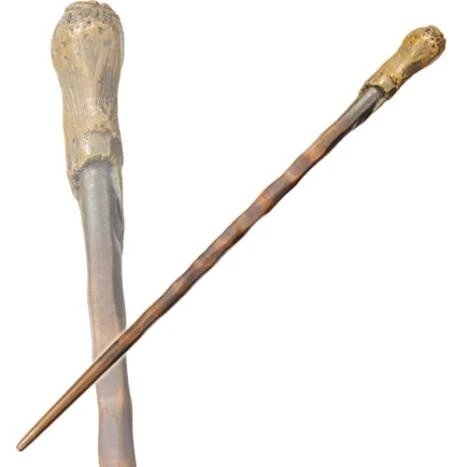
Ron Weasley’s second wand is made of willow wood with a unicorn hair core, measuring fourteen inches. He purchased it from Ollivander’s before his third year at Hogwarts, after his first wand – a hand-me-down – was broken beyond repair. The difference was immediate and dramatic. Ollivander writes that willow is an uncommon wand wood with healing power, and that willow wands consistently select “those of greatest potential, rather than those who feel they have little to learn.” The ideal owner often has some unwarranted insecurity, however well they try to hide it – a description that captures Ron’s character arc with remarkable precision.
At fourteen inches, Ron’s wand is among the longer wands on this list, and Ollivander has noted that longer wands tend to suit taller wizards and those with bigger personalities (though he emphasises that many other factors contribute to a wand’s ideal length). The unicorn hair core produces the most consistent magic and is the most faithful of all cores, usually remaining strongly attached to its first owner. This loyalty mirrors Ron’s own defining trait – his steadfast, if sometimes tested, loyalty to Harry and Hermione. With this properly matched wand, Ron’s spell-work improved considerably, and he went on to perform magic that his broken first wand could never have managed, including contributing to the Battle of Hogwarts.
Ron Weasley’s First Wand
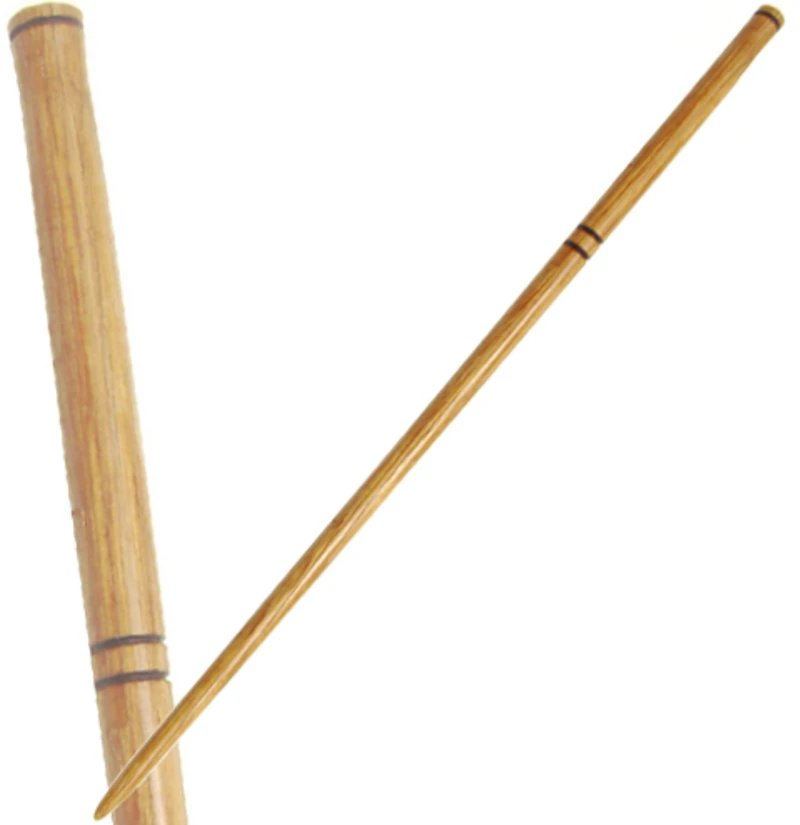
Ron Weasley’s first wand originally belonged to his older brother Charlie. Made of ash wood with a unicorn tail hair core, it measured twelve inches. By the time Ron inherited it for his first year at Hogwarts, the wand was already well-used, and this hand-me-down arrangement violated one of the most fundamental principles of wandlore. Ollivander’s Pottermore notes state explicitly that “the ash wand cleaves to its one true master and ought not to be passed on or gifted from the original owner, because it will lose power and skill. This tendency is extreme if the core is of unicorn.” Ron’s wand was, in essence, doubly resistant to serving a second master.
The wand’s troubled tenure reached its breaking point – literally – in Chamber of Secrets, when Ron and Harry crashed the flying Ford Anglia into the Whomping Willow on the Hogwarts grounds. Ron’s wand snapped nearly in two, and he repaired it crudely with Spellotape. The result was a wand that backfired spectacularly and unpredictably throughout the entire school year. When Ron attempted to curse Draco Malfoy with a Slug-Vomiting Charm, the spell reversed and hit Ron instead. When Gilderoy Lockhart seized the damaged wand to perform a Memory Charm in the Chamber of Secrets, the spell backfired catastrophically, wiping Lockhart’s own memory and causing a cave-in. In a strange twist of fate, a wand that should never have been Ron’s in the first place ended up saving the day through its very unreliability.
The Elder Wand
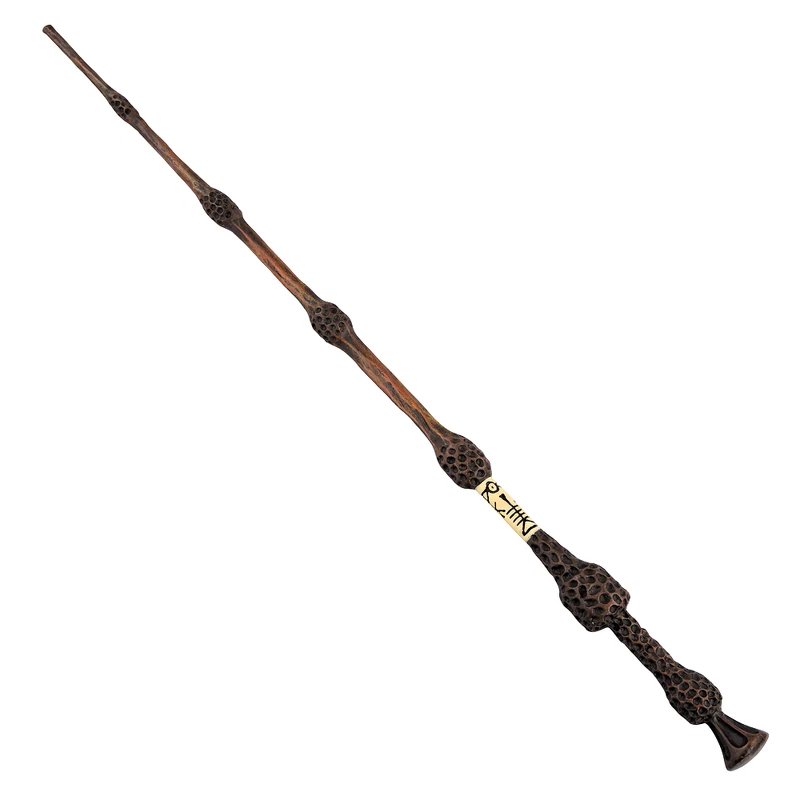
The Elder Wand is made of elder wood with a core of Thestral tail hair, measuring fifteen inches. It is the most powerful wand in existence and one of the three Deathly Hallows, according to the legend of the Peverell brothers as recounted in “The Tale of the Three Brothers” from The Tales of Beedle the Bard. In the story, the eldest brother, Antioch Peverell, asked Death for an unbeatable wand, and Death fashioned one from an elder tree on the riverbank. Antioch was murdered for the wand that very night – establishing the bloody trail that would follow the Elder Wand through centuries of wizarding history.
Ollivander’s notes describe elder as “the rarest wand wood of all,” one that “scorns to remain with any owner who is not the superior of his or her company.” The old superstition “wand of elder, never prosper” captures the fear surrounding this wood, though Ollivander considers it baseless – the elder wand simply demands an extraordinary witch or wizard. Its Thestral tail hair core is unique among known wands; Ollivander does not use it as one of his three Supreme Cores, and its properties are mysterious. Thestrals are visible only to those who have witnessed death, lending the wand an additional layer of dark symbolism.
The Elder Wand passed through many hands over the centuries, always won through violence or conquest. Its known modern history includes ownership by Gregorovitch (the wandmaker), Gellert Grindelwald (who stole it), Albus Dumbledore (who won it in their legendary 1945 duel), and ultimately – through a chain of allegiance that hinged on Draco Malfoy disarming Dumbledore atop the Astronomy Tower – Harry Potter. Rather than wield this ultimate weapon, Harry used it to repair his beloved holly wand and declared his intention to die a natural death, which would break the Elder Wand’s power forever. It was the most significant act of magical renunciation in the series.
Lord Voldemort’s Wand
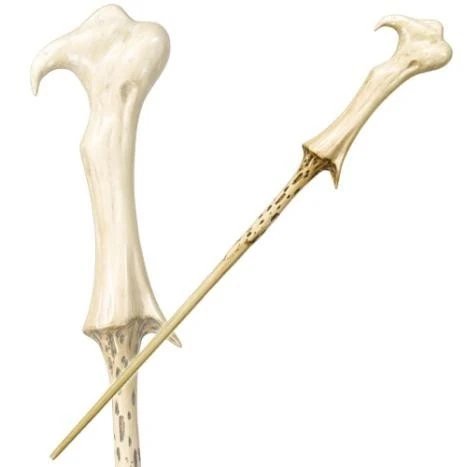
Lord Voldemort’s wand is made of yew wood with a phoenix feather core, measuring thirteen and a half inches. The phoenix feather came from Fawkes – the same bird whose only other feather resided in Harry Potter’s holly wand. Ollivander sold this wand to the young Tom Riddle, and it would go on to cast some of the darkest magic in wizarding history, including the Killing Curses that murdered James and Lily Potter.
The symbolism of yew could not be more fitting for Voldemort. According to Ollivander’s Pottermore writings, yew wands are “reputed to endow its possessor with the power of life and death,” and they retain “a particularly dark and fearsome reputation in the spheres of duelling and all curses.” The yew tree itself is ancient and toxic – its berries are poisonous, and yew trees have been planted in graveyards for centuries, symbolising both death and immortality (yews can live for thousands of years). For a wizard whose entire existence was consumed by the fear of death and the pursuit of immortality, no wood could be more appropriate. Ollivander notes that the yew wand “never chooses either a mediocre or a timid owner,” and whatever else Tom Riddle was, mediocre and timid he was not.
The twin cores created the Priori Incantatem effect when Harry and Voldemort’s wands connected in the graveyard during Goblet of Fire, forcing Voldemort’s wand to regurgitate echoes of its most recent spells – including ghostly images of Cedric Diggory, Frank Bryce, Bertha Jorkins, and James and Lily Potter. This limitation drove Voldemort to seek another wand, ultimately leading him to the Elder Wand – and his doom.
Draco Malfoy’s Wand
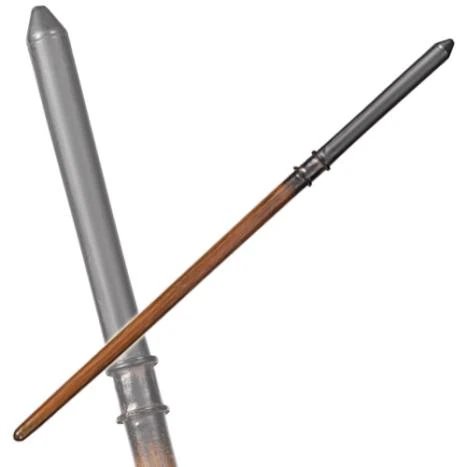
Draco Malfoy’s wand is made of hawthorn wood with a unicorn hair core, measuring ten inches. The hawthorn wand is one of the most layered and symbolically rich wands on this list. Ollivander writes that hawthorn “makes a strange, contradictory wand, as full of paradoxes as the tree that gave it birth, whose leaves and blossoms heal, and yet whose cut branches smell of death.” Both Ollivander and the wandmaker Gregorovitch agree that hawthorn wands are complex and intriguing, best suited to a conflicted nature or a witch or wizard “passing through a period of turmoil.”
That description mirrors Draco’s arc across the series with uncanny precision. The boy who began as a sneering bully was gradually revealed as someone trapped between his family’s expectations and his own conscience. By Half-Blood Prince, tasked by Voldemort with murdering Dumbledore, Draco was in exactly the kind of turmoil that hawthorn favours. Ollivander also notes that hawthorn wands may be “particularly suited to healing magic” but are equally “adept at curses,” and that their spells can backfire when badly handled – all of which speaks to Draco’s internal contradictions. The unicorn hair core, which resists the Dark Arts, adds another layer: the wand itself was never naturally inclined toward the darkness its owner was pressured to embrace.
Draco’s wand plays a pivotal role in the series’ endgame. When Harry physically wrestled it from Draco at Malfoy Manor, the wand’s allegiance transferred to Harry – and with it, unknowingly, the allegiance of the Elder Wand, since Draco had previously disarmed Dumbledore. This chain of wand allegiance became the key to Voldemort’s defeat.
Bellatrix Lestrange’s Wand
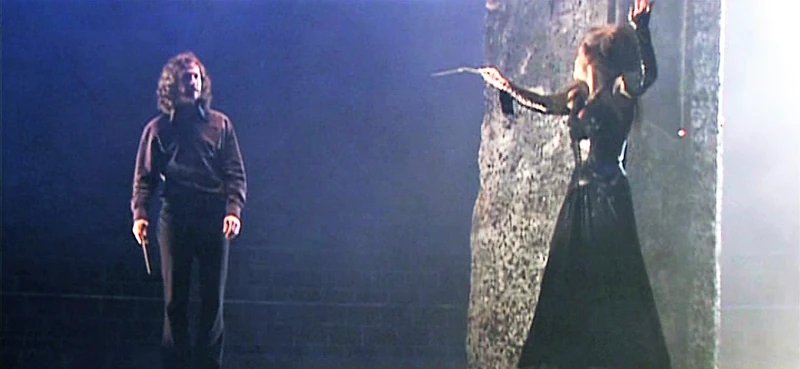
Bellatrix Lestrange’s wand is made of walnut wood with a dragon heartstring core, measuring twelve and three-quarter inches, with an unyielding flexibility. According to Ollivander’s Pottermore writings, walnut wands are best suited to “highly intelligent witches and wizards,” and in nine cases out of ten, walnut and its owner find an ideal match. However, Ollivander issues a pointed warning: “once subjugated, the walnut wand will perform any task its owner desires, provided that the user is of sufficient brilliance. This makes for a truly lethal weapon in the hands of a witch or wizard of no conscience, for the wand and the wizard may feed from each other in a particularly unhealthy manner.”
It is difficult to imagine a more precise description of Bellatrix. Brilliant, fanatical, and utterly without conscience in her devotion to Voldemort, she wielded this walnut wand to devastating effect. She used it to torture Neville Longbottom’s parents, Frank and Alice, into insanity using the Cruciatus Curse, and she killed her own cousin Sirius Black during the Battle of the Department of Mysteries. The unyielding flexibility rating speaks to her absolute refusal to bend or compromise in any way. When Hermione was forced to use Bellatrix’s wand after losing her own, it never performed properly for her – a dragon heartstring wand that had bonded deeply with its original master’s ruthless nature resisted the very different character of its reluctant new wielder.
Lucius Malfoy’s Wand
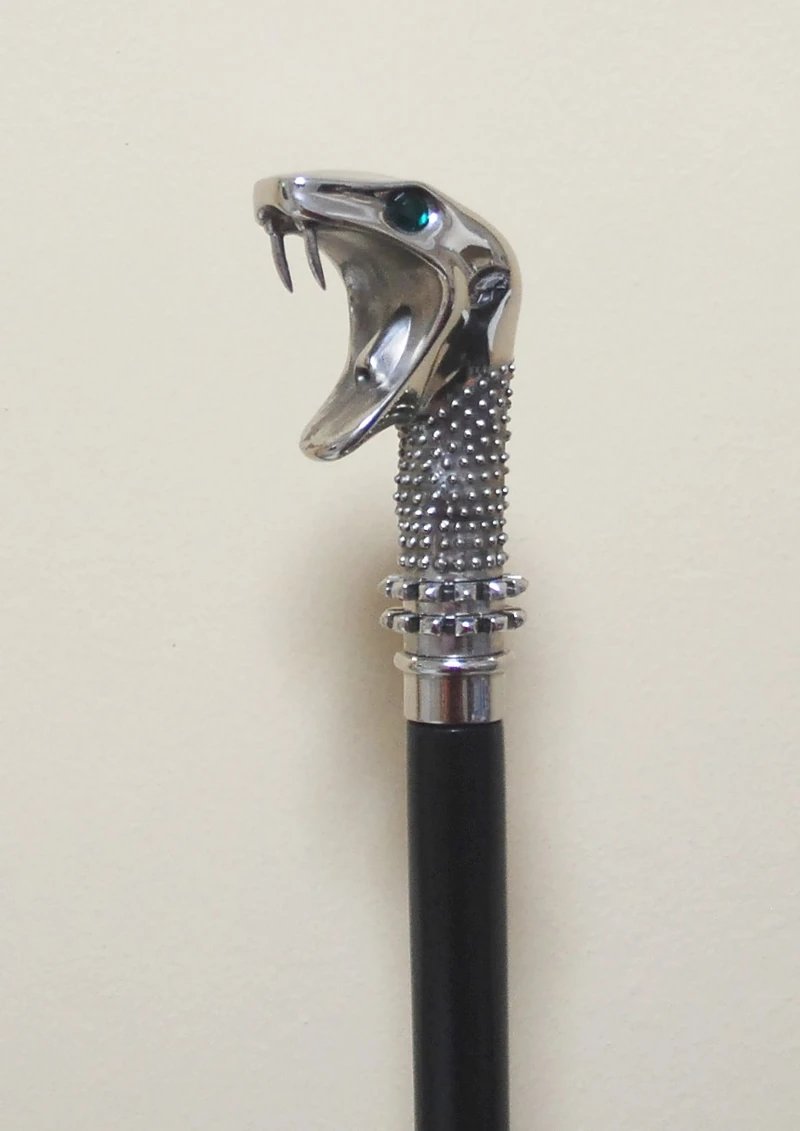
Lucius Malfoy’s wand is made of elm wood with a dragon heartstring core, measuring eighteen inches – the longest known wand in the series – with an unyielding flexibility. Ollivander writes that elm wands “prefer owners with presence, magical dexterity and a certain native dignity,” and that they produce “the fewest accidents, the least foolish errors, and the most elegant charms and spells.” He also notes the “unfounded belief that only pure-bloods can produce magic from elm wands,” a superstition that was “undoubtedly started by some elm wand owner seeking to prove his own blood credentials.” Given Lucius Malfoy’s obsession with blood purity, this observation from Ollivander carries a delicious irony.
The exceptional length of eighteen inches is notable. Longer wands tend to suit wizards with larger personalities and a taste for dramatic, sweeping spell-work – both very much in character for Lucius, who carried his wand concealed within an ornate snake-headed walking cane. The wand’s most significant moment came not through Lucius’s own use but through its destruction. In Deathly Hallows, Voldemort commandeered Lucius’s wand to circumvent the twin-core problem with Harry’s holly wand. During the aerial chase known as the Battle of the Seven Potters, Harry’s wand destroyed Lucius’s borrowed wand through what Dumbledore later suggested was a rare form of magical recognition. The loss of his wand while a prisoner in his own home marked the nadir of Lucius Malfoy’s fall from Voldemort’s favour.
Peter Pettigrew’s Wand
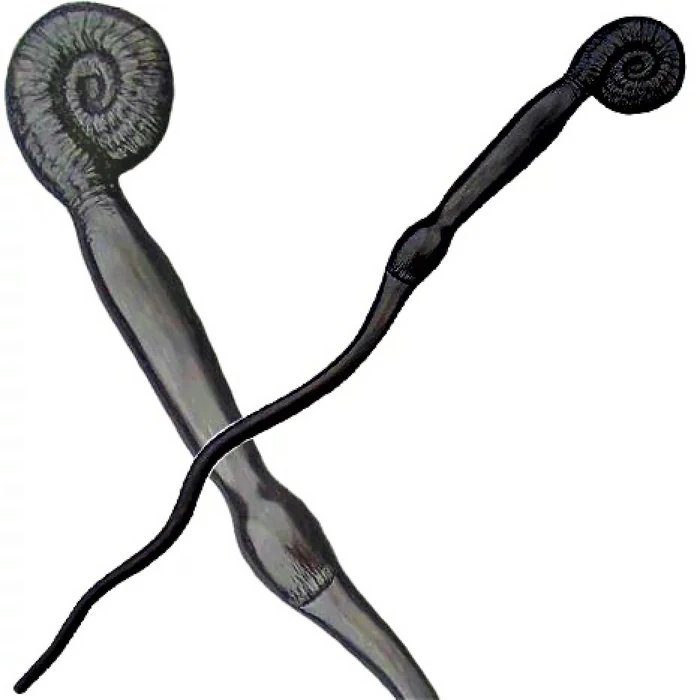
Peter Pettigrew’s wand is made of chestnut wood with a dragon heartstring core, measuring nine and a quarter inches, with a brittle flexibility. This wand was not Pettigrew’s original – after twelve years spent hiding as a rat (Scabbers, the Weasley family pet), his original wand was presumably lost or destroyed. According to Pottermore, this replacement wand was provided to Pettigrew by Voldemort upon his return, effectively making it a wand given, not chosen – a violation of wandlore’s most basic principle that “the wand chooses the wizard.”
Ollivander’s notes on chestnut describe it as “a most curious, multi-faceted wood, which varies greatly in its character depending on the wand core.” When paired with dragon heartstring specifically, chestnut “may find its best match among those who are overfond of luxury and material things, and less scrupulous than they should be about how they are obtained.” Pettigrew, who betrayed his closest friends for the safety and favour of a powerful master, fits this profile disturbingly well. The brittle flexibility rating suggests a wand – and by extension an owner – that lacks resilience and will break rather than bend under pressure. This wand cast the Killing Curse that murdered Cedric Diggory in the Little Hangleton graveyard and performed the dark ritual that restored Voldemort to his body. Despite its diminutive size and brittle nature, it facilitated some of the most consequential dark magic in the series.
James Potter’s Wand
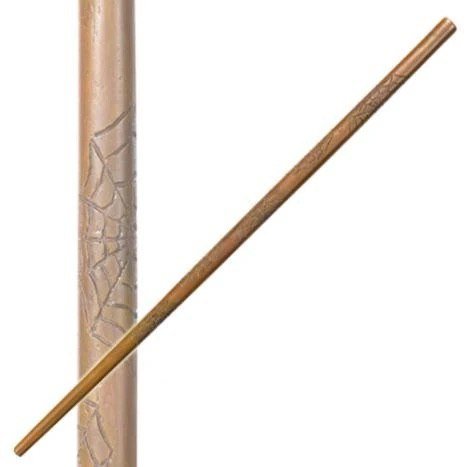
James Potter’s wand is made of mahogany wood, measuring eleven inches, with a pliable flexibility. The core has never been confirmed in any primary source. These details come from early Pottermore writings, where J.K. Rowling revealed the specs for both James and Lily Potter’s wands. Mahogany is not included in Ollivander’s published notes on wand woods, making it something of a mystery – though mahogany is a strong, richly coloured wood prized in both the Muggle and wizarding worlds for its durability and beauty.
The pliable flexibility suggests adaptability and versatility, which aligns well with what we know of James Potter. He was a gifted wizard who became an Animagus at age fifteen (an extraordinarily difficult piece of Transfiguration), excelled in school, and was talented enough to defy Voldemort three times before his death at twenty-one. Ollivander told Harry that his father’s wand was “excellent for Transfiguration,” which tracks with James’s Animagus abilities. James used this wand to fight Voldemort on the night of October 31, 1981 – though he was wandless when Voldemort entered the house, having left his wand in the sitting room. That fatal moment of carelessness cost him his life and left Lily and Harry unprotected.
Lily Potter’s Wand
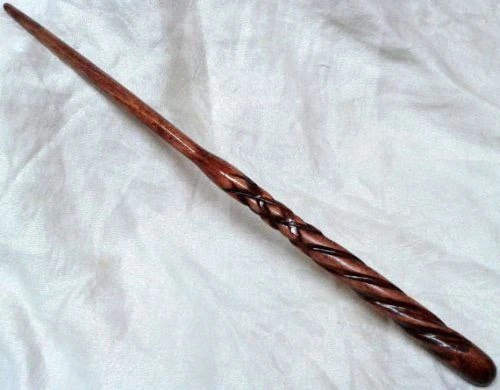
Lily Potter’s wand is made of willow wood, measuring ten and a quarter inches, with a swishy flexibility. Like James’s wand, the core has never been confirmed in any published source. According to Ollivander’s notes, willow is an uncommon wand wood with healing power, and the ideal owner “often has some (usually unwarranted) insecurity, however well they may try and hide it.” Ollivander adds that his willow wands “have consistently selected those of greatest potential, rather than those who feel they have little to learn.”
For Lily Evans, a Muggle-born witch entering a world that often viewed her as lesser, the willow wand’s affinity for hidden potential and unwarranted insecurity resonates deeply. She proved to be one of the most gifted witches of her generation – Slughorn called her one of his finest students, and her ability to cast a sacrificial protection charm that defeated the Killing Curse itself suggests magic of extraordinary power and purity. The swishy flexibility indicates a wand well-suited to charm-work and delicate magical workings, and Ollivander told Harry that Lily’s wand was “nice for charm work.” Lily’s wand was presumably recovered from the house at Godric’s Hollow after her murder, though its ultimate fate is never confirmed in the novels.
Neville Longbottom’s Second Wand
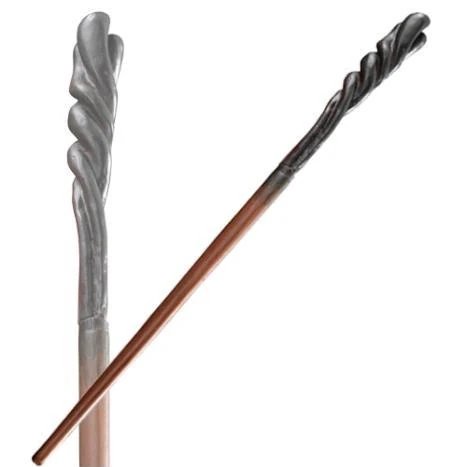
Neville Longbottom’s second wand is made of cherry wood with a unicorn hair core, measuring thirteen inches. He purchased it after his father’s wand was broken during the Battle of the Department of Mysteries in Order of the Phoenix. According to Ollivander’s Pottermore writings, cherry is “a very rare wand wood” that “creates a wand of strange power, most highly prized by the wizarding students of the school of Mahoutokoro in Japan.” Ollivander warns against dismissing cherry as merely ornamental: “cherry wood often makes a wand that possesses truly lethal power, whatever the core.”
The transformation in Neville’s magical ability after acquiring this properly matched wand was remarkable. Where he had spent five years struggling with magic – often assumed to be nearly a Squib – Neville blossomed into a capable and courageous wizard. He fought at the Battle of the Department of Mysteries, led Dumbledore’s Army during his seventh year at Hogwarts under the Carrows’ brutal regime, and drew the Sword of Gryffindor from the Sorting Hat to destroy Nagini, Voldemort’s final Horcrux, during the Battle of Hogwarts. The unicorn hair core, which produces the most consistent magic and is most faithful to its first owner, helped provide the stability and reliability that Neville needed. His story is one of the most powerful illustrations in the series of Ollivander’s central teaching: the wand chooses the wizard, and a mismatched wand can cripple even genuine talent.
Frank Longbottom’s Wand
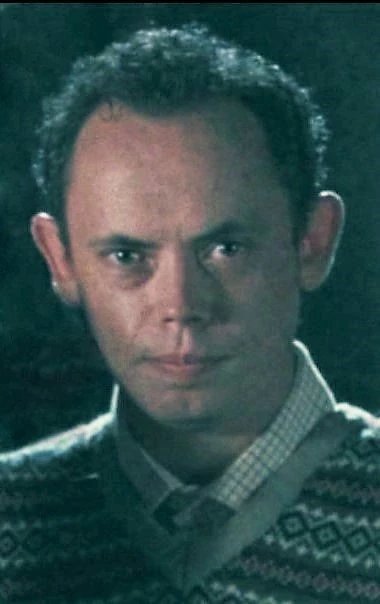
Frank Longbottom’s wand – the specific wood, core, and length of which have never been confirmed in any primary source – carries one of the most emotionally devastating stories in the Harry Potter series. Frank Longbottom was an Auror, one of the most capable dark-wizard catchers of his generation, who along with his wife Alice was tortured into permanent insanity by Bellatrix Lestrange, Bartemius Crouch Jr., and Rodolphus and Rabastan Lestrange using the Cruciatus Curse. Frank and Alice have resided in the Janus Thickey Ward at St Mungo’s Hospital for Magical Maladies and Injuries ever since, unable to recognise their own son.
After the attack, Frank’s wand was passed to Neville – not by choice, but presumably by his formidable grandmother, Augusta Longbottom, as a keepsake of the father he never truly knew. Neville used this wand for his first five years at Hogwarts, from 1991 to 1996, never realising that his persistent struggles with magic were at least partly due to using a wand that had chosen someone else. The wand was broken by the Death Eater Antonin Dolohov during the Battle of the Department of Mysteries at the end of Order of the Phoenix. The breaking of Frank’s wand served as both a practical necessity – forcing Neville to finally get a wand that chose him – and a symbolic severing of the son’s obligation to fill his father’s shoes. With his own cherry-and-unicorn-hair wand, Neville finally became the wizard he was always meant to be.
Cedric Diggory’s Wand
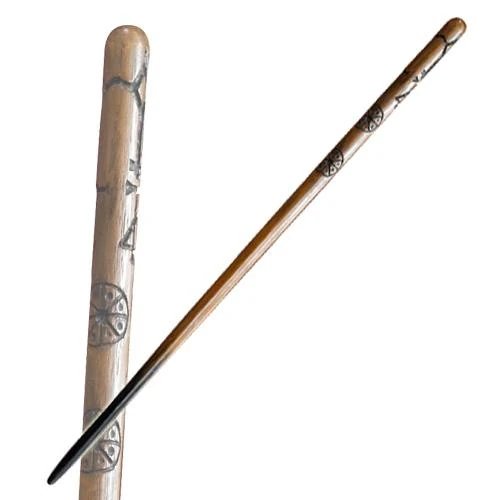
Cedric Diggory’s wand is made of ash wood with a unicorn hair core, measuring twelve and a quarter inches, described as “pleasantly springy.” Ollivander examined it during the Weighing of the Wands ceremony before the Triwizard Tournament in Goblet of Fire and pronounced it in fine condition. According to Ollivander’s notes, ash wands are best suited to owners who are “not lightly swayed from their beliefs or purposes” – the ideal owner “may be stubborn, and will certainly be courageous, but never crass or arrogant.” This description fits Cedric remarkably well: the Hufflepuff prefect and Quidditch captain who insisted on replaying a match against Gryffindor because Harry had fallen from his broom due to Dementors.
The unicorn hair core adds further dimension. Ollivander notes that unicorn cores produce “the most consistent magic” and are “the most faithful of all wands,” remaining strongly attached to their first owner. The pleasantly springy flexibility suggests an open, adaptable temperament – someone comfortable in their own skin without rigidity or pretension. Cedric used this wand throughout the three Triwizard tasks, performing admirably against champions years older and from prestigious schools. He cast a Bubblehead Charm to breathe underwater in the second task and navigated the maze in the third. The wand was with him when he and Harry touched the Triwizard Cup – which had been turned into a Portkey – and was transported to the Little Hangleton graveyard, where Cedric was murdered by Peter Pettigrew on Voldemort’s orders. Cedric’s death, at seventeen, made him the first casualty of Voldemort’s second war.
Fleur Delacour’s Wand
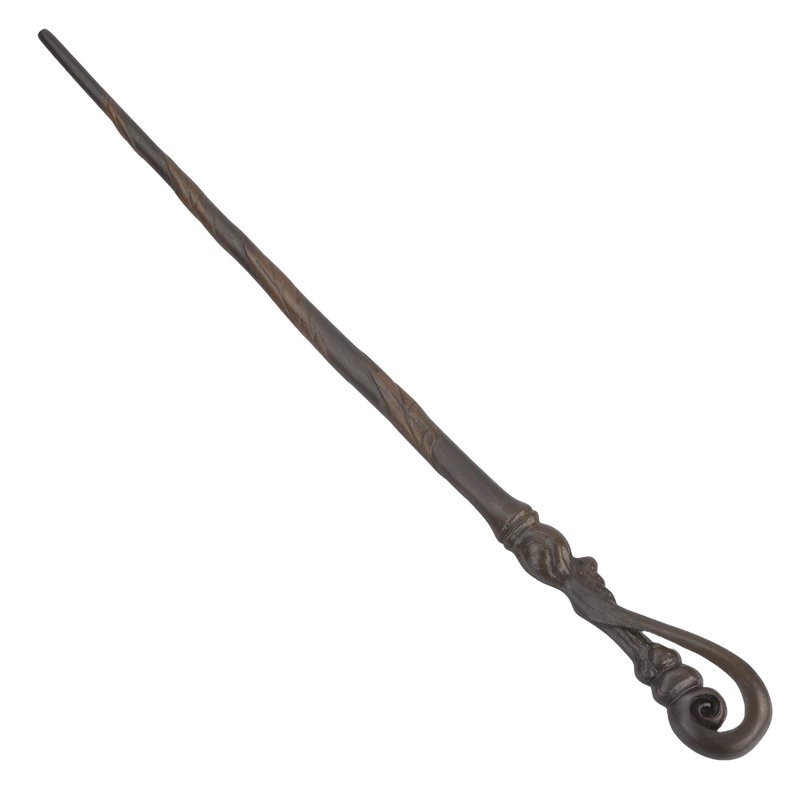
Fleur Delacour’s wand is made of rosewood with a core of Veela hair, measuring nine and a half inches. The Veela hair came from her maternal grandmother, making this wand deeply personal and unique among every wand on this list. Rosewood is not included in Ollivander’s published notes on wand woods, suggesting it may be more commonly used by continental wandmakers. Ollivander himself, when examining Fleur’s wand at the Weighing of the Wands ceremony, remarked that he had “never used Veela hair” as a core, noting that he found it “makes for rather temperamental wands.” Despite this mild dismissal, he acknowledged that the wand was in fine working order.
Veela hair as a wand core is essentially unheard of in British wandmaking. Ollivander restricts himself to his three Supreme Cores – unicorn hair, dragon heartstring, and phoenix feather – but other wandmakers around the world use different materials. The use of Veela hair from Fleur’s own grandmother gives this wand a family heirloom quality, tying the magical instrument directly to Fleur’s heritage and her Veela blood. Fleur used this wand as the Beauxbatons champion in the Triwizard Tournament, though she was the least successful of the three champions in the tasks – she was attacked by Grindylows in the second task and was eliminated from the maze in the third. Nevertheless, Fleur proved herself a formidable witch in later years, fighting in the Battle of Hogwarts alongside her husband Bill Weasley.
Viktor Krum’s Wand
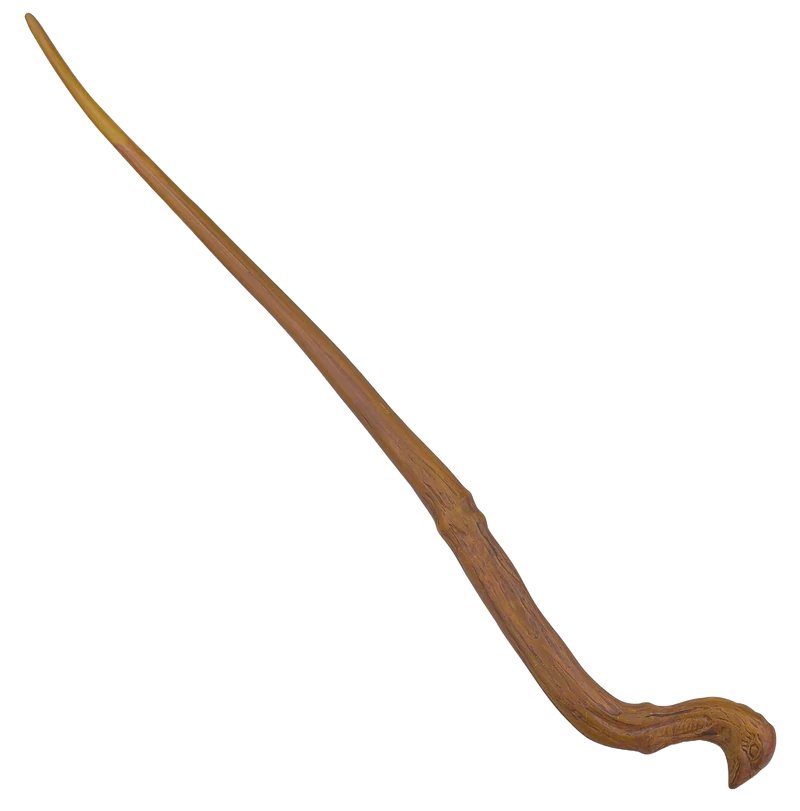
Viktor Krum’s wand is made of hornbeam wood with a dragon heartstring core, measuring ten and a quarter inches, with a rigid flexibility. It was made by the wandmaker Gregorovitch, one of the few non-Ollivander wands featured in the series. Ollivander examined it at the Weighing of the Wands ceremony and described it as “quite rigid” and “thicker than one usually sees,” noting that it was a Gregorovitch creation with a somewhat different style than his own work.
According to Ollivander’s Pottermore writings, hornbeam wands select for their “life mate the talented witch or wizard with a single, pure passion, which some might call obsession.” Hornbeam wands adapt to their owner’s style of magic more quickly than almost any other, becoming so personalised that other people find them extremely difficult to use. For Krum – an international Quidditch star at just eighteen, someone whose entire identity was built around his singular dedication to flying – the hornbeam wand’s preference for obsessive, single-minded talent is a perfect match. The dragon heartstring core produces wands of great power capable of the most flamboyant spells, and the rigid flexibility speaks to Krum’s intense, uncompromising demeanour. Krum used this wand throughout the Triwizard Tournament, performing an incomplete human Transfiguration (a shark’s head) during the second task and navigating the maze in the third, where he was placed under the Imperius Curse by Barty Crouch Jr. disguised as Mad-Eye Moody.
Garrick Ollivander’s Wand
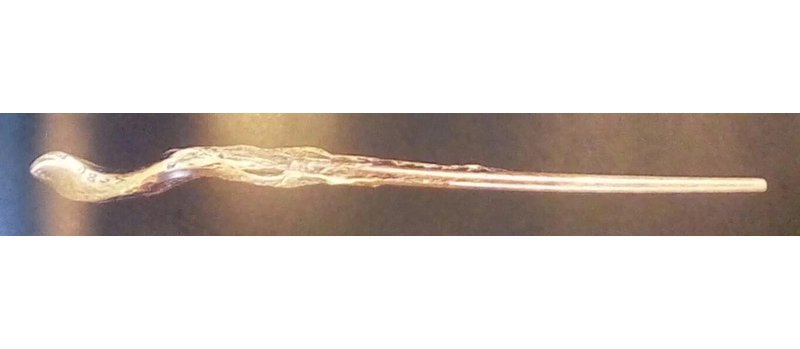
Garrick Ollivander’s wand is made of hornbeam wood with a dragon heartstring core. The precise length has not been confirmed in published sources. In his own Pottermore notes on hornbeam, Ollivander writes with characteristic modesty: “My own wand is made of hornbeam, and so it is with all due modesty that I state that hornbeam selects for its life mate the talented witch or wizard with a single, pure passion, which some might call obsession (though I prefer the term ‘vision’), which will almost always be realised.”
That Ollivander – a man who has devoted his entire life to the study and craft of wandmaking – carries a hornbeam wand is deeply fitting. Hornbeam wands absorb their owner’s code of honour and “will refuse to perform acts – whether for good or ill – that do not tally with their master’s principles.” For a wandmaker whose guiding principle has always been the pursuit of perfect wand-wizard matches, this loyalty to a code of honour is central to who Ollivander is. He is the most renowned wandmaker in Britain, and arguably the world, operating from the family shop at 382 Diagon Alley since at least the fourth century BC (as the shop’s sign proclaims). Ollivander’s wand was taken from him when he was kidnapped by Death Eaters and imprisoned at Malfoy Manor, where Voldemort interrogated him about the Elder Wand. After his rescue by Dobby, Ollivander provided crucial information about wand allegiance that helped Harry understand his connection to the Elder Wand and ultimately defeat Voldemort.
Dolores Umbridge’s Wand
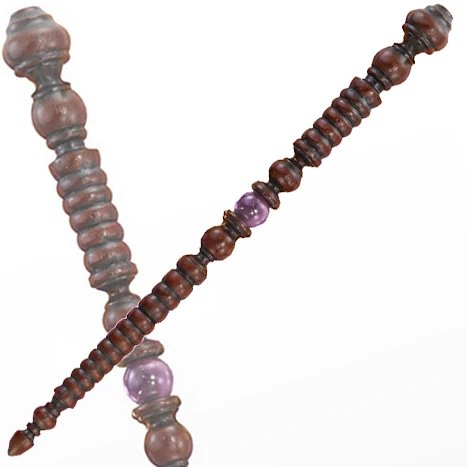
Dolores Umbridge’s first wand is made of birch wood with a dragon heartstring core, measuring eight inches – the shortest known wand in the series. Birch is not included in Ollivander’s published notes on wand woods, making it one of the rarer woods on this list. In general wand traditions, birch is associated with new beginnings, purification, and – interestingly – discipline, all of which align with Umbridge’s self-appointed role as Hogwarts’s enforcer of Ministry-approved order.
The unusually short length of eight inches is notable. Ollivander has indicated that shorter wands tend to suit those whose character lacks something, though he also notes many exceptions. For Umbridge, who compensated for her insecurity and pettiness with increasingly authoritarian control, the short wand feels symbolically appropriate. Umbridge wielded this wand with sadistic precision during her tenure as Defence Against the Dark Arts professor and later Hogwarts High Inquisitor, using it to enforce Educational Decrees, supervise blood-quill detentions (a form of torture she personally administered), and cast a Patronus – a Persian cat – to defend herself against Dementors at the Ministry. Her Patronus is particularly disturbing in context: she was able to produce one while presiding over the Muggle-Born Registration Commission, sentencing innocent witches and wizards to Azkaban, suggesting her cruelty brought her genuine happiness. The fate of this wand after the fall of Voldemort’s Ministry is unknown.
Ginny Weasley’s Wand
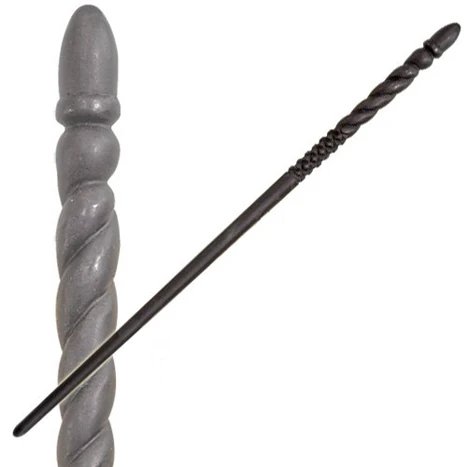
Ginny Weasley’s wand is made of yew wood, though the core and length have not been confirmed in published sources. The yew wood is a striking detail. According to Ollivander’s Pottermore writings, yew wands are “reputed to endow its possessor with the power of life and death” and are among the rarer kinds. The yew wand “never chooses either a mediocre or a timid owner,” and yew owners have been found among heroes quite as often as villains. For Ginny – who grew up the youngest of seven siblings, was possessed by Tom Riddle’s diary at age eleven, and still emerged as one of the fiercest fighters in Dumbledore’s Army – the yew wand’s refusal to choose the mediocre or timid speaks volumes.
Ginny proved to be an exceptionally talented witch. Her Bat-Bogey Hex was so impressive that it caught the attention of Professor Slughorn, earning her an invitation to the Slug Club. She fought at the Battle of the Department of Mysteries as a fourth-year, duelled Bellatrix Lestrange during the Battle of Hogwarts (alongside Hermione and Luna), and later played professional Quidditch for the Holyhead Harpies. The fact that she shares yew wood with Voldemort is an intriguing parallel, given that she was once host to a fragment of his soul through the diary Horcrux. Where Voldemort’s yew wand served death, Ginny’s served life and fierce protection of those she loved.
Remus Lupin’s Wand
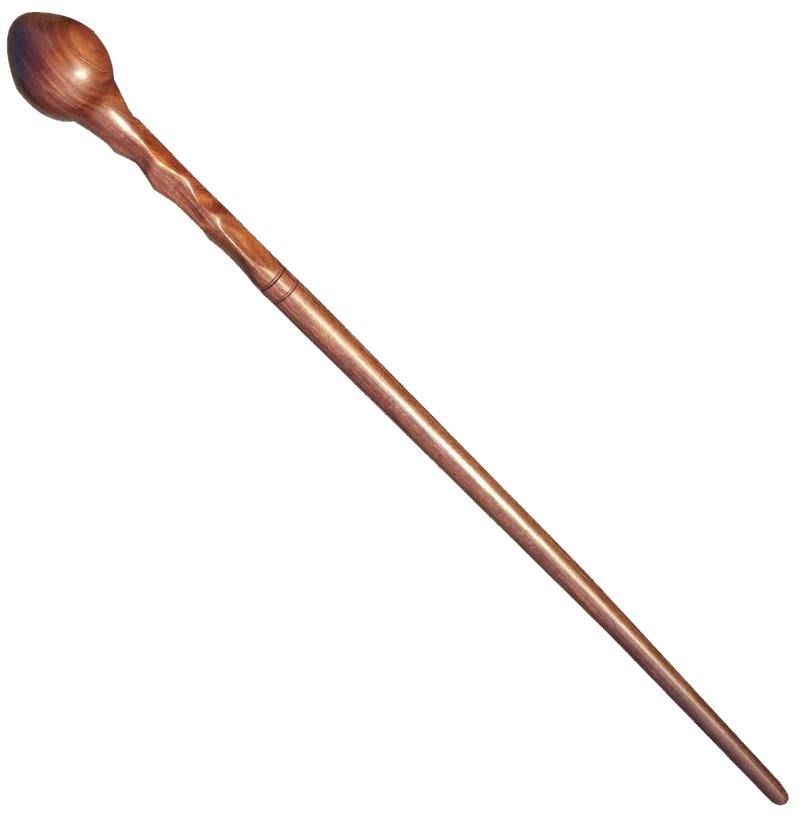
Remus Lupin’s wand is made of cypress wood with a unicorn hair core, measuring ten and a quarter inches. According to Ollivander’s Pottermore writings, cypress wands are “associated with nobility,” and the great medieval wandmaker Geraint Ollivander “wrote that he was always honoured to match a cypress wand, for he knew he was meeting a witch or wizard who would die a heroic death.” In modern times, possessors of cypress wands are “rarely called upon to lay down their lives, though doubtless many of them would do so if required.” Cypress wands find their soul mates “among the brave, the bold and the self-sacrificing: those who are unafraid to confront the shadows in their own and others’ natures.”
Every word of that description applies to Remus Lupin with devastating accuracy. Bitten by the werewolf Fenrir Greyback as a young child, Lupin spent his entire life confronting the shadow within his own nature – literally, every full moon. He was brave and self-sacrificing, joining the Order of the Phoenix twice to fight against Voldemort despite having every reason to retreat into isolation. And the prophecy embedded in the cypress wand proved true: Lupin died a heroic death during the Battle of Hogwarts, fighting alongside his wife Nymphadora Tonks. The unicorn hair core, which resists the Dark Arts and produces the most consistent magic, reflects the fundamental decency that defined Lupin despite the curse he carried. His wand understood him better, perhaps, than he understood himself.
Horace Slughorn’s Wand
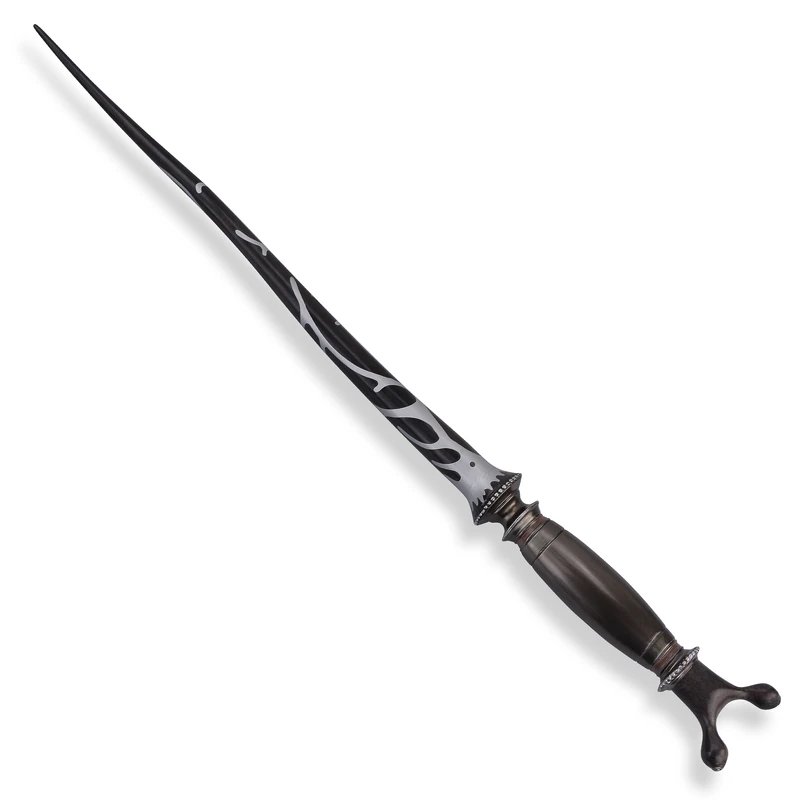
Horace Slughorn’s wand is made of cedar wood with a dragon heartstring core, measuring ten and a quarter inches, with a fairly flexible flexibility. Ollivander’s Pottermore notes on cedar are admirably direct: “Whenever I meet one who carries a cedar wand, I find strength of character and unusual loyalty.” His father, Gervaise Ollivander, had a saying: “you will never fool the cedar carrier.” The cedar wand finds its home “where there is perspicacity and perception,” and Ollivander has “never yet met the owner of a cedar wand whom I would care to cross, especially if harm is done to those of whom they are fond.”
This description maps onto Slughorn with interesting complexity. On the surface, Slughorn seems more concerned with comfort and collecting famous students than with strength of character. But beneath the blustering bon vivant was a wizard of genuine perception – he saw talent in Lily Evans when others dismissed her for her parentage, and he recognised Tom Riddle’s darkness long before anyone else did. His deepest shame – having provided Riddle with information about Horcruxes – haunted him for decades, and he modified his own memory to hide it. The cedar wand’s quality of loyalty to those one cares about manifested when Slughorn finally returned to Hogwarts and fought in the Battle of Hogwarts, duelling Voldemort himself alongside McGonagall and Kingsley Shacklebolt. The fairly flexible flexibility suggests an adaptable temperament, fitting for a man who navigated decades of wizarding politics by knowing exactly when to bend.
Minerva McGonagall’s Wand
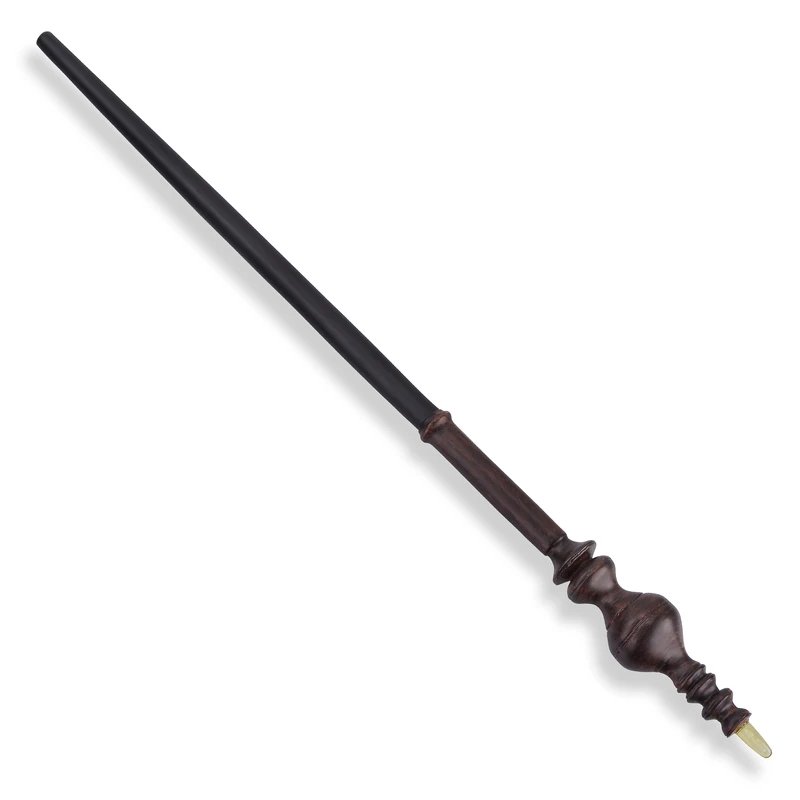
Minerva McGonagall’s wand is made of fir wood with a dragon heartstring core, measuring nine and a half inches. Ollivander’s grandfather, Gerbold Octavius Ollivander, called fir wands “the survivor’s wand” because he had sold them to three wizards who subsequently passed through mortal peril unscathed. Fir wands demand “staying power and strength of purpose” and are “poor tools in the hands of the changeable and indecisive.” They are particularly suited to Transfiguration and favour owners of “focused, strong-minded and, occasionally, intimidating demeanour.”
If there is a single wand on this list that matches its owner’s description with absolute precision, it may be this one. Minerva McGonagall is the definition of focused, strong-minded, and intimidating. As Head of Gryffindor House and Deputy Headmistress, she embodied the qualities her fir wand demanded: unwavering purpose, moral clarity, and the kind of quiet authority that could silence a room. The fir wand’s particular suitability for Transfiguration is no coincidence – McGonagall is a registered Animagus (a tabby cat with spectacle markings around the eyes) and one of the most accomplished Transfiguration practitioners in the wizarding world, having both studied under and succeeded Dumbledore as the subject’s professor at Hogwarts. The dragon heartstring core gives her wand the power needed for the advanced magic she performs routinely, including animated Transfiguration of the Hogwarts suits of armour during the Battle of Hogwarts. McGonagall survived two wizarding wars, duelled Severus Snape and Voldemort, and lived to serve as Headmistress – earning the title of survivor that her fir wand promised.
Charlie Weasley’s First Wand
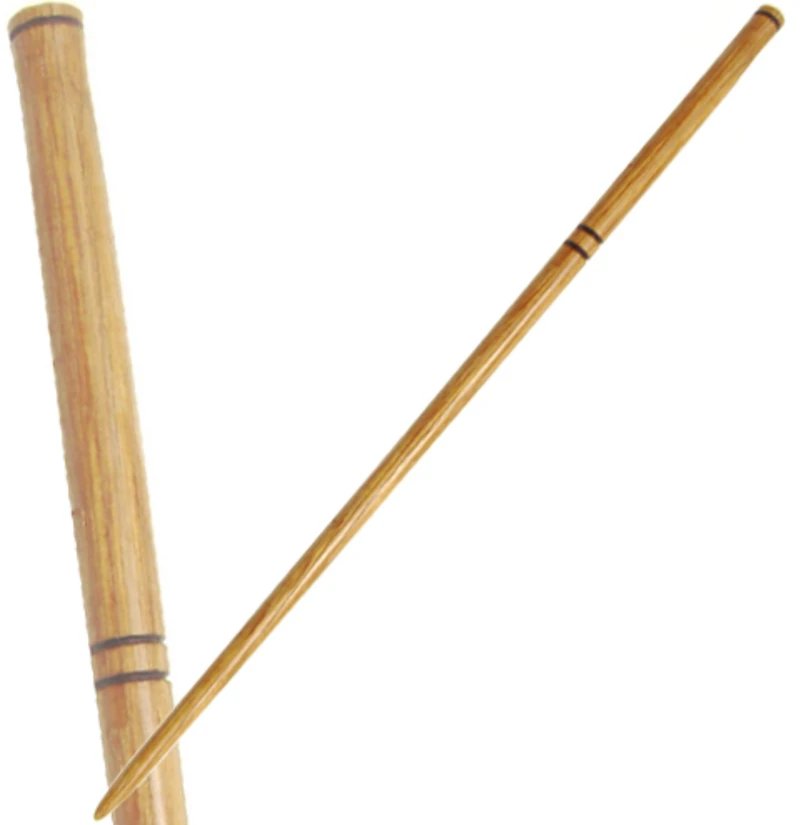
Charlie Weasley’s first wand is made of ash wood with a unicorn tail hair core, measuring twelve inches. This is the same wand that was later passed down to his younger brother Ron, where it served disastrously as Ron’s first wand. According to Ollivander’s Pottermore writings, ash wands “cleave to their one true master and ought not to be passed on or gifted from the original owner, because it will lose power and skill. This tendency is extreme if the core is of unicorn.” The Weasley family, presumably acting out of financial necessity, violated this fundamental principle of wandlore when they gave Charlie’s old wand to Ron.
While the wand was in Charlie’s possession, it presumably served him well. Charlie was an exceptional student and Quidditch player – he captained the Gryffindor Quidditch team and was talented enough that Oliver Wood claimed he could have played for England. After Hogwarts, Charlie moved to Romania to study dragons, a career that demanded both courage and practical magical skill. The ash wand’s preference for owners who are stubborn, courageous, and never crass or arrogant fits Charlie’s characterisation as the Weasley brother who chose passion over prestige, trading a potential career in professional Quidditch for the dangerous work of dragon handling. When Charlie obtained a new wand (details unconfirmed), his old ash-and-unicorn wand was handed down – beginning its unhappy second life in Ron’s pocket.
Bill Weasley’s Wand
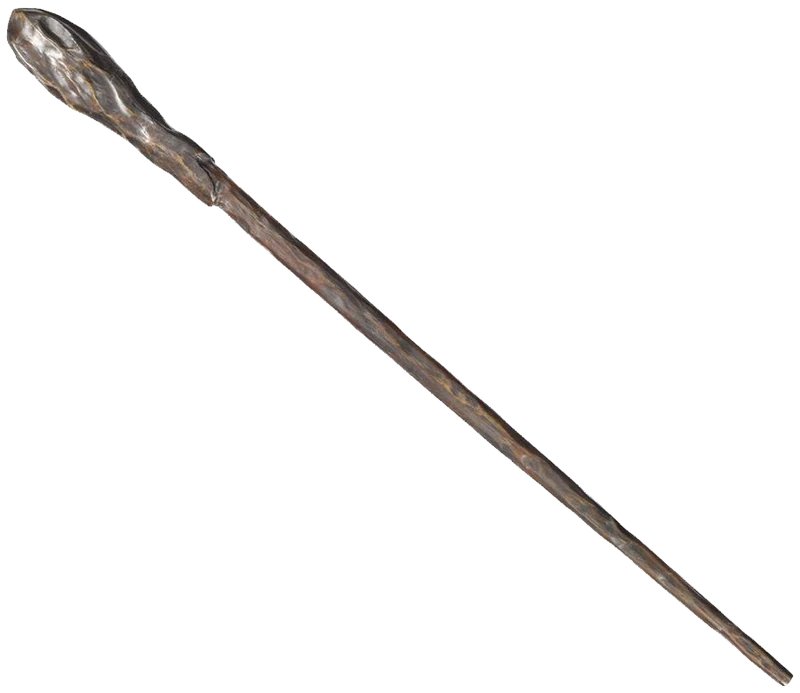
Bill Weasley’s wand is made of hazel wood, though the core and length have not been confirmed in any published source. According to Ollivander’s Pottermore writings, hazel is “a sensitive wand” that “often reflects its owner’s emotional state, and works best for a master who understands and can manage their own feelings.” Hazel wands are capable of “outstanding magic in the hands of the skilful,” and they are so devoted to their owners that they often “wilt” at the end of their master’s life, expelling all magic and refusing to perform. They also possess the unique ability to detect water underground, emitting “silvery, tear-shaped puffs of smoke” when passing over concealed springs and wells.
Bill Weasley, the eldest of the seven Weasley children, was by all accounts one of the most accomplished wizards of his generation. He was Head Boy at Hogwarts and went on to work as a Curse-Breaker for Gringotts Wizarding Bank in Egypt, a career that demanded exceptional magical skill and the ability to deal with ancient, powerful enchantments. The hazel wand’s sensitivity and responsiveness would serve such work well, as curse-breaking requires both finesse and adaptability. Bill’s emotional maturity – evident in his calm reaction to being attacked and scarred by Fenrir Greyback, and in his steady relationship with Fleur Delacour – aligns with Ollivander’s note that hazel wands work best for a master who can manage their own feelings.
Rubeus Hagrid’s Wand
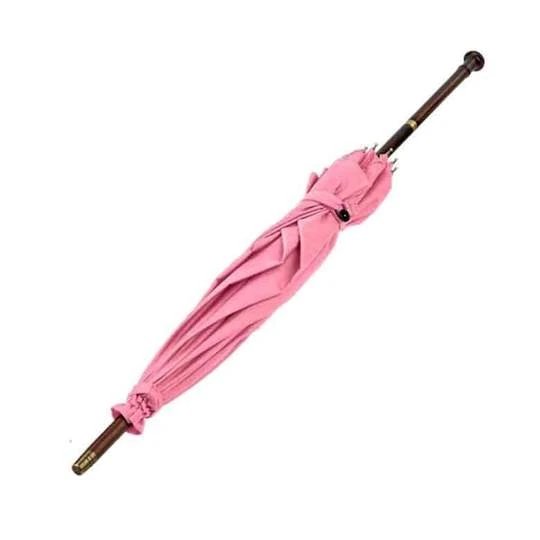
Rubeus Hagrid’s wand is made of oak wood, measuring sixteen inches, with an unknown core. It was snapped in half by the Ministry of Magic when Hagrid was expelled from Hogwarts in his third year, falsely accused of opening the Chamber of Secrets – a crime actually committed by Tom Riddle. Despite the official destruction, Hagrid kept the pieces and concealed them inside a pink umbrella, which he continues to use for magical purposes throughout the series, though he is technically forbidden from performing magic.
The oak wand’s characteristics are profoundly fitting. According to Ollivander’s notes, oak wands demand “partners of strength, courage and fidelity” and are “a friend as loyal as the wizard who deserves it.” Oak wand owners often have “powerful intuition” and “an affinity with the magic of the natural world, with the creatures and plants that are necessary to wizardkind.” Hagrid’s entire life has been defined by his loyalty – to Dumbledore, to Harry, to the magical creatures he adores – and his deep connection to the natural world. He is the Keeper of Keys and Grounds, the Care of Magical Creatures professor, and a man who sees beauty in creatures that terrify everyone else: Acromantulas, Hippogriffs, Thestrals, dragons.
At sixteen inches, Hagrid’s wand was exceptionally long even before it was broken, suited to his half-giant stature. The pink umbrella that houses its remnants has produced fire, inflicted a pig’s tail on Dudley Dursley, sped up the growth of a pumpkin patch, and performed various other spells of varying success. Dumbledore clearly allowed Hagrid to keep practising magic in this covert fashion – one of many quiet acts of trust and kindness from a headmaster who believed in second chances. Hagrid’s wand, broken but never truly silenced, mirrors its owner: underestimated by the wizarding establishment, but possessed of a magic that endures.
- Rowling, J.K. Harry Potter and the Philosopher’s Stone (1997)
- Rowling, J.K. Harry Potter and the Chamber of Secrets (1998)
- Rowling, J.K. Harry Potter and the Prisoner of Azkaban (1999)
- Rowling, J.K. Harry Potter and the Goblet of Fire (2000)
- Rowling, J.K. Harry Potter and the Order of the Phoenix (2003)
- Rowling, J.K. Harry Potter and the Half-Blood Prince (2005)
- Rowling, J.K. Harry Potter and the Deathly Hallows (2007)
- Rowling, J.K. The Tales of Beedle the Bard (2008)
- Rowling, J.K. “Wand Woods” – Wizarding World / Pottermore (writing by J.K. Rowling)
- Rowling, J.K. “Wand Cores” – Wizarding World / Pottermore (writing by J.K. Rowling)
- Rowling, J.K. “Wand Lengths & Flexibility” – Wizarding World / Pottermore (writing by J.K. Rowling)
- Rowling, J.K. Character wand specifications – Wizarding World / Pottermore profiles