Every Professional Quidditch Team in Harry Potter
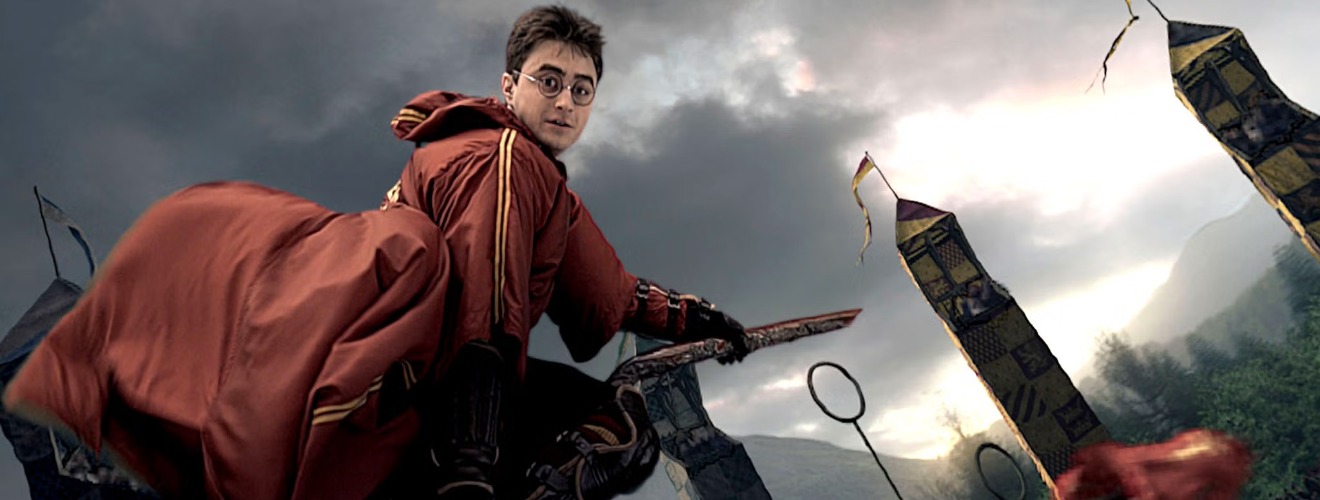
In 1674, the Department of Magical Games and Sports sat down with a problem. Quidditch had become too popular. There were too many teams, too many matches, and far too many brooms visible over the English countryside on any given Saturday afternoon. The International Statute of Wizarding Secrecy, passed just four decades earlier, was under pressure. Muggles were starting to notice.
The solution was a professional league. The thirteen most successful teams in Britain and Ireland were formally incorporated; every other club in the British Isles was ordered to disband. From that moment on, professional Quidditch in Britain and Ireland has meant those thirteen clubs and no others, with one notable nineteenth-century exception involving a Scottish team, some free-roaming Bludgers, and an attempted dragon abduction.
The clubs in the League span nearly every corner of these islands. Puddlemere United, founded in 1163, is older than Westminster Abbey. The Holyhead Harpies have maintained an all-witch roster for more than eight hundred years. The Chudley Cannons have not won anything since 1892 and are, against all evidence, somebody’s favourite team in every British wizarding household with a child under twelve. One team was founded by seven siblings of a Scottish butcher. Another got its name from a Beater hitting a wasps’ nest at an opposing Seeker on purpose.
What follows is every team in the British and Irish Quidditch League, in alphabetical order, including the disbanded Banchory Bangers. They are the team the dragon was for.
- The British and Irish Quidditch League was established in 1674 by the Department of Magical Games and Sports
- Thirteen teams currently compete in the League; the Banchory Bangers were expelled in 1814 and never replaced
- Puddlemere United, founded in 1163, is the oldest professional Quidditch team in the League
- The Montrose Magpies are the most successful team with at least thirty-two League Cup titles
- The Ballycastle Bats are second with at least twenty-seven, followed by Puddlemere United with at least twenty-two and the Chudley Cannons with twenty-one
- The Holyhead Harpies are the only all-witch professional Quidditch team in the world
- The Tutshill Tornados hold the record for consecutive League Cups with five in a row in the early 1900s
- Roderick Plumpton of the Tutshill Tornados holds the British record for fastest Snitch capture at three and a half seconds, set in 1921
- The last Chudley Cannons League Cup victory was in 1892
- Primary source: Quidditch Through the Ages by J.K. Rowling (writing as Kennilworthy Whisp), Chapter 7
Appleby Arrows
Founded in 1612 in Appleby-in-Westmorland, Cumbria, the Arrows are the only English team in the British and Irish League not based in the West Country. Their pale blue robes with a silver arrow are distinctive enough, but it is the fans who have defined the team’s reputation. For centuries, Arrows supporters celebrated every goal by shooting actual arrows into the sky from their wands. This continued until 1894, when one of these wand-summoned arrows pierced the nose of the match referee, a man named Nugent Potts, and the Department of Magical Games and Sports decided enough was enough.
The Arrows’ finest hour, on which all their fans agree, was the 1932 defeat of the Vratsa Vultures, then the reigning European champions. The match lasted sixteen days in dense fog and driving rain, in conditions that would have caused any sensible Muggle sport to be postponed, then abandoned, then retroactively un-scheduled. The Arrows won. The Vratsa Vultures, a famously thrilling Bulgarian side known for spectacular long-distance scoring, presumably went home wet.
Their fiercest rivalry is with the Wimbourne Wasps, a grudge that dates back to the seventeenth century and a Wasps Beater batting a wasps’ nest directly at the Arrows’ Seeker. Whether the 1932 marathon or the nose incident of 1894 counts as a greater achievement depends on how you feel about referees.
Ballycastle Bats
Northern Ireland’s entry in the League and, by most measures, the second most successful team in its history. The Ballycastle Bats, founded in County Antrim, have won the League Cup at least twenty-seven times, a total surpassed only by the Montrose Magpies. Their robes are black with a scarlet bat across the chest, and their mascot is Barny the Fruitbat, who has been the face of a long-running Butterbeer advertising campaign.
The slogan, preserved in Quidditch Through the Ages, is: “Barny says: I’m just batty about Butterbeer!” This is one of the few moments in the Harry Potter universe where the reader is given a direct look at wizarding advertising, and what we learn is that it is exactly as terrible as Muggle advertising. Barny the Fruitbat is, for all practical purposes, the wizarding world’s Tony the Tiger, if Tony the Tiger endorsed beer.
The Bats have had their share of on-field drama. Their captain through the 1990s, Finbar Quigley, was accused in a Daily Prophet article of winning a match against the Tutshill Tornados through some extremely suspect Bludger work. The team nonetheless retained its reputation as the pride of the Antrim coast. Their fans, according to the Daily Prophet, dress in black. This is the kind of detail that makes the wizarding sports press either very atmospheric or very lazy, depending on your tolerance for metaphor.
Banchory Bangers
The only team ever expelled from the British and Irish Quidditch League, and the only one whose expulsion was richly deserved. The Bangers were a Scottish side from Banchory, in Aberdeenshire, and were known in equal measure for terrible Quidditch and excellent parties. Their skill on the pitch was appalling. Their commitment to post-match drinking was beyond reproach. The combination did not last.
In 1814, after a match against the Appleby Arrows, the Bangers let their Bludgers fly off freely into the Scottish night. Bludgers are iron balls enchanted to chase players and attempt to knock them off their brooms, which is not the kind of object one allows to disperse over a populated area. This alone would have been bad. What the Bangers did next was worse. They set out that same evening to capture a Hebridean Black dragon, which they intended to use as their team mascot.
They were intercepted over Inverness by officials from the Department of Magical Games and Sports, stopped before they could bring a live dragon home, and disbanded. The International Statute of Wizarding Secrecy, it turned out, had quite a lot to say about Bludgers loose over the Highlands and freelance dragon-napping. The Bangers never played competitively again. In the strictest sense, they are the only team in League history whose final match was followed not by a rematch, but by a tribunal.
Caerphilly Catapults
Founded in 1402, the Catapults are the older of the League’s two Welsh teams, based in Caerphilly in the south of the country. Their robes are vertical stripes of light green and scarlet, a combination that would be questionable on the page and is presumably worse at a distance of two hundred feet on a broomstick. They have won the League Cup eighteen times and the European Cup once, in 1956, when they defeated the Norwegian Karasjok Kites in the final.
The team’s most famous player, and certainly its most famously departed, was “Dangerous” Dai Llewellyn. Dai was a Chaser known for taking risks that even his own teammates considered unwise. Quidditch Through the Ages describes him as having flown “like a madman,” which became the title of his biography by Kennilworthy Whisp: He Flew Like a Madman.
Llewellyn’s death has become a small monument of absurdity in wizarding culture. While on holiday in Mykonos, Greece, he went Chimaera trekking. A Chimaera is a Greek mythological creature with the head of a lion, the body of a goat, and the tail of a dragon, and is classified by the Ministry as extraordinarily dangerous. Dai was eaten. Wales observed a national day of mourning. The League responded by creating the Dangerous Dai Llewellyn Commemorative Medal, awarded each season to the player who takes the most spectacular risks. The St. Mungo’s Serious Bites ward also bears his name.
Chudley Cannons
The Chudley Cannons occupy a specific place in British and Irish Quidditch history: they are the team everyone knows, and they are bad. Founded sometime in the medieval period, based in Chudley in the West Country, they were for two hundred years one of the most successful clubs in the League. They won the Cup twenty-one times. The last of those wins was in 1892.
That is where the story pivots. For more than a century, the Cannons have been a study in decline. Bright orange robes, a logo of a speeding cannonball and two black Cs, and a team that cannot reliably win games. In 1972, after decades of futility, the club formally changed its motto from “We shall conquer” to “Let’s all just keep our fingers crossed and hope for the best.” This is, in its quiet way, one of the finest pieces of writing in the entire Harry Potter corpus.
The Cannons are Ron Weasley’s favourite team. His bedroom at the Burrow is painted in a shade of orange that Harry, on first seeing it, describes as violent. Every wall is covered in moving posters of the team; the bedspread matches. He owns a club badge. He reads the fan book Flying with the Cannons.
The Cannons’ 1990s Seeker, Galvin Gudgeon, was so bad that during one match the Snitch bounced off his nose twice. In 1998, their manager Ragmar Dorkins had to publicly inform the fans that “turning him into a toad will not help his game.” That season, the team broke a sixteen-game losing streak by drawing with the Caerphilly Catapults.
Ron has never stopped supporting them.
Falmouth Falcons
Cornwall’s team, founded in the port town of Falmouth, serves as the League’s designated villains. Their robes are dark grey with a white falcon on the chest, functional colours for a team whose playing philosophy makes no secret of its priorities. The team motto, preserved in Quidditch Through the Ages, is: “Let us win, but if we cannot win, let us break a few heads.”
This is not a motto. This is a confession.
Between 1958 and 1969, the Falcons fielded the Broadmoor brothers, Karl and Kevin, as their two Beaters. The Broadmoors were excellent players and absolute menaces, suspended from professional Quidditch on no fewer than fourteen separate occasions across their eleven-year career. That averages to more than one suspension per year, which suggests either extraordinary bad luck or a complete lack of interest in the rule book. The latter is almost certainly closer to the truth.
Two earlier Falcons, Randolph Keitch and Basil Horton, retired from Quidditch in the early twentieth century to found the Comet Trading Company, which produced some of the more popular brooms of the interwar period. The Keitch-Horton Braking Charm, still used in modern broom manufacture, bears their names. That a team best known for institutionalised violence also produced one of Britain’s premier broom-making firms is either a useful lesson about specialisation or a reminder that Beaters are, at the end of the day, athletes with very good hand-eye coordination.
Holyhead Harpies
Based in Holyhead on the island of Anglesey in North Wales, the Harpies were founded in 1203 and are the second-oldest team in the League. They are also the only all-witch team in professional Quidditch anywhere in the world. This policy has been in place for more than eight hundred years and has never been relaxed. Their robes are dark green with a golden talon, and their supporters include Albus Dumbledore, Horace Slughorn, and Ginny Weasley, who joined the team professionally after leaving Hogwarts.
The Harpies’ most famous victory was a seven-day match in 1953 against the German Heidelberg Harriers, which they won at the Snitch. After the final whistle, Rudolf Brand, the captain of the Harriers, dismounted his broom, approached the Harpies’ captain Gwendolyn Morgan, and proposed marriage. Morgan concussed him with her broomstick. Quidditch Through the Ages describes the match as “one of the finest games ever seen,” which is tactful.
Gwenog Jones, captain and Beater of the Harpies through the 1980s and 1990s, is one of the few Quidditch players mentioned repeatedly across the main series. She was a member of Horace Slughorn’s Slug Club at Hogwarts, supplied Slughorn with free tickets for decades, and was described in the Daily Prophet as “brilliant but dangerous.” Rumour had it that people who disagreed with her tended to turn into woodlice. She retired by 2014 to manage the Welsh National Team, from which position she nearly cursed a Brazilian manager’s face off during the Quidditch World Cup.
Kenmare Kestrels
Founded in 1291 and based in Kenmare, County Kerry, the Kestrels are the League’s Republic of Ireland team. Their robes are emerald green with two yellow Ks back to back, and they have the most distinctive match-day atmosphere in the League. Their mascots are leprechauns, which behave much as leprechauns always do in the Harry Potter universe: they throw gold coins that vanish after a few hours, perform elaborate airborne routines, and generally commit enthusiastically to the bit. Their fans, meanwhile, bring harps. To the matches. As in, actual harps.
That a professional sporting event in the 1990s was regularly accompanied by live harp playing in the stands tells you something important about wizarding culture, and possibly about Irish fans specifically.
The Kestrels’ most distinguished alumnus is Darren O’Hare, their Keeper from 1947 to 1960 and eventually team captain. He was also three-time captain of the Ireland national team, and he is credited with inventing the Hawkshead Attacking Formation, an arrowhead configuration used by Chasers to drive through opposing defences. The Hawkshead is still one of the most commonly taught attacking plays in Quidditch.
Among the Kestrels’ famous supporters is Seamus Finnigan, Harry’s Gryffindor dormmate, who keeps a poster of the team on the dormitory wall and makes a point of ensuring it is always hanging perfectly straight. Donaghan Tremlett, bass player for the wizarding band The Weird Sisters, is also on record as a devoted fan.
Montrose Magpies
The most successful team in British and Irish Quidditch history. The Magpies, based in Montrose on the east coast of Scotland, have won the League Cup at least thirty-two times and the European Cup twice. Their robes are black and white with a magpie front and back, and their fans span the British Isles and beyond. Professor McGonagall, it turns out, is one of them; she grew up a Magpies supporter and maintained that allegiance through her long career at Hogwarts.
The Magpies’ long dominance has produced the expected parade of legends. Hamish MacFarlan captained the team from 1957 to 1968 and later became Head of the Department of Magical Games and Sports. Fabius Watkins, another captain and Chaser, died in 1975 in a freak collision with a Muggle helicopter, which is the sort of detail that slips past on first reading and raises fundamental questions about wizarding aviation on second.
The best Magpies story, though, belongs to Eunice Murray, their Seeker in the early twentieth century. Murray was so dominant, so consistently able to catch the Snitch, that she formally petitioned the Ministry of Magic to make the Snitch smaller and faster. Her stated reason, on the record: “this is just too easy.” The Ministry declined. Murray died in 1942 having spent a career catching a ball she considered beneath her. The Magpies, for their part, kept winning.
Pride of Portree
Known to fans simply as the Prides, this team is based in Portree on the Isle of Skye, which makes them the westernmost professional Quidditch club in Britain. Their robes are deep purple with a single gold star across the chest. They have won the League Cup at least twice and maintain a reputation as a solid mid-table side without the showboating of the Magpies or the theatrical disasters of the Cannons.
The Pride of Portree produced one of the most compelling figures in twentieth-century Quidditch: Catriona McCormack, a Chaser who captained the team to two League Cups in the 1960s and played for the Scottish National Team thirty-six times. She was interviewed by Quidditch Times on its 3000th issue both about her career and, somewhat improbably, about “how to wear purple with flair.”
Catriona’s children kept the family in the sport in different ways. Her daughter, Meaghan McCormack, became the Prides’ Keeper and was still playing for the team in the 1990s. Her son took a different route. He changed his surname to Duke and went on to become the lead guitarist of The Weird Sisters, the wizarding world’s most successful rock band and the act that performs at the Yule Ball in Goblet of Fire. Kirley Duke was played, in the film version, by Jonny Greenwood of Radiohead. In the film, the Weird Sisters perform. In the canon, Kirley’s mum once played Chaser for a purple-robed Skye Quidditch club.
Puddlemere United
The oldest professional Quidditch team in Britain and Ireland, and possibly the oldest in the world. Puddlemere United was founded in 1163, more than five centuries before the League itself was established. Their robes are navy blue with two crossed golden bulrushes, and they have won the League Cup at least twenty-two times and the European Cup twice. They are also, notably, the only team in the League whose name is not alliterative, a distinction the team has managed to wear with something like dignity.
Albus Dumbledore is on record as a Puddlemere United fan. This is confirmed in the introduction to Quidditch Through the Ages, in which he references the despair of Chudley Cannons supporters in a way that suggests considerable personal satisfaction at not being one.
The team’s anthem, Beat Back Those Bludgers, Boys, and Chuck That Quaffle Here, was recorded by the singing sorceress Celestina Warbeck, Molly Weasley’s favourite singer, to raise money for St. Mungo’s Hospital. The song is exactly as bombastic as the title promises.
Oliver Wood, the Gryffindor Quidditch captain from Harry’s early Hogwarts years, joined Puddlemere’s reserve team as Keeper after leaving school in 1994. This is mentioned in Goblet of Fire almost in passing. For a character whose defining trait was treating every match as a matter of life and death, the progression from Hogwarts house captain to the oldest and most decorated club in British Quidditch feels about right. Harry later wondered aloud whether Wood had survived training.
Tutshill Tornados
Founded in 1520 in the village of Tutshill, on the English side of the Welsh border near Chepstow, the Tornados wear sky-blue robes with a dark blue double-T on the chest. Their reputation rests largely on the early twentieth century, during which they won the League Cup five consecutive times, a record no other British or Irish team has ever matched.
The engine of that run was Roderick Plumpton, a Seeker of uncanny reliability. In 1921, during a League match against the Caerphilly Catapults, Plumpton caught the Snitch in three and a half seconds, setting a British record for fastest capture that still stood at the end of the century. The move that produced the catch, in which the Snitch appears to fly directly into the Seeker’s sleeve, is now taught as the Plumpton Pass. Plumpton himself insisted for the rest of his life that he had done it on purpose. Sceptical observers suggested the Snitch had simply got lost. He died in 1987, still insisting.
The Tornados were also at the centre of a 1995 Quibbler expose alleging that their continued dominance was the result of torture, blackmail, and illegal broom tampering. Nothing came of it, though the Quibbler is not generally considered a reliable source.
The Tornados are also the team Cho Chang has supported since she was six, a fact Ron Weasley uses, in Order of the Phoenix, to accuse her of bandwagoning. Cho’s defence is simply: she hasn’t.
Wigtown Wanderers
A Quidditch team founded in 1422 by the seven children of a wizard butcher. This is not a metaphor. Walter Parkin, a butcher working in Wigtown in southwest Scotland, had four sons and three daughters, all of them magical, and at some point in the early fifteenth century they collectively decided to form a Quidditch team. They were, by all accounts, formidable.
Part of that was genuine skill. Part of it, according to Quidditch Through the Ages, was the fact that Walter Parkin attended every home match and stood on the sidelines, holding his wand in one hand and a meat cleaver in the other. What psychological effect this had on visiting teams is not formally documented. It is not difficult to guess.
A Parkin descendant has been on the Wigtown lineup for almost the entire six hundred years of the team’s existence. The team’s signature move, the Parkin’s Pincer, is a Chaser formation in which three players converge on an opposing Chaser from three different angles simultaneously. This is conceptually indistinguishable from a butcher breaking down a carcass, which may or may not be a coincidence.
The Wanderers wear blood-red robes with a silver meat cleaver across the chest, a uniform that leaves no ambiguity about the team’s origins. Kennilworthy Whisp, the in-universe author of Quidditch Through the Ages, is a Wanderers fan. The book’s author biography notes, dryly, that he divides his time between Nottinghamshire and “wherever Wigtown Wanderers are playing this week.”
Wimbourne Wasps
Dorset’s entry in the League, founded in 1312 in Wimbourne. The Wasps wear thick horizontal yellow-and-black stripes with a wasp on the chest, have won the League Cup at least eighteen times, and have reached the European Cup semi-finals twice. Their fans call themselves the Stingers and demonstrate this commitment by making loud buzzing sounds whenever an opposing Chaser lines up a penalty.
The team’s name comes from an incident in the mid-seventeenth century, during a match against the Appleby Arrows. One of the Wimbourne Beaters, mid-flight and acting on pure opportunism, noticed a wasps’ nest in a tree near the pitch, struck it with his bat, and propelled it directly at the Arrows’ Seeker. The Seeker was stung so badly he had to retire from the match. The Wasps won. They were called something else at the time; they adopted the name Wimbourne Wasps shortly afterwards, which is roughly the equivalent of a football club renaming itself Stamford Assault Charge after a particularly egregious foul.
Ludo Bagman, Head of the Department of Magical Games and Sports during Goblet of Fire, was a Wasps Beater earlier in his life. His flashiness, his cheerful disregard for rules, and his enthusiasm for risking other people’s money at gambling are all consistent with a man who once played for a team whose founding legend is assault by wasps’ nest.
The Wasps’ rivalry with the Appleby Arrows is the oldest in the League, and it is not wholly in the past.
- Quidditch Through the Ages by J.K. Rowling (writing as Kennilworthy Whisp), Chapter 7: Quidditch Teams of Britain and Ireland – primary source for all fourteen teams including founding dates, robe colors, League Cup tallies, and team histories
- Quidditch Through the Ages, Chapter 5: Anti-Muggle Precautions – primary source for the Banchory Bangers’ 1814 disbanding
- Harry Potter Lexicon (hp-lexicon.org) – cross-reference for founding dates, championship counts, and player biographies per team
- Harry Potter Wiki (harrypotter.fandom.com) – supplementary details including Daily Prophet newsletter references and character crossovers
- Wizarding World / Pottermore (harrypotter.com) – Harry Potter 101: Quidditch part three, and fact file entries for individual teams
- Harry Potter and the Half-Blood Prince, Chapters 4 and 7 – source for Gwenog Jones as member of the Slug Club
- Harry Potter and the Chamber of Secrets, Chapter 3 – first appearance of the Chudley Cannons in Ron’s bedroom at the Burrow
- Harry Potter and the Order of the Phoenix, Chapter 22 – source for the Dai Llewellyn Ward at St. Mungo’s
- Harry Potter and the Goblet of Fire – source for Oliver Wood joining Puddlemere United’s reserve team