Every Best Picture Oscar Winner That Was a Western
The Western built American cinema. From the 1903 silent short The Great Train Robbery through John Wayne’s six-decade career, the genre was the medium’s signature export – its definitive image, its biggest stars, its grandest landscapes. By the late 1950s, eight of the top ten television shows were Westerns. The Academy gave John Ford four Best Director Oscars. The genre was, by any measure, central to what American movies were.
The Academy noticed all of that and then spent most of a century voting for something else. Stagecoach lost to Gone with the Wind in 1939. The Ox-Bow Incident turned up in 1943 with exactly one nomination, for Best Picture, and lost to Casablanca. High Noon lost to The Greatest Show on Earth in 1952 – a result still cited as one of the Academy’s worst. Shane, Giant, True Grit, and The Power of the Dog all came up short. Voters have historically preferred almost any other kind of film: musicals, prestige biopics, war dramas, even a circus melodrama. Westerns they have tended to nominate and then quietly leave on the table.
The ones that did break through arrived in a strange rhythm. The first turned up while the Academy was still working out what its own awards were for. Then nothing for almost sixty years. Then two in three years, both landing in a brief window when the genre suddenly seemed serious again. Then a fifteen-year wait, and the strangest winner of the lot. What follows is every one of them, in the order they were released.
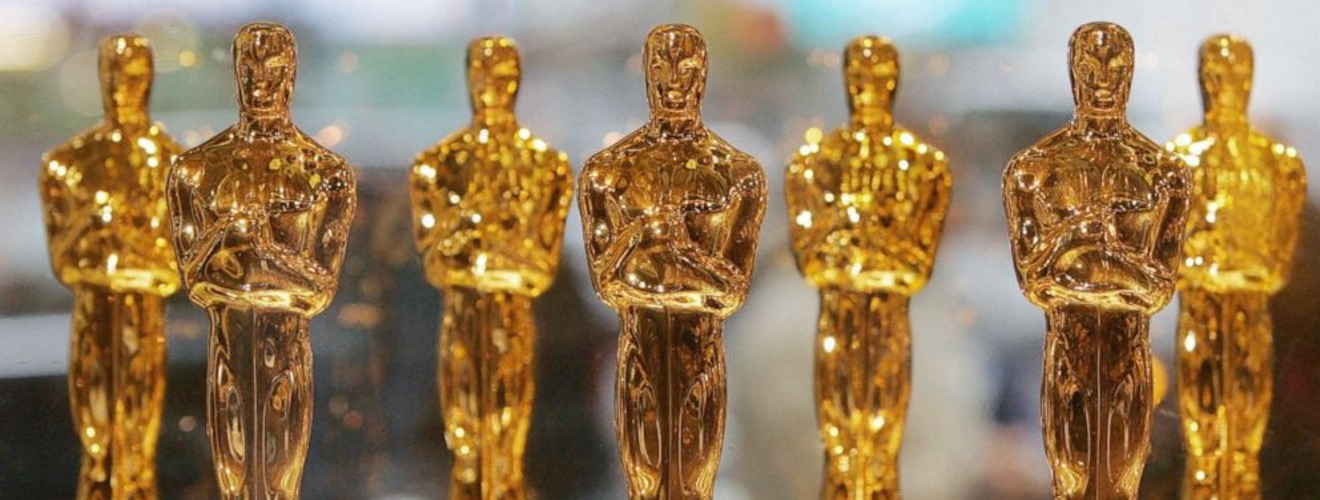
Four Westerns have won the Academy Award for Best Picture: Cimarron in 1931, Dances with Wolves in 1990, Unforgiven in 1992, and No Country for Old Men in 2007. No other film in the genre has taken the award across the Academy’s ninety-eight ceremonies.
Cimarron
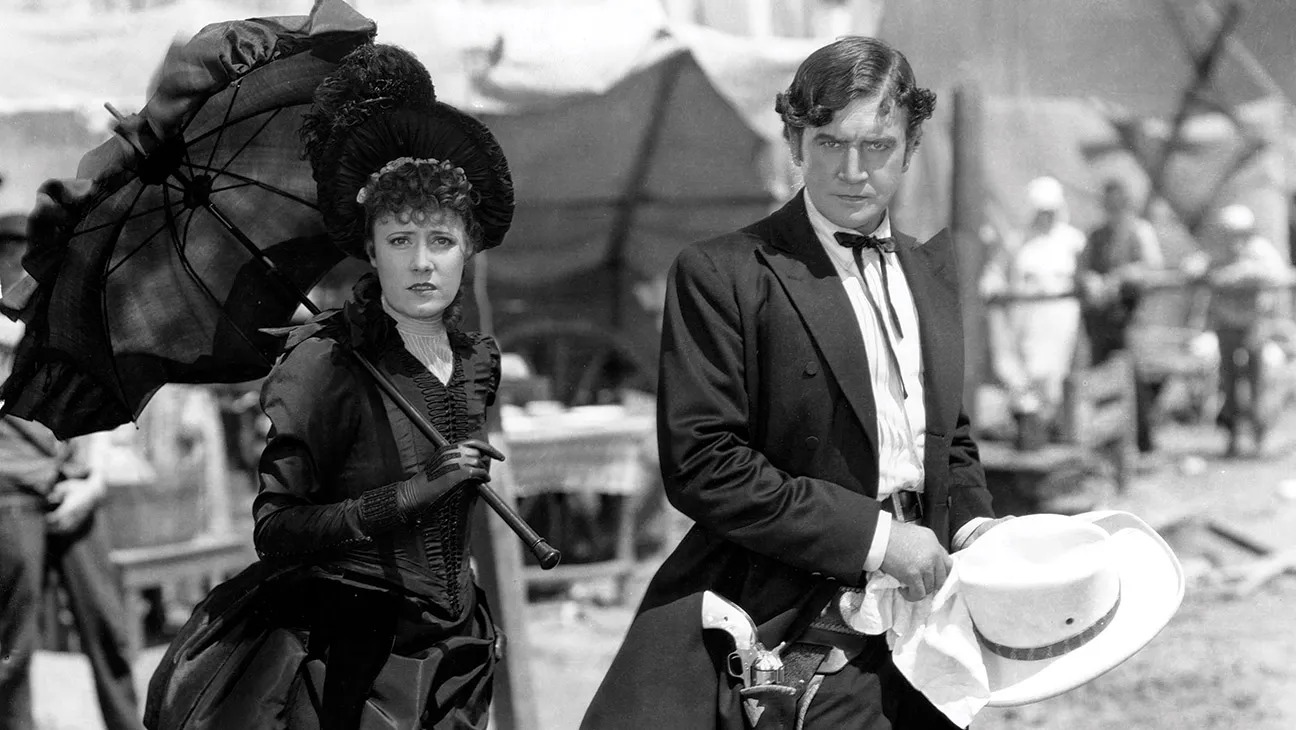
In the summer of 1930, RKO Radio Pictures purchased eighty-nine acres of land in Encino, California, and built an entire Western town on it. The set included a three-block main street representing the fictional Oklahoma boomtown of Osage. Twenty-eight cameramen and over five thousand costumed extras were hired to film the opening sequence alone – a recreation of the 1889 Oklahoma Land Rush, with hundreds of horses, wagons, and buckboards racing across the prairie to claim free land. The whole production cost RKO roughly $1.43 million in the depths of the Great Depression, making it the studio’s most expensive film to date.
Based on Edna Ferber’s 1930 novel, Cimarron spans forty years in the life of newspaper editor Yancey Cravat (Richard Dix) and his wife Sabra (Irene Dunne) as they help build a town from nothing. It was a critical sensation. Variety called it ‘an elegant example of super film making and a big money picture.' It received seven Academy Award nominations – at the time a record – and won three, including Best Picture, Best Adapted Screenplay, and Best Art Direction.
The film never recovered its costs on initial release. RKO’s internal ledgers show a $565,000 loss. It is also, by modern standards, badly aged: the racial stereotypes are painful, the pacing is uneven, and the second half drags. None of which mattered to the Academy in 1931. The first Western to win Best Picture would also remain the only one for almost sixty years.
Dances with Wolves
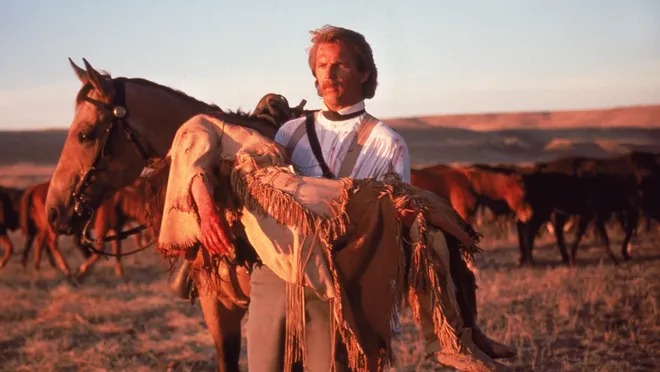
Hollywood in 1989 had a name for what Kevin Costner was doing in South Dakota: Kevin’s Gate. The reference was to Heaven’s Gate, Michael Cimino’s 1980 Western that had gone so far over budget it bankrupted United Artists. Costner was a first-time director making a three-hour Civil War-era epic with a quarter of its dialogue in Lakota Sioux, with subtitles. Two major studios had passed on the project specifically because of the language requirement. Three near-deals had collapsed before financier Jake Eberts came aboard. When the buffalo hunt sequence ran eight days over schedule, Costner began writing personal checks – eventually putting roughly $3 million of his own money in to finish the picture, which by then had ballooned from a planned $15 million to around $22 million.
The film grossed $424 million worldwide. It received twelve Academy Award nominations and won seven, including Best Picture and Best Director. Costner’s debut feature became the first Western to win Best Picture in fifty-nine years.
The story follows Lieutenant John Dunbar, who is exiled to a remote frontier outpost during the Civil War and gradually befriends a Lakota tribe. The translation work was overseen by Doris Leader Charge of the Lakota Studies department at Sinte Gleska University. After the film’s release, the Lakota Nation adopted Costner as an honorary member. Goodfellas lost Best Picture to it that year, which film critics have been quietly complaining about ever since.
Unforgiven
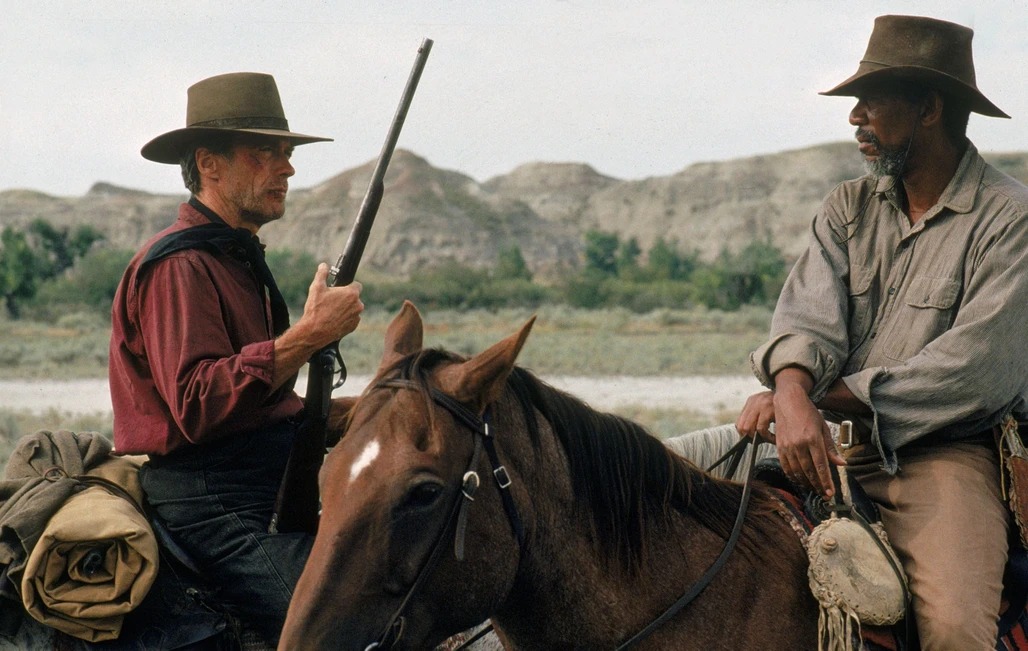
David Webb Peoples wrote the screenplay in the mid-1970s, before he had written Blade Runner, before anyone had heard of him. He called it The Cut-Whore Killings, then The William Munny Killings, neither of which any studio wanted to put on a marquee. Francis Ford Coppola optioned it in 1984 and tried for a year to get it financed. He could not. When his option lapsed in 1985, Clint Eastwood acquired the rights and then sat on them for seven years. He wanted to wait until he was old enough to play William Munny – a retired killer, now a widowed pig farmer, taking one last bounty job because his children are starving.
The film was made for $14.4 million and grossed $159 million worldwide. It won four Academy Awards: Best Picture, Best Director, Best Supporting Actor for Gene Hackman, and Best Film Editing. Eastwood was sixty-two.
In the closing credits, after every name has rolled past, a single line appears: Dedicated to Sergio and Don. Sergio Leone, who directed Eastwood in the Dollars trilogy, had died in 1989. Don Siegel, who directed him in Dirty Harry and the films of his middle period, had died in 1991. Both men had taught Eastwood how to make movies. Unforgiven was his elegy for them, for the genre they had shaped together, and arguably for himself. He has not directed or starred in a Western since.
No Country for Old Men
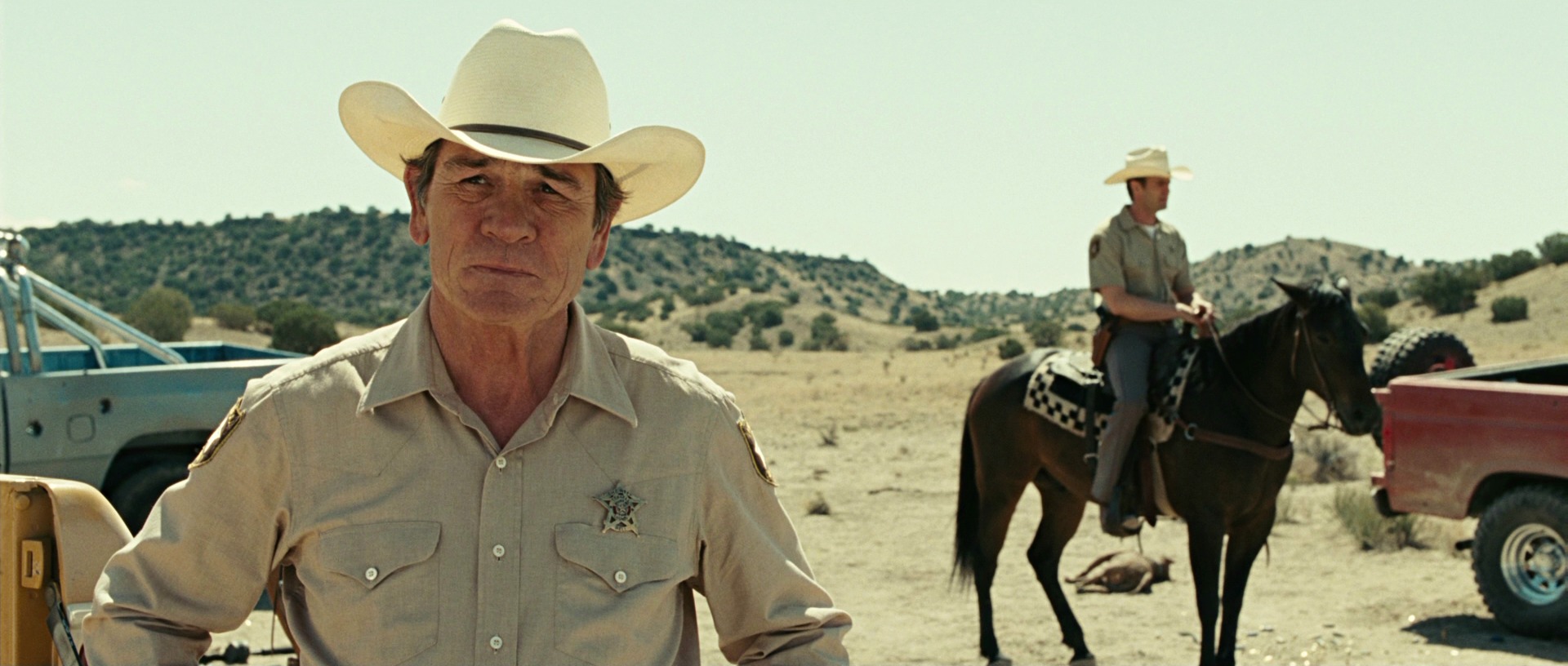
Whether No Country for Old Men counts as a Western is an argument that has been going on since the film opened. It contains no horses, no six-shooters, no cowboys in any traditional sense. It is set in 1980, not 1880. The villain carries a captive bolt pistol normally used for slaughtering cattle. And yet every major film authority – the American Film Institute, the Coen brothers themselves, Cormac McCarthy who wrote the source novel – classifies it as a Western. The genre is a shape, and this is the shape: a lawman, a drifter who finds a bag of money, a killer hired to retrieve it, and a desert that does not care which of them lives.
The Coens adapted McCarthy’s 2005 novel almost word-for-word. Llewelyn Moss (Josh Brolin) is a Vietnam veteran who stumbles onto a drug deal gone wrong near the Rio Grande and walks away with $2 million. Anton Chigurh (Javier Bardem) is sent to retrieve it. Sheriff Ed Tom Bell (Tommy Lee Jones) trails behind, increasingly certain that the world has moved past him. The title comes from the opening line of W.B. Yeats’s ‘Sailing to Byzantium,' which is perhaps the only Western Best Picture winner to take its name from an Irish modernist poem.
It won four Academy Awards including Best Picture, Best Director, Best Adapted Screenplay, and Best Supporting Actor for Bardem. No Western has won since.
Frequently Asked Questions
Is No Country for Old Men really a Western?
Yes, though the usual label is neo-Western. It is set in West Texas in 1980, and the shape is unmistakable: a sheriff near retirement, a man who takes money that is not his, a killer sent to collect it, and a desert that settles most of the argument.
How long has it been since a Western won Best Picture?
Eighteen ceremonies. No Country for Old Men took the prize on February 24, 2008, and every Best Picture handed out since has gone to some other kind of film, most recently Paul Thomas Anderson’s One Battle After Another on March 15, 2026.
Which Western has won the most Academy Awards?
Dances with Wolves, with seven wins from twelve nominations at the 1991 ceremony, among them John Barry’s score, Dean Semler’s photography, and Michael Blake’s adapted screenplay. Unforgiven won four, as did No Country for Old Men, and Cimarron three. Together they hold eighteen Oscars.
Did Clint Eastwood win Best Actor for Unforgiven?
No. He was nominated for playing William Munny and lost to Al Pacino in Scent of a Woman on March 29, 1993. Gene Hackman took the supporting award that night for Little Bill Daggett, the sheriff who beats Munny half to death in the middle of the picture.
Has a Western ever won Best Picture and Best Director at the same ceremony?
Three times. Kevin Costner won for Dances with Wolves, Clint Eastwood for Unforgiven, and Joel and Ethan Coen for No Country for Old Men. Cimarron is the exception: Wesley Ruggles was nominated for directing it and lost to Norman Taurog, who had made Skippy.
Did The Searchers win any Oscars?
It was never nominated for one. John Ford’s 1956 picture came away from that awards season with nothing at all, technical categories included. The American Film Institute has since named it the greatest American Western ever made, and in 2007 the twelfth greatest American film of any kind.
Was Cimarron a box office success?
Critically, yes. Financially, no. RKO’s ledgers show a loss of $565,000 on the first release, and a 1935 reissue clawed back only part of it. The picture had gone into the awards carrying seven nominations, the most any film had received up to that point.
Sources
- Wikipedia: Cimarron (1931 film)
- Wikipedia: Dances with Wolves
- Wikipedia: Unforgiven
- Wikipedia: No Country for Old Men
- Britannica film entries
- Cinephilia & Beyond: Unforgiven retrospective
- Box Office Mojo and The Numbers (budget and gross figures)