Every Roman Emperor Who Was Assassinated (27 BC to 476 AD)
In January of 41 AD, a Praetorian tribune named Cassius Chaerea stepped into a covered passageway beneath the Palatine Hill in Rome and stabbed the emperor Caligula to death. He had many reasons, most of them personal. The conspirators who joined him briefly considered abolishing the imperial system entirely and restoring the Republic, but the Praetorian Guard, with more practical instincts, instead discovered Caligula’s uncle Claudius hiding behind a curtain in the palace and proclaimed him emperor in exchange for a substantial cash bonus. This set the tone.
Rome's record makes America's four assassinated presidents look fortunate.
Over the next 439 years, until the assassination of Julius Nepos in a villa on the Dalmatian coast in 480 AD, Roman emperors were murdered at a rate that would make any modern head of state lose sleep. A commonly cited figure is that, across the entire span of the Principate and the Western Empire, roughly a quarter of emperors died in bed. The rest were stabbed, strangled, beheaded, poisoned, thrown into the Tiber, killed in their tents, hanged by their own generals, or — in one particularly grim case — discovered several days late by the smell.
This list covers 38 emperors who were deliberately killed by political actors: conspirators, Praetorians, mutinying troops, rival claimants’ agents, palace officials, and on one occasion a Roman mob. Several obvious names are not here. Nero killed himself. Philip the Arab died in battle against a rival emperor’s army. Gordian II died the same way at Carthage. Marcus Aurelius died of disease, despite the movie Gladiator. Julian died fighting the Persians. Distinguishing murder from the many other violent ends available to a Roman emperor turns out to require a clear rule, which for this list is: killed by political actors, not by enemy action on a battlefield and not by his own hand.
What follows runs chronologically, from Caligula in 41 AD to Julius Nepos in 480. The pace accelerates sharply in the middle. The Crisis of the Third Century, running roughly from the murder of Severus Alexander in 235 to the accession of Diocletian in 284, produced more assassinated emperors in fifty years than the previous two centuries combined. The Roman army had discovered it could make emperors, unmake them, and collect a bonus each time. It took a long time for anyone to discover how to make it stop.
- Total emperors assassinated between 27 BC and 480 AD: 38
- First emperor assassinated: Caligula, 24 January 41 AD
- Last emperor assassinated (in the Western tradition): Julius Nepos, 9 May 480 AD
- Year with the most imperial assassinations: 238 AD, with five (Maximinus Thrax, his son Maximus Caesar, Pupienus, Balbinus, and arguably the two Gordians, depending on criteria)
- Shortest reign before assassination: Didius Julianus, 66 days in 193 AD
- Longest reign before assassination: Valentinian III, 30 years (425 to 455)
- Youngest emperor assassinated: Geta, age 22, murdered by his brother Caracalla in 211 AD
- Oldest emperor assassinated: Tacitus, age 75, in 276 AD
- Emperors assassinated during the Crisis of the Third Century (235 to 284): at least 13
- Most common killers: the Praetorian Guard, followed by the emperor’s own field army
Caligula

On 24 January 41, Caligula was walking through a covered passageway beneath the Palatine when Cassius Chaerea, a tribune of the Praetorian Guard, stepped into his path and stabbed him. Other conspirators closed in. His Germanic bodyguards heard the commotion and arrived too late. Chaerea had been humiliated for years by an emperor who mocked his high voice, made him deliver watchwords like “Priapus,” and pantomimed obscene gestures whenever Chaerea was required to kiss the imperial ring. He was not a man with complicated motives.
The plot drew in senators, palace officials, and at least one other Praetorian tribune, Cornelius Sabinus. Caligula had been emperor for three years and ten months. He was 28. His wife Caesonia and infant daughter Julia Drusilla were murdered the same day, the baby reportedly having her head dashed against a wall. The Senate briefly entertained the idea of abolishing the principate entirely and restoring the Republic, but the Praetorians, with more practical instincts, found Caligula’s uncle Claudius hiding behind a curtain in the palace and declared him emperor in exchange for a generous bonus.
Chaerea, having killed one emperor to save Rome from tyranny, was executed by the next. He asked to be beheaded with his own sword. The request was granted.
Claudius
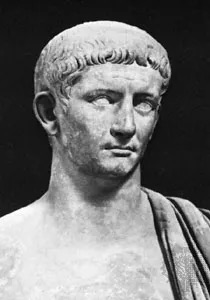
Every ancient source agrees that Claudius was poisoned, and most agree that his wife did it. Agrippina the Younger, who was also his niece, had married Claudius in 49 AD and spent the following five years maneuvering her teenage son Nero into the line of succession ahead of Claudius’s own son Britannicus. By 54 she had what she needed. Tacitus, Suetonius, and Cassius Dio all report that Agrippina had Claudius served a dish of poisoned mushrooms, his favorite food, possibly with assistance from the court physician Xenophon, who finished the job with a poisoned feather when the emperor tried to vomit.
Claudius was 63 and in declining health, which has given some modern historians room to doubt the story – death by mushroom is, after all, a mundane hazard for anyone fond of mushrooms. But the accounts are unanimous, the motive is obvious, and within hours of Claudius’s death Agrippina had Nero proclaimed emperor and Britannicus conveniently sidelined.
Britannicus was dead within a year, poisoned at dinner. Agrippina herself was dead within five, killed on Nero’s orders after a botched attempt to sink her in a collapsible boat. The mushroom, as Nero reportedly joked later, had made Claudius a god. Suetonius recorded the line. He does not appear to have been joking back.
Galba
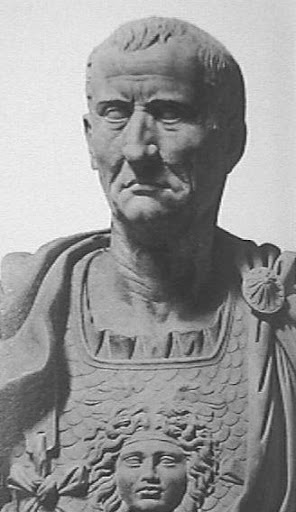
Galba was 70 years old when he became emperor, succeeded Nero, and almost immediately made every possible political mistake. He refused to pay the Praetorians the bonus they had been promised for their support, lectured them on Roman frugality, and replaced experienced commanders with his own clients. The Praetorians, who had not yet been paid for supporting him in the first place, were receptive when Marcus Salvius Otho – a former friend of Galba’s whom Galba had recently passed over as heir – started quietly offering bonuses of his own.
On 15 January 69, Otho’s supporters proclaimed him emperor in the Praetorian camp while Galba was still in the city. Hearing the news, Galba had himself carried through the Forum in a litter, either to negotiate or to escape; the sources disagree. He didn’t get far. Praetorian cavalry met him in the middle of the Forum and cut him down, along with his adopted successor Piso. A soldier named Camurius was credited with the killing blow. Galba’s head was stuck on a pole, paraded around the camp, and eventually tossed on a dungheap.
He had been emperor for seven months. Otho, who became emperor that same day, would be dead by April. The year 69 was just getting started.
Vitellius
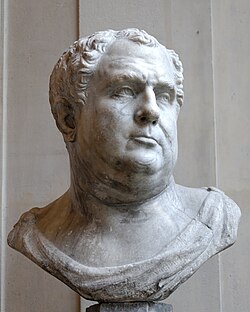
Vitellius had been emperor for eight months by the time Vespasian’s troops fought their way into Rome in December 69. He had not been a notable success. His brief reign was remembered mainly for extravagant banquets – Suetonius claims Vitellius ate four separate meals a day, each large enough to make him vomit and start again – and for allowing his soldiers to run riot through the provinces.
When the end came, it came fast. His own Praetorians abandoned him. He attempted to abdicate; the crowd would not accept it. He tried to hide in a palace doorway behind a pile of mattresses and was dragged out by Vespasian’s men with his hands tied behind his back and a noose around his neck. They marched him through the Forum to the Gemonian Stairs, the flight of steps where Rome traditionally disposed of executed enemies of the state. There, amid a crowd that pelted him with dung and filth, he was tortured, beheaded, and thrown into the Tiber.
He was 54. His last recorded words, according to Tacitus, were addressed to a soldier who was jeering at him: “And yet I was once your emperor.” It was, at least, technically correct.
Domitian
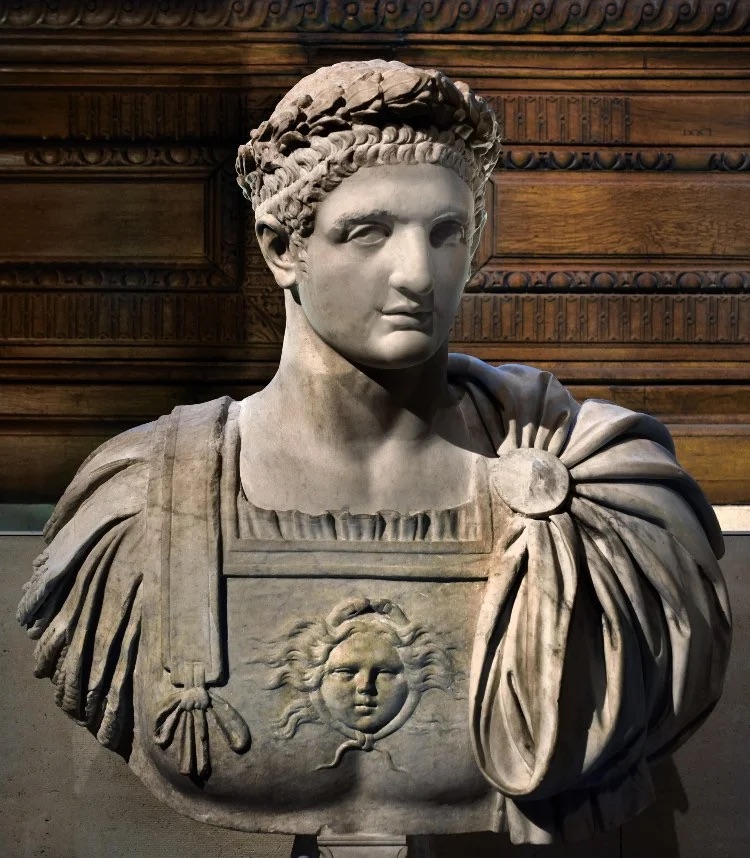
Domitian had become convinced – correctly, as it turned out – that people were plotting to kill him. He grew increasingly paranoid, executed senators on flimsy charges, and reportedly lined the colonnades of his palace with polished moonstone so he could see reflections of anyone approaching behind him. On 18 September 96, Stephanus, a freedman who had been serving as steward to Domitian’s niece, arranged a meeting in the emperor’s private quarters, claiming to have information about a conspiracy. He had been wearing a bandage on his left arm for days, supposedly to treat an injury. The bandage concealed a dagger.
When Stephanus handed over the list of conspirators, Domitian began to read it, and Stephanus stabbed him in the groin. There was a struggle – Domitian tried to claw the man’s eyes out and reach for a dagger hidden beneath his pillow, but the dagger’s blade had been removed, another detail arranged in advance – before other conspirators rushed in and finished the job.
Domitian was 44. The Praetorian Guard, who had genuinely liked him, rioted briefly and demanded revenge. The Senate, which had not liked him at all, erased his name from monuments across the empire. His successor Nerva was an elderly senator with no children and no enemies. This was, after recent events, considered a feature.
Commodus
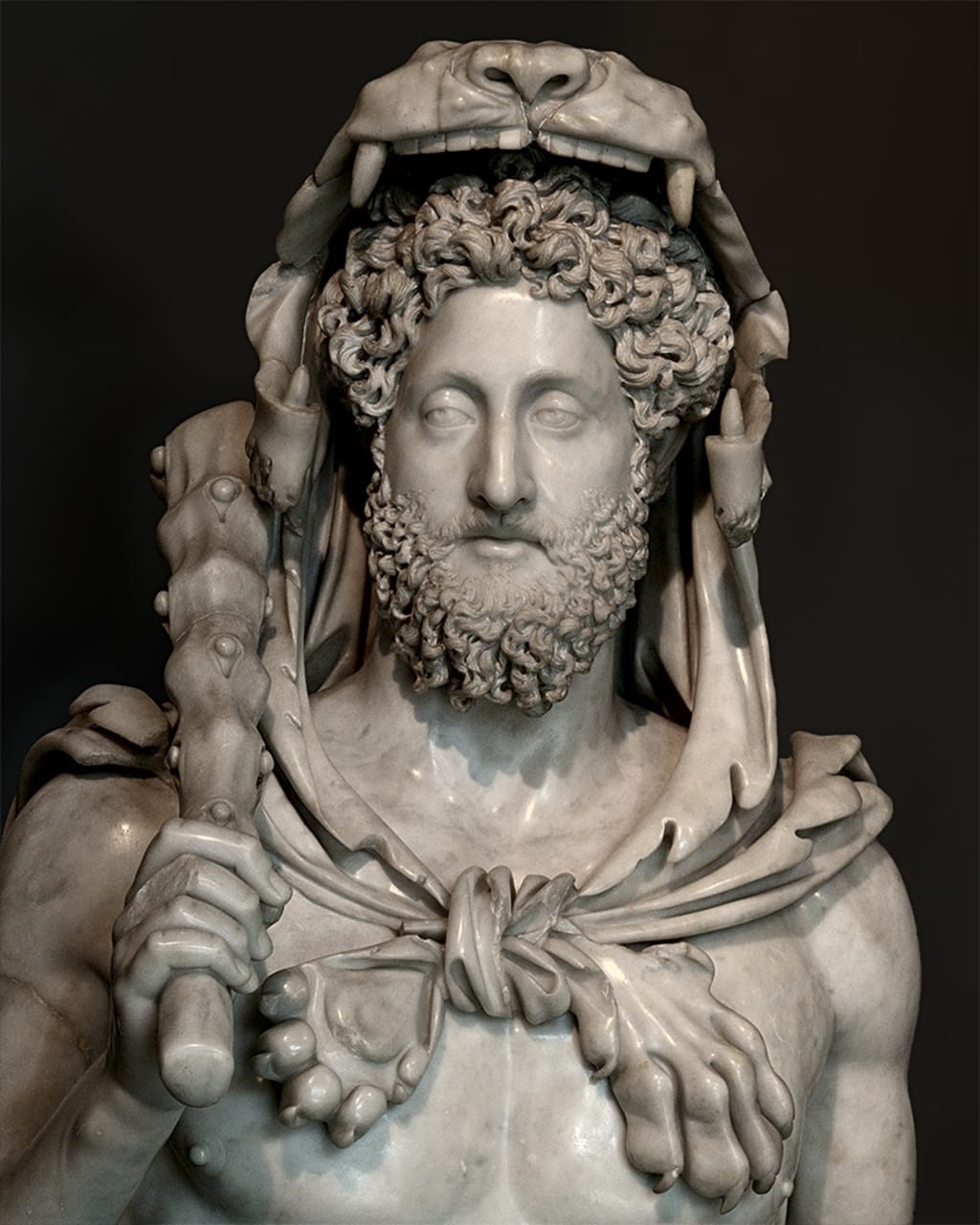
Commodus spent most of November 192 fighting as a gladiator in the Colosseum, killing hundreds of animals in the mornings and winning every arena bout in the afternoons. His opponents, wisely, were given blunt weapons. He then announced he would celebrate the new year, 193, by taking office as consul while dressed as a gladiator. This was too much for several people around him who were paying attention.
His mistress Marcia, the Praetorian prefect Aemilius Laetus, and the chamberlain Eclectus discovered that their names appeared on a list of people Commodus intended to execute. On 31 December 192 they acted first. Marcia poisoned his wine. Commodus, being a man of heroic constitution and even more heroic excess, vomited it up. The conspirators then sent for Narcissus, Commodus’s personal wrestling partner, who entered the emperor’s bath and strangled him.
Commodus was 31. He had reigned for twelve years and had taken the empire, over that time, from the prosperous era his father Marcus Aurelius bequeathed him to a state the Senate greeted his death by formally declaring him a public enemy. Narcissus, the wrestler, was himself executed within a few years. Cassius Dio, who lived through the whole thing, wrote that Rome had descended, with Commodus, “from a kingdom of gold to one of iron and rust.” He was not being metaphorical about the economy.
Pertinax
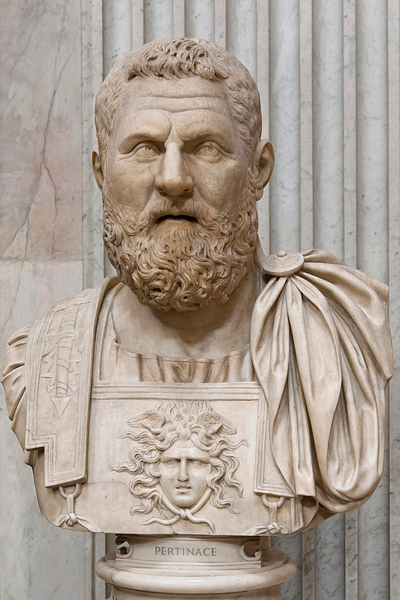
Pertinax was 66 years old when the Praetorians installed him as Commodus’s replacement, and he came in with ideas. He tried to restore fiscal discipline, reimpose military order, and – most fatally – cut the bonuses the Praetorian Guard had come to expect on the accession of a new emperor. He paid them only half of what he had promised. The soldiers, already resentful at having been asked to behave like soldiers, quickly turned on him.
On 28 March 193, a group of around 300 Praetorians left their camp, marched to the imperial palace, and forced their way in. Pertinax, informed they were approaching, chose to confront them directly. He stood before the assembled soldiers and began to reason with them about his reforms, about duty, about the dignity of the office. He was, by all accounts, making progress when a soldier from Tongres in Gaul – a man named Tausius, his patience exhausted – stepped forward and stabbed him. The rest of the Praetorians joined in.
Pertinax had reigned for 86 days. His head was cut off and stuck on a spear. The Praetorians then returned to their camp and did something new: they put the Roman Empire up for auction. The bidders, they announced, could shout their offers from the ramparts. The year 193 would go on like this.
Didius Julianus
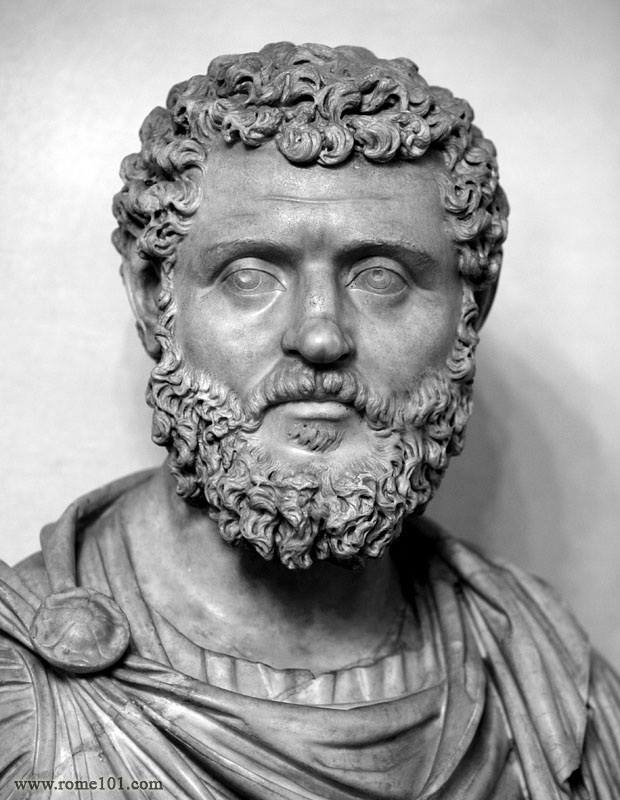
He won the auction. Didius Julianus, a wealthy senator who had spent the evening at a lavish dinner party when news arrived that the empire was for sale, was persuaded by his wife and daughter to go and bid. At the Praetorian camp he found a rival already inside – Sulpicianus, Pertinax’s father-in-law, who was offering 20,000 sesterces per guardsman. Julianus, standing outside and shouting his bids over the wall, eventually outbid him at 25,000. He also helpfully pointed out that Sulpicianus, being related to the man the Praetorians had just murdered, might later seek revenge. The Praetorians saw the logic.
They declared Julianus emperor and escorted him to the Senate, which confirmed him under obvious duress. The people of Rome lined the streets and cursed him as he passed. Within weeks, three different provincial armies declared their own commanders emperor. Septimius Severus, commanding the Danube legions, marched on Rome. Julianus discovered he did not have as much money as he had claimed, could not pay the Praetorians the full bonus, and had no real power to resist. The Guard abandoned him. The Senate condemned him to death.
On 2 June 193, a soldier found him cowering in the palace and killed him. He had reigned for 66 days. His last recorded words were reportedly, “But what evil have I done? Whom have I killed?” The answer, technically, was Pertinax.
Geta
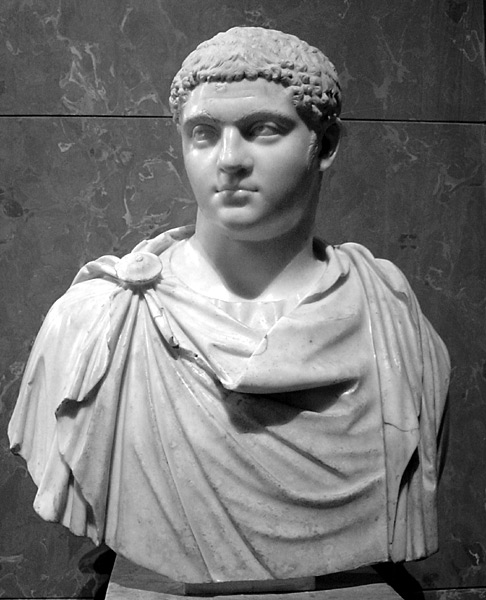
Septimius Severus died at York in February 211, having advised his two sons on his deathbed to “be harmonious, enrich the soldiers, and scorn all other men.” The first part of this advice did not take. Caracalla and Geta, his elder and younger sons, had hated each other since boyhood, and the two now found themselves co-emperors of an empire that neither wished to share. They reportedly considered physically partitioning it – Caracalla taking the West, Geta the East – before their mother Julia Domna talked them out of it.
In December 211, Caracalla proposed a reconciliation meeting in his mother’s private quarters and arranged for a group of Praetorians to be waiting. When Geta entered, the soldiers attacked him. He ran to his mother for protection and was stabbed in her arms, at 22 years old. Julia Domna was wounded trying to shield him and afterward forbidden to mourn her younger son.
Caracalla then systematically killed Geta’s associates – some 20,000 people, according to Cassius Dio, though the figure is probably exaggerated – and ordered a damnatio memoriae so thorough that Geta’s image was chiseled out of imperial portraits across the empire. On the famous Severan Tondo now in Berlin, the space where Geta should appear has been carefully smudged out with brown paint. It is one of the most chilling things an older brother has ever done.
Caracalla
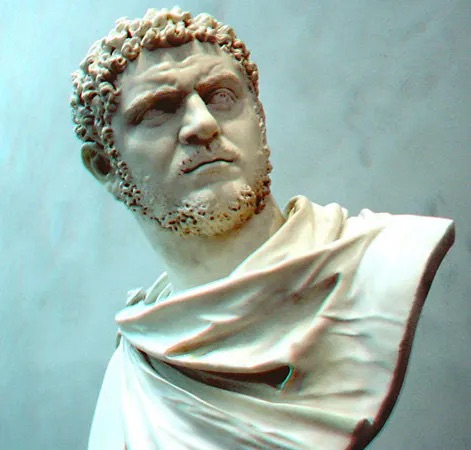
He made it almost exactly six years as sole emperor. On 8 April 217, Caracalla was riding from Edessa to visit a temple of the moon god at Carrhae – the site where Crassus had lost his legions to the Parthians in 53 BC – when he dismounted briefly to urinate by the roadside. A soldier named Julius Martialis, who had been recruited for precisely this purpose, approached as if to speak with him and stabbed him. A Scythian bodyguard killed Martialis with a lance. Two Praetorian tribunes then rushed forward, as if to help, and finished the emperor.
Caracalla was 29. He had just turned 29 four days earlier. The plot had been organized by the Praetorian prefect Macrinus, who had reason to believe he appeared on Caracalla’s list of people to be executed and decided to move first. Martialis had his own grievance – his brother had been executed on Caracalla’s orders – and was apparently a willing volunteer. Three days later, the soldiers proclaimed Macrinus emperor. He was the first non-senator ever to take the throne, and he would hold it for just over a year.
Caracalla’s body was returned to Rome and placed in the Mausoleum of Hadrian. The circumstances of his death, occurring mid-stream at the side of a road, struck ancient and modern writers alike as a fitting end for an emperor who had made a career of humiliating others.
Macrinus
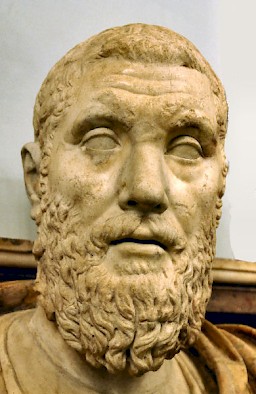
Macrinus never should have been emperor. He was the praetorian prefect, of equestrian rather than senatorial rank, and he had taken the throne by arranging Caracalla’s murder at Carrhae. This left him with two problems. First, he had to pretend he had not done it. Second, he had to hold power against a dynasty, the Severans, whose matriarchs were still alive, wealthy, and determined.
Julia Maesa, sister of the late Julia Domna, smuggled her grandson – a 14-year-old priest from Emesa – into the camp of the Third Gallic Legion and spread a rumor that the boy was Caracalla’s illegitimate son. The legion believed it, or pretended to, and proclaimed him emperor. The boy would become Elagabalus. Macrinus marched against the rebels with a larger army, should have won, and lost anyway – his troops defected mid-battle at Antioch on 8 June 218. Macrinus fled north, disguised himself, shaved his beard, and made it as far as Chalcedon before being recognized and arrested. He was sent back under guard. Somewhere in Cappadocia he learned that his young son Diadumenian, whom he had sent ahead for safety, had been captured and killed. Shortly afterward the soldiers executed him too.
He was 53 and had been emperor for 14 months. Rome had decided it preferred a 14-year-old Syrian priest to an administrator from Mauretania, and history, on the whole, has agreed.
Elagabalus
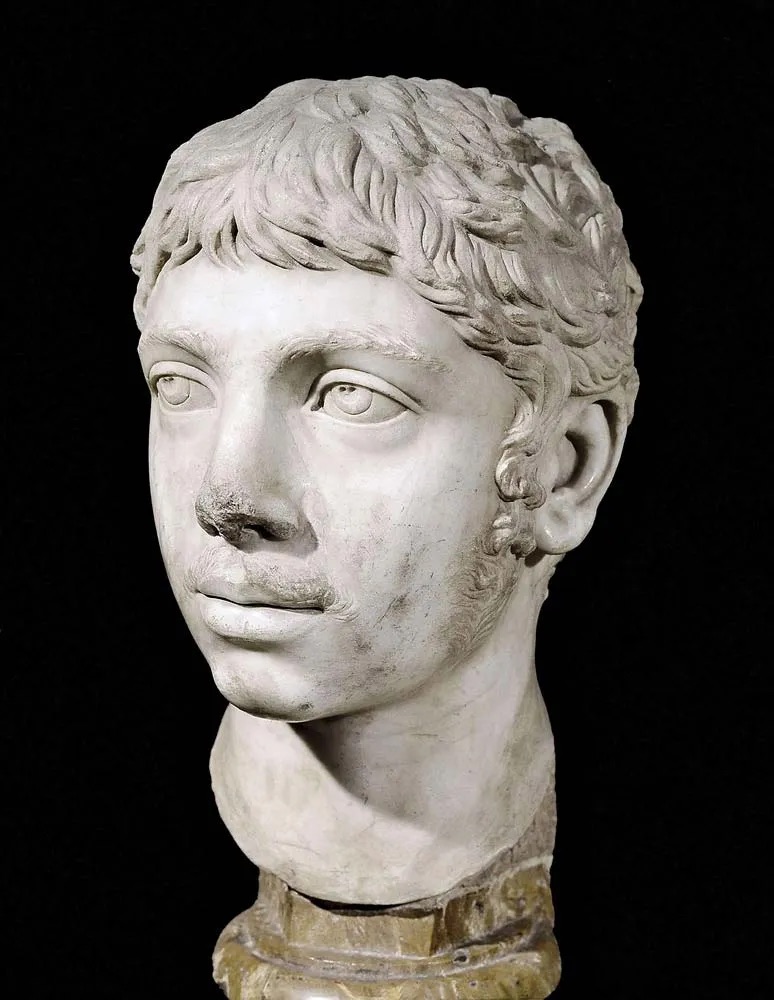
Elagabalus ruled for four years and seems to have spent most of them trying to find new ways to offend Rome. He promoted his Syrian sun god Elagabal above Jupiter, installed a massive black meteorite on the Palatine as its cult image, married and divorced five women including a Vestal Virgin, and reportedly prostituted himself in a makeshift brothel within the palace. The accounts are lurid and may be partly libelous, but the political reality was clear: he had alienated everyone.
His grandmother Julia Maesa, who had engineered his rise, began engineering his replacement. She persuaded him to adopt his younger cousin Alexander as heir. Within months the soldiers preferred the cousin. On 11 March 222 Elagabalus discovered this, tried to have Alexander executed, and triggered a Praetorian revolt instead. He fled to the Praetorian camp with his mother Julia Soaemias to try to calm the soldiers. It did not calm them. According to the Historia Augusta, the guards found him hiding in a latrine, killed him, beheaded him, stripped him, and dragged the body through the streets of Rome. They then tried to stuff him through a sewer opening. He was too large. They weighted the body and threw it into the Tiber instead.
He was 18 years old. His cousin Alexander was proclaimed emperor the same day. The black meteorite was sent back to Syria.
Severus Alexander
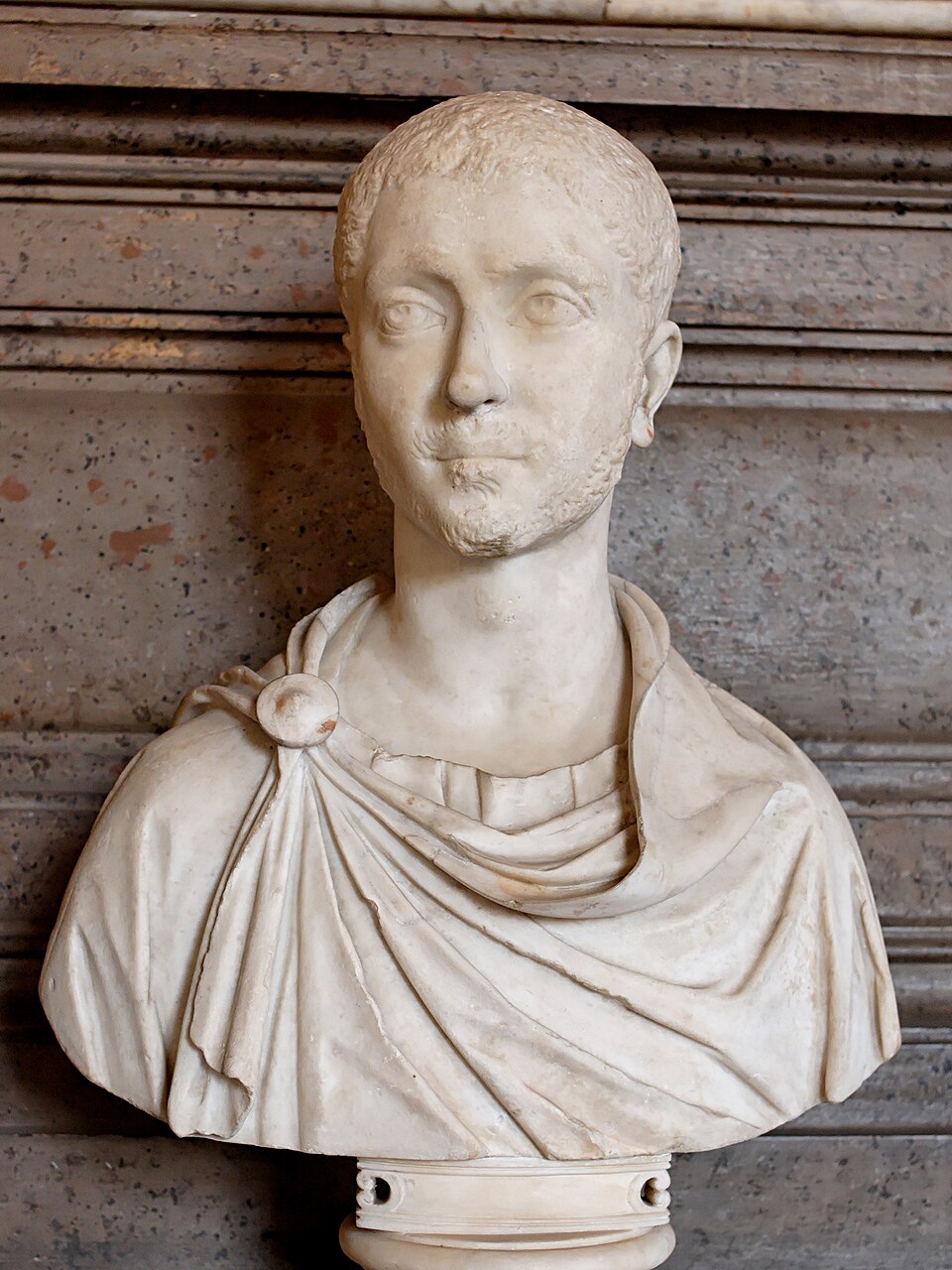
Severus Alexander had been emperor since he was 14, which meant that by 235 he had spent thirteen years ruling under the close supervision of his mother Julia Mamaea. This had worked reasonably well during peacetime. It worked much less well in wartime. Faced with a major Germanic invasion across the Rhine, Alexander and his mother chose to open negotiations and offered the tribes subsidies in exchange for peace. The Roman army, which had been preparing for a campaign, found this humiliating.
On 18 or 19 March 235, in the military camp at Moguntiacum – modern Mainz – soldiers of the 22nd Legion stormed the imperial tent and killed the 26-year-old emperor and his mother together. Some accounts report that Alexander, in his final moments, was clinging to his mother and blaming her for the disaster. The legions then acclaimed one of their own, a Thracian giant of a man named Maximinus, as the new emperor. He was a career soldier who had never set foot in Rome.
Severus Alexander’s death is conventionally dated as the start of the Crisis of the Third Century, the fifty-year stretch during which the empire nearly tore itself apart. In the next five decades, more than twenty emperors would be acclaimed. Only one of them would die of natural causes. The 22nd Legion’s decision at Mainz was, in this sense, a terrible precedent. It was also, by the standards of what was coming, unremarkable.
Maximinus Thrax
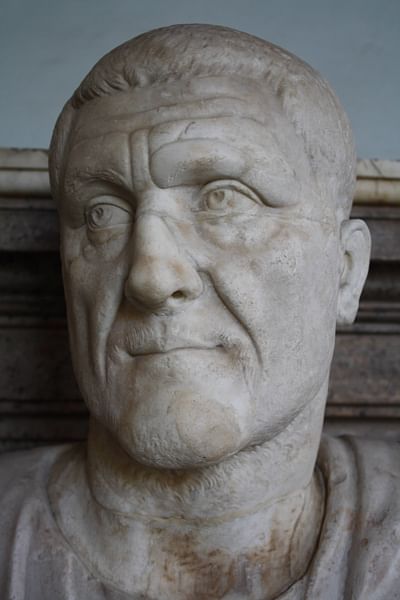
Maximinus had been emperor for three years, had never set foot in Rome, and had alienated almost everyone who mattered there by raising taxes to fund endless Germanic campaigns. When a tax revolt in Africa put the Gordians on the throne in early 238 and the Senate threw its support behind them, Maximinus marched on Italy to deal with the matter personally. He got as far as Aquileia. The city closed its gates, repaired its crumbling walls, and held him off.
The siege dragged on. His soldiers ran out of food. The defenders threw corpses into the nearby river to poison the water supply. Morale collapsed. In early May 238, around noon, soldiers of the Legio II Parthica – whose families lived near Rome and who had grown tired of attacking an Italian city for an emperor who had never visited the capital – walked to Maximinus’s tent and killed him. They also killed his young son Maximus, whom he had made co-emperor, and his close friends and generals. Their heads were cut off, stuck on poles, and sent ahead to Rome via Ravenna as a token of good faith.
He was around 65. His death ended the first stage of the Year of the Six Emperors. By summer, the soldiers who had killed Maximinus would be pardoned. Four more emperors would die before the year was out.
Pupienus
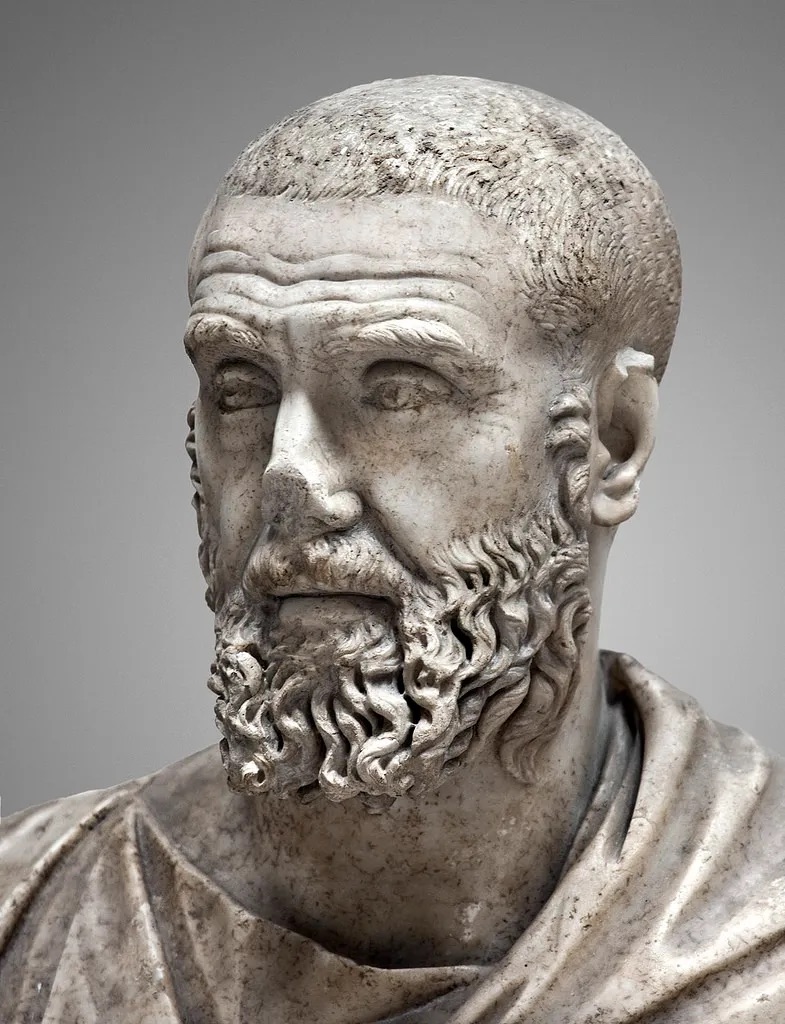
The Senate’s experiment in restoring senatorial government lasted 99 days. After Maximinus was dealt with at Aquileia, Pupienus – a 74-year-old former urban prefect, austere and disliked by the Roman mob – returned to the capital as co-emperor with Balbinus, a 60-year-old senatorial aristocrat whose main qualification was being a different kind of senator. The two men had been chosen precisely because they would balance each other. In practice they simply distrusted each other.
Balbinus suspected Pupienus of plotting to seize sole power through his new Germanic bodyguard. Pupienus suspected Balbinus of plotting the same thing through inaction. They lived in separate wings of the palace and communicated increasingly through intermediaries. The Praetorian Guard, resentful at having Senate-appointed emperors forced on them, saw an opportunity. On 29 July 238, while much of the court was attending the Capitoline Games, a group of Praetorians forced their way into the palace. They found the two emperors in the middle of an argument – Pupienus begging Balbinus to summon the German guard, Balbinus convinced the request was itself a trap.
The Praetorians seized them both. They were stripped, dragged through the streets of Rome, tortured, and hacked to death in the bath house of the Praetorian camp. They proclaimed the 13-year-old Gordian III, grandson of Gordian I, as sole emperor. The Senate had tried to take back Rome. Rome had declined.
Balbinus
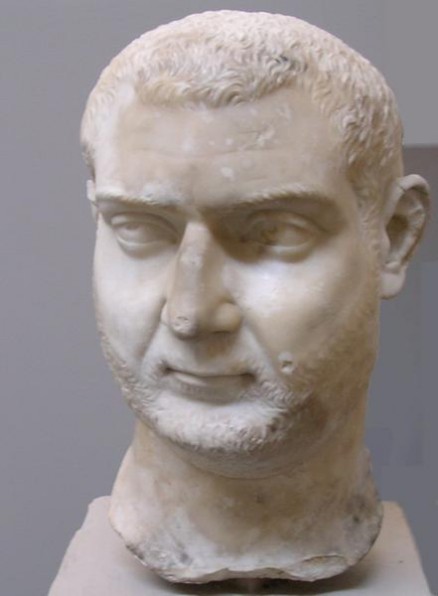
Decimus Caelius Calvinus Balbinus was a patrician of old family, a man who had held two consulships and governed several provinces, and a figure Cassius Dio described as mild and literary. Where Pupienus was hard, Balbinus was amiable. Rome liked him. This turned out not to be enough. He was dragged from the palace alongside his co-emperor on 29 July 238, stripped naked, paraded through the streets, and murdered in the same Praetorian bath house.
The two men, who had spent 99 days unable to trust each other, died together within minutes of each other. They were around 60 and 74. The Historia Augusta claims they were killed by being impaled on spits like roast animals, which is almost certainly invention, but speaks to how the episode was remembered. Coins minted during their joint reign had shown two clasped hands on the reverse, with the legend Concordia Augustorum – Harmony of the Emperors. This was aspirational rather than descriptive.
Gordian III, the boy who succeeded them, would reign for six years, the longest of anyone in this entire stretch of the century. He was thirteen. What the Praetorians seemed to have proved, in less than four months, was that the empire had outgrown its own institutions. The Senate could no longer produce emperors; the army could no longer obey them; and the city of Rome had become a place where ruling classes went to die.
Gordian III
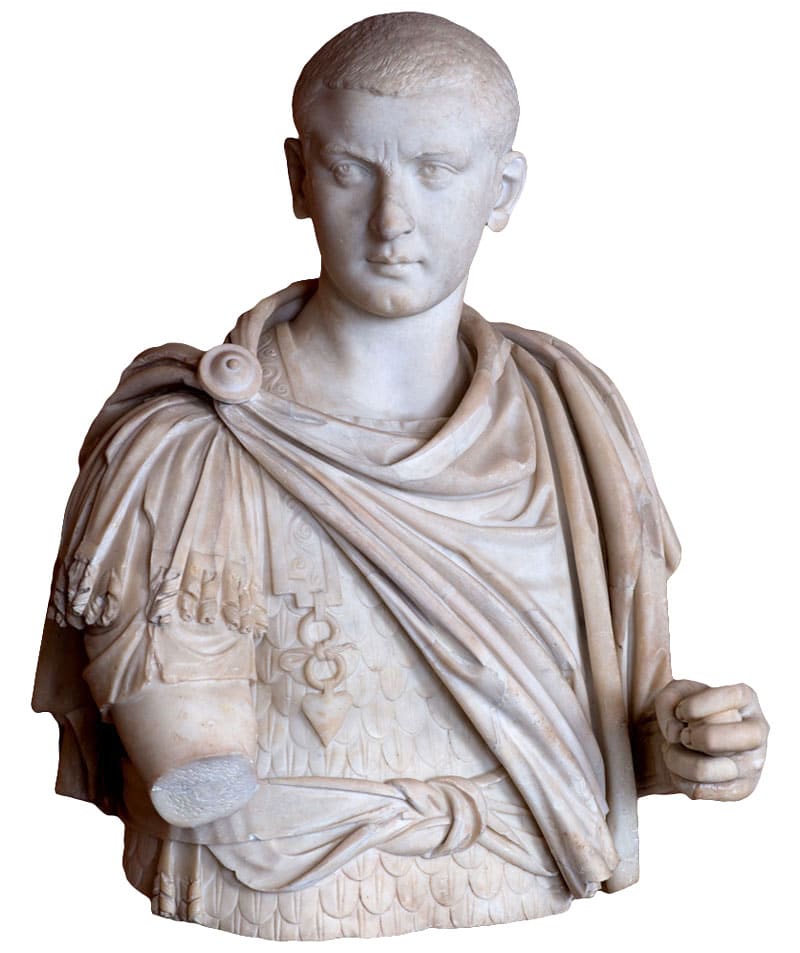
Gordian III was six years into his reign and nineteen years old when he died in Mesopotamia in February 244. Exactly how he died is one of the genuinely unresolved questions of Roman history. The Persian king Shapur I, in a triumphal inscription carved into rock at Naqsh-e Rustam, claimed Gordian had been killed in battle at Misiche. Roman sources claimed something entirely different: that Gordian had been murdered by his own troops at the instigation of Philip the Arab, the Praetorian prefect, who had systematically deprived the army of supplies to stir up mutiny, and who then took the throne himself.
The evidence tilts toward the Roman version. Philip’s conspicuous eagerness to have Gordian deified back in Rome, and to build an expensive cenotaph at the site of the emperor’s death, both suggest a man trying to distance himself from a murder. Gordian had been well liked. His memory was untouched. He had come to the throne at 13, as a compromise candidate pushed on the Senate by a Roman mob that still loved the Gordian name, and had survived six years in a role that had killed his grandfather and uncle within weeks.
Philip returned the body to Rome and arranged the funeral. He held the throne for five years before being killed himself. Ancient historians never fully forgave him. The evidence was always, as Roman evidence tends to be, circumstantial.
Trebonianus Gallus
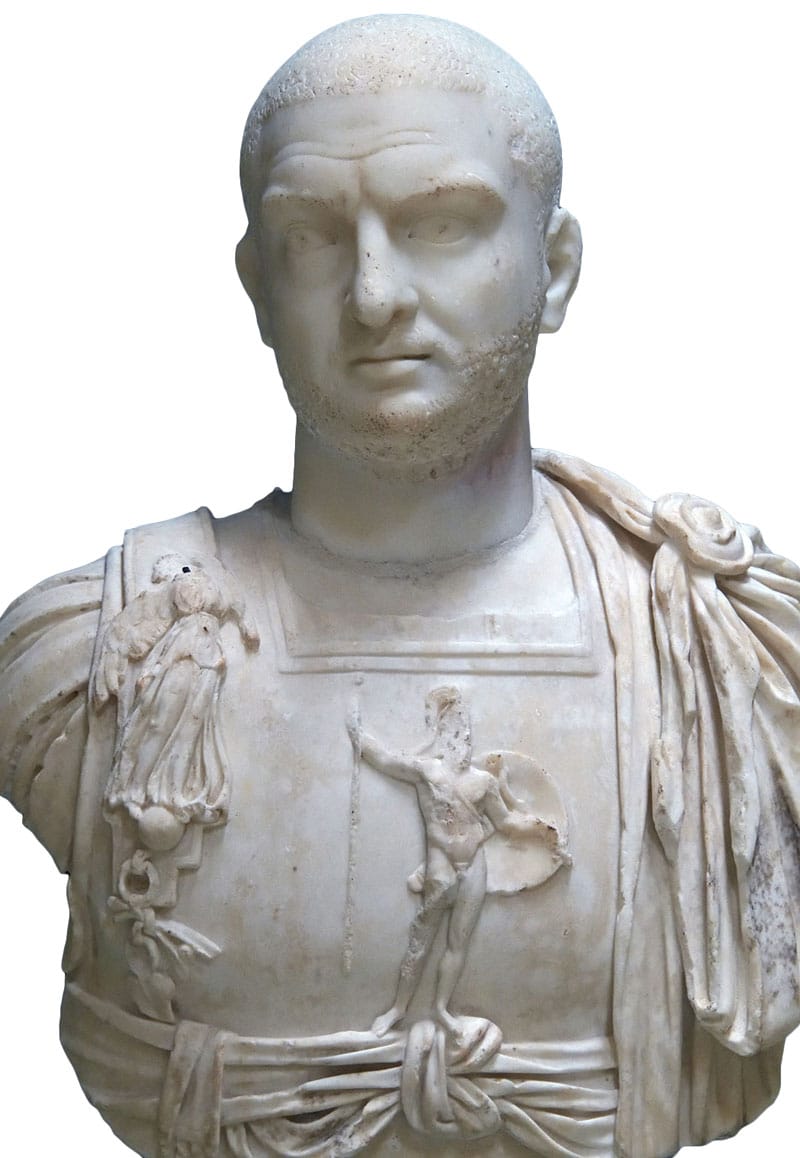
Trebonianus Gallus had become emperor in 251 after his predecessor Decius died fighting the Goths in a Danubian swamp, and he had spent the next two years trying to look competent while a plague devastated the empire and the eastern frontier collapsed. He managed neither. In the summer of 253, one of his governors – Aemilianus, commanding in Moesia – defeated a Gothic force, was acclaimed emperor by his grateful troops, and marched on Italy.
Trebonianus Gallus assembled an army at Interamna in Umbria to meet him. The armies did not fight. As Aemilianus approached with a larger force, Trebonianus Gallus’s own soldiers did the arithmetic, killed him, killed his son and co-emperor Volusianus in the same operation, and defected to the other side. He was around 47. The whole thing was remarkably efficient. No senatorial condemnation, no dramatic confrontation, just a transactional killing in an army camp by men who had calculated their odds.
Aemilianus then reigned for three months before his own soldiers did the same thing to him when a still larger army appeared. This kind of murder had become standard operating procedure. Roman troops of the third century treated imperial succession less as a matter of legitimacy than as a routine inventory management problem: when an emperor’s stock value fell below the purchase price of his replacement, he was removed. Trebonianus Gallus was among the earlier victims of the pattern. He would not be the last.
Volusianus
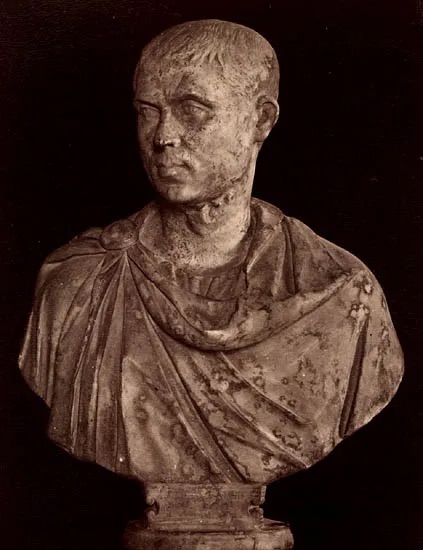
Gaius Vibius Volusianus was the son of Trebonianus Gallus, raised to co-emperor in 251 shortly after his father took the throne. He was somewhere between 20 and 23 years old. Almost nothing survives about his actual administrative role; he was the dynastic insurance policy, the spare heir, the face on coins designed to suggest that the Gallus dynasty would last.
It did not. When Aemilianus’s army approached Interamna in the summer of 253 and the soldiers of his father’s camp decided to switch sides rather than fight, Volusianus was killed in the same action that killed his father. The sources are brief to the point of indifference. One moment he was co-emperor; the next he was a corpse in a camp. Even the location is uncertain – somewhere near Forum Flaminii in Umbria, probably, though some accounts place the killings at Interamna itself.
Father and son were presumably dispatched together. Their names were struck from inscriptions but not with any particular vigor; there was not, in the end, very much memory to damn. Volusianus is a figure who exists mainly as evidence that the principle of dynastic succession had become entirely hollow. The purpose of having a son as co-emperor was to reassure the empire that the future was secure. By 253, no one was reassured. The dynasty lasted as long as the father did, which in this case was about two years.
Aemilianus
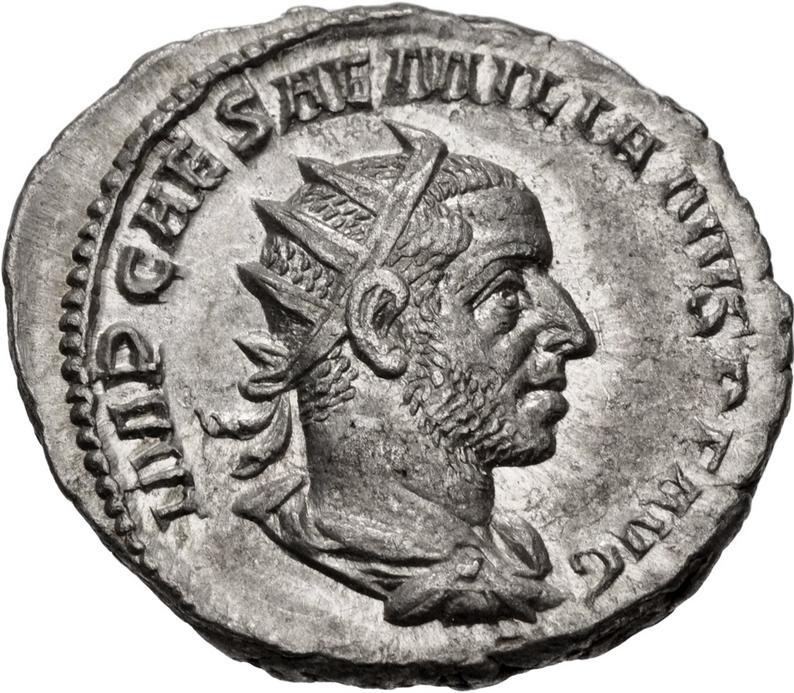
The throne had been his for 88 days. Aemilianus had won it the usual way – by killing his predecessor with the help of his own troops – and he was about to lose it by exactly the same method. In September 253, the legions of the Rhine under a respected commander named Valerian proclaimed Valerian emperor and marched south. Aemilianus had a smaller army and, more to the point, a much weaker claim.
His soldiers, who had elevated him in July after his victory over the Goths, performed the same calculation they had performed on Trebonianus Gallus. They killed Aemilianus at Spoletium – or possibly at a location nearby the ancients called the Pons Sanguinarius, the Bloody Bridge – and defected to Valerian before any actual fighting occurred. He was 46. The Senate had condemned him as a public enemy almost immediately on Valerian’s accession, which made the soldiers’ decision straightforward: murder the condemned man, receive clemency from the new regime, collect the customary bonus, and proceed with normal duties.
Aemilianus’s name appears on a small number of coins and on a handful of provincial inscriptions. Beyond that he is a name in a list, one of the many third-century emperors whose entire political biography consists of the phrase “was acclaimed by his troops, then killed by them shortly afterward.” The list would keep growing.
Saloninus
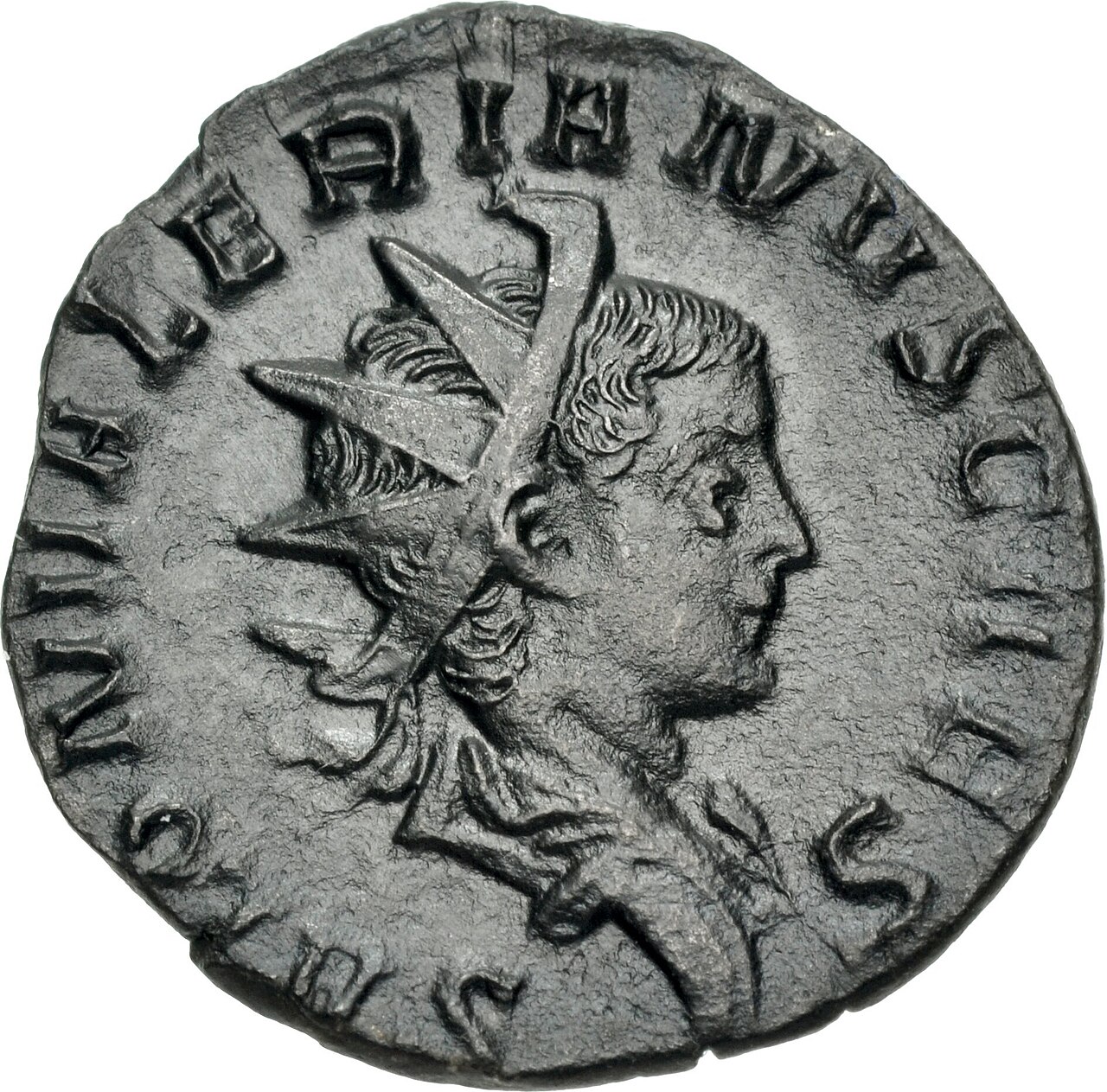
Saloninus was 17, the second son of the emperor Gallienus, and had been installed at Cologne as Caesar for the western provinces under the guidance of his father’s praetorian prefect Silvanus. In 260, after a dispute over the spoils of a border raid, the general Postumus turned his troops against them. Postumus’s men besieged Cologne. Saloninus’s own garrison, sensing the end, acclaimed the boy as full Augustus – a desperate legitimacy maneuver meant to split Postumus’s army or shame the besiegers into surrender. It did neither.
The people of Cologne, calculating that Postumus was going to win, opened the gates. Postumus had the boy and his prefect executed. His apologists later claimed the locals had done it; Postumus had simply been unable to restrain them. The claim was widely disbelieved even at the time.
Saloninus had been emperor for perhaps a few weeks, and legitimate for considerably less time than that, depending on how one defines legitimacy during the Crisis of the Third Century. With his death, his father Gallienus lost his last surviving son and heir. Postumus went on to establish the breakaway Gallic Empire, which would last for fourteen years. Gallienus never recovered Gaul. He also never seems to have fully recovered from this particular death; sources report that he abandoned all plans to groom a successor, and his remaining son was elevated only to a ceremonial consulship. Dynasty, once more, had failed.
Gallienus
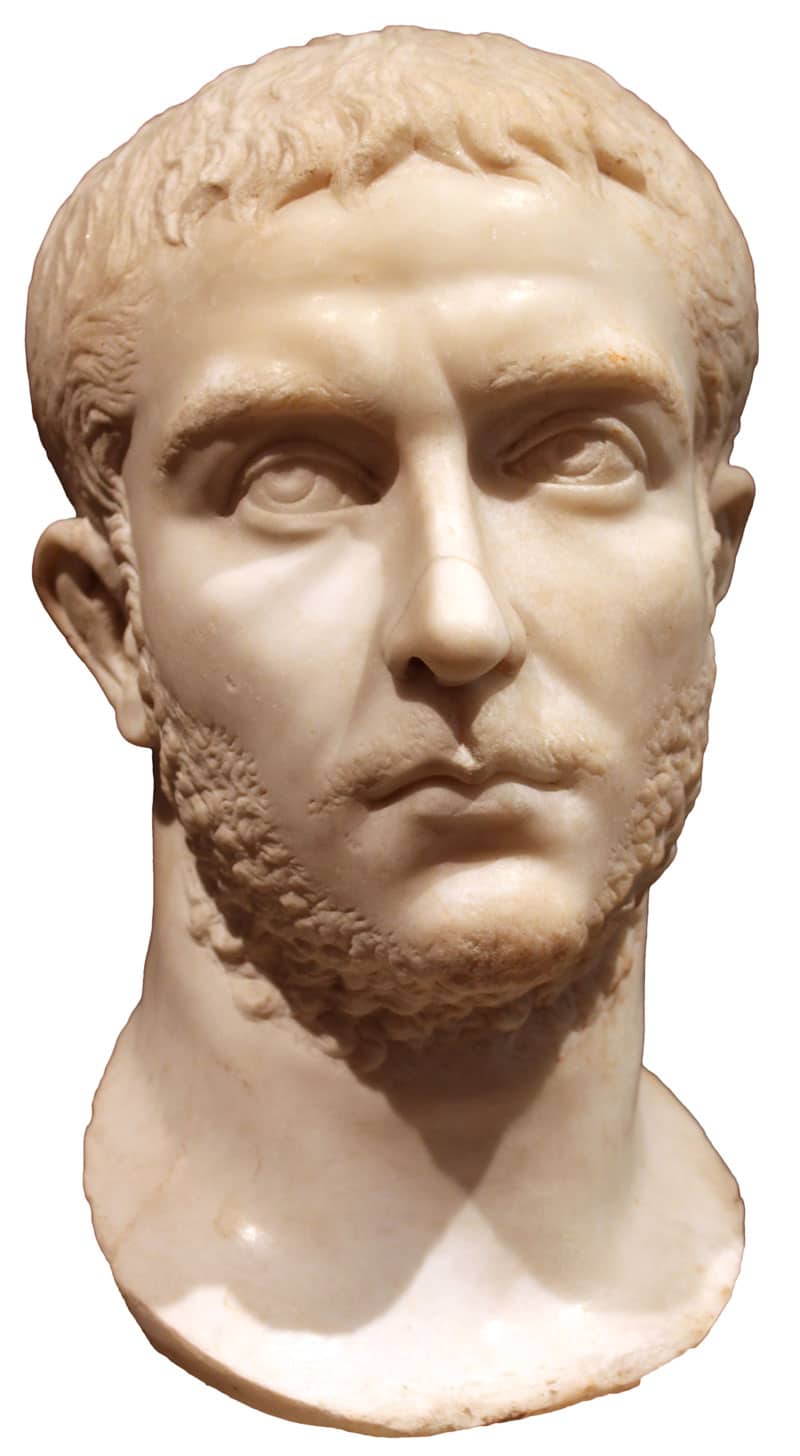
Fifteen years on the throne was, by the standards of the third century, a minor miracle. Gallienus had held power longer than any emperor since Septimius Severus, through a period when the empire nearly disintegrated. He had lost his father Valerian to Persian captivity, his sons to rival armies and assassins, Gaul to Postumus, and Palmyra to Zenobia. What he had managed to keep was Italy, the Balkans, and his own life.
In September 268 he was besieging the rebel general Aureolus at Mediolanum when the siege ended for him. The conspiracy included his praetorian prefect Heraclianus, two of his senior generals – the future emperors Claudius and Aurelian – and an officer named Cecropius who did the actual work. One version has Gallienus summoned from dinner by a false report of an enemy sortie; another has him killed in his tent at night. Cecropius ran him through. He was around 50. The conspirators proclaimed Claudius emperor the next morning. Aureolus surrendered the city and was murdered by the Praetorian Guard.
Gallienus has been treated harshly by ancient historians, most of whom came from the senatorial class he had permanently excluded from military commands. Modern assessments are kinder. He reformed the army, created the mobile cavalry reserve that would save the empire, and held the center while the periphery burned. The men who murdered him used the tools he had given them to rebuild what he could not save.
Aurelian

He had reunited the Roman Empire. In less than five years Aurelian had crushed the Palmyrene Empire in the east, crushed the Gallic Empire in the west, defeated the Goths, defeated the Alemanni, built the walls around Rome that still bear his name, and earned the title Restitutor Orbis – Restorer of the World. He was, by some distance, the most effective emperor the Crisis of the Third Century produced. In the autumn of 275, on his way to invade Persia, he was murdered by a forged list.
The details are almost absurd. A freedman named Eros, who served as Aurelian’s personal secretary, had told some small lie and feared exposure. Rather than wait for punishment, he drew up a fake document in the emperor’s hand – a list of names marked for execution – and showed it to several high-ranking officers, all of whom appeared on it. Knowing Aurelian’s reputation for strict discipline, they believed the list was real. A group of them, led by the Praetorian notarius Mucapor, ambushed Aurelian on the road at Caenophrurium and stabbed him to death. He was around 61.
When the soldiers learned they had been deceived, they hunted down and executed the conspirators. Aurelian was deified. But he had been murdered anyway, over nothing at all, by his own officers, because a nervous secretary had forged a list to cover up a minor fraud. It is the kind of story the third century specialized in.
Tacitus
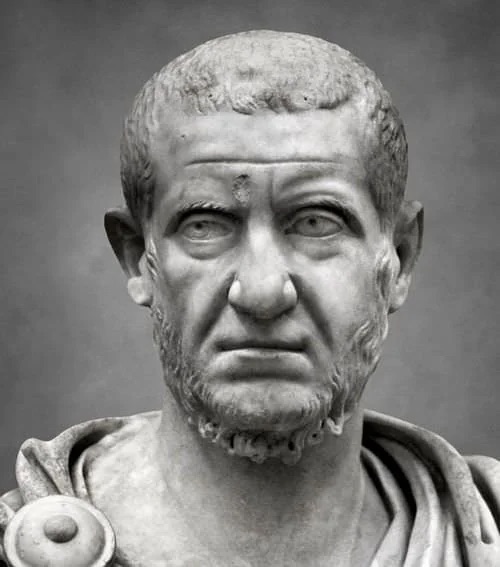
He was 75 years old, had been a respected senator for decades, and – according to his own later claims – was a descendant of the historian Tacitus. The more prosaic explanation for Marcus Claudius Tacitus’s elevation is that the army had chosen him after Aurelian’s death, with the Senate ratifying after the fact, and the dignified tale of a restored senatorial prerogative was invented by interested historians later. He then did the sensible thing and set about hunting down the officers who had assassinated Aurelian. This proved unpopular.
In the summer of 276, after a campaign in Asia Minor against invading Goths, Tacitus died at Tyana in Cappadocia. Whether he was murdered or died of fever is the question. Zosimus and the Historia Augusta claim he was killed by his own soldiers, possibly angered by a nepotistic appointment he had just made. Aurelius Victor reports fever. Some accounts split the difference and have him dying of exhaustion shortly after a confrontation with mutinous troops. The modern scholarly consensus leans toward assassination.
He was, at 75, both the oldest Roman emperor ever to be murdered and the oldest to take the throne in the first place. He had reigned for about six months. His half-brother Florianus, who succeeded him, would reign for an even shorter time, to roughly equivalent purpose. The third century’s cycle of brief reigns ground on.
Florianus
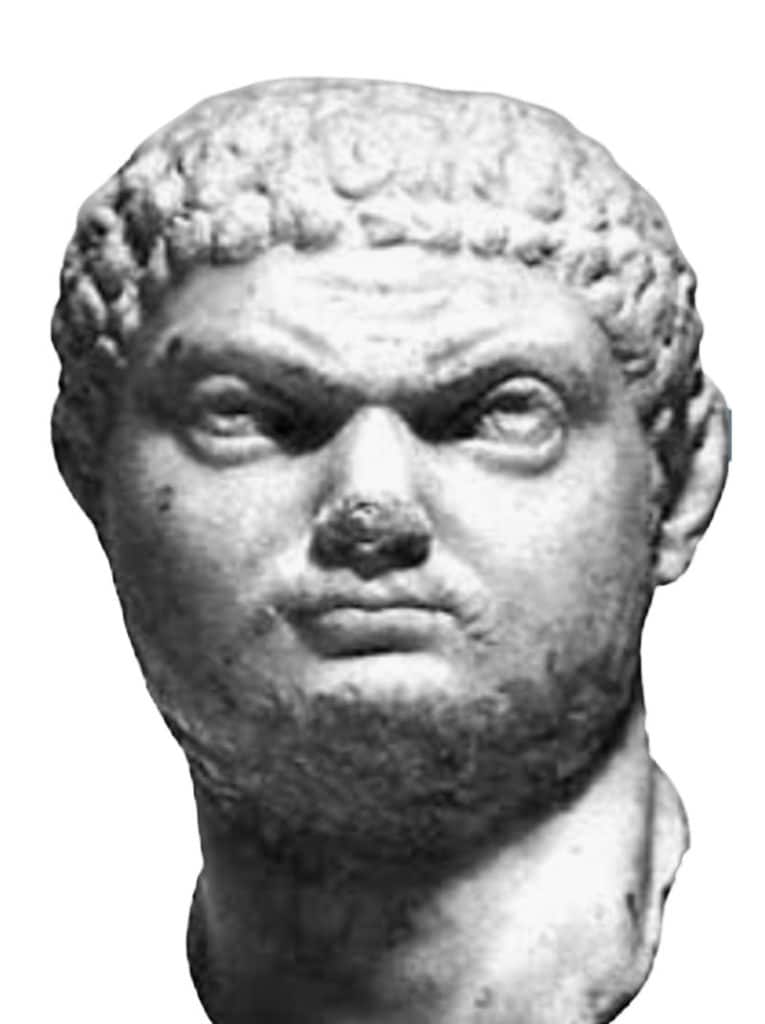
He was Tacitus’s half-brother and praetorian prefect. On his brother’s death in Cappadocia, Florianus declared himself emperor and began moving west to receive the Senate’s recognition in Rome. The armies of the east, meanwhile, had their own ideas. They proclaimed Probus – a respected general with a long record under Aurelian – as their emperor. Florianus had the larger army and the better claim. He marched it to Cilicia to intercept Probus, who was bringing a smaller force north from Syria.
Probus, who was not foolish, avoided battle and waited. Summer came. Florianus’s troops, many of them Italians and Europeans unused to Cilician heat, began to suffer from disease. Morale collapsed. Within perhaps 80 days of acclamation – some sources say as few as 60 – Florianus was killed by his own men, who wished to end the standoff and preferred Probus anyway. He was probably in his mid-40s. The Historia Augusta reports that he opened his own veins; other sources have him stabbed. Either way the cause was political, and the agents were his own soldiers, and the result was that Probus took the empire without a battle.
The transition from Tacitus to Florianus to Probus took less than a year. Three emperors had worn the purple; two were already dead. This was, in the final decade of the Crisis, beginning to feel almost orderly by comparison with what had preceded it.
Probus
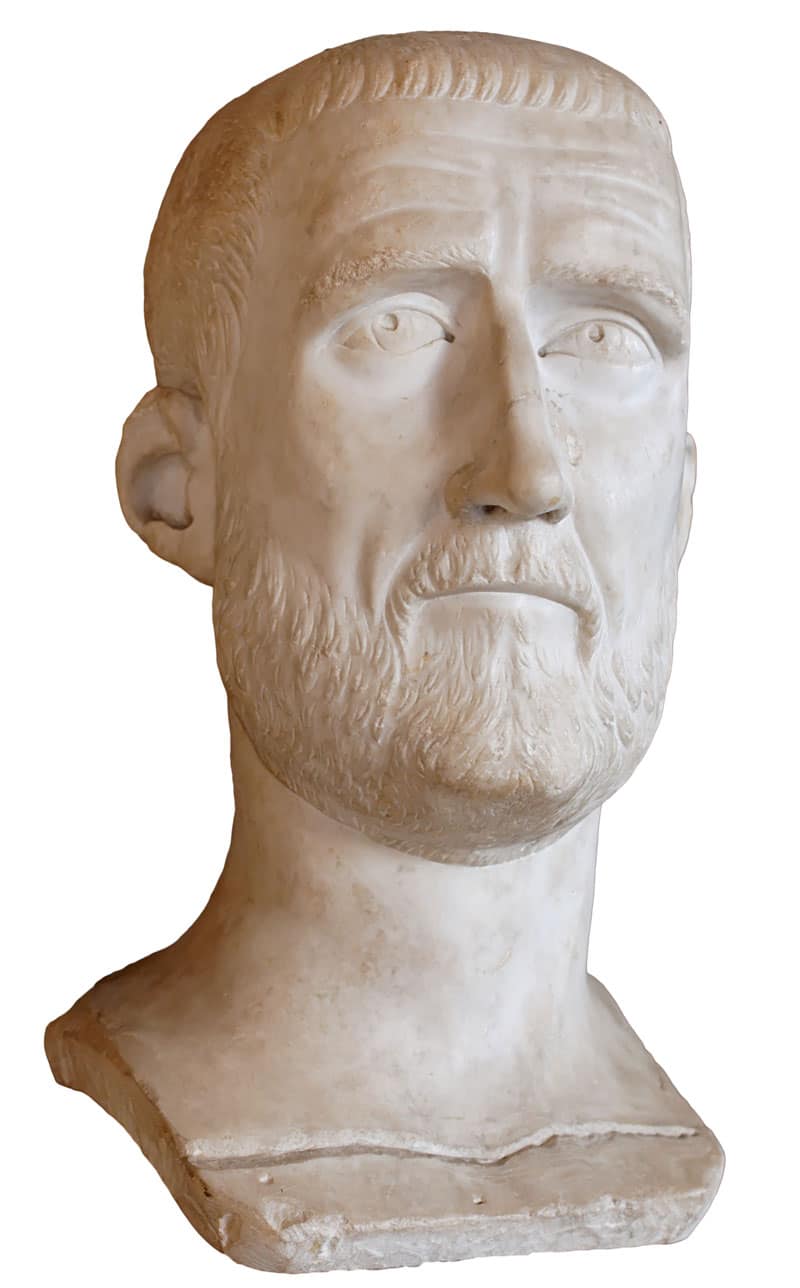
He had been a good emperor, which was the problem. In six years Probus had defeated the Goths, the Alemanni, the Vandals, the Franks, and the Burgundians, restored the Rhine and Danube frontiers, and celebrated a proper triumph in Rome. He had also made a fatal mistake in idle hours. Convinced that Roman soldiers should not sit around between campaigns, Probus put his troops to work on civil engineering projects – draining marshes, digging canals, planting vineyards near his birthplace of Sirmium. Soldiers had joined the legions to fight, not to dig ditches.
Word circulated that Probus had remarked, in a moment of optimism after his triumph, that with peace achieved the army might someday be disbanded entirely. This remark probably sealed his fate. In September or October 282, while Probus was preparing his eastern campaign against Persia, soldiers in Sirmium mutinied. He fled to an iron watchtower. The soldiers broke in and killed him. He was around 50.
His praetorian prefect Carus, who had recently been proclaimed emperor by the Upper Danube legions, may or may not have been behind the mutiny – Carus’s official position was that he had nothing to do with it, but the accusation followed him. Probus was buried in a tomb near Sirmium rather than in Rome. Carus made a point of executing the ringleaders. It was the one consistency of the third century: every emperor avenged his predecessor as if that might somehow prevent it from happening to him.
Numerian
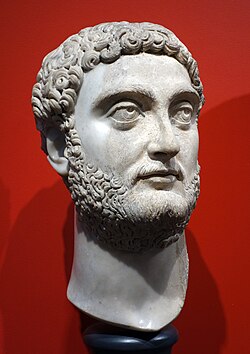
The litter had begun to smell. This was the first indication to Numerian’s soldiers that something was wrong. The 30-year-old emperor had been traveling in a closed coach through Asia Minor since leaving Emesa in March 284, said to be suffering from a painful eye inflammation contracted on campaign in Persia. His praetorian prefect Aper, who was also his father-in-law, had been handling administrative business and reassuring everyone that the emperor was merely resting. For several days no one outside the coach had spoken to him. By the time the procession reached Bithynia in November, the stench was undeniable.
The soldiers opened the curtains. Numerian had been dead for some time. Aper was arrested. A council of generals assembled at Chalcedon across the Bosphorus to select a new emperor, and they chose a Dalmatian officer of the imperial bodyguard named Diocles, shortly to be known as Diocletian. In front of the assembled army, Diocletian raised his sword to the sun, swore he had nothing to do with Numerian’s death, declared that Aper was the murderer, and personally stabbed Aper to death on the spot.
It was a theatrically efficient opening to a 21-year reign. Whether Aper actually killed Numerian, or whether Diocletian did and needed a scapegoat to hand, has never been established. What is certain is that Diocletian walked out of that assembly as emperor. No one ever troubled him about it again.
Carinus
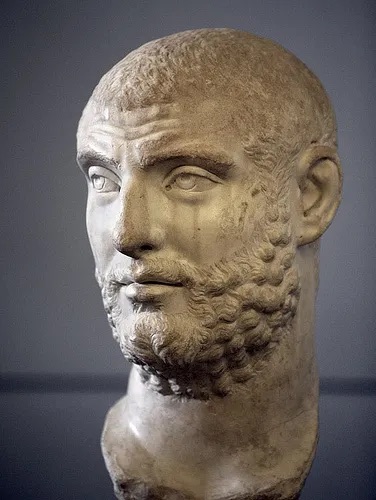
In the summer of 285 two Roman armies met at the Margus River in Moesia, on the border of modern Serbia. One was led by Carinus, son of the late emperor Carus, who had ruled the west for two years and was regarded as one of the more unpleasant emperors of recent memory – an impression largely propagated by the man on the other side of the battlefield, Diocletian. Carinus had the larger force. At first he was winning. Then, somewhere in the middle of the fighting, he was killed by one of his own officers.
The most widely repeated version of the story was that a tribune whose wife Carinus had seduced finally saw his chance and took it. An alternative account has the praetorian prefect Aristobulus orchestrating the desertion that ended the battle, a theory supported by the fact that Diocletian kept Aristobulus on in the same post after his victory. Carinus was around 35. The Senate condemned his memory.
Diocletian, now sole emperor, spent the next two decades establishing the Tetrarchy, stabilizing the frontiers, persecuting Christians with unusual thoroughness, and then – unique among Roman emperors – voluntarily retiring to grow cabbages at a palace in Dalmatia. The Crisis of the Third Century was over. Fifty years of anarchy had produced, in the end, exactly one man capable of stopping it. He had reached the throne by executing a man for a murder no one could prove.
Severus II
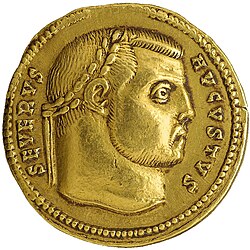
Diocletian’s Tetrarchy – two senior Augusti, two junior Caesars, a neat symmetrical succession plan – had worked beautifully in theory and for about two years in practice. Severus II was one of the first casualties. Appointed Augustus of the West in 306 after the death of Constantius Chlorus, he was immediately confronted with a revolt in Rome led by Maxentius, the son of the retired emperor Maximian. Severus marched on the city with an army that had served under Maximian for years. He discovered very quickly that this was a problem.
Maxentius brought his father Maximian out of retirement, dangled him before the advancing troops, and watched Severus’s army melt away. Severus fled to Ravenna and held out briefly before surrendering on a promise of safe conduct. Maximian made the promise; Maxentius kept him anyway, paraded him as a captive, and imprisoned him at Tres Tabernae on the Appian Way. When Galerius invaded Italy later that summer to rescue Severus, Maxentius used the approach as an excuse to have the hostage killed. On 16 September 307, Severus was either executed outright or forced to open his veins.
Galerius withdrew. The Tetrarchy had been shown to be unenforceable. Within five years, Constantine would defeat Maxentius at the Milvian Bridge and reunite the West under a single ruler. Severus II never made it onto the footnote.
Constans I
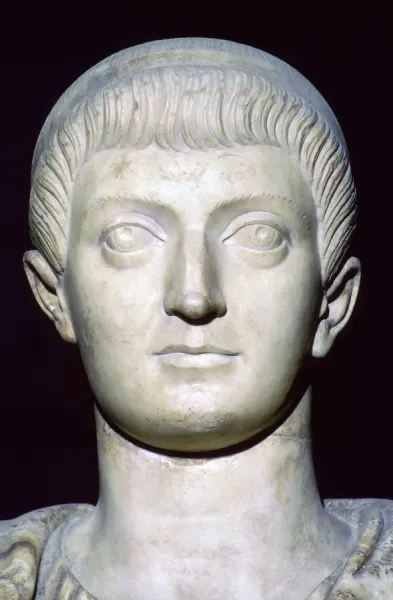
Constantine the Great had three sons. On his death in 337 they divided the empire, promptly fell out, and began eliminating each other. Constantine II invaded his younger brother Constans’s territory in 340 and was killed at Aquileia. Constans then ruled the entire Western Empire for a decade, during which he alienated the army through a combination of neglect, favoritism toward his Germanic bodyguards, and personal behavior that ancient sources describe with various degrees of malice – including, per Aurelius Victor, an unseemly interest in good-looking barbarian hostages.
On 18 January 350, a general named Magnentius had himself proclaimed emperor at a dinner party in Autun. He stepped out of the room briefly, reappeared in a purple toga, and the assembled guests cheered. Constans was hunting near the Pyrenees at the time, unaware of any of this. When word reached him, he fled south toward a Spanish port, was run down near Helena in the eastern Pyrenees, and took refuge in a temple. The officer leading the pursuit, a man named Gaiso, ordered his soldiers to kill him inside the temple anyway.
Constans was 27. He had never married, left no heirs, and had ruled the western half of the empire for thirteen years. His death triggered a three-year civil war between Magnentius and Constans’s surviving brother Constantius II, which Magnentius lost. Constantius avenged his brother. He may or may not have been sincere about it.
Gratian
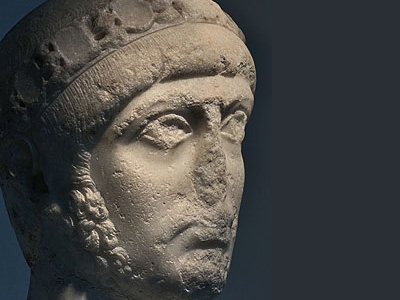
Some aristocrats in imperial history have an obvious fatal flaw; others have several small ones that accumulate. Gratian had the second kind. He was 16 when his father Valentinian I died in 375, and he had spent the next eight years ruling the West with what early sources describe as genuine promise – pious, personally brave, reasonably attentive to the army. Then, sometime around 380, he began to prefer the company of a corps of Alan cavalry mercenaries, whose language he learned and whose dress he reportedly adopted in public. This charmed no one in the Roman army.
When a commander in Britain named Magnus Maximus was acclaimed emperor by his legions in early 383 and crossed the Channel into Gaul, Gratian marched out to face him near Paris. After five days of skirmishing, his own cavalry defected to Maximus. The rest of his army followed. Gratian fled south with 300 loyalists, making for the Alps, and was caught at Lugdunum – modern Lyon – where the local governor had already made a deal with Maximus’s men. An officer named Andragathius, sent specifically to hunt him down, caught up with him on 25 August 383 and killed him, reportedly against Maximus’s formal orders.
He was 24. His half-brother Valentinian II, aged 12, was now the sole legitimate Augustus in the West. Andragathius was executed in his turn five years later, when Theodosius I invaded and defeated Maximus. Rome continued to consume its own.
Valentinian II
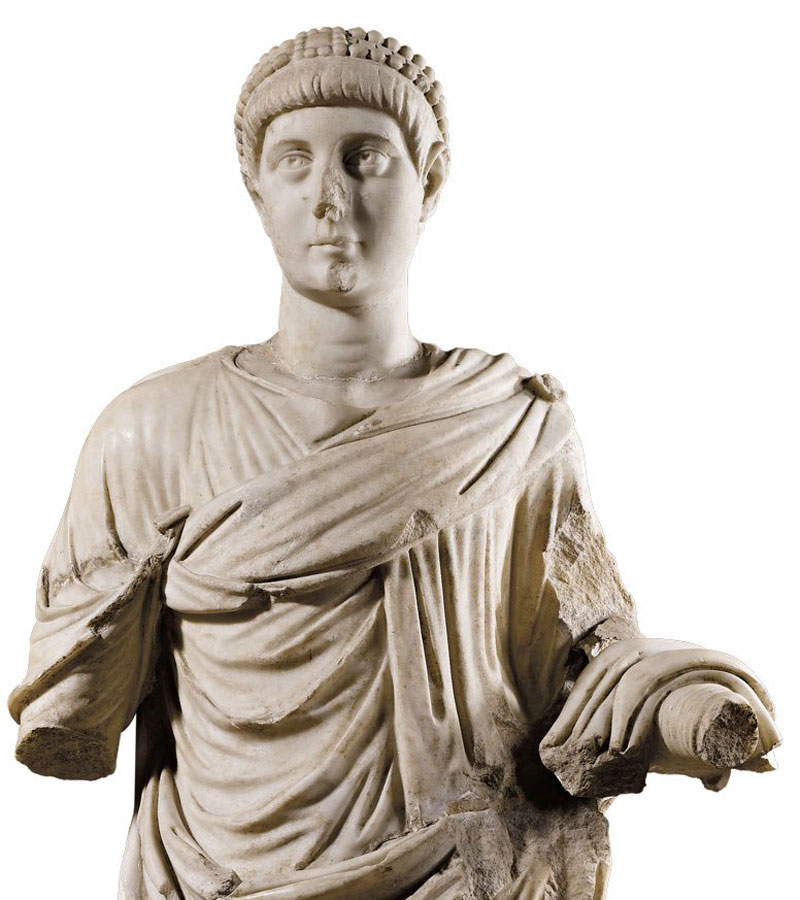
A 21-year-old emperor was found hanging in his bedroom at Vienne on the morning of 15 May 392. The general Arbogast – a Frankish commander whom Theodosius I had installed as Valentinian’s effective regent, and whom Valentinian had been attempting to dismiss for weeks – announced that it was suicide. Ambrose of Milan delivered the funeral eulogy and diplomatically declined to clarify the matter. Ancient writers split down the middle. Zosimus thought it was murder. Some modern historians agree; others, noting a four-month gap before Arbogast proclaimed a successor, argue that no conspirator would have left himself so unprepared and that the suicide account is probably accurate.
The underlying question was whether a puppet emperor who had been publicly humiliated – Arbogast had recently torn up Valentinian’s written order of dismissal in open court and walked out – was more likely to hang himself or to be hanged by the man he had just failed to remove. The circumstantial case for murder is strong. Arbogast had been killing Valentinian’s advisers for months, once doing so personally in the emperor’s own presence. Valentinian had been writing secret letters to Ambrose and Theodosius begging for intervention.
His position was intolerable, and his death was convenient. He was the youngest son of Valentinian I, had come to the throne at four, and had spent most of his reign as someone else’s instrument. He was buried in Milan next to his brother Gratian. The circumstances remained obscure.
Valentinian III
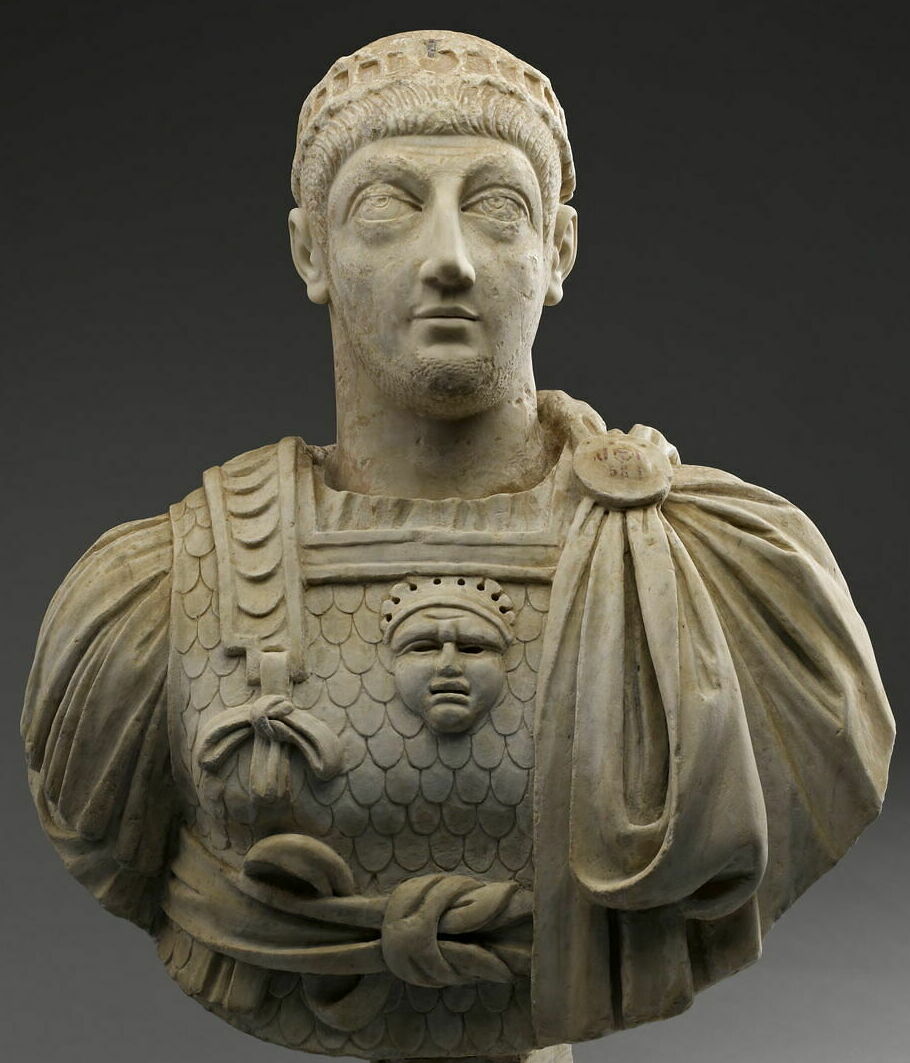
The emperor wanted his general’s job, and his chamberlain Heraclius had been whispering in his ear for months that Aetius was plotting against him. In September 454, Valentinian III summoned his magister militum – the man who had just saved the Western Empire from Attila the Hun three years earlier at the Catalaunian Plains – to the imperial palace, lured him into reviewing financial accounts, and drew his sword and stabbed him. Heraclius helped. When Valentinian later boasted to a court official that he had done well to eliminate Aetius, the official is said to have replied: “Whether well or not, I do not know. But know that you have cut off your right hand with your left.”
It was a prescient observation. Six months later, on 16 March 455, two Scythian officers who had served under Aetius – Optila and Thraustila, now in Valentinian’s bodyguard – walked up to the emperor as he dismounted to practice archery on the Campus Martius. Optila struck him on the side of the head. As Valentinian turned to see who had hit him, Optila struck again and killed him. Thraustila finished off Heraclius.
Priscus reports that a swarm of bees descended on Valentinian’s body and drank up his blood, which is a detail one either includes or does not. He was 35 and had reigned for 30 years – longer than any Western emperor on this list. The dynasty ended with him.
Petronius Maximus
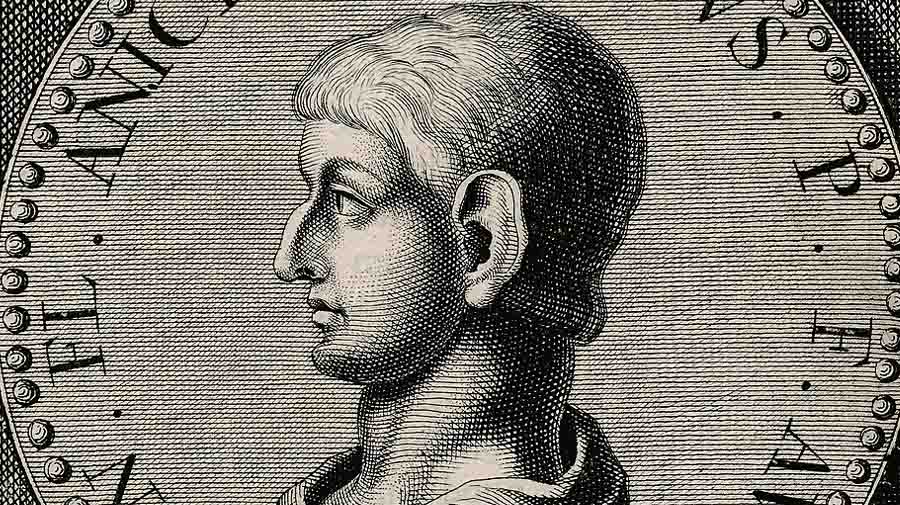
Arranging the murder of your emperor turned out to be the easy part. Petronius Maximus, a wealthy senator who had almost certainly orchestrated the killings of both Aetius and Valentinian III, bribed his way onto the throne the day after Valentinian’s assassination and promptly made a series of decisions that would have tested a better politician. He forced Valentinian’s widow Eudoxia to marry him. He broke off her daughter Eudocia’s engagement to the son of the Vandal king Geiseric and married the girl to his own son instead. Geiseric, who had been looking for an excuse to sack Rome for years, now had one.
In late May 455, a Vandal fleet appeared at the mouth of the Tiber. The Roman court panicked. Petronius Maximus tried to flee the city. His bodyguard abandoned him. As he rode alone through the streets, an angry Roman crowd – or possibly a single soldier named Ursus, depending on the source – fell upon him, stoned and hacked him to death, and flung the body into the Tiber. He had reigned for 75 days. Three days later, the Vandals entered Rome and spent two weeks systematically stripping the city of its portable wealth.
The word “vandalism” would enter European languages much later, coined in the French Revolution to describe the destruction of religious art, but the association had been made. Petronius Maximus’s particular contribution to history was that he had provided the excuse.
Avitus
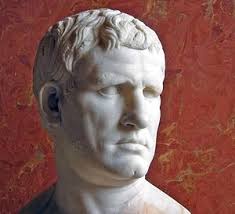
After the Vandals sacked Rome and Petronius Maximus was hacked to pieces in the streets, the Visigothic king Theodoric II took an interest in imperial succession and proposed his friend Avitus, a Gallo-Roman senator from Auvergne. The Roman Senate, lacking better options, confirmed him in July 455. It was not a success. Avitus brought a Visigothic imperial guard with him to Rome, which horrified the Roman aristocracy, and he continued to govern as if he were essentially the emperor of Gaul with a small Italian side-project.
Within a year his two most competent generals – Majorian and the Suebic-Visigothic warlord Ricimer – had turned against him. They defeated him at the Battle of Placentia in October 456, captured him, and forced him to abdicate by consecrating him Bishop of Placentia instead. This was how Rome traditionally handled deposed but harmless emperors. Avitus, however, was not allowed to settle into ecclesiastical retirement. Within weeks he was dead. Some sources say he was starved to death; some say he was strangled; some say he tried to flee and was caught en route.
Whichever version is correct, the men who had removed him from the throne were also the ones responsible for his death. He was probably around 60. Ricimer, who had engineered the whole episode, would spend the next sixteen years elevating and murdering a succession of Western emperors from behind the scenes. Avitus was the first.
Majorian
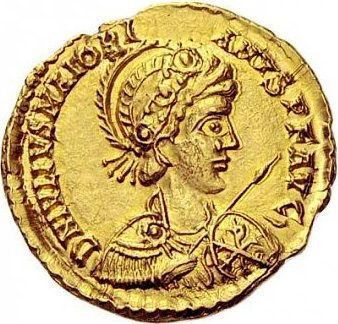
The historian Edward Gibbon, who was not given to overpraise, called Majorian “a great and heroic character, such as sometimes arise, in a degenerate age, to vindicate the honour of the human species.” This assessment is essentially correct and helps explain why his closest ally had him murdered. Majorian came to the throne in April 457 and immediately set about the audacious project of actually trying to save the Western Empire. He defeated a Vandal raid on Italy, marched into Gaul and beat the Visigoths at Arelate, reconquered much of Hispania, and assembled a fleet of 300 ships at Cartagena for an invasion of Vandal Africa.
Geiseric, alarmed, paid traitors within the Roman camp to burn the fleet before it sailed. Majorian was forced to negotiate a humiliating peace and return to Italy. On the way home, his magister militum Ricimer – the Germanic warlord who had placed him on the throne and who had watched with growing alarm as Majorian proved to have ideas and competence of his own – arrested him at Dertona in August 461, forced him to abdicate, and had him beheaded five days later.
He was around 41. Majorian had reigned for three and a half years and attempted more than any Western emperor since Theodosius. His successors, without exception, would be Ricimer’s puppets. The distinction between a legitimate emperor and a useful figurehead, never strong in the fifth-century West, now collapsed entirely.
Anthemius
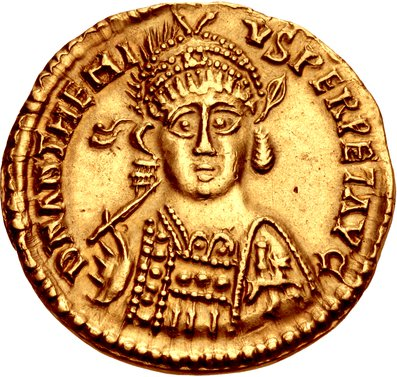
Relations between the Western emperor and his barbarian generalissimo had, by 472, deteriorated to open name-calling. Anthemius – a competent Eastern aristocrat installed on the Western throne in 467 by Leo I of Constantinople – had called Ricimer a “skin-clad Goth.” Ricimer had called Anthemius “an excitable Galatian.” By the spring of 472 Ricimer had besieged the emperor in Rome with a barbarian army that included a rising young officer named Odoacer. The siege lasted five months. Ricimer cut off the Tiber port, starved the city, and set up Olybrius – his own candidate – as a rival emperor.
Anthemius held out in a diminishing portion of Rome with the aristocracy and the urban populace fighting on his behalf. When the walls finally gave, Anthemius tried to escape through the streets disguised as a beggar. He was recognized near the Church of Santa Maria in Trastevere, dragged before Ricimer’s nephew Gundobad, and beheaded on 11 July 472. He was around 52.
Ricimer died of a hemorrhage six weeks later. Olybrius died of dropsy in November. Gundobad inherited the office of kingmaker. The Western Empire had four years left. Anthemius had been its last emperor recognized by both Rome and Constantinople, its last emperor to command serious military resources, and – on the evidence of the sources – its last emperor who had actually been trying.
Julius Nepos
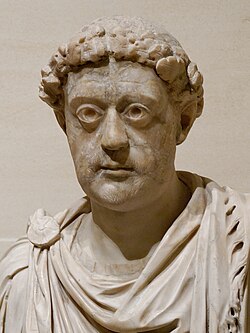
The conventional date for the fall of the Western Roman Empire is 476, when the barbarian general Odoacer deposed a teenager named Romulus Augustulus and sent the imperial regalia to Constantinople. The conventional date is also, strictly speaking, wrong. Julius Nepos, who had been installed as legitimate Western Emperor by Leo I in 474 and driven out of Italy by a usurper in 475, spent the next five years in his native Dalmatia continuing to claim the throne – with the full diplomatic recognition of Constantinople, where Zeno consistently referred to him as the rightful Augustus. Odoacer even minted coins in Nepos’s name while quietly ignoring him.
Then, on 9 May 480, at his villa near Salona – possibly in the very complex Diocletian had built for his retirement – Nepos was murdered by two of his own officers, Ovida and Viator. Some sources implicate the deposed former emperor Glycerius, whom Nepos had ousted six years earlier and exiled to a bishopric. Glycerius allegedly had a long memory. Whatever the motive, Nepos’s death ended the line of Western Roman emperors for good. Zeno declined to appoint a successor. Odoacer invaded Dalmatia, executed Ovida, and added the province to his kingdom.
After 480, the Eastern Emperor was simply the Emperor. The Roman Empire, which had begun with one man murdering his way to sole rule under Augustus, ended 507 years later with its last legitimate Western representative murdered in Diocletian’s vacation home. The pattern, at least, held.
The emperors claimed the favor of the gods of war their legions invoked.
Sources
- Retief & Cilliers, Causes of Death Among the Caesars (27 BC-AD 476), Acta Theologica Supplementum 7 (2005)
- Encyclopedia Britannica, individual emperor entries
- World History Encyclopedia, individual emperor entries
- Cassius Dio, Roman History (primary source cited throughout)
- Herodian, History of the Empire from the Death of Marcus (primary source cited throughout)
- Historia Augusta (primary source, used with appropriate skepticism)