Every Secret Character Unlock Method in Super Smash Bros History

The first time you heard that siren, you knew something was happening. The screen goes dark, a silhouette appears, and four words flash across the display: “A Challenger Approaches!” Unlocking secret characters has been one of the defining experiences of Super Smash Bros. since the original game launched in 1999 with four hidden fighters tucked behind completion challenges. Over five games and twenty-five years, the series has asked players to do everything from beating arcade modes under strict time limits to playing 1,000 versus matches to simply wandering through an adventure mode’s overworld. Some unlock conditions were intuitive. Others were so obscure that discovering them without a guide was practically impossible. This is every secret character unlock method across the entire series – and how the philosophy behind them evolved from mysterious gatekeeping to something very different.
Key Facts:
– Total secret characters across all five games: 128 unlock slots (counting each character once per game)
– Game with the most unlockable fighters: Ultimate (66 out of 74 base roster fighters)
– Most obscure unlock condition: Luigi in Melee (requires completing Adventure Mode with a “2” in the seconds digit of the timer)
– Simplest unlock condition: Jigglypuff in every game (usually just complete the single-player mode once)
– Longest grind unlock: Mr. Game & Watch in Melee (requires completing a single-player mode with ALL 24 other characters)
Super Smash Bros. 64
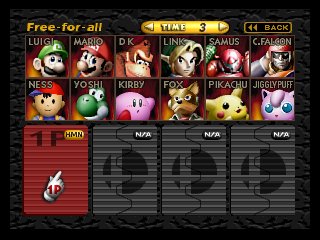
The original Super Smash Bros. launched with eight starter characters and four hidden fighters, establishing the template every sequel would follow. The game’s character select screen showed the locked characters as shadowy silhouettes – a design choice so iconic that it would be referenced in every subsequent game’s “Challenger Approaching” screen. The four hidden characters each required a different type of challenge to unlock:
Jigglypuff was the easiest – simply complete the 1P Game (Classic Mode) with any character on any difficulty. Most players unlocked Jigglypuff within their first hour of play, making it a gentle introduction to the concept of secret characters.
Captain Falcon required completing the 1P Game in under 20 minutes. This was a moderate challenge that encouraged players to play aggressively rather than cautiously – an early lesson in Smash’s offensive design philosophy.
Ness was the first genuinely difficult unlock. Players needed to complete the 1P Game on Normal difficulty or higher, using only three lives, without continuing. One game over meant starting the entire run from scratch. For younger players in 1999, this was a serious barrier.
Luigi required completing Bonus Practice 1 (Break the Targets) with all eight starter characters. This meant learning each character’s unique movement and recovery well enough to navigate their individual target courses – a requirement that pushed players to experiment beyond their main.
Super Smash Bros. Melee
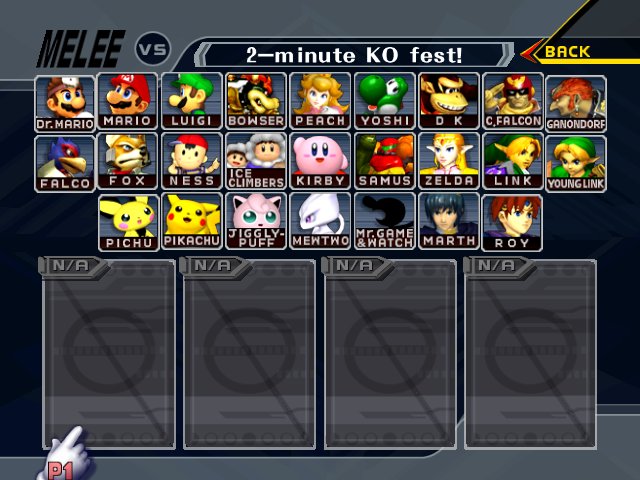
Melee dramatically expanded the unlock system with eleven secret characters – nearly half the roster. For the first time, every character had two unlock paths: a specific challenge AND a cumulative versus match count. This dual-path system was revolutionary because it meant every character was eventually unlockable through persistence alone, even if a player couldn’t complete the specific challenge. The match counts escalated dramatically: Jigglypuff at 50, Dr. Mario at 100, and ascending in intervals of 100 all the way to Mr. Game & Watch at 1,000. What follows is every character and their specific unlock conditions:
Jigglypuff (50 VS matches) – Complete Classic Mode, Adventure Mode, or All-Star Mode with any character. The simplest unlock, consistent with its role as the first secret character in every Smash game.
Dr. Mario (100 VS matches) – Complete Classic Mode, Adventure Mode, or All-Star Mode as Mario without using any continues. A straightforward condition that required competence with a specific character rather than general skill.
Pichu (200 VS matches) – Complete Event Match 37: Legendary Pokémon. This event match pit the player against a team of legendary Pokémon-themed characters, making the unlock thematically connected to Pichu’s identity.
Falco (300 VS matches) – Complete the 100-Man Melee. This was a survival challenge requiring players to defeat 100 weak opponents without being knocked out – a test of crowd control and stage awareness.
Marth (400 VS matches) – Use all 14 starter characters in VS Mode, Classic Mode, or Adventure Mode. A complete playthrough wasn’t required – just selecting each character once. This condition brilliantly forced players to try every starter, virtually guaranteeing they’d discover a new favorite.
Young Link (500 VS matches) – Complete Classic, Adventure, or All-Star Mode with 10 different characters. By this point, the game was pushing players toward mastery across the full roster rather than one-character specialization.
Ganondorf (600 VS matches) – Complete Event Match 29: Triforce Gathering. This event used Link, Zelda, and Ganondorf together, tying the unlock to the franchise’s central mythological conflict.
Mewtwo (700 VS matches) – Play VS Mode for a combined total of 20 hours. This is calculated in “player-hours,” meaning four players in a match earn four hours per real hour. Mewtwo’s unlock was pure time investment – a gate that rewarded dedication to multiplayer above all else.
Luigi (800 VS matches) – Complete Adventure Mode when the seconds digit of the timer ends in “2.” For example, a completion time of 12:32:45 would qualify because the seconds digit is “2.” Then defeat Luigi and Peach within one minute and complete the rest of the mode. This is widely considered the most obscure unlock condition in Smash history – a requirement so arbitrary that discovering it without external help was essentially impossible.
Roy (900 VS matches) – Complete Classic, Adventure, or All-Star Mode as Marth without continuing. Since Marth himself was unlockable, this created a chain: unlock Marth first, then use him to unlock Roy.
Mr. Game & Watch (1,000 VS matches) – Complete Classic Mode, Adventure Mode, All-Star Mode, or Target Test with all 24 other characters. This was the game’s ultimate unlock – a character gated behind comprehensive mastery of the entire roster. By the time a player unlocked Game & Watch through the specific method, they had effectively completed the game multiple times over.
Super Smash Bros. Brawl
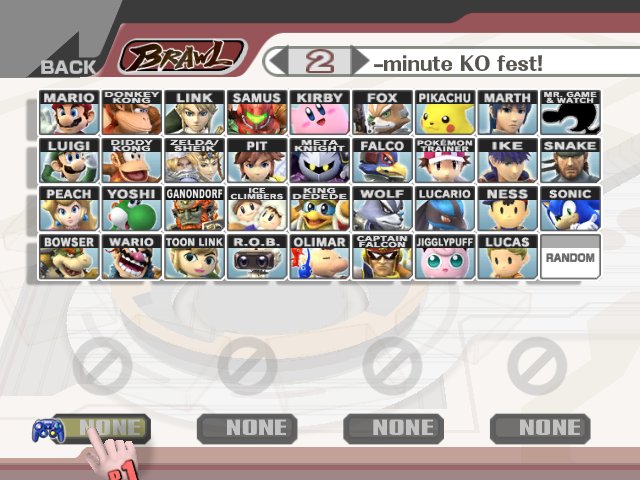
Brawl introduced the most complex unlock structure in the series by adding a third path: The Subspace Emissary. This cinematic adventure mode naturally unlocked characters as they joined the story, meaning a complete playthrough would unlock nearly the entire roster without any additional effort. For the first time, casual players had a narrative-driven path to a full roster. The traditional challenge conditions and VS match counts remained as alternatives:
Ness (5 VS matches) – Reflect 10 projectiles in a single VS match. A cleverly designed condition that taught players about the reflect mechanic – one of Smash’s most important defensive tools that many newcomers overlooked.
Marth (10 VS matches) – Complete Classic Mode once. One of the simplest unlocks in Brawl, reflecting Marth’s graduation from obscure secret to established roster member.
Luigi (22 VS matches) – Complete Classic Mode without using any continues. Consistently one of the earlier unlocks, but always requiring slightly more effort than the simplest conditions.
Falco (50 VS matches) – Complete 100-Man Brawl. A direct callback to his Melee unlock condition, creating continuity for returning players.
Captain Falcon (70 VS matches) – Complete Classic Mode on Normal or higher in under 12 minutes. Another callback – his original unlock in Smash 64 was also time-based.
Lucario (100 VS matches) – Clear all five difficulties of Target Smash at least once. A comprehensive challenge requiring precision with the game’s redesigned target-breaking mini-game.
Snake (130 VS matches) – Play 15 VS matches on Shadow Moses Island. This was one of Brawl’s most thematically clever unlocks – to meet Snake, you had to visit his home turf. Players who randomly selected stages might stumble into this condition naturally.
R.O.B. (160 VS matches) – Collect 250 different trophies. This gated R.O.B. behind the game’s collection metagame, requiring extensive play across multiple modes.
Ganondorf (200 VS matches) – Complete Classic Mode on Hard as Link or Zelda. The Triforce connection persisted from Melee – Ganondorf could only be found through his eternal rivals.
Mr. Game & Watch (250 VS matches) – Complete Target Smash with 30 different characters on any single difficulty. Another roster-spanning challenge for the series’ most obscure character.
Sonic (300 VS matches) – Complete Classic Mode with 10 different characters, or play VS Mode for a combined 10 hours. The most anticipated third-party addition in Smash history had appropriately scaled unlock conditions.
Jigglypuff (350 VS matches) – Clear 20 or more events after completing The Subspace Emissary. For the first time, Jigglypuff was one of the later unlocks rather than the earliest.
Toon Link (400 VS matches) – Complete Classic Mode after finishing The Subspace Emissary. The adventure mode served as a prerequisite, gating Toon Link behind significant story progress.
Wolf (450 VS matches) – Complete Boss Battles as Fox or Falco. The Star Fox villain could only be unlocked by defeating bosses as his Star Fox rivals – one of Brawl’s most thematic unlock conditions.
Three additional characters – Toon Link, Wolf, and Jigglypuff – had secret rooms in the Subspace Emissary that could only be found after completing the main story, adding an exploration element to their unlocks that no other method provided.
Super Smash Bros. for 3DS/Wii U
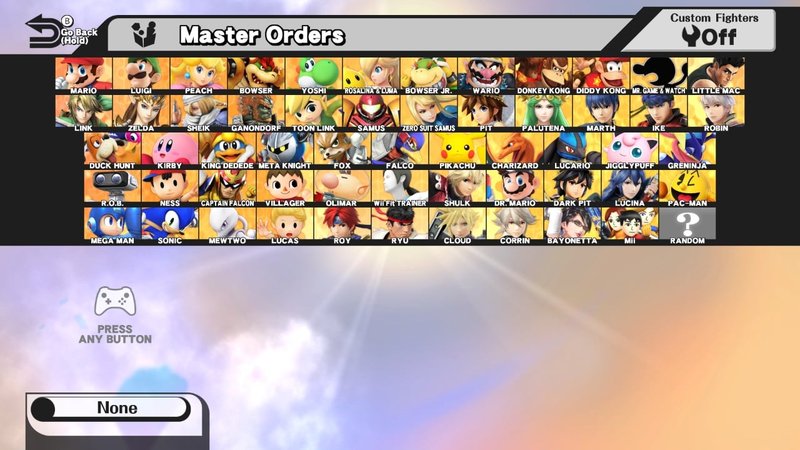
Smash 4 dramatically simplified the unlock structure. With the roster split across two platforms, the unlock conditions needed to work on both the handheld 3DS and the home console Wii U. The result was the most straightforward unlock system since the original game – most characters were unlocked by either completing Classic Mode a certain number of times or reaching specific VS match milestones. The 3DS version had eight unlockable fighters while the Wii U version had seven, with most characters that were secret on 3DS being starters on Wii U.
3DS Unlockable Fighters:
Ness – Complete Classic Mode twice on any intensity, or play 10 VS matches. A return to simplicity for this veteran unlockable.
Falco – Complete Classic Mode once, or play 20 VS matches. His 100-Man tradition was broken in favor of a simpler path.
Wario – Complete 100-Man Smash, or play 30 VS matches. Wario inherited Falco’s old unlock condition while Falco moved to something easier.
Lucina – Complete Classic Mode as Marth on any intensity without losing a life, or play 40 VS matches. A chain unlock referencing the character’s in-game connection to Marth.
Dark Pit – Complete Classic Mode with three different characters, or play 50 VS matches. One of the simpler conditions for a character who needed little justification.
Dr. Mario – Complete Classic Mode as Mario on intensity 4.0 or higher, or play 60 VS matches. His Mario-contingent unlock carried over from Melee.
R.O.B. – Complete Classic Mode with six different characters, or play 70 VS matches. Another roster-breadth requirement for the robot.
Mr. Game & Watch – Complete Classic Mode with 10 different characters, or play 80 VS matches. Still the most demanding specific unlock, though far less extreme than Melee’s requirement.
Wii U Unlockable Fighters:
Ness (10 VS matches), Falco (20), Jigglypuff (30), Wario (40), Dr. Mario (50), R.O.B. (60), Mr. Game & Watch (80), Ganondorf (100), Dark Pit (40 – complete Classic Mode or All-Star on Normal), Bowser Jr. (100 – complete Classic or All-Star on Hard as Bowser), Duck Hunt (complete Classic or All-Star after unlocking every other hidden character).
The Wii U version also featured a quirk: the CPU difficulty for Challenger Approaching battles was set to its maximum level, making unlocks on this version genuinely difficult for casual players. This was widely considered a design mistake and was not repeated in Ultimate.
Super Smash Bros. Ultimate
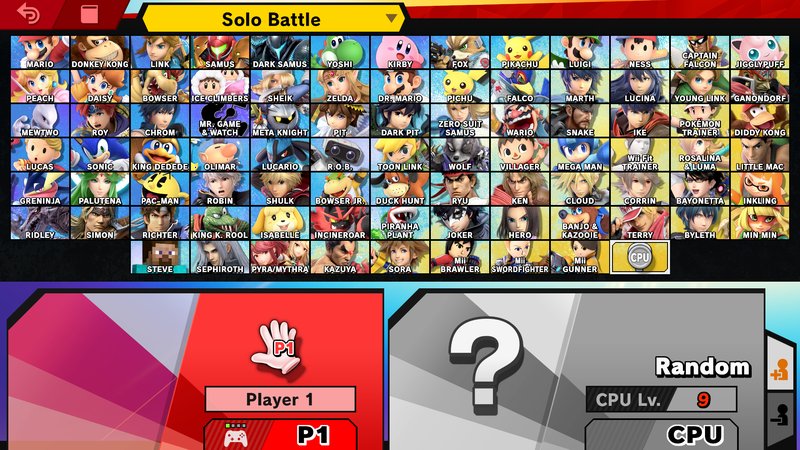
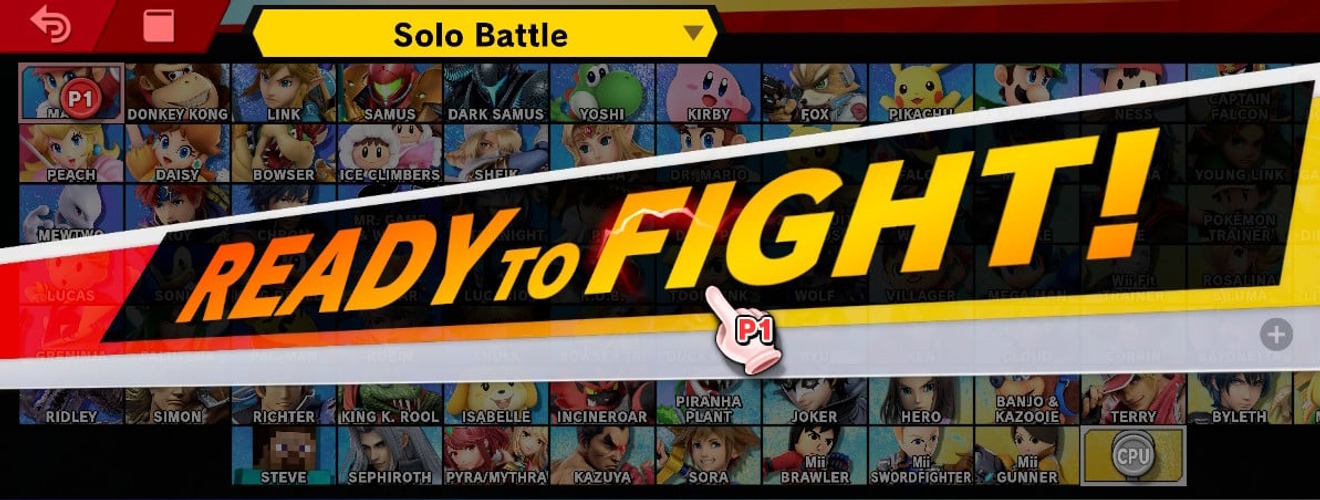
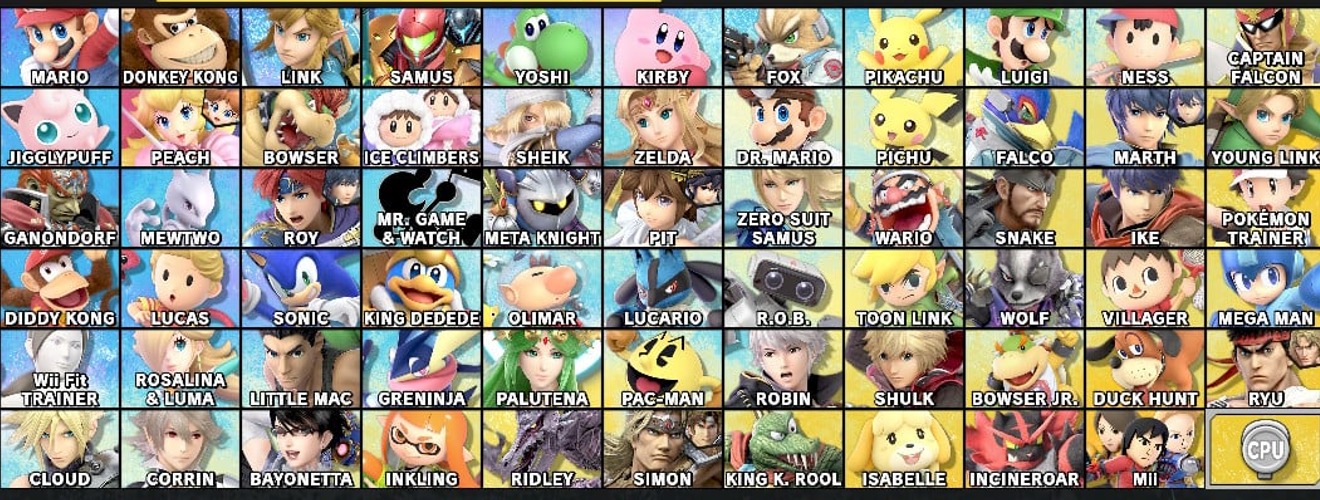
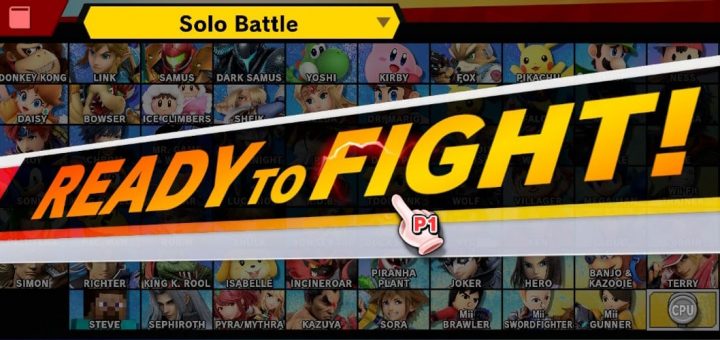
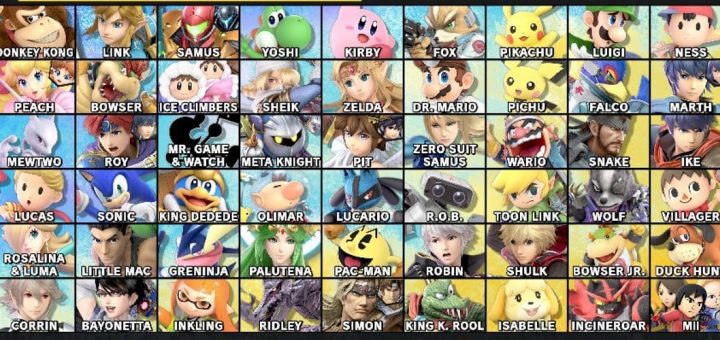
Ultimate took the most radical approach to unlocking characters in the series’ history. Of the 74 base roster fighters, only eight were available from the start: the original Super Smash Bros. 64 starter roster of Mario, Donkey Kong, Link, Samus, Yoshi, Kirby, Fox, and Pikachu. Every other character – including longtime starters like Peach, Zelda, and Bowser – needed to be unlocked through one of three methods.
Method 1: VS Mode encounters. After playing a VS match and returning to the main menu, a new challenger appeared approximately every 10 minutes of gameplay (measured by a hidden internal timer). The challengers arrived in a set order that was identical for all players, creating a shared discovery experience across the community.
Method 2: Classic Mode chains. Each character’s Classic Mode run ended with a specific challenger encounter. These formed branching chains: completing Classic Mode as Mario unlocked Sonic, completing it as Sonic unlocked Bayonetta, and so on. The chains were designed so that each starting character led to a sequence of six to eight unlocks, and every character in the game could be reached through some chain.
Method 3: World of Light. The adventure mode featured a massive overworld map where characters were trapped in spirit battles. Freeing them unlocked them for all modes. Unlike Subspace Emissary, World of Light didn’t have a fixed character order – players could explore in any direction and unlock fighters in completely different sequences.
Challenger’s Approach. Ultimate introduced one critical quality-of-life addition: if a player lost to a challenger, the character didn’t disappear. Instead, they were added to a “Challenger’s Approach” door on the Games & More menu, where players could rematch them at any time. This eliminated the frustration of Melee and Brawl, where losing to a challenger meant grinding to trigger their encounter again. The system ensured that every player would eventually unlock the full roster regardless of skill level – a philosophy that reflected Ultimate’s commitment to being the most inclusive Smash game ever made.
The initial unlock rate generated controversy at launch. Dedicated players discovered they could trigger new challengers more quickly by closing and reopening the game’s software after each VS match, resetting the internal timer. Within hours of Ultimate’s release, guides for this “reset trick” had gone viral, and speedrunners were unlocking the full 74-character roster in under two hours. Nintendo later patched the game to reduce the encounter timer, making unlocks faster without requiring the exploit – an implicit acknowledgment that the original pacing was too slow for players eager to access their favorite fighters.