Every Spell Invented by a Specific Character in Harry Potter

Most spells in the wizarding world have no known author. Wingardium Leviosa, Expecto Patronum, Alohomora – these are ancient incantations, their creators lost to history. The standard Hogwarts curriculum teaches students to use spells the way students use calculators: as inherited tools, not things they are expected to understand from the inside.
But a handful of characters in the series actually invented spells. Created new magic from scratch. Wrote an incantation in a margin, or pressed a modification into the fabric of an existing enchantment, or figured out something nobody had figured out before. They were, in every meaningful sense, the people who pushed the art forward – for better, for worse, and in the case of at least one of them, for deeply disturbing reasons.
What follows is every spell or magical creation with a confirmed inventor in J.K. Rowling’s seven novels: who made it, what it does, when we find out, and what the invention reveals about the person behind it.
- Creating a new spell requires mastery of magic far beyond standard Hogwarts-level ability
- Most spells have unknown creators; confirmed inventor attribution is rare
- Severus Snape invented more named spells than any other character in the series – at least six, all written in the margins of a Potions textbook
- Voldemort is confirmed as the inventor of two pieces of magic: the Dark Mark spell and unsupported flight
- Albus Dumbledore invented the Deluminator and developed the Patronus as a communication device
- Hermione Granger invented one confirmed spell – the DA parchment jinx – during her fifth year at Hogwarts
- The Marauders collectively created the enchantments on the Marauder’s Map as teenagers
- Primary source for Snape’s spells: Harry Potter and the Half-Blood Prince, Chapters 9 and 24-28
Sectumsempra
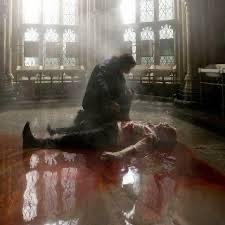
The most dangerous spell Snape invented, and the one that most clearly shows where he was heading when he wrote it. Sectumsempra – from the Latin sectum (cut) and semper (always) – is a slashing curse. In practice, it tears open the target’s skin and flesh as if they had been “slashed by a sword,” creating deep, bleeding lacerations across the body. In the Half-Blood Prince’s annotated textbook, it is written in the margins with the note “for enemies.”
Harry finds the incantation without knowing what it does and uses it on Draco Malfoy during their sixth-year bathroom confrontation – the scene where Draco, weeping over a mirror, is genuinely broken. Harry casts it on reflex. The result horrifies him. Draco collapses into a spreading pool of blood. Snape arrives, performs the counter-curse (Vulnera Sanentur, also his invention), and saves Draco’s life, then turns to Harry with what the books describe as revulsion. Later, when Snape reveals that he is the Half-Blood Prince, Harry tries Sectumsempra on him. It does nothing. Snape made it; he can block it.
The spell appears again in Deathly Hallows when Snape, fleeing Hogwarts, uses it to retaliate against a Death Eater who attacks Harry. By that point in the story, the reader knows enough about Snape to see that gesture clearly.
Inventor: Severus Snape
Source confirmed: Harry Potter and the Half-Blood Prince, Chapters 9, 24, 28
Levicorpus
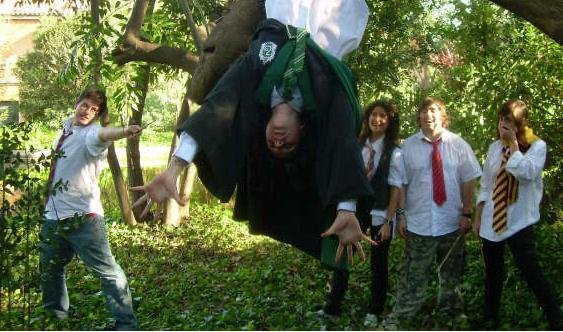
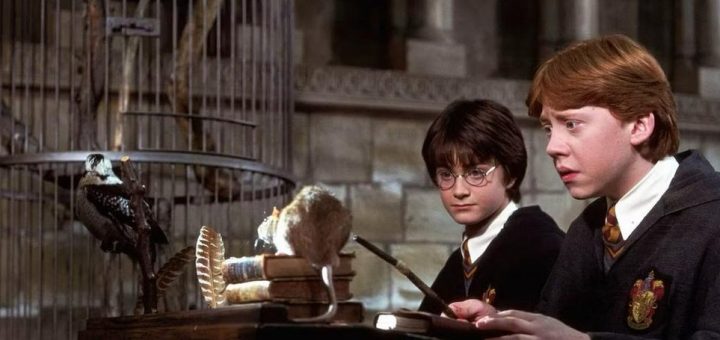
The spell that turned Snape’s school life into a public humiliation – and that he invented. Levicorpus dangles the target upside-down by their ankle, suspended in mid-air, unable to come down without help. It is non-verbal, which makes it especially difficult to defend against. Harry finds it in the Half-Blood Prince’s textbook and uses it on Ron by accident in the middle of the night, waking him up dangling from his own four-poster bed.
The spell becomes something heavier when Harry sees it in the Pensieve. The memory of James Potter using Levicorpus on a teenage Snape in front of the entire school – the humiliation that ended Snape and Lily’s friendship – is one of the most important scenes in the series. A teenage Snape, tormented and exposed and powerless, invented a spell that does precisely what was done to him. There is no way to read that as accidental.
Inventor: Severus Snape
Source confirmed: Harry Potter and the Half-Blood Prince, Chapter 9; Harry Potter and the Order of the Phoenix, Chapter 28
Liberacorpus
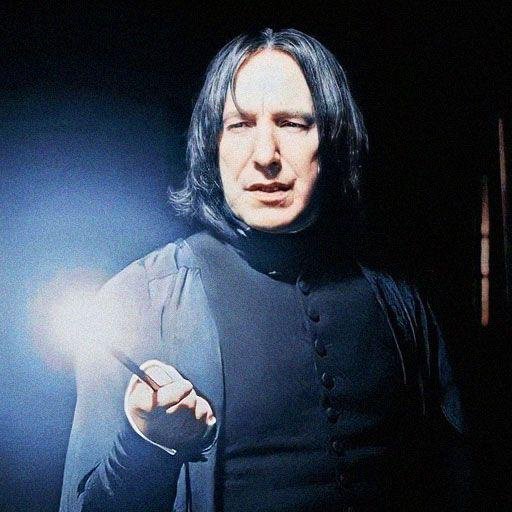
The counter-jinx to Levicorpus. Also Snape’s invention, also in the textbook margins. That he invented both the jinx and its reversal suggests he was thinking through the magic systematically rather than simply creating weapons. Liberacorpus brings down anyone suspended by Levicorpus. Harry learns it in the same chapter he learns Levicorpus, which is fortunate, given that he uses them in sequence on Ron.
Inventor: Severus Snape
Source confirmed: Harry Potter and the Half-Blood Prince, Chapter 9
Muffliato

The most practically useful of Snape’s inventions, and the one Harry and Ron use most frequently and most gratefully. Muffliato fills the ears of anyone nearby with an unidentifiable buzzing sound, making private conversation possible in public spaces. Harry and Ron use it to discuss Horcrux strategy in the library, in the common room, and in Deathly Hallows during the camping portions of their hunt – when maintaining the secrecy of their plans is not abstract but necessary.
What is notable about Muffliato in the context of Snape’s other inventions is its utility. Sectumsempra is a weapon. Levicorpus is a humiliation device. Muffliato is a tool for people who need to talk privately. It fits the picture of someone whose school years taught him that conversations could be overheard at any time, and who learned early to value privacy.
Inventor: Severus Snape
Source confirmed: Harry Potter and the Half-Blood Prince, Chapter 9; subsequent appearances throughout Half-Blood Prince and Deathly Hallows
Langlock
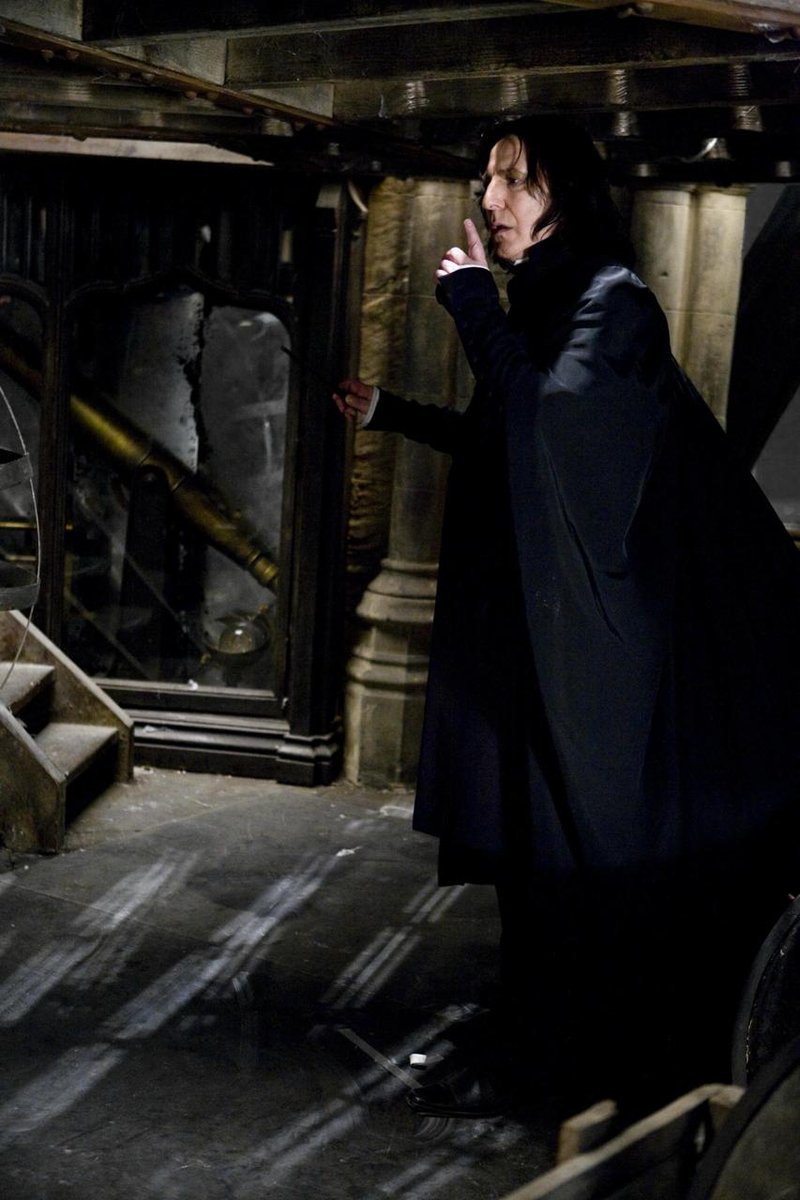
A jinx that glues the target’s tongue to the roof of their mouth, preventing them from speaking. Harry uses it on Peeves the poltergeist – apparently effectively, which is remarkable, since most magic passes through Peeves entirely. The practical application is obvious: silencing someone, preventing verbal spells, embarrassing a target in exactly the way that makes speaking in public excruciating. It is a teenager’s revenge fantasy given incantation form.
Inventor: Severus Snape
Source confirmed: Harry Potter and the Half-Blood Prince, Chapter 9
Toenail-Growing Hex
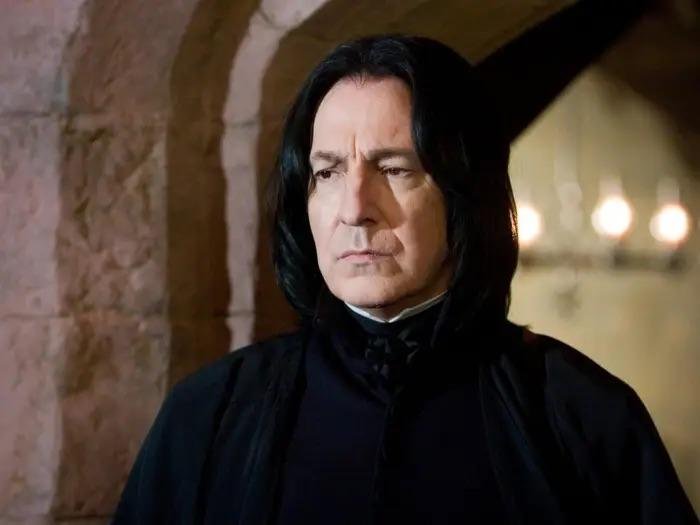
The most minor of Snape’s documented inventions – a hex that causes the target’s toenails to grow at an accelerated and presumably unpleasant rate. It is mentioned in the Half-Blood Prince textbook among Snape’s marginal annotations, though it receives significantly less narrative attention than his other creations. It reads as an early-stage experiment, the kind of small magical tinkering that probably preceded the more serious work.
Inventor: Severus Snape
Source confirmed: Harry Potter and the Half-Blood Prince, Chapter 9
Morsmordre

The spell that conjures the Dark Mark – the skull with a snake emerging from its mouth that Voldemort’s followers fire into the sky above the site of a murder. First seen in Goblet of Fire when it appears over the campsite at the Quidditch World Cup. Later, when Harry sees it over Dumbledore’s tower after his death. The Dark Mark is Voldemort’s signature, his calling card, his stamp of ownership over the locations where his followers have killed. It is also branded on every Death Eater’s arm, summoning them or signalling their master’s call.
Morsmordre is confirmed as Voldemort’s creation – it is his symbol and his spell. No other wizard could have invented the Dark Mark. Death Eaters can fire it into the sky, but the power behind it, the resonance it carries, comes from its creator.
Inventor: Lord Voldemort
Source confirmed: Harry Potter and the Goblet of Fire, Chapter 9
Unsupported Flight
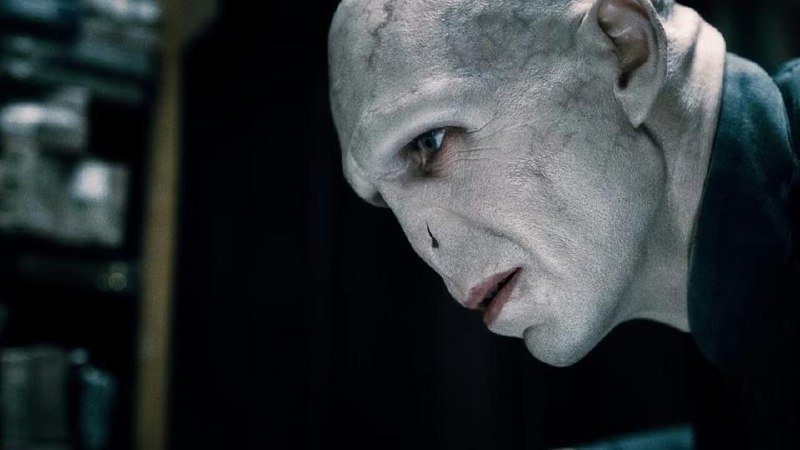
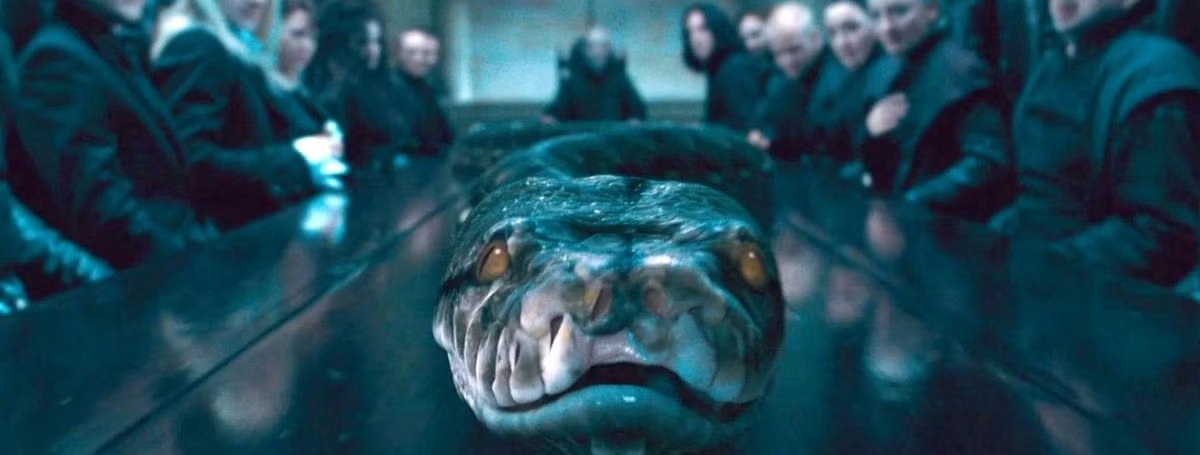
The ability to fly without a broomstick, without any visible aid. In the books – as opposed to the films, where Death Eaters fly as smoke – this is exclusive to Voldemort. He can travel through the air without the broomstick that every other wizard requires. It is one of several ways the books establish that Voldemort has pushed magic into territories nobody else has reached.
What makes this detail particularly interesting is what Harry sees at the end of Deathly Hallows: Snape, fleeing Hogwarts with the Death Eaters, also flying without aid. Voldemort taught it to him. This is the only piece of magic in the series that one confirmed wizard invented and then explicitly passed on to another – the only spell with a documented transmission in both directions.
Inventor: Lord Voldemort
Source confirmed: Harry Potter and the Deathly Hallows, Chapter 2 (Snape’s flight); confirmed as Voldemort’s invention and teaching in the same chapter
Patronus Communication

The Patronus Charm as it exists in the standard curriculum is a defensive spell – a silver guardian conjured from the caster’s happiest memories, capable of driving off Dementors. But Albus Dumbledore developed a modification: using a Patronus to carry a spoken message. Members of the Order of the Phoenix use this throughout Deathly Hallows to communicate safely. Kingsley’s lynx Patronus appears at Bill and Fleur’s wedding with the news that the Ministry has fallen. Snape’s doe Patronus leads Harry to the frozen pond in the Forest of Dean.
The advantages are significant. A Patronus is, by its nature, an expression of genuine positive emotion – it cannot be faked by a Dark wizard who doesn’t experience happiness the same way. It cannot be intercepted or tampered with by Death Eaters. And each Patronus is unique to its caster, which means a member of the Order receiving a message knows immediately who sent it. Dumbledore apparently developed this use; how or when is never specified.
Inventor: Albus Dumbledore
Source confirmed: Harry Potter and the Deathly Hallows, confirmed as Dumbledore’s invention by multiple characters; Order members use it throughout the book
Deluminator
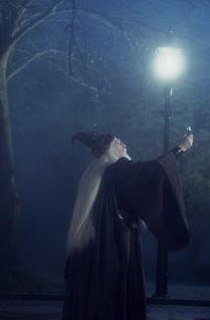
The small silver device that appears in the very first chapter of Philosopher’s Stone, when Dumbledore uses it to click out all the lights on Privet Drive as he waits for McGonagall. It returns at the reading of Dumbledore’s will in Deathly Hallows, when it is left to Ron. For most of the seventh book, it seems like a slightly elaborate lighter. Then Ron, having walked out on Harry and Hermione and left the tent during the worst period of the Horcrux hunt, hears Hermione’s voice say his name. A ball of light emerges from the Deluminator. He follows it. It leads him back.
The device captures and restores light, yes. But it also carries, within it, a function that Dumbledore built in and never mentioned: it can hear when someone who loves you says your name, and it can bring you back to them. Ron receives this device as a bequest. Dumbledore knew, building it, exactly what kind of person Ron was, and exactly when he would need it.
Inventor: Albus Dumbledore
Source confirmed: Harry Potter and the Philosopher’s Stone, Chapter 1; Harry Potter and the Deathly Hallows, Chapter 7 (bequeathed to Ron) and Chapter 19 (full function revealed)
Dumbledore’s Army Parchment Jinx
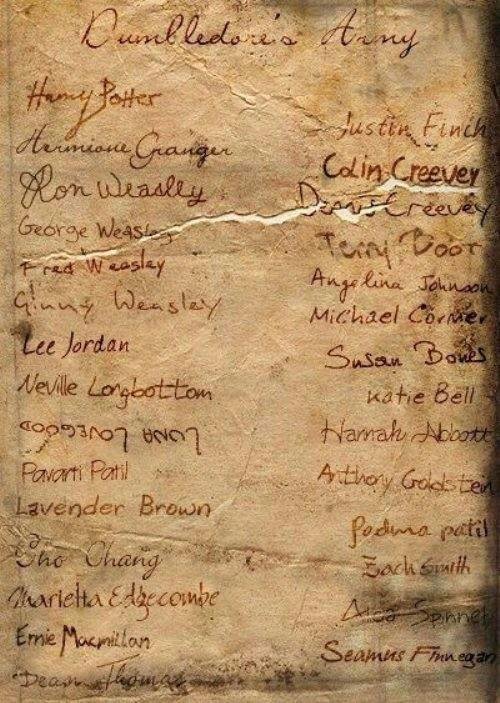
In Order of the Phoenix, Hermione organises the DA sign-up meeting in the Hog’s Head and produces a parchment for members to sign as a commitment to the group. She doesn’t mention, when she passes it around, that she has jinxed it. She tells Ron afterwards: if anyone signed that list and then betrayed the group, “they will really regret it.” Ron asks what will happen. Hermione says it will “make Eloise Midgen’s acne look like a couple of cute freckles.”
When Marietta Edgecombe betrays the DA to Umbridge, the jinx activates. The word “SNEAK” erupts across her face in boils – permanent ones, that she spends most of the following year hiding. Hermione invented this jinx herself. No book is cited. When she describes what she did, her tone is one of satisfied pre-planning, not quoted instruction. It is her own work.
Inventor: Hermione Granger
Source confirmed: Harry Potter and the Order of the Phoenix, Chapter 18 (jinx described), Chapter 27 (jinx activated on Marietta Edgecombe)
Marauder’s Map Enchantments
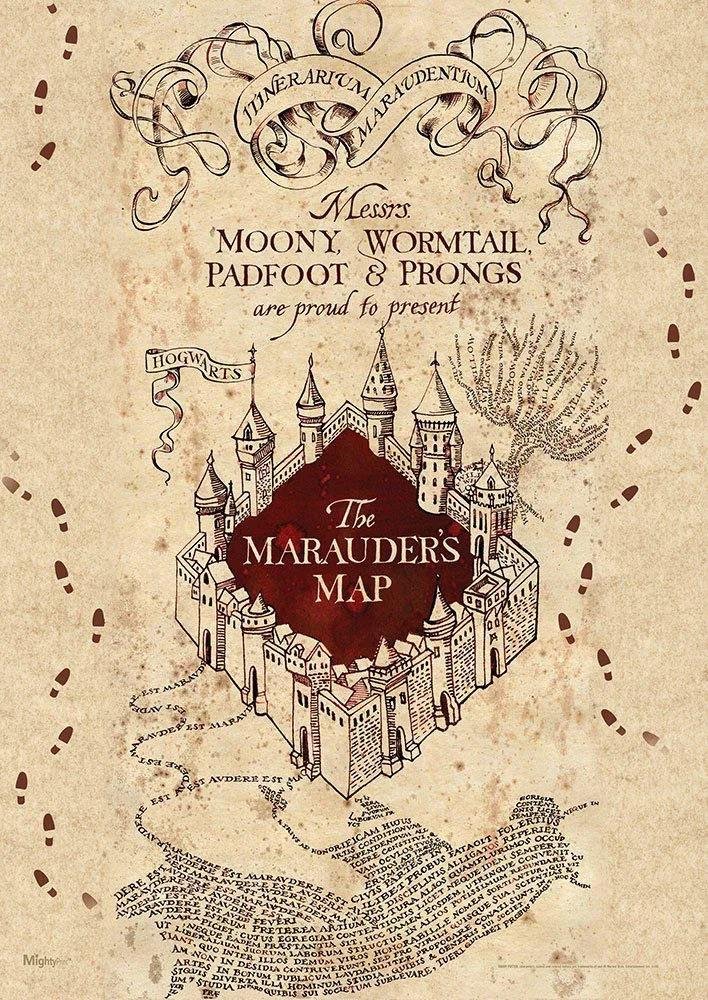
The Marauder’s Map is not a spell with a single incantation – it is an object enchanted through a complex layering of spells and charms, the work of four teenagers who spent years on it. James Potter, Sirius Black, Remus Lupin, and Peter Pettigrew created it during their time at Hogwarts, apparently motivated by the practical necessity of sneaking around the castle without getting caught and the desire to help Remus navigate the school safely on non-full-moon nights.
The map tracks every person in Hogwarts Castle in real time, shows every secret passage and moving staircase, updates as the building changes, and contains a concealment charm sophisticated enough to fool Severus Snape. It also contains, apparently, the personalities of its creators – when Snape forces it to reveal itself, the map responds with insults in the voices of Moony, Wormtail, Padfoot, and Prongs. That four students managed to build something this intricate, layered, and lasting is one of the more remarkable pieces of magic in the series.
Inventors: James Potter, Sirius Black, Remus Lupin, Peter Pettigrew (the Marauders)
Source confirmed: Harry Potter and the Prisoner of Azkaban, Chapter 10 (map introduced), Chapter 18 (map’s creators revealed)
- Harry Potter and the Half-Blood Prince, Chapters 9, 24, 28 – J.K. Rowling (2005). Primary source for all six Snape-invented spells and the revelation of his identity as the Half-Blood Prince.
- Harry Potter and the Order of the Phoenix, Chapters 18 and 27 – J.K. Rowling (2003). Primary source for Hermione’s DA parchment jinx.
- Harry Potter and the Goblet of Fire, Chapter 9 – J.K. Rowling (2000). Primary source for Morsmordre.
- Harry Potter and the Deathly Hallows, Chapters 2, 7, 19 – J.K. Rowling (2007). Primary source for Voldemort’s unsupported flight (and teaching it to Snape), the Deluminator’s homing function, and Order Patronus communication.
- Harry Potter and the Philosopher’s Stone, Chapter 1 – J.K. Rowling (1997). First appearance of the Deluminator.
- Harry Potter and the Prisoner of Azkaban, Chapters 10 and 18 – J.K. Rowling (1999). Primary source for the Marauder’s Map and its creators.
- HP Wiki – Dumbledore’s Army parchment jinx – harrypotter.fandom.com. Cross-reference for jinx effect and Marietta Edgecombe activation.
- HP Lexicon – Spells – hp-lexicon.org. Cross-reference for spell attributions and incantation sourcing.