Every Third-Party Character Ever Added to Super Smash Bros
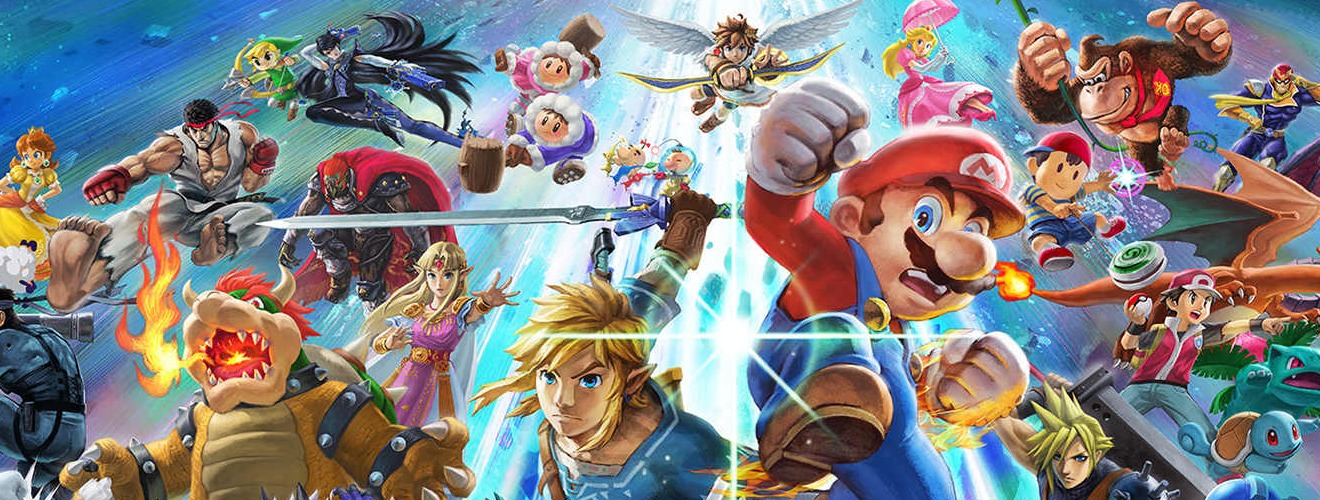
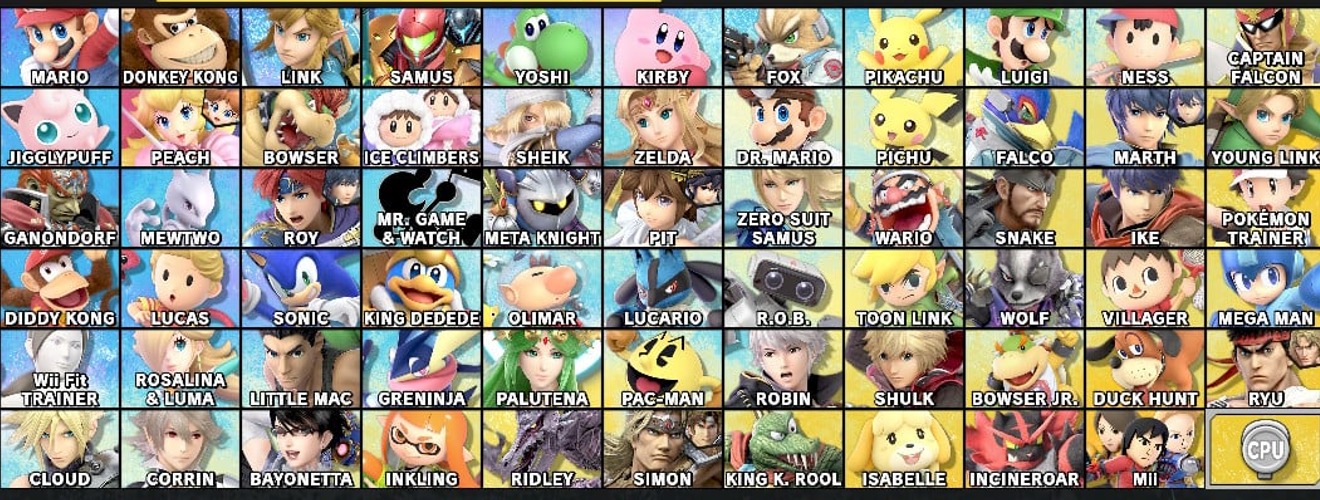
Super Smash Bros. has always been Nintendo’s all-star celebration – a roster packed with Mario, Link, Samus, and dozens of other characters from the company’s own history. But starting with Brawl in 2008, Masahiro Sakurai began doing something that would have seemed impossible a decade earlier: inviting characters from completely different companies to join the fight. What started with two legendary cameos has since grown into one of gaming’s most extraordinary crossover rosters, pulling in icons from Sega, Konami, Capcom, Square Enix, Microsoft, SNK, and Disney. Here is every third-party character ever added to Super Smash Bros., in the order they arrived.
Solid Snake
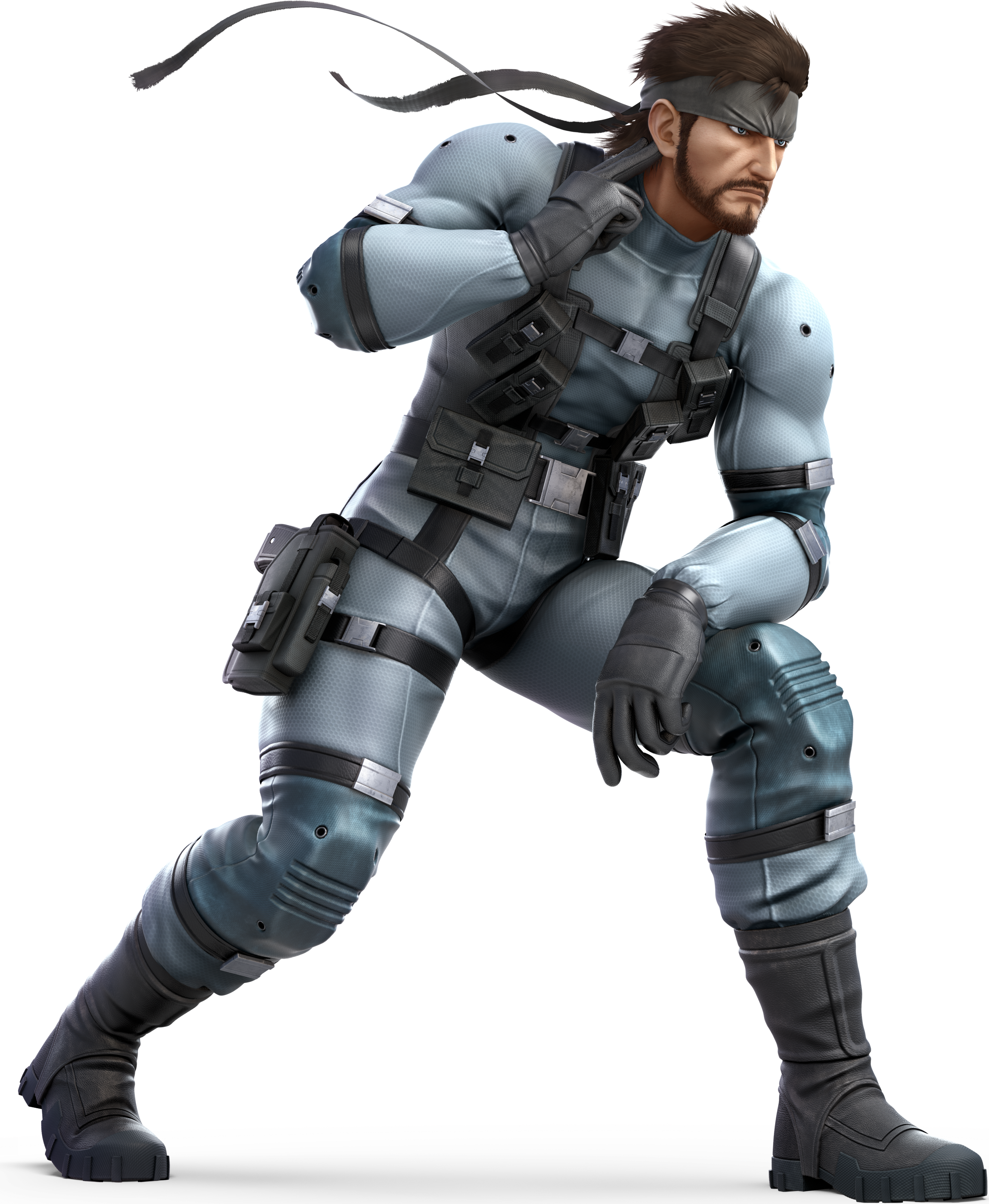
Solid Snake holds a place no other character in gaming history can claim: he was the first third-party fighter ever added to Super Smash Bros. The stealth legend from Konami’s Metal Gear series debuted in Brawl in 2008, and his inclusion came directly from a personal request. Hideo Kojima, Metal Gear’s creator, had lobbied Masahiro Sakurai for Snake’s inclusion since Melee – practically begging him to add the character. Sakurai agreed, and Snake arrived in Brawl with an entirely unique playstyle built around explosives, landmines, and military hardware that had never been seen in the series before. He was later cut from Smash 4 due to licensing complications with Konami but made a celebrated return in Ultimate in 2018, where fans greeted his trailer with one of the loudest reactions in Smash Direct history. Snake’s debut proved that third-party characters could fit into Smash without breaking the game’s identity – and opened the door for every character on this list.
Sonic the Hedgehog
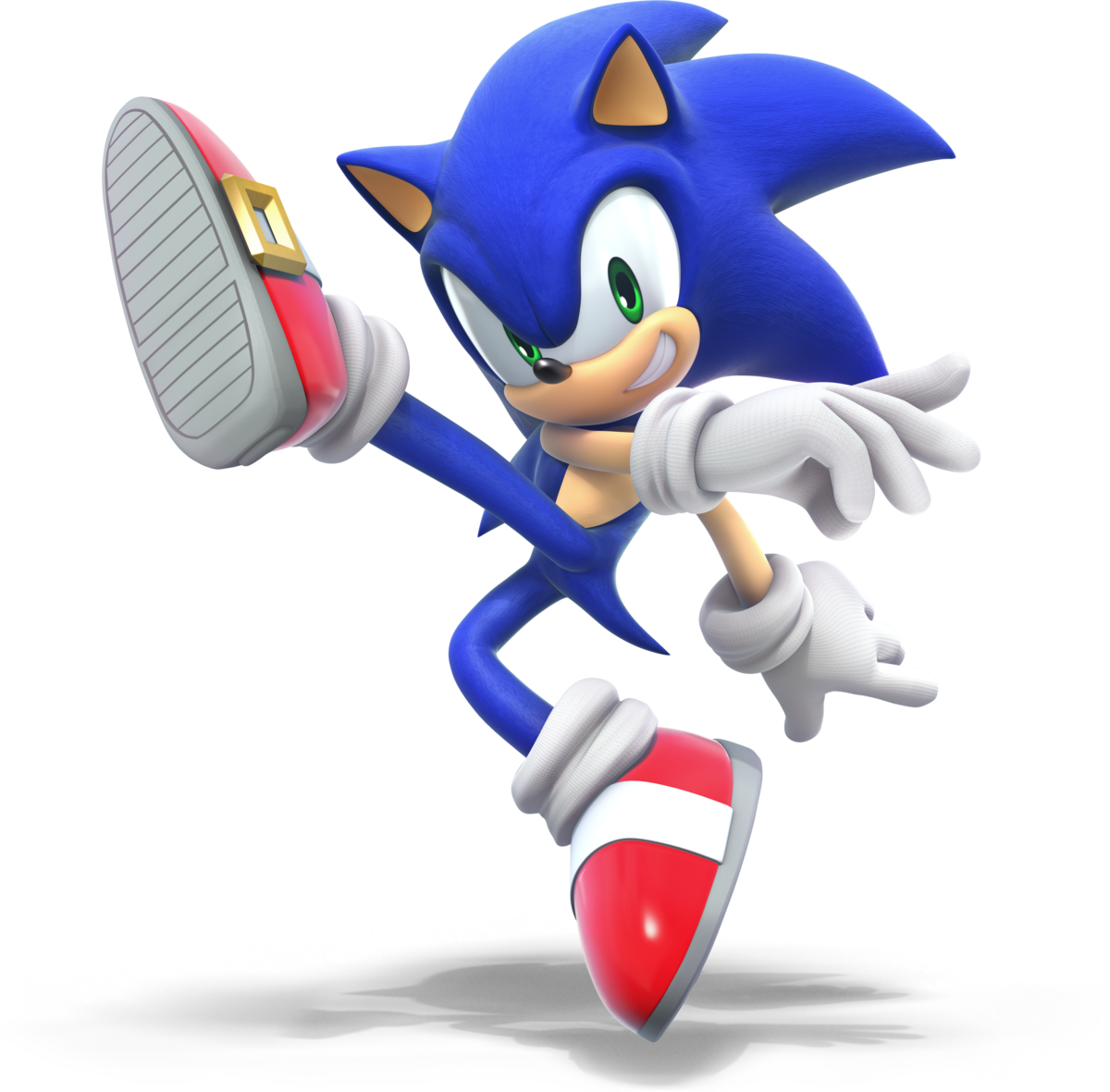
If Snake’s inclusion proved third-party characters were possible, Sonic’s inclusion proved they could be iconic. Sega’s blue blur joined Brawl alongside Snake in 2008, completing a crossover that players had fantasized about for over a decade. Nintendo and Sega had spent the early 1990s in a fierce console war, with Sonic positioned directly as Mario’s rival – the cooler, faster alternative. Seeing the two share a stage in Smash felt genuinely historic. Sakurai designed Sonic around his defining trait: speed. Sonic became the fastest character in the game, with a playstyle centered entirely on momentum, spin attacks, and rapid movement that made him feel authentically true to his source material. Unlike Snake, Sonic has appeared in every Smash game since his debut, making him a permanent fixture of the roster. He remains one of the most recognizable characters in competitive play, beloved for his rushdown potential and polarizing for his ability to run away from nearly any opponent.
Mega Man
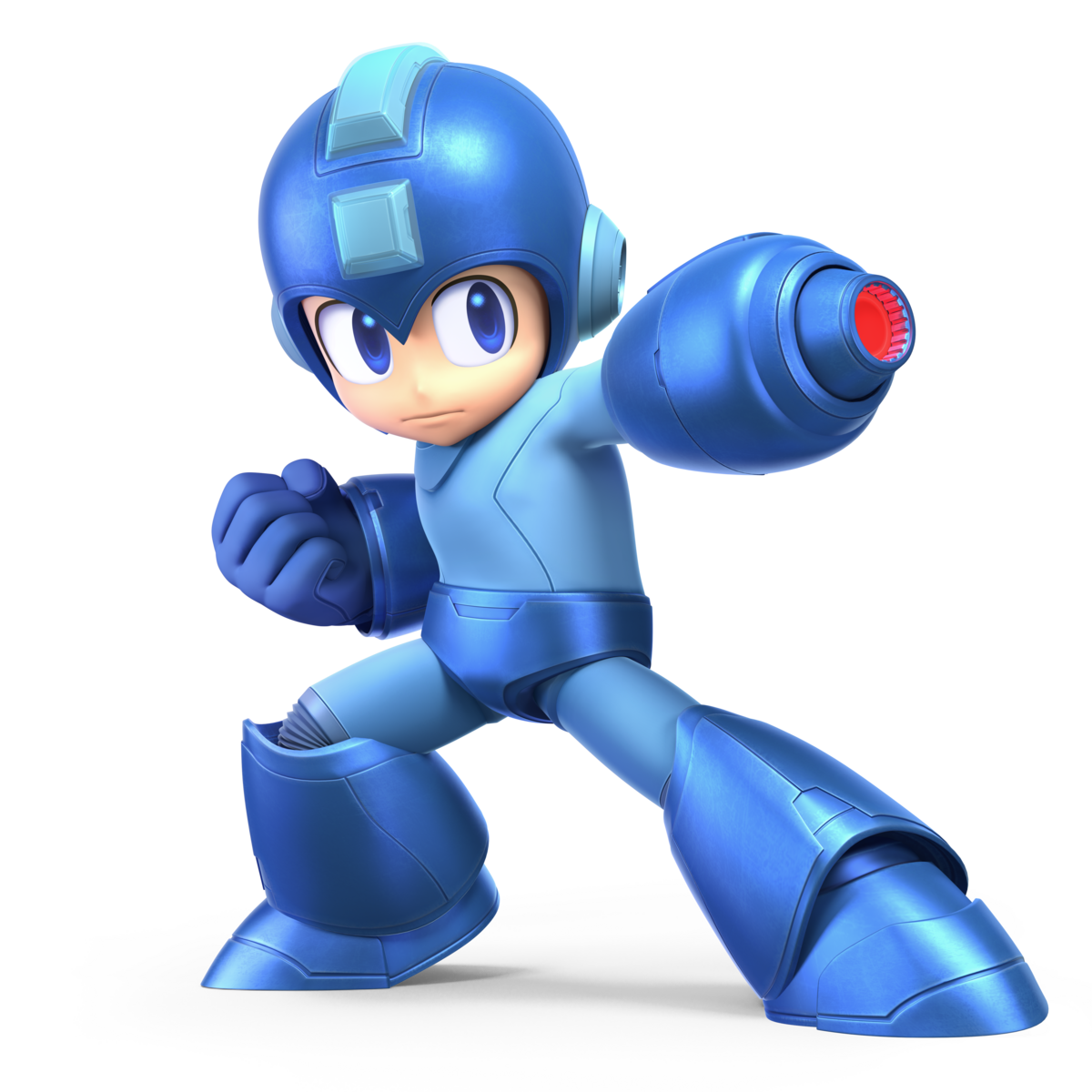
Mega Man arrived in Super Smash Bros. for Wii U and 3DS in 2014, and his reveal trailer remains one of the most celebrated in the series’ history. Capcom’s blue bomber had been on players’ wish lists since Melee, and Sakurai delivered in spectacular fashion – designing Mega Man’s entire moveset around his core mechanic of stealing weapons from defeated Robot Masters. Every one of Mega Man’s attacks in Smash is pulled directly from the games: Leaf Shield, Hard Knuckle, Crash Bomber, Flame Sword, Shadow Blade, and more. His reveal trailer showed him walking out to confront Mario, only for Villager to appear, then Wii Fit Trainer – the entire opening minutes of the Smash 4 roster announcement – before Mega Man delivered a charged shot that ended the trailer in style. It was the reveal that told players this new game was going to be different. Mega Man has remained a fan favorite in every game since, celebrated for being one of the most faithfully designed characters in Smash history.
Pac-Man
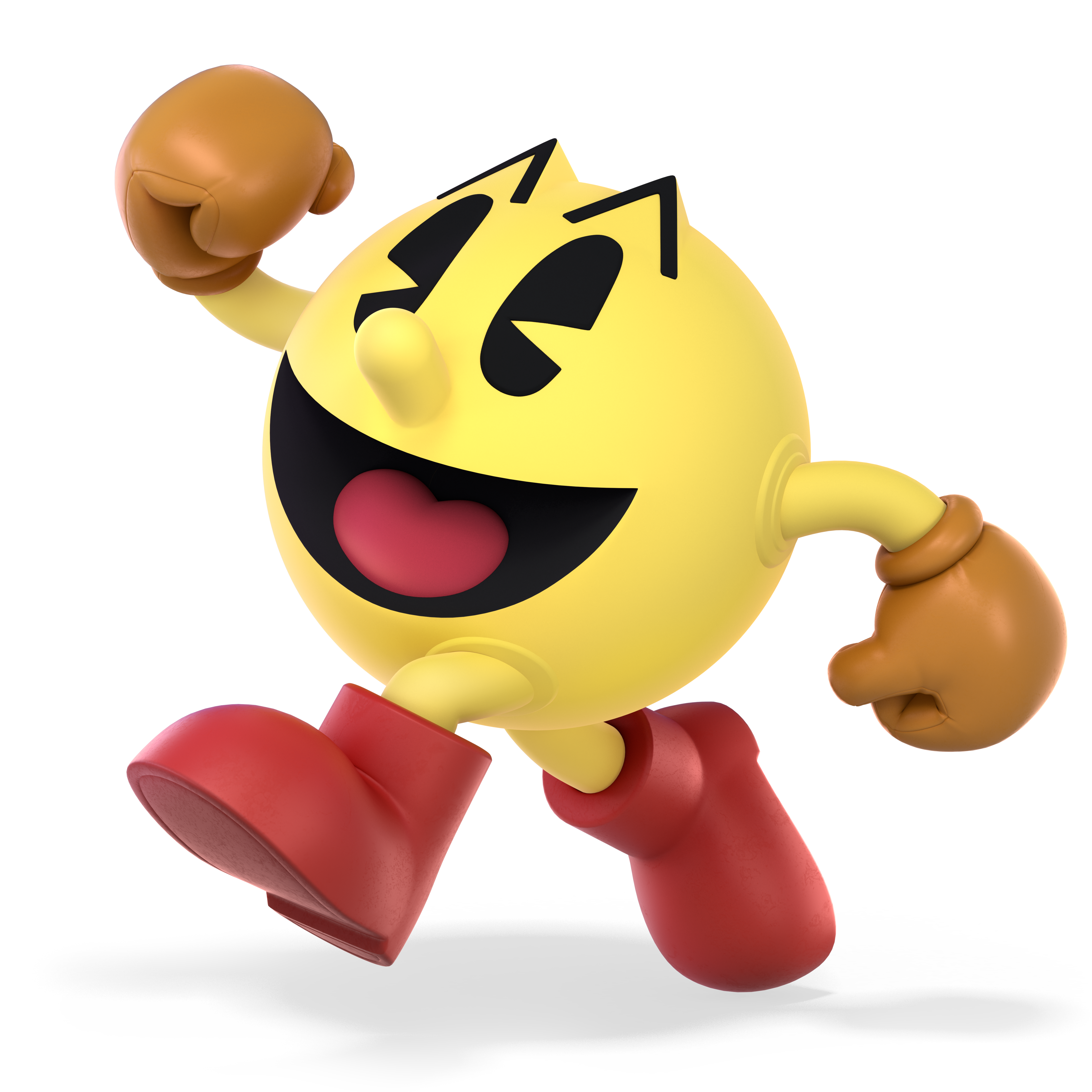
Pac-Man’s inclusion in Smash 4 completed a trifecta of gaming’s foundational icons. Mario, Sonic, and Pac-Man are widely considered the three characters who defined the gaming industry at its earliest stages – one from Nintendo, one from Sega, one from Namco – and Smash 4 was the first game to ever put all three on the same screen. Pac-Man debuted in the arcade in 1980 and is arguably the first video game character to achieve global mainstream recognition, predating even Mario’s major breakthrough. Sakurai built his Smash moveset around arcade gaming nostalgia, incorporating Blinky, Pinky, Inky, and Clyde as attack elements, a trampoline, a fire hydrant, and Pac-Man’s most recognizable ability: gobbling up fruit power-ups. His final smash transforms him into the giant Pac-Man from the original arcade game. The combination of historic significance and a genuinely creative moveset made Pac-Man one of Smash 4’s most memorable additions.
Ryu
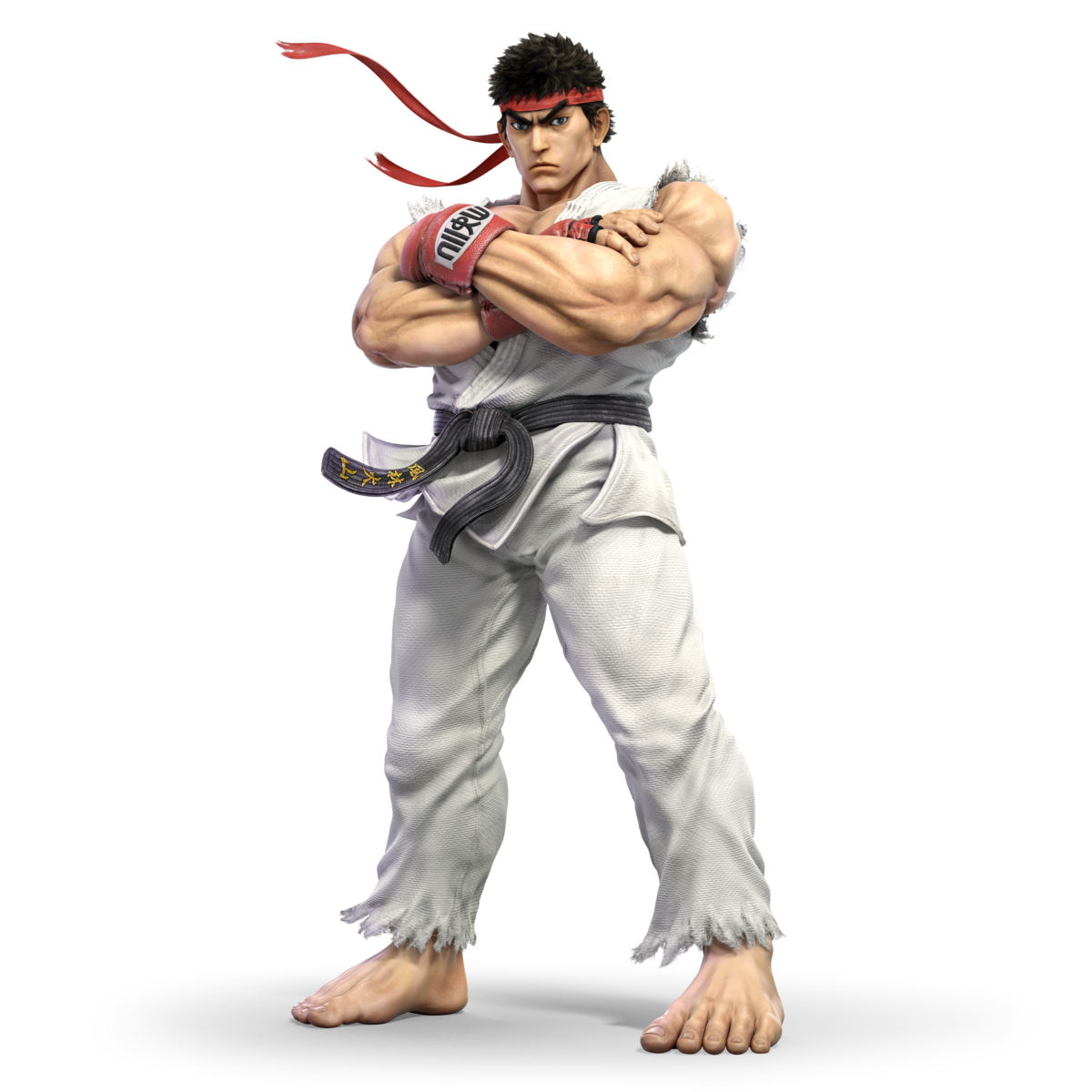
Ryu from Street Fighter became the first fighting game character ever added to Super Smash Bros. when he arrived as paid DLC for Smash 4 in June 2015. The addition was significant not just symbolically – Street Fighter and Smash Bros. are two of the most important fighting game franchises in history – but mechanically as well. Sakurai made a landmark design decision with Ryu: he added traditional fighting game inputs to Smash for the first time. Players could execute Ryu’s hadouken using the standard Smash Bros. button, but those who input the classic Street Fighter quarter-circle motion would trigger a stronger version of the move. It was a direct acknowledgment of the game’s fighting game roots and a gesture of respect to the Street Fighter community. Ryu came packaged with Suzaku Castle as his DLC stage, and his addition demonstrated that Smash DLC could be used to bring in genuinely transformative characters rather than just crowd-pleasers. He returned in Ultimate alongside Ken, his echo fighter from Street Fighter II.
Cloud Strife
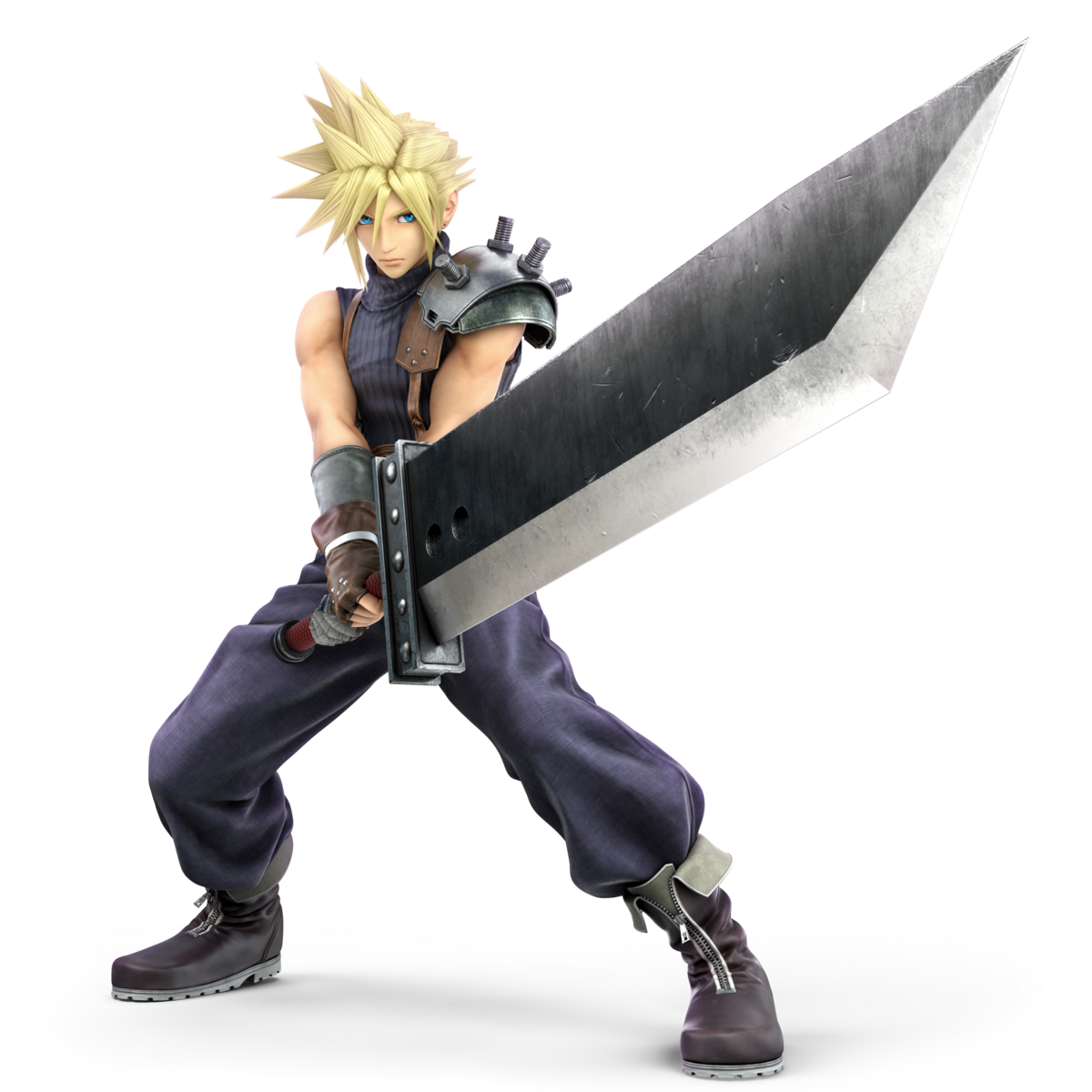
Cloud Strife’s inclusion in Smash 4 was the reveal that made the internet collectively lose its mind. When Nintendo announced Cloud via a surprise Direct in November 2015, the reaction was one of shock: Final Fantasy VII’s protagonist had no meaningful Nintendo connection – the game had originally been a PlayStation exclusive – and Square Enix had historically been protective of the character. Cloud’s design in Smash came straight from his iconic Final Fantasy VII look: the oversized buster sword, spiky blonde hair, and moody demeanor. His moveset incorporated Limit Breaks, the signature mechanic of FFVII, rewarding players who built up their gauge with dramatically powered-up versions of their specials. He arrived with Midgar as his stage, complete with summons including Ifrit, Ramuh, and Odin that reshaped the battlefield. Cloud’s inclusion signaled that Smash was willing to pursue almost any character regardless of platform history – a precedent that would define the Ultimate DLC era entirely.
Bayonetta
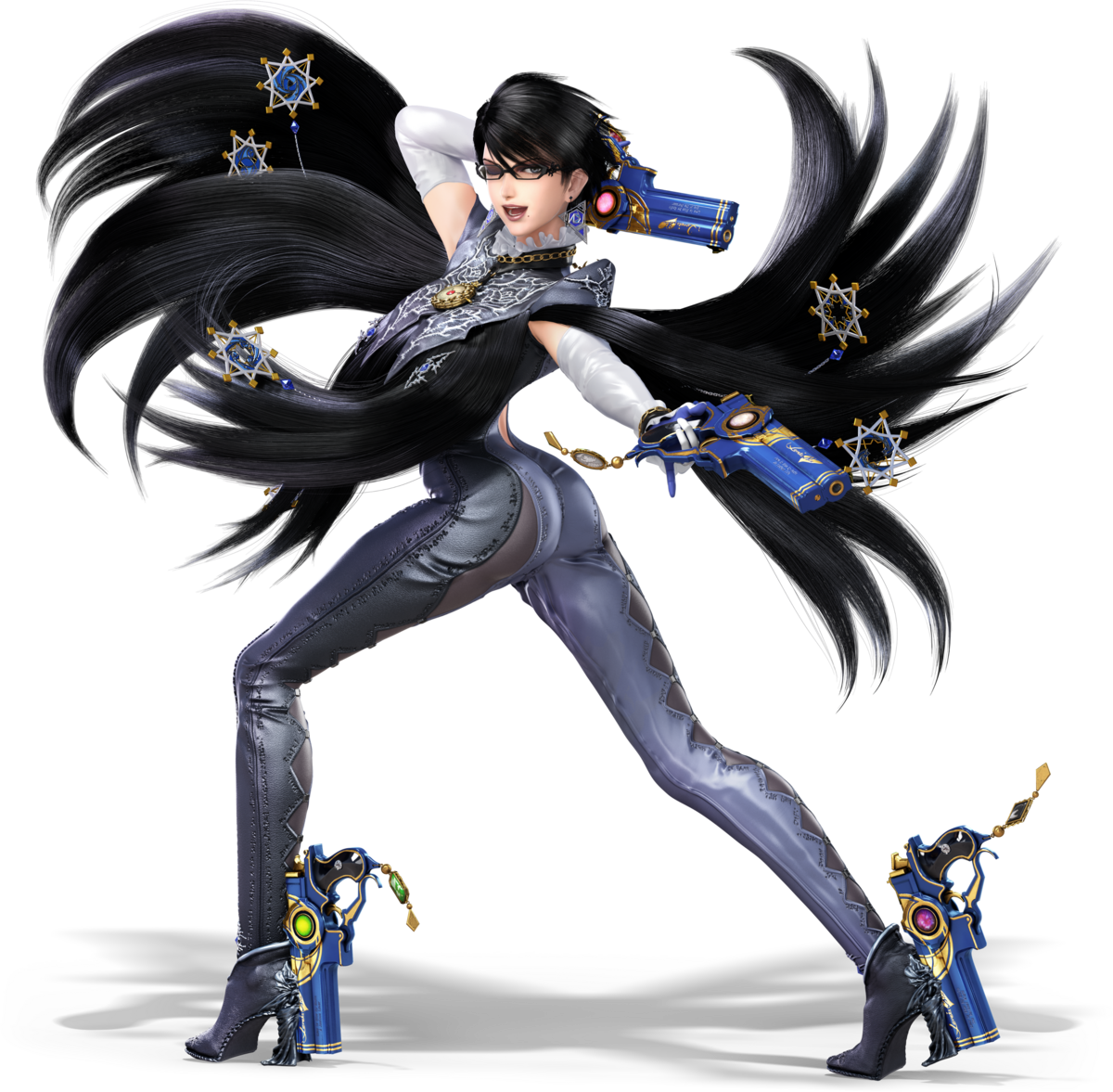
Bayonetta earned her spot in Smash 4 through a process unlike any other character on this list: she won a public vote. Nintendo launched the Smash Ballot in April 2015, inviting players worldwide to vote for any character they wanted added as DLC. Bayonetta, the witch protagonist of Sega and PlatinumGames’ action series, was announced as the winner – specifically described as the top-voted character among those who were realistically feasible to include. Her arrival in February 2016 came with Umbra Clock Tower as her stage and a moveset that translated her signature Witch Time mechanic into Smash: a counterattack that slowed opponents when they hit her. She became immediately controversial in competitive play for being widely considered overpowered, and was eventually nerfed in subsequent patches. Despite the competitive backlash, her inclusion was a landmark moment – the only character in Smash history to earn their spot through direct democratic vote from the player base.
Simon Belmont
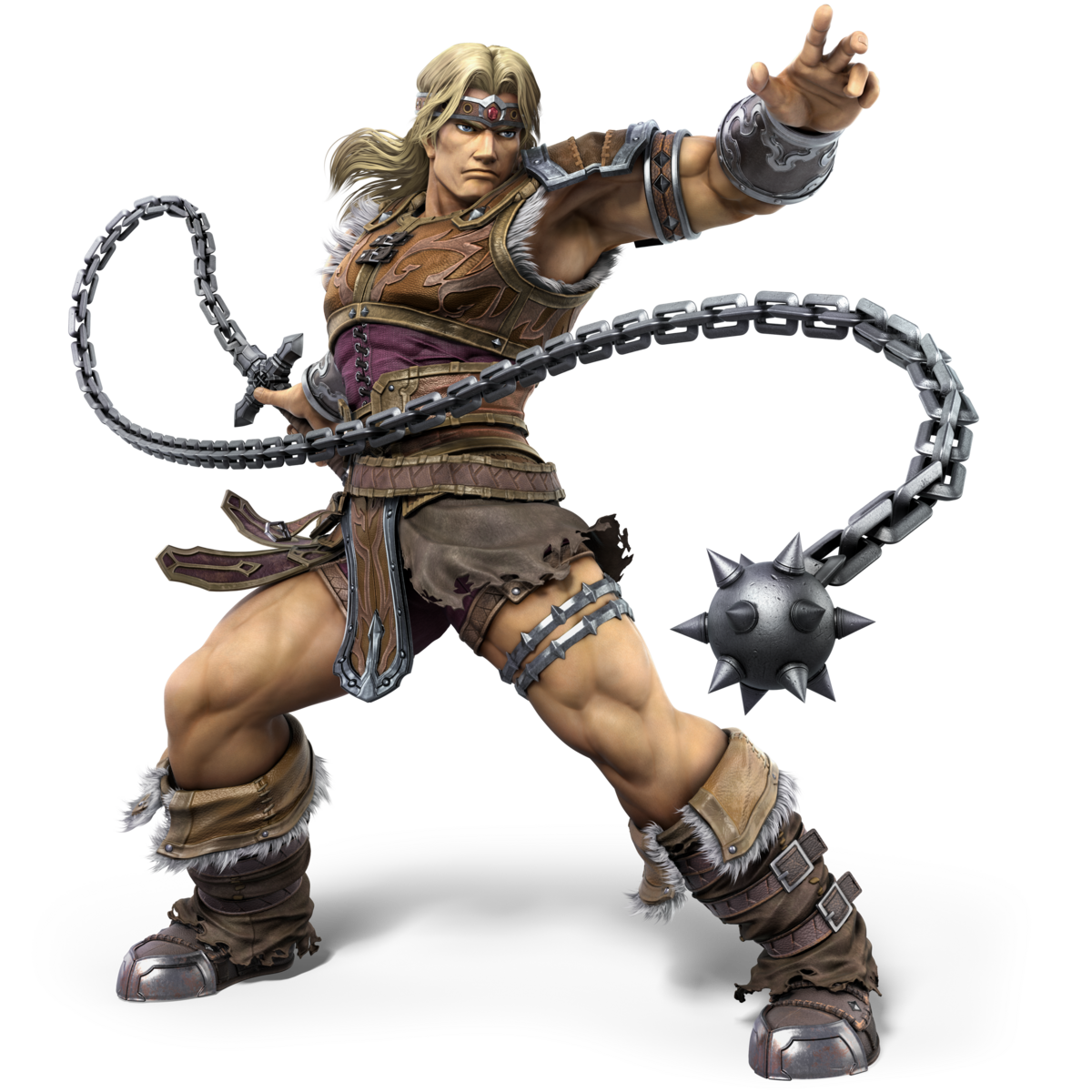
Simon Belmont’s arrival in Super Smash Bros. Ultimate in 2018 represented a full-circle moment for Nintendo and Konami. The Castlevania series had its roots on the original Nintendo Entertainment System in 1986, and Simon – the whip-cracking vampire hunter who kicked off the franchise – was for many players one of the most requested characters in Smash history. His moveset in Ultimate centers on his iconic chain whip, the Vampire Killer, which has the longest natural reach of any attack in the game. He also incorporates axes, holy water, and crosses directly from the NES games, giving him a distinctly retro feel that stands apart from the more modern fighters on the roster. Simon’s reveal trailer in 2018 featured a spectacular homage to the original Castlevania, including a recreation of the game’s opening sequence. His inclusion also brought Dracula’s Castle as a stage – one of Ultimate’s most content-rich stages, packed with horror game references and unlockable music tracks.
Richter Belmont
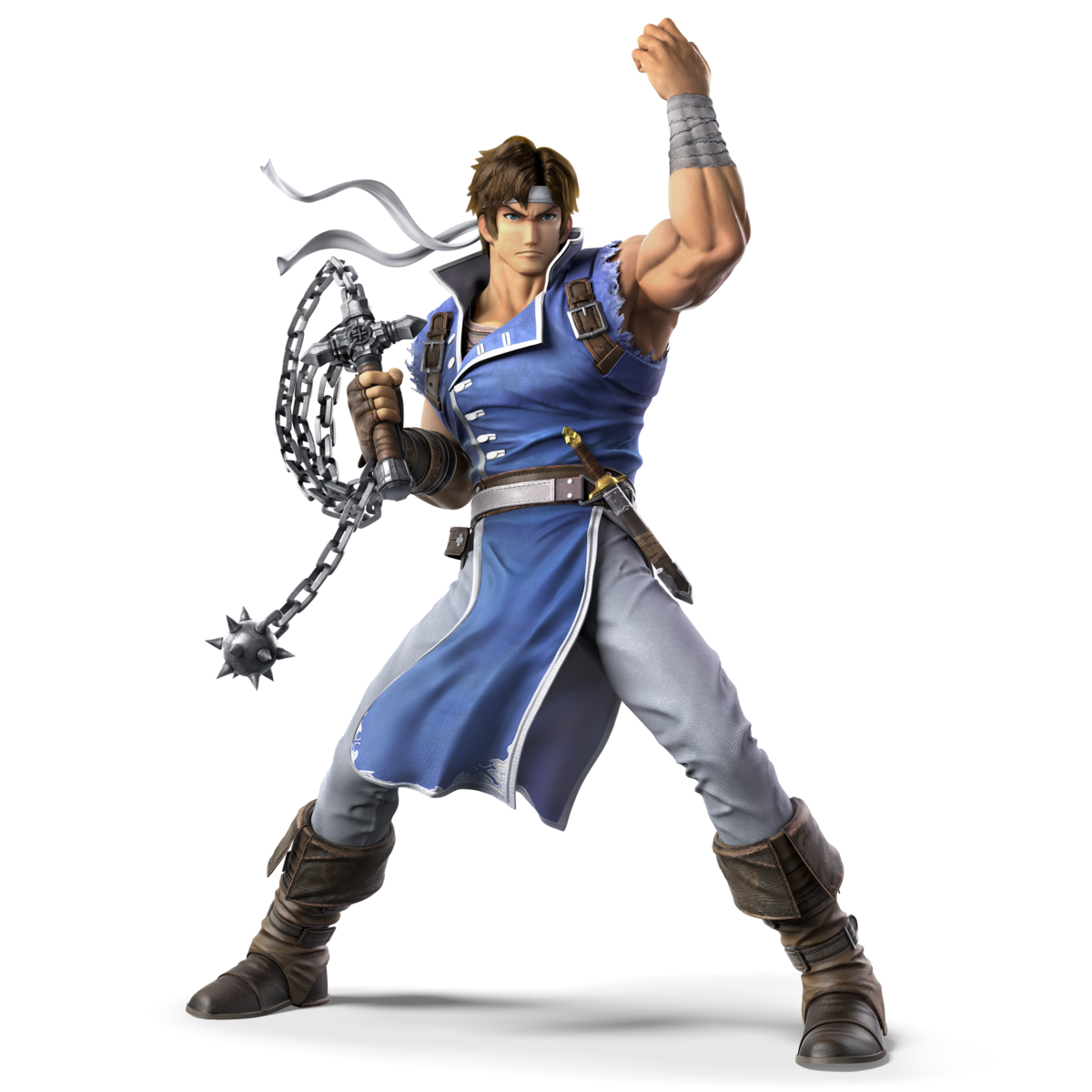
Richter Belmont was revealed alongside Simon in Ultimate’s 2018 Direct and serves as Simon’s Echo Fighter – a character who shares nearly identical moves but with cosmetic and minor mechanical differences. Richter hails from Castlevania: Rondo of Blood (1993) and its remake Castlevania: Symphony of the Night (1997), where he became one of the most beloved protagonists in the series. His inclusion alongside Simon doubled the Castlevania representation on the Ultimate roster and acknowledged both the classic and modern eras of the franchise. While Echo Fighters were introduced in Ultimate as a way to add characters without requiring entirely new movesets, Richter’s inclusion was celebrated rather than dismissed – his visual design and voice work gave him a distinct identity even while sharing Simon’s mechanics. He remains the only Echo Fighter to represent a genuinely different character from an entirely different era of the same franchise.
Joker
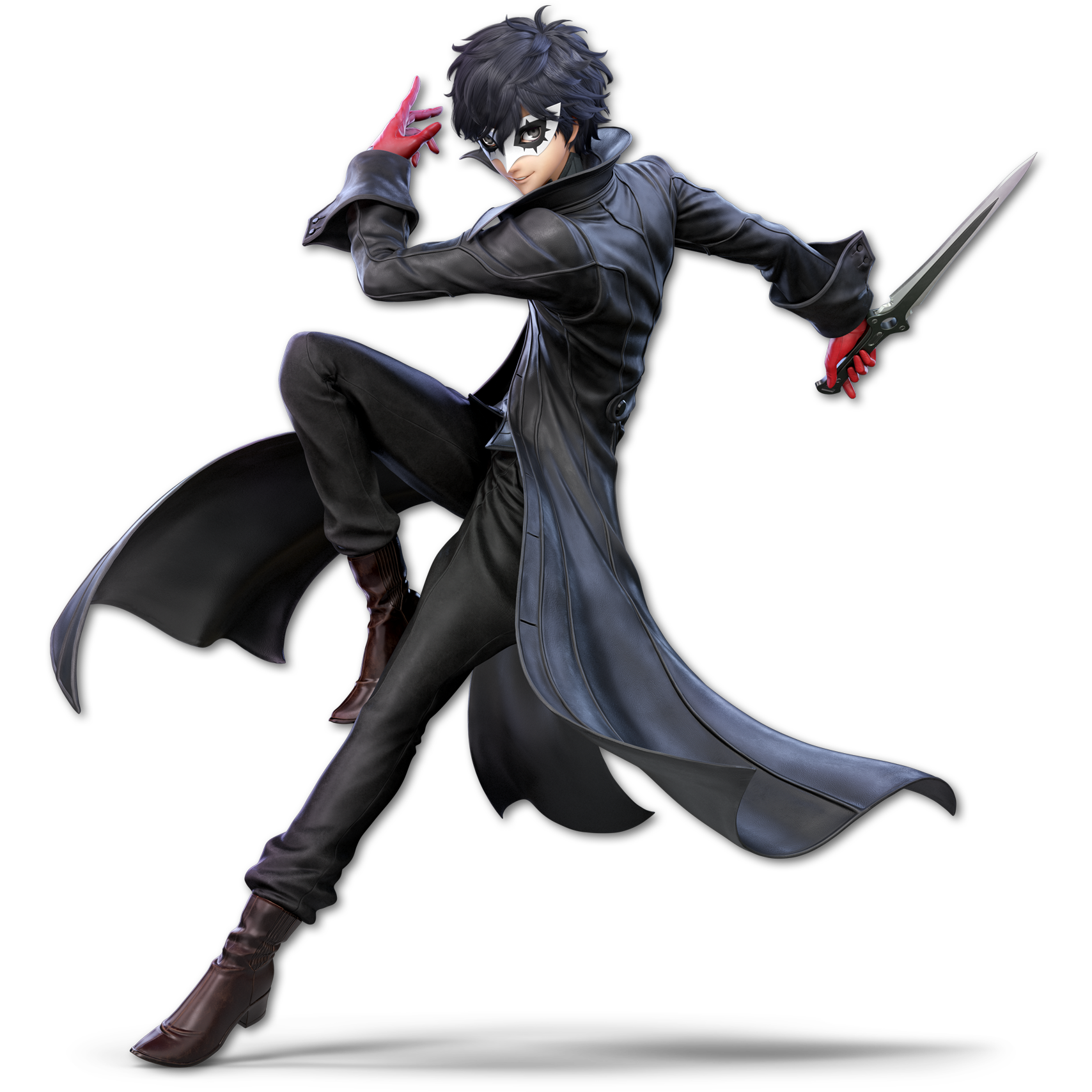
Joker from Persona 5 was the first DLC character revealed for Ultimate’s Fighters Pass, announced at The Game Awards in December 2018 with no prior warning and an immediate internet explosion. The announcement was stunning not just because Persona had never had a Nintendo presence but because Persona 5 had launched exclusively on PlayStation systems – and had not yet been ported to Switch at the time of the announcement. Joker’s arrival in April 2019 introduced a completely unique mechanic to Smash: the Rebellion Gauge, which fills as Joker takes damage and, when full, summons Arsène – his Persona – dramatically amplifying his attack power, recovery, and counter. His stage, Mementos, dynamically changes color based on the music playing, shifting between the red, blue, and yellow palettes of Persona 5, 4, and 3 respectively. Joker was widely regarded as one of the best DLC fighters in the game’s history, with a high skill ceiling and a design that felt completely native to Smash despite being a completely foreign franchise.
Hero
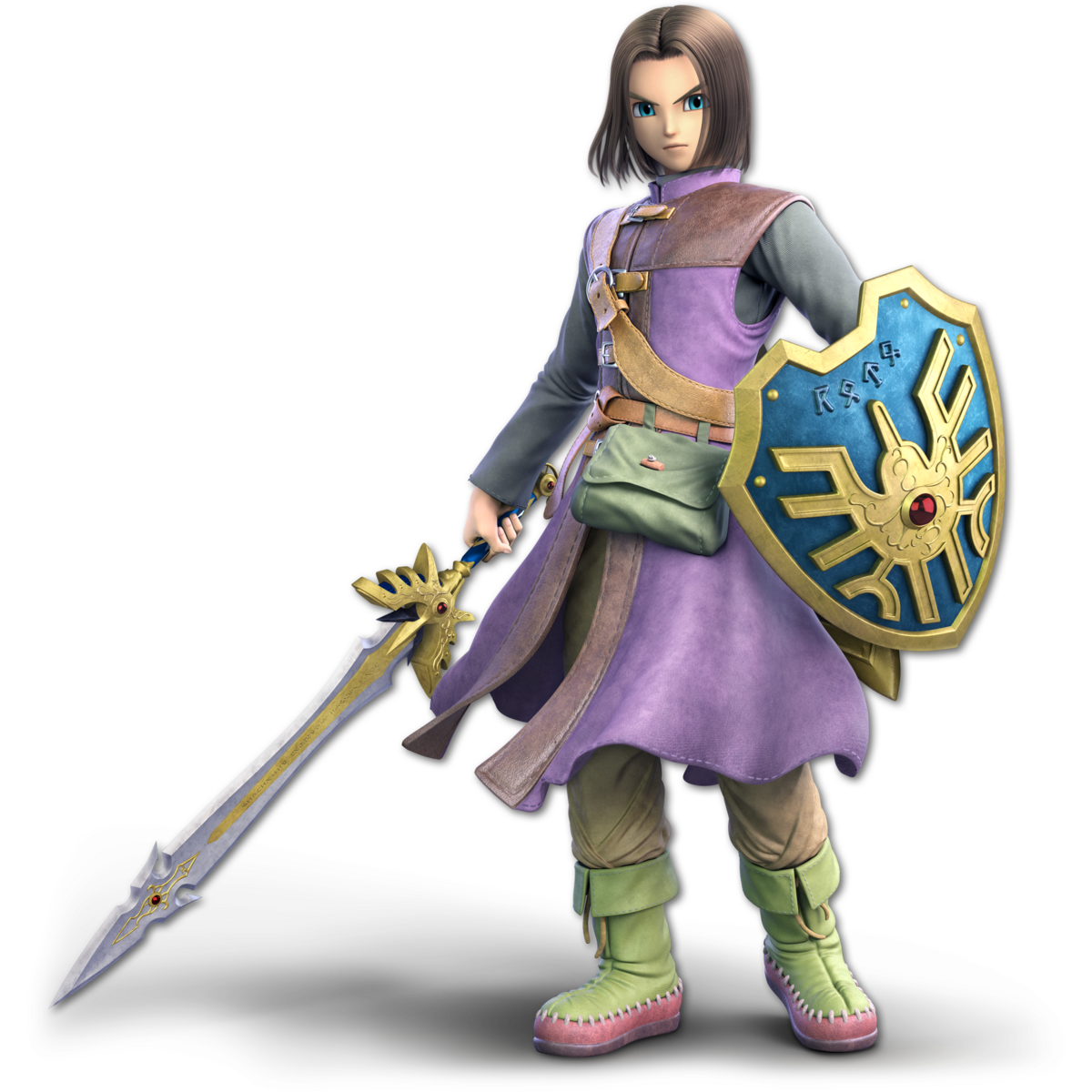
Hero represented Dragon Quest’s first appearance as a playable character outside its home series when he arrived in Ultimate in July 2019. Rather than selecting a single protagonist, Sakurai included four separate Hero variants – Luminary from Dragon Quest XI, Erdrick from Dragon Quest III, Solo from Dragon Quest IV, and Eight from Dragon Quest VIII – as alternate costumes sharing the same moveset. This approach honored the franchise’s 35-year history without forcing a single character to represent it all. Hero’s most controversial mechanic is the Command Selection: his down special opens a randomized menu of powerful magic spells including Kamikazee (a suicidal explosion), Hocus Pocus (a wildly random effect), and Whack (an instant-kill chance). The randomness generated significant competitive debate but also made Hero uniquely entertaining to watch. Dragon Quest is one of Japan’s most beloved franchises – arguably more culturally significant in Japan than Final Fantasy – and Hero’s arrival with Yggdrasil’s Altar was a long-overdue acknowledgment of its legacy.
Banjo & Kazooie
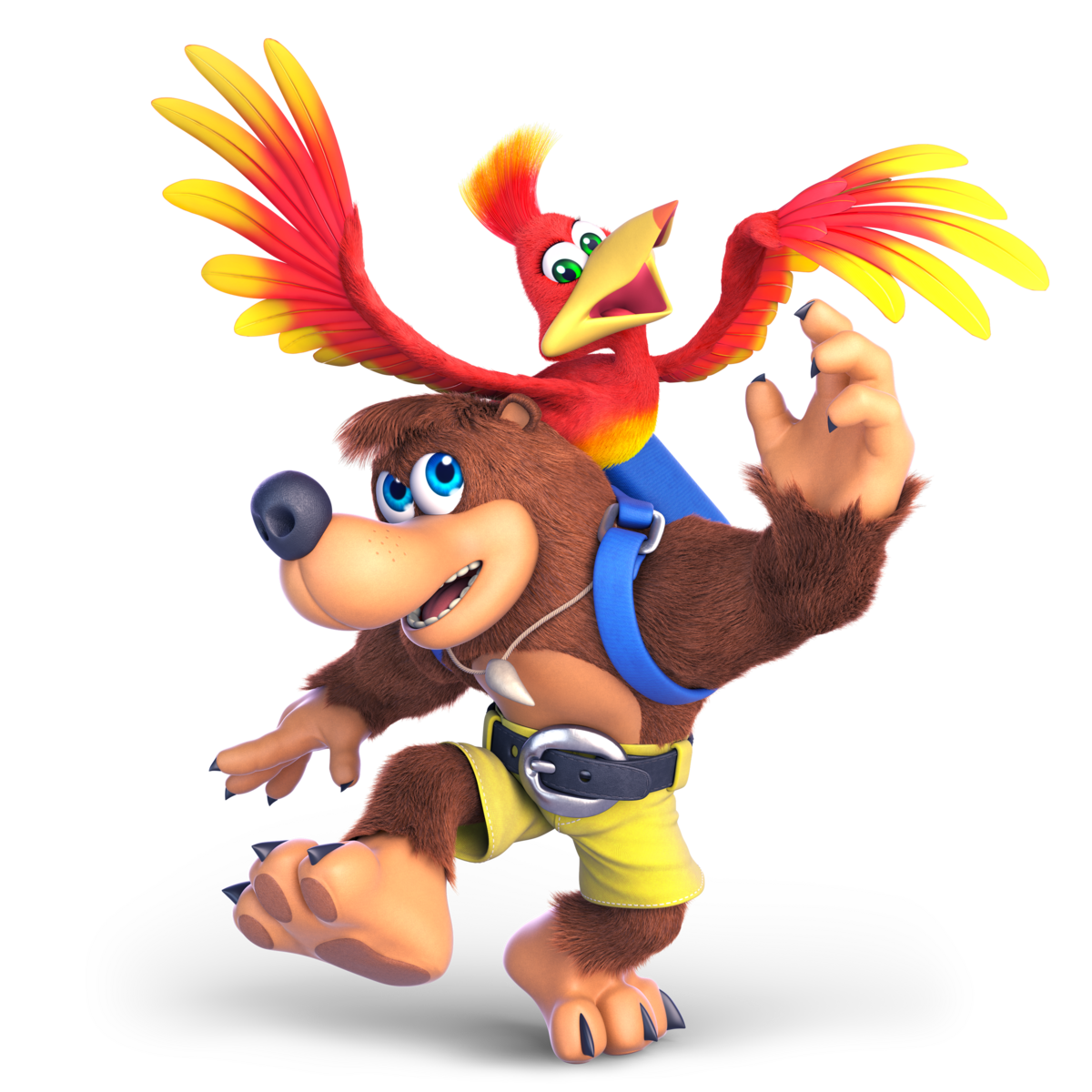
Of all the DLC reveals in Ultimate’s run, Banjo & Kazooie’s may have produced the most emotional reaction from longtime fans. The bear and bird duo from Rare’s beloved Nintendo 64 platformer were among the most requested characters in Smash history – Sakurai himself had considered them for Melee – but the acquisition of Rare by Microsoft in 2002 had seemingly made it impossible. When Microsoft and Nintendo reached an agreement and Banjo & Kazooie were revealed at E3 2019, the trailer showed them landing on Spiral Mountain as the Smash Bros. Fighter tagline appeared – and the internet lit up with two decades of pent-up nostalgia. Their moveset faithfully recreates moves from Banjo-Kazooie and Banjo-Tooie: Egg Firing, Wonderwing, Beak Buster, and Rear Egg. Their arrival also marked the first time a Microsoft-owned character appeared in a Nintendo game, establishing a relationship between the two companies that would later bring Steve from Minecraft into the roster as well.
Terry Bogard
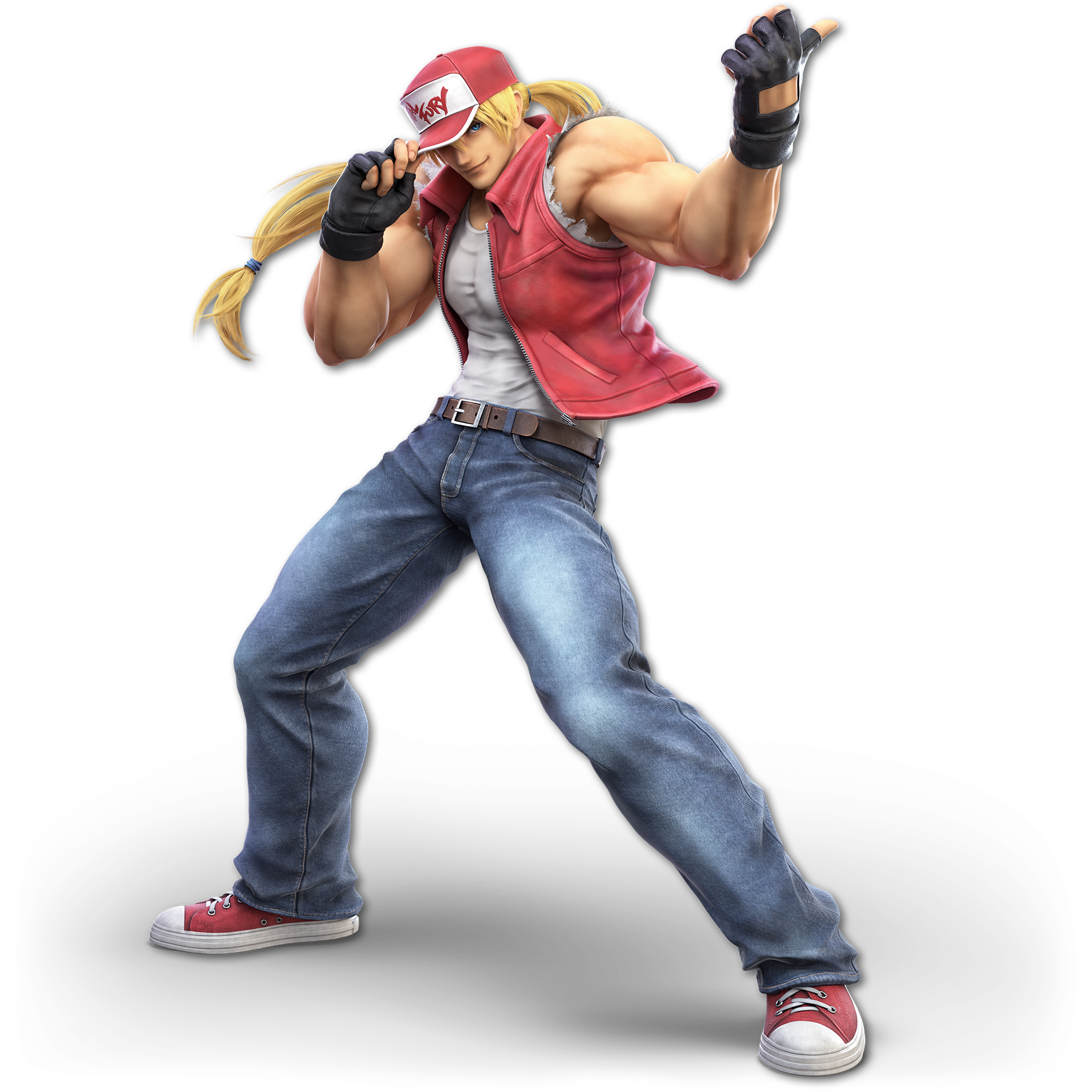
Terry Bogard from Fatal Fury brought SNK into the Smash Bros. universe for the first time when he was revealed at Nintendo’s September 2019 Direct and released in November 2019. Fatal Fury was one of the foundational fighting game franchises of the early 1990s, predating and directly influencing many of the genre’s conventions, and Terry – with his red cap, iconic “OKAY!” catchphrase, and devastating Power Wave attacks – is among the most recognizable fighting game characters in Japan. Like Ryu before him, Sakurai gave Terry traditional fighting game inputs: his specials can be executed with Smash-style button presses, but players who input the original SNK motions receive stronger versions. His DLC pack was extraordinary in terms of content: Terry came with King of Fighters Stadium and an unprecedented 50 music tracks spanning multiple SNK franchises including Fatal Fury, The King of Fighters, Samurai Shodown, Art of Fighting, and Metal Slug – the largest music collection of any DLC fighter in the game.
Steve
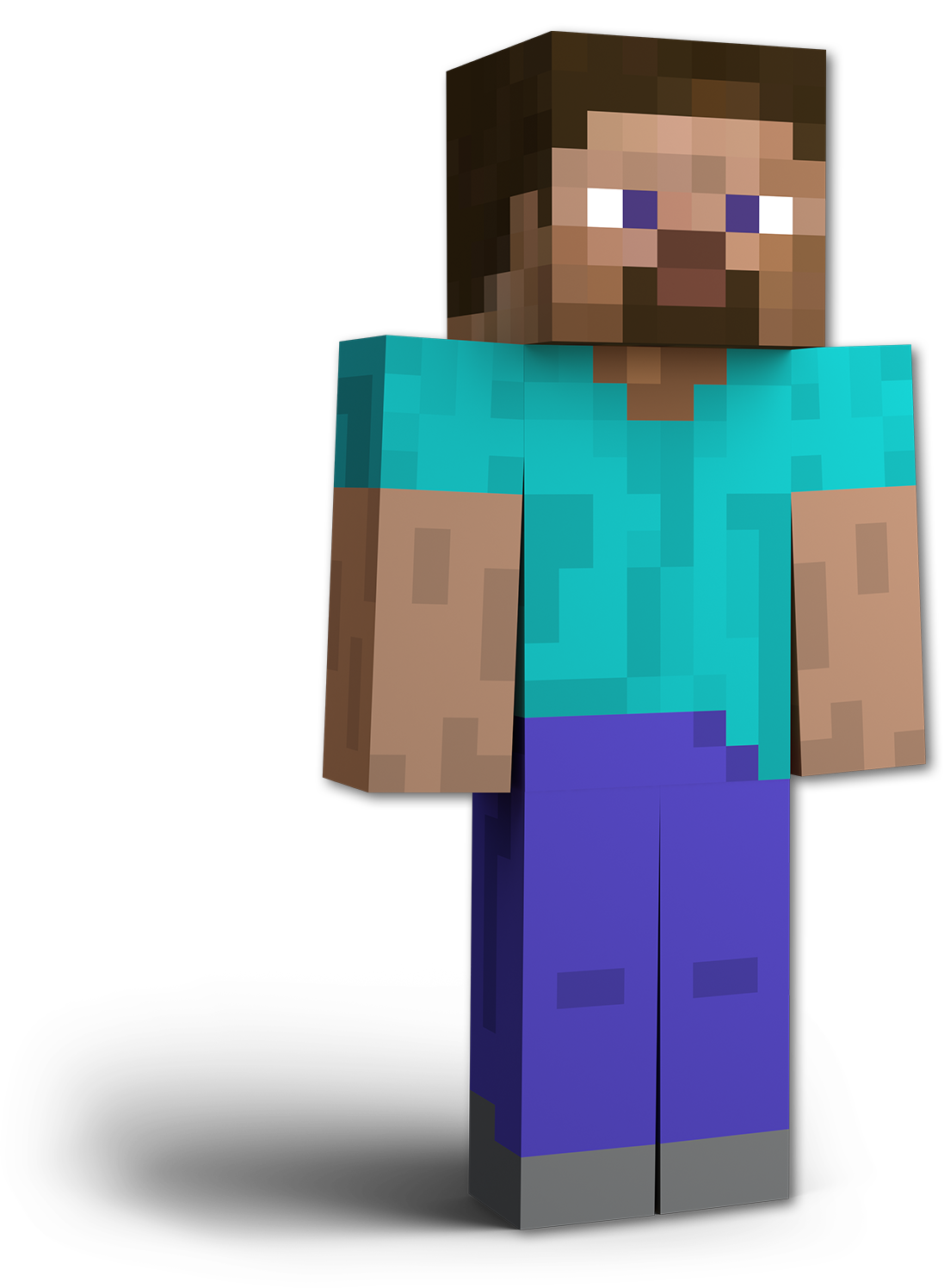
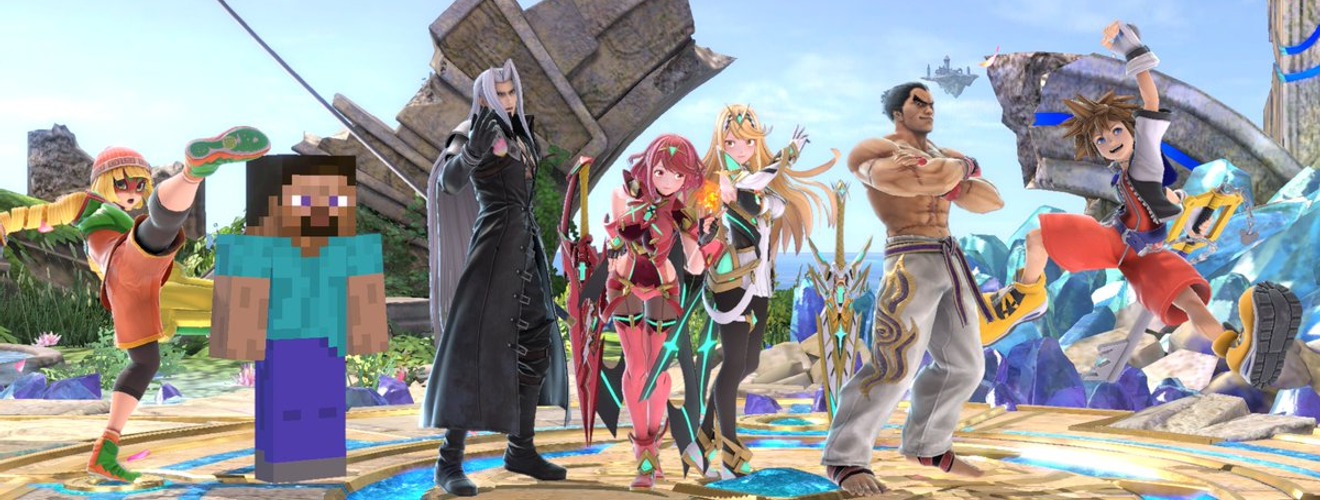
Steve from Minecraft arriving in Ultimate in October 2020 generated one of the most chaotic reveal reactions in Nintendo Direct history. The announcement came in a Mr. Sakurai Presents video on October 1st, 2020, and the response was a flood of memes, shock, and genuine excitement – Steve’s blocky, pixelated aesthetic looked completely out of place next to Smash’s roster, which made his inclusion feel simultaneously absurd and brilliant. His moveset is built entirely around Minecraft’s survival mechanics: Steve mines blocks from the stage itself, gathering materials (wood, stone, iron, gold, diamond) that he uses to craft weapons and tools mid-fight. The mining mechanic makes his playstyle fundamentally different from every other character in the game – resource management becomes a strategic element within matches. He came with Minecraft World as his stage, featuring six different biomes with destructible terrain. Steve, Alex, Zombie, and Enderman are available as alternate costumes, all sharing the same moveset.
Sephiroth
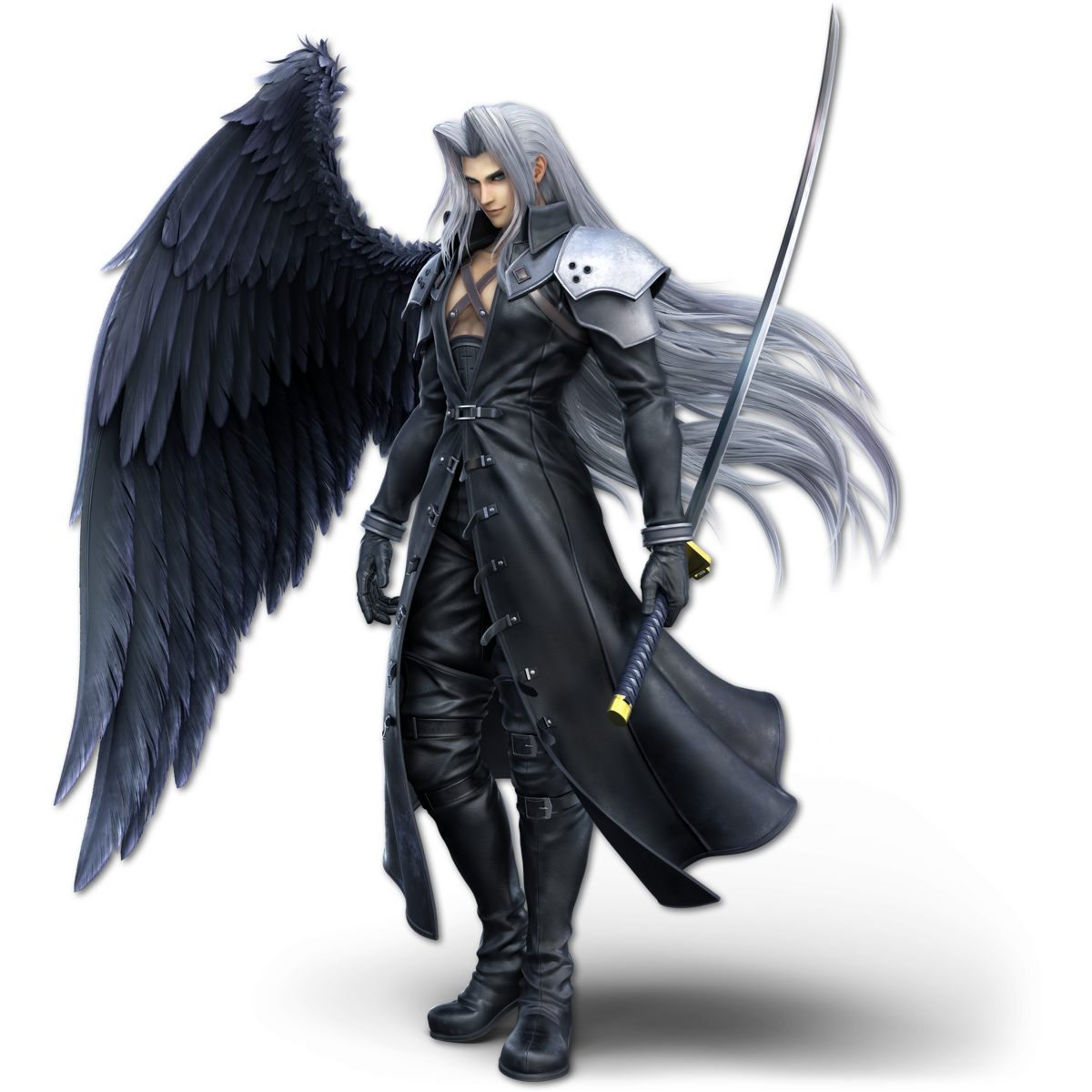
Sephiroth’s reveal at The Game Awards 2020 was one of the most cinematic moments in Smash Bros. history. The trailer opened with a somber reimagining of the iconic scene from Final Fantasy VII – the destruction of Nibelheim – before cutting to Sephiroth descending from the sky, one wing spread, to strike Cloud. The internet had barely processed Cloud’s inclusion in Smash 4, and now his greatest enemy had arrived. Sephiroth is the only character in Ultimate whose character trailer directly referenced the story of another Smash fighter – an acknowledgment of the relationship between Cloud and Sephiroth that gave the reveal genuine emotional weight. His moveset translates his one-winged, sword-centric style into Smash with impressive fidelity: the Masamune’s extreme reach, the Supernova final smash, and his one-wing enhancement that amplifies his abilities at low stock counts. He arrived with Northern Cave as his stage and music from Final Fantasy VII and Advent Children.
Kazuya Mishima
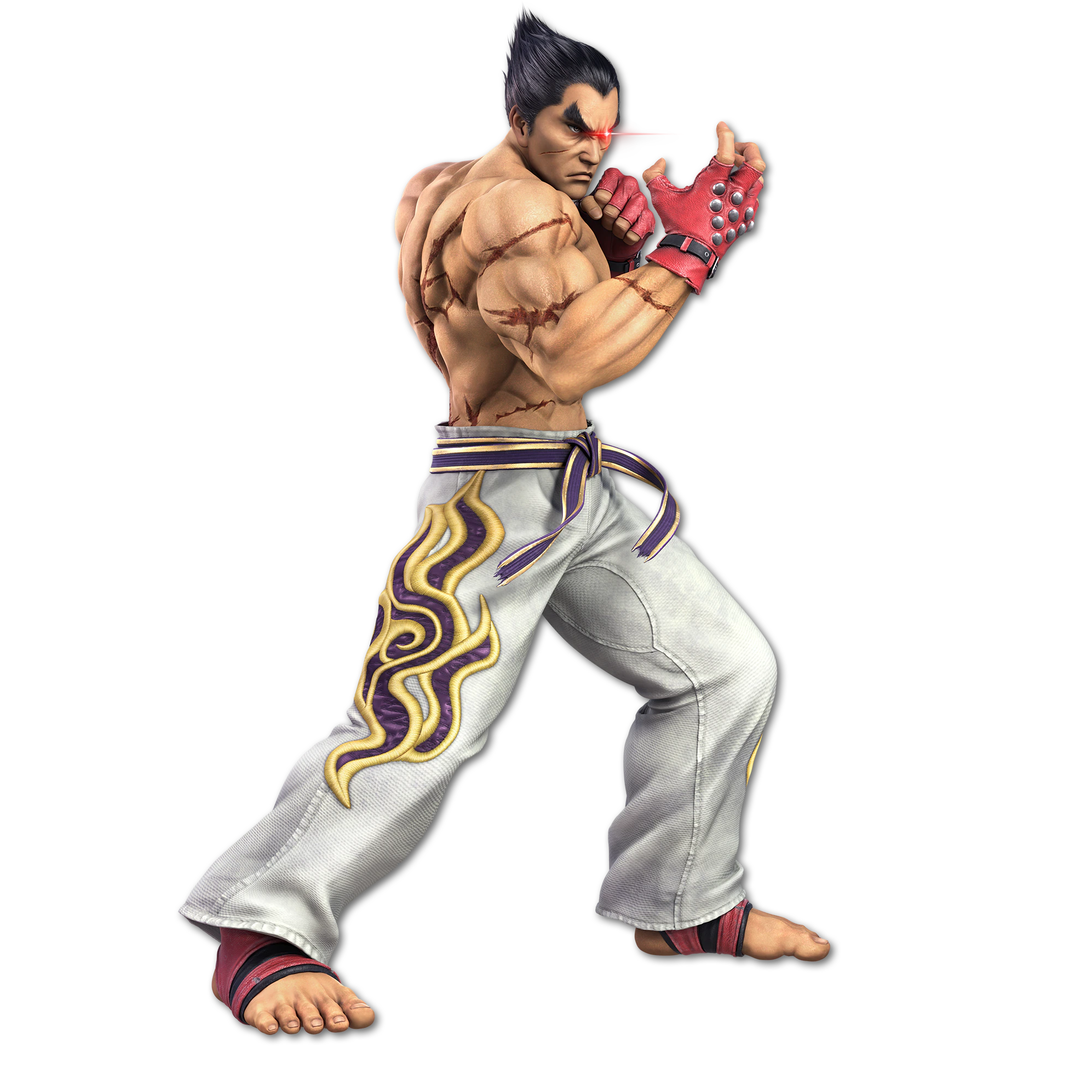
Kazuya Mishima from Tekken became the second fighting game character from a non-Nintendo franchise to join Smash when he was revealed at Nintendo’s E3 2021 presentation. Like Ryu and Terry before him, Kazuya brought traditional fighting game inputs to Smash – but Sakurai went further with Kazuya than with either predecessor. His entire special move system is built around Tekken’s 10-hit combos and precise directional inputs, making him by far the most technically demanding character in the game’s history. Kazuya also brought the Devil Gene, his signature ability from Tekken, as a transform mechanic that amplifies his power. His reveal trailer leaned into Tekken’s tradition of family violence: it showed Kazuya throwing virtually every character on the Smash roster off a cliff, a direct reference to his father Heihachi throwing him off a cliff as a child – the event that defines his entire backstory. His stage, Mishima Dojo, features a destructible floor and music from across the Tekken franchise.
Sora
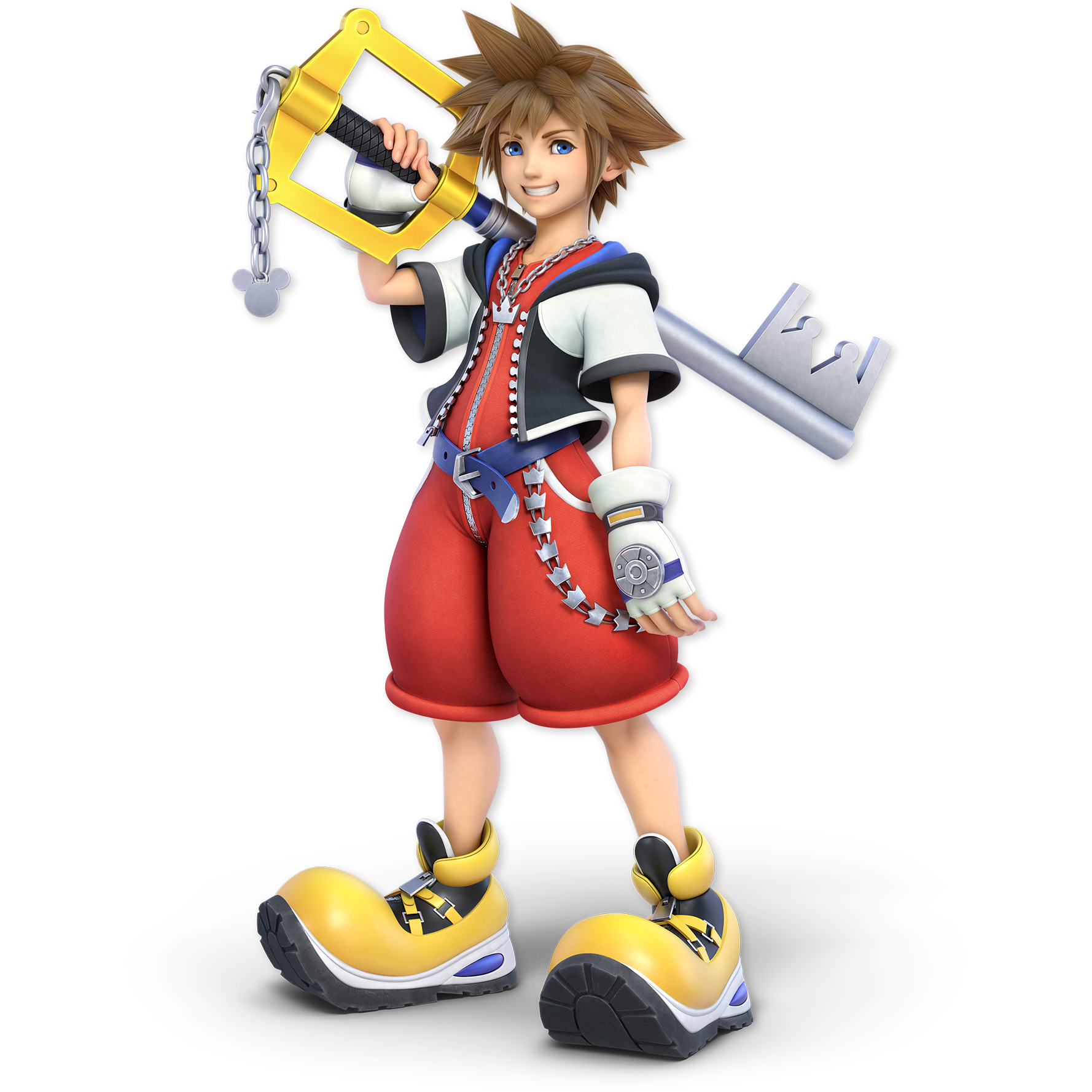
Sora from Kingdom Hearts was the last DLC fighter ever added to Super Smash Bros. Ultimate – and Masahiro Sakurai saved him for last deliberately. Revealed on October 5th, 2021, Sora was announced as the most-requested character in the history of the Smash Bros. Ballot – the same vote that had determined Bayonetta’s inclusion in Smash 4. Nintendo and Square Enix had negotiated his inclusion for years, with Disney’s co-ownership of the Kingdom Hearts IP making the rights situation uniquely complicated. Sora’s moveset in Smash captures the floating, magical combat style of Kingdom Hearts: he hangs in the air longer than almost any other character, relies on Thundaga, Firaga, and Blizzaga for his special attacks, and counters with his signature Reversal Slash. His reveal trailer was one of the most watched in Smash history, and Sakurai’s Mr. Sakurai Presents video that accompanied the announcement was notably emotional – a proper goodbye to a game that had defined nearly a decade of Smash Bros. history.