Every Person Lain in State or Honor in the Capitol Rotunda
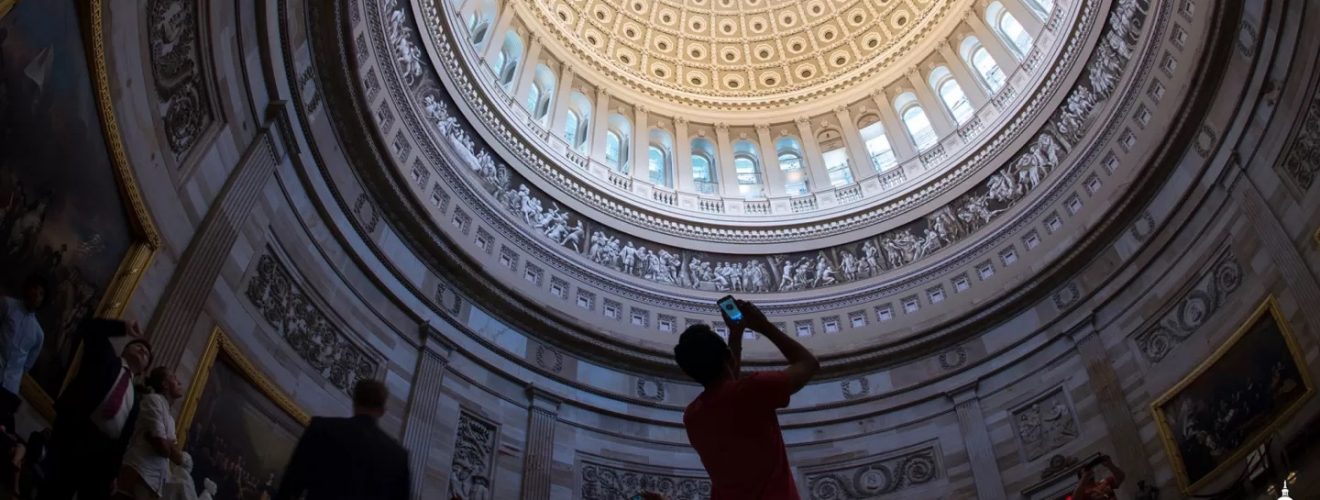
During the viewing in April 1865, the journalist Noah Brooks climbed to the top of the Capitol dome and looked down at the mourners circling Abraham Lincoln’s coffin. They moved, he wrote, “like black atoms moving over a sheet of gray paper.” The Architect of the Capitol estimates that 25,000 to 40,000 people filed past on a single day, at a pace the Evening Star put at 3,500 an hour. Lincoln was not the first person to lie there. He was nowhere near the last.
The roster is stranger than the ceremony. Thirteen of the men on the list of every U.S. president have lain in the Rotunda, by the House Historian’s count, but so have a French-born engineer who had been dead for most of a century, four soldiers buried as unknowns, a civil rights pioneer, an evangelist, an admiral and four Capitol Police officers. Britain buries its great in the floor of Westminster Abbey, among the people buried in Poets’ Corner. America lends them the middle of its Capitol for a few days and then sends them somewhere else to be buried.
Here is every one of them, in the order they arrived, counted the way the Capitol’s own architects keep the record and confined to the Rotunda itself; the rooms next door are dealt with further down. The spot has one property the official record barely mentions. The Rotunda stands directly above the compass stone in the Crypt that marks where Washington divides into quadrants, so whoever lies there rests, as the Capitol Historical Society puts it, “in all four quadrants of Washington, DC simultaneously.” It is the most bipartisan address in town.
Through October 2026, by this page’s count, 44 people have lain in state or in honor in the Capitol Rotunda, not the building’s other rooms, in 42 ceremonies from Henry Clay in 1852 to Jimmy Carter in 2025. Two were shared: the World War II and Korean War Unknowns in 1958 and Capitol Police officers Chestnut and Gibson in 1998.
Henry Clay
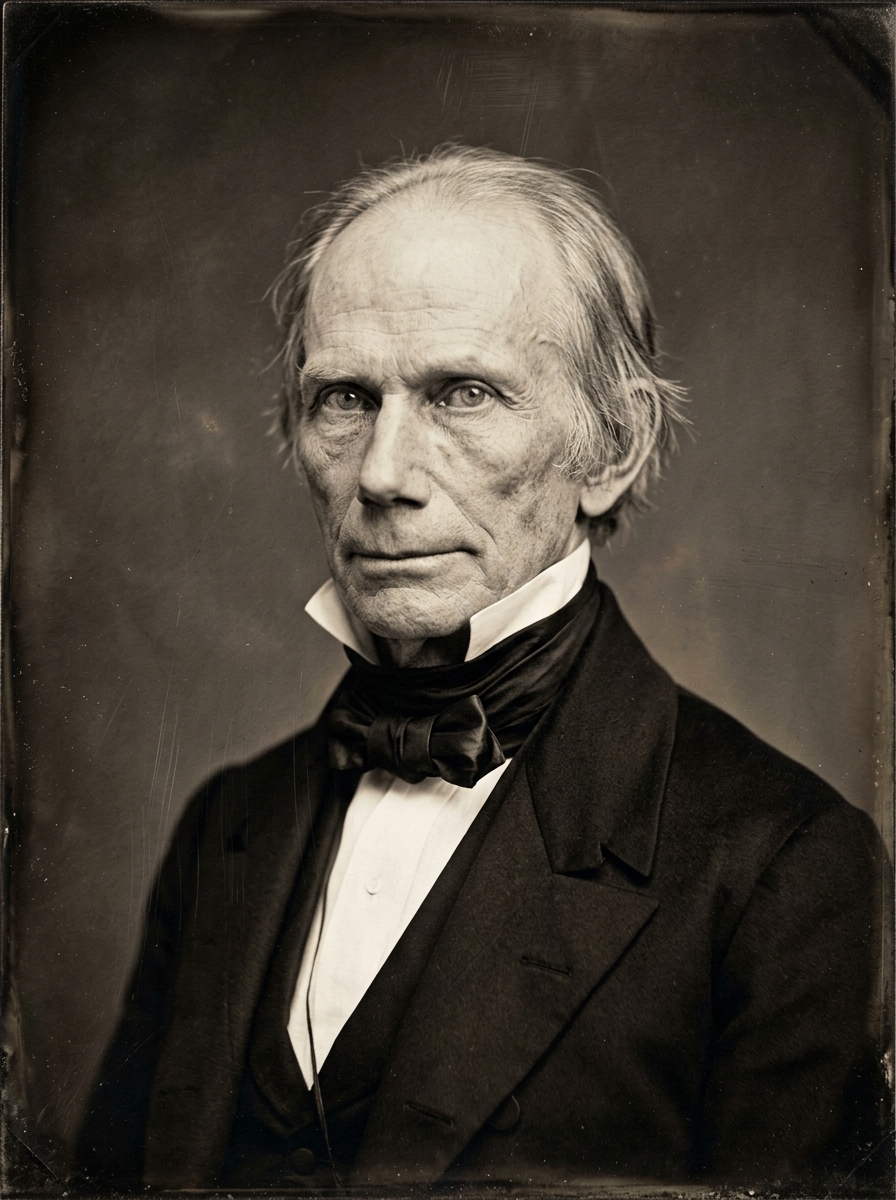
The President wanted Henry Clay laid out in the East Room of the White House. Nobody took him up on it. Clay died at the National Hotel on June 29, 1852, aged 75, of tuberculosis, and two days later, after a service in the Senate Chamber, his coffin was carried into the Rotunda so that, in the words of the Congressional Globe, “his sorrowing countrymen might gaze upon that face in death.” The Senate Historical Office counts him as the first person to lie in state there. The official entry for his authority reads, in full, “No resolution,” which is a very American way to start a national tradition.
It was not a smooth debut. The Rotunda of 1852 sat under Charles Bulfinch’s low wooden dome, and the New-York Tribune reported that “the capacious Rotunda was altogether unable to contain the vast multitude assembled,” so the crowd spilled onto the porticoes while the United States Marshal and his aides coaxed people into filing past in order. A New York Herald correspondent thought the day’s arrangements badly conceived and worse executed. At about four o’clock the coffin left for the railroad depot, and that same night it lay in state again, on a cenotaph in the rotunda of the Exchange in Baltimore.
On July 6, 1852, a Springfield lawyer named Abraham Lincoln delivered a eulogy for Clay in the Illinois statehouse. In April 1865 he followed him into the Rotunda.
Abraham Lincoln
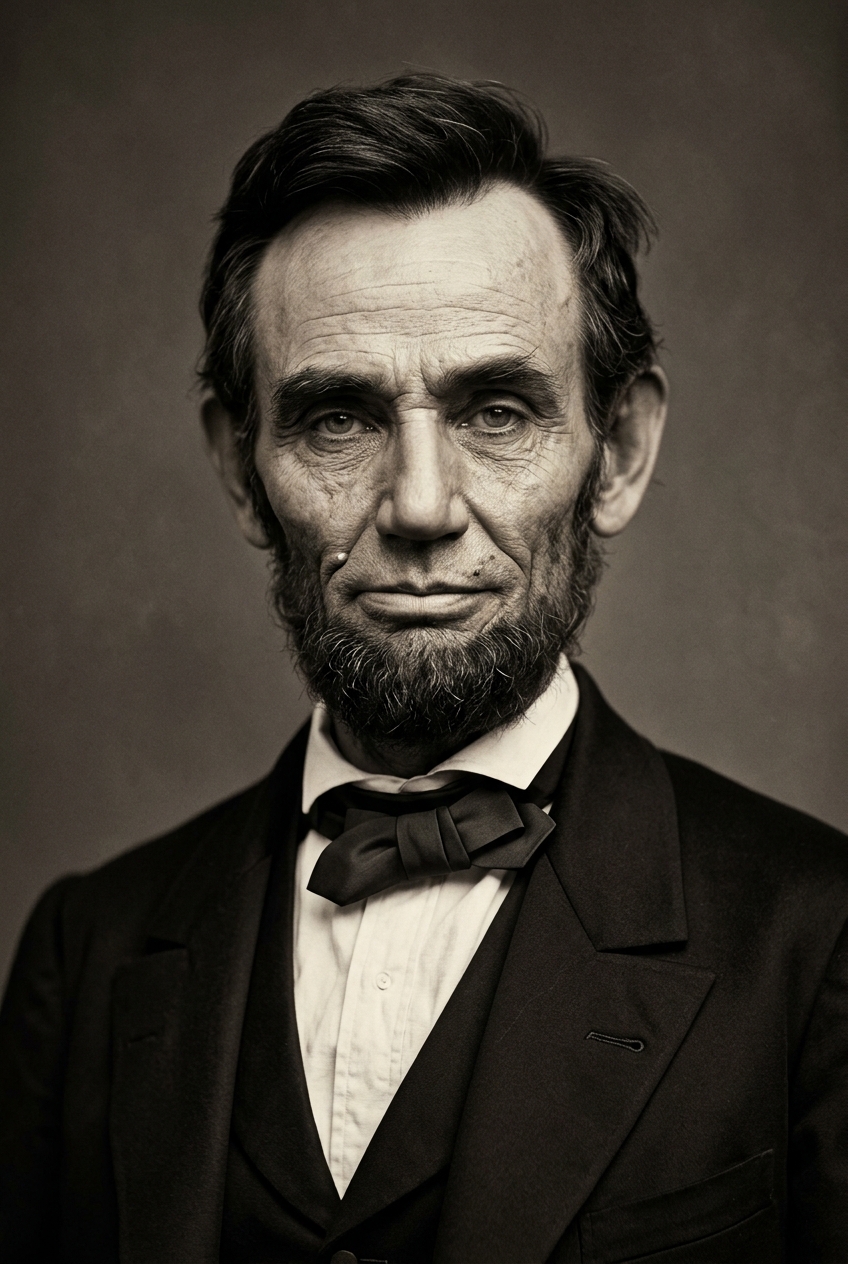
The White House gave Abraham Lincoln an elaborate catafalque with a canopy, and nobody kept it. The Capitol’s was a humbler thing: rough pine boards nailed together by a builder named Job W. Angus “and others,” to a design by the twenty-year-old son of the Commissioner of Public Buildings, Benjamin Brown French. The black cloth over it, French wrote, was “made and trimmed by the hands of my wife.” The boards survived; the cloth did not.
On April 19, 1865, a procession of 30,000, led by the Twenty-Second United States Colored Infantry, brought the coffin down Pennsylvania Avenue to the Capitol. Inside, workmen had shrouded the walls, the eight large paintings and the statue of the Dying Tecumseh in black, leaving only the statue of George Washington visible, “fitted with a black sash in the style of military mourning.” Lincoln lay under a dome whose interior was not finished until January 1866. The White House Historical Association calls him the first president to receive the honor, and there are, the Capitol’s architects say, no known photographs or drawings of it.
At 6 a.m. on April 21 the coffin left for the funeral train to Springfield, traveling with the exhumed casket of his son Willie. The pine boards stayed behind. French intended to store them in the empty tomb beneath the Crypt that had been built for George Washington’s remains, which seems the right place to keep a piece of furniture nobody expected to need again.
Thaddeus Stevens
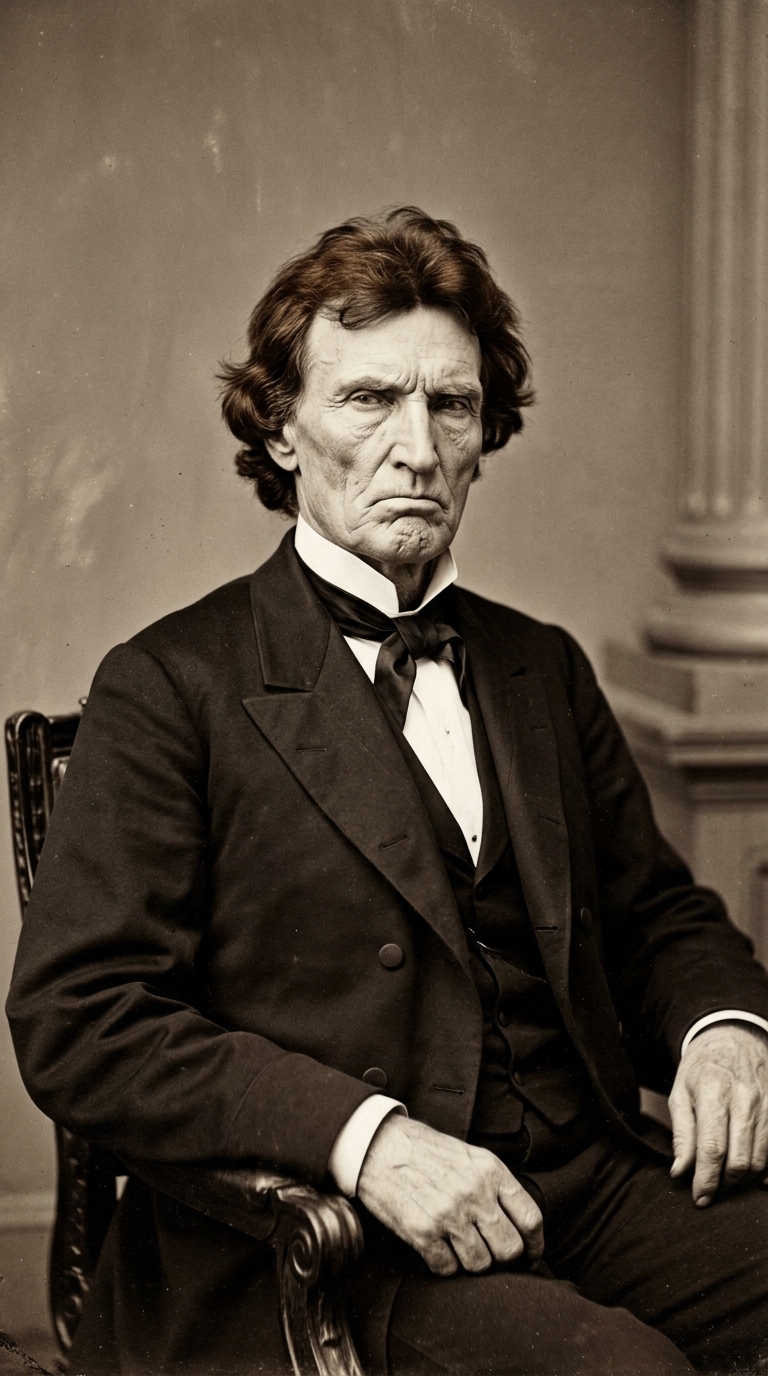
Twenty-five members of the Butler Zouaves stood guard over Thaddeus Stevens’s coffin through the night of August 13, 1868. They were a Black militia company, named, as the House Historian notes, for another abolitionist congressman, Benjamin Butler, and they had marched beside the coffin from Stevens’s house, where eight pallbearers, four white and four Black, had lifted it.
Stevens had died on August 11 of an illness that began a few days after Congress adjourned and from which, the Evening Star said, he “never entirely recovered.” The Rotunda stayed open all night. From seven until ten in the evening, the Star reported, a continual stream of people went through, “a large number of whom were colored,” and by midnight quiet reigned in the Capitol. Senator Charles Sumner was among the first to look on the face. Harper’s Weekly put the scene on its cover and counted more than 5,000 visitors. The funeral was held in the Rotunda at nine the next morning, and at ten a special train left for Lancaster.
There he was buried in Shreiner’s cemetery, which he had picked because Lancaster’s other cemeteries were “limited as to race” by their charter rules. His self-written epitaph explains that he wanted to “illustrate in my death the principles which I advocated through a long life.” The cemetery’s records show four African Americans among its 396 burials. The principle was clearer than the follow-through.
Charles Sumner
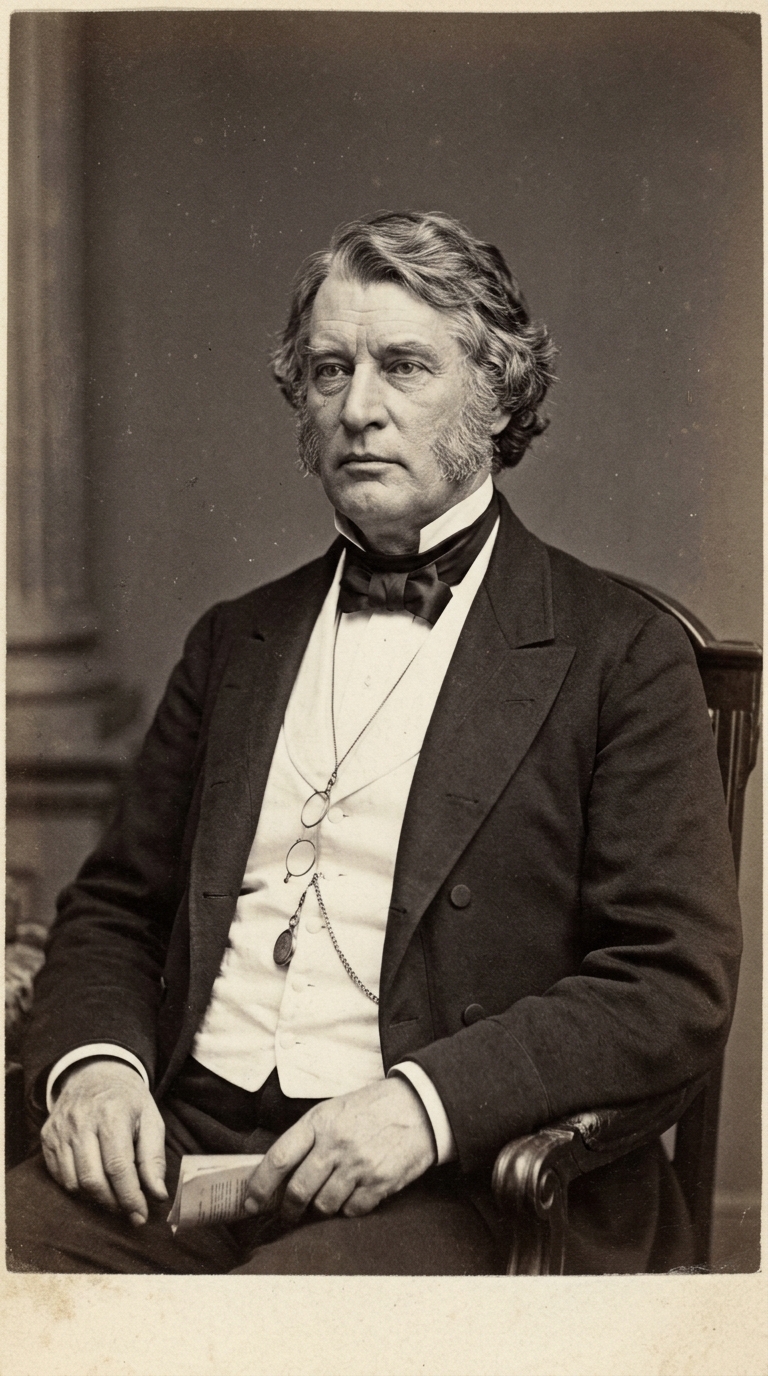
Through the night of April 14, 1865, Charles Sumner kept vigil at Abraham Lincoln’s deathbed. On March 13, 1874, his own coffin was set on the catafalque that had been built for Lincoln, in a Rotunda draped in mourning on a day the New York Herald called “bleak and cold.”
The crowd was the biggest the Herald’s correspondent had seen at the Capitol, the impeachment trial of Andrew Johnson not excepted, and at least 5,000 people could not get in at all. Behind the hearse, drawn by four white horses, walked about 150 Black men on foot, Frederick Douglass among them. The Senate keeps a sketch of the scene by Joseph Becker, captioned “Colored People of Washington, Headed by Frederick Douglass, Viewing the Remains.”
Sumner had come close to an earlier exit. On May 22, 1856, Representative Preston Brooks beat him at his Senate desk with a metal-topped cane, an assault the Senate’s own history concludes with the line “After a very long minute, it ended.” Sumner survived it and kept going. When he was dying of a heart attack in March 1874, Douglass was at his bedside, and Sumner pleaded with him and the others: “Don’t let the bill fail. You must take care of [my] civil rights bill.” The Senate passed an amended version as the Civil Rights Act of 1875. The Supreme Court struck it down in 1883.
Henry Wilson
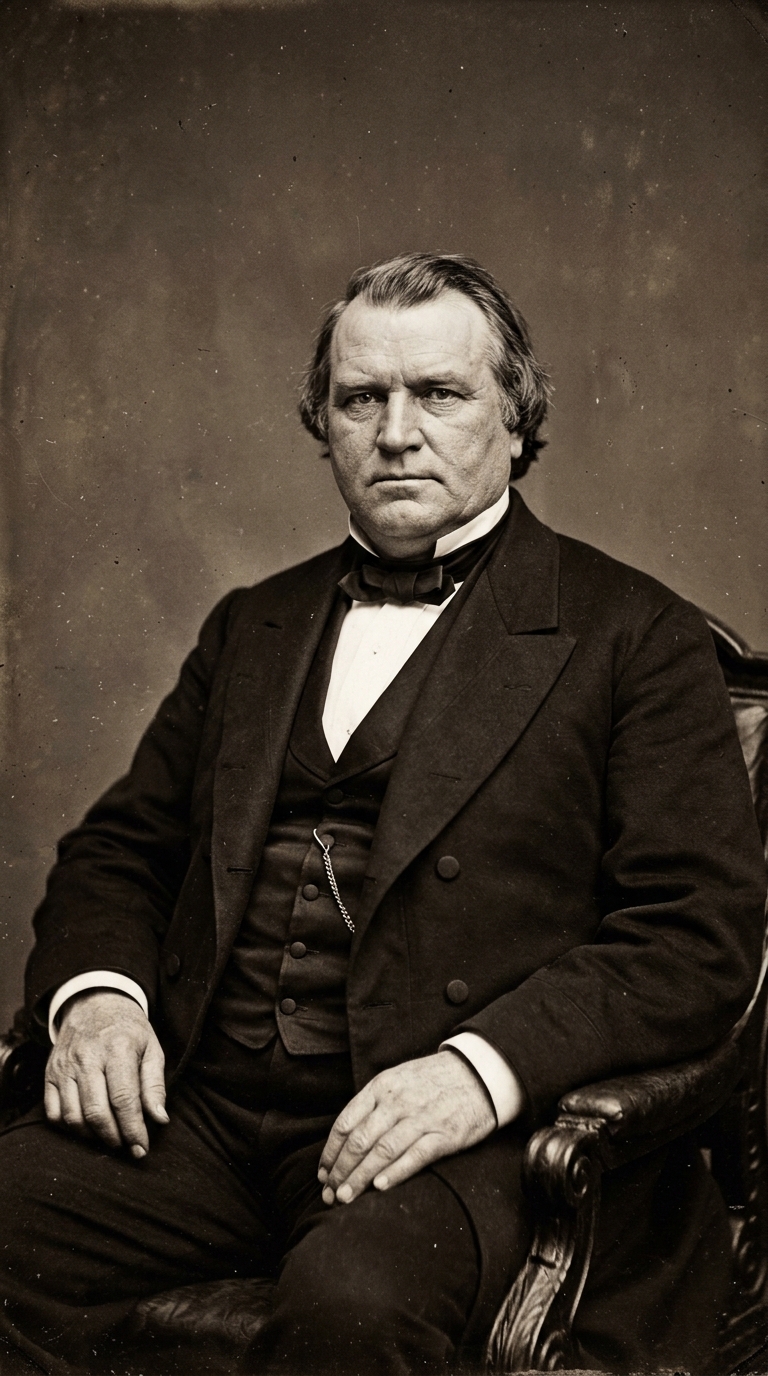
Before he was Henry Wilson he was Jeremiah Jones Colbath, born in Farmington, New Hampshire, on February 16, 1812; the Massachusetts legislature changed his name in 1833. In between he had been indentured as a farm laborer at 10 and had learned shoemaking, which in Natick made him a small manufacturer and, in the Boston press, the “Natick cobbler,” a title the Evening Star said he was never ashamed of. He helped form the Free-Soil Party in 1848, raised a Massachusetts regiment in 1861, and became vice president in 1873.
He also died at work. On November 10, 1875, Wilson was taken seriously ill while dressing in the Senate’s barber shop, and the Capitol Police fetched his bed from his lodgings and set it up in the Vice President’s Room. He died there on November 22, at twenty minutes past seven in the morning. A Washington judge announced in court that day that Wilson would share with John Quincy Adams “the honor of having died in the capitol of the nation.”
Three days later his coffin lay in the Rotunda on the catafalque used for Lincoln and Sumner, with a marine at its head and another at its foot standing “as motionless as statues,” and the Star reckoned that 20,000 people filed past. A decade on, Senator Henry Dawes summed him up: “It has been said of him here that he had no other home but this Capitol.”
James A. Garfield
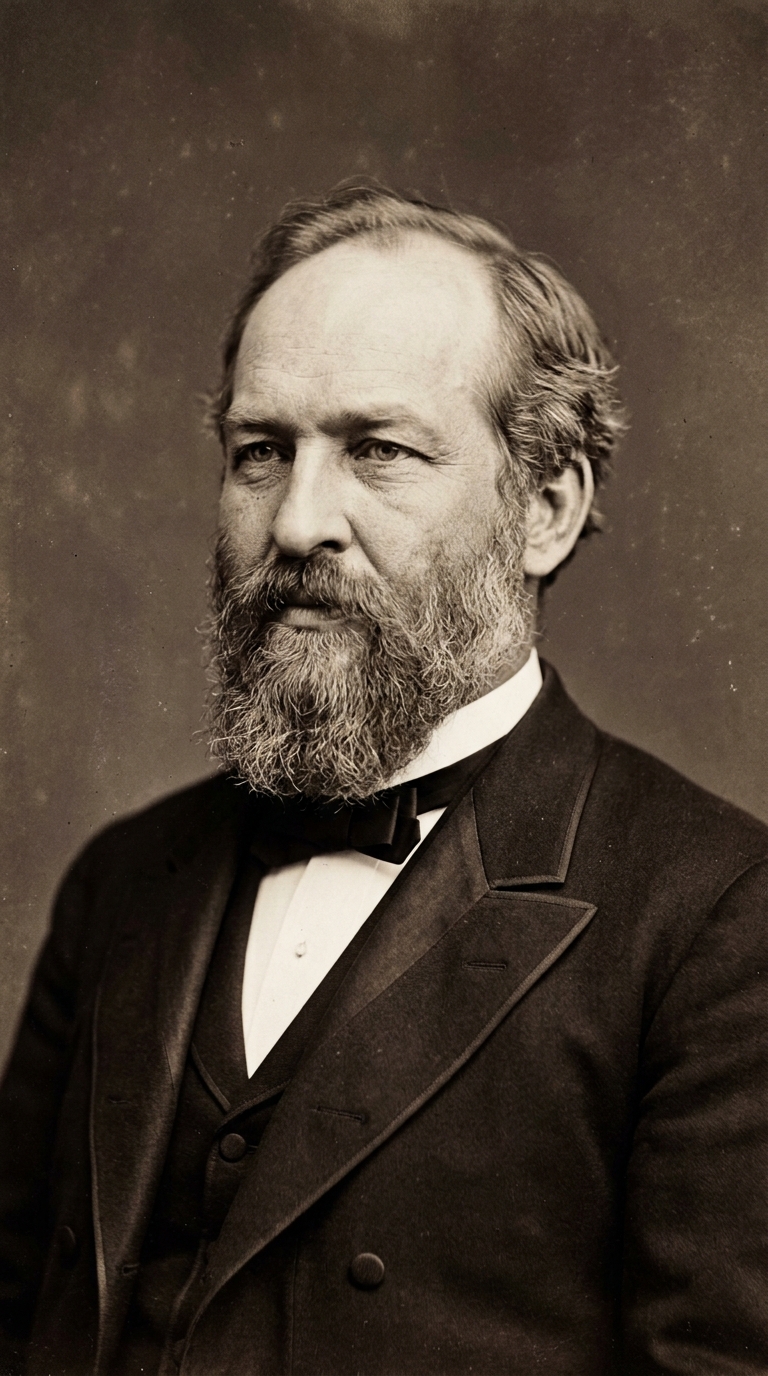
Alexander Graham Bell came to the White House with a device to find the bullet in James Garfield, and it failed because, in the White House’s own account, “Garfield was placed on a bed with metal springs, and no one thought to move him.” Charles Guiteau had shot him twice at the Baltimore and Potomac station on July 2, 1881, making Garfield the second of the presidents who died in office to be killed by an assassin. The Library of Congress says weeks of probing the wound with unsterilized fingers and instruments “produced infections that ultimately killed the president.” Navy engineers, meanwhile, rigged what the same library calls America’s first air conditioner to cool his sickroom.
He died at Elberon, New Jersey, on September 19, 1881. Everyone expected him to lie in the East Room, as Lincoln had, but the body went straight to the Capitol, onto what the Evening Star called “the same bier upon which rested the remains of President Lincoln.” A Star reporter standing beside it counted 18 people a minute looking through the glass, and the paper estimated that not less than 50,000 passed through the Rotunda on September 22.
The funeral itself was held in the Rotunda, on September 23. There were seats for 1,300, and not less than 25,000 people sought admittance. Inside, a wreath from Queen Victoria lay on the casket. Outside, vendors were selling lemonade and ice water, and the Star thought the scene resembled “a country fair.”
John A. Logan
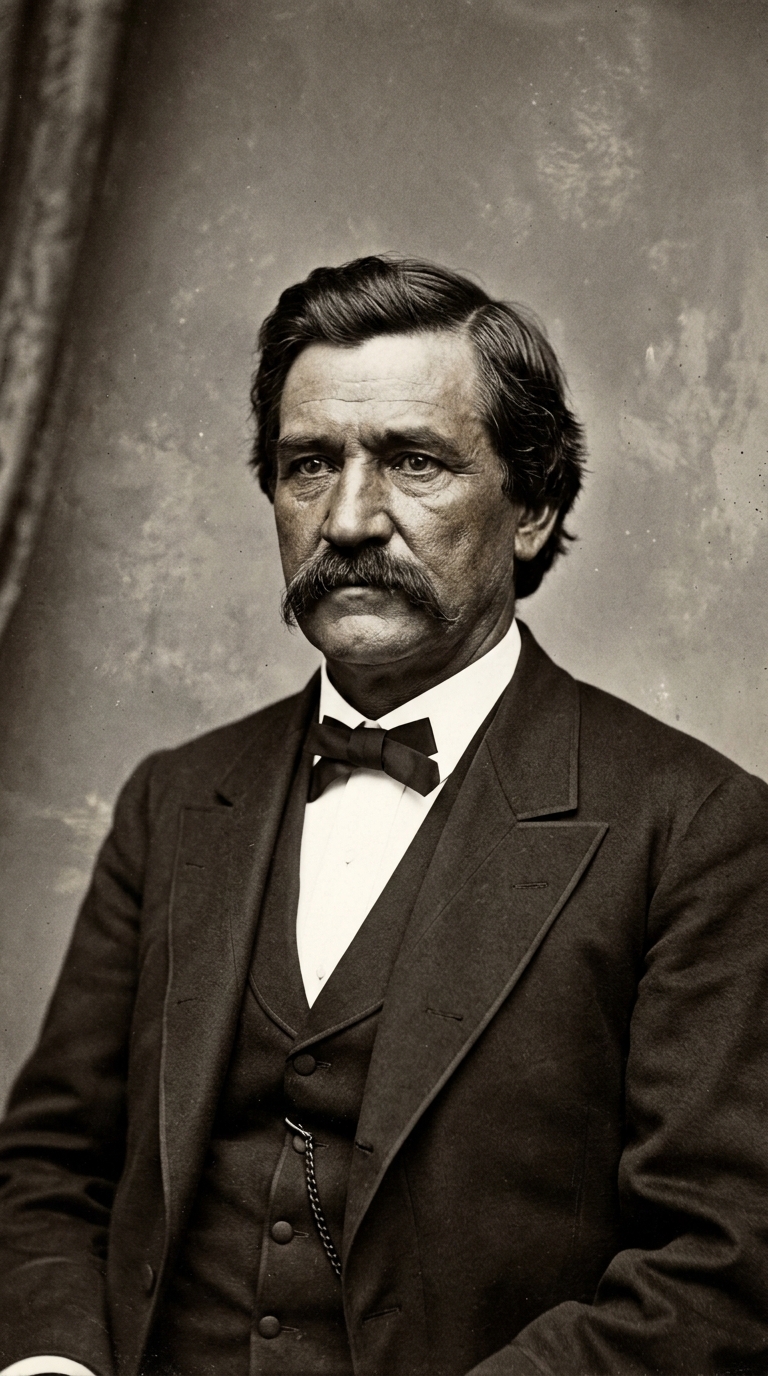
Memorial Day has a paternity dispute. On May 5, 1868, John Logan, commander of the Grand Army of the Republic, issued General Orders No. 11, setting aside May 30 for “strewing with flowers or otherwise decorating the graves of comrades who died in defense of their country during the late rebellion.” The House Historian credits Logan with conceiving the idea. The Grand Army itself credited an “anonymous comrade” who had written to its adjutant general, and Logan’s wife, Mary, claimed it in her autobiography. About 25 places have claimed the holiday’s origin; in 1966 Congress and President Lyndon Johnson named Waterloo, New York, its birthplace.
Logan had left the House to join the Union Army in 1862, was the Republican candidate for vice president in 1884, and a senator from Illinois from March 4, 1879 until he died at his Washington home on December 26, 1886. He lay in the Rotunda on December 30-31 on a bier the Evening Star described as “identically the same” as Lincoln’s, with mourners “admitted by twos” at the east door and not permitted to stop. At his widow’s request the body was photographed with the Geological Survey’s apparatus.
His order picked May 30 so that “the choicest flowers of springtime” would be available everywhere. A 1968 act of Congress moved the holiday to the last Monday in May, effective in 1971, which suits the weekend considerably better than the flowers.
William McKinley
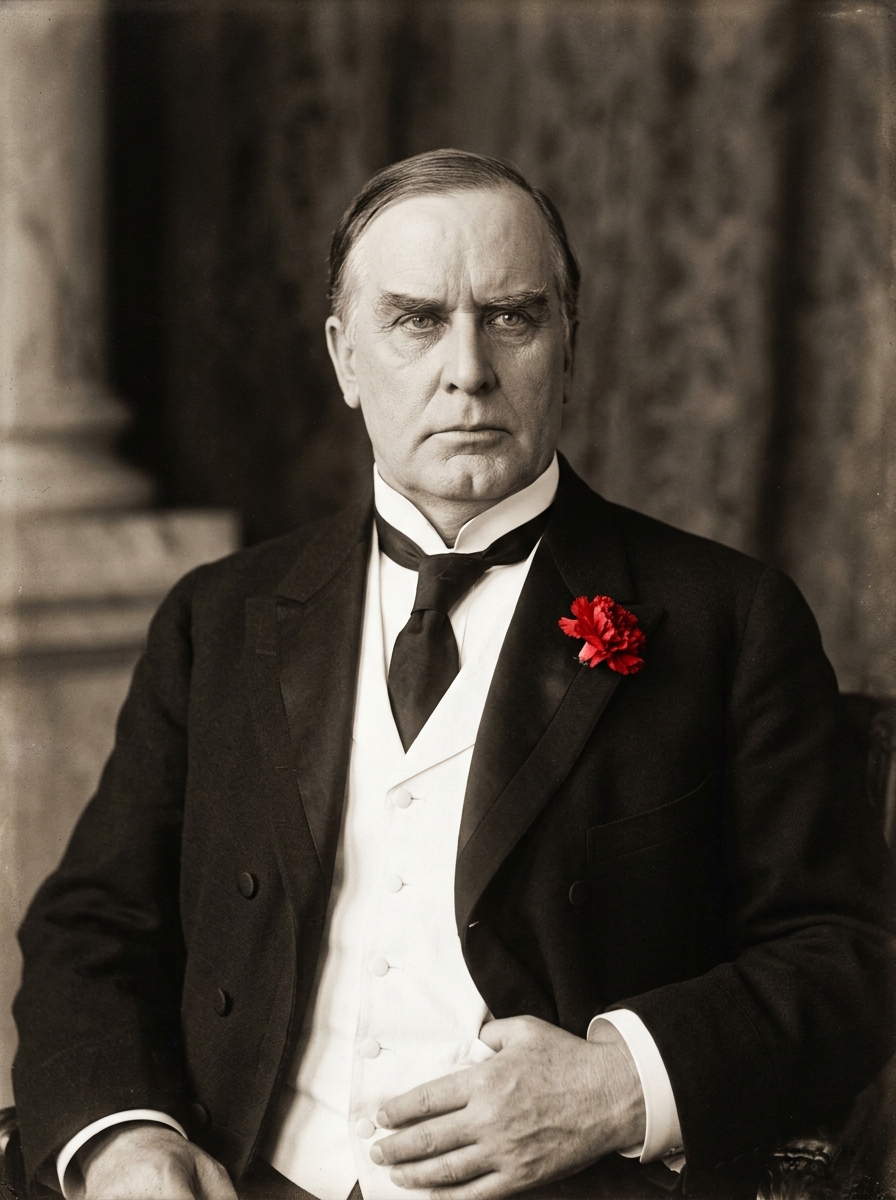
There was an X-ray machine at the Pan-American Exposition in Buffalo when William McKinley was shot there, an Edison model on public display, and an aide sent for one. According to the National Library of Medicine, “it arrived but wasn’t used”; the Smithsonian says the doctors judged the president too unstable to be X-rayed. Leon Czolgosz had fired two shots at the Temple of Music at seven minutes past four on September 6, 1901. One bullet grazed the sternum. The surgeon, a gynecological specialist, never found the other.
McKinley died on September 14, just six months into his second term, and became the third president assassinated. His Washington funeral was rearranged around his widow, who wanted him home in Canton by Wednesday night, so the Rotunda service moved to the morning of September 17 and he lay in state the rest of that day. The Capitol was left undraped. Ten bearers, five soldiers and five sailors, carried the coffin in, and the crush at the east steps was bad enough that the Evening Star estimated that “no fewer than fifty women and children” were hurt. By a quarter to three, it said, about 18,000 people had passed the casket.
As the cortege entered, the music was “Nearer, My God, to Thee.” The Library of Congress records the same hymn as McKinley’s final words.
Pierre Charles L’Enfant
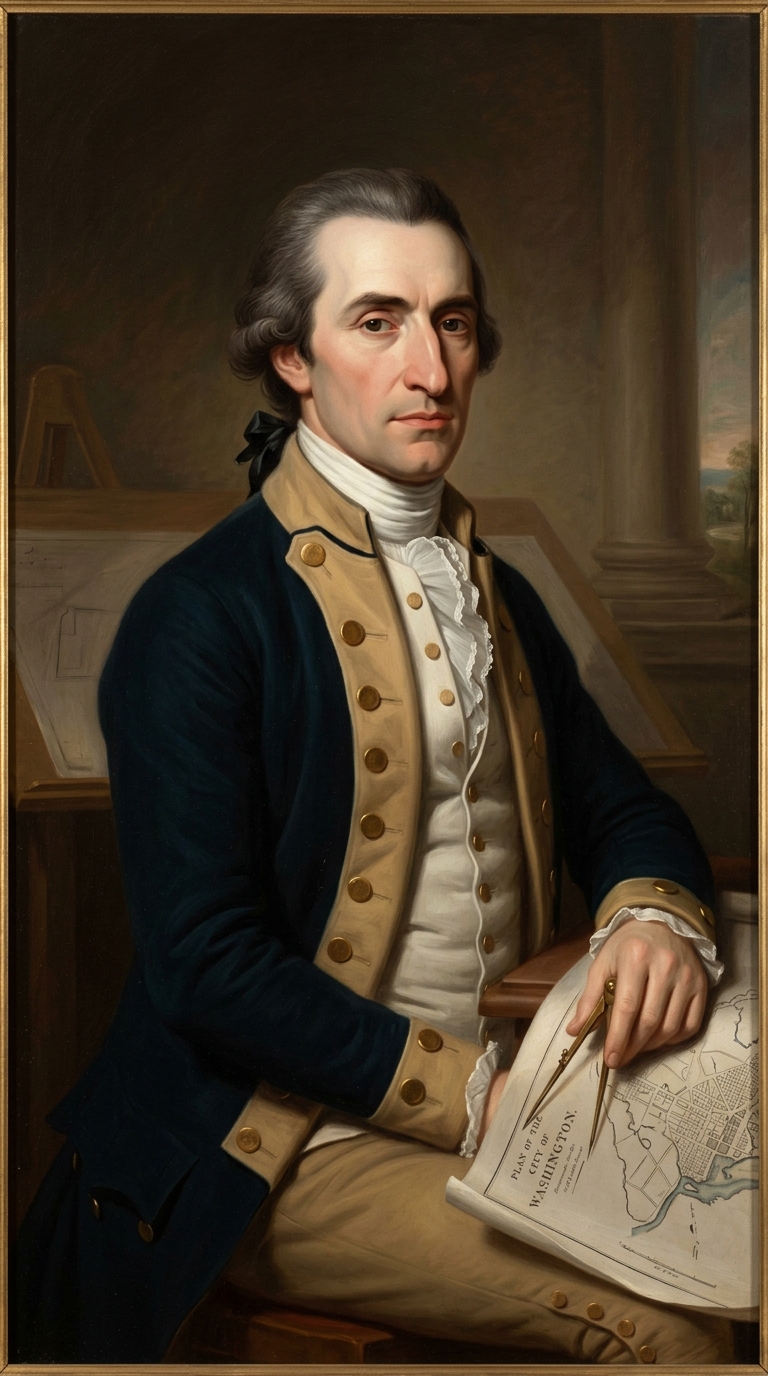
George Washington dismissed Pierre Charles L’Enfant from the job of planning the new capital in 1792, he was never paid for the plan, and he died poor on June 14, 1825, to be buried on a Maryland farm owned by a friend, William Dudley Digges. On the morning of April 28, 1909, his remains lay in the Rotunda of the Capitol, in the city he had planned. District Commissioner Macfarland, presiding, observed that L’Enfant “has waited eighty-four years for the tardy honors of his adopted country.” By the calendar it was a little short of that, but nobody was counting closely.
He had served on Washington’s staff, been wounded at Savannah in 1779, and signed his plan “Peter Charles L’Enfant,” in keeping with his adopted country. It laid out the permanent seat of a government that had spent years moving between cities that served as the nation’s capital. His remains were exhumed on April 22, 1909, and the Rotunda ceremony, the cortege and the reburial at Arlington all took place on the same day; ten sergeants of engineers carried the casket out to an artillery caisson. Arlington National Cemetery calls him the first foreign national accorded the honor.
The French ambassador, Jean Jusserand, described L’Enfant in old age as a tall figure in a blue military coat with a silver-topped cane, usually escorted by “five or six of his best friends, these particular ones happening to be dogs.”
George Dewey
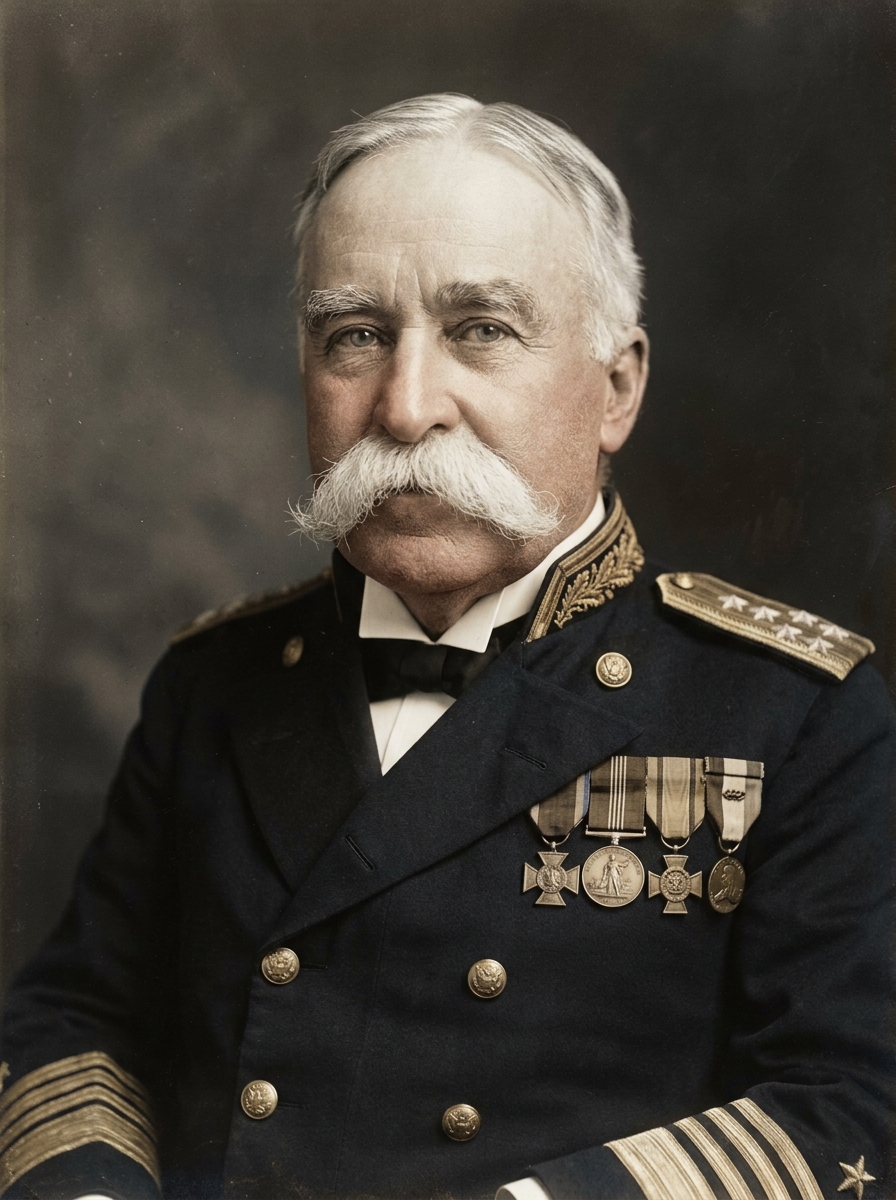
George Dewey’s famous order at Manila Bay comes in two lengths, and the longer one is his own. On May 1, 1898, at 5.40 in the morning in Manila Bay, at a range of 5,000 yards, he turned to the captain of his flagship and said, by his own 1913 account, “You may fire when you are ready, Gridley.” The Library of Congress prints the trimmed version. Either way it worked: his squadron of six ships destroyed the Spanish fleet, and his report records “none killed, and only seven men in the squadron very slightly wounded.”
Midway through the action he pulled back and signaled for breakfast, since the crews had had only a cup of coffee at 4 a.m. The public at home, he noted, “reasoned that breakfast was the real reason for our withdrawing from action.”
Dewey died in Washington on January 16, 1917, and on January 20 the Rotunda held his memorial service. There was no oration. A quartet sang “Lead, Kindly Light,” and a chaplain who had served aboard Dewey’s flagship, the Olympia, read the service prescribed by navy regulations. Congress had made him Admiral of the Navy in 1899 and written into the act that when he was done with it, “the office shall cease to exist.” It did. The U.S. Naval Institute says no other member of the Navy has ever held the title.
The Unknown Soldier of World War I
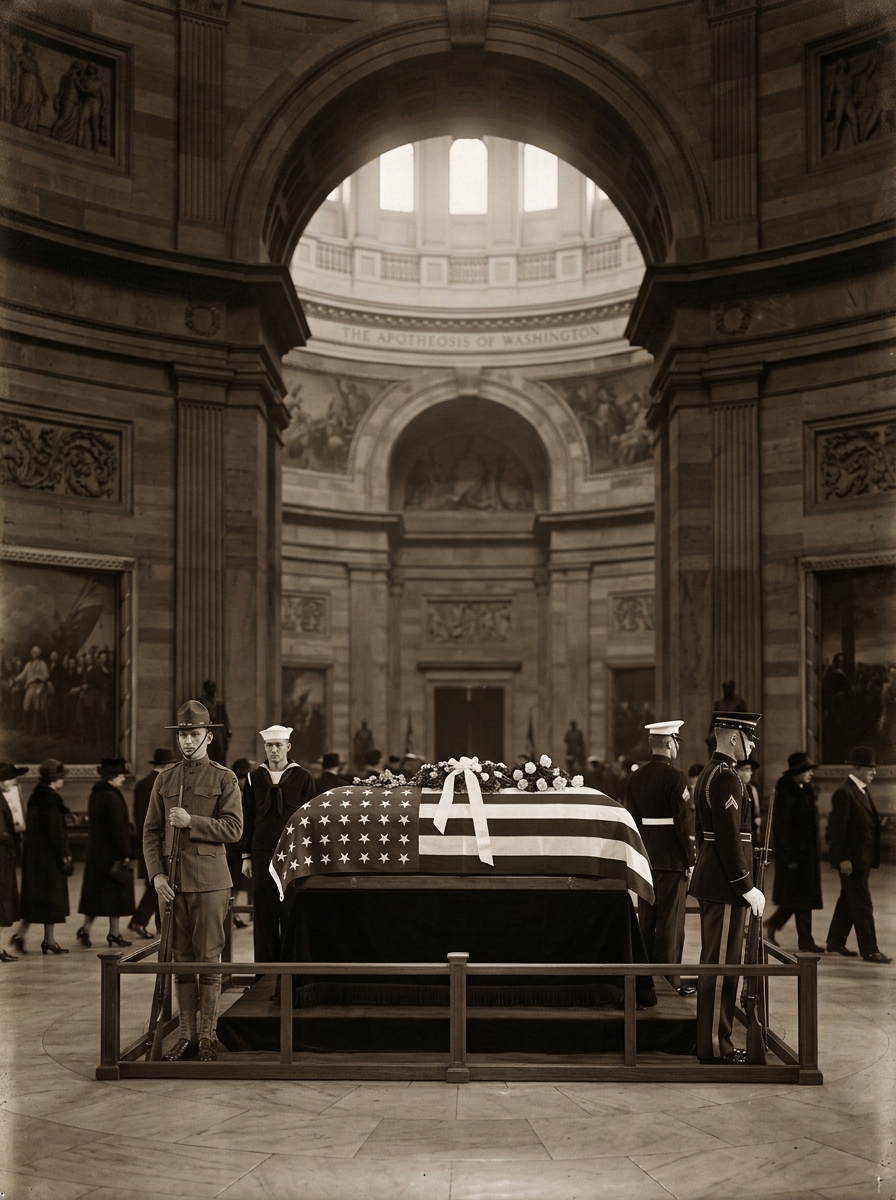
On October 24, 1921, in the city hall of Chalons-sur-Marne, Sergeant Edward F. Younger walked among four identical caskets, each holding an unidentified American soldier from a different cemetery in France, and laid a spray of white roses on one of them. An officer had already shuffled the caskets so that each rested on a shipping case other than the one it had arrived on. The roses stayed with the man Younger chose, and the Army says they were later buried with him at Arlington. The other three were reburied side by side in Plot G, Row 1, Graves 1, 2 and 3 of the Meuse-Argonne American Cemetery.
He came home aboard the cruiser USS Olympia, which had been George Dewey’s flagship at Manila Bay, and reached the Washington Navy Yard on November 9, 1921. Five District of Columbia National Guardsmen stood watch over him in the Rotunda day and night, and Arlington National Cemetery says about 90,000 visitors filed past on November 10 alone. The next day President Warren Harding presented him with the Medal of Honor at Arlington, and Chief Plenty Coups of the Crow Nation laid his coup stick and war bonnet on the tomb.
Military guards were first posted at the tomb in March 1926, by daylight only, and in 1937 the watch went to 24 hours a day. The inscription has not changed at all: “Here rests in honored glory an American soldier known but to God.”
Warren G. Harding
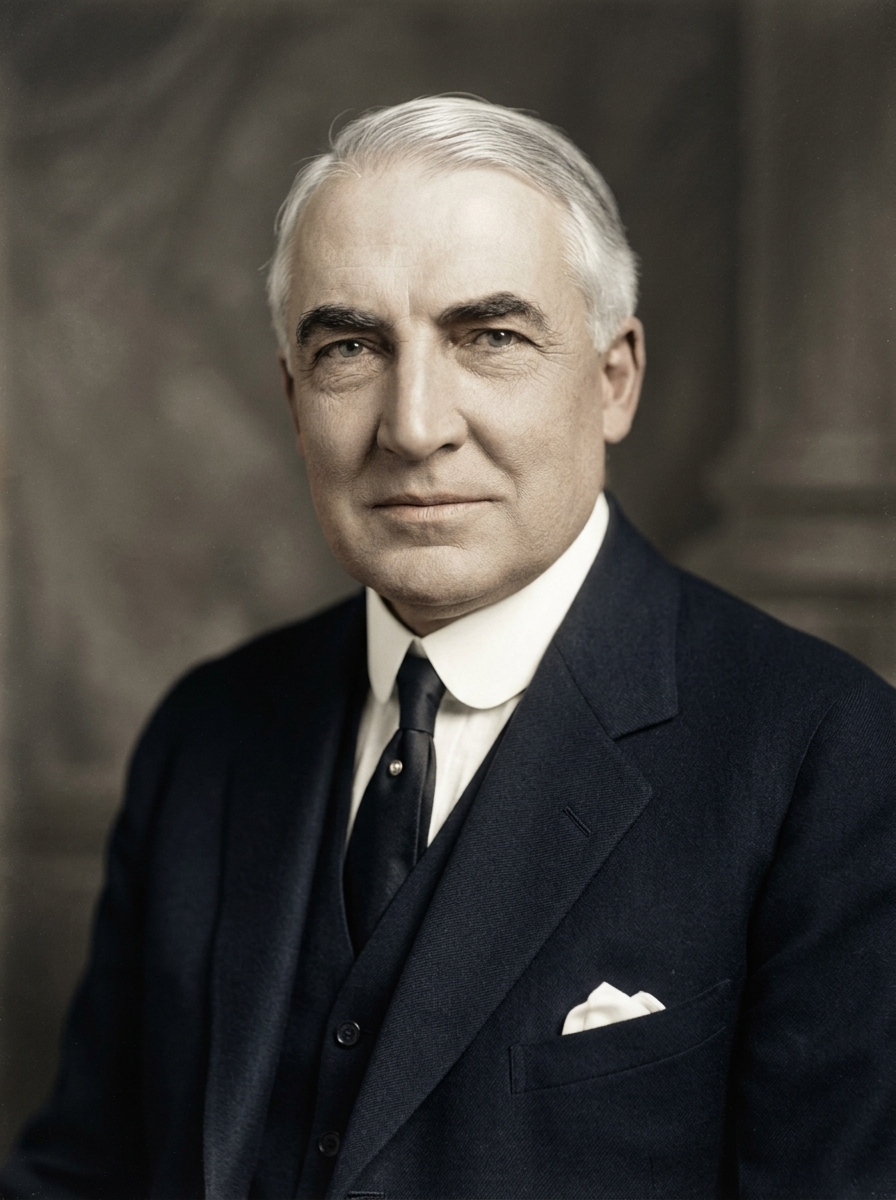
The last thing Warren Harding heard was praise of Warren Harding. In his room at the Palace Hotel in San Francisco on the evening of August 2, 1923, his wife was reading aloud a Saturday Evening Post article titled “A Calm Review of a Calm Man,” and, by the Evening Star’s account, the president said, “That’s good. Go on. Read some more.” Hours earlier his doctors had announced that he had turned a corner. His secretary’s telegram attributed the death to “some brain embolism, probably apoplexy”; modern historians lean toward a heart attack.
The funeral train covered the 3,000 miles to Washington, and on August 8 General Pershing led the procession to the Capitol, with Calvin Coolidge, Chief Justice Taft and former President Woodrow Wilson behind the casket. The planners had learned from McKinley’s funeral, where people were hurt in the crush, and kept a wide space clear in front of the building. It helped only so much: by the Star’s count 35,000 people walked through the Rotunda before police cut off the line at 4:10 p.m., leaving 10,000 waiting in vain, and about 85 fell out of line in the heat. Among the flowers was a pillow of white blossoms from the local printers’ union bearing the figure “30,” newspaper shorthand for the end of a story.
On the way home to Marion, Ohio, the train stopped for one minute at Canton, out of respect for McKinley.
William Howard Taft
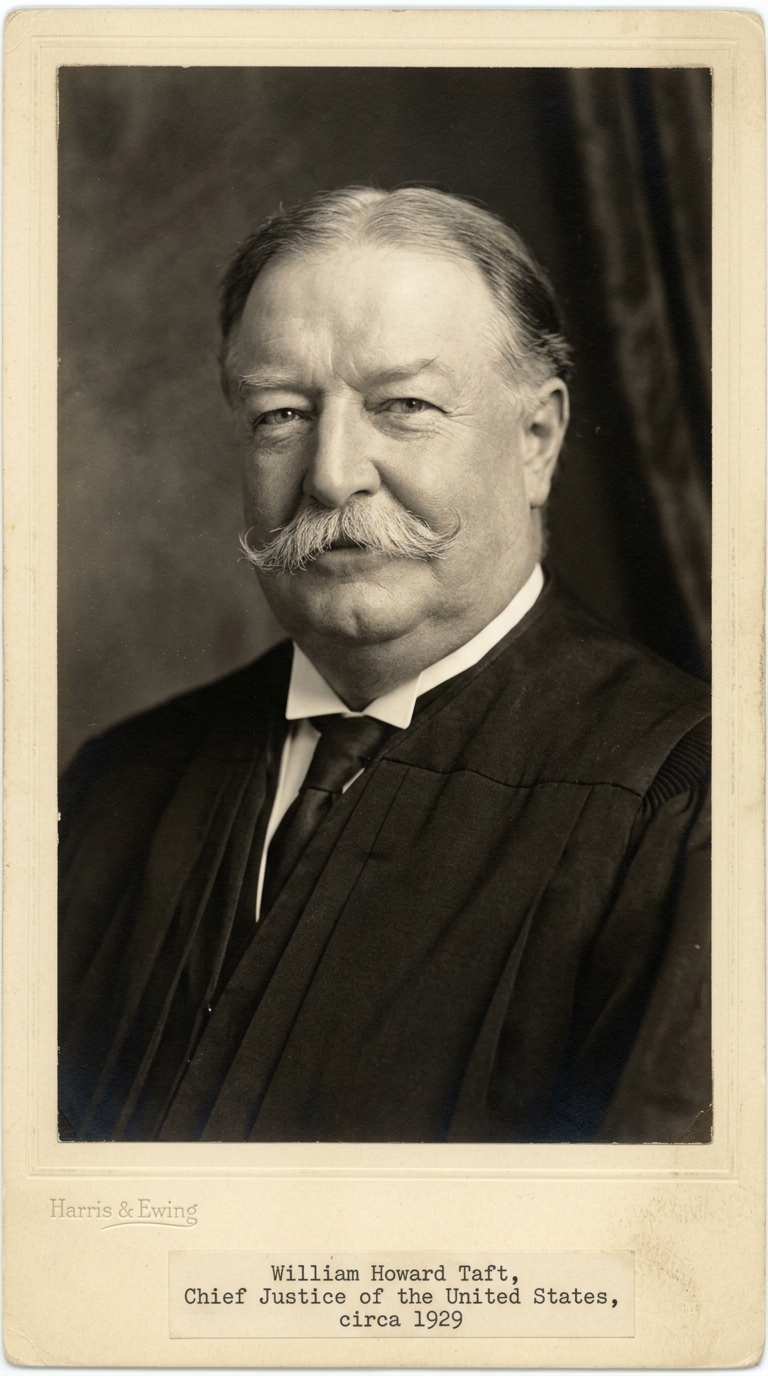
Only one person has been both president and chief justice of the United States, and on March 11, 1930, the public had about ninety minutes to file past him. William Howard Taft had died at home in Washington on March 8, aged 72, a few weeks after leaving the Supreme Court. No resolution was passed for his Rotunda honors; the casket simply arrived on a caisson in a misty rain and was set on the catafalque “where Lincoln had lain in death,” in the Evening Star’s phrase. Some 7,000 people went by in two lines, under what the paper called “sodden skies.”
On the way, the caisson passed the White House, where President and Mrs. Hoover stood bareheaded on the front portico. The gesture had a history. As chief justice, Taft had sworn Hoover in on March 4, 1929, and had fluffed the oath, saying “preserve, maintain, and defend” instead of “preserve, protect, and defend.” A 13-year-old radio listener named Helen Terwilliger noticed and wrote to tell him.
He had asked for no eulogies, so the service at All Souls’ Unitarian Church used poems by Wordsworth and Tennyson instead, and he became the first president buried at Arlington National Cemetery. The Army’s record of the burial ends with a sentence that could only be written about one man: “taps was sounded for the twenty-seventh President and tenth Chief Justice of the United States.”
John J. Pershing
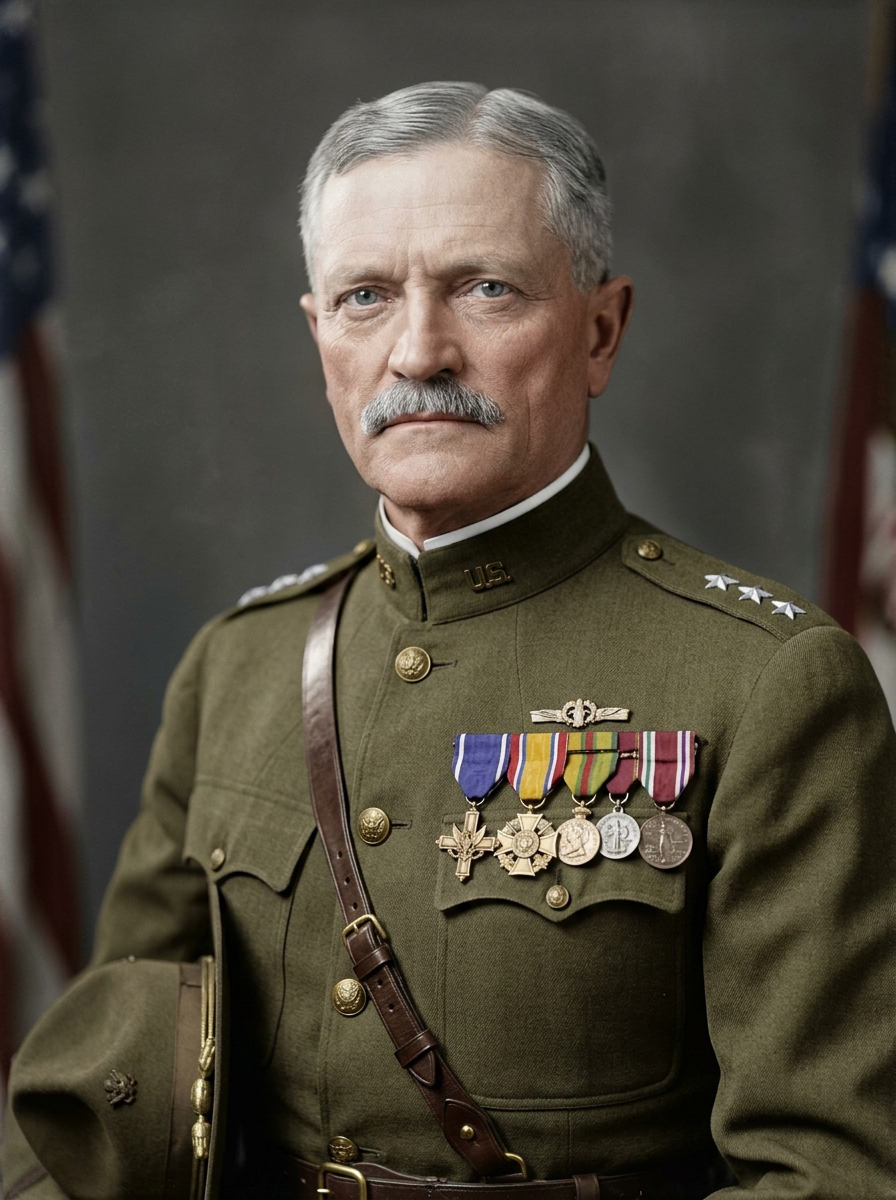
Congress made John Pershing General of the Armies on September 3, 1919, and the Army notes that “Pershing at no time wore more than four stars.” When his funeral was planned, a proposal to put a six-star insignia on his uniform was dropped in favor of the four he had always worn. He is the only person promoted in his own lifetime to the highest rank in Army history. In 1976 Congress gave the same grade to George Washington, posthumously, on the principle that no officer of the United States Army should outrank him.
Pershing had lived at Walter Reed General Hospital since May 6, 1941, in a small wing set aside for him, and he died there on July 15, 1948, at 87. His life had held one catastrophe that no rank could touch: on August 27, 1915, while he was at Fort Bliss in Texas, a fire at the Presidio in San Francisco killed his wife and three daughters. Only his son Warren, aged five, survived. Pershing’s comment was, “They had no chance.”
He lay on the Lincoln catafalque on July 18 and 19, the public filing past the open casket, and hundreds were turned away at closing. The caisson that took him to Arlington had carried Franklin Roosevelt, and 300,000 people lined the route in a heavy rain shower. He had chosen his own grave years before, on a small hill, with a plain government-issue headstone, among the men he had commanded.
Robert A. Taft
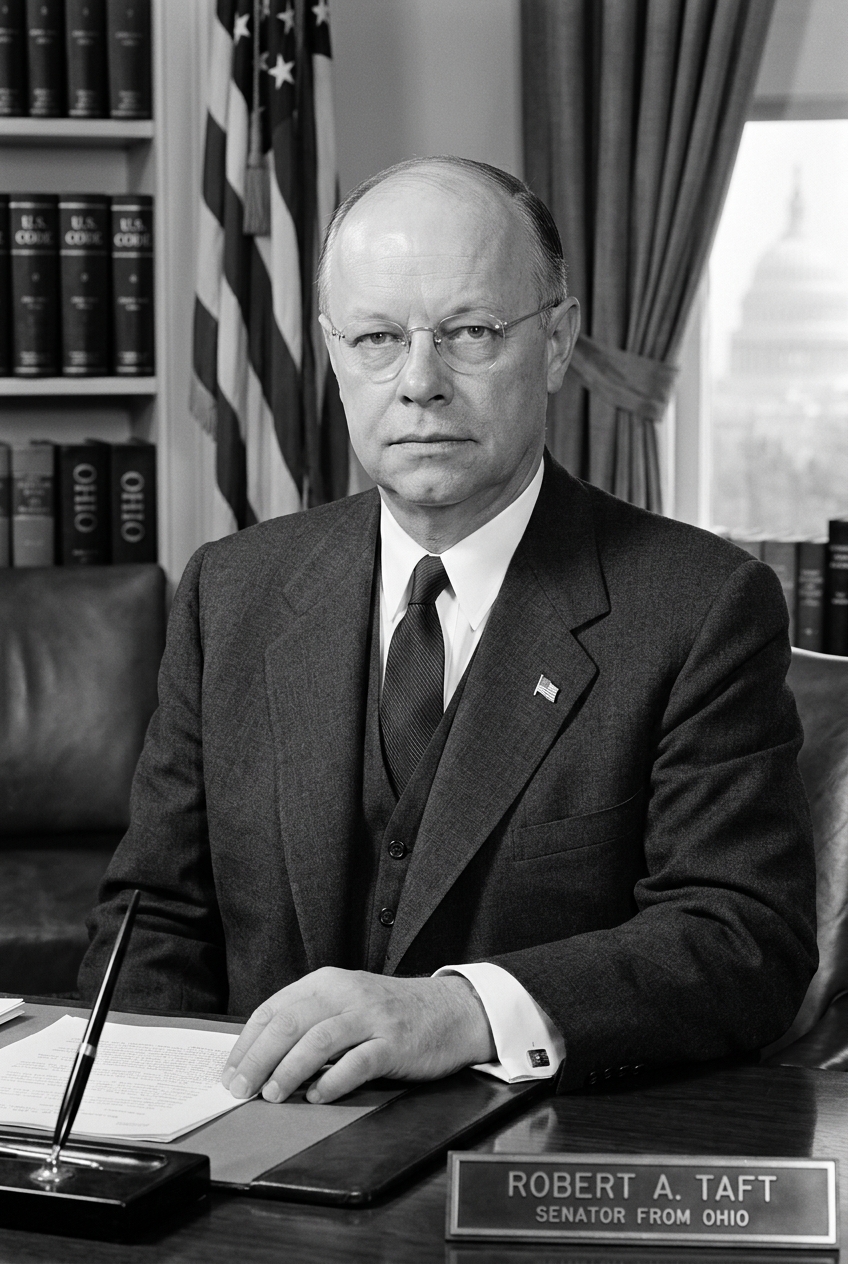
In 1930 the Lincoln catafalque held William Howard Taft. On August 2, 1953, according to the Army’s account, the same catafalque “which in 1930 had held the casket of Senator Taft’s father” stood in the center of the Rotunda for his son. Robert Taft, “Mr. Republican,” had agreed, in the Senate Historical Office’s phrase, “reluctantly” to become majority leader in January 1953, and died of cancer in a New York hospital on July 31.
The Senate ordered a state funeral for him, which the Army’s own history calls “extraordinary” for a senator. Between 3 and 9 p.m. the Rotunda was open to the public, and between 30,000 and 35,000 people filed past the closed casket in two lines. The noon memorial service the next day had some 900 chairs, a eulogy by Senator John Bricker and no photographic, radio or television coverage at all. Douglas MacArthur attended at Mrs. Taft’s personal invitation. The family had asked that no flowers be sent; several arrived anyway.
In 1959 his portrait was unveiled in the Senate Reception Room as one of five chosen by a Senate committee chaired by John F. Kennedy, alongside Daniel Webster, John C. Calhoun, Henry Clay and Robert La Follette. The same year Congress dedicated a 100-foot marble bell tower in his memory on the Capitol grounds, with 27 bells cast in France. In November 1963 the committee’s chairman lay on the same catafalque.
The Unknown Soldiers of World War II and the Korean War
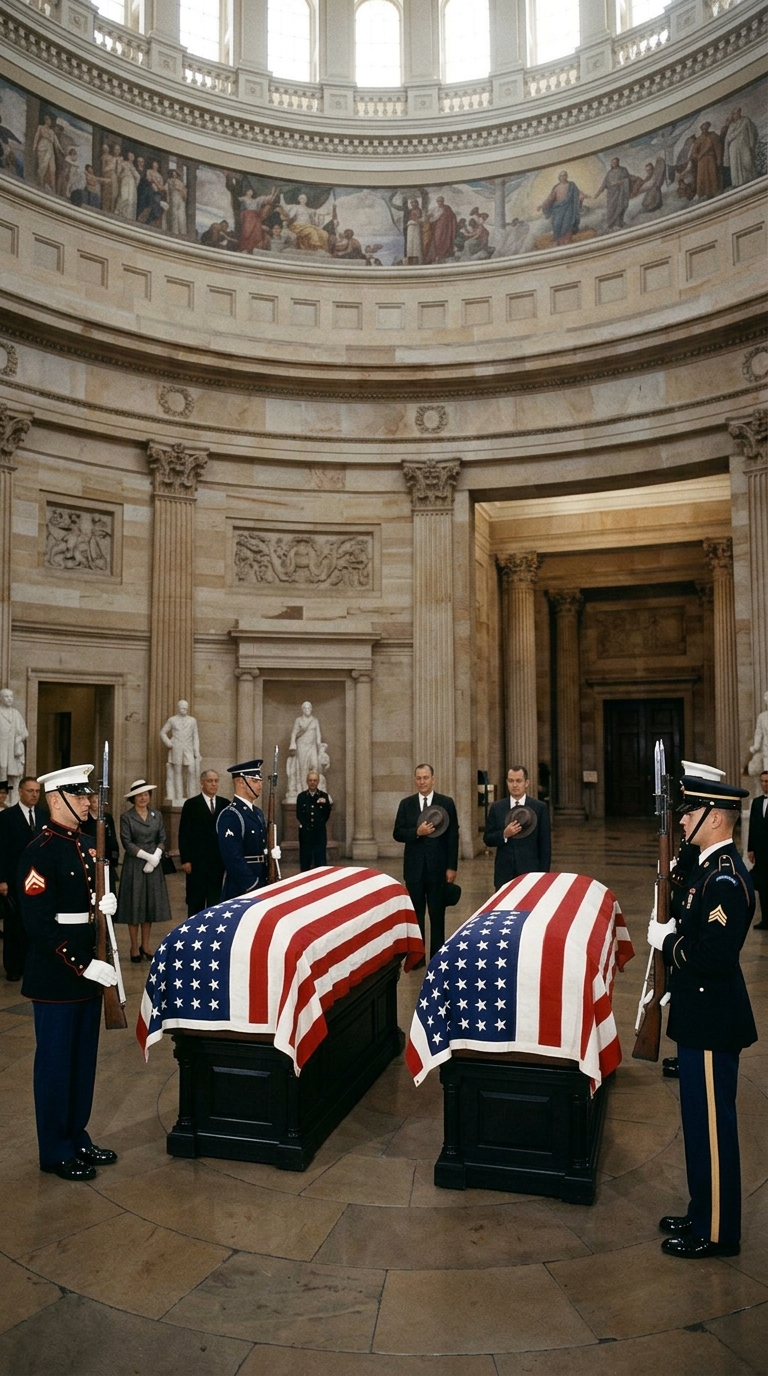
On the deck of the cruiser USS Canberra on May 26, 1958, morticians took turns shuffling two bronze caskets until nobody could tell which held a World War II soldier recovered from Europe and Africa and which held one from the Pacific. Then a Navy hospital corpsman named William R. Charette, a Medal of Honor recipient from the Korean War, hesitated, prayed for guidance by the Associated Press’s account, and laid his wreath on the casket to his right. The selection had begun at Epinal, France, on May 12, and the Korean War Unknown had been chosen in Hawaii on May 15.
The two lay in the Rotunda from May 28 to May 30, 1958, under House Concurrent Resolution 242. The Lincoln catafalque could hold only one of them, so the Army built an identical second catafalque at Fort Myer, and at noon on May 29 the caskets were switched so that each man spent time on Lincoln’s. On May 30, at Arlington, President Dwight Eisenhower placed a Medal of Honor on each casket, twenty jet fighters and bombers flew over with one plane missing from every formation, and some forty people in the procession were overcome by the heat; Supreme Court Justice Charles Whittaker collapsed at the amphitheater.
The man Charette did not choose was buried at sea, wrapped in a weighted canvas shroud, while the call went out over the ship: “All hands bury the dead.”
John F. Kennedy
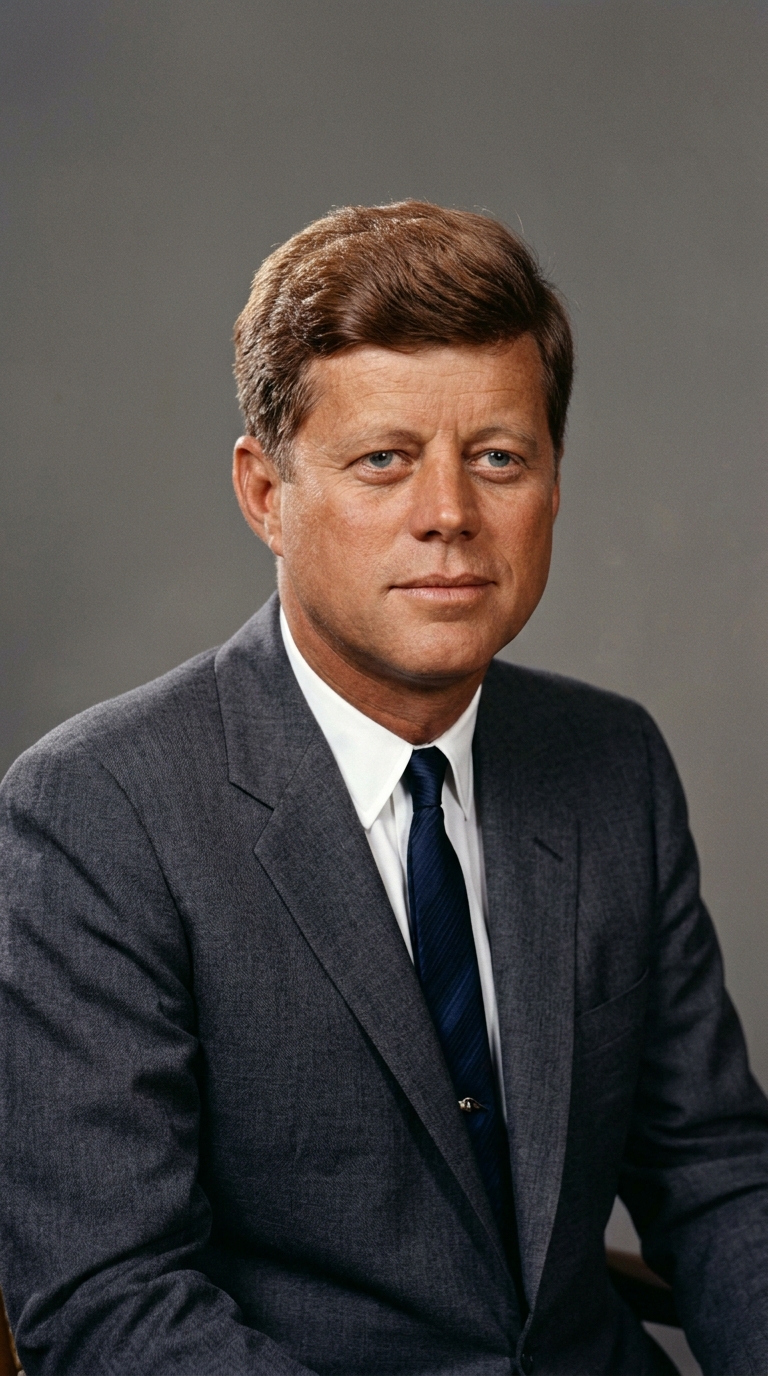
How many people filed past John F. Kennedy’s coffin depends on who was counting. Washington police and the Associated Press put it at about 240,000. The JFK Library says about 250,000 over 21 hours. What nobody disputes is the queue, which the Evening Star reported was “sometimes four miles long,” with some people standing as long as 10 hours in temperatures around 30 degrees; the Red Cross treated 143 of them, and 21 went to hospital.
Jacqueline Kennedy asked that the arrangements be modeled on Abraham Lincoln’s funeral, and on November 24, 1963 the casket was carried into the Rotunda and placed on the Lincoln catafalque itself. At her request the band played “Hail to the Chief” at 86 beats to the minute instead of the usual 120. Senator Mike Mansfield’s eulogy kept returning, like a refrain, to a single gesture: “And so, she took a ring from her finger and placed it in his hands.” The Rotunda closed to the public the next morning with thousands still waiting.
Behind the caisson walked Black Jack, the riderless horse, whose saddle carried an ammunition pouch that the JFK Library says was “empty of ammunition but weighed down with a lead ingot.” He went on to walk in the funerals of Herbert Hoover, Douglas MacArthur and Lyndon Johnson, and died in 1976, aged 29, the most experienced mourner in Washington.
Douglas MacArthur
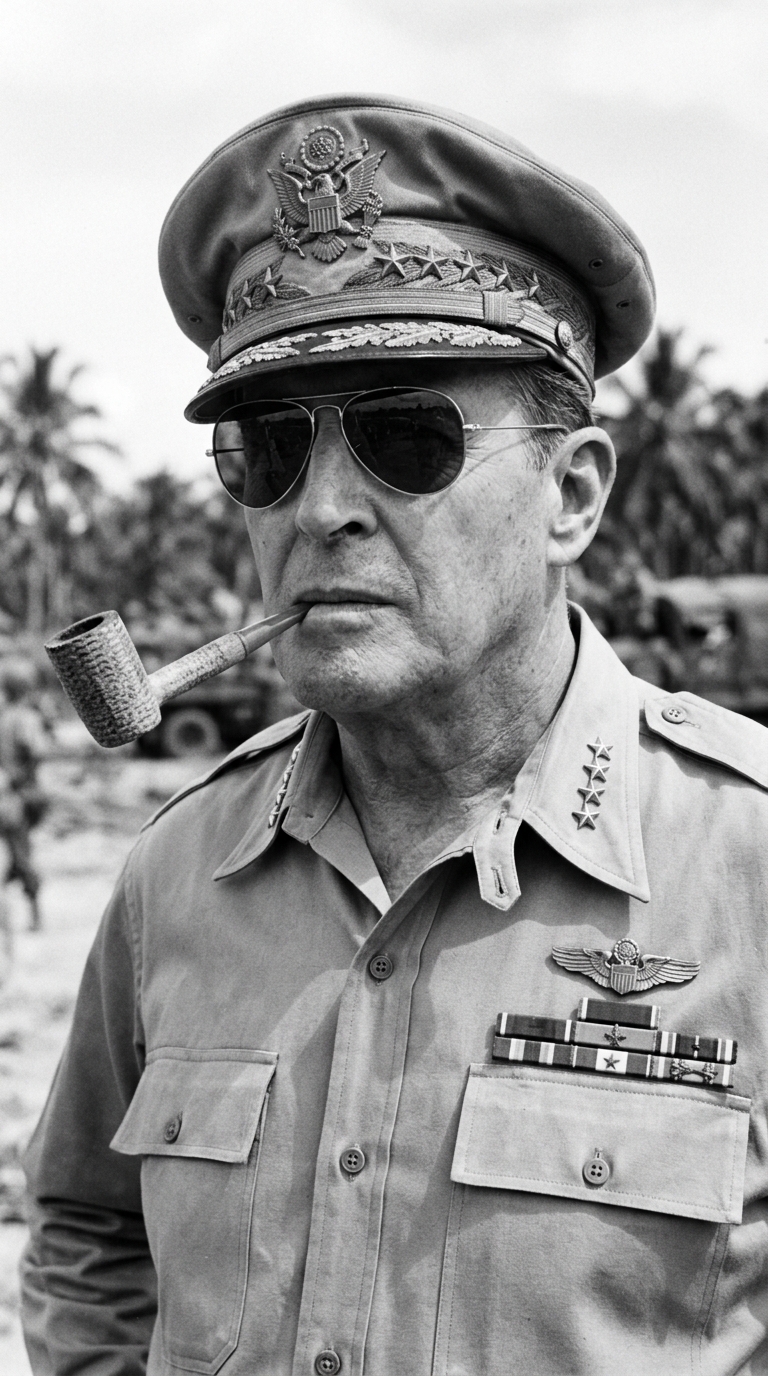
The general who lay in state in three cities is buried in one he never lived in. Douglas MacArthur was born at Little Rock Barracks, Arkansas, in 1880, lived all over the world, and lies in Norfolk, Virginia, his mother’s hometown. When he died at Walter Reed on April 5, 1964, aged 84, President Lyndon Johnson ordered that he be buried “with all the honor a grateful nation can bestow on a departed hero,” and the Army stretched the usual four days of a state funeral to seven.
His body lay in state in three places. Some 35,000 people passed the bier at the Seventh Regiment Armory in New York. On April 8 the funeral train reached Washington, the casket was set on the Lincoln catafalque, and President Johnson laid a wreath at its base; between 4:45 that afternoon and 12:30 the next day an estimated 150,000 people filed through the Rotunda. A plane then took him to Norfolk, where tens of thousands more came. He and his father, Arthur, were the first father and son to receive the Medal of Honor, and in 1951, relieved of his Korean command, he had told a joint meeting of Congress, “Old soldiers never die, they just fade away.” He did not do much fading.
He lies beneath the rotunda of the MacArthur Memorial, Norfolk’s old City Hall, whose consulting architect was Thomas Walter, the man who designed the dome of the Capitol.
Herbert Hoover
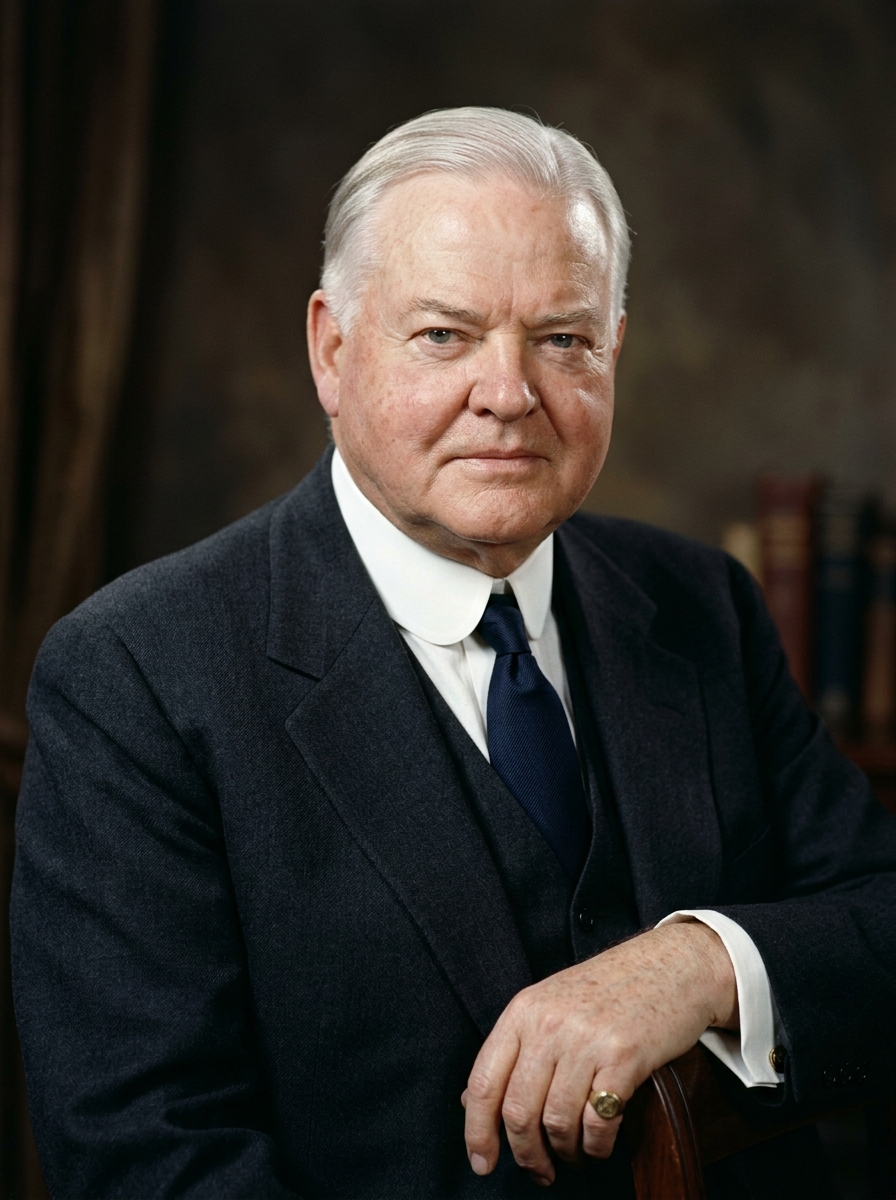
The day after Herbert Hoover died, a Democratic president running for election quoted him to a campaign crowd. In Belleville, Illinois, on October 21, 1964, Lyndon Johnson called the late Republican “my counselor when I assumed the responsibilities of the President” and then made the point plainly: “President Hoover was a Republican. I am a Democrat.” Hoover, earlier that year, had endorsed Johnson’s opponent, Barry Goldwater. Two days later Johnson was in the Rotunda paying his respects.
Hoover had died in New York on October 20, 1964, at 11:35 in the morning. Congress had already adjourned, so no resolution authorized the Rotunda; he lay there from October 23 to 25 all the same. He had been secretary of commerce under Warren Harding and Calvin Coolidge, food administrator under Woodrow Wilson, and president from 1929 to 1933, and he had made a habit of not keeping his government pay. In 1937 he explained that he kept his salary “in a separate account and distributed it where I thought it would do the most good.”
He never lost his taste for baseball. On his 90th birthday he complained, “The only flaw I can find in this wonderful day is that there is no baseball game to watch on television.” According to his presidential library, he and J. Edgar Hoover, who would lie in the same Rotunda in 1972, often received each other’s mail by mistake.
Dwight D. Eisenhower
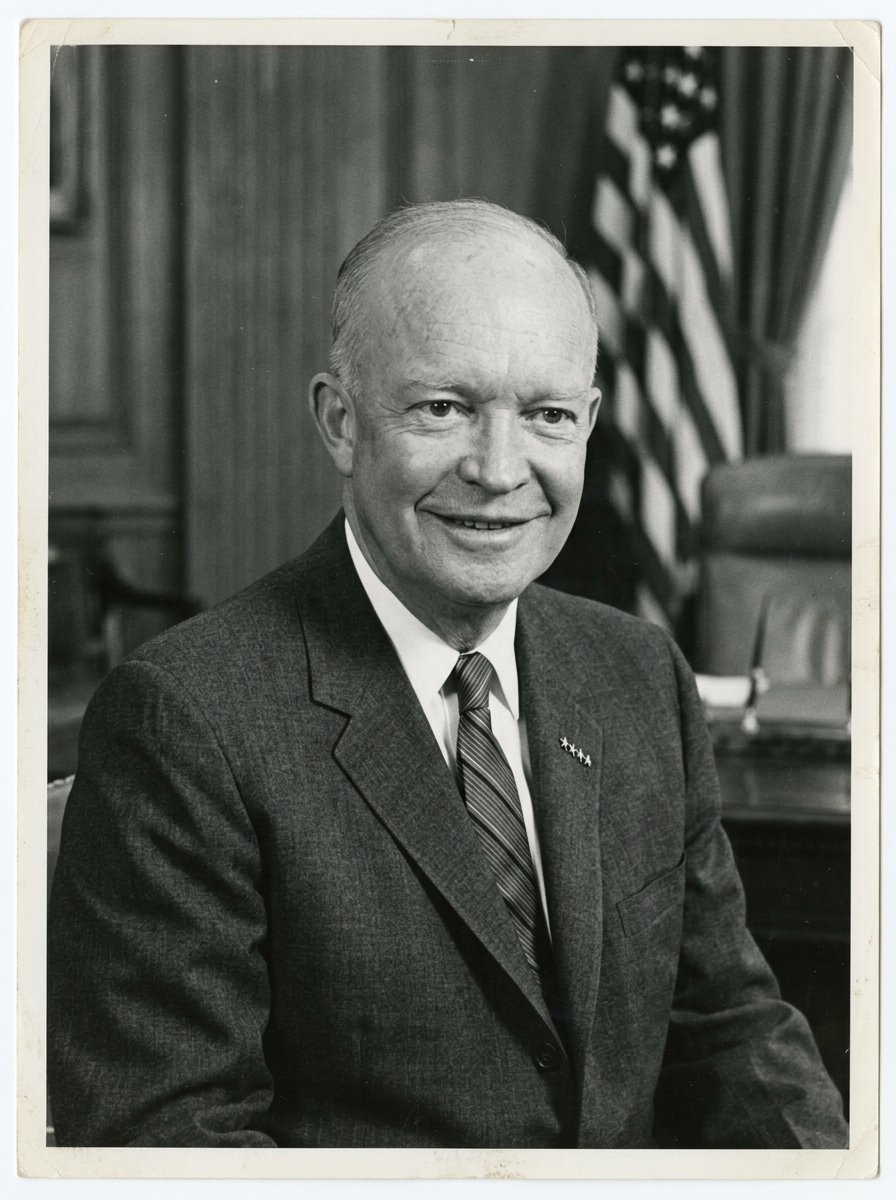
The casket cost $80. Dwight Eisenhower had asked for the standard Army issue, and his presidential library notes that the only difference between his and the one furnished for any soldier the Army buries was an inner glass seal that cost an extra $115. A five-star General of the Army and one of the presidents who were also generals, he had resigned his commission on becoming president; John F. Kennedy reactivated it.
He died on March 28, 1969, at Walter Reed Army Hospital, and his body then made a five-day circuit: 28 hours in repose at Washington National Cathedral, then the Capitol Rotunda on March 30 and 31, then a Cathedral funeral attended by 2,107 people admitted by ticket, then a funeral train to Abilene, Kansas, where he was buried on April 2. In the Rotunda, President Richard Nixon gave the eulogy and shared what he said were Eisenhower’s last words to his wife: “I have always loved my wife. I have always loved my children. I have always loved my grandchildren. And I have always loved my country.” President Charles de Gaulle of France came to the Rotunda to pay his respects.
Eisenhower was buried in his World War II uniform, wearing the short green “Ike” jacket and only three of his decorations. He went into the ground dressed as the general he had been, in a coffin any private could have had.
Everett M. Dirksen
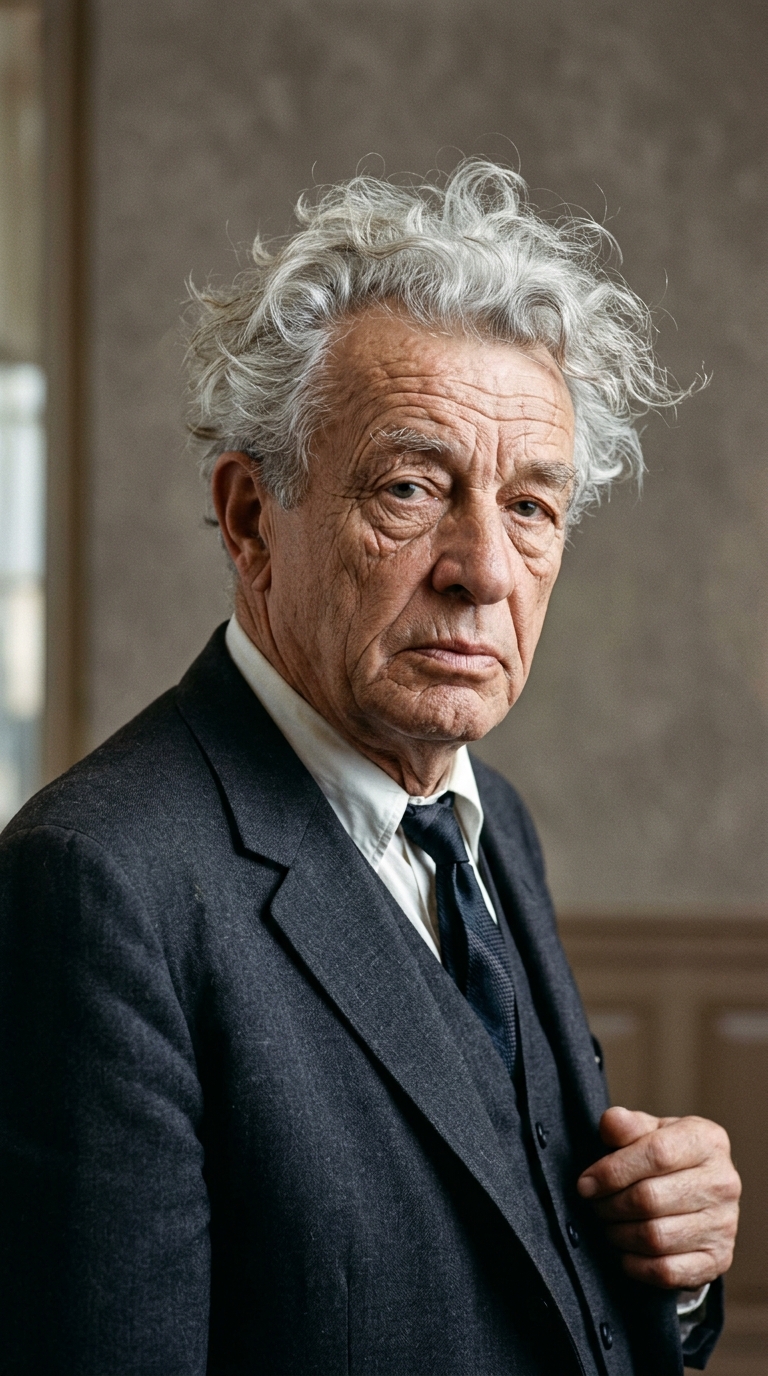
The Dirksen Congressional Center could find no evidence that Everett Dirksen ever said “A billion here, a billion there, and pretty soon you’re talking about real money.” Its archivists went through his tapes, clippings, transcripts and about 12,500 pages of speech notes and found nothing; the nearest documented remark, from a press conference on March 8, 1962, is “a billion here, a billion there,” without the punch line. The Library of Congress’s book of quotations prints the full version only as attributed to him secondhand. The center reported that more than 25 percent of its inquiries were about it anyway.
What he did say, he sometimes recorded. His album “Gallant Men” won a Grammy at the 10th annual awards, the same ceremony at which Sgt. Pepper’s Lonely Hearts Club Band took Album of the Year. As Senate Republican leader from 1959 he backed cloture in the 1964 civil rights debate, declaring integration “an idea whose time has come.”
He died on September 7, 1969, and two days later President Richard Nixon stood in the Rotunda and asked the mourners to remember him in the words he used for his favorite flower, the marigold: “hardy, vivid, exuberant, colorful--and uniquely American.” Dirksen had spent years pushing a bill, at the urging of the Burpee seed company, to make the marigold the national floral emblem. The campaign, the Dirksen Center notes, was ultimately unsuccessful.
J. Edgar Hoover
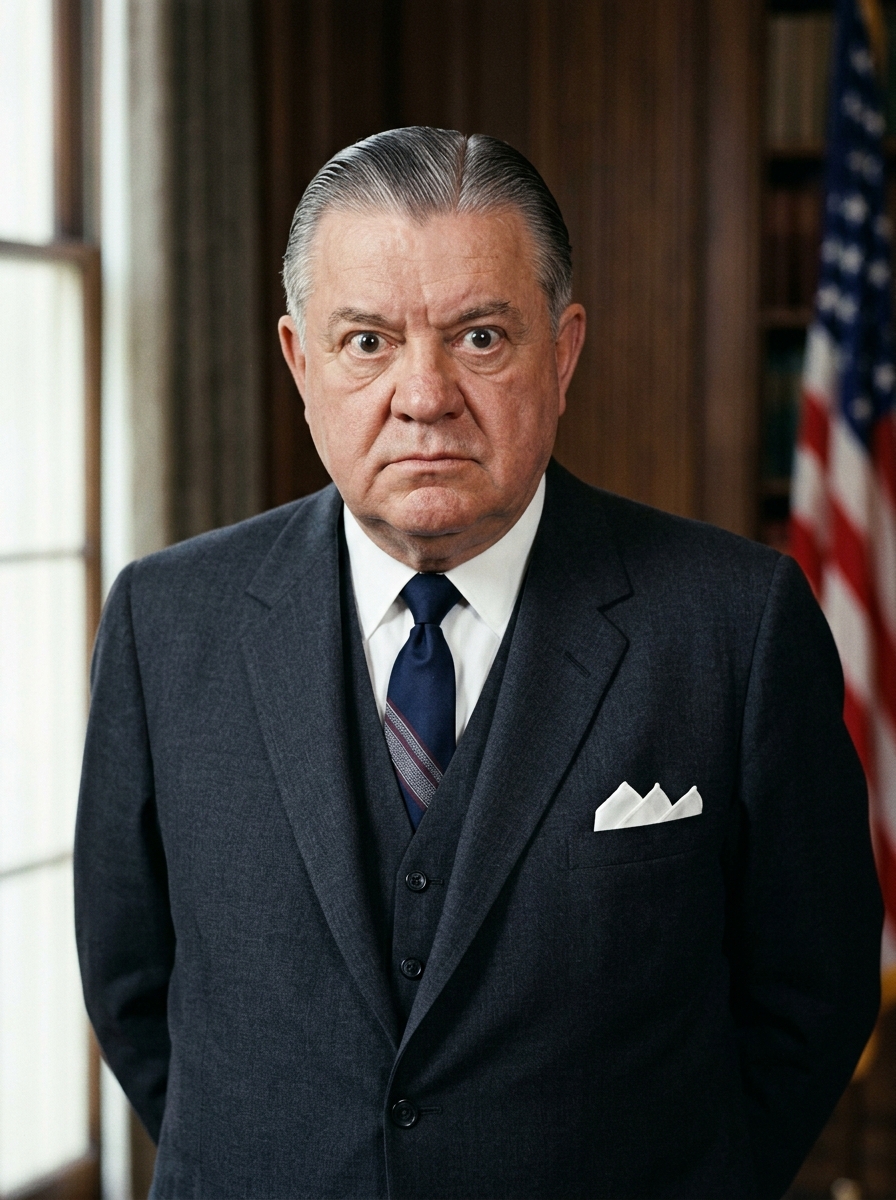
At 8:30 on the morning of May 2, 1972, J. Edgar Hoover’s maid found him dead beside his bed, and by the end of that day both houses of Congress had agreed to put him in the Rotunda. He had run the Bureau of Investigation and then the FBI since 1924; Richard Nixon, speaking to reporters that morning, said he had served “for 48 years under eight Presidents.” He had been allowed to stay past the mandatory retirement age of 70 by the personal decision of Nixon and, before him, Lyndon Johnson. Nixon said Eisenhower and Johnson had both urged him to keep Hoover on.
The medical examiner recorded hypertensive cardiovascular disease. Chief Justice Warren Burger delivered the eulogy at the brief Rotunda service on May 3, and Nixon spoke the next day at National Presbyterian Church, where he used one verb eight times in a row: “he personified integrity; he personified honor; he personified principle; he personified courage; he personified discipline; he personified dedication; he personified loyalty; he personified patriotism.” He called Hoover “the peace officer without peer.”
The same day, Nixon directed the General Services Administration to name the FBI headquarters then under construction the J. Edgar Hoover Building. Nixon had ended his eulogy with a psalm: “Great peace have they which love Thy law.”
Lyndon B. Johnson
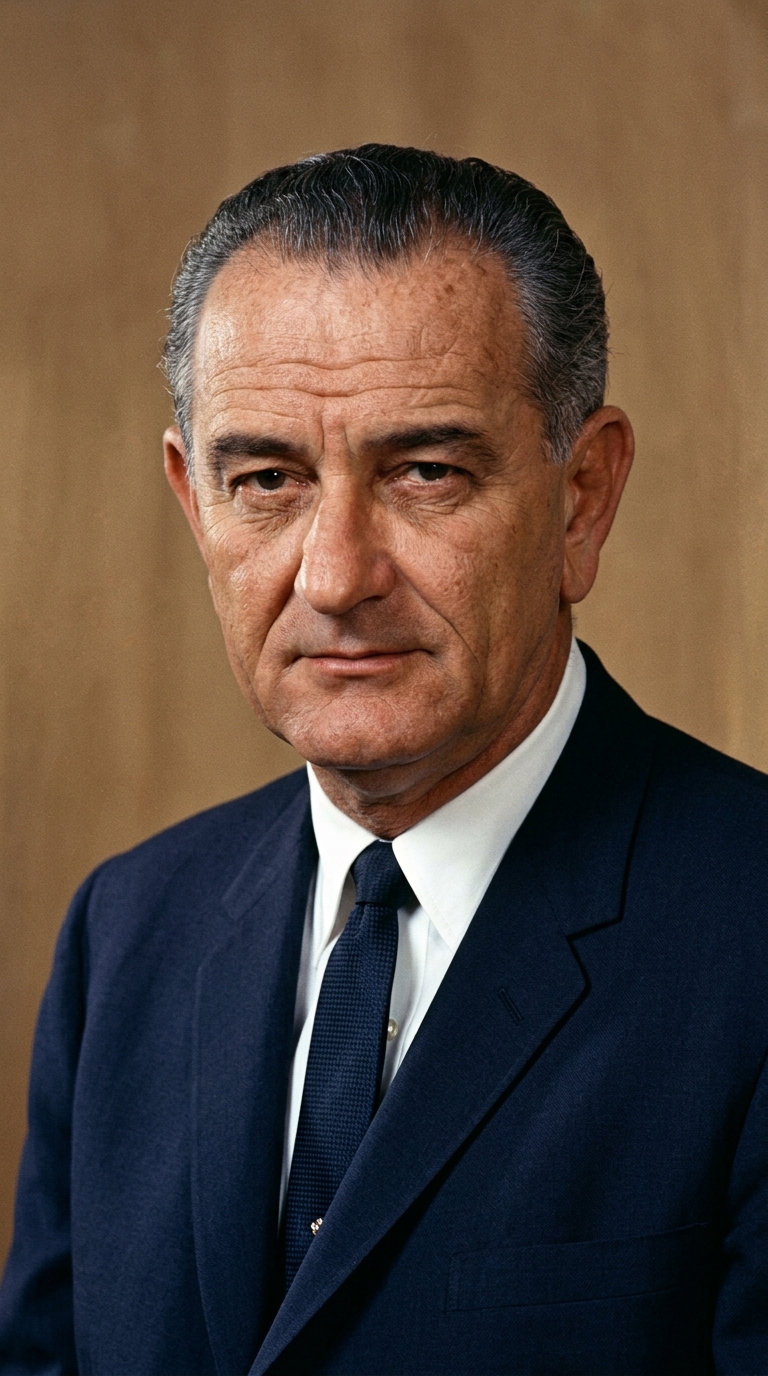
Less than a month after Harry Truman died, the only living former president died too. Lyndon Johnson had his third heart attack at his ranch in Texas on January 22, 1973, aged 64. The next day, January 23, Richard Nixon announced that the agreement to end the war in Vietnam had been initialed in Paris; it was signed on January 27. The Associated Press reported that he had died just as the war that drove him from office was coming to an end.
He had become one of the vice presidents who inherited the presidency on November 22, 1963. More than 32,000 people had already filed past him in repose in the Great Hall of his presidential library in Austin before Air Force One carried him to Washington, and on January 24 his coffin rested on the Lincoln catafalque in the Rotunda, where President Nixon laid a wreath. Capitol police estimated that 40,000 people passed it before the funeral at National City Christian Church the next day. Billy Graham conducted the burial in the family cemetery at the ranch on January 25, in steady rain. Graham would lie in honor in the same Rotunda in 2018.
Nixon’s proclamation of national mourning recalled that Johnson “once said that he was a free man, an American, a United States Senator, and a Democrat, in that order.”
Hubert H. Humphrey
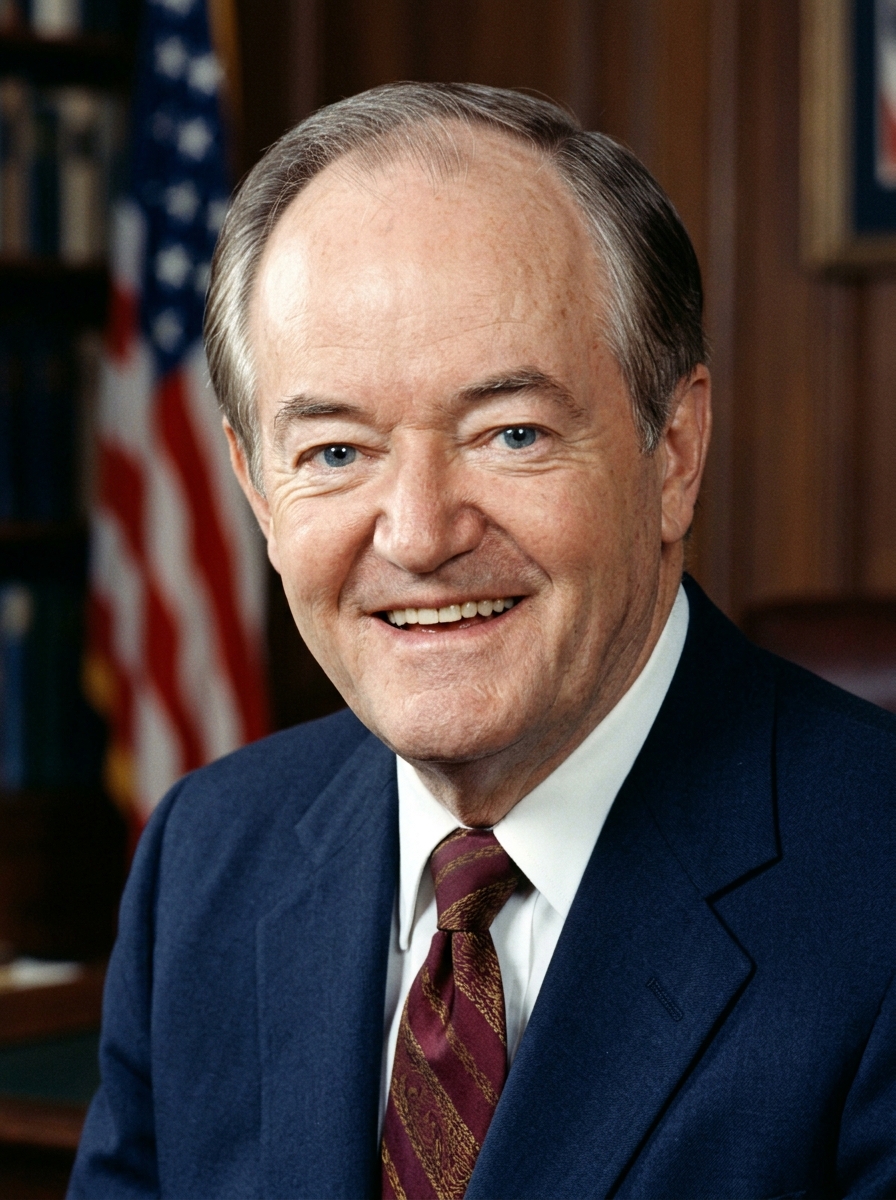
Hubert Humphrey asked that his memorial service in the Rotunda be a celebration, and so on January 15, 1978, it ended with the Metropolitan Opera baritone Robert Merrill singing “America, the Beautiful.” Then President Jimmy Carter passed along a request from Muriel Humphrey, and Merrill sang it again, inviting everyone to join in. It was 29 degrees outside. Isaac Stern’s trio played Mendelssohn. Vice President Walter Mondale said Humphrey “taught us how to live, and finally, he taught us how to die.”
He had died of cancer at his home in Waverly, Minnesota, on January 13, 1978, and Congress had in effect already said goodbye: in October 1977, when he was gravely ill, the House and Senate held what the official congressional biography calls “unprecedented sessions” in his honor. The Senate had created the office of Deputy President pro tempore for him. Former vice president, 1968 Democratic nominee, mayor of Minneapolis and “the Happy Warrior,” he lay in state without a resolution; the Speaker and the majority leader granted the room. Richard Nixon came back to Washington for the Rotunda service, his first appearance in the capital since resigning in August 1974.
Humphrey’s most quoted line is about the moral test of government and how it treats “those who are in the dawn of life, the children; those who are in the twilight of life, the elderly.” He introduced it in November 1977 with the words “It was once said that.” He was quoting.
The Unknown Soldier of the Vietnam Conflict
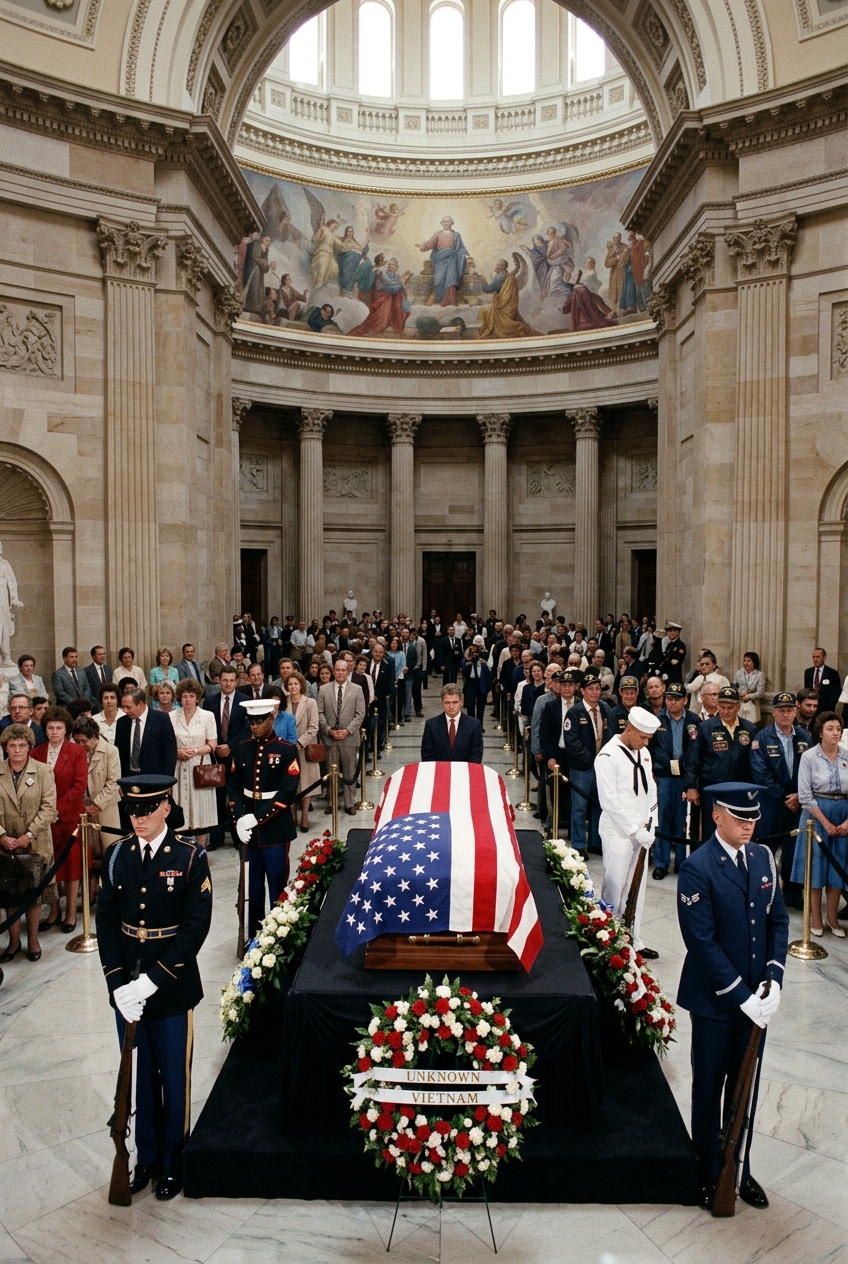
By May 1984, only four sets of recovered American remains from Vietnam had not been fully identified, and the Army’s identification laboratory in Hawaii had labeled one of them X-26. On May 17, 1984, at Pearl Harbor, a Marine sergeant major and Medal of Honor recipient, Allan Jay Kellogg Jr., designated those remains the Unknown Soldier of the Vietnam War. The same day Congress authorized the Rotunda, and the casket lay there from May 25 to 28.
At Arlington on Memorial Day, President Ronald Reagan presented the Unknown with the Medal of Honor and told the families of the missing, “We write no last chapters. We close no books. We put away no final memories.”
In 1998 the book was reopened. The Defense Department exhumed the crypt on May 14, mitochondrial DNA from a mother and a sister matched, and on June 30 President Bill Clinton announced that the Unknown was Air Force 1st Lt. Michael Joseph Blassie, 24, whose A-37B Dragonfly had been shot down near An Loc, about 60 miles north of Saigon, on May 11, 1972. His mother, Jean, had said simply, “We want the truth, we want to bring him home.” He was reburied at Jefferson Barracks National Cemetery in St. Louis on July 11, 1998. The crypt at Arlington was left empty, and on September 17, 1999 it was rededicated to all the missing of the Vietnam War.
Claude Pepper
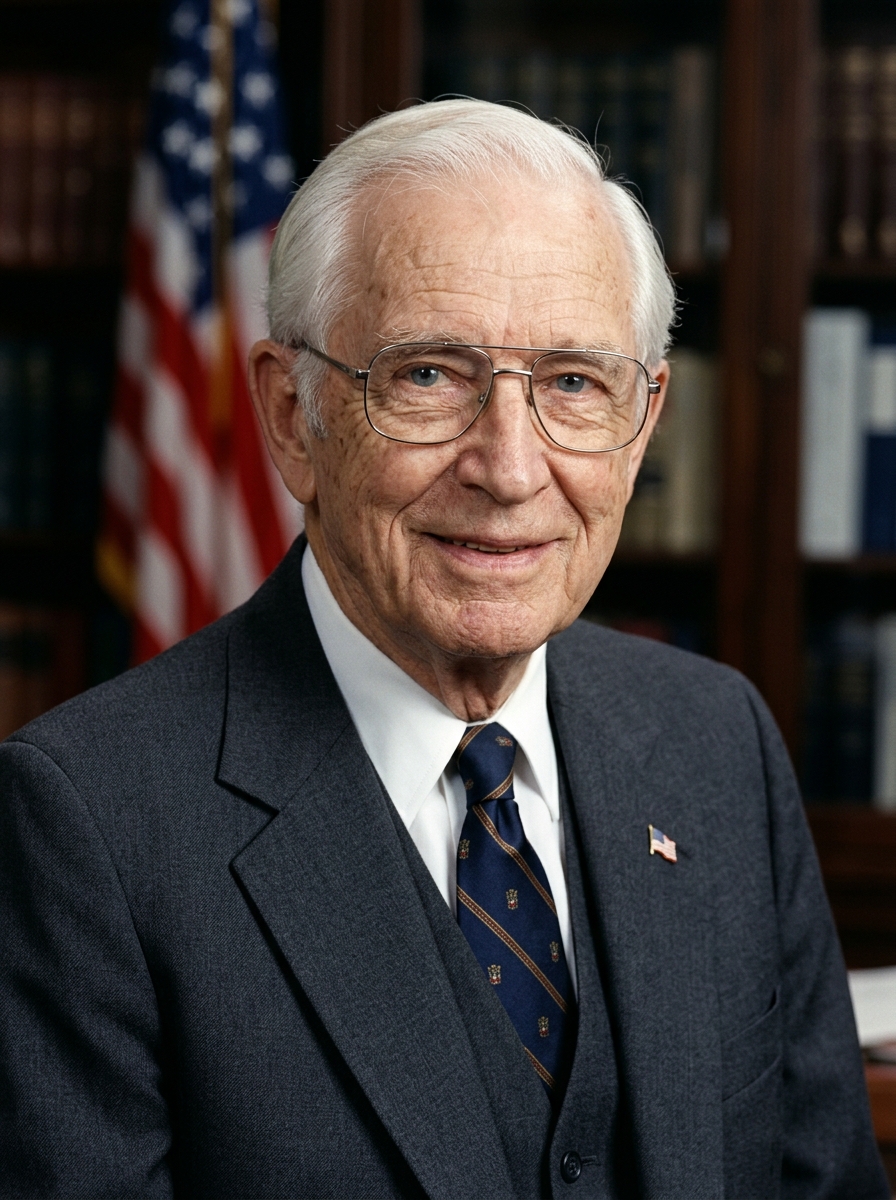
The Presidential Medal of Freedom came to Claude Pepper in a hospital room. President George H.W. Bush and Barbara Bush visited him at Walter Reed Army Medical Center in late May 1989 and presented it at his bedside, and a few days later, on May 30, he died, aged 88, the oldest member of Congress. He had first reached the Senate in 1936 to fill the seat of Duncan Fletcher, in a year when both of Florida’s senators died within five weeks of each other.
In 1950 he lost his Senate seat in a primary in which opponents circulated a booklet called “The Red Record of Senator Claude Pepper,” and he was habitually called “Red” Pepper. The most famous line from that race, in which his opponent George Smathers supposedly told rural voters that Pepper was “a shameless extrovert,” was dismissed by Smathers himself as apocryphal. Pepper returned in the House from 1963 and became, in Representative Edward Roybal’s phrase, “Mr. Senior Citizen”: he was the key sponsor of the 1978 law raising the mandatory retirement age from 65 to 70 and the 1986 law abolishing it. One of his first bills in the Florida legislature let people over 65 fish without a license. The Capitol Historical Society records him as the last person to lie in state in an open casket.
He liked going to Christmas parties for 100-year-olds. “It’s a great joy for a young fellow like me to be here,” he would say.
Jacob J. Chestnut and John M. Gibson
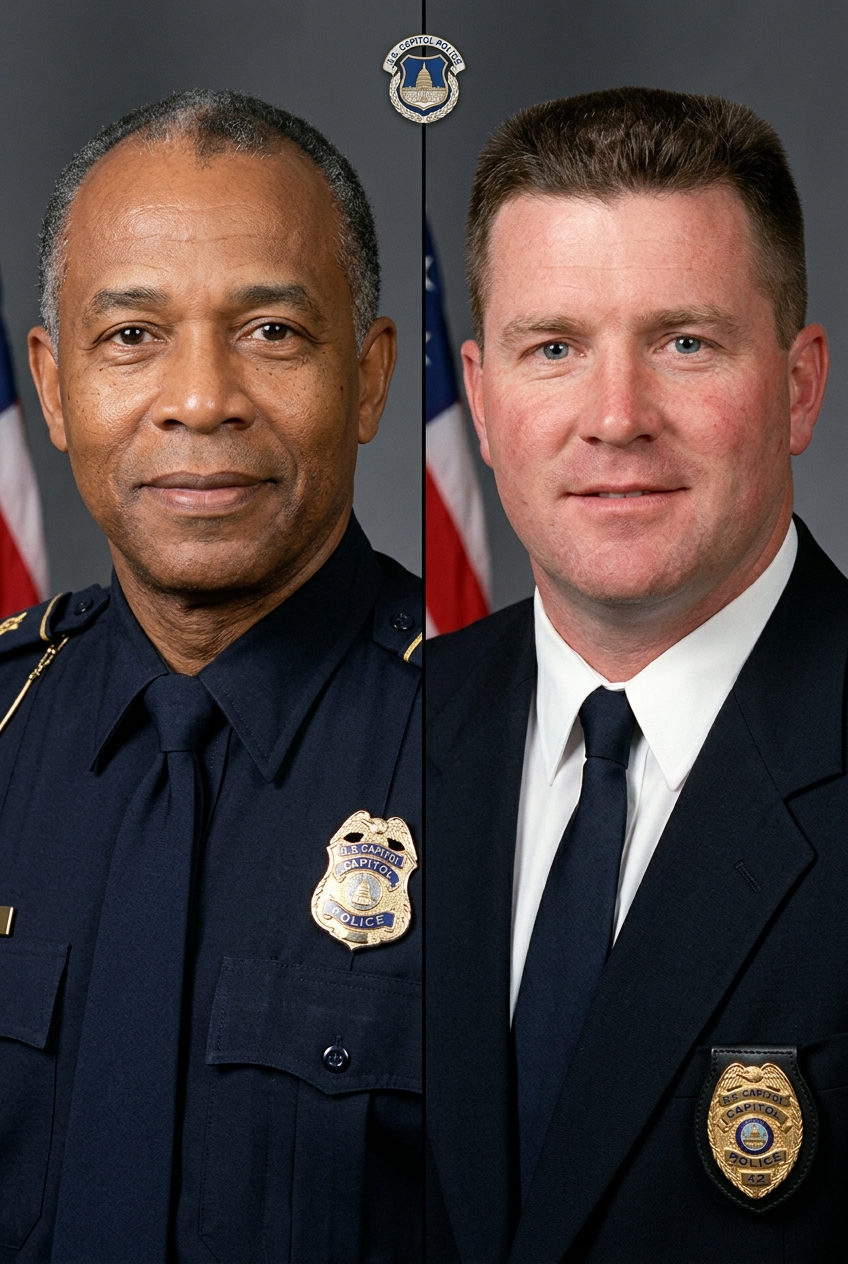
Congress’s resolution of July 27, 1998 authorized the Rotunda only “for a memorial service” for the two Capitol Police officers killed three days earlier. Nobody used the phrase “lie in honor” in it. Yet the Architect of the Capitol and the House Historian both record Officer Jacob J. Chestnut and Detective John M. Gibson as the first people to lie in honor in the Rotunda, and the House Historian adds that Chestnut was the first Black man to receive the honor.
They were shot on July 24, 1998, a muggy Friday afternoon, when a gunman opened fire inside the Capitol. Chestnut, an 18-year veteran of the force who had served two tours with the Air Force military police in Vietnam, was killed. The gunman then ran toward the office of Majority Whip Tom DeLay, whose security detail Gibson was on. Gibson told the aides to take cover and, though fatally wounded, returned fire, which let other officers subdue the attacker. The Lincoln catafalque was not used for either man. President Bill Clinton spoke in the Rotunda at 3:30 p.m. on July 28: “They loved justice. They did mercy. Now and forever, they walk humbly with their God.”
Three months after the shooting, Congress put $100 million toward a new Capitol Visitor Center and another $106.7 million toward security. The visitor center would later become the Lincoln catafalque’s home between funerals.
Ronald Reagan
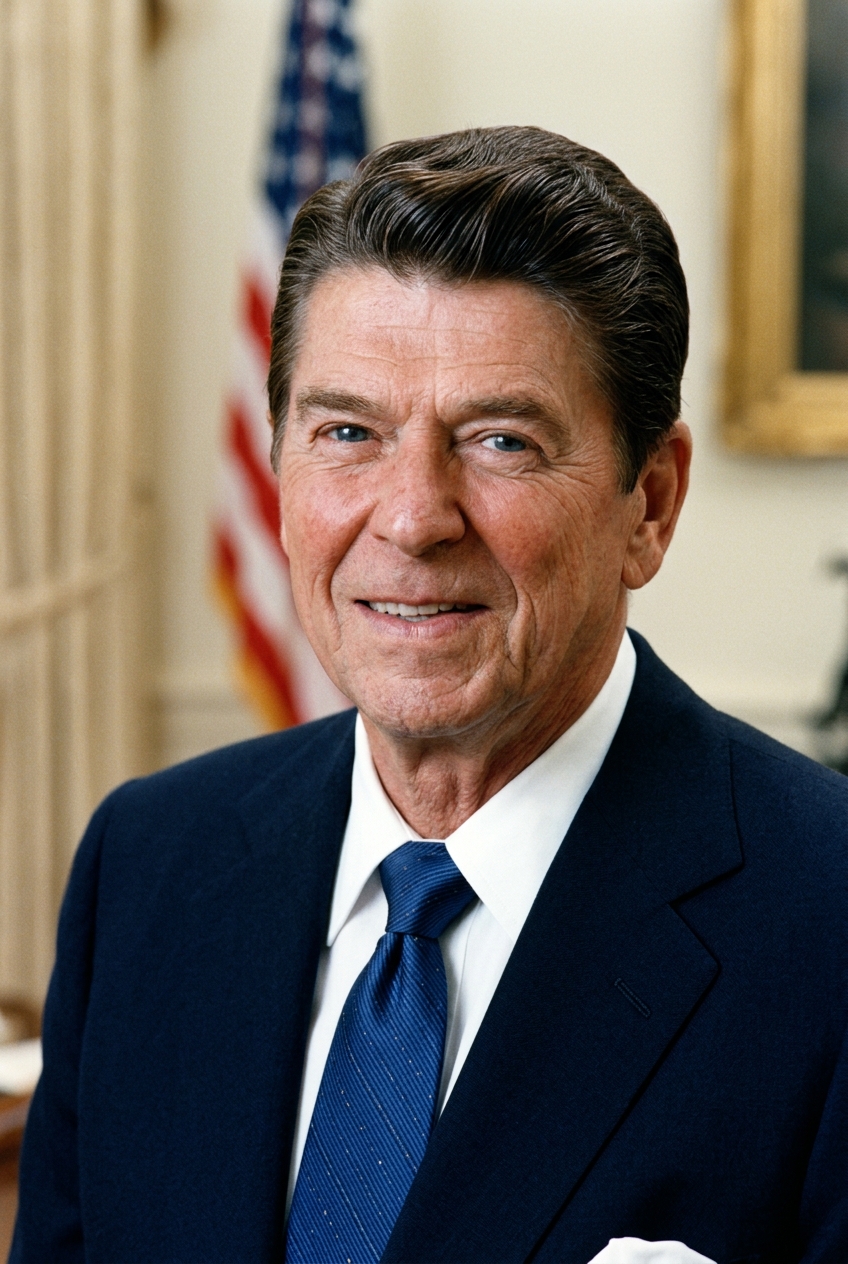
Mikhail Gorbachev came to the Rotunda in June 2004 and, passing the coffin of his old Cold War rival, reached out and briefly laid his palm on it. Ronald Reagan had died in Bel Air, California, on June 5, aged 93, and his casket rested on the catafalque built in 1865 for Abraham Lincoln. CNN called the funeral the first such ceremony in Washington in more than three decades; the last state funeral had been Lyndon Johnson’s in 1973.
The Capitol Police had braced for as many as 200,000 mourners. The wait, which had stretched to five hours on the first night, fell to an hour and 45 minutes the next morning, and by 11 p.m. on Thursday, June 10, the Military District of Washington counted 69,000 people. Margaret Thatcher was the first to sign the condolence book at Blair House: “To Ronnie, well done thou good and faithful servant.” Four former presidents, Jimmy Carter, Bill Clinton, Gerald Ford and George H.W. Bush, came to Washington for the funeral. Reagan, according to his family’s representatives, had begun talking about it in 1981, the year he became president.
He was buried at sunset in Simi Valley, California, beneath an inscription that reads: “I know in my heart that man is good.”
Rosa Parks
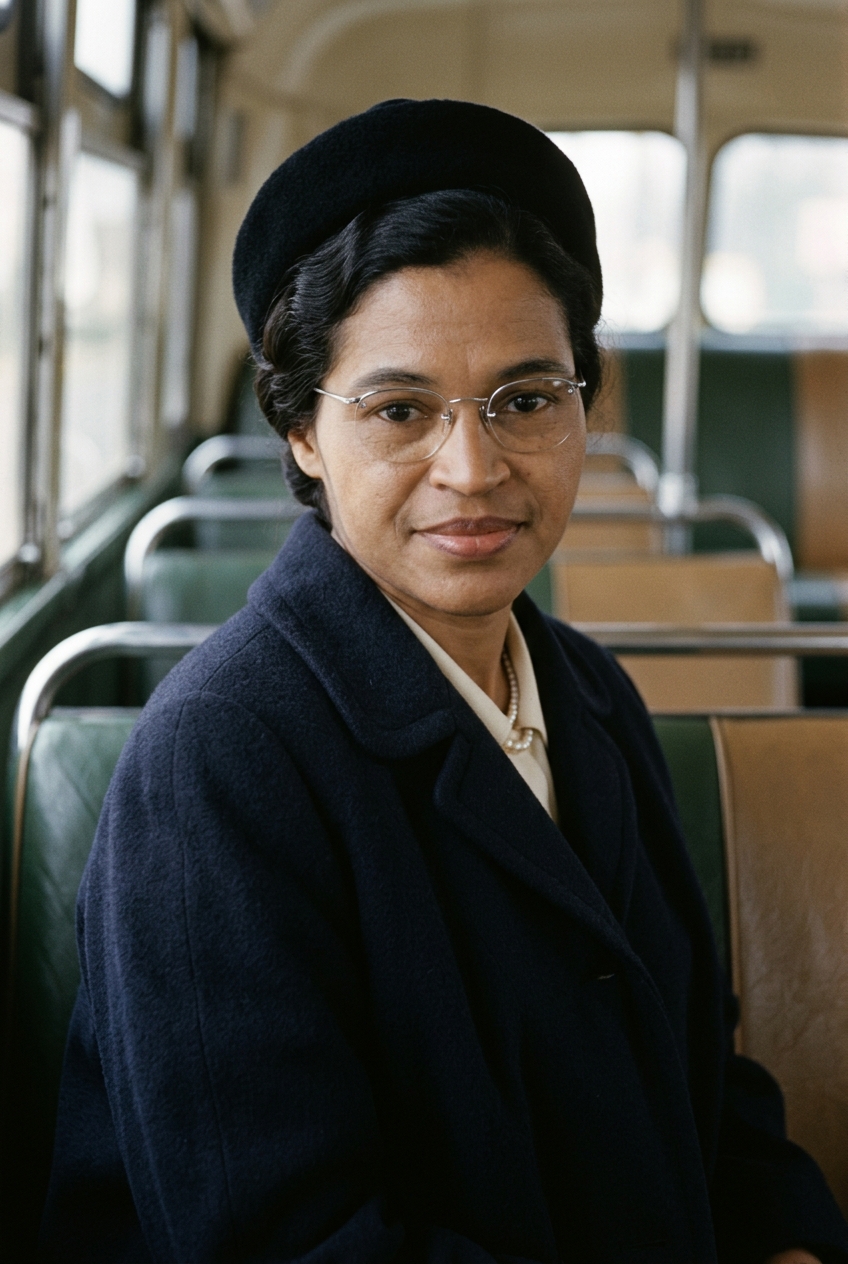
Six years before she lay in the Rotunda, Rosa Parks stood in it. On June 15, 1999, at 4:10 in the afternoon, President Bill Clinton presented her there with the Congressional Gold Medal, and quoted her own explanation of December 1, 1955: “I didn’t get on that bus to get arrested. I got on that bus to go home.”
She died in Detroit on October 24, 2005, aged 92, and on October 30 and 31 her closed casket lay in the Rotunda, the first time a woman had been so honored. She was the third person to lie in honor, after the two Capitol Police officers of 1998, and, like them, she did not rest on the Lincoln catafalque. NPR reported that some 30,000 people passed her casket on the first night and the following morning, and President George W. Bush and Laura Bush laid a wreath. Congress, as it happened, had been her employer: Representative John Conyers of Michigan hired her in 1965, and she worked for him until she retired in 1988.
Speaking on the House floor, Representative Todd Platts said, “There must be room in this building for not only members of Congress and Presidents, but also for a seamstress and her moral legacy.” In 2013 the building made more room still, with a full-length bronze statue of her in National Statuary Hall, the first full-length statue of an African American in the Capitol.
Gerald R. Ford
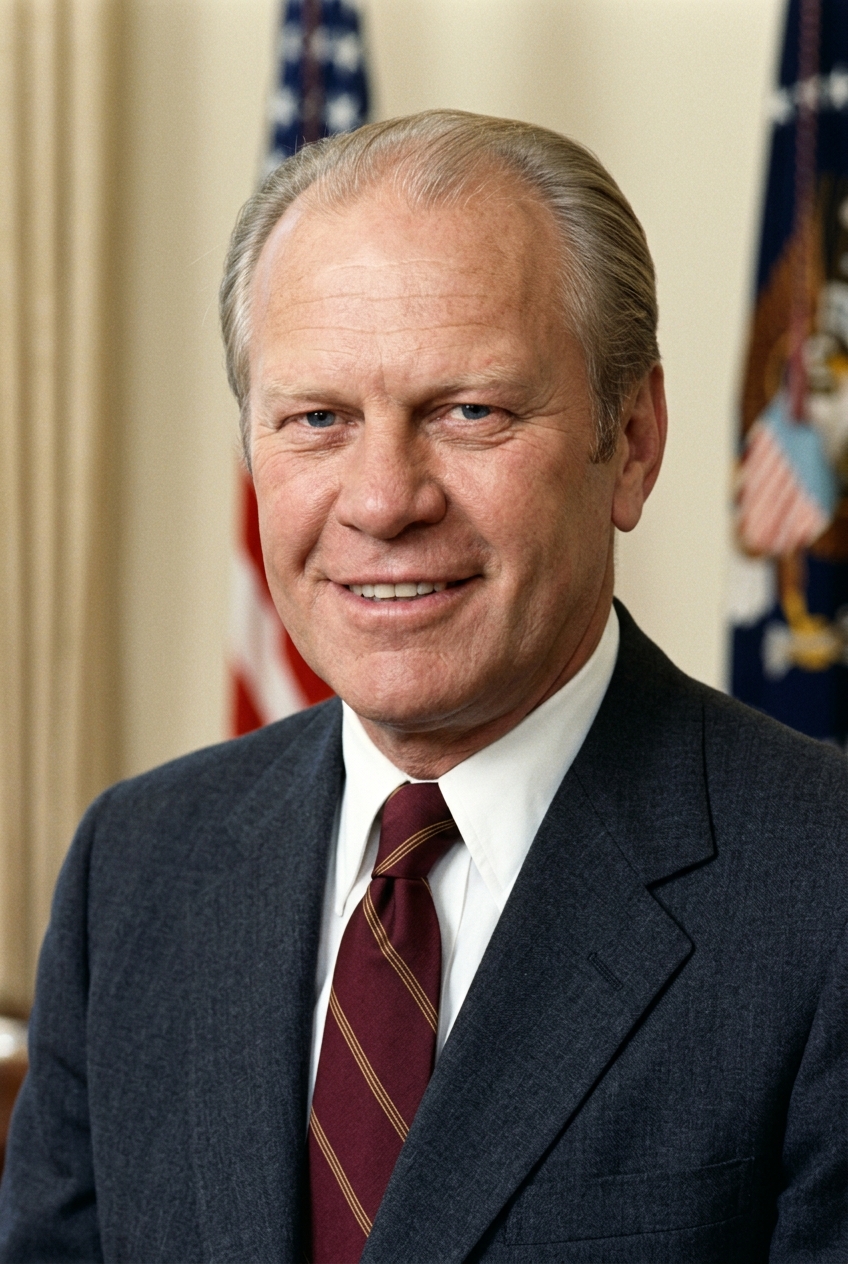
What Gerald Ford really wanted in Washington was to be Speaker of the House. He led House Republicans through five Congresses but never won a majority, and, as his presidential library puts it, “Ironically, he did become president of the Senate.” When Spiro Agnew resigned, Richard Nixon appointed Ford vice president under the 25th Amendment, and on August 9, 1974 he took the oath as president, declaring that “the long national nightmare is over.”
He died at home in Rancho Mirage, California, on December 26, 2006, aged 93, with Congress adjourned, so no resolution was passed; the Speaker and the Senate majority leader opened the Rotunda instead, from December 30 to January 2. On the way in, Speaker Dennis Hastert said, the cortege “paused at the door to the House of Representatives,” where Ford had spent a quarter of a century as “The Gentleman from Michigan.” Vice President Dick Cheney recalled that “He first stood under this dome at the age of 17, on a high school tour in the Hoover years.” His library estimates that 36,000 people visited the Rotunda.
One eulogy at his funeral in Grand Rapids on January 3, 2007 was given by Jimmy Carter, the man who had beaten him in 1976. “For myself and for our nation,” Carter said, “I want to thank my predecessor for all he has done to heal our land.”
Daniel K. Inouye
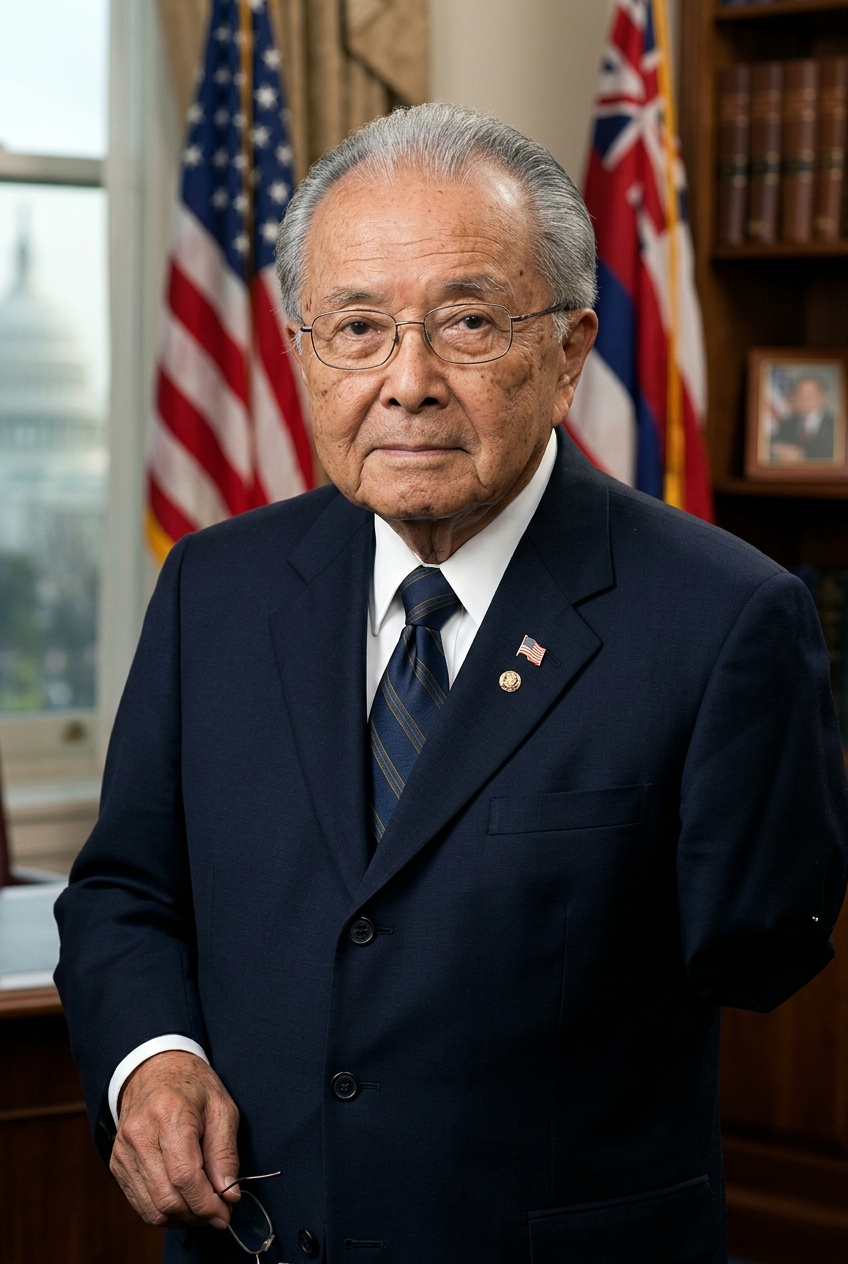
“We don’t have too many one-armed, Japanese Congressmen here,” Speaker Sam Rayburn told Daniel Inouye when he arrived in the House in 1959. The arm was ruined on April 21, 1945, near San Terenzo in Italy, when a German rifle grenade struck his right elbow just as he cocked it to throw a grenade of his own. His primed grenade stayed, as he later wrote, “clenched in a fist that suddenly didn’t belong to me anymore.” He pried it loose with his left hand and threw it.
The Medal of Honor came on June 21, 2000, an upgrade of his Distinguished Service Cross, presented by President Bill Clinton along with awards for 19 other Japanese American veterans of the 442nd. In 1968 Lyndon Johnson had urged Hubert Humphrey to take Inouye as his running mate, saying, “He answers Vietnam with that empty sleeve.” Humphrey did not. When Inouye died at Walter Reed on December 17, 2012, aged 88, he was the second-longest-serving senator in the chamber’s history.
On December 20 his casket came to the Rotunda. Bob Dole, who usually got about in a wheelchair, chose to walk to the casket and saluted with his left hand; the two had met as wounded soldiers at Percy Jones Army Hospital in Battle Creek, Michigan. Inouye’s office reported that his last word had been “Aloha.”
Billy Graham
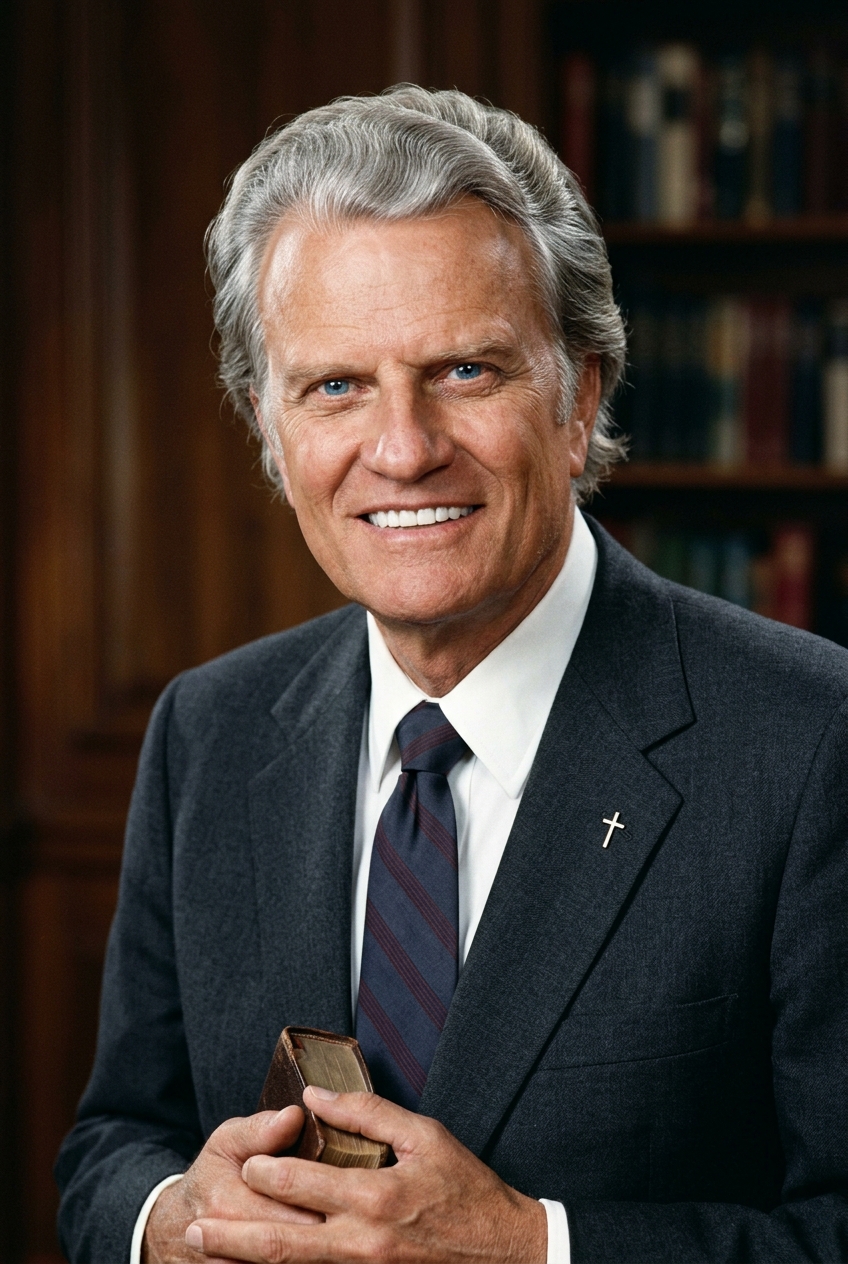
Prisoners built Billy Graham’s coffin. It was a plain pine plywood box made in 2006 by inmates at the Louisiana State Penitentiary at Angola, lined with a mattress pad, with a wooden cross the prisoners nailed on top; the Billy Graham Evangelistic Association says such caskets cost around $200 to make. His son Franklin had ordered two after watching inmates build them, and his mother, Ruth, was buried in the other in 2007. One of the builders, Richard Liggett, explained the design, as the prison chaplain recalled it: “Billy Graham is a simple man who preached a simple message. He must be buried in a simple casket.”
Graham died at home in Montreat, North Carolina, on February 21, 2018, aged 99, and from February 28 to March 1 the coffin lay in the Rotunda. The Associated Press counted him as only the fourth private citizen to lie in honor. Speaker Paul Ryan called him “America’s pastor,” and President Donald Trump recalled being taken by his father to see Graham at Yankee Stadium: “Fred Trump was a big fan. Fred Trump was my father.”
His association reckons that he preached to nearly 215 million people in more than 185 countries and territories. Exactly how many presidents he counseled depends on whom you ask: Samaritan’s Purse says 12, his library says 13. In 2024 he returned to the Capitol in bronze, when North Carolina’s statue of him was unveiled in National Statuary Hall.
John McCain
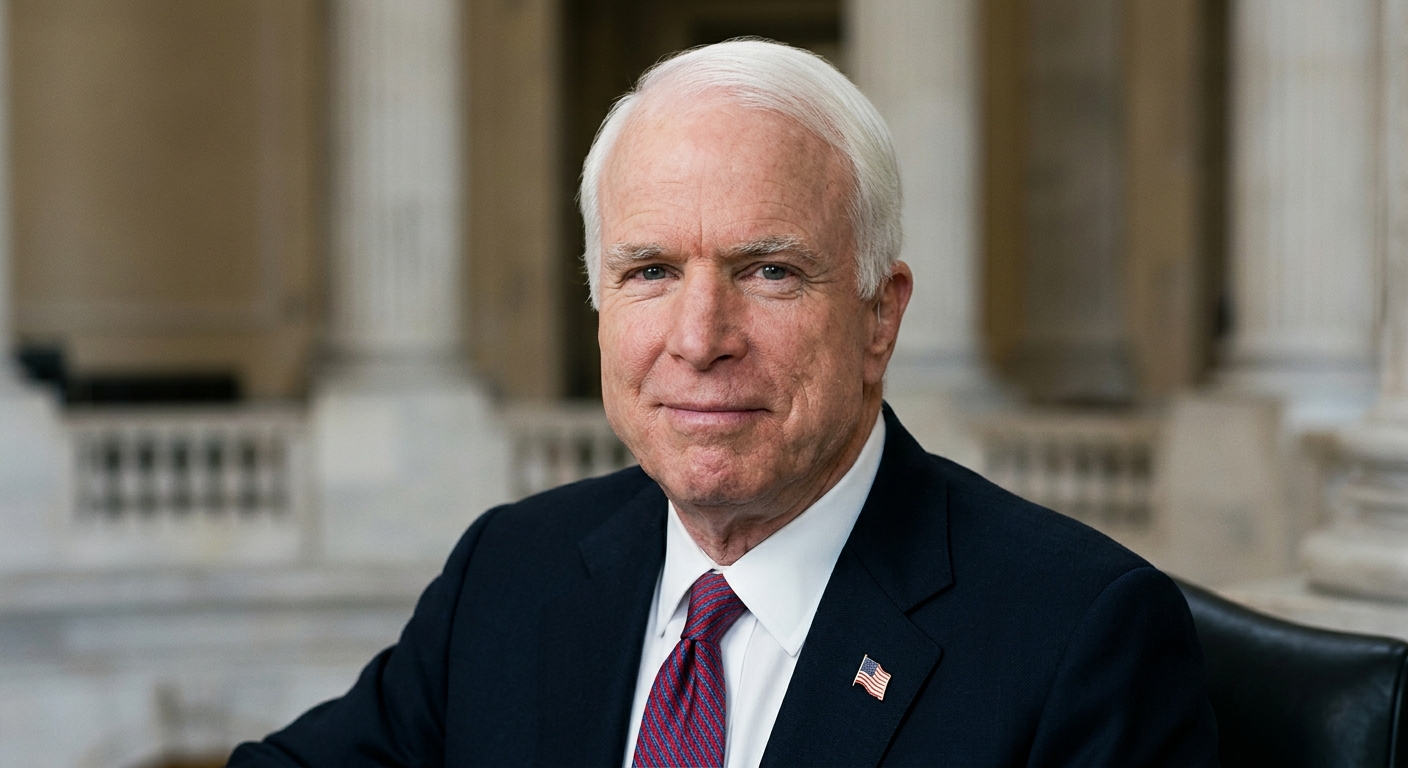
Two former presidents eulogized John McCain because he had asked them to: Barack Obama and George W. Bush both spoke at Washington National Cathedral on September 1, 2018. His family had also asked, before his death, that the sitting president not attend.
McCain died on August 25, 2018, aged 81, and was brought to the Capitol to lie in state on August 31. Vice President Mike Pence quoted one of his best lines: “I fell in love with my country when I was a prisoner in someone else’s.” On October 26, 1967, McCain’s A-4 Skyhawk was hit by a surface-to-air missile over Hanoi and he came down in Truc Bach Lake, in the middle of the city. He spent five and a half years as a prisoner. According to CNN’s reporting, the North Vietnamese, knowing his father commanded American forces in the Pacific, offered him early release in exchange for a confession, and he refused, as a breach of the military’s code of conduct.
He was buried on September 2 at the Naval Academy Cemetery in Annapolis, next to his classmate and friend Admiral Charles Larson. In Hanoi, meanwhile, the small monument beside Truc Bach Lake that commemorates his capture became a makeshift shrine, with flowers, incense and a wreath from the American embassy.
George H.W. Bush
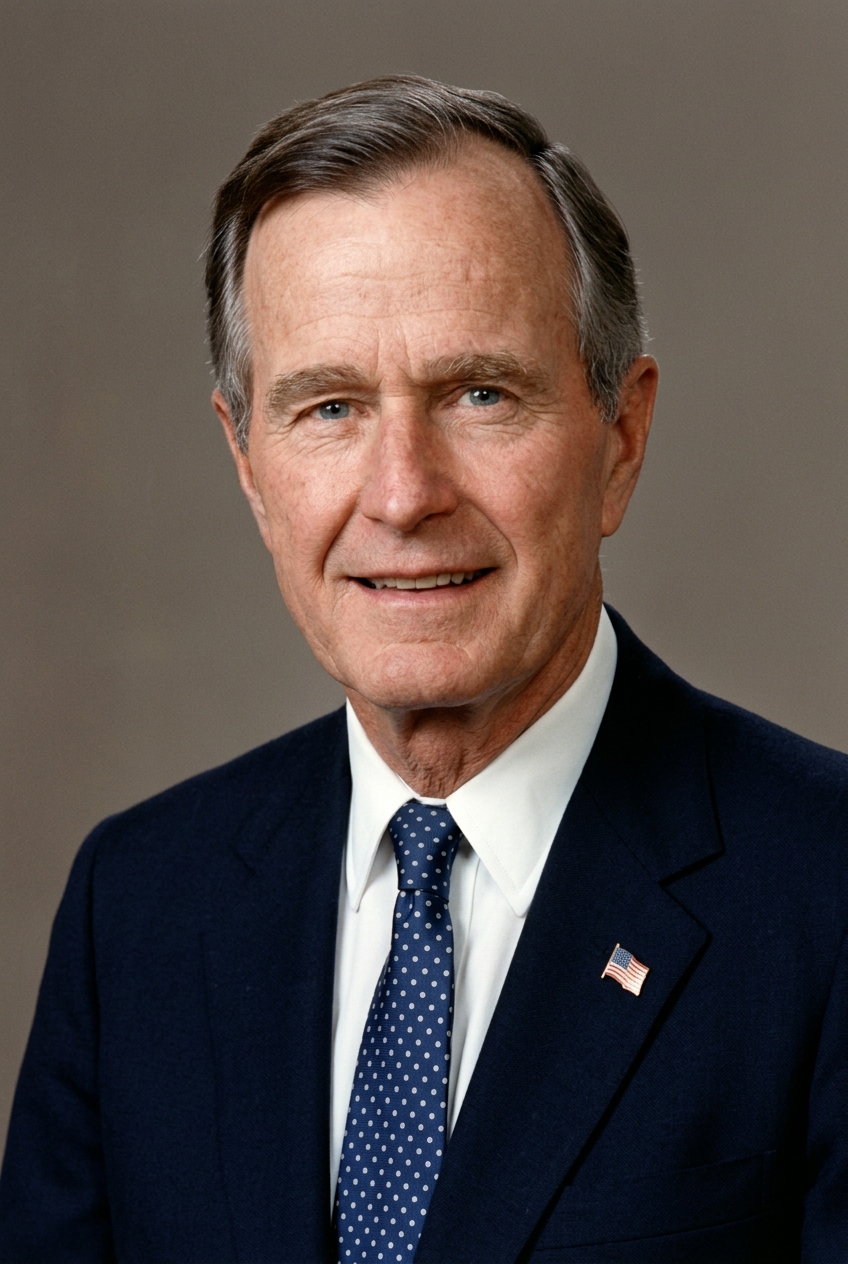
The photograph that went around the world, of Sully the yellow Labrador lying beside George H.W. Bush’s casket under the words “Mission complete,” was taken in Houston on December 2, 2018. Sully then flew to Washington with the casket aboard Air Force One, which for the trip was renamed Special Air Mission 41, and on December 4 he was brought into the Rotunda to say goodbye, sitting quietly in front of the casket.
Bush had died in Houston on November 30 and lay in state from December 3 to 5. Thousands filed past through the night. President Donald Trump saluted the casket, and former military commanders including Colin Powell came to salute their old commander in chief. On December 4 Bob Dole, 95, was helped up from his wheelchair and stood for nearly 20 seconds, saluting with his left hand, his only good arm. President Trump’s proclamation recalled that Bush had volunteered for combat duty on the day he turned 18 and, as the youngest aviator in United States naval history at the time, flown 58 combat missions, once parachuting from his burning plane into the Pacific.
Every living president attended his funeral at Washington National Cathedral on December 5. He was buried at his presidential library in College Station, Texas, beside his wife, Barbara, and their daughter Robin, who had died of leukemia in 1953.
John Lewis
On July 26, 2020, John Lewis crossed the Edmund Pettus Bridge in Selma for the last time, on a horse-drawn caisson rolling over rose petals. On March 7, 1965, Bloody Sunday, he had led marchers across the same bridge at the age of 25, and police had fractured his skull. “I gave a little blood on that bridge,” he said later.
Lewis died on July 17, 2020, aged 80, a member of the House since 1987. On July 27 an honor guard carried his casket into the Rotunda and set it on the catafalque built for Abraham Lincoln for an invitation-only ceremony. Speaker Nancy Pelosi recalled that he had been the youngest speaker at the March on Washington. Then a recording of his own voice filled the room: “You must find a way to get in the way. You must find a way to get in trouble, good trouble, necessary trouble.” Members of the Congressional Black Caucus wore masks that read “Good Trouble.”
Because the pandemic had closed the Capitol to visitors, the casket was then moved to the top of the East Front Steps, and the public filed past outdoors on the East Plaza until it was carried down early on July 29. He was the first Black lawmaker to lie in state in the Rotunda.
Brian D. Sicknick
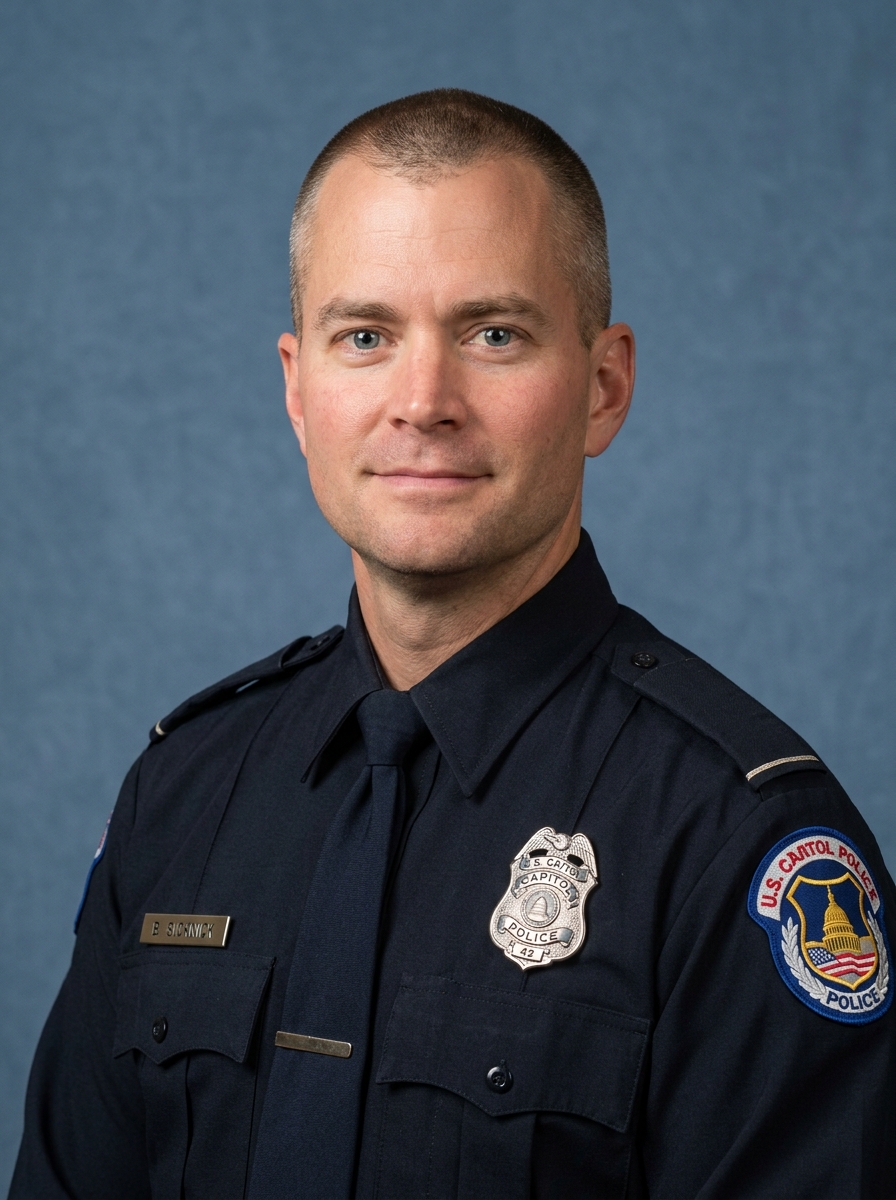
There was no catafalque for Brian Sicknick. His cremated remains, in an urn, were placed beside an American flag on a pedestal in the Rotunda, and the Architect of the Capitol records that he did not rest on Lincoln’s catafalque. He was a Capitol Police officer, injured at the Capitol in the line of duty on January 6, 2021, who died the following night, aged 42, and Congress resolved that he should lie in honor on February 2 and 3.
The remains arrived by hearse at the East Front at 9:30 p.m. on February 2, and the viewing began at 10 and ran through the night. President Joe Biden and Jill Biden came in for a few minutes; the President placed his hand on the table holding the urn and crossed himself. A congressional tribute followed the next day. The Capitol Historical Society counts him as the fifth person to lie in honor. He had joined the Capitol Police in July 2008, after serving in the New Jersey Air National Guard, with deployments to Saudi Arabia and Kyrgyzstan, and his family remembered a man who “loved his dachshunds dearly, spoiling them.”
On April 19, 2021, the District of Columbia’s chief medical examiner announced that he had died after two strokes, of natural causes. The Capitol Police replied the same day: “This does not change the fact Officer Sicknick died in the line of duty, courageously defending Congress and the Capitol.”
William “Billy” Evans
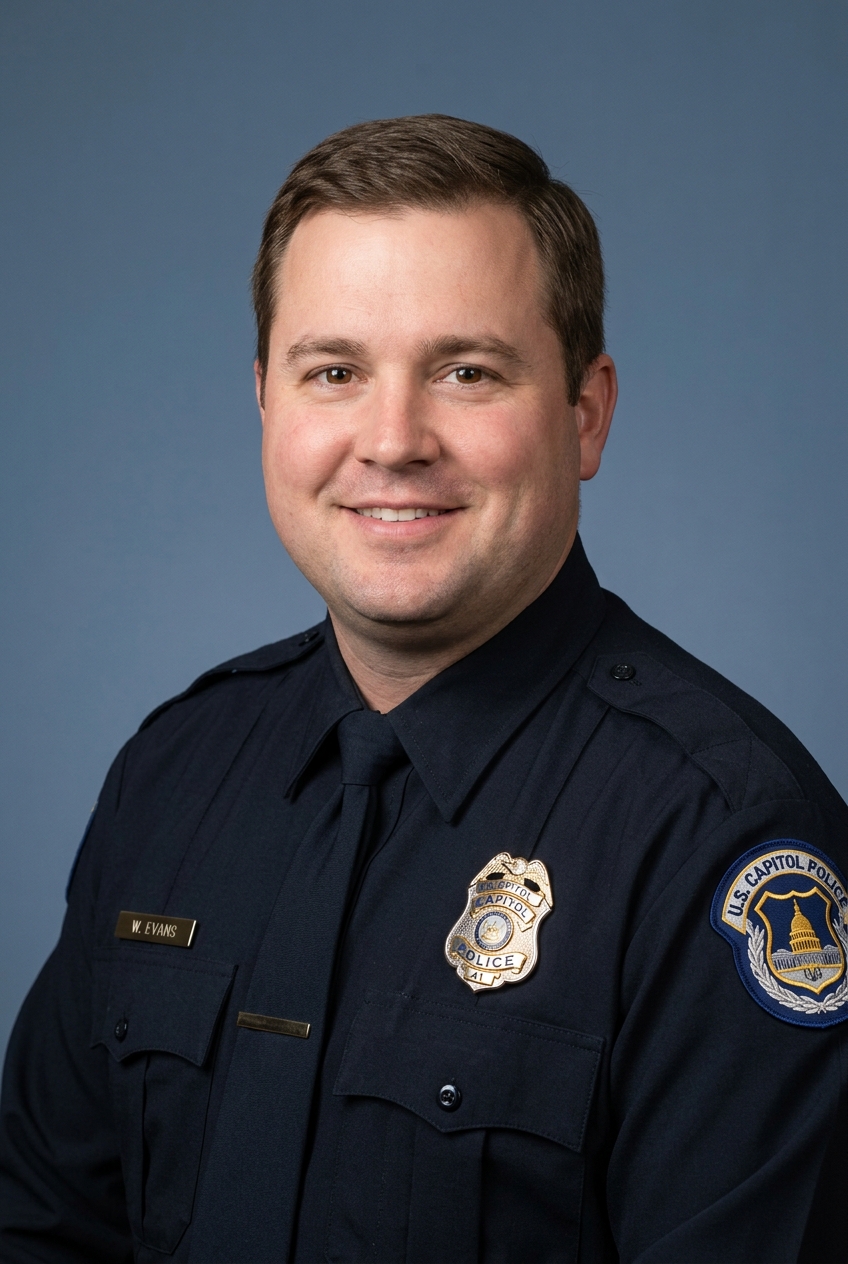
During Speaker Nancy Pelosi’s remarks on April 13, 2021, seven-year-old Abigail Evans dropped the toy she was holding, a small model of the Capitol dome, and President Joe Biden got up from his seat, bent down, picked it up and handed it back. “A greater compliment does no one have than the president of the United States looking after your toys,” Pelosi said.
Abigail’s father, Officer William “Billy” Evans, had been on post at the North Barricade on Constitution Avenue on April 2 when a driver rammed his car into it, striking Evans and a colleague. The attacker, 25-year-old Noah Green of Indiana, got out with a knife and was shot dead by police. Evans was 41. He had been on the force since 2003, latterly in its First Responder’s Unit, came from North Adams, Massachusetts, and was the father of two. He was the sixth person, and the fourth Capitol Police officer, to receive that honor, and Biden noted that it was the second such ceremony in two months. Senator Chuck Schumer remembered him as a prankster whose answer to lost tourists asking “can I ask you a question” was “you already did.” A Saint Bernard comfort dog from the Greenfield, Massachusetts, police, Officer Clarence, attended.
“I didn’t know Billy, but I knew Billy,” Biden told the family, and he asked them to hold “Logan and Abigail as tightly as you can. Because as long as you have them, you’ve got Billy.”
Bob Dole
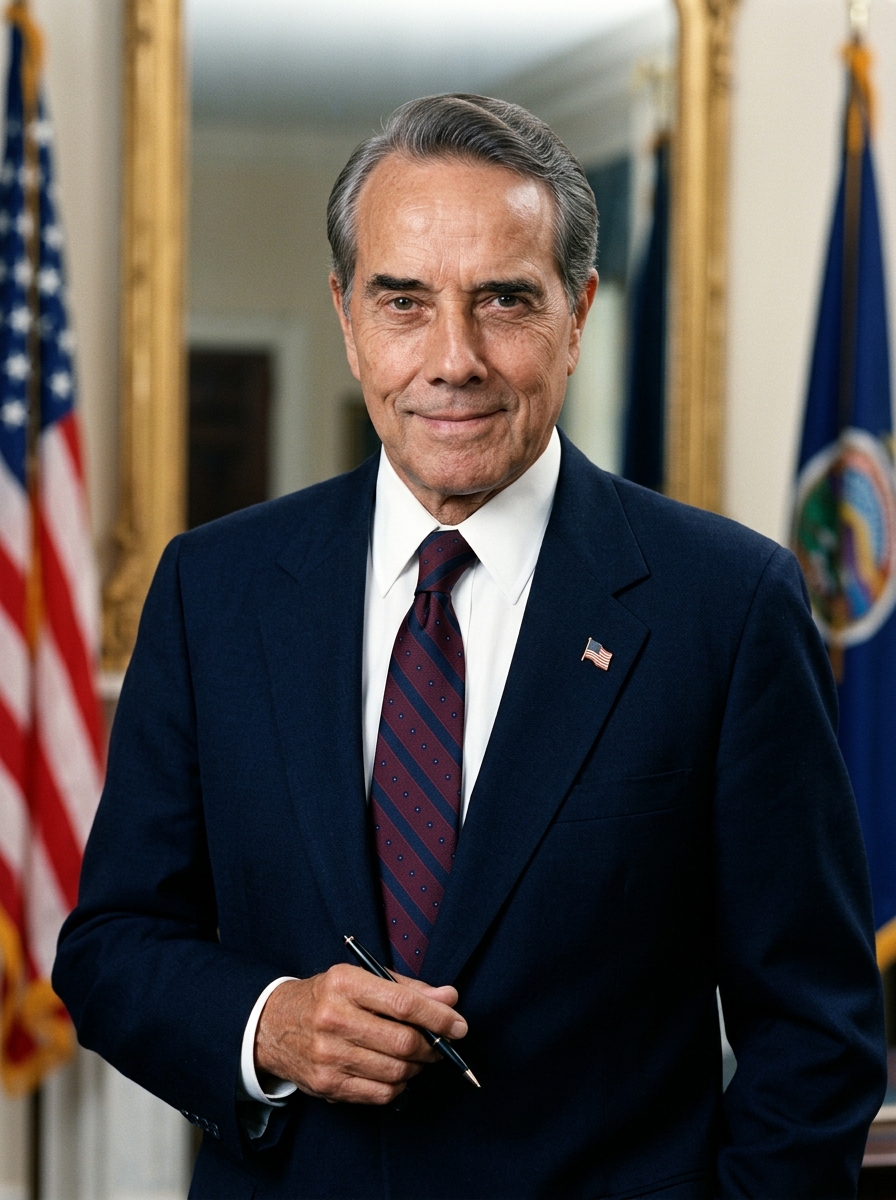
At the end of the ceremony on December 9, 2021, Elizabeth Dole, herself a former senator and cabinet secretary, walked to her husband’s flag-draped coffin, rested her forehead against it and closed her eyes. Bob Dole had died in his sleep on December 5, aged 98. The Rotunda ceremony was by invitation only, with guests seated around the catafalque in socially distanced rings and no public viewing, and the next morning the casket left for Washington National Cathedral.
On April 14, 1945, as a second lieutenant in the 10th Mountain Division, Dole was hit while leading his platoon on Hill 913 near Castel d’Aiano, Italy. He lay in the foxhole for nearly nine hours, by President Joe Biden’s account. Recovery took 39 months. In 1985, as a senator, he persuaded the Army to keep the word “Mountain” in the reactivated division’s name. He sat in Congress from 1961 until 1996, the year he was the Republican nominee for president. Dole was credited with the line that the most dangerous place in Washington was between Chuck Schumer and a television camera, and in the Rotunda Schumer took the hint: “Don’t worry, Bob, it’s safe to be between me and the cameras today.”
Biden told the Rotunda that Dole once explained why he voted to keep funding Amtrak: otherwise, “Biden would stay overnight and cause more trouble.” Then came the verdict: “In a sentence: Bob belongs here.”
Harry Reid
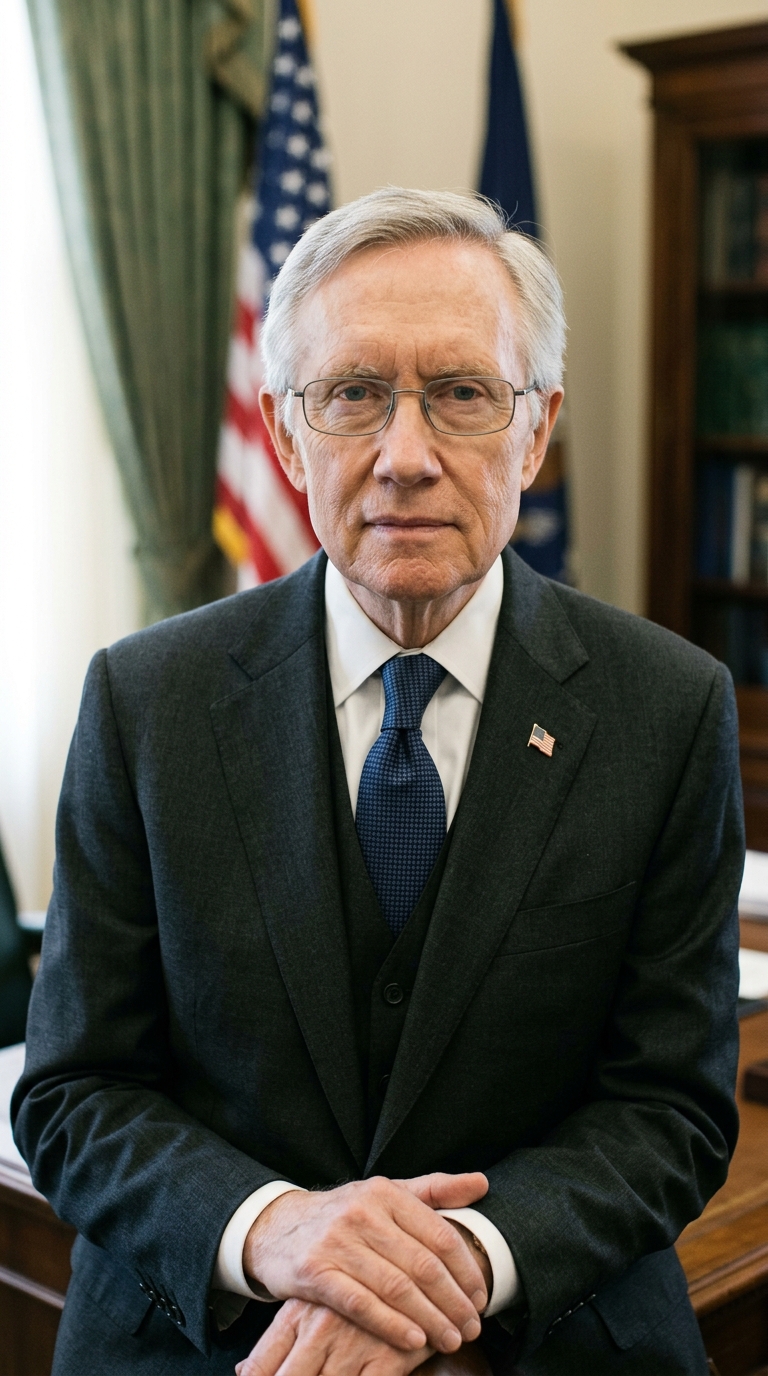
From 1961 to 1964 Harry Reid put himself through George Washington University’s law school by working nights as a Capitol Police officer. Mitch McConnell, the Republican leader he spent years fighting, traced his path “from amateur boxing and a stint with the U.S. Capitol Police to eventually becoming one of the most senior leaders whom that force protected.”
He was born in Searchlight, Nevada, in a wooden lean-to with no electricity or plumbing; his mother took in laundry from the town’s brothels, and he hitchhiked 40 miles to high school in Henderson. As a young man he once threw a punch at his future father-in-law after being refused a date with Landra Gould. They were married for 62 years. He served 12 years as the Senate’s Democratic leader. Reid died at home in Henderson on December 28, 2021, aged 82, and his Las Vegas funeral came first, on January 8, 2022, where the running joke was “Harry Reiding,” his habit of hanging up the telephone without saying goodbye. “Every time I hear a dial tone, I think of Harry,” Biden told the mourners.
On January 12 Lincoln’s catafalque held his casket under the dome, at a ceremony the Associated Press thought “almost as succinct as his own dry-humored style of hanging up the phone.” At the end, Landra Reid set beneath the casket a black hat he had often worn in his final years, and blew him a kiss goodbye.
Hershel “Woody” Williams
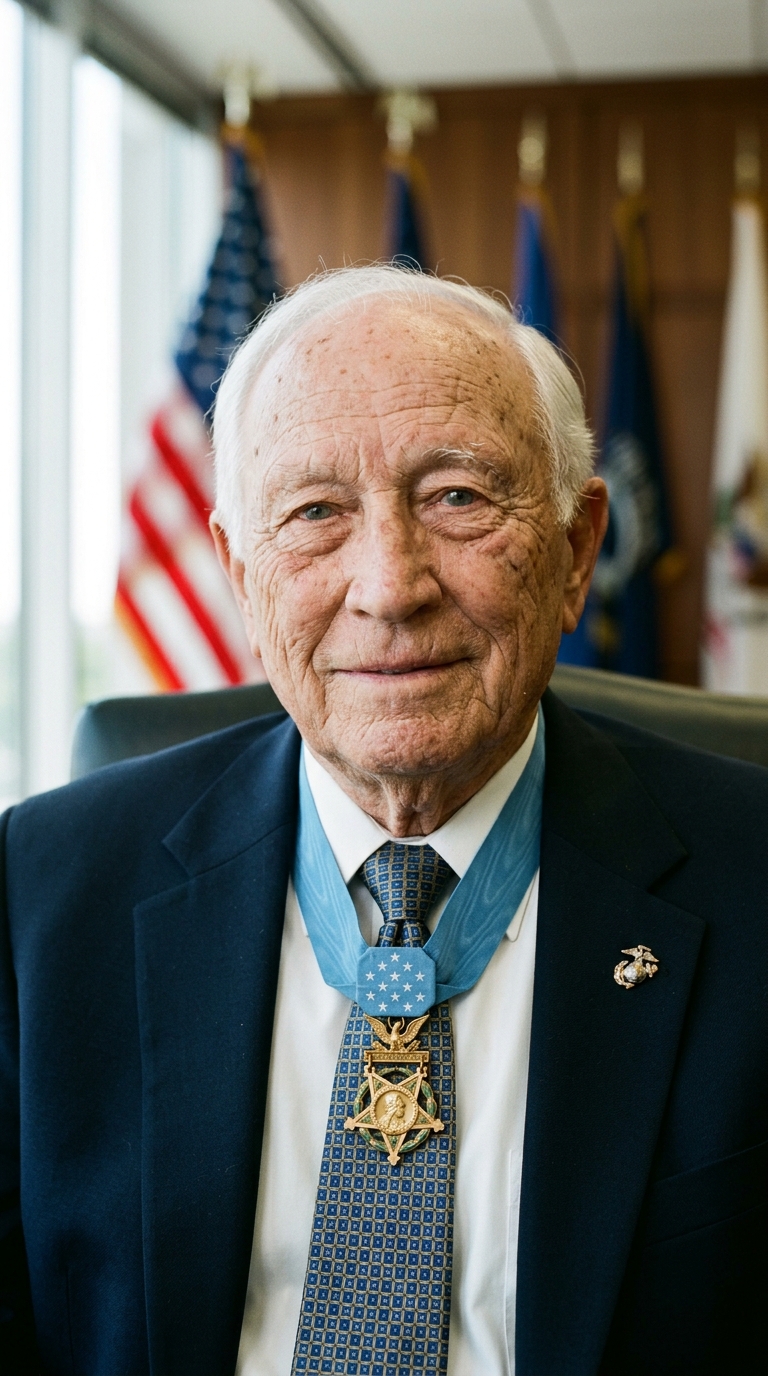
The Marines turned Hershel Williams down at first because, at five feet six inches, he was too short. He enlisted in May 1943, after the height requirement changed, and on February 23, 1945, on Iwo Jima, “covered only by four riflemen,” in his citation’s words, he fought for four hours with a flamethrower, repeatedly going back to his own lines for fresh charges and serviced flamethrowers. By the end of the battle, 262 of the 279 Marines in his company had been killed or seriously wounded.
On October 5, 1945, on the White House grounds, President Harry Truman presented the Medal of Honor to 14 Marine and naval heroes, Williams among them, and told them, “I would rather have that medal, the Congressional Medal of Honor, than be President of the United States.” Williams lived to be the last surviving World War II recipient. He died on June 29, 2022, aged 98, at the veterans’ medical center in Huntington, West Virginia, that had been named for him, and on July 14 he lay in honor in the Rotunda, the seventh person to do so. The resolution dedicated the honor to the Greatest Generation and the more than 16,000,000 men and women who served from 1941 to 1945.
Of the medal itself he said, “It really belongs to them. I’m just a caretaker of it.”
Ralph Puckett Jr.
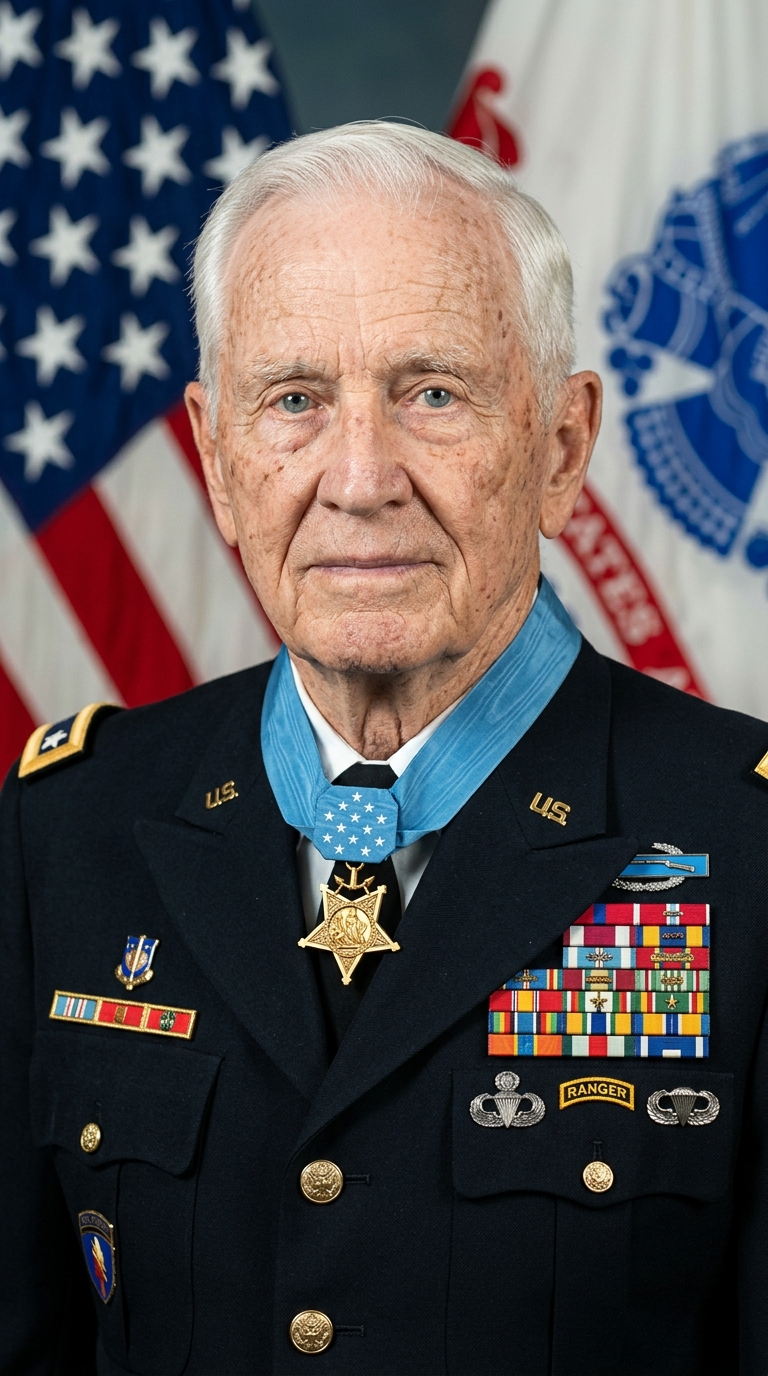
“Why all the fuss? Can’t they just mail it to me?” That, as President Joe Biden told it, was Ralph Puckett’s reaction to the news that he would receive the Medal of Honor, more than 70 years after the fight that earned it.
The fight was on Hill 205, near Unsan in Korea, on November 25 and 26, 1950. By Biden’s account, 51 of Puckett’s Rangers and 9 Korean soldiers held the hill against Chinese forces that outnumbered them almost ten to one. About 2:30 a.m., after more than four hours of nearly nonstop fighting, the sixth wave began, and two mortar rounds landed directly in Puckett’s foxhole, tearing through both his feet, his backside and his left arm and shoulder. He ordered his men to leave him. At the White House on May 21, 2021, his Distinguished Service Cross was upgraded to the Medal of Honor, and South Korea’s President Moon Jae-in attended, saying, “I learned that I’m the first foreign leader to ever attend a ceremony of such kind.”
Puckett died in Columbus, Georgia, on April 8, 2024, aged 97, the last surviving Korean War recipient of the medal. On April 29 his urn was carried into the Rotunda, making him the eighth person to receive the honor, while eight other Medal of Honor recipients gave him a final salute. Biden had answered his question in 2021: “Colonel Puckett, after 70 years, rather than mail it to you, I would’ve walked it to you.”
Jimmy Carter
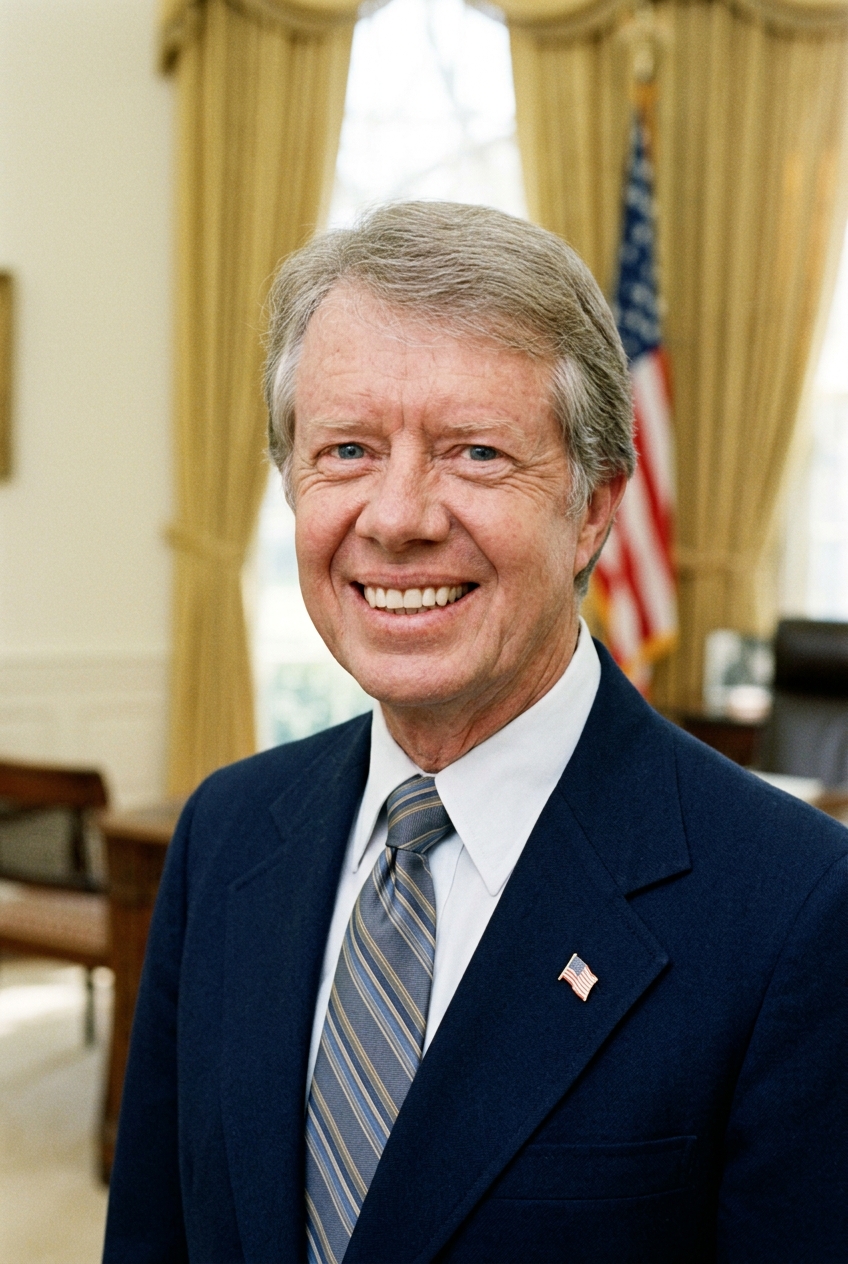
One of the eulogies at Jimmy Carter’s funeral was written by a man who had died in 2006. At Washington National Cathedral on January 9, 2025, Steven Ford read remarks his father, Gerald Ford, had prepared before his death, calling the 1976 election that pitted the two men against each other the start of “one of my deepest and most enduring friendships.”
Carter had died in Plains, Georgia, on December 29, 2024, aged 100. PBS had marked him, that October, as the first former president to get there. On January 7, 2025, his casket traveled by horse-drawn caisson along a 1.3-mile route from the U.S. Navy Memorial to the Capitol, a procession designed to mirror the walk he and his family took down Pennsylvania Avenue on January 20, 1977, when he left his car during the inaugural parade. In the Rotunda the casket rested on the Lincoln catafalque, which the authorizing resolution specifically allowed to be brought up from the Capitol Visitor Center for him. Vice President Kamala Harris said that his work “speaks for him – louder than any tribute we can offer.” He lay there until January 9. Five living presidents came to the funeral.
His grandson Jason recalled the household economics at the eulogy: “They had a little rack next to the sink where they’d hang Ziploc bags to dry.”
Frequently Asked Questions
What is the difference between lying in state and lying in honor?
Government officials and military officers lie in state; private citizens lie in honor, according to the Architect of the Capitol. The second category is young. It dates from 1998, when Congress granted the Rotunda to two Capitol Police officers killed in the line of duty, and Senate Historian Richard Baker said in 2005 that the distinction “was only made recently.”
Why aren’t Ruth Bader Ginsburg and Elijah Cummings on this list?
They lay in state in National Statuary Hall, not the Rotunda. Cummings (October 24, 2019), Ginsburg (September 25, 2020) and Donald E. Young of Alaska (March 29, 2022) all lay there, Ginsburg the first woman to lie in state at the Capitol. Chief Justice Salmon P. Chase lay in state in the Old Supreme Court Chamber on May 11, 1873.
Did Lindsey Graham lie in state in the Capitol?
No. Senator Lindsey Graham, who died July 11, 2026, received a congressional tribute in the Rotunda on July 28, 2026, under a resolution authorizing it “for a tribute.” There was no public viewing; Roll Call reported that his casket sat on a replica of the Lincoln catafalque, and NBC News reported that he “did not lie in state or honor.”
Which presidents did not lie in state in the Capitol?
Since John F. Kennedy, only two presidents who died did not: Harry Truman and Richard Nixon. Truman said early in the planning that he did not want his body taken to the Rotunda, and Bess Truman vetoed an elaborate state funeral. When Nixon died in April 1994, his daughters declined the congressional leadership’s suggestion that he lie in state.
Who decides who lies in state at the Capitol?
Congress does, usually by concurrent resolution and sometimes through its leaders alone, and no law tells it how. The Architect of the Capitol notes that no written rule governs the honor, which also needs the family’s consent. Requests can be refused. On February 20, 2026, Speaker Mike Johnson’s office denied one that the Rev. Jesse Jackson lie in honor.
Where is the Lincoln catafalque kept?
In a display area built for it in the Capitol Visitor Center’s Exhibition Hall, behind a sliding bronze gate that lets it be removed when needed. It has held most coffins that lay in state but not most that lay in honor; Officer William Evans, in 2021, became the first in that category to rest on it.
Why do other sources give a different total?
Because they count different rooms and different dates. The Congressional Research Service called Jimmy Carter the 43rd individual to lie in state or honor in the Rotunda or National Statuary Hall, leaving out the four unknown soldiers, and the Capitol Historical Society’s January 2025 tally was made before Carter. This page counts the Rotunda alone, row by row.
- Architect of the Capitol – Lying in State or in Honor
- Architect of the Capitol – The Lincoln Catafalque
- Office of the Historian, U.S. House of Representatives – Individuals Who Have Lain in State or in Honor
- U.S. Senate Historical Office – Henry Clay Dies
- Congressional Research Service – Lying in State or in Honor in the U.S. Capitol (IN11510)
- Arlington National Cemetery – Tomb of the Unknown Soldier
- U.S. Capitol Historical Society – Lying in State
- Library of Congress, Chronicling America – Evening Star (Washington, D.C.)