
All the States That Were Once Independent Countries Before Joining the U.S.
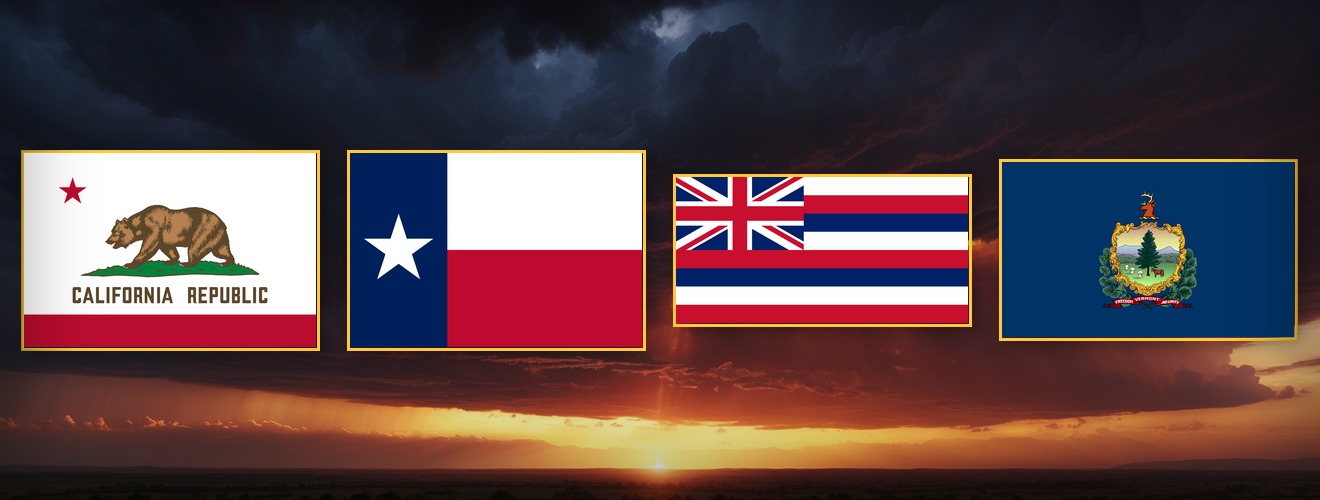
Texas is the one everybody names, and Texas comes third. The Kingdom of Hawaii had been a sovereign nation for four decades before Sam Houston ever heard a shot at San Jacinto, and it signed its first treaty with any foreign power, the United States, on December 23, 1826, nine years before Texas declared anything. One of the four on this list managed less than a month. The order below is by how long each government actually lasted, and it puts the famous one in the middle of the pack.
Getting to four requires deciding what the question means, because no registry groups the states by prior independence. The Congressional Research Service publishes a guide to how every state entered the Union, updated in January 2026, and it organizes all fifty alphabetically without ever grouping any of them this way. So the test has to be stated rather than borrowed. A candidate qualifies here if it claimed sovereign independence rather than autonomy or a transfer between unions, if it functioned as a government in fact and not only on paper, and if the polity itself ceased to exist, its territory going on to become a state. A fourth rule does the quiet work: this list counts states, not governments. More than one independent government held the ground under Hawaii, and each satisfies the other three conditions on its own facts, so the state is the entry and the successor republic is not.
The original thirteen are the obvious challenge, and they fail on the first rule rather than the last. The Treaty of Paris has George III naming them one by one, New Hampshire through Georgia with Delaware eighth, and acknowledging every one of them “to be free sovereign and independent States”. They were acknowledged together, as states of a union that already existed. Neither straggler changes that: North Carolina ratified the Constitution on November 21, 1789 and Rhode Island on May 29, 1790 by a vote of 34 to 32, but the Library of Congress describes both as having “held out until after the adoption of a Bill of Rights” – over amendments, not sovereignty. All thirteen of the original colonies were states from the moment the war was won.
What follows is all four, longest-lived first, with the endpoints each measurement uses stated inside the entry, because most of them have two defensible ones. After that, the five polities that come closest and the reason each falls out.
Four states were independent countries before they joined the United States: Hawaii, Vermont, Texas and California. Their spans run from roughly ninety-eight years down to twenty-five days. Each one declared or held sovereignty, governed in fact, and then stopped existing, its territory later becoming a state. Where two independent governments held the same ground, the state counts once.
Hawaii
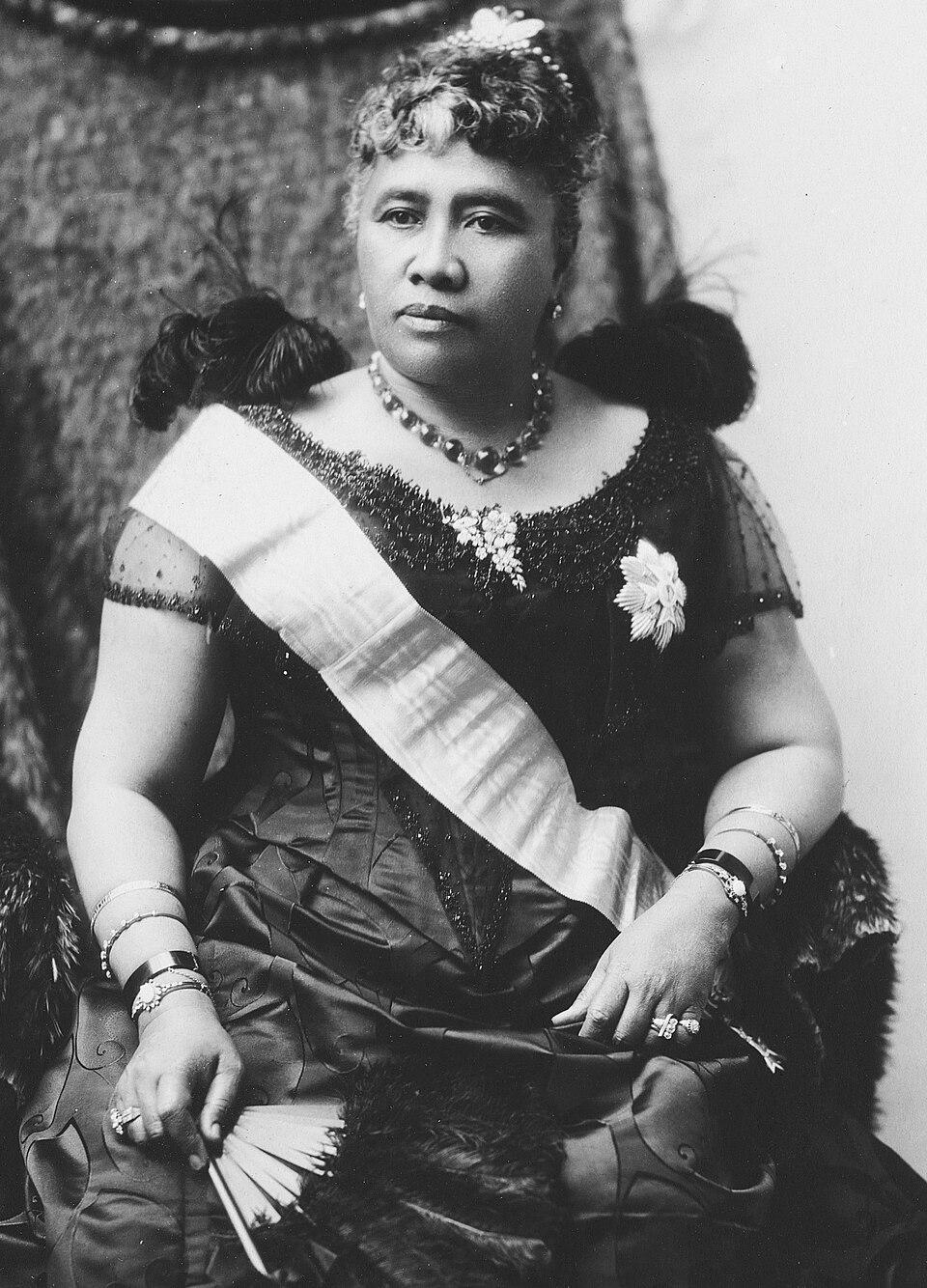
On February 25, 1843, the Hawaiian flag came down over Honolulu and the Union Jack went up, and for five months there was no Kingdom of Hawaii. Lord George Paulet had arrived aboard HMS Carysfort earlier that month and issued six demands on February 17, allowing nineteen hours to comply and threatening “an immediate attack upon this town.” The king yielded under protest on the 18th, then signed the deed of cession a week later, writing to President Tyler that he had done it “with a heavy heart and many tears.” Aberdeen said that if it had happened it was “entirely without authority or instructions,” and Rear Admiral Richard Thomas handed the islands back on July 31.
That was the rehearsal. The kingdom dates from 1795, when Kamehameha held every island but Kauai and Niihau; those two came in 1810, not freely. Two invasion attempts had already failed, the second stopped in 1804 by an epidemic in the army on Oahu. Kaumualii sailed over on an American ship to submit in person, and Kamehameha wrote to George III that “Timoree King of Atooi, has delivered his island up.”
The end came on January 17, 1893. The day before, 162 men had landed from the USS Boston, most of them sailors, not Marines. The Navy’s own history says they went ashore “to protect American lives and interests.” Congress later called them armed forces sent to “invade the sovereign Hawaiian nation.” The apology, Public Law 103-150, was approved on November 23, 1993.
Vermont
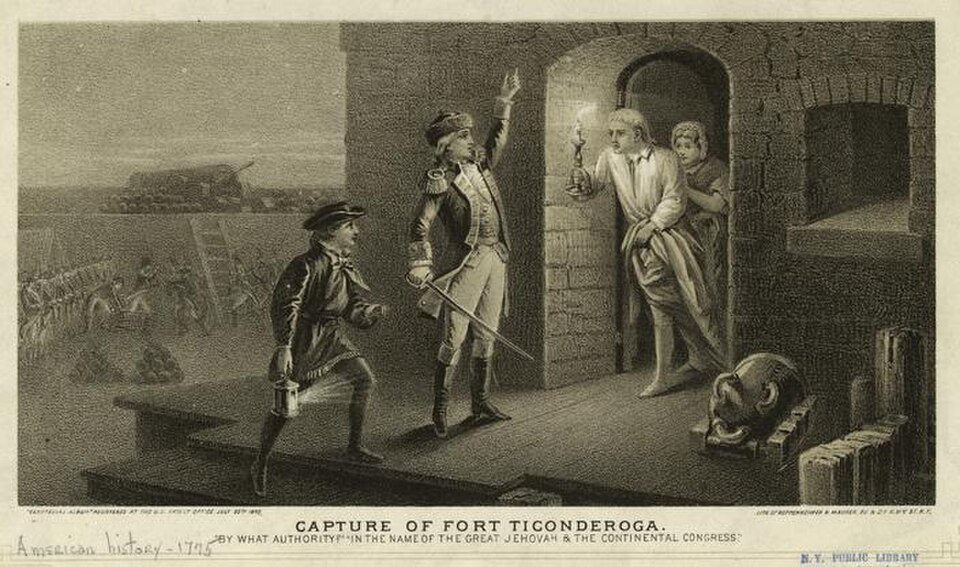
Vermont struck its own coins, ran its own post offices and printed its own money, while the United States won a war it had not been invited to join. The February 1781 currency carried the motto “Vermont Calls for Justice” and thirteen linked rings for the original colonies, with a fourteenth floating above them – either a statement of intent or a grievance, depending on how you read a ring. Reuben Harmon’s mint at Rupert struck the coppers, the 1786 issue reading VERMONTENSIUM RES PUBLICA.
Twenty-four delegates from seventeen towns declared the New Hampshire Grants a separate state at Westminster in January 1777, and fifty delegates from some thirty-one towns endorsed a constitution at Windsor that July 8. It barred adult slavery outright, which the Smithsonian’s African American history museum calls the first such ban by a colony, though the same page notes the wording was loose enough to let existing practice continue, and the text freed men only at twenty-one and women at eighteen. A genuine first, and a partial one. The country it joined went on electing U.S. presidents who owned slaves while in office for decades.
Thirteen years, seven months and twenty-four days is the actual span, and Vermont was still independent two years after Cyrus Griffin, last of the fourteen men who served as president before George Washington, left the chair. It joined on March 4, 1791. The admission act had been approved on February 18, a gap that turns one date into two.
Texas
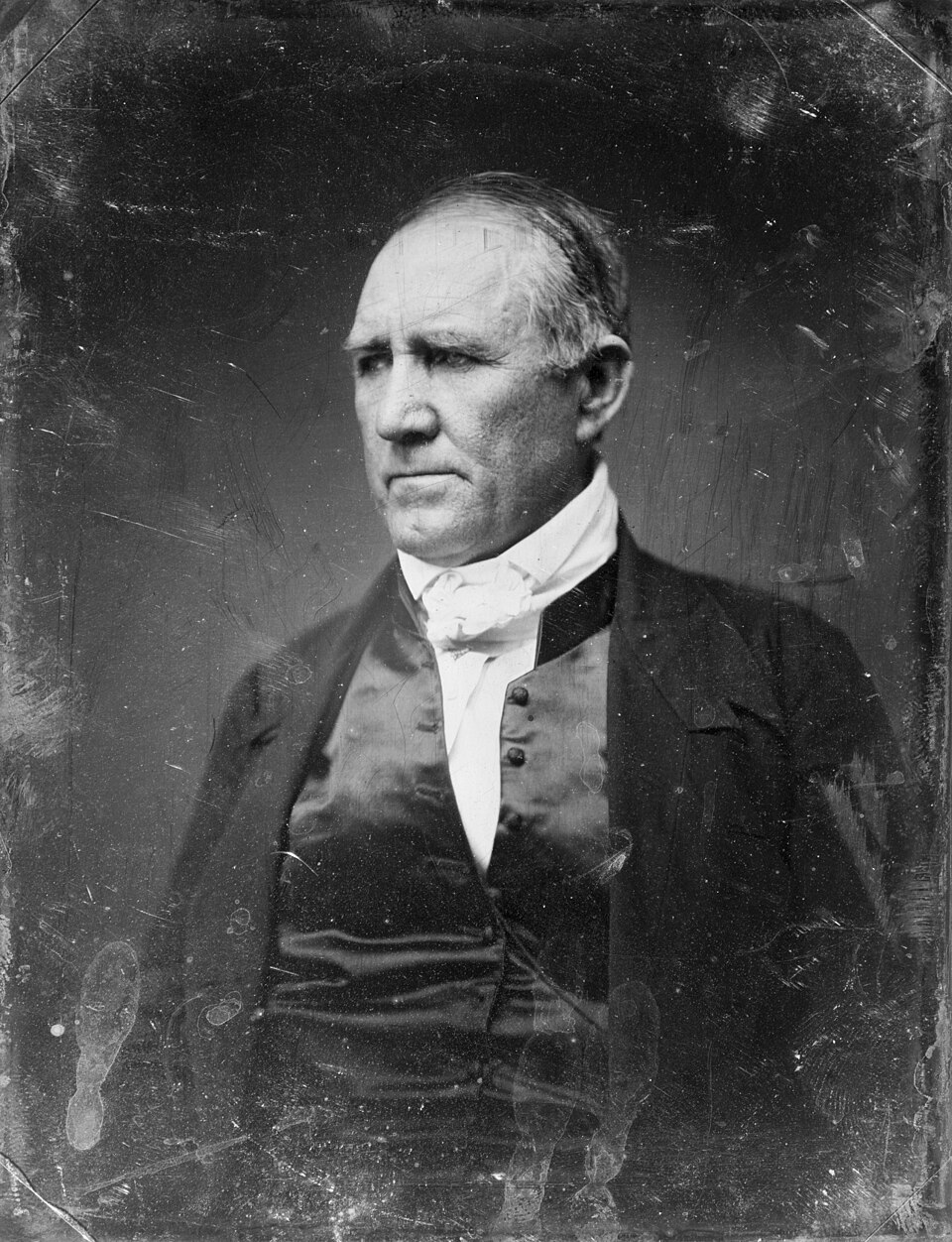
Nine years, eleven months and seventeen days. The Texas State Historical Association gives the figure to the day, which is more precision than most countries get in an obituary, and it runs from March 2, 1836 to February 19, 1846, when Anson Jones announced that “the Republic of Texas is no more.”
Annexation took two presidents and two documents. Congress passed the joint resolution on February 28, 1845, and John Tyler signed it on March 1, three days before he left office – the same Tyler who was the first vice president to inherit the presidency. Polk signed a second joint resolution, admitting Texas as a state, on December 29 that year. Sovereignty did not change hands for another seven weeks.
In between, it behaved like a country running an overdraft. The redback notes, authorized on January 19, 1839, opened at 37.5 cents in specie and were down, in some sections, to two cents on the dollar by the winter of 1841-42. The capital moved from Columbia to Houston to Austin and back, and during the Archive War of 1842 an Austin innkeeper, Angelina Eberly, fired a cannon at the men carting the records away.
Its diplomatic reach is harder to pin down. Three European powers recognized it by treaty and no other European power ever did. Texas kept consulates on both sides of the Atlantic, though TSHA stops short of a definitive tally: “Because of its nebulous organization a definitive analysis of the service is not possible.”
California

William B. Ide called himself “The Commander-in-chief of the troops assembled at the fortress of Sonoma.” California’s own landmark registry calls him “the first and only President of the California Republic.” Both statements are on the record, and they describe the same man in the same month.
The republic began on June 14, 1846, when a party of settlers raised a homemade flag at Sonoma, and ended on July 9, when Lieutenant Joseph W. Revere, sent by Commander John B. Montgomery of the USS Portsmouth, took the Bear Flag down and ran up the Stars and Stripes. Commodore John Drake Sloat had already raised the American flag over Monterey on July 7. Beyond Sonoma it governed almost nothing.
It was never recognized in Washington, and the paper trail shows it: the State Department’s Office of the Historian tracks American diplomatic relations country by country back to 1776, and there is no California entry to find. On Ide the sources have never agreed either. Bancroft’s History of California calls him commander throughout and reports a contemporary manuscript naming him captain general, and the California State Library describes the revolt and the proclamation without using the word president anywhere. The landmark registry is the outlier.
The flag did not last either. Bancroft found it in the hall of the Society of California Pioneers in 1886, and it was lost in the 1906 San Francisco earthquake. Although the Bear Flag became the state flag in 1911, its design was not settled until 1953.
The Near Misses, and Why Each One Falls Out
Five polities come close enough to be worth naming, and each one falls out on a specific rule.
The Republic of West Florida seized Fort San Carlos at Baton Rouge on September 23, 1810 and declared independence from Spain three days later. It fails the third rule instead: its territory ran east to the river Perdido and ended up divided among Louisiana, Mississippi and Alabama, so no single state is the old republic. Madison had claimed the ground by proclamation on October 27 that year, on the grounds that it had “at all times, as is well known, been considered and claimed” as part of the Louisiana Purchase, and the last defenders marched out of Fort San Carlos on December 10. 64 Parishes puts the whole affair at seventy-four days, a figure that does not quite reconcile with its own dates.
The State of Franklin declared independence from North Carolina in December 1784, not from the United States, and its assembly sent a memorial to the Continental Congress asking to be admitted to the Union. It wanted in. That is the opposite of the claim this list requires.
The Republic of Indian Stream adopted a constitution on July 9, 1832 and gave roughly three hundred residents a legislature, courts and a militia. New Hampshire’s militia occupied it in 1835 and Britain held its competing claim until 1838, a place two nations were arguing over rather than one that stood alone. It fails the third rule as well: its ground became a corner of a state that already existed rather than a state of its own.
The State of Deseret, in Utah’s own telling, “designated the state they repeatedly sought to have admitted to the Union,” and its assembly dissolved it on April 4, 1851. Same failure as Franklin.
The Republic of Fredonia declared independence at Nacogdoches on December 21, 1826 under a flag reading “Independence, Liberty, Justice,” and collapsed on January 31, 1827 when Mexican troops arrived. It did sign a treaty with Cherokee leaders, but per TSHA “that support never materialized.” It never administered anything.
Native nations fail the third rule, and they fail it in the opposite direction from everyone else here. They did not seek statehood and they did not cease to exist. The Bureau of Indian Affairs recognizes 575 tribes as “possessing certain inherent rights of self-government,” which is a sovereignty that was never surrendered and therefore never converted into a star on a flag.
Frequently Asked Questions
Which state was an independent country the longest?
Hawaii, by a wide margin. Kamehameha held every island but two by 1795, and the monarchy stood until 1893. Hawaii is also the only one of the four whose independence European powers jointly guaranteed in a signed instrument, which Britain and France did at London on November 28, 1843.
Which one lasted the shortest time?
California. Settlers raised the Bear Flag at Sonoma on June 14, 1846 and the American flag replaced it on July 9. The United States never recognized it, its own diplomatic record carries no California entry at all, and its authority barely reached past Sonoma. The flag itself outlasted the country it stood for by decades.
Do the original thirteen colonies count?
No. Britain acknowledged all thirteen at once, in a single clause that named each one, and they were already bound together when it did. Not one of them had been a foreign country that later applied to join. North Carolina and Rhode Island ratified the Constitution late, but their fight was over the Bill of Rights.
Was Texas recognized as a country by other nations?
Yes, by three European powers, all by treaty: France in September 1839, Great Britain in November 1840 and the Netherlands in September 1840. Belgium never concluded one despite years of effort. The United States had recognized Texas earlier, in 1837, before any European government did.
Did the California Republic have a president?
It depends which source you trust, and they have never agreed. California’s landmark registry names William B. Ide as head of the republic. Ide’s own proclamation gives him a military title instead, and Bancroft’s standard history calls him commander throughout while reporting a contemporary manuscript that made him captain general.
Why is the Republic of Hawaii not a fifth entry?
Because the entry here is a state, not a government. After the kingdom fell, the Provisional Government declared itself the Republic of Hawaii on July 4, 1894, and it was a genuinely separate polity that lasted until annexation. Admitting it as well would mean listing one set of islands twice for a single statehood.
Was Vermont really an independent country?
Its own conventions said so, and it minted coins, issued currency and ran post offices to prove it. The Congressional Research Service quotes the historian Peverill Squire calling Vermont “something of a political netherworld, not really a state, and not really an independent country,” which is a fair summary of how the neighbors treated it.
- Congressional Research Service, Admission of States to the Union: A Historical Reference Guide (R47747)
- Public Law 103-150 (107 Stat. 1510), Joint Resolution of Apology, U.S. Government Publishing Office
- U.S. Department of State, Office of the Historian: Texas
- National Archives, Treaty of Paris (1783), transcript
- U.S. Statutes at Large, Vol. 5, p. 797-798: Joint Resolution for annexing Texas to the United States (Library of Congress)