Every Triple Crown Winner in Horse Racing History
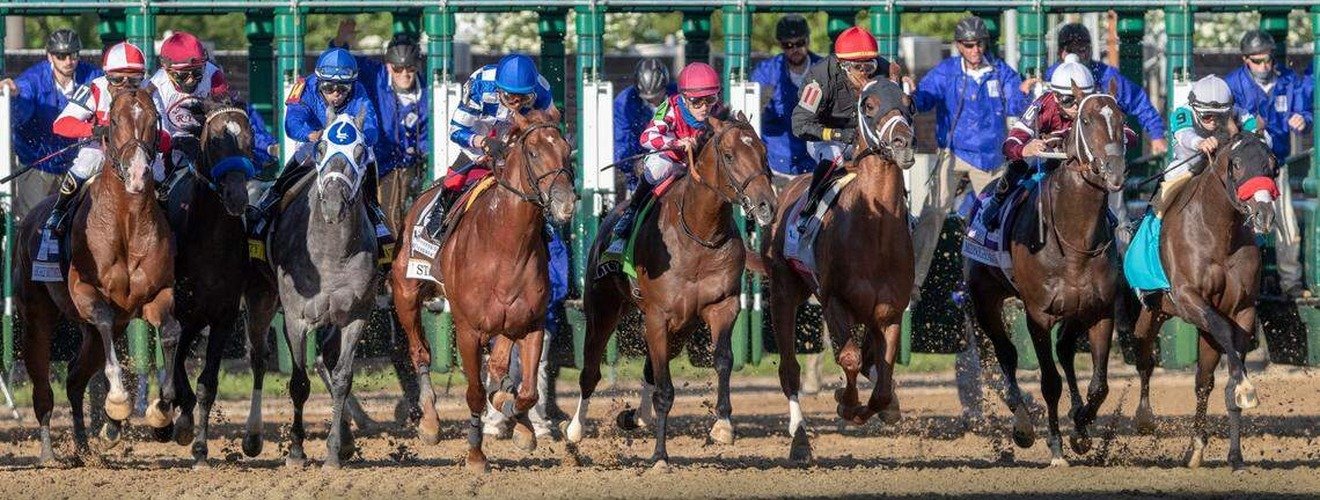
Only 13 horses have done it. Out of the thousands of Thoroughbreds foaled each year, out of the hundreds that enter the Kentucky Derby, out of the handful good enough to win the first Saturday in May - only 13 have gone on to sweep all three legs of American racing’s ultimate test. The Triple Crown requires a three-year-old horse to win the Kentucky Derby, the Preakness Stakes, and the Belmont Stakes in a span of just five weeks. Each race is different. Each demands something new. And the cumulative toll of running three grueling races against the best horses in the country, on three different tracks, at three different distances, in roughly 35 days, has broken far more champions than it has crowned.
Thirteen winners in more than a century makes the Triple Crown rarer than an MLB perfect game.
The term “Triple Crown” wasn’t even coined until 1930, eleven years after the first horse managed the feat. Since then, the accomplishment has taken on an almost mythic quality. Thirteen horses have won it across more than a century of trying. There have been droughts lasting decades - a 25-year gap between Citation and Secretariat, and an agonizing 37-year stretch between Affirmed and American Pharoah during which 13 different horses won the first two races and failed at the Belmont. The Triple Crown isn’t just hard to win. For long stretches of history, it seemed impossible.
Here are all 13 horses who proved otherwise.
- Total Triple Crown winners: 13
- Year range: 1919 to 2018
- The three races: Kentucky Derby, Preakness Stakes, Belmont Stakes
- Longest gap between winners: 37 years (1978-2015)
- Most recent winner: Justify (2018)
Sir Barton
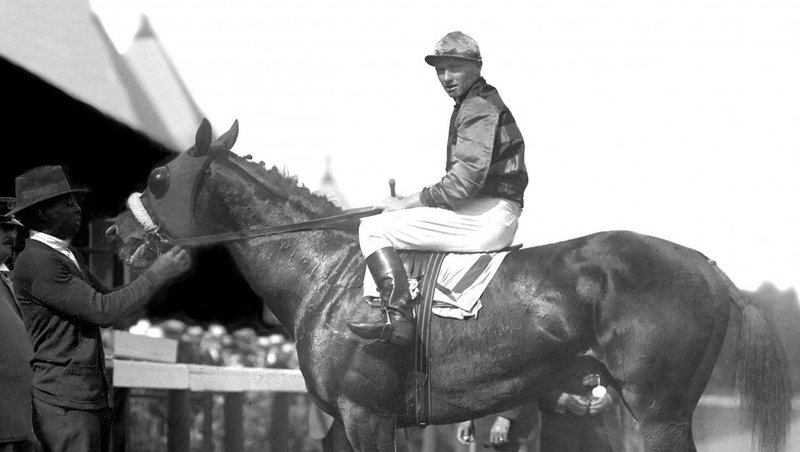
Nobody expected Sir Barton to win the 1919 Kentucky Derby because he wasn’t supposed to. His trainer, H. Guy Bedwell, entered him as a rabbit - a pacemaker meant to tire out the field for his stablemate, Billy Kelly. Sir Barton apparently didn’t get the memo. He took the lead and never gave it back, winning by five lengths in what must have been an awkward conversation in the barn afterward.
What makes Sir Barton’s achievement even more remarkable is that he entered the Derby as a maiden - a horse that had never won a single race. No Triple Crown winner before or since has pulled off that trick, mostly because there was no Triple Crown winner before him. He was the first, though nobody called it that at the time. The term wouldn’t exist for another eleven years.
Owner J. K. L. Ross, a Canadian shipping magnate, watched his throwaway entry become racing’s first three-race champion. Sir Barton won the Derby, the Preakness (then held before the Derby in some years, though not this one), and the Belmont Stakes, all without the benefit of anyone realizing he was making history. Sometimes the best way to achieve the impossible is to not know you’re attempting it.
Gallant Fox
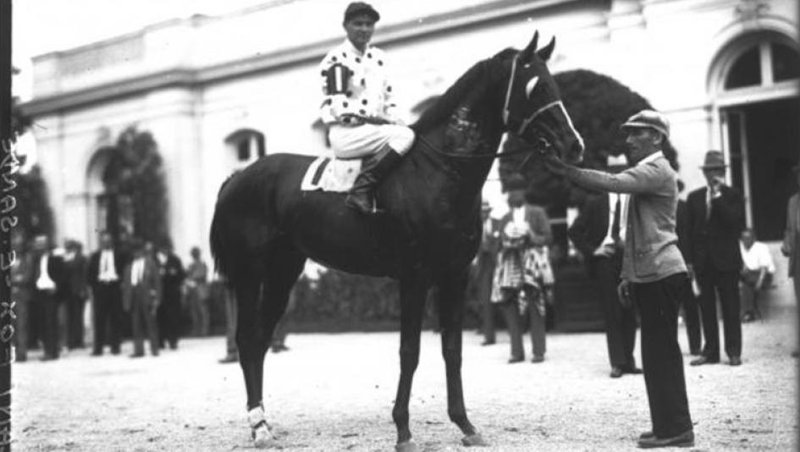
Earl Sande was retired. He’d walked away from riding, content to train horses and leave the saddle to younger men. Then Belair Stud asked him to ride a big chestnut colt named Gallant Fox, and the 31-year-old came back for one more run. It turned out to be the ride of his life.
Gallant Fox became the second Triple Crown winner in 1930 - and the first to be recognized as one during his actual racing career, since the term had just entered the sporting vocabulary. Trainer James “Sunny Jim” Fitzsimmons, whose career would span an almost incomprehensible six decades, guided the colt through all three races with the calm efficiency of a man who understood that great horses need steady hands more than heavy ones.
But Gallant Fox’s most lasting contribution to racing had nothing to do with his own legs. He sired Omaha, who would win the Triple Crown five years later - making Gallant Fox the only Triple Crown winner to produce another one. Genetics, as it turns out, can be just as stubborn as a racehorse heading for the finish line.
Omaha
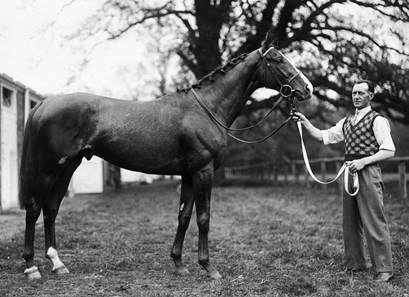
The odds of a Triple Crown winner siring another Triple Crown winner are, statistically speaking, absurd. Thousands of Thoroughbreds are bred each year, and only 13 have ever swept the series. Yet in 1935, Omaha did exactly what his father Gallant Fox had done five years earlier, trained by the same man (Sunny Jim Fitzsimmons) and wearing the same Belair Stud silks.
Omaha was not a horse who made things easy on his supporters. Jockey Willie Saunders had to work for every one of those three victories, and the colt’s temperament ran more toward stubborn determination than effortless grace. He won the Belmont Stakes by a length and a half - enough, but nothing like the blowouts that later Triple Crown winners would produce.
After his Triple Crown season, Omaha’s connections did something unusual: they shipped him to England. He finished second in the Ascot Gold Cup, a perfectly respectable showing on a continent where American horses were viewed with roughly the same enthusiasm as American beer. The trip didn’t add to his legacy, but it didn’t diminish it either. A Triple Crown winner with an international passport - there aren’t many of those.
War Admiral
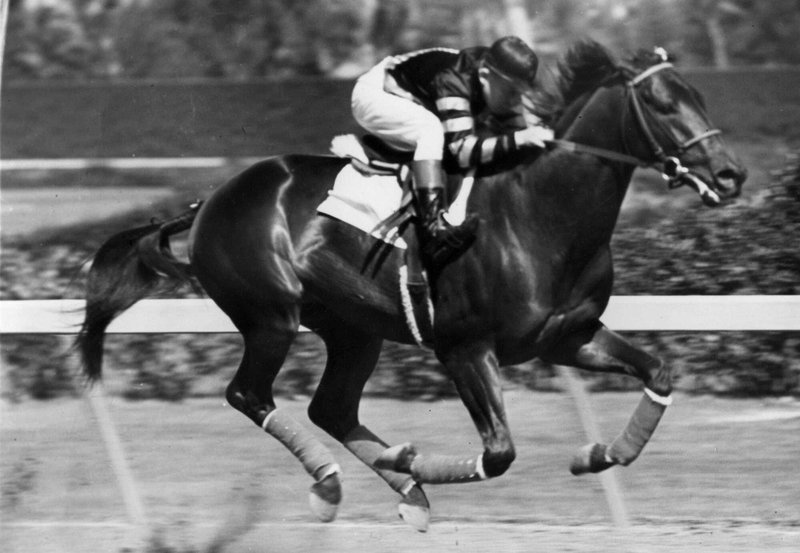
At 15.2 hands, War Admiral was small. Not charmingly compact or elegantly petite - just small. His father, the legendary Man o’ War, stood over 16.2 hands and was built like a freight train with hooves. War Admiral looked more like the freight train’s carry-on luggage. But size, as every underdog story reminds us, is not destiny.
War Admiral won 21 of his 26 career starts and swept the 1937 Triple Crown with the kind of controlled fury that suggested he was personally offended by the existence of other horses. Owner Samuel D. Riddle, who had also owned Man o’ War, must have experienced a peculiar sense of deja vu watching another of his horses dominate American racing, albeit in a smaller package.
The moment most people remember about War Admiral, though, came after his Triple Crown year. In 1938, he lost a famous match race to Seabiscuit at Pimlico - a showdown between the aristocratic champion and the scrappy underdog that captivated Depression-era America. War Admiral ran hard and lost. It may have cost him some historical shine, but it gave American sports one of its greatest stories. Sometimes you contribute more to history by losing the right race than by winning the wrong one.
Whirlaway

You could spot Whirlaway from the cheap seats. That tail - absurdly long, streaming behind him like a banner - was his signature, and watching it flow as he made his patented late charges from the back of the pack was one of the great visual pleasures of 1940s racing. He ran so far back in the early going that spectators must have wondered if he knew which direction the finish line was.
He did. In the 1941 Kentucky Derby, Whirlaway exploded from behind to win by eight lengths, the kind of margin that makes the other horses look like they’re running in a different race. Trainer Ben A. Jones of Calumet Farm had finally solved the colt’s tendency to bear out dramatically on turns by fitting him with a one-eyed blinker, and jockey Eddie Arcaro - riding the first of his two Triple Crown winners - did the rest.
Whirlaway retired as the leading money earner in racing history, a title that sounds less impressive when you learn that total purses in 1941 were roughly what a decent claimer earns in a season today. But context is everything. In his era, Whirlaway was as dominant as they came, and considerably more theatrical about it than most.
Count Fleet
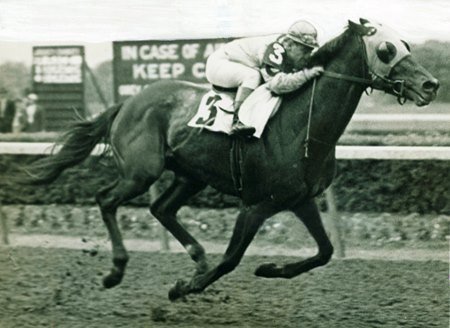
The man who founded Hertz rental car company also owned the sixth Triple Crown winner. John D. Hertz - yes, that Hertz - bred and campaigned Count Fleet through his wife Fannie, and the colt repaid their investment with one of the most devastatingly dominant Triple Crown sweeps in history.
Count Fleet’s Belmont Stakes in 1943 was less a race than an exhibition. He won by 25 lengths, a margin so vast that the horses behind him might as well have been in a different time zone. Trainer Don Cameron had the colt so sharply tuned that the competition was essentially theoretical. The irony is that Count Fleet injured himself during that very Belmont - his career ended on the same day he produced perhaps his finest performance.
He retired with 16 wins from 21 starts, and his Belmont margin stood as a record until a big red horse named Secretariat came along 30 years later and did something even more preposterous. But for sheer ruthless efficiency during a Triple Crown campaign, Count Fleet remains hard to top. He didn’t just beat fields. He demoralized them.
Assault
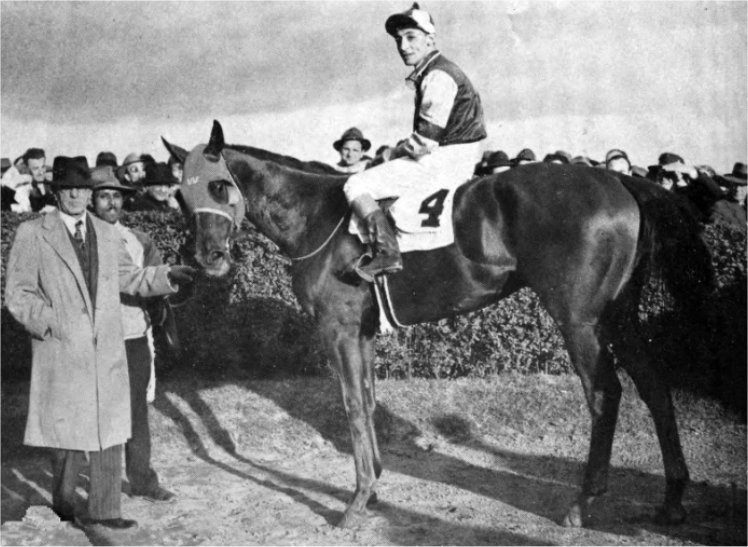
As a foal on the vast King Ranch in Texas, Assault stepped on a surveyor’s stake. The injury permanently deformed his right front hoof, leaving him with a clubfoot that made him look, to the untrained eye, like a horse who had no business racing at all. Trainers who watched him walk thought he was lame. People who watched him run changed their minds quickly.
“The Club-Footed Comet” - and for once, a nickname earned rather than invented by a sportswriter with a deadline - won the 1946 Triple Crown for trainer Max Hirsch and jockey Warren Mehrtens. He remains the only Texas-bred horse to accomplish the feat, which means King Ranch can claim a distinction that no other ranch, farm, or breeding operation in the Lone Star State has matched in the nearly 80 years since.
Assault’s career after the Triple Crown was uneven, marked by the kind of physical issues you might expect from a horse running on a damaged hoof. But the Triple Crown itself was clean and convincing, a reminder that the distance between disability and dominance is sometimes just five weeks and three fast races.
Citation
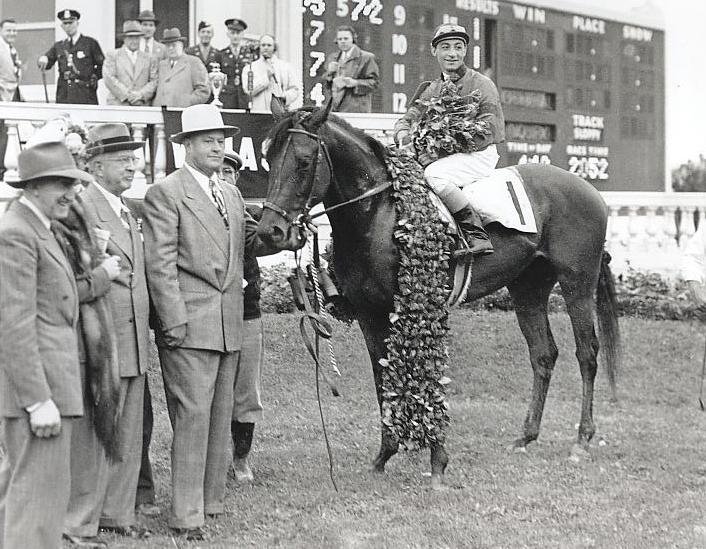
Citation won 16 consecutive races across 1948 and into 1950. Not 16 races total - 16 in a row. He was so thoroughly superior to his competition that the Belmont Stakes field was reduced to just two other starters, because nobody wanted to pay the entry fee for the privilege of finishing behind him. The purse for second place apparently wasn’t worth the humiliation.
Trainer Horace A. “Jimmy” Jones, working under the Calumet Farm banner that his father Ben had built into a dynasty, had in Citation the kind of horse that trainers dream about and rarely see. Jockey Eddie Arcaro, riding his second Triple Crown winner after Whirlaway seven years earlier, barely had to ask the colt for effort. Citation gave it freely and abundantly.
He went on to become the first racehorse to earn $1 million in career purses - a milestone that took him until 1951 to reach, partly because an injury kept him off the track for an entire year. But the number mattered less than what it symbolized: Citation was, by the cold arithmetic of prize money, the most accomplished racehorse anyone had ever seen. After him, the Triple Crown would go silent for 25 years.
Secretariat
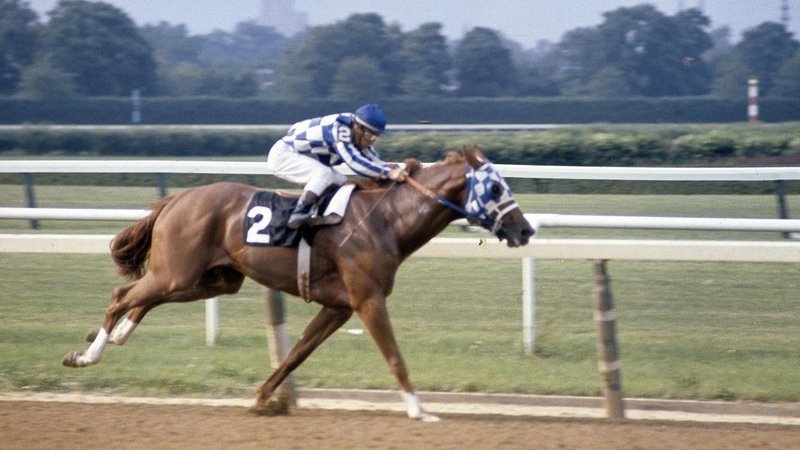
Secretariat’s Belmont Stakes victory in 1973 was not a horse race. It was a physics experiment in which one variable - the big chestnut with the blue-and-white blinkers - operated on different principles than everything else on the track. He won by 31 lengths in a time of 2:24 flat for a mile and a half, a world record that has stood for over 50 years and that no horse has come within two seconds of matching. The track announcer, Chic Anderson, said he was “moving like a tremendous machine.” That might be the greatest understatement in the history of sports broadcasting.
But the Belmont wasn’t even the whole story. Secretariat also set records in the Kentucky Derby (1:59 2/5, the first sub-two-minute Derby) and the Preakness Stakes. He broke the 25-year Triple Crown drought with the kind of authority that made the drought itself seem like the sport had simply been waiting for a horse worthy of the title. When veterinarians examined his heart after his death in 1989, they estimated it weighed roughly 22 pounds - about two and a half times the size of a normal horse’s heart.
Trainer Lucien Laurin and owner Penny Chenery of Meadow Stable had a once-in-a-century horse, and they knew it. So did jockey Ron Turcotte. So did everyone watching. Some things don’t need hindsight to recognize as extraordinary.
Seattle Slew
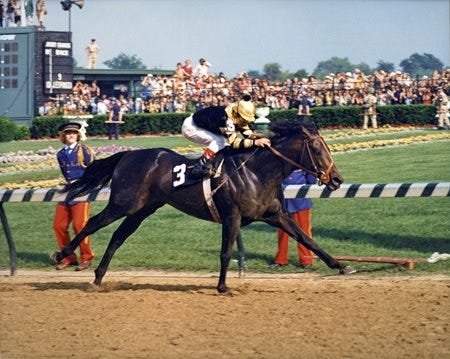
Karen and Mickey Taylor, in partnership with Dr. Jim and Sally Hill, bought a dark bay yearling for $17,500 at auction in 1975. Adjusted for inflation, that’s still less than the price of a mid-range sedan. What they got for their money was the only horse in history to win the Triple Crown with an undefeated record - a bargain that makes every other purchase in the history of commerce look mildly foolish.
Seattle Slew, racing under the Taylors’ Tayhill Stable banner, swept the 1977 Triple Crown with a combination of raw speed and snarling competitiveness that made him look less like a racehorse and more like a force of nature that happened to have four legs. Trainer William H. Turner Jr. managed the colt through the demanding five-week grind, and jockey Jean Cruguet rode him with the confidence of a man who knew he was sitting on something special.
The price tag became part of the legend. In a sport where yearlings routinely sell for millions, Seattle Slew’s $17,500 sticker price was the equivalent of finding a Picasso at a yard sale. He finished his career with 14 wins in 17 starts and became a champion sire, making money for his owners in ways that his modest purchase price could never have predicted.
Affirmed
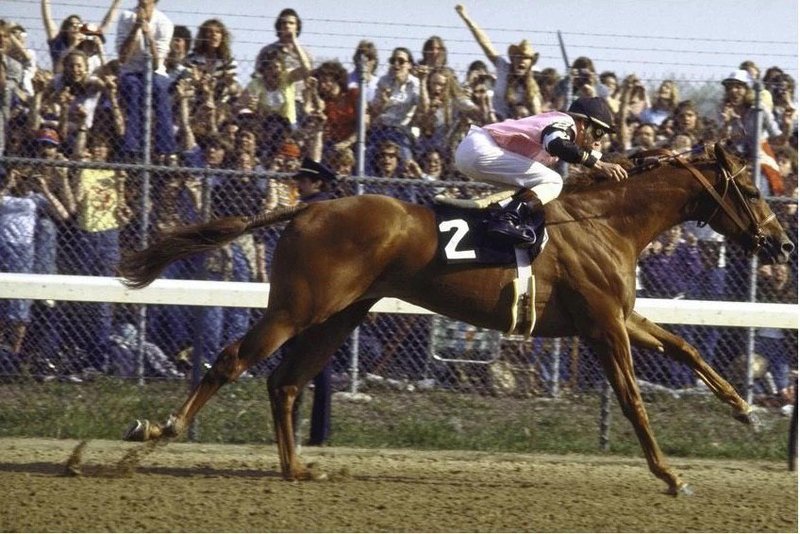
The 1978 Triple Crown was not won so much as survived. Affirmed and his rival Alydar turned the three-race series into a two-horse war that remains the most intense rivalry in American racing history. Affirmed won the Derby by a length and a half. He won the Preakness by a neck. He won the Belmont by a head. The margins were shrinking, and if there had been a fourth race, mathematics suggests Alydar might have finally gotten there first.
Steve Cauthen, Affirmed’s jockey, was 18 years old. Eighteen. Most people that age are worrying about college applications and whether they can borrow the car on Friday night. Cauthen was making split-second decisions at 40 miles per hour with the Triple Crown on the line, riding a horse locked in mortal combat with another horse whose jockey, Jorge Velasquez, wanted the same thing just as badly.
Trainer Laz Barrera and owner Louis Wolfson’s Harbor View Farm celebrated a Triple Crown that nobody could have appreciated more - because nobody had suffered more watching it unfold. After Affirmed’s nerve-shredding sweep, the Triple Crown went dormant for 37 years. Given what fans went through watching those three races, perhaps everyone just needed time to recover.
American Pharoah
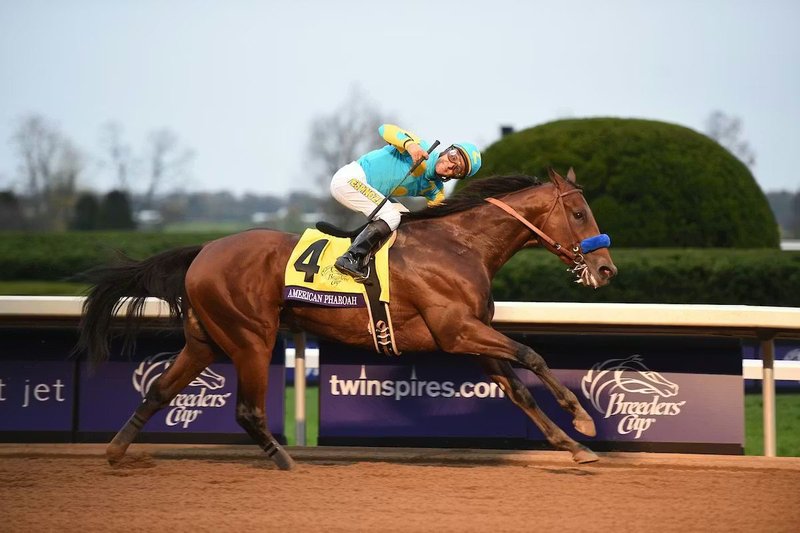
For 37 years, the Triple Crown broke hearts. Between 1978 and 2015, thirteen different horses won the Kentucky Derby and the Preakness Stakes - Real Quiet, Smarty Jones, Big Brown, California Chrome, and nine others - and every single one of them lost the Belmont. The drought became a narrative unto itself, a curse that seemed as permanent as anything in sports could be. Then in 2015, a bay colt with a misspelled name ended it all.
American Pharoah - registered with The Jockey Club as “Pharoah” rather than the correct “Pharaoh,” a clerical quirk that became part of his charm - won the Belmont Stakes by five and a half lengths, and the roar from the crowd at Belmont Park sounded less like a cheer and more like 37 years of collective exhaling. Trainer Bob Baffert, owner Ahmed Zayat of Zayat Stables, and jockey Victor Espinoza had done what so many others couldn’t.
But American Pharoah wasn’t finished. He went on to win the Breeders’ Cup Classic later that year, becoming the first horse to complete what some called the “Grand Slam” of American racing. The misspelling stayed. The doubters disappeared.
Justify
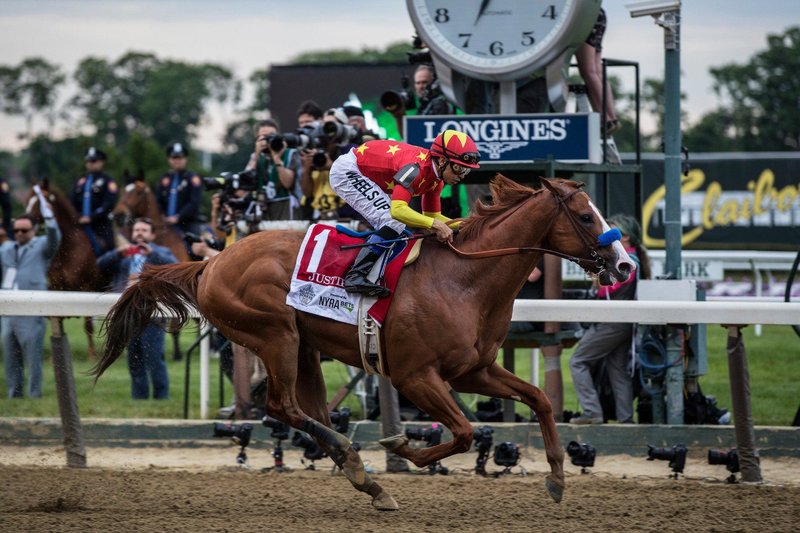
Since 1882, no horse had won the Kentucky Derby without racing as a two-year-old. The pattern held for 136 years. Trainers and bettors called it the “Curse of Apollo,” after the last horse to manage the trick, and it had become one of those iron laws of racing that everyone treated as gospel. Justify, in 2018, treated it as a suggestion.
Bob Baffert - the same trainer who had ended the 37-year Triple Crown drought with American Pharoah just three years earlier - sent Justify into the Derby with only three career starts under his saddle cloth. The colt had never raced as a two-year-old, had never run on a dry track (it rained for every one of his starts), and had never given anyone reason to doubt him. Jockey Mike E. Smith, at 52 the oldest jockey to win the Triple Crown, guided him through all three races with the patience of a man who had been waiting his entire career for exactly this horse.
Justify retired undefeated at 6-for-6, owned by a partnership of WinStar Farm, China Horse Club, Starlight Racing, and Head of Plains Partners. He was the 13th Triple Crown winner, and as of this writing, the most recent. Somewhere out there, the 14th is probably already born. The question, as always, is whether anyone will recognize the horse before the horse recognizes the moment.
Sports' shortest lists keep their own company: 24 perfect games, 15 unassisted triple plays, 13 Triple Crown winners.