Every Best Picture Oscar Winner That Won Best Picture and Nothing Else
Ben-Hur won eleven Academy Awards. Titanic won eleven. The Return of the King won eleven from eleven nominations and lost nothing at all, which is still the largest clean sweep anyone has managed. This is the ordinary shape of the evening. Best Picture is the last item on a long receipt, handed over after the winning film has already collected its editing award and its screenplay award and its sound award, by which point the room has generally worked out what is coming. Crash left with two other Oscars. Around the World in 80 Days left with four.
The exceptions sit in a narrow early stretch, and even inside that stretch they were exceptions. Cimarron cleared three awards in 1931, Best Picture among them, and stayed the only Western to take the top prize until Dances with Wolves arrived fifty-nine years later. What made a bare win possible in those years was arithmetic. The Academy handed out twelve competitive awards in 1932, against more than twenty at the ceremony this March, and there were simply fewer places for a strong picture to put its name.
Then the eighth ceremony produced a problem the Academy could not ignore. Three actors from the same film landed in the same category, took votes from one another, and handed the award to a rival. The response was to build two new acting races, which gave every future contender somewhere else to win, and the architecture has held ever since. Ninety years have now gone by without a film taking the top prize and going home with nothing beside it. The ones that did are below, in the order they were released.
Three Best Picture winners have won no other Academy Award: The Broadway Melody, Grand Hotel, and Mutiny on the Bounty. All three came from MGM, all three took the prize between the 1929 and 1935 film years, and no film has joined them since the Academy added its supporting-acting categories.
The Broadway Melody
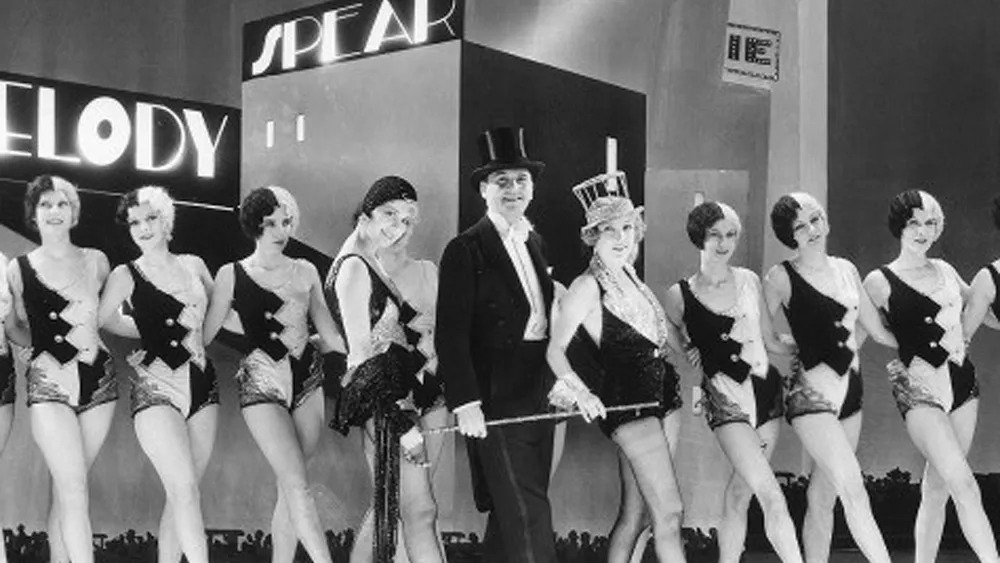
The first sound picture to win Best Picture is also the lowest-rated Best Picture winner on Rotten Tomatoes – currently sitting at around forty-two percent and unlikely to improve. The Broadway Melody was MGM’s first all-talking feature, an early-musical backstage romance about two vaudeville sisters trying to make it on Broadway, and it arrived at the second Academy Awards ceremony in 1930 with the considerable advantage of being technologically impressive. The cinematography was static. The sound was tinny. The microphones were so badly positioned that you can occasionally see actors blur as they walk out of focus. None of this prevented it from winning Best Picture.
The film was also a genuine commercial phenomenon. It made a profit of $1.6 million on a budget of $379,000, becoming the highest-grossing picture of 1929 and inspiring a series of sequel-adjacent musicals – Broadway Melody of 1936, 1938, and 1940 – that kept the brand alive for over a decade.
It was nominated in three categories. Bessie Love was nominated for Best Actress and lost to Mary Pickford. Harry Beaumont was nominated for Best Director and lost to Frank Lloyd, who was directing The Divine Lady, a film that wasn’t even nominated for Best Picture. The Broadway Melody won the top prize and walked out of the ceremony with one Oscar. The Academy hadn’t yet figured out how to officially announce nominees that year. Records were reconstructed later. None of which prevented it from winning Best Picture.
Grand Hotel
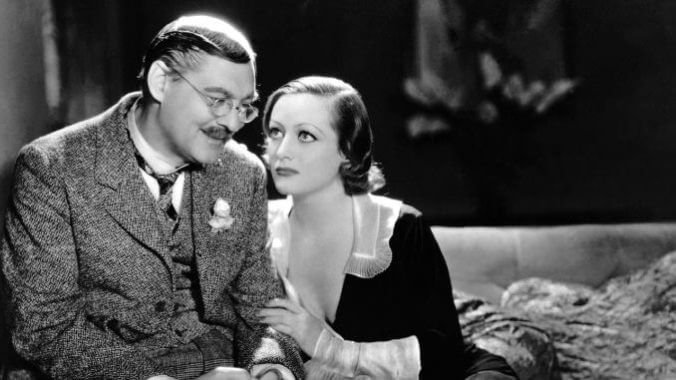
Greta Garbo, John Barrymore, Lionel Barrymore, Joan Crawford, and Wallace Beery walked into the same MGM picture in 1932. By any reasonable expectation, at least one of them should have been nominated for an acting Oscar. None of them were. Grand Hotel was nominated for Best Picture and absolutely nothing else – no acting, no directing, no screenplay, no cinematography, no art direction, no music. One nomination, one win, the only such case in the history of the Academy Awards.
The film cost roughly $700,000, earned $2.6 million in its first year, and became MGM’s most profitable picture of 1932. It was directed by Edmund Goulding in a fluid, almost transparent style – a continuous lobby tracking shot, an overhead montage of switchboard operators connecting calls – that drew critical praise and exactly zero Academy attention. The story was an ensemble of strangers passing through a Berlin hotel: a dying clerk, a tired ballerina, a thieving baron, a ruthless industrialist, an ambitious stenographer. Their stories briefly intersect and then diverge.
Wallace Beery won Best Actor that same night. Not for Grand Hotel. He won for The Champ. The Academy somehow looked at the most star-studded ensemble in Hollywood – five future Oscar winners, all in the same picture – and decided none of them needed to be nominated for it. The film won Best Picture anyway. It is the strangest case in the history of the category and remains so.
Mutiny on the Bounty
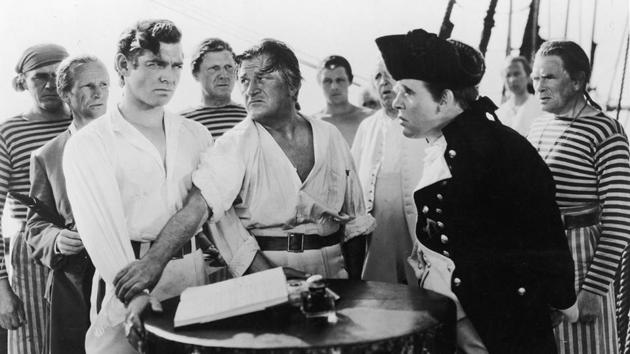
Clark Gable, Charles Laughton, and Franchot Tone were all nominated for Best Actor for Mutiny on the Bounty. All three lost. They lost to Victor McLaglen in The Informer, partly because they had split the Mutiny vote so cleanly between themselves that none of them could accumulate enough first-place ballots to win. It is the only film in Oscar history with three Best Actor nominations. The Academy looked at what had happened, decided this could not be allowed to happen again, and created Best Supporting Actor and Best Supporting Actress categories the following year. The era of single-Oscar Best Picture winners ended at that ceremony.
The film itself received eight nominations – the most of any film that year – and won only Best Picture. Frank Lloyd, who had already won Best Director twice before for The Divine Lady and Cavalcade, was nominated again for Mutiny and lost to John Ford for The Informer. The Informer beat Mutiny in four categories: Director, Actor, Screenplay, and Score. Academy records indicate The Informer came second in the Best Picture voting. The film that beat Mutiny in four other categories lost the top prize to it.
The 1935 picture stars Laughton as the sadistic Captain Bligh and Gable as Fletcher Christian, the first officer who leads the mutiny in the South Pacific in 1789. It was the highest-grossing film of 1935. It is also, as of 2026, the last Best Picture winner to win Best Picture and nothing else. Ninety years and counting.
Frequently Asked Questions
Which film was the last to win Best Picture and no other Oscar?
Mutiny on the Bounty was the last, at the eighth Academy Awards on March 5, 1936. It arrived with eight nominations, more than any other picture that year, and converted exactly one of them. Every Best Picture winner since has left the ceremony with at least one more statuette.
Is Grand Hotel really the only Best Picture winner nominated in just one category?
Yes. Grand Hotel drew a single Academy Award nomination, for Outstanding Production, and won it. None of the other ninety-seven Best Picture winners has appeared on the ballot exactly once, which leaves Grand Hotel holding the Academy record for the fewest nominations by a winner of the top prize.
Why were none of Grand Hotel’s stars nominated for acting Oscars?
The categories were too small to hold them. Each acting race at the 1932 ceremony carried exactly three nominees, so Greta Garbo, Joan Crawford, and both Barrymores were chasing a handful of slots. Wallace Beery did share Best Actor that night, in a tie, but for The Champ rather than Grand Hotel.
Why did none of Mutiny on the Bounty’s three Best Actor nominees win?
Clark Gable, Charles Laughton, and Franchot Tone split the vote between them, and Victor McLaglen took the award for The Informer. It remains the only time one film has produced three Best Actor nominees, and The Informer went on to beat Mutiny in four separate categories.
When did the Academy add the supporting-acting categories?
At the ninth ceremony, held on March 4, 1937, for films released in 1936. Walter Brennan won the first Best Supporting Actor award for Come and Get It, and Gale Sondergaard won the first Best Supporting Actress award for Anthony Adverse. Both categories have been contested every year since.
Which Best Picture winner has come closest since 1935?
Spotlight, which won two Oscars in 2016 – Best Picture and Original Screenplay – from six nominations. It was the first Best Picture winner to finish with fewer than three awards since The Greatest Show on Earth in 1953, and that film also stopped at two.
Did The Broadway Melody win any award besides Best Picture?
No. It picked up three nominations and turned one into a win. Bessie Love lost Best Actress to Mary Pickford, and Harry Beaumont lost Best Director to Frank Lloyd, who was working on a film the Academy had not shortlisted for the top prize. It was the first sound picture to win Best Picture.
Sources
- Wikipedia: 2nd Academy Awards, 5th Academy Awards, 8th Academy Awards
- Wikipedia: The Broadway Melody, Grand Hotel (1932 film), Mutiny on the Bounty (1935 film)
- Oscars.org
- Britannica entries for each film and director
- IMDb full nominations and awards records
- Billboard: Oscar Best Picture Winners That Didn’t Win the Most Awards That Year (Dec 2025)
- Collider: Mutiny on the Bounty and the Supporting Categories
- Rotten Tomatoes: All 98 Best Picture Winners Ranked