Every Best Picture Oscar Winner That Won Best Picture and Nothing Else
There are 98 Best Picture winners in the history of the Academy Awards. They have collectively won 547 other Oscars across acting, directing, writing, technical, and craft categories – an average of about five and a half wins per Best Picture winner once the top prize is included. Most years, the Best Picture champion takes the night. Even the films generally agreed to be its weakest winners – The Greatest Show on Earth, Crash, Around the World in 80 Days – managed two or three or five additional Oscars beyond the top prize.
Cimarron, the era's other anomaly, won three Oscars including Best Picture as a Western.
Three films are different. Three films won Best Picture and nothing else. No directing, no acting, no writing, no editing, no music, no design. One Oscar each, the biggest one. All three were released in the first decade of the Academy Awards, between 1929 and 1935. All three were produced by MGM, which dominated the early Best Picture races so completely that the studio simply reused its own production resources for the third winner. And then, in 1936, the Academy made a structural rule change that effectively ended the possibility of any future film joining them.
The rule change was prompted by the third film on this list, whose three lead actors all received Best Actor nominations and consequently split the vote, allowing none of them to win. The Academy responded by creating Best Supporting Actor and Best Supporting Actress categories at the next ceremony, which gave Best Picture nominees substantially more chances to win secondary awards. The category architecture has remained roughly stable ever since. As of the 98th Academy Awards in March 2026, no Best Picture winner has won only Best Picture for ninety years. What follows is every one of them, in the order they were released.
- Total Best Picture winners that won only Best Picture: 3
- Year range of all three winners: 1929 to 1935 (a six-year window)
- All three were produced by MGM
- Most recent such winner: Mutiny on the Bounty, 1935
- Only Best Picture winner ever nominated in zero other categories: Grand Hotel (1932)
- Only film in Oscar history with three Best Actor nominations: Mutiny on the Bounty (1935)
- Structural change that ended the era: Best Supporting Actor and Actress categories created in 1936, partly in response to Mutiny on the Bounty
- Lowest-rated Best Picture winner on Rotten Tomatoes: The Broadway Melody (1929), at roughly 39%
The Broadway Melody
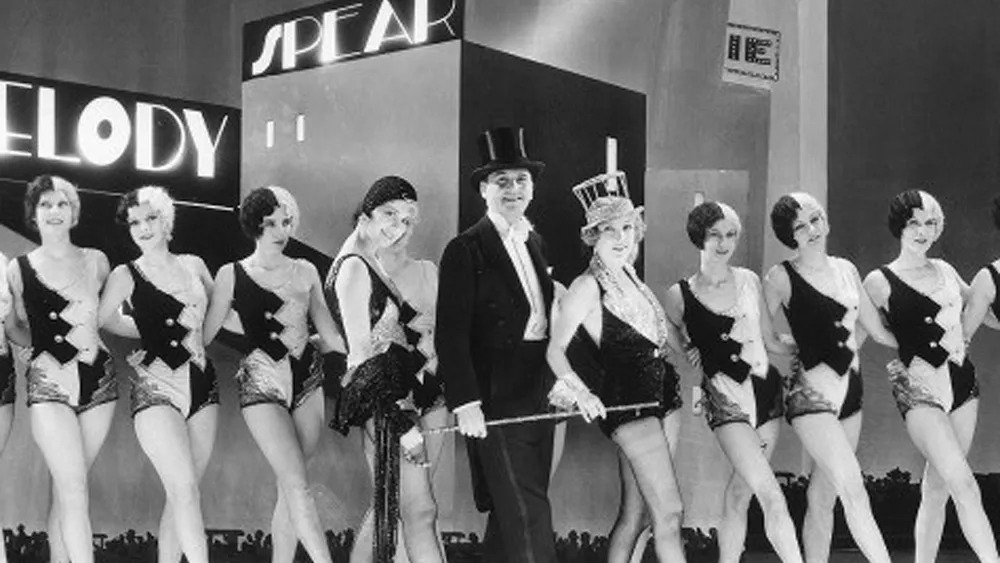
The first sound picture to win Best Picture is also the lowest-rated Best Picture winner on Rotten Tomatoes – currently sitting at around thirty-nine percent and unlikely to improve. The Broadway Melody was MGM’s first all-talking feature, an early-musical backstage romance about two vaudeville sisters trying to make it on Broadway, and it arrived at the second Academy Awards ceremony in 1930 with the considerable advantage of being technologically impressive. The cinematography was static. The sound was tinny. The microphones were so badly positioned that you can occasionally see actors blur as they walk out of focus. None of this prevented it from winning Best Picture.
The film was also a genuine commercial phenomenon. It made a profit of $1.6 million on a budget of $379,000, becoming the highest-grossing picture of 1929 and inspiring a series of sequel-adjacent musicals – Broadway Melody of 1936, 1938, and 1940 – that kept the brand alive for over a decade.
It was nominated in three categories. Bessie Love was nominated for Best Actress and lost to Mary Pickford. Harry Beaumont was nominated for Best Director and lost to Frank Lloyd, who was directing The Divine Lady, a film that wasn’t even nominated for Best Picture. The Broadway Melody won the top prize and walked out of the ceremony with one Oscar. The Academy hadn’t yet figured out how to officially announce nominees that year. Records were reconstructed later. None of which prevented it from winning Best Picture.
Grand Hotel
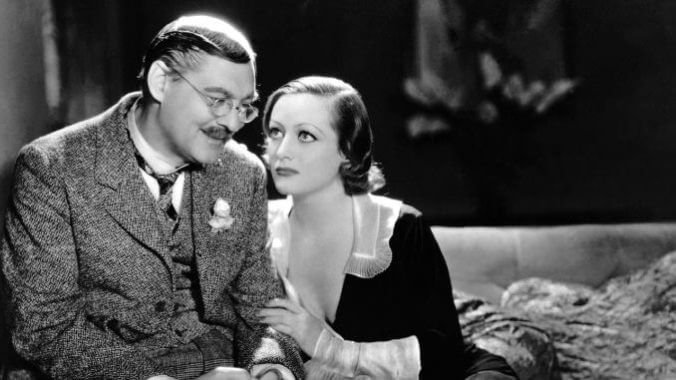
Greta Garbo, John Barrymore, Lionel Barrymore, Joan Crawford, and Wallace Beery walked into the same MGM picture in 1932. By any reasonable expectation, at least one of them should have been nominated for an acting Oscar. None of them were. Grand Hotel was nominated for Best Picture and absolutely nothing else – no acting, no directing, no screenplay, no cinematography, no art direction, no music. One nomination, one win, the only such case in the history of the Academy Awards.
The film cost roughly $700,000, earned $2.6 million in its first year, and became MGM’s most profitable picture of 1932. It was directed by Edmund Goulding in a fluid, almost transparent style – a continuous lobby tracking shot, an overhead montage of switchboard operators connecting calls – that drew critical praise and exactly zero Academy attention. The story was an ensemble of strangers passing through a Berlin hotel: a dying clerk, a tired ballerina, a thieving baron, a ruthless industrialist, an ambitious stenographer. Their stories briefly intersect and then diverge.
Wallace Beery won Best Actor that same night. Not for Grand Hotel. He won for The Champ. The Academy somehow looked at the most star-studded ensemble in Hollywood – five future Oscar winners, all in the same picture – and decided none of them needed to be nominated for it. The film won Best Picture anyway. It is the strangest case in the history of the category and remains so.
Mutiny on the Bounty
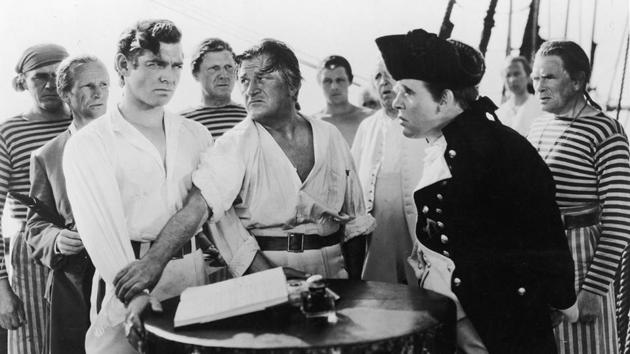
Clark Gable, Charles Laughton, and Franchot Tone were all nominated for Best Actor for Mutiny on the Bounty. All three lost. They lost to Victor McLaglen in The Informer, partly because they had split the Mutiny vote so cleanly between themselves that none of them could accumulate enough first-place ballots to win. It is the only film in Oscar history with three Best Actor nominations. The Academy looked at what had happened, decided this could not be allowed to happen again, and created Best Supporting Actor and Best Supporting Actress categories the following year. The era of single-Oscar Best Picture winners ended at that ceremony.
The film itself received eight nominations – the most of any film that year – and won only Best Picture. Frank Lloyd, who had already won Best Director twice before for The Divine Lady and Cavalcade, was nominated again for Mutiny and lost to John Ford for The Informer. The Informer beat Mutiny in four categories: Director, Actor, Adapted Screenplay, and Score. Academy records indicate The Informer came second in the Best Picture voting. The film that beat Mutiny in four other categories lost the top prize to it.
The 1935 picture stars Laughton as the sadistic Captain Bligh and Gable as Fletcher Christian, the first officer who leads the mutiny in the South Pacific in 1789. It was the highest-grossing film of 1935. It is also, as of 2026, the last Best Picture winner to win Best Picture and nothing else. Ninety years and counting.
Sources
- Wikipedia
- Wikipedia: 2nd Academy Awards, 5th Academy Awards, 8th Academy Awards
- Wikipedia: The Broadway Melody, Grand Hotel (1932 film), Mutiny on the Bounty (1935 film)
- Oscars.org
- Britannica entries for each film and director
- IMDb full nominations and awards records
- Turner Classic Movies
- The Hollywood Reporter
- Billboard: Oscar Best Picture Winners That Didn’t Win the Most Awards That Year (Dec 2025)
- Collider: Mutiny on the Bounty and the Supporting Categories
- Rotten Tomatoes: All 98 Best Picture Winners Ranked
- The Oscar Buzz: Nothing But the Best series
- Films Fatale: Best Picture Project series
- Filmsite.org production details