Every Pulitzer Prize Refused, Returned, or Rescinded in History

The Pulitzer Prizes began in 1917 with four awards – two in journalism, one in history, one in biography – and now run to twenty-three categories handed out every spring. The pressure to take one back has arrived at regular intervals ever since. A New York Times correspondent who covered up the Soviet famine kept his 1932 prize. An Alex Haley book that turned out to have invented portions of its history kept its 1977 citation. A sitting president of the United States spent years demanding the revocation of a 2018 prize over Russia coverage. The Board, with a consistency bordering on the geological, simply declines.
Sinclair Lewis turned one down in 1926 because he was still angry about a different prize five years earlier. William Saroyan turned one down in 1940 because he disapproved of prizes on principle, although the principle did not extend to the Academy Award he collected for The Human Comedy. Janet Cooke returned hers in 1981 after the Washington Post discovered that the eight-year-old heroin addict at the center of her story did not exist.
Fifty-five years separate the first refusal from the only return, and nobody has done either in the forty-five years since. Stockholm keeps a longer list of Nobel laureates who never collected their prize. Lewis and Saroyan said no on their own terms. Cooke’s editor gave hers back by telegram. Everyone else has taken the certificate and gone home.
Two Pulitzer Prizes have been refused and one returned, three in all since 1917. Sinclair Lewis refused the 1926 Novel award, William Saroyan refused the 1940 Drama award, and Janet Cooke gave back the 1981 Feature Writing award after her story proved fabricated. The Board has revoked none.
Sinclair Lewis (1926, refused)

Sinclair Lewis had been waiting five years to refuse the Pulitzer Prize when the Board finally gave him one. In 1921, the novel jury had unanimously recommended his bestseller Main Street for the prize. The Columbia University trustees overruled them, deciding the book failed the ‘wholesome’ requirement in the Pulitzer Plan of Awards, and gave the prize to Edith Wharton’s The Age of Innocence instead. Lewis called it ‘the Main Street burglary’ and began plotting his revenge.
He waited. In 1923, the jury skipped him entirely. In 1926, they unanimously chose Arrowsmith, his novel about an idealistic young doctor. Columbia Secretary Frank D. Fackenthal wrote to congratulate him a few days before the announcement. Lewis told his publisher he intended to refuse it, with what he called ‘a polite but firm letter which I shall let the press have, and which ought to make it impossible for anyone ever to accept the novel prize thereafter without acknowledging themselves as willing to sell out.’
He kept his word. On May 6, 1926, three days after the announcement, the Associated Press carried his rejection letter. It ran in newspapers across the country. Lewis denounced prizes as corrupting influences on writers, who would inevitably tailor their work to suit ‘the prejudices of a haphazard committee.’ Four years later he accepted the 1930 Nobel Prize in Literature, becoming the first American to win it. He raised no philosophical objection at all.
William Saroyan (1940, refused)
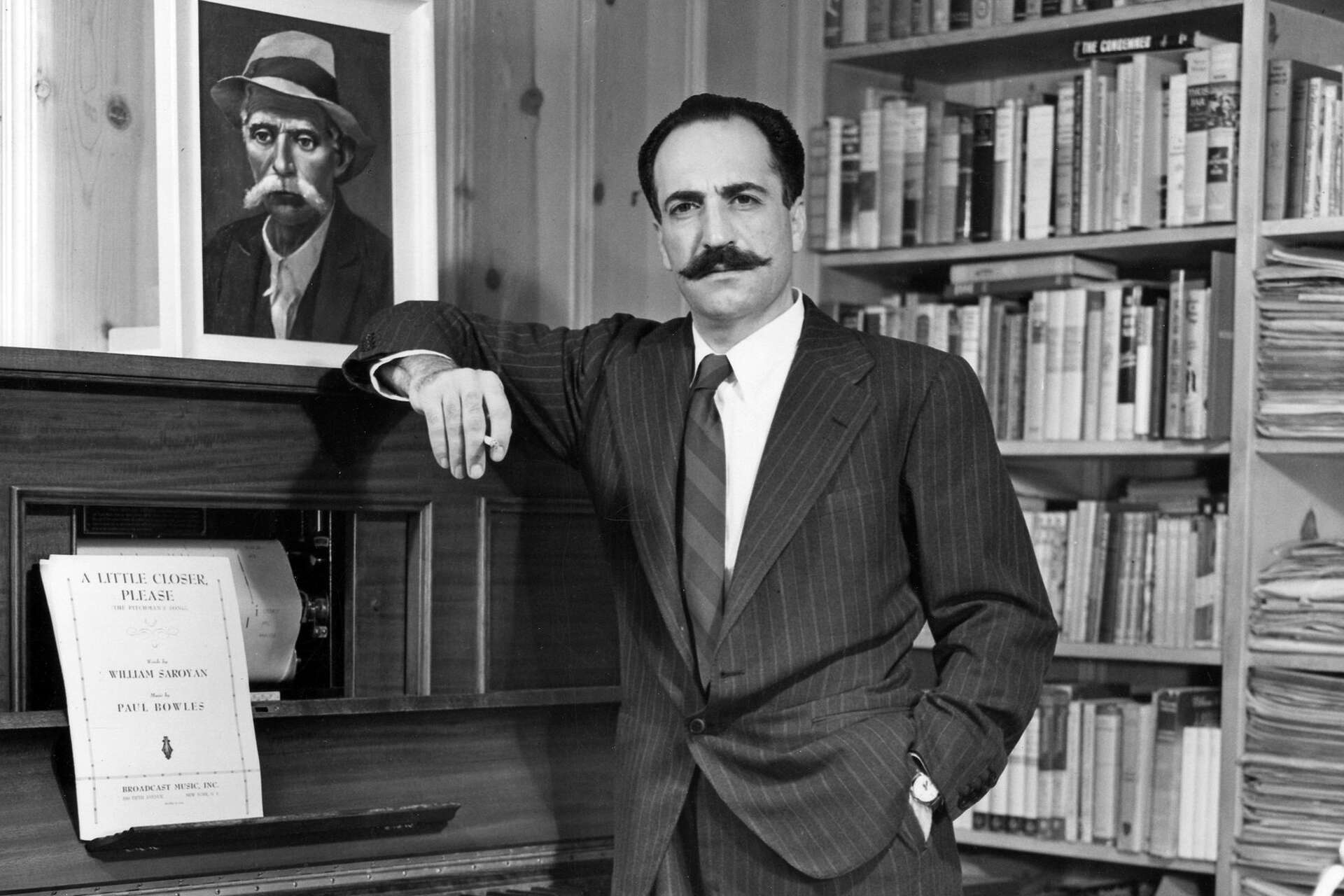
The Time of Your Life was written in six days. William Saroyan banged it out on a cheap typewriter at the Great Northern Hotel in New York in 1939, a five-act play set in a San Francisco waterfront bar populated by drifters and dreamers and a tap-dancing newsboy played on Broadway by Gene Kelly. It opened on October 25, 1939, to mixed reviews. It lost $25,000 during its initial run. Then it won everything.
In May 1940, The Time of Your Life became the first play in history to win both the New York Drama Critics’ Circle Award and the Pulitzer Prize for Drama. Saroyan accepted the first and refused the second, on the grounds that ‘commerce should not judge the arts.’ The position was a touch awkward given that he had just collected the Critics’ Circle award the same week, but Saroyan was not a man troubled by inconsistency.
His stated reason, in interviews afterward, was that The Time of Your Life was ‘no more great or good’ than anything else he had written, which he considered a problem with prize-giving in general rather than a comment on his own work. He spent the rest of his life refusing to apologize for the refusal and accepting almost every other award he was offered. The 1943 Academy Award for Best Story, in particular, posed no philosophical difficulty whatsoever.
Janet Cooke (1981, returned)

The story was beautifully written. ‘Jimmy’s World’ ran on the front page of the Washington Post on September 28, 1980, more than 2,000 words describing an eight-year-old heroin addict with needle marks ‘freckling the baby-smooth skin of his thin, brown arms.’ Marion Barry’s administration launched a citywide search. Cooke refused to reveal Jimmy’s address, citing source protection. Some at the Post were skeptical. Bob Woodward, then assistant managing editor, submitted the story for the Pulitzer anyway.
She won on April 13, 1981. The unraveling started the same day. The Toledo Blade, Cooke’s previous employer, was preparing a celebratory story when editors noticed her Pulitzer biography didn’t match their personnel records. The Vassar magna cum laude was actually one year at Vassar. The master’s from Toledo was a bachelor’s. The Sorbonne year and the languages were inventions. By the next morning, after nearly eleven hours of questioning, Cooke confessed that Jimmy did not exist.
Ben Bradlee returned the prize by telegram on April 15. The Board re-awarded the Pulitzer to Teresa Carpenter of the Village Voice. Cooke remains the only person ever to return a Pulitzer. The Board itself has been asked many times since to revoke one on its own initiative. Walter Duranty’s Soviet propaganda was not enough. Alex Haley’s fabricated history was not enough. The 1619 Project and the 2018 Russia coverage were not enough. Forty-five years on, the only way out remains the same. You have to give it back yourself.
Refusing honors is an old literary tradition - Westminster Abbey’s Poets’ Corner holds writers who declined knighthoods.
Frequently Asked Questions
Has a Pulitzer Prize ever been rescinded?
No winning Pulitzer has been rescinded. The only entry the organization marks that way is “Caliphate,” a New York Times podcast named a 2019 finalist in International Reporting. After Canadian police charged its central source with a terrorism hoax, the Board accepted the paper’s withdrawal on December 22, 2020.
Why did Sinclair Lewis refuse the 1926 Pulitzer Prize?
Lewis was avenging Main Street. In 1921 the novel jury chose it, and Columbia’s trustees overruled them, ruling the book failed the Pulitzer plan’s requirement for a wholesome atmosphere of American life. The prize went to Edith Wharton’s The Age of Innocence. Lewis called it the Main Street burglary.
Why did William Saroyan turn down the 1940 Pulitzer Prize for Drama?
Saroyan said The Time of Your Life was no more great or good than anything else he had written, and objected to business interests sitting in judgment on art. He kept the New York Drama Critics’ Circle Award for the same play, which in 1940 became the first drama to win both.
Does a refused Pulitzer Prize still count as a win?
Yes. The Pulitzer organization still lists Arrowsmith as the 1926 winner in the Novel category and The Time of Your Life as the 1940 winner in Drama. Refusing sends back the money and the certificate. It does not remove the title or the author from the record.
Who received the 1981 Pulitzer Prize after Janet Cooke returned hers?
Teresa Carpenter of the Village Voice, who took the 1981 Feature Writing prize and its thousand dollars. The Pulitzer organization’s own listing for that year names Carpenter as the winner and adds a parenthetical note that the award first went to Cooke and came back two days later.
Why does Walter Duranty still have his 1932 Pulitzer Prize?
The Board reviewed it in November 2003 and let it stand, finding no clear and convincing evidence of deliberate deception in the 1931 articles actually entered. It noted that a Pulitzer goes to the specific work submitted rather than to a career, and that everyone involved was long dead.
Did the Pulitzer Board revoke the 2018 prizes for Russia coverage?
No. On July 18, 2022, after commissioning two independent reviews, the Board announced that nothing in the winning submissions had been discredited and that the 2018 Pulitzer Prizes in National Reporting stand. The awards to the New York Times and Washington Post staffs remain in place.
Sources
- The Pulitzer Prizes: Sinclair Lewis, ‘the Main Street burglary’ and a rejection notice
- Britannica: William Saroyan
- Britannica: Pulitzer Prize
- NPR: The New York Times can’t shake the cloud over a 90-year-old Pulitzer Prize
- History News Network: The Prize That Taints the Pulitzer’s Ethics and Honor
- The Washington Post (April 16, 1981): Post Reporter’s Pulitzer Prize Is Withdrawn
- Columbia Journalism Review: The fabulist who changed journalism