Every Secret Service Code Name for U.S. Presidents
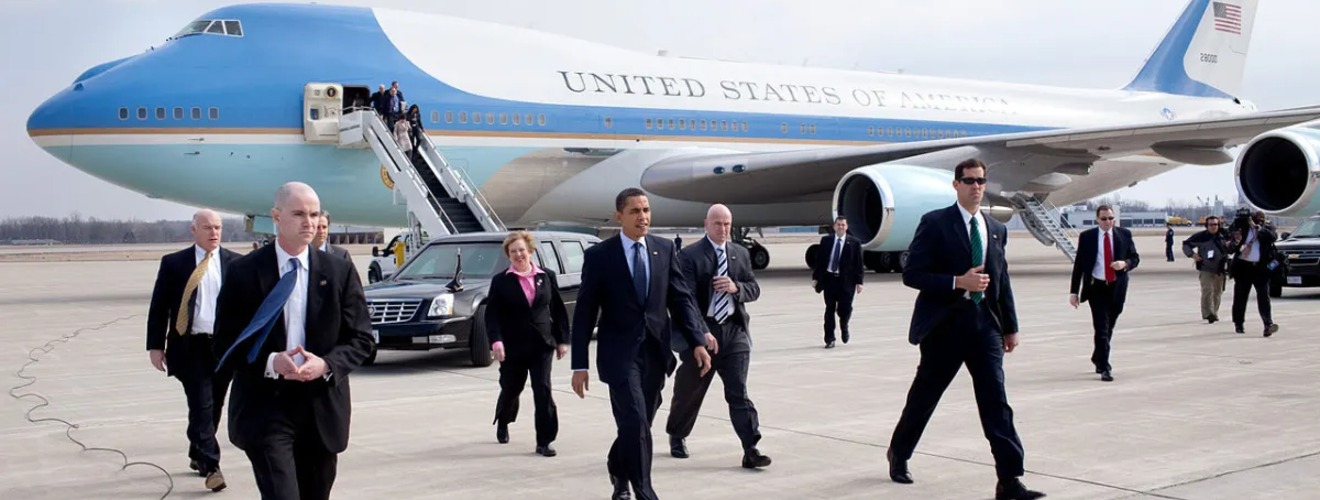
For most of American history, presidents did not have Secret Service code names. They didn’t need them. There was no radio chatter to encrypt, no transcontinental motorcade calls to obscure, no telephone network through which a hostile party might intercept a discussion of the president’s whereabouts. Code names became necessary in 1945, when the signal unit handling presidential communications realized that the words ‘the president’ or ‘Mr. Truman’ or ‘Harry’ could not be said over a radio frequency without anyone with a receiver knowing exactly where the most important person in the country was at that moment.
The names are not really secret, in the sense that all of them get leaked or overheard or printed within months of being assigned, and most are now confirmed on the public record. Nor are they reserved for people. The White House is Castle, Air Force One is Angel, the armored limousine is Stagecoach, and the Capitol is Punch Bowl. The Secret Service uses all of it anyway, for clarity, tradition, and the small but real protection of brevity over a crackling radio.
What follows is the whole file, in chronological order, with the code name each president carried in office. Everyone earlier on the list of American presidents went without. Where the origin of a name is genuinely known, it appears in the entry. Where it is not, the entry says so. A surprising number have no documented origin at all, which suggests that the people who assigned them either did not record their reasoning or, in some cases, may not have had much.
Fourteen presidents, every one from Harry Truman to Donald Trump, have carried a Secret Service code name. Modern presidents choose theirs from a shortlist the White House Communications Agency supplies, and a spouse and children receive names starting with the same letter, so an entire family shares a single initial.
Harry S. Truman – General
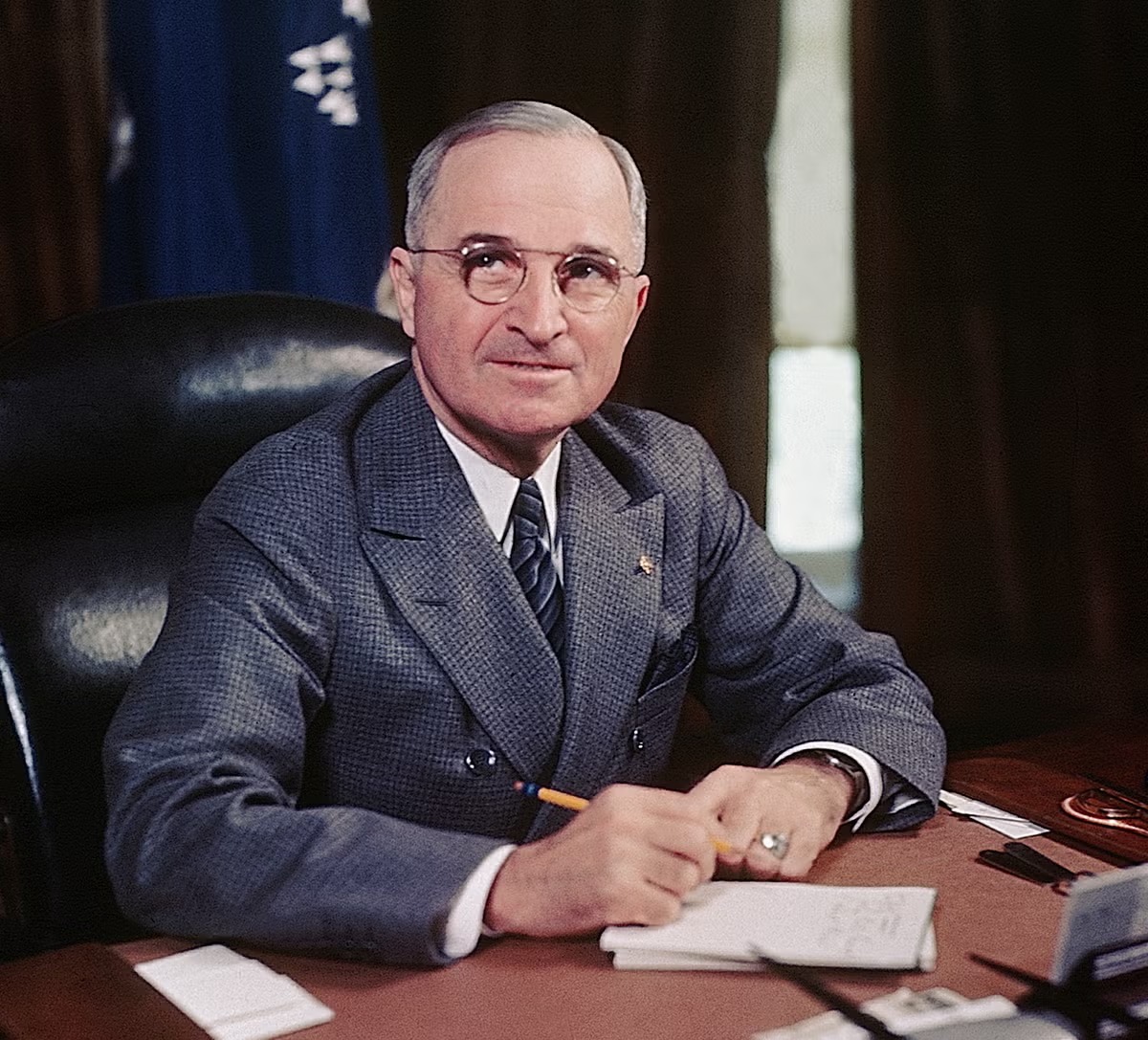
Truman became the first president ever assigned a Secret Service code name on the strength of new radio technology, which made eavesdropping a serious problem and prompted the White House Communications Agency to invent the whole system in 1945. They called him General. He had never been one. He had been a field artillery captain in World War I, a competent officer who came home, ran a haberdashery that went bankrupt, and entered politics through the back door of Kansas City machine politics, and only an act of imagination connects any of that to General. Michael Beschloss has suggested it was a Walter Mitty fantasy.
A second name, Supervise, appears in some sources, possibly used to avoid confusion when actual generals were standing next to the president. The historical record is foggy on this.
Truman almost didn’t survive long enough for any of it to matter. On November 1, 1950, with the White House under renovation, he was napping at Blair House when two Puerto Rican nationalists, Oscar Collazo and Griselio Torresola, attempted to shoot their way in to assassinate him. White House policeman Leslie Coffelt was killed defending the president and, while dying, fired a single shot that killed Torresola. He remains the only Secret Service-affiliated officer ever to die in the line of presidential protection duty. Truman was unharmed. He emerged from his nap to find his protection arrangements transformed, more or less, into the modern Secret Service.
Dwight D. Eisenhower – Providence
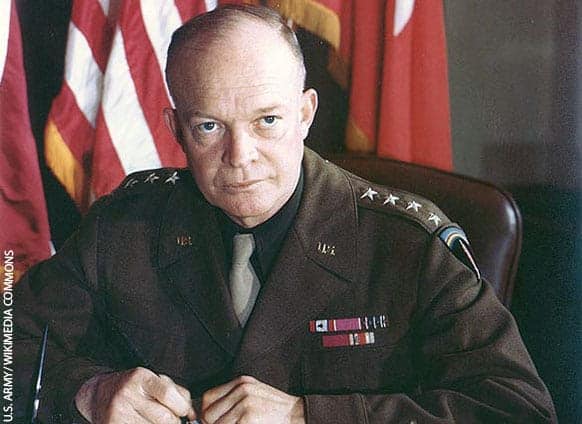
Eisenhower had actually been a general, a five-star one, which made the obvious code name unavailable because Truman already had it. So the White House Communications Agency settled on Providence, a name that gestured toward Eisenhower’s image as a steady guiding hand on the country at a moment when Cold War anxieties were curdling into hydrogen bombs and proxy wars. He served two terms and never seems to have minded it.
What is more interesting is what they called him after he left. According to the Eisenhower National Historic Site, the Secret Service began referring to the retired president as Scorecard, in reference to his obsession with golf. This was not invented in 1961. By the late 1950s, Eisenhower’s golfing was a political liability. He played at Burning Tree, at Cherry Hills, and especially at Augusta National, where the club built him a cottage roughly 60 yards from the tenth tee. One popular bumper sticker of the era proposed: BEN HOGAN FOR PRESIDENT! IF WE GOTTA HAVE A GOLFER, LET’S HAVE A GOOD GOLFER!
His wife Mamie was Springtime, and his grandson David, who would later marry Richard Nixon’s daughter Julie, was Sahara. The Eisenhower family thus contains the only verified Secret Service code name combining a season, a desert, and a golf accessory. Mamie, by all accounts, was a relief.
John F. Kennedy – Lancer
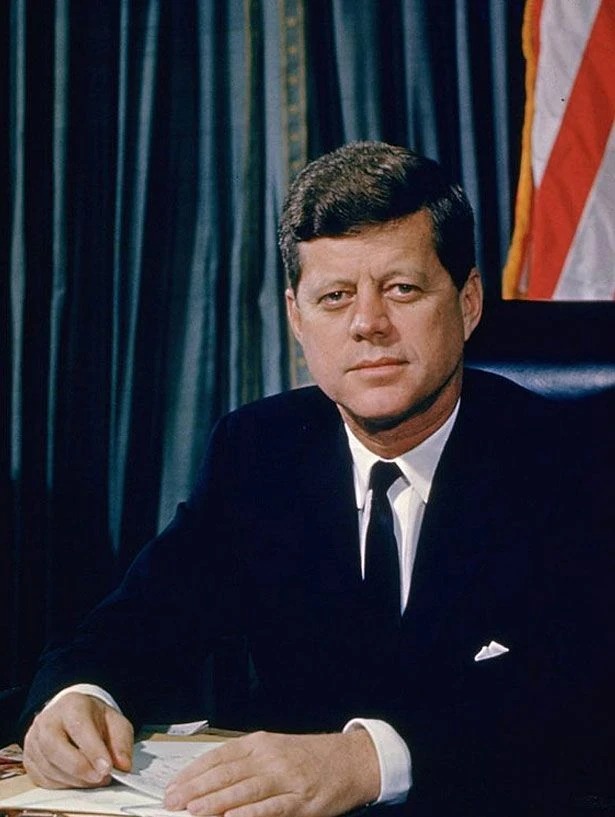
Lancer was a Kennedy choice, drawn from the same Arthurian well that produced the entire Camelot mythology of the administration. Lancelot was a Knight of the Round Table, the most famous one, and the most flawed. The connection was not, as is sometimes claimed, invented after the fact. According to Secret Service Agent Clint Hill, who wrote about the Kennedys at length in his memoir, all the family code names began with L from the start: Kennedy was Lancer, Jacqueline was Lace, Caroline was Lyric, and John Jr. was Lark.
The Camelot framing of the presidency, however, came later. Jacqueline Kennedy gave a now-famous interview to Theodore White just a week after the assassination in November 1963, citing a line from the Lerner and Loewe musical and asking that the country remember her husband’s time in office as a brief, shining moment. The image stuck so thoroughly that Lancer became retroactively part of a romance the Secret Service had not exactly intended.
Of all the code names on this list, Lancer is the only one operationally famous for what was being said on the wire when it broke. In Dallas, in the seconds after the shots in Dealey Plaza, Secret Service Agent Roy Kellerman radioed Halfback, the follow-up car: ‘Lancer is hit.’ Kellerman would later testify that he heard the shots and shouted ‘Let’s get out of here.’ They were already moving.
Lyndon B. Johnson – Volunteer
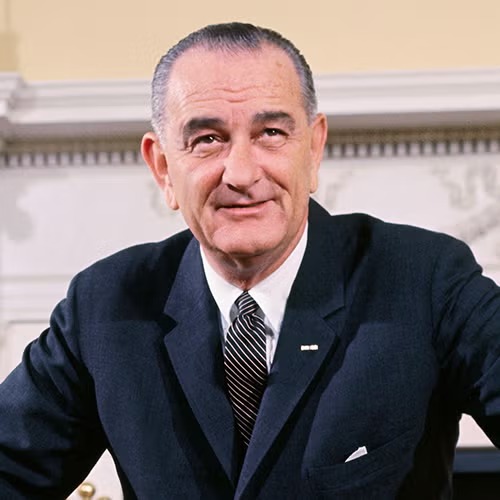
Origins of the Johnson code name are not officially recorded anywhere, which is rare for someone with so much paper around him. The best available read connects it to a single line in Johnson’s biography. He was a sitting congressman from Texas’s Tenth District when the Japanese attacked Pearl Harbor on December 7, 1941. Two days later he requested an indefinite leave of absence from Congress and reported for active duty in the Naval Reserve, making him, per the U.S. Naval History and Heritage Command and a 2007 House report, the first member of Congress to volunteer for active military service after the attack.
Johnson’s actual service was brief and largely promotional. President Roosevelt ordered all members of Congress in uniform back to Washington in July 1942, and Johnson came home. But not before MacArthur awarded him a Silver Star for an aerial reconnaissance flight near New Guinea, a decoration that has been viewed skeptically by historians ever since.
His wife Lady Bird, who had been nicknamed by a nursemaid as an infant and never legally went by her actual name (Claudia Alta Taylor), was Victoria. Daughters Lynda and Luci were Velvet and Venus. Whoever assigned these names at the WHCA appears to have been in a particularly alliterative mood that year. Johnson, for his part, never publicly commented on Volunteer, which is consistent with him not publicly commenting on much of anything personal.
Richard Nixon – Searchlight
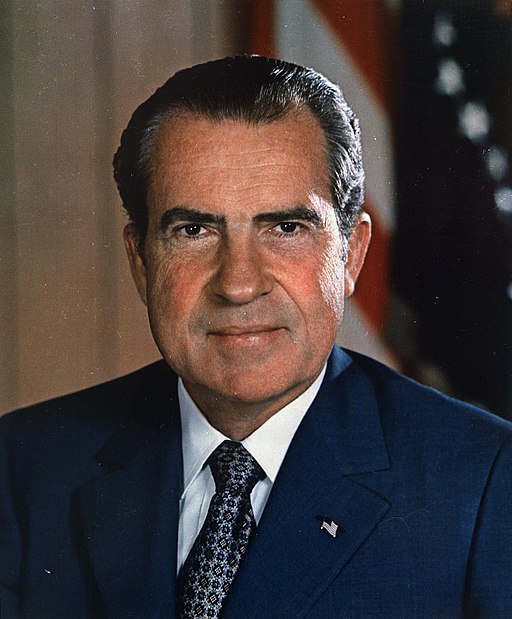
Searchlight is the funniest code name on the list, although the joke only became funny later. When the Secret Service assigned it during the 1968 campaign there was nothing especially ironic about it. A searchlight is a tool of vigilance and exposure. Five years later, with the Watergate burglars under arrest and the White House taping system feeding endless reels of audio to a congressional committee, the irony became impossible to ignore. A searchlight does reveal a great deal. It revealed, eventually, that Nixon had been involved in covering up a politically motivated break-in of the Democratic National Committee headquarters, and that he had ordered the cover-up, recorded it, and lied about it.
His wife Pat was Starlight, daughter Tricia (Patricia Nixon Cox) was Sugarfoot, and Julie was Sunbonnet. Julie had married Eisenhower’s grandson David in 1968, which is the only marriage in modern history to combine two presidential families’ Secret Service code-name letter assignments (L for Eisenhower’s grandchildren, S for the Nixons). Make of that what you will.
Nixon resigned on August 9, 1974, becoming the first and so far only American president to do so. He left office still under the code name Searchlight, which was retired with him. It is, in retrospect, one of the more accidentally accurate code names the agency has ever assigned, and one of the few its subject probably never came to like.
Gerald Ford – Passkey
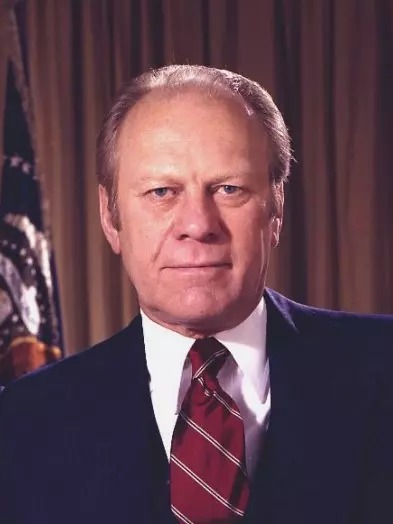
The Ford code name has no documented origin. The Secret Service simply assigned it, and Ford accepted it, and no one in the historical record can be found to have asked why. It is a small irony of the office that of all the modern presidents, the one least invested in his own mythology got a name with the least obvious story behind it.
What gives Passkey its weight is what Ford did with the office. Less than a month after taking it, on September 8, 1974, he granted Nixon ‘a full, free, and absolute pardon’ for any offenses committed during his presidency. The decision was deeply unpopular at the time, almost certainly cost Ford the 1976 election against Jimmy Carter, and is now widely viewed as the necessary act of an honest man trying to spare the country a constitutional ordeal. Passkey, under the circumstances, became a name that opened one door (out of the presidency for Nixon) and closed another (away from prosecution).
His wife Betty was Pinafore, a code name almost too charming for a woman who would go on to candidly discuss her addiction to alcohol and painkillers, found the Betty Ford Center, and become the most consequential post-presidency first lady of the twentieth century. Their son Jack was Packman. The Fords took the whole thing in good humor, as they took most things.
Jimmy Carter – Deacon
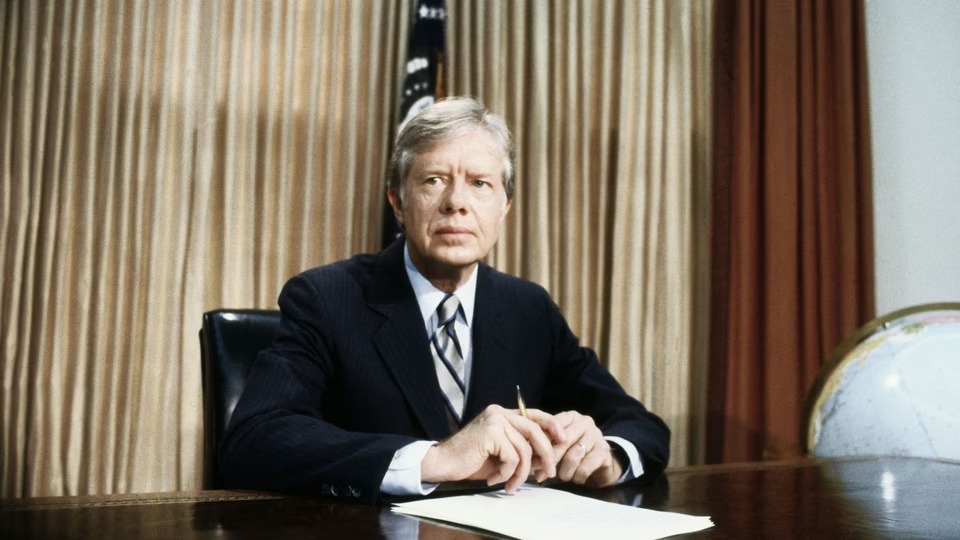
Deacon fit. Carter was a lifelong Baptist who actually taught Sunday school at Maranatha Baptist Church in Plains, Georgia, well into his nineties, drawing crowds of hundreds to a congregation that normally numbered around forty. By his grandson’s count, he had taught the class 689 times by August 2015. He was 90, and being treated for melanoma that had spread to his brain.
A handful of sources list a second code name, Lock Master, supposedly assigned earlier. The U.S. Secret Service’s official statement at the conclusion of his protective detail, released in January 2025, refers only to Deacon, which is the name they used for him operationally across half a century. Where Lock Master came from is unclear and probably doesn’t matter.
What matters is the timeline. Carter received Secret Service protection as a presidential candidate on October 8, 1975, and continued to receive it, by law, for the rest of his life. He died on December 29, 2024, aged 100. His protective detail concluded on the morning of January 10, 2025, the day after his state funeral. That makes Deacon the longest-serving Secret Service protectee in the agency’s history: 49 years and two months. The second-longest was George H.W. Bush, who at his death had been protected for 35 years. Carter’s record will not be broken for a very long time, if ever.
Ronald Reagan – Rawhide
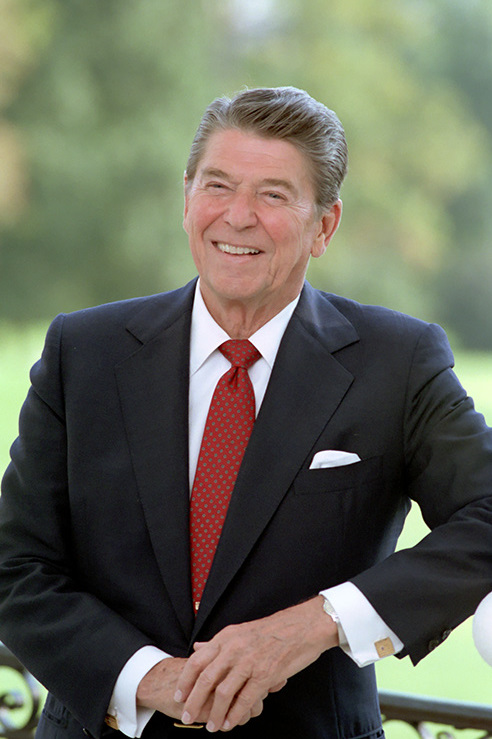
Rawhide was chosen by a U.S. Army master sergeant working with the White House Communications Agency, who according to Del Quentin Wilber’s Rawhide Down thought the name suited Reagan because the former actor had appeared in several Westerns and was known to keep horses at his California ranch. Reagan, Wilber writes, ‘adored the moniker.’ He was not in the TV series of the same name, which starred Clint Eastwood and ran from 1959 to 1966. He just liked the word.
It became one of the most consequential code names in the agency’s history at 2:27 p.m. on March 30, 1981, when John Hinckley Jr. opened fire outside the Washington Hilton. The Secret Service radio chatter that followed was released in 2011 and is harrowing to listen to. Agents at the scene initially reported ‘Rawhide is OK’ before realizing the president had been hit by a ricocheted bullet that had entered his armpit. The motorcade redirected to George Washington University Hospital. Reagan walked into the emergency room under his own power. He nearly bled out on the operating table.
His wife Nancy was Rainbow, daughter Patti Davis was Ribbon, and son Ron was Reliant. Reagan’s eldest, Maureen, had two: Rhyme, and later Rosebud. The Reagans, like the Kennedys before them, treated the code names as another form of family branding, except that the Reagans had more kids from more marriages and ended up with a longer alphabet to work with.
George H.W. Bush – Timberwolf
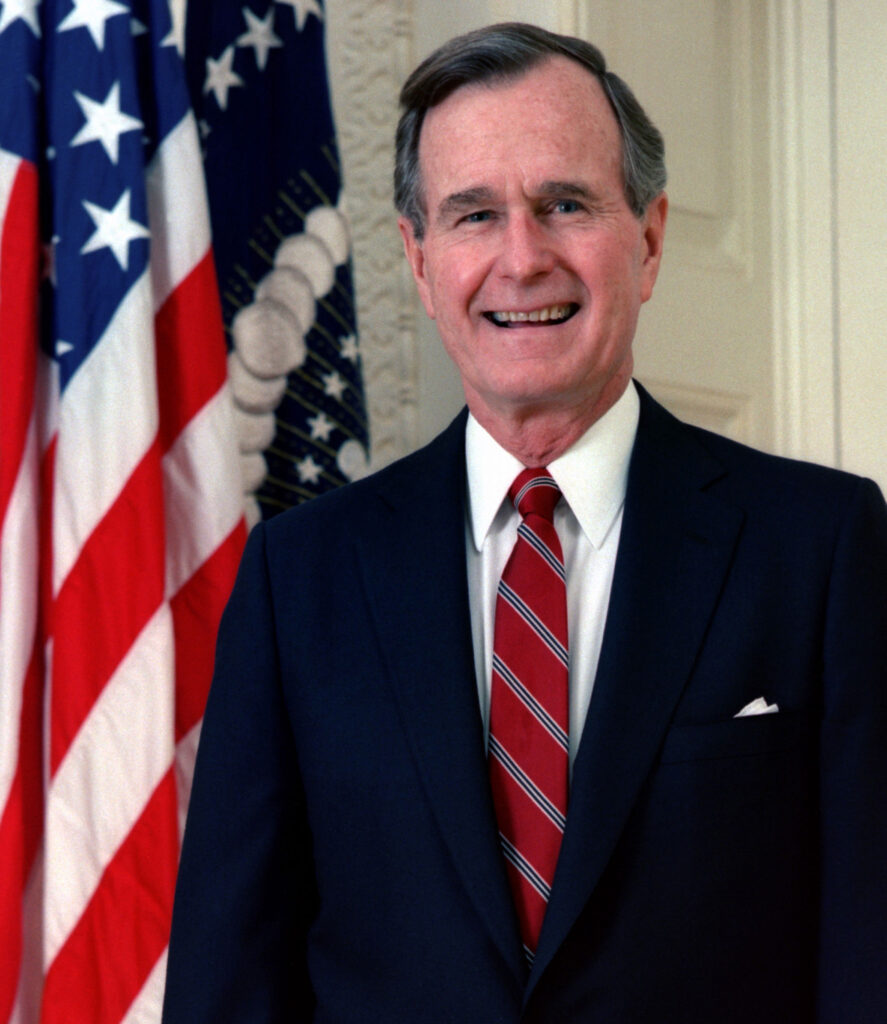
No one knows why George H.W. Bush was called Timberwolf. Britannica’s authoritative list throws up its hands on this one. The most that can be said is that wolves are predators of the northern forests, that Bush was a New Englander by upbringing and a Texan by adoption, and that whatever the WHCA was thinking when it chose the name has not made it into any printed source.
What is documented is what the name meant by the end. In 2013, Bush learned that the two-year-old son of an agent on his protective detail had been diagnosed with leukemia, and that the rest of the detail was planning to shave their heads in solidarity. Bush, then 89, asked to shave his too. The photograph that followed shows the former president, his Secret Service detail, and a small boy named Patrick, all bald together. The Bushes had themselves lost their second child, Robin, to leukemia in 1953. She was three years old. When the Secret Service tweeted about the head-shaving incident in 2018, two days before Bush’s state funeral, they referred to him as Timberwolf.
His wife Barbara had two code names, Snowbank and the more commonly used Tranquility, which sat in entertaining contrast to Timberwolf. Their sons inherited a small zoo of T-names: Tuner (Marvin), Trapline (Neil), Tripper (Jeb), and Tumbler (George W.), about which more in a moment.
Bill Clinton – Eagle
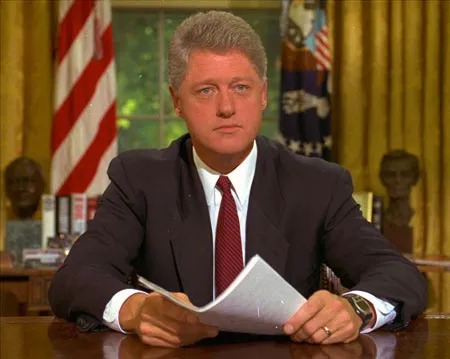
Origin of Eagle is unrecorded. The most popular guess, repeated in numerous sources, is that Clinton chose it as a reference to his being an Eagle Scout. He was not. He was a Cub Scout only, and never advanced. Of the modern presidents who served in Scouting, only Gerald Ford ever earned Eagle rank.
What is true is that Clinton’s path to the presidency began in a moment of pure Boy Scout pageantry. In July 1963, as a 16-year-old delegate to the American Legion’s Boys Nation program, Clinton shook hands with President John F. Kennedy in the Rose Garden of the White House. He later said the moment confirmed his ambition to run for office himself. There is a photograph of the handshake. Clinton is sixteen, in a dark suit, leaning forward eagerly. Kennedy has roughly four months left to live.
Hillary Clinton was Evergreen, a name she kept through her time as senator, as Secretary of State, and as the 2016 Democratic nominee. Chelsea was Energy. The family used E names rather than C names, which is the rule rather than the exception (the Bushes were T despite the family’s surname starting with B; the Carters were D despite starting with C). Whether Eagle had anything to do with patriotism, scouting, or birds remains, like Timberwolf and Passkey, unrecorded.
George W. Bush – Trailblazer
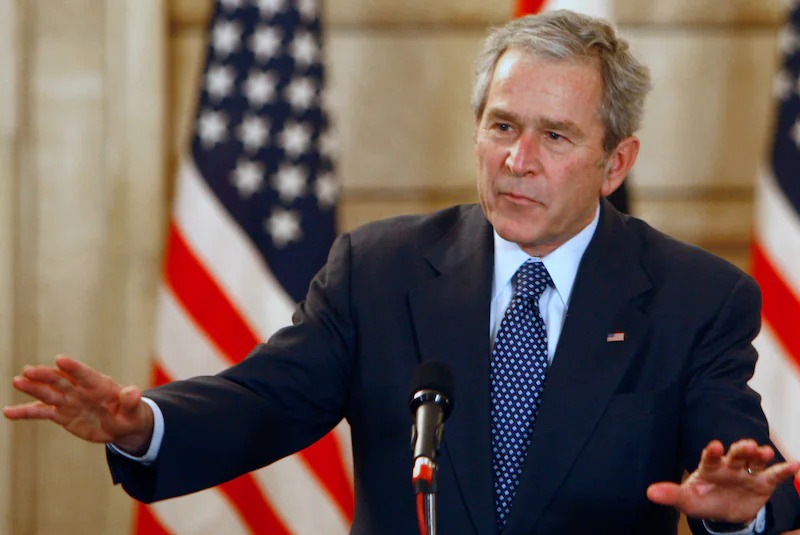
George W. Bush had two Secret Service code names in his life, and the earlier one was less complimentary. As a younger Bush family protectee, he was reportedly called Tumbler, in apparent reference to his pre-sobriety drinking days. The story is repeated in enough places (ABC News, the Britannica list, multiple presidential-history compilations) to be plausible, although exactly when and how Tumbler was assigned is not perfectly documented. What is documented is that by the time Bush ran for president in 1999 and was given Secret Service protection as a candidate, he had been sober for over a decade, having stopped drinking the day after his 40th birthday in 1986.
His presidential code name was Trailblazer, a clear upgrade. His wife Laura was Tempo and the twins Barbara and Jenna were Turquoise and Twinkle. Dick Cheney, his vice president, was Angler, a reference to his love of fishing that Washington Post reporter Barton Gellman later borrowed as the title of his book about the Cheney vice presidency, suggesting the name worked on a second level too.
After his presidency, Bush developed an unexpected second career as a painter. He has produced portraits of more than 60 world leaders he met in office, including Vladimir Putin and Tony Blair, exhibited at his presidential library in Dallas. None of which appears in the Secret Service file, but it is the rare post-presidency that earns the upgrade from Tumbler.
Barack Obama – Renegade
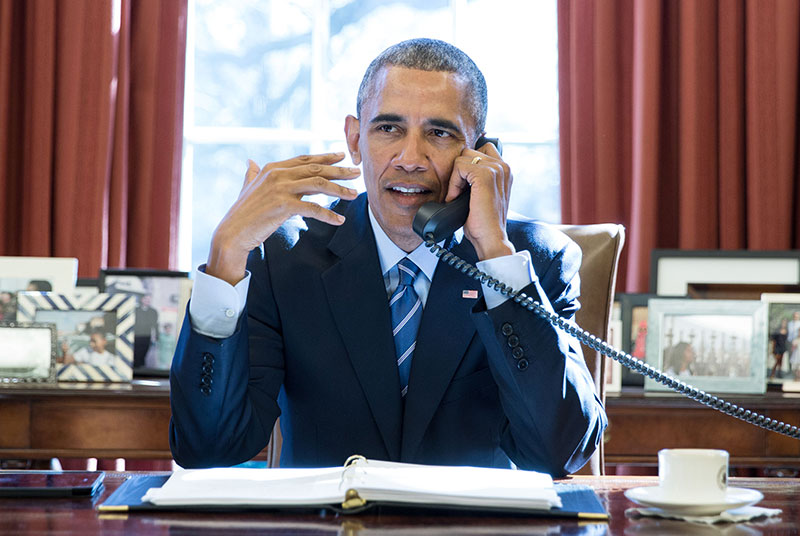
By the time Obama clinched the Democratic nomination in June 2008, he had had a Secret Service code name for over a year. Renegade was assigned in May 2007, when he received protection earlier in the campaign cycle than any presidential candidate in history. The threat assessment that led to it has never been made fully public, but the unprecedented timing was reported at the time. He was the first Black major-party candidate; the calculus was unsubtle.
Obama selected the name from a list of R-words provided by the WHCA, according to Britannica, although no record exists of what else was on the list. Renegade fit. The journalist Richard Wolffe, who had unusual access to the 2008 campaign, used it as the title of his bestselling book about Obama’s run for the White House. Wolffe wrote that Renegade struck him as ‘a good place to start in trying to define this elusive, semi-obscured character.’
The Obamas became the most stylistically coordinated family in code-name history. Michelle was Renaissance, daughter Malia was Radiance, and Sasha was Rosebud. The pairing of Renegade and Renaissance, in particular, was so on the nose that former Secret Service agent Jonathan Wackrow later told CNN, ‘Over time, the protectees have almost taken on the persona of the call sign that they had selected.’ Wackrow may have had the Obamas specifically in mind. It is hard to imagine a Renegade and a Renaissance more on-brand.
Donald Trump – Mogul
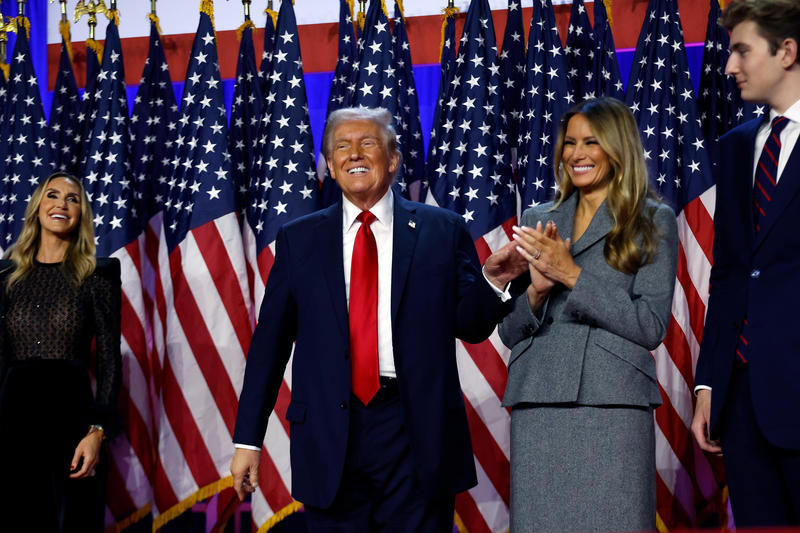
Trump received Secret Service protection on November 11, 2015, earlier than most candidates because of his polling lead and existing high public profile. His code name was finalized that morning: Mogul, drawn from a list of M-words sent over by the WHCA. He had reportedly selected it from a shortlist that included roughly ten options.
The good joke here is what Trump suggested as his own code name during the second Republican primary debate on September 16, 2015, when the moderator put the question to the candidates: he said Humble. The Washington Post described it at the time as ‘the only truly coded name’ Trump had ever suggested. The Secret Service went with Mogul instead.
His wife Melania, a former model, chose Muse. Their son Barron was Minister. Donald Jr. was Mountaineer, Eric was Marksman, Ivanka was Marvel, and Jared Kushner was Mechanic, which sounded less complimentary than the others, though no one ever confirmed whether anyone was being passive-aggressive. After Trump left office in 2021, Melania named her production company Muse Films in apparent tribute to her code name; it released a documentary about Trump’s 2025 inauguration that January.
Mogul carried over for Trump’s second term unchanged, an unusual case. A returning president could in principle select a new name, but Trump kept his. It would be strange to argue with the choice.
Joe Biden – Celtic
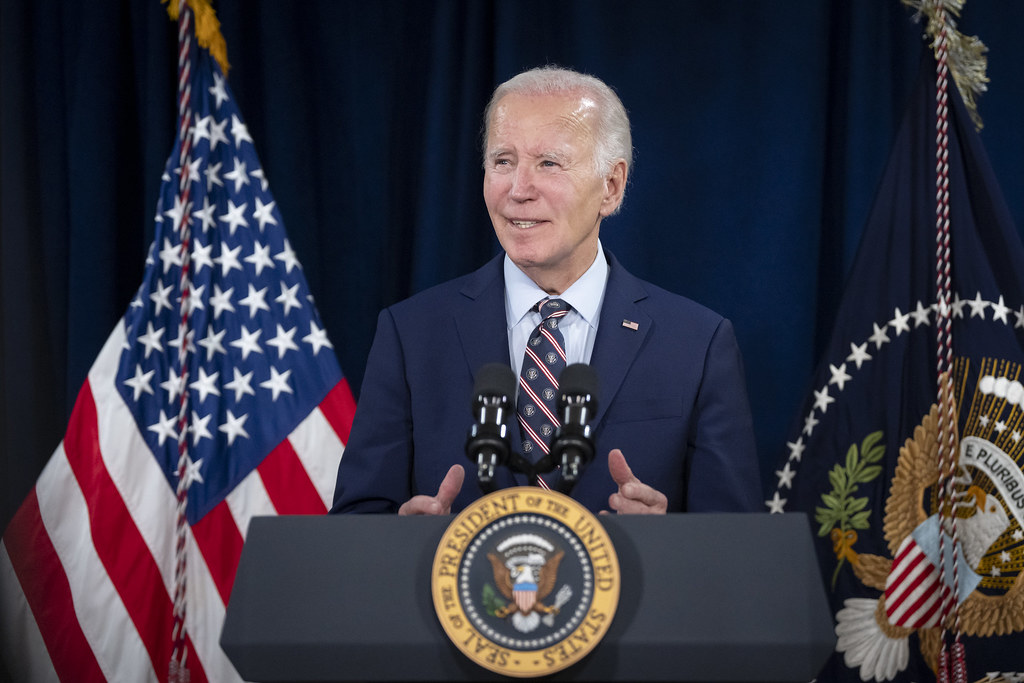
Of all the code names on this list, Celtic is the only one a president has confirmed himself, on camera, while presenting a sports trophy. At a November 2024 White House ceremony for the NBA-champion Boston Celtics, Biden told the room, ‘For real. Because I’m Irish.’ He had had the name since 2009, when he became vice president, and kept it through the 2020 campaign and his presidency. The choice was a reference to his Irish heritage, which Biden has emphasized throughout his public life with a thoroughness that has bordered, at times, on the parodic.
He is roughly five-eighths Irish by ancestry, with family lines traced to Counties Mayo and Louth. He carries an Irish family Bible to his swearings-in. He has, on several occasions, told reporters from non-Irish outlets that he is Irish, as if that ended the matter. Asked once by a BBC correspondent for a comment, he replied, ‘BBC? I’m Irish.’
His wife Jill was Capri. Granddaughter Maisy was Crescendo. Kamala Harris, his vice president, picked Pioneer, in reference to being the first woman, first Black person, and first South Asian to hold the office. Hers was, by some distance, the most ambitious thematic claim of the modern Secret Service file. Celtic was retired in January 2025 when Biden left office. He was 82 and had served one term.
Frequently Asked Questions
What is Donald Trump’s Secret Service code name?
Mogul. It took effect on the morning of November 11, 2015, when his candidate protection began. He had been given roughly ten M-words to pick from and sent back the ones he found acceptable, and he kept the name for his second term. Onstage at a debate that September, he had suggested Humble.
What was Joe Biden’s Secret Service code name?
Celtic. He took it in 2009 as vice president and kept it through his own presidency, which ended in January 2025. Biden confirmed the name himself at a November 2024 White House ceremony for the champion Boston Celtics, explaining, to nobody’s surprise, that he is Irish.
Which president was under Secret Service protection the longest?
Jimmy Carter, for 49 years and two months. His detail began on October 8, 1975, when he was a candidate, and ended on January 10, 2025, the day after his state funeral. Carter died on December 29, 2024, at 100. The agency calls him its longest-standing protectee.
Who chose Ronald Reagan’s code name, Rawhide?
An Army master sergeant working on White House communications, according to Del Quentin Wilber’s Rawhide Down. He thought the word suited a former actor who had made Westerns and kept horses at his California ranch. Reagan, Wilber writes, adored it. He never appeared in the television series of the same name.
Was Bill Clinton’s code name Eagle a reference to the Boy Scouts?
No. Clinton was a Cub Scout in Pack 1 in Hot Springs, Arkansas, and never advanced to Boy Scouts, let alone Eagle rank. Gerald Ford is the only president to earn it, in 1927 with Troop 15 in Grand Rapids, Michigan. Where Eagle actually came from is not on the record.
Has any president had more than one Secret Service code name?
Yes. George W. Bush was Tumbler as a younger member of his father’s protected family, then Trailblazer as president. Eisenhower was Providence in office and became Scorecard in retirement, a nod to his golf, according to the Eisenhower National Historic Site. Truman appears in some sources as Supervise.
Do vice presidents get Secret Service code names too?
Yes. Nominees, spouses and children get them as well. Dick Cheney was Angler, a nod to his fishing, and Washington Post reporter Barton Gellman later borrowed it for the title of his book on the Cheney vice presidency. Kamala Harris picked Pioneer in August 2020, a reference to being the first Black woman on a major-party ticket.
Sources
- U.S. Secret Service official statement on conclusion of Carter protective detail, January 2025 (via USA Today)
- Del Quentin Wilber, Rawhide Down: The Near Assassination of Ronald Reagan (Henry Holt, 2011)
- Richard Wolffe, Renegade: The Making of a President (Crown, 2009)
- LBJ Library (lbjlibrary.org) – ‘LBJ’s Military Service’
- U.S. Naval History and Heritage Command – ‘Commander Lyndon B. Johnson, USNR’
- Eisenhower National Historic Site
- Clinton White House Archives – Boys Nation handshake with JFK
- U.S. Secret Service Twitter, December 2018 (Bush 41 / Patrick head-shaving incident)