Every Goal Cristiano Ronaldo Has Scored at the World Cup

Cristiano Ronaldo has scored World Cup goals on five continents. Nobody sets out to compile a statistic like that. The tournament simply moves – Europe, then Africa, then South America, back to Europe, then Asia, then North America – and a forward either stays sharp enough to keep up with it or, far more commonly, does not.
The strange part is how modest the ledger looked for most of that time. He has never finished as a World Cup’s top scorer, not once, and at each of his first three tournaments he managed exactly one goal. The collection is mostly a late-career project: eight of the goals below arrived after his 33rd birthday, an age at which forwards are traditionally being thanked for their service. The World Cup, alone among the competitions he has played, made him wait.
What follows is every goal he has scored at the tournament proper, in the order they went in, each with the match, the minute, and the story around it. Some arrived in games that mattered enormously and some in games that did not, which is roughly the shape of any long career. The list runs from a June evening in Germany to a July night in Toronto, and there it ends: on July 6, 2026, Spain beat Portugal 1-0 in Dallas, and the collection closed for good.
Cristiano Ronaldo has scored eleven goals at World Cup final tournaments: one each in 2006, 2010, and 2014, four in 2018, one in 2022, and three in 2026. The count covers only goals officially credited to him by FIFA in the finals themselves; his qualifying goals are a separate tally.
vs Iran, 2006 Group Stage (80')
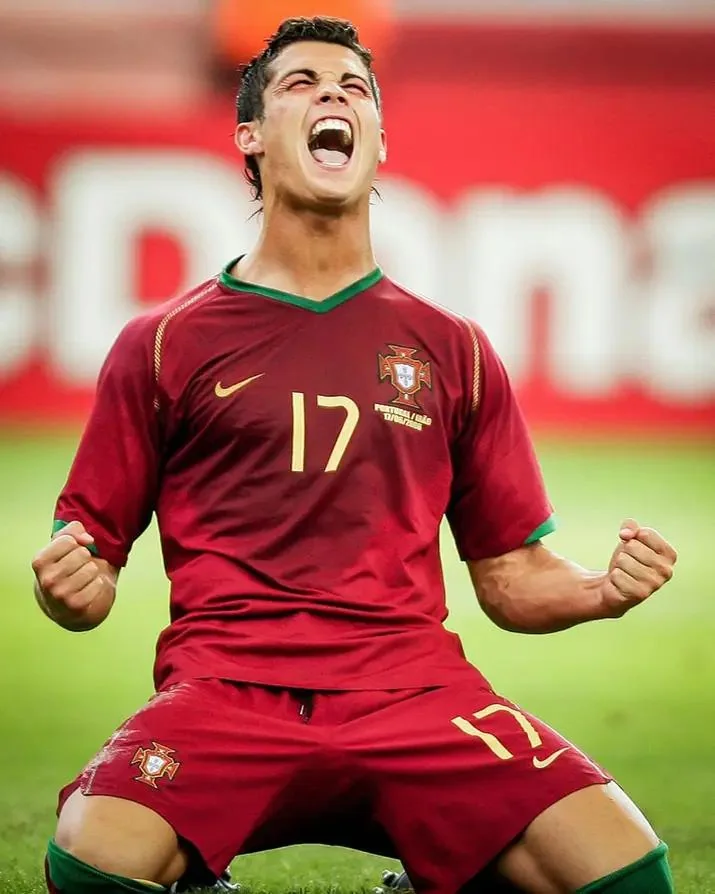
Frankfurt, June 17, 2006. Portugal led Iran 1-0 with ten minutes to play when the referee awarded a penalty, and a 21-year-old Manchester United winger stepped forward to take it ahead of men with far more seniority. He sent the goalkeeper, Ebrahim Mirzapour, diving the wrong way. At 21 years and 132 days, Ronaldo became the youngest Portuguese player ever to score at a World Cup.
The billing that summer tells you how much was still to come. Ronaldo wore number 17, because the 7 belonged to Luis Figo, Portugal’s captain and the headline act of a golden generation making its final stand. The kid from Madeira was the promising supporting act, a dazzling winger known for producing more stepovers than goals. The penalty against Iran turned out to be his only goal of the tournament, and Portugal was glad of it: the 2-0 win sealed qualification from the group with a game to spare.
Portugal kept going all the way to the semifinals and finished fourth, only the second time the country had gone that far at a World Cup. The first was 1966. Figo retired from international football when the tournament ended. The number 7 shirt, and everything that has since come to be attached to it, changed hands for good.
vs North Korea, 2010 Group Stage (87')
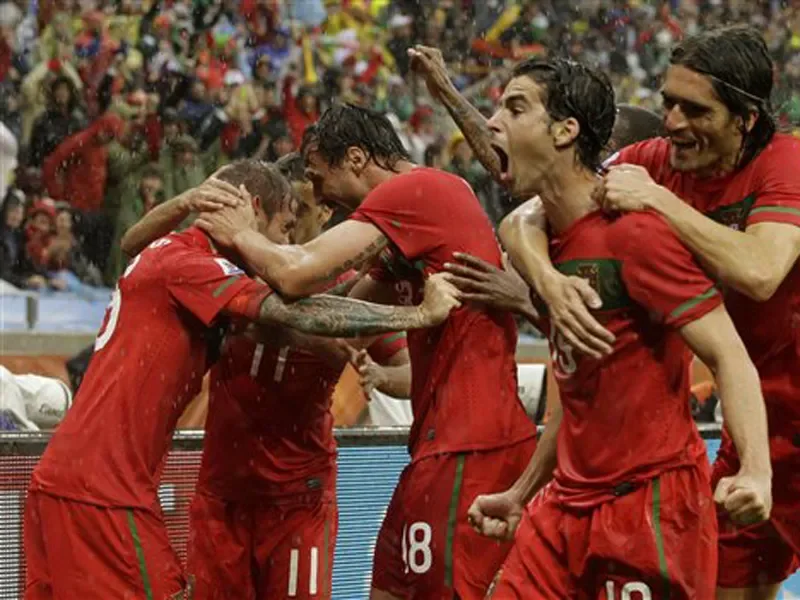
Sixteen months. That is how long Portugal’s captain had gone without an international goal when he was sent clear on North Korea’s box in the 87th minute at a rain-soaked Green Point Stadium in Cape Town, his team already five goals up.
What followed was the strangest goal of his career. Ronaldo tried to poke the ball past the onrushing goalkeeper, Ri Myong-guk, who slid out and got a touch that sent it looping into the air. Knocked off balance, Ronaldo watched the ball come down on the back of his neck, bounce up off his head, and drop obligingly at his feet in front of an empty net. He rolled it in with an expression closer to disbelief than joy. Sixteen minutes earlier he had rattled the crossbar with a far better effort; this was the one that counted.
The 7-0 result remains Portugal’s biggest win at a World Cup, and it came in a fixture with history: the countries’ only previous meeting was the famous 1966 quarterfinal, which North Korea led 3-0 after 24 minutes and lost 5-3. North Korean state television had chosen this occasion to broadcast a World Cup match live to its citizens for the first time. The timing could have been better.
vs Ghana, 2014 Group Stage (80')
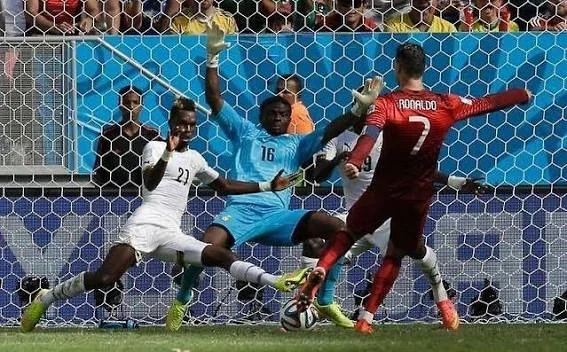
Hours before kickoff in Brasilia, Ghana threw two of its most experienced players off the squad. Sulley Muntari and Kevin-Prince Boateng were expelled for disciplinary reasons in the middle of a very public row over unpaid bonuses – one that quieted only after the players received their appearance fees before kickoff, as they had demanded.
Portugal’s own problems were mathematical. A 4-0 opening loss to Germany meant they needed not just a win but a three-goal swing against the United States to reach the knockout rounds. The win arrived in the 80th minute, when Ghana goalkeeper Fatau Dauda flapped at a cross from the left and palmed the ball straight to Ronaldo, who put it away with his left foot for 2-1. He barely celebrated. The goal made him the first Portuguese player to score at three World Cups, and it was his first of a tournament he had entered nursing a leg injury, having dragged Portugal to Brazil by scoring all four of their goals in the qualifying playoff against Sweden.
The swing never came. Portugal and the United States finished level on four points, and the Americans went through on goal difference. Ronaldo was named man of the match, for whatever that was worth on the flight home.
vs Spain, 2018 Group Stage (4')
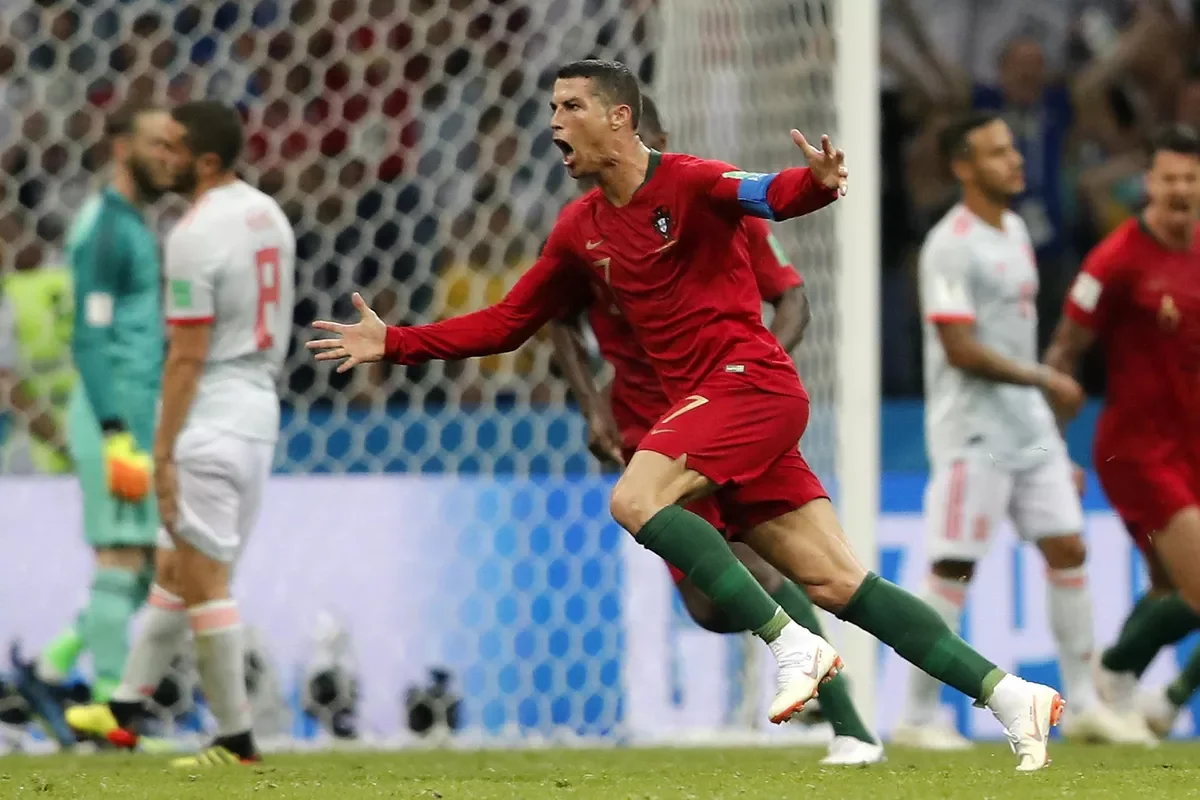
The first foul of Ronaldo’s 2018 World Cup was committed by his own club teammate. Portugal’s opener against Spain in Sochi was 131 seconds old when a burst of stepovers drew a careless clip from Nacho, the Real Madrid defender, and a penalty. Ronaldo took it himself, naturally, and beat David de Gea from the spot – just the fourth penalty ever converted inside the opening four minutes of a World Cup match.
Then he jogged away stroking his chin. The gesture needed no caption: adidas had spent the buildup running a Greatest of All Time campaign built around Lionel Messi posing with an actual goat, and Ronaldo evidently considered the matter unsettled. The two had split the previous ten world player of the year awards between them, five apiece, and the argument over which of them stood above the other had become the sport’s longest-running dinner-table dispute.
The penalty made him the fourth man to score at four different World Cups, joining Pele, Uwe Seeler and Miroslav Klose – company that tends to end arguments rather than start them. At the restart, Ronaldo and Nacho exchanged a few words as they walked back toward the center circle. Ronaldo was smiling.
vs Spain, 2018 Group Stage (44')
The second goal was a gift. A minute before halftime, Ronaldo hit a low, speculative drive from outside the area, the kind of shot a goalkeeper at this level gathers a dozen times a week, and David de Gea let it squirm through his gloves and over the line. There was no deflection to blame and nobody in his way. De Gea was Spain’s undisputed number one and had just been named Manchester United’s player of the year for the fourth time.
In fairness to everyone in a Spain shirt, the week had been absurd. Two days before the tournament, the Spanish federation fired head coach Julen Lopetegui for agreeing to take the Real Madrid job without telling them first. Fernando Hierro, the sporting director, was handed the squad on the eve of a World Cup with almost no coaching experience to his name.
For a spell after the break, none of it seemed to matter. Diego Costa equalized in the 55th minute with his second of the night, and three minutes later Nacho – the same Nacho who had conceded the early penalty – put Spain ahead with a strike in off the post, his first international goal. For half an hour it stood as the winner.
vs Spain, 2018 Group Stage (88')
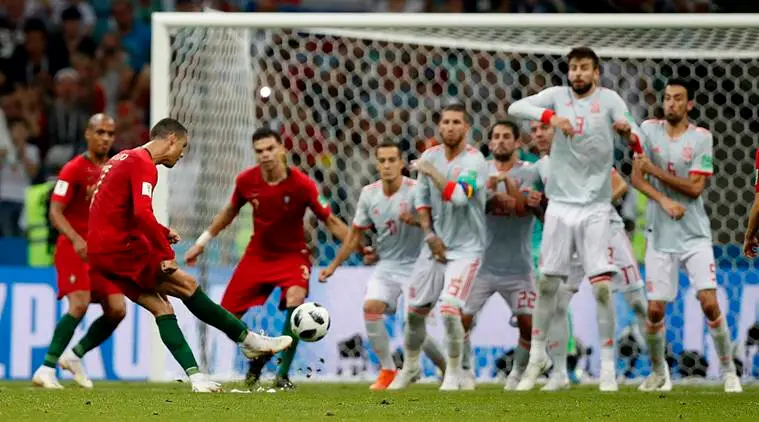
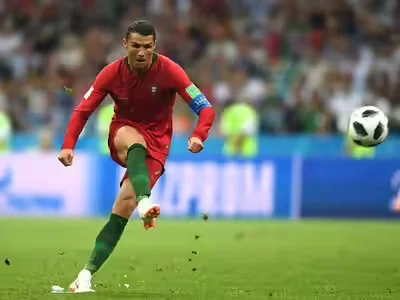
Forty-four times Ronaldo had attempted a direct free kick at a major tournament, and forty-four times it had failed to go in. So when Gerard Pique brought him down 25 yards from goal in the 88th minute, with Portugal trailing 3-2, the numbers argued for putting the ball in the box instead. Ronaldo hoisted his shorts, paced out his run-up, and waited for the wall to be organized.
Attempt number 45 swerved over that wall and dipped into the top corner with De Gea watching it all the way. The strike completed a hat trick – the 51st of his career, and the one he immediately rated his best – and salvaged a 3-3 draw from a game that had produced six goals, more than the previous four competitive meetings between these countries combined. At 33 years and 130 days, Ronaldo became the oldest man to score a World Cup hat trick, taking a record Rob Rensenbrink of the Netherlands had held since 1978, when he scored his against Iran at 30.
Spain had controlled long stretches and left with a single point; Portugal left with Ronaldo. Fernando Hierro, one match into his emergency spell as coach, offered the only analysis available: with a player like Ronaldo on the pitch, these things happen. He was not wrong.
vs Morocco, 2018 Group Stage (4')
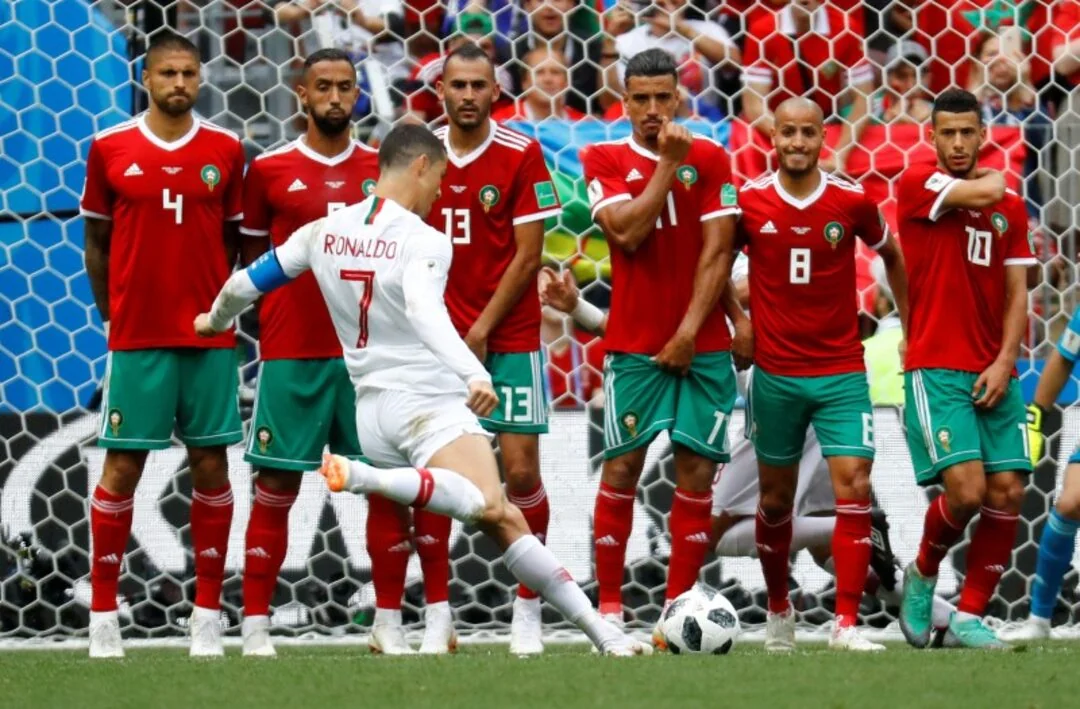
Morocco arrived at Russia 2018, their first World Cup in twenty years, having conceded nothing at all across six qualifying matches. Four minutes into their meeting with Portugal at Moscow’s Luzhniki Stadium, the clean sheet was gone: Joao Moutinho swung in a cross from a short corner, Ronaldo outmuscled his marker, and a bullet header from six yards beat Munir Mohamedi.
The goal was Ronaldo’s 85th for Portugal, which carried him past Hungary’s Ferenc Puskas as the highest-scoring European in the history of men’s international football. Only Iran’s Ali Daei, on 109, still stood above him anywhere in the world game. Puskas had scored his 84 for Hungary between 1945 and 1956, a career that ended nearly three decades before Ronaldo was born.
Then Morocco took the game over. Younes Belhanda drew a brilliant diving save from Rui Patricio, and Nordin Amrabat ended the afternoon lifting his shirt to show anyone who would look the stud marks that a failed penalty appeal had left behind. In stoppage time, Medhi Benatia put a free shot from ten yards over the bar. The 1-0 defeat, Morocco’s second by that scoreline in five days, made them the first team eliminated from the 2018 World Cup. They had been the better side for most of it. It counted for nothing, which is the World Cup in a single sentence.
vs Ghana, 2022 Group Stage (65')
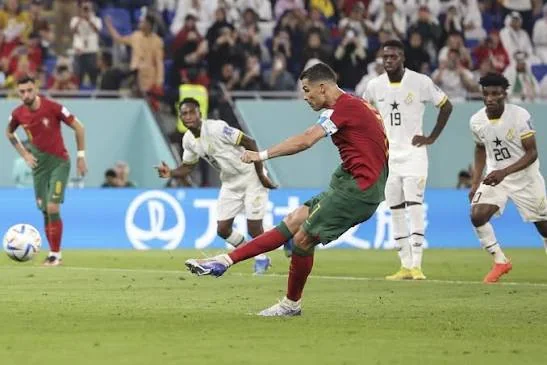
He arrived at the match without a club. Two days before Portugal opened their 2022 campaign against Ghana, Manchester United terminated Ronaldo’s contract by mutual agreement, the final act of a feud that had detonated in a television interview with Piers Morgan, in which Ronaldo said he felt betrayed by the club and had no respect for his manager, Erik ten Hag. So the record goalscorer in the history of men’s international football walked out in Doha as, technically, a free agent.
The venue was Stadium 974, a ground assembled from 974 shipping containers and designed to be dismantled after the tournament – a fitting stage, all things considered, for a man between employers. In the 65th minute, Ronaldo stepped up to a penalty and smashed it home, becoming the first male player to score at five World Cups. He was 37, and Portugal held on to win 3-2.
The record aged better than the tournament. The penalty was his only goal in Qatar, and by the round of 16 he had been dropped from Portugal’s starting eleven for the first time at a major tournament since Euro 2008. His replacement, Goncalo Ramos, scored a hat trick that night in a 6-1 win over Switzerland. Records, it turned out, were easier to accumulate than minutes.
vs Uzbekistan, 2026 Group Stage (6')
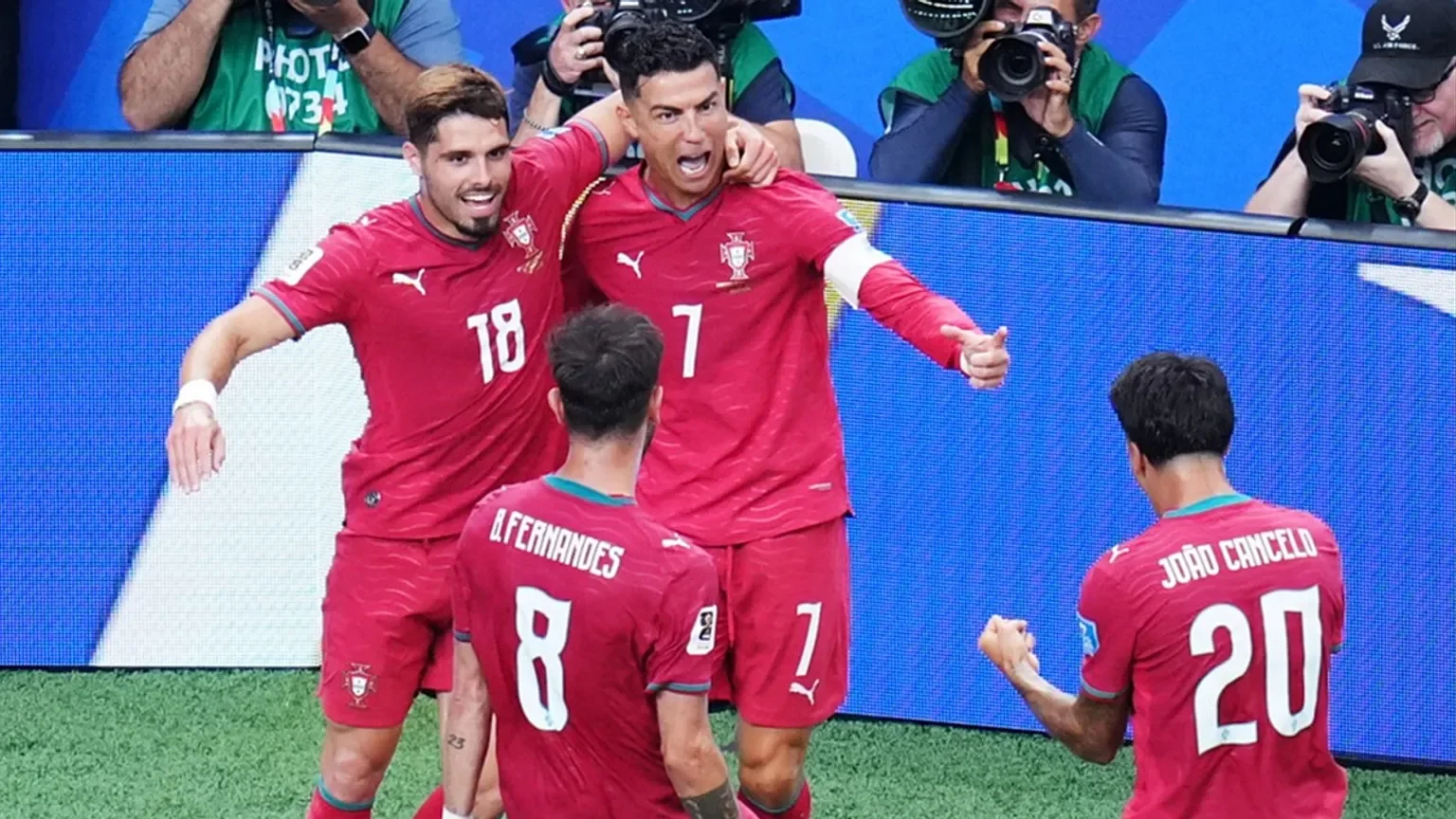
“I always arrive. Sooner or later, I’m there.” Ronaldo said this in Houston on June 23, 2026, and he had earned the right to say it a little pointedly. He had gone ten straight matches at major tournaments without a goal, a run stretching back to November 2022, and Portugal’s flat 1-1 draw with DR Congo the week before had the press asking, out loud, whether Roberto Martinez should keep building his attack around a 41-year-old.
Six minutes into the Uzbekistan match, the question was retired for the evening. Joao Cancelo cut the ball back from the right and Ronaldo met it at the near post, and the finish made him the first player to score at six different World Cups: 2006, 2010, 2014, 2018, 2022 and 2026. Later in the half he turned down a free kick in shooting range, waving Nuno Mendes over to take it instead. Mendes scored.
Portugal won 5-0, and back home the coverage swung, in the space of ninety minutes, from calls for the bench to something close to a national holiday. In Lisbon, crowds poured into the streets over a group-stage goal against Uzbekistan. He has been managing that particular pendulum since 2003, and by now he treats it as weather.
vs Uzbekistan, 2026 Group Stage (39')
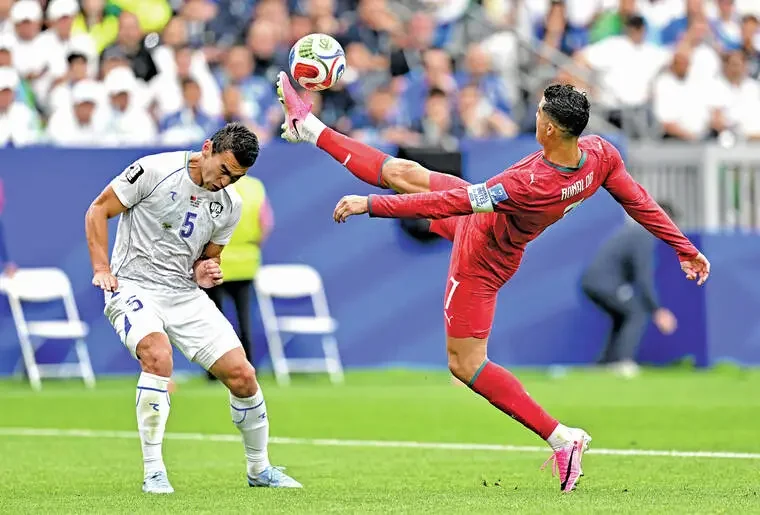
Eusebio scored nine World Cup goals for Portugal, every one of them at the 1966 tournament, the only World Cup he ever played. The total stood as the national record for sixty years, through eras when Portugal barely showed up at all, and it finally fell in Houston in the 39th minute of a group match, when Ronaldo ran onto a through ball and slotted his tenth.
The evening had other numbers in it. The match was Ronaldo’s 230th international appearance, more than anyone in the history of the men’s game, and the goal his 145th for Portugal. He spent much of the second half chasing a hat trick, forcing one fine save from Abduvohid Nematov in the Uzbekistan goal, and finished instead with a mere brace and the record in his pocket.
Eusebio died of heart failure in January 2014, at 71, and Portugal declared three days of national mourning. He never got a second chance at the tournament: Portugal failed to qualify for every World Cup between 1966 and 1986, by which point he had retired. Ronaldo’s ten goals arrived across two decades. There is more than one way to own a record, and Portugal has now seen both.
vs Croatia, 2026 Round of 32 (68')
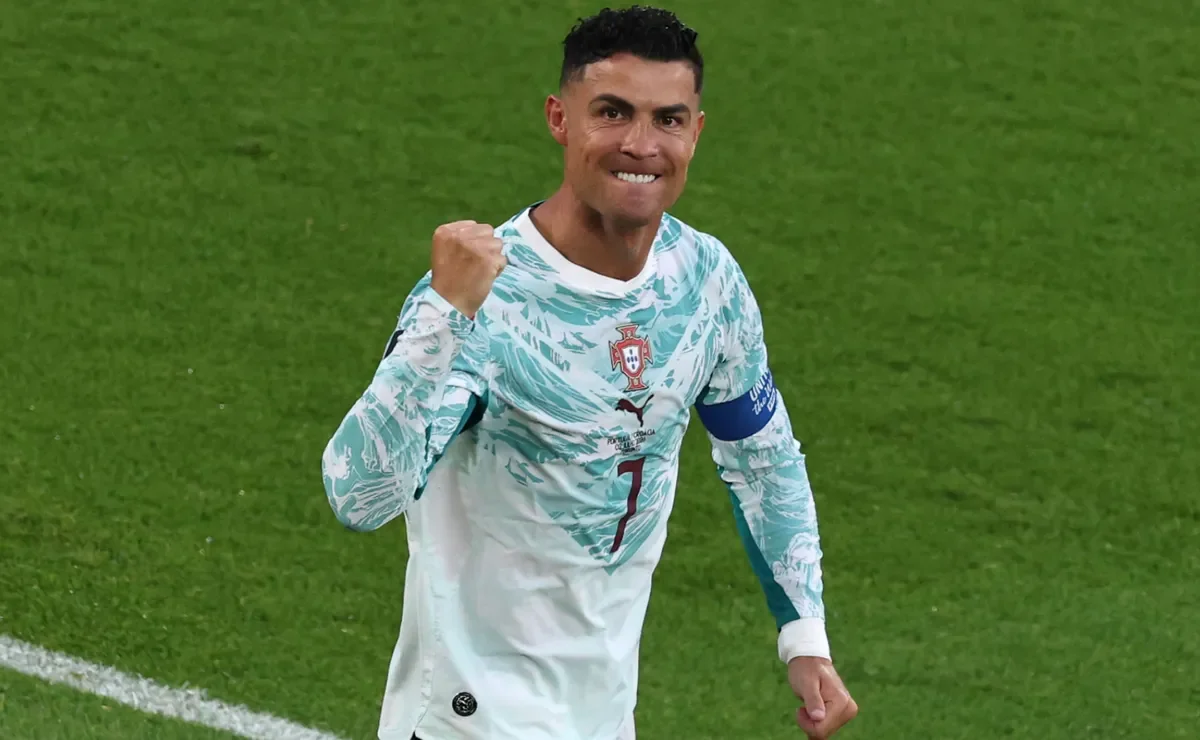
Eight knockout matches, twenty-nine shots, no goals. Entering the round of 32 against Croatia in Toronto, that was the entirety of Ronaldo’s World Cup record beyond the group stage – twenty years of tournaments and not one knockout goal. Only Roberto Carlos had taken as many shots in World Cup knockout play without scoring since 1966.
The night seemed determined to extend the joke. Trailing 1-0 to an Ivan Perisic goal, Ronaldo brought Joao Cancelo’s cross-field pass down with one touch and finished past Dominik Livakovic – a goal-of-the-tournament candidate, ruled out because he had moved a fraction early. Then, at a corner, Nikola Vlasic dragged Renato Veiga down for no reason anyone could establish, the VAR intervened again, and in the 68th minute Ronaldo drove the penalty straight down the middle. At 41 years and 147 days he became the oldest player to score in a World Cup knockout match, a record he took from Pepe, his own teammate, who had held it for four years.
Ronaldo was substituted in the 81st minute, visibly unhappy, and watched from the bench as Goncalo Ramos headed the stoppage-time winner. The match was the first in World Cup history to feature two outfield players aged 40 or over – the other was Luka Modric, his old Real Madrid teammate, whose fifth and almost certainly final World Cup ended at the whistle. They embraced at midfield. One of them got to keep playing.
Frequently Asked Questions
Is the 2026 World Cup Cristiano Ronaldo’s last?
Yes. Ronaldo confirmed it at a press conference on July 5, 2026, before Portugal’s round-of-16 match: “Yes, it’s my last one. Let’s go and enjoy it.” He was careful to add that this was not an international retirement announcement – he says he will stop when he chooses.
Who has more World Cup goals, Ronaldo or Messi?
Messi, comfortably. His 8 goals in 2026 lifted his total to 21, ten clear of Ronaldo’s 11. Neither holds the record: Kylian Mbappé passed Messi on July 18 and finished at 22, taking the Golden Boot with 10. Ronaldo’s consolation is the streak Messi cannot claim – goals in all six World Cups he played; Messi blanked in 2010.
Did Ronaldo score against Uruguay at the 2022 World Cup?
No, though he celebrated as if he had. Ronaldo claimed a glancing header on Bruno Fernandes’ cross in Portugal’s 2-0 group win, but FIFA credited the goal to Fernandes, and adidas’ Connected Ball Technology – a 500Hz sensor inside the match ball – showed no contact from Ronaldo at all.
Is Ronaldo the oldest player to score at a World Cup?
No. That record belongs to Roger Milla, who scored for Cameroon at the 1994 World Cup aged 42 years and 39 days, and it survived Ronaldo’s last push. Ronaldo sits second: his oldest goal was the penalty against Croatia on July 2, 2026, at 41 years and 147 days – roughly eight and a half months short of Milla.
How many of Ronaldo’s World Cup goals were penalties?
Four, in four different tournaments, which makes the spot his most reliable World Cup supply line. He has also missed one: against Iran in the 2018 group stage, Alireza Beiranvand got down to save it in a 1-1 draw that Portugal survived anyway.
Did Ronaldo’s penalty against England at the 2006 World Cup count as a goal?
No. It came in the quarterfinal’s penalty shootout, and shootout conversions are not goals under the Laws of the Game – they decide the tie, not the score. Ronaldo struck the winning kick in Portugal’s 3-1 shootout victory in Gelsenkirchen, a match remembered mostly for his wink to the bench after Wayne Rooney’s red card.