Every Member of the 1992 Olympic Men's Basketball Dream Team
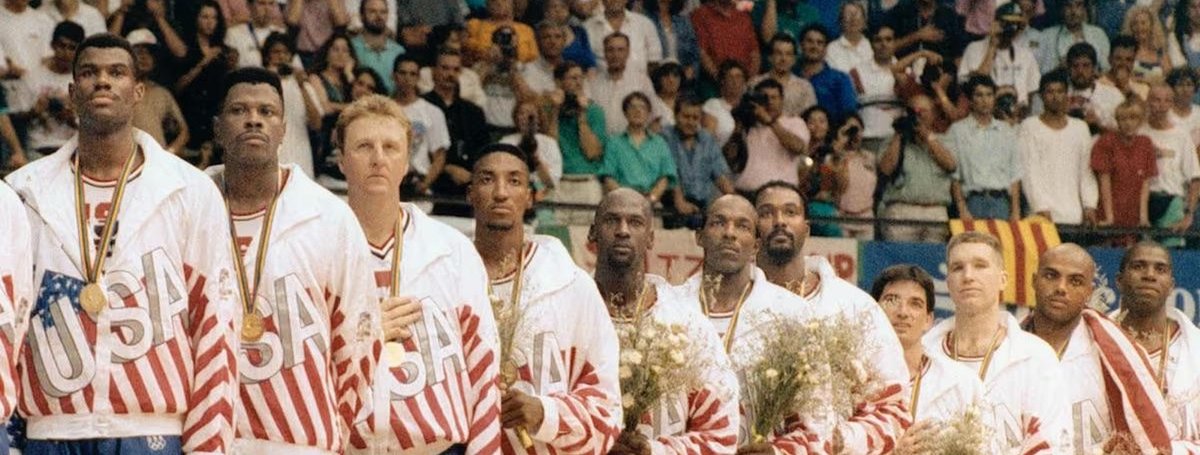
In April 1989, FIBA voted to allow professional basketball players to compete in the Olympic Games, ending decades of amateur-only eligibility rules. The United States seized the opportunity to assemble the greatest basketball roster ever constructed for the 1992 Summer Olympics in Barcelona, Spain. The result was the "Dream Team" - a collection of 11 NBA superstars and one college standout that redefined international basketball competition.
The Dream Team dominated the 1992 Olympic tournament with a perfect 8-0 record, winning by an average margin of 43.8 points per game. Their closest contest was a 32-point victory over Croatia in the gold medal game. Head coach Chuck Daly never called a single timeout during the entire tournament. Opponents routinely asked for autographs and photos before and after games, treating each matchup less as a competition and more as an audience with basketball royalty.
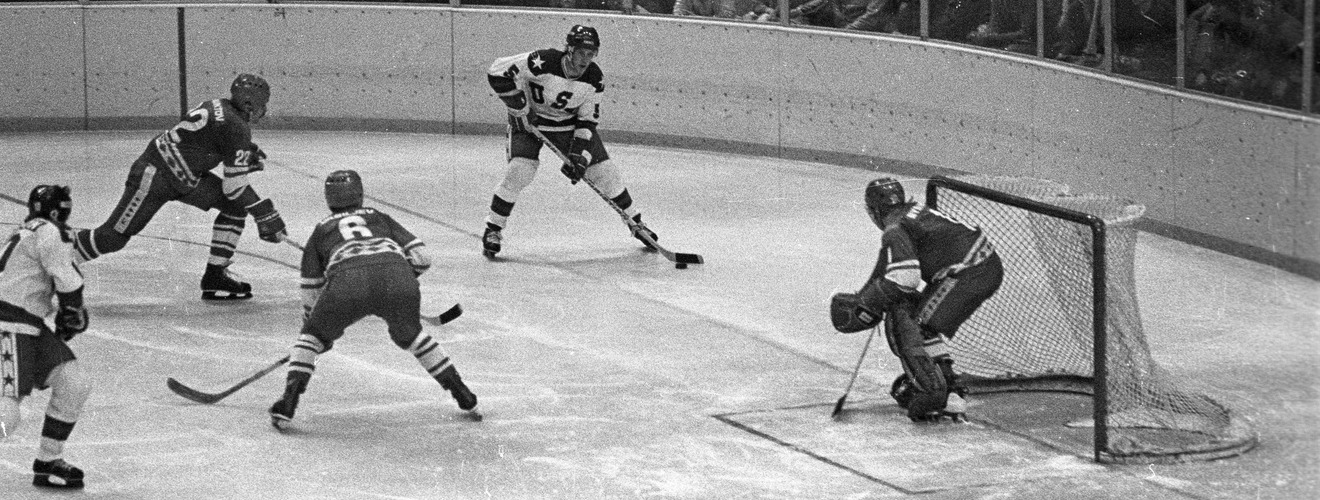
The cultural impact of the Dream Team extended far beyond the medal stand. Like the 1980 Miracle on Ice hockey team, the Dream Team became one of the defining U.S. Olympic sports stories of its era. The team's global visibility helped popularize the NBA worldwide, inspiring a generation of international players who would eventually transform the league. In 2010, the entire Dream Team roster was inducted into the Naismith Memorial Basketball Hall of Fame as a unit, cementing their status as the most iconic team in basketball history.
- Tournament: 1992 Summer Olympics, Barcelona, Spain (July 26 - August 8, 1992)
- Result: Gold Medal (8-0 record, average margin of victory: 43.8 points)
- Head Coach: Chuck Daly
- Assistant Coaches: Lenny Wilkens, Mike Krzyzewski, P.J. Carlesimo
- Selection Committee: USA Basketball, chaired by Rod Thorn
- Notable: First Olympic basketball team to feature active NBA players
Michael Jordan
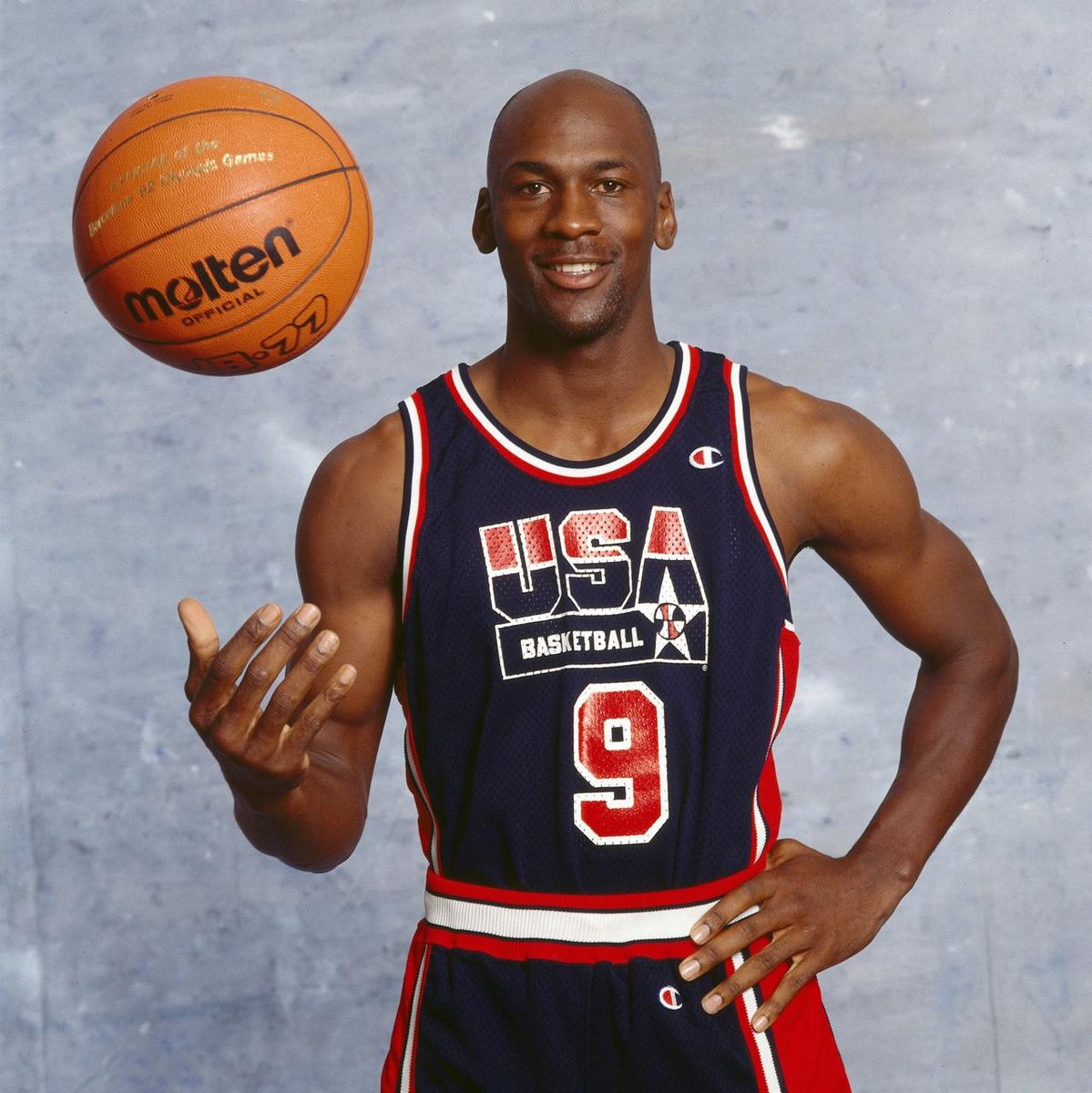
Michael Jordan wore jersey #9 for the United States at the 1992 Barcelona Olympics. He was 29 years old and a member of the Chicago Bulls, having just won his second consecutive NBA championship in June 1992. Jordan led the Dream Team in scoring with 14.9 points per game on 45.1% shooting across all eight games, while also contributing 4.8 assists and 4.1 steals per contest. He logged the most minutes of any player on the roster at 23.1 per game.
Jordan's defensive intensity set the tone for the team throughout the tournament. He recorded 33 steals in eight games, the highest total on the roster. In the gold medal game against Croatia, Jordan was instrumental in building an early lead that the opposing team could never overcome. His competitive fire was evident even in practices, where scrimmages between Dream Team members became legendary for their intensity.
At the time of the Olympics, Jordan had already won two NBA MVP awards (1988, 1991), two NBA Finals MVP awards, and six consecutive scoring titles. He was a six-time All-Star and had earned the 1988 Defensive Player of the Year award. After the Olympics, Jordan continued his dominance with the Bulls, winning four more championships (1993, 1996, 1997, 1998) and finishing his career with six total titles. He was inducted into the Naismith Memorial Basketball Hall of Fame in 2009 and is widely regarded as one of the greatest athletes in the history of professional sports.
Magic Johnson
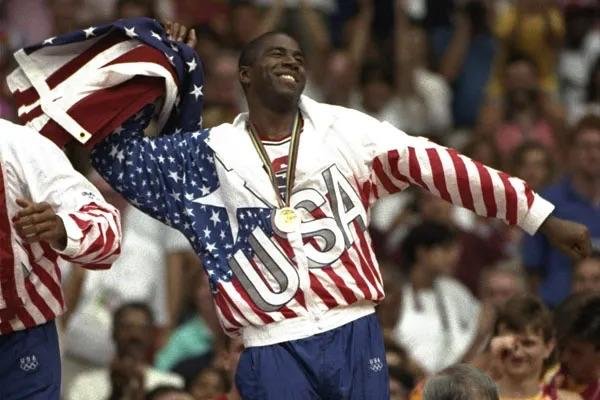
Magic Johnson wore jersey #15 for the United States at the 1992 Barcelona Olympics. He was 32 years old and had retired from the Los Angeles Lakers in November 1991 after announcing he had tested positive for HIV. His inclusion on the Dream Team roster marked a return to competitive basketball and carried enormous symbolic significance. Johnson averaged 8.0 points, 5.5 assists, and 1.3 steals per game across six appearances in the tournament.
Johnson's court vision and passing ability remained elite despite his time away from competitive play. He served as a natural floor general, orchestrating the offense and finding open teammates with characteristic flair. His presence on the team also helped raise global awareness about HIV/AIDS, demonstrating that individuals living with the virus could compete at the highest level of athletic competition.
Prior to his retirement, Johnson had won five NBA championships with the Lakers (1980, 1982, 1985, 1987, 1988), three NBA MVP awards (1987, 1989, 1990), and three NBA Finals MVP awards. He was a 12-time All-Star and had led the league in assists four times. After the Olympics, Johnson briefly returned to the Lakers for the 1995-96 season, playing 32 games before retiring permanently. He was inducted into the Naismith Memorial Basketball Hall of Fame in 2002. Johnson's Olympic participation remains one of the most celebrated comeback stories in sports history.
Larry Bird
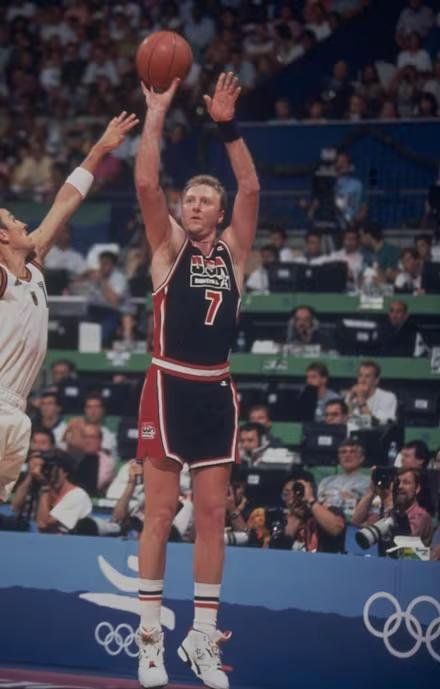
Larry Bird wore jersey #7 for the United States at the 1992 Barcelona Olympics. He was 35 years old and a member of the Boston Celtics, playing through chronic back pain that had limited him to just 45 games during the 1991-92 NBA season. Bird averaged 8.4 points, 3.8 rebounds, and 1.8 assists per game across all eight Olympic contests, shooting 52.1% from the field and 33.3% from three-point range.
Despite his physical limitations, Bird's basketball IQ and shooting ability made him a valuable contributor. His passing and court awareness remained sharp, and he provided veteran leadership throughout the tournament. Bird and Magic Johnson, longtime rivals since their college days in the 1979 NCAA championship game, served as co-captains of the team alongside Jordan.
Bird had won three consecutive NBA MVP awards (1984, 1985, 1986), three NBA championships with the Celtics (1981, 1984, 1986), and two NBA Finals MVP awards. He was a 12-time All-Star and a member of the All-NBA First Team nine times. The 1992 Olympics represented the final competitive games of Bird's playing career - he retired from the NBA in August 1992, just weeks after returning from Barcelona. He was inducted into the Naismith Memorial Basketball Hall of Fame in 1998. Bird later served as head coach of the Indiana Pacers and as president of basketball operations for the franchise.
Charles Barkley
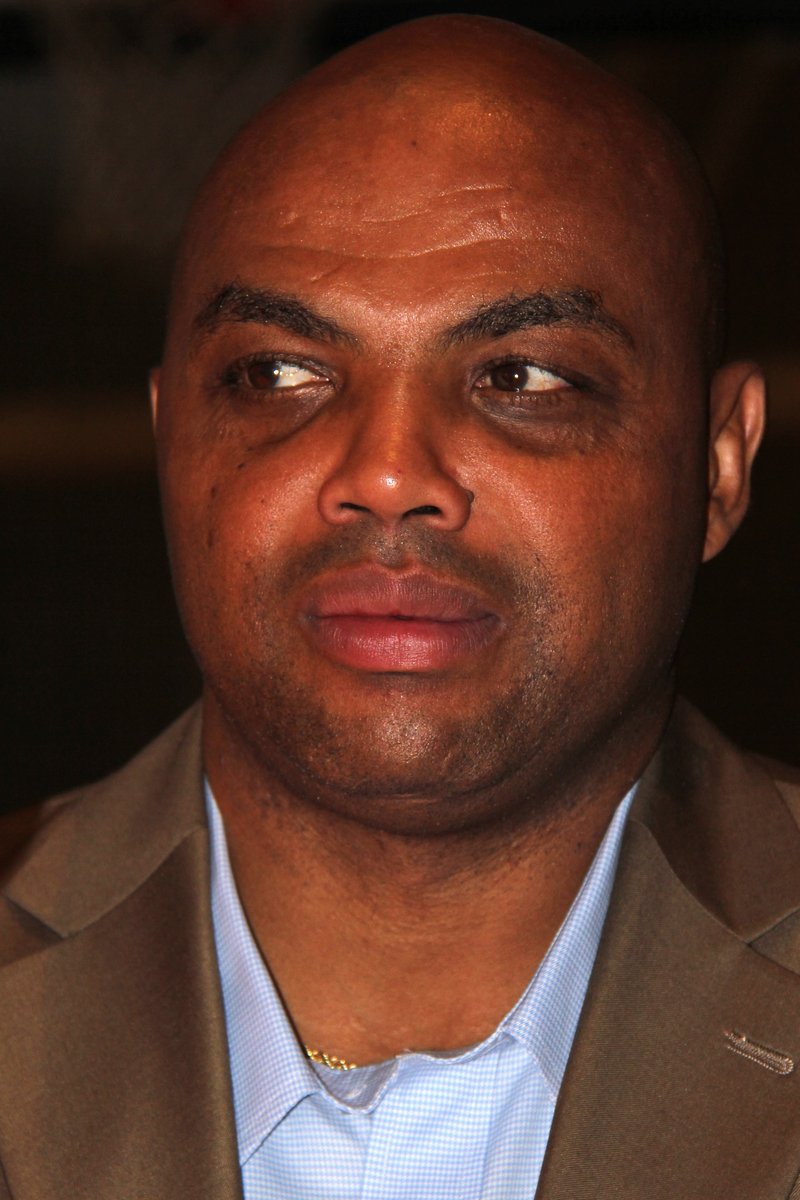
Charles Barkley wore jersey #14 for the United States at the 1992 Barcelona Olympics. He was 29 years old and a member of the Philadelphia 76ers at the time of the tournament, though he would be traded to the Phoenix Suns in June 1992. Barkley led all Dream Team players in scoring efficiency, averaging 18.0 points per game on a remarkable 71.1% shooting from the field. He also contributed 4.1 rebounds and 2.6 steals per contest.
Barkley was the Dream Team's most dominant offensive force in the tournament, attacking the basket with relentless physicality. His memorable moment came in the opening game against Angola, where his aggressive elbow on an Angolan player during a drive to the basket drew attention and became one of the tournament's most talked-about incidents. Despite the controversy, Barkley's scoring output was consistently the highest on the team.
At the time of the Olympics, Barkley was a seven-time All-Star and had been named to five All-NBA teams. The following season with the Suns, he won the 1993 NBA MVP award and led Phoenix to the NBA Finals. He continued to be one of the league's most productive power forwards throughout the 1990s, playing for the Suns and later the Houston Rockets before retiring in 2000. Barkley was inducted into the Naismith Memorial Basketball Hall of Fame in 2006. He finished his career with averages of 22.1 points and 11.7 rebounds per game.
Scottie Pippen
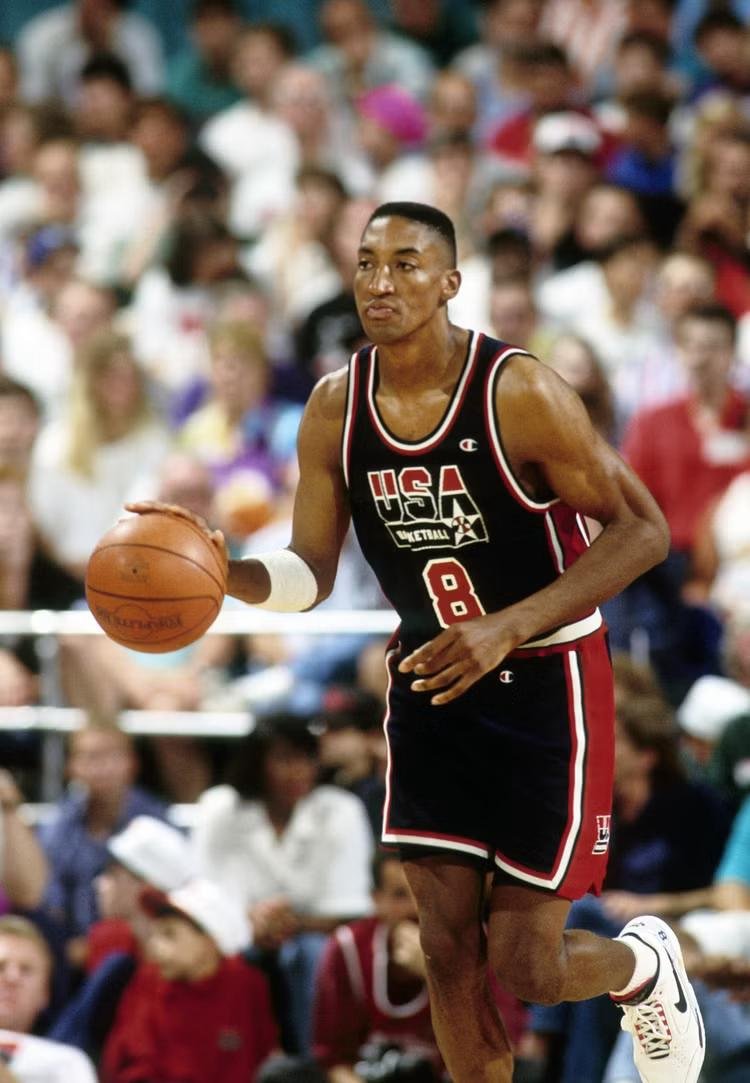
Scottie Pippen wore jersey #8 for the United States at the 1992 Barcelona Olympics. He was 26 years old and a member of the Chicago Bulls, where he served as the second star alongside Michael Jordan. Pippen averaged 9.0 points, 5.9 assists, and 3.0 steals per game during the tournament, shooting 59.6% from the field. His 47 total assists ranked second on the team behind only Magic Johnson's per-game average.
Pippen's versatility made him one of the Dream Team's most valuable contributors. He could guard multiple positions, initiate the offense, and finish at the rim. His 24 steals in the tournament trailed only Jordan's total, reflecting his status as one of the NBA's premier perimeter defenders. Pippen's ability to play point forward allowed coach Daly to deploy numerous lineup combinations throughout the Games.
At the time of the Olympics, Pippen had been named to two All-Star teams and was emerging as one of the league's elite two-way players. He would go on to win a total of six NBA championships with the Bulls (1991, 1992, 1993, 1996, 1997, 1998) and was named to the All-NBA First Team three times and the All-Defensive First Team eight times. Pippen also represented the United States again at the 1996 Atlanta Olympics. He was inducted into the Naismith Memorial Basketball Hall of Fame in 2010. In 1996, he was named one of the 50 Greatest Players in NBA History.
Karl Malone
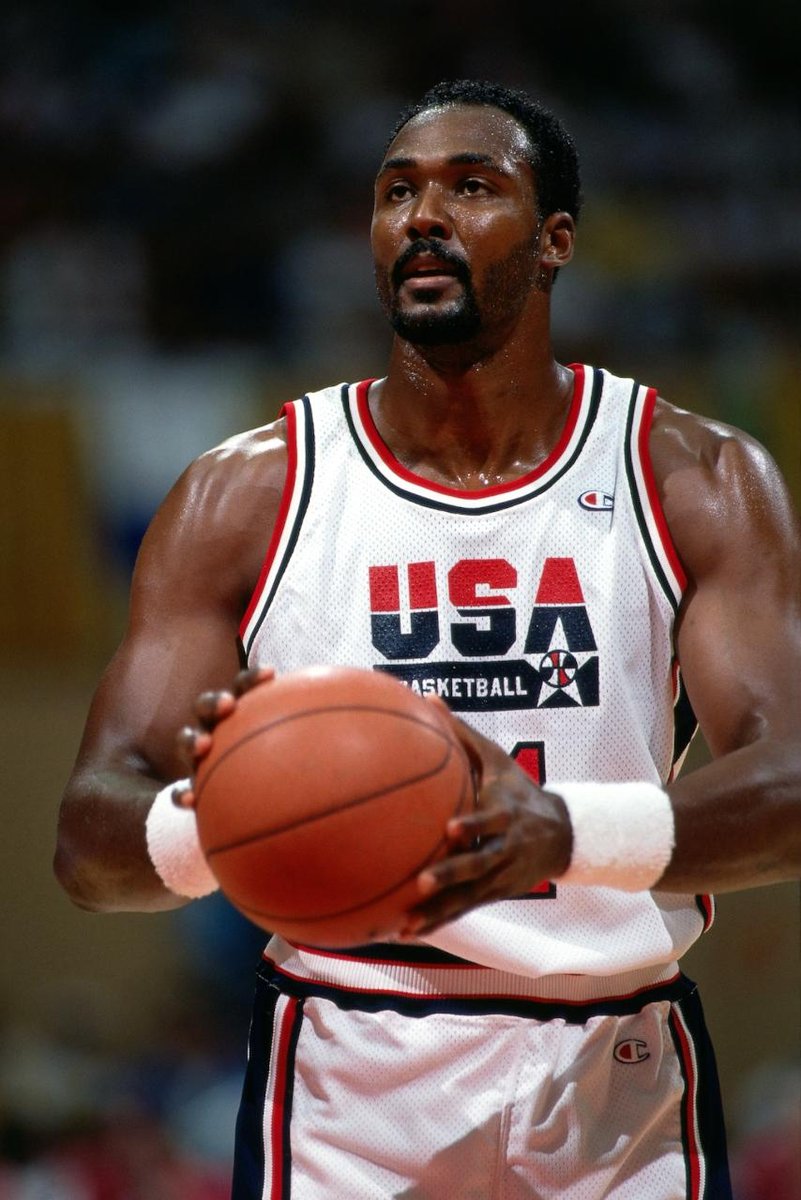
Karl Malone wore jersey #11 for the United States at the 1992 Barcelona Olympics. He was 28 years old and a member of the Utah Jazz, where he formed one of the NBA's most effective partnerships with point guard John Stockton. Malone averaged 13.0 points and 5.3 rebounds per game during the tournament, shooting 64.5% from the field. He was the team's second-leading scorer behind Charles Barkley.
Malone's physical power and relentless motor made him an effective interior presence throughout the tournament. Known as "The Mailman" for his reliable delivery in the post, Malone brought his trademark pick-and-roll game to the Olympic stage. His chemistry with Stockton translated seamlessly to the international game, and the duo provided a familiar offensive foundation when they shared the court.
At the time of the Olympics, Malone was a six-time All-Star and had been named to the All-NBA First Team four consecutive times. He would go on to become one of the most prolific scorers in NBA history, finishing his career as the second all-time leading scorer at the time of his retirement in 2004 with 36,928 points. Malone won two NBA MVP awards (1997, 1999) and was a 14-time All-Star. He led the Jazz to two consecutive NBA Finals appearances in 1997 and 1998. Malone was inducted into the Naismith Memorial Basketball Hall of Fame in 2010.
Patrick Ewing
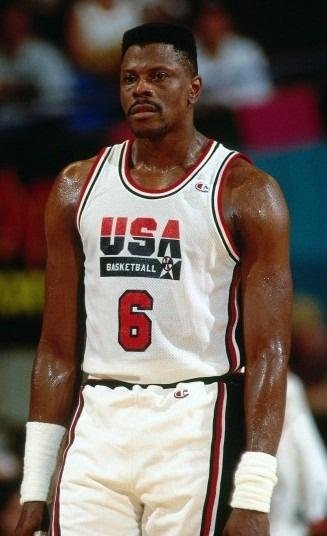
Patrick Ewing wore jersey #6 for the United States at the 1992 Barcelona Olympics. He was 29 years old and the franchise centerpiece of the New York Knicks. Ewing averaged 9.5 points, 5.3 rebounds, and 1.9 blocks per game during the tournament, shooting 62.3% from the field. His shot-blocking presence provided the Dream Team with interior defensive anchoring that complemented the team's aggressive perimeter defense.
Ewing was no stranger to representing the United States in international competition. He had previously won a gold medal at the 1984 Los Angeles Olympics as a college player at Georgetown University, making him the only Dream Team member with prior Olympic basketball experience. His familiarity with the international game and FIBA rules provided valuable perspective for the coaching staff.
At the time of the Olympics, Ewing was a seven-time All-Star and had been named to the All-NBA First Team once and the All-NBA Second Team five times. He was one of the premier centers in the NBA, averaging over 20 points per game in each of his first nine seasons with the Knicks. Ewing led New York to the 1994 NBA Finals and remained the cornerstone of the franchise through the 1990s. He finished his 17-year career with averages of 21.0 points, 9.8 rebounds, and 2.4 blocks per game. Ewing was inducted into the Naismith Memorial Basketball Hall of Fame in 2008.
David Robinson
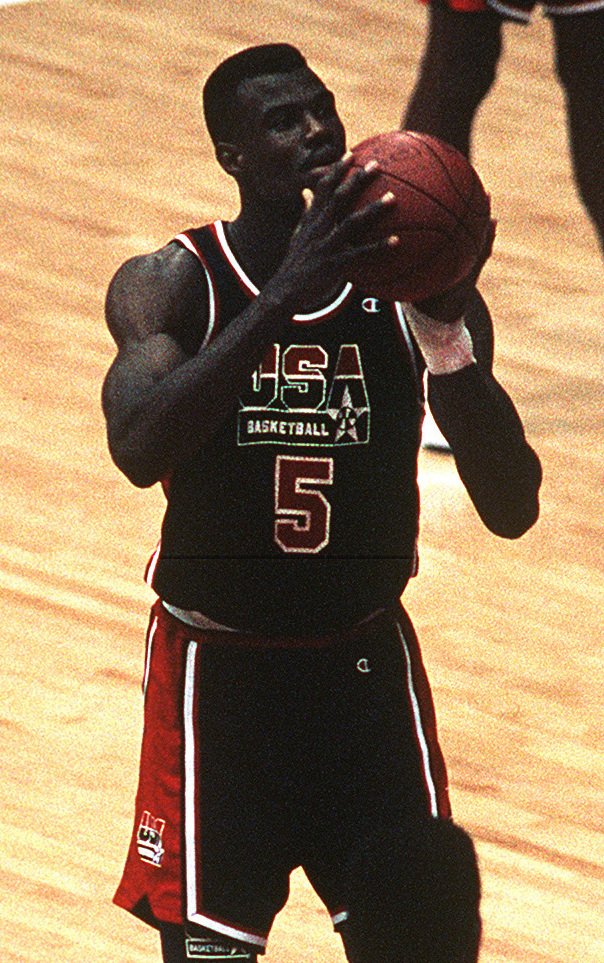
David Robinson wore jersey #5 for the United States at the 1992 Barcelona Olympics. He was 26 years old and a member of the San Antonio Spurs, where he had quickly established himself as one of the NBA's dominant centers. Robinson averaged 9.0 points, 4.1 rebounds, and 1.5 blocks per game during the tournament, shooting 57.4% from the field. He shared center duties with Patrick Ewing throughout the Games.
Robinson brought elite athleticism and defensive versatility to the Dream Team roster. A 7-foot-1 center with guard-like speed and agility, he could defend the post, block shots, and run the floor in transition. His physical gifts made him particularly effective against international opponents who were unaccustomed to facing a center with his combination of size and mobility. Robinson had previously represented the United States at the 1988 Seoul Olympics, where the team won a bronze medal with a roster of college and amateur players.
At the time of the Olympics, Robinson was a three-time All-Star who had won the 1992 Defensive Player of the Year award and led the league in blocked shots in 1991-92. He would go on to win the 1995 NBA MVP award and the 1994 scoring title, averaging 29.8 points per game. Robinson won two NBA championships with the Spurs (1999, 2003) alongside Tim Duncan and was named one of the 50 Greatest Players in NBA History in 1996. He was inducted into the Naismith Memorial Basketball Hall of Fame in 2009.
Clyde Drexler
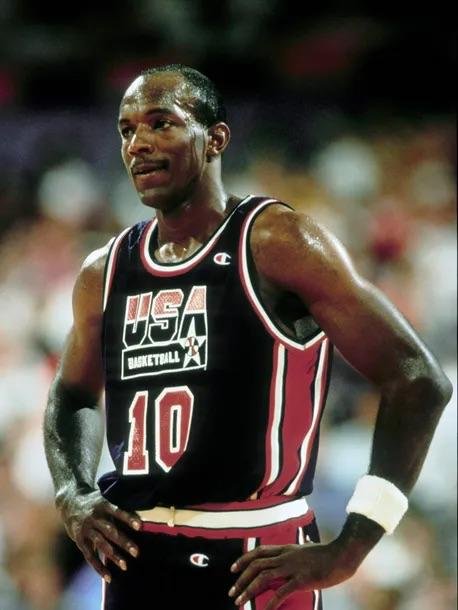
Clyde Drexler wore jersey #10 for the United States at the 1992 Barcelona Olympics. He was 30 years old and a member of the Portland Trail Blazers, having just led the team to the 1992 NBA Finals, where they lost to Michael Jordan's Chicago Bulls. Drexler averaged 10.5 points, 3.0 rebounds, and 2.5 steals per game during the Olympic tournament, shooting 57.8% from the field.
Drexler's explosive athleticism and all-around game earned him the nickname "Clyde the Glide." His ability to score from all three levels - at the rim, from mid-range, and from beyond the arc - gave the Dream Team another dynamic scoring option alongside Jordan in the backcourt. Drexler and Jordan had been compared throughout their careers, and the Olympics provided a rare opportunity to see them as teammates rather than rivals.
At the time of the Olympics, Drexler was an eight-time All-Star and had been named to the All-NBA First Team once and the All-NBA Second Team twice. He had finished as the NBA MVP runner-up to Jordan in 1992. Following the Olympics, Drexler continued to star for the Trail Blazers before being traded to the Houston Rockets in February 1995. He won his sole NBA championship with the Rockets in 1995 alongside Hakeem Olajuwon. Drexler retired in 1998 with career averages of 20.4 points, 6.1 rebounds, and 5.6 assists per game. He was inducted into the Naismith Memorial Basketball Hall of Fame in 2004.
Chris Mullin
Chris Mullin wore jersey #13 for the United States at the 1992 Barcelona Olympics. He was 29 years old and a member of the Golden State Warriors, where he was one of the NBA's premier scorers. Mullin averaged 12.9 points per game during the tournament on 61.9% shooting from the field and 53.8% from three-point range, making him one of the team's most efficient perimeter shooters.
Mullin's pure shooting stroke and high basketball IQ made him a seamless fit within the Dream Team offense. He moved without the ball with precision, found open spaces, and converted at a remarkable rate. His 53.8% three-point shooting percentage during the tournament was the highest among Dream Team players with significant attempts. Mullin's ability to space the floor and knock down shots created driving lanes for teammates like Jordan and Barkley.
At the time of the Olympics, Mullin was a four-time All-Star who had averaged over 25 points per game in three consecutive seasons from 1988-89 to 1990-91. He had been named to the All-NBA First Team once and the All-NBA Second Team twice. Mullin had also previously represented the United States at the 1984 Olympics in Los Angeles, where he won a gold medal as a college player from St. John's University. He continued to play in the NBA until 2001, finishing with career averages of 18.2 points per game. Mullin was inducted into the Naismith Memorial Basketball Hall of Fame in 2011.
John Stockton
John Stockton wore jersey #12 for the United States at the 1992 Barcelona Olympics. He was 30 years old and a member of the Utah Jazz, where he was establishing himself as the most prolific assist man in NBA history. Stockton appeared in only four of the team's eight games during the tournament, averaging 2.8 points and 2.0 assists in limited minutes of 7.3 per game.
Stockton's reduced role on the Dream Team reflected the depth of talent at the guard position, where he competed for playing time with Magic Johnson, Michael Jordan, Scottie Pippen, and Clyde Drexler. Despite his limited minutes, Stockton's inclusion on the roster recognized his standing as one of the elite point guards in the NBA. His precise passing and pick-and-roll mastery with Karl Malone remained available to coach Daly whenever the situation called for it.
At the time of the Olympics, Stockton had led the NBA in assists per game for six consecutive seasons from 1987-88 to 1992-93. He was a six-time All-Star and had been named to the All-NBA Second Team four times. Stockton continued his partnership with Malone in Utah for another decade, reaching back-to-back NBA Finals in 1997 and 1998. He retired in 2003 as the NBA's all-time leader in both assists (15,806) and steals (3,265) - records that still stand. Stockton was inducted into the Naismith Memorial Basketball Hall of Fame in 2009.
Christian Laettner
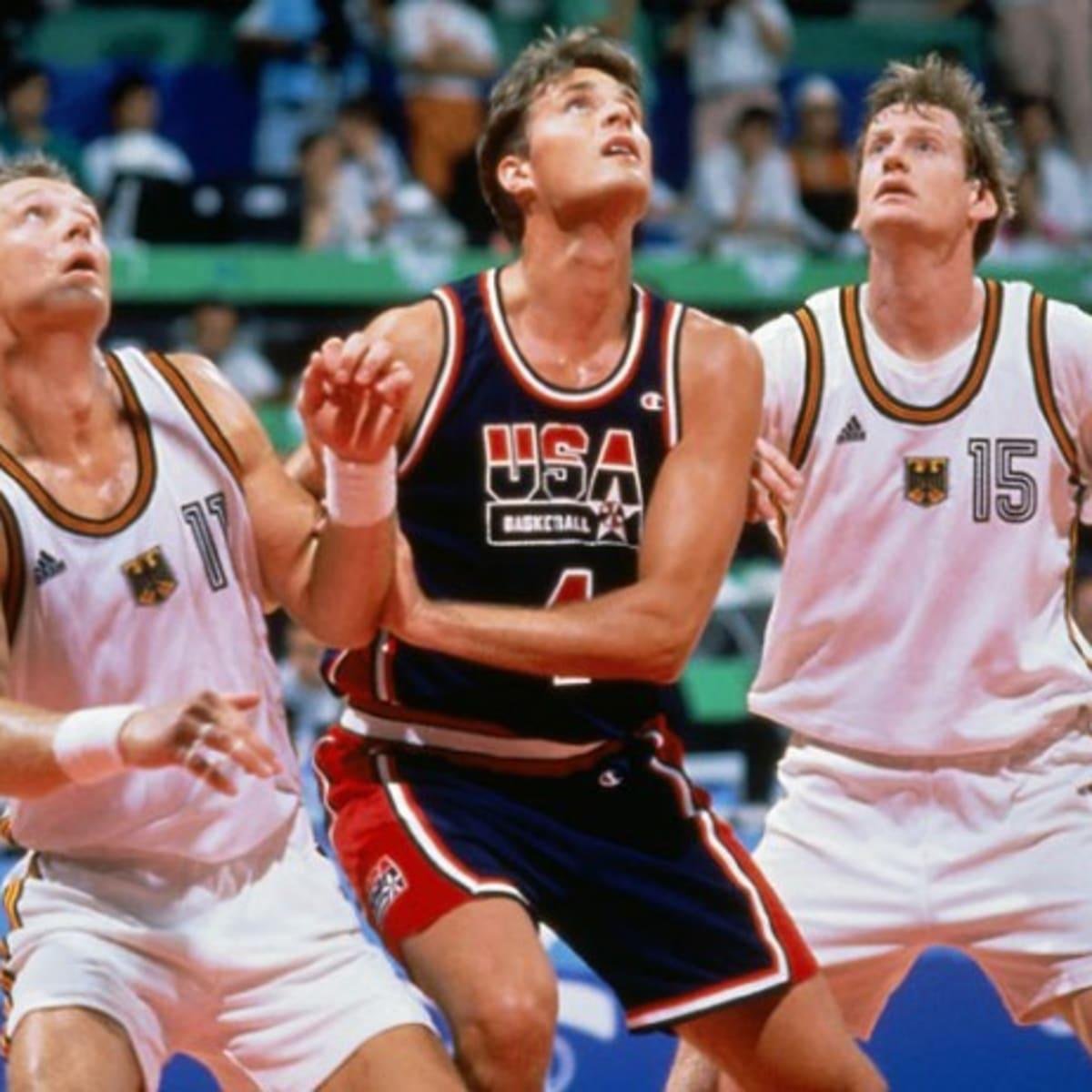
Christian Laettner wore jersey #4 for the United States at the 1992 Barcelona Olympics. He was 22 years old and had just been selected as the third overall pick in the 1992 NBA Draft by the Minnesota Timberwolves. Laettner was the only college player on the Dream Team roster, a selection that generated considerable debate given that established NBA stars like Isiah Thomas, Dominique Wilkins, and Shaquille O'Neal were not chosen.
Laettner averaged 4.8 points and 2.5 rebounds per game during the tournament on 45.0% shooting in limited playing time of 7.6 minutes per contest. His role was primarily as a reserve big man, seeing spot duty behind Barkley, Malone, Ewing, and Robinson. Despite his minimal on-court contributions, Laettner earned his selection through a dominant college career at Duke University, where he won back-to-back NCAA championships in 1991 and 1992 and was named the 1992 NCAA Tournament Most Outstanding Player.
Laettner's iconic buzzer-beating turnaround jumper against Kentucky in the 1992 NCAA Tournament East Regional Final is considered one of the greatest moments in college basketball history. In his NBA career, Laettner played for six teams over 13 seasons, averaging 12.8 points and 6.7 rebounds per game. He was selected as an All-Star in 1997 while playing for the Atlanta Hawks. While Laettner never reached the Hall of Fame heights of his Dream Team teammates individually, he is enshrined as part of the 2010 Dream Team collective induction.
Chuck Daly
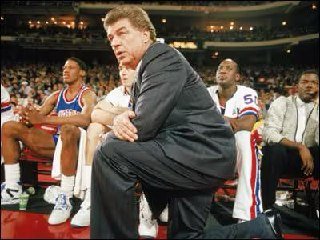
Chuck Daly served as head coach of the United States basketball team at the 1992 Barcelona Olympics. He was 62 years old and had recently stepped down as head coach of the Detroit Pistons after the 1991-92 season. Daly's coaching record during the Olympic tournament was a perfect 8-0, with the team winning by an average margin of 43.8 points. He notably never called a single timeout during the entire tournament.
Daly was selected to coach the Dream Team based on his championship pedigree and reputation for managing strong personalities. As head coach of the Pistons' "Bad Boys" era, he had led Detroit to back-to-back NBA championships in 1989 and 1990. His ability to balance egos, manage playing time, and maintain team chemistry among 12 of the world's greatest basketball players was considered his most impressive achievement during the Games.
Daly's coaching philosophy for the Dream Team prioritized letting the players' talent dictate the game rather than imposing rigid systems. He rotated lineups frequently, ensuring that every player received meaningful court time across the tournament. His assistant coaches included Lenny Wilkens, Mike Krzyzewski, and P.J. Carlesimo. Daly compiled an NBA coaching record of 638-437 across 14 seasons with the Cleveland Cavaliers, Pistons, New Jersey Nets, and Orlando Magic. He was inducted into the Naismith Memorial Basketball Hall of Fame in 1994. Daly passed away on May 9, 2009, at the age of 78.