All 37 Xbox Launch Titles Across All Three Regions
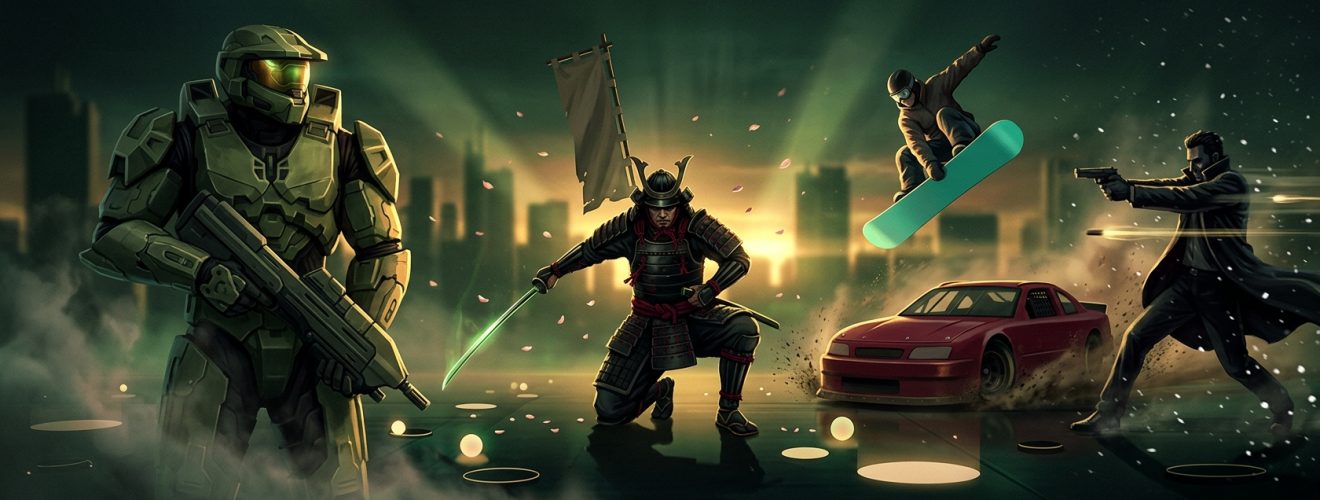
Microsoft released the Xbox at midnight on November 15, 2001, at a Toys R Us in Times Square. Bill Gates personally handed the first console to a twenty-year-old named Edward Glucksman, who had been standing in that line since eight o’clock that morning. The console cost $299, weighed nearly nine pounds, included an internal hard drive, and shipped with what Microsoft believed was the strongest launch lineup any console had ever assembled.
Whether that was true depends on which Xbox launch you mean. There were three of them, and each had a different game lineup, with different exclusives, different localized titles, and in several notable cases different versions of the same game. Tony Hawk’s Pro Skater 2X was a Day One title only in North America, while Europe received the more conventional Pro Skater 3 instead. Konami sold one flight combat game as Air Force Delta Storm in America, Air Force Delta II in Japan, and Deadly Skies in Europe. Microsoft’s own snowboarding game went on sale in Japan as Tenku, and Project Gotham Racing picked up a subtitle there, World Street Racer, that it carried nowhere else.
The roster below spans both extremes. Some of these games have been remastered, re-released, and remastered again. Others have never been made playable on any Xbox since, and survive now only as discs in a drawer. The Xbox would eventually become the foundation of one of gaming’s largest platforms. In 2001, that outcome was very much in doubt.
Thirty-seven games qualify as Day One Xbox launch titles, meaning they were on sale the day the console arrived in at least one of its three markets: North America on November 15, 2001, Japan on February 22, 2002, and Europe on March 14, 2002. No region sold all thirty-seven.
Project Gotham Racing
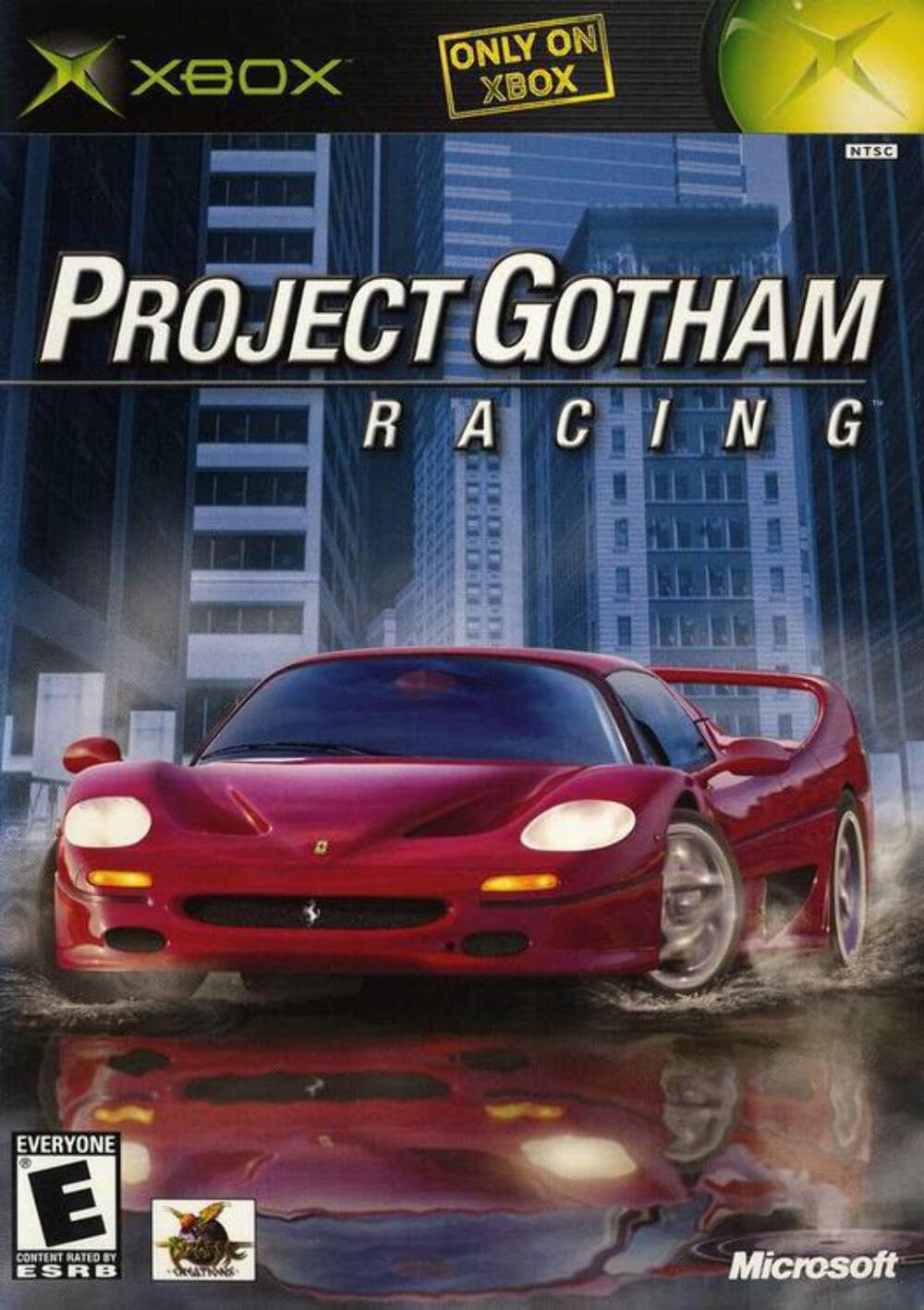
Project Gotham Racing was one of only two games Microsoft shipped at all three Xbox launches. It arrived in North America on November 15, 2001, in Japan on February 22, 2002, and in Europe on March 14, 2002. Alongside Dead or Alive 3, it was the closest thing the Xbox had to a universal launch title, and in 2001 it outsold every other Xbox game except Halo.
The game began life under a name Bizarre Creations later admitted was a mistake. Founder Martyn Chudley has confirmed in interviews that the working title was ‘Project Swingers.’ Someone eventually pointed out that this sounded less like a racing game than a documentary about key parties, and the studio quietly changed it to Project Gotham. The original title – Metropolis Street Racer, the Dreamcast game this one was built from – belonged to Sega and couldn’t follow Bizarre to Xbox.
The Kudos system was the hook. Winning a race wasn’t enough to advance; you also had to drive with style, which meant power sliding through corners and overtaking traffic with theatrical flair. Hitting a guardrail wiped your accumulated points instantly. This encouraged a kind of paranoid elegance behind the wheel that no racing game before it had really attempted. There were 204 unique circuits across San Francisco, London, Tokyo, and New York, and the game sold well over a million copies. Bizarre Creations had spent the previous year quietly wondering if they would ever see another payday.
Dead or Alive 3
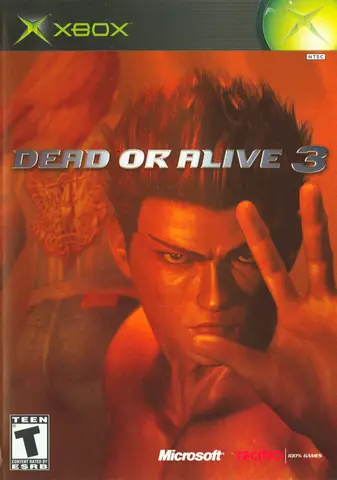
Dead or Alive 3 was the other game Microsoft shipped at all three Xbox launches, and the only fighting game in the lineup at any of them. Series creator Tomonobu Itagaki had a personal rule that each new Dead or Alive game would target the most powerful console available, and when Microsoft approached Team Ninja with the Xbox still in development, he agreed almost immediately. He later told interviewers that Microsoft’s engineering team had treated him as a guest of honour. Sony’s had not.
The North American release sold over a million copies in its first five months and eventually passed two million worldwide, making it one of the ten best-selling Xbox games. The Japanese and European versions, which arrived months later for their respective Xbox launches, included content not present in the American release. American players who imported the Japanese version found themselves playing a noticeably different game. The plot involved a corporation called DOATEC attempting to create the ultimate human weapon by transforming a ninja leader into a superhuman called Omega.
Three new characters joined the roster: Hitomi the karateka, Brad Wong the drunken-fist master, and Christie the assassin. Itagaki himself was a small celebrity in the industry by this point. He wore leather jackets and sunglasses indoors, gave frank interviews about rival developers, and refused to soften his opinions for anyone. He once described Sony’s PS2 architecture as something a rational designer would walk away from.
Halo: Combat Evolved
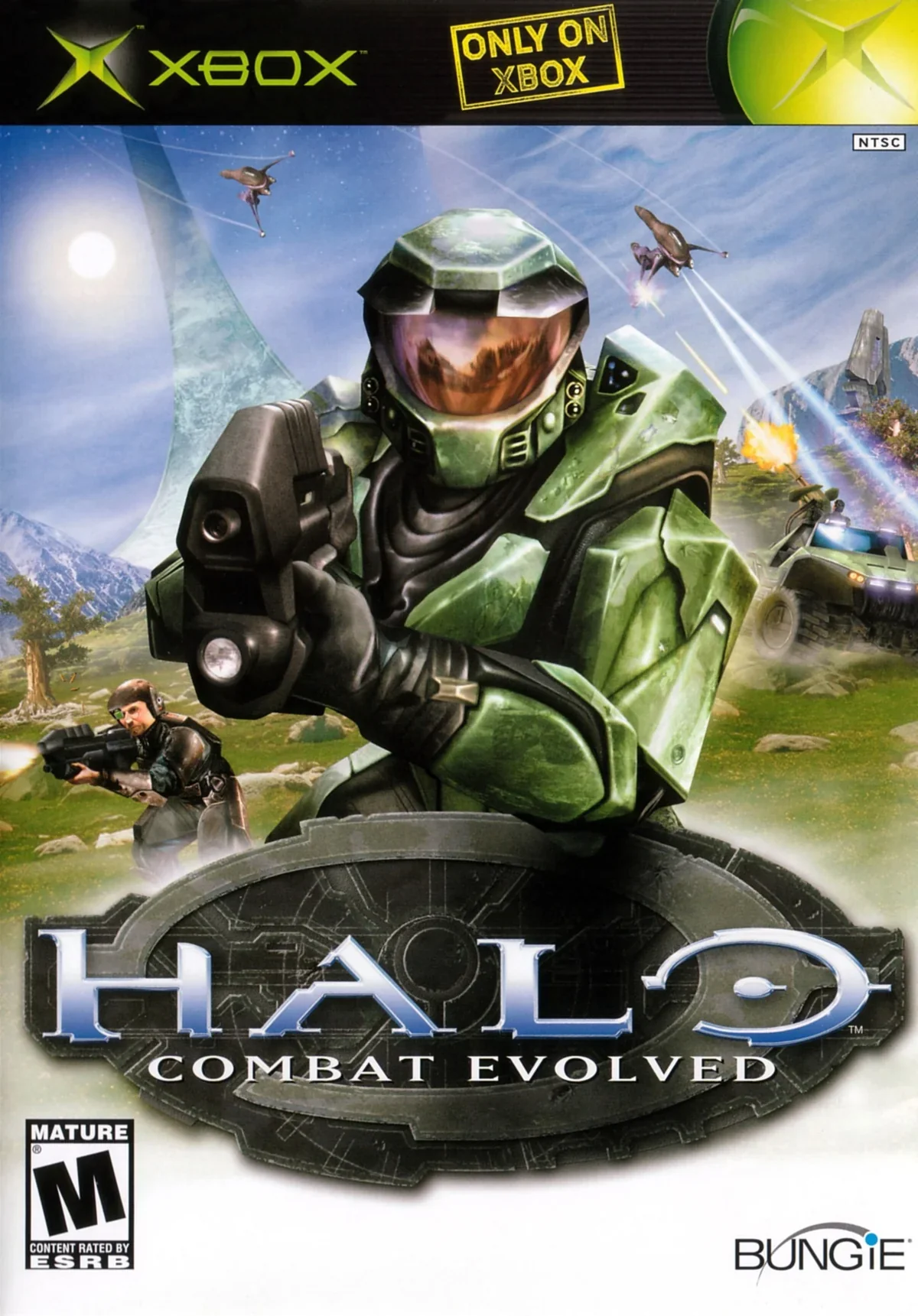
Halo: Combat Evolved was the launch title that sold the Xbox – except in Japan, where Microsoft left it off the launch lineup entirely. The Japanese release came on April 25, 2002, two months after the Japanese console launch. Japanese Xbox owners had a brand new console for two months and no Master Chief to play on it. North America got Halo on November 15, 2001 and Europe on March 14, 2002. In both regions it became the best-selling Xbox game by an enormous margin.
Bungie first unveiled Halo in 1999 at Macworld, presented on stage by Steve Jobs himself. At that point it was a Mac real-time strategy game. Bungie was in serious financial trouble – a glitch in Myth II had cost the company $800,000 in recalls – and Microsoft acquired the studio in June 2000, converted Halo into a first-person shooter, and pulled the project off the Mac entirely. Steve Jobs, who had personally introduced the game to the world, was reportedly furious.
By the time it shipped, Halo had been three different games. It started as a real-time strategy, became a third-person shooter, and finally settled into the first-person shooter that defined the console. Online multiplayer was cut because Xbox Live wasn’t finished yet. The ‘Combat Evolved’ subtitle was added late, partly because someone realized that calling a launch title simply ‘Halo’ sounded slightly unfinished. It sold over five million copies anyway.
Oddworld: Munch’s Oddysee
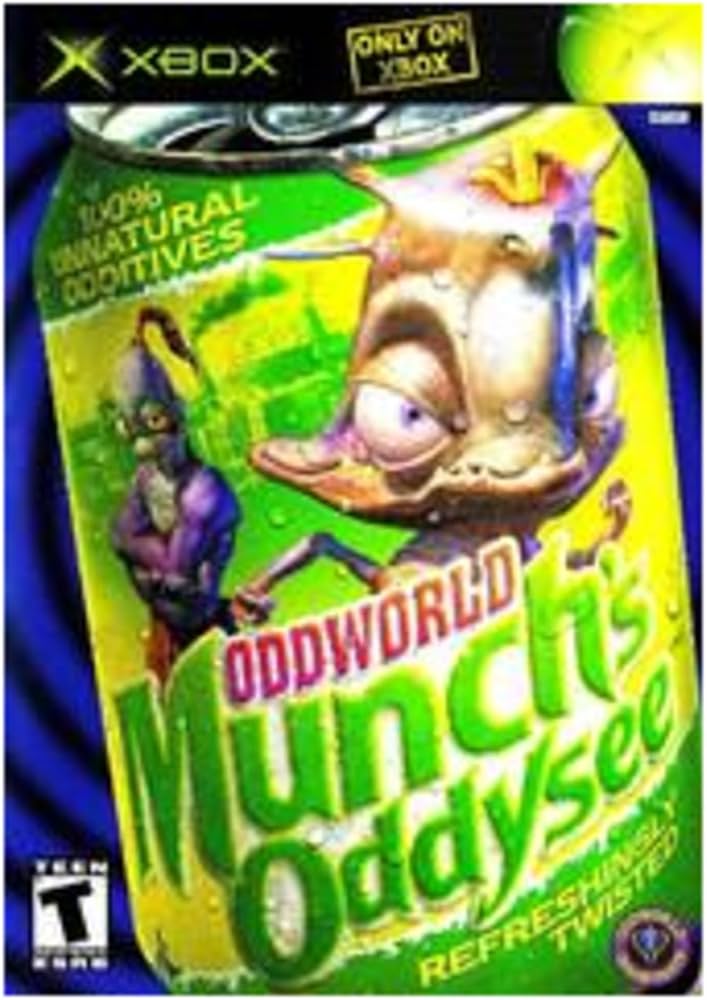
Oddworld: Munch’s Oddysee began as a PlayStation 2 game and ended as the most public defection in Xbox launch history. Series creator Lorne Lanning had been developing it for the PS2 throughout 2000 when Microsoft signed a deal with publisher Infogrames in October securing exclusive rights to the next four Oddworld titles. The game became an Xbox exclusive overnight, and its scheduled spring 2001 PS2 release was simply cancelled. The Xbox version launched in North America on November 15, 2001 and in Europe on March 14, 2002.
Lanning’s stated reason for the switch was technical. He felt the PS2 architecture was unfriendly to develop for and that the Xbox could push the animation quality he wanted, with dozens of characters interacting on screen against an evolving environmental backdrop. He also became friends with Microsoft’s Seamus Blackley, which helped. The studio sent its A.L.I.V.E. 2 engine team to Redmond to begin the port.
Munch’s Oddysee was the third game in Lanning’s planned Oddworld Quintology and the first to be playable in true 3D. It paired the player with two protagonists – Abe, the Mudokon hero of the previous games, and Munch, a small amphibian creature called a Gabbit with a propeller fastened to his head. The game sold reasonably well in North America. In Europe, where the Oddworld series had been most successful, Microsoft’s marketing was so thin that Lanning later said their best-performing territory had delivered almost nothing.
Fuzion Frenzy
Fuzion Frenzy was the first Xbox game ever finished. Blitz Games delivered the master disc to Microsoft before any other developer did, which earned it the distinction of being the literal first game produced for the platform. This was a useful trivia answer and not much else, since by November 15, 2001 it would be sharing shelves with Halo. It released in North America on launch day and in Europe on March 14, 2002.
Microsoft commissioned the game specifically. They had identified a gap in the launch lineup – no party game, no four-player living-room title, nothing to compete with Mario Party – and asked Blitz to fill it. Blitz delivered 45 mini-games set across six urban arenas, organized around a tournament structure in which players collected orbs across three mini-games per zone and then gambled them in a final orb-collection round, also called Fuzion Frenzy. The harder you bet, the bigger the swing.
Critics found it repetitive in single-player and chaotically delightful with four people in a room. A demo of Fuzion Frenzy shipped on the same discs as Halo and Munch’s Oddysee, which meant most Xbox launch owners played it whether they bought it or not. The sequel didn’t arrive until 2007, on the Xbox 360, developed by Hudson Soft after Microsoft quietly took the franchise away from Blitz. By then most people had forgotten.
Air Force Delta Storm
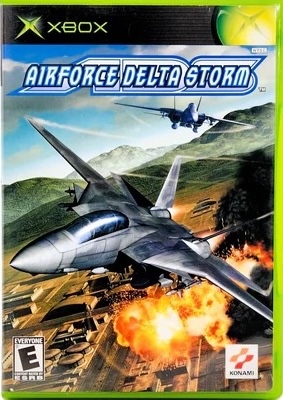
Air Force Delta Storm was Konami’s contribution to the Xbox launch and the only flight combat game in the lineup at any region’s launch. It arrived in North America on November 15, 2001 and in Japan on February 22, 2002. The European Xbox launch on March 14, 2002 did not include it. The PAL version came on April 12, 2002, nearly a month late.
Konami also released the game under three different names. Americans got Air Force Delta Storm. The Japanese version was Air Force Delta II, marketed as a direct sequel to the 1999 Dreamcast original. Europeans got Deadly Skies, which was the European name for the entire franchise dating back to the first game. Three identical discs, three different titles, three different sets of marketing.
The plot involved a near-future world in which overpopulation and food shortages had pushed industrialized nations to band together under a faction called the United Forces and seize agricultural land by military force. The player flew a single-seater fighter through fifty missions of dogfights and ground strikes, earning cash to unlock more powerful planes. Locking on and firing a missile was as simple as holding the reticle on an enemy for two seconds. Konami had a real franchise positioning problem. Sony’s Ace Combat dominated the PS2, the Xbox had no equivalent series, and Delta Storm was Konami’s attempt to claim the territory. Ace Combat eventually came to Xbox anyway.
NBA Live 2002
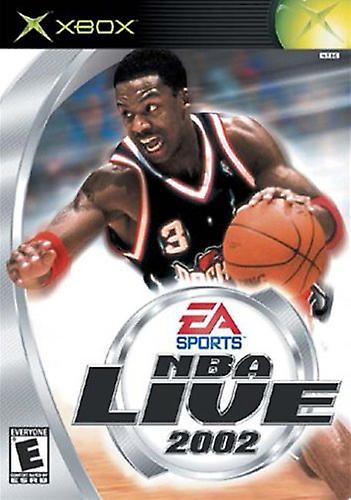
NBA Live 2002 was the Xbox launch’s only basketball game and one of a small handful of sports titles EA Sports prepared for the new console. The Xbox version released in North America on November 15, 2001 and in Europe on March 14, 2002. It never came out on Xbox in Japan at all. Basketball remained a niche import there, and Microsoft’s launch lineup was already crowded.
The cover athlete was Steve Francis of the Houston Rockets, except in Japan, where the cover was given to Michael Jordan in his Washington Wizards comeback uniform. The Japanese cover existed only for the PlayStation 2 release, since the Xbox version skipped Japan entirely, which produced the slightly surreal situation of a console-exclusive cover athlete on a console the game wasn’t on. NBA Live 2002 was also the first game in the franchise to skip the PC entirely. EA had decided to focus on consoles, where the competition from 2K Sports was growing fiercer year by year.
The Xbox version was a graphical upgrade of the PS2 version, with sharper textures and crisper player models. Don Poier called the play-by-play with Bob Elliott on colour, the same broadcast team EA had used for years. The game was a moderate commercial success. Allen Iverson did not appear on the cover at all, but the marketing copy on the back of the box was almost entirely about him.
NHL Hitz 20-02
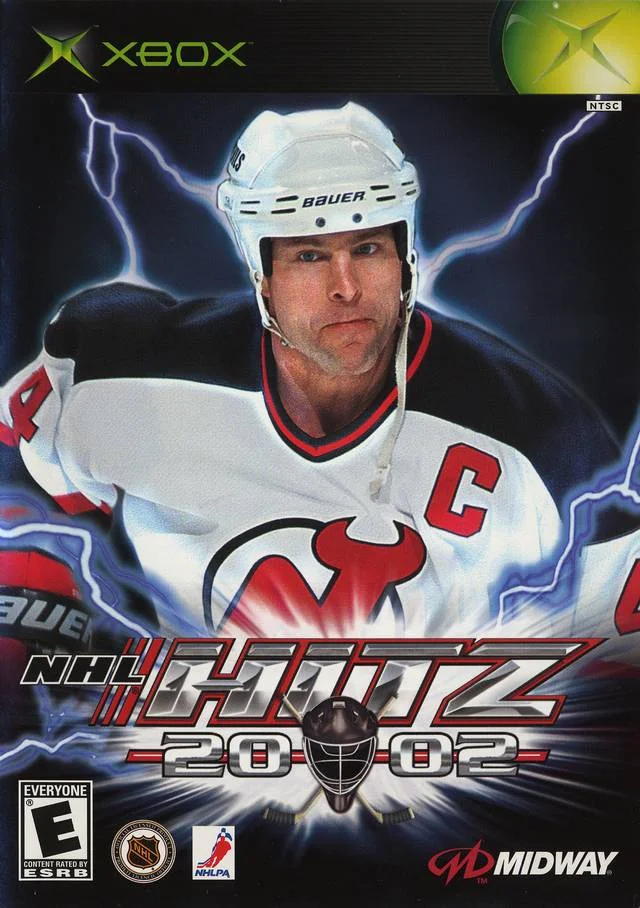
Midway had been out of the arcade hockey market for years when NHL Hitz 20-02 arrived at the Xbox launch. The North American release came on November 15, 2001 and the European release on March 14, 2002. There was no Japanese launch. Hockey, like basketball, had limited appeal there, and the game’s biggest selling point – that it ignored the rules of actual hockey – was unlikely to land in a market that didn’t really watch hockey to begin with.
The signature feature was an almost complete disregard for real hockey. Teams played three-on-three with a goalie, fights broke out if a player was sufficiently aggressive, and the rinks themselves were set inside fantasy environments, one of which placed the action between Egyptian pyramids. Penalties did not exist. A player who scored three times in a row went ‘on fire’ and gained enhanced speed and shooting power until the opposing team scored.
All thirty NHL teams were licensed, and the players were based on real 2001-2002 rosters, but the experience was closer to NBA Jam on ice than to a hockey simulation. The same announcer who called NFL Blitz called this one too, which gave the entire production an unmistakable family resemblance. Midway revived its old ‘Sports Asylum’ brand specifically to launch a hockey equivalent of Blitz, and Hitz was the only meaningful product to come out of that revival. The brand was retired by 2004.
Mad Dash Racing
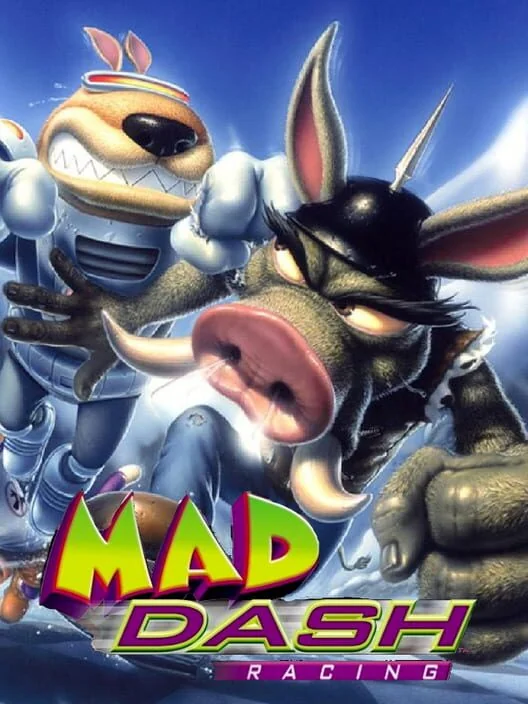
Mad Dash Racing had no vehicles. This was the central creative decision that defined the entire game – a racing title in which all twelve characters raced on foot, sprinting through environments designed to be navigated rather than driven. Crystal Dynamics developed it and Eidos published it. The Xbox release came in North America on November 15, 2001 and in Europe on March 14, 2002. It was the only foot-based racer in the Xbox launch lineup, and arguably the only foot-based racer in any console launch lineup ever.
The voice cast was unusually heavy for a launch title. Billy West, the voice of Fry on Futurama, played the villain Hex along with several other characters. Charles Martinet, the voice of Mario, played two of the playable racers. Crystal Dynamics divided the lineup into three character classes – Bashers who could knock other players down, Dashers who could outrun anyone on flat ground, and Gliders who could float across gaps using their oversized ears or wings as parasails. The plot involved a wizard collecting red meteor fragments to take over the world. The grand prize for winning the race was, according to the in-game dialogue, a pig. At the end of the story, Hex is turned into a pig.
The director, Glen Schofield, went on to direct Dead Space at Visceral Games and The Callisto Protocol at Striking Distance. Mad Dash was his first credited directorial work. The game has never been made backward-compatible on any Xbox since.
TransWorld Surf
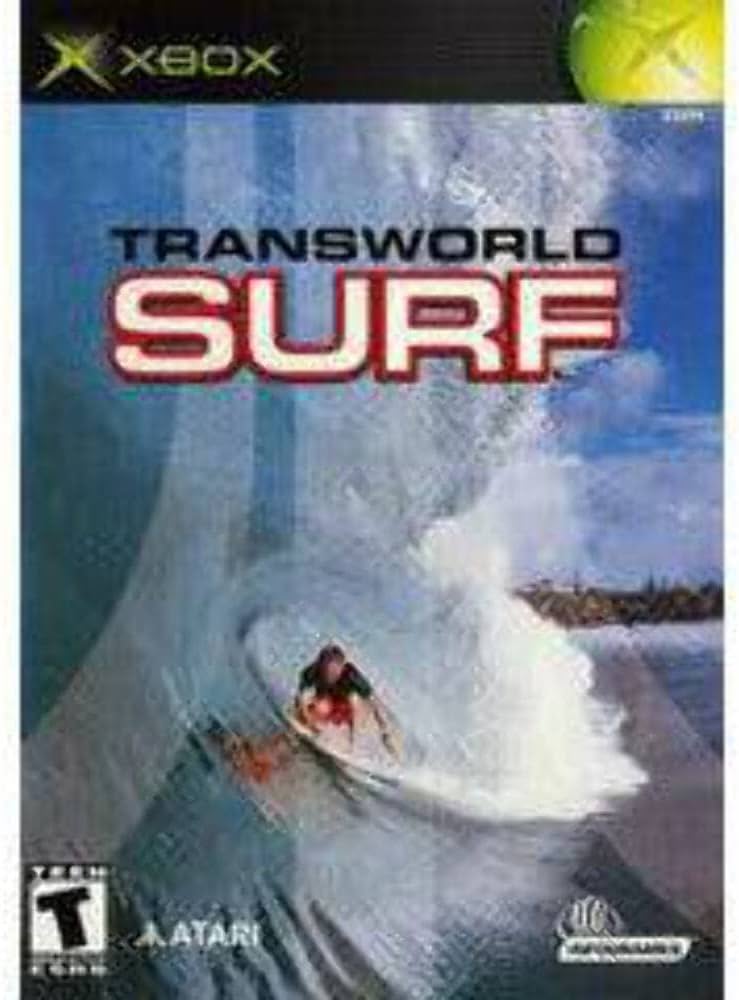
TransWorld Surf was the Xbox launch’s only surfing game, the launch’s only sports title licensed from a magazine, and quite possibly the launch’s only game in which sharks were a behavioural punishment. TransWorld Surf was a real publication, and Infogrames built the franchise around its name and editorial brand. The Xbox version arrived in North America on November 15, 2001 and in Europe on March 14, 2002. The PlayStation 2 version came months later. Japan did not get it at launch and barely got it at all.
Angel Studios developed the game. The studio later became Rockstar San Diego and made Red Dead Redemption, but in 2001 they were a San Diego work-for-hire shop best known for the Midnight Club street racing games. TransWorld Surf featured 13 real professional surfers, including Andy Irons and Taj Burrow, and let the player tackle real-world breaks at Pipeline, Teahupoo, and Todos Santos.
The Karma meter was the unusual feature. Stealing waves from other surfers or otherwise behaving like a jerk lowered the player’s Karma and triggered consequences in the game world. Other surfers would harass you. Locals would refuse to talk to you. At the worst end of the scale, sharks would actively hunt you while you sat on your board waiting for the next set. It was the rare sports game in which the player’s punishment for poor sportsmanship was getting eaten. Andy Irons, who appeared as a playable surfer, won three consecutive World Championships starting the following year.
Madden NFL 2002
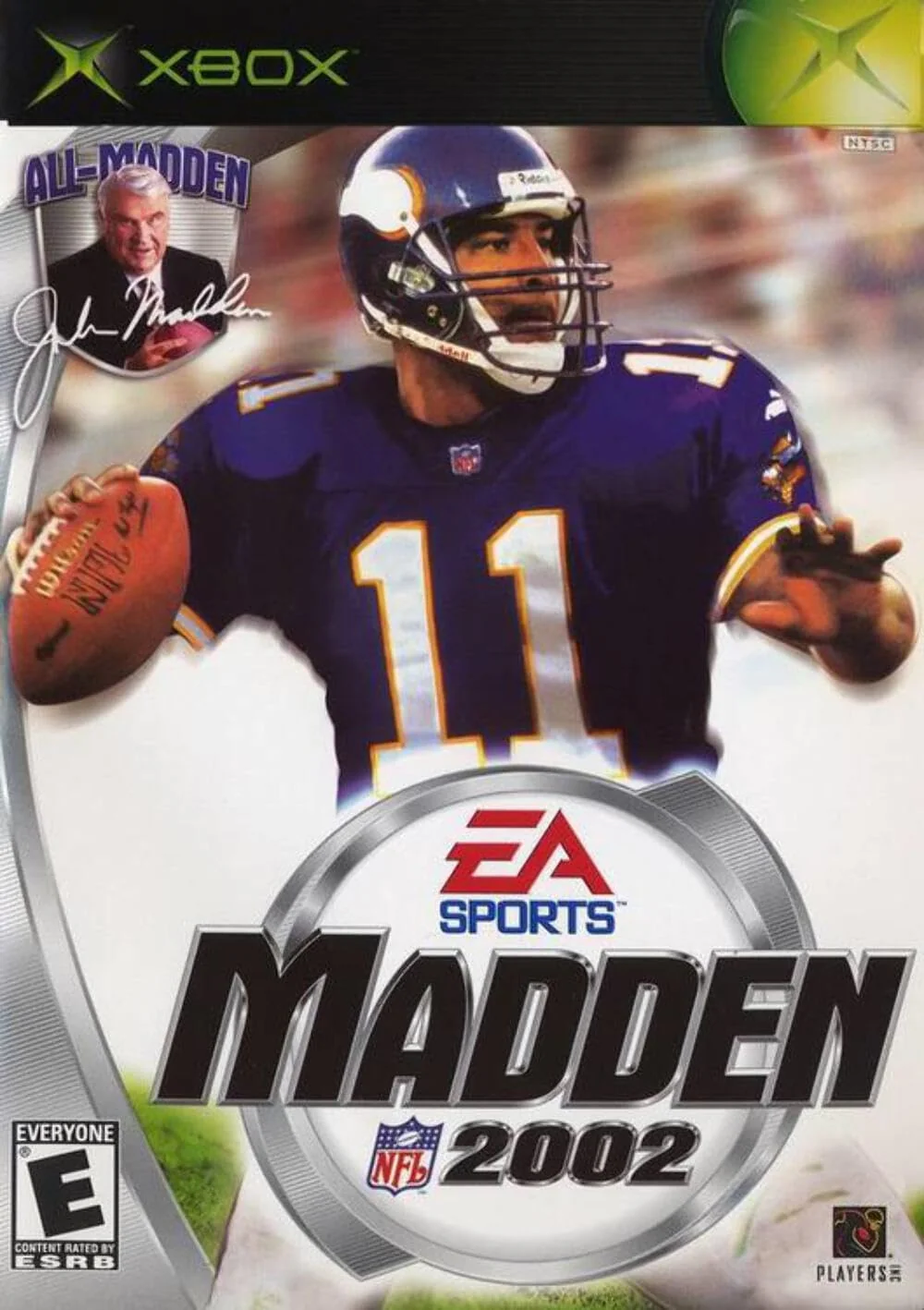
Madden NFL 2002 was the Xbox launch’s only EA Sports football game, the only game in the franchise to ship on a console it had never appeared on before, and the first Madden ever released for a Microsoft platform. It arrived in North America on November 15, 2001 and never came to PAL or Japanese Xbox in any form. Europe and Japan got the PlayStation 2 and PC versions instead. Microsoft’s launch box in those regions had to manage without it.
Daunte Culpepper of the Minnesota Vikings was the cover athlete, the second solo cover star in the series after Eddie George the year before. He was coming off a season in which he had thrown 33 touchdown passes and led the Vikings to the NFC Championship, which made him an obvious choice. He then promptly tore his knee, missed five games of the 2001 season, and threw a league-high 23 interceptions in 2002. The Madden Curse, until then more rumour than pattern, suddenly had its founding case study.
Pat Summerall and John Madden himself called the play-by-play, the same broadcast team that had been on the cover since the franchise began. The commercial for Madden NFL 2002 famously first aired during Super Bowl XXXVI – three days after the game had already started selling in Japan, and notably without Super Bowl MVP Tom Brady, who wouldn’t enter the cover-athlete conversation for another fifteen years.
NFL Fever 2002
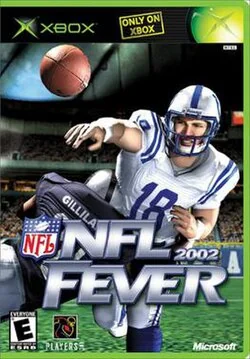
Microsoft built its own football game to compete with Madden, and shipped it on launch day. NFL Fever 2002 was developed and published by Microsoft Game Studios specifically as a launch title for the Xbox in North America, and released nowhere else on the console. The PAL launch did not include it. Japan never got it. Microsoft had decided that if Xbox owners wanted to play football in November 2001, they should ideally play Microsoft’s football game.
The cover athlete was Peyton Manning. The real selling point was the Dynasty Mode, in which players could guide their chosen franchise through 25 consecutive seasons – a console first, made possible because the Xbox had a hard drive and the PS2 did not. Inside Dynasty Mode was something called Dynamic Player Performance, which tied each athlete’s rating to how well the player performed with him. Run Peyton Manning into the ground and his stats would actually drop the following season. This was new. Most football games up to that point treated player ratings as fixed numbers, not as variables that could degrade through use.
Veteran announcer Dick Stockton called the play-by-play with Ron Pitts on colour. The soundtrack featured N.E.R.D. and Chuck D, which gave Microsoft’s debut football game a slightly cooler personality than EA’s. NFL Fever 2002 eventually sold 600,000 copies in the US and earned about $26 million. Madden outsold it by roughly an order of magnitude.
NASCAR Heat 2002
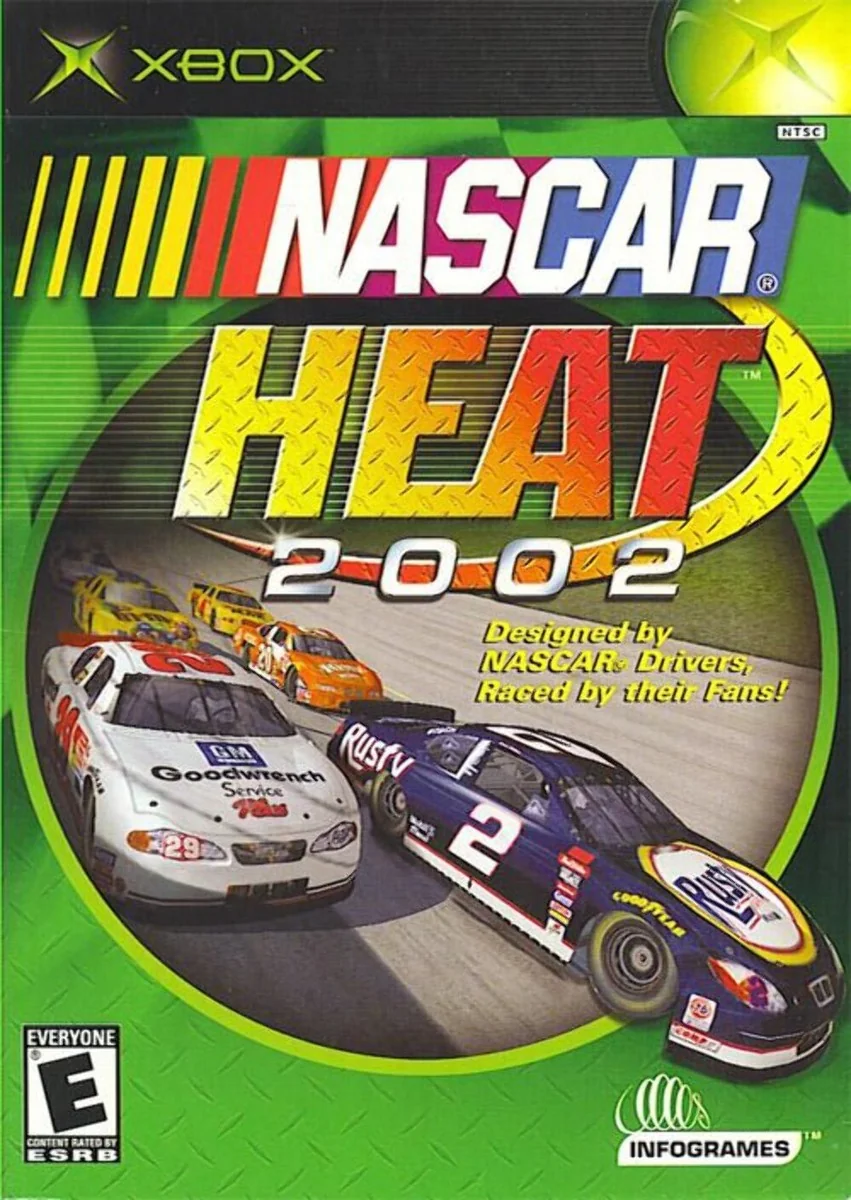
Two NASCAR games shipped on Xbox launch day, which seems like an oversight until you remember that 2001 was the year NASCAR became briefly inescapable in American culture. NASCAR Heat 2002 was the more simulation-focused of the two. Infogrames published it and Monster Games developed it, releasing the Xbox version in North America on November 15, 2001 with no PAL or Japanese launch following. The PlayStation 2 version had already been on shelves since June, but the Xbox version was the showcase.
The pitch was technical authenticity. Where most NASCAR games of the era cut corners on the field of cars, Heat 2002 supported a full 43-car race on the Xbox – the actual number of cars in a real Cup Series race – including fictional drivers to fill out the grid. 19 official NASCAR tracks were licensed, along with 28 real drivers including Jeff Gordon and Dale Earnhardt Jr. The ‘Beat the Heat’ mode featured 36 driving challenges in which players completed specific tasks like using slipstreams to overtake or finding the optimal racing line. Several of these challenges were introduced by the drivers themselves on camera.
Critics generally preferred Heat 2002 to EA’s competing release, but the general public did not. NASCAR fans went with the brand they recognized, which by 2001 meant EA Sports. Monster Games moved on the following year and made NASCAR: Dirt to Daytona, which has retained a small but devoted following ever since.
NASCAR Thunder 2002
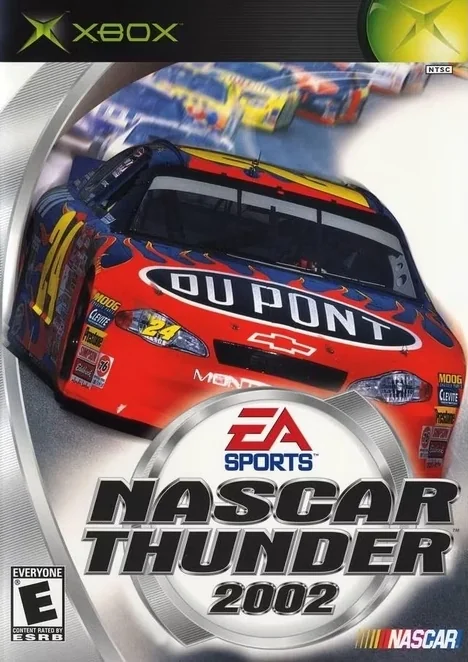
NASCAR Thunder 2002 was EA Sports’ own NASCAR title and the other stock car racing game in the Xbox launch lineup. It arrived on November 15, 2001 in North America. There was no PAL release on Xbox, and no Japanese launch. EA was clearly happy to leave Europe and Japan to other titles in the EA Sports umbrella, since neither region had any meaningful interest in stock car racing.
The ‘Thunder’ subtitle was new. Previous EA NASCAR games had simply used the year, but Tiburon Entertainment, now the lead studio after taking over from Stormfront, wanted to mark a new direction. The engine had been heavily rebuilt from the NASCAR 2001 codebase, which had been almost unplayable on PS2. NASCAR Thunder 2002 featured all 23 Winston Cup tracks, over 60 licensed drivers, and a full 43-car field on every race. EA had specifically positioned it as a more accessible counter to NASCAR Heat’s simulation depth.
The Xbox version’s theme song was ‘Sweet Home Alabama’ by Lynyrd Skynyrd, which made the game a kind of audio postcard for the American South in the early 2000s. It was also the first NASCAR game to feature alternate paint schemes for cars – a feature serious NASCAR fans had been asking for since the mid-1990s, since real Cup drivers regularly changed their car liveries during the season. Heat had more depth. Thunder had more polish and EA’s marketing budget. Thunder won easily.
Tony Hawk’s Pro Skater 2X
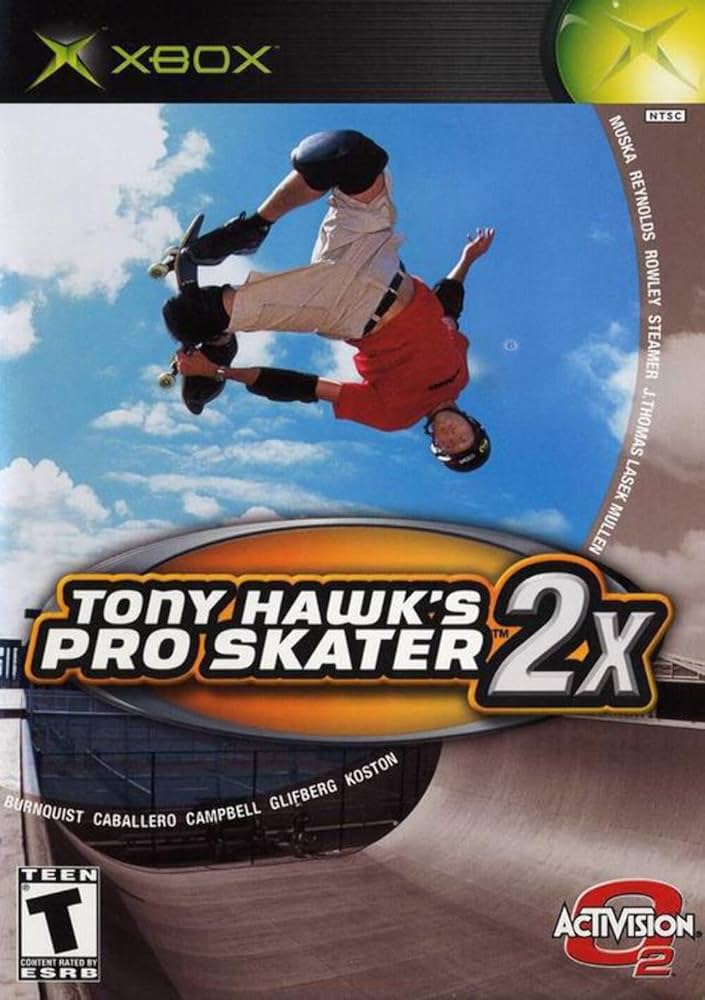
Activision shipped a Tony Hawk game at the Xbox launch and made it exclusive to North America. Tony Hawk’s Pro Skater 2X was an enhanced version of Pro Skater 2 with every level from the first game folded in, five new exclusive Xbox levels added, and improvements borrowed from the not-yet-released Pro Skater 3. It launched in North America on November 15, 2001, was never released in Europe or Japan in any form, and was the only Tony Hawk game ever to be a console exclusive. The European Xbox launch in March 2002 got the regular Tony Hawk’s Pro Skater 3 instead.
The game had been built in just nine months, a punishing schedule for what was essentially a remaster, an expansion, and a port all at once. Treyarch handled the bulk of development with Neversoft, the series’ usual developer, providing oversight. Many of the new Xbox-exclusive levels – including a Skate Heaven stage and a level set in the Pro Skater offices – have never appeared in any other Tony Hawk game since.
The 2X also marked the first time the Tony Hawk series ran at 60 frames per second on console, although several levels still had slowdown issues. Players could create their own female skaters for the first time, a feature carried over from Pro Skater 3. It was also the first game to use the Xbox’s custom soundtrack feature, allowing players to stream their own music from the hard drive while skating.
Cel Damage
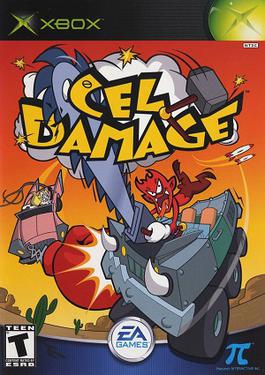
Cel Damage was originally supposed to be a Microsoft-published Xbox exclusive, until Microsoft and Pseudo Interactive had a disagreement and the developer signed with Electronic Arts instead. The game still launched on Xbox first – in North America on November 15, 2001, with the GameCube port following in January 2002 and a European release for both consoles in May. It was the only vehicular combat game in the Xbox launch lineup, and one of the earliest commercial games of any kind to use cel-shaded graphics.
The premise was a cartoon vehicular combat show called Cel Damage, in which animated characters used absurd weapons to demolish each other across twelve arenas. Weapons included chainsaws, an enormous axe, mallets, a shrink ray, and a black hole that the developers described in the manual as ‘the hole of death.’ Characters could not really die in any permanent sense, because they were cartoon characters and simply respawned. The physics engine was unusually advanced for a launch title – Pseudo Interactive had spent considerable time on what they called soft-body interactions, which let environmental objects like crates and signs roll and tumble realistically across the terrain.
A sequel was developed and nearly finished in 2003. It featured a major new mechanic in which players could leave their cars on foot and hijack other vehicles. The original game’s mediocre sales had spooked every publisher Pseudo approached, however, and Cel Damage 2 was cancelled. Pseudo Interactive itself shut down in 2008.
Arctic Thunder
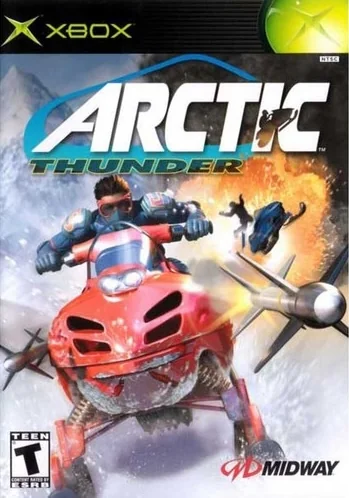
Midway shipped its last arcade game to the Xbox launch. Arctic Thunder had been Midway’s final coin-op title, released to American arcades in November 2000, and the Xbox port arrived almost exactly a year later on November 15, 2001. It was an exclusive North American Day One launch – the PAL version didn’t release until March 22, 2002, more than a week after the European console launch, which made it ineligible for PAL launch status. Japan never got it at all.
The arcade cabinet had been one of the strangest physical machines Midway ever built. A motorized fan installed in the front of the cabinet blew cold air directly into the player’s face to simulate riding a snowmobile, and the seat itself contained a shaker motor that vibrated in sync with the engine. The Xbox port could not replicate any of this, obviously, but it did include 19 characters and 12 tracks – well up from the arcade’s six and six – including levels set in the Swiss Alps, Atlantis, and a Chernobyl-themed track that the developers had loosely modelled on the actual exclusion zone.
Combat racing was the core mechanic. Players could fire missiles at each other, throw punches when within arm’s reach, and collect power-ups including something called an ‘atomic snowball.’ It was the fourth and final game in Midway’s Thunder series, after Hydro Thunder, Off-road Thunder, and 4 Wheel Thunder. Within five years Midway would be bankrupt.
Dark Summit
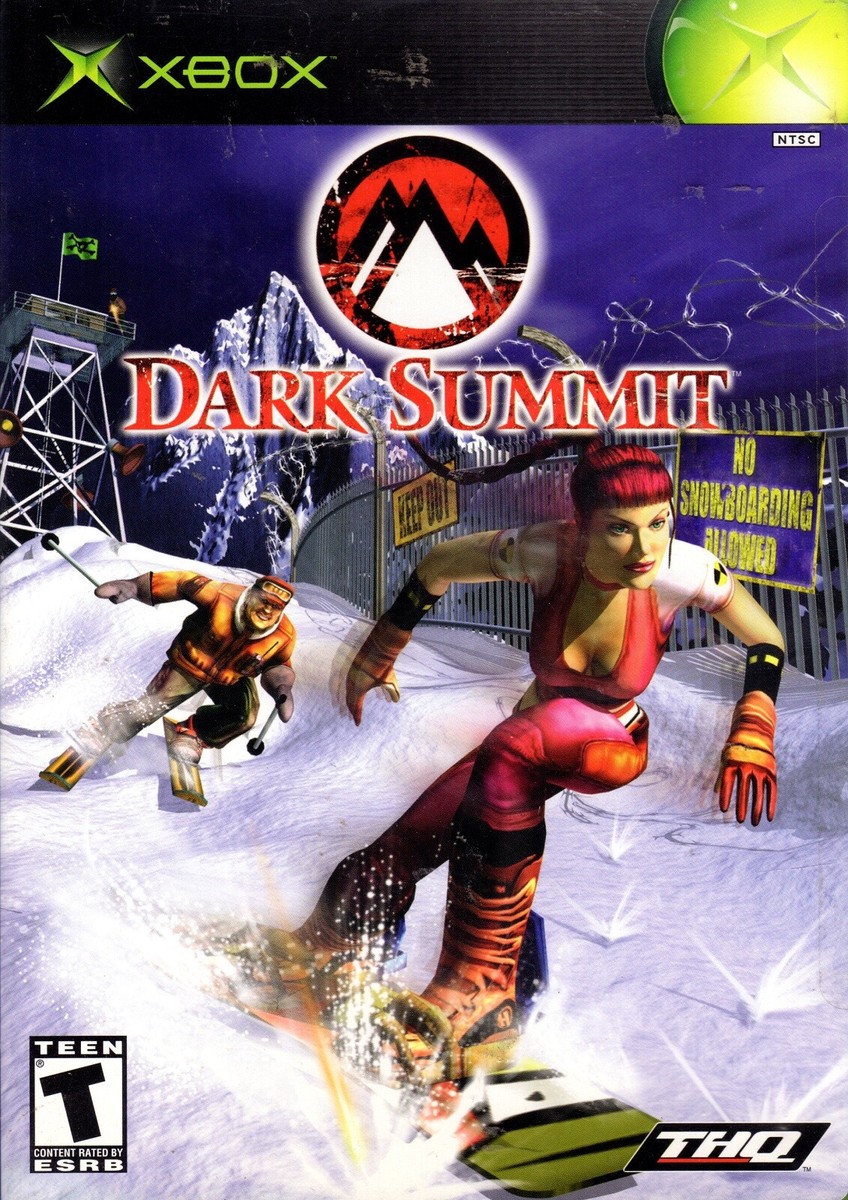
Dark Summit was the Xbox launch’s only snowboarding game and the only game in the lineup featuring a militarized ski resort. THQ published it, Radical Entertainment developed it, and the North American release on November 15, 2001 made it a Day One Xbox launch title. The PAL version arrived on March 22, 2002, a week after the European launch, which meant it missed the PAL Day One window. There was no Japanese release.
The plot was unusually elaborate for a snowboarding game. Players controlled a young rebel named Naya, who was trying to expose a conspiracy at Mount Garrick – a popular ski resort that had been mysteriously closed and converted into a military installation by an authoritarian park ranger called Chief O’Leary and his enforcers, known as ‘The Authority.’ Naya’s job was to snowboard across the mountain, defuse five bombs scattered across the slopes, evade security patrols, and uncover what the military was actually doing up there. Performing tricks earned Lift Points, which could be spent on forged lift tickets to unlock new areas.
This was the first snowboarding game built around missions rather than tricks-for-score, predating SSX Tricky and the broader genre shift by about a year. Radical Entertainment had built it as their first Xbox project and immediately moved on to other licensed work after release. The studio went on to develop Crash Tag Team Racing, Prototype, and a string of Hulk games. Dark Summit was their snowboarding moment.
Test Drive Off-Road Wide Open
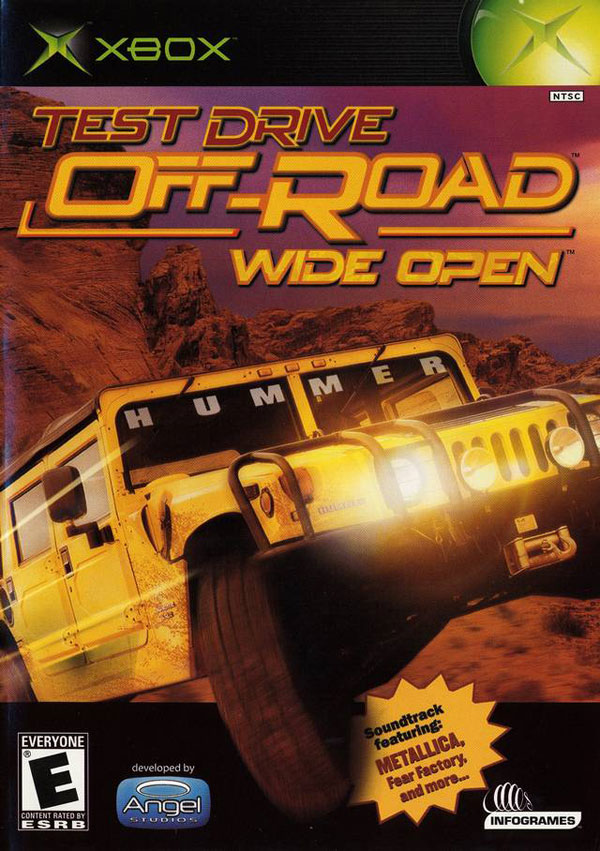
Angel Studios developed two Xbox launch titles for two different publishers, and both were exclusive to North America. Test Drive Off-Road Wide Open was the other one, alongside TransWorld Surf. Infogrames published it, releasing the Xbox version in North America on November 15, 2001, with the PAL version not arriving until May 24, 2002 – more than two months after the European launch. There was no Japanese release.
The game was the fourth and final installment of the Test Drive Off-Road sub-series, which Infogrames had decided to retire after this one. Twelve licensed off-road vehicles featured in the lineup, including a Hummer, a Ford Bronco, a Chevy Blazer, and a Jeep CJ5. Each vehicle had four upgrade tiers – Stock, Modified, Pro, and Unlimited – which players unlocked by progressing through the career mode. The Xbox version included an exclusive stadium mode not present in the PS2 release, set inside a series of enclosed dirt courses designed for tight, aggressive racing.
The soundtrack featured Metallica and Fear Factory, which gave the entire game a slightly self-conscious heavy metal aesthetic that the visuals could not quite match. The game’s release was Angel Studios’ last major project before Rockstar Games bought the studio outright in late 2002 and rebranded it Rockstar San Diego. Within a decade they were making Red Dead Redemption. Test Drive Off-Road Wide Open was the last game they ever released as Angel Studios.
4x4 EVO 2
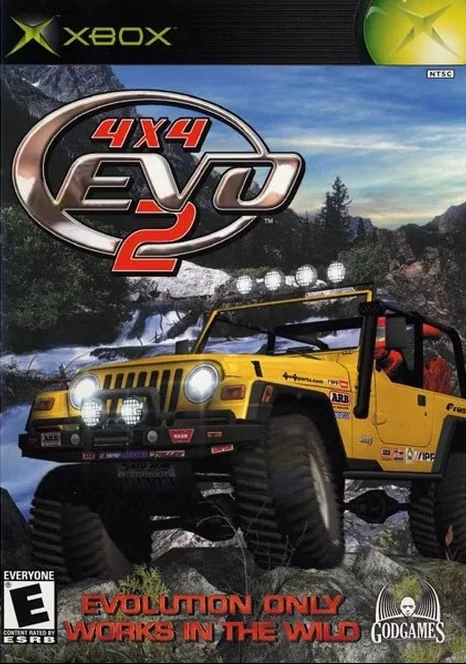
4x4 EVO 2 had a publisher whose name was Gathering of Developers, which was a real company name and not a typo. Terminal Reality developed it. The original 4x4 EVO on Dreamcast had been one of the first console games with cross-platform online play – Windows, Mac, and Dreamcast players had all shared the same servers – and the sequel was supposed to bring that capability to a new generation. The Xbox version released in North America on November 15, 2001. The PAL release didn’t arrive until June 5, 2002, almost three months after the European launch, and the Japanese launch never included it.
The game featured off-road vehicles from nine real manufacturers including Dodge, Jeep, Nissan, and Toyota. Ford had been in the original 4x4 EVO and was conspicuously missing from the sequel, for reasons Terminal Reality never publicly explained. Career mode let players join either a factory race team or a 4x4 club, with missions involving discovering ancient temples and unearthing lost treasures during off-road races. Weather systems had been improved from the original – fog and snow now appeared as in-race conditions rather than as separate selectable filters.
Online play, the original game’s most distinctive feature, was cut from the Xbox version because Xbox Live did not yet exist. Terminal Reality never managed to add it. The game scored around 60 on aggregate review sites, which made it the lowest-reviewed title in the North American launch lineup.
Shrek
The last Xbox launch title nobody remembers is Shrek, a game that was North American Day One only and existed entirely because the film had become unexpectedly enormous. TDK Mediactive had signed a five-year Shrek video game deal with DreamWorks in December 2000, before the film had even released, and committed to delivering a major console title in the fourth quarter of 2001. The Xbox version launched on November 15, 2001 and was, briefly, the only home console Shrek game in existence. Europe got it on March 28, 2002, after the PAL console launch, which made it NA-exclusive on Day One. Japan never received it.
The game was rated T for Teen, the only Shrek video game ever to receive that rating. Subsequent Shrek games would all be rated E or E10. Shrek himself was a silent protagonist – Mike Myers did not provide voice work, and the substitute actor used in later games hadn’t been hired yet, so the developers simply removed his dialogue. The plot involved an evil wizard called Merlin kidnapping Fiona on her wedding night, requiring Shrek to perform Good Deeds across Duloc Hills to defeat him.
Developer Sandbox Studios was acquired by EA DICE midway through production and renamed Digital Illusions Canada. Shrek was one of the first commercial games to use deferred shading, a rendering technique that has since become standard in nearly every major engine. It sold 45,900 copies in November 2001. Activision took the franchise from TDK two years later.
Jet Set Radio Future
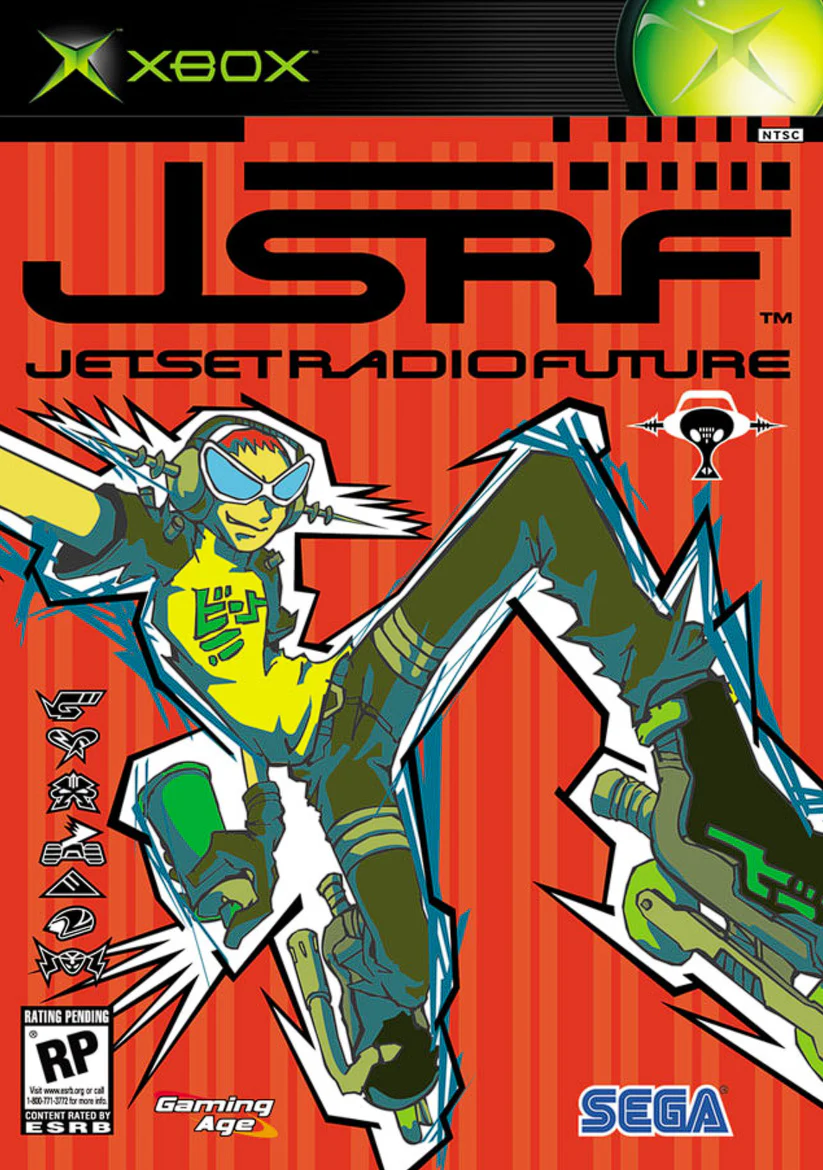
The Japanese Xbox launch on February 22, 2002 was a strange affair, and Jet Set Radio Future was the brightest light in it. Sega published the game, having migrated from console manufacturer to software publisher after the Dreamcast’s demise, and the choice to bring Smilebit’s stylish cel-shaded follow-up to Xbox was practically a peace offering. JSRF launched in Japan on console day, in North America four days later on February 26, 2002, and in Europe on March 14, 2002. It was Microsoft’s clearest signal that the Xbox in Japan would not be the same console it was in America.
The game had originally been planned as a Dreamcast title before Sega abandoned hardware. The cel-shaded streets of Tokyo-to from the original Jet Grind Radio were rebuilt at scale, with characters moving through them on inline skates, tagging walls with elaborate graffiti, and outrunning a militarized police force led by a Captain Onishima who took the harassment personally. The soundtrack mixed Hideki Naganuma’s hyperactive funk-house tracks with new contributions from British composer Richard Jacques.
Within six months Microsoft was bundling JSRF and Sega GT 2002 free with every Japanese Xbox console as a desperate attempt to drive sales. Sales never really came. The game has retained an enthusiastic cult following ever since, and remains one of the few Xbox launch titles regularly named on best-of-the-decade lists. Sega has not made another Jet Set Radio game in the twenty-four years since.
Wreckless: The Yakuza Missions
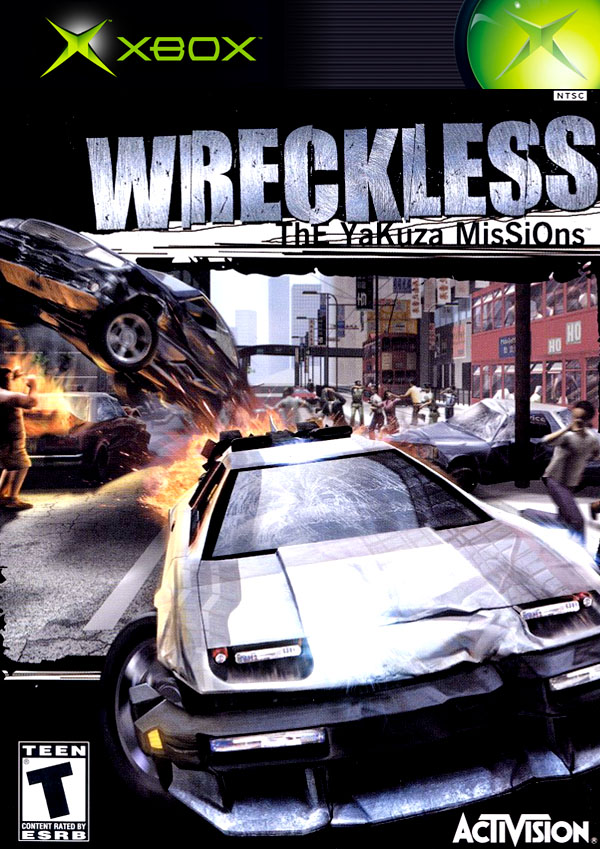
Bunkasha was a Japanese publisher better known for printing manga than developing games when it shipped Wreckless: The Yakuza Missions to the Xbox launch in Japan and Europe. The American version, retitled and rebranded by Activision, had already arrived on February 5, 2002. Japan got the original Double S.T.E.A.L. on console launch day February 22, and Europe got the renamed Wreckless on March 14, 2002. The North American Day One launch had passed it by entirely, but the Japanese and European launches both included it.
The game was set in a fictionalized Hong Kong rendered in glossy, neon-lit detail that pushed the Xbox hardware harder than almost any other launch title. Players took on either of two teams – an elite police unit called the Flying Dragons or a pair of undercover spies – and chased the Yakuza syndicate of Tiger Takagi through twenty short, escalating missions involving high-speed pursuits, demolition-derby combat, and the occasional escort job. The physics engine modelled car damage in granular detail, with crumple zones, hood deformation, and shattering glass that all responded to specific impact angles.
Digital Foundry later confirmed that Wreckless and its Japan-only 2005 sequel Double S.T.E.A.L. The Second Clash rendered at native 720p on the original Xbox – a resolution most Xbox 360 launch titles didn’t manage. Bunkasha never developed another game on this scale. They went back to publishing manga.
Amped: Freestyle Snowboarding
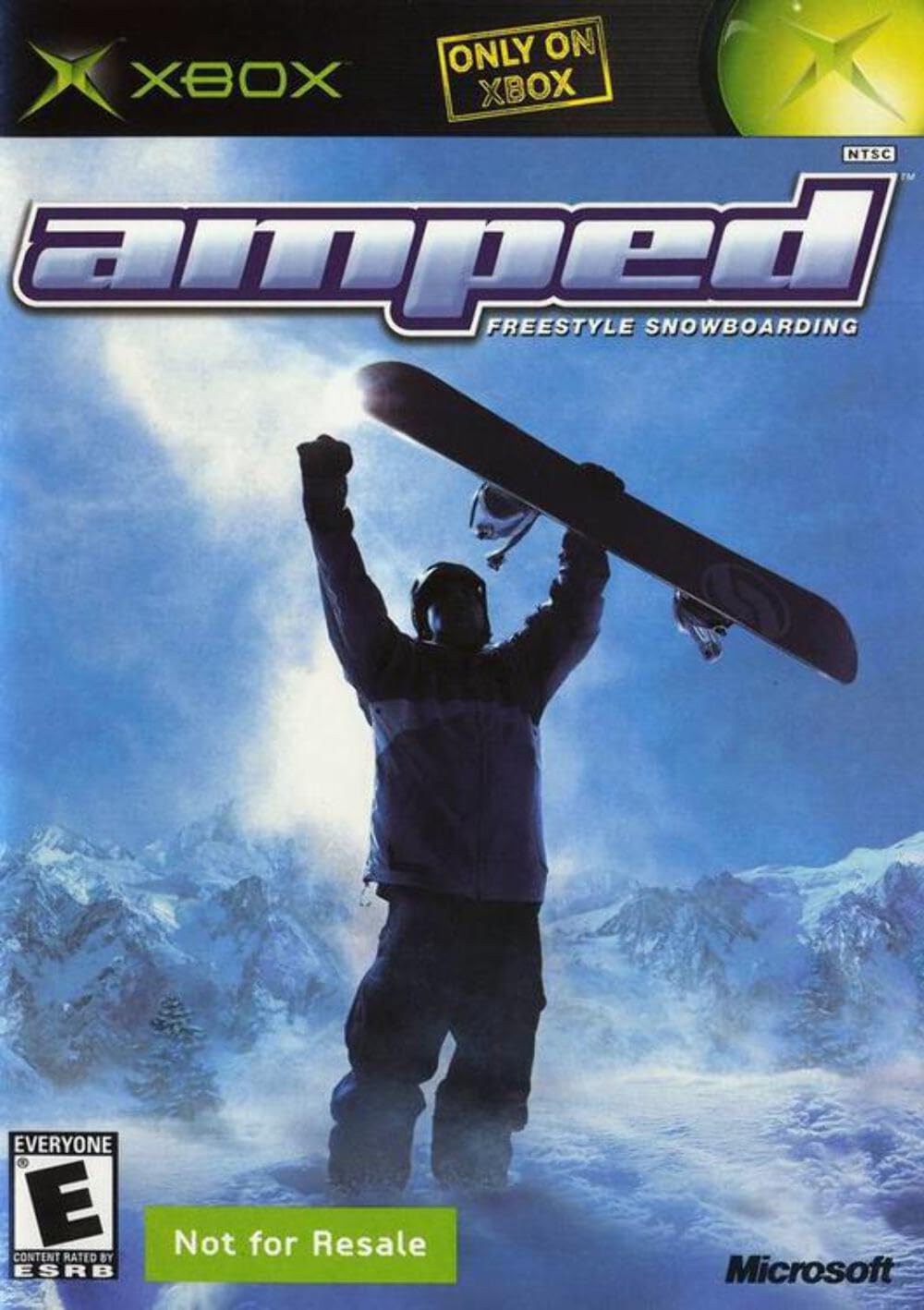
Microsoft built its own snowboarding game for the Xbox launch, and shipped it three days after the North American console release. Amped: Freestyle Snowboarding came out in North America on November 19, 2001, in Europe on March 14, 2002, and in Japan on February 22, 2002, where it became one of the few first-party Microsoft titles included in the Japanese launch lineup. Salt Lake Games Studio developed it, which was Microsoft’s Utah-based first-party developer, later renamed Indie Built.
The selling point was the hard drive. Amped used the Xbox’s built-in storage to load entire mountains into memory simultaneously, which let the game offer completely freeform runs modelled on real ski resorts rather than the linear corridor courses every other snowboarding game shipped with. SSX Tricky, the EA snowboarding juggernaut released a month earlier, was still trapped in tightly designed funnels. Amped let players ride wherever they wanted across full mountains. Career mode included a curious requirement: snowmen scattered across the mountain had to be physically knocked down before certain exploration areas would unlock.
The soundtrack featured 150 songs, also stored on the hard drive, organized by genre with a custom skip function. Players could rip their own CDs onto the Xbox and use them in-game. This was, in 2002, a genuinely novel idea. Amped was followed by Amped 2 in 2003 and Amped 3 in 2005, after which Microsoft shut down Indie Built and the franchise ended.
Genma Onimusha
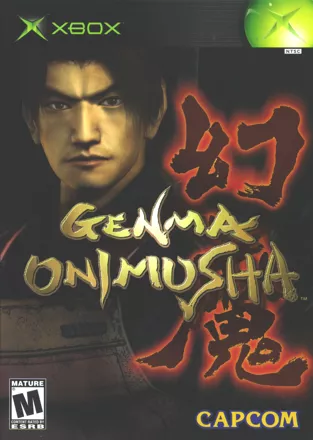
Genma Onimusha was Capcom’s Xbox launch contribution in Japan, and a strange one. Onimusha: Warlords had been a PS2 launch hit in early 2001, and the Xbox version was not a port but what Capcom called an enhanced re-release – a sort of director’s cut. The North American version arrived first on January 29, 2002, with the Japanese launch following on February 22, and the European release on March 22. Only the Japanese release coincided with a console launch. North America had been playing it for almost a month by then.
The game itself was, as one reviewer put it in five words, Resident Evil in Feudal Japan. Players controlled the samurai Samanosuke Akechi, rescuing Princess Yuki from a demon army commanded by the warlord Nobunaga Oda. Fixed camera angles, tank controls, item puzzles, and slow exploration of haunted castle corridors were all directly ported from the survival horror template Capcom had refined on PlayStation. The combat was faster and the setting was sixteenth-century Japan, but the structural lineage was unmistakable.
The Xbox version added a new sub-boss, new explorable areas, new costumes, three-tier charge attacks for every weapon, and a green soul mechanic in which players and demons fought tug-of-war over collectible energy fragments. The Xbox version was twice the length of the PS2 original, by Capcom’s own marketing. Capcom never made another Onimusha game for the platform. The series remained PlayStation-aligned for the rest of its run.
Silent Hill 2: Restless Dreams
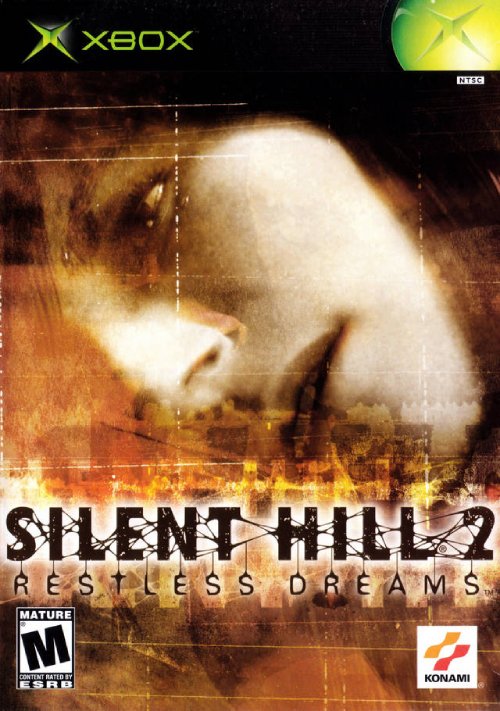
Silent Hill 2: Restless Dreams was the strangest entry in the Japanese launch lineup. The game had already been on shelves in North America since December 18, 2001 – it was not a Day One launch title in America. In Japan, however, the original PS2 Silent Hill 2 had released in September 2001, and the enhanced Xbox version, called Silent Hill 2: Saigo no Uta (literally ‘The Final Song’), did not arrive until the Xbox launch on February 22, 2002. Konami had effectively held the enhanced version back for the Japanese Xbox launch.
The game itself remains one of the most acclaimed horror games ever produced. James Sunderland travels to the lakeside town of Silent Hill after receiving a letter from his wife Mary, who has been dead for three years. The town responds by manifesting his guilt and grief as fog-shrouded streets and monstrous geometry. Pyramid Head, the executioner figure who has become the franchise’s mascot, appears here for the first time. The Xbox version added a new sub-scenario called Born from a Wish, focused on Maria – James’s wife’s lookalike – in the hours before James arrives, plus a sixth ending in which the entire town turns out to have been an elaborate UFO abduction. The latter is played for comedy.
The European release came months later on October 4, 2002 under the title Silent Hill 2: Inner Fears. The Saigo no Uta name has never been used outside Japan.
Sneakers
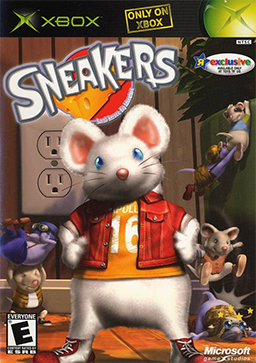
Sneakers, released in Japan as Nezmix: Have A Mice Day!, was one of two first-party Microsoft games developed for the Japanese Xbox launch specifically to demonstrate the console’s graphical capabilities. Media.Vision developed it in partnership with Microsoft Game Studios Japan, and it launched on February 22, 2002 as one of the strongest examples of what the Japanese market could expect from Xbox. Sales were catastrophic. Reviewers in Japan blamed Nezmix specifically for contributing to the poor launch of the console in the country.
The game’s hook was fur shading – a graphics technique that rendered individual strands of mouse fur in real-time. Microsoft believed the technique would be a system-seller in Japan, where cute-creature aesthetics had carried franchises like Pokemon to enormous success. The result was a game in which the player controlled a mouse named Apollo, leading a team of fellow rodents through a five-level beat-em-up adventure across a house, an alley, a park, a cellar, and a bridge. The plot involved a gang of rats stealing food intended for a party.
Microsoft’s North American distribution strategy for Sneakers, released eight months later in October 2002, was to sell it exclusively through Toys R Us, which was where Microsoft believed the relevant five-year-old demographic shopped. The Metacritic score was 28. Sneakers was one of the lowest-rated Xbox games ever released, and the Japanese launch it was supposed to showcase went on to become the weakest of the Xbox’s three regional debuts.
Nobunaga no Yabou: Ranseiki
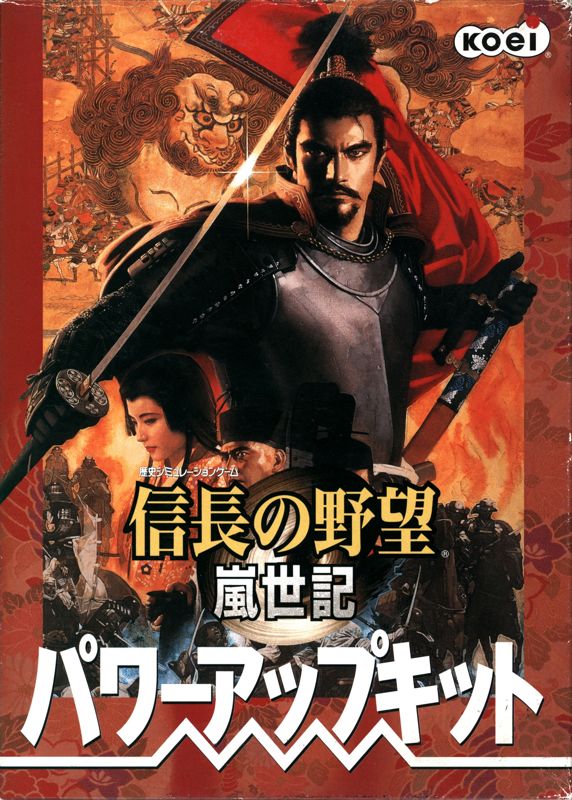
Koei’s Nobunaga no Yabou: Ranseiki was a Japan-exclusive Xbox launch title and the only game in the entire Xbox launch lineup, anywhere, that was never released in any region outside Japan. The Xbox version came out on February 22, 2002, three months after the original Windows release in late 2001. A PlayStation 2 port arrived shortly after. The English-speaking world has never officially seen this Xbox version, and was never expected to.
Nobunaga’s Ambition is the longest-running franchise in Japanese strategy gaming. The first entry released in 1983 – the same year as the original Mario Bros. arcade game – and Koei has been releasing variations ever since, with twenty-three entries to date. Ranseiki, which translates roughly as ‘Chronicle of a World of Storms,’ was the ninth main entry and returned the series to a focus on province-by-province conquest in the Sengoku period. Players took on the role of a daimyo, recruited generals from the historical record, managed economies and military forces across the Japanese map, and tried to unify the country by force or diplomacy before Oda Nobunaga did it first. The game cycled through real warlords of the late sixteenth century with painstaking accuracy.
Koei’s co-founder Yoichi Erikawa, credited under his pseudonym Kou Shibusawa, has produced every entry since 1983. He still produces them. The most recent entry, Nobunaga’s Ambition: Awakening, was released in 2022.
ESPN Winter X-Games Snowboarding 2002
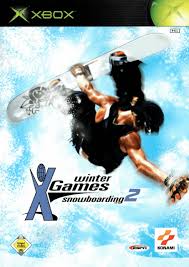
The Japanese Xbox launch on February 22, 2002 included not one but two Konami winter sports games, both Day One launch titles. ESPN Winter X-Games Snowboarding 2002 was the first of the pair, a snowboarding simulation built around the ESPN-branded extreme sports brand and starring real professional snowboarders including Barrett Christy and Kevin Jones. The Xbox version launched only in Japan on console day, with the North American Xbox release following on March 6, 2002 and the European release on June 7. Other platforms had received the game months earlier.
The pitch was authenticity. ESPN had been the title sponsor of the Winter X Games since 1997, and Konami built the game around the same four official events broadcast on the actual television competition – Slopestyle, Superpipe, Boarder X, and Big Air. Thirteen licensed professional snowboarders were included, nine male and four female, along with 20 tracks set in real-world locations across the Swiss Alps, Colorado, Alaska, Japan, and New Zealand.
The unusual addition was Snowboarder mode, an RPG-style career progression in which players created an athlete and earned sponsorships by entering competitions. Earned money could go toward equipment upgrades or, more memorably, toward hospital bills if the player got injured competing. The created snowboarder could also build ‘charisma’ by accepting paid roles in film gigs. He apparently runs as a second job.
ESPN International Winter Sports 2002
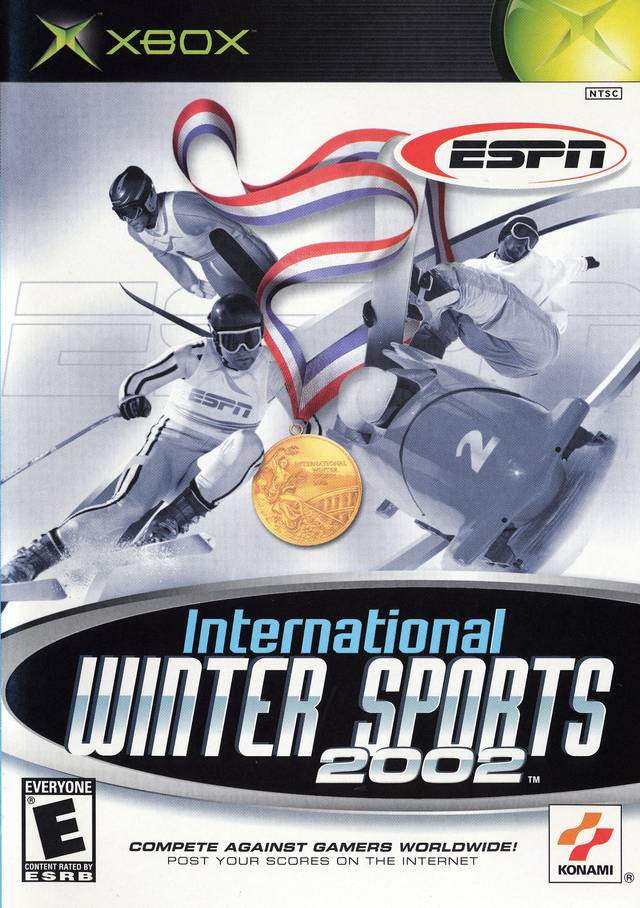
Konami’s other Japanese launch title was a more straightforward Olympics-style winter sports game, released in Japan under the title Hyper Sports 2002 Winter. The Hyper Sports franchise in Japan is the same series Western players know as Track & Field, the button-mashing arcade classic Konami had been refining since 1983. ESPN International Winter Sports 2002 was the franchise’s first move to winter events. The Xbox version launched in Japan on console day, February 22, 2002, and in Europe on April 12. It never released on Xbox in North America. The PS2, GameCube, and Game Boy Advance versions all reached the US, but the Xbox version skipped the territory entirely.
Ten events featured in the game: alpine skiing, snowboarding, figure skating, ice hockey, bobsled, Nordic skiing, ski jumping, speed skating, biathlon, and luge. Players could represent over thirty different nations in international tournaments, with each venue based on a real Olympic facility. The development team had specifically targeted release before the actual Winter Olympics in Salt Lake City began on February 8, 2002 – meaning Konami’s game shipped two weeks ahead of the real Games to capture audience interest.
The reception was muted everywhere it released. Critics pointed out that the entire game only supported two players, which was widely considered an unforgivable oversight for an Olympics-style title. Konami released a separate game called Salt Lake 2002 the same season. It also only supported two players.
Max Payne
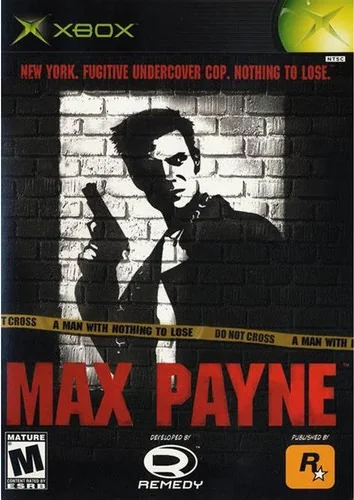
Max Payne was the most prestigious third-party game in the European Xbox launch lineup, and a strange addition to it. The Finnish studio Remedy Entertainment had developed the original game over five years, and it had launched on PC in July 2001 to immediate critical acclaim. The Xbox port arrived in North America on December 18, 2001, missing the American console launch by a month, and in Europe on March 14, 2002 – Day One for the European launch. Rockstar Games published the console version. The PS2 port had come in December as well.
The game’s central mechanic was bullet time, a slow-motion gunplay system directly inspired by The Matrix, which had released eighteen months earlier. Players controlled Max Payne, a fugitive NYPD detective framed for the murder of his own wife and daughter, hunting through a wintry Manhattan during what the script called ‘the worst blizzard of the century.’ Sam Lake wrote the screenplay, also playing the lead in the in-game photographs used for cutscenes – a decision Lake later said was driven by the studio’s small budget. They couldn’t afford an actor.
Max Payne sold over seven million copies across all platforms and earned BAFTA nominations. Remedy sold the entire franchise to Take-Two Interactive in 2002 for $34 million, freeing themselves to make Alan Wake and Control. A Max Payne 1 and 2 remake from Remedy and Rockstar is currently in development. There is no announced release date.
RalliSport Challenge
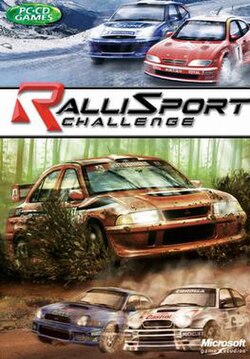
Microsoft commissioned a rally game specifically for the European Xbox launch, where rally racing actually had an audience. RalliSport Challenge launched in North America on March 4, 2002 and in Europe on March 14, 2002, qualifying as a Day One PAL launch title. The Swedish studio Digital Illusions CE developed it, which most people now know as DICE, the studio that went on to make Battlefield and Mirror’s Edge for EA. Bill Gates personally demonstrated the game during his keynote at CES in January 2002.
The hook was variety. Most rally games shipped with one race type and stuck to it. RalliSport Challenge included four – traditional point-to-point Rally, Rallycross, Ice Racing, and Hill Climb – and twenty-nine licensed cars including the Mitsubishi Lancer Evo VI, the Subaru Impreza, and the fearsome Group B rally machines of the 1980s that had been banned from actual competition for being too dangerous to drive. The car lineup was unusually broad and unusually weird, including an ice-racing Nissan Micra and Per Eklund’s actual Saab rallycross car.
DICE’s Stockholm studio built the game using a physics engine that handled mud, gravel, ice, and tarmac as four genuinely different surfaces. RalliSport Challenge 2 followed in 2004 and was widely considered superior. Both games remain unavailable on any platform other than the original Xbox. DICE has not made another rally game since EA acquired the studio in 2006.
Batman: Vengeance
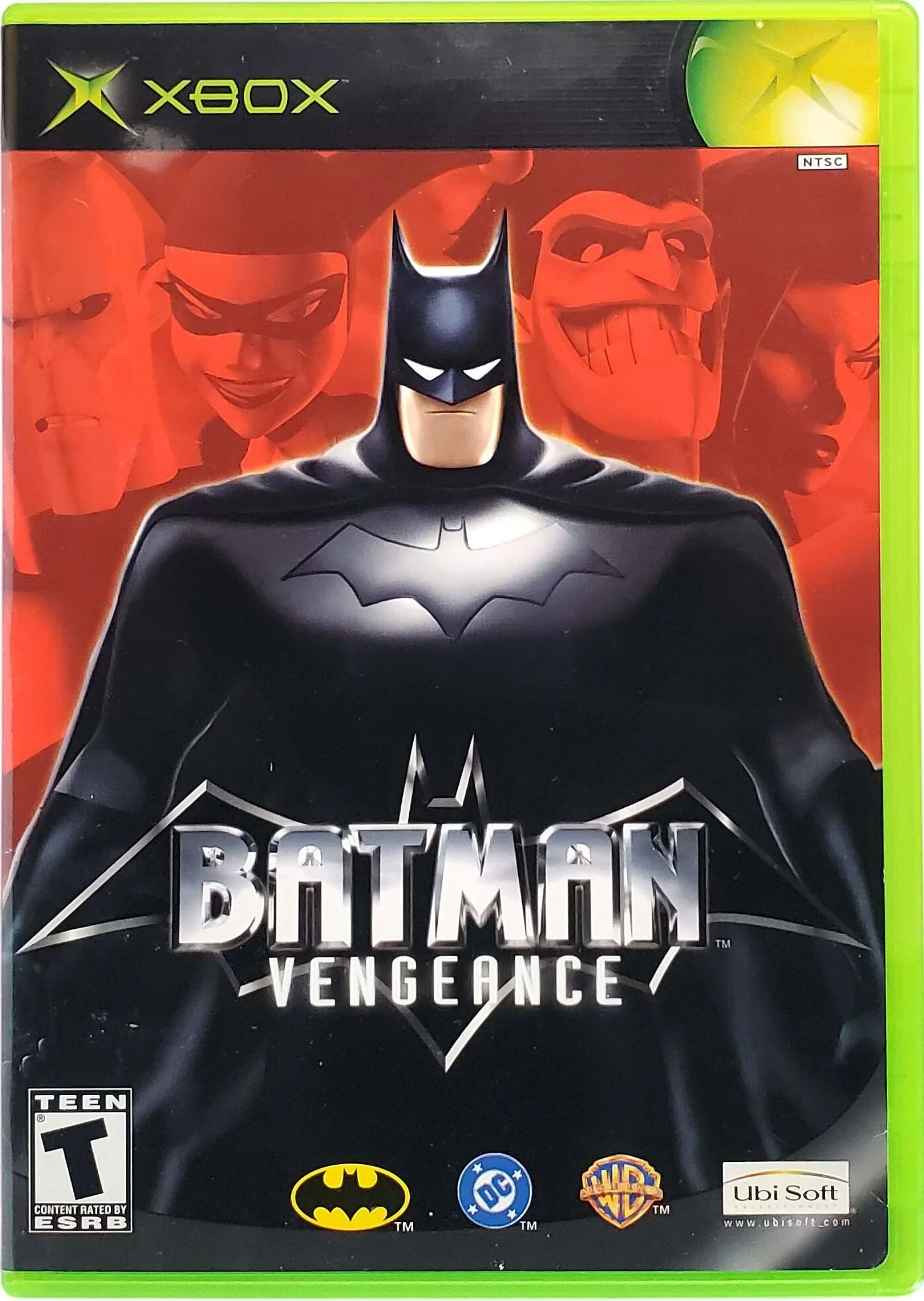
Ubisoft Montreal had been operating for four years and was largely an unknown studio when it shipped Batman: Vengeance to the European Xbox launch. The game had been available in North America on Xbox since December 18, 2001 and on other platforms since October, but the PAL Xbox version held until March 14, 2002 to coincide with the European launch. The studio that built it would later make Assassin’s Creed, Far Cry, and Watch Dogs. In 2001 they were a licensed-Batman shop.
Batman: Vengeance was based on The New Batman Adventures, the second iteration of the animated series Bruce Timm and Paul Dini had been making for Warner Bros. since 1992. The plot involved Batman investigating the apparent death of the Joker, who had fallen to his death during a hostage situation at Gotham Chemicals, only to discover the death was a frame-up. The voice cast from the animated series reprised their roles – Kevin Conroy as Batman, Mark Hamill as the Joker, Tara Strong as Batgirl – making the game an unusually faithful translation of the show. Harley Quinn, Mr. Freeze, and Poison Ivy all featured as villains.
Marketing materials emphasized that the game contained ‘more than 500 animated movements’ for Batman, and that the cape had its own dedicated AI – a small marketing flourish that the Arkham games would eventually elevate into the core of the entire franchise nine years later.
Blood Wake
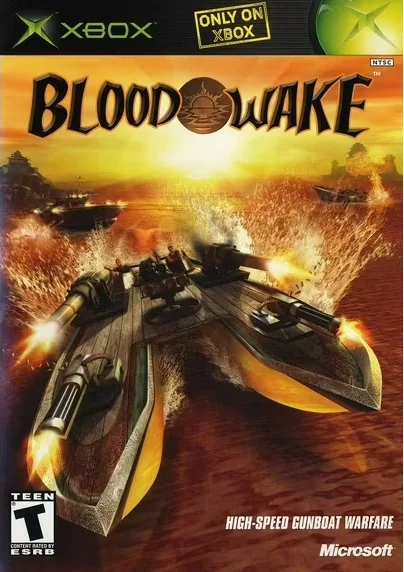
Microsoft built a naval combat game in-house specifically for the Xbox launch. Stormfront Studios developed Blood Wake, set in a fictional Asian archipelago, and described by every reviewer who covered it as ‘Twisted Metal on water.’ It released in North America on December 28, 2001 and in Europe on March 14, 2002, the latter qualifying as a Day One PAL launch title. Japan did not receive it.
The plot was a feudal naval revenge story. Lieutenant Shao Kai had been betrayed by his brother, Admiral Shao Lung, who left him for dead. Shao Kai was rescued by a pirate crew called the Shadow Clan and spent the game piloting twenty different boats – from tiny sampans to torpedo boats to a fully armed battleship – through revenge missions across a fictional South Pacific. The dialogue was performed in deliberately stylized Asian-inflected English. The villain was originally named ‘Ped Xing,’ which is the wording from American pedestrian crossing signs. Director Rod Fergusson admitted in a 2012 interview that the team had thought this was extremely funny at the time. Marketing later persuaded them to change it to Ped Zeng.
The water physics were the game’s main technical achievement, modelling wakes and wave interactions in real time that affected boat handling and could be exploited tactically. Blood Wake sold well enough to be added to Microsoft’s Platinum Hits budget range. No sequel was ever made. Fergusson went on to produce Gears of War.
Dave Mirra Freestyle BMX 2
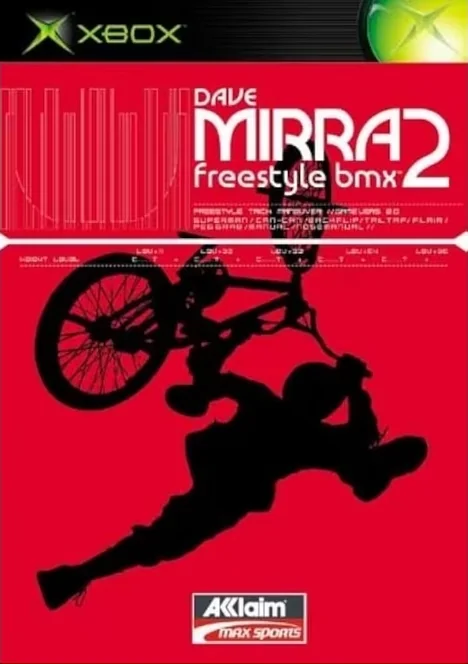
Acclaim’s only Xbox game in the European launch lineup was Dave Mirra Freestyle BMX 2, which had already shipped on other platforms throughout late 2001. The Xbox version came to North America on November 29, 2001 and to Europe on March 14, 2002, where it was a Day One PAL launch title. Z-Axis developed the game, the same studio that would soon make the infamous BMX XXX, which featured strippers and had Dave Mirra’s name removed from the franchise after Mirra saw a build.
The game centered on real professional BMX rider Dave Mirra, who had won fourteen X Games medals by 2001 and was the most decorated freestyle BMX athlete in the sport’s history. Fourteen real BMX riders joined him in the game, including Ryan Nyquist and Mike Laird, across eight levels containing 1,500 individual tricks. The Park Editor mode let players design their own BMX parks from a library of ramps, half-pipes, rails, and obstacles, then ride them. The soundtrack featured Ozzy Osbourne, Godsmack, Methods of Mayhem, The Cult, and Rage Against the Machine.
Mirra continued to dominate freestyle BMX through the mid-2000s and was inducted into the BMX Hall of Fame in 2007. He died by suicide in February 2016 and was later diagnosed posthumously with chronic traumatic encephalopathy. He was the first action sports athlete confirmed to have suffered from CTE.
Tony Hawk’s Pro Skater 3
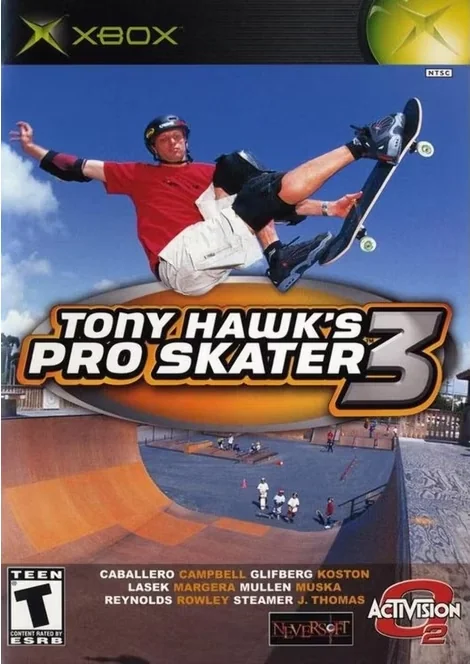
European Xbox owners got Tony Hawk’s Pro Skater 3 at launch. American Xbox owners got Tony Hawk’s Pro Skater 2X. This was the most visible cross-region difference in the entire Xbox launch lineup. THPS3 arrived on PS2 and PlayStation in October 2001, on GameCube in November, on Xbox in Europe on March 14, 2002 and in North America on March 15, and finally on Nintendo 64 in August 2002, where it became the very last game ever released on the system. Nintendo had discontinued the N64 three months earlier.
The PS2 version of Pro Skater 3 was, for a brief moment, tied with Grand Theft Auto III for the highest-rated PS2 game on Metacritic. The series had perfected its formula by this entry. Manuals, reverts, special tricks, and an entirely revamped career mode all converged. The Xbox version added an exclusive level – an Oil Rig – and ran at an improved frame rate over both PS2 and GameCube.
The game shipped with one notable last-minute change. The Airport level had originally featured terrorist NPCs as the standard enemy type, which Neversoft considered uncontroversial when they designed the level in early 2001. After September 11, with the game weeks from release, the studio rapidly reskinned every terrorist into a generic pickpocket. The original models remained in the code, dormant. No version of the game has ever shipped with them re-enabled.
NHL 2002
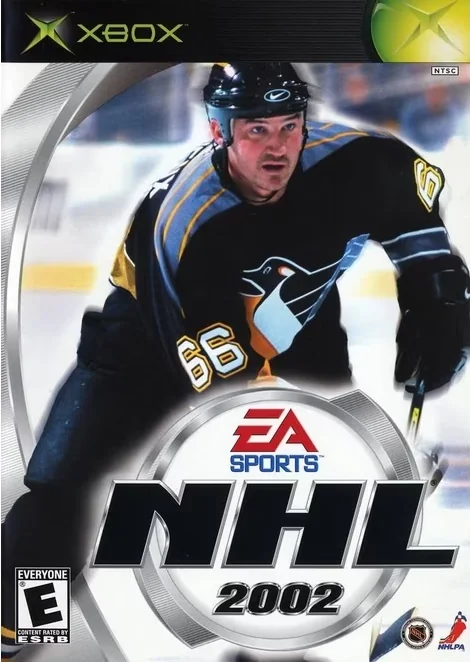
The last European Xbox launch title was NHL 2002, the seventeenth EA Sports hockey game and the first to release on Xbox in any region. It had been on PC and PS2 in North America since September 2001. The Xbox version followed in North America on December 11, 2001 and in Europe on March 14, 2002, making it Day One for the European launch. There was no Japanese release. EA Sports had finally figured out that releasing hockey games in Japan was not going to work.
Mario Lemieux of the Pittsburgh Penguins was the cover athlete, an unusual choice given that he had retired from professional hockey in 1997 and stayed retired for three and a half years. Lemieux had returned to the ice in December 2000 partly to play alongside his son, also named Mario, and partly because he was now part-owner of the Penguins and the franchise needed his star power. He came back with sixteen goals in his first thirty-two games, then continued for several more seasons.
The Xbox version had a Metacritic score of 89, which made it one of the highest-rated launch-window games on the platform. Don Taylor replaced Bill Clement as colour commentator and adopted a slapstick delivery style that divided the audience. The game also let players upload their own MP3s as a custom in-game soundtrack, alongside hockey arena classics like ‘Rock and Roll Part 2.’
The midnight-launch spectacle traced straight back to the NES’s 1985 New York test market.
The console Microsoft had to beat was Sony’s PlayStation 2 - heir to a machine that launched in 1994 with its own messy, fascinating lineup.
Frequently Asked Questions
Was Halo: Combat Evolved an Xbox launch title in Japan?
No. Microsoft left Halo off the Japanese opening lineup entirely, and the game did not reach Japan until April 25, 2002, two months after the console itself. Japanese buyers had a new Xbox for two months with nothing from Bungie to put in it. Critics have blamed the omission for the weak Japanese start.
Which games launched on Xbox in all three regions?
Project Gotham Racing and Dead or Alive 3. Both were on shelves in North America, Japan and Europe on their respective console days, the only two universal Xbox launch titles. Dead or Alive 3 was also the only fighting game at any of the three openings; every other title missed at least one region.
How many games were in the Japanese Xbox launch lineup?
Twelve. Microsoft’s January 2002 announcement named the full Japanese lineup, including Jet Set Radio Future, Genma Onimusha, Silent Hill 2: Saigo no Uta and Hyper Sports 2002 Winter, with the console priced at 34,800 yen. Microsoft promised twenty-two Japanese titles on shelves by the end of March.
What was the first game ever finished for the original Xbox?
Fuzion Frenzy. Blitz Games delivered the first finalized master disc of any Xbox title, beating every other developer on the platform. Microsoft had commissioned it to fill an obvious hole in the launch lineup – no party game – and Blitz answered with 45 mini-games across six arenas.
Which Xbox launch title was never released outside Japan?
Nobunaga no Yabou: Ranseiki, Koei’s Sengoku-era strategy game, which arrived on February 22, 2002. It is the ninth main entry in a series Koei has published since 1983, and the only game from any of the three Xbox launches that never appeared in another territory in any form.
Could Xbox launch games be played online in 2001?
No. Xbox Live did not arrive until November 15, 2002, exactly one year after the console, sold as a $49.95 starter kit with a headset and a one-year subscription. Several launch titles lost online modes because of it, including 4x4 EVO 2, whose predecessor had shipped with cross-platform play.
Which Xbox launch game reviewed the worst?
Sneakers, sold in Japan as Nezmix: Have A Mice Day!, holds a Metacritic score of 28. Microsoft published it to show off real-time fur rendering for the Japanese market, and it sold roughly 8,000 copies there at launch. It remains among the lowest-rated Xbox games ever released.