All Original Game Boy Launch Titles
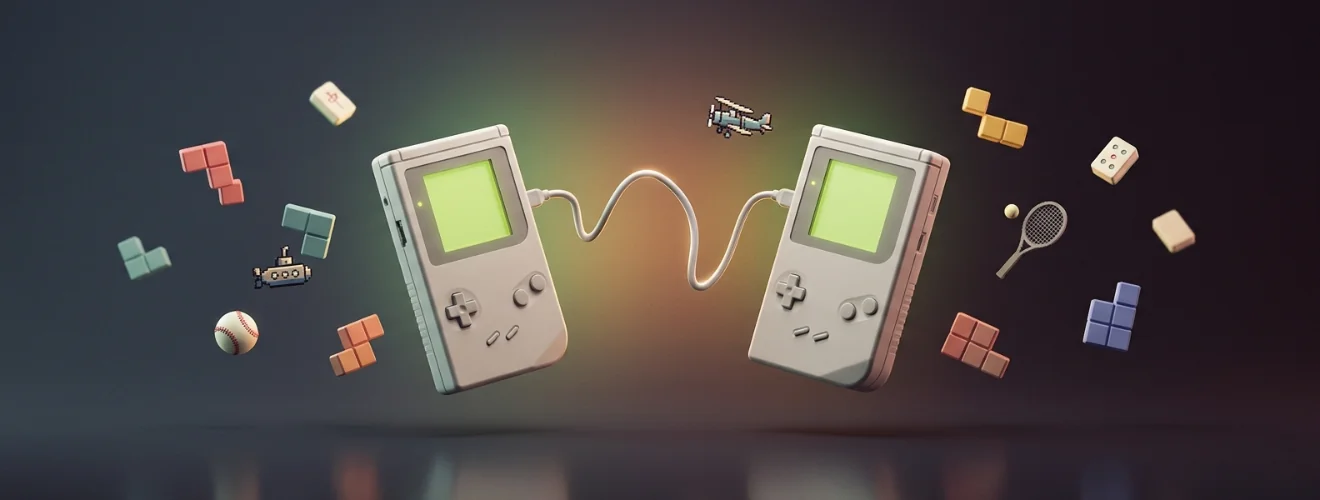
Nintendo shipped 300,000 Game Boys to Japanese shops in April 1989 and had sold every one of them inside a fortnight. What those buyers could actually put in the slot was a Mario platformer, a baseball game, a Breakout clone and a mahjong title. Not four hundred cartridges. Not forty. That was the whole shelf, and the queue formed anyway, which tells you most of what you need to know about how badly people wanted a screen they could use on a train.
The lineup changed shape as the system crossed borders, and somewhere in that crossing it picked up the game most people now file mentally as the Game Boy launch title. That game was Tetris, and it was not a Japanese day-one release at all. It turned up in Tokyo shops fifty-four days after the console did, and it has been quietly overwriting the memory of what actually launched the machine ever since. Europe waited seventeen months for a machine of its own, which is why the roster below stops at two continents.
What follows is every one of them, in the order they entered the world, starting in Japan and ending in an American summer. Between them they include a novelty dance single that reached number eight in Britain, a Soviet computer with no graphics card, and a paddle pilot Nintendo refused to identify for a year.
Six games count as original Game Boy launch titles, spread across the handheld’s two 1989 debuts. Japan opened on 21 April with Super Mario Land, Alleyway, Baseball and Yakuman. North America followed on 31 July with five cartridges: the same four minus Yakuman, plus Tetris and Tennis.
Super Mario Land
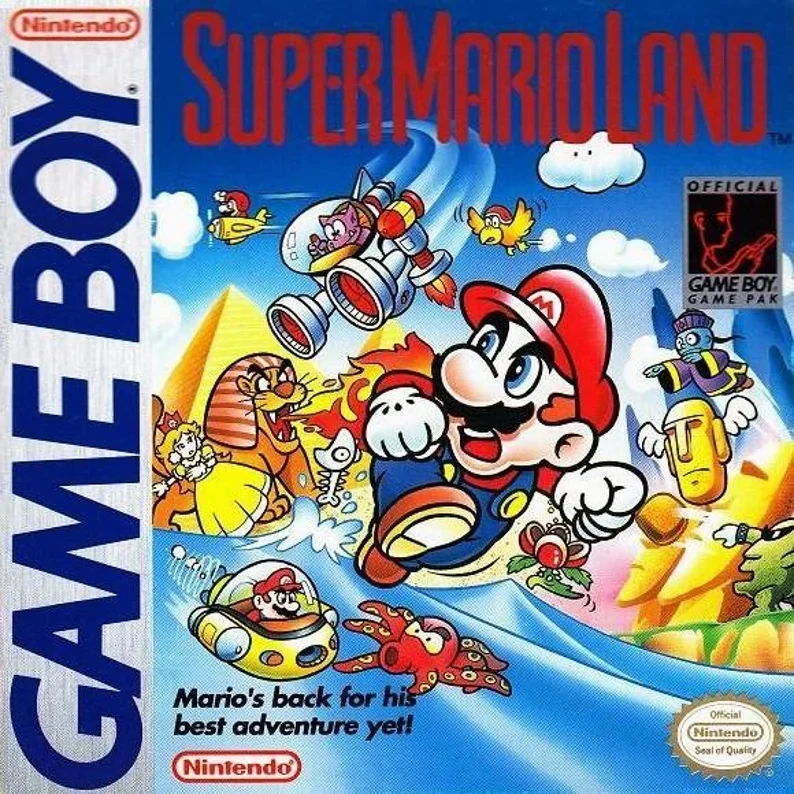
At the end of three of Super Mario Land’s four kingdoms, Mario reaches Princess Daisy, and Princess Daisy turns into a monster and scuttles away. A Fly, a Gunion, and a Kumo take turns impersonating her, and only in the fourth kingdom is the real Daisy waiting. It is a strange way to treat the debut of a character who would go on to become a Nintendo regular, but Super Mario Land is a strange game by Mario standards.
The game was the work of Gunpei Yokoi’s Nintendo R&D1, built at Hiroshi Yamauchi’s request to move the new handheld – which makes it the first mainline Mario game not designed by Mario’s creator, Shigeru Miyamoto, who happened to be Yokoi’s protégé. It shows. Mario travels not through the Mushroom Kingdom but through Sarasaland, drawn in spare line art, chasing an alien named Tatanga who has kidnapped Daisy in order to marry her. Two of the twelve levels drop platforming entirely and put Mario in a submarine and then an airplane, shooting through forced-scrolling stages borrowed wholesale from Gradius.
The soundtrack, by Hirokazu Tanaka, was good enough that in 1992 a British dance act called Ambassadors of Funk sampled the overworld theme, released it as a single, and rode it to number eight on the UK charts. The game itself sold more than eighteen million copies – more than Super Mario Bros. 3. For a launch title assembled to sell hardware, it did rather well.
Baseball
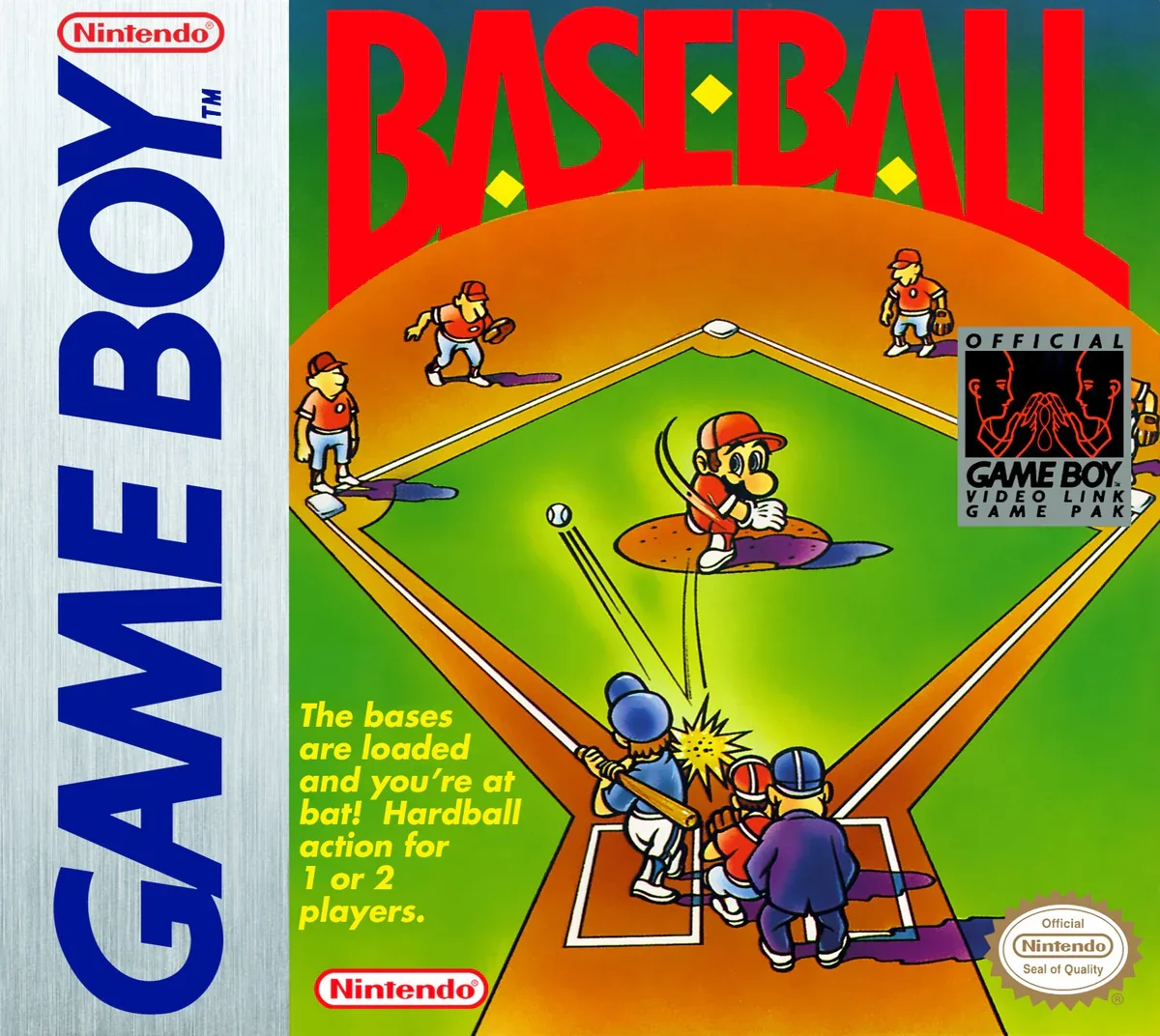
There are exactly two teams in Baseball, the Bears and the Eagles, and you cannot change them, rename them, or add a third. The Bears always bat first. Mario captains the Bears and Luigi the Eagles, though if you pick either as your pitcher he looks identical to every other man on the roster – a lineup of interchangeable players named Paul, Randy, Sam, and Jimmy.
Baseball was a port of Nintendo’s 1983 Famicom game, reworked for the handheld by Intelligent Systems and carrying a visible debt to Namco’s Famista series. The Game Boy version made one small but real improvement: where the NES original handled fielding automatically, here you could control the fielders yourself. A toggle switched between a USA mode and a JPN mode, changing how ball speed was displayed, the order of the ball count, and the music – a tidy piece of localisation built straight into the cartridge.
It could be played head-to-head by linking two Game Boys with a cable, which in 1989 was a novel thing to do with a baseball game on a train. Mario’s presence as a captain was salesmanship rather than design. Nintendo spent the early Game Boy years dropping Mario into anything that might sell a little better with a familiar face attached, whether or not you could do a single thing with him once the game started.
Alleyway
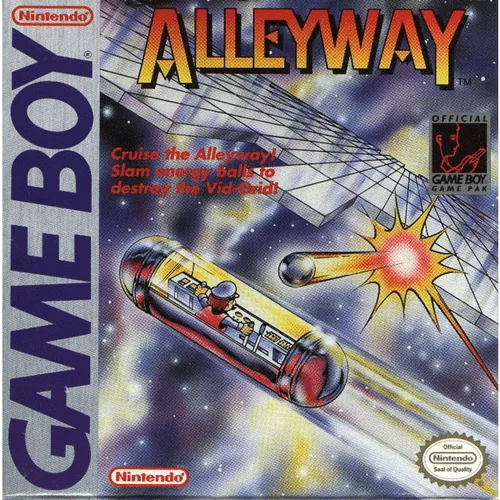
The little figure piloting the paddle in Alleyway looks a great deal like Mario, and for a year nobody at Nintendo would confirm that it was. The original Japanese box showed an unidentified man in a spacesuit. The international release quietly redrew him as Mario, the manual said nothing about it, and official word that the pilot was the company mascot did not arrive until a Club Nintendo article previewing the European launch in 1990.
Underneath the mystery is a Breakout clone, and a faithful one. Gunpei Yokoi’s R&D1 – the same team that built the Game Boy itself – made thirty-two stages, twenty-four standard and eight bonus. The standard ones come in threes: a static wall of bricks, then the same wall sliding sideways, then the same wall creeping down toward your paddle. From the fourth stage onward the paddle shrinks the instant your ball touches the top of the screen, which is exactly as irritating as it sounds. The bonus stages are the charming part, with the bricks arranged into sprites lifted straight from Super Mario Bros. and the ball tearing through them instead of bouncing back.
Yokoi thought enough of the physics he had written that he reused much of Alleyway’s code years later for Kirby’s Block Ball. A Breakout clone fronted by an anonymous spaceman turned out to have a longer afterlife than anyone reviewing it in 1989 would have guessed.
Yakuman
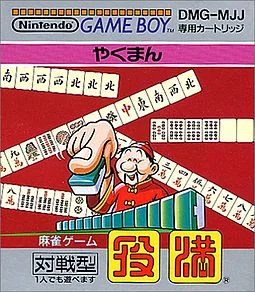
Yakuman is the launch title almost nobody outside Japan has ever played, and also, in a roundabout way, the reason you could ever trade a Pokémon. It is a Japanese mahjong game, the fourth of the four Japanese day-one titles, and the only one of them never released in the West – its single trip abroad was to China in 1995.
Its importance has nothing to do with mahjong. The Game Link Cable – the side port that would later let two players duel in Tetris and, famously, trade and battle Pokémon across the schoolyard – made its debut here. The feature existed because of Satoru Okada, who had worked on a 1983 handheld called Computer Mah-jong Yakuman that connected two units with a cable a full six years before the Game Boy. Okada pushed for a link cable on the new system over the doubts of his own team, built the technology himself, and put it first into the game he knew best.
So the most forgotten game on this list is the direct ancestor of the Game Boy’s defining trick. A single player faced one of five computer opponents; two players could link up for a versus match. Yakuman went on to spawn a whole line of Nintendo mahjong games that ran quietly for decades. None of them ever mattered as much as the cable plugged into the side.
Tetris
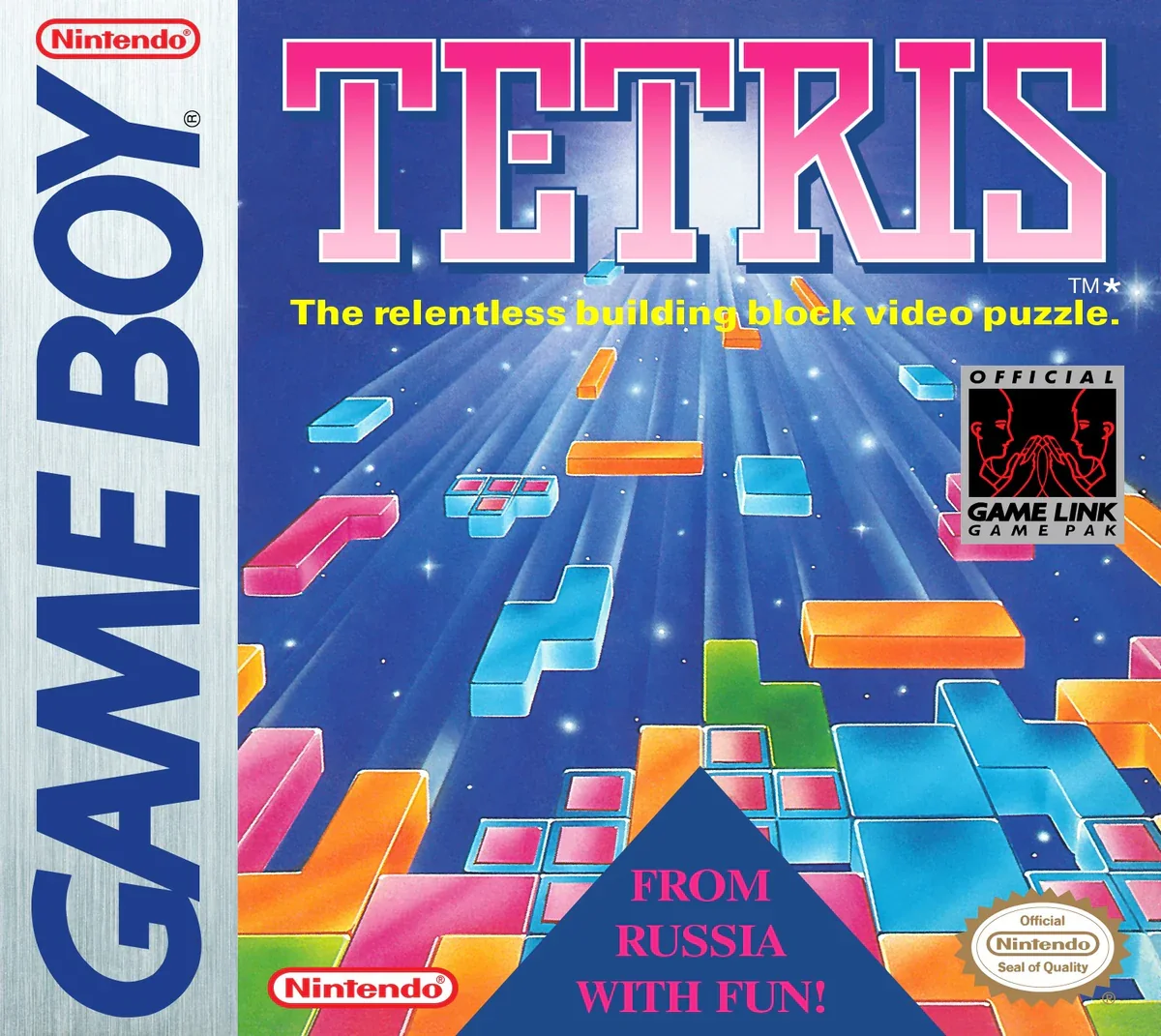
The game most people picture when they think of the Game Boy launch was not, strictly speaking, at the Game Boy launch. Tetris reached Japan on 14 June 1989, nearly two months after the system, and became a launch title only by being the cartridge bundled inside every North American and European box. It is the pack-in everyone remembers and the day-one Japanese title it never was.
Alexey Pajitnov built the original in 1984 on a Soviet Elektronika 60, a machine with no graphics card, so he assembled the falling pieces out of keyboard characters. As a state employee he signed the rights over to the Soviet government and saw nothing for them for years. The knot of who really owned the handheld rights – pulled at by Mirrorsoft, Spectrum HoloByte, Atari, and Nintendo, and dramatic enough to become a 2023 film – came loose largely because Henk Rogers flew to Moscow uninvited and knocked on the right ministry door. Nintendo had meant to bundle Mario. Rogers talked Minoru Arakawa out of it: pack in Mario and little boys will play, he said, but pack in Tetris and everyone will.
He was right. The Game Boy version sold around thirty-five million copies, and its theme – the Russian folk tune Korobeiniki – grew so inseparable from the game that the Tetris Company now requires it in officially branded versions. Pajitnov himself did not earn a thing from any of it until the rights reverted to him in 1996.
Tennis
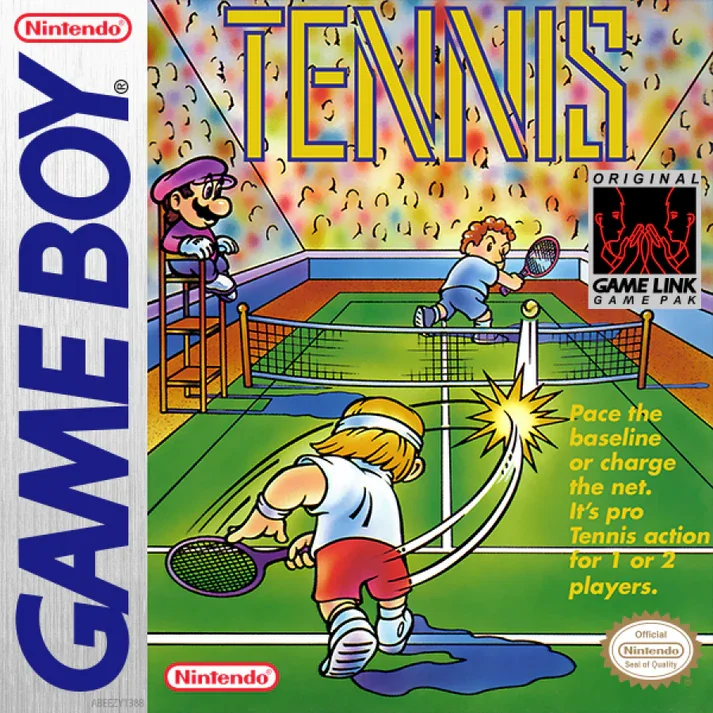
Mario sits in the high chair in Tennis, calling the lines. He is the umpire – the only role on offer – and he announces faults and out balls with a small animation and the bearing of a man who takes the work seriously. That is the entire extent of his involvement, and in 1989 it was treated as a selling point.
Tennis was a port of Nintendo’s 1984 NES game, added to the lineup when the Game Boy reached North America on 31 July 1989. It is a spare thing: four difficulty settings, one opponent who never changes, the same court every time, and a two-player mode over the link cable. When the Game Boy finally landed in Europe in September 1990, Tennis was quietly dropped from the launch – left out, as one gaming history could not resist pointing out, of the very part of the world that hosts Wimbledon.
Mario’s career in the sport did not end in the umpire’s chair. He picked up a racket himself in Mario’s Tennis on the Virtual Boy in 1995, and by the time Mario Tennis arrived on the Nintendo 64 in 2000 the series had pulled in Princess Daisy – the same Daisy who had made her debut, kidnapped and impersonated by monsters, in the launch game at the top of this list.
Sony took the opposite approach in 1994, launching the PlayStation behind a sprawling, chaotic lineup.
Twelve years later Microsoft entered the wars with thirty-seven launch titles across three regions.
Frequently Asked Questions
Which Game Boy launch title sold the most copies?
Tetris, at more than 35 million copies on the Game Boy, roughly double the 18 million Super Mario Land managed. Those two are the only launch titles with confirmed sales in the tens of millions, and Super Mario Land still ranks fourth among all Game Boy games ever sold.
How many of the Game Boy launch games feature Mario?
Four of the six. Mario stars in Super Mario Land, captains the Bears in Baseball, pilots the paddle in Alleyway, and umpires in Tennis, where calling faults is the whole of his job. Only Yakuman and Tetris manage without him, and Tetris was not Nintendo’s invention to begin with.
Was Tennis a Game Boy launch title?
Yes, in North America. Tennis was on American shelves the day the Game Boy arrived there, a port of the Famicom game Nintendo had released on 14 January 1984. Japan got it about a month after the console, which kept it off the Japanese opening shelf.
Which original Game Boy launch game was never released in the West?
Yakuman, a Japanese mahjong game developed by Intelligent Systems and published by Nintendo. It stayed home when the console crossed the Pacific and made exactly one trip abroad in its life, a Chinese release in 1995. Every other cartridge on this list reached Western shelves in some form.
Did the original Game Boy come with a game?
In North America and Europe, yes: Tetris came inside every box. Japanese buyers got no pack-in and bought their cartridges separately. By August 1989 Nintendo had moved 720,000 consoles and 1.9 million games in Japan – better than two and a half cartridges for every console sold.
Which Game Boy launch title introduced the Game Link Cable?
Yakuman was the first Game Boy cartridge to use the link cable, the side port that later carried Pokemon trades across playgrounds. Satoru Okada, assistant director of Nintendo R&D1, argued for the port and built the technology himself, drawing on Computer Mah-jong Yakuman, a 1983 Nintendo handheld that already connected two units by wire.
Which Game Boy launch game gave Princess Daisy her first appearance?
Super Mario Land, which handed Daisy the role Peach normally plays and sent Mario chasing her across Sarasaland rather than the Mushroom Kingdom. Three of the four kingdom bosses impersonate her before the real Daisy turns up. She became a Nintendo regular, and joined the roster of Mario Tennis on the Nintendo 64 in 2000.
- Wikipedia – Game Boy; List of Game Boy games
- Wikipedia – Super Mario Land, Tetris (Game Boy), Alleyway, Yakuman, Tennis, Baseball, Castlevania: The Adventure
- Altar of Gaming – Nintendo Game Boy Launch Titles
- StrategyWiki – Baseball, Tennis, Yakuman (Game Boy)
- Nintendo Life – Tennis, Castlevania: The Adventure
- TIME – 25 Years of Tetris; CNBC – Tetris facts; Vice – How Nintendo Got the Rights for Tetris
- beforemario – Nintendo Computer Mah-jong Yakuman (1983)