All 23 Original PlayStation Launch Titles
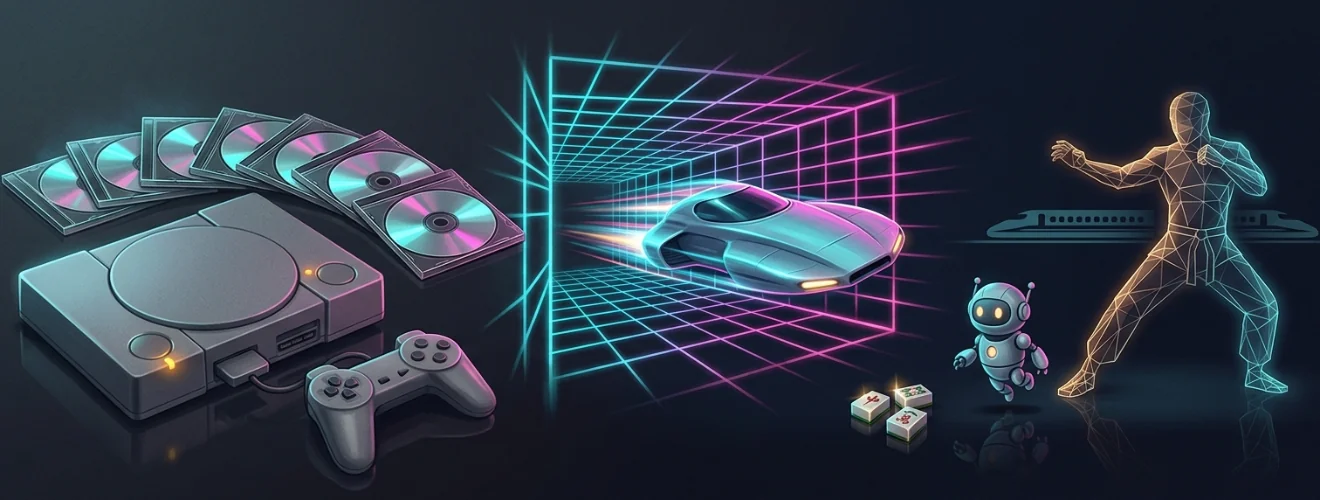
On December 3, 1994, Sony launched the most technologically advanced home console yet made – a machine built to throw textured 3D polygons around at a speed nothing in a living room had managed before – and two of the games it launched with in Japan were mahjong. A third was a train-timetabling business simulator. The flagship, the game Sony actually wanted you to see, was Ridge Racer, stamped with the serial number SLPS-00001, and it had exactly one track. This is the slightly absurd truth about launch lineups: they are assembled in a hurry, from whatever is ready, and they rarely resemble the future the marketing promised.
The PlayStation arrived five years after the Game Boy proved a launch lineup doesn’t need to be big – just right.
Ask how many PlayStation launch titles there were and you will get a different answer from nearly every source. Japan’s count gets quoted as six, eight, or thirteen. North America’s lands anywhere from nine to seventeen. The confusion is real but explicable: most sources quietly fold in the launch window – the games that arrived a week or a fortnight later – and count them as launch titles, because Twisted Metal and King’s Field and Destruction Derby feel like they belong even though they shipped after opening day. Pile those in and the numbers balloon. Strip them out and a tighter, more defensible picture appears.
This list takes the strict reading. A game counts only if it was on shelves on the actual opening day of a PlayStation launch – Japan on December 3, 1994, North America on September 9, 1995, or Europe on September 29, 1995 – and the three regional launches are combined into a single chronological run. A game appears once, at its earliest day-one launch, which is why Ridge Racer heads the Japanese block despite also opening the console in America and Europe. What follows is every game that met an actual PlayStation on its actual launch day, in the order the world first met them.
Twenty-three games were available to buy on a PlayStation launch day: eight for Japan, twelve for North America, and nine for Europe. Because several titles were day-one releases in more than one region, the strict count of individual games across the console’s three launches settles at twenty-three.
A.IV Evolution: A-Ressha de Ikou 4
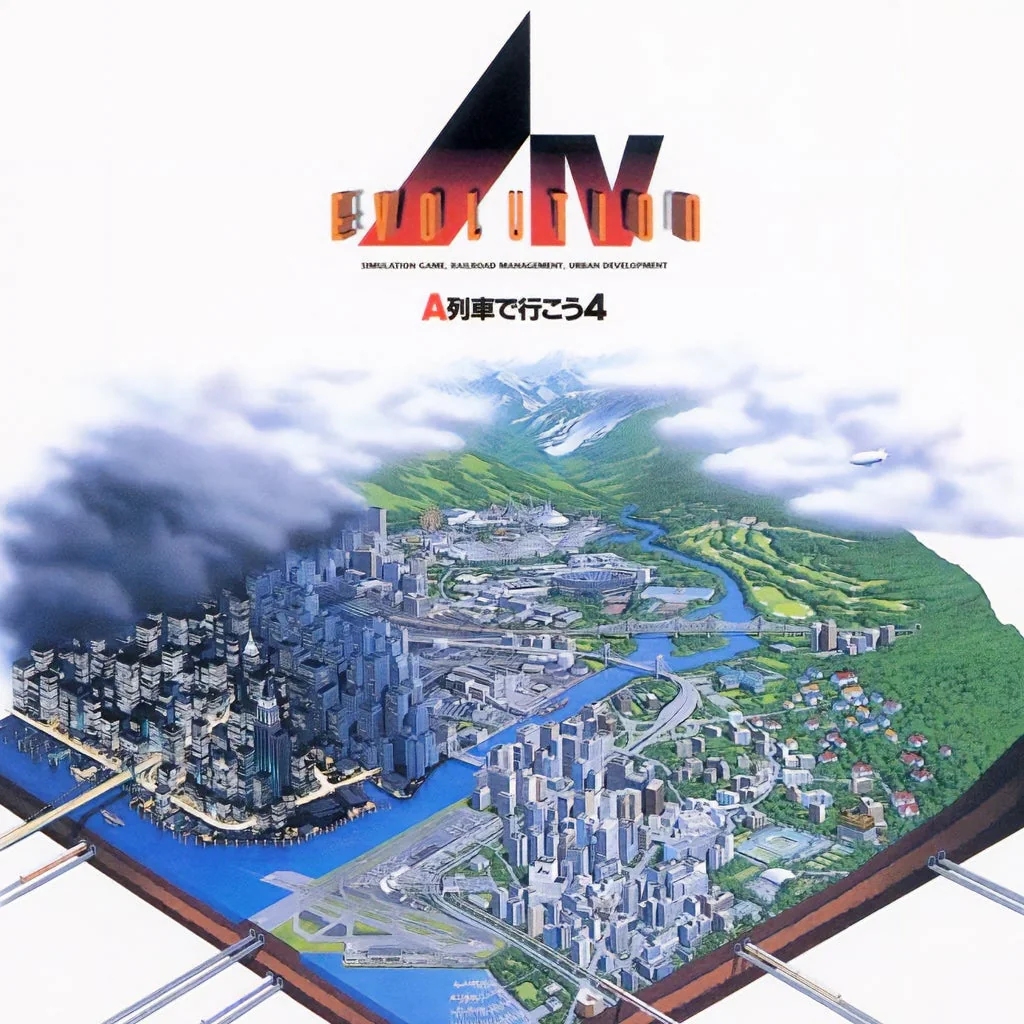
Sony spent 1994 telling everyone the PlayStation was a machine for racing polygons and texture-mapped speed, and then launched it in Japan with a game about running a railway company’s quarterly budget. A.IV Evolution is the fourth entry in Artdink’s long-running Take the A-Train series, shipped as SLPS-00004 – the fourth title in the PlayStation’s entire software catalogue, which means that almost before the machine had any games at all, somebody decided it needed train timetables.
The premise is exactly as advertised. You are the president of a rail company, and the job is to lay track, schedule trains, build stations, and watch towns sprout around them while you manage the money. Do it well and the cities grow and the income compounds; do it badly and you preside over a quiet financial collapse with very good train graphics. The console version’s one genuine novelty was the ability to drop into a full 3D polygon view and ride your own trains through the city you had built, a feature later A-Train games kept.
The series takes its name from the Billy Strayhorn jazz standard made famous by Duke Ellington, which is a considerable amount of cool for a spreadsheet with locomotives. It later reached the West, retitled simply A-Train and published by Maxis, the people behind SimCity. They knew their audience.
Crime Crackers
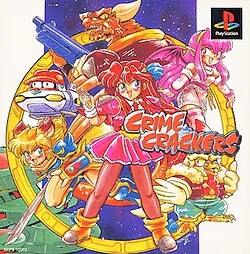
The first first-person shooter on the PlayStation was a dungeon crawler with a bounty-hunting space team called Pink Dolphin, and it existed mostly because Sony needed launch software in a hurry. Crime Crackers was built by Media.Vision with support from Sony’s newly founded Japan Studio, on a development schedule so compressed that the team essentially raced the console to the finish line.
What came out the other end is a strange hybrid. It plays as a first-person shooter structured like a dungeon crawler, with light role-playing elements bolted on – you control a three-person team, each with their own personality and weapons, working through corridors and shooting things. The catch was the controls, which forced the player into a dedicated firing mode that drastically restricted movement, so combat involved planting your feet and hoping. Contemporary reviewers were mixed, and one common verdict was that it suited children better than adults, which is a polite way of saying it was not difficult.
Crime Crackers got a sequel in 1997, and both games eventually returned on the PlayStation Network in 2007, a respectable afterlife for a launch-day curiosity. It was never released outside Japan. For a game that introduced the entire concept of first-person shooting to Sony’s console, almost nobody outside the country has played it.
Gokujou Parodius Da! Deluxe Pack
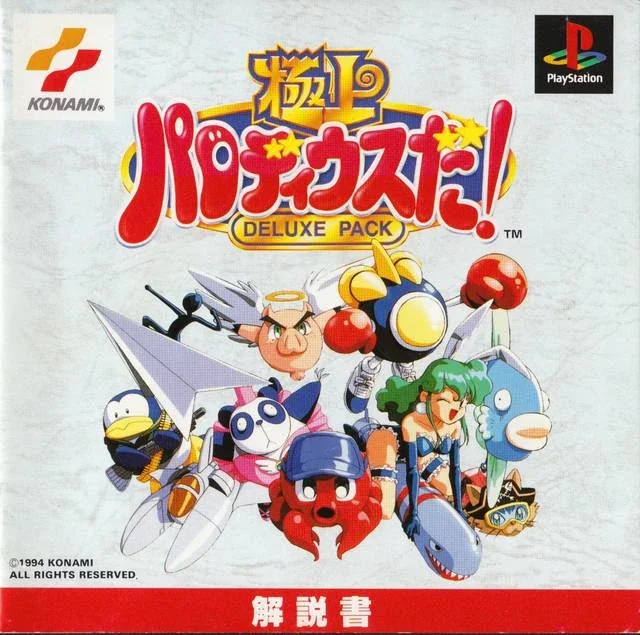
Konami marked the PlayStation’s launch by making fun of itself. Gokujou Parodius Da! Deluxe Pack is a compilation of the first two arcade entries in the Parodius series, which exists for the sole purpose of parodying Konami’s own deadly-serious Gradius shooters – swapping the grim space fighters for Twinbee the bee, Pentarou the penguin, and an assortment of showgirls and sea creatures, all set to deranged arrangements of classical music.
The Parodius name is a literal welding of ‘parody’ and ‘Gradius,' and the games take the structure of a punishing horizontal shoot-em-up and refuse to take a single second of it seriously. Power-ups, bosses, and bullet patterns arrive with the mechanical precision of Gradius and the visual logic of a fever dream. It is properly hard underneath the silliness, which is the joke – the gameplay is sincere even when nothing else is.
The Deluxe Pack was one of the eight games available in Japan on December 3, 1994, sharing the shelf with two mahjong titles and a train simulator. It later reached Europe under the shortened name Parodius, but it never came out in the United States on either the PlayStation or the Saturn, despite being announced. Americans who wanted to watch a penguin fire lasers at a giant Vegas showgirl had to import.
Mahjong Gokuu Tenjiku
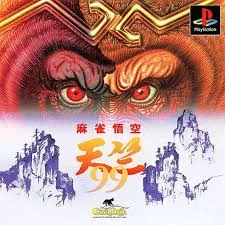
Two of the eight games Japan got at launch were mahjong titles, and this was the first of them. Mahjong Gokuu Tenjiku wraps the centuries-old tile game in the imagery of Journey to the West, the 16th-century Chinese novel about the Monkey King’s pilgrimage – Gokuu is the Japanese reading of Sun Wukong, and Tenjiku is the old name for India, the journey’s destination. The result is a mahjong game with a literary pedigree most mahjong games never bother acquiring.
Underneath the theme it is mahjong, the four-player tile game that has been played in some form since the Qing dynasty and remains one of the most popular pastimes in Japan. The PlayStation version was no technical showcase, and it did not need to be, because the audience already knew precisely what they were buying. It also appeared on the Sega Saturn and the NEC PC-FX, the kind of scattershot multi-platform release that only makes sense for a game with a guaranteed domestic following.
This is the part of the launch lineup Western retrospectives tend to skip, usually with a quick line about ‘two mahjong games’ and a change of subject. But it may be the most revealing of the eight. While Sony was selling the West a future of 3D polygons, the home market wanted somewhere new to play a tile game from the 1800s.
Mahjong Station Mazin
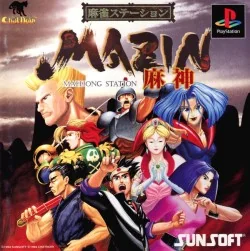
The second mahjong game on the launch shelf came from Sunsoft, a publisher better known in the West for licensed platformers like Batman and Aladdin. Mahjong Station Mazin is the more obscure of the pair, so thinly documented that even dedicated retro databases mostly list it with a release date and very little else beside it.
What is clear is the shape of the thing: competitive four-player mahjong, dressed up with whatever theming the developer Chat Noir cared to apply. Sunsoft published it; Chat Noir, who also handled the other launch mahjong title, did the work. That a single small studio supplied two of the eight day-one games tells you how thin the actual launch catalogue was. Sony needed software on shelves, and mahjong was reliable, cheap to produce, and certain to sell to somebody.
The interesting thing about Mazin is not the game but its neighbour. It sat on the same December 3 shelf as Ridge Racer, the texture-mapped racer Sony was using to sell the entire idea of the console, and the two could not have been further apart. One was a demonstration of everything 32-bit hardware could do. The other was a tile game your grandmother could have played, running on a machine powerful enough to render a small city. Both sold. Both counted.
Nekketsu Oyako
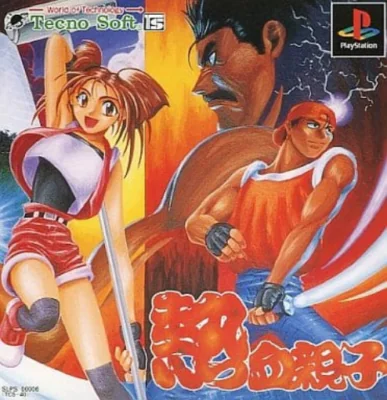
In Nekketsu Oyako you play as a professional wrestler, his daughter, and the mother’s assistant, fighting through waves of enemies to rescue the wrestler’s wife from an evil CEO. The title translates roughly to ‘Hot-Blooded Parent and Child,' and the whole thing is a side-scrolling beat-em-up played with the straightest possible face over the most ridiculous possible premise.
The detail everyone remembers is the drinking. The wrestler father can knock back alcohol mid-fight to power himself up, a standard beat-em-up rage mechanic. When the two child characters try the same thing, the game stops them with an ‘adults only’ message – a small, oddly responsible piece of design tucked inside a game about beating people senseless to save your mum. Somebody on the team clearly thought about it for a moment.
The game came from Technosoft, the studio best known for the acclaimed Thunder Force shooters, which makes Nekketsu Oyako a curious detour into knuckle-based family drama. It was one of the eight Japanese launch titles and never left the country, so its reputation rests almost entirely on the alcohol gag and the sheer oddness of its setup. It is the kind of game that could only have existed in the brief window when a new console needed launch software and nobody was entirely certain what that software was supposed to be.
Ridge Racer
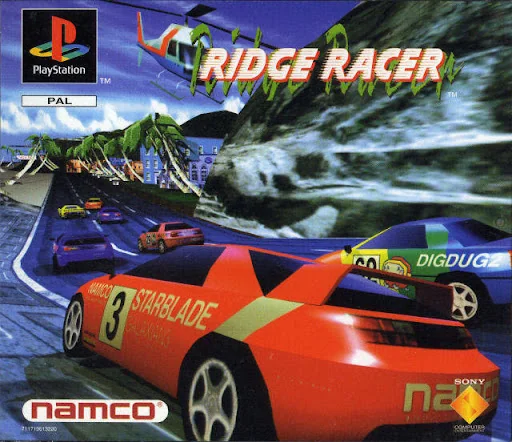
Ridge Racer carries the serial number SLPS-00001, which makes it, by the most literal accounting, the first PlayStation game ever printed. This was no accident. Behind closed doors, Sony and Namco had agreed it would be the console’s debut title as early as December 1993, a full year before launch – a striking arrangement given that Namco had spent years as a loyal Nintendo developer before deciding its arcade rivalry with Sega mattered more.
The game itself was a near-perfect home conversion of Namco’s System 22 arcade racer, running on hardware Namco had deliberately based on the PlayStation’s own architecture. It had exactly one track. It also had drifting, the slide-through-the-corner mechanic drawn from real Japanese mountain-road racing, and it looked dramatically better than Sega’s rushed conversion of Daytona USA on the Saturn. The frame rate had been halved from the arcade original to fit the console, and almost nobody cared, because in a living room in 1994 it looked like the future arriving early.
Ridge Racer did more than any single game to establish the PlayStation, and it was day-one launch software in all three regions – Japan, North America, and Europe – which is why it heads this list. It spawned a long line of sequels and a reputation as the game that proved Sony was serious. One track was apparently enough.
Tama: Adventurous Ball in Giddy Labyrinth
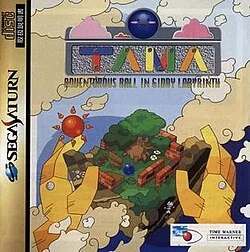
Tama is a game about rolling a ball through a maze, which you steer not by moving the ball but by tilting the world around it – leaning the terrain this way and that to coax the ball toward the exit. If that sounds like a distant ancestor of Super Monkey Ball, that is roughly the idea, arriving several years early and with considerably rougher edges.
The interesting thing about Tama is who made it. The developer was Time Warner Interactive, which was the polite new corporate name for Tengen – the company that had spent the early 1990s in open warfare with Nintendo, manufacturing unlicensed NES cartridges and getting sued for the privilege. By late 1994 the rebels had a respectable corporate parent and a launch title to deliver, directed by Jun Amanai, a veteran of arcade baseball and Game Gear puzzlers.
Tama hedged its bets in a way few games do: it was a launch title for both the PlayStation and the Sega Saturn, reaching the Saturn on November 22 and the PlayStation on December 3, 1994. So the same marble-tilting maze game helped open two rival consoles within a fortnight of each other, backing both horses in a race nobody had finished. It is not remembered as a classic. But it was there on day one, twice.
Air Combat
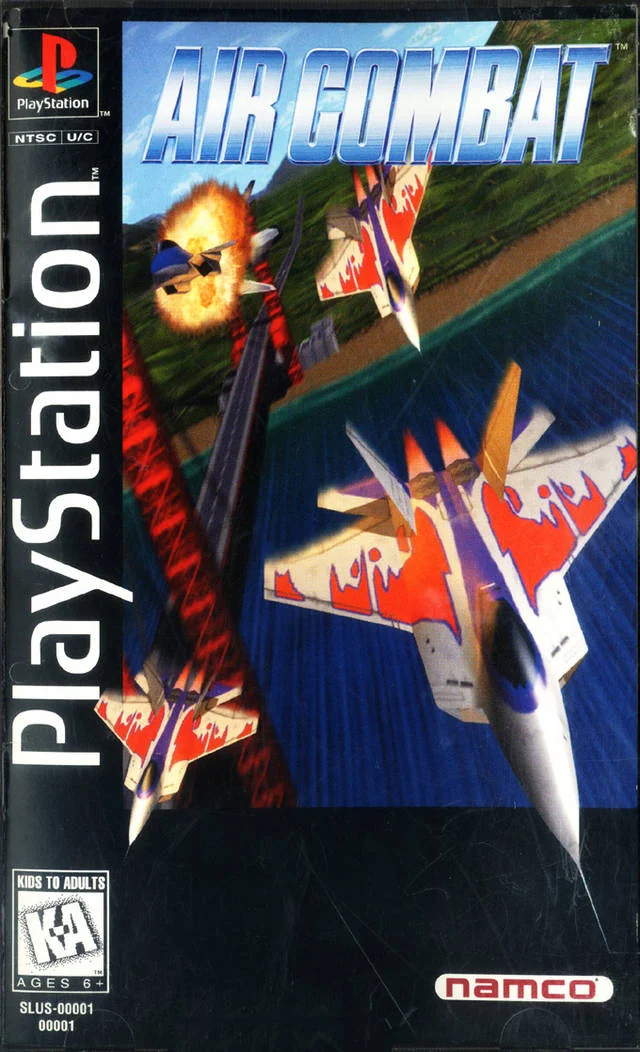
Before it was Ace Combat – before the franchise sold tens of millions of copies and built a reputation for operatic, faintly absurd dogfighting – it was simply Air Combat, a Namco arcade port that flew onto American shelves on the PlayStation’s launch day. The renaming came later. The series that would define console flight games for two decades began here, quietly, as one of twelve North American launch titles.
The game put the player in a fighter jet across a run of missions, downing enemy aircraft and ground targets with the accessible, arcade-leaning handling Namco favoured over hardcore simulation. It was a clean translation of the company’s arcade business to the living room, the same approach Namco took with Ridge Racer and with Cyber Sled, its other early conversion. Namco was by some distance the most committed third party to the PlayStation at launch, which made sense, given it had helped design the very arcade hardware the console was based on.
Air Combat is not the game anyone cites when explaining why the PlayStation won, but it is a small piece of franchise archaeology – the unassuming root of a series that now stages emotional, fully orchestrated warfare over fictional continents. The first one just wanted you to shoot down some planes. Everything else came afterward.
Battle Arena Toshinden
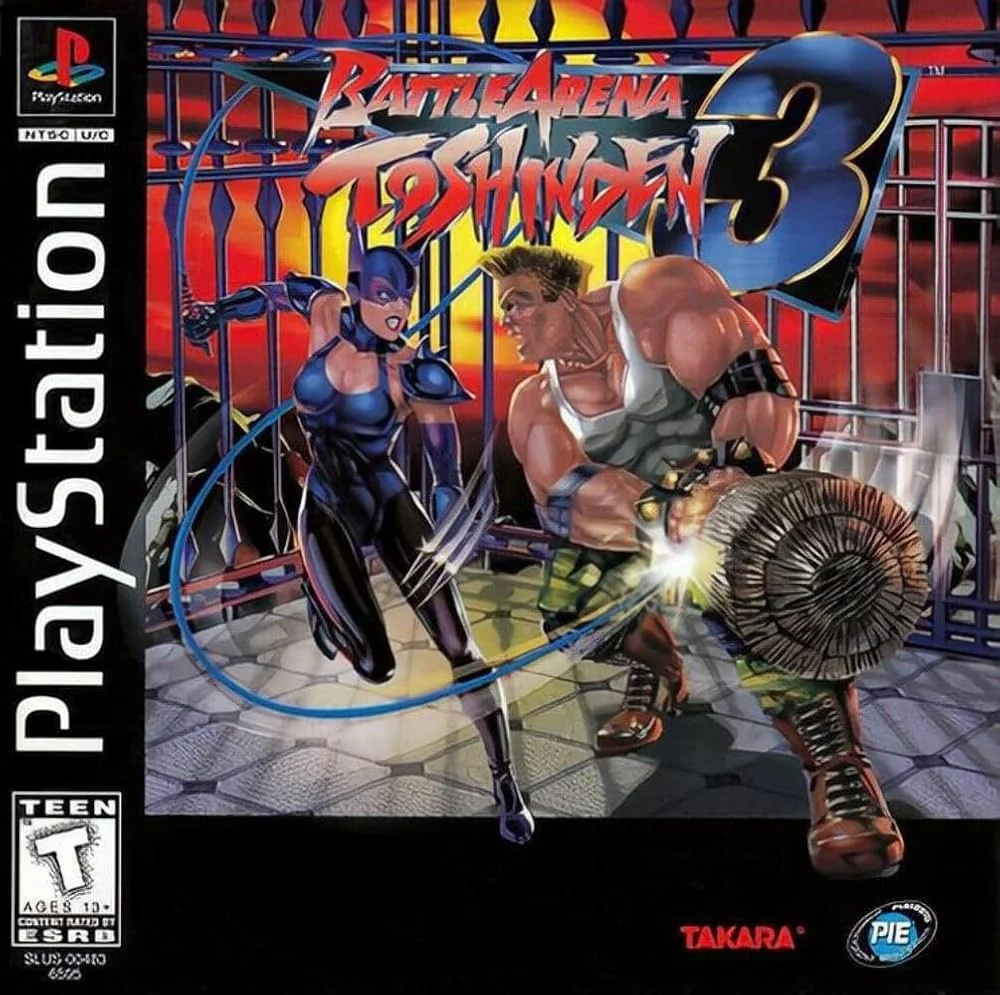
The PlayStation’s first 3D fighting game put weapons in everyone’s hands and let them sidestep. Battle Arena Toshinden arrived with eight fighters wielding swords, clubs, whips, and claws, battling in open rings where you could roll left or right to dodge an attack – a sense of three-dimensional space that the era’s other polygon fighters, Virtua Fighter and the soon-to-arrive Tekken, did not yet offer. For a brief moment, this made it look like the most advanced fighting game in the world.
The lead characters, Eiji and Kayin, were built on the deliberate Ryu-and-Ken duality borrowed straight from Street Fighter, and the cast filled out with the usual archetypes plus Sofia, a whip-wielding character marketed with all the subtlety the mid-1990s reserved for such things. Developed by Tamsoft and published by Takara, the game even earned a PC port, unusual enough at the time to be worth recording.
Toshinden’s real job was holding the fort. Tekken would not reach the PlayStation until roughly two months after the American launch, and until it did, Toshinden was the showcase 3D brawler, the proof of what the hardware could do with polygonal fighters. Then Tekken arrived with tighter mechanics and deeper combat, and Toshinden’s lead evaporated almost overnight. It was the right game at exactly the right moment, and then the moment ended.
ESPN Extreme Games
Sony’s own contribution to the launch slate was a racing game where you could punch your opponents off a street luge. ESPN Extreme Games took the combative spirit of Road Rash and pointed it at extreme sports, sending players down twelve races on street luges, inline skates, mountain bikes, and skateboards across courses in San Francisco, Utah, Lake Tahoe, Italy, and South America, throwing elbows the whole way down.
The ESPN licence bought one memorable flourish. Between races, video clips of the broadcaster Suzy Kolber played, in which she delivered either encouragement or pointed criticism of how you had just performed. Being told off by a real television presenter for falling off a skateboard was a genuine novelty in 1995, and it lent the game a personality that its fairly ordinary downhill racing did not entirely earn on its own.
The ESPN deal did not last. When the licence lapsed, Sony rebranded the series and reissued the game as 1Xtreme, with sequels continuing as 2Xtreme and onward – which means a launch title quietly became the foundation of a multi-game franchise most people remember under a completely different name. It was a solid, slightly violent racing game that happened to be on shelves on the most important day in the console’s American life. That timing did most of the work.
Kileak: The DNA Imperative
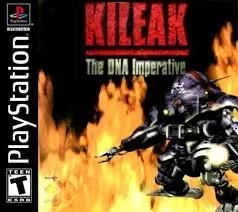
A claustrophobic first-person shooter about piloting a mech through cramped corridors, Kileak: The DNA Imperative had the misfortune of arriving in 1995 and inviting comparison to Doom. It did not survive the comparison. Reviewers at the time were blunt: it was slow, it was boxed-in, and it could not stand up to Wolfenstein 3D, let alone the genre everyone already had running in their heads.
The game was developed by Genki and published by Sony, and it shipped under different names in different territories – Kileak: The Blood in Japan and Europe, Kileak: The DNA Imperative in North America, where it first appeared on a launch day. You moved through a research facility in a powered suit, fighting and puzzle-solving your way deeper into a corporate-conspiracy plot of the kind the era produced by the ton. It looked the part, in the way early 3D games did before anyone had worked out how to make a corridor feel like more than a corridor.
Kileak is one of those launch titles that exists mostly to fill a genre slot – somebody had to bring the first-person shooter, and Genki volunteered. It is rarely revisited and almost never recommended. But it was there on September 9, 1995, doing its slow, boxy best, which on a launch shelf of only a dozen games mattered more than its quality alone would suggest.
NBA Jam Tournament Edition
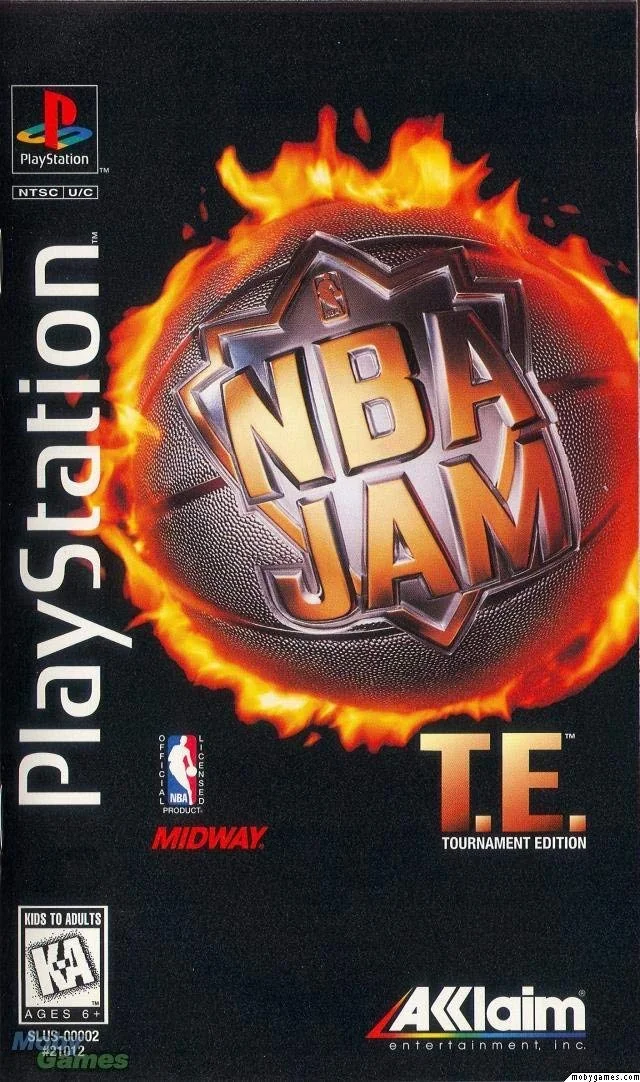
Two-on-two basketball, no fouls, no free throws, and players who burst into literal flames after sinking three baskets in a row – NBA Jam was an arcade phenomenon long before it reached the PlayStation, and the Tournament Edition that launched in America on day one was the expanded cut with bigger rosters and more hidden tricks. This is the game responsible for ‘boomshakalaka,' for ‘he’s on fire,' and for the sight of grown professional athletes leaping fifteen feet to dunk.
The Tournament Edition refined Midway’s smash hit with updated rosters, tuned gameplay, and a roster of secret unlockable characters that ran to politicians, mascots, and assorted Midway staff – the kind of hidden-content generosity arcade developers used to reward the obsessive. The entire design philosophy was to make basketball ridiculous on purpose. Physics existed only as a loose suggestion, and the on-fire mechanic let a hot player drain shots from anywhere on the floor.
By 1995 NBA Jam had already been everywhere – arcades, the Genesis, the SNES – so its arrival as a PlayStation launch title was less a revelation than a reassurance, a known quantity on an unproven machine. That was precisely the point. A console launching with twelve games needed at least one that people already loved and would buy on sight, and a flaming basketball that goes boomshakalaka is about as sure a thing as the medium offers.
Power Serve 3D Tennis
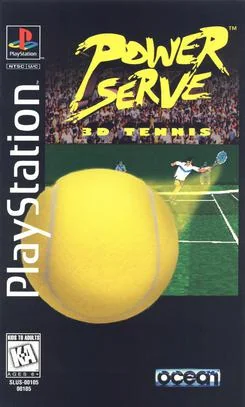
The eight tennis players in Power Serve 3D Tennis were not real, but they were trying very hard to remind you of people who were. The roster – Andre Legacy, Bart Sunrise, Julia Cappuccino, Rusty Guriffis, and four others – is made up entirely of unlicensed caricatures of recognisable 1990s tennis stars, the legal workaround of a developer that wanted the glamour of real players without paying any of them. Andre Legacy is doing a particular amount of work there.
The game underneath was a competent polygonal tennis sim developed by the Japanese studio SPS and published worldwide by Ocean. You could play across grass, clay, and hardcourt, choose from several camera angles, and register players to track their win-loss records over time. At the end of each match it produced an unusually detailed statistical breakdown – aces, double faults, unforced errors, first-serve percentage – which was more bookkeeping than most launch games could be bothered with.
Ocean made one small editorial decision worth preserving: for the European release, it quietly dropped the ‘3D Tennis’ from the title and shipped the game as simply Power Serve. The fake players stayed. It was a modest, unremarkable tennis game that earned its place in history purely by sitting on the right shelf on September 9, 1995 – which, for a good half of this list, is the whole story.
Rayman
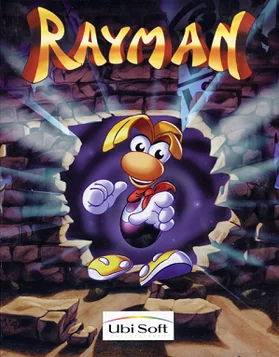
Rayman has no arms and no legs – his hands, feet, and head simply hover near where those limbs would be, connected to nothing – and the design exists partly because the hardware of the early 1990s struggled to animate connected limbs convincingly. The solution was to delete the problem. The result was a gorgeously drawn 2D platformer that became, against all reasonable prediction, the best-selling PlayStation game in the United Kingdom.
The game began on the Atari Jaguar before reaching the PlayStation as a North American launch title, a hand-drawn fantasy of a platformer in a year when everyone else was sprinting toward polygons. Ubisoft, then a far smaller company, had its first real breakout hit. The art was lush, the difficulty was steep, and the whole thing played like a deliberate argument that 2D was not finished simply because 3D had turned up.
Those enormous UK sales came with an asterisk, and an honest one. British retailers like GAME and Toys R Us bundled Rayman free with the console for years, so a great many copies entered homes without anyone choosing them on purpose. It became the best-selling PlayStation game ever released in Britain, on the back of more than three million copies sold worldwide. Some of that was the game. A good deal of it was being given away with the most popular console of the decade. Rayman would not have minded the distinction; he had no shoulders to shrug with.
Street Fighter: The Movie
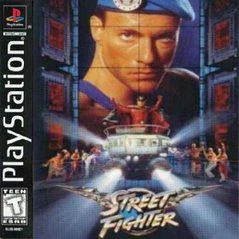
Here is a sentence that should not be possible: Street Fighter: The Movie is a video game based on the 1994 film, which was itself based on the original Street Fighter games. A game became a movie became a game, a loop so tight it nearly bites its own tail, and it arrived on the PlayStation in America on launch day.
The cast was digitized in the manner Mortal Kombat had made fashionable – real actors photographed and pasted into the game as sprites. Jean-Claude Van Damme reprised Guile, Kylie Minogue turned up as Cammy, and Raul Julia, in one of his final roles before his death, played the villain Bison. Van Damme was available for only four hours of capture work, so a stuntman was drafted in to finish digitizing his moves, which tells you roughly where this project sat on everyone’s list of priorities.
A confusing detail worth untangling: the home version was not a port of the arcade game. The arcade Street Fighter: The Movie was built by the American studio Incredible Technologies, while Capcom made a wholly separate game of the same name for consoles, released in Japan as Street Fighter: Real Battle on Film. The console one plays like a slower Super Street Fighter II Turbo wearing photographs of its actors. Whether the world needed a game of a film of a game was not a question anyone involved stopped to ask.
The Raiden Project
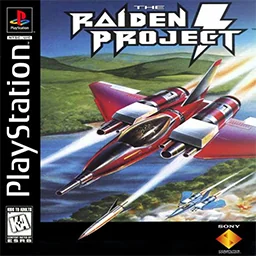
While the rest of the launch lineup chased polygons and 3D bravado, The Raiden Project quietly did the opposite: it preserved two old vertical-scrolling arcade shooters as faithfully as the hardware would allow. The compilation bundled Raiden from 1990 and Raiden II from 1993, both from Seibu Kaihatsu, both built on the simple, punishing logic of flying a small plane up the screen while everything on it tries to kill you.
The plot, for the record, involves an alien race called the Crystals invading Earth in the year 2090, which is the sort of premise a vertical shooter includes purely so the manual has something to print. What mattered was the fidelity. Earlier home conversions of Raiden had cut corners; these were built directly from the arcade originals, and it remains the only console release Raiden II ever received. For the people who cared about such things – and shoot-em-up players cared intensely – that accuracy was the whole point.
Two players could fly together, side by side, which is the natural state of the genre. Next Generation handed it two stars out of five and noted, a little grudgingly, that it proved the PlayStation could push sprites around convincingly. That was true, and slightly beside the point. The people who bought it were not there for a technology demonstration. They were there for a plane, a screen full of bullets, and the old uncomplicated business of surviving both.
Total Eclipse Turbo
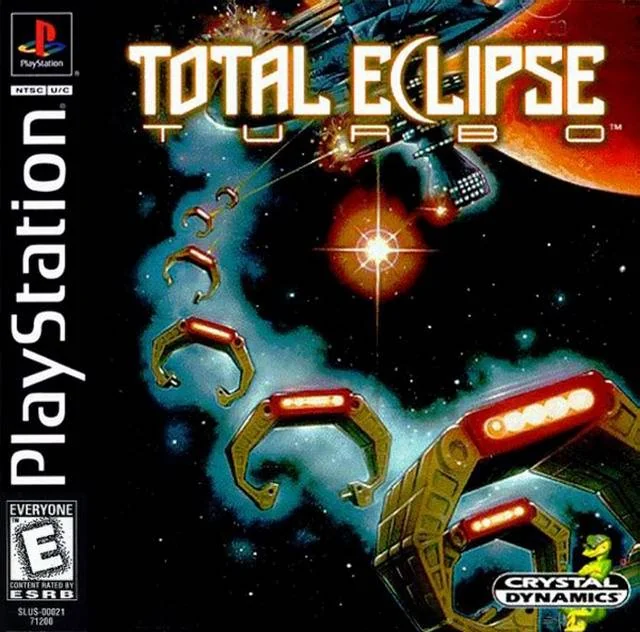
Total Eclipse Turbo reached American shelves in the last days of August 1995, roughly a week and a half before the console it ran on. For a brief, strange window you could buy the game and have nothing to play it on, which makes it, by a literal reading of the calendar, the first PlayStation title sold in North America, beating the machine itself to market.
It was a rail shooter, a near-direct port of Total Eclipse, which had launched the Panasonic 3DO a year and a half earlier. You pilot a craft called the FireWing across twenty missions in the year 2099, fighting an alien race, the Drak-Sai, who intend to make the sun explode. The buried treasure here is the technology underneath. The original 3DO game ran on a pioneering 3D streaming engine written by Mark Cerny – the same Mark Cerny who, two console generations later, would become the lead system architect of the PlayStation 4 and PlayStation 5. His fingerprints are on a forgettable launch-window port and on the most successful console line in the industry.
Crystal Dynamics, the developer, would later make Tomb Raider games; in 1995 it was still in its experimental phase, shuttling its 3DO showpiece across to Sony’s new box. Nobody has ever been entirely sure what the word ‘Turbo’ refers to, given that the main change from the 3DO version was that the action ran a little faster. Possibly that was the entire explanation.
Zero Divide
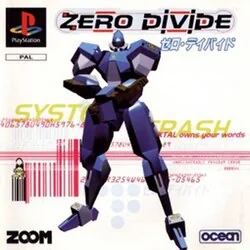
Knock the arm off your opponent in Zero Divide and it stops working. The fighters are AI programs rendered as robots, battling inside a near-future cyberspace under the eye of a shadowy hacker collective called XTAL, and the game’s standout feature was a damage system that let you target and shatter individual body parts – cripple an enemy’s arms or legs and those attacks turned nearly useless. It was a thoughtful idea wrapped around a Virtua Fighter-style 3D fighter from the small Japanese studio Zoom.
It also concealed a complete second game inside itself: a 2D space shooter called Tiny Phalanx, assembled from assets recycled out of Zoom’s 1991 game Phalanx and tucked away as a secret. That kind of generosity was not unusual for the era, but it was a nice touch in a launch fighter most people have forgotten.
Zero Divide is the entry on this list with the murkiest paperwork. Wikipedia and Giant Bomb both date its North American release to September 9, 1995, and call it a launch title outright; at least one other database insists it arrived in December. The contemporary record favours the launch day, and the game sold far better at home – roughly 229,000 copies in Japan against 27,000 in the United States – which suggests Americans were not exactly queuing for a fighting game about robots with detachable limbs. Their loss, slightly.
Jumping Flash!
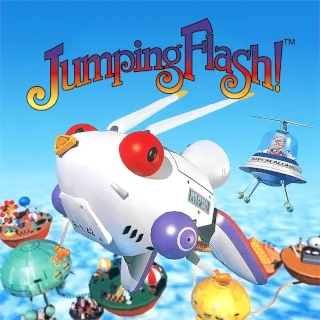
Guinness World Records recognizes Jumping Flash! as the first platform video game in true 3D, which is a heavier crown than the premise suggests, the premise being a robotic rabbit collecting jet pods. Robbit bounds around floating levels on Crater Planet, gathering scattered pods to unlock the exit and foil an antagonist named Baron Aloha, all of it viewed from the first person – which is where it turns strange.
Platformers are about jumping, and jumping is about judging where you will land. Doing that from inside the character’s own eyes, with the ground rushing up as you fall, produced a sensation of vertical height nothing else in 1995 could match. Look down mid-leap and the floor sat a dizzying distance below. The game had begun life as a PlayStation technology demonstration under the working title ‘Spring Man,' and that origin shows: it exists partly to prove the hardware could do something new, and partly because somebody noticed that the something new was also fun.
Developed by Exact and Ultra and published by Sony, Jumping Flash! reached Europe on the launch day and earned a spot in Next Generation’s hundred best games barely a year later. IGN’s Matt Casamassina later called it the third-most underrated game ever made. It is the rare technical milestone history has been content to leave roughly where it found it: admired, occasionally revisited, and starring a rabbit.
Novastorm
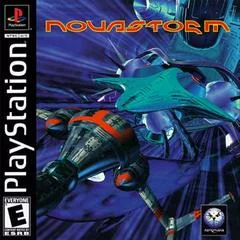
Novastorm is the title on this list whose presence is least certain, and the honest thing is to say so plainly. Most sources, including the most authoritative, date its European release to September 29, 1995 – the exact PlayStation launch day – and its very low European catalogue number is consistent with an early release. A couple of databases say only ‘October.' It made the cut on the strength of the precise dates and the serial number, with that caveat left fully in view.
The game itself is a rail shooter built around full-motion video, a genre the early CD consoles produced in bulk and abandoned almost as fast. You pilot the Scavenger 4 craft – the game was simply called Scavenger 4 in Japan – across pre-rendered FMV environments, blasting waves of robots while the scenery streams past on a fixed track. It came from Psygnosis, the prolific British studio responsible for a startling share of the PlayStation’s early catalogue, and it stood in a loose sequel relationship to the studio’s earlier game Microcosm.
For the dedicated, Novastorm hid a small reward: type ‘TOMATOES’ at the start and your weapons fire tomatoes while you warp ahead to a bonus stage. It is a daft little flourish in a game that otherwise took its grim silicon-versus-flesh story fairly seriously. The flourish has aged considerably better than the FMV.
Rapid Reload
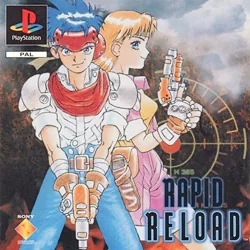
Americans never got to play Rapid Reload, and the reason was ideological. Sony’s American management in the mid-1990s held a near-religious aversion to 2D games on a console it was selling as a 3D machine, so this fast, colourful 2D run-and-gunner shipped in Japan and Europe and skipped the United States entirely. Europe got it on launch day. America got a lecture about the future.
In Japan the game was called Gunner’s Heaven, and it resembled Treasure’s acclaimed Mega Drive shooter Gunstar Heroes so closely – the frantic pace, the directional throws, the relentless screen-filling chaos – that players have long speculated former Treasure staff were secretly involved. The truth is duller: the developer was Media.Vision, a studio that simply admired Gunstar Heroes and would later create the Wild Arms role-playing series. You play treasure hunters Axel Sonics and Ruka Hetfield, chasing a legendary stone called the Valkiry across six stages of sub-bosses and bosses.
Some reviewers in 1995 wrote it off as already dated – a 2D game on a 3D console, the exact objection Sony’s American office had braced for. They were not wrong about the technology and entirely wrong about the game, which is fast and sharp and holds up fine today. The people insisting 2D had no place on the PlayStation were about to be proven spectacularly mistaken regardless.
Wipeout
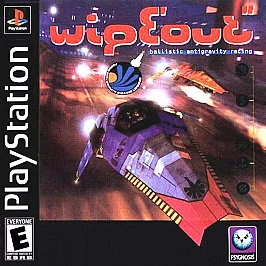
Sony put Wipeout into nightclubs. Not advertisements for Wipeout – the actual game, running on demo pods installed in UK clubs among the music and the strobe lights, so that people who had never thought of themselves as gamers found themselves piloting an anti-gravity craft at three in the morning. It was the cleverest single piece of marketing in the console’s launch, and it worked because the game had been built for exactly that room.
Set in the F3600 anti-gravity racing league of 2052, Wipeout sent sleek craft hurtling around circuits fast enough to feel dangerous, with weapons to slow rivals down. Its soundtrack carried licensed tracks from the Chemical Brothers, Leftfield, and Orbital, and its entire visual identity – the logos, the team branding, the cool austere type – came from The Designers Republic, a Sheffield studio better known for underground techno record sleeves. The whole concept had been hatched, fittingly, during a conversation in a pub.
The result was the best-selling PlayStation launch title in Europe and a real cultural artifact: the point at which a video game stopped being something children did in a bedroom and became something adults did beside the stereo. Mario jumped on turtles. Wipeout went clubbing. Sony had spent two years insisting the PlayStation was not a toy, and here, at last, was the game that proved it.
Microsoft would study the same playbook for its 2001 Xbox launch, fielding thirty-seven titles across three regions.
Frequently Asked Questions
Was Tekken a PlayStation launch title?
No. Tekken reached North America on November 8, 1995, two months behind the console, and Europe a day earlier. Japan had it from March 31, 1995. Until then the 3D fighting slot belonged to Battle Arena Toshinden, which was on shelves in America and Europe from the first morning.
What was the first PlayStation game sold in North America?
Total Eclipse Turbo, which reached American stores eleven days before the console did, in late August 1995. Crystal Dynamics had ported its own 3DO rail shooter across to Sony’s machine, so the first PlayStation game an American could buy was one nobody could yet play.
Did Wipeout launch with the PlayStation?
In Europe it did, on September 29, 1995, and it became the PlayStation’s best-selling launch title in that market. North America waited until November 21. Psygnosis aimed it at a club-going audience, and Sony put playable machines into UK nightclubs to find them.
Which PlayStation launch game was the first true 3D platformer?
Jumping Flash! is the first platform video game in true 3D, a Guinness World Record. It opened the console in Europe on the same day as Wipeout, after arriving in Japan on April 28, 1995. North Americans waited until November 2. The first-person view is what made the height read.
Which PlayStation launch titles never came out in the West?
Crime Crackers, Nekketsu Oyako, Mahjong Gokuu Tenjiku, and Mahjong Station Mazin all stayed in Japan. Konami’s Gokujou Parodius Da! Deluxe Pack eventually reached Europe in March 1996 as Parodius, but never the United States, which left a large part of the first day untranslated.
Did any PlayStation launch game also launch the Sega Saturn?
Tama: Adventurous Ball in Giddy Labyrinth launched both. The marble-tilting maze game was a Japanese launch title for the Sega Saturn on November 22, 1994 and for the PlayStation the following month, made by Time Warner Interactive – the company that had been Tengen, Nintendo’s old courtroom adversary.
Why is Zero Divide left off some PlayStation launch lists?
Because its American release date is disputed. Wikipedia dates Zero Divide to September 9, 1995, the day the console arrived, while at least one database puts it in December. Zoom’s robot fighter sold 228,950 copies in Japan and 27,049 in the United States, so few Americans were arguing either way.