All 13 Retired Monopoly Tokens
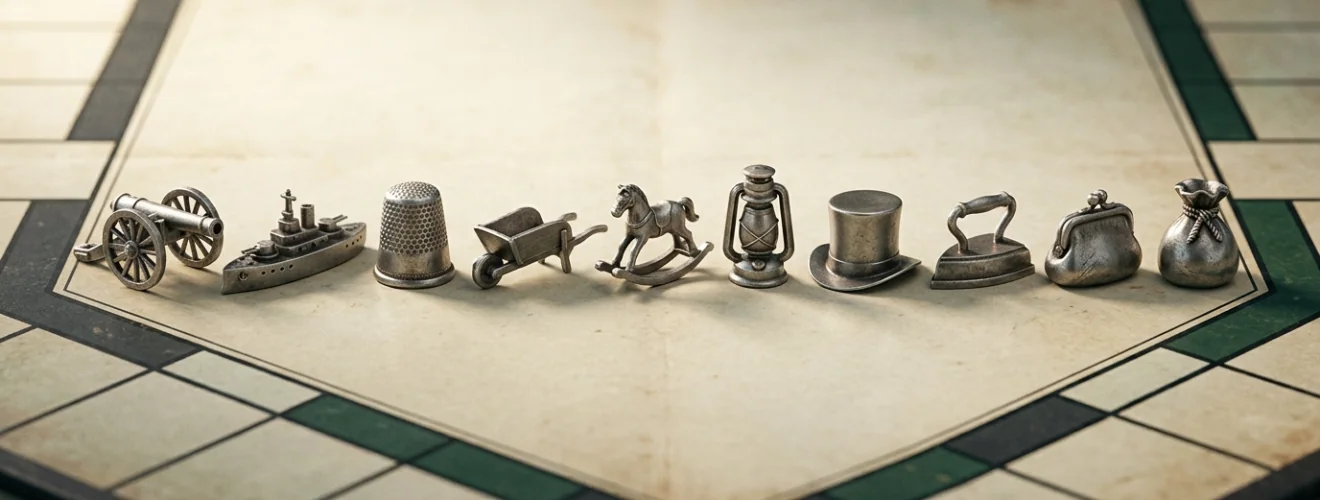
Most people assume the Monopoly tokens are eternal – that the top hat and the dog and the battleship have always been there and always will be. They have not, and they will not. As recently as 2025, the game removed one of its original pieces, the battleship, after nine decades on the board.
The how varies wildly. The earliest tokens simply disappeared – the cannon around 1946, the lantern and rocking horse and purse in the early 1950s – dropped by editorial decision with no announcement at all. The modern ones went out in a blaze of marketing: public votes, hashtags, press releases mourning each casualty by name. And two pieces, the thimble and the money bag, were retired and then dragged back from the dead, which is why a list of retired tokens has to include some pieces currently sitting in the box.
What follows is every token the standard US Monopoly game has retired, in the order they left, from the cannon in the 1940s to the battleship in 2025. A warning on one point of pedantry: the cannon and the howitzer were two separate pieces, not one redesigned over time, however many sources insist otherwise. We have counted them separately, because they were.
The standard US edition of Monopoly has retired thirteen playing tokens across its ninety-year run: the cannon, purse, lantern, rocking horse, howitzer, horse and rider, money bag, iron, thimble, boot, wheelbarrow, T-Rex, and battleship. That is the complete set of retirements to date.
Cannon
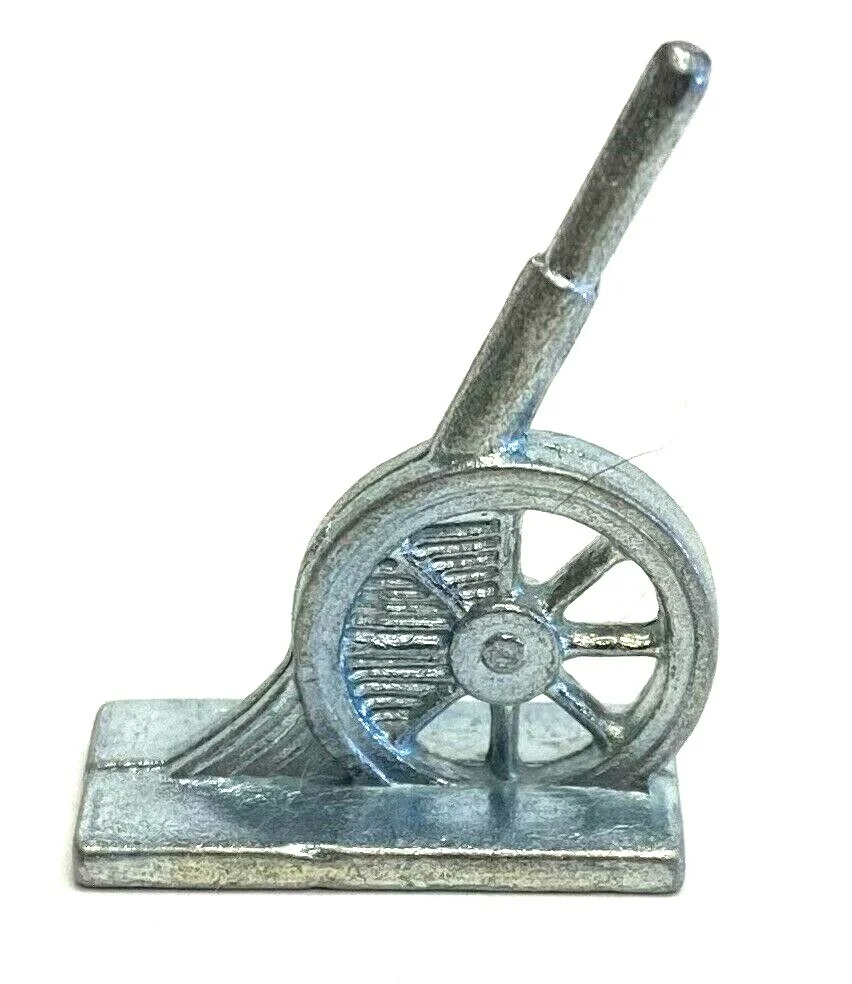
The cannon did not start out in Monopoly. It was salvage. Parker Brothers had released a military strategy game called Conflict, which flopped, and rather than waste the dies, the company folded several of its metal pieces – the cannon and the battleship among them – into Monopoly when it took over the game in 1935. A piece of field artillery thus became one of the original tokens in a game about buying houses on Atlantic City streets, and nobody seems to have found this strange at the time.
The cannon was a long-barreled fieldpiece, and for a decade it sat on the board alongside the top hat and the thimble without explanation. Then, around 1946, it disappeared. There was no vote, no announcement, no farewell campaign of the kind Hasbro would later build whole marketing departments around. The cannon was simply replaced by a stubbier artillery piece, the howitzer, and most players never noticed the substitution had happened.
It is the earliest retirement on this list, and the cleanest example of a token vanishing by pure editorial decision rather than public ballot. Heavy artillery, it turns out, was always an odd fit for a game about real estate, and the franchise seems to have concluded as much without ever once saying so out loud.
Purse
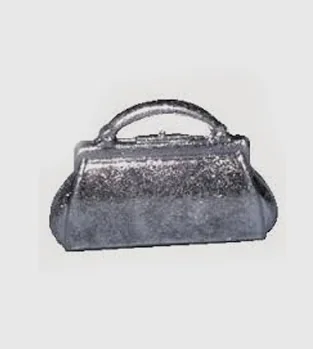
No token on the board had a more confused career than the purse. It arrived around late 1935 as the eighth piece, a small metal handbag, and then spent the better part of two decades being added to sets, dropped from them, and added back, depending on which edition rolled off the line in a given year. One Parker Brothers historian records it being removed as early as 1937 in favour of the thimble, only to resurface later. Working out exactly when the purse was in the game and when it was out is a real headache for collectors.
What is clear is that it never enjoyed the stability of its peers. It was a Depression-era object, the thing a frugal household kept its coins in, and it carried none of the aspiration of the top hat or the menace of the battleship. It was, frankly, a bit dull.
By the early 1950s the purse was gone for good, retired alongside the lantern and the rocking horse to make room for the Scottie dog, the wheelbarrow, and the horse and rider. It is among the oldest retirements on this list and the one almost nobody remembers happening – a handbag that slipped out of the game so quietly it left barely a dent in the collective memory of the people who grew up playing it.
Lantern
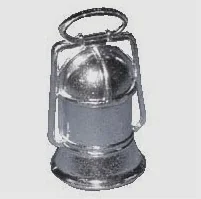
Some of the earliest Monopoly tokens have a tiny hole in them, and the most persuasive explanation is that they began life as charms for a bracelet. The lantern is one of these. Before Parker Brothers cut its own dies, players supplied their own markers – buttons, trinkets, charms bought for a few cents at five-and-dime stores like Kresge’s – and the company appears to have simply ordered a batch of existing charms for its early boxes. The lantern, a small metal hurricane lamp, was added around 1936 to bring the lineup up to ten.
It never had a job to do, symbolically. The iron, thimble, and boot are usually read as emblems of the labouring poor, and the top hat as the rich man above them. The lantern fit no such scheme. It was a pleasant little object, and it spent its years as the piece people chose when they wanted something that wasn’t a hat or a dog.
The lantern went out in the early-1950s clearout, retired with its constant companion the rocking horse. Today it is one of the harder original tokens to find loose, and a complete pre-war set containing one is a real prize among collectors – a respectable afterlife for a piece that started out, in all likelihood, as a borrowed charm off somebody’s bracelet, doing duty in a game it was never made for.
Rocking Horse
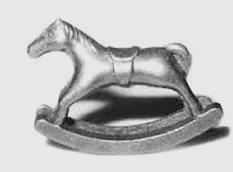
Wherever the lantern went, the rocking horse went too. The two were added at the same moment, around 1936, lived their entire Monopoly lives side by side, and were retired together in the early 1950s, as though the game could only ever picture them as a pair. The rocking horse was a child’s toy rendered in metal, a curved-base pony of the kind found in well-off nurseries, and it is one of the few tokens that pointed at neither labour nor wealth but simply at childhood.
It appeared in relatively few editions even during its short run, which has made it one of the scarcer original pieces. Collectors chasing a complete pre-war set will often find everything but the rocking horse, and a loose one in good condition fetches more than its modest origins would suggest.
When Parker Brothers refreshed the lineup at the start of the 1950s, the rocking horse was among the casualties, replaced in spirit by the more grown-up Scottie dog and horse and rider. It had lasted barely fifteen years. For a toy built to rock endlessly back and forth without ever going anywhere, there is something quietly fitting about a token whose whole career consisted of being picked up, set down, and eventually put away in a drawer for good.
Howitzer
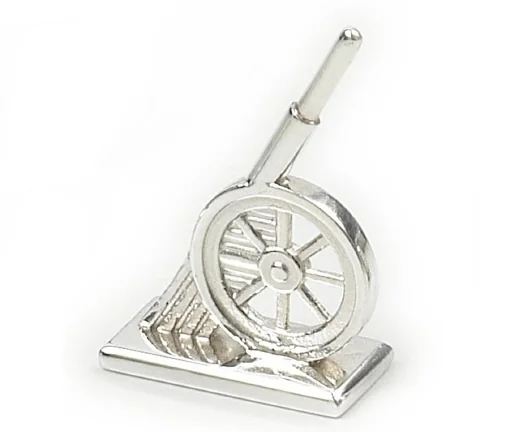
Here is a fact that will win an argument at the right kind of party: the cannon and the howitzer were two different Monopoly tokens, not one piece redesigned. Almost everyone gets this wrong, including some otherwise careful sources, who assume the artillery token simply changed shape over the years. It did not. Both pieces came from Conflict, the failed Parker Brothers war game, which listed the cannon and the howitzer as separate items – and when the cannon was dropped around 1946, the howitzer, a shorter and squatter fieldpiece, took its place.
The howitzer then did something remarkable for a piece of military hardware in a property game: it stuck around for roughly sixty years. It rode out the entire postwar period, the pewter era, the shrinking of the tokens in the 1970s, and the arrival of Hasbro, sitting unremarked in millions of boxes while players reached past it for the dog or the car.
Its end came in 2007, when Hasbro capped the lineup at eight tokens and retired the howitzer alongside the horse and rider and the money bag. No vote, no campaign, no eulogy. The howitzer had outlasted nearly every original token and survived a world war’s worth of metal shortages, only to be removed in the end for the crime of being a sixty-year-old cannon that nobody could tell apart from the last one.
Horse and Rider
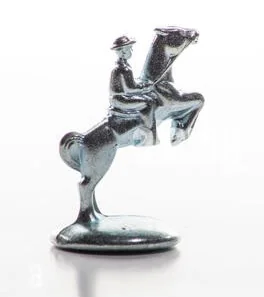
The horse and rider arrived after the war, brought in around the early 1950s with the same wave that delivered the Scottie dog and the wheelbarrow, and for half a century it was the most elaborate token on the board – a tiny mounted jockey, all legs and motion, in a set otherwise full of household objects. It was also, increasingly, an anachronism. The game had a roadster race car by then, and as the decades passed it grew clear which mode of transport players actually wanted to be.
For all its detail, the horse and rider was never a popular pick. It sat in the box the way a fancy serving dish sits in a cupboard – admired occasionally, used almost never.
When Hasbro trimmed the lineup to eight pieces in 2007, the horse and rider was cut with the howitzer and the money bag, and it went without ceremony. The exact year is mildly disputed – some accounts place its exit at 2000 – but Hasbro’s own materials, including the 2022 throwback vote that later offered it as a comeback candidate, treat 2007 as the date, and that is the version we have followed. Either way, the rider dismounted for good. Cars, as one writer drily observed, were simply more in vogue by then, which is a generous way of saying that nobody, when it came to it, especially missed the horse.
Money Bag
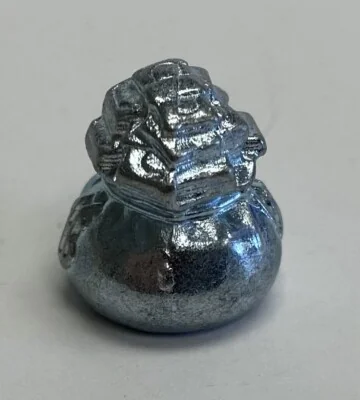
In 1998 Hasbro did something Monopoly had never done: it let the public choose a new token. More than a million and a half people voted, the sack of money beat out a piggy bank and a biplane, and a small bulging money bag – the first new standard token in over forty years – took its place in the box the following year. It set a precedent. Every token change since has been wrapped in a voting campaign.
The money bag’s first life was brief. It lasted less than a decade before being retired in the 2007 cull that also claimed the howitzer and the horse and rider, when Hasbro decided eight tokens was plenty.
That should have been the end of it, except the money bag has the strangest trajectory of any piece here. In 2022 it was offered as a comeback candidate and lost to the thimble. Then in 2025, for Monopoly’s 90th anniversary, Hasbro brought it back anyway – this time with no vote at all – installing it in the redesigned square-box edition at the direct expense of the battleship. A token literally shaped like a heap of cash, retired and then resurrected to shove an original piece off the board after ninety years. For a game about the relentless accumulation of money, it is difficult to picture a more fitting survivor than the money itself.
Iron
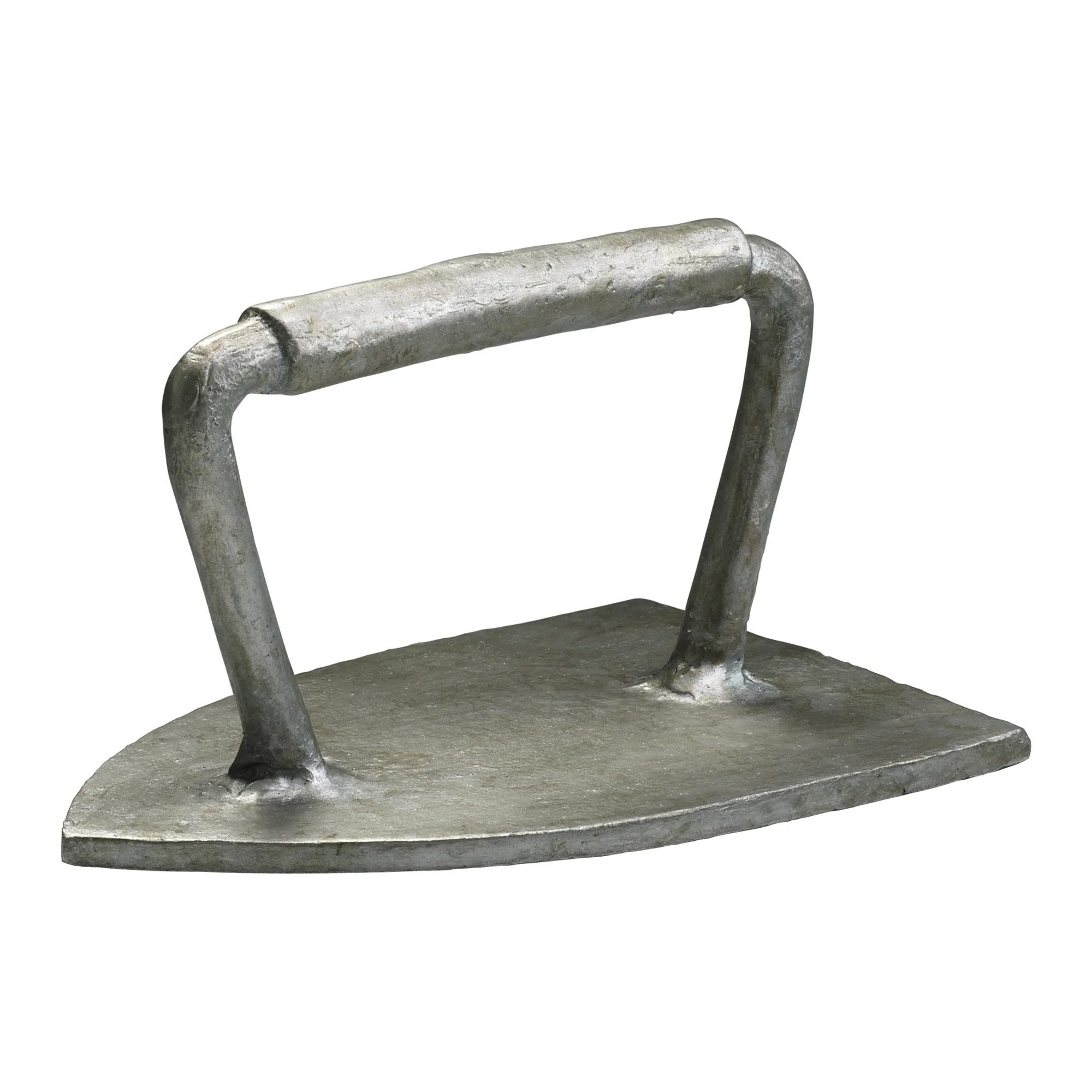
The iron was the first Monopoly token ever voted out of existence. In early 2013 Hasbro ran a campaign pitting the eight current pieces against five proposed newcomers, and when the ballots were counted the iron had finished dead last. On February 6, 2013, it was officially replaced by a cat, later named Hazel. The flatiron – a small clothes-pressing iron that had been on the board since 1935 – was gone.
There is a poignancy here the marketing did not dwell on. The iron belonged to the original cluster of tokens read as symbols of the working poor, the household tools of people who pressed their own shirts and pushed their own wheelbarrows. Its replacement was a cat. Make of that what you will.
The iron also had a quiet champion. The Norwegian player Bjorn Halvard Knappskog, a Monopoly World Champion, had used it in his title-winning play and was reportedly among those sorriest to see it retired. By 2013 it was an object many younger players could not even identify, the household iron having migrated from a flat metal wedge to a steaming plastic appliance decades earlier. The token outlived the thing it depicted by a good half-century, which is usually how these retirements go: the object slips out of daily life long before its little metal likeness is finally voted off the board.
Thimble
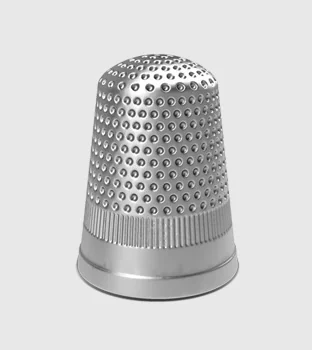
“The lucky Thimble has lost its shine with today’s fans.” That was Hasbro’s official verdict in 2017, and with it an original 1935 token – a sewing notion from an age when households mended their own clothes – was retired after more than eighty years. The thimble had finished near the bottom of the Token Madness vote with around 81,000 votes, behind the boot and well short of the survivors, and out it went, replaced by a penguin, a T-Rex, and a rubber duck.
This should have been the end. The thimble was a relic of an era when sewing was a daily chore, and its disappearance read as one more old object retired for irrelevance.
Instead the thimble got its revenge. In 2022 Hasbro ran a throwback vote letting fans resurrect a single retired token, and the thimble won handily with thirty percent, beating the wheelbarrow, the iron, the boot, the horse and rider, and the money bag. It returned to the board that autumn – and the price of its return was the T-Rex, the very dinosaur that had helped replace it five years earlier. A sewing thimble, a thing most people under forty have never once held, came back from retirement specifically to make a dinosaur extinct. The favourite piece of US champion Richard Marinaccio had, against considerable odds, clawed its way home.
Boot
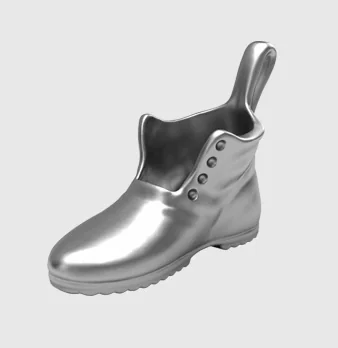
Hasbro could not resist the headline, and frankly neither can anyone: in 2017, the boot got booted. The work boot had been on the board since 1935, modeled on the practical laced shoe of a 1930s labourer, and it pulled just over 83,000 votes in the Token Madness campaign – not quite enough to survive. It was the third and last of the trio cut that year, following the thimble and the wheelbarrow out of the box.
Its retirement carried more weight than the marketing let on. Monopoly began, in its way, as a game about class – the original tokens split cleanly into the tools of the labouring poor and the silk hat of the man who owned everything. The boot was the plainest of the working-class emblems, a shoe worn by someone who pushed the wheelbarrow standing next to it in the box. One commentator noted, with some bite, that the game had quietly become one in which the minimum-wage earner no longer even had a token. It was all top hats and penguins now.
A boot did briefly turn up among the candidates in later votes, but the original was never reinstated. The man in the work boots, it seems, did not make the cut for the next generation of the board – a small piece of class consciousness retired by popular demand, which is a joke that more or less tells itself.
Wheelbarrow
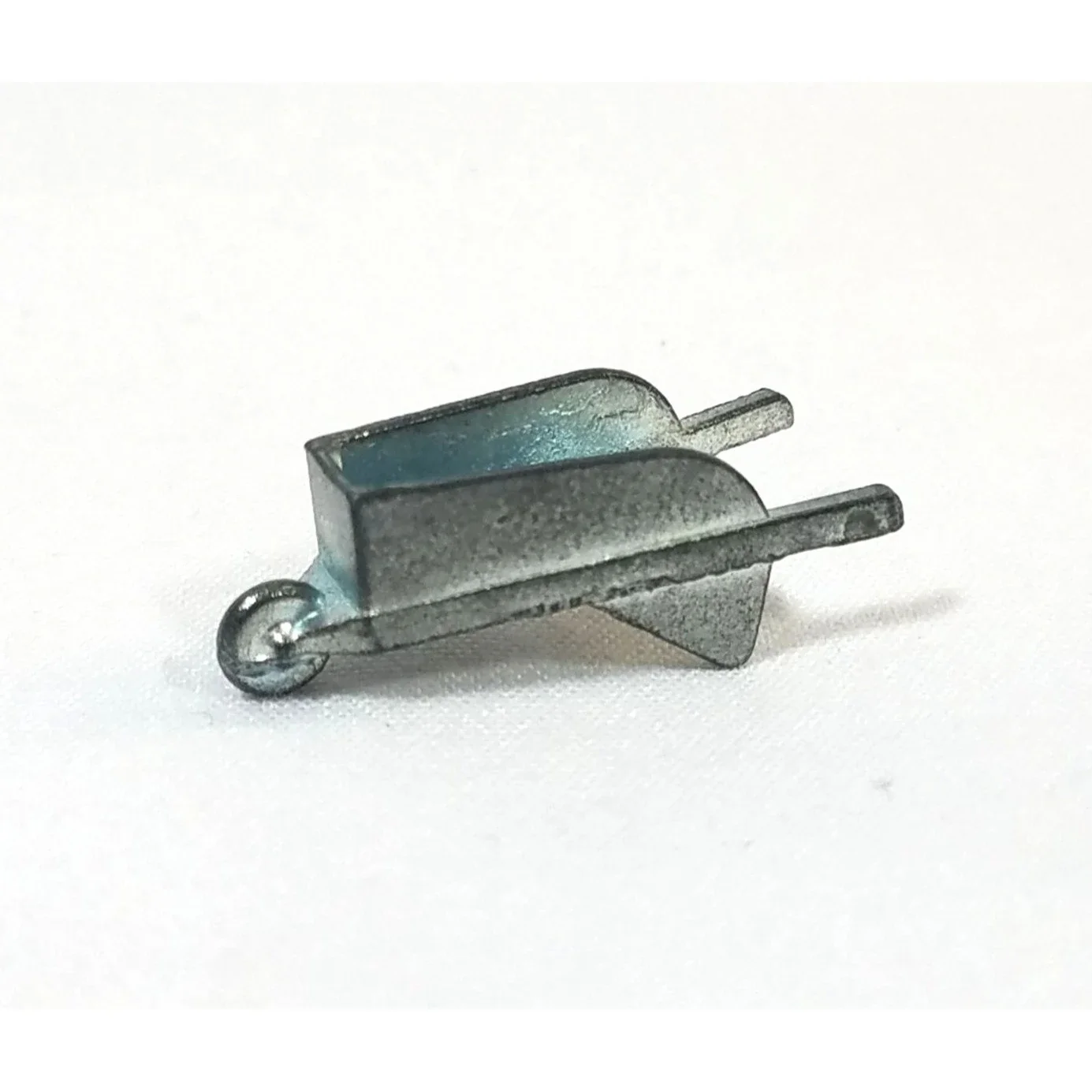
Roughly three percent of Monopoly players ever chose the wheelbarrow, a statistic that made its long survival faintly absurd. It had arrived in the early 1950s with the postwar wave – Hasbro itself calls it a staple since the 1950s – and for over sixty years it sat in the box as the piece you ended up with once the dog, the car, and the hat were taken. It was the consolation prize of Monopoly tokens.
The wheelbarrow belonged to the working-class half of the original symbolic scheme, a labourer’s tool to set beside the boot and the iron. Unlike those two, though, it had no second life as an object people still recognized. Most players in 2017 had never pushed a wheelbarrow and held no particular feelings about one.
So when the Token Madness vote came round, the wheelbarrow was an easy target. It drew just over 60,000 votes, the fewest of the three retired pieces, and was wheeled off the board for good, replaced in spirit by a rubber duck. It was offered as a comeback candidate in 2022 and lost, again, to the thimble. There is a certain justice in the least-chosen token being first out the door – sixty years of being everyone’s fourth choice finally catching up with it – though one suspects the wheelbarrow, a humble thing built for hauling other people’s loads, would not have taken the indignity especially personally.
T-Rex
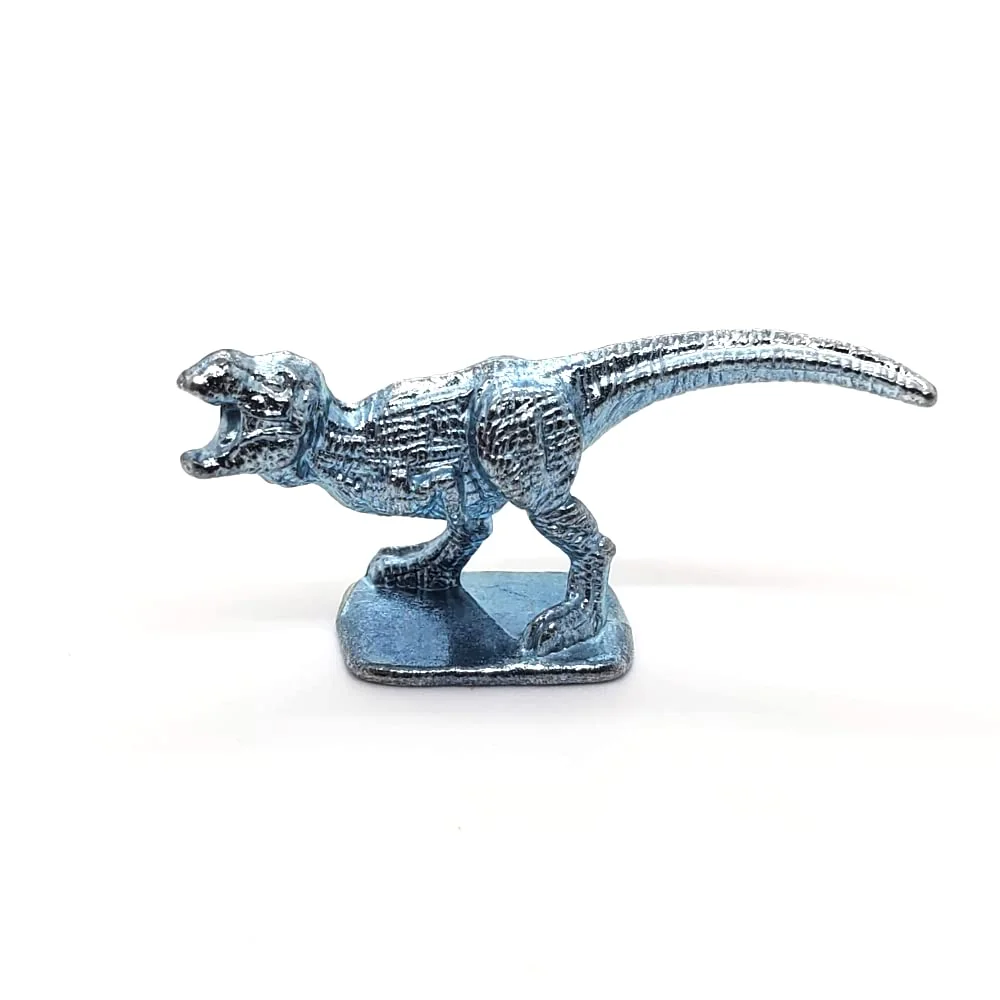
Born 2017, extinct 2022. The T-Rex lasted just five years on the Monopoly board, the shortest run of any standard token in the game’s history, which for a creature that dominated the planet for tens of millions of years is a particularly undignified second act.
The dinosaur was, briefly, a real hit. In the 2017 vote it finished second overall with nearly 208,000 votes, behind only the Scottie dog, which suggests a healthy number of fans liked the idea of conquering the property market as a tyrannosaur. The marketing leaned straight into the joke – dinosaurs, the line went, were retro in a way thimbles no longer were.
Its downfall was the thimble’s comeback. The 2022 throwback vote was built so that resurrecting one retired token meant evicting a current one, and the T-Rex drew the most votes to leave: thirty percent of players wanted it gone. It was replaced by the very thimble it had helped retire in the first place, a tidy circle of vengeance. The headlines, naturally, wrote themselves, every one of them landing on the same word – the T-Rex was, once again, extinct. It holds the record as the shortest-lived standard token Monopoly has ever produced, a strange epitaph for what was, by a wide margin, the largest animal ever to move around the board.
Battleship
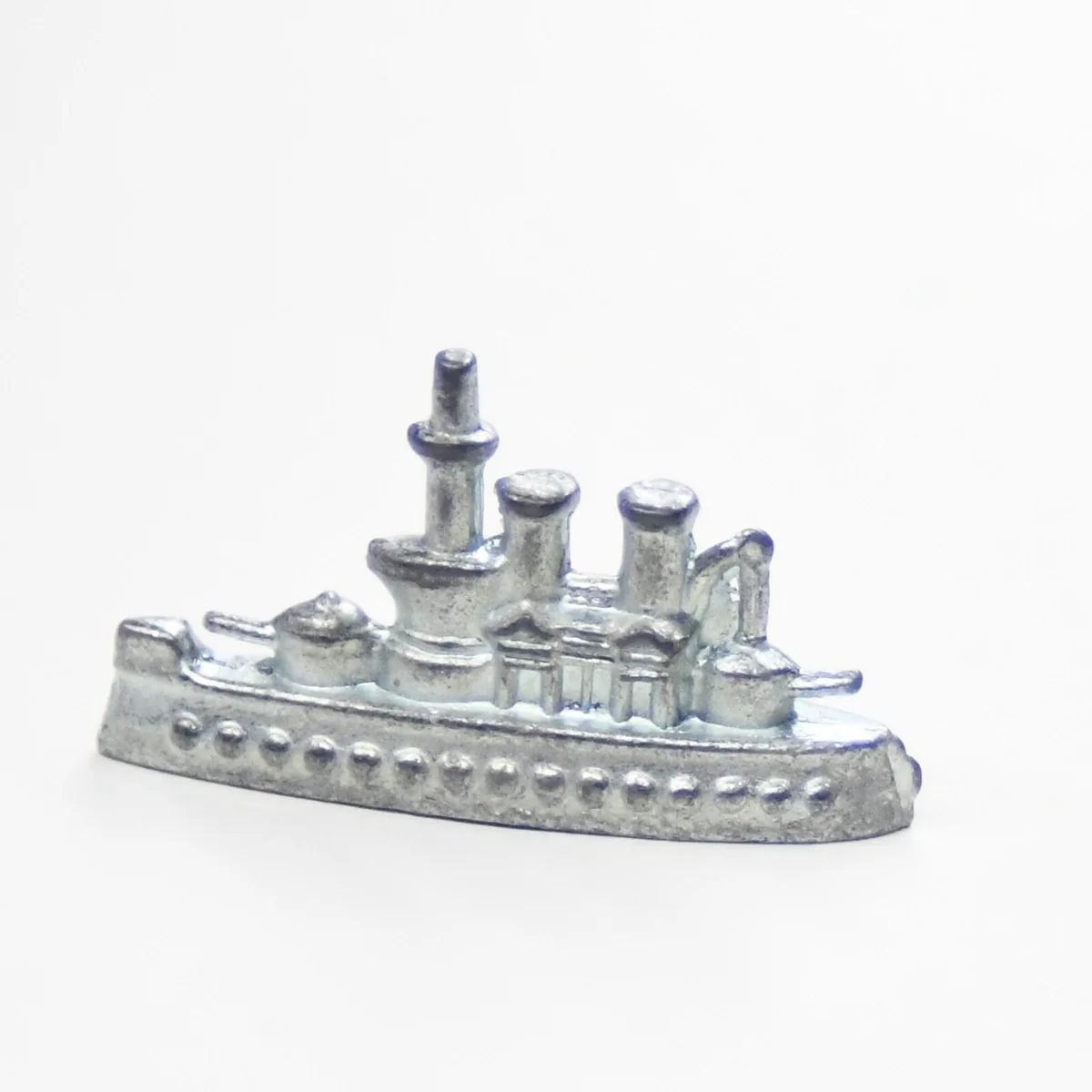
The battleship is the great survivor of this list, which is exactly what makes its ending the most surprising of all. It came to Monopoly the same way the cannon did – salvaged from the flopped war game Conflict in 1935 – and it proved nearly indestructible. It survived the early-1950s clearout. It survived the 2007 cull. In the 2013 vote it was kept; in the 2017 vote it made the final eight with over 134,000 votes, beating dozens of challengers. Fans, when asked, kept saving the battleship.
Then in January 2025, for Monopoly’s 90th anniversary, Hasbro retired it anyway – with no vote at all. The battleship was sent, in the company’s own phrasing, into dry dock, replaced by the returning money bag in a wholly redesigned edition that traded the long box of ninety years for a square one. A token fans had repeatedly chosen to keep was removed by corporate decision the moment a vote wasn’t held.
The battleship had been in the game for ninety years, one of only a handful of pieces present from the very first boxes. It had begun, like the cannon, as a refugee from a war game, and found a far longer and more peaceful career on a property board than it ever had in combat. In a game about who holds the power, the players never really did.
- Hasbro corporate press releases: Token Madness Vote launch and results (January and March 2017), Throwback Token Vote launch and results (April and May 2022), confirming the 2013 iron retirement, the 2017 thimble/boot/wheelbarrow vote, and the 2022 thimble return and T-Rex retirement
- Fortune, ‘Hasbro is overhauling Monopoly, introducing expansions and swapping out a long-standing token’ (January 7, 2025) – confirms the 2025 battleship retirement and money bag return for the 90th anniversary
- World of Monopoly (worldofmonopoly.com) – collector-grade, set-by-set token production history
- Monopoly Fandom Wiki – Tokens page
- Monopoly Land (monopolyland.com) – dated token timeline citing Hasbro and World of Monopoly
- Cool Material, ‘The Story Behind Each Monopoly Piece’ – token origins and the Conflict connection
- Contemporary news coverage of the token votes: PBS NewsHour, CBS News, and KTLA
Frequently Asked Questions
What was the most recent change to Monopoly’s tokens?
The 2025 change for the game’s 90th anniversary. Hasbro retired the battleship, calling it a move into dry dock, and put the money bag back on the board in its place – this time with no public vote, inside a redesigned square box that replaced the long one sold since 1935.
Which Monopoly token was the first to be voted out of the game?
The iron. On February 6, 2013, Hasbro announced that fans had voted it off in favor of a cat, and the flatiron that had been in the box since 1935 was gone. Earlier tokens were dropped by the company itself; the iron became the first ever voted out by the public.
What is the shortest-lived token in Monopoly’s history?
The T-Rex. Added in the 2017 vote and removed in 2022, it lasted only about five years, the briefest run of any standard US token. Its exit came when fans used a throwback vote to resurrect one retired piece, and the dinosaur drew the most votes to leave the board.
Which tokens did Monopoly retire in 2017?
The thimble, the boot, and the wheelbarrow, all dropped in Monopoly’s 2017 Token Madness vote. Hasbro replaced them with three new pieces: a penguin, a Tyrannosaurus rex, and a rubber duck. The thimble and boot dated to the original 1935 boxes; the wheelbarrow joined in the early 1950s.
What was the first Monopoly token chosen by a public vote?
The money bag, added after a 1998 contest in which about 1.5 million people voted. It beat out a biplane and a piggy bank with 51 percent, and became the first standard token added in roughly forty years. Fans voting a piece in came fifteen years before they first voted one out.
Why did a game about real estate have a cannon and a battleship?
Both were hand-me-downs from Conflict, a Parker Brothers war game that flopped. When the company took over Monopoly in 1935, it folded the leftover metal pieces, including the cannon and the battleship, into the new game rather than scrap the dies. Neither had anything to do with property.