Every Hall of Fame Player Randy Johnson Struck Out
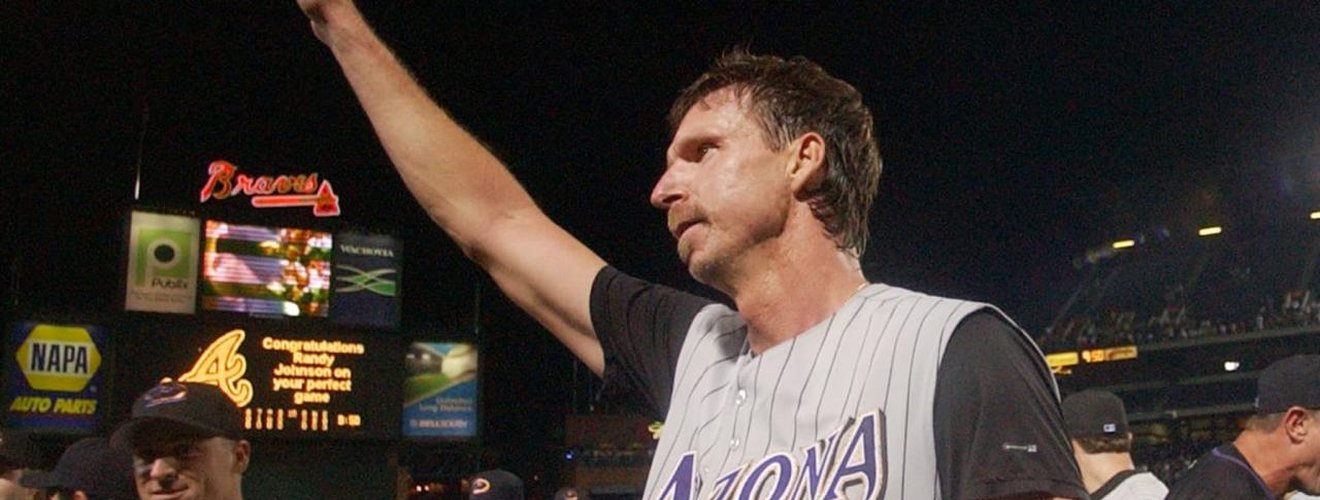
Randy Johnson stood six feet ten inches tall and threw left-handed, which is roughly the baseball equivalent of being struck by lightning that has had a moment to aim. From a release point that seemed to begin somewhere near the on-deck circle, he delivered a fastball that touched a hundred miles an hour and a slider that arrived so late and broke so hard that hitters tended to describe it less as a pitch than as an ambush. Over twenty-two seasons he struck out 4,875 men, more than anyone in the history of the sport except Nolan Ryan. He did not start out as a precision instrument. In his early years with the Montreal Expos and the Seattle Mariners he led his league in walks three seasons running and looked as likely to hit the screen behind home plate as the strike zone, until a conversation with Nolan Ryan in the autumn of 1992 helped him gather it all under control. What came next was the most overpowering stretch of pitching the modern game has seen: five Cy Young Awards, a rate of 10.61 strikeouts per nine innings that no retired pitcher has matched, a perfect game at the age of forty, and a share of the 2001 World Series MVP. Which leaves the small matter of the men who had to bat against him. What follows is a complete accounting of the position players now enshrined in Cooperstown whom Johnson struck out at least once – forty of them, from Ryne Sandberg in Johnson’s very first month to Ichiro Suzuki near his final seasons, who between them collected most of the batting titles and Most Valuable Player awards of their era. Being one of the finest hitters who ever lived turned out to be no protection at all. If anything, it gave Johnson a reason to concentrate.
Randy Johnson struck out 40 position players who went on to reach the Hall of Fame – the complete total as of the 2026 induction class. The figure comes from the play-by-play record of all 637 games he pitched between 1988 and 2009, every plate appearance checked rather than estimated.
Ryne Sandberg
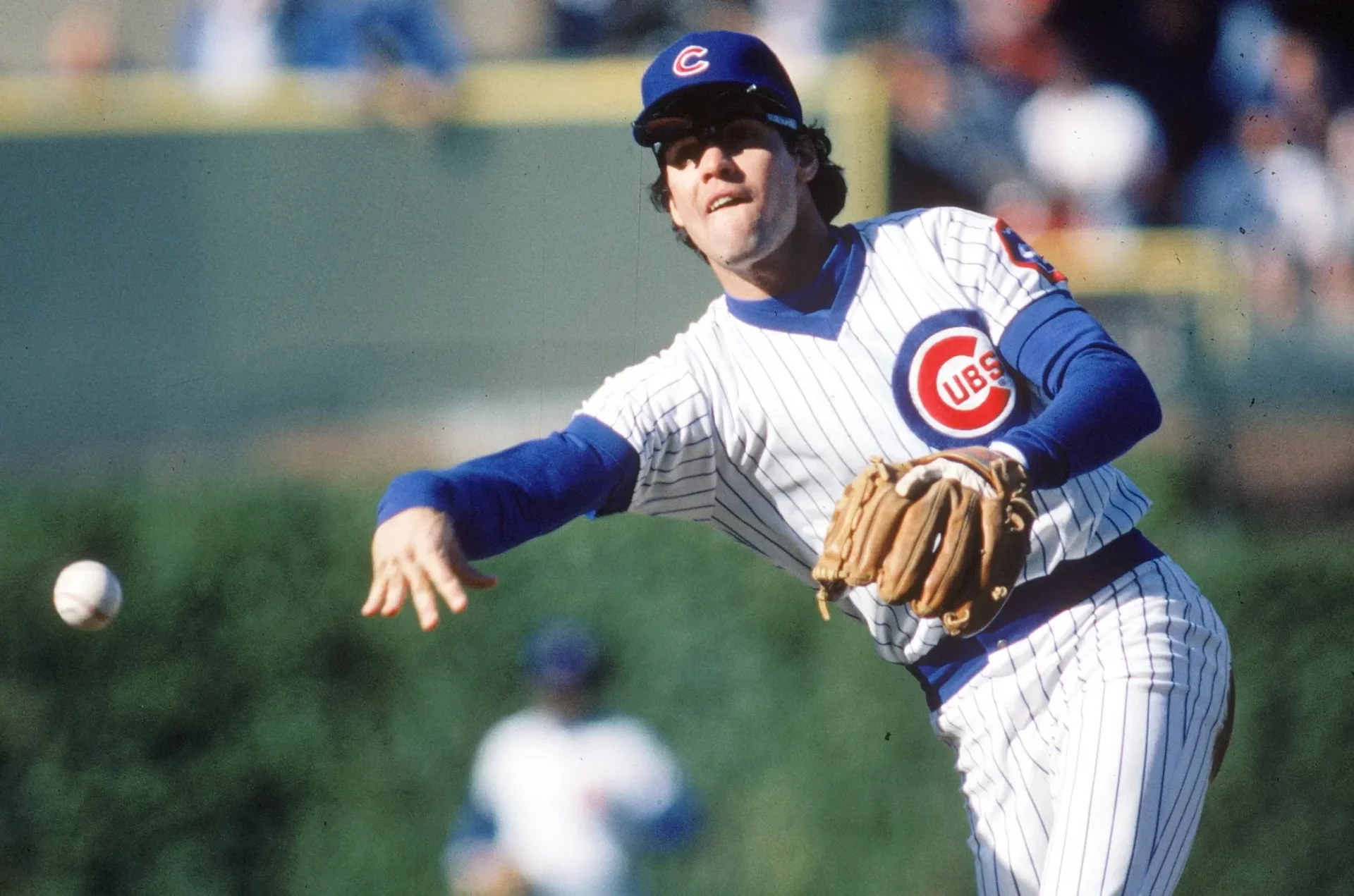
The first Hall of Famer Randy Johnson ever struck out was already a finished masterpiece while Johnson was still an experiment. In September 1988, in his first month in the major leagues, a wild 25-year-old Montreal Expo with a fastball he could not yet steer faced the reigning aristocrat of National League second basemen – and struck him out three times across two late-September games. Ryne Sandberg was four years past his 1984 MVP season by then, the one containing the two-homer June afternoon that Cubs fans still call the Sandberg Game, and squarely inside a run of ten straight All-Star selections and nine Gold Gloves. He managed a .286 average in their seven career meetings, and then their schedules simply never crossed again, which means his entire history with Johnson belongs to a rookie month almost nobody was watching.
The rest of the resume needed no help: fifteen years in Chicago, a defensive standard at second base that lasted a decade, and induction in 2005 on his third ballot with 76.2 percent of the vote. Sandberg died on July 28, 2025, at 65, of metastatic prostate cancer, at home with his family, nineteen months after announcing the diagnosis. The Cubs had unveiled his statue outside Wrigley Field the summer before, and he was there to speak beside it. The first name Johnson ever put on this list got to see himself in bronze.
George Brett
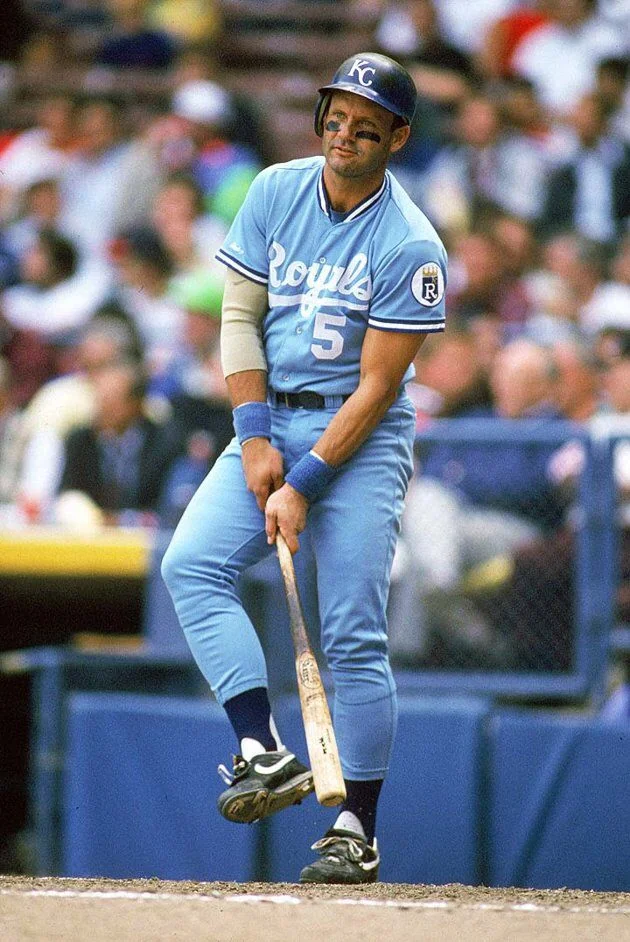
George Brett hit .390 in 1980, the highest average anyone had managed since Ted Williams hit .406 in 1941. Against Randy Johnson he hit .091. Both numbers came off the same left-handed swing, separated only by the dozen years it took Johnson to reach the American League West and start tormenting the Kansas City Royals.
Brett is the only player in history to win batting titles in three different decades – .333 in 1976, that .390 in 1980, and .329 in 1990 at the age of thirty-seven. He retired in 1993 with 3,154 hits, more than any third baseman before him, a .305 lifetime average, and a first-ballot plaque waiting in Cooperstown. He is also, to most casual fans, the man who charged out of the dugout at Yankee Stadium in the summer of 1983 when the umpires ruled there was too much pine tar on his bat and, for a few days at least, wiped a home run off the board.
By the time Johnson settled into Seattle, Brett was a thirty-something hitter living on timing and guile, and timing is the first thing a hundred-mile-an-hour fastball takes from you. One hit in eleven tries. Even hitting royalty has to abdicate to somebody eventually.
Robin Yount
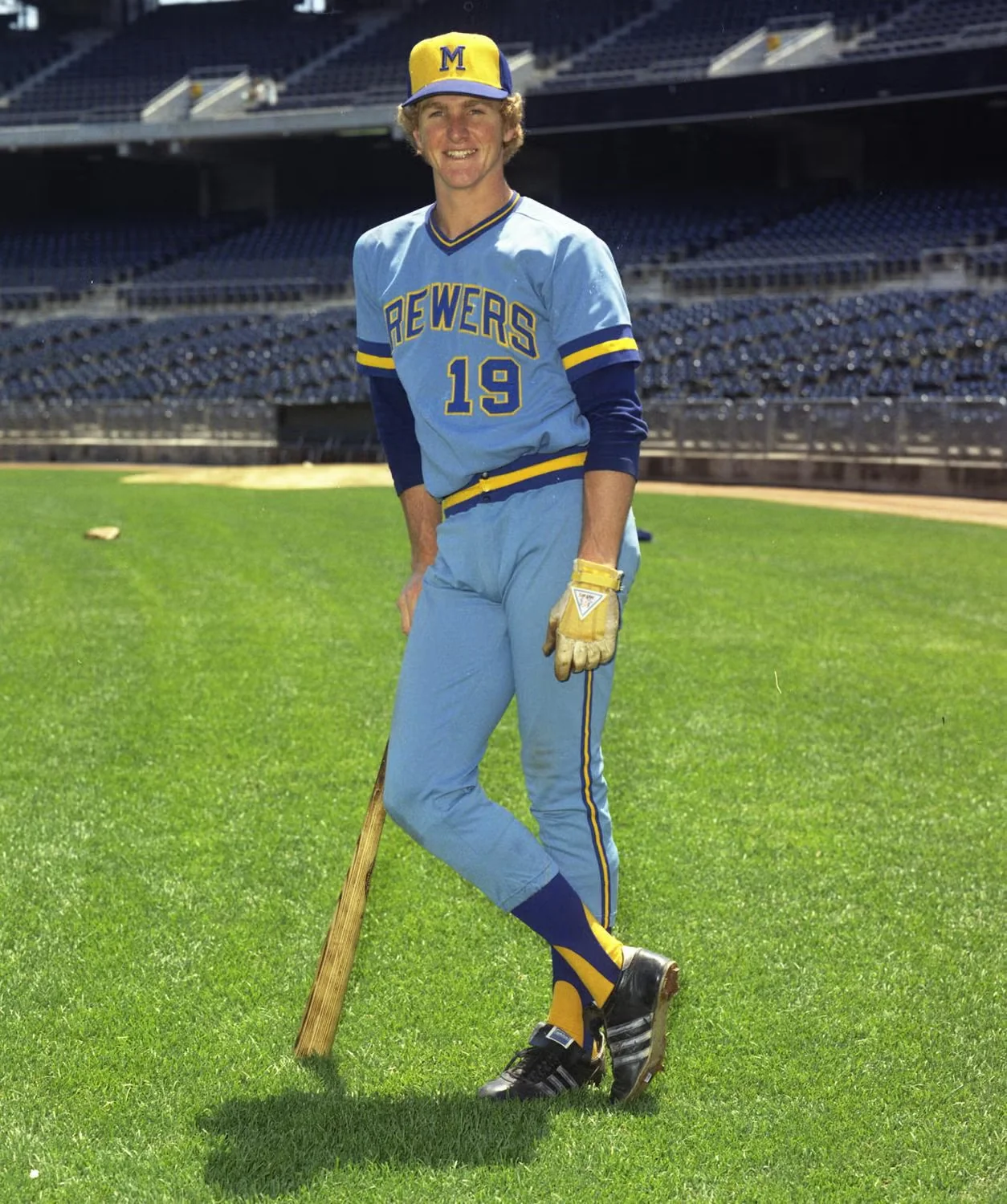
Robin Yount won the American League Most Valuable Player award twice, once as a shortstop and once as a center fielder, which is a little like winning an Oscar for acting and then another for cinematography. He arrived in Milwaukee in 1974 at the age of eighteen, played twenty seasons without ever wearing another uniform, and left with 3,142 hits and a nickname, the Kid, that he had outgrown by roughly 1979.
His second MVP came in 1989, the same summer a twenty-five-year-old named Randy Johnson turned up in the American League with a fastball nobody could time and a slider nobody could see. Yount, by then thirty-three and reinvented in the outfield, spent his last few seasons as one of the veterans expected to solve him. Mostly the veterans did not.
The Brewers and Mariners were not division rivals in those years, so the meetings were occasional rather than relentless, which was probably a mercy for a hitter on the back nine of a Hall of Fame career. Across two decades Yount had learned to handle the hardest throwers in the league, Nolan Ryan included. Johnson, the man who would retire second only to Ryan on the all-time strikeout list, was simply the last great fastball he had to learn.
Dave Parker
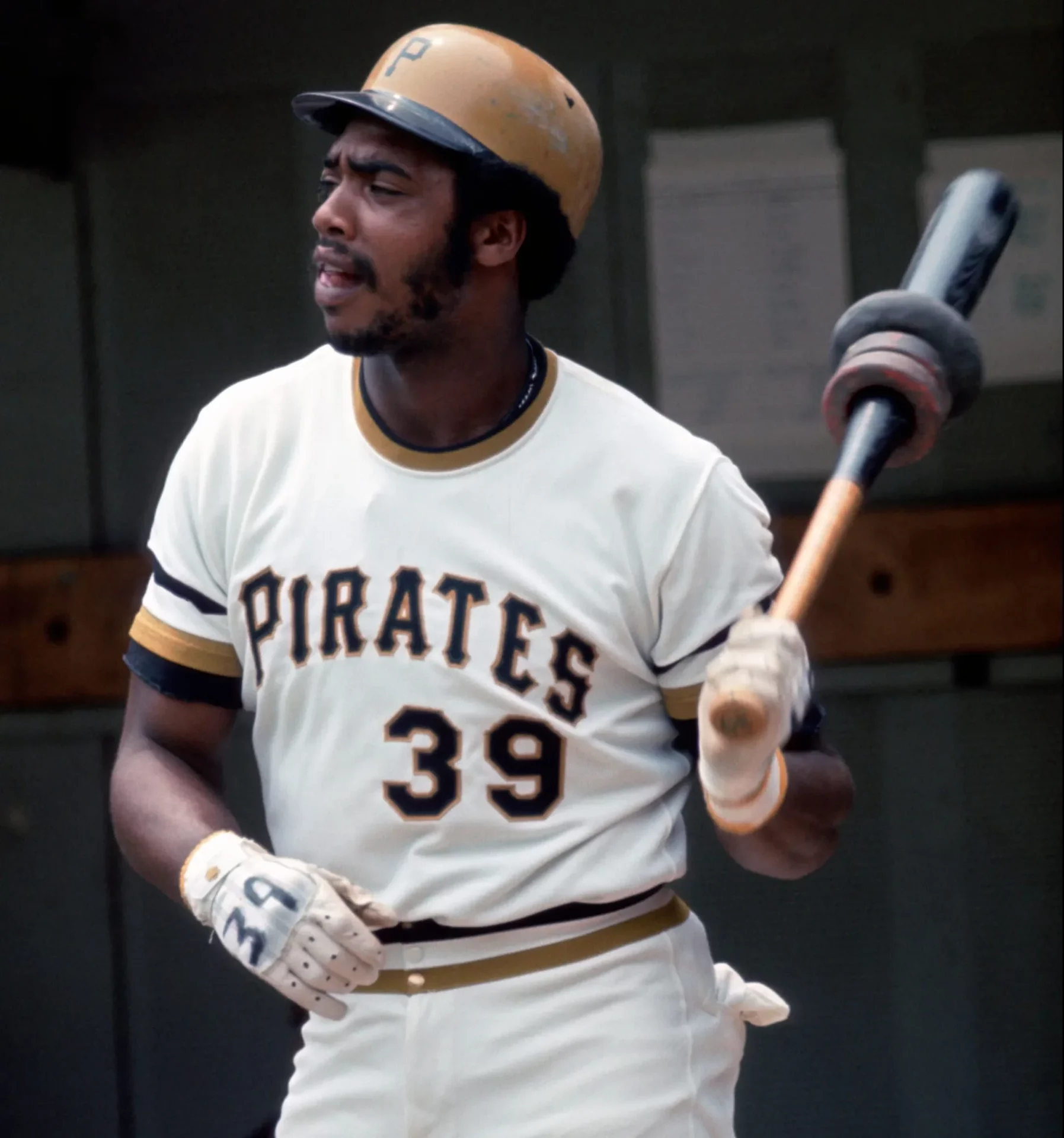
Twenty-nine days. That is how close Dave Parker came to the stage in Cooperstown – elected in December 2024 by the Classic Baseball Era Committee with 14 of 16 votes, dead on June 28, 2025, of complications from Parkinson’s disease at 74, with the induction waiting on July 27. He had sat through fifteen years of writers’ ballots without ever clearing 24.5 percent, then through more than a decade of Parkinson’s, before the call finally came. ‘I’ve been holding this speech in for 15 years,' he said that night.
The Cobra had earned the wait. Six foot five and built like a warning, he put up back-to-back batting titles in 1977 and 1978, took the MVP in the second of those seasons, threw out runners with an arm that won three Gold Gloves, and collected World Series rings eleven years apart with the 1979 We Are Family Pirates and the 1989 Bash Brothers A’s. He also won the very first Home Run Derby, in 1985, a fact that sounds invented and is not.
Johnson caught him at the end of the road. Four of Parker’s five strikeouts came as a Milwaukee Brewer in 1990 – the first on May 22, in the same game where Johnson also rang up his teammate Paul Molitor for the first time – and the last came as a California Angel the following April. Cooperstown inducted him that July, posthumously. The speech went unread.
Carlton Fisk
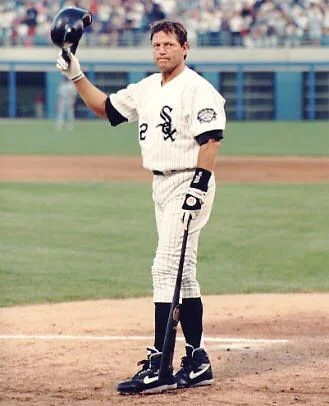
There is something faintly absurd about a man in his forties, in full catcher’s gear, digging in against the hardest-throwing left-hander alive. That was Carlton Fisk against Randy Johnson. Fisk caught his last game at age forty-five, and in his final White Sox seasons he kept stepping into the box against a pitcher sixteen years his junior who threw close to a hundred miles an hour.
His own defining swing had come in 1975, in the twelfth inning of Game 6 at Fenway Park, when Fisk waved both arms at a fly ball down the left-field line and willed it fair. He was a Red Sox catcher then. By the time he faced Johnson he had been in the majors since 1969, held the career home run record for a catcher, and was piling up games behind the plate at a rate no one would surpass until Ivan Rodriguez in 2009.
Chicago and Seattle crossed paths often in those years, so Fisk saw plenty of Johnson, which at his age was less an opportunity than a hazard. He retired in 1993, six days after breaking the record for games caught, dumped by the White Sox in the middle of the season. Forty-five-year-old catchers do not get long goodbyes.
Rickey Henderson
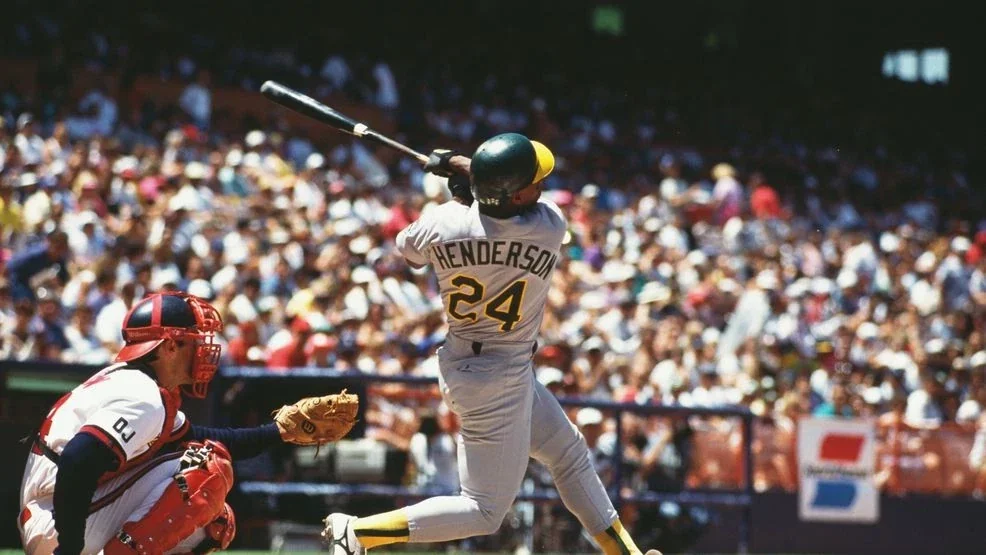
On July 29, 1989, Rickey Henderson came to the plate against Randy Johnson five times and never recorded an at-bat. He walked four times, stole five bases, and scored four runs, a line that looks like a misprint until you remember who batted leadoff for the Oakland Athletics. Johnson, in his first months as a Mariner and not yet in command of anything, said afterward he expected to find himself on Henderson’s Christmas list.
Henderson retired in 2003 holding the all-time records for stolen bases (1,406), runs scored (2,295), and leadoff home runs (81), a set of marks that range from hard to break to functionally permanent. He reached base more relentlessly than anyone in the game’s history, and a walk followed by a stolen base was his preferred form of violence. None of which made him immune. The Athletics and Mariners shared a division through the 1990s, Johnson grew into the most overpowering strikeout pitcher of his time, and even the greatest leadoff man who ever lived went down swinging often enough.
He is the rare entry on this list whose most memorable afternoon against Johnson involved reaching base five times and never once swinging in anger. Henderson built a career out of exactly that. The strikeouts were just the toll for admission.
Dave Winfield
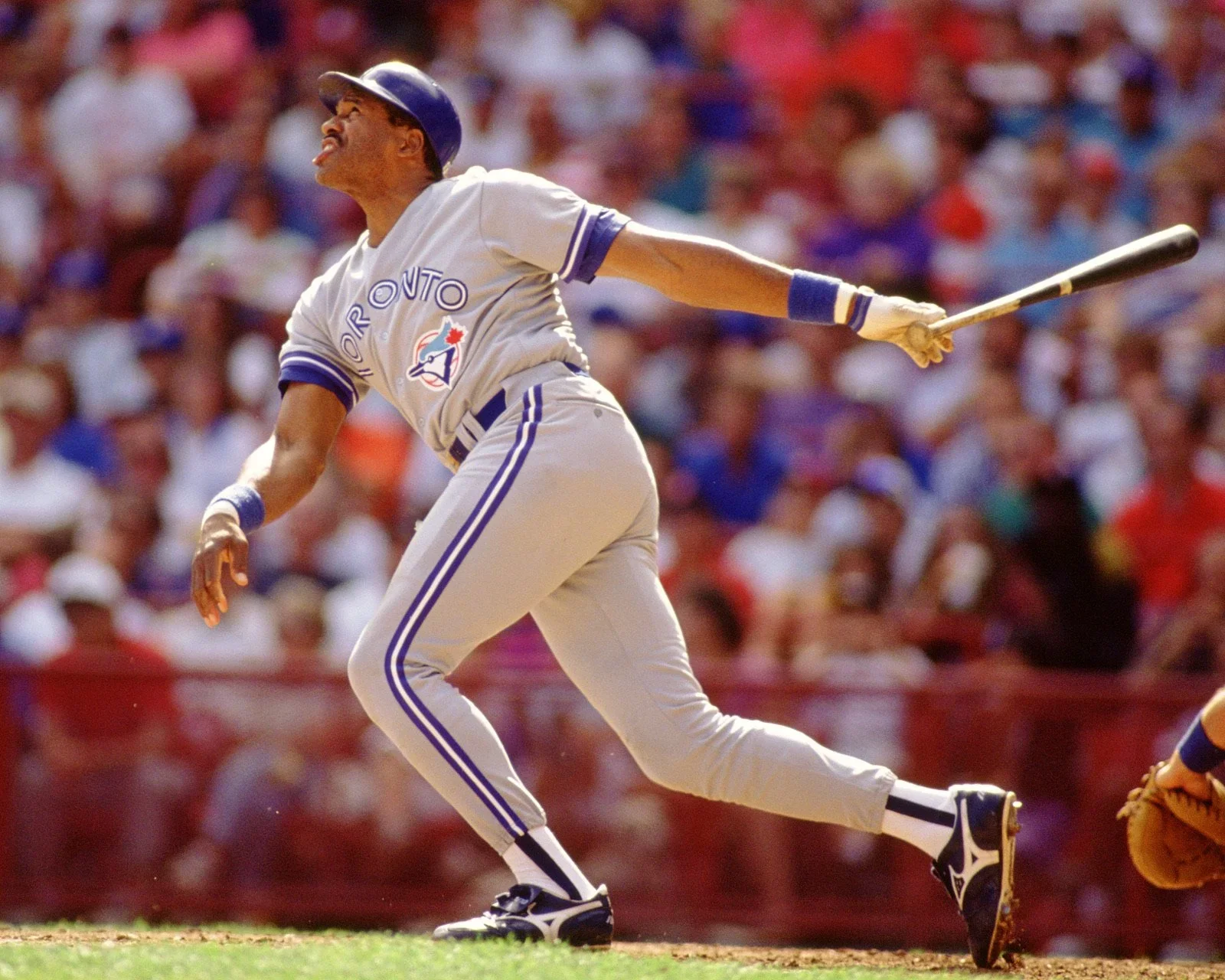
Dave Winfield once killed a seagull. Warming up between innings at Toronto’s Exhibition Stadium on August 4, 1983, he threw a ball that struck a gull and dropped it dead on the turf, and he was taken to a police station after the game and charged with cruelty to animals. The charges were dropped the next day. His manager, Billy Martin, observed that it was the first time all season Winfield had hit the cutoff man.
This remains the most famous thing Winfield ever did, which is unfair to a man with 3,110 hits, 465 home runs, and a plaque in Cooperstown. It is at least useful for placing him in time. He had been a star for half a decade when he killed that bird and was still playing into his forties, which is how he came to spend the early 1990s facing Randy Johnson for the Angels, the Blue Jays, and the Twins.
He was, by then, twice Johnson’s equal in experience and a fraction of it in bat speed. In 1992 he knocked in the run that won the World Series for Toronto, the first forty-year-old ever to drive in a hundred in a season. A year either side of that, Johnson was striking him out like everyone else. Winfield kept digging in anyway. He always had.
Fred McGriff
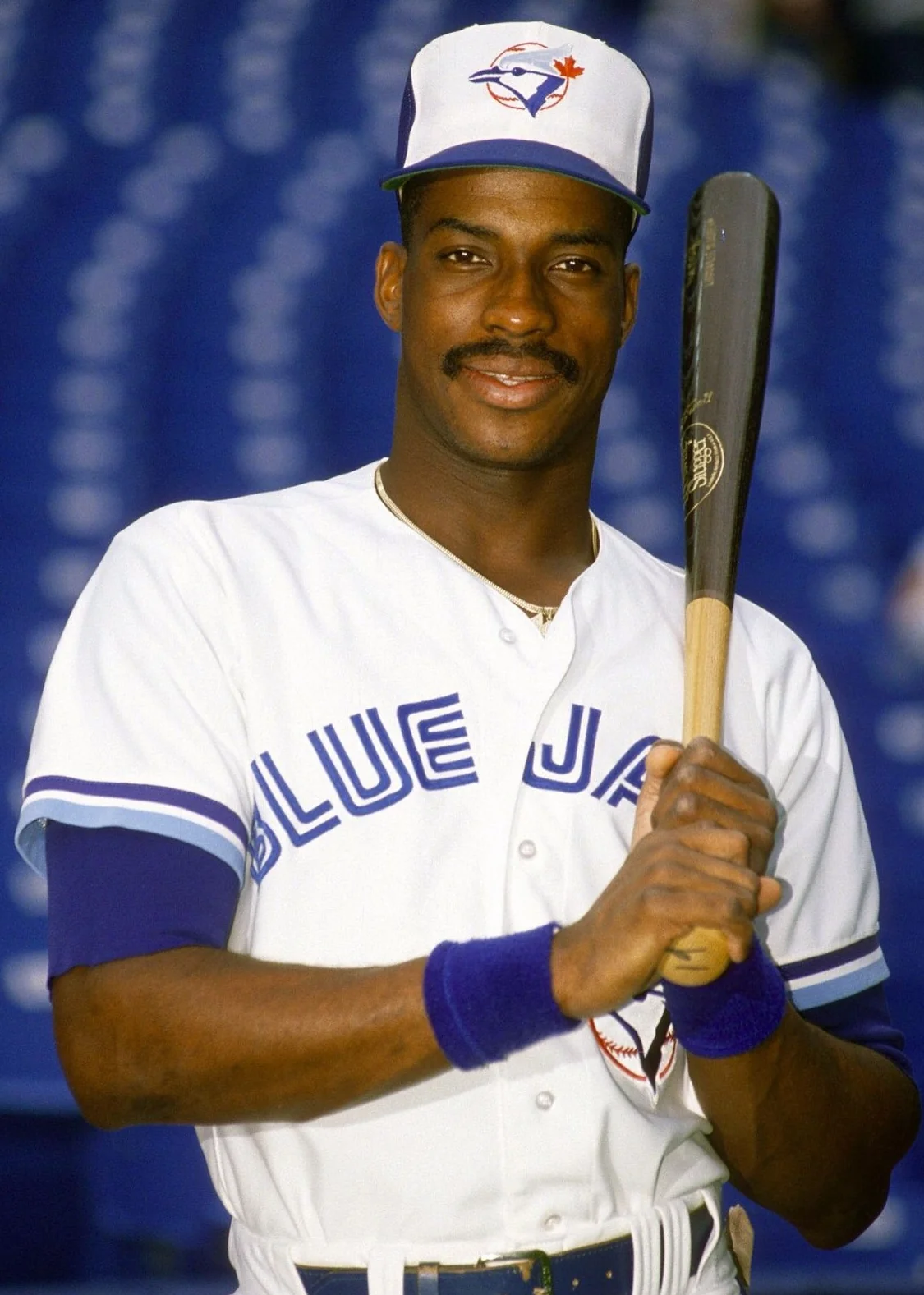
For most of the 1990s, anyone who left ESPN on long enough was eventually informed, by a deeply earnest narrator, that Tom Emanski’s defensive drills had produced back-to-back-to-back AAU national champions – a claim endorsed, in a blue mesh cap, by Fred McGriff, a slugger with no particular reputation for defense. It is a strange thing to be famous for, particularly when you have hit 493 home runs. McGriff, whom Chris Berman nicknamed the Crime Dog after the cartoon McGruff, was one of the best hitters of his era and somehow the least flashy, a sweet left-handed swing attached to a man who seemed faintly embarrassed by attention.
In 1989 he led the American League in home runs for the Toronto Blue Jays; in 1992 he led the National League for the San Diego Padres, making him the first player since the Dead Ball Era to top both. He hit thirty home runs for five different franchises, which is its own kind of record and also a polite way of saying nobody kept him very long.
He faced Randy Johnson at both ends of a nineteen-year career – as a young Blue Jay against the raw Seattle version in 1989, and as a graying Cub and Dodger against the Arizona version a decade and a half later. The writers kept him out of Cooperstown for ten years. A committee finally let him in, unanimously, in 2023. The dog had his day.
Wade Boggs
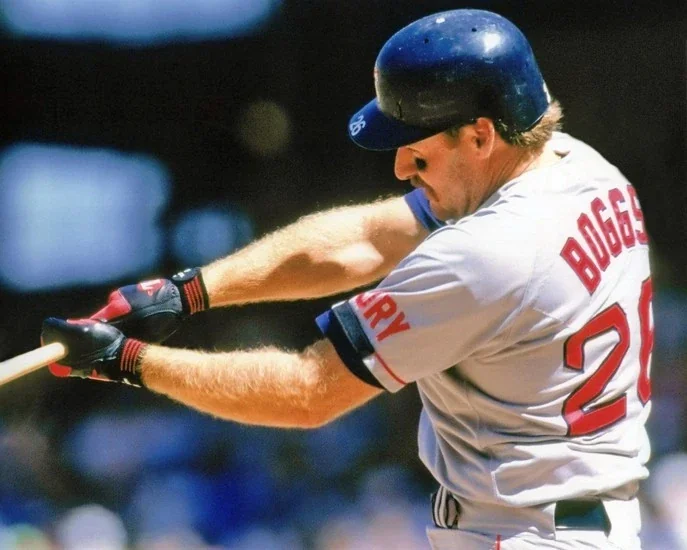
Wade Boggs took batting practice at 5:17 every afternoon, ran his wind sprints at 7:17, drew a Hebrew letter in the dirt before each at-bat, and ate chicken before every single game – a regimen of roughly seventy-five superstitions that he insisted, reasonably enough, worked. His teammate Jim Rice took to calling him the Chicken Man. The hits backed him up. Boggs won five batting titles in six years, reeled off seven straight seasons of two hundred hits or more, and retired with 3,010 of them and a .328 average.
He was a left-handed contact artist of the old school, the sort who would foul off seven pitches waiting for one he liked, which made him a peculiar problem for Randy Johnson, a left-hander whose slider was designed precisely to make left-handed hitters look foolish. They met often through the 1990s, Boggs with the Red Sox and then the Yankees, including the 1995 Division Series, when Johnson’s Mariners ended New York’s season.
The crowning absurdity of his career arrived in 1999, when Boggs, a man who hit 118 home runs in eighteen years, collected his 3,000th hit by putting one over the fence. He dropped to his knees and kissed home plate. Even the most superstitious man in baseball could not have scripted that one.
Cal Ripken Jr.
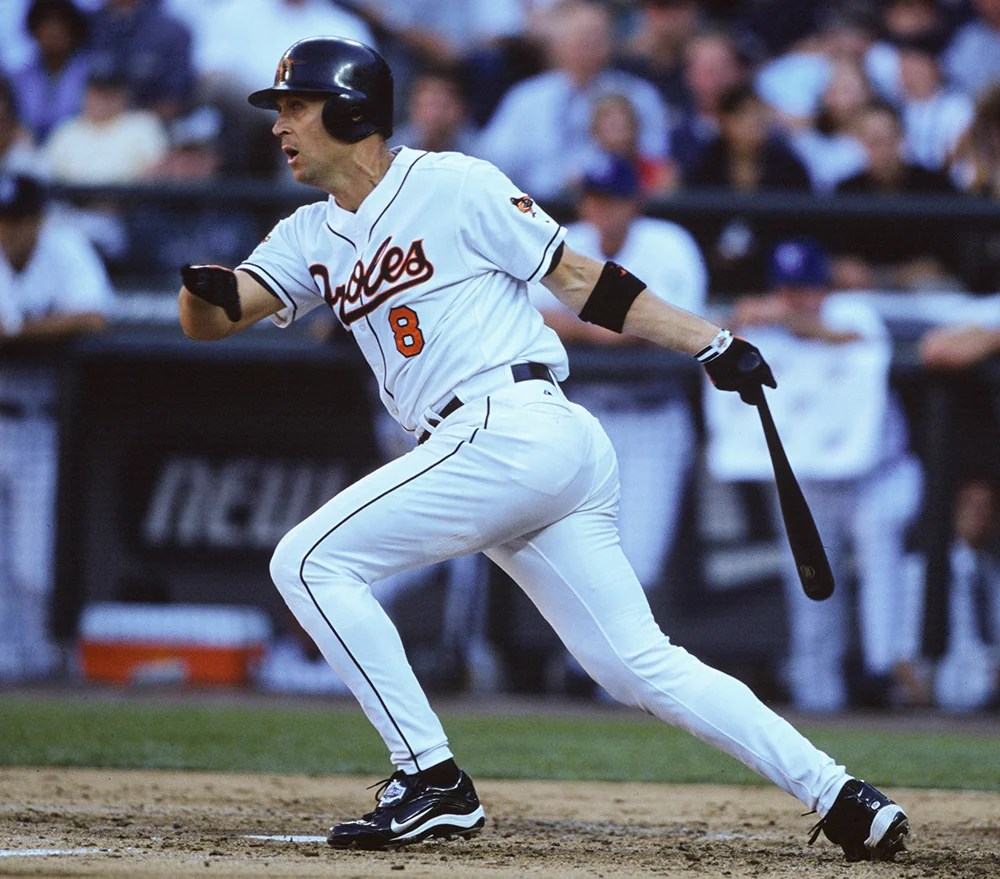
Cal Ripken Jr. played 2,632 consecutive games, which is a sentence worth sitting with for a moment. Across sixteen full seasons he did not miss a single day of work, not for flu or bruise or the simple human wish to stay in bed, and on September 6, 1995, he passed Lou Gehrig’s record of 2,130, a number that had stood for fifty-six years and that most people had quietly filed under permanent. He jogged a lap around Camden Yards only because his teammates physically shoved him out of the dugout to do it.
The streak carries a quiet consequence for our purposes here. Because Ripken never sat, he faced Randy Johnson essentially every time their teams met for a decade – the one pitcher most hitters would gladly have taken a day off to avoid, against the one man in baseball who never took a day off at all.
He spent his entire twenty-one-year career with the Baltimore Orioles, won Rookie of the Year, two MVPs, and a World Series, and made himself the template for every six-foot-four shortstop who came after him. He arrived in 1981 looking like a third baseman and left in 2001 having permanently changed what the position was allowed to look like. The streak is what people remember. It should be.
Paul Molitor
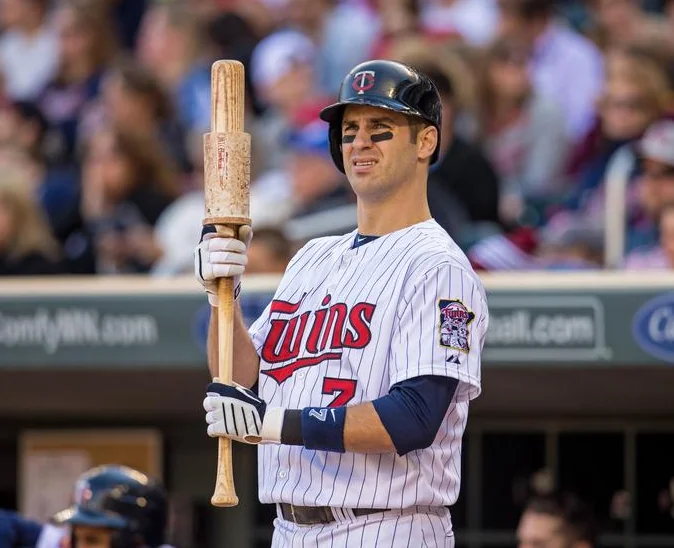
Paul Molitor collected his 3,000th hit by hitting a triple, which no one had ever done before and which tells you most of what you need to know about him. A triple is the most strenuous hit in baseball, a thing you earn with your legs and your lungs, and Molitor legged this one out in 1996 at the age of forty, in front of his hometown Minnesota crowd. He finished with 3,319 hits, more than Willie Mays or Tony Gwynn or George Brett, and almost nobody noticed while he was doing it.
They called him the Ignitor, and he spent twenty-one seasons setting the table – first for the Milwaukee Brewers, where he and Robin Yount carried the 1982 club to its only pennant, and later as a designated hitter who flatly refused to age. In 1993 he signed with Toronto, hit .500 in the World Series, and walked off with the Most Valuable Player award at thirty-seven.
He faced Randy Johnson across all three of his stops, a tireless contact hitter against a pitcher built to overwhelm exactly that kind of patience. Johnson won most of those meetings, the way he won most meetings with everyone. But Molitor had been quietly stockpiling base hits since 1978 and was not a man easily hurried, and the strikeouts cost him less than they cost most men who faced Johnson.
Alan Trammell
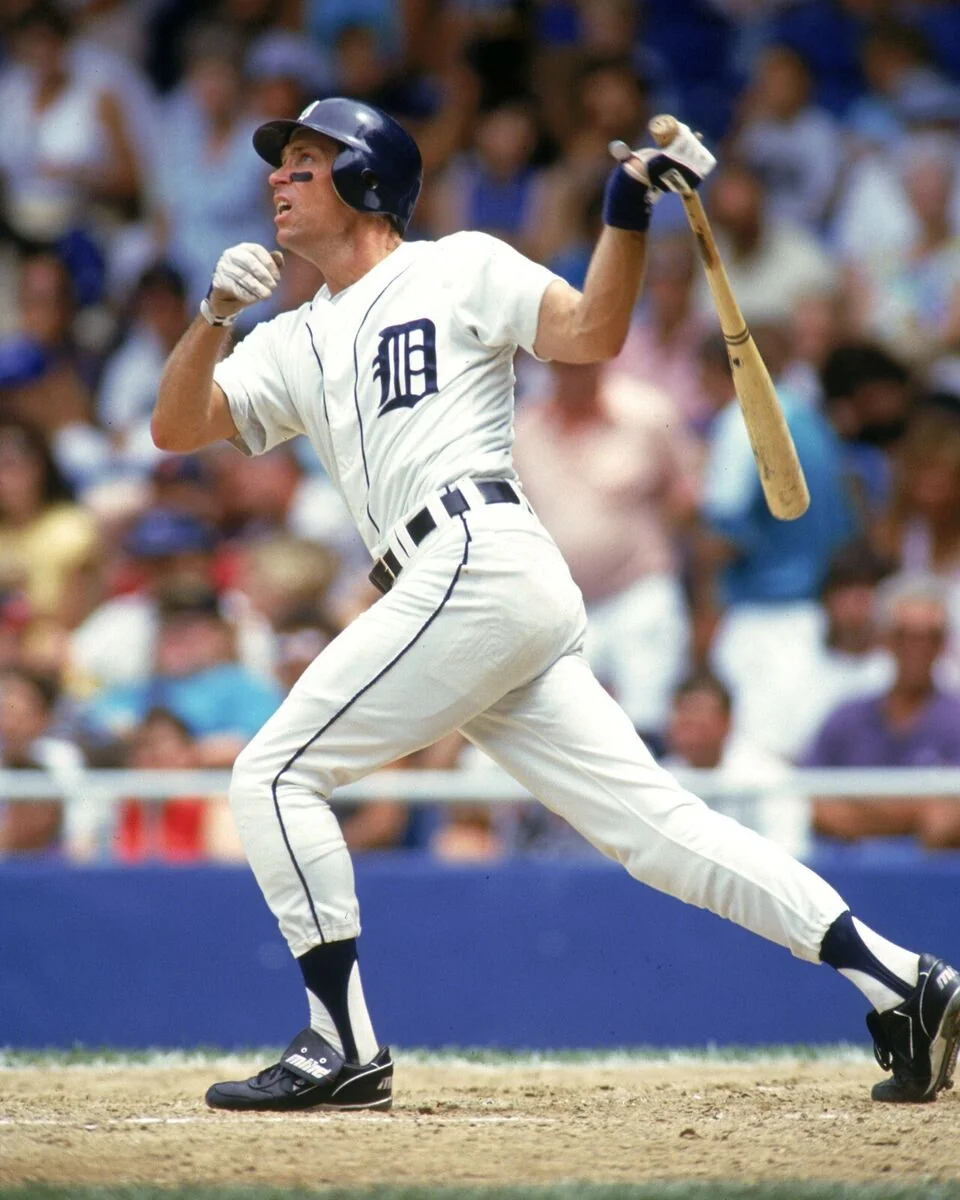
Alan Trammell did not make the Hall of Fame until 2018, and even then it was not the writers who let him in but a veterans’ committee, which voted him through two years after his name finally dropped off the writers’ ballot and twenty-two years after he last played. This was, to put it plainly, a mistake that took the sport the better part of four decades to correct. Trammell had been one of the finest shortstops of his generation – a .285 hitter with genuine power, a four-time Gold Glover, the Most Valuable Player of the 1984 World Series, and the desperately unlucky runner-up in the 1987 MVP vote, which somehow went to George Bell instead.
He played all twenty of his seasons for the Detroit Tigers, the whole time beside second baseman Lou Whitaker. The two were called up on the same day in 1977 and turned the double play together more often than any pair in the history of the game, a partnership so seamless that it seems almost rude that Whitaker is still standing outside Cooperstown.
Trammell faced Randy Johnson in the early 1990s, a veteran shortstop near the end of the road against a younger left-hander whose fastball was just beginning to terrify the league. He retired in 1996, underrated to the finish – which, by that point, he had long since earned the right to call a tradition.
Kirby Puckett
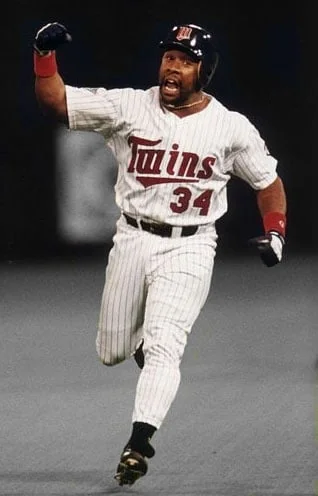
Kirby Puckett was generously listed at five foot eight and built, charitably, like a fire hydrant, which made him the least likely-looking great athlete in the American League and very possibly its most beloved. He spent twelve seasons with the Minnesota Twins, hit .318, won six Gold Gloves running down balls in center field that a man his shape had no business reaching, and produced one of the signature nights in postseason history.
That was Game 6 of the 1991 World Series. Puckett robbed Atlanta’s Ron Gant with a leaping catch against the Plexiglas, then ended the game in the eleventh inning with a home run, the one that sent the Series to a seventh game and had Jack Buck telling the country it would see everyone again the following night. The Twins won it all the next evening.
He faced Randy Johnson throughout the early 1990s, when the Twins and Mariners still shared the American League West, a right-handed slugger against the most intimidating left-hander going. Then, in the spring of 1996, Puckett woke up one morning unable to see out of his right eye. Glaucoma had taken it overnight, and at thirty-five his career was simply over, the way a light goes out. He went into Cooperstown five years later and was gone himself by forty-five.
Roberto Alomar
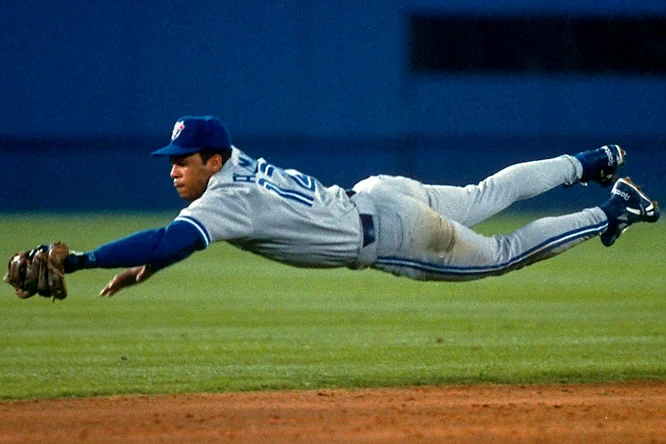
The most consequential called third strike of Roberto Alomar’s career was not thrown by Randy Johnson, or by anyone else of particular note. It came on September 27, 1996, when Alomar, then with the Baltimore Orioles, disagreed so violently with home-plate umpire John Hirschbeck’s strike-three call that he spat in the man’s face. It was one of the ugliest moments the sport had seen, it cost him a suspension and, for a while, his good name, and it very likely delayed his arrival in the Hall of Fame. The two men later reconciled and became friends, and Hirschbeck eventually said in public that Alomar belonged in Cooperstown.
He did. Alomar won ten Gold Gloves, more than any second baseman in history, made twelve straight All-Star teams, batted .300 across seventeen seasons, and was the defensive engine of the Toronto Blue Jays clubs that won the World Series in 1992 and 1993. There are reasonable people who will tell you he is the greatest second baseman who ever lived.
He spent the heart of his career in the American League, which meant regular appointments with Johnson through the 1990s. Curiously, the two would become teammates in Arizona for a moment in 2004, at the very end of it all. But for most of a decade Alomar simply faced him, like everyone else, and struck out when it was his turn.
Jeff Kent
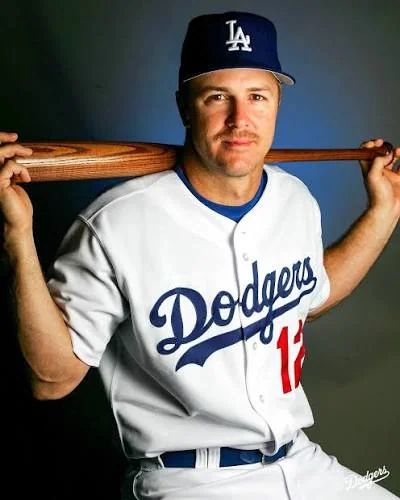
Forty-five times Jeff Kent walked in against Randy Johnson, more plate appearances than any other player being added to this list, and not one of those trips ended with the ball leaving the park. That is the whole cruel comedy of the matchup. Kent retired holding the all-time record for home runs by a second baseman – 351 of his 377 came at the position – and the left-hander he saw most often never surrendered him a single one. Fifteen strikeouts, a .162 average, no souvenirs.
Nothing about his path predicted any of it. Kent made the Cal roster as a walk-on, went 523rd overall in the 1989 draft, and was a Toronto rookie when Johnson first struck him out on July 16, 1992. Six weeks later the Blue Jays traded him to the Mets for David Cone, who promptly helped Toronto win its first World Series while Kent quietly set about the record: a .290 career average, 2,461 hits, 560 doubles, eight seasons of a hundred runs batted in.
The writers never elected him. The Contemporary Baseball Era Committee did, on December 7, 2025, with 14 of 16 votes, making Kent the first member of the Class of 2026. ‘I’m stuttering here because it has not sunk in,' he told reporters on the call that night. The home run record had sunk in long ago; everything else was allowed to take its time.
Frank Thomas
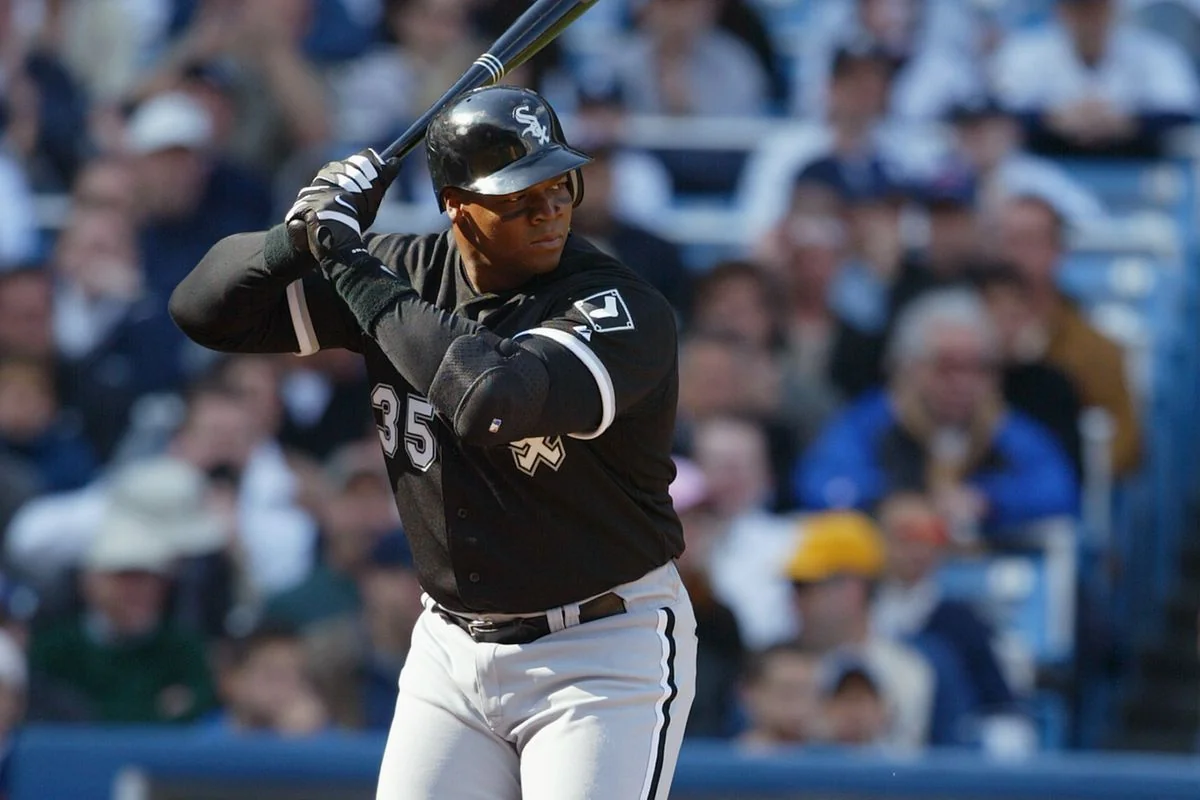
Frank Thomas struck out three times on August 8, 1997, a box-score line so unlike him it reads like a typo. The Big Hurt walked more often than he whiffed for most of his career and retired with a .419 on-base percentage, a figure that belongs to a slap-hitting leadoff man rather than a 240-pound first baseman who hit 521 home runs. That night at the Kingdome he ran into Randy Johnson throwing a 19-strikeout shutout, the second time Johnson reached nineteen in the 1997 season alone, which no pitcher had ever done. Johnson struck out the side in the fourth inning, Thomas among them, then struck out the side again in the sixth, Thomas among them again.
The collision was between two arguments about how to be great. Thomas won back-to-back American League MVP awards in 1993 and 1994 on the radical proposition that a power hitter should also lead the league in walks and almost never chase. Johnson built his case on making contact impossible. When the two met the strikeout usually won, though Thomas got the last word often enough, taking Johnson deep on more than one occasion over the years.
On a night when nineteen White Sox went down swinging or looking, fanning the most disciplined hitter of the decade three times was very nearly a courtesy.
Tim Raines
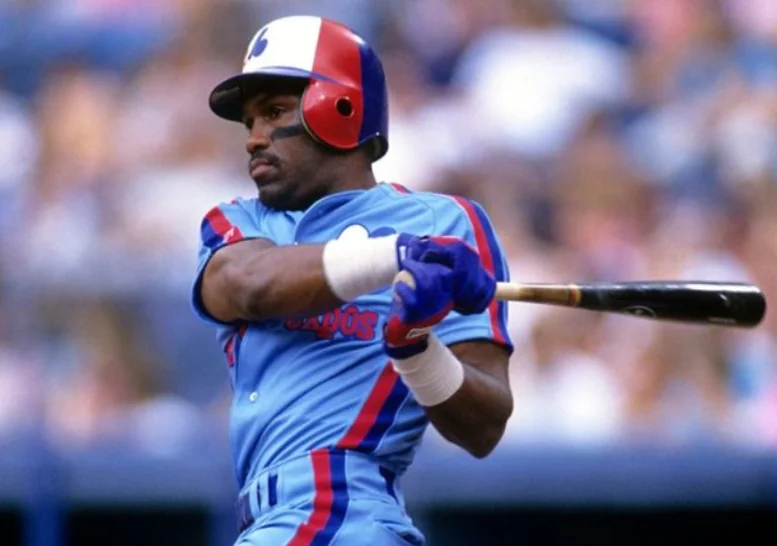
Randy Johnson has been the Big Unit since 1988, and the man who hung the name on him was Tim Raines. The two were teammates on the Montreal Expos that year, and during one batting practice the six-foot-ten rookie collided with the considerably smaller Raines, who picked himself up and announced that Johnson was, indeed, a big unit. The name stuck for the next thirty years and outlived the Expos themselves.
Raines then did something the original joke could not have anticipated: he moved to the American League, joined the Chicago White Sox and later the Yankees, and spent the 1990s having to bat against the very pitcher he had christened. History does not record whether he regretted it. Raines was a Hall of Famer in his own right, the finest leadoff man of his generation not named Rickey Henderson, a switch-hitting blur who stole 808 bases – fifth-most ever – and was caught so seldom that his 84.7 percent success rate is still the best in history.
The writers made him wait. He spent ten years on the ballot, climbing slowly, and was elected in 2017 in his final year of eligibility, pushed over the line by a generation of analysts who pointed out what his .385 on-base percentage had been quietly saying all along. The man who named the Big Unit got in just under the wire.
Andre Dawson
In the spring of 1987, Andre Dawson handed the Chicago Cubs a signed blank contract and invited them to write in whatever they decided he was worth. His knees were ruined by a decade on Montreal’s artificial turf, the free-agent market had gone mysteriously quiet, and this was the door he chose. He then hit 49 home runs, drove in 137, and won the MVP award for a team that finished dead last – one of the more elegant told-you-sos the sport has produced.
The Hawk was already a made man by then: 1977 Rookie of the Year, six straight Gold Gloves in the Expos outfield, twice an MVP runner-up on the same turf that was slowly disassembling him. Randy Johnson only reached him at the very end, when Dawson was a designated hitter in Boston in 1993 and 1994, batting on legs with almost nothing left to give. Johnson struck him out just three times while also surrendering a home run, because certain swings decline to retire on schedule.
Dawson entered Cooperstown in 2010, and the sport now opens its college season in his honor. The Andre Dawson Classic, Major League Baseball’s HBCU showcase, ran again this February at the Jackie Robinson Training Complex – seven historically Black programs plus, this year, Yale. Dawson had walked on at Florida A&M before the Expos found him in the 11th round in 1975. The opening weekend of college baseball now carries his name.
Eddie Murray
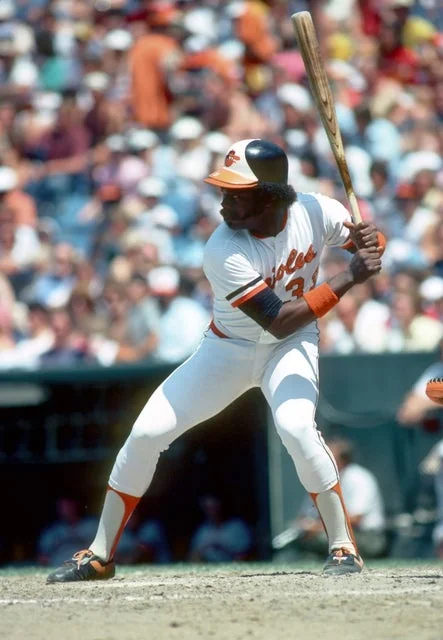
Only three players in history reached both 3,000 hits and 500 home runs, and the third, after Willie Mays and Hank Aaron, was Eddie Murray – a switch-hitter who never once had a 200-hit season. The trick was simple: he showed up every day for twenty-one years, batted from both sides, drove in runs, and said as little as possible to anyone holding a notebook. They called him Steady Eddie. Everyday Eddie was more accurate.
Murray spent most of his prime in the National League, with Baltimore first and then the Dodgers and Mets, which kept him clear of Randy Johnson entirely until 1994, when he signed with the Cleveland Indians and returned to the American League at the age of thirty-eight. The timing was poor. The Johnson he met was the 1995 Cy Young winner, a left-hander at the absolute summit of his powers, while Murray was an aging first baseman on the downslope.
He collected his 3,000th hit in a Cleveland uniform in 1995 and helped the Indians to their first pennant in forty-one years. Then he went home, into Cooperstown, and into the quiet he had always preferred. The most dependable hitter of his generation had run into the least hittable pitcher of the next one, a little too late to do much about it.
Ivan “Pudge” Rodriguez
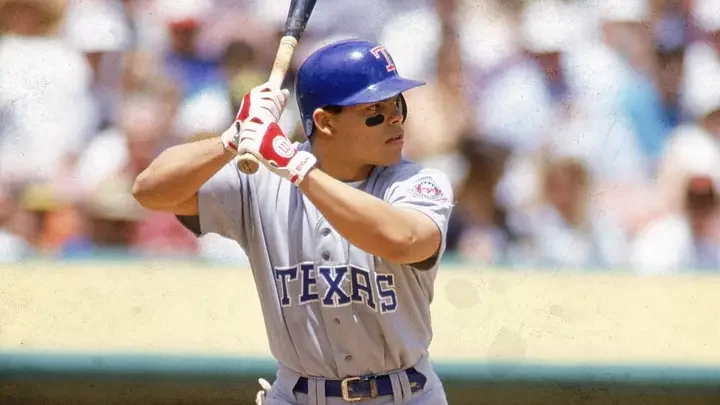
Ivan Rodriguez threw out base runners from a crouch the way other people throw from a full windup, and he did it so reliably that runners eventually stopped trying. He led his league in catching base stealers nine times, once erasing better than sixty percent of them in a single season, and finished with the best caught-stealing rate of any catcher in history. Scouts swore his throws to second touched ninety-five miles an hour. They were generally believed.
Rodriguez won thirteen Gold Gloves, more than any catcher who has ever played, added a 1999 Most Valuable Player award and a 2003 World Series title with the Marlins, and squatted behind the plate for more games than anyone in the history of the position. For a man listed at five foot nine and built low to the ground, this was an absurd quantity of work.
He faced Randy Johnson more than almost anyone on this list, because the Texas Rangers and Seattle Mariners shared the American League West for the whole of Johnson’s Seattle prime. For the better part of a decade he dug in against him as often as any hitter in the league. There is a small irony in it: the most feared throwing arm in baseball spent all those nights on the wrong end of the most feared left arm in baseball.
Derek Jeter
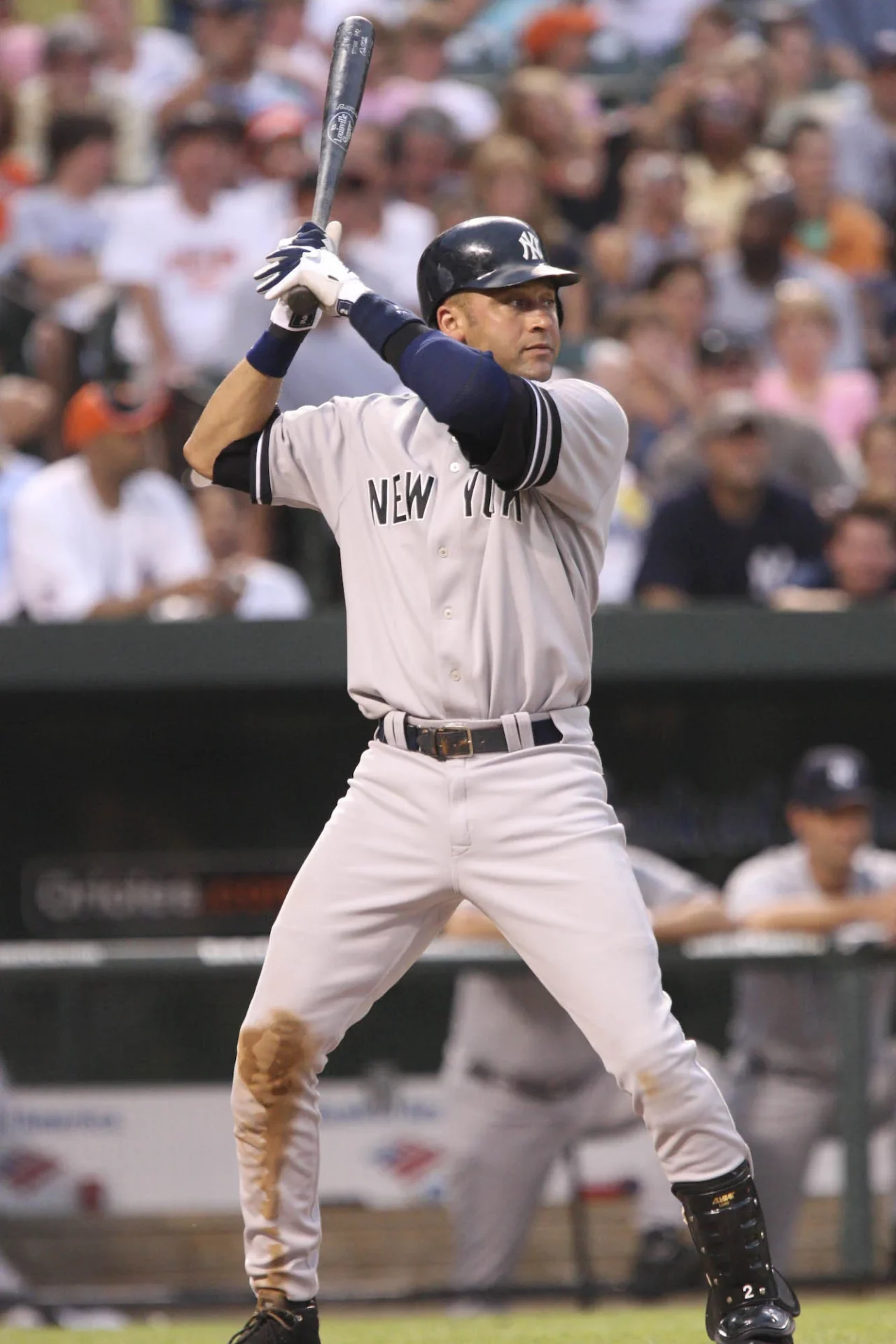
Derek Jeter became Mr. November in the same World Series that Randy Johnson took apart the New York Yankees. The nickname arrived in Game 4 of the 2001 Series, when Jeter homered off Arizona’s Byung-Hyun Kim moments after midnight on the first of November, the first time a big-league game had ever spilled into that month. The home run is the part Yankees fans replay. The part they tend to skip is that Arizona won the series in seven games, in no small measure because Johnson went 3-0 and shared the Most Valuable Player award with Curt Schilling.
Jeter faced Johnson in that series and through the late 1990s besides, a clean-cut shortstop against a left-hander who specialized in making clean-cut shortstops uncomfortable. He got the better of most pitchers across twenty years – 3,465 hits, five championships, a .310 average, and a vote total in 2020 that fell one ballot short of unanimous, denied by a single anonymous writer for reasons known only to him.
The relationship has a postscript. In 2005 the Yankees signed Johnson, and for two seasons the man who had dismantled Jeter’s Yankees in October was simply Jeter’s teammate. October has a sense of humor about these things.
Jim Thome
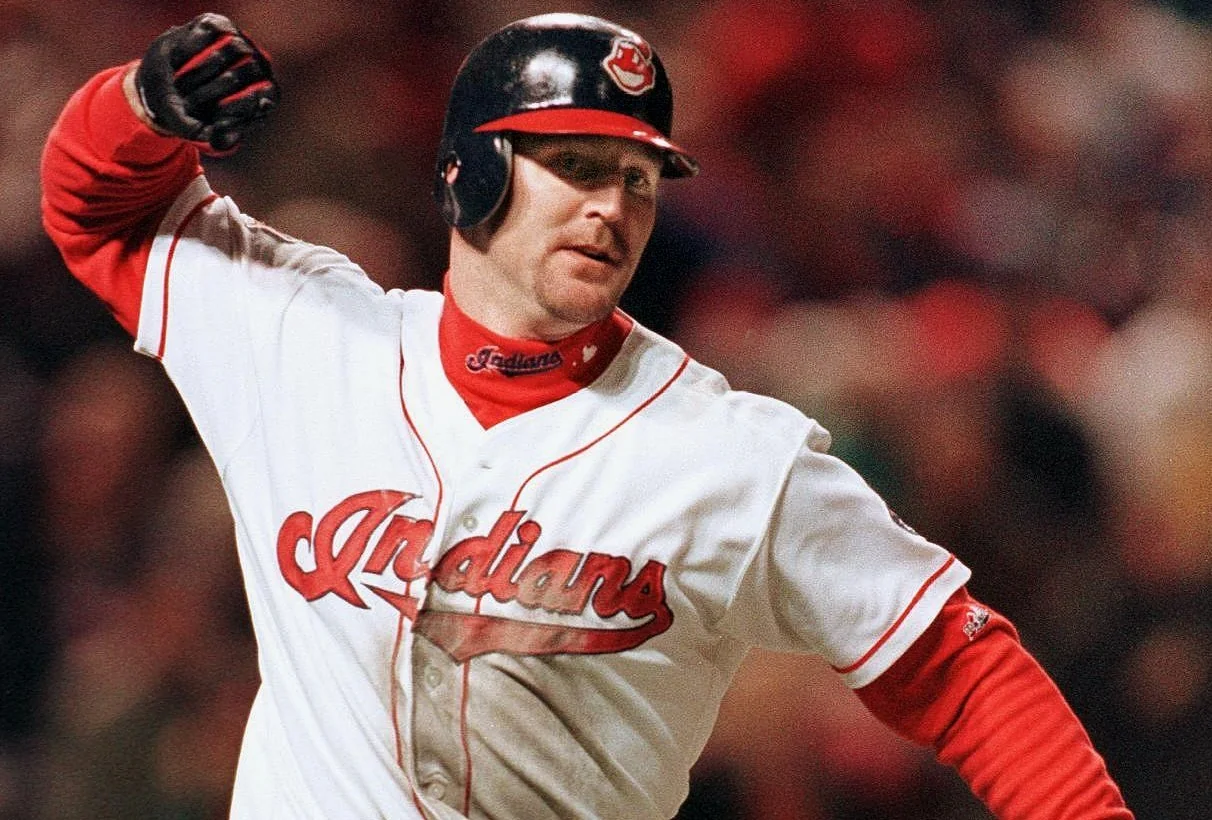
Jim Thome hit 612 home runs, the eighth-most in the history of baseball, and remains, by general agreement, the nicest man ever to do so. The two facts are not unrelated. Thome was a 6-foot-4 slugger from Peoria who pointed his bat out at the pitcher before every at-bat – a habit borrowed from Roy Hobbs in The Natural, by way of his hitting coach Charlie Manuel – and then hit the next pitch into the bleachers more reliably than almost anyone. He holds the record for walk-off home runs with thirteen, and reached his 500th in walk-off fashion, which is the sort of thing that happens to people the universe likes.
He also drew 1,747 walks, seventh-most ever. He made the Hall of Fame on the first ballot in 2018, and Cleveland put up a statue of him with the bat pointed forward.
Thome faced Randy Johnson in both leagues, which few hitters on this list can claim: as a Cleveland Indian against Johnson’s Mariners in the 1990s, the 1995 American League Championship Series included, and then as a Philadelphia Phillie against the Diamondbacks a decade later. A patient left-handed slugger standing in against Randy Johnson is a hard way to earn a living. Thome, agreeable as always, made it look like fun.
David Ortiz
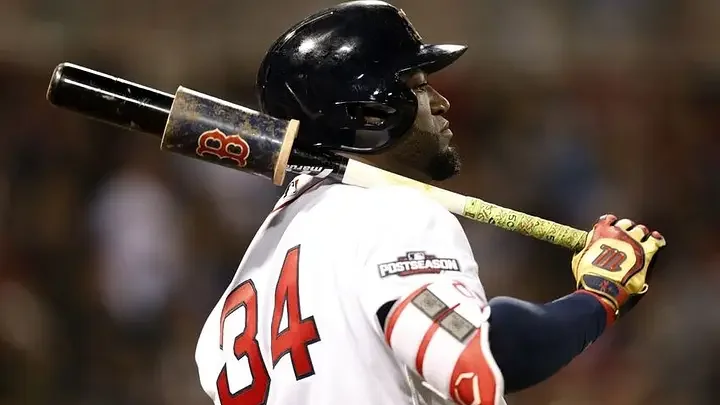
David Ortiz spent six seasons in Minnesota as a part-time afterthought, and after the 2002 season the Twins let him go for nothing. Their general manager later called it a bad misjudgment of a man’s talent, which is a generous way to describe releasing a hitter who would go on to club 541 home runs, win three World Series, and become the most beloved athlete in the city of Boston. Ortiz signed with the Red Sox a few weeks later, on the recommendation of Pedro Martinez, and the rest is a long and very loud love story.
Big Papi crossed paths with Randy Johnson twice, years apart, and the gap between the two meetings is the whole story. As a young Twin in 1997 and 1998, when he was still listed as David Arias and barely playing, he saw Johnson’s Mariners. Then, in 2005 and 2006, with Johnson pitching for the Yankees and Ortiz at the absolute peak of his powers, the two met again in the one rivalry in baseball where every at-bat is treated as a referendum.
By then Ortiz was the most dangerous left-handed hitter in the game and Johnson was a forty-two-year-old still throwing hard. The kid the Big Unit used to strike out had become a considerable problem. The Twins, presumably, were not watching.
Ken Griffey Jr.
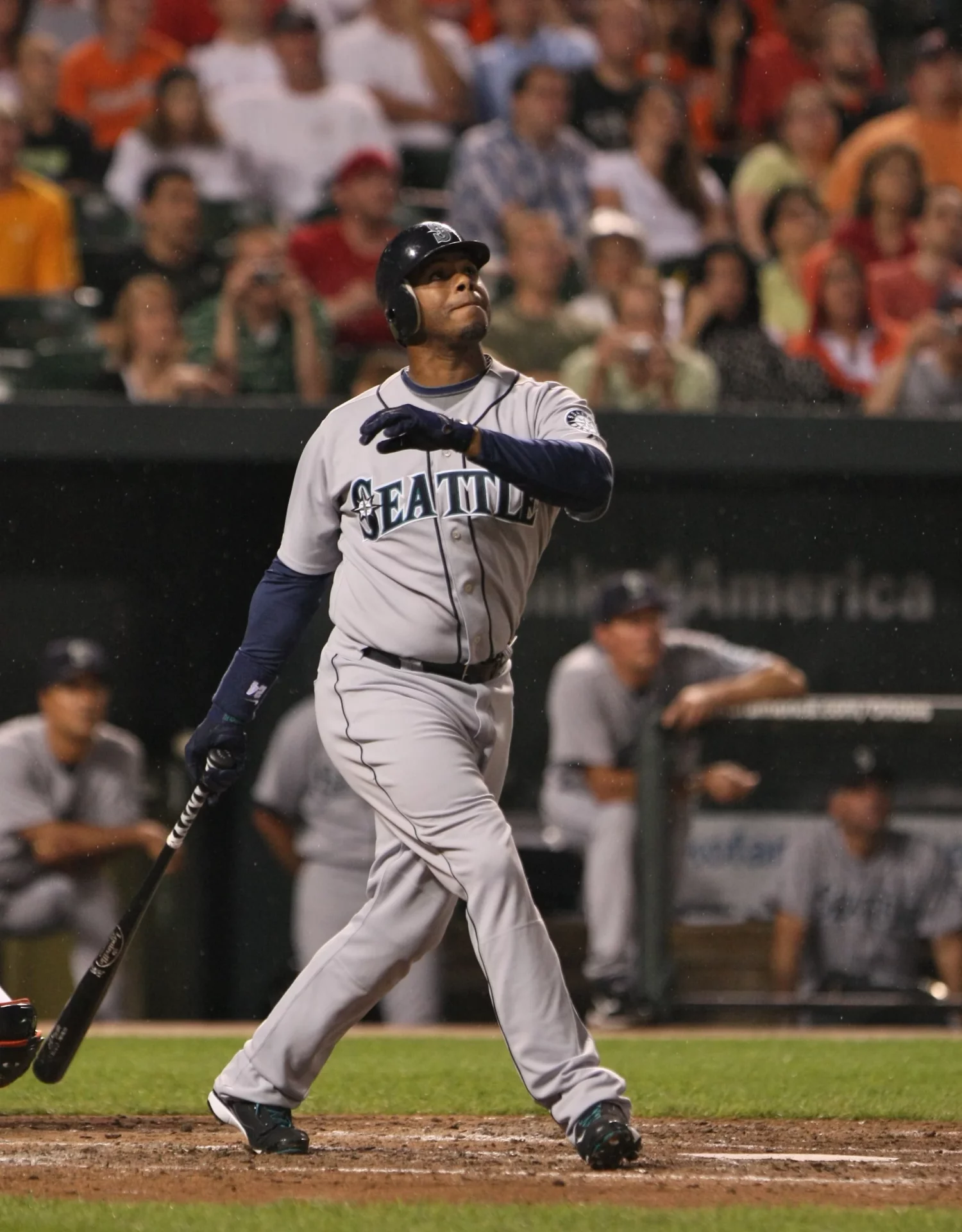
For nine seasons the most frightening pitcher in Seattle never had to deal with the most gifted hitter in Seattle, because they dressed in the same clubhouse. Then Johnson was traded away in 1998, Safeco Field opened in July 1999, and five days after the new ballpark’s first game the Big Unit walked back in wearing Arizona colors and threw a complete game with ten strikeouts at his old team. Among the victims, for the first time: Ken Griffey Jr.
It never improved for Junior. Two more strikeouts followed in Cincinnati in 2002, and his career line against his former teammate closed at 0-for-5. The No. 1 pick of the 1987 draft – the selection Baseball America later called the best in the event’s history – a man who retired seventh on the all-time list with 630 home runs, went hitless for life against the guy he once stretched next to before games.
Griffey entered the Hall in 2016 and then managed the thing almost no legend manages: an authentic second act. He is now a professional sports photographer, credentialed at the 2025 Masters, embedded with Team USA at this spring’s World Baseball Classic as the tournament’s Global Ambassador, and the subject of an NBC documentary titled Photographer No. 24. Better still, Johnson is also a photographer in retirement, and told CBS that Griffey has called him for advice. The fastball never offered a help line. The camera apparently does.
Edgar Martinez
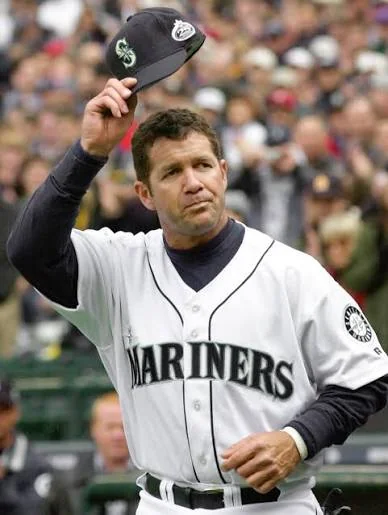
Their entire rivalry fits inside one small box score: four plate appearances, two hits, one strikeout. Edgar Martinez and Randy Johnson spent a decade as Seattle teammates, which meant the best right-handed hitter of his generation and its most terrifying left-hander simply never met – until the July 1999 night Johnson returned to town with the Diamondbacks and got him swinging in the eighth inning. That was it. The only one, ever. Edgar finished a career .500 hitter against him and is entitled to regard the strikeout as a rounding error.
Martinez never played for anyone else across 17 seasons, and Seattle has repaid the loyalty in full. His No. 11 is one of only three numbers the Mariners retire, beside Griffey’s 24 and Jackie Robinson’s 42. He was inducted in 2019 as a seven-time All-Star and five-time Silver Slugger, and he has never really left the payroll: he stepped back in as hitting coach in August 2024 when Dan Wilson took over the club, now serves as the team’s senior director of hitting strategy, and was named to Puerto Rico’s coaching staff for the 2026 World Baseball Classic. Julio Rodriguez calls him a mentor with ‘so much to offer to young players like me.'
Twenty-two years after his final at-bat, in other words, Seattle still pays Edgar Martinez to explain hitting. On the evidence of the matchup, Johnson would sign off on the arrangement.
Tony Gwynn
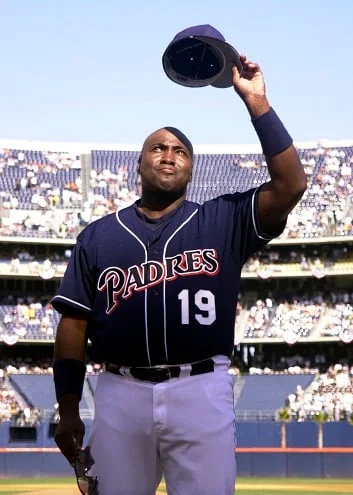
Against Greg Maddux, across one hundred and seven plate appearances, Tony Gwynn struck out zero times and batted .415. Against Randy Johnson he went 1 for 12 with four strikeouts, which for Gwynn amounted to a humiliation. He was the finest pure contact hitter the game produced after Ted Williams, a man whose .338 career average is the highest of anyone who debuted after 1940, and who won eight batting titles while never once striking out as many as forty times in a season.
Gwynn studied pitchers on videotape so relentlessly that teammates nicknamed him Captain Video, dissecting his own swing frame by frame in the 1980s, when most of baseball still regarded film study as a curiosity. The homework did not travel well to the left-hander’s box against Johnson, whose slider broke away from a left-handed hitter as though it had urgent business elsewhere. Across eighteen career plate appearances, regular season and the 1998 playoffs combined, Gwynn collected two hits.
That October meeting came in the Division Series, Johnson by then pitching for Houston and Gwynn’s Padres eliminating him anyway. Gwynn ended his career with 3,141 hits and a standing invitation to anyone who believed they could strike him out. Randy Johnson was the rare man who accepted it and won.
Barry Larkin
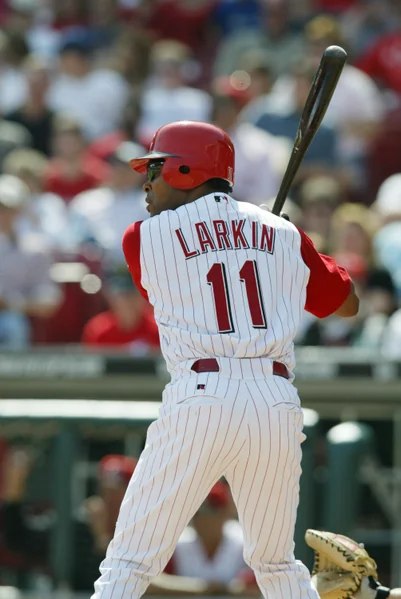
No shortstop had ever hit thirty home runs and stolen thirty bases in the same season until Barry Larkin managed it in 1996, at the age of thirty-two. It was a fitting late flourish for a man who had spent a decade quietly arguing that a shortstop could do everything. He won the National League MVP in 1995, the eighth shortstop ever to manage it, and Ozzie Smith – standard-bearer of the old glove-first model – handed him an autographed bat at the next All-Star Game and told him the torch was now his.
Larkin played all nineteen of his seasons for the Reds, the team he had grown up watching in his hometown, and anchored the 1990 club that led the National League wire to wire and then swept the heavily favored Oakland A’s in the World Series. He finished with 2,340 hits, a .295 average, and nine Silver Sluggers, more than any shortstop in the history of the position.
By the time Randy Johnson reached the National League, with the Astros in 1998 and then the Diamondbacks, Larkin was in his thirties and Johnson was at his absolute peak. They met through the Reds’ schedule, a hitter who worked the strike zone as well as anyone in the league against a left-hander who simply overpowered everyone in it. It was not a fair fight. Few were.
Craig Biggio
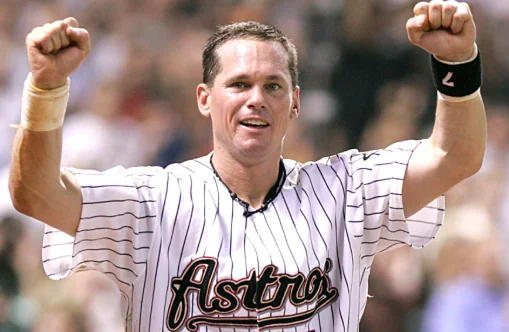
Craig Biggio was hit by 285 pitches, the second-highest total in the history of baseball, and a good number of them looked at least partly intentional – the work of a man who crowded the plate, wore armor on his left elbow, and declined, as a matter of principle, to get out of the way. He turned getting plunked into a competitive advantage. It was that brand of stubbornness, applied everywhere, that built the career.
Biggio came up as a catcher, made an All-Star team behind the plate in 1991, then moved to second base the following spring and made the All-Star team there too, the only player ever to manage both. Later he spent two years in center field before shifting back. He collected 3,060 hits and 668 doubles, more than any right-handed hitter who has ever lived, across all twenty of his seasons with the Houston Astros.
For part of 1998, Randy Johnson was a teammate – Houston rented him at the deadline for a playoff run that ended early. After that they were opponents again, Biggio’s Astros against Johnson’s Diamondbacks for most of the next decade. A leadoff hitter who specialized in not being intimidated is precisely the sort of player Johnson most enjoyed intimidating. The results did not always favor Biggio. He kept crowding the plate anyway. He always did.
Jeff Bagwell
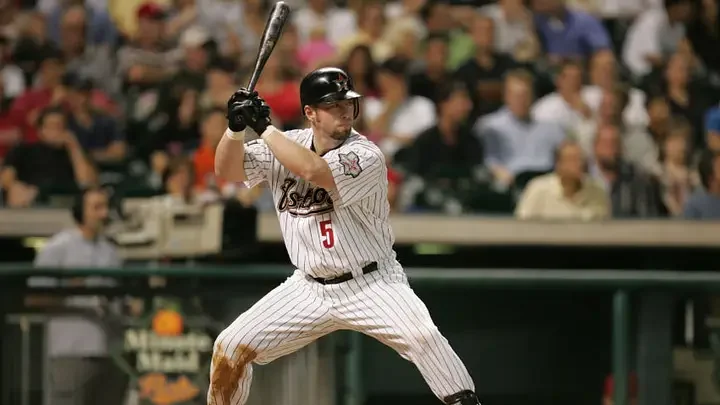
Jeff Bagwell was, for about four hundred days, a minor-league third baseman the Boston Red Sox were content to give away. In August 1990, chasing a division title, Boston traded the twenty-two-year-old – then hitting .333 in Double-A and blocked at third base by Wade Boggs – to the Houston Astros for a thirty-seven-year-old reliever named Larry Andersen. Andersen threw twenty-two useful innings for the Red Sox and left. Bagwell moved across the diamond to first base, won the 1991 Rookie of the Year, and went on to hit 449 home runs. It is now taught to new general managers as a cautionary tale.
Bagwell spent all fifteen of his seasons in Houston alongside Craig Biggio, the two of them the heart of the Killer B’s. He hit from a crouch so low and so wide he looked like a man bracing against a strong wind, and in the strike-shortened 1994 season he was the unanimous National League MVP, batting .368 with 39 home runs in 110 games before a broken hand ended it.
He faced Randy Johnson as a Diamondbacks opponent through the Arizona years, a right-handed power hitter against a left-hander who was winning the Cy Young Award every autumn. An arthritic shoulder finished Bagwell at thirty-seven, short of the 500 home runs that would have made his Cooperstown case a formality. The writers made him wait until 2017 anyway.
Chipper Jones
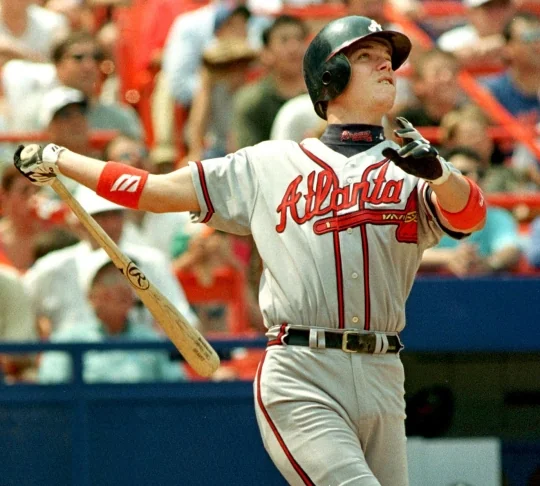
On May 18, 2004, Randy Johnson threw a perfect game in Atlanta at the age of forty, and the part he savored most was Chipper Jones. Johnson struck Jones out all three times he batted, the showpiece of a 13-strikeout afternoon.
This was a peculiar result, because Chipper Jones owned Randy Johnson. Nobody hit more home runs off him – six, a total matched only by Albert Pujols – and among the hitters who faced Johnson at least forty times, none finished with a higher OPS than Jones’s 1.195. As a switch-hitter Jones stood in right-handed against the left-hander, the platoon edge that produced all those home runs. Johnson struck him out fourteen times anyway, by Jones’s own count, including three separate three-strikeout games and the only four-strikeout game of Jones’s twenty-three-year career.
Jones called it feast or famine, which undersells how violent the swings between the two could be. Here was a hitter who batted .349 against the most intimidating left-hander alive and still spent whole nights trudging back to the dugout with the bat still on his shoulder. The perfect game was not an upset or an aberration. It was the afternoon the famine arrived all at once, and Johnson, who had been waiting years for it, did not waste a single pitch.
Andruw Jones
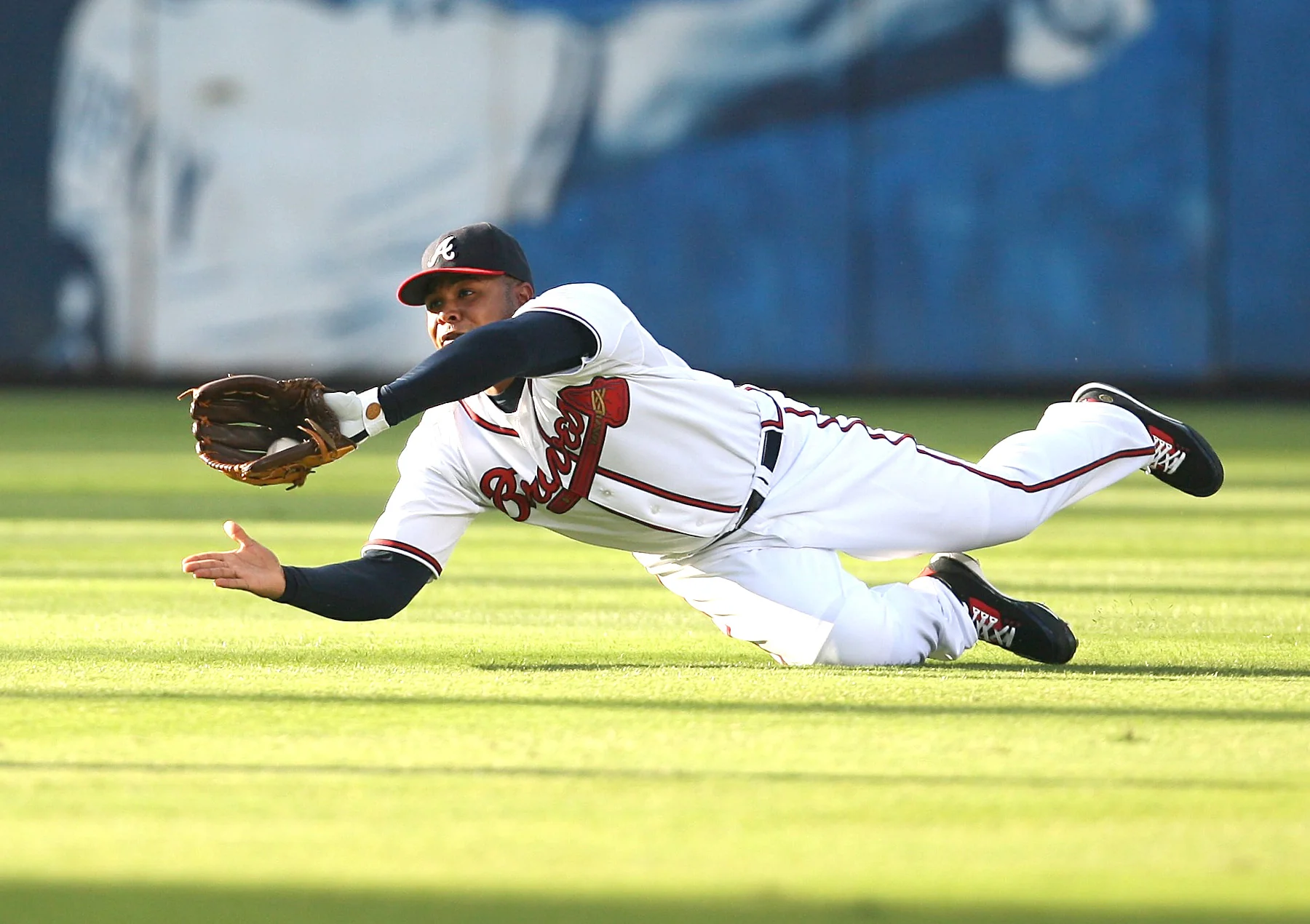
At nineteen years and five months, in his very first World Series game, Andruw Jones hit two home runs in Yankee Stadium and took the record for youngest man to homer in the Series away from Mickey Mantle by eighteen months. He was the third big leaguer the island of Curacao had ever produced, signed by Atlanta at sixteen, and for the following decade he made center field look effortless to the point of rumor: ten consecutive Gold Gloves from 1998 through 2007, a total only five other outfielders have ever reached – and their names are Mays, Clemente, Kaline, Griffey, and Suzuki.
Johnson handled him more roughly than any other new addition here: eighteen strikeouts in all, thirteen in the regular season and five more in the 2001 NLCS alone, plus an 0-for-3 inside the 2004 perfect game. Yet Jones took him deep three times, the most of the nine names being added, because a hitter who could put up 51 homers in a season, as he did in 2005, was never leaving entirely empty-handed.
His election took the scenic route. Jones debuted on the 2018 ballot at 7.3 percent, a figure that normally means goodbye, then climbed for nine years until January 20, 2026, when 78.4 percent of the writers finally sent him to Cooperstown. The glove was never the question. The electorate simply needed a decade to believe what it had watched.
Mike Piazza
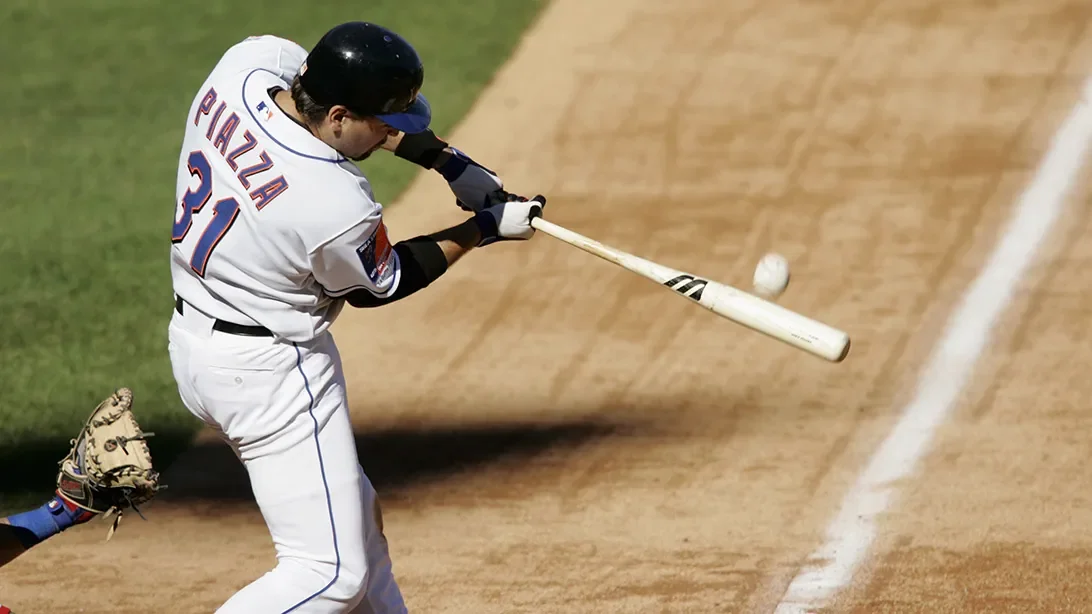
Mike Piazza was the 1,390th player taken in the 1988 draft, a 62nd-round courtesy the Los Angeles Dodgers extended only because their manager, Tommy Lasorda, was a boyhood friend of Piazza’s father and would not stop asking. Lasorda later admitted that the five scouts he sent to look at the kid all came back and told him Piazza could not play. He had them draft him anyway. No one chosen that low has reached the Hall of Fame, before or since.
Moved from first base to catcher because catching was the only route onto a roster, Piazza became the greatest hitting catcher the game has produced. He hit 427 home runs, 396 of them as a catcher, which is a record, and retired with a .308 average and twelve All-Star selections. What he could not do was throw, a quiet irony for a man behind the plate, and opposing base runners helped themselves accordingly.
He spent his prime with the Dodgers and then the New York Mets, which kept him in the National League and, from 1998 on, in regular contact with Randy Johnson’s Astros and Diamondbacks. A right-handed slugger who feasted on fastballs met a left-hander glad to supply the hardest ones in the league. Sometimes it went well for Piazza. Often it did not.
Carlos Beltran
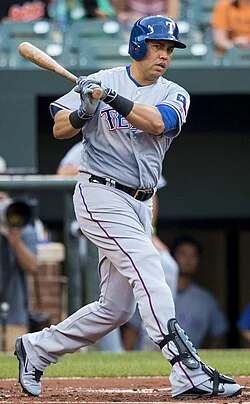
Somebody on this list had to actually hit the man. Carlos Beltran batted .409 against Randy Johnson across 25 meetings and took him deep once, and he still qualified for these pages anyway, because even the hitters who solved Johnson eventually paid the toll: three strikeouts, the first as a Kansas City Royal in June 2001, the other two as a Met facing a Yankee-uniformed Johnson in Subway Series interleague games.
October is where Beltran’s plaque was truly written. Across 65 postseason games he hit .307 with sixteen home runs, 42 runs batted in, and a 1.021 OPS – numbers that read like a typographical accident for anyone carrying that large a playoff sample. The writers made him wait regardless. When his election came on January 20, 2026, on his fourth ballot, it arrived emphatically: 358 votes, 84.2 percent, the highest total of anyone in the entire field.
He will be inducted at the Clark Sports Center on July 26 beside Andruw Jones and Jeff Kent, and he arrives as the rare member of this list entitled to claim the matchup went his way. The scoreboard says .409, which no pitcher enjoys reading. Johnson’s side of the ledger says three strikeouts – and a spot in an article like this one, which in the long run is how everybody involved ended up in Cooperstown anyway.
Larry Walker
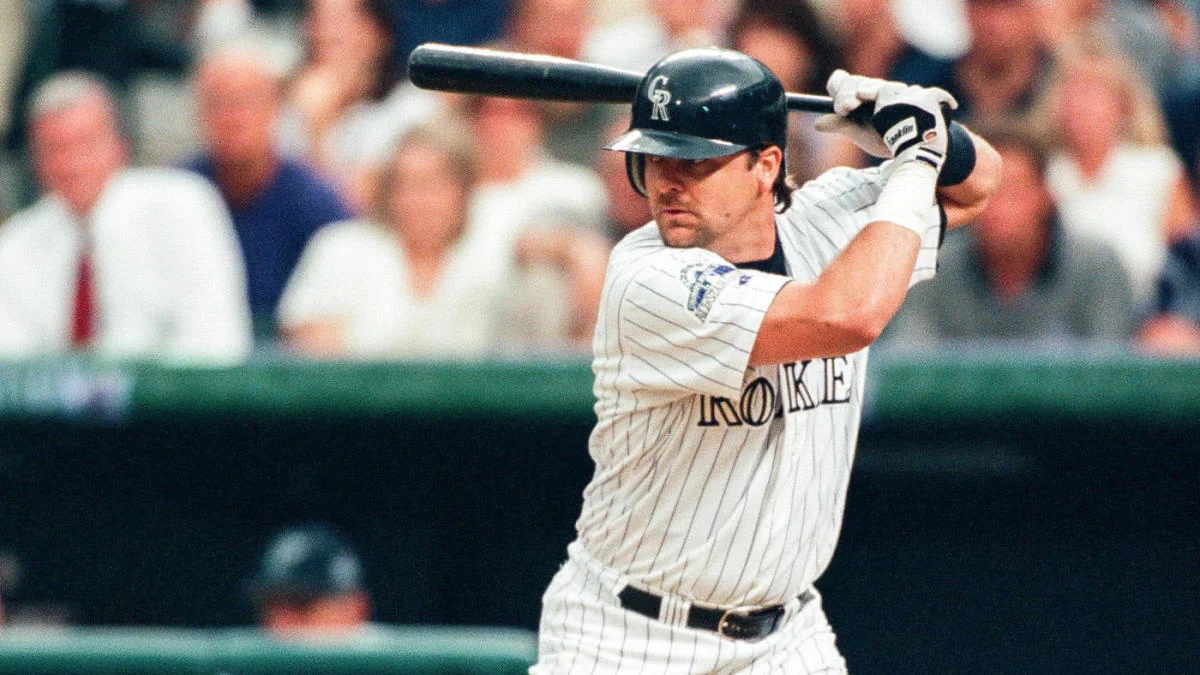
At the 1997 All-Star Game, Randy Johnson threw a fastball over Larry Walker’s head, and Walker – who batted left-handed and had no particular wish to die – stepped out, turned his batting helmet around backwards, and stepped back in from the right side of the plate. The crowd at Jacobs Field roared. Johnson claimed afterward that the pitch had merely slipped on a humid night, and allowed that it was fitting it had happened while Walker was at the plate. The two were not, strictly speaking, enemies that day – it was an exhibition – but the moment captured something true about facing the man.
Walker had grown up in British Columbia wanting to be a hockey goalie, made it as far as third string in junior, and was cut at seventeen before turning to baseball almost by default. He became the finest position player Canada has produced – a .313 hitter, seven Gold Gloves, and the 1997 National League MVP, the year he hit .366 with 49 home runs and stole 33 bases for good measure.
When he and Johnson met for real, it was as division rivals, Walker’s Rockies against the Diamondbacks from 1999 onward. The numbers he piled up a mile above sea level kept him waiting until his tenth and final year on the ballot before Cooperstown relented. Few hitters ever looked better. Fewer enjoyed facing Johnson less.
Todd Helton
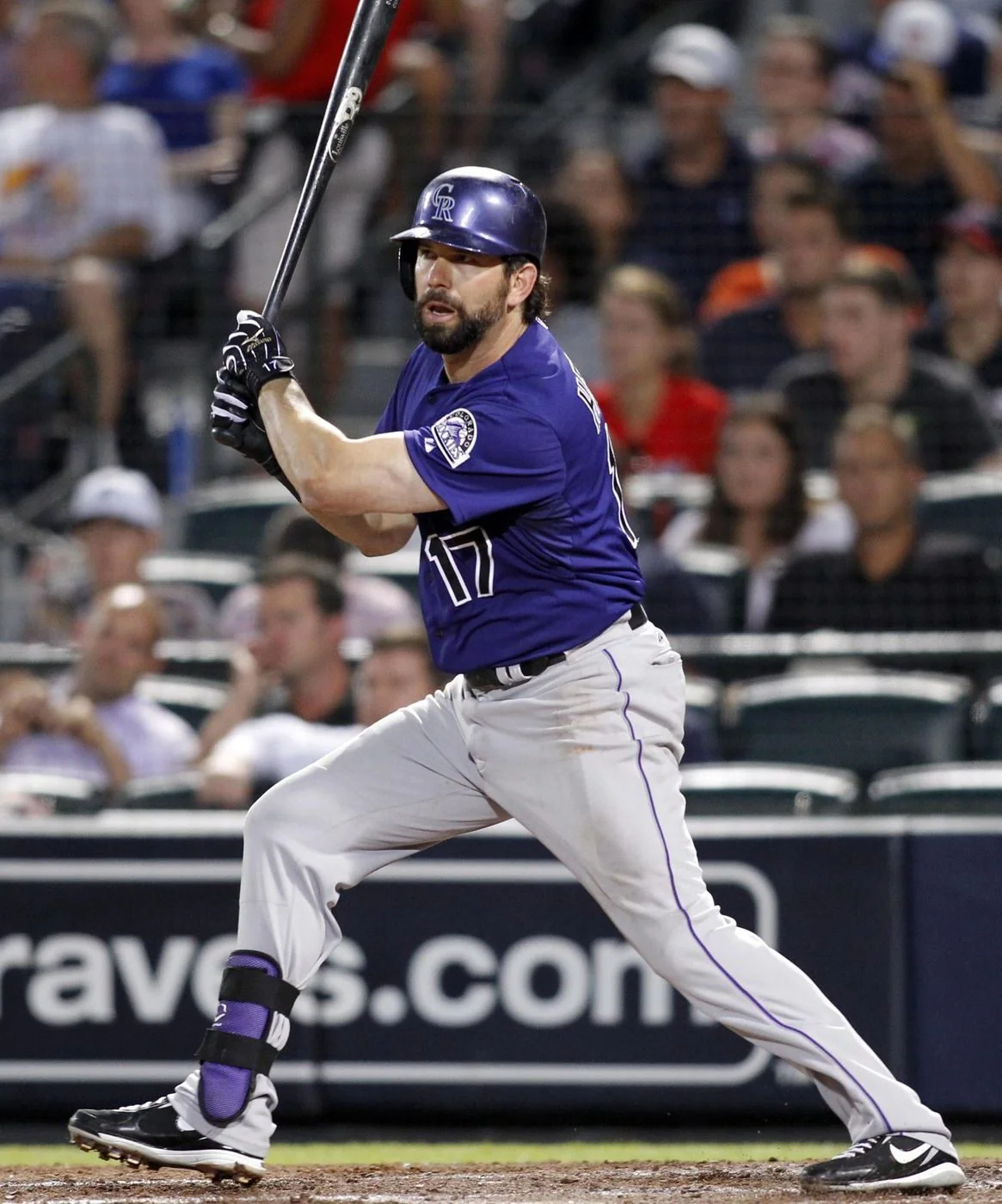
Before Peyton Manning was Peyton Manning, he was a freshman backup at the University of Tennessee, waiting behind the starting quarterback. The starter was Todd Helton. In 1994 Helton took over the job, then hurt his knee, and Manning stepped in and never gave it back, on his way to becoming the top pick in the NFL draft and one of the best quarterbacks who ever lived. Helton, who had also been a second-round baseball pick, took the hint and chose the diamond.
It worked out. Helton spent all seventeen of his seasons with the Colorado Rockies, hit .316, and put together a 2000 season of almost cartoonish proportions: a .372 average, 147 runs batted in, and 59 doubles, the most anyone had managed since 1936. He is the second Rockie in Cooperstown, after Larry Walker, and he reached it the hard way, waiting six years while voters argued over how much of his record to blame on the thin air at Coors Field.
He faced Randy Johnson as a National League West rival, Colorado against Arizona, from 1998 until Johnson left after 2004. A left-handed hitter with a gorgeous swing against Randy Johnson at the height of his Arizona dominance is, on paper, a mismatch. Helton, who had once stood in against a live pass rush, did not seem to mind.
Joe Mauer
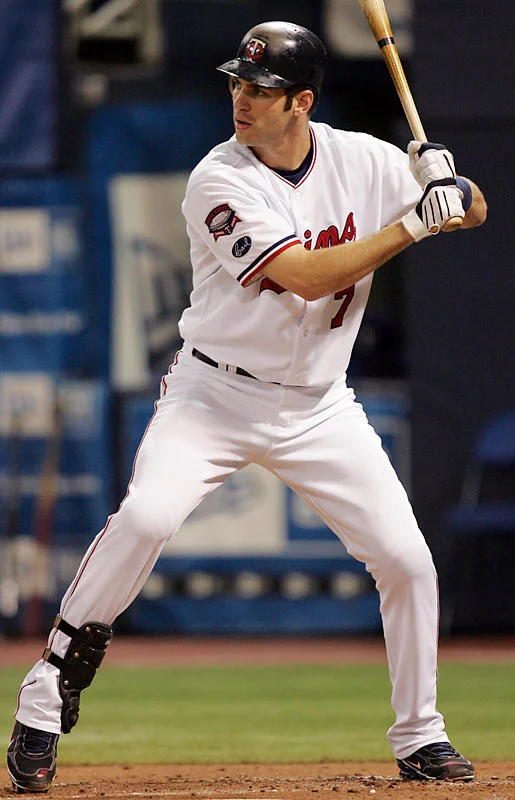
No catcher in big-league history has won three batting titles, except one, and Randy Johnson struck him out three times anyway. Joe Mauer was the hometown miracle Minnesota actually got to keep: taken first overall in the 2001 draft out of a St. Paul high school by the team he grew up watching, after a schoolboy run so absurd that USA Today named him its national player of the year in two different sports – quarterback in 2000, catcher in 2001. Nobody else has ever done that either.
By the time their careers intersected, Johnson was a 41-year-old New York Yankee. He caught Mauer twice at Yankee Stadium in 2005 and once more at the Metrodome in 2008, near the end for both of them. The first of those carries a quiet distinction: it came on July 26, 2005, the latest first strikeout of anyone on this list, which makes Mauer the final Hall of Famer Johnson ever added to it. The collection closes with a kid from St. Paul.
Mauer played fifteen seasons, every one of them for Minnesota, won the 2009 American League MVP, and entered the Hall on the first ballot with the Class of 2024. Minnesota has since put him in bronze by Gate 34 at Target Field, in the company of Carew, Killebrew, Puckett and Oliva. St. Paul kept its kid the whole way through. Cooperstown eventually accepted a copy.
Adrián Beltré
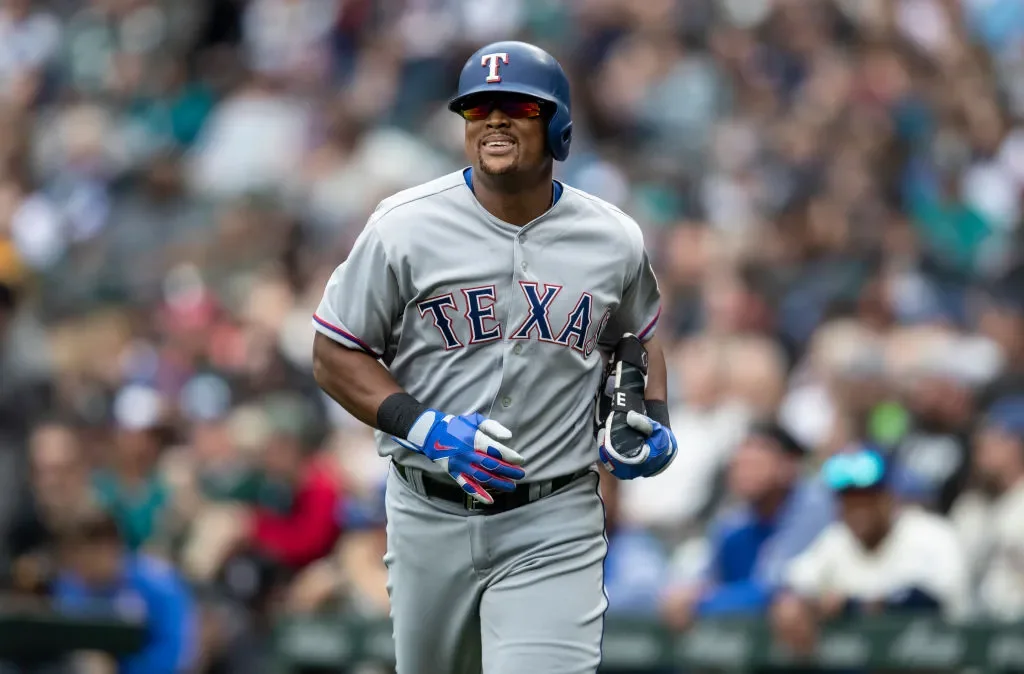
Adrián Beltré did not like to be touched on the head. Teammates who forgot this – and over twenty-one seasons, many did – got chased around the infield by one of the best third basemen who ever lived, a man who also, for reasons no one could quite explain, liked to hit home runs from one knee. He played with the unselfconscious joy of someone who could not believe he was being paid to do it, which made it easy to overlook that he finished with 3,166 hits and 477 home runs, the third-most ever at his position.
Beltré reached the majors at nineteen and was, oddly, better in his thirties than his twenties, the reverse of how baseball usually goes. He won five Gold Gloves, made the Hall of Fame on the first ballot in 2024, and became the first player born in the Dominican Republic to reach 3,000 hits.
He spent his early twenties with the Los Angeles Dodgers, in the same division as Randy Johnson’s Diamondbacks, which meant facing the best left-hander of the era several times a season while still learning the league. In 2005 he signed with Seattle, Johnson’s old club, and inherited a fan base that still said the number 51 with reverence. He had faced the man who made it famous. Few hitters came away saying it went well.
Scott Rolen
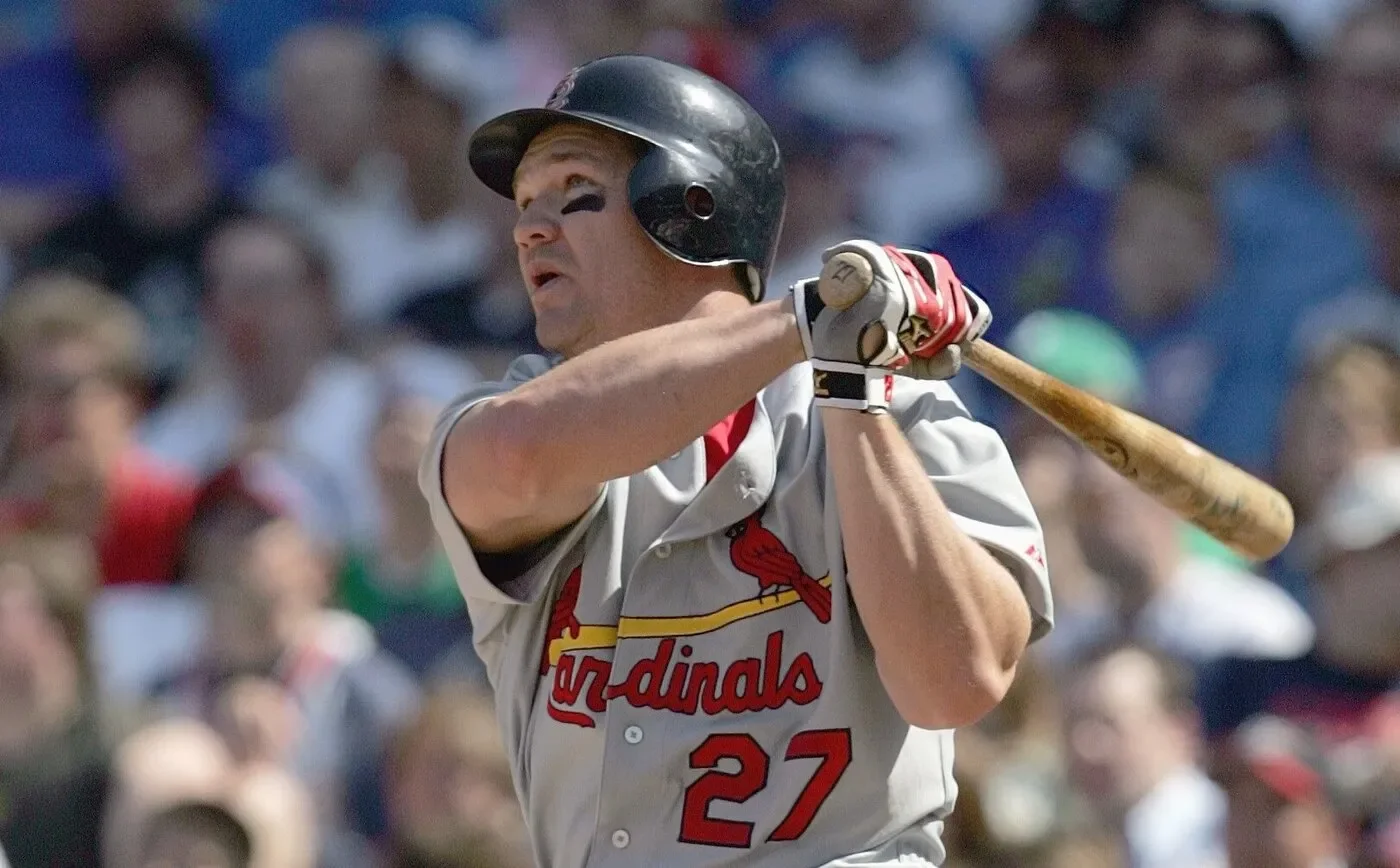
Scott Rolen played 2,038 games in the major leagues and every defensive inning of them at third base, which no one else in history has managed. He was, by most measures that did not exist while he was playing, one of the finest defensive third basemen the game has produced – a reputation built on plays that looked routine because he made them look routine, and on eight Gold Gloves, the fourth-most at the position.
The 1997 National League Rookie of the Year, Rolen was a quiet, blue-collar sort from Jasper, Indiana, who would have been mortified by a highlight reel. He hit 316 home runs, won a World Series with the Cardinals in 2006, and reached Cooperstown in 2023 largely because a generation of voters learned to read the advanced statistics that loved him. He made it by five votes, in his sixth year on the ballot.
He faced Randy Johnson as a National League opponent for the better part of a decade, first with the Phillies and then the Cardinals, against the Astros and then the Diamondbacks. A right-handed hitter with a disciplined eye met a left-hander who won four consecutive Cy Young Awards while Rolen was in his prime. The matchups were rarely kind to the hitters in those years. Rolen, who never expected to make the Hall of Fame at all, would not have taken it personally.
Vladimir Guerrero
Vladimir Guerrero once homered off a pitch that had already bounced in the dirt. This was not a fluke so much as a philosophy. Guerrero was the great bad-ball hitter of his era, a free swinger who treated the strike zone as a polite suggestion and could drive a ball over the fence whether it arrived at his ankles or above his head. He did it all without batting gloves, with a helmet so caked in pine tar it looked varnished.
The strange part is that a man who swung at everything almost never missed – in his best years he struck out fewer than ninety times. He hit .318 over sixteen seasons, won the 2004 American League MVP with the Angels, and reached the Hall of Fame in 2018. His throwing arm, from right field, was a weapon teams eventually stopped testing.
Guerrero faced Randy Johnson during the early Diamondbacks years, while Guerrero was still a Montreal Expo and Johnson was at his absolute peak. It made for an interesting collision: the most unhittable pitcher in the league against the one hitter who specialized in hitting the unhittable. It did not always go Guerrero’s way. But if anyone alive was going to golf a Johnson slider off his shoetops and into the bleachers, it was him.
Ichiro Suzuki
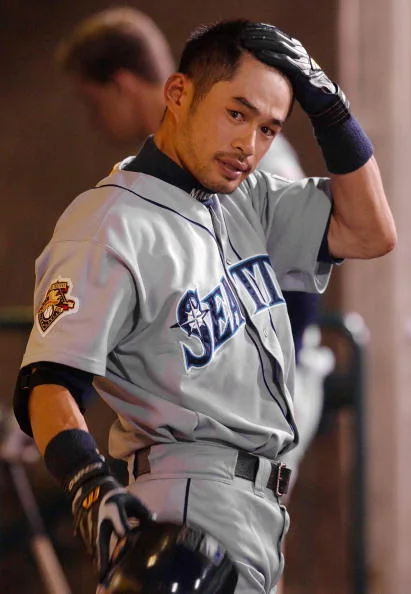
When Ichiro Suzuki arrived in Seattle in 2001, he wanted to wear number 51, and there was a complication. The last Mariner to wear it was Randy Johnson, who had spent the better part of ten years terrifying the American League in it before being traded in 1998. So Ichiro wrote Johnson a letter, asking permission and promising not to dishonor the number. Johnson, charmed, gave his blessing.
Ichiro kept the promise emphatically. He won Rookie of the Year and Most Valuable Player in the same 2001 season, something only one player had done before. He collected 262 hits in 2004, a single-season record that still stands, and finished with 3,089 hits in the majors and 4,367 across his careers in Japan and the United States – more than Pete Rose managed in one country.
The two met as opponents only after Johnson moved on, mostly while he wore Yankee pinstripes in 2005 and 2006: the most relentless contact hitter of his generation against the strikeout king, a matchup that justified the price of admission. In 2025 the Mariners retired number 51 for Ichiro, then announced they would retire it again the next year for Johnson. It now hangs twice in the same ballpark. Two men, one number, and a great many strikeouts between them.
Frequently Asked Questions
Did Randy Johnson ever strike out Harold Baines?
No. In 17,645 career plate appearances, Baines never once batted against Johnson. He was in the lineup for six games Johnson pitched, and each time his turn arrived only after Johnson had departed, against relievers. A left-handed designated hitter in the same division for years, and it simply never happened.
Did Mike Schmidt or Ozzie Smith ever strike out against Johnson?
No. Schmidt faced him twice in 1988, at the very end of his career, without striking out, and Smith survived three plate appearances the same way. They are the only Hall of Fame position players who batted against Johnson and never once went down on strikes.
Which Hall of Famers of his era never faced Johnson at all?
Gary Carter, Jim Rice, and Ted Simmons. All three played into the Johnson era, and none of them ever recorded a plate appearance against him – a matter of leagues and schedules rather than luck. Their absence from this list is verified, not an oversight.
Did Johnson strike out any Hall of Fame pitchers?
Yes, though pitchers sit outside this list, which counts position players only. Tom Glavine struck out against Johnson eleven times, one of those in the postseason, and Greg Maddux went down three times, two of them in October. The Braves aces received no professional courtesy whatsoever.
Which Hall of Famer did Johnson strike out the most?
Rickey Henderson, 30 times across 91 plate appearances – the most of any Hall of Famer in both categories – and Henderson never homered off Johnson in return. Nobody else reached twenty strikeouts except Scott Rolen, who finished exactly there, one ahead of Adrian Beltre.
Who are the newest Hall of Famers on the list?
The Class of 2026: Jeff Kent, elected by the Contemporary Baseball Era Committee in December 2025, plus Andruw Jones and Carlos Beltran, elected by the writers on January 20, 2026. Jones and Beltran were born one day apart in April 1977, and enter Cooperstown together on July 26.