Every Person Memorialized on the Moon
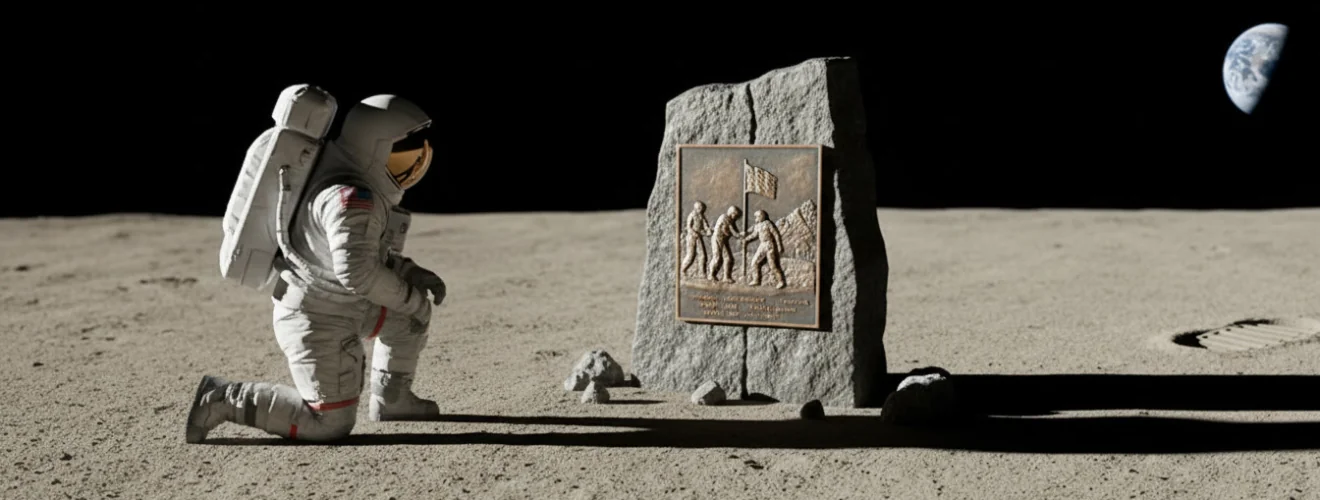
On August 2, 1971, in the last minutes of Apollo 15’s final moonwalk, David Scott drove the lunar rover a short way from the lander, set down a small aluminum figurine and a plaque carrying fourteen names, photographed them, and said nothing. NASA had not announced a memorial. Most of NASA did not know one existed. Scott had proposed it at a management meeting on July 6, 1971, called to discuss the deaths of the Soyuz 11 crew days earlier, and the whole thing was designed, fabricated, and stowed in his spacesuit pocket inside the three weeks before launch. The world learned about it at the post-flight press conference.
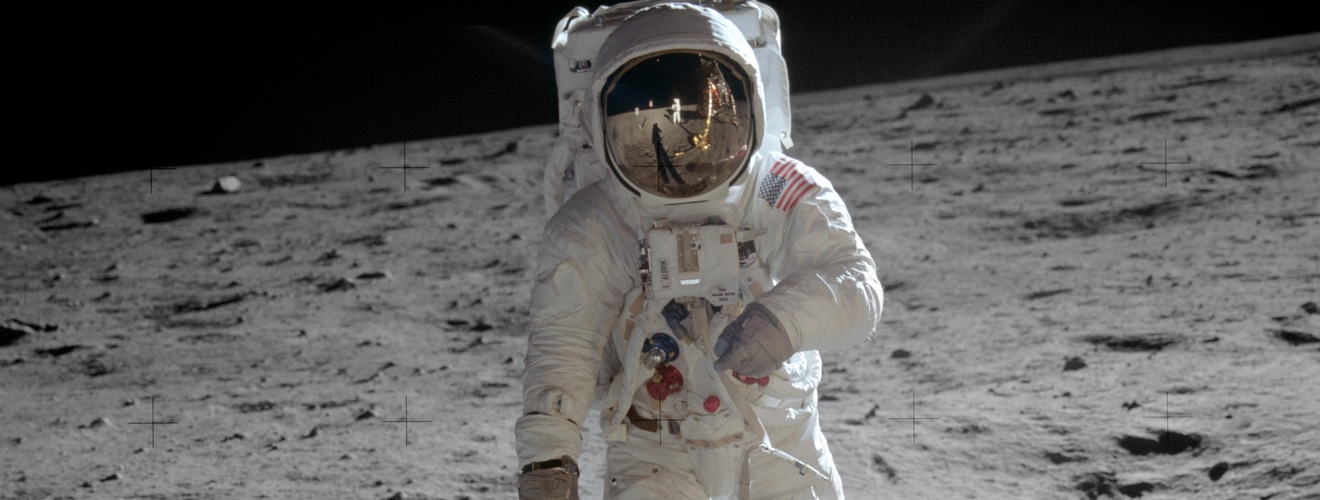
The plaque is the Moon’s only headstone, but it is not the whole cemetery. By the time Scott – the seventh of all twelve men who have walked on the Moon – knelt beside his rover, memorial hardware had been arriving since 1969: an Apollo 1 patch and two Soviet medals at Tranquility Base, a set of naval aviator wings in the Ocean of Storms. A name alone does not qualify. The goodwill disc at Tranquility Base carries “the late Dr. Hugh L. Dryden,” NASA’s longtime deputy administrator, who had been dead nearly four years when it landed. He is not on this list, and the reason he is not is the whole basis of it: deliberate remembrance, the dead honored on purpose, on the surface.
Registers like this stay short because the destination is hard to get to: as late as 2019, every person who has reached the bottom of the Mariana Trench came to three names. This one is short for a stranger reason. It is the complete record of who the Moon has been asked to remember. It opens in July 1969 and closes, for now, on July 31, 1999, when a geologist’s ashes arrived at the south pole aboard a spacecraft aimed at a crater that did not yet carry his name. Nothing has been added since. It is not for want of trying.
Fifteen people are deliberately memorialized on the lunar surface, at four separate landing sites. Fourteen of them are named on a single plaque that Apollo 15 left in 1971, and every earlier honoree appears on it. The fifteenth, geologist Eugene Shoemaker, is named on nothing at all – he is buried there.
Gus Grissom
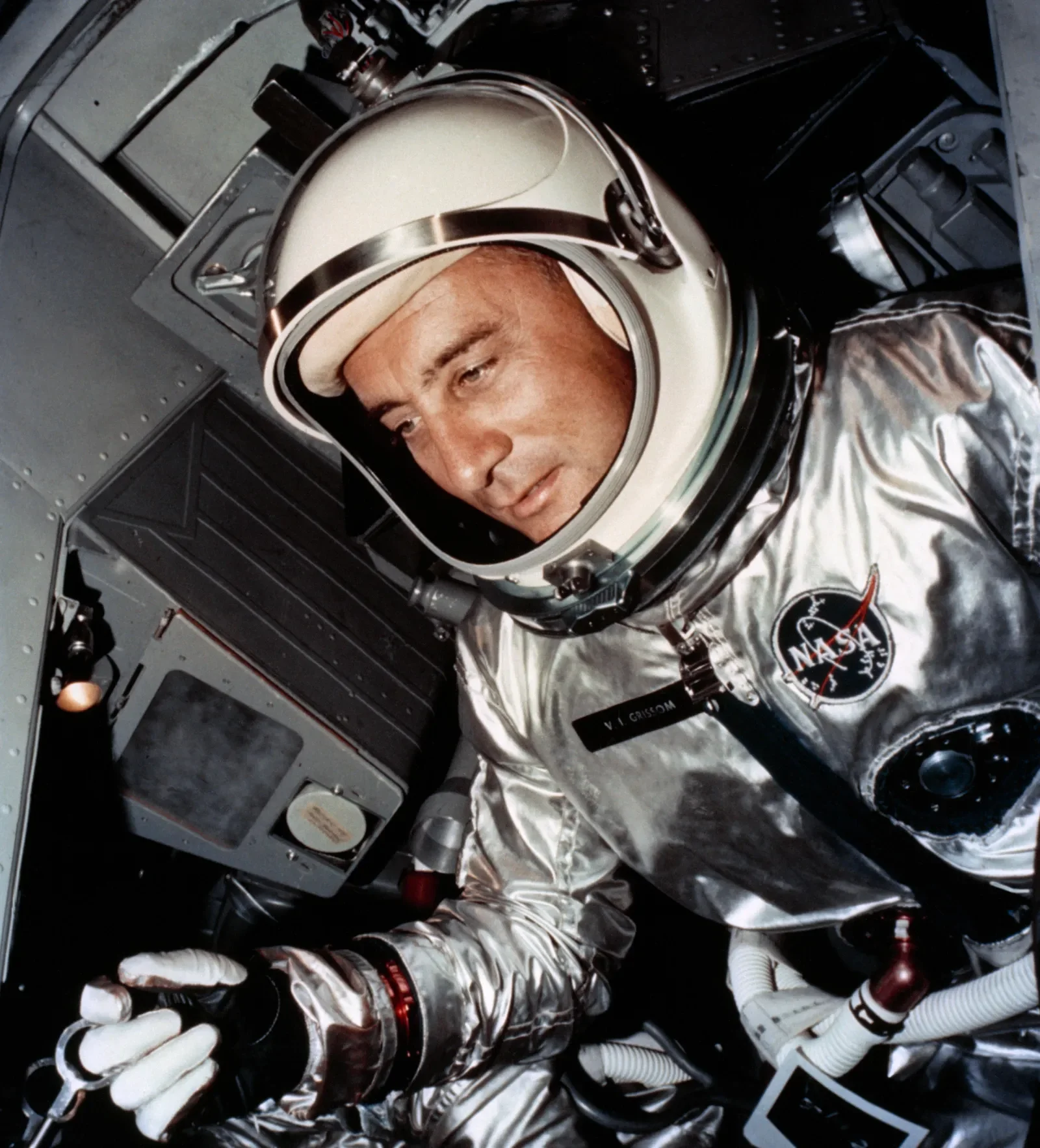
Gus Grissom lost his first spacecraft to the Atlantic Ocean and named his second one about it. When Liberty Bell 7 splashed down on July 21, 1961, the hatch blew early and the capsule sank in more than 15,000 feet of water; Grissom, seawater filling his flooding suit, nearly went down with it. “I was just laying there minding my own business,” he said afterward, “when, POW, the hatch went.” So when he commanded Gemini 3 on March 23, 1965 – a flight NASA credits as the first time anyone entered space twice – he christened the new ship Molly Brown, after the unsinkable one. NASA objected. His counteroffer was “How about the Titanic?” Molly Brown stood, and NASA banned crews from nicknaming spacecraft for the rest of Gemini.
In March 1966 he was named commander of the first crewed Apollo flight. On January 27, 1967, a fire swept the command module during a launch-pad test at Cape Kennedy, killing Grissom, Ed White, and Roger Chaffee. He was 40. The Moon remembers him twice over: the Apollo 1 patch left at Tranquility Base in July 1969, and the eighth line of the Fallen Astronaut plaque, engraved GRISSOM, VIRGIL I.
On January 22, 1967, his last morning at home, he pulled an oversized lemon off the tree in his backyard and told his wife Betty, “I’m going to hang it on that spacecraft.” He was never home again.
Ed White
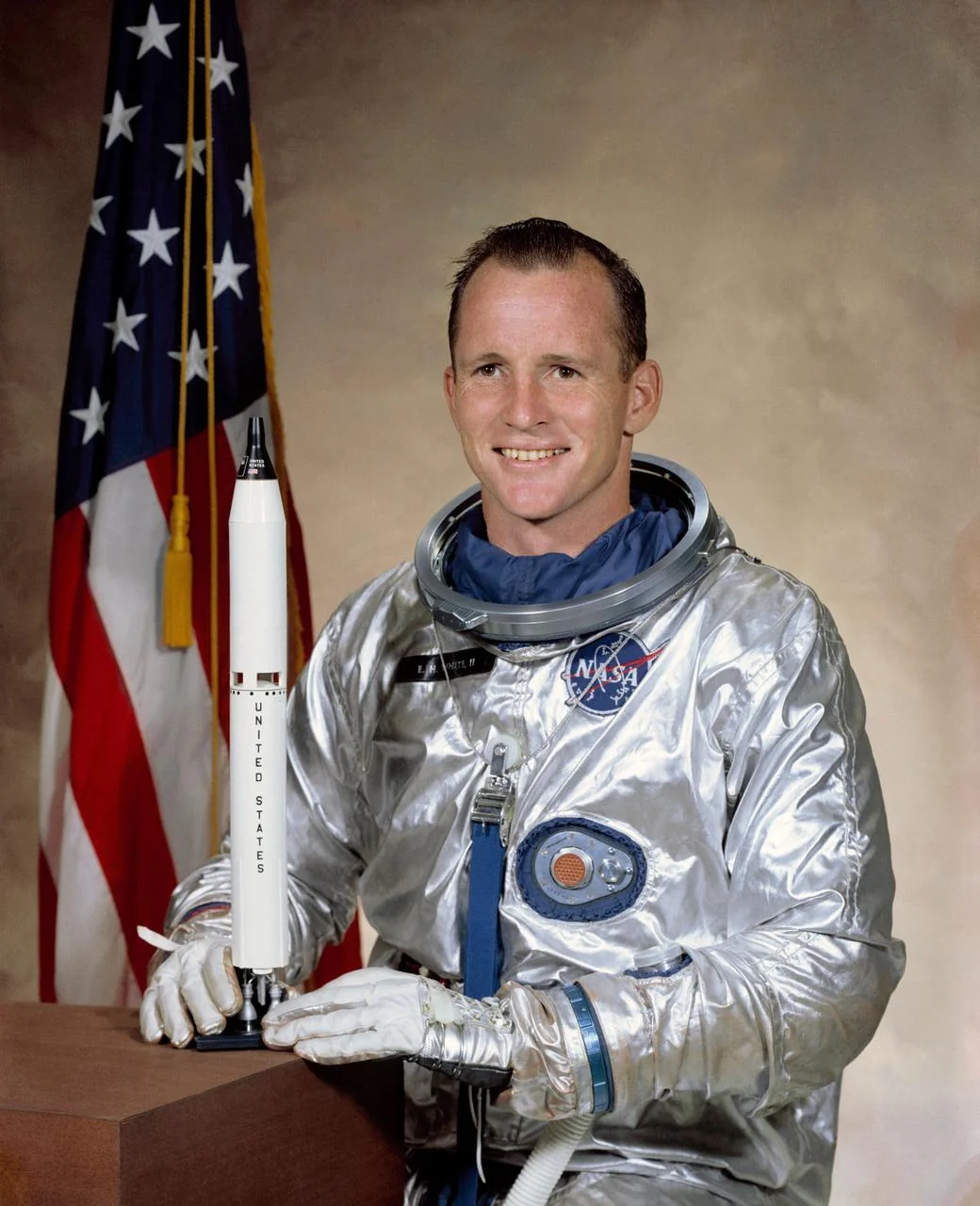
“It’s the saddest moment of my life,” Ed White told Jim McDivitt as he hauled himself back through the hatch of Gemini IV on June 3, 1965. He had spent about 20 minutes as the first American to walk in space, steering with a handheld oxygen jet that NASA’s own historians nickname the zip gun – which ran dry three minutes in, leaving him to twist and tug on his tether for the rest. “The only problem I have,” he reported, “is that I haven’t got enough fuel.” Flying was the family trade: his father, a major general, had put him at the controls of a T-6 trainer at 12, and White later said it felt like the most natural thing in the world to do.
By January 1967 he was fighting a very different hatch. Apollo 1’s door opened inward, in three pieces, and took 90 seconds to open under ideal conditions; when fire raised the cabin pressure during the launch-pad test of January 27, 1967, it could not be opened at all. The redesigned hatch that followed opened in three seconds, from either side.
Line 13 of the Fallen Astronaut plaque reads WHITE, EDWARD H. II, the suffix distinguishing him from the general who first took him flying. The Apollo 1 patch had carried his name to Tranquility Base two years earlier.
Roger Chaffee
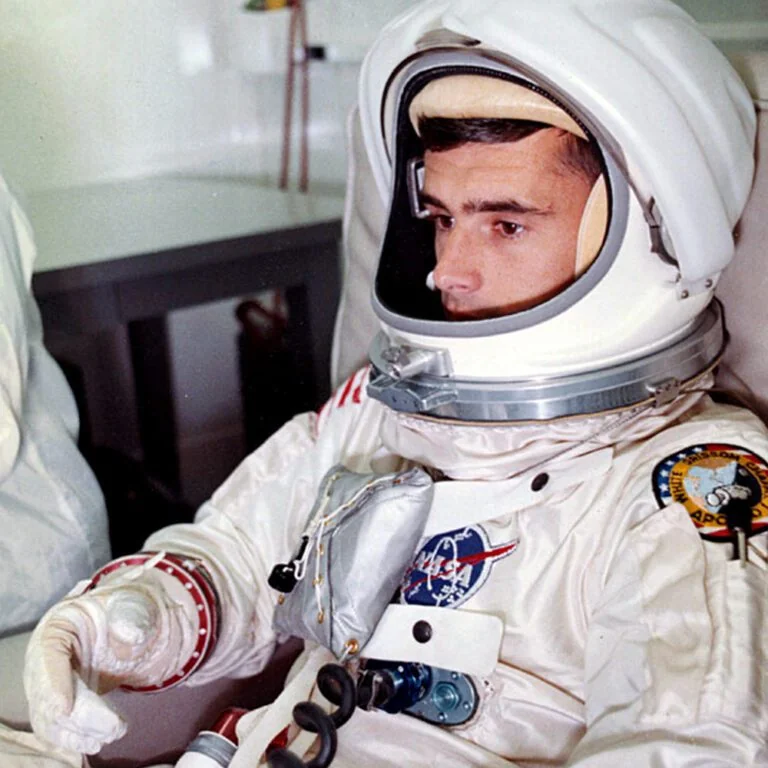
Between April 4, 1960, and October 25, 1962, Roger Chaffee flew 82 classified reconnaissance missions over Cuba – through the heart of the Cuban Missile Crisis – as a photographic plane commander with Heavy Photographic Squadron 62. Persistent bad biographies put him in a U-2 for the job. He was a Navy pilot; he flew the twin-engine A3D Skywarrior, and never touched the Air Force’s plane.
Space was to be the next chapter, not the resume. AS-204, the first crewed Apollo flight, would have been his first mission, and at 31 he was the youngest man on the crew. On January 2, 1967, he stood at the Rose Bowl with Neil Armstrong, Gus Grissom, and Gene Cernan while a Purdue parade float rolled past captioned “Alma Mater of Astronauts” – all four honorees that day held degrees from the same university. The fire at Cape Kennedy came on January 27. Of the three men who died in it, Chaffee is the one who never reached space at all; his name sits third on the Fallen Astronaut plaque, engraved CHAFFEE, ROGER B.
There is one more memorial, unofficial and still in use. Grissom had penciled a joke onto the crew’s star charts, relabeling the navigation star Gamma Velorum “Regor” – Roger, spelled backward. Later crews kept writing it. His friends had put his name among the stars before NASA put it on the Moon.
Yuri Gagarin
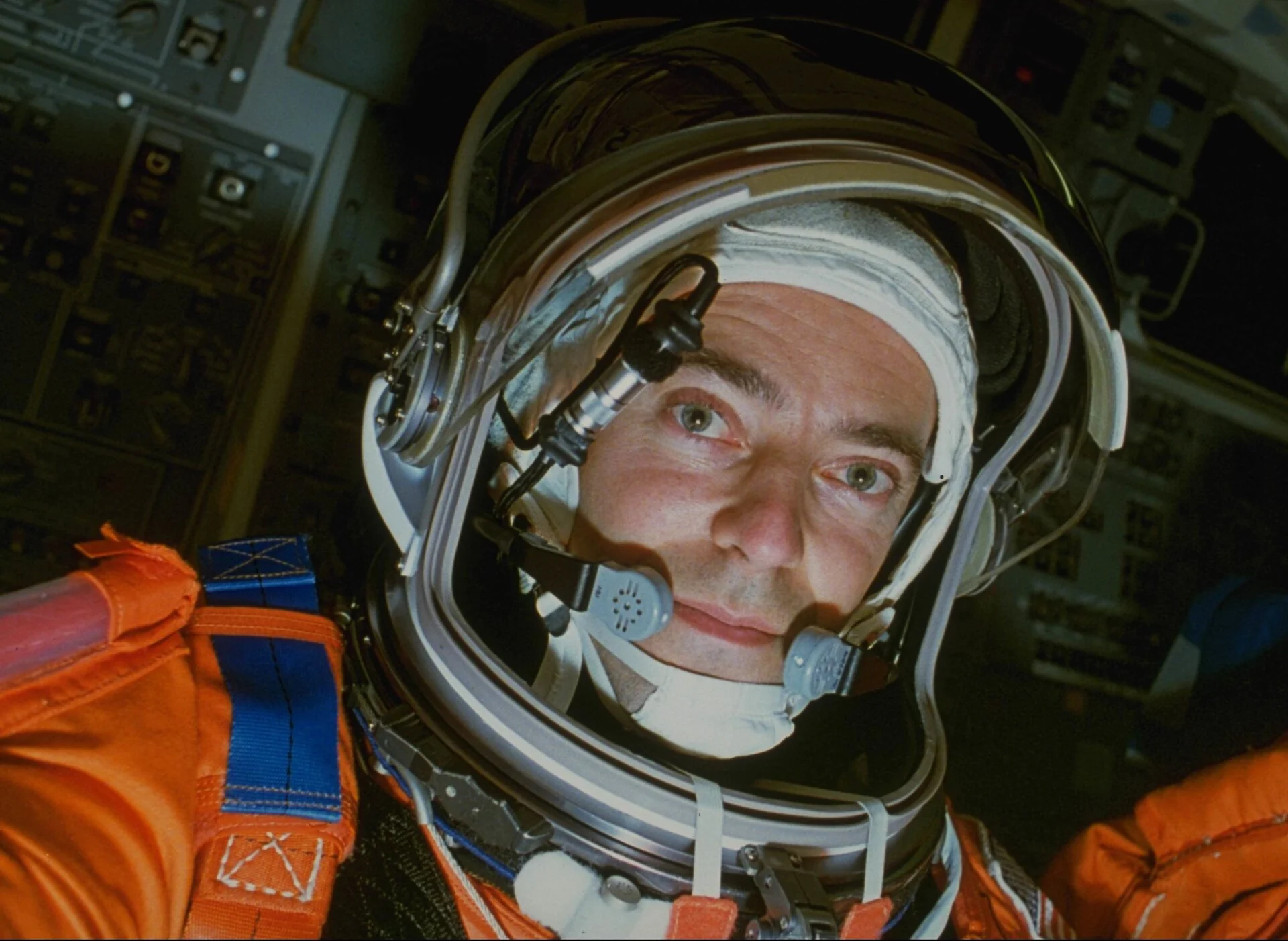
On the morning of April 12, 1961, a farm worker named Anna Takhtarova watched a man in an orange suit descend by parachute onto the plains near Engels, and asked him, reasonably, “Have you come from outer space?” The audience for the landing was her, a companion, and a cow. Yuri Gagarin had just orbited the Earth in 108 minutes, and Vostok 1 had been proven out the Soviet way first – Belka and Strelka logged 17 orbits aboard a prototype in August 1960, and the dog Zvezdochka flew a final systems test eighteen days before Gagarin himself – three names from the long roster of every animal that has been sent to space.
There was a catch in the paperwork. Gagarin ejected at about 20,000 feet and landed apart from his capsule, a detail the Soviets hid because the record-keeping body required pilots to land with their craft. The story fell apart within months. The FAI reworked its rules, kept the record, and eventually created an annual Gagarin Medal of its own.
He died on March 27, 1968, in the crash of a MiG-15UTI trainer. The medal that reached Tranquility Base in July 1969 had been handed to Frank Borman in Moscow by Gagarin’s widow; two years on, the Fallen Astronaut plaque added him again, at line 6: GAGARIN, YURI A.
Vladimir Komarov
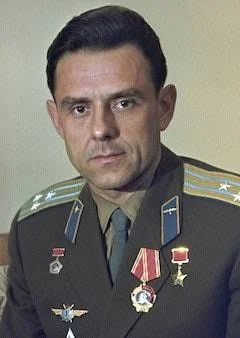
To fit three men into a capsule designed for one, Soviet engineers removed Voskhod 1’s ejection seat and flew the crew without spacesuits. Vladimir Komarov commanded that flight in October 1964, and when he lifted off again aboard Soyuz 1 on April 23, 1967, he became the first Soviet cosmonaut to fly to space twice. The new spacecraft failed him almost immediately. “The left solar panel didn’t deploy,” he radioed. “The electrical bus is at only 13 to 14 amperes.” Starved of power, Soyuz 1 lost attitude control, and Komarov spent the better part of a day wrestling it before the fatal reentry attempt came on the 18th orbit. The main parachute never left its container; the reserve tangled; the capsule hit the ground at roughly 40 meters per second. On April 24, 1967, Komarov became the first human being to die during a spaceflight.
The Soviet Union buried his ashes in the Kremlin Wall after a state funeral in Red Square. The contemporary NASA release on what Apollo 11 would leave behind described the goodwill disc and the landing plaque; the medal left for him at Tranquility Base surfaced only in Buzz Aldrin’s account and a White House statement. The Fallen Astronaut plaque made it official in 1971, at line 9: KOMAROV, VLADIMIR M. On the far side of the Moon, a 78 km crater carries his name too. Three lunar memorials, for a man the press release forgot.
Clifton C. Williams Jr.
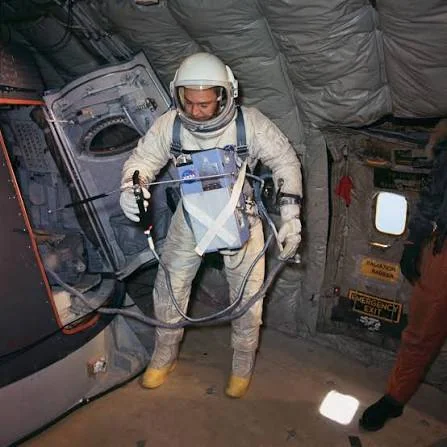
The Apollo 12 mission patch has four stars on it. Three are for the crew – Pete Conrad, Dick Gordon, Alan Bean. The fourth is for the man who was supposed to be there. C.C. Williams was backup lunar module pilot on Conrad’s crew when his T-38’s aileron controls jammed on October 5, 1967, and the jet went into the Florida pines near Tallahassee. Alan Bean moved into the slot, the backup crew was promoted whole to Apollo 12, and Williams’ place in the rotation became a moonwalk that belonged to someone else.
The crew did not treat it as forgotten. Bean wrote that he and Conrad contacted Williams’ widow, Beth, before launch to ask permission to carry his Marine Corps aviator wings to the Moon, and NASA’s history office records that in November 1969, his naval aviator wings were placed on the lunar surface in the Ocean of Storms. The accounts disagree on exactly what else went down with them – NASA’s artifact catalogue lists wings for Bean as well – but the wings themselves are as close to settled as the record gets. In 1971 the Fallen Astronaut plaque added his name at line 14, the last of the fourteen: WILLIAMS, CLIFTON C. Jr.
Interviewed in April 2026, Beth Williams put the loss in its proper order. “I didn’t miss the damn moon,” she said. “I missed him.”
Charles Bassett
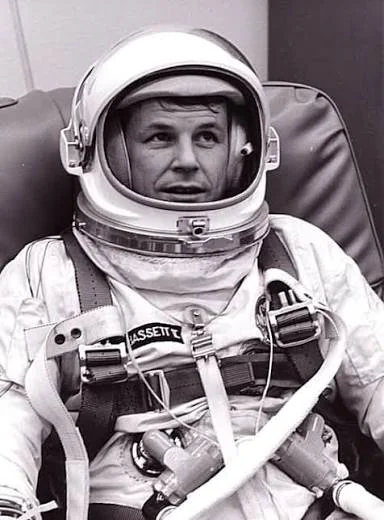
The first name on the Moon’s only memorial plaque belongs to a man who never left the atmosphere. Charles Bassett – line 1, BASSETT, CHARLES A. II, the alphabet’s choice – was an honors electrical engineer and Air Force test pilot with more than 3,600 flying hours, named pilot of Gemini 9 on November 8, 1965. On the morning of February 28, 1966, he and command pilot Elliot See flew their T-38 toward St. Louis for simulator training and struck the roof of McDonnell Aircraft Building 101 at 8:58 a.m. Their own Gemini 9 spacecraft was in final assembly inside. Both men died within 500 feet of it; seventeen workers below were injured, none fatally; the spacecraft was untouched.
What the crash did to the fabric of spaceflight history is the strange part. Stafford and Cernan, the backups, moved up to fly the renamed Gemini 9A. Jim Lovell and Buzz Aldrin moved up behind them, which fed them through the rotation to Gemini 12 and changed who was available, and credible, when Apollo crews were chosen. Gene Cernan went on to command Apollo 17 in December 1972 and remains the last man to walk on the Moon.
Deke Slayton wrote that he had paired Bassett with See partly because Bassett was “strong enough to carry” them both. The seat he never flew in ended up carrying the whole schedule.
Pavel Belyayev
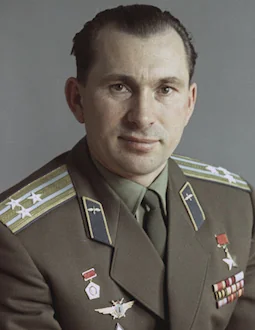
Two nights in the snowbound Ural taiga is an unusual way to end a spaceflight, and the first was spent in a capsule whose heater had failed. Pavel Belyayev had commanded Voskhod 2, launched March 18, 1965 – the mission on which Alexei Leonov made the first spacewalk, and very nearly did not survive it, bleeding air from his ballooned suit to squeeze back through the airlock. When the automatic reentry system failed, Belyayev flew the descent by hand, lying across both seats to sight through the Vzor device while Leonov held him steady. The improvisation worked, and put them down a very long way from where anyone was waiting. Every retelling of the wait includes the wolves; the confirmed record includes only the cold, and a rescue party the crew skied out to meet on March 21, 1965.
He was, in a way, the establishment’s cosmonaut. At 34 the oldest of the 20 pilots in the first Soviet group and its highest-ranking member, he was one of two men Gagarin nicknamed “The Professors.” He died on January 10, 1970, of peritonitis after stomach ulcer surgery – the plaque gloss reads simply “Jan. 1970, disease,” the only entry of the fourteen not caused by accident.
David Scott had met him at the 1967 Paris Air Show and remembered him as “a very positive, thoughtful guy, a real leader; I liked him a lot.” Four years later, Scott placed his name on the Moon: line 2, BELYAYEV, PAVEL I.
Georgi Dobrovolsky
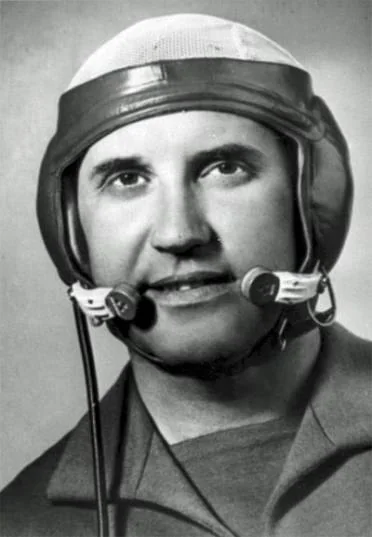
Georgi Dobrovolsky had been a cosmonaut for eight years without leaving the ground when another man’s chest X-ray handed him a spacecraft. Three days before the June 6, 1971 launch, doctors at Baikonur found a dark spot on Valeri Kubasov’s lung and suspected tuberculosis. Soviet rules required replacing the entire prime crew rather than the one man, so Alexei Leonov, Kubasov, and Pyotr Kolodin were pulled off Soyuz 11 and the backups flew in their place. Dobrovolsky had been selected in January 1963 and spent the years since cycling through assignments that never flew – the canceled Spiral spaceplane, the Soviet lunar program – and got his only command with seventy-two hours to think about it.
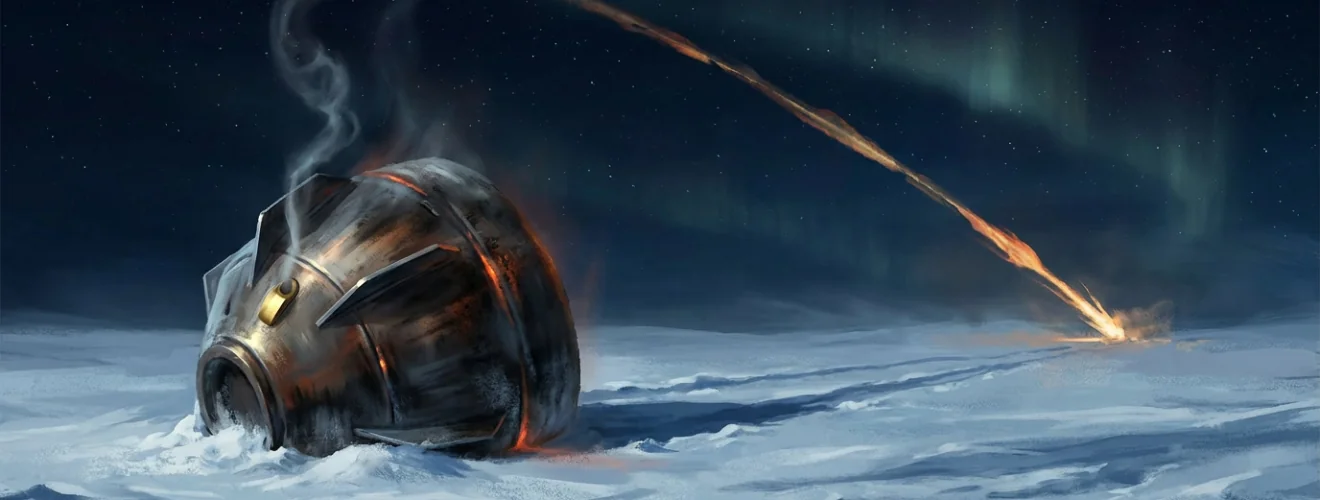
The crew docked with Salyut 1, the world’s first space station, on June 7 and stayed 23 days, 18 hours, and 21 minutes, a new endurance record. The failure came on the way home. Explosive bolts separating the descent module fired all at once instead of in sequence, jarring open a pressure valve that was supposed to stay shut until the parachutes were out, and the cabin emptied into vacuum. Dobrovolsky was the only one of the three wearing biomedical sensors. The telemetry showed his heart stopped within forty seconds.
A month later his name reached the Moon, fourth in the alphabet: DOBROVOLSKY, GEORGI T. Among the pallbearers at his funeral was Alexei Leonov, carrying the coffin of the man who had taken his seat.
Theodore Freeman
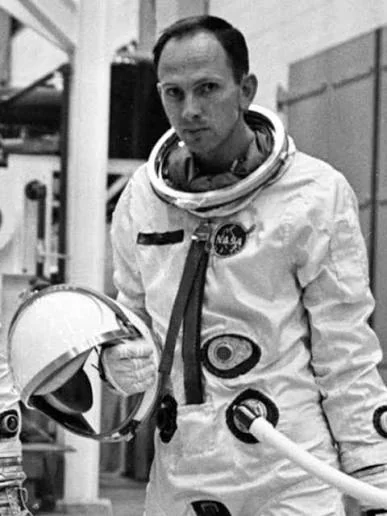
A snow goose killed the first astronaut NASA ever lost. On the morning of October 31, 1964, Theodore Freeman was circling back for a second approach to Ellington Air Force Base outside Houston when the bird came through his T-38’s canopy. Plexiglas fragments went into the engine, the power went with them, and Freeman steered the failing jet away from the base housing before ejecting at roughly a hundred feet. The parachute had no time to open. He was 34. The sources still cannot agree on how many engines quit.
Not much about his career had arrived easily. His teeth, knocked crooked by a high school football hit, failed the Naval Academy medical on his first application, and he spent a year at the University of Delaware having them ground down and braced before Annapolis let him in. He had a pilot’s license at sixteen with more than 450 hours logged, some of it flying fish-spotting runs over Delaware Bay for the mayor of Lewes. “I sort of grew up at the airport,” he said.
His widow heard he was dead from a Houston reporter who reached the house before NASA’s notification team did, and the agency rewrote the procedure afterward so families would hear it from astronauts. Freeman is fifth on the plaque, FREEMAN, THEODORE C. Of the fourteen men in the group he joined in October 1963, four died without ever reaching space.
Edward Givens
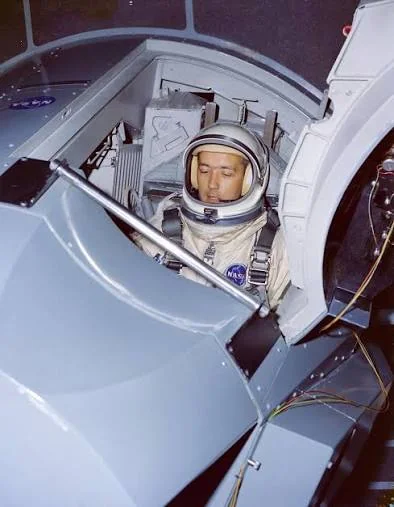
Thirteen of the fourteen names on the plaque belong to men killed by aircraft, by fire, by spacecraft, or by illness. Edward Givens missed a turn. Just after midnight on June 6, 1967, he was driving two Air Force Reserve officers home from a meeting of the Quiet Birdmen – an aviators’ fraternal club, then convening at the Sylvan Motel on Telephone Road in Houston – when the road bent sharply south of the city at Pearland and the car did not. His passengers survived. Givens was pronounced dead at the hospital, aged 37.
He had wanted the job for a very long time. Givens made the final cut for NASA’s first astronaut group in 1959 and was passed over, then spent seven more years as an Edwards test pilot and instructor before the fifth group took him on April 4, 1966. NASA assigned him to the support crew for the first crewed Apollo flight, and when that mission burned on the pad, he stayed in the same job for the mission that replaced it. He never got a seat of his own.
His name sits seventh on the Fallen Astronaut plaque, GIVENS, EDWARD G., Jr. NASA’s official biography of him is dated, at the foot of the page, JUNE 1967 – written and closed in the same month, its space-flight record left permanently blank.
Viktor Patsayev
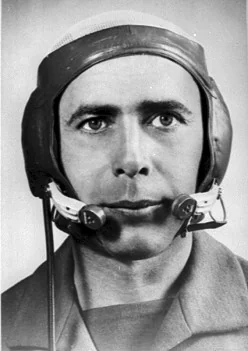
Somebody had smuggled an onion aboard. On June 19, 1971, Viktor Patsayev turned 38 in orbit, becoming the first person ever to have a birthday off the planet, and his crewmates produced an onion and a lemon that Vladislav Volkov had carried up in the Soyuz. It is a small thing to bring to a space station, and it was very hard to come by up there.
Patsayev was not a pilot. He was a civilian design engineer from Sergei Korolev’s bureau, a graduate of the Penza Industry Institute in 1955 who had worked on developing the very station he was now living in – and it was Patsayev who went through the hatch first on June 7, the first human being ever to board a station in orbit. His assignment aboard was the Orion-1 ultraviolet telescope, whose optics were bolted into a niche on the outside of the hull. He sighted his targets through a quartz porthole and ran the exposures from a panel indoors, which makes him the first human being to operate a telescope above the atmosphere. He took six spectrograms of Beta Centauri on June 18 and nine of Vega three days later.
He is tenth on the plaque, PATSAYEV, VIKTOR I. He and his two crewmates remain the only people confirmed to have died in space itself, rather than during launch or while descending through the atmosphere.
Elliot See
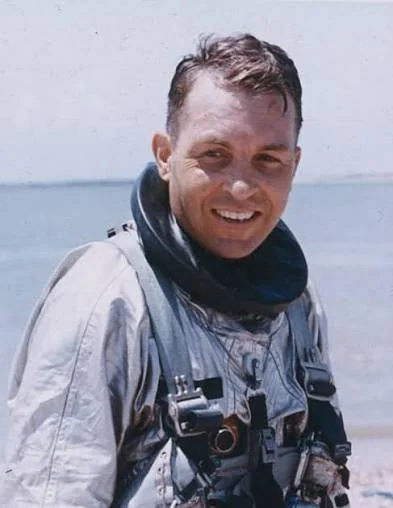
In a corps of military test pilots, Elliot See was a company engineer. He had joined General Electric’s Aircraft Gas Turbine Division in 1949, become an experimental test pilot at Edwards in 1956, and served as project pilot on the J79 engine that powered the Phantom; his master’s degree came from UCLA one night a week while he worked full time. In February 1965 he and Neil Armstrong were named the Gemini 5 backup crew, the first two civilians NASA ever assigned to a spaceflight. When a fuel cell threatened to cut that mission short, See – who had helped develop those same cells at GE – stayed up through the night with the ground team and found the procedures that saved it.
He was given command of Gemini 9 in October 1965, and part of his workload was studying whether a lunar landing should be flown in direct sunlight or in light bounced off the Earth, which had him flying helicopters in welding goggles and setting them down on lava flows with Jim Lovell.
Deke Slayton wrote afterward that See “wasn’t aggressive enough” and “flew too slow.” Armstrong disagreed on the record twice, telling a Life photographer that “Elliot’s too good a pilot not to have a command of his own.” The plaque takes no position. Line 11 reads SEE, ELLIOT M. Jr., one T, exactly as he spelled it.
Vladislav Volkov
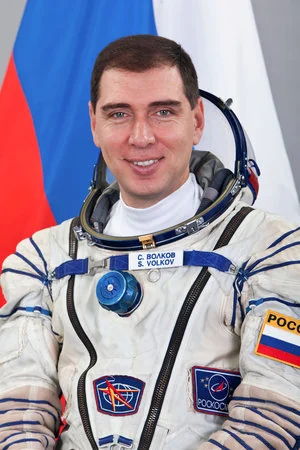
The Soviet space program had a code word for fire, and on June 16, 1971, it did not work. Vladislav Volkov, who was first to smell smoke aboard Salyut 1, dutifully radioed the euphemism down to the ground – by the historian Ben Evans’s account, telling controllers that aboard the station was “the curtain” – and when nobody understood him, he gave up and said there was a fire on board. The crew fled into the docked Soyuz while ground control prepared for an emergency undocking, and about six hours later they had traced it to an overloaded cable.
Volkov was the crew’s public face, which is why the story survives at all. Soviet television ran near-daily broadcasts from the station, a run of coverage its own journalists nicknamed Cosmovision, and it made all three men household figures for three weeks. He was also the only one of them who had done this before: Soyuz 7 in October 1969, a flight whose entire purpose – docking with Soyuz 8 and transferring a crewman by spacewalk – collapsed when the automatic docking system failed on both spacecraft over three days of attempts.
His name is twelfth on the plaque, VOLKOV, VLADISLAV N. After the accident that killed him, the Soviet Union made pressure suits mandatory for launch and landing and rebuilt Soyuz to hold two men instead of three. The fix was to carry fewer people.
Eugene Shoemaker
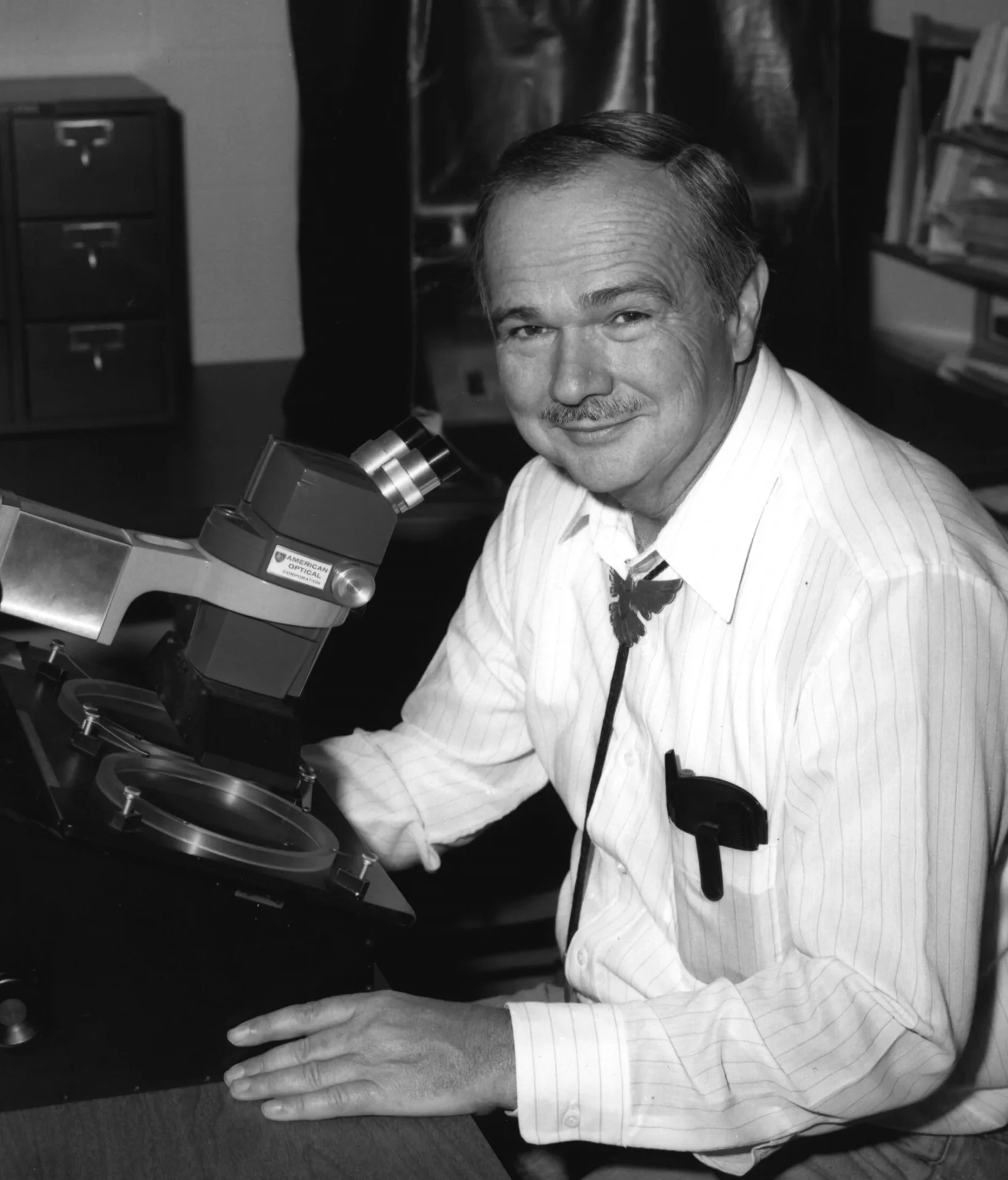
Eugene Shoemaker wanted to go to the Moon and hit it with a hammer. Addison’s disease disqualified him from astronaut selection, so he taught the men who did go instead, walking Apollo crews through field geology at Meteor Crater, the Arizona hole he had proved was an impact scar rather than a volcanic one by identifying coesite in its rock for a 1960 paper in Science. He founded the USGS astrogeology program in 1961. He co-discovered the comet that struck Jupiter in July 1994, and lived to watch it happen.
He died on July 18, 1997, in a head-on collision on the Tanami Track a few hundred kilometers northwest of Alice Springs, hunting for undiscovered craters. Carolyn Porco – once his student, later his colleague on the Voyager imaging team – read the next morning that he would be cremated and had the idea before she finished the paper. She designed the whole tribute: a polycarbonate capsule an inch and three quarters long, wrapped in brass foil engraved with Comet Hale-Bopp, his own favorite photograph of Meteor Crater, and a passage from Romeo and Juliet – “and, when he shall die, take him and cut him out in little stars.”
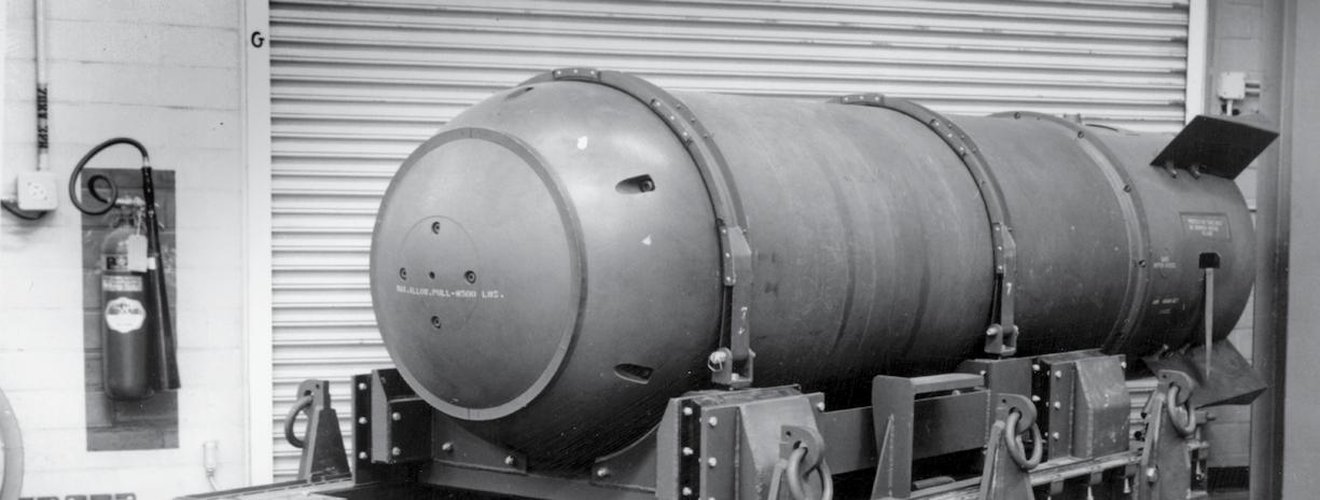
Lunar Prospector carried it into the south polar dark at 09:52 UT on July 31, 1999. The impact was booked as science, a Texas team’s water-ice experiment, and NASA’s announcement three days earlier never mentioned Shoemaker at all.
Frequently Asked Questions
Why isn’t Hugh Dryden on this list, when his name is on the Moon?
Dryden fails the test because the object carrying his name is not a memorial. NASA’s deputy administrator died on December 2, 1965, and the silicon goodwill disc left at Tranquility Base names him among agency leadership rather than honoring him – a directory entry that happens to include a dead man.
Whose remains were on the lunar lander that failed in 2024?
Their remains never arrived. Astrobotic’s Peregrine lander carried a Celestis payload including Gene Roddenberry and Arthur C. Clarke in January 2024, but a propulsion failure ended the flight, and the spacecraft made a controlled re-entry over the South Pacific on January 18. Reaching the surface is what counts.
Why are some dead cosmonauts missing from the Fallen Astronaut plaque?
Valentin Bondarenko and Grigori Nelyubov are absent because the West did not know they existed. Bondarenko died in a fire during a training exercise in March 1961 and Nelyubov in February 1966, but the Soviet Union concealed both deaths and their cosmonaut service, so NASA could not have engraved either name.
Who made the Fallen Astronaut sculpture?
Belgian artist Paul Van Hoeydonck made the 3.5-inch aluminum figurine lying beside the plaque. Its afterlife turned awkward quickly: in 1972 New York’s Waddell Gallery drew up plans to sell as many as 950 signed replicas at $750 each, and backed away only under pressure from NASA.
Did anyone object to human remains being placed on the Moon?
Yes. In 1999 Navajo Nation President Albert Hale objected to Eugene Shoemaker’s burial, citing the Moon’s sacred place in Dine tradition, and a NASA spokesperson promised the agency would consult Indigenous communities before arranging anything similar. When Peregrine flew remains in January 2024, President Buu Nygren said that promise had gone unhonored.
How many of them never actually reached space?
Seven of the fifteen never reached space: Charles Bassett, Roger Chaffee, Theodore Freeman, Edward Givens, Elliot See, Clifton Williams, and Eugene Shoemaker. Six were astronauts who died before their turn came. The seventh, Shoemaker, was not an astronaut but a geologist, and reached the Moon by a route none of the others took.
- Apollo 15 Lunar Surface Journal, EVA-3 Closeout and the Fallen Astronaut memorial
- David R. Scott, Memorandum for the Record: the Apollo 15 Fallen Astronaut memorial (2021)
- NASA Science, Memorial to Fallen Astronauts on the Moon
- NASA, 50 Years Ago: Remembering the Crew of Soyuz 11
- NASA Science, Lunar Prospector mission
- NASA, Apollo 11 Goodwill Messages (News Release 69-83F, July 13, 1969)
- Smithsonian National Air and Space Museum, Why Yuri Gagarin Remains the First Man in Space