Every Defensive Player Who Intercepted Tom Brady in the NFL Playoffs
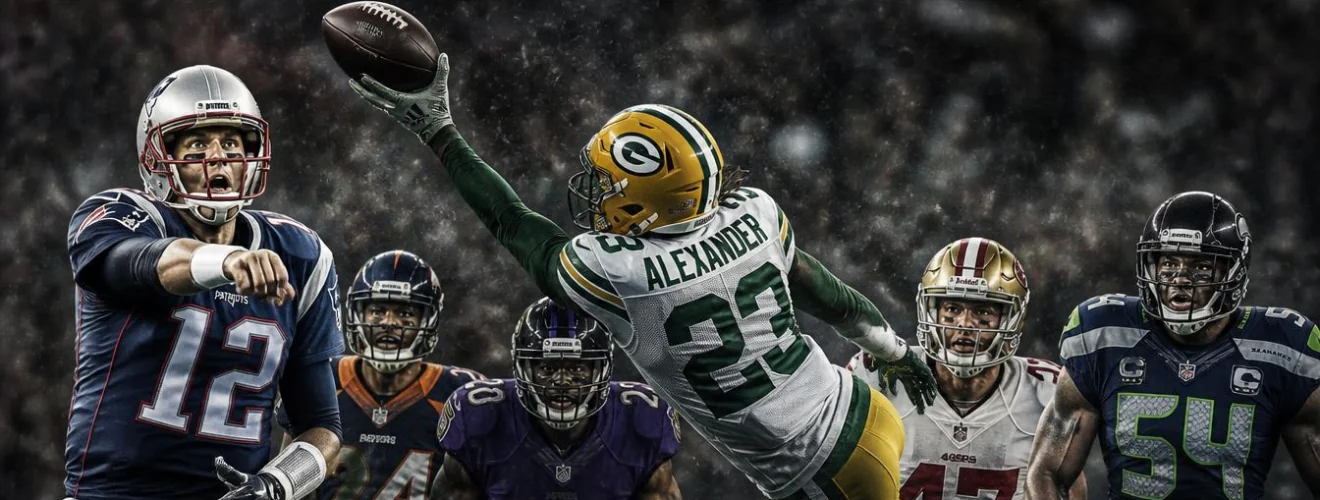
Tom Brady played his last playoff game on a Monday night in Tampa on January 16, 2023, three days short of twenty-one years after he played his first, in a snowstorm in Foxborough, Massachusetts. In between he appeared in ten Super Bowls and threw more postseason passes than any quarterback who has ever lived. He also, now and then, threw the ball to the other team.
The men who caught those passes form one of football’s stranger fraternities. There is no trophy for it and no reunion dinner, but for two decades a January interception of Brady was the closest thing the sport had to a certificate of arrival. Some of the men who earned one are in the Pro Football Hall of Fame. Others held NFL jobs so briefly that the pick is the largest line on their record. The group answers to no pattern at all, which is what makes it worth assembling.
The list below runs in order, from the first man to the last, and follows the official scorer throughout: a pick wiped out by a penalty never happened, however the replay looks, and a takeaway on a two-point conversion is a different statistic altogether. Those rulings cost a few famous plays their place here, and they get their due further down. Everyone who remains did something genuinely difficult, usually in miserable weather, always in front of an enormous audience.
Thirty-eight defensive players intercepted Tom Brady in the NFL playoffs, accounting for all 40 of his official postseason interceptions between January 2002 and January 2023. The roster spans every playoff round and five Super Bowls, and covers both the New England Patriots and Tampa Bay Buccaneers chapters of his 48-game postseason career.
Johnnie Harris
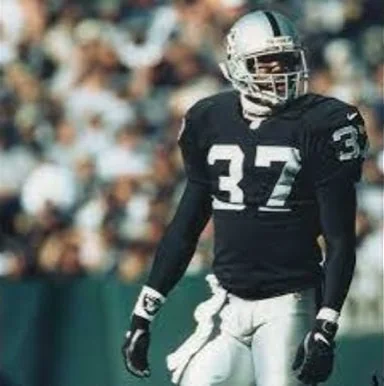
The first man ever to intercept Tom Brady in the playoffs did his most decorated work in two other leagues entirely. Johnnie Harris won back-to-back Grey Cups with the Toronto Argonauts in 1996 and 1997, then joined the Arena Football League and was named its 1998 Defensive Player of the Year after setting single-season league records with 11 interceptions and 33 passes defended for the Tampa Bay Storm. The NFL eventually noticed. Oakland signed the Mississippi State safety in 1999, and he appeared in 35 games for the Raiders, starting seven.
On January 19, 2002, in the blizzard at Foxboro Stadium that history remembers for a different play, Harris stepped in front of a Brady pass at the New England 41-yard line. It was the only interception Brady threw that night in 52 attempts, and it should have mattered more than it did. The Raiders led 13-10 with 1:50 to play when Charles Woodson knocked the ball loose from Brady, the Tuck Rule intervened, and the first postseason pick of Brady’s career dissolved into a footnote of somebody else’s controversy.
Harris was out of the NFL after 2003 and back in the Arena league by 2005, playing for Orlando, Grand Rapids, Philadelphia, and Dallas before retiring. The man who did it first is the answer to a trivia question almost nobody knows to ask.
Walt Harris
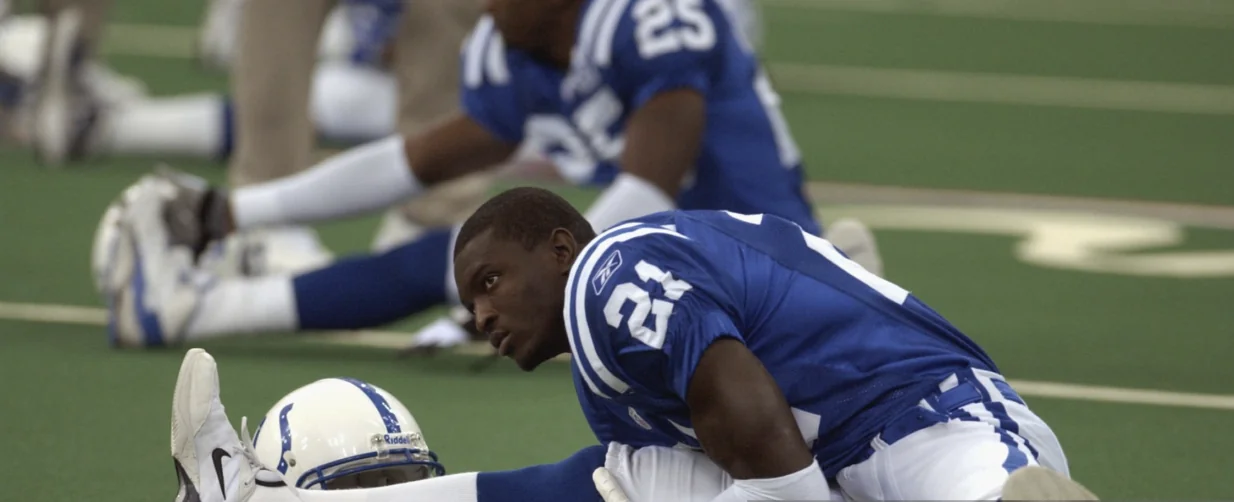
Two full years passed before anyone did it again, and the man who finally managed it was, improbably, another Harris from Mississippi State. Walt Harris arrived with a much shinier pedigree than his predecessor: the Chicago Bears took him 13th overall in the 1996 draft, and he left Starkville sharing the school’s career interception record with 16, a mark that still stands in the books alongside Johnthan Banks.
His moment came in the AFC Championship Game on January 18, 2004, when he was a second-year Colt playing in the cold at Gillette Stadium. Indianapolis spent the afternoon watching Peyton Manning throw four interceptions, three of them to Ty Law, while Brady handed out exactly one the other way. Harris caught it. It changed nothing about the outcome, which is roughly the story of intercepting Tom Brady in January: New England won and took the Super Bowl two weeks later.
The strange part of Harris’s career is that his best football came at the end of it. In 2006, at age 32 and with his fourth franchise, he intercepted a career-high eight passes for San Francisco, was named NFC Defensive Player of the Month for November, and made his first Pro Bowl in his eleventh season. Most cornerbacks decline in their thirties. Harris apparently used the first decade as a warm-up.
Reggie Howard
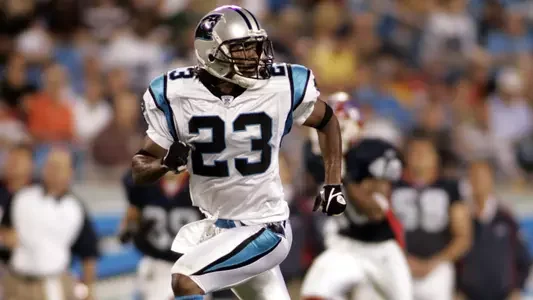
With the Patriots parked at the Carolina 9-yard line in the fourth quarter of Super Bowl XXXVIII, Tom Brady threw the one pass of the night he would want back. Reggie Howard, an undrafted cornerback out of Memphis, read the third-and-goal throw intended for tight end Christian Fauria and caught it in the end zone, then carried it out 12 yards. On Carolina’s next series Jake Delhomme hit Muhsin Muhammad for an 85-yard touchdown, still the longest play from scrimmage in Super Bowl history, and the Panthers led a game they had trailed all evening.
Howard’s route to that end zone was not a scouted one. No team drafted him in 2000; he signed with New Orleans, moved to Carolina, and worked his way from 11 appearances to a full-time starting job by 2003, when he started all 15 of his regular-season games and all four playoff games of the Panthers’ run. He finished his career with 78 games, six interceptions, and 257 tackles across seven seasons, then went into coaching in 2015.
The Patriots won 32-29 on a field goal with four seconds left, and Brady collected the MVP trophy despite the giveaway. Howard remains the only man ever to intercept him in a Super Bowl New England won. Nobody plans a distinction like that. It simply accumulates.
Champ Bailey
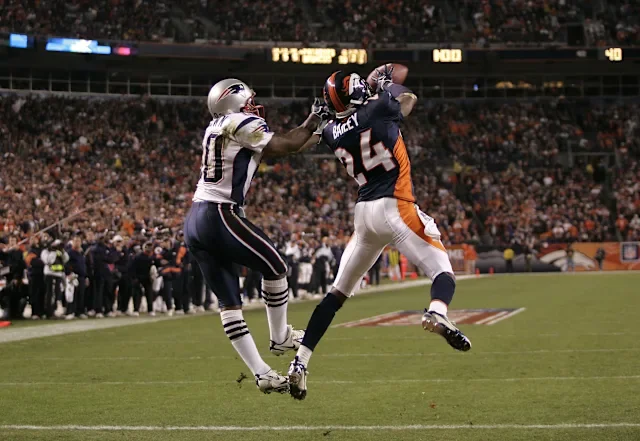
One hundred yards is a long way to run with a football, and Champ Bailey ran every one of them without scoring. Late in the third quarter of the January 2006 divisional round, with Denver up 10-6 and New England facing third-and-goal at the 5, Brady threw for Troy Brown and found Bailey waiting in the end zone instead. By his own account Bailey had read the crossing routes before the snap and told rookie Darrent Williams to stay home rather than chase. Then he set off down the left sideline with tight end Benjamin Watson, who had started the play on the opposite side of the field, in furious pursuit. Watson arrived at the 1-yard line and knocked the ball out of bounds.
It stood, at the time, as the longest non-scoring play in NFL history. New England challenged, arguing the ball had gone through the end zone for a touchback; the call held, Mike Anderson scored from a yard out on the next snap, and a 14-3 swing was complete. Bailey later admitted he thought it was a touchback too.
The rest of the resume needs little help: 12 Pro Bowls, more than any cornerback ever, an NFL-record 203 passes defended, and enshrinement in Canton in 2019. He retired with 464 career interception return yards. More than a fifth of them came on a single play worth zero points.
John Lynch
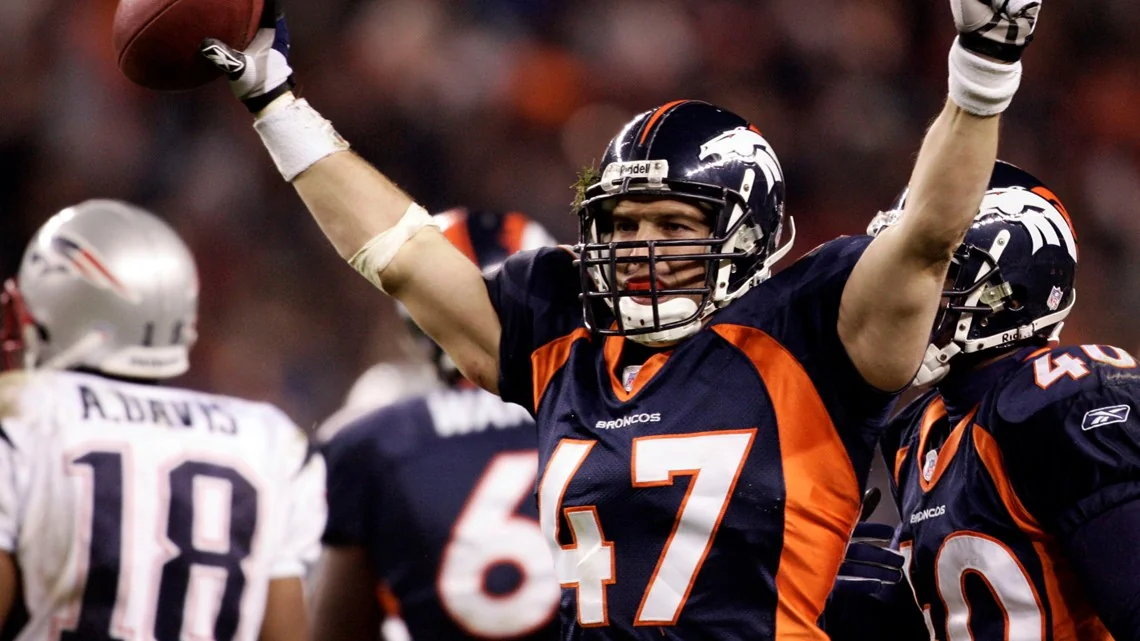
Monte Kiffin nicknamed John Lynch “The Closer” in Tampa Bay, after noticing that Lynch’s interceptions had a habit of arriving when games needed ending. Denver received the full service on January 14, 2006. With the Broncos leading 27-13 and less than three minutes left, Lynch picked off Brady to shut the door on the same night Champ Bailey had blown it open, and New England’s postseason ended at 10 wins and one loss. It was the first playoff defeat of Brady’s career, in his eleventh playoff game.
Lynch was 34 by then, a Stanford man drafted in the third round by the Buccaneers in 1993 who built a Hall of Fame case out of nine Pro Bowls, a thousand-odd tackles, and hits that receivers discussed in hushed tones for years afterward. He won Super Bowl XXXVII with Tampa Bay, went to Denver in 2004, and retired in 2008 into a broadcast booth at Fox.
Then came the strangest chapter. In 2017 the 49ers hired Lynch as general manager despite his having zero front-office experience, and his first act was to hire Kyle Shanahan, son of Mike Shanahan, the coach who had brought him to Denver. San Francisco has since reached two Super Bowls under the pairing, and Canton called for Lynch himself in 2021. The Closer, it turns out, was also a decent opener.
Donnie Edwards
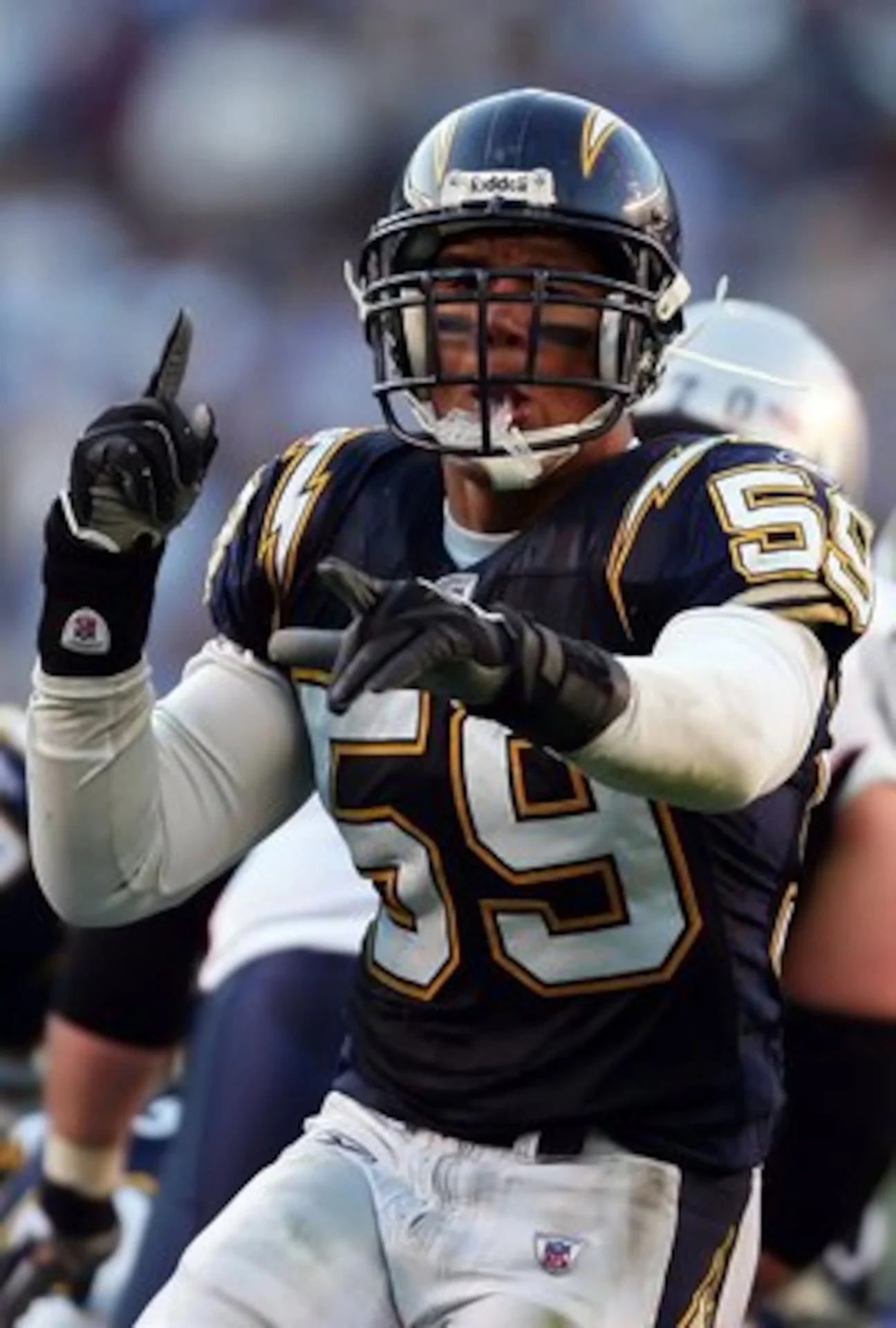
Donnie Edwards intercepted 28 passes in his career, a respectable total for a cornerback and a frankly unreasonable one for a linebacker. It left him nine short of Don Shinnick’s all-time record for the position and made him just the ninth player in NFL history to pair 20 interceptions with 20 sacks. He also led the league in solo tackles in 2000 and averaged 154 tackles a season from 2003 to 2005. For all of that, he was voted to exactly one Pro Bowl in thirteen seasons, in 2002, as an alternate.
One of the 28 came off Brady in the second quarter of the January 2007 divisional game in San Diego, when Edwards read a pass and returned it to the 41-yard line with his hometown Chargers trailing by four. Edwards grew up in Chula Vista, one of eight children, went to UCLA on a scholarship, and was a fourth-round pick of the Chiefs in 1996 before finally coming home in 2002. The takeaway went nowhere: Philip Rivers was sacked on third down, and San Diego punted.
Since retiring, Edwards has poured himself into the Best Defense Foundation, the nonprofit he and his wife founded in 2018 that returns aging military veterans to the battlefields where they once served. The Pro Bowl voters owe him a few trips of his own.
Drayton Florence
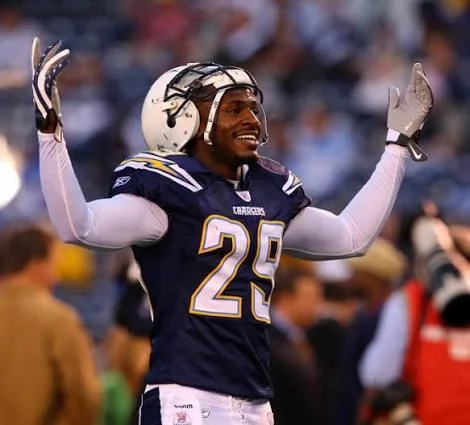
Nobody has intercepted Tom Brady in two different postseasons except Drayton Florence. His first came in the third quarter of San Diego’s January 2007 playoff loss, a few months into his fourth season; his second arrived a year and six days later, on the opening drive of the second half of the AFC Championship, when he picked Brady off at the New England 49 during the Patriots’ 18-0 season. San Diego lost both games, which takes nothing away from the collection.
Florence’s path to that distinction ran through Ocala, Florida, and two colleges: he started at Chattanooga, transferred to Tuskegee, and returned three interceptions for touchdowns there, a school record. When the Chargers took him 46th overall in 2003, he became the highest-drafted NFL player in Tuskegee’s history, a program whose alumni ledger runs back a century. He lasted eleven seasons and five teams, retiring with 20 interceptions.
His two picks did come with a service charge. In the same game where he got the first one, Florence head-butted Patriots tight end Daniel Graham after a third-down stop, a 15-yard unsportsmanlike penalty that extended a New England drive to a field goal in a game his team lost by three. The math on that afternoon is best left unexamined, and to his credit, he came back the next January and took another one anyway.
Marlon McCree
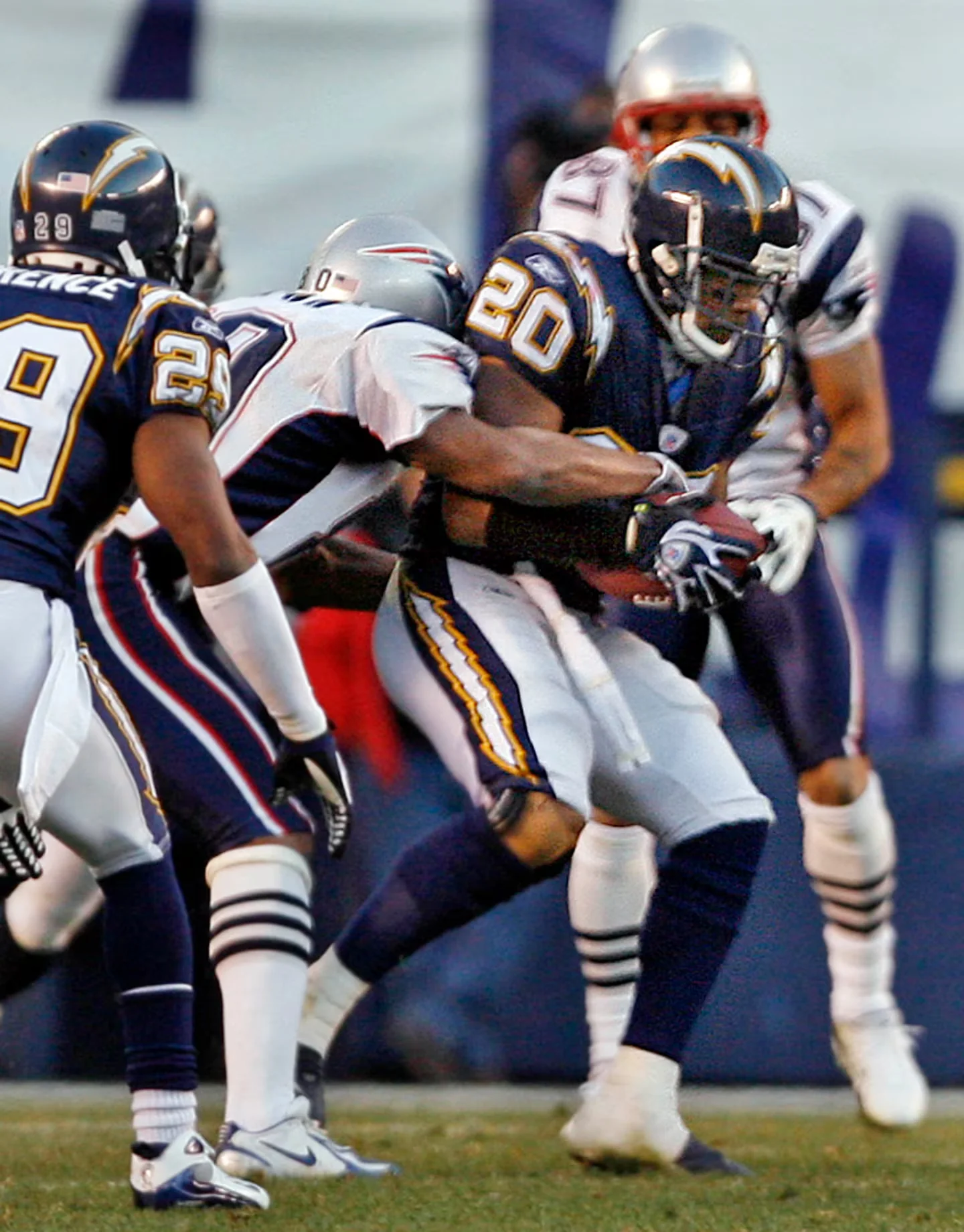
Fourth-and-5, 6:25 to play, San Diego leading 21-13, and Tom Brady threw the ball more or less directly to Marlon McCree. What happened over the next four seconds cost a 14-2 team its season and quite possibly its coach. McCree, a seventh-round pick out of Kentucky taken 233rd overall in 2001, caught the pass at the 31-yard line and started running. An incompletion would have ended the drive; so would falling down. Instead Troy Brown, a wide receiver with a sideline in emergency defensive back work, stripped the ball from behind, and Reche Caldwell, the pass’s intended target and a former Charger, fell on it. New England had a fresh set of downs.
Marty Schottenheimer challenged the play and lost a timeout. The Patriots converted the reprieve into a touchdown and a two-point conversion on a direct snap to Kevin Faulk, added a field goal with 1:10 left, and watched Nate Kaeding’s 54-yard attempt fall short. Teammates later described screaming at McCree to get down; he said afterward he was trying to make a play.
One month later San Diego fired Schottenheimer, still the only head coach in NFL history dismissed after a 14-win season. McCree played on for years and was a perfectly good safety. But the epitaph writes itself. All he had to do was fall over.
Marlin Jackson
Eighteen seconds were left on the RCA Dome clock when Marlin Jackson stepped in front of Tom Brady’s last pass of the 2006 AFC Championship Game. Indianapolis had trailed 21-3, clawed back through the largest comeback in conference championship history, and taken its first lead at 38-34 with a minute to go. Brady drove New England to midfield anyway, because that was simply what happened next in those years. Then Jackson caught the ball, slid to the turf clutching it with both arms, and Peyton Manning was finally going to a Super Bowl.
Jackson was built for a bigger career than he got. A two-time All-American and team captain at Michigan, he went to the Colts 29th overall in 2005 and started at both cornerback and safety on the defense that won Super Bowl XLI two weeks after his famous catch. Then his body gave out in installments: torn knee ligaments in 2008, another knee in 2009, and a ruptured Achilles at an Eagles practice in 2010 that ended things at 56 career games and four interceptions.
All four of those interceptions came in meaningful spots, but only one ended a dynasty’s run at the last possible moment. In Indianapolis they still replay it every January. Jackson stayed in town too, working in local media and community development. The city has a long memory for eighteen seconds.
Quentin Jammer
Being drafted fifth overall is mostly a curse dressed as a compliment. Quentin Jammer, a unanimous All-American at Texas who allowed one touchdown pass in 28 college starts at cornerback, arrived in San Diego in 2002 as the highest-selected defensive back of his class and spent a decade being reminded of it. He led the league in pass interference penalties in 2004, heard fans chant the name of a corner drafted after him, and never made a Pro Bowl in 161 starts for the franchise. Ed Reed, taken 19 picks later that same first round, went to nine.
None of which was really Jammer’s fault, and his January 2008 afternoon in Foxborough made the case. With five minutes left in the first quarter of the AFC Championship, he intercepted Brady at the New England 40 and handed his offense the field position for Nate Kaeding’s opening field goal. San Diego’s defense held a team that had scored 589 points in the regular season – a record at the time – to three touchdowns’ worth of nothing: four field goals allowed, no more.
The Chargers still lost 21-12, largely because their own offense never reached the end zone. Jammer retired in 2013 with 21 interceptions and the durable respect of people who watched closely. The fans who chanted at him have mostly apologized by now, in the way fans do, which is silently.
Antonio Cromartie
The longest play in NFL history can never be broken, only equaled, and Antonio Cromartie owns it. On November 4, 2007, he caught Ryan Longwell’s missed 58-yard field goal nine yards deep in the end zone at the Metrodome and ran it back 109 yards, the mathematical maximum a field allows. That was the season Cromartie led the league with 10 interceptions, breaking a Chargers record that had stood since 1961, and it ended with him spending January robbing Hall of Fame quarterbacks in sequence.
In the divisional round he picked off Peyton Manning on the last play of the first half and returned it 89 yards for a touchdown that a holding penalty erased. A week later, in the AFC Championship at Gillette Stadium, New England ran the ball to the San Diego 2-yard line and looked certain to put the game away. Brady threw for tight end Ben Watson in the end zone, and Cromartie, who led the Chargers with nine tackles that day, took it away. His pick kept the score within one possession into the fourth quarter of an eventual 21-12 loss.
Cromartie played eleven seasons, made four Pro Bowls, and picked off 31 passes. But the record is the thing. Somewhere in the rulebook’s geometry, 109 yards sits untouchable, guarded by the back line of an end zone.
Chris Carr
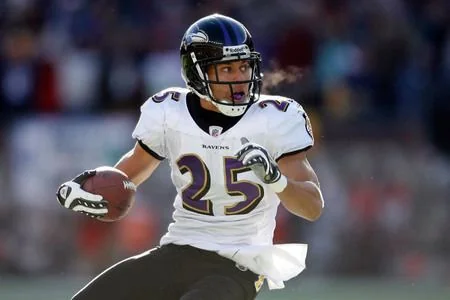
Chris Carr took the LSAT and gathered his law school recommendation letters before the 2005 draft, on the sensible theory that the NFL would not call. The NFL called. Nine seasons later, having led the league in kickoff return yards twice and set the Raiders’ career record for them, he enrolled at George Washington University Law School more or less on schedule. He is now a senior attorney handling deportation defense and asylum cases. Football, in the arc of Chris Carr’s plans, was the detour.
The detour had its moments. On January 10, 2010, Carr was a Baltimore corner pressed into defensive duty by injuries, on a Ravens team that had opened the game with Ray Rice’s 83-yard touchdown run on the very first snap. Midway through a 24-0 first quarter, the second-fastest scoring postseason quarter the league had seen, Carr jumped a short slant meant for Sam Aiken and returned the interception to the New England 25. Rice scored again five plays later. The 33-14 final was Baltimore’s first playoff win over the Patriots, achieved in their own building.
Undrafted out of Boise State, Carr made roughly $15 million in the league and never treated any of it as the destination. His mother told him to wake up every morning thinking about the day football would end. He listened, which may be the rarest play in this entire list.
Ed Reed
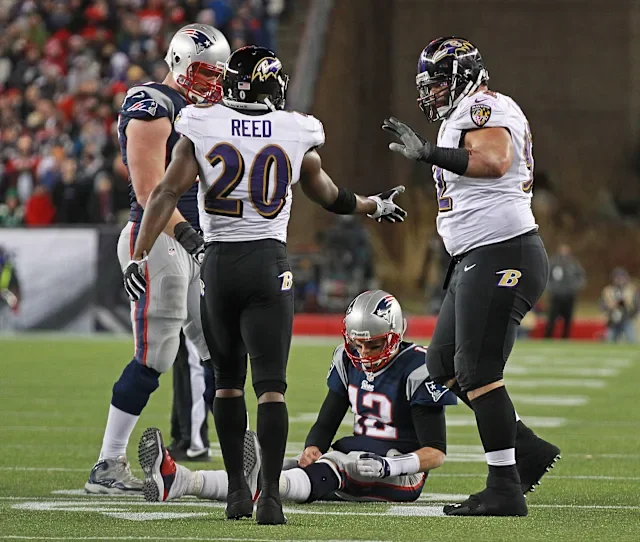
Nobody in NFL history has carried interceptions farther than Ed Reed. His 1,590 career return yards are a league record by more than the length of a football field, he owns the two longest interception returns ever recorded, at 106 and 107 yards, and if you add his postseason runbacks he finished his career precisely two yards short of a full mile. His nine playoff interceptions are tied for the most in history. One of them came off Brady in the first quarter at Gillette Stadium in January 2010, and it was entirely characteristic: Reed caught the deep ball, ran 25 yards, and then, rather than be tackled, flipped the football to a teammate in stride, because possession to Ed Reed was always just the start of a negotiation.
The resume around that play reads like an invented one. Defensive Player of the Year in 2004, the first safety so honored in twenty years. Nine Pro Bowls. A Super Bowl XLVII ring, with an interception in the game. First-ballot enshrinement in Canton in 2019.
Quarterbacks planned entire afternoons around not knowing where he was and finding out too late. Brady found out in the usual way, in a 33-14 loss that ended New England’s season in one afternoon. Reed treated the football as community property. He simply collected the taxes.
Dawan Landry
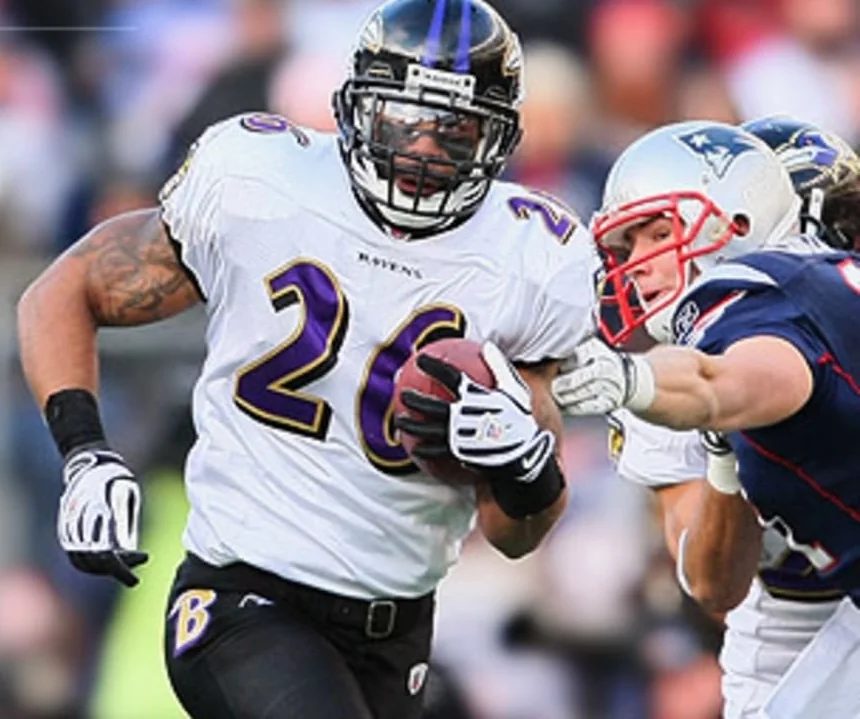
The first football Dawan Landry carried in that wild-card game technically belonged to Ed Reed, who pitched it to him mid-return like a man passing off luggage. Landry took the lateral 25 yards to the New England 9, setting up the field goal that made it 24-0 before the first quarter ended. Two quarters later he acquired one honestly, reading Brady deep and returning his own interception 42 yards to the 22 to set up three more points. And in a strange postscript, the routine repeated itself the following season against Carolina: Reed intercepted, Reed lateraled, and Landry carried it 23 yards for a touchdown. Some teammates share rides to work. These two shared takeaways.
Landry was never supposed to be on that side of the ball. He played quarterback at Hahnville High School in Louisiana and redshirted at Georgia Tech as one, converting to safety only because the depth chart demanded it. Baltimore took him in the fifth round in 2006, 146th overall; his younger brother LaRon went sixth overall to Washington a year later, which made for instructive family arithmetic. Dawan started immediately beside Reed on the league’s top-ranked defense and intercepted five passes as a rookie.
He survived a spinal cord concussion in 2008, came back to lead the team in interceptions in 2009, and played nine NFL seasons. The lateral, though, kept finding him.
David Harris
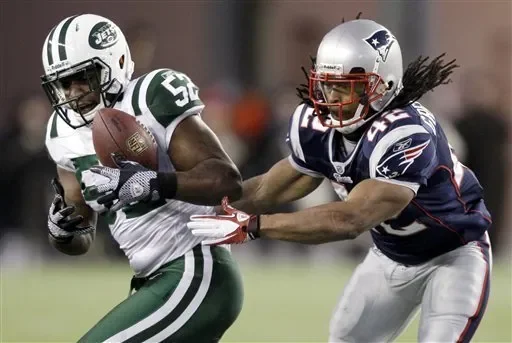
Tom Brady had thrown 339 consecutive passes without an interception, an NFL record at the time, when he floated a screen toward BenJarvus Green-Ellis in the opening quarter of the January 2011 divisional round. David Harris was waiting on it. The Jets linebacker caught the overthrow in stride and rumbled 58 yards before tight end Alge Crumpler, of all the slow-footed candidates, hauled him down at the 12-yard line. New York then lost eight yards and missed a 30-yard field goal, converting the play into nothing at all. It hardly mattered. The unanimous MVP’s air of inevitability left the building with that throw, and the Jets beat the 14-2 Patriots 28-21 in their own stadium.
It remains, a decade and a half later, the last playoff game the Jets have won. Harris was the ideal man for the franchise’s high-water mark: a Michigan linebacker, like Brady a Wolverine, drafted 47th overall in 2007, who piled up 1,088 tackles for New York, second in club history, without ever generating a headline he didn’t immediately hand to someone else. Bart Scott’s sideline interview got the replays that night. Harris got the record.
He finished his career in 2017 with, inevitably, the New England Patriots, and went to a Super Bowl with them. Football has a sense of humor about these things.
Quinton Carter
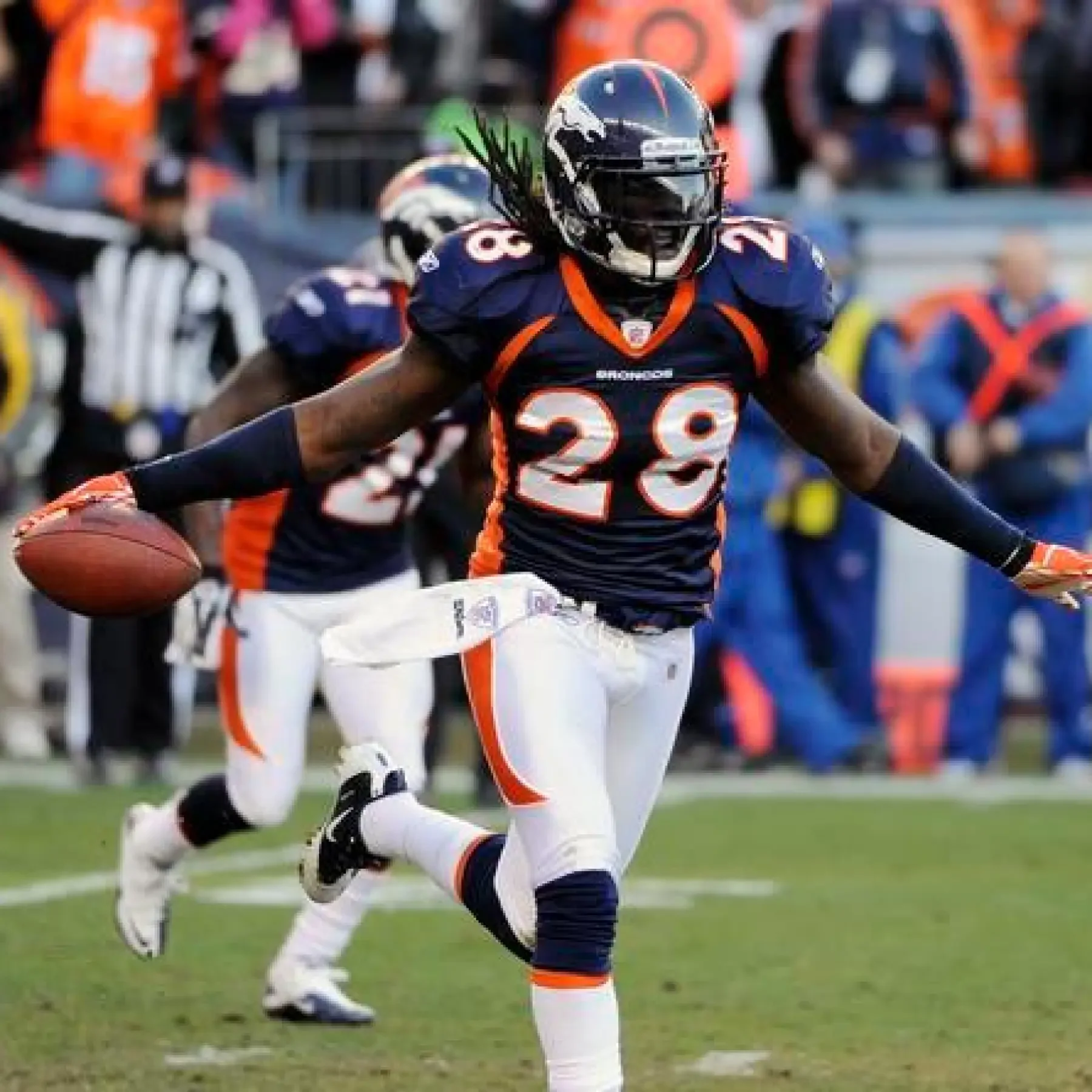
Rookies are not supposed to spend January collecting future Hall of Fame quarterbacks, but Quinton Carter picked off Ben Roethlisberger and Tom Brady in consecutive playoff weekends at the end of his first season. The Roethlisberger interception came in the overtime wild-card win everyone remembers for Tim Tebow. The Brady one came the following Saturday in Foxborough, on New England’s third series, returned 17 yards to the 24 to set up the touchdown that briefly made it 14-7. Brady threw six touchdown passes that night, tying a playoff record, in a 45-10 dismantling. Carter’s interception was the game’s lone argument for the defense, and he was gone by halftime with a neck injury.
Carter had won the Broncos’ starting free safety job as a fourth-round rookie from Oklahoma, a consensus All-American who slid in the 2011 draft over a degenerative knee condition that scouts flagged and time confirmed. Dodging a soccer goal in a practice bubble in 2012, he wrecked the knee; arthroscopic surgery became microfracture surgery, and two full seasons vanished. He played his last NFL game in 2014, at 26.
The after-football chapter suits him. Carter had founded a youth charity while still in college, made the AFCA Good Works Team, and now runs a Jamaican restaurant back home in Las Vegas. The knees failed. Nothing else about him did.
Lardarius Webb
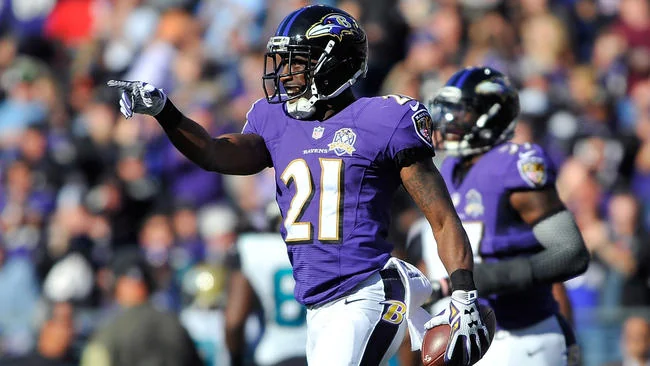
Lardarius Webb spent the first fifteen minutes of the January 2012 AFC Championship on both sides of the interception ledger. Midway through the period, his illegal contact penalty wiped out a Bernard Pollard pick of Brady that would have handed Baltimore the ball. Four minutes later Webb settled the account personally, cutting underneath a Brady throw to give the Ravens the possession his flag had cost them. Few players have ever erased an interception and replaced it in the same quarter.
That season was the best of his life. A former option quarterback at Nicholls State – where, by the Southland Conference’s accounting, he remains the only Division I player ever named the league’s offensive, defensive, and special teams player of the week in a single year – Webb intercepted five passes in 2011, added three more in the playoffs, and returned a punt 68 yards for a touchdown. Baltimore paid him $50 million that offseason. Six games later he tore his ACL, and he watched his teammates win Super Bowl XLVII from injured reserve, a champion in street clothes.
He played all nine of his seasons in Baltimore, converted to safety near the end, and retired a Raven. In the spring of 2026 the franchise signed an undrafted cornerback out of Wake Forest named Lardarius Webb Jr. The organization apparently believes in sequels.
Jimmy Smith
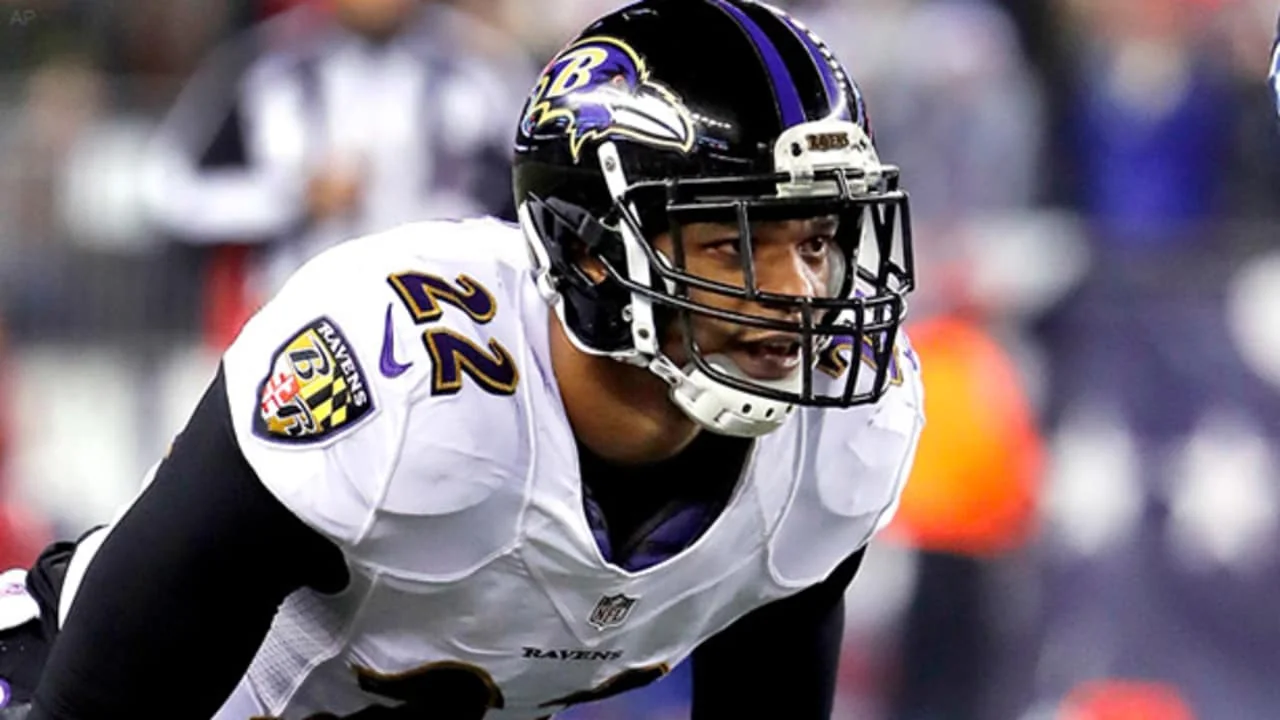
Brandon Spikes intercepted Joe Flacco with under eight minutes left in the January 2012 AFC Championship, and on the very next play Tom Brady handed the ball straight back. His deep throw toward Matthew Slater – a special teams captain who would retire with exactly one career reception – was picked off by Jimmy Smith, a rookie first-round corner scooping the ball just before it touched the turf. Two teams had traded interceptions on consecutive snaps of a title game, and Smith’s gave Baltimore the ball with 7:22 to play, trailing by three.
What followed belongs to New England lore rather than his: a failed fourth-and-6, then a final Ravens drive on which Lee Evans let a winning touchdown get swatted from his grip and Billy Cundiff pushed a 32-yard tying field goal wide left with 11 seconds on the clock. Smith did his part; the ending simply declined to cooperate.
The Ravens drafted Smith 27th overall out of Colorado in 2011, and he never wore another uniform, lasting eleven seasons in Baltimore. A year after the Cundiff game he was on the field for the final stand of Super Bowl XLVII, defending the fourth-down throw to Michael Crabtree that decided a championship. Some careers chase highlights. Smith’s kept being present for other people’s agony.
Chase Blackburn
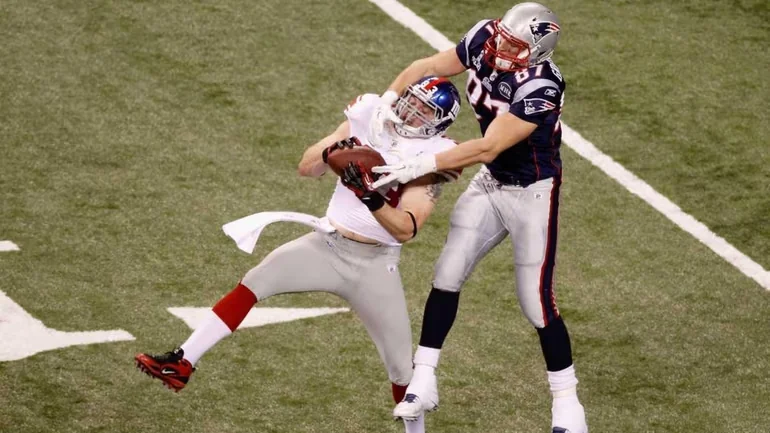
In the fall of 2011, Chase Blackburn was substitute teaching middle school math in Ohio and close to accepting a full-time classroom job. He had spent six seasons as a Giants linebacker and special teams captain, been let go, and gone unsigned through twelve weeks. New York called on November 29. Ten weeks after that, in Super Bowl XLVI, he was running stride for stride with Rob Gronkowski forty yards downfield.
Brady, escaping pressure from Linval Joseph on the second play of the fourth quarter, saw his 6-foot-6 tight end matched up on a 242-pound linebacker and heaved it. On paper New England takes that matchup every time. But Gronkowski was hobbled by the ankle he had injured two weeks earlier, and Blackburn, who had covered him the length of the field, outjumped him at the Giants’ 8-yard line. It was the only turnover of the game. New York, trailing 17-15 at the time, won 21-17.
Blackburn had gone undrafted out of Akron in 2005, and both of his Super Bowl rings came against the Patriots, four years apart. He returned an interception off Aaron Rodgers in his second week back from the classroom, too, in case anyone thought the Brady play was luck. He now coaches in the NFL. The league finally made the teaching job permanent.
Dannell Ellerbe
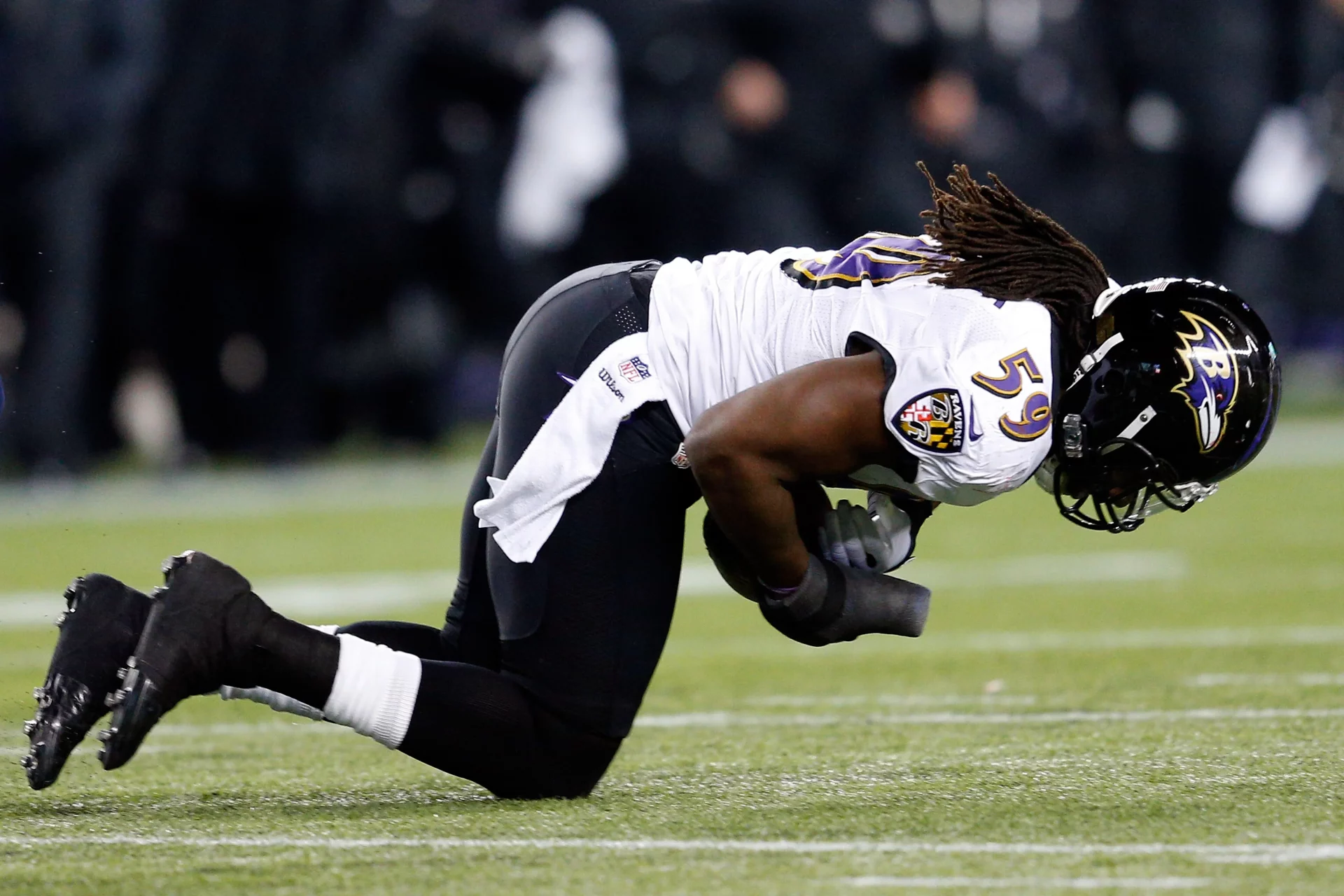
All four New England possessions in the fourth quarter of the January 2013 AFC Championship ended in a turnover, and Dannell Ellerbe supplied the one that required the softest hands. With under seven minutes left and the Patriots driving at the Baltimore 19, Pernell McPhee tipped a Brady pass at the line, and Ellerbe, an undrafted linebacker from Georgia, plucked the wobbling ball out of the air. New England never threatened again. The Ravens won 28-13, shutting Brady out for an entire second half and handing him the first home loss of his career in a game he led at halftime – he had been 67-0.
Ellerbe had made the roster in 2009 as a fill-in behind Ray Lewis and spent four seasons earning trust in installments. That January was his graduation: two weeks later, in Super Bowl XLVII, his hustle tackle forced Frank Gore out of bounds at the Baltimore 7 in the final three minutes, an unglamorous play without which the 49ers likely score and history rearranges itself.
Miami paid him handsomely that offseason, injuries ate his prime, and then came a last twist: Ellerbe finished his career on the 2017 Eagles, collecting a second ring in Super Bowl LII – against New England. Both of his championships required beating Tom Brady in February or late January. He went two for two.
Cary Williams
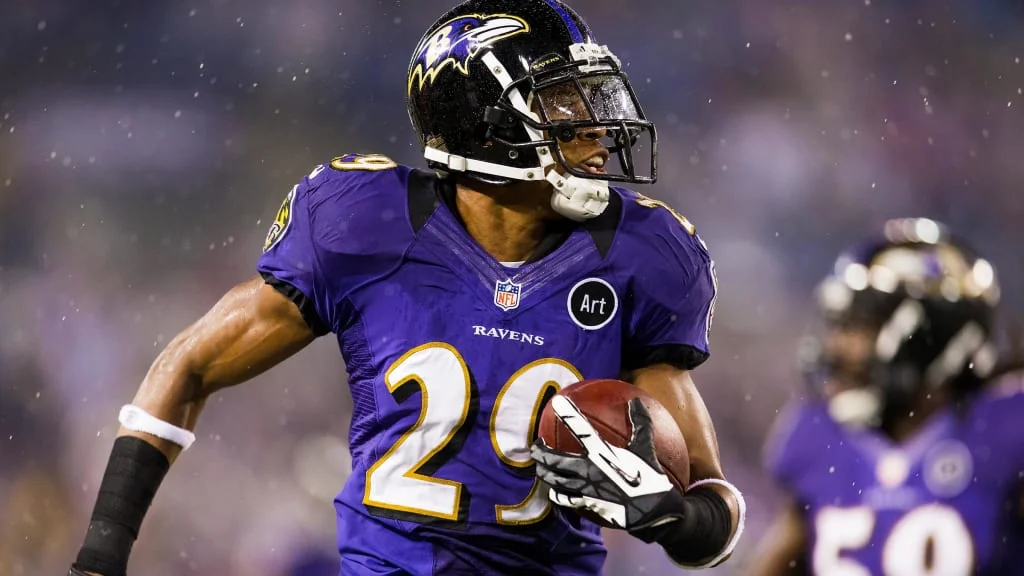
Cary Williams had already intercepted Tom Brady in an AFC Championship Game once, and officially it never happened. Deep into the third quarter of the 2011 title game, Williams picked Brady off only to watch the play vanish because Terrell Suggs had lined up offside. A year and two days later, back at Gillette Stadium for the rematch, Williams caught one that counted – in the end zone, with just over a minute left, the final act of a 28-13 win that sent Baltimore to the Super Bowl. He is the only man on this list who had to intercept Brady twice in title games to get credit for it once.
Nothing about his route suggested he would be there at all. Williams began at Fordham, transferred to Division II Washburn in Topeka, Kansas, and became the fifth player ever drafted from the school when Tennessee spent the 229th pick on him in 2008. The Titans waived him repeatedly; Baltimore lifted him off their practice squad in late 2009 and turned him into a starter who did not miss a game in 2011 or 2012.
He tied Ed Reed for the team lead with four interceptions in 2012, started Super Bowl XLVII, and cashed in with Philadelphia that spring. The scouts who passed on him 228 times have presumably stopped counting.
Daryl Smith
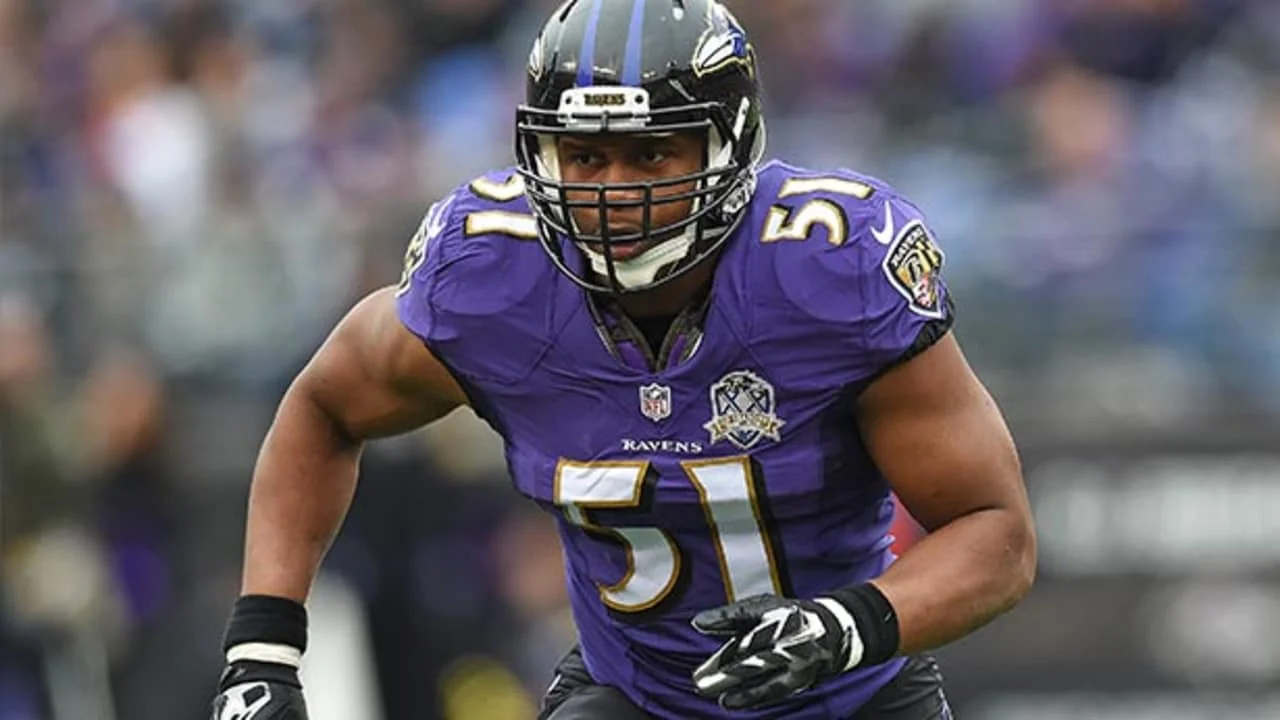
Replacing Ray Lewis was widely understood to be impossible, so the Ravens hired a 31-year-old coming off a lost season and let him get on with it. Daryl Smith had spent nine years in Jacksonville becoming the franchise’s all-time leading tackler, a grinder nicknamed Buck who led the Jaguars in stops season after season without a single Pro Bowl to show for it. Baltimore signed him in June 2013, months after Lewis retired, and Smith promptly led the team in tackles and broke Lewis’s own franchise record for pass deflections in a season by a linebacker.
His lone career playoff interception came against Brady midway through the January 2015 divisional round, killing a second-quarter New England drive in a game Baltimore twice led by 14 points. The Ravens lost it anyway, 35-31, on an evening the Patriots salvaged with unorthodox eligible-receiver formations and a double pass, Julian Edelman’s first career throw going 51 yards to Danny Amendola. John Harbaugh was still complaining about the formations at the podium afterward. Smith’s pick was the sort of contribution he had made for a decade: significant, sound, and swallowed whole by louder events.
He retired after 2016 with more than 1,000 career tackles across 13 seasons. The Pro Bowl never did call. The Pro Bowl, on this evidence, was not watching closely.
D’Qwell Jackson
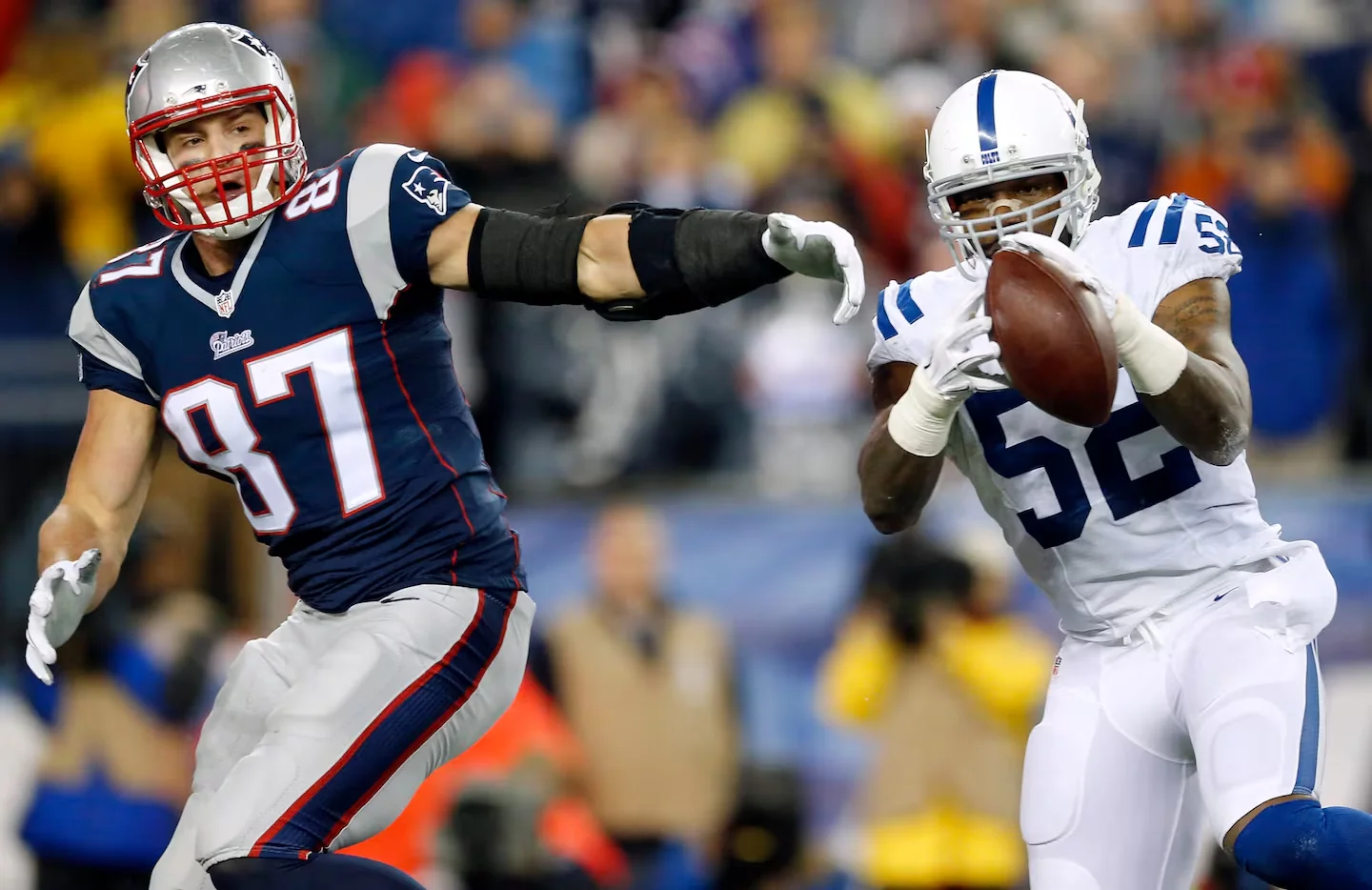
The most scrutinized football of the decade spent the evening of January 18, 2015, in the custody of an equipment manager, because D’Qwell Jackson wanted a souvenir. Jackson, a Colts linebacker, intercepted Brady during the second quarter of the AFC Championship and handed the ball to Indianapolis staff for safekeeping. The Colts flagged its inflation level to the league, and the resulting investigation – Deflategate – ran for well over a year, cost the Patriots a million dollars and two draft picks, and eventually cost Brady a four-game suspension. Jackson, for his part, insisted he noticed nothing unusual and learned the ball had even been confiscated only on his drive home from the airport. New England won the game 45-7.
The man at the center of the century’s strangest football controversy was otherwise a model of the unremarkable-in-a-good-way. A second-round pick out of Maryland in 2006, where he was ACC Defensive Player of the Year, Jackson piled up more than 750 career tackles across eleven seasons and led his team in tackles year after year in both Cleveland and Indianapolis.
He later asked whether he could have the football back, the way a player normally keeps a career milestone. The league said no. Somewhere in NFL storage sits the one interception souvenir in history too famous to give to the man who caught it.
Jeremy Lane
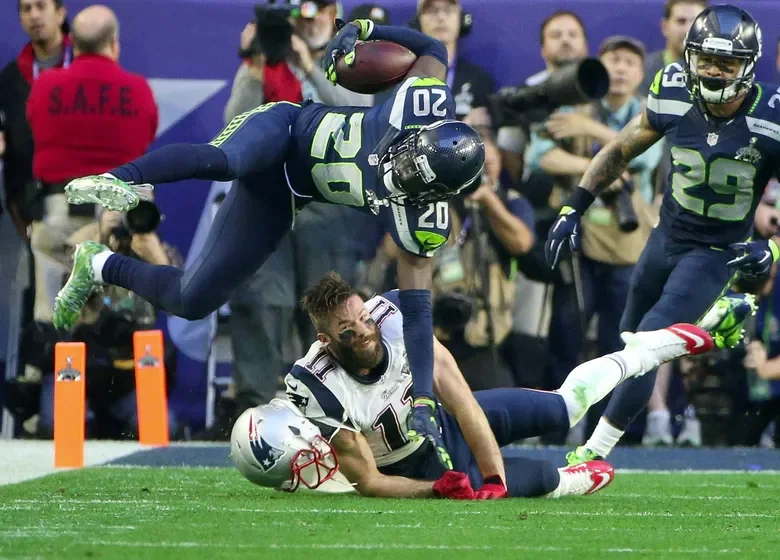
Jeremy Lane’s first career interception came at the goal line of a Super Bowl, which should have been the happiest sentence of his professional life. On third-and-6 from the Seattle 10 in the first quarter of Super Bowl XLIX, Brady threw for Julian Edelman at the back of the end zone and Lane, the Seahawks’ nickel corner, took it away. Then he decided to run. Edelman, the intended receiver, knocked him out of bounds 14 yards later, and Lane landed on his left arm, which bent where arms do not bend. Compound fracture, both wrist bones, plus a torn ACL, all on one return. He never took another snap that night.
The injury quietly reshaped the game. New England spent the rest of the evening hunting his replacement, Tharold Simon, who surrendered two of Brady’s four touchdown passes in the 28-24 comeback. And history barely noticed Lane’s play at all, because that Super Bowl ends with a different goal-line interception, thrown by the other quarterback, into the arms of Malcolm Butler.
Lane was a sixth-round pick from Northwestern State who cracked the Legion of Boom and won a ring in the previous year’s Super Bowl. His pick of Brady cost him half a year of rehabilitation. Football owed him a better exchange rate, and never paid.
Bobby Wagner
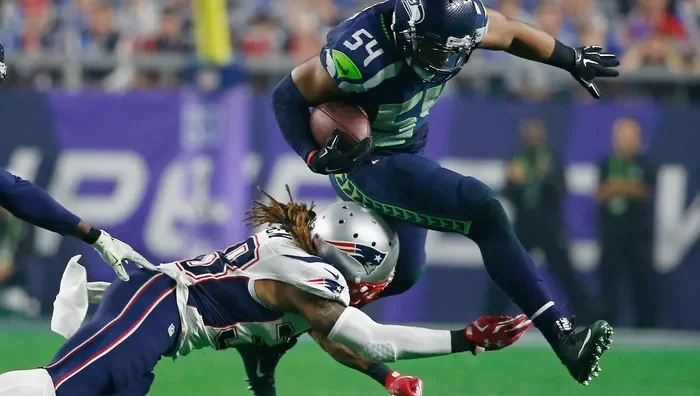
Intercepting Tom Brady in Super Bowl XLIX carried a hidden tax. Jeremy Lane had paid it with an arm in the first quarter, and when Bobby Wagner collected Seattle’s second pick early in the third, the bill arrived again: defensive end Cliff Avril was concussed on the return and never re-entered a game the Seahawks would lose by four. Wagner’s interception itself was pure profit, snagged just after Seattle took a 17-14 lead and returned six yards before a Richard Sherman blocking penalty dragged the field position back to midfield. He also made 12 tackles that evening, because he always made 12 tackles.
That is roughly the story of Wagner’s whole career: relentless production, modestly packaged. A second-round pick out of Utah State in 2012 – pneumonia kept him from working out at the combine – he set a Seattle rookie record with 140 tackles and then never recorded fewer than 104 in a season. He made the 2010s All-Decade team, earned six first-team All-Pro selections, became the Seahawks’ career tackles leader, and tied the franchise single-season record with 183 stops in 2023, at age 33.
He was still piling up tackles for Washington in 2025, in his fourteenth season, at 35. Middle linebackers are not supposed to age like this. Wagner has apparently declined to read the actuarial tables.
Von Miller
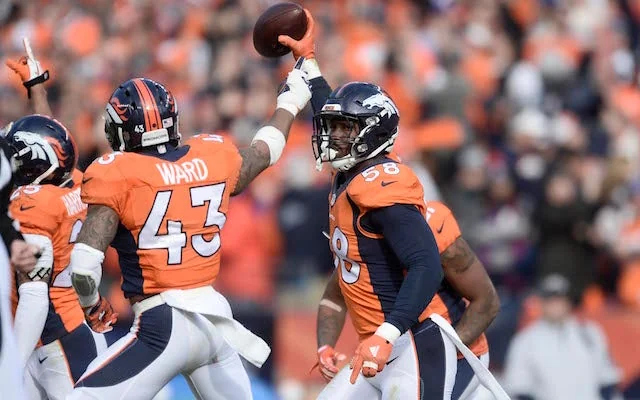
Two weeks before Von Miller ruined Cam Newton’s Super Bowl, he spent an afternoon dismantling Tom Brady’s AFC Championship. On January 24, 2016, Miller sacked Brady two and a half times, a Broncos single-game playoff record, and in the second quarter he pulled off the pass rusher’s rarest trick: he faded quietly into a short zone, Brady never saw him, and Miller intercepted a throw deep in New England territory to set up Denver’s second touchdown. The Broncos hung on 20-18, sending Peyton Manning to a final Super Bowl that Denver’s defense would win more or less by itself, with Miller taking MVP honors after stripping Newton twice.
Miller was the second overall pick out of Texas A&M in 2011, a Butkus Award winner who turned edge rushing into a decade-long recital: Defensive Rookie of the Year, eight Pro Bowls, and a franchise-record 110.5 sacks in Denver. He added a second ring with the 2021 Rams, and entering 2025 no active player had more career sacks.
The interception remains the strange jewel in the collection. Quarterbacks spent fifteen years locating Von Miller before every snap so he could not hit them. Brady located him, that once, a beat too late, and in the wrong role entirely.
Darian Stewart
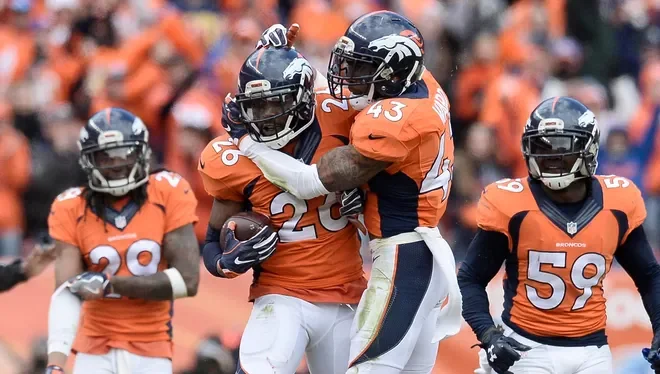
Denver’s 2015 secondary employed several of the most famous defensive backs in football and Darian Stewart, who had gone undrafted out of South Carolina in 2010 and arrived via the Rams and Ravens on a modest free-agent deal. The No Fly Zone did not seem to mind the discount. Stewart started every game for the NFL’s top-ranked pass defense, sealed the season opener with a leaping end-zone interception of Joe Flacco in the final minute, and in the AFC Championship added the takeaway that mattered most, picking Brady off in the second quarter, minutes after Von Miller had done the same.
Two interceptions of a two-time MVP quarterback in one half of one title game was a respectable afternoon’s work for a defense that spent the day treating New England’s pass protection as a rumor. Denver won 20-18 and then held Carolina’s top-ranked offense to 10 points in Super Bowl 50, with Stewart starting and breaking up a pass intended for Greg Olsen.
He played four seasons in Denver, intercepted nine passes as a Bronco, and was released in 2019 after nine NFL years, which is roughly eight more than the league projects for an undrafted safety. The famous names in that secondary collected the magazine covers. Stewart collected the football.
A.J. Bouye
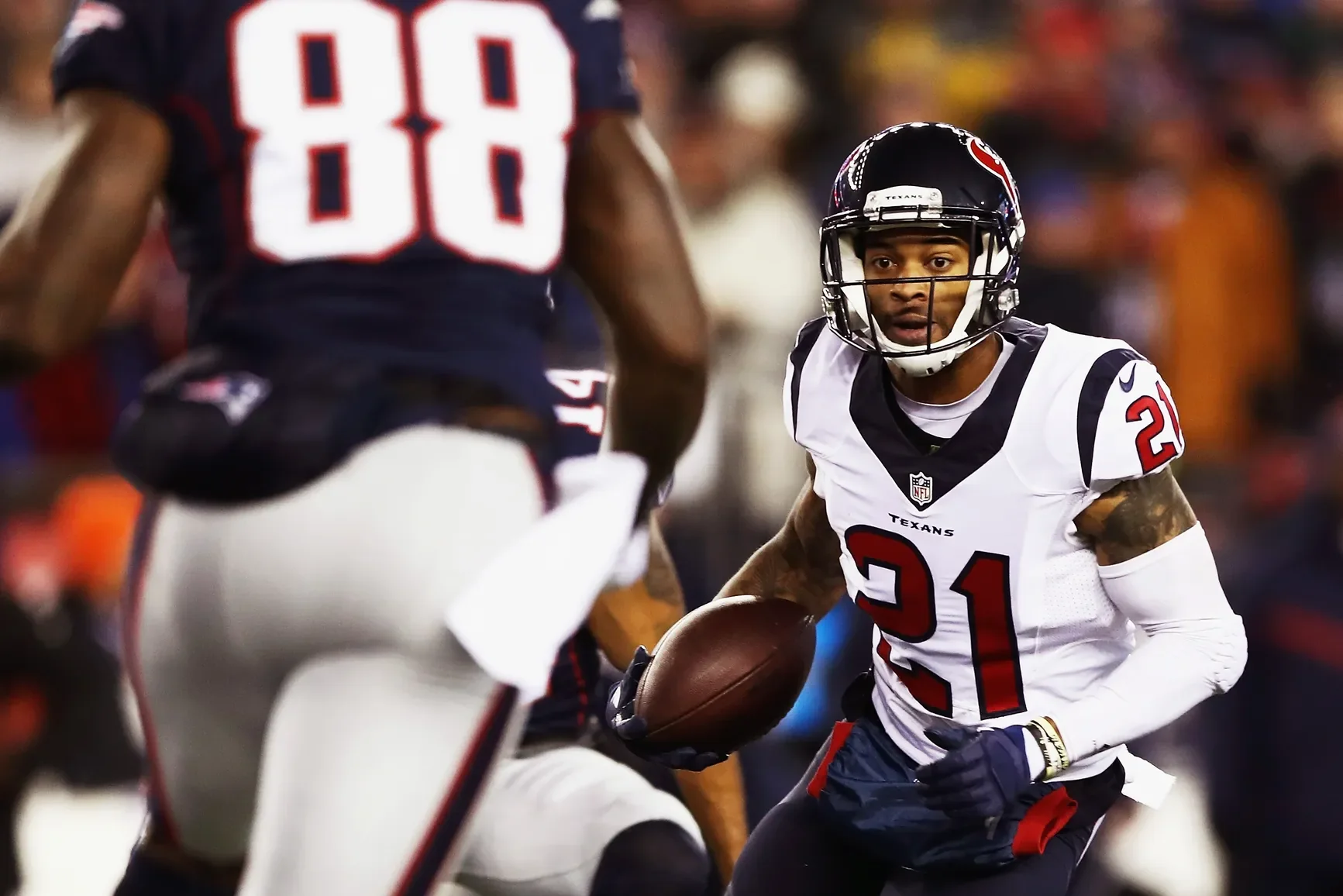
No undrafted cornerback had ever been paid what A.J. Bouye commanded in March 2017, and the invoice was itemized in January. Bouye, who had signed with Houston out of UCF in 2013 for a $5,000 bonus after every team passed on him seven rounds’ worth of times, spent the 2016 playoffs staging the most lucrative audition in the position’s history: an interception of Connor Cook in the wild-card round, then a pick of Brady at Gillette Stadium in the divisional round, in a 34-16 loss to the eventual champions. Two postseason games, two takeaways, one enormous market.
Jacksonville signed him that spring for five years and $67.5 million, the richest contract ever given an undrafted corner, and for one season the bet looked genius-level: Bouye intercepted six passes in 2017, made the Pro Bowl and second-team All-Pro, and anchored the Sacksonville defense that came within a quarter of the Super Bowl.
The team that ended that run, 24-20 in the AFC Championship, was New England, quarterbacked by the man whose interception had funded the whole enterprise. Brady giveth, and Brady taketh away, though rarely with such tidy bookkeeping. Bouye wore number 21 in tribute to Deion Sanders, a player who was drafted fifth overall. The homage was aspirational. The career was self-made.
Andre Hal
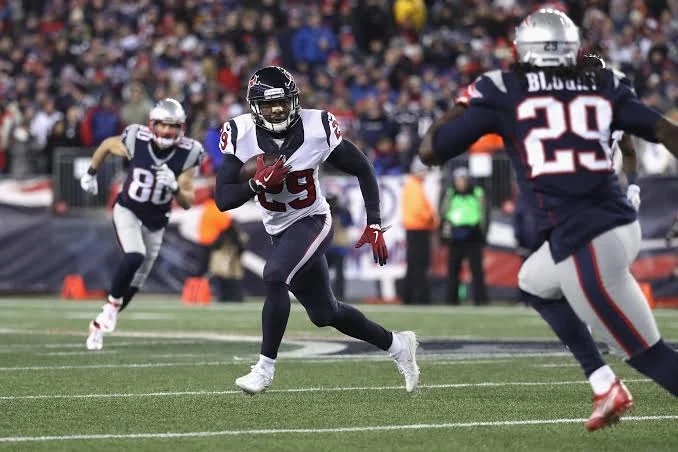
Andre Hal arrived in Houston as a seventh-round cornerback, the 216th pick of the 2014 draft out of Vanderbilt, and converted to safety in his second season because the roster required it. The position change made his career. By 2017 he was starting all 16 games as the Texans’ free safety, and he finished with 12 interceptions in only 69 games, a rate plenty of first-round picks never approach. Among the 12 was a third-quarter pick of Brady in the January 2017 divisional round, one of two that Houston’s young secondary lifted from the eventual champions that night in a game that stayed tighter than anyone expected until the final period.
Then came the part of the story that has nothing to do with football. In the spring of 2018, after experiencing blurred vision, Hal was diagnosed with Hodgkin lymphoma. He declined chemotherapy in favor of a less aggressive treatment, kept training through it, and that September the Texans announced the disease was in remission. He was back on the field by mid-October and started Houston’s playoff game, playing 58 of 67 defensive snaps months removed from cancer treatment.
Hal retired that April at 26, fully healthy, on his own schedule and his own terms. He said the decision had nothing to do with his health. He had simply finished.
Robert Alford
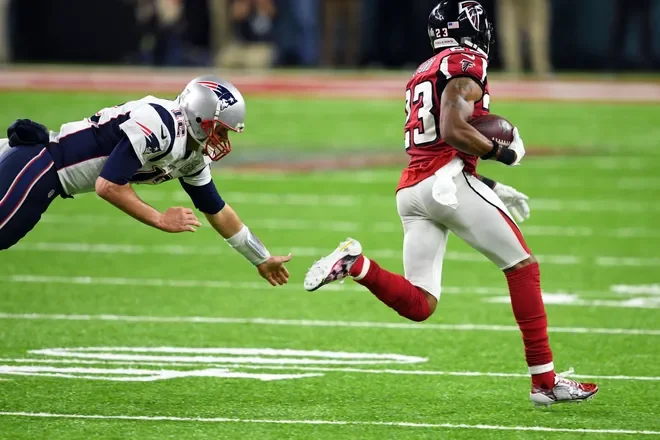
The image everyone keeps from the first half of Super Bowl LI is Tom Brady diving at a man he could not catch. The man was Robert Alford, a second-round corner from Southeastern Louisiana, and the play began strangely: New England’s drive had been kept alive by three Atlanta defensive holding penalties on three consecutive third downs, the football gods practically escorting the Patriots downfield. On yet another third down, Brady threw for Danny Amendola, Alford stepped in front, sidestepped the quarterback’s lunge, and ran 82 yards untouched. It was the second-longest interception return in Super Bowl history, behind only James Harrison’s 100-yarder, and the first pick-six of Brady’s postseason career. Atlanta led 21-0 with 2:21 left in the half.
What followed is the most famous collapse in the sport: 28-3 became 34-28 in overtime, and Alford’s touchdown was buried under the rubble. Crueler still, he nearly ended the comeback personally. On the decisive drive, Brady’s pass glanced off Alford’s hands, ricocheted off his shoe, and was somehow caught an inch off the turf by Julian Edelman for the miracle 23-yard completion.
Alford finished that Super Bowl with 11 tackles, a fumble recovery, and a touchdown, one of the great losing performances the game has seen. History filed it under someone else’s name.
Reggie Ragland
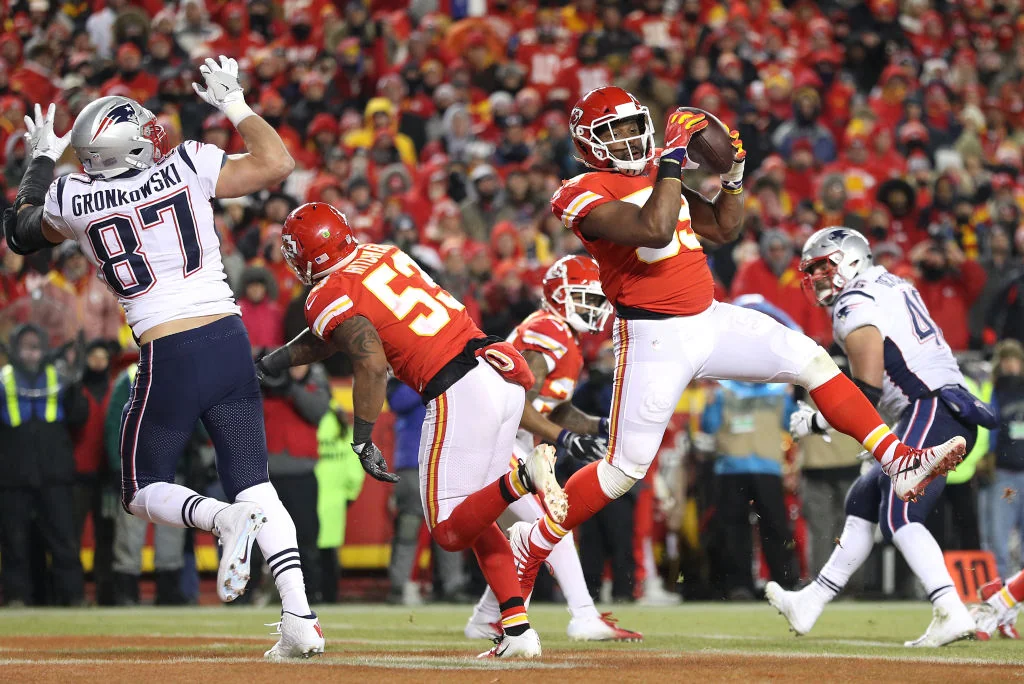
Tom Brady had never thrown a playoff interception from the opponent’s 1-yard line until Reggie Ragland, in his nineteenth NFL season of trying. Early in the second quarter of that January 2019 AFC Championship at Arrowhead, with New England at the Kansas City 1 and poised to go up two touchdowns on a Chiefs team that had gained 32 first-half yards, Brady play-faked and lofted a third-down throw toward Rob Gronkowski. Ragland rose in the end zone and took it away, the sort of red-zone robbery Brady had not surrendered in a postseason since 2007. It kept the score at 7-0 and kept Kansas City breathing until Patrick Mahomes woke up after halftime.
Ragland knew something about waiting for a season to start. An Alabama linebacker and consensus All-American, he went to Buffalo 41st overall in 2016 and tore his ACL before ever playing a down, then was traded to the Chiefs for a fourth-round pick, which is how championship-game heroes get acquired at clearance prices.
New England won anyway, 37-31 in overtime, and Ragland afterward reduced the entire evening to one sentence: “When you get chances to beat the G.O.A.T., you have to beat him.” The Chiefs took the note. A year later Ragland was starting for them in a Super Bowl they won.
Daniel Sorensen
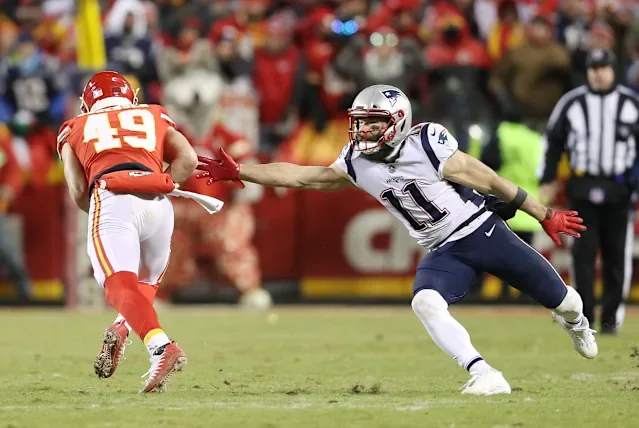
The pass Daniel Sorensen intercepted touched Julian Edelman’s hands first, which by January 2019 counted as a supernatural event. Minutes earlier, Edelman had escaped disaster when replay overturned a muffed punt that Kansas City believed it had recovered; Arrowhead was still booing when Brady’s next-but-one throw deflected off Edelman’s fingertips and floated to Sorensen at midfield. The safety returned it 22 yards to the New England 23, and two plays later Damien Williams scored to give the Chiefs their first lead of the AFC Championship, 21-17, with under eight minutes left. Football being football, New England won 37-31 in overtime, and Mahomes never touched the ball in the extra period.
Sorensen was a fitting man for a deflection-based miracle. Undrafted out of BYU in 2014, he clawed onto the roster through special teams, acquired the nickname Dirty Dan for his taste for contact, and hung around Kansas City for eight seasons, which is seven more than undrafted safeties are budgeted for.
The consolation arrived quickly. Twelve months after the overtime heartbreak, Sorensen was a Super Bowl champion, part of the Chiefs team that finally broke through in February 2020. His interception of Brady turned out to be the dress rehearsal, staged one year early, for the changing of the AFC’s guard.
Cory Littleton
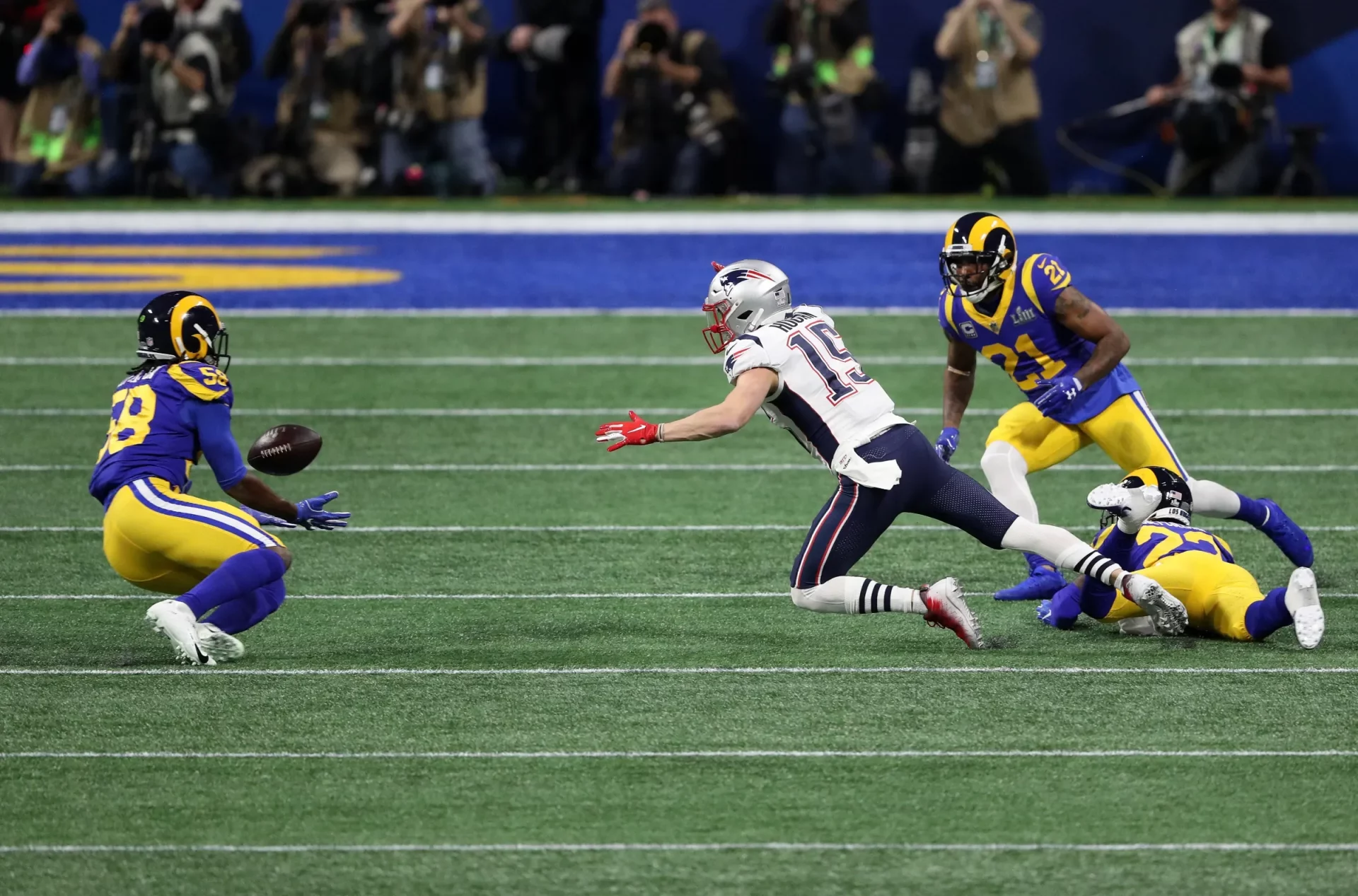
Only three quarterbacks have ever thrown an interception on their first pass of a Super Bowl: Ron Jaworski, Jim Kelly, and, in the game nobody expected him to lose, Tom Brady. New England opened Super Bowl LIII with three straight runs, and when Brady finally threw, aiming for Chris Hogan, cornerback Nickell Robey-Coleman – two weeks removed from the most infamous non-call in NFC Championship history – got a hand in, and the carom floated to linebacker Cory Littleton. It was the first opening-drive interception Brady had thrown all season, delivered on the sport’s largest stage, in what became the lowest-scoring Super Bowl ever played, 13-3.
Littleton fit the occasion. Undrafted out of Washington in 2016, he made the Rams as a special teams grinder, blocked punts for a living, and then blossomed under Wade Phillips into one of the league’s best coverage linebackers: 125 tackles, four sacks, and a Pro Bowl nod in 2018, with his coordinator declaring nobody at the position covered better. He piled up 10 tackles in that Super Bowl along with the pick.
Las Vegas paid him $36 million in 2020 and the magic never transferred; he was out of the league by 2024. But the trivia is permanent. Jaworski, Kelly, Brady. Two Hall of Fame quarterbacks and the greatest of all time, united by an undrafted linebacker’s hands.
Logan Ryan
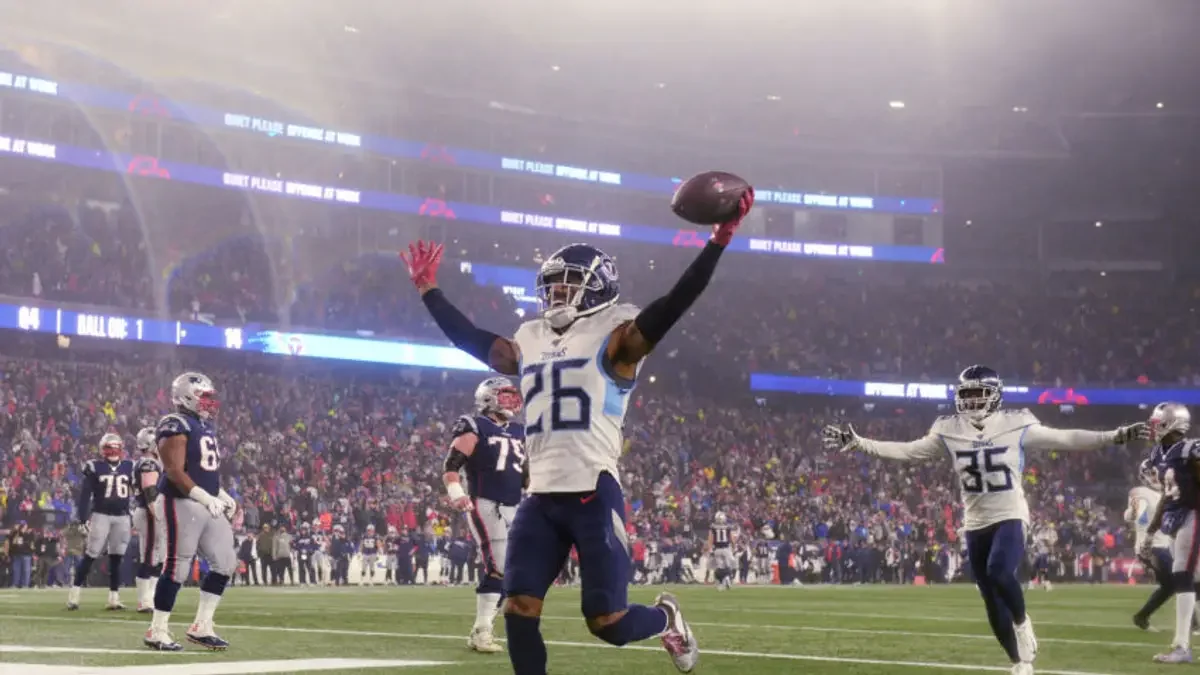
In January 2023, Tom Brady signed a football for a Buccaneers teammate without asking where it came from. The teammate was Logan Ryan, and the ball was the one Ryan had carried into the end zone three years earlier – the last pass Brady ever threw for the New England Patriots. Brady posted the discovery online with the caption “Come on man.” Ryan had waited years for the punchline, which is the sort of patience that defines his whole story.
Belichick drafted Ryan out of Rutgers in the third round in 2013, and he spent four seasons as Brady’s teammate, winning two Super Bowls. Then, as a Titan on January 4, 2020, he closed the account. Tennessee led 14-13 with New England pinned at its own 1-yard line and seconds remaining; Brady’s desperation throw toward Mohamed Sanu was tipped by Tramaine Brock, and Ryan – who had dropped an interception chance earlier that night – caught this one and jogged nine yards for the touchdown that ended both the game and an era. Two months later Brady left for Tampa. Brady messaged him afterward on Instagram to say congratulations.
Ryan played eleven seasons, switched to safety, and retired into a CBS broadcast booth. The dynasty’s final pass belongs to a man the dynasty trained. There is a tidiness to that which no screenwriter would dare.
Adrian Amos
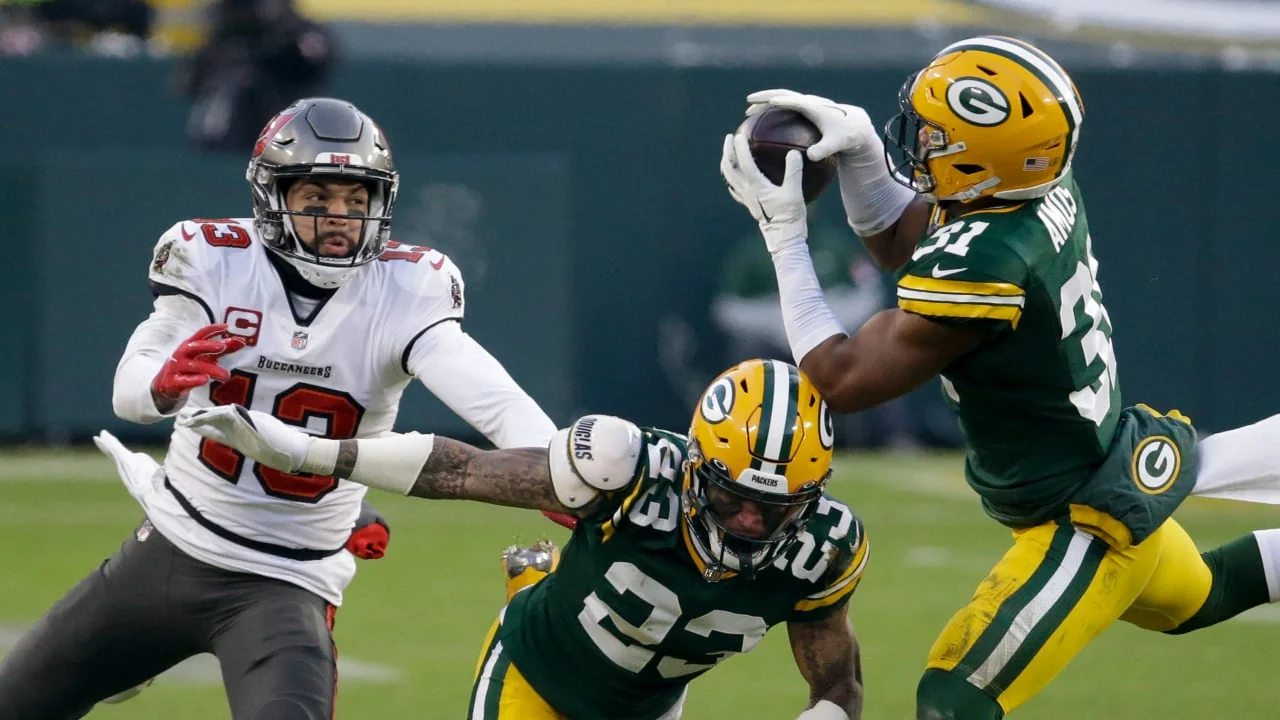
Brady reached his eleventh quarter of playoff football as a Buccaneer before anyone intercepted him, and Adrian Amos was the man standing under the ball. Midway through the third quarter of that January 2021 NFC Championship at Lambeau Field, with Tampa Bay ahead 28-17, Brady went deep for Mike Evans and Amos read the route all the way, gathering in the first of three picks Brady would throw over the game’s final 23 minutes. Green Bay converted it into a Davante Adams touchdown that made the score close enough to matter. The Packers still lost, 31-26, partly because Matt LaFleur kicked a field goal on fourth-and-goal with two minutes left, a decision Wisconsin has yet to metabolize.
Amos belongs to the NFL’s quietest species: the safety who is simply never out of position. A fifth-round pick from Penn State in 2015, he spent four years starting for the Bears, then committed the division’s cardinal sin by signing with Green Bay in 2019, where he kept doing what he does, which is start every week and surrender almost nothing.
His pick made him the first defender ever to intercept a Brady pass in a Tampa Bay playoff uniform, a distinction achieved ten months after most of football assumed there was nothing new left to take from him. There was. Amos took it first.
Jaire Alexander
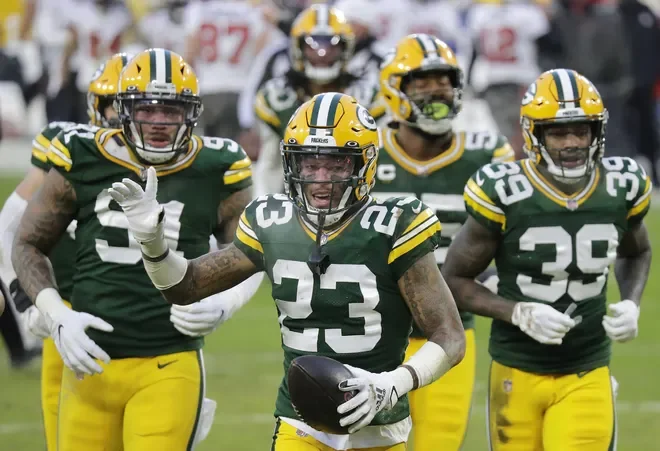
Jaire Alexander enjoyed intercepting Tom Brady so much that he later wrote a song about the game, describing the experience, in a phrase linguists are still unpacking, as watching an ant climb up a cold mountain. He had earned the right to be cryptic. In the fourth quarter of that NFC title game at Lambeau, trailing 28-23, Alexander picked Brady off twice – the only time any defender took two from him in a single playoff game. The first was a tip-drill masterpiece: Brady’s throw glanced off Mike Evans’s hands and Alexander abandoned his own assignment mid-play to snatch it. The second came when a Darnell Savage blitz forced a desperate heave downfield. Both picks handed Aaron Rodgers the ball with a chance to take the lead. Both possessions ended three-and-out, which is why Brady played the Super Bowl that February and Rodgers watched it.
Alexander was Green Bay’s first-round pick out of Louisville in 2018 and grew into a two-time All-Pro, joining Charles Woodson and Herb Adderley as the only Packers cornerbacks so honored more than once.
Injuries hollowed out his final seasons, and in 2025, ten days after a midseason trade to Philadelphia, he retired at 28. The mountain, presumably, had been climbed.
Nick Scott
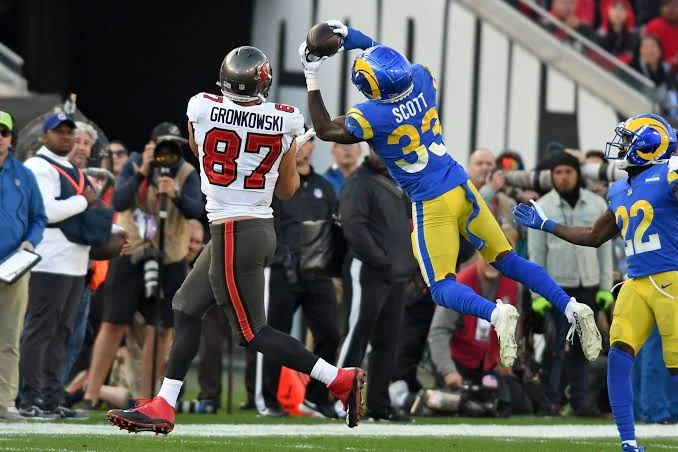
Nick Scott did not want to play defense. He arrived at Penn State a running back, was asked to convert to safety, and made the switch grudgingly, purely to stay on the field. The Rams then spent a 2019 seventh-round pick on him, projecting a career of special teams work. Which is how it came to pass that, in the January 2022 divisional round in Tampa, a reluctant convert made a leaping, toe-tapping interception along the sideline, in coverage on Rob Gronkowski, robbing Tom Brady inside the two-minute warning with Los Angeles ahead 20-3.
The cushion turned out to be necessary. The Buccaneers, down 27-3 in the second half, staged the final furious comeback of Brady’s career, tying the game at 27 with 42 seconds left. Matthew Stafford then hit Cooper Kupp twice, Matt Gay kicked the winner as time expired, and the Rams escaped 30-27. Two weeks later they won Super Bowl LVI, with Scott in the lineup, and roughly a week after that Brady announced his first retirement, the one that lasted forty days.
Scott parlayed the run into a starting job and, later, a free-agent contract in Cincinnati. Not bad for a man dragged to the position. The last defensive back to intercept Brady in a game Brady lost at home never wanted the job description.
Jayron Kearse
The final interception of Tom Brady’s NFL career sits in Jayron Kearse’s house. On the night of January 16, 2023, in the second quarter of a wild-card game the Buccaneers trailed and would lose 31-14, Brady capped a 70-yard drive by forcing a pressured throw toward Russell Gage, and Kearse caught it at the back edge of the end zone. It was Brady’s 40th postseason interception, his first red-zone giveaway in three years as a Buccaneer, and, as things turned out, the last time any defender anywhere would pick him off. Dallas marched the other way and scored. Sixteen days later, Brady retired for good.
Kearse was an apt final entry in the ledger. A seventh-round pick from Clemson in 2016 and the nephew of Jevon Kearse, the pass-rushing Freak of an earlier generation, he spent five anonymous seasons as a Vikings special-teamer before Dallas reinvented him as a hybrid safety-linebacker and got a defensive captain out of the bargain. His first career interception, three years earlier, had been a Hail Mary he caught to end a game. Endings followed him around.
When Brady announced his retirement that February, Kearse posted a photo of the football he had kept, writing, “Good thing I held on to this one.” Thirty-eight men took something from Tom Brady in January. Kearse took the last word.
Frequently Asked Questions
Who intercepted Tom Brady the most in the playoffs?
No defender ever managed more than two. Drayton Florence and Jaire Alexander share the lead with a pair apiece, reached by opposite routes: Florence collected his in separate Januaries a year apart, while Alexander grabbed both of his inside one fourth quarter. The other 36 men on the roster stopped at one.
Has Tom Brady ever thrown a pick-six in the playoffs?
Twice. Robert Alford scored the first for Atlanta in February 2017, and Logan Ryan added the second for Tennessee in the January 2020 wild-card round, three seasons apart. Of all the playoff interceptions Brady threw, only those two ever came back for touchdowns, a remarkably low rate across a twenty-year postseason career.
Does Bradley Roby’s interception of Tom Brady count?
No. Roby’s famous takeaway in the 2015 AFC Championship came on a two-point conversion attempt with 12 seconds left, and conversion tries are not pass attempts in the NFL’s official statistics. The play clinched Denver’s two-point win, but it produced no interception in any record book, so Roby does not appear on this list.
Why doesn’t Charvarius Ward’s interception of Brady count?
Because it never officially happened. Ward picked Brady off with under a minute left in the 2018 AFC Championship, a play that would have sent Kansas City to the Super Bowl, but Dee Ford had lined up offside and the penalty erased it. New England scored, won in overtime, and the stat sheet records nothing.
Which team intercepted Tom Brady most often in the playoffs?
The Baltimore Ravens, with eight, all by different men across four postseasons between January 2010 and January 2015. The Chargers are next with six, and the Broncos follow with five. No Raven ever picked him twice, which says something about how deep that particular assembly line ran.
How many Hall of Famers have intercepted Tom Brady in the playoffs?
Three so far: Champ Bailey, Ed Reed, and John Lynch, all enshrined between 2019 and 2021. The count will almost certainly grow once Bobby Wagner and Von Miller reach the ballot, which would bring the total to five and make this one of the more decorated fraternities in football.