Every FIFA Cover Athlete Who Never Reached a World Cup
EA Sports put 161 different footballers on the front of a FIFA box between 1993 and 2022. It shipped nineteen separate covers for FIFA 16 and eighteen for FIFA 10, so that a Hungarian buying the game got Balazs Dzsudzsak on the front, an Austrian got David Alaba, and a Saudi got a twenty-year-old from Al-Ahli named Mustafa Al-Bassas.
That arrangement meant the honour was handed out far more widely than the famous global covers suggest. It also meant it went to men whose careers were nothing like Cristiano Ronaldo’s, who fronted two FIFA boxes of his own and was named in six World Cup squads between 2006 and 2026. EA was picking the biggest name in each market, and in a lot of markets the biggest name still had nowhere to go in June.
So among the footballers EA put on a FIFA box between 1993 and 2022 there is a smaller group who reached the shelf but never the tournament. Some spent an entire international career in the gap between one qualification and the next. One was dropped for a qualifier and responded by attacking his national coach in a tunnel. One was on the box before his country had capped him at all.
Twenty-four of the 161 athletes who appeared on a FIFA game cover between 1993 and 2022 were never named to a squad for a senior World Cup or Women’s World Cup. They represent sixteen countries, and their covers run from FIFA 96 in 1995 to FIFA 16 in 2015.
Andy Legg
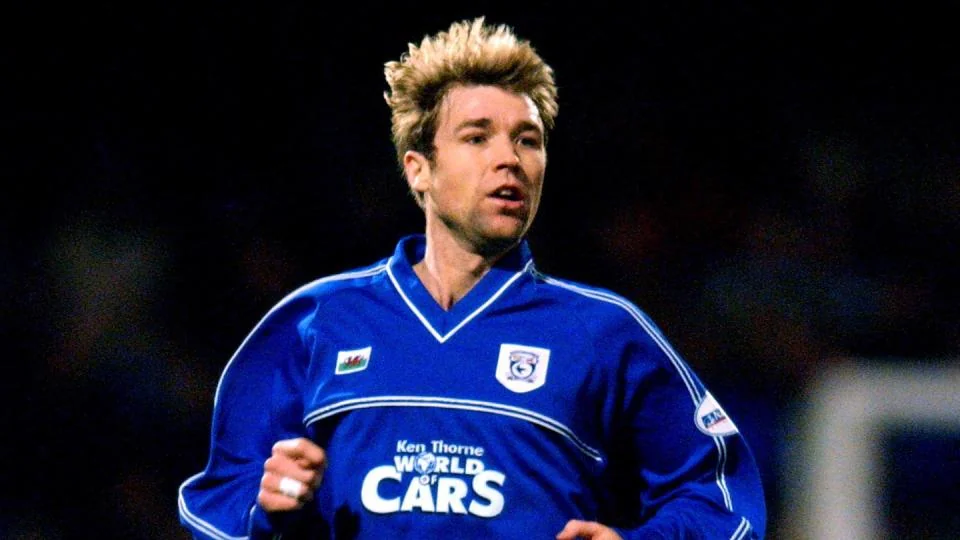
FIFA Soccer 96 reached North American shops on 22 November 1995 carrying a photograph of a Notts County midfielder sliding in on a Brescia player at Wembley. The midfielder was Andy Legg, and at that point Wales had never picked him. His first cap arrived five months later, on 24 April 1996.
The photograph came from the Anglo-Italian Cup final of March 1994, a competition that no longer exists, in a match Notts County lost 1-0 in front of 17,185 people. Legg’s international career, once it started, ran to six caps across five years and no goals. Three of the six were World Cup qualifiers – San Marino, the Netherlands, Armenia – and none of them led anywhere, because Wales reached the finals in 1958 and then did not manage it again until 2022.
What Legg was genuinely famous for was throwing. He held the world record for the longest throw-in at 44.6 metres until Dave Challinor beat him by nearly two metres in 1998. In April 2005 he had a growth removed from his throat and went through twenty-eight sessions of radiotherapy, which finished his Football League career after 515 league appearances. He came back anyway, won the Welsh Premier League with Llanelli in 2008, and told UEFA that season that every game was a bonus.
David Ginola
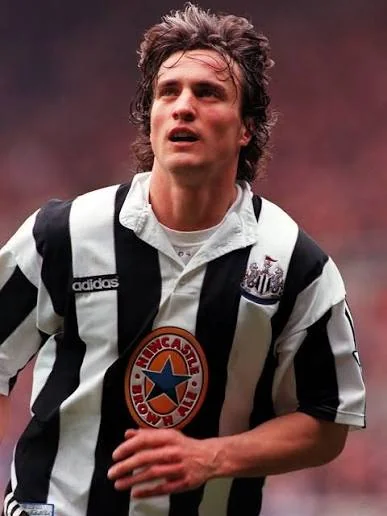
With seconds left at the Parc des Princes on 17 November 1993, France were losing 2-1 to Bulgaria and needed only a draw to reach the World Cup. Ginola, on as a substitute since the 69th minute, won a free-kick near the corner flag and then hoisted the ball into a penalty area with nobody in it. Emil Kostadinov scored at the other end about sixteen seconds later.
Four days on, at a press conference filmed by French television and now held in the national broadcast archive, coach Gerard Houllier said that Ginola had committed a crime against the team. It was not a remark either man let go. They were still trading versions of that night on French radio twenty-two years afterwards, and Ginola sued Houllier over a passage in his 2011 memoir before a court threw the case out.
Ginola won 17 caps and scored three goals, the last of them in 1995, and Aime Jacquet left him out of the Euro 96 squad on the grounds that he belonged to the past. France then won the 1998 World Cup and Euro 2000 without him. He spent those years as one of the best-paid faces in English football, Footballer of the Year in 1999, and the man on the French cover of a game called FIFA: Road to World Cup 98.
Roy Lassiter
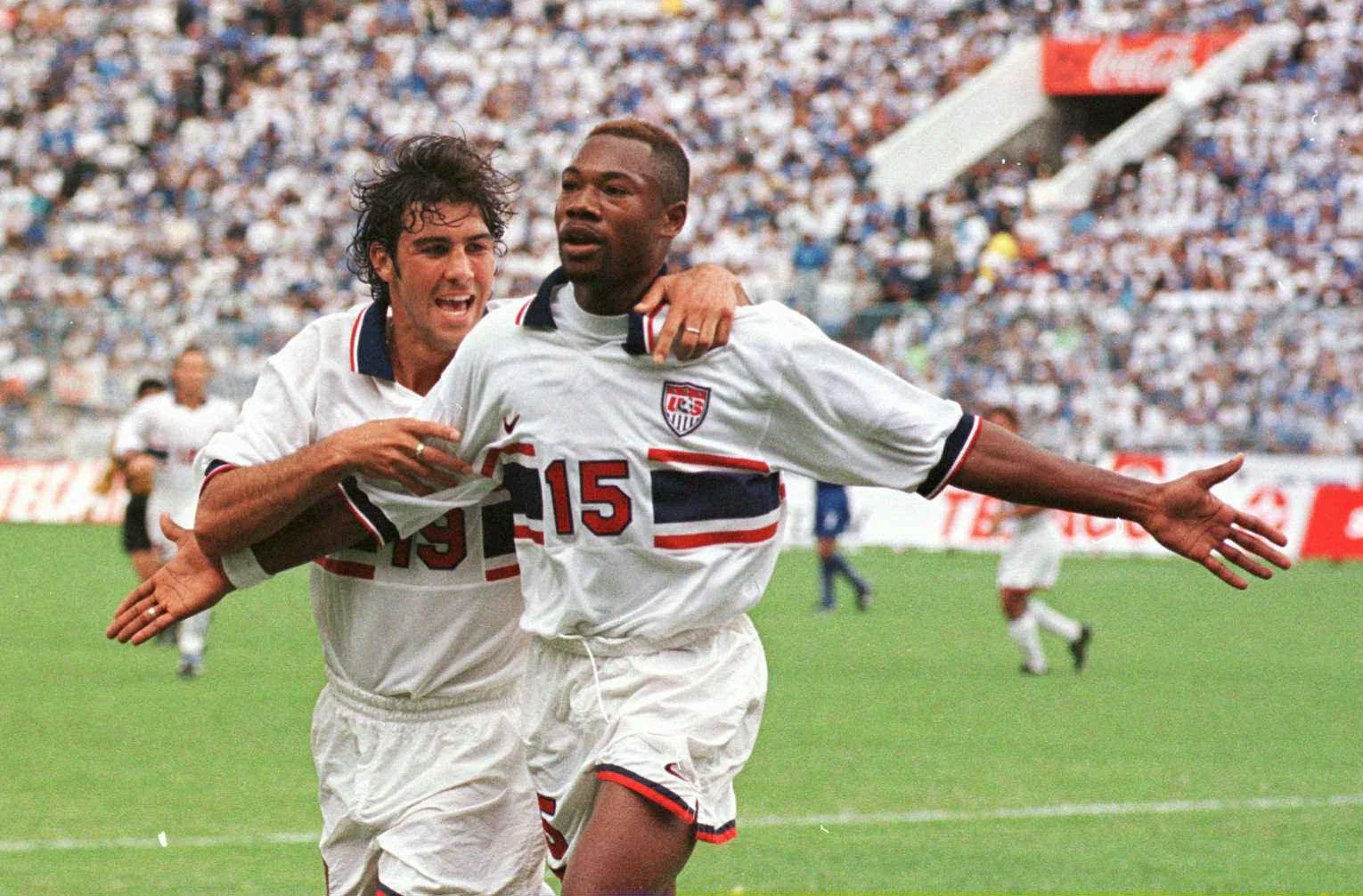
Twenty-seven goals in thirty appearances is what Roy Lassiter managed for the Tampa Bay Mutiny in Major League Soccer’s first season in 1996, and no one beat it for twenty-two years. Chris Wondolowski matched the number in 2012 and Bradley Wright-Phillips matched it in 2014; neither passed it. Josef Martinez finally did, against Orlando City in August 2018.
That season put Lassiter on the American box of FIFA 98, which shipped that November while he was still a Mutiny player. He had reached MLS by an unusual route, spending three seasons in Costa Rica with Turrialba, Carmelita and Alajuelense because the United States had no professional first division when he left college in 1992.
Steve Sampson named 22 players for France, and Lassiter was not among them. He travelled anyway as one of three alternates, trained with the squad, and waited for someone to get hurt. Nobody did. Twenty-eight years later, coaching a USL League Two side in Denton while the 2026 World Cup was being played down the road in Texas, he said he had simply wished he could have played. Six weeks before that tournament began, Tampa Bay had traded him to D.C. United for Roy Wegerle, who went to France and wore number 7.
Dovani Roso
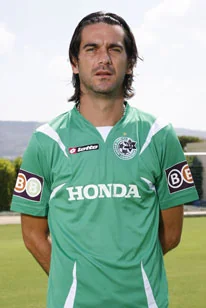
Croatia kept calling and Roso kept declining, because a single senior cap would have tied him to the country of his birth and killed the thing he actually wanted, which was to play for Israel. He had arrived in 1996, won a State Cup at Hapoel Be’er Sheva, and then become the first foreign player ever voted Israeli Footballer of the Year, taking the award for 1998-99 after scoring thirteen league goals to win Hapoel Haifa the only championship in the club’s history.
He applied for citizenship. The Interior Ministry turned him down. When a later minister proved willing, the condition was that he surrender his Croatian passport, and by then Roso had a Croatian international career to lose, so he refused and settled for permanent residency in 2005.
The career he was protecting lasted nineteen months. Otto Baric had finally persuaded him in October 2002, weeks after Roso started for Maccabi Haifa in a 3-0 win over Manchester United in the Champions League, and he won nineteen caps between November 2002 and June 2004 with one goal, against Andorra. Croatia went to the World Cup in 2002 and again in 2006. Roso’s entire international career fits in the gap between them, which is the sort of timing no one plans.
Mehmet Scholl
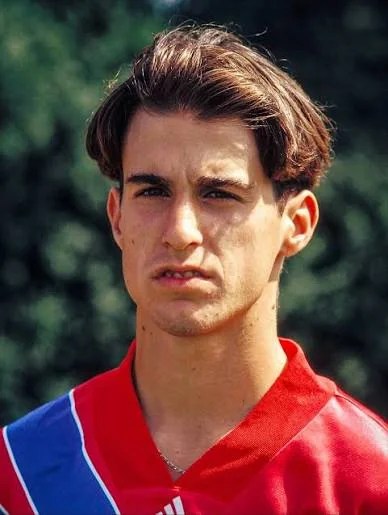
A petition carrying roughly 175,000 signatures arrived at the German federation’s Frankfurt headquarters on 11 May 2006, under the banner Mehmet fuer Deutschland. Its organisers wanted Jurgen Klinsmann to take Scholl to the home World Cup that summer. A spokesman accepted the list and promised to pass it to the coaching staff. Klinsmann named his squad four days later.
The campaign was asking for a man who had already resigned. Scholl had walked away from the national team in April 2002, five weeks before Germany’s opening match of that World Cup, citing his health; the side he left reached the final in Yokohama. Berti Vogts had left him out in 1998. In thirty-six caps between 1995 and 2002 he played five World Cup qualifiers and never a finals match.
He is also, awkwardly, the reason Germany won a European Championship. In the 69th minute of the Euro 96 final at Wembley, with the Czech Republic leading, Berti Vogts took Scholl off and sent on Oliver Bierhoff, who equalised four minutes later and then scored the first golden goal in the history of international football. Scholl won eight Bundesliga titles and a Champions League at Bayern Munich over fifteen seasons. He has spent much of the time since declining to say very much about any of it.
Vasilios Tsiartas
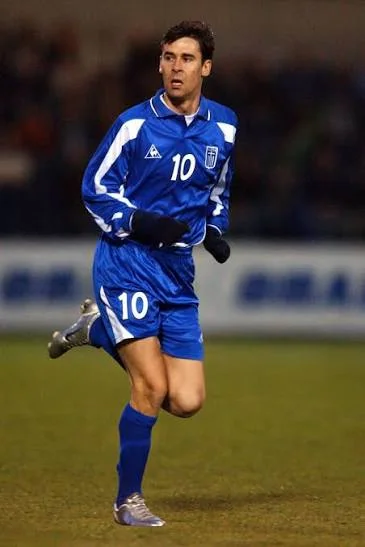
There is a European Championship winner’s medal in Greece belonging to a man who never made a World Cup squad, and the two facts are separated by exactly ten years. Tsiartas made his international debut on 27 April 1994, in a 5-1 win over Saudi Arabia arranged specifically as preparation for that summer’s World Cup. Alketas Panagoulias then left him out of the 22 who flew to America.
The squad that went instead lost all three matches, conceded ten goals and scored none, and Panagoulias used all 22 of his players across the three defeats so that everybody got a game. Greek retrospectives have never entirely forgiven him for it.
Tsiartas ended up with 70 caps and 12 goals, and in October 2003 he scored the penalty against Northern Ireland that sent Greece to Euro 2004. Otto Rehhagel then used him only from the bench there, four appearances, no starts – and he still finished the tournament with more assists than any other Greek player. One of them was the corner he took in the 105th minute of the semi-final in Porto, which Traianos Dellas headed in for the only silver goal ever scored at a major tournament. He had been on the pitch fourteen minutes when it went in.
Ricardo Sa Pinto
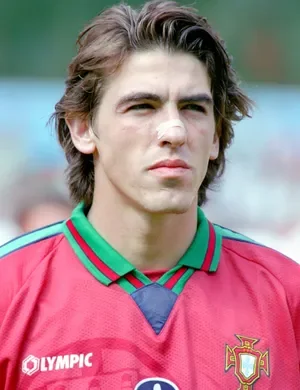
Artur Jorge was in the tunnel at the Estadio Nacional on 26 March 1997 when Sa Pinto reached him, knocked him down with two punches and kicked him while he was on the ground. Portugal’s coach had dropped him from the squad for a qualifier in Belfast, and reports questioning his discipline had found their way to a newspaper and a radio station.
The federation banned him for a year. FIFA confirmed the ban applied everywhere, a detail Real Sociedad established only after paying a reported 400 million pesetas for him that July. He came back, won 45 caps and scored ten goals, and was still in the squad in June 2001, when he broke a toe against Cyprus in what turned out to be his final appearance. A knee operation in Lyon the following January removed him from contention for the 2002 tournament altogether; Antonio Oliveira said publicly in March that he had expected to pick him.
Portugal missed the 1994 and 1998 World Cups entirely, losing one qualifier in ten on the second occasion and still finishing third. Sa Pinto was chosen for the Portuguese cover of FIFA 2001 because an EA representative liked his competitiveness. At the launch event in Lisbon he refereed an exhibition match between schoolboys and journalists. The schoolboys won 2-1.
Shimon Gershon
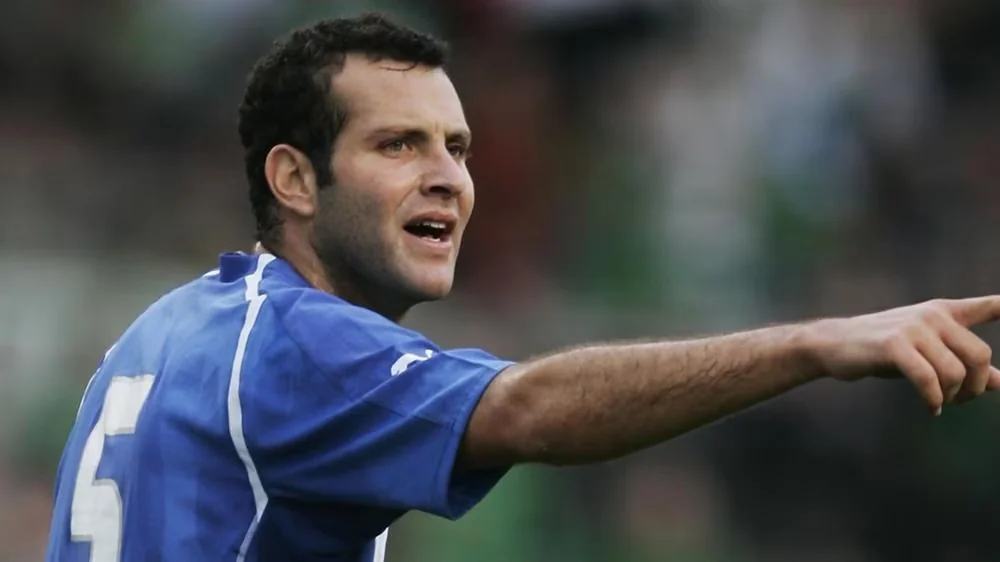
Ten qualifying matches for the 2006 World Cup, four won and six drawn, none lost – and Israel still did not go. Switzerland finished with precisely the same record in the same group and took the play-off place on goal difference, eleven to Israel’s five. It is the closest the country has come since 1970, which remains its only appearance at a World Cup and the source of its only World Cup goal.
Gershon was born seven years after that tournament and won 50 caps between 1999 and 2008. His misfortune was structural as much as personal. Israel was expelled from the Asian confederation in 1974 on a Kuwaiti motion, spent the following years qualifying through Oceania, and did not become a full member of UEFA until 1994, which left it drawn against France and Switzerland for a single qualifying place.
His best month came in club football. In October 2001, five weeks after the attacks in New York, six Chelsea players declined to travel to Tel Aviv; Gershon scored an 87th-minute penalty in a 2-0 win and Hapoel went through. They beat Lokomotiv Moscow and Parma to become the first Israeli club in a UEFA Cup quarter-final, where Gershon headed Rui Costa’s cross into his own net at the San Siro.
Haim Revivo
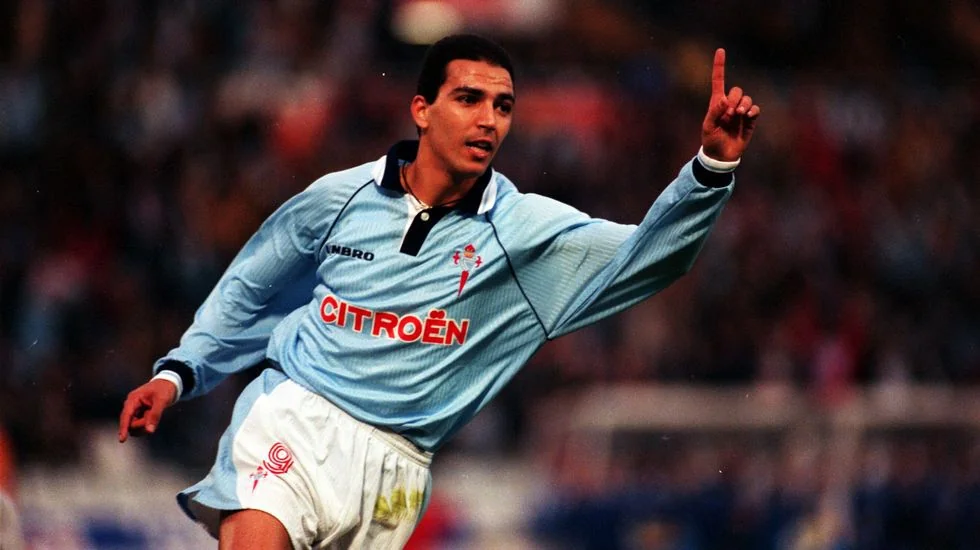
Anfield, 8 December 1998, and the only goal of the night went to a Celta Vigo forward from Ashdod. Revivo scored in the 57th minute to knock Liverpool out of the UEFA Cup 4-1 on aggregate, in a Celta side built around Aleksandr Mostovoi and Valeri Karpin with Claude Makelele behind them. The following season the same team put seven past Benfica at Balaidos and then eliminated Juventus, losing in Turin and winning 4-0 at home.
Israel had produced nobody quite like him. He was the league’s top scorer and its footballer of the year in both 1994-95 and 1995-96, scoring 43 league goals in 57 games for Maccabi Haifa before Celta bought him, and when he arrived in Spain the club moved a fixture forward by two hours because it fell on Yom Kippur, then took him off in the second half so he could get home.
He quit the national team on 18 February 2002, aged 30 and on 56 caps, calling it one of the hardest decisions of his life. Five months later he said he was thinking about coming back, purely because Avram Grant had taken the job, and he did, finishing on 67 caps and 15 goals. In 2009 the fifty founding members of Israel’s football hall of fame voted him one of the five best players the country has produced.
Lampros Choutos
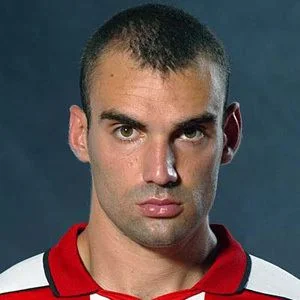
Panathinaikos would not give Lampros Choutos a professional contract, so Roma did, at fifteen and a half, having taken him into its academy at thirteen. He was in Serie A by sixteen. Greek football decided very early what he was going to be. A magazine profile in December 1999, the month he turned twenty, scored him nine out of ten for his right foot, his pace and his instinct in front of goal, and by then he had been scoring for the Under-21 side at a rate of more than a goal a game – at least fifteen in about ten matches, depending on which record you believe.
The senior career came to ten caps and three goals, eight of the appearances from the bench. He came on against Ukraine in June 2003 in the win that put Greece on course for the European Championship, had an effort cleared off the line, and was not in the twenty-three that went to Portugal and won it.
His knees had more than eight operations. Doctors told him to stop at twenty-three; he played until thirty, collected three Greek titles and twelve minutes of a Serie A title-winning final day at Inter, and summed the whole thing up afterwards in four words: I suffered, I did not enjoy football. He took up kickboxing instead, and reached a tournament final against a former team-mate.
Tomasz Frankowski
Seven goals in qualifying for the 2006 World Cup made Frankowski the joint leading scorer of his group, level with Maciej Zurawski and ahead of Frank Lampard on five and Michael Owen on four. Three of the seven came in one night against Azerbaijan. Another went in against England at Old Trafford on the stroke of half-time.
Pawel Janas announced Poland’s squad live on television at about half past eight on the evening of 15 May 2006, from a restaurant in a Warsaw hotel, having rewritten the list overnight from the one his coaching staff had agreed the day before. Frankowski found out he was not on it from teletext. He has never softened: the coach, he said, acted as basely as one can, and whoever has not lived through it will not understand.
Poland went out in the group stage. Their only goals of the tournament were scored by a centre-back, Bartosz Bosacki, who got both in a dead rubber against Costa Rica and had never scored for his country before. Janas was sacked when it finished. Frankowski, four times the top scorer in the Polish league and the first Pole ever put on a FIFA box, went on to sit in the European Parliament for a five-year term, and in 2025 stood for the office of village head near Bialystok and took under sixteen per cent.
Ryan Giggs
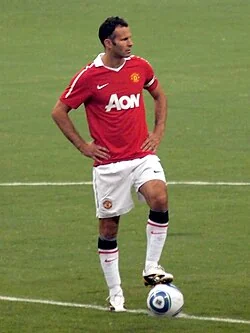
Wales went out of the 1958 World Cup in a Gothenburg quarter-final, beaten by the first World Cup goal Pele ever scored, struck in the 66th minute by a boy 126 days short of his eighteenth birthday. Pele later called it the most important goal of his life. Ryan Giggs was born fifteen years afterwards, and no Welshman played World Cup football again until 2022.
Giggs won 64 caps and 30 of them were qualifiers for a tournament he never reached. The figure is sometimes given as 67, which is a filing error rather than a dispute: one widely used database counts his three Great Britain appearances at the 2012 Olympics in the same column.
His nearest miss came at nineteen. Wales needed to beat Romania at Cardiff Arms Park on 17 November 1993 to qualify; Gheorghe Hagi scored, Giggs won the free-kick that Dean Saunders converted, Paul Bodin hit the crossbar from the penalty spot and Florin Raducioiu settled it late. Giggs had six caps at the time and assumed there would be others.
He was also missing from 30 of the 40 friendlies Wales played in his career, a habit successive managers accepted and two eventually refused to. Asked about it in 2018 he was straightforward. Watching his friends at tournaments on holiday, he said, had not been enjoyable.
Freddy Adu
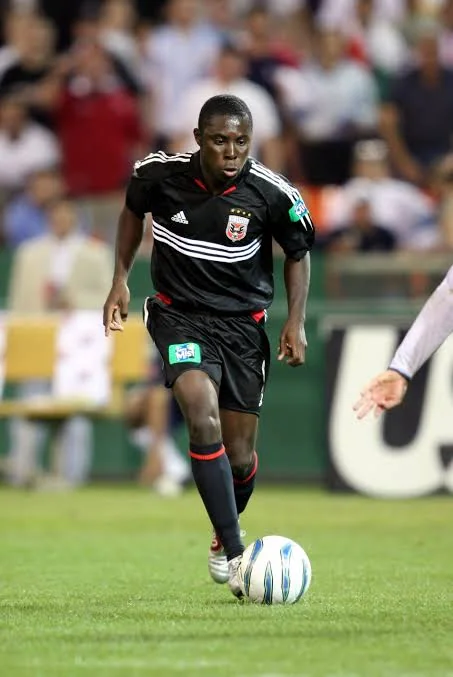
The record Freddy Adu was said to have broken turned out never to have existed. When Major League Soccer signed him to D.C. United on 18 November 2003, at fourteen years and 169 days, every account reached for the same comparison: a fourteen-year-old pitcher called Fred Chapman who had played for the Philadelphia Athletics in 1887. In 2009 a baseball researcher established that the player was actually Frank Chapman, born in 1861, and twenty-five years old at the time.
Adu was born in Tema in Ghana and moved to Maryland at eight after his mother won a green card in the visa lottery. He scored in MLS at fourteen years and 320 days, which made him the youngest goalscorer the league has had, and EA put him on the North American cover of FIFA 06 at sixteen, alongside Ronaldinho and Omar Bravo.
He won seventeen caps and scored twice, the first a free-kick in a World Cup qualifier against Guatemala. He had played both legs against Barbados earlier in that same campaign and set up a goal in the second, so he helped qualify a squad he was never picked to travel with. Fifteen clubs across nine countries followed, two of which he never played a competitive match for. The MLS commissioner conceded in April 2026 that the league had pushed a child and had not been ready for him.
Balazs Dzsudzsak
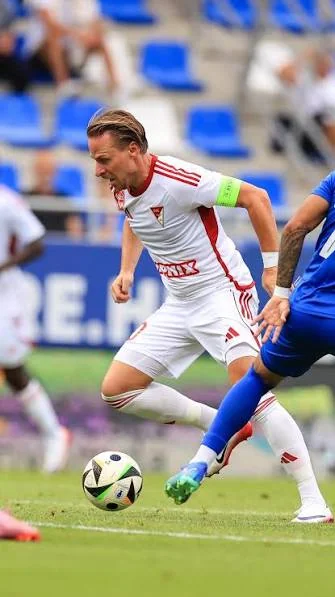
Hungary played their most recent World Cup match on 9 June 1986, losing 3-0 to France in Leon. Dzsudzsak was born in Debrecen six and a half months later, which means the country has not been to a World Cup at any point in his life, and he is now thirty-nine and still playing.
He holds the Hungarian appearance record, 109 caps, passing Gabor Kiraly’s 108 in his farewell match against Greece in November 2022, with 21 goals and 8,523 minutes behind him. He also holds a smaller record nobody has bothered to name: six consecutive Hungarian FIFA covers, standing beside Ronaldinho, then Wayne Rooney, then Kaka, then Messi twice. The first of them he won in a public vote, taking 1,389 of 2,265 ballots cast.
The closest Hungary came in his time was third place in qualifying for 2014, two points off a play-off. He scored twice against Portugal at Euro 2016 in a 3-3 draw, and he also scored Hungary’s consolation in an 8-1 defeat by the Netherlands, the heaviest loss in the country’s history. In November 2025 Ireland beat Hungary 3-2 in Budapest with a hat-trick completed in the 96th minute, which ended the 2026 campaign. Asked once whether he had ever considered withdrawing from a squad, he said the concept did not exist for him.
Kevin Kuranyi
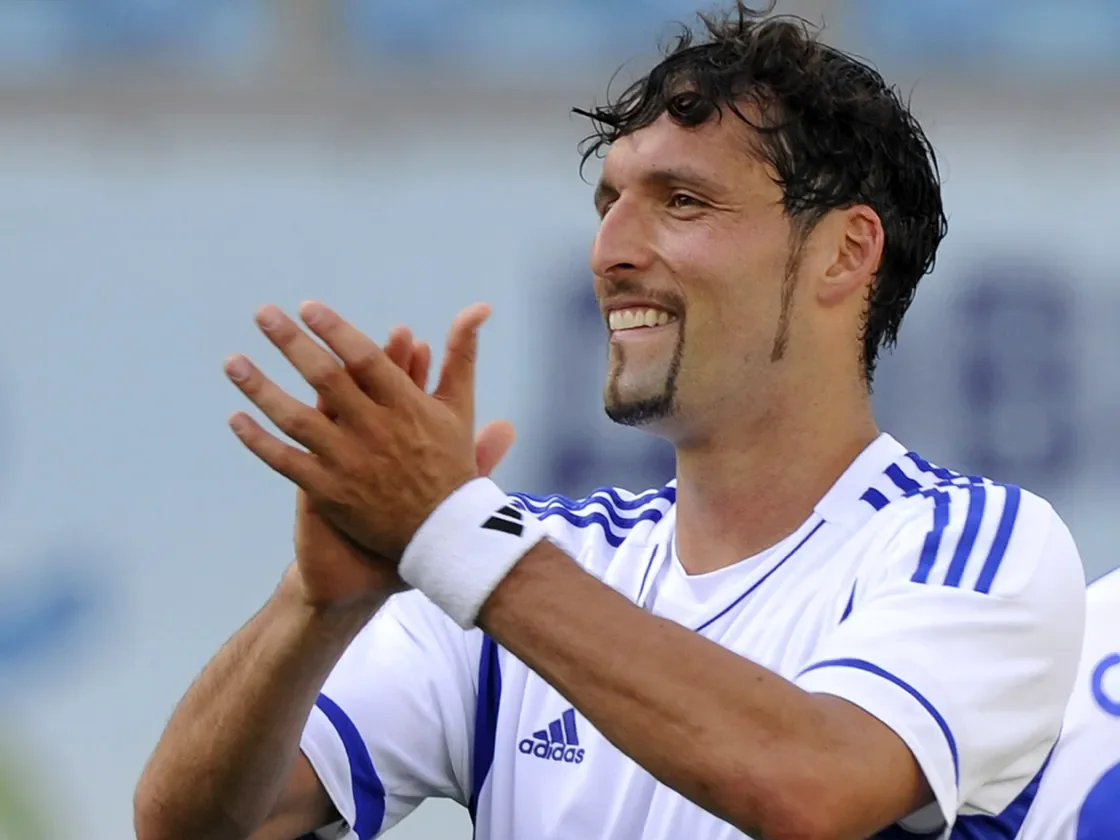
Kuranyi did not walk off the bench in Dortmund, because he had not been put on it. On 11 October 2008 Joachim Loew left him out of the eighteen entirely for a qualifier against Russia and Kuranyi watched from the stands, then left the Westfalenstadion before the second half without telling anyone where he was going. Germany still calls it the Stadionflucht, the stadium flight.
Loew suspended him two days later and never selected him again. His fifty-second cap, won five weeks earlier, was the end of it. Klinsmann had already told him in May 2006 that he would not be in the squad for the home World Cup, which he has described as the disappointment of his career, and when Loew left him out again in 2010 the coach went out of his way to say the walkout had played no part in it.
He was born in Rio de Janeiro to a German father of Hungarian descent and a Panamanian mother, grew up in Petropolis, played as a boy in Panama and did not live in Germany until he was fifteen. Hungary telephoned in 2002 to ask whether he would consider playing for them. He scored 111 Bundesliga goals and reached double figures in eight consecutive seasons, a run only three men have bettered. Mistakes happen, he says of Dortmund, and that was a big one.
Andreas Ivanschitz
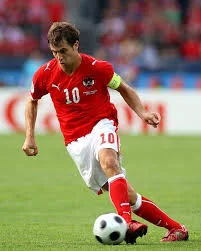
Game-Cover statt Team-Kader ran the headline in Der Standard on 1 October 2009 – game cover instead of team squad. Didi Constantini had just left Ivanschitz out of the Austria squad for a World Cup qualifier, and EA was at that moment shipping the Austrian edition of FIFA 10 with his face on the front. At least he was a star virtually, the paper decided.
It was his second Austrian cover. He had been the first Austrian EA ever used, on FIFA 08, which the company also motion-captured him for. By then he had been the youngest man to captain Austria since the war, taking the armband against the Czech Republic at nineteen years and 361 days, and he lost it when Constantini dropped him for a qualifier and gave it to Emanuel Pogatetz instead.
He finished with 69 caps and 12 goals, and played his final international in June 2014. Three months after that Austria began the finest qualifying campaign in their history, going through Euro 2016 Group G unbeaten with nine wins and a draw. He watched that one too. Before any of it he had passed the entrance examination at a conservatory and studied the oboe for five years, his father being a clarinettist in the Vienna Opera Ball Orchestra, which is an unusual thing to find in the biography of a man best known for a video game box.
Guillaume Hoarau
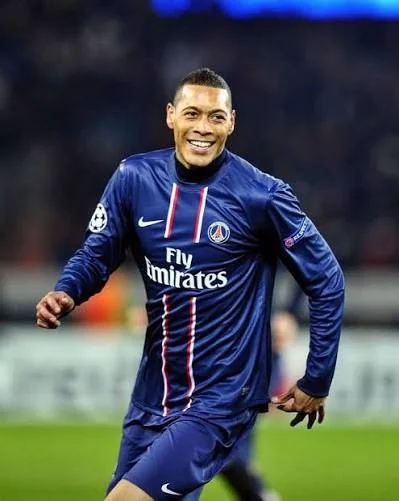
France played a friendly in Oslo on 11 August 2010 without a single one of the twenty-three men who had just been to South Africa. Laurent Blanc had dropped the lot after the strike at Knysna, and among the replacements was a Paris Saint-Germain forward from Reunion who had been scoring freely in Ligue 1. Hoarau’s international career exists because of a World Cup he was not at.
It lasted five caps, all of them friendlies or European qualifiers, none of them a World Cup match of any kind. EA put him on the French cover of FIFA 10 the summer before, standing beside Karim Benzema and Steve Mandanda on a box that French shops stocked instead of the international edition.
What came afterwards was better than any of it. He went to Young Boys in Bern at thirty-one and turned into something Swiss football had not seen in a while, winning the golden boot at thirty-five with 24 goals and scoring three of his club’s four Champions League group goals in 2018-19. Two of those came against Juventus in December 2018, one a penalty and one taken past Leonardo Bonucci, with Cristiano Ronaldo watching from the other end. He also released records. The reggae and maloya were, by most accounts, a side project he took as seriously as the football.
Sacha Kljestan
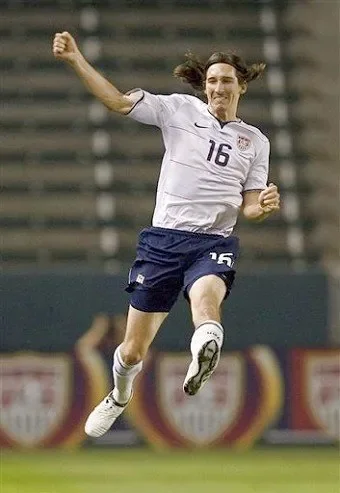
Bob Bradley cut seven men from his provisional squad on 26 May 2010, two weeks before the World Cup began, and Kljestan was one of them. He had been on the cover of FIFA 10 in North America the previous autumn, sharing it with Cuauhtemoc Blanco after EA announced that both would appear on the front packs.
He had been closer than the cut suggests. At the 2009 Confederations Cup he was sent off against Brazil in the group stage, missed the match against Egypt that took the United States into the semi-finals, and was then on the pitch for the final when a 2-0 lead over Brazil became a 3-2 defeat. He came on with twenty minutes left and the score level. Lucio headed the winner four minutes from time.
He finished with 52 caps, went to Anderlecht and won three Belgian titles, came home and led MLS in assists. The tidiest ending arrived long after the football. In June 2026, with the World Cup being played across North America, Fox Sports named its studio panel and put Kljestan on it. Sitting beside him, on the same broadcast, was Bob Bradley. They spent the tournament analysing a competition that one of them had left the other out of, sixteen years earlier.
Rene Adler
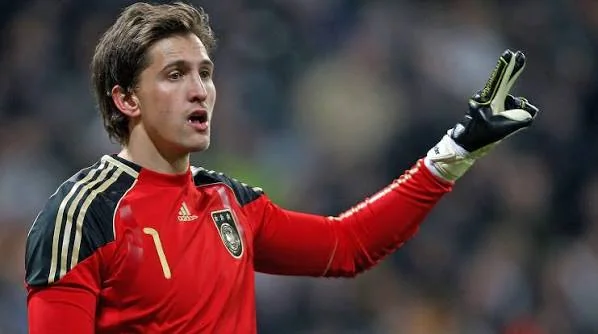
The ribs went on 4 May 2010. Germany named a provisional squad two days later and a final one at the start of June, so Adler missed the World Cup by roughly forty-eight hours, having kept goal in five of the ten qualifiers that got the team there. He told an interviewer years afterwards that no opponent had been involved, and that the bones had simply given way under the load he was putting through them.
The consequences arranged themselves neatly and cruelly. Manuel Neuer took the shirt in South Africa and never gave it back; he was still Germany’s first choice at forty when the squad for 2026 was announced. And the one World Cup match Adler’s absence created went to Hans-Jorg Butt, the goalkeeper Adler had displaced at Bayer Leverkusen three years earlier, who played the third-place game against Uruguay.
Adler won twelve caps and was on the German cover of FIFA 11 that September, beside Mesut Ozil, as one of seventeen players EA put on national boxes worldwide. Injuries kept arriving – shoulder, groin, ribs again – and he retired in 2019 without ever appearing at a major tournament. He remains the answer to a question German supporters occasionally ask each other about who should have been in goal.
Michal Kadlec
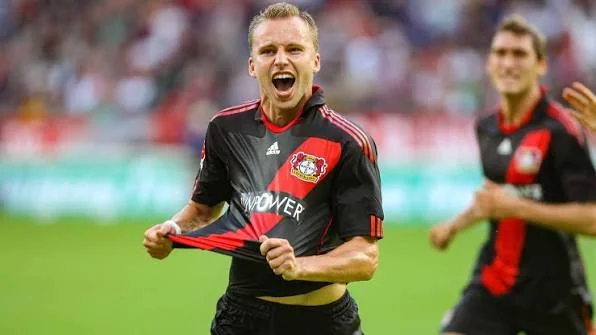
Miroslav Kadlec scored the penalty that put the Czech Republic into the final of Euro 96, stepping up at Old Trafford after Petr Kouba had saved from Reynald Pedros. He had also played every minute of Czechoslovakia’s five matches at the 1990 World Cup. His son inherited the nerve and not the timing.
Michal arrived in the national side in November 2007, seventeen months after the Czechs had been to Germany, and left it in 2016, nine years before they got back. In between he won 67 caps and became a penalty specialist in his own right, taking three in five weeks in the autumn of 2011 that removed Scotland from the play-off places – a 90th-minute equaliser at Hampden and two more in Kaunas. At Euro 2012 he headed a Robert Lewandowski shot off the line in the closing seconds against the co-hosts, which is why the Czechs reached the quarter-finals and Poland did not.
He grew up in Germany because his father joined Kaiserslautern after that 1990 tournament, and he was on the Czech covers of FIFA 14 and FIFA 15, beside Messi and then alone in national kit. He retired in May 2024 with a lit flare in his hand. Twenty-two months later the Czech Republic reached a World Cup, on penalties.
Mustafa Al-Bassas
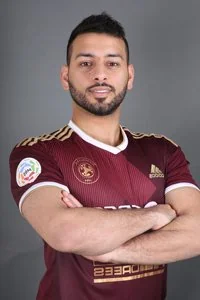
Saudi Arabia held Argentina to a goalless draw in Riyadh on 14 November 2012, and among the debutants that night was a nineteen-year-old from Al-Ahli. Lionel Messi played the match and was unimpressed afterwards. Ten months later the same two men were on a box together, when EA put Bassas on the Middle East cover of FIFA 14 beside him.
No source has ever explained the choice. There was no fan vote and no stated criterion in either Saudi report that broke the story, and the roundups of FIFA 14’s regional covers do not list a Middle East edition at all. What the record does show is that Bassas had just scored four goals in ten Asian Champions League matches and been voted Al-Ahli’s player of the season by their supporters.
He had nearly missed football entirely. The Al-Ahli academy took him at thirteen and he had to drop out because his school ran afternoon classes, getting back in only after a PE teacher spotted him in a dawn league that finished before assembly. His senior international career ran twenty-six months and fifteen caps without a goal, ending at the 2015 Asian Cup. Saudi Arabia returned to the World Cup in 2018. Nothing has been published about him anywhere since December 2020.
Stephan El Shaarawy
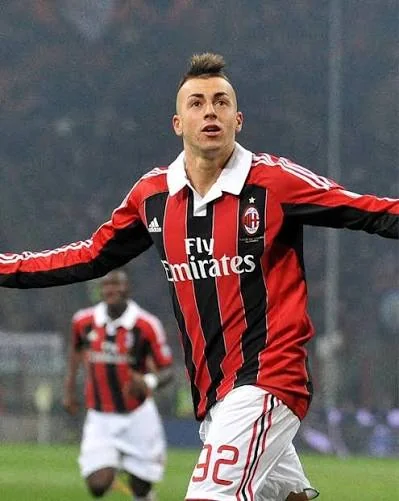
Sixteen Serie A goals at twenty is what put El Shaarawy on the Italian cover of FIFA 14, and EA’s Italian marketing manager said the choice came down to exuberance, freshness and immense potential. He was Milan’s leading scorer in every competition that season and won the Pallone d’Argento for it. He was, at that moment, one of the most discussed young forwards in Europe.
Then a thigh strain in September 2013, then a hairline fracture in the fourth metatarsal of his left foot found the same month, then surgery in Porto two days after Christmas. He played six league matches all season and scored none of them. He came back on 11 May 2014 against Atalanta.
Cesare Prandelli named a thirty-man provisional squad for the World Cup two days later and left him out. Italy have not named another one since: beaten by Sweden in 2017, by North Macedonia in 2022 after taking thirty-two shots without scoring, and by Bosnia and Herzegovina on penalties in March 2026. El Shaarawy went on to 32 caps, a Conference League with Roma, and a decade at the club that ended when his contract expired in June 2026. Il Faraone, they called him, after a father from Tanta who moved to Savona in 1982.
Arda Turan
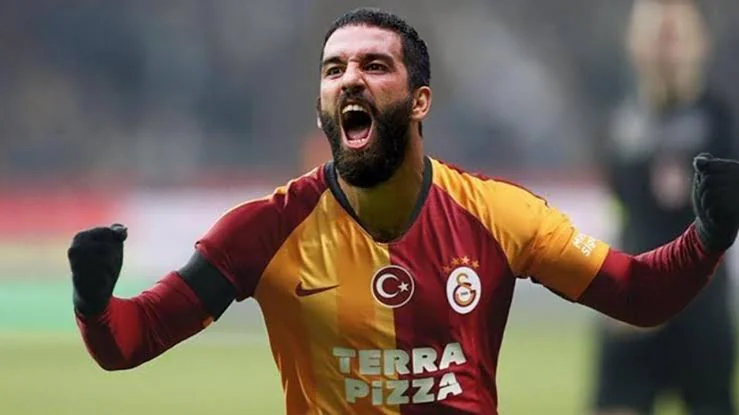
Turkey have reached two World Cups in Arda Turan’s lifetime. He was fifteen for the first and a retired manager for the second, which is a fairly complete summary of a hundred-cap international career spent in the wrong quarter-century.
The closest he came was qualifying for 2014, when Turkey finished fourth in their group on sixteen points, three behind the Romanians who took the play-off place. His hundredth cap turned out to be his last: a 3-0 home defeat by Iceland in Istanbul in October 2017 that ended the campaign after it. He was on the Turkish covers of FIFA 15 and FIFA 16, the second explicitly confined to boxed copies sold inside Turkey, which is a precise way of saying that a player can be the face of a game in one country and invisible in the next.
He won a Spanish title with Atletico Madrid in 2014, limping out of the match that clinched it with a pelvic injury and missing the Champions League final a week later. He has since done rather better standing on the touchline. In May 2026 he won the Ukrainian championship as head coach of Shakhtar Donetsk, and in June he was voted the league’s coach of the season.
Mauro Icardi
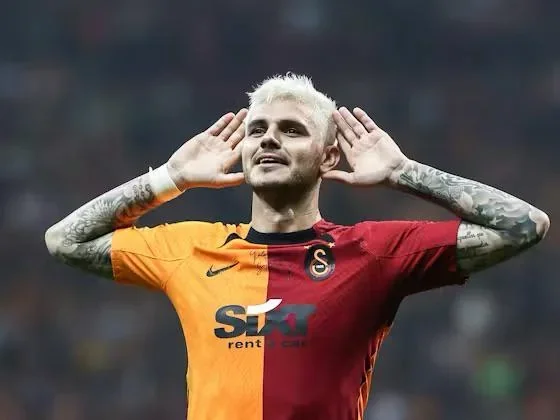
Argentina have picked four World Cup squads since Mauro Icardi first played for them and he has been in none of them. That is a hard thing to arrange for a striker who was Serie A’s joint leading scorer the summer EA chose him to front FIFA 16 in Italy, and who has now scored well over two hundred senior goals.
In 2018 he got closest, making Jorge Sampaoli’s thirty-five-man preliminary list and then not the twenty-three. The only explanation anybody has on the record came from Sampaoli at the training base outside Buenos Aires, who said that unfortunately only four of them could go. Everything else offered since – the marriage, the former team-mate, the dressing room – has come from unnamed sources and is best left there.
He was made Inter captain in 2018 and stripped of it the following year, went to Paris and then to Galatasaray, where he scored freely enough to be worshipped and was released as a free agent in July 2026. Argentina won the World Cup in 2022 and defended it in 2026 without him. His international record stands at a handful of caps, which for a player of his output is the kind of number that makes people check it twice.
Frequently Asked Questions
Has a FIFA cover athlete ever gone to a World Cup without playing in one?
Theo Walcott did. England named him in their submitted 23 for the 2006 tournament at seventeen, making him the youngest player there, and he did not appear in a single match. He was on the FIFA 10 cover in the United Kingdom alongside Frank Lampard and Wayne Rooney.
Did the 2026 World Cup remove anyone from this list?
Two people. David Alaba captained Austria’s squad and Erling Haaland was named in Norway’s, both countries reaching a World Cup for the first time since 1998. Alaba had fronted three Austrian FIFA covers and Haaland was a FIFA 21 ambassador. Any version of this list compiled before May 2026 included them.
Who was the first woman to appear on a FIFA game cover?
Alex Morgan and Christine Sinclair, both in 2015. Morgan appeared on the United States box of FIFA 16 and Sinclair on the Canadian one, seven years before Sam Kerr shared the FIFA 23 cover with Kylian Mbappe. Both had already played at multiple Women’s World Cups.
Are there players commonly listed as FIFA cover stars who never actually appeared on a box?
Several. Jason Kreis, Kiatisuk Senamuang, Par Zetterberg, Tomasz Radzinski and Sebastian Giovinco are all widely credited with covers that no retail box supports. The Nordic edition of FIFA 2000, long said to feature Zetterberg, actually shows Sol Campbell in an England shirt.
Which FIFA cover athlete was named in the most World Cup squads?
Cristiano Ronaldo and Guillermo Ochoa are tied on six each. Ronaldo was picked from 2006 to 2026 and fronted the FIFA 18 and FIFA 19 covers; Ochoa made the same six Mexico squads and shared two North American boxes. Lothar Matthaus is next, with five between 1982 and 1998.