Every Unassisted Triple Play in MLB History
Every unassisted triple play in MLB history is properly documented by definitive sources, except for the very first one. On May 8, 1878, the Providence Grays’ center fielder Paul Hines charged a sinking line drive against Boston, caught it, and kept running to third base, which both Boston runners had already passed on their way home. Then he threw to second baseman Charlie Sweasy. That throw is the entire problem. Under modern scoring the throw hands the third out to Sweasy, turning the play into an unassisted double play with an assist attached, and the argument over whether Hines or Sweasy retired the last runner has outlived everyone who stood on the field that afternoon.
It is a strange thing to argue about for a century and a half, but the unassisted triple play invites that kind of obsession. There are more perfect games in the record book than there are unassisted triple plays. The Sporting News record book, which runs back to 1876, does not even list Hines; its count does not open for another three decades. The rarest version of all, by an outfielder, has happened exactly once in professional baseball – Walter Carlisle, in the Pacific Coast League in 1911 – and the first in any professional game belongs to Hal O’Hagan of Rochester in 1902. Neither counts here. This is the major-league record, American and National League only, and it is short enough to know by heart.
The genuine articles do not arrive evenly. Six came in the 1920s alone, two of them on back-to-back days in 1927, and then the feat vanished for forty-one years. Eight were turned by shortstops, five by second basemen, and two by first basemen, who have no business being anywhere near the play. Nobody has ever done it twice. What follows is every one of them, in order, from the man who had to explain to Cy Young that the inning was over to the man who ended a game with one after booting two ground balls to set it up.
Fifteen unassisted triple plays have been recorded in Major League Baseball history, each a single fielder making all three outs on one play with no teammate touching the ball. Neal Ball turned the first for Cleveland in 1909; Eric Bruntlett of the Phillies turned the most recent in 2009.
Neal Ball
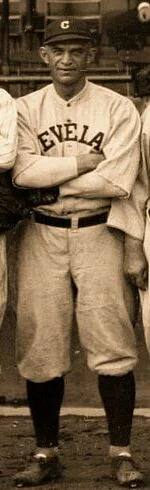
Nobody on the field knew the inning was over. On July 19, 1909, in the first game of a doubleheader at Cleveland’s League Park, Boston had Heinie Wagner on second and Jake Stahl on first against Cy Young, pitching his first season back with the Naps after eight years in a Red Sox uniform. On a hit-and-run, Amby McConnell lined a 3-2 pitch up the middle. The Cleveland shortstop leaped, caught it, stepped on second to retire Wagner, and tagged Stahl as he ran up – three outs, one man, the first unassisted triple play in major-league history.
Eleven thousand fans sat unsure whether to cheer. Ball threw down his glove and headed for the bench, and Young called after him, ‘Where are you going, Neal?' The reply was, ‘That’s three outs.'
He was a utility man never prized for his fielding, which makes the rest of the afternoon almost greedy. Batting in the bottom of the same inning, Ball drove the first pitch over Tris Speaker’s head for an inside-the-park home run, the first of his career and the only one he hit all season. His glove from the game sits in Cooperstown to this day. Cleveland won 6-1 and then lost the nightcap 3-2, which is the part of July 19 that nobody bothered to write down.
Bill Wambsganss
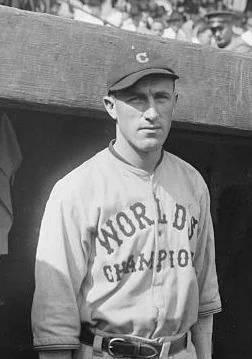
Game Five of the 1920 World Series had already turned strange before the fifth inning. Cleveland’s Elmer Smith had hit the first grand slam in Series history in the first; pitcher Jim Bagby had added the first World Series home run ever struck by a pitcher. Then Brooklyn put Pete Kilduff on second and Otto Miller on first, and relief pitcher Clarence Mitchell lined the ball to the right of second base, where Cleveland’s second baseman was standing.
Wambsganss leaped, caught it, stepped on second to double off Kilduff, and turned to find Miller running straight at him. He simply tagged him. ‘He stopped running and stood there, so I just tagged him,' Wambsganss recalled, adding that Miller, bewildered, asked him where he had gotten the ball. The park went silent, worked out what it had seen, and erupted. It remains the only triple play of any kind in postseason history.
Cleveland won 8-1 and took the Series two days later, the first championship in franchise history. None of it stuck to him the way the play did. ‘I played in the big leagues for thirteen years,' he said decades on, ‘and the only thing anybody seems to remember is that once I made an unassisted triple play in a World Series.' His name was shortened to Wamby in Cleveland so it would fit on the League Park scoreboard, and that is how most of baseball still files him.
George Burns
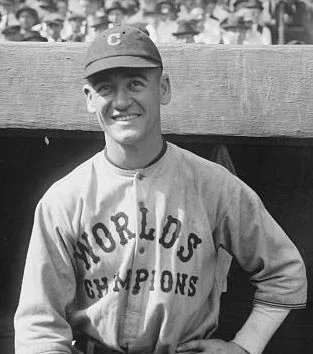
The unassisted triple play is a middle infielder’s trick, which is what makes the first baseman’s version so improbable. On September 14, 1923, Cleveland had Riggs Stephenson on second and Rube Lutzke on first at Fenway Park when Frank Brower lined a ball that looked like a clean single into right. Boston’s first baseman cut it off fifteen feet from the bag, just as Lutzke shot past him toward second. Burns tagged Lutzke, then won a footrace to second base, sliding in ahead of Stephenson for the third out.
It was the first unassisted triple play ever started by a first baseman, and Burns had a particular reason to recognize what he was looking at. Three years earlier he had been sitting on Cleveland’s bench in the 1920 World Series, watching his teammate Bill Wambsganss turn one against Brooklyn.
The following January, Cleveland traded to get Burns back, in a deal that sent Wambsganss the other way. The two men who had between them produced the only World Series unassisted triple play and the first by a first baseman were now, in effect, swapped for each other. Burns hit over .300 in each of his next four seasons in Cleveland and broke Tris Speaker’s record for doubles in a season in 1926, but the line drive off Brower’s bat is the at-bat that outlived all of it.
Ernie Padgett
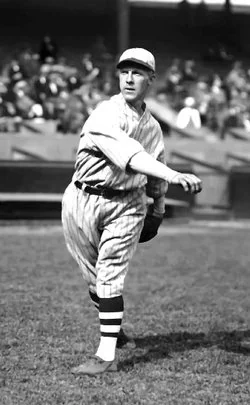
It was only the second major-league game of the rookie’s career, and it was the last game of a season his team had spent in the cellar. On October 6, 1923, in the back half of a doubleheader at Braves Field, Boston led the Phillies when Cotton Tierney and Cliff Lee reached base ahead of Walter Holke. Holke smashed a sinking liner that Padgett caught at shortstop, stepping on second to force Tierney and running down Lee with a quick tag before he could get back to first.
It was the first unassisted triple play in National League history, and the second of the 1923 season, the first time the feat had ever happened twice in a single year, three weeks after George Burns managed it in the American League. Padgett was a 24-year-old from Philadelphia who had picked the perfect afternoon to be standing in the right spot against his hometown team.
He never amounted to much after it. He played parts of five seasons, batted .266, and was out of the majors by 1927, the kind of career that leaves no fingerprint on any leaderboard. Except one. For a few seconds on the final day of a 54-100 season, a barely-employed rookie did something only a handful of men in the history of the game have ever done, and no number of mediocre seasons could take it back.
Glenn Wright
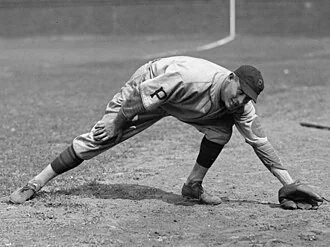
‘That was one of the easiest plays I ever made,' Glenn Wright said of it. ‘I couldn’t help it.' On May 7, 1925, the Pirates shortstop had Jimmy Cooney on second and Rogers Hornsby on first when St. Louis first baseman Jim Bottomley lined a ball over second base with the hit-and-run on. Wright caught it standing near the bag, stepped on second to double off Cooney, and looked up to find Hornsby a few feet away.
He had meant to throw to first for the third out, but Hornsby was in the way, and Wright’s arm carried the nickname Buckshot for a reason: the throws were strong and not reliably accurate. So he ran over and tagged Hornsby instead, who made no effort to escape and told him, ‘Nice work, kid.' Two future Hall of Famers, Bottomley and Hornsby, had been retired by a shortstop who never touched a teammate.
The play did nothing for the Pirates. They had blown a six-run lead, Wright’s triple play ended only the top of the ninth, and St. Louis came back to win 10-9 in a game Pittsburgh had no business losing. The rarest defensive play in baseball turns out to be no guarantee of anything at all. Wright’s Pirates went on to win the World Series that October regardless.
Jimmy Cooney
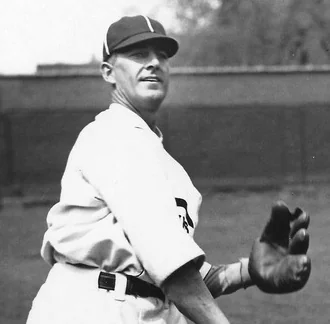
Two years before he turned one, he was on the wrong end of one. Cooney was the runner Glenn Wright doubled off second base in 1925, which makes him the only man in major-league history to appear in two unassisted triple plays from opposite sides. The reversal came on May 30, 1927, in the morning game of a Memorial Day doubleheader at Forbes Field, with the Cubs shortstop facing the Pirates.
Paul Waner lined a pitch up the middle that the Pittsburgh Post-Gazette said sounded like a pistol shot. Cooney was standing on second when he caught it, which retired Waner; he stepped on the bag to double off Paul’s younger brother Lloyd, who had been running; and he tagged Clyde Barnhart, sliding into second under the impression the ball had gone to center. Both Waner brothers would end up in Cooperstown. Cooney, who had just retired two of them on a single play, would not.
His manager, Joe McCarthy, ran onto the field to shake his hand. The celebration ended there. ‘Those were Prohibition days, you know,' Cooney said later, ‘and if you got near a bottle of beer, the club would fine you ten bucks. That was a lot of money.' The rarest play in the sport, and the reward was a handshake and a stern reminder about the price of a beer.
Johnny Neun
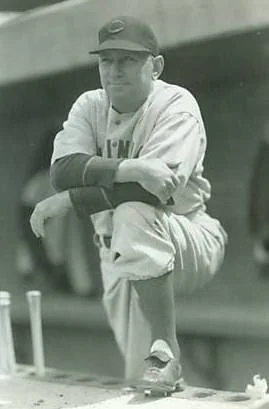
The very next afternoon, somebody did it again. On May 31, 1927, one day after Cooney’s play in Pittsburgh, the Detroit Tigers led Cleveland 1-0 in the top of the ninth at Navin Field with two Indians aboard and nobody out. Homer Summa, after two failed bunt attempts, lined the ball into the first baseman’s mitt. Neun caught it, tagged Charlie Jamieson trying to scramble back to first, and saw the path to second open up in front of him.
His shortstop, Jackie Tavener, called for the ball. Neun kept it. He ran to second himself and stepped on the bag before the lead runner could return, ending the game on the spot, the first time an unassisted triple play had ever finished one. A teammate on the bench later swore Neun was shouting as he ran: ‘Triple play unassisted! Triple play unassisted! I’m running into the Hall of Fame.'
He was running into a building that did not yet exist. The Hall of Fame would not open in Cooperstown for another twelve years, and when it did, it had no room for him, or for any of the others. Not one of the fifteen men who have turned an unassisted triple play is enshrined for it. Neun, the last first baseman ever to do it, kept running straight through second base and into the clubhouse to celebrate by himself.
Ron Hansen
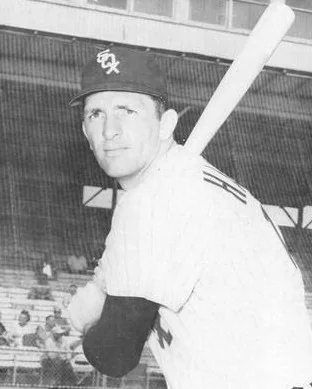
Forty-one years passed between the seventh unassisted triple play and the eighth. The drought ended on July 30, 1968, in front of 5,937 people at Cleveland’s Municipal Stadium, in the bottom of the first inning of a game the Washington Senators were about to lose by nine runs. Cleveland had Dave Nelson on second and Russ Snyder on first, both moving on a 3-2 pitch, when catcher Joe Azcue lined the ball just to the left of second base. The Senators shortstop snared it, stepped on the bag to double off Nelson, and ran down Snyder before he could reverse course.
It was the third time Cleveland had been the team caught in one. George Burns had done it to them in 1923, Johnny Neun in 1927, which is a great deal of bad luck for one franchise on the rarest play in the sport. For Hansen the day did not improve. He struck out all four times he batted and committed an error, and the Senators lost 10-1.
Two days later, Washington traded him to the White Sox for Tim Cullen. The same two players had been traded for each other earlier that same season, the first time in major-league history that had ever happened. Hansen managed to make baseball history twice inside of a week, and only one of the two had anything to do with a baseball.
Mickey Morandini
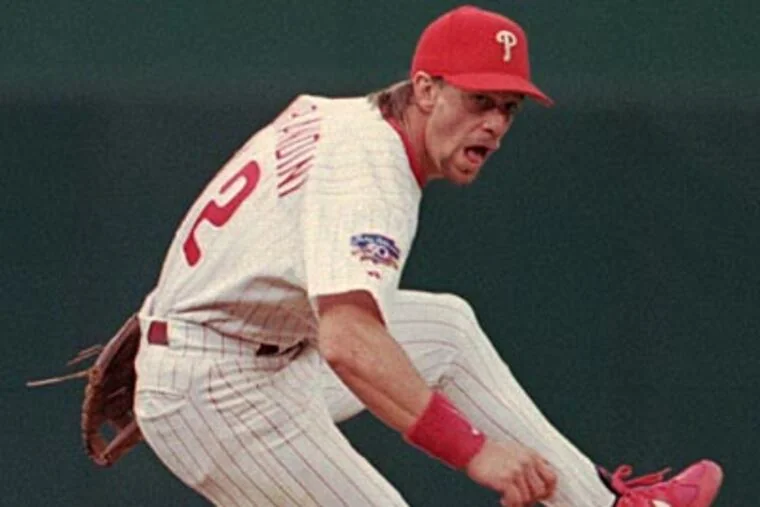
Barry Bonds, two months from winning his second Most Valuable Player award, was the easy part. On September 20, 1992, at Three Rivers Stadium in Pittsburgh, Bonds had singled and stood on first, Andy Van Slyke had singled and stood on second, and the game was tied 1-1 in the sixth when Jeff King worked a full count against Curt Schilling and lined the next pitch up the middle. Both runners broke with it. The Phillies’ second baseman dove, the ball stuck, and Morandini stepped on second to retire Van Slyke and tagged Bonds as he arrived – the ninth unassisted triple play in history, and the first in the National League in sixty-five years, since Jimmy Cooney in 1927.
Morandini was a light-hitting infielder in his first full season, an Olympic gold medalist who would never be mistaken for either of the stars he had just erased. It was the first the Phillies had ever turned, and it settled nothing. Pittsburgh won the game 3-2 in thirteen innings.
The man who drove in the winning run was Jeff King, the same Jeff King whose line drive Morandini had turned into three outs seven innings earlier. The rarest play in the sport had made King the most foolish-looking man in Pittsburgh for exactly as long as it took him to bat again. Morandini’s dive is the only part of the night anyone kept.
John Valentin
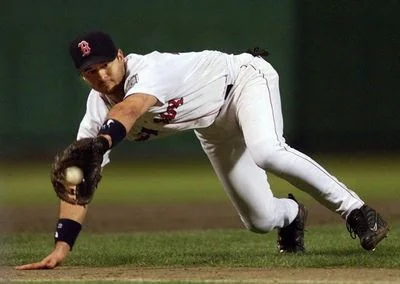
‘Wait a minute,' the Mariners’ broadcaster said on the air. ‘That’s only two outs.' It was, in fact, three. On July 8, 1994, at Fenway Park, the Red Sox trailed Seattle 2-0 in the sixth when Mike Blowers singled, Keith Mitchell walked, and Marc Newfield lined a 1-1 pitch at the Boston shortstop with both runners moving. Valentin made a backhanded catch, jogged over and stepped on second to double off Blowers, then reached out and tagged Mitchell, who had given up on the play and was strolling toward the bag with his head down, almost as an afterthought.
He did it so casually that he flipped the ball to the mound and trotted off before the Seattle television booth had finished counting. It was the tenth unassisted triple play in history, and for a few seconds the only people in the park who understood it were the ones replaying the tape.
The night was supposed to belong to someone else. Seattle had brought an eighteen-year-old named Alex Rodriguez to Boston for his major-league debut; he batted ninth and went 0-for-3. Instead it was the other shortstop who owned the evening, leading off the bottom of the inning with a home run that started a three-run rally and a 4-3 Red Sox win. A debut meant to launch one of the great careers in the game is now a footnote to a play the home team’s shortstop made by accident of geometry.
Randy Velarde
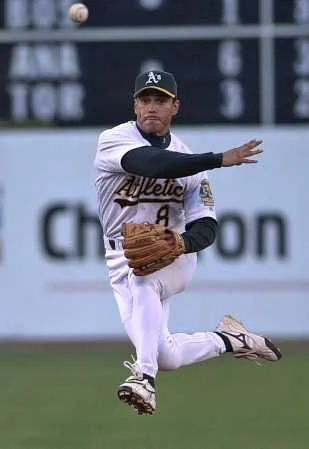
Every other middle infielder who turned one did it in the same sequence: catch the liner, touch second, tag the runner from first. On May 29, 2000, at Yankee Stadium, the Oakland second baseman did it backwards. With Jorge Posada on first, Tino Martinez on second, and a full count on Shane Spencer, Joe Torre sent both runners on the pitch. Spencer hit a soft liner straight at Velarde, who caught it, tagged Posada coming up from first, and only then retired Martinez at second – the only one of the thirteen middle-infield triple plays ever completed in that order.
Velarde was thirty-seven, the oldest of the fifteen men on this list, and he was not done embarrassing the Yankees. He homered later in the game, making him the third player ever to hit a home run in the same game he turned an unassisted triple play, after Neal Ball in 1909 and John Valentin in 1994. The rarest play in baseball apparently doubles as a hitting tonic. None of it mattered on the scoreboard; New York won 4-0.
The most satisfied man in the building may have been Torre, whose decision to start the runners had handed Oakland the play. ‘He made his mark today on a losing team,' the Yankees manager said afterward. ‘It was good managing. Start the runners and get something exciting to happen.' He was praising his own gamble. It had just cost him three outs on one pitch.
Rafael Furcal
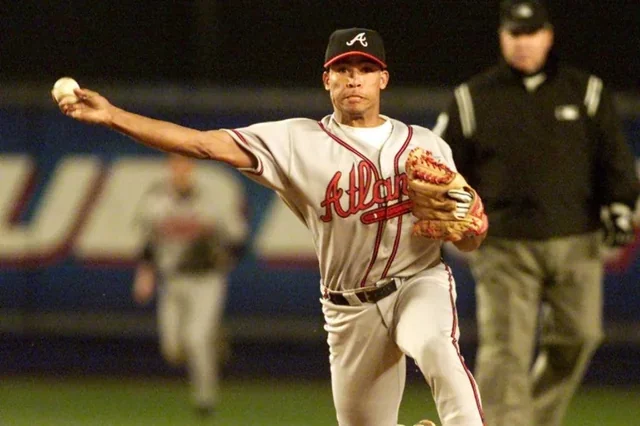
The St. Louis Cardinals have never turned an unassisted triple play. They have hit into two, which seems like a poor trade. The second came on August 10, 2003, on national television in St. Louis, when Tony La Russa called for a hit-and-run with his pitcher, Woody Williams, at the plate and runners on first and second. Williams hit well for a pitcher, and the move was sound right up until he lined the ball to the Braves shortstop. Furcal leapt, caught it, stepped on second to double off Mike Matheny, and ran down Orlando Palmeiro scrambling back toward first.
Six days earlier the Atlanta papers had been busy criticizing Furcal’s defense. He answered them with the rarest play in the sport, in front of an ESPN Sunday-night audience.
The runner he doubled off second base was Mike Matheny, who nine years later became the manager of the Cardinals – with Furcal, by then wearing St. Louis red himself, as his Opening Day shortstop. St. Louis rallied to win the game anyway, on an eighth-inning Albert Pujols home run, which only sharpens the franchise’s strange relationship with the play. The Cardinals have now hit into two unassisted triple plays, the first all the way back in 1925, and turned exactly none of their own.
Troy Tulowitzki
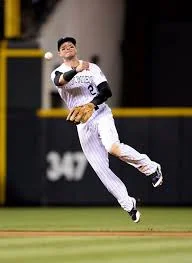
He had been a major leaguer for eight months. On April 29, 2007, in the seventh inning at Coors Field, the Rockies’ rookie shortstop had Atlanta runners on first and second when Chipper Jones lined a ball straight at him. He caught it, stepped on second, and tagged the runner arriving from first before most of the park had registered the first out. ‘It kind of just fell into my lap,' Tulowitzki said afterward, ‘but I’ll take it.'
The modesty undersold what was coming. Most of the men on this list were journeymen and utility infielders for whom the triple play was the high point of an otherwise quiet career. Tulowitzki was a different kind of accident. He finished second in Rookie of the Year voting that season, carried Colorado to the only World Series in franchise history that October, and went on to become a five-time All-Star and a two-time Gold Glove shortstop.
His description of it as luck was honest as far as it went. Every unassisted triple play depends on a hitter driving a ball directly at a fielder who happens to have two runners breaking into the trap. The difference with Tulowitzki is that the rarest play in baseball, the one that defined careers for everyone else here, turned out to be among the least remarkable things he did all year.
Asdrubal Cabrera
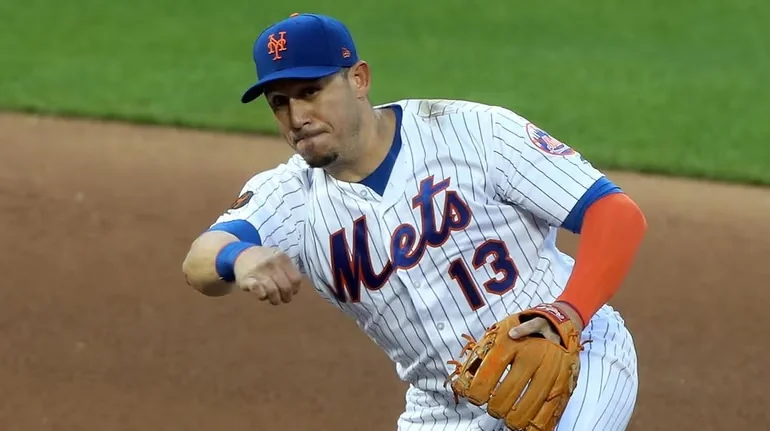
‘Hey, I’m just trying to speed up the game,' Lyle Overbay said afterward. ‘I’ll go down in history. No one can take that away from me.' On May 12, 2008, in the fifth inning of the second game of a doubleheader at Cleveland, Overbay had lined a hit-and-run pitch up the middle with Kevin Mench and Marco Scutaro both running. The Indians’ second baseman was already moving toward second, which made the backhanded diving catch the easy part. He stepped on the bag to retire Mench, by then standing on third, and tagged Scutaro, who had run a few feet past second.
It was the third unassisted triple play in Cleveland history, and no franchise has more; the others belong to Neal Ball in 1909 and Bill Wambsganss in 1920. Watching from the ballpark was Ron Hansen, who had turned the 1968 play against Cleveland and was now an advance scout for the Phillies, in the building by coincidence to see the rarest play in the game happen to the team he had once done it to.
Cabrera was twenty-two and did not fully grasp what he had done. He flipped the ball into the crowd as he jogged toward the dugout, realized his mistake, and, by his coach’s account, cried out ‘Oh, no!' a half-second too late to get it back.
Eric Bruntlett
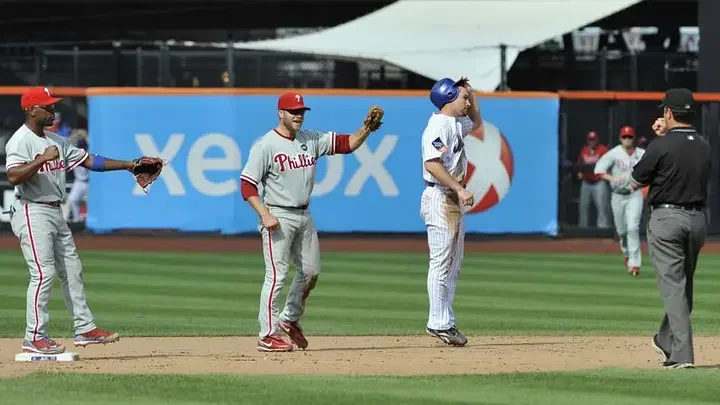
The man who ended the game had spent the previous few minutes doing his best to lose it. On August 23, 2009, at Citi Field, Eric Bruntlett was playing second base only because the Phillies had rested Chase Utley, and in the bottom of the ninth, with Philadelphia leading the Mets 9-7, he bobbled a grounder off Luis Castillo’s bat for an error and then knocked down a Daniel Murphy grounder he could not corral. Two batters, two balls misplayed, and the tying runs stood on base with nobody out and Jeff Francoeur at the plate as the man who could win it.
The Mets started both runners on a 2-2 pitch. Francoeur lined the ball hard up the middle, and Bruntlett, already moving to cover second on the steal, caught it standing on the bag – one out, and a force on Castillo for two. Murphy was running straight at him. He tagged him, and the game was over.
It was the fifteenth unassisted triple play in major-league history and only the second ever to end one. The first had been Johnny Neun’s, eighty-two years before, the day he ran into a Hall of Fame that did not yet exist. No one has turned another since. The rarest play in baseball arrived, fittingly, in the glove of a .231 hitter who had just spent an inning showing how badly the same game can go – and then it stopped.
Frequently Asked Questions
Who turned the only unassisted triple play in World Series history?
Bill Wambsganss, Cleveland’s second baseman, in Game Five against Brooklyn on October 10, 1920. He caught Clarence Mitchell’s liner, stepped on second, and tagged a bewildered Otto Miller. More than a century of postseason baseball has followed, and no other triple play of any kind has happened in it.
Has an unassisted triple play ever ended a game?
Twice. Johnny Neun of the Tigers finished a 1-0 win over Cleveland that way on May 31, 1927, ignoring his shortstop’s call for the ball and running to second himself. Eric Bruntlett’s play against the Mets in 2009 was the second, arriving eighty-two years after the first.
Why are unassisted triple plays so rare?
The play needs a specific trap: runners on first and second breaking with the pitch, usually on a hit-and-run, and a hard line drive hit almost straight at an infielder. Catch, step on the bag, tag the passing runner. Every part is common; the combination is not.
Which team has turned the most unassisted triple plays?
Cleveland has turned three, more than any other franchise, most recently Asdrubal Cabrera’s diving catch against Toronto in 2008. It has also hit into three, in 1923, 1927, and 1968, and Ron Hansen, who turned the 1968 one, happened to be in the ballpark for Cabrera’s, working as a scout.
Has any player been involved in two unassisted triple plays?
One man. Jimmy Cooney was doubled off second base on Glenn Wright’s play in 1925, then turned his own for the Cubs against the Pirates on May 30, 1927, retiring both Waner brothers in the process. No one else has appeared in two, from either side.
Is anyone in the Hall of Fame for an unassisted triple play?
No. Not one of the men who turned an unassisted triple play has a plaque in Cooperstown. Troy Tulowitzki, a five-time All-Star, came the closest to stardom; Chipper Jones, who lined into Tulowitzki’s 2007 play, was elected on the first ballot. The play has been kinder to its victims.