Every Figure Ever Proposed for Mount Rushmore
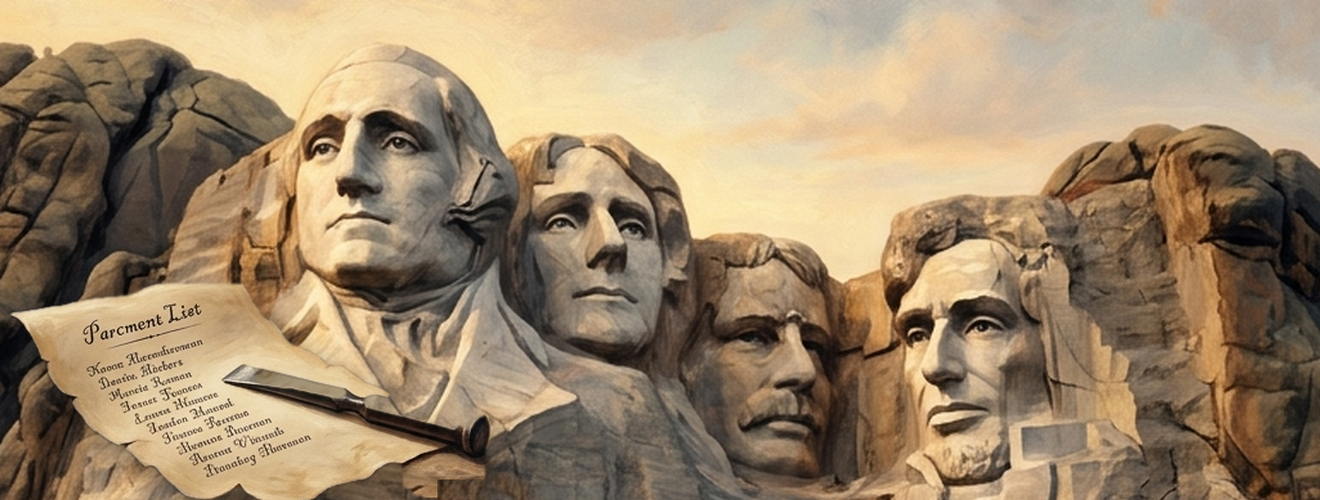
In January 1924, a state historian named Doane Robinson stood before the Black and Yellow Trail Association, a highway-booster group, and proposed carving giant figures into the Black Hills. He was thinking of tourists – the motorists on the new highways – and of the Needles, a forest of granite spires he wanted turned into the heroes of the Old West. Days later he put names to the idea in a letter to the sculptor Lorado Taft: Lewis and Clark, Sacagawea, John C. Fremont, Red Cloud, Buffalo Bill Cody, and two mountain men, Jed Smith and Bridger.
Taft was ill and begged off, so Robinson tried Gutzon Borglum, then feuding with his Stone Mountain patrons. Borglum took the job and overruled the client. The spires were too thin, the heroes too regional; he chose a broad granite wall called Mount Rushmore and traded Robinson’s Westerners for four presidents. Robinson’s cast was dead before a drill touched rock. The auditions never stopped. In 1931 a Lakota writer asked Borglum to add a Lakota face and got silence for an answer – a silence that ended up raising a rival monument seventeen miles down the road.
Five more names would be pressed on the mountain across the next century: a suffragist, two mid-century presidents, a Hollywood one, and, in 2025, the sitting one. What follows is every figure put forward in earnest, on paper that mattered – a letter, a bill, a campaign – in the order they were proposed.
Nineteen figures have been seriously proposed for Mount Rushmore: nine Western heroes on Doane Robinson’s original 1924 slate, the four presidents Gutzon Borglum actually carved, Crazy Horse in 1931, and five later fifth-face candidates, beginning with Susan B. Anthony in 1936 and ending, so far, with Donald Trump in 2025.
Meriwether Lewis
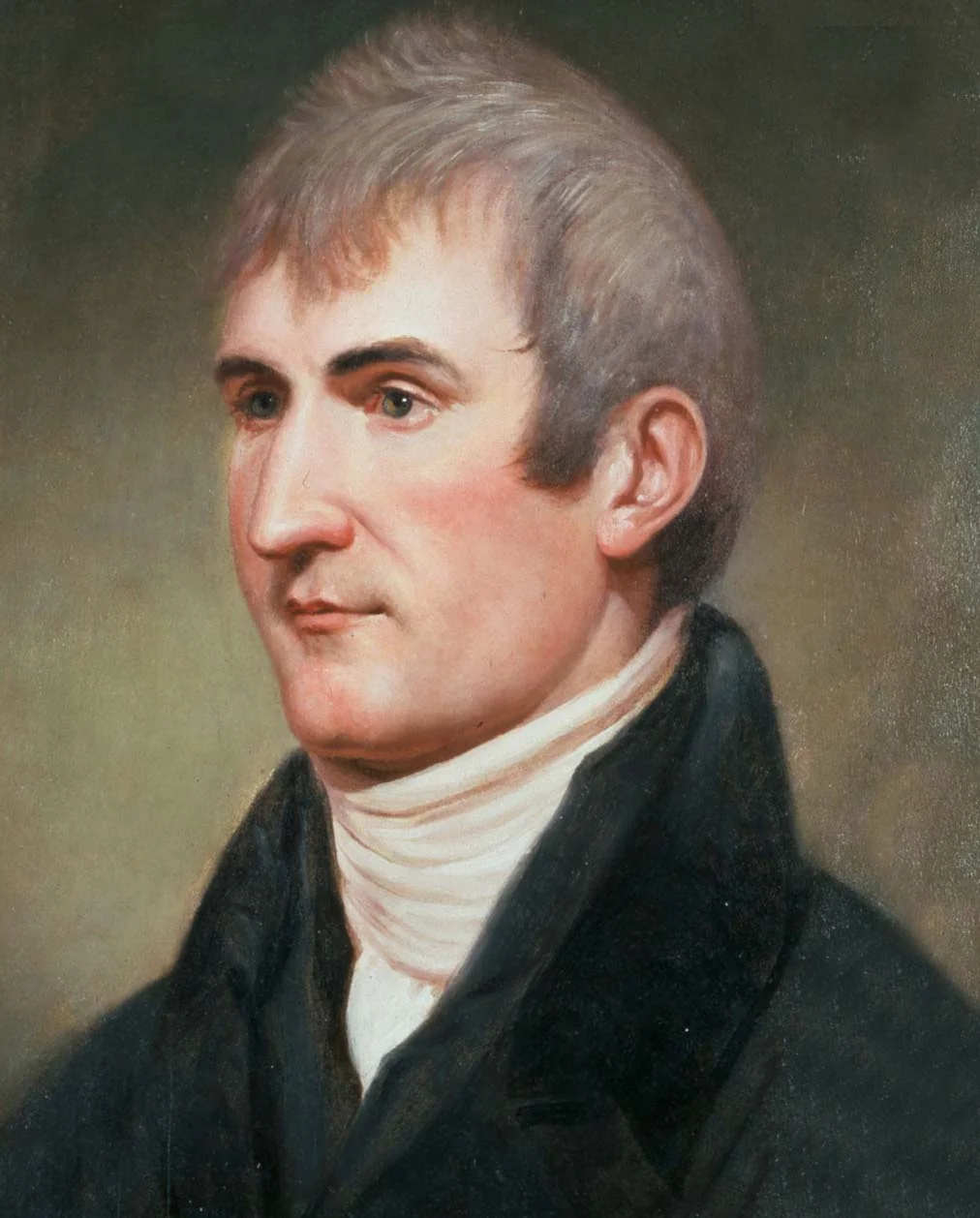
In the late summer of 1804, the Corps of Discovery poled and dragged its keelboat up the Missouri through what is now central South Dakota, traded tense words with the Lakota near present-day Pierre, and kept heading north. It never turned west toward the Black Hills. The expedition that handed Robinson his very first name for the mountain came within roughly a hundred miles of the range and never once laid eyes on it.
Meriwether Lewis was Thomas Jefferson’s private secretary before he was anything else, a Virginia soldier handpicked to lead the first American crossing to the Pacific and back. He managed it while losing only one man on an eight-thousand-mile round trip, to what was probably a burst appendix. Then his life unraveled with strange speed. Jefferson made him governor of the Louisiana Territory; Washington clerks began challenging his expedition accounts; and in 1809, riding the Natchez Trace to Washington to clear his name, he died of gunshot wounds at a Tennessee inn. He was thirty-five. Most historians have settled on suicide and a stubborn minority on murder, and the argument has not closed in more than two centuries.
He never married and left no children, and he lies under a deliberately broken column, the old stonecutter’s symbol for a life cut short. Robinson proposed to mend that, after a fashion, by carving him sixty feet tall into a range his expedition had carefully avoided.
William Clark
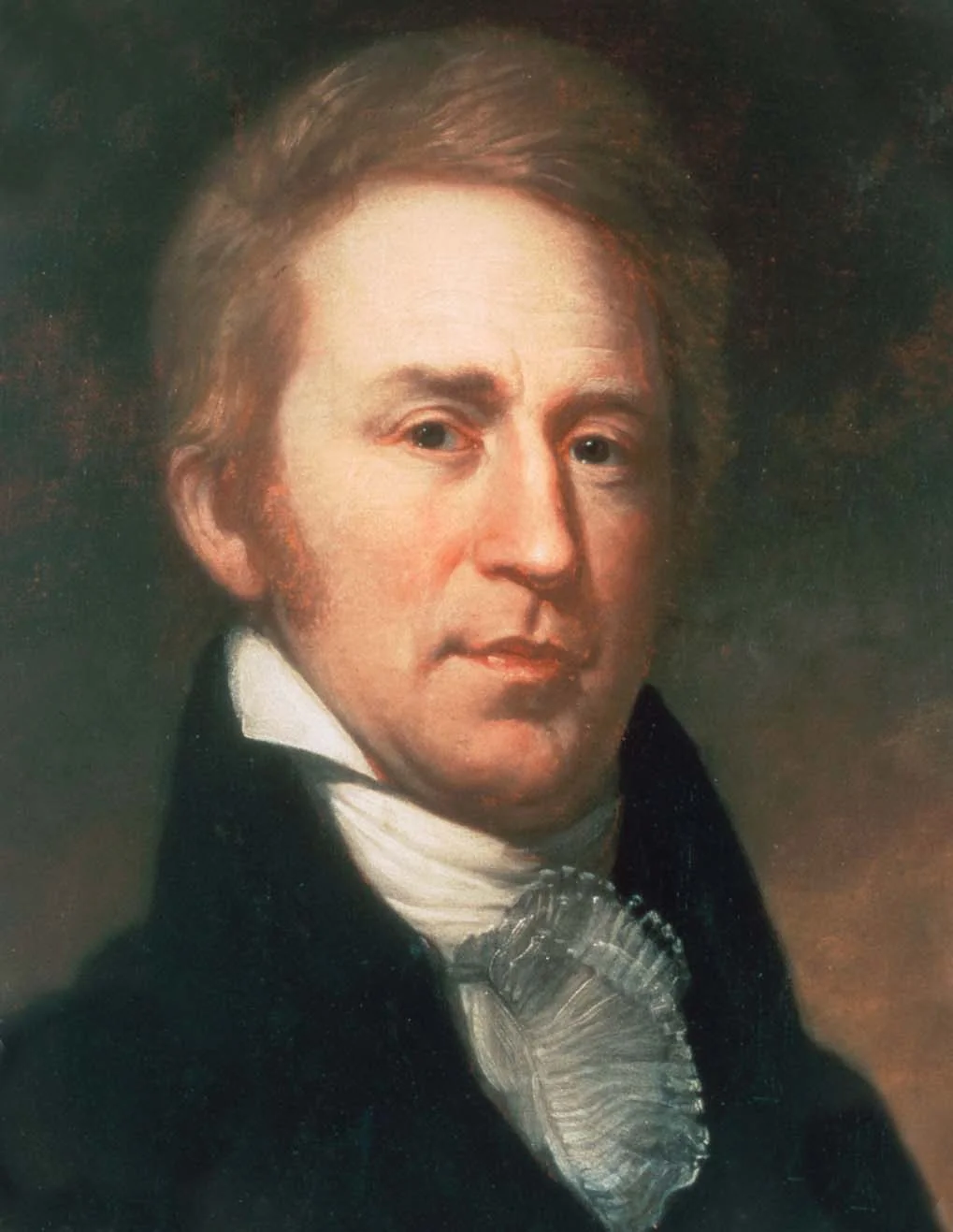
Only one of the two captains lived long enough to watch the country he had charted come apart. William Clark outlasted his friend by twenty-nine years, dying in St. Louis in 1838 at sixty-eight, after a second career that set him at the center of nearly every treaty and removal on the western plains.
He had been the expedition’s mapmaker and its negotiator, the steadier of the two commanders, the one who brought along an enslaved man named York and kept the journals legible. His master map of the West was accurate to within about forty miles, an astonishing feat for a man sketching rivers he was seeing for the first time. But the work that filled his later decades was the office of Superintendent of Indian Affairs, which he held from 1822 until the day he died.
He named his eldest son Meriwether Lewis Clark, which says plenty about how the partnership lived in his memory. Robinson wanted both captains carved into the Black Hills together, reunited in granite. He had reached, without quite meaning to, for the man who spent his last sixteen years administering the treaties and removals that the expedition’s own maps had set in motion.
Sacagawea
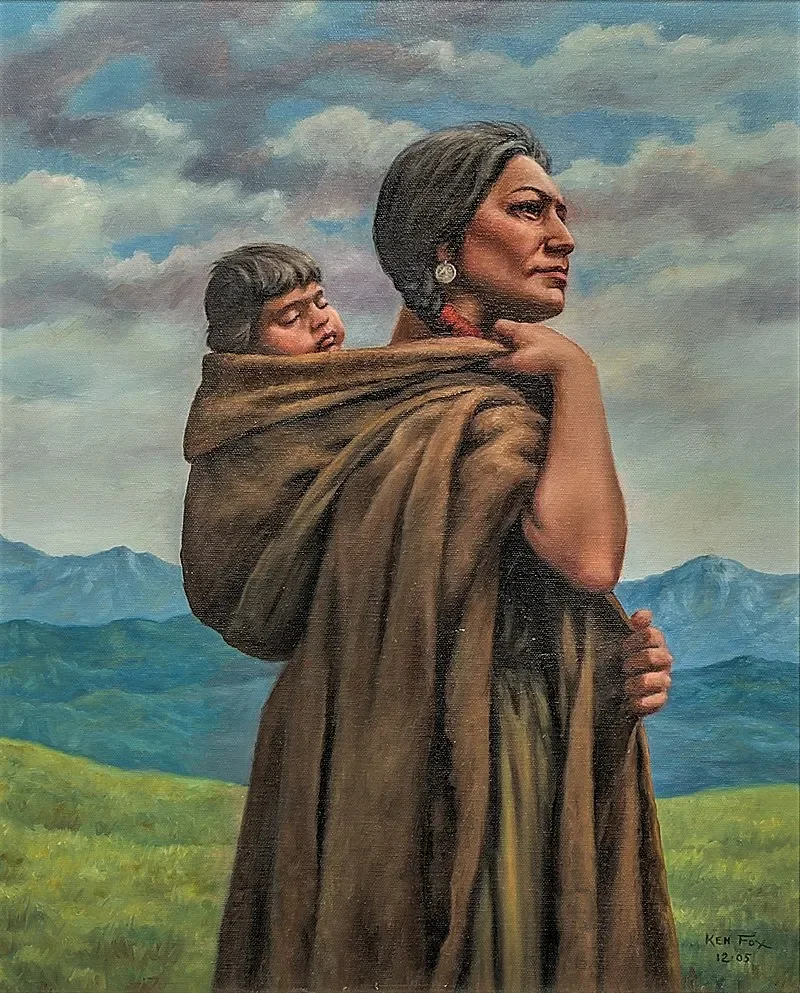
Her husband got the job. She did the work. Toussaint Charbonneau, a French-Canadian fur trader, was hired as an interpreter for the expedition’s winter among the Mandan, but the skill the captains actually needed belonged to his teenage wife – a Lemhi Shoshone woman who could speak to the western nations whose horses the crossing would depend on.
Sacagawea was about fifteen and six months pregnant when she joined, gave birth to a son, Jean Baptiste, early in the journey, and carried him on her back from North Dakota to the Pacific and home again. When a pirogue swamped in the Missouri, it was Sacagawea who calmly fished Clark’s journals and instruments out of the current, salvaging much of the expedition’s written record. No verified portrait of her survives, which has done nothing to slow her from becoming one of the most memorialized women in American history.
Robinson placed her on a list for a mountain that, as carved, would honor four men and not one woman. The omission held. In 2000 the U.S. Mint put her likeness on the golden dollar instead – modeled on a living Shoshone college student, since no one knew her face – where she now travels in coin jars and vending machines rather than on a cliff. It is, at least, a higher-circulation medium than granite.
John C. Frémont
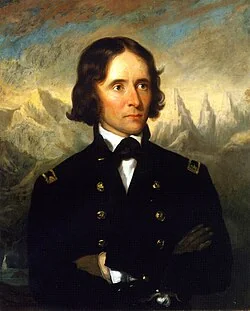
No name on Robinson’s list has faded further than the Pathfinder’s. In the 1840s John C. Frémont was among the most famous men in America, a mapmaker whose government survey reports steered tens of thousands of wagons west and whose nickname the penny press handed him like a title. His wife, Jessie Benton, daughter of the powerful Senator Thomas Hart Benton, did much of the writing that turned those reports into national bestsellers.
The fame did not arrive cleanly. In 1848 Frémont was court-martialed for mutiny over a tangle about who legitimately governed newly conquered California; he was convicted of disobeying a superior officer, had the sentence commuted by President Polk, and resigned from the Army rather than take the mercy. He struck it rich in the Gold Rush, served briefly as one of California’s first senators, and in 1856 became the first presidential nominee of the brand-new Republican Party, campaigning under the slogan Free Soil, Free Men, and Frémont. He lost to James Buchanan. Four years later a second Republican showed that the carry-the-North strategy Frémont had pioneered could actually win.
That second Republican was Abraham Lincoln, whose face is on the mountain. Frémont, who blazed the trails the men around him were simply born too late to need, is a name most visitors could not place if you spotted them the first letter.
Jedediah Smith
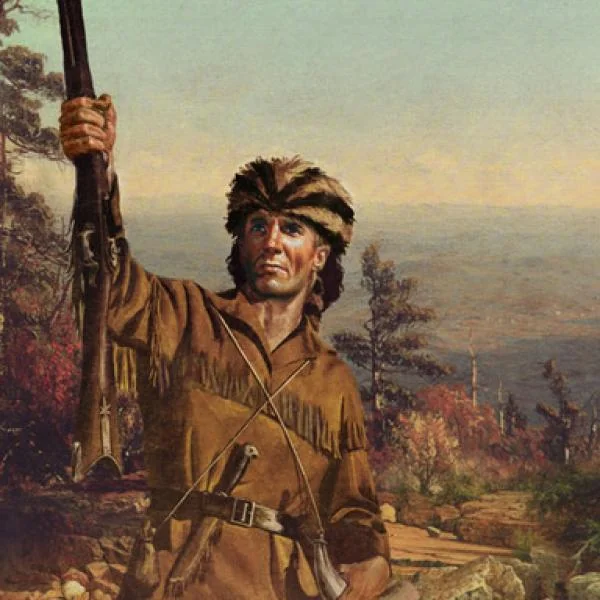
In the fall of 1823, in the broken country near the Black Hills, a grizzly took Jedediah Smith’s head in its mouth. It broke several of his ribs, tore away most of his scalp, and left one ear hanging by a strip of skin. Smith, still conscious, told a young trapper named James Clyman to find a needle and thread and sew everything back on, the ear included, and talked him through the operation. Two weeks later he was leading the party again. He wore his hair long over the scars for the rest of his life.
The rest of that life lasted eight years, and he spent them seeing more of the West than any American had. His 1824 crossing of South Pass gave the Oregon Trail its route over the Rockies; in 1826 he became the first American to reach California overland, and in 1827 the first to cross the Sierra Nevada coming home. Doane Robinson had been working to rescue Smith’s story from obscurity since 1908, which is how a man his own country had forgotten made the 1924 slate.
On May 27, 1831, scouting alone for water on the Santa Fe Trail, Smith was surrounded and killed by Comanche at a waterhole near the Cimarron River, in present-day southwest Kansas. He was 32. His body was never found.
Jim Bridger
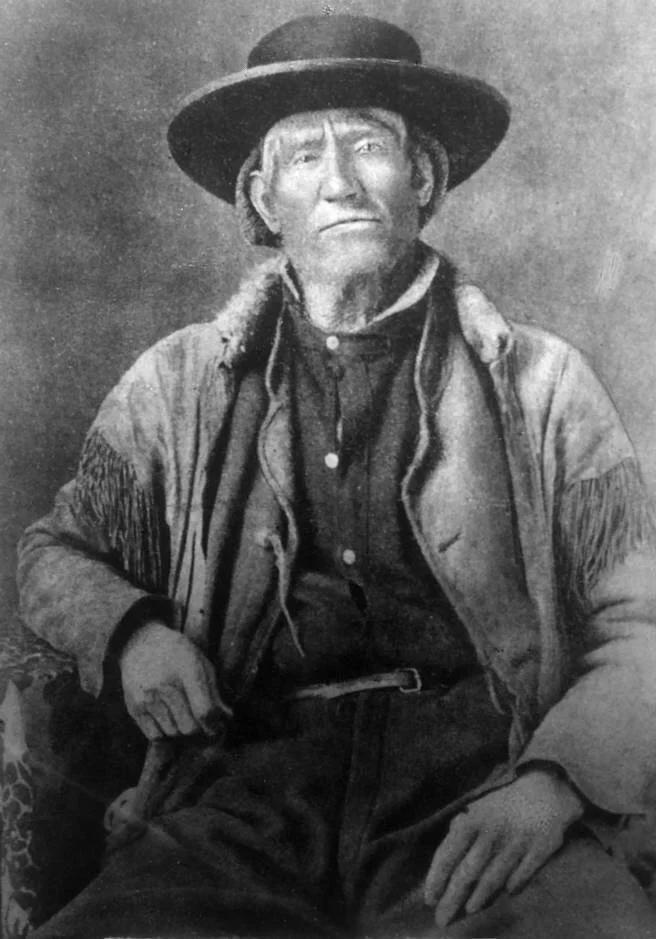
A campfire wager produced the discovery of the Great Salt Lake. In late 1824, when the trapping brigade Jim Bridger rode with fell to arguing over where the Bear River went, the twenty-year-old was sent down it alone in a bullboat of buffalo hide to settle the question. The river ended in water too salty to drink, and Bridger came back announcing he had reached an arm of the Pacific Ocean. He was wrong about the ocean; by the standard accounting he was still the first American to see the lake.
He never learned to read or write. He compensated with conversational French, Spanish, several Native languages, and a memory that held most of the Rocky Mountains in map form, which made him the most sought-after guide of his century. His accounts of Yellowstone’s spouting geysers and boiling springs were laughed off for decades as tall tales. In 1843 he and Louis Vasquez built Fort Bridger on the Blacks Fork of the Green River, a supply stop that kept thousands of Oregon Trail emigrants alive. When Robinson listed him for the mountain carving, he needed only the surname. Everyone knew which Bridger.
Bridger died on his farm near Kansas City, Missouri, on July 17, 1881, blind and mostly forgotten, at 77. Yellowstone had been made the world’s first national park nine years before. The tall tales were all true.
Red Cloud
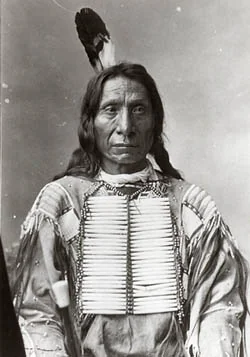
Robinson wanted to carve into the Black Hills the one man who had forced the United States to sign them away. Red Cloud, the Oglala Lakota leader, remains the only Native commander the federal government ever conceded had beaten its army outright in a war.
Red Cloud’s War, fought from 1866 to 1868 over forts the Army threw up along the Bozeman Trail through Lakota hunting country, ended with the soldiers abandoning the forts and the Lakota burning them down. The peace was the Fort Laramie Treaty of 1868, which set aside a Great Sioux Reservation – the Black Hills emphatically included – for the absolute and undisturbed use of the Sioux, in language the government wrote itself. The undisturbed use lasted six years. In 1874 an Army expedition found gold in the hills, prospectors poured in, and by 1877 Congress had simply taken the land back.
In 1980 the Supreme Court ruled the seizure illegal and ordered compensation with interest, a sum that has since swelled past a billion dollars in an untouched federal account. The Lakota have refused every cent of it, holding out for the hills themselves rather than the money. Robinson’s notion was to honor Red Cloud by sculpting his face into the precise ground the courts would one day agree had been stolen from him.
George Armstrong Custer
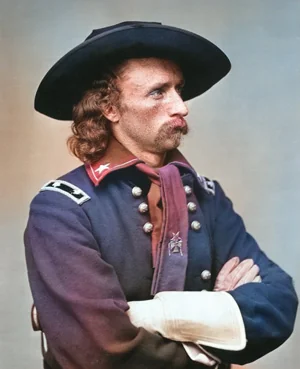
In the summer of 1874 a column of roughly a thousand men, a regimental band, and more than a hundred wagons rolled into the Black Hills under orders to scout a fort site and quietly settle the rumors of gold. They settled them. Beside a creek the soldiers named for their commander, prospectors riding with the column turned up gold, in Custer’s own breathless wording, right from the grass roots.
George Armstrong Custer was thirty-four, a Civil War celebrity with a gift for self-promotion. His dispatches trumpeting the discovery – which somehow omitted that the Lakota legally held the ground beneath it – ran in papers from coast to coast, and within a year 15,000 miners had swarmed treaty-protected land. For five days the expedition camped in a valley directly below Harney Peak, in the southern hills. Sixty years on, the granite a short walk from that campsite would be carved into Mount Rushmore. Custer had pitched his tent within sight of the future monument.
His name turns up, decades later, in the documented record of Robinson’s plan: the man who opened the Black Hills to seizure, proposed for the heroes’ row inside them. He did not live to hear the idea. Two years after the gold rush he set in motion, Custer and much of the Seventh Cavalry lay dead at the Little Bighorn, killed by the people whose homeland his expedition had pried open.
Buffalo Bill Cody
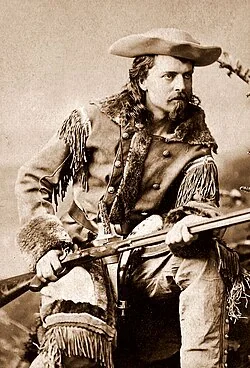
Of all the names Robinson floated, only the showman had already spent decades doing precisely what Robinson hoped the mountain would do – turn the West into something tourists would pay to see. William F. Cody earned the name Buffalo Bill by shooting bison for Kansas Pacific Railroad work crews in the late 1860s, served as an Army scout, and then packaged the entire frontier into a traveling show.
Three weeks after Custer fell at the Little Bighorn, Cody – still wearing a costume from his theatrical tour – killed and scalped a Cheyenne man named Yellow Hair and brandished the scalp as the first scalp for Custer. The trophy later advertised his show. In 1883 he launched Buffalo Bill’s Wild West, an open-air spectacle with live buffalo, a staged robbery of the Deadwood stagecoach, and Annie Oakley shooting glass balls from the air. In 1885 he signed Sitting Bull – the Lakota holy man widely blamed for Custer’s defeat – for $125 and $50 a week, and set him inside a show that restaged the conquest of his own people night after night.
He carried it across America and Europe, performing for Queen Victoria and drawing two million spectators in London. Robinson, hunting for a reason to make South Dakota worth the drive, had reached for the one name on his list that came pre-loaded with box-office receipts. Borglum reached for four dead presidents instead. They drew, in the end, considerably larger crowds.
George Washington
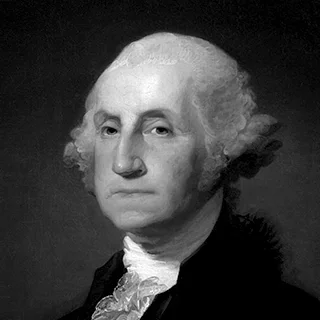
Borglum never meant to stop at the chin. His design called for the four presidents carved down to the waist, lapels and all, a row of granite torsos on the cliff face. A band of unworkable mica schist lower in the mountain, plus dwindling money and a war on the horizon, left him with heads.
Washington was the first head, the one Borglum carved before any other and the figure he set dead center as the founder of the whole enterprise – the birth of the country, in the monument’s own grammar of meaning. His was also the face carved furthest down, which is why Washington alone wears a hint of shoulders and a coat while the other three stop at the neck – the only one of the four whose body the rock ever allowed at all. The first dedication ceremony, held on the Fourth of July, drew a crowd to watch a single colossal head emerge from the cliff with no company at all.
For years it stayed that way: one president, surveying the Black Hills entirely by himself. The torsos never came. The hands Borglum had sketched never came. The Father of His Country has spent the better part of a century waiting for a body the rock declined to give him.
Abraham Lincoln
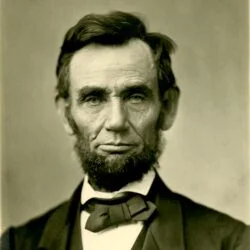
If Washington stood for the founding and Jefferson for the country’s expansion, Lincoln was chosen for having kept the thing from breaking apart. He was the second president Borglum settled on, paired with Washington from the start to lift the project from a regional curiosity into a national one. Those two anchors of the wall were picked first; Jefferson and Roosevelt came afterward.
Lincoln’s was the last of the four heads to get its own dedication, on the far right of the cliff, in 1937. His head ended up in the spot where Borglum had first meant to cut a giant inscription into the rock, a plan the bad granite forced him to give up. By then the mountain carried a quiet private joke. The man directing the daily carving under his father was named Lincoln Borglum – Gutzon Borglum had named his son after the president years before he had any notion of carving that same president into a mountain.
When Gutzon Borglum died in March 1941, the faces essentially finished but his grander schemes abandoned, it fell to Lincoln Borglum to bring the whole undertaking to its official close that October. So the Lincoln on the cliff was completed, in the end, under the hand of a man called Lincoln. It is the sort of coincidence the monument’s heavy solemnity was never quite designed to hold.
Thomas Jefferson
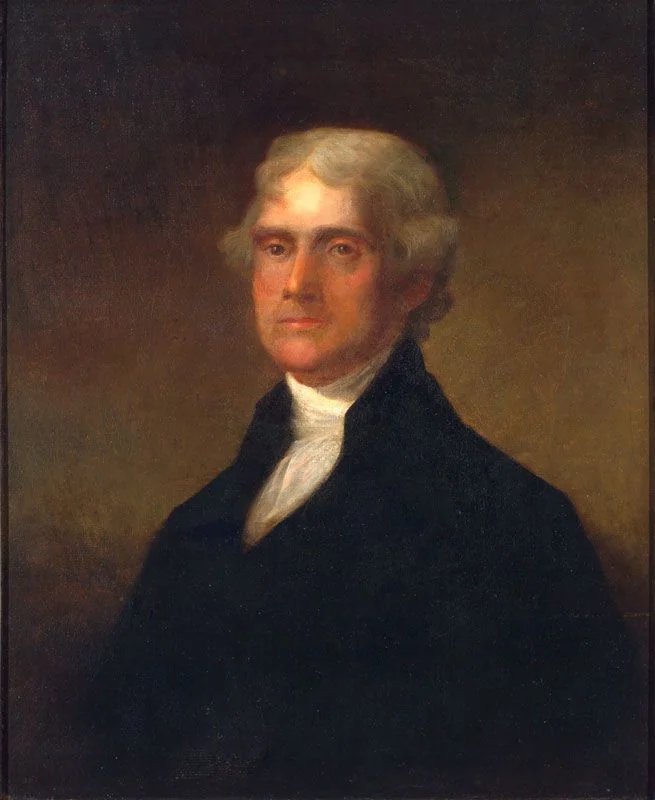
About eighteen months into the carving, Borglum had his crews blast a half-finished Thomas Jefferson off the mountain. The granite where they had started him, beside Washington, proved shot through with cracks and feldspar, useless for a face meant to outlast ten thousand years. So they erased him – dynamite, not chisels – and began again on Washington’s other side. The Jefferson that visitors photograph today is the second attempt.
He had earned the role of the president of expansion. The Louisiana Purchase of 1803 doubled the size of the country in one transaction, and it was Jefferson who then sent Lewis and Clark west to map what he had just bought. Two of the names on Robinson’s original list, in other words, owed their whole expedition to the very man who would later be carved into the mountain they were dropped from.
No other president on Mount Rushmore had to be carved twice. There is something oddly fitting in that being the fate of the author of the Declaration of Independence, a document the Continental Congress edited over his objections, cutting and rewording his draft while he sat and watched, until the words on the page were only partly his own.
Theodore Roosevelt
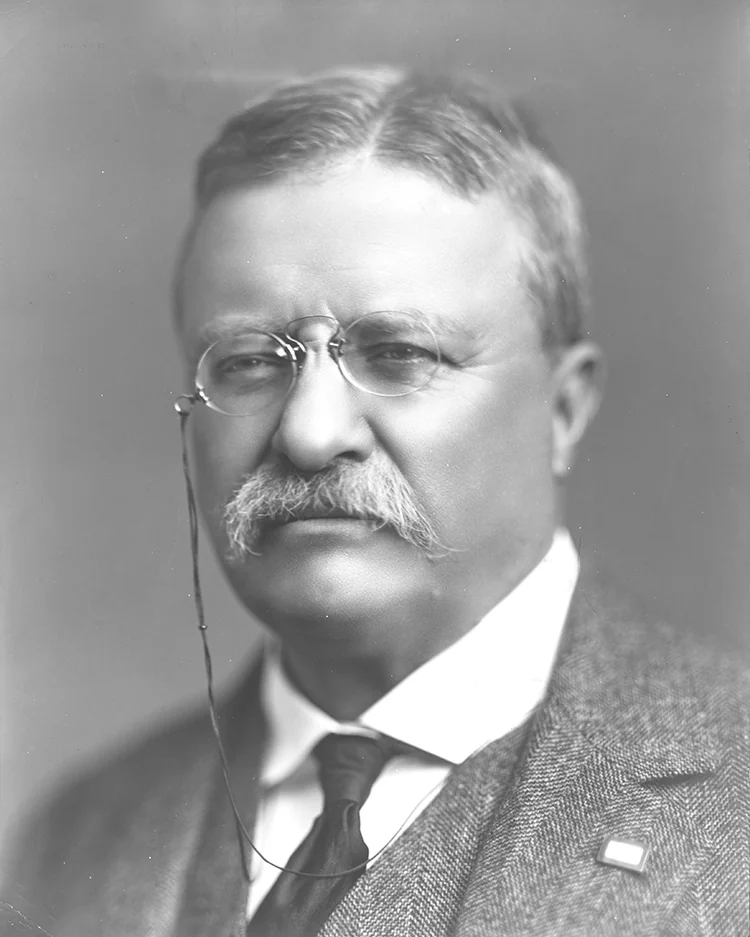
Barely six years dead when Borglum chose him, Theodore Roosevelt was the only one of the four faces anyone seriously argued about. The other three were founding-era figures whose reputations had set as hard as the granite itself. Roosevelt was a recent president, a partisan figure within living memory, and his selection struck a good many observers as Borglum honoring a personal hero rather than delivering a verdict of history.
It was a bit of both. Borglum had known and admired Roosevelt, and he argued that the twenty-sixth president belonged on the wall as the emblem of the country’s arrival as a modern power – the force behind the Panama Canal, the man who shoved the United States onto the world stage at the turn of the century. Roosevelt also sits furthest back of the four, set deeper into the rock and slightly shadowed, the hardest of the faces to photograph cleanly.
He was dedicated last, in July 1939, and the low argument over whether he truly earned the spot has never entirely died. He is still the name visitors are most startled to find up there: the one twentieth-century man among the founders, carved in by a sculptor who happened to be his friend.
Crazy Horse
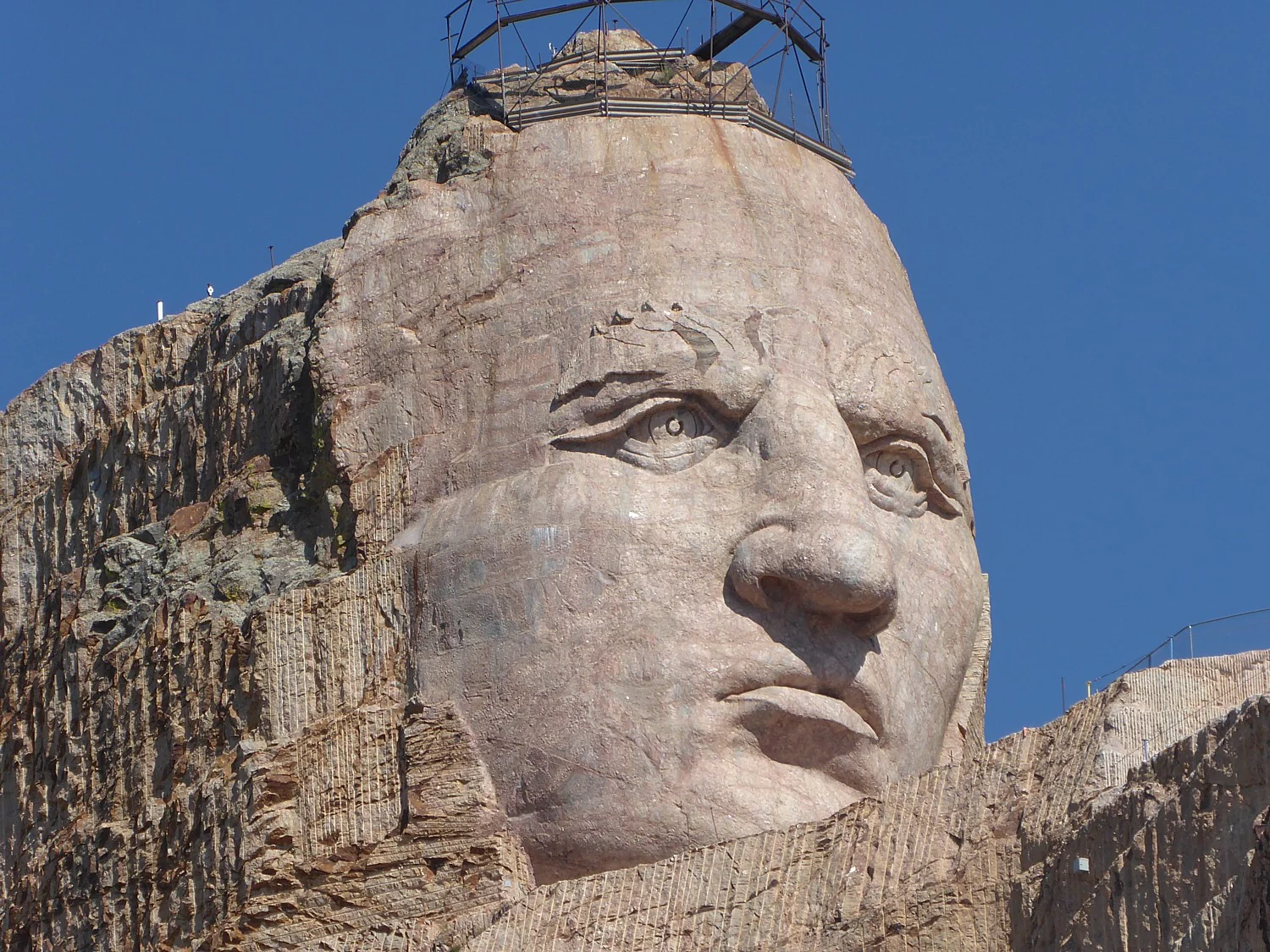
The most repeated claim about Crazy Horse and Mount Rushmore is wrong. He is routinely placed on Doane Robinson’s 1924 slate of Western heroes, and he does not belong there. The real proposal came in October 1931, when the Lakota author Luther Standing Bear wrote to Gutzon Borglum, then dynamiting presidents out of the granite, urging that Crazy Horse’s face be carved “by the side of Washington and Lincoln” as the Sioux’s one true patriot. Borglum never answered the letter.
It was an audacious ask. Crazy Horse had helped lead the force that wiped out George Custer’s Seventh Cavalry at the Little Bighorn in June 1876 – and Custer, of all people, held a spot on Robinson’s list. Within fifteen months of that victory he had surrendered, starving, and then been bayoneted by a soldier at Fort Robinson, Nebraska, on September 5, 1877, while resisting confinement in a guardhouse. He was somewhere in his thirties; his birth year, like his face, went unrecorded, because he refused all his life to be photographed.
Luther’s brother Henry Standing Bear kept the campaign going, and in 1939 he wrote instead to Korczak Ziolkowski, a sculptor who had worked at Rushmore under Borglum. Carving began on Thunderhead Mountain in 1948, seventeen miles from the presidents. The face alone, finished in 1998, stands 87 feet high – taller than every head on Rushmore – with the rest still emerging from the rock. Borglum’s silence became the most productive rejection in the Black Hills.
Susan B. Anthony
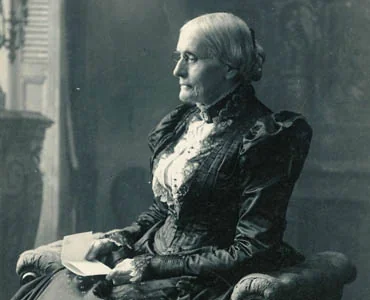
For fourteen years, a Minnesota woman named Rose Arnold Powell waged what amounted to a one-person campaign to put Susan B. Anthony on the mountain. Powell had read a biography of the suffragist in middle age, concluded that the absence of any woman from the national monument was a scandal, and from 1927 onward wrote to presidents, senators, and Borglum himself, over and over, pressing the case.
She got further than a lone letter-writer had any right to. A bill reached Congress in 1936 recommending that Anthony join the four men, and Powell enlisted no less an ally than First Lady Eleanor Roosevelt, who wrote to Borglum directly and asked him to make room. Borglum refused. He pointed to the cost and the rock, but his real objection was artistic – a fifth figure, he said, would damage the specific purpose of the memorial. The bill died when the House Appropriations Committee ruled that federal money could be spent only on heads already underway.
Borglum offered a consolation prize. He would give Anthony, he promised, a place with the gods in the Hall of Records he meant to carve behind the faces. In January 1941 he wrote to Powell about including women in it. She never received the letter. Borglum died weeks later, the Hall of Records was never built, and Anthony got neither the mountain nor the vault.
Dwight D. Eisenhower
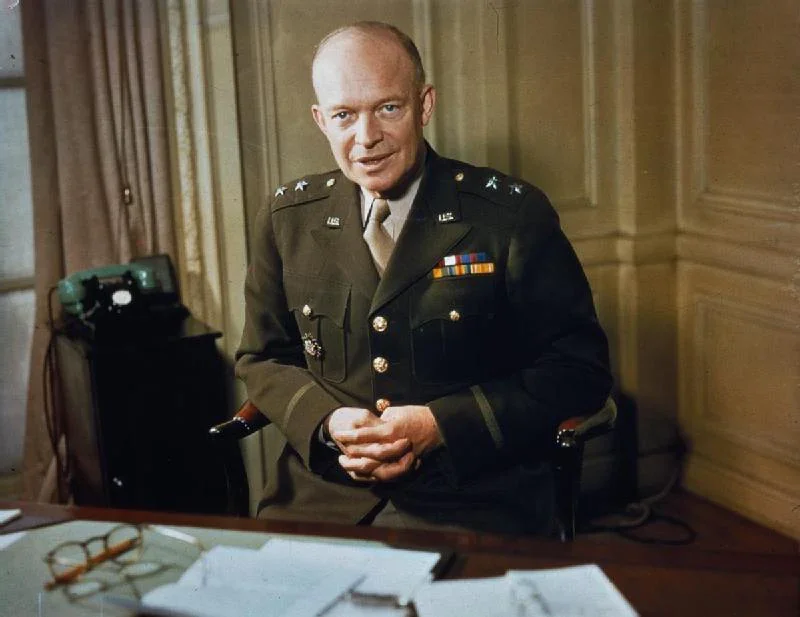
The only bipartisan proposal in the mountain’s history collapsed inside a single news cycle. In 1960 two senators from opposite parties – Kenneth Keating, a New York Republican, and Hubert Humphrey, a Minnesota Democrat – jointly floated the idea of adding two faces at once: the sitting Republican president, Dwight Eisenhower, and the late Democrat Franklin Roosevelt, one for each side of the aisle.
It was less a bill than a public suggestion, reported by the Associated Press and batted around the papers for a few days before evaporating. No legislation from it survives in the record. The press, predictably, could not resist noting that Eisenhower, bald, would have been the first hairless head on a mountain otherwise crowned with vigorous nineteenth-century manes, and at least one paper pronounced the whole notion a bust.
Eisenhower had genuine claims – supreme Allied commander in Europe, two terms in the White House, the interstate system that put the descendants of Robinson’s Model T tourists onto faster roads to the very monument in question. None of it mattered. The 1960 proposal was the last time his name was raised for the mountain in any serious way, and it had lasted, from floating to forgetting, roughly the length of a long weekend.
Franklin D. Roosevelt
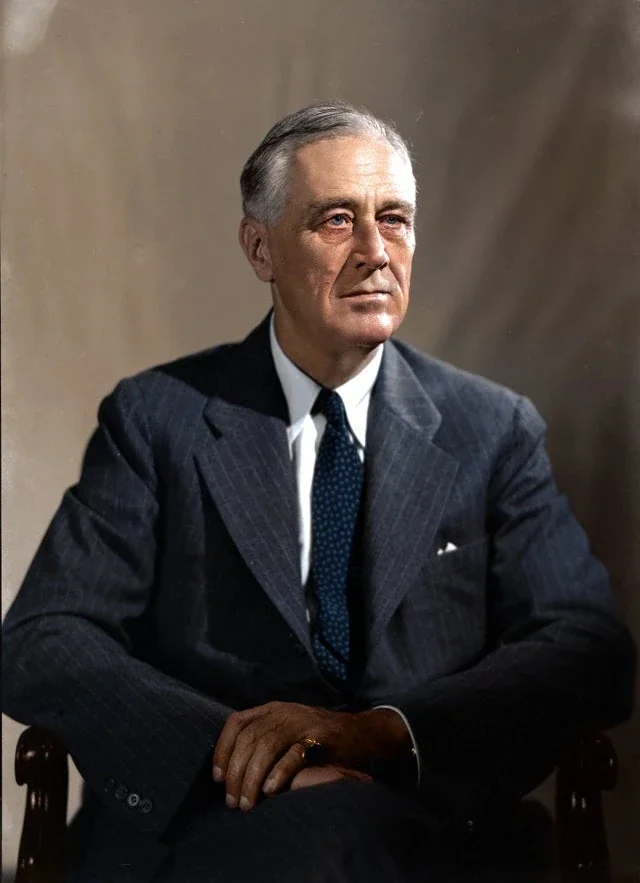
By the time his own name came up for the mountain, Franklin Roosevelt had already stood on it. On August 30, 1936, midway through a tour of the drought-stricken Plains, he made an unscheduled stop to dedicate the newly unveiled face of Jefferson, and spoke, off the cuff, about people ten thousand years in the future studying the weathered faces and wondering what sort of nation had made them. He remarked, almost in passing, that this was only the second dedication, and that there would be others, by other presidents, in years to come.
He was righter than he knew and wrong about one case. Three of the four faces were unveiled while he was in office, and his own fifth cousin, Theodore, was already taking shape on the same cliff. So when Keating and Humphrey put his name forward in 1960, fifteen years after his death, Roosevelt held about as strong a personal claim on the rock as any candidate ever floated.
It went nowhere, like the Eisenhower half of the same proposal. The man who foresaw a parade of future dedications, performed one himself, and watched a relative climb onto the wall is, so far, not on it. The others he predicted have not turned up either.
Ronald Reagan
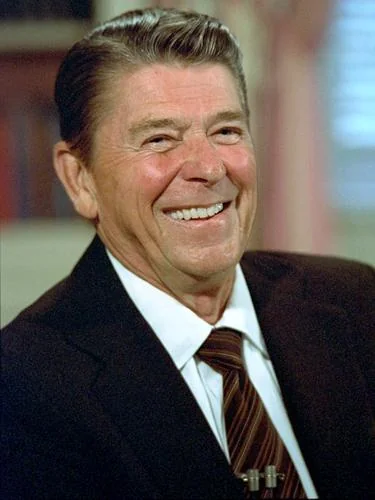
There was a problem with carving Ronald Reagan into Mount Rushmore, and it had nothing to do with how many people wanted it done. The push was real and sustained – a newspaper campaign in 1984, another effort in 1989, and at last, in 1999, a genuine move in Congress, when Representative Matt Salmon of Arizona circulated a letter urging colleagues to co-sponsor a bill adding Reagan’s face to the existing four. His backers argued that the man who had won the Cold War and revived a stalled economy belonged beside the founders.
The Park Service answered with geology. In 1989 it had commissioned a routine survey of the mountain’s stability, and the survey found that the rock could take no more carving: Washington’s face alone was riddled with cracks, and cutting a fifth head risked damaging the four already there. There was, quite literally, no sound stone left to work with. The campaign for Reagan kept colliding with the same wall, which happened to be the wall itself.
Congress debated the idea and let it lapse. Reagan’s admirers have revived it at intervals since, especially around his 2011 centennial, and the answer has not changed. The mountain, it turns out, is the rare constituency in American politics that cannot be lobbied into changing its mind.
Donald Trump
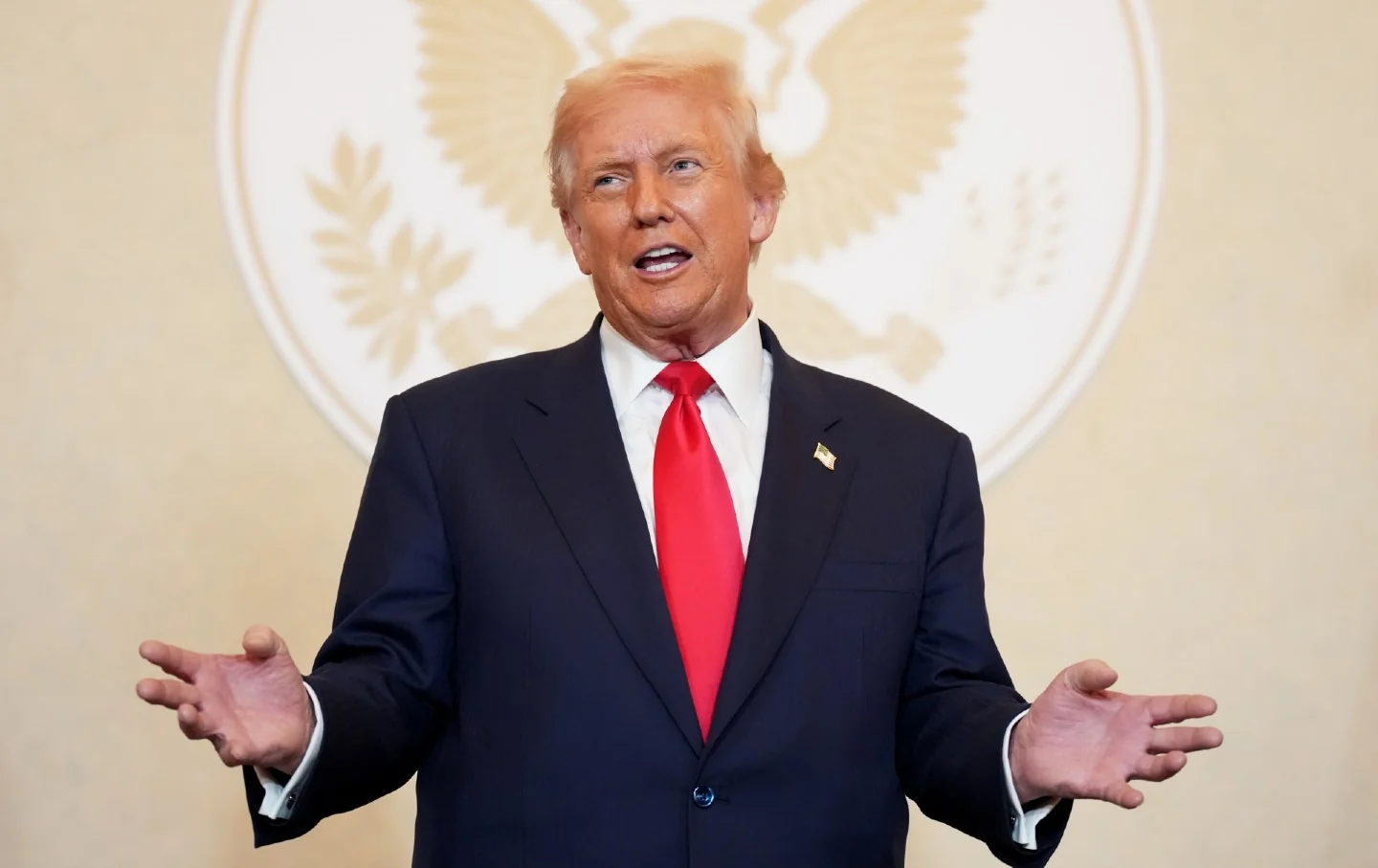
Every other name on this list was put forward by someone else. The most recent one effectively nominated himself. Donald Trump had floated the notion of his own face on Mount Rushmore during his first term, and in 2020 the governor of South Dakota, Kristi Noem, handed him an $1,100 bust of the mountain with his likeness added as a fifth head – a gift, she said, prompted by Trump telling her it was his dream.
The formal version arrived on January 28, 2025, eight days into his second term, when Representative Anna Paulina Luna of Florida introduced H.R. 792, a bill directing the Secretary of the Interior to arrange the carving of Trump’s figure into the memorial. Let’s get carving, she wrote online. The bill was referred to the House Committee on Natural Resources, where, as of the middle of 2026, it has sat without a hearing.
It will very likely stay there. A former superintendent of the monument put the objection plainly, likening a fifth face to painting an extra disciple into the Last Supper – and behind that aesthetic argument waits the same cracked granite that has turned away every hopeful since Susan B. Anthony. A century after Doane Robinson drew up a list with no presidents on it at all, the mountain’s most dependable reply to each new candidate is a simple, geological no.
Frequently Asked Questions
Was Crazy Horse ever proposed for Mount Rushmore?
Yes – in 1931, by Luther Standing Bear, who wrote to Gutzon Borglum asking that the Lakota leader join the presidents. Borglum ignored the letter, and the claim that Doane Robinson proposed Crazy Horse in 1924 conflates the two campaigns. The failed 1931 effort eventually produced the separate Crazy Horse Memorial, begun in 1948.
Can a fifth face be added to Mount Rushmore?
No. Gutzon Borglum himself ruled it out in May 1936, writing that the mountain’s stone limitations made a fifth head impossible, and modern engineers agree: the remaining granite is too fractured and soft to carve. Every campaign since – congressional bills included – has broken against that geology.
How many Native Americans have been proposed for Mount Rushmore?
Three. Red Cloud and Sacagawea were on the 1924 Western slate, and Crazy Horse was put forward in Luther Standing Bear’s 1931 letter. Red Cloud also has a distinction the others lack: he was in Robinson’s very first pitch to a sculptor, before any president had entered the picture.
Has a woman ever been proposed for Mount Rushmore?
One: Susan B. Anthony, the suffragist. Senators introduced legislation in 1936 to add her to the memorial, with Eleanor Roosevelt’s public support. Congress answered with an appropriations rider restricting federal money to the heads already underway, which quietly ended the matter. No woman has been formally proposed since.
Why did Borglum carve presidents instead of Robinson’s Western heroes?
Borglum argued that a monument of regional heroes would draw regional interest, and that only national figures justified carving a mountain. He selected Washington, Jefferson, Lincoln, and Theodore Roosevelt to stand for the country’s founding, expansion, preservation, and development – a scheme he called the Shrine of Democracy.
Who is the most recent person proposed for Mount Rushmore?
Donald Trump. On January 28, 2025, Representative Anna Paulina Luna introduced H.R. 792, a one-page bill directing the Interior Department to arrange the carving of Trump’s likeness on the memorial. It was referred to committee and has not advanced. The Park Service, for its part, declined to comment.
When did carving on Mount Rushmore stop?
October 31, 1941, when federal funding ran out months after Gutzon Borglum’s death and his son Lincoln wound the project down. The original design showed each president to the waist; only Washington got any detail below the chin. The mountain has not been touched by a carver since.
- National Park Service – Mount Rushmore: Memorial History
- United States v. Sioux Nation of Indians, 448 U.S. 371 (1980) – Justia
- Congress.gov – H.R. 792 (119th Congress)
- PBS American Experience – Black Hills Expedition of 1874
- U.S. Mint – Sacagawea Golden Dollar
- South Dakota Public Broadcasting – FDR at Mount Rushmore, 1936
- National Parks Conservation Association – A Woman on Mount Rushmore?
- Smithsonian Magazine – The Making of Mount Rushmore