Every Recording on the Voyager Golden Record (Music)

The one piece of music Carl Sagan’s committee wanted most never made it aboard. They asked for the Beatles’ “Here Comes the Sun,” and the Beatles themselves agreed. The record company that owned the rights refused. So the band that shaped twentieth-century popular music does not represent humanity in interstellar space, and Chuck Berry does.
What does represent us is a gold-plated copper phonograph record, bolted to the outside of both Voyager spacecraft and launched in the late summer of 1977. Sagan’s committee had roughly six weeks to decide what humanity sounds like. The folklorist Alan Lomax fought hardest for the unfamiliar ones, supplying 15 of the 27 selections himself and pushing the record toward Senegalese drums and Solomon Islands panpipes over yet another European symphony. The biologist Lewis Thomas, asked what he would send, answered: the complete works of Bach. Then he paused and admitted that would be bragging.
Three Bach pieces made the cut anyway, more than any other composer, which tells you something about who was in the room. The rest run from an Elizabethan dance tune to a 1958 rock single, from a Navajo night chant to a Javanese court song written in praise of a prince’s concubines. They are now roughly sixteen billion miles away, still in playable order, riding the most remote objects our species has ever made. Here are all twenty-seven, in the sequence pressed into the disc.
The Voyager Golden Record carries 27 musical selections, about ninety minutes in length, assembled in 1977 by a NASA committee under Carl Sagan to show any civilization that finds the two Voyager spacecraft how the planet sounds. The pieces range from European concert music to folk and traditional recordings gathered across the globe.
Bach, Brandenburg Concerto No. 2 (First Movement)
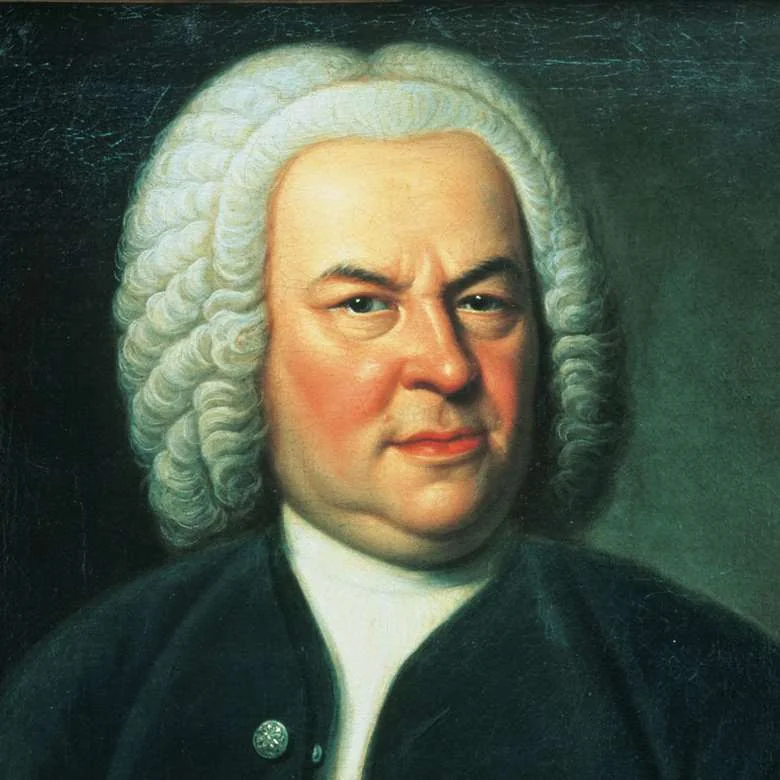
Once a listening alien works past the spoken greetings, the first human music it reaches is a concerto Bach wrote in 1721 and could not, at the time, give away. He had bundled six of his finest concertos, copied them out by hand, and sent them to Christian Ludwig, Margrave of Brandenburg-Schwedt, as a bid for work in Berlin. There is no record the margrave ever replied, and no evidence the pieces were performed for him. The manuscript was eventually sold for around two dozen groschen – roughly twenty dollars in silver – and lay forgotten until someone rediscovered it in 1849.
Sagan’s committee opened the record with the brisk first movement of the second concerto, in F major, played by the Munich Bach Orchestra under Karl Richter. As a first impression it is a shrewd pick: bright, intricate, the sound of a species that can do arithmetic. Bach appears three times across the disc, more than anyone else, which reveals rather more about the committee than about music.
The placement carries a quiet joke. The work that now introduces humanity to whatever is out there began life as a résumé its recipient seems never to have opened. Bach died in 1750 with the Brandenburg set effectively lost. It is now the opening track on the farthest objects human beings have ever built.
Puspawarna (Javanese Court Gamelan)
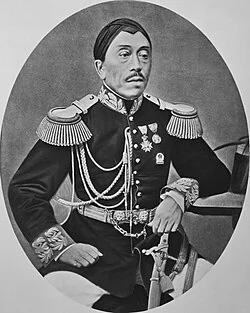
The shimmering piece that follows Bach was composed in the mid-1800s by a Javanese prince in honor of his wives and concubines, each likened to a different flower. Mangkunegara IV of Surakarta wrote both the melody and the verses for ‘Puspawarna,' a title that means ‘kinds of flowers.' At court it is played for the entrance of the prince, a slow cascade of bronze gongs and metallophones that sounds like nothing else aboard the record.
The recording was made by the American ethnomusicologist Robert E. Brown, working with the gamelan of the Paku Alaman court in Yogyakarta. Brown later wrote that ‘Puspawarna’ was one of Sagan’s personal favorites on the whole disc, which is easy to believe. There is an old Javanese idea that a kind of spirit music plays continuously and silently throughout the universe, and that a gamelan performance merely makes a passing moment of it audible. Sagan found the thought irresistible and quoted it at length in the book about the project.
So the music chosen to carry Indonesia to the stars is, beneath its serenity, a nineteenth-century aristocrat’s tribute to the women of his household. Any aliens who decode it will hear only the serenity. They will miss the prince entirely, which is probably how he would have wanted it.
Senegalese Percussion
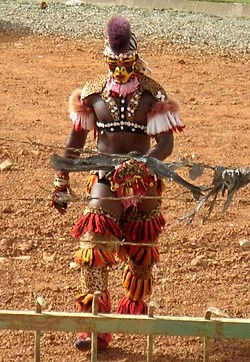
Barely two minutes of drumming carries an entire stretch of West Africa on the record, and the credit does not even bother to name the piece. It appears simply as ‘Senegal, percussion,' recorded by Charles Duvelle. Duvelle was a French pianist turned ethnomusicologist who, in 1957, founded the field-recording label Ocora with Pierre Schaeffer – the composer who had recently invented musique concrète by splicing recorded sound into music in a Paris studio.
There is a tidy contrast buried in that partnership. Schaeffer assembled music out of captured noise on a workbench; Duvelle spent two decades hauling a tape machine through villages in Senegal, Niger, Chad, and Benin, recording music that already existed and needed no studio at all. He once described himself, with some accuracy, as a westerner with a microphone.
The track is layered hand drumming with a reed flute threading through it, urgent and plainly built for dancing. It is among the few selections a first-time listener registers immediately as music rather than ritual, which says less about the drummers of Senegal than about how thoroughly West African rhythm has worked its way into everything the rest of the planet now plays. Schaeffer built his music in a studio. Duvelle found his already finished. The second kind is the one that ended up in space.
Mbuti Girls’ Initiation Song

In the Ituri rainforest of central Africa, when a Mbuti girl reaches puberty, her camp holds a celebration called the elima: weeks of singing in which the girls withdraw to a special hut and the whole community joins in. The Voyager record carries fifty-six seconds of one such song, which makes it among the shortest things aboard.
The recordist was Colin Turnbull, a British-American anthropologist whose 1961 book The Forest People brought a wide readership to the Mbuti and their world. Turnbull argued, against the standard view of his day, that the Mbuti were not dependent servants of their farming neighbors but a self-sufficient forest people with a religion built around the forest itself – a living presence they believed could be sung awake when it slept. The elima songs belong to that belief. They are made less for an audience than for the trees.
The record’s sleeve calls the place Zaire, the name the country held from 1971 to 1997; it is now the Democratic Republic of the Congo. A song the Mbuti sing to keep their forest awake is now drifting through a place with no forests at all, farther from the Ituri – farther from anything green – than any living thing has ever been.
Morning Star and Devil Bird

Three Yolngu men – Djawa, Mudpo, and Waliparu – gathered one night in 1962 at the Milingimbi mission in Arnhem Land to sing for an Australian recordist named Sandra Le Brun Holmes. None of the three is credited on the Voyager record. The sleeve lists only Holmes, and dates the session to 1958 – four years before she first set foot on Milingimbi, by her own account.
The two songs are ‘Morning Star’ and ‘Devil Bird.' The first draws on the Yolngu tradition of Barnumbirr, the creator-spirit identified with the planet Venus, who rises before dawn trailing a feathered string that ties the living to the island of the dead. The ceremony she governs is a mortuary rite. The Morning Star pole, strung with feathers, is still carved and danced in Arnhem Land today. These were not the songs of a vanishing culture, whatever the 1977 framing implied: in 1962, Yolngu communities were fighting mission policy and mining encroachment under an assimilation regime that denied them fair wages, and their descendants are fighting versions of it still.
There is a neat symmetry to the choice, though nobody seems to have planned it. A song about the Morning Star is now itself a point of light moving through the dark, far past the planet it was named for.
El Cascabel
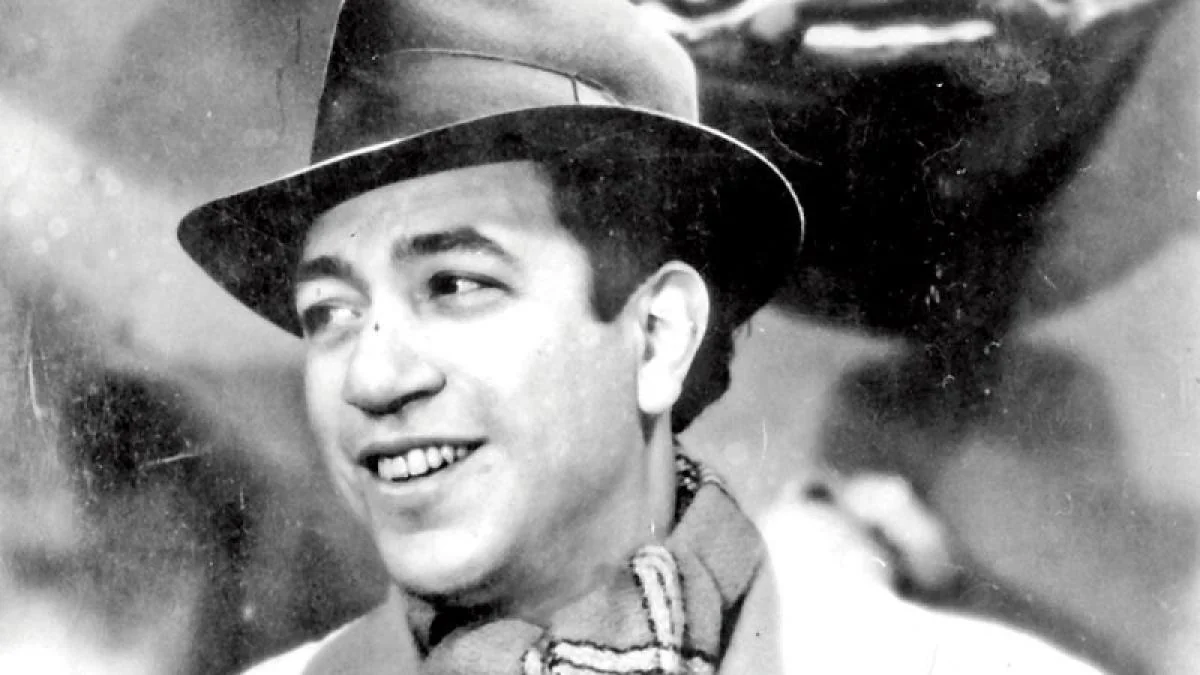
‘Cascabel’ can mean a sleigh bell, a jingle bell, or the rattle on the end of a rattlesnake, which lends this bright Mexican son jarocho a faint menace its melody never cashes in. The style comes from Veracruz, on the Gulf coast – the same tradition that produced ‘La Bamba.' It is the only mariachi recording and the only song in Spanish on the entire record, which leaves it as the lone musical ambassador for several hundred million people.
The credit is a small tangle. The sleeve reads ‘performed by Lorenzo Barcelata,' but Barcelata, a composer and actor from Tlalixcoyan, Veracruz, died in 1943 and wrote the song rather than sang on this recording, which is usually attributed to Antonio Maciel and Los Aguilillas with the Mariachi México de Pepe Villa. It is the kind of slip that happens when a small committee tries to catalog the planet’s music against a hard deadline.
Son jarocho is dance music, driven by small guitars, a harp, and a stamping wooden platform called a tarima. Almost none of that survives a trip of billions of miles as anything but an abstract pattern of bumps cut into metal. The committee sent it anyway, on the sound theory that joy is worth trying to translate.
Johnny B. Goode
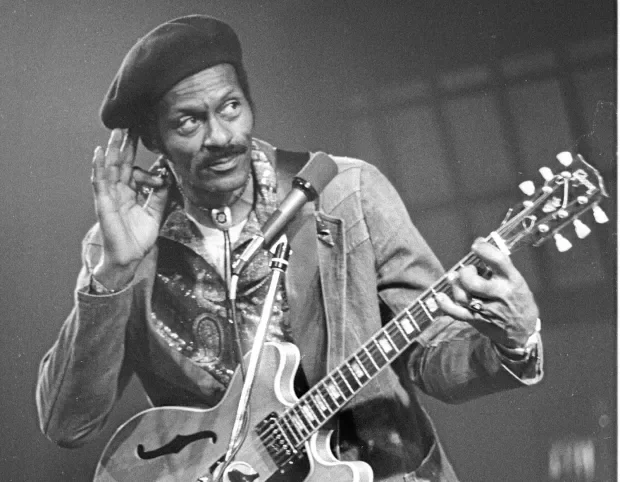
Rock and roll almost did not make it aboard. Alan Lomax, the committee’s own folklorist, dismissed the genre as adolescent and argued against putting a single example of it on the record; Carl Sagan, who had needed convincing himself, became its defender. What survived the fight was Chuck Berry’s ‘Johnny B. Goode,' recorded in 1958 – the lone piece of rock and roll on a disc otherwise built from Bach, Beethoven, and folk traditions thousands of years old.
Berry was 31 when he cut it, a former cosmetology student and reform-school alumnus from St. Louis, and the song’s barely literate guitar prodigy was a thinly disguised self-portrait. He would not have his only number-one hit until 1972, with the novelty song about his ding-a-ling, which is its own comment on American taste.
The choice also produced the best joke the Voyager project ever inspired. In 1978, the year after launch, a Saturday Night Live sketch had Steve Martin reveal the first message received from the aliens who found the record. He held up a mock Time cover. It read: ‘Send more Chuck Berry.' NASA’s Jet Propulsion Laboratory still recounts the gag on its official website, which is not a courtesy it extends to Beethoven.
New Guinea Men’s House Song

Across much of New Guinea, the men’s house is the center of village life – a structure where initiated men gather, where sacred flutes and ancestral relics are kept, and which women and uninitiated boys are forbidden to enter. The song chosen to represent that institution runs eighty seconds and was recorded by Robert MacLennan.
Beyond his name, the trail goes cold. The record does not say which people sang it, in which of New Guinea’s 800-odd languages, or what the song was for – an initiation, a death, an ordinary night in the house. The same committee that could name the conductor, orchestra, and recording venue of every European selection on the disc could manage only ‘New Guinea, men’s house song.' The fully labeled music of European concert halls and the unlabeled music of a New Guinea men’s house now travel side by side at the same speed, indistinguishable to the void.
That gap is its own portrait of 1977. A song survives out past the edge of the solar system that almost no one left on Earth can identify, sung by men whose names were never written down, about matters the men’s house does not share with outsiders in the first place. The aliens, at least, will not pry.
Tsuru no Sugomori (Crane’s Nest)
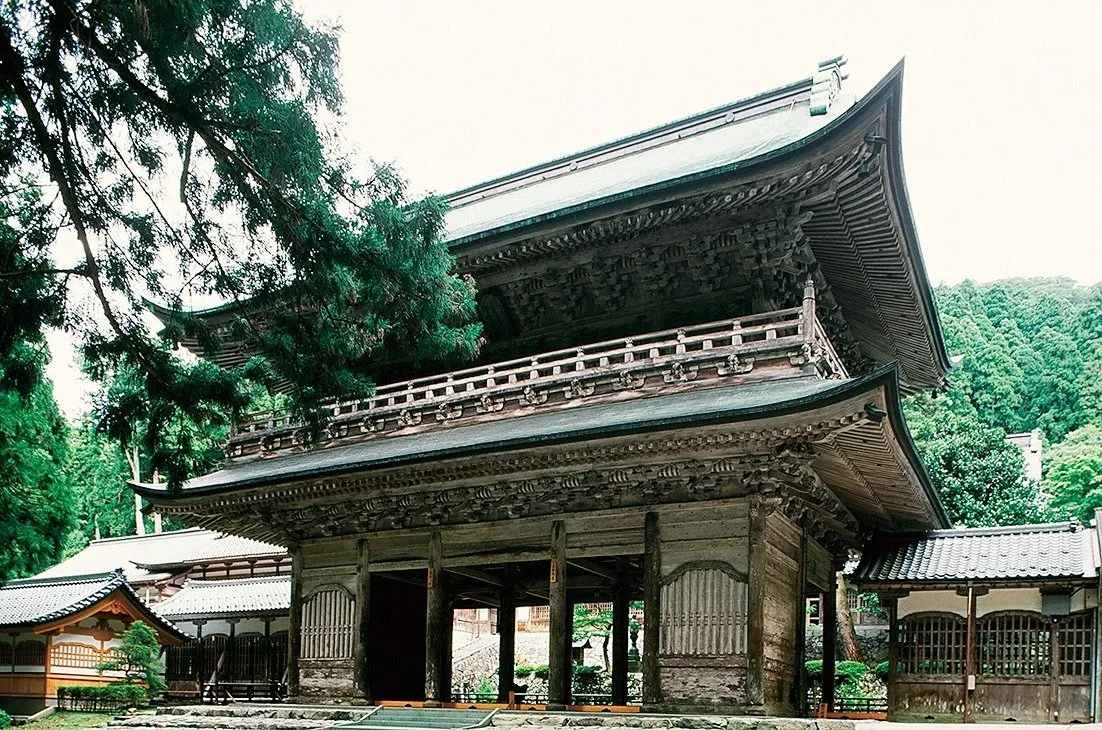
A shakuhachi is a length of bamboo with five finger holes, and in the hands of a master it can sound like wind, like breath, or – here – like a pair of cranes calling over their nest. ‘Tsuru no Sugomori,' the Crane’s Nest, is a honkyoku: one of the solo pieces handed down by the komuso, the wandering Zen monks who treated the flute as an instrument of meditation rather than entertainment. Some played with woven baskets pulled over their heads, the better to blot out the self.
The player is Goro Yamaguchi, and the recording was lifted from a Nonesuch album he made while in residence at Wesleyan University in Connecticut in the late 1960s. Yamaguchi was a master already. His own government did not formally name him a Living National Treasure until 1992, which means a recording deemed fit to introduce Earth to the universe in 1977 was made by a man Japan would not certify as a national treasure for another fifteen years.
The piece imitates the birds without ever quite sounding like imitation – the silences between the notes do as much work as the notes. Sagan’s committee, whatever it got wrong elsewhere, plainly had the better ear here.
Bach, Gavotte en rondeaux (Partita No. 3)
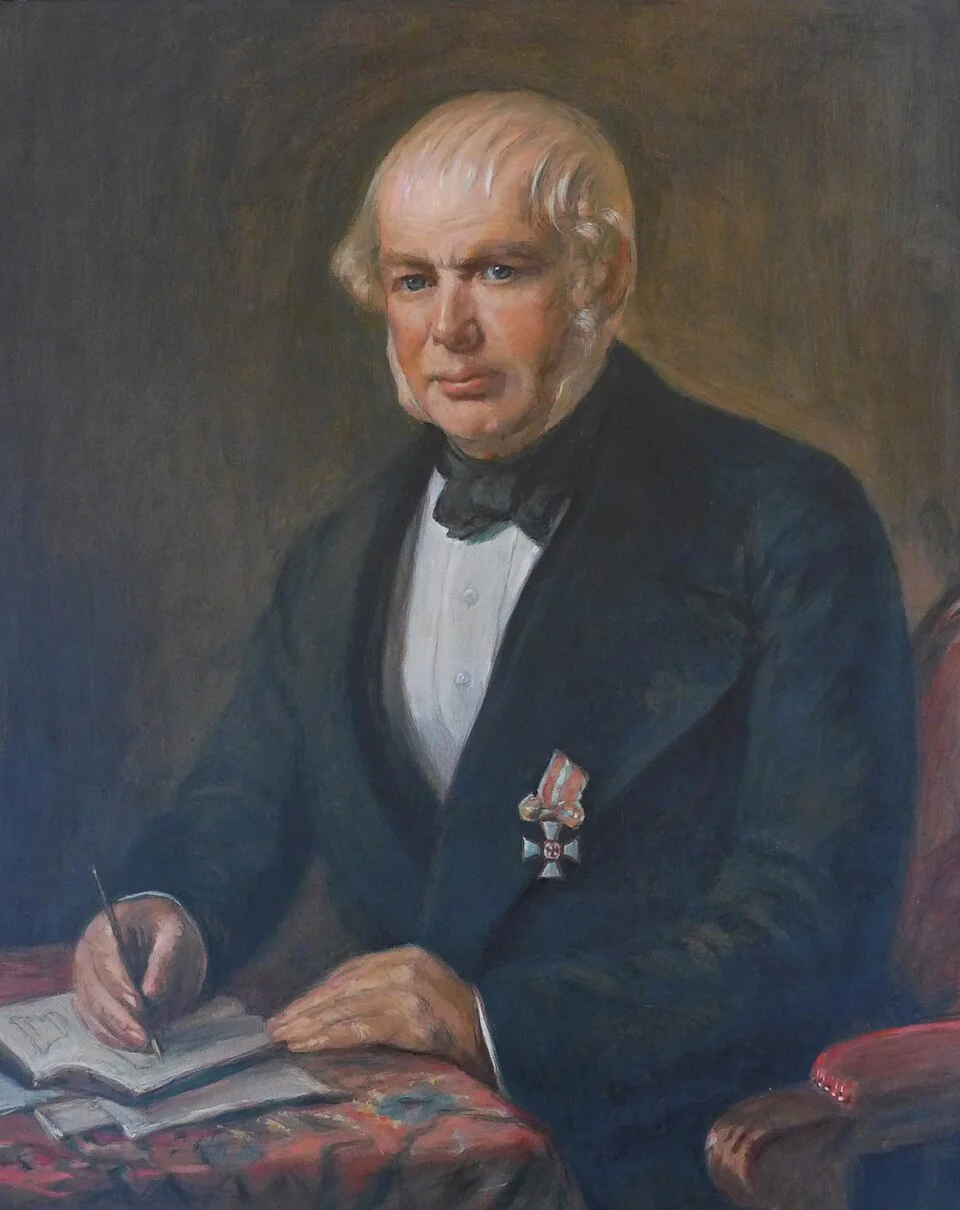
Six works for unaccompanied violin sit near the summit of what the instrument can do, and Bach gave the set a curious title: Sei Solo. In correct Italian that should be sei soli, six solos; what he actually wrote translates as ‘you are alone.' Whether the slip was deliberate has been argued for centuries, but it suits a record drifting by itself through empty space better than anyone in 1977 could have intended.
The second of the disc’s three Bach pieces is the Gavotte en rondeau from the Partita No. 3 in E major, a dance movement whose cheerful refrain keeps circling back five times like a tune that cannot quite let go of you. The performer is Arthur Grumiaux, a Belgian violinist who was born to a working-class family in 1921 and put on the instrument at the age of four. He recorded the complete sonatas and partitas in 1961, playing with a clean, unforced tone that never tries to make the music sound harder than it is.
What carries is the sound of one person alone producing melody and harmony at once, no orchestra, no accompaniment, a single set of strings standing in for a whole consort. Of everything humanity chose to send, this is the piece that most resembles the spacecraft carrying it. One voice. No company. Going anyway.
Mozart, Queen of the Night Aria
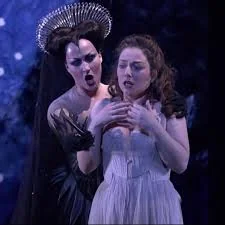
Humanity’s sample of Mozart is an aria in which a mother places a knife in her daughter’s hand and orders her to commit a murder. ‘Der Hölle Rache’ – ‘Hell’s vengeance boils in my heart’ – is the Queen of the Night’s second-act showpiece from The Magic Flute, premiered in 1791, in which the Queen threatens to disown her daughter Pamina unless she kills the priest Sarastro. It is gorgeous, and it is about coerced assassination, and almost nobody listening notices the second part.
The aria is famous for a reason beyond its plot: it climbs to a high F, near the absolute ceiling of the operatic soprano range, a note most sopranos never attempt in public. The voice on the record belongs to Edda Moser, recorded with the Bavarian State Opera under Wolfgang Sawallisch. Hers is one of the most admired versions ever recorded, the staccatos snapping like sparks.
There is a quiet sadness in Moser’s place on the disc. Her encyclopedia entry lists, as the achievement she is best known for, this recording on the Voyager Golden Record. It is the performance of her life, and it is hurtling through interstellar space at a remove no concert hall could ever match, where the odds of a single listener in the next billion years round comfortably down to zero.
Tchakrulo (Georgian Chorus)

Before the committee would put this Georgian chorus on the record, it needed to know what the men were singing about. Tim Ferris, who produced the record, worried in print that the song ‘could have celebrated bear-baiting’ for all anyone on the team knew. So they found a Georgian speaker living in Queens, Sandro Baratheli, and had him translate the lyrics. ‘Tchakrulo’ turned out to be a peasants’ protest against a cruel landlord – safe, as it happened, for broadcast to the universe.
The word itself means something like ‘tied up’ or ‘tough,' and the song is a feat of Georgian polyphony – three independent vocal lines moving against one another, a tradition UNESCO would later name a masterpiece of human heritage. Georgian singing is among the oldest polyphonic music on Earth, and one listen to the interlocking drone beneath the soaring top line explains why Lomax fought to include it.
It is one of two recordings on the disc credited simply to Radio Moscow, a reminder that this was a Cold War artifact as much as a scientific one. American scientists reached behind the Iron Curtain for a Soviet recording of a Georgian protest song, vetted it through a man in Queens, and fired it out toward the stars. The landlord, presumably, remains unavenged.
Peruvian Panpipes and Drum

Two players, each holding half the notes, are needed to perform a single melody on the Andean panpipes. The instrument, called the siku, comes in two interlocking halves: one player has the notes the other lacks, so a tune emerges only when the pair trade breaths back and forth, fast, in a technique musicians call hocket. Neither person can play the melody alone. It is built, from the reeds up, to require company.
The Voyager track pairs these panpipes with a drum and runs just fifty-two seconds, collected by the Casa de la Cultura in Lima. The siku predates the Inca, and archaeologists have turned up ancient panpipes tuned to scales unlike anything played today. There is even a practical genius to the two-player design: by alternating who blows, the musicians can keep a melody going for an hour without anyone getting lightheaded from overbreathing.
It is a strange and lovely thing to have sent. A species capable of Beethoven’s Fifth, with its scores of players bent to one composer’s will, also makes music that a lone virtuoso physically cannot perform – music that exists only when two people agree to make it together. If the aliens are paying attention, that may be the more useful thing to know about us.
Louis Armstrong, Melancholy Blues
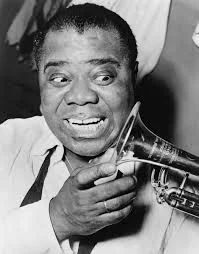
Jazz appears exactly once on the record, in a recording by a band that lasted about a week. Louis Armstrong and his Hot Seven came together in a Chicago studio in May 1927, an expansion of his usual Hot Five by two players, and over roughly five sessions in eight days they cut about a dozen sides that helped invent modern jazz. Then the band dissolved. ‘Melancholy Blues,' recorded on May 11, was one of those sides.
Within that week’s work, Armstrong did something that reshaped most of the music that followed: he turned the improvised solo into the center of a performance, the soloist as individual artist rather than one voice in a collective. Nearly everything built on a star instrumentalist stepping out front owes a debt to those 1927 sessions. On piano was Lil Hardin Armstrong, his wife, who had pushed his career forward when he was too modest to push it himself.
Of the disc’s three popular selections, all three are by Black American artists, which the committee did not announce but which is hard to miss. Armstrong is the jazz. It is fitting that the music chosen to show the universe how humans improvise was made by the man who, more than anyone, taught humans to do it on record.
Azerbaijani Balaban
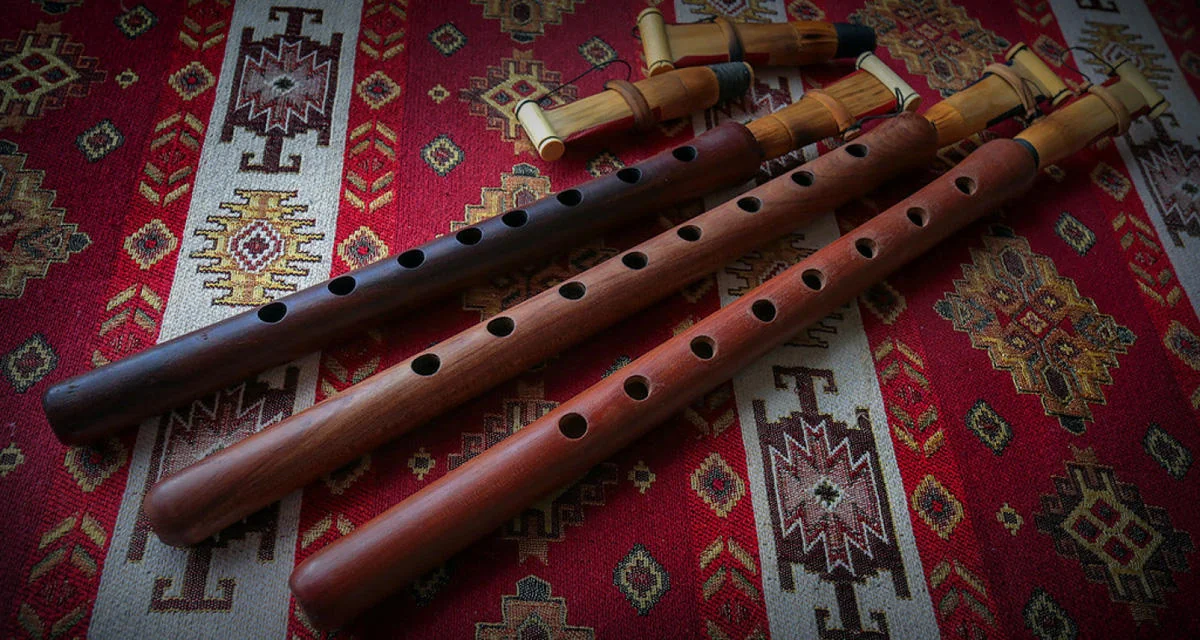
Listed on the record’s sleeve as bagpipes, the Azerbaijani selection is nothing of the kind. The instrument is a balaban: a short double-reed pipe, closer to an oboe than to anything with a bag, played across the Caucasus and into Iran and Turkey. What fooled the catalogers was a second player sounding a continuous drone underneath the melody, the way a bagpipe’s drone hums beneath its chanter. To an ear expecting Scotland, that is enough.
It is a small error with a long life ahead of it. The mistake was carried straight from the recording, supplied by Radio Moscow, onto the golden sleeve, and from there into more than four decades of articles repeating that Azerbaijanis play bagpipes. Even Carl Sagan, writing about the record afterward, passed the word along. The correction exists, but it travels at the speed of footnotes; the original travels at the speed of a spacecraft.
The balaban’s tone is mournful and reedy, an unhurried sound that has accompanied weddings and funerals in Azerbaijan for centuries. There is a fair chance that the first thing an alien civilization ever learns about this instrument is the wrong name for it, lifted from a label written in a hurry in 1977. We will not be around to correct them. The drone, at least, will carry the truth.
Stravinsky, The Rite of Spring (Sacrificial Dance)
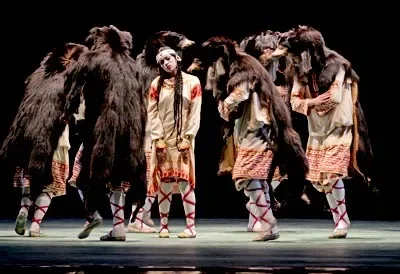
When the music on this track had its premiere in Paris in May 1913, the audience came to blows. The Rite of Spring opened at the Théâtre des Champs-Élysées with Nijinsky’s jolting choreography and Stravinsky’s pounding, dissonant score, and within minutes the crowd was shouting, whistling, and trading punches in the aisles; the police arrived at intermission. The piece depicts a pagan Russian rite in which a young girl is chosen and made to dance herself to death.
The Sacrificial Dance is that death, the ballet’s violent final section. What makes its place on the record singular is the conductor: the recording is led by Stravinsky himself, with the Columbia Symphony Orchestra. He is the only composer on the entire disc who also performs his own work, which means humanity sent the cosmos not just his music but his own reading of it.
There is a long arc folded into those few minutes. A piece once thought so ugly that listeners physically fought over it is now widely treated as one of the foundations of modern music, and the man who wrote it lived long enough to conduct it for an audience he would never see and could not imagine. The brawl in Paris lasted an evening. The recording will outlast the theater, the city, and very likely the species.
Glenn Gould, Well-Tempered Clavier (Prelude and Fugue in C)

Listen closely to the piano on this track and you can hear a second sound underneath it: a man humming along with himself. The man is Glenn Gould, and the humming, which he could never suppress and which engineers spent years trying to keep off his records, rode all the way into space with the music. It is the only human voice on the disc that nobody put there on purpose.
Gould was a Canadian who became, on the strength of his Bach, one of the most famous pianists alive, and then, at 31, walked away from concerts entirely. He gave his last public performance in 1964 and spent the rest of his life in the recording studio, convinced that the concert hall was a relic and that the microphone was the future. He played hunched over a battered low chair his father had built him, in heavy coats, in summer.
So the keyboard music representing humanity to the universe is performed by a man who spent half his career refusing to play for a live audience. The Prelude and Fugue in C, from the second book of The Well-Tempered Clavier, is among the most serene things on the disc. Somewhere past the heliosphere, Gould is still humming to a room with no one in it. He would have approved.
Beethoven, Fifth Symphony (First Movement)
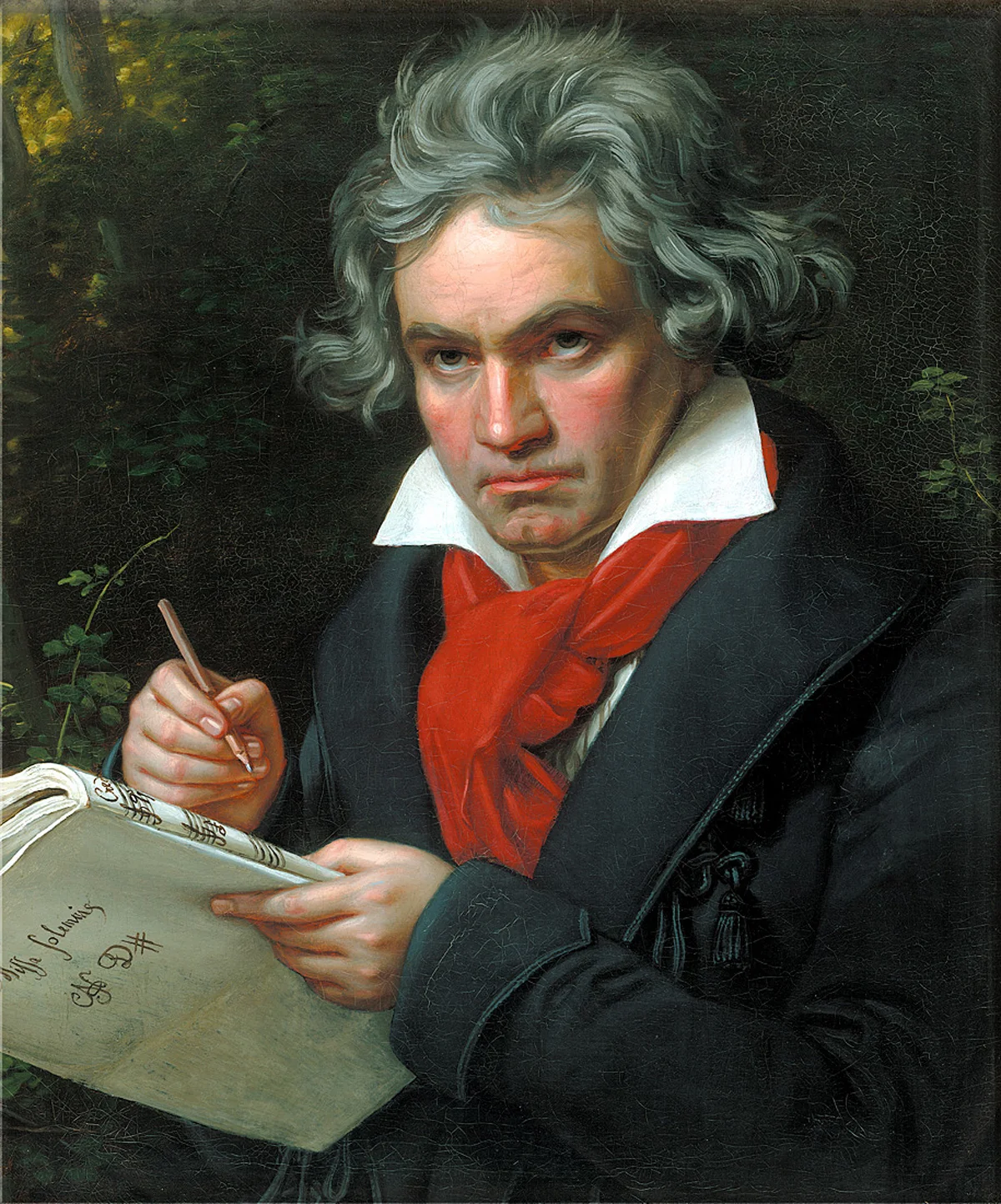
On a freezing night in Vienna two days before Christmas in 1808, the most recognizable four notes in all of music had one of the worst premieres imaginable. Beethoven staged a four-hour benefit concert of nothing but his own new work – the Fifth and Sixth Symphonies, the Fourth Piano Concerto, and more – in an unheated theater, with an under-rehearsed pickup orchestra, conducting it himself while well into the deafness that would soon be total. At one point the performance fell apart so badly that he had to stop the players and start a piece over.
Out of that shambles came the short-short-short-long figure that now opens the first movement, four notes so familiar that they survive being hummed by people who have never knowingly heard a symphony. The recording on the disc is by the Philharmonia Orchestra under Otto Klemperer, and at seven minutes and twenty seconds it is among the longest stretches of music humanity sent into space.
There is something apt about that length. Of everything on the record, this is the piece most willing to take its time, to insist, to repeat itself until the point is unmissable. A composer losing his hearing wrote music built to be felt as much as heard. It is hard to think of a better thing to send to someone who may not hear the way we do at all.
Bulgaria, Izlel je Delyo Hagdutin

Bulgaria turned a folk singer from the Rhodope Mountains into a national symbol, and it took a spacecraft to do it. Valya Balkanska was born in 1942 in a hamlet near the village of Arda, high in the southern Bulgarian mountains, and had been a soloist with a regional folk ensemble for years when American collectors recorded her singing ‘Izlel je Delyo Hagdutin.' The song is old and unsentimental. It tells of Delyo, a hajduk – a rebel outlaw – who roamed the Rhodopes in the late seventeenth century and sent word to the local Ottoman governors that they were not to forcibly convert his kinswomen to Islam.
So the voice carrying that warning, set against the gaida, the Bulgarian bagpipe, is a voice of defiance, not lament. Balkanska’s delivery is flat-out, open-throated, built to carry across a valley without a microphone.
She is one of the few performers on the entire record who lived to know what had become of her voice. Most of the musicians here were long dead before launch, or recorded anonymously in villages they never left. Balkanska went on to spend decades as the woman whose singing had been fired into the galaxy, a distinction no concert could confer and no rival could touch. Bulgaria, fairly enough, has never quite gotten over it.
Navajo Night Chant
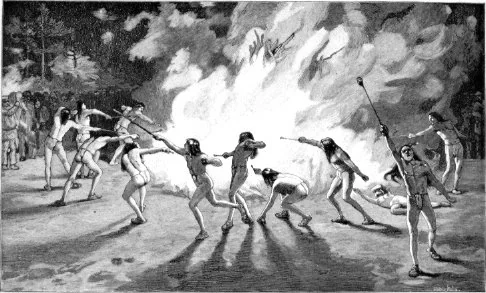
Barely a minute of the golden record is given over to a ceremony that, performed properly, takes nine nights. The fragment is from the Navajo Night Chant, or Nightway, the most sacred healing rite the Navajo have, conducted only in winter and only after dark, when a medicine man works to pull a sick person back into harmony with the world. Masked dancers move as the yei, the Holy People, while sandpaintings are built up in colored sand and then swept away.
What survives on the disc is fifty-seven seconds of it, the high, pulsing falsetto of the Yeibichai dancers, recorded around 1951 by the ethnomusicologist Willard Rhodes during a government program to document Native American music. That a winter-only, night-only sacred rite was captured at all has long unsettled people, and capturing it to be replayed anywhere, anytime, by anyone, sits awkwardly even now.
Set that aside, if you can, and consider what the committee actually sent. This is the only piece on the record whose entire purpose is to heal, to restore order to something broken. They aimed a prayer for harmony at the most disordered, indifferent emptiness there is. It is either the most hopeful gesture on the disc or the most quixotic, and possibly both.
England, The Fairie Round (Holborne)
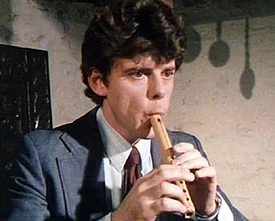
A young Englishman did more than almost anyone to drag medieval and Renaissance music back into earshot, and he was gone before his work ever left the planet. David Munrow founded the Early Music Consort of London in 1967 and, in barely a decade, turned a scholarly backwater into something people actually wanted to hear, on records, on the radio, behind films. His recording of ‘The Fairie Round’ is the oldest piece of European music on the disc by some distance.
The tune is a galliard, a brisk Elizabethan dance, from a 1599 collection by Anthony Holborne, a court musician about whom little else survives. It bounces along on recorders and viols and a tabor, a sound somewhere between a courtly ballroom and a village green – the noise, roughly, of England four centuries ago enjoying itself.
Munrow died in 1976, at thirty-three, a year before the Voyagers carried his playing past the orbit of every planet he had ever seen. He never knew. There is a particular strangeness to that: a man who spent his short life resurrecting the music of people dead for centuries, then sent his own performance out to outlast everyone now living, with no idea it was going. The dead, he might have appreciated, do get around.
Solomon Islands Panpipes

How does the same idea – a row of tuned bamboo tubes, bound side by side and blown across the top – turn up on opposite sides of the planet among people who had no way of meeting? The record does not answer; it just lays the evidence out. Peru’s panpipes appear earlier in the sequence; these come from the Solomon Islands, a scatter of islands in the southwestern Pacific, half a world and a whole ocean away.
Solomon Islanders, especially on the island of Malaita, built panpipe music into something formidable. Ensembles run to ten players at once, each on a different set of pipes, and on big ritual occasions the number can swell toward forty; some pipes are blown, others struck. Behind it lies a body of musical theory as intricate as anything in a European conservatory, except that none of it is written down. It lives entirely in the heads of specialists, passed mouth to mouth, generation to generation.
That is the quiet argument this minute and twelve seconds makes. Two peoples who never knew the other existed each looked at a hollow reed and heard the same possibility. Whatever else is true of human beings, we seem unable to leave a length of bamboo alone without trying to get a tune out of it.
Peruvian Wedding Song
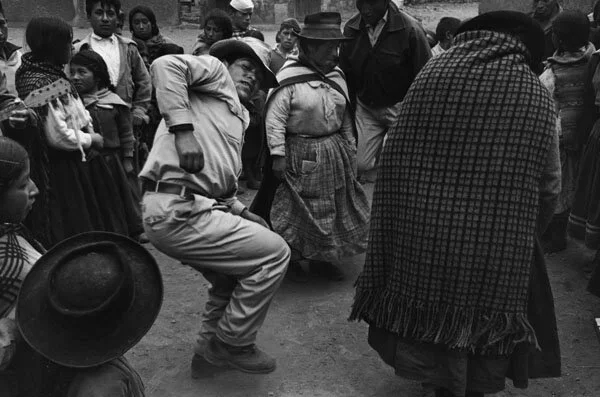
Thirty-eight seconds is the entire length of the shortest piece of music on the record, a wedding song from the high Andes of Peru. It is over almost before it starts: a snatch of voices, a glimpse of a celebration, and then gone. The committee could have trimmed it, or padded the disc with something longer. They let it stand at thirty-eight seconds, which feels right for a fragment of someone else’s wedding overheard from a great distance.
The recording was made by John Cohen, an American better known as a founder of the New Lost City Ramblers, the string band that helped revive old-time American music in the 1950s. Cohen kept traveling to Peru to film and record the Q’eros, a Quechua people of the remote mountains often described as among the last living descendants of the Inca. His album of their music came out on Folkways in 1966.
What an alien would make of a thirty-eight-second wedding song is anyone’s guess. What it says about us is simpler. Somewhere above fourteen thousand feet, in villages reachable only on foot, people who farm the thin air still gather to marry, and still mark the occasion with a song. That, too, is worth knowing about the species, and it took an American banjo player to carry it up the mountain and back.
China, Flowing Streams
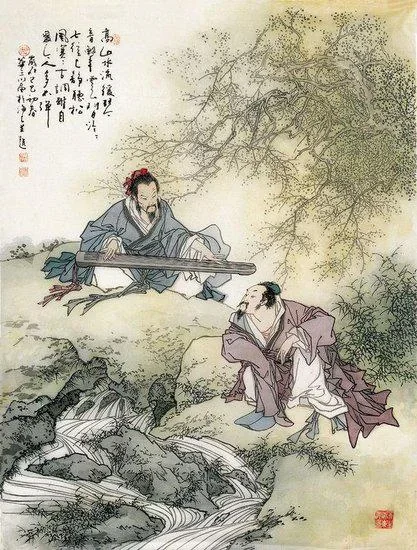
There is a Chinese story, nearly as old as the instrument that tells it, about the only person who ever truly listened. The qin master Bo Ya, it goes, could put high mountains and flowing streams into his playing, but only his friend Zhong Ziqi could hear them there. When Ziqi died, Bo Ya broke his instrument and never played another note, certain he would never again find anyone who understood. The piece on the record, ‘Flowing Streams,' carries that legend in its title.
It is played on the guqin, a seven-string zither that the Chinese have been building and playing for some three thousand years, here in the hands of Guan Pinghu, a twentieth-century master who spent his life reconstructing pieces that had survived only as notation. At seven minutes and thirty-seven seconds, it is the longest single track on the entire record.
The choice is almost too apt to bear. A civilization packs a spacecraft with music and flings it into the dark, hoping that somewhere, sometime, a single listener will catch it and understand. And the longest thing it sends is a melody about a musician who found his one true listener, lost him, and fell silent. We are still playing. We are still hoping for the one who hears it.
India, Jaat Kahan Ho
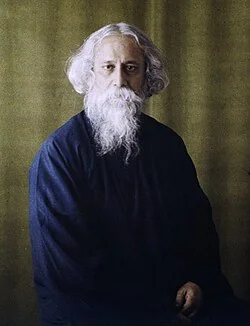
Given the honorific ‘Surshri’ – roughly, ‘queen of melody’ – by the poet Rabindranath Tagore, the singer on this track ranked among the most revered voices India produced in the twentieth century. Kesarbai Kerkar trained for two decades under Ustad Alladiya Khan, founder of the Jaipur-Atrauli gharana, and emerged with a voice of such command that she could afford to be ferociously particular. She distrusted recording, fussed over how her work was represented, and left behind only a handful of 78 rpm discs.
One of those discs holds ‘Jaat Kahan Ho’ – ‘Where are you going, girl?' – a piece in raga Bhairavi, the mode traditionally saved for the very end of a concert. The ethnomusicologist Robert Brown, who advised the committee on world music, called it the finest recorded example of Indian classical singing he knew. It runs three and a half minutes and was set down in 1935. On the record it follows the Chinese qin, one master handing off to another across the Himalayas.
Here is the part that stings. Kesarbai died on the sixteenth of September, 1977, eleven days after the last Voyager lifted off. A singer who policed every pressing of her voice while she lived had it launched past the planets without, almost certainly, ever knowing. The most exacting artist on the record never got to object.
Dark Was the Night, Cold Was the Ground
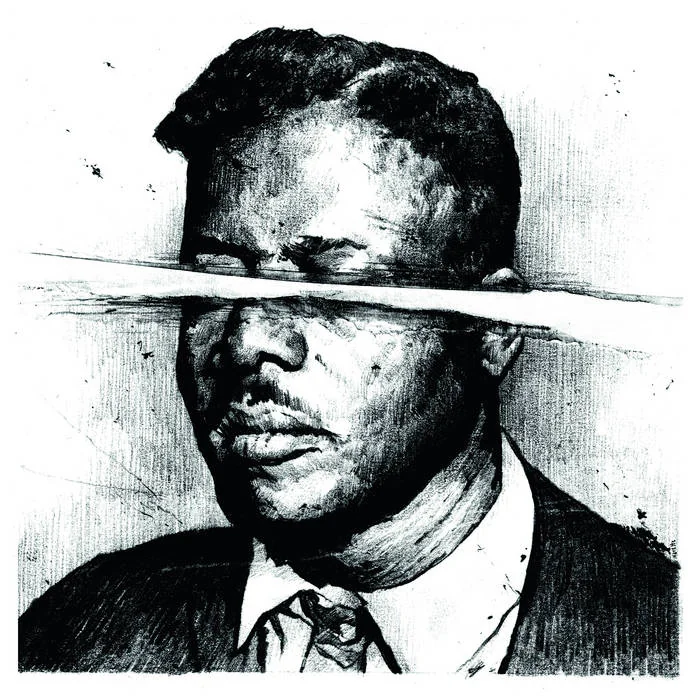
A blind street preacher from Texas recorded the one piece on the record that has no words at all, and it may be the most translatable thing aboard. ‘Dark Was the Night, Cold Was the Ground’ is three minutes of Blind Willie Johnson humming and moaning over a bottleneck slide guitar, which he often fretted with a pocketknife. There is no language to misunderstand, no lyric to lose in translation. Whatever it is communicating, it communicates the same way to everyone, which is exactly the problem the whole record was built to solve.
Johnson cut it in a makeshift Dallas studio in 1927, borrowing the title and bones of an old church hymn. He was a master of the slide who spent his life playing for coins on street corners and in mission halls. He recorded only thirty songs, all between 1927 and 1930, and then more or less vanished.
The end was grim. Johnson’s house burned in 1945, and with nowhere else to go he kept living in the wreckage, fell ill, and died at forty-eight, poor and largely forgotten. His grave went unmarked. The man whose voice now travels farther from Earth than almost any human sound ever made died in the charred ruins of his own home, and the world barely noticed he was gone.
Beethoven, Cavatina (String Quartet No. 13)

The last piece of music on the golden record was written by a man who could not hear it. By the time Beethoven composed the Cavatina, the fifth movement of his String Quartet No. 13, he was completely deaf, working entirely from the music in his head. It is among the most inward things he ever wrote. Over one passage he scrawled a single German word, beklemmt – oppressed, anguished – and the first violin there seems to lose the thread of its own song, stammering as if it cannot quite get the words out.
The man who knew him best left a record of what it cost. Karl Holz, the young violinist who sat near Beethoven in his final years, said the Cavatina was written in tears, and that nothing else the composer made ever moved him so deeply, that merely remembering it brought the tears back. The recording is by the Budapest String Quartet.
Consider where it falls. The committee placed it dead last, humanity’s closing word to whatever finds the disc. And the track just before it is Blind Willie Johnson’s. A blind man, then a deaf man, set side by side as the final two sounds of Earth – one who could not see the stars he was sent toward, one who could not hear the farewell he became. We could not have chosen better if we had tried for a thousand years, and we did not even mean to.
Frequently Asked Questions
Is “Here Comes the Sun” by the Beatles on the Voyager Golden Record?
No. That song, “Here Comes the Sun,” was left off the record. Carl Sagan wrote that the Beatles were willing but did not hold the copyright and the legal status looked too risky; the producer Timothy Ferris later said it was never seriously considered for the disc.
What is the only rock and roll song on the Voyager Golden Record?
Chuck Berry’s “Johnny B. Goode,” recorded in 1958, is the only rock and roll track aboard the Voyager Golden Record. Folklorist Alan Lomax dismissed rock as adolescent music and argued to keep it off; Sagan, who had needed persuading himself, became its defender. Nothing else on the disc comes from the rock era.
What else is on the Voyager Golden Record besides music?
Besides the 27 pieces of music, each record holds 115 encoded images, spoken greetings in 55 languages, natural sounds from surf and thunder to whale song, and about a minute of compressed brainwaves from creative director Ann Druyan, recorded soon after she and Carl Sagan had fallen in love.
How far from Earth is the Voyager Golden Record now?
Both records ride the Voyager spacecraft, and Voyager 1, the farther of the two, is now roughly 16 billion miles away and still climbing – the most distant human-made object there is. Around November 2026 it becomes the first craft a full light-day from Earth, so a radio command takes 24 hours to reach it.
What are the shortest and longest pieces of music on the record?
The shortest is a Peruvian wedding song, thirty-eight seconds long, recorded high in the Andes by John Cohen. The longest is “Flowing Streams,” seven minutes and thirty-seven seconds of Chinese guqin played by Guan Pinghu. Between them sit twenty-five other pieces, most well under five minutes.
What is the last piece of music on the Voyager Golden Record?
Beethoven’s Cavatina, the fifth movement of his String Quartet No. 13, closes the record, performed by the Budapest String Quartet. Beethoven was completely deaf when he wrote it, and it sits directly after Blind Willie Johnson’s wordless blues, pairing a man who could not hear with one who could not see.
- Smithsonian Folkways – Navajo: Night Chant (Music of the American Indians of the Southwest)
- John Thompson, silkqin.com – Liu Shui (Flowing Streams) and the Bo Ya legend
- The Paris Review – Dark Was the Night: On the Voyager Mission
- The Heifetz Institute – Beethoven’s Cavatina, the record’s final track