Every Early Influence Inductee of the Rock and Roll Hall of Fame
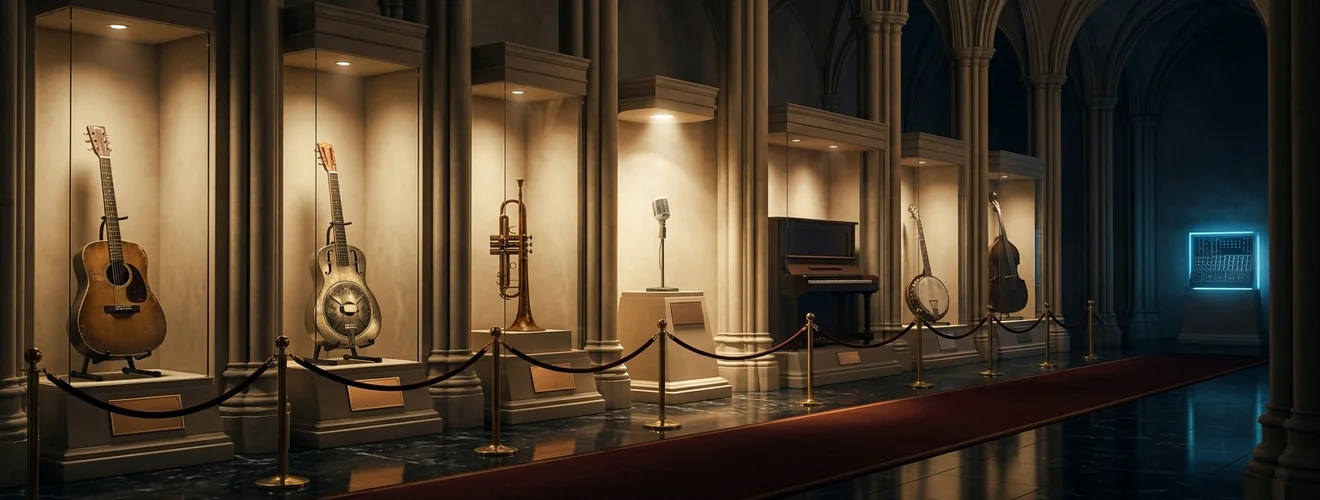
Robert Johnson had been dead for forty-eight years when the Hall of Fame put him in its founding class of 1986 – not through the Performer wing, but by way of a separate honor reserved for the ancestors. The Early Influence Award existed to canonize the people rock descended from: Delta bluesmen, boogie-woogie pianists, gospel and jazz singers, and one yodeling railroad brakeman.
For decades the label fit. Then the influences stopped being early. When a German electronic quartet whose influence points forward – to techno and hip-hop, rather than backward past Elvis – came in through this door, the name was already straining. Two years later the category claimed the Bronx DJ who set hip-hop running, and the Hall gave in, rebranding the honor as the Musical Influence Award. That lasted three ceremonies. In April 2026, with no more fanfare than it had spent on the rechristening, the Hall put the original name back.
The name is cosmetic; the roster is the point. Everyone the award has actually gone to, whichever title was on it at the time, appears on this list in order of induction. The class announced for 2026 does not – its members remain honorees-in-waiting until the Hall tapes its ceremony this November, and this list will grow again the moment the taping makes it official.
The Rock Hall has given its Early Influence Award to 45 inductees between 1986 and 2025. It is one continuous honor with two names: from 2023 to 2025 it was presented as the Musical Influence Award. Every recipient, under either name, is a full member of the Hall of Fame.
Robert Johnson
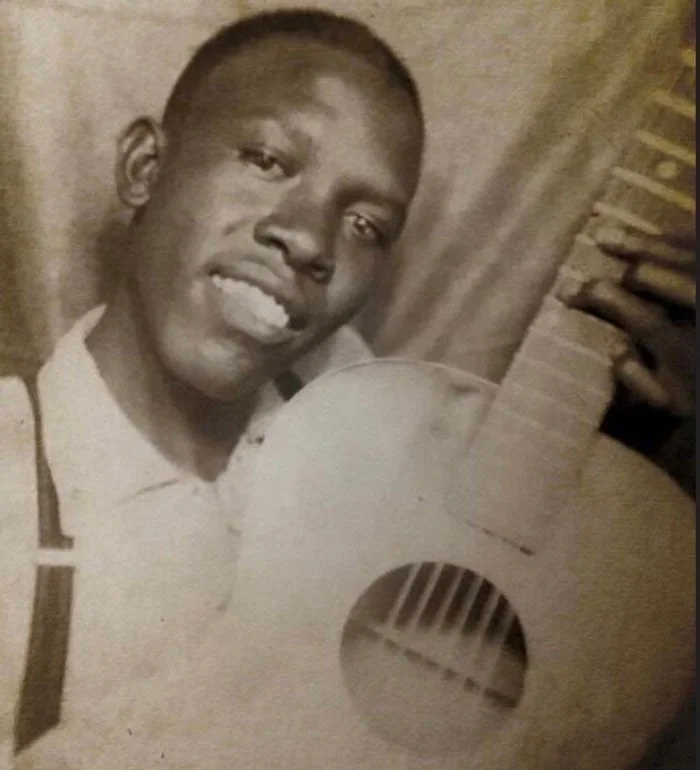
Twenty-nine songs are the entire recorded legacy of the man the Rock Hall now calls, with a straight face, perhaps the first rock star. He cut them over five days in two sessions – a San Antonio hotel room in November 1936, a Dallas office building the following June – for a producer named Don Law, who sat him facing into a corner for the acoustics. Of the twenty-nine, only ‘Terraplane Blues’ sold in any real quantity while he was alive. He was dead by August 1938, poisoned near Greenwood, Mississippi, at twenty-seven, most likely over another man’s wife.
The legend that he met the devil at a crossroads and traded his soul for the guitar has done him a quiet disservice, because the truth is the better story. His chord shapes were stranger than anything the players around him were attempting, and he could hold down a bassline and a melody at once on a single guitar, as if the room contained two of him. Hardly anyone noticed while it mattered.
What rescued him was a 1961 Columbia album, ‘King of the Delta Blues Singers,' assembled from those worn 78s more than twenty years after he died. Clapton, Dylan, Richards, and the Stones built careers on it. Exactly two photographs of him are known to exist – which, for a man who reset the course of the century’s music, is a strange and slender record to leave behind.
Jimmie Rodgers
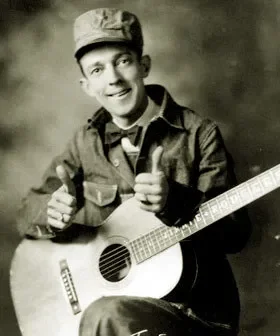
Tuberculosis was killing him by inches as he cut his final records, which he sang propped on a cot in the studio, resting between takes because he no longer had the breath to stand through a whole song. He died two days after that last session, in May 1933, in a New York hotel, at thirty-five. The disease had driven him off the railroad years before, which is how a brakeman from Meridian, Mississippi, came to invent the job of country music star.
He is the reason the genre took the shape it did. His blue yodels – thirteen of them, numbered like chapters – welded Black blues he had picked up trackside to a white hillbilly delivery, and ‘Blue Yodel No. 1 (T for Texas)' sold over half a million copies at a time when half a million was a fortune. In July 1930 he recorded ‘Blue Yodel No. 9’ in Los Angeles with a trumpeter the label would not name.
The trumpeter was Louis Armstrong, with his wife Lil on piano. For years the country and jazz worlds both declined to quite admit the session had happened – the 78 read only ‘Jimmie Rodgers, singing with orchestra’ – and historians were not even certain the horn was Armstrong’s. Armstrong had no doubt at all. He kept telling the story until the day he died.
Jimmy Yancey
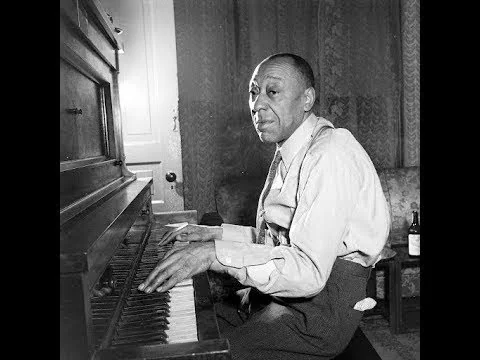
For roughly twenty-five years his steady job was tending the grass at Comiskey Park, home of the Chicago White Sox, work he kept from 1925 until shortly before he died. The piano was the sideline – if a man can have a sideline that quietly founds a school of music. Yancey was playing Chicago boogie-woogie at rent parties before 1920, and the pianists who studied him, among them Meade Lux Lewis and Albert Ammons, all became famous, and all got onto records, before he ever did.
His own first recordings did not come until 1939, by which point Lewis had already scored with a number called ‘Yancey Special,' built on the older man’s spare, rolling left hand. He had one unmistakable signature: whatever key a piece started in, he ended it in E flat, which gives the records some genuinely odd landings, each tune touching down somewhere it clearly had not planned to go.
He had danced at Buckingham Palace as a child performer and played outfield for a Negro league team before the ballpark hired him, and he stayed there to the end – a foundational American musician drawing a paycheck for raking an infield. The Hall put him in its very first class in 1986. The White Sox, by every account, never thought to make anything of it.
Louis Jordan
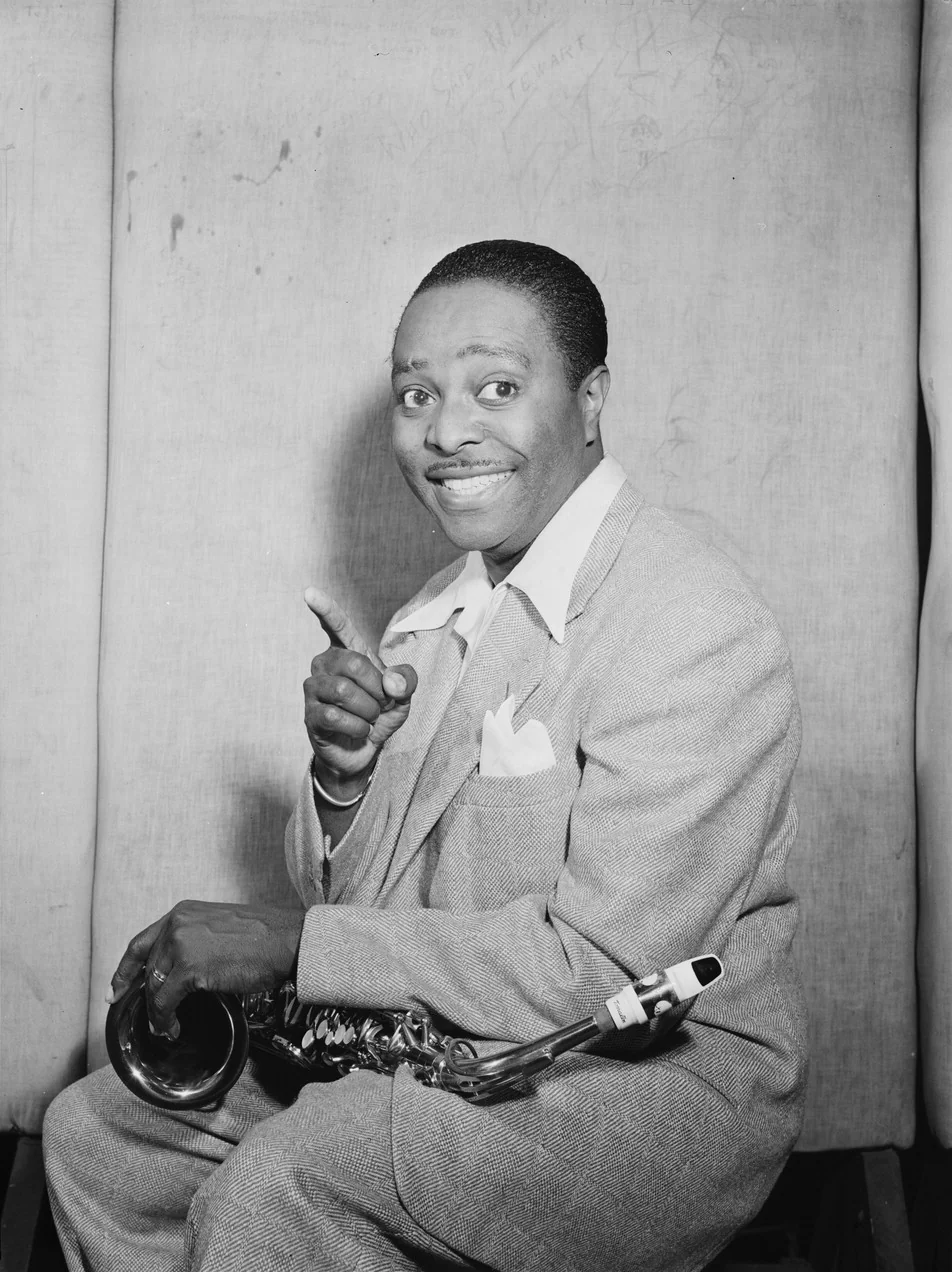
His band was called the Tympany Five and usually held seven or eight men, which is a fair warning not to trust the arithmetic of band names. The arithmetic that mattered was rhythmic. Jordan pared a swing orchestra down to a small, hard-driving combo, gave the backbeat room to breathe, and more or less invented the sound – jump blues – that rock and roll would walk straight out of. Between 1943 and 1950 his singles spent a combined 113 weeks at number one on the R&B chart, better than two years at the top, collected in pieces.
They called him the King of the Jukebox because the machines were packed with him: ‘Caldonia,' ‘Choo Choo Ch’Boogie,' ‘Ain’t Nobody Here but Us Chickens,' ‘Saturday Night Fish Fry’ – the last carrying a distorted electric guitar a full decade before anyone thought to be scandalized by the sound.
Chuck Berry took the template nearly whole. The famous opening lick of ‘Johnny B. Goode’ is lifted, almost note for note, from the intro to Jordan’s ‘Ain’t That Just Like a Woman,' played by Jordan’s guitarist Carl Hogan. Rock and roll’s defining guitar phrase was already sitting in a jukebox in 1946. Everyone borrows from someone. Berry simply had the taste to borrow from the best.
T-Bone Walker
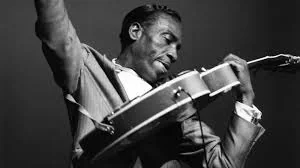
As a boy in Dallas he worked as a lead boy for Blind Lemon Jefferson, steering the blind guitarist from one beer joint to the next and passing the cup while the older man played for tips. Jefferson was a family friend and the apprenticeship was total. By the time Aaron Thibeaux Walker had a stage of his own, he had absorbed not only the music but the conviction that a blues performance is also a show.
He electrified the blues guitar years before the men usually given the credit. He was already bending amplified notes in Los Angeles clubs in the late 1930s, and his 1947 record ‘Call It Stormy Monday (But Tuesday Is Just as Bad)' is the song that made a twenty-two-year-old B.B. King set down his acoustic and pick up an electric. King said so for the rest of his life.
The showmanship traveled even further than the sound did. Walker played the guitar behind his head and dropped into full splits without dropping a note, and Chuck Berry’s duck walk and Jimi Hendrix’s behind-the-back theatrics are both downstream of a man doing the splits in a Texas dance hall in the 1930s. Half of what we now call electric guitar – the noise of it and the spectacle of it – was finished business before rock and roll had a name.
Hank Williams
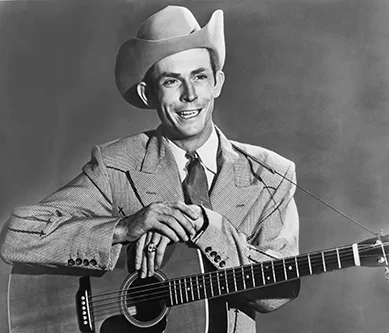
He kept a second name for the songs too solemn to deliver as himself. As Luke the Drifter he cut the recitations and gospel numbers – the moralizing material a honky-tonk star could not be seen singing – and released them under the alias so jukebox operators would not stock them by mistake. It is a small thing that says a great deal about how carefully he managed a persona the drinking would eventually wreck.
The arc is brutally short. The Grand Ole Opry greeted his debut in June 1949 with six encores; it fired him three years later, in August 1952, for turning up drunk or not turning up at all. He had been born with spina bifida occulta and lived in real, constant back pain, which he treated with morphine and whiskey in combinations that were never going to end well. He wrote ‘Your Cheatin’ Heart,' ‘Hey Good Lookin’,' and ‘I’m So Lonesome I Could Cry’ anyway, across a career that ran about six years.
He died in the back seat of his powder-blue Cadillac in the small hours of New Year’s Day 1953, somewhere in West Virginia, on the way to a show he never reached. He was twenty-nine. His son Hank Williams Jr. had already stood on this Hall’s stage a full year earlier, inducting Jerry Lee Lewis in the very first class. The father came in second.
Woody Guthrie
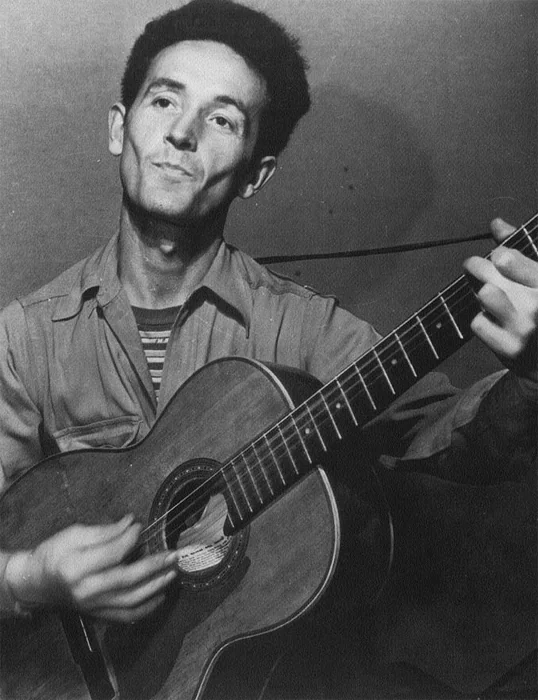
The sticker on his guitar read ‘This Machine Kills Fascists,' which sounds like a pose until you remember he meant it flatly and spent his life acting on it. He wrote somewhere upward of a thousand songs – the number usually thrown around is three thousand – about migrants and strikes and dust storms and the people the Depression had stepped over.
‘This Land Is Your Land,' the song every American child is taught, began in February 1940 as an annoyed reply to ‘God Bless America,' which Guthrie found smug and was hearing on the radio far too often. The melody he lifted from an old Carter Family tune. The original lyric had two verses that almost nobody sings now – one about a wall marked Private Property that had nothing at all on the far side, one about hungry people lined up outside a relief office. The patriotic singalong is that song with its teeth removed.
He cut the Dust Bowl Ballads, arguably the first concept album, and recorded for a time for the Library of Congress at Alan Lomax’s urging. Then Huntington’s disease, inherited from his mother, took him apart slowly across more than a decade in hospital, and a young Bob Dylan made the pilgrimage to his bedside. The machine had stopped killing fascists some years before its owner finally did.
Lead Belly
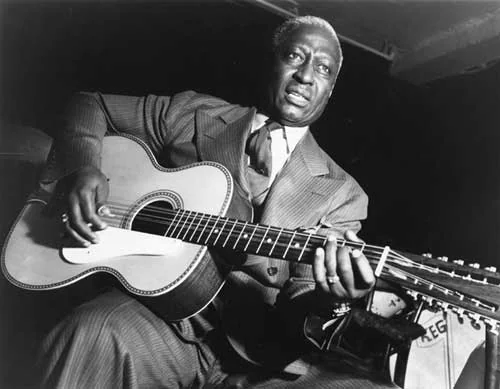
The story everyone tells is that he sang his way out of prison, twice. It is a wonderful story and it is mostly not true. Huddie Ledbetter was convicted of murder in Texas in 1918 and of attempted homicide in Louisiana in 1930, and while he did compose appeals for clemency and address them to the governors in question, the prison records are clear that he was released both times for good behavior, having served close to the minimum. He believed the songs had done it. So, for a while, did the folklorists who found him.
Those folklorists were John and Alan Lomax, who recorded him at the Angola prison farm for the Library of Congress and, on his 1934 release, took him north as a kind of living exhibit of American folk music. He played a battered twelve-string guitar with a force that startled concert audiences, and his repertoire ran to hundreds of songs, among them ‘Midnight Special,' ‘Cotton Fields,' and ‘Goodnight Irene.'
He never had a hit in his life. He died of a wasting nerve disease in December 1949, broke and largely unknown to the public at large. Six months later the Weavers recorded ‘Goodnight Irene,' and it sat at number one for thirteen weeks and became the best-selling record of 1950. He had been right about the songs all along. He was simply early.
Les Paul
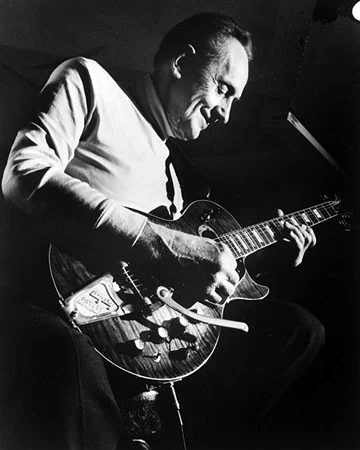
It was a four-by-four length of fencepost with a guitar neck fixed to it and a pickup he had wound by hand, and he called it the Log. He built it around 1941 to prove that a solid slab of wood, unlike a hollow body, would let a note ring without dissolving into feedback. He took it to Gibson, who politely passed. He bolted the sawn halves of an ordinary guitar body to its sides so that audiences would stop laughing at it. A decade later Gibson came back around, and the Gibson Les Paul has been bolted to the front of rock and roll ever since.
The guitar was only half of it. Working in a home studio, he pioneered multitrack recording, stacking part on part until a 1948 single called ‘Lover’ held eight separate guitars, every one of them him. The hits he made with his wife Mary Ford were assembled the same way, her voice harmonizing with itself.
A 1948 car crash shattered his right arm, and he had surgeons set it permanently bent at the angle of a man cradling a guitar, on the grounds that the alternative was not cradling one. He took that deal. He kept a standing weekly gig in Manhattan into his nineties and died in 2009 at ninety-four, having outlived very nearly everyone he had influenced – which, in his case, came close to everyone.
The Ink Spots
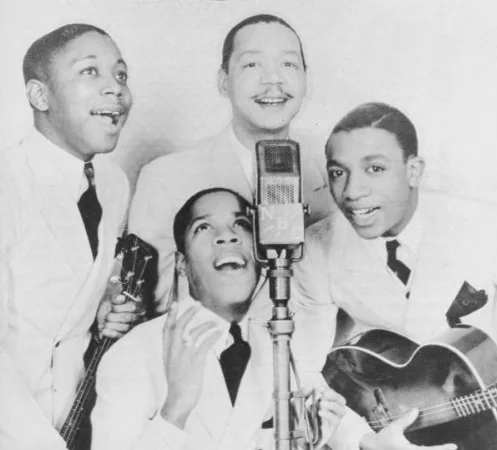
The song that made them was very nearly thrown away. In January 1939 the group booked a Decca session to cut a jive number called ‘Knock-Kneed Sal’ and needed something for the flip side of the record, so they worked up a spare ballad a songwriter named Jack Lawrence had brought along. That throwaway was ‘If I Didn’t Care,' and it went on to sell around nineteen million copies, which places it among the ten best-selling singles ever pressed.
What they had stumbled onto was a formula. Bill Kenny floated a high, exact tenor over the top of the melody, and then – the real innovation – the bass singer, Orville ‘Hoppy’ Jones, stepped in halfway through to recite the lyric in a deep, confiding speaking voice. Nearly every doo-wop record of the next two decades owes that spoken bridge a debt. The Ravens, the Orioles, the Platters, and the Temptations all grew out of that single idea.
Jones died onstage in 1944, mid-song, at thirty-nine. The group then split into so many rival lineups that the rights to the name ended up in court, and for years unrelated quartets toured America billed as the Ink Spots. The Hall inducted five of them in 1989. Working out which of the road groups were entitled to feel flattered was, mercifully, someone else’s job.
Bessie Smith
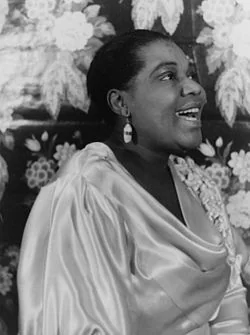
At her peak in the 1920s she was the highest-paid Black entertainer in America, headlining revues of up to forty performers and crossing the segregated South in her own custom-built railroad car, which spared her the indignity of the depots. The Empress of the Blues was less a nickname than an accurate description of the job. Her 1923 debut record, ‘Downhearted Blues,' sold in the hundreds of thousands and helped keep a faltering Columbia Records solvent.
The manner of her death has been argued over for ninety years. She was hurt in a car wreck on Highway 61 near Clarksdale, Mississippi, in September 1937, and the story that hardened into legend – repeated in a 1937 magazine piece and a 1959 stage play – was that a whites-only hospital turned her away to bleed to death. Most historians now think this is false. She was taken to the Black hospital in Clarksdale, where her injuries, which nearly severed an arm, were beyond saving regardless. The truth is grim enough without the embellishment.
She was buried near Philadelphia at about forty-three. Her grave then sat unmarked for thirty-three years, the headstone money having reportedly gone astray, until 1970, when Janis Joplin and a woman named Juanita Green, who had done housework for Smith as a child, paid for a stone. Joplin was dead of an overdose two months later.
The Soul Stirrers
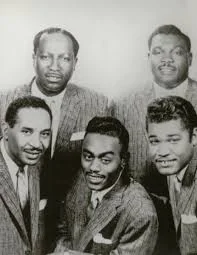
They are in the Rock and Roll Hall of Fame largely because of a man who is not listed among them. The Soul Stirrers were a gospel quartet out of Texas, founded by Roy Crain in the 1920s and first recorded by Alan Lomax for the Library of Congress in 1936. Their great leap came with R.H. Harris, who built the template for modern hard gospel: two lead singers trading the melody, and a high, improvising falsetto full of the bent and suspended notes that secular soul would later make a fortune on. They sang on the White House lawn for Roosevelt and Churchill during the war.
In 1950 Harris quit, and the group replaced him, eventually, with a nineteen-year-old who had idolized and imitated him. The teenager was Sam Cooke, and within a few years he had taken the Soul Stirrers’ sound, walked it out the church door, and turned it into pop music that sold by the million.
When the Hall inducted the group in 1989, it named four men: Crain, Harris, J.J. Farley, and E.A. Rundless – the lineup from before Cooke arrived. Cooke himself was already in, inducted as a solo performer three years earlier. The group most famous for discovering him went in without him, which is either a great injustice or exactly right, depending on whether you count the teacher or the pupil.
Louis Armstrong
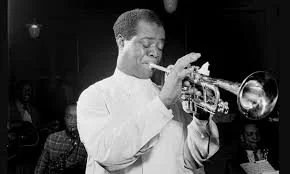
In May 1964, at the height of Beatlemania, a sixty-two-year-old jazzman knocked the Beatles off the top of the American charts. ‘Hello, Dolly!' ended fourteen straight weeks of Beatles number ones and made Armstrong the oldest artist ever to top the Hot 100, a record that stood until 2023. He was the first American act to do it. Asked how it felt, he said it felt good to be up there with those Beatles.
The grinning entertainer with the handkerchief and the gravel voice obscured what he had actually done, which was to invent much of the music underneath all of them. With the Hot Five and Hot Seven recordings of the late 1920s, he pulled the soloist to the center of jazz, where the soloist has remained ever since, and made improvisation the whole point rather than a decoration. His scat singing did for the voice what his trumpet did for the band.
By 1964 he was a grinning institution to people who had no idea the institution had rewritten the rules four decades earlier. He kept playing almost to the end and died in 1971, at seventy. ‘What a Wonderful World,' now unavoidable, barely sold in America on release. The country caught up with that one later too.
Charlie Christian
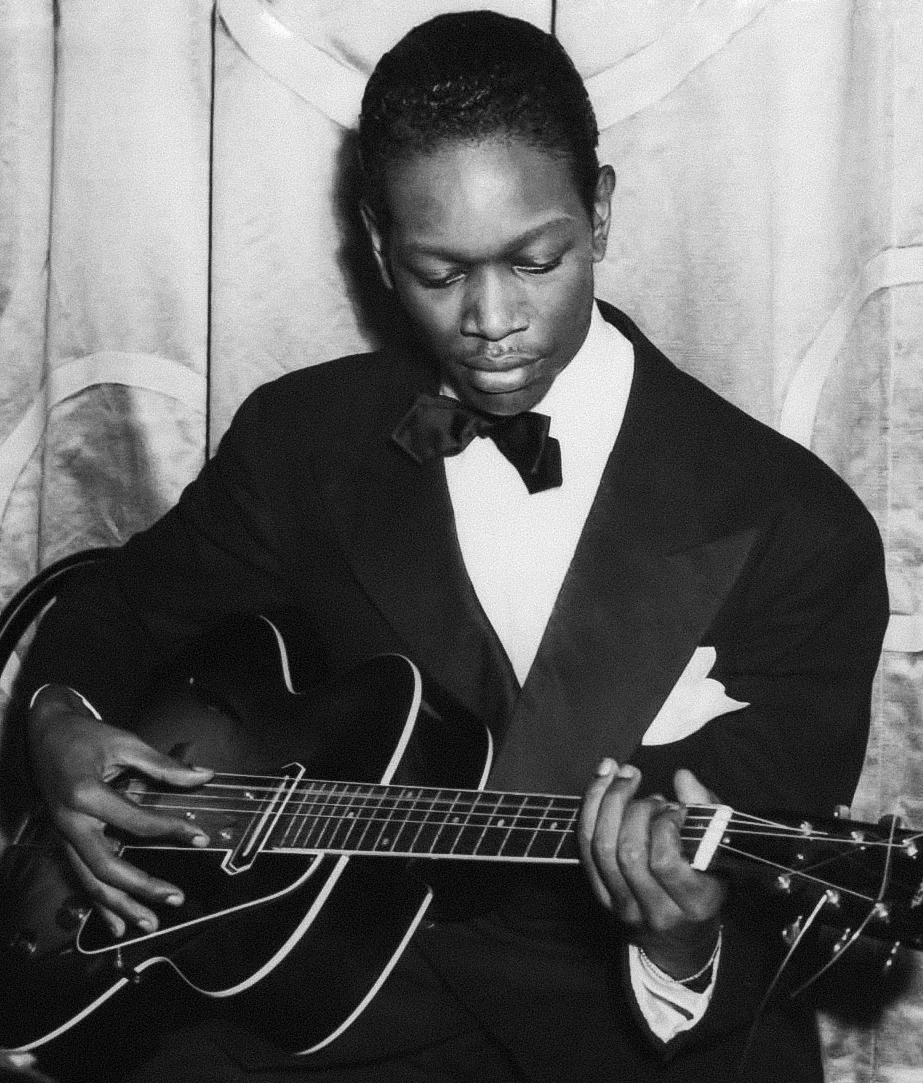
Until he came along, the guitar in a jazz band was furniture. It sat in the rhythm section strumming chords nobody could hear over the horns, and no one expected anything else of it. He plugged one in and turned it into a lead instrument that could stand beside a saxophone, and in doing so more or less invented the electric guitar solo, which is to say a fair chunk of everything that followed.
The audition is the part worth retelling. In August 1939 the producer John Hammond, tipped off by the pianist Mary Lou Williams, sent the young Oklahoman to try out for Benny Goodman in Los Angeles. The afternoon studio session went badly. Undeterred, Hammond simply planted Christian on the bandstand that night without telling Goodman, who, irritated, called ‘Rose Room’ assuming the kid wouldn’t know it. Christian knew it. He took roughly twenty choruses, each one different, and the tune stretched past forty minutes. He went from two dollars and fifty cents a night to a hundred and fifty a week.
He spent his off-hours at Minton’s Playhouse in Harlem, where his single-note lines helped hatch bebop. Then tuberculosis caught him, and he died in a Staten Island sanatorium in 1942, twenty-five years old, with a recording career of barely two years and a remade instrument behind him.
Ma Rainey
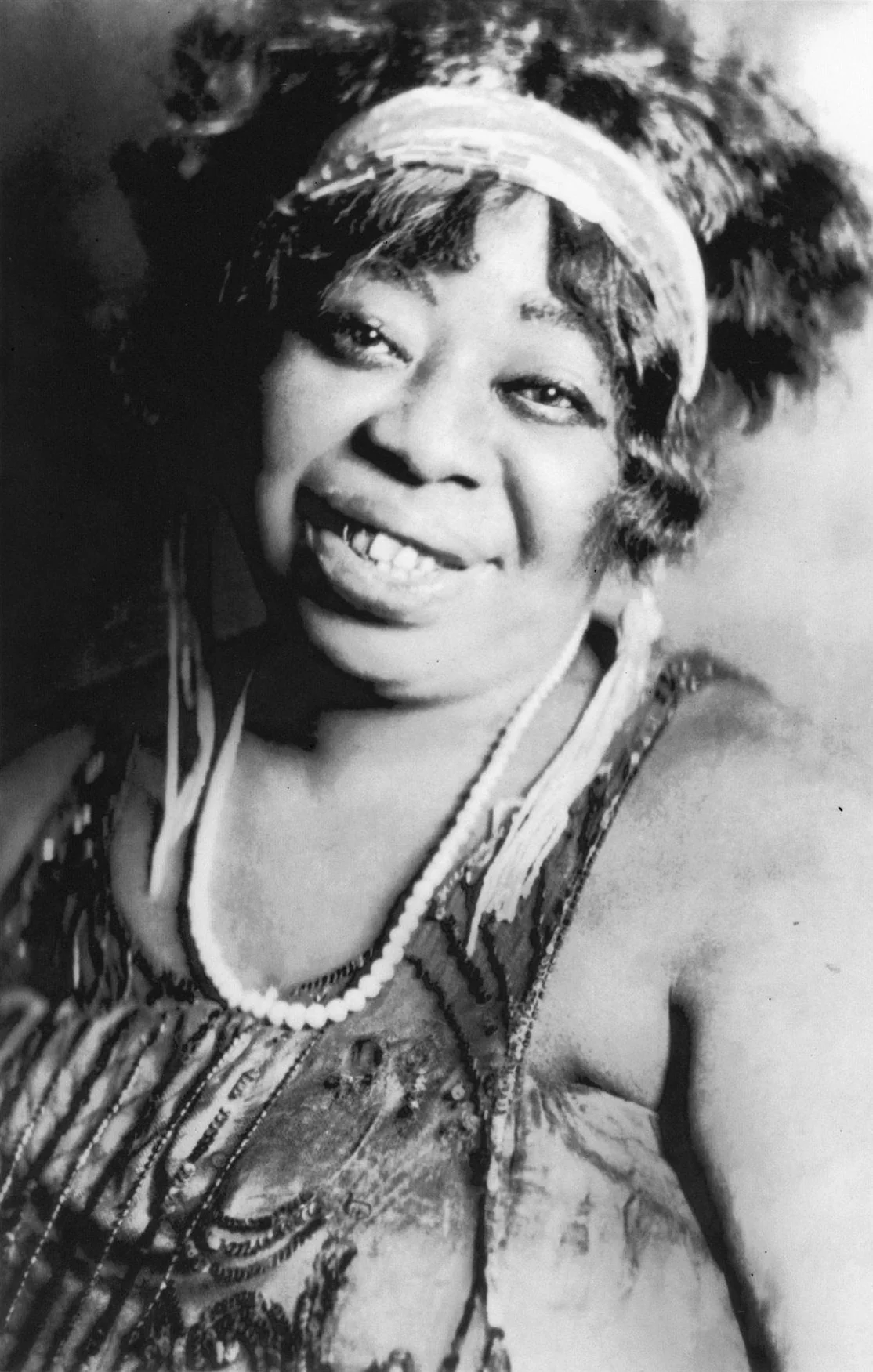
She came onstage hung with a necklace of gold coins and a mouthful of gold-capped teeth that caught the spotlight when she opened it to sing, and the audience was hers before the first note. The Mother of the Blues took the rough country blues off the back porch and put it on the professional stage, recording more than a hundred sides for Paramount through the 1920s. She had also, around 1912, taken a teenage Bessie Smith under her wing, which makes her the mentor of the Empress as well.
She made no great effort to hide that she loved women. In 1925 the police raided a party at her home and found her with a group of them in a state the law called indecent; she was arrested, and Bessie Smith bailed her out the next morning. Three years later she answered the whole episode on record with ‘Prove It on Me Blues,' its Paramount advertisement showing her in a man’s suit and hat, chatting up two women while a policeman watches.
Classic blues went out of fashion almost the moment talking pictures arrived, and Paramount dropped her in 1928. She died in 1939. August Wilson later built a play around a single afternoon in her recording studio, which is one way of saying she has never entirely left the stage.
Howlin’ Wolf
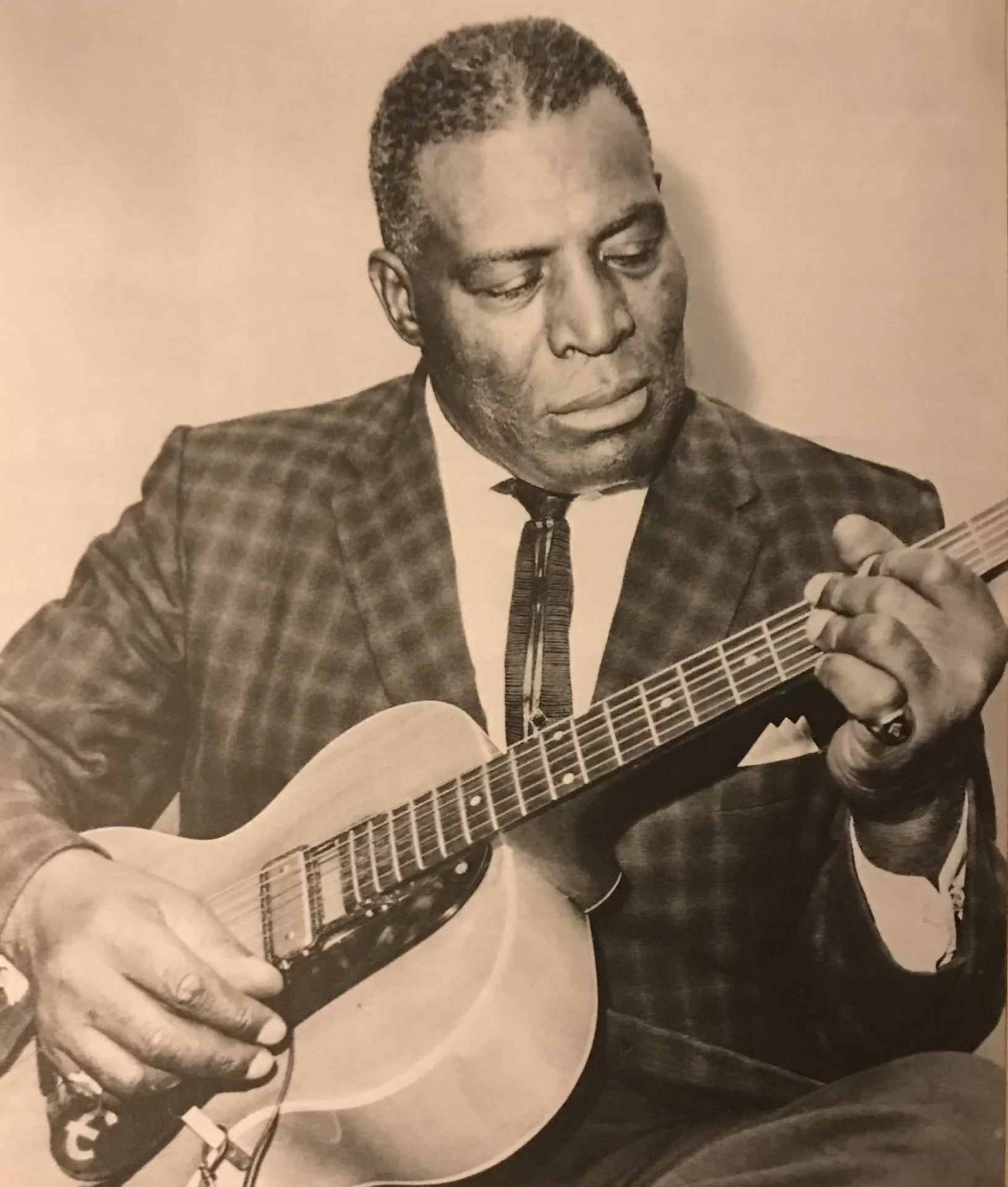
He set out to sing like Jimmie Rodgers and failed in the most productive way imaginable. Trying to copy the country star’s blue yodel, the best he could manage was a kind of growl – ‘I couldn’t do no yodelin’, so I turned to howlin'' – and the howl, it turned out, suited him fine. Six foot three and close to three hundred pounds, named Chester Arthur Burnett after the twenty-first president, he was a physically overwhelming presence who could terrify a roomful of people and move them in the same breath.
He came to records absurdly late. He farmed, served in the Army, and was past forty before Sam Phillips first put him on tape in Memphis in 1951, after which Chess Records carried him to Chicago and a long rivalry with Muddy Waters. Phillips, who would shortly discover Elvis Presley, said hearing Wolf was like hearing where the soul of man never dies.
His own compositions, ‘Smokestack Lightnin'' and ‘Killing Floor’ chief among them, became standards that British rock bands would later strip-mine. The voice that launched them was a failed yodel, redirected. Most people spend a lifetime trying to sound like someone else and call the result a disappointment. He called it a career.
Elmore James
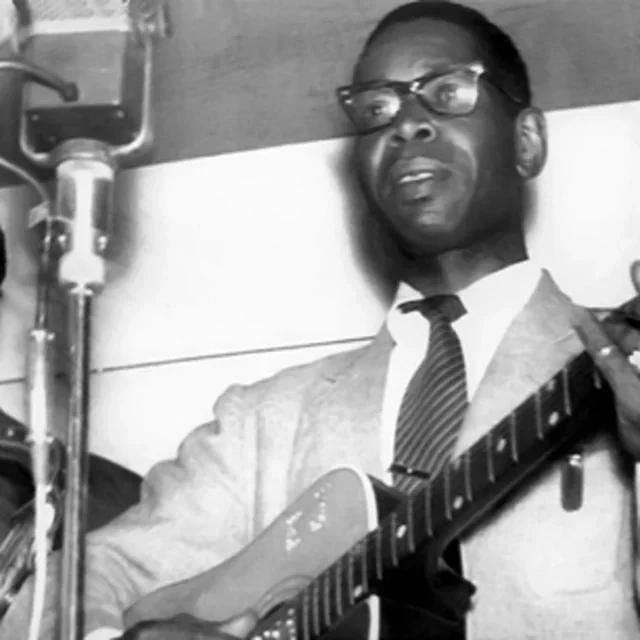
He learned to make a guitar scream by fixing radios. Working at a repair shop in Canton, Mississippi, he picked up enough electronics to hot-wire his own amplifiers past the point the manufacturer intended, and the overdriven, distorted slide tone he got out of them – years before anyone chased distortion on purpose – became his signature. He looked, in his heavy glasses and sober suits, like a man who balanced accounts. He sounded like a fire alarm.
His one immortal record he did not agree to make. In 1951, accompanying the harmonica player Sonny Boy Williamson at a session for the tiny Trumpet label, he was asked to record his version of ‘Dust My Broom,' an electrified reworking of a Robert Johnson tune. He refused. So the label’s owner had him run through it as a ‘rehearsal’ and quietly kept the tape rolling. The take they tricked out of him became a national hit and gave the blues one of its most copied slide figures.
So nervous was he about the microphone that he never cut a B-side; the label stuck another man’s song on the back and credited that to him too. He died of a long-standing heart condition in 1963, at forty-five, having spent twelve years being borrowed from by everyone from Clapton to Hendrix.
Professor Longhair
By the mid-1960s the man who had reinvented New Orleans piano was sweeping the floor of a record shop, and much of the city’s music scene assumed he was dead. Henry Roeland Byrd – ‘Fess’ to everyone – had spent the 1950s building a style that fused blues and boogie with Caribbean rhumba rhythms into something nobody had heard before, and that Fats Domino, Allen Toussaint, and Dr. John would all build on. It had earned him almost nothing. He had quit the business in disgust and was getting by as a janitor and a card gambler.
Then in 1970 a young festival organizer named Quint Davis found him pushing a broom, recognized the name, and booked him at the next New Orleans Jazz and Heritage Festival. The comeback ran nearly a decade. A nightclub, Tipitina’s, opened in 1977 and was named for one of his songs, so that he would have somewhere to play.
In 1979 he finally cut his first full-length album, ‘Crawfish Fiesta,' for Alligator Records – the first proper LP of a career that had begun thirty years earlier. He died in his sleep that January, before the record reached the shops. A documentary crew that had come to film his triumphant comeback concert filmed his funeral instead.
Dinah Washington
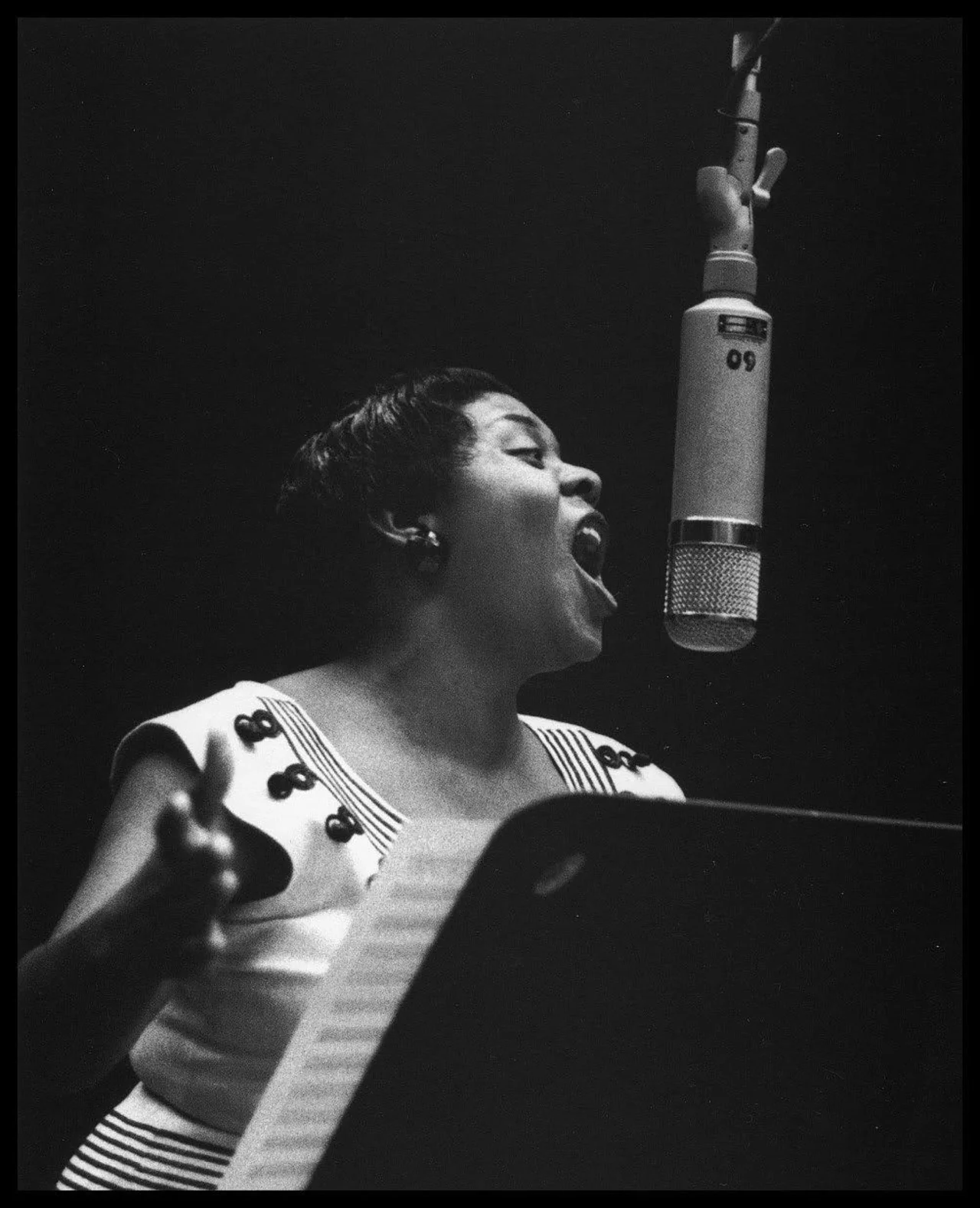
During a 1959 engagement in London she informed the audience that there was only one heaven, one earth, and one queen – and that the one across town, Elizabeth, was an impostor. The crowd loved it, partly because she plainly meant it. The Queen of the Blues was imperious and exacting, with a voice of such crystalline diction that every syllable arrived intact no matter how fast the band ran.
She had started at eighteen in Lionel Hampton’s band and gone solo into a fifteen-year run at Mercury. Her crossover triumph, ‘What a Diff’rence a Day Makes,' won the 1959 Grammy for best rhythm and blues performance and climbed to number eight on the pop chart; it was a Spanish song from 1934, and she had insisted on rewriting the title and lyric into the present tense, because she wanted the heartbreak happening now, not remembered.
Her private life kept pace with the persona. She married seven times – once to a cabdriver she met on the way to a ship and flew to Europe so the wedding could happen mid-voyage. In December 1963 a mix of diet pills and alcohol killed her in her sleep at thirty-nine. Aretha Franklin, among many others, took careful notes. The throne did not stay empty long.
Willie Dixon
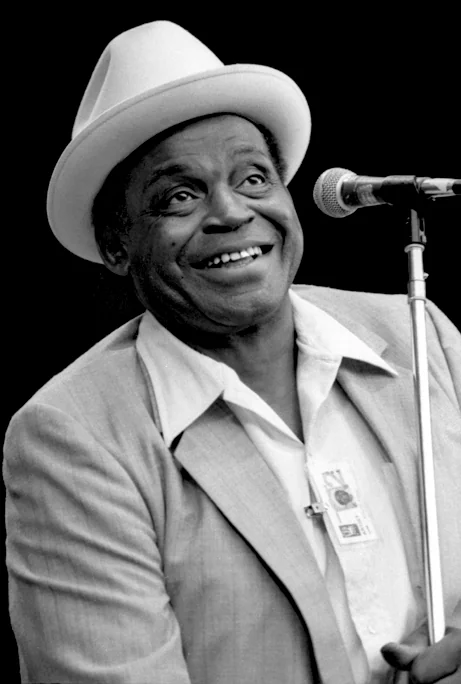
He wrote the songs that made other men immortal. As the house songwriter at Chess Records in the 1950s, Willie Dixon handed Muddy Waters ‘Hoochie Coochie Man’ and ‘I Just Want to Make Love to You,' handed Howlin’ Wolf ‘Spoonful’ and ‘Back Door Man’ and ‘Little Red Rooster,' handed Little Walter his first number one with ‘My Babe,' then played the bass and produced the sessions besides. A startling share of the blues canon that British bands would later canonize was the work of one large, genial man behind the glass.
He had come to it the long way. He boxed well enough to win an Illinois Golden Gloves heavyweight title and spar with Joe Louis, then quit over money; he spent ten months in jail during the war as a conscientious objector. He understood, in other words, what it was to be shortchanged.
So he noticed, in 1969, that Led Zeppelin’s ‘Whole Lotta Love’ was his own ‘You Need Love’ with the serial numbers filed off. He sued. The case settled in 1987, and the band finally printed his name on the credits in 1999. He had also founded a charity to help other blues writers reclaim royalties the industry had quietly kept. He had written the blueprint. He just had to go to court to get his name on it.
The Orioles
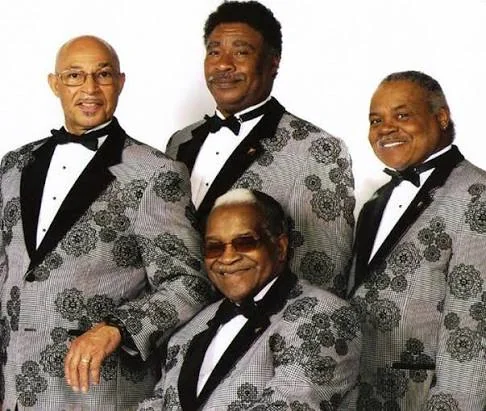
They named themselves after the Maryland state bird, and within a few years half the rhythm and blues groups in America seemed to be named after birds too – Ravens, Flamingos, Penguins, Larks, Crows. The Orioles got there first. Formed in Baltimore in the mid-1940s as the Vibra-Nairs, they were taken in hand by a white shopgirl and songwriter named Deborah Chessler, who wrote them a ballad called ‘It’s Too Soon to Know.' It sold thirty thousand copies in its first week in 1948, went to number one on the R&B chart, and crossed over to the pop chart – one of the first records by a Black vocal group to manage that. The Hall of Fame calls them the first R&B vocal group, full stop.
What set them apart was less a technique than a temperature. Sonny Til sang lead with a soft, swooning intimacy that made teenage girls in the audience scream and faint, which had not been the standard response to a vocal group before.
In November 1950 the guitarist, Tommy Gaither, was driving one of two cars back toward Baltimore when he lost control and hit a drive-in restaurant. He was killed; two others were badly hurt. The men in the second car learned of it only when they got home. The group’s lasting song, ‘Crying in the Chapel,' came in 1953. Twelve years later it became a hit all over again – for Elvis Presley.
Pete Seeger
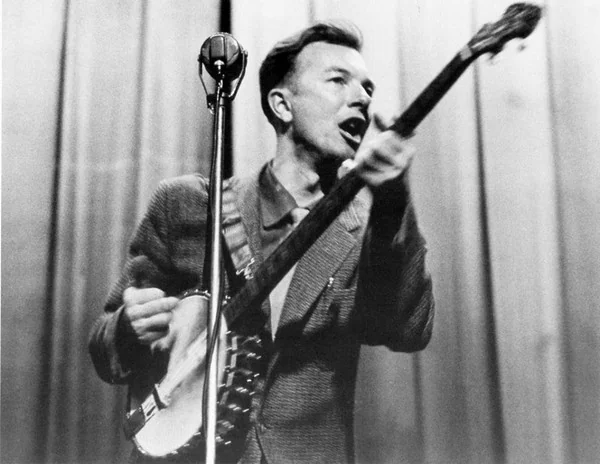
By the mid-1960s his songs were everywhere – a number one for the Byrds, hits for Peter, Paul and Mary and the Kingston Trio – while the man who wrote them had been banned from American television for the better part of two decades. He had brought it on himself, more or less, and would not have had it otherwise. Hauled before the House Un-American Activities Committee in 1955 and asked to name his political associates, he refused, but not in the usual way: rather than take the Fifth Amendment, which shields a witness from self-incrimination, he took the First, on the principle that the question itself was improper. He was convicted of contempt of Congress in 1961 and faced a year inside; the conviction was overturned on appeal a year later.
The banjo he played sat at the center of the whole folk revival, and the songs kept coming – ‘If I Had a Hammer,' ‘Where Have All the Flowers Gone,' ‘Turn! Turn! Turn!,' its words lifted from Ecclesiastes. He was modest about all of it, claiming he had mostly swiped old tunes and added verses.
He sailed a sloop up and down the Hudson to badger people into cleaning the river, lived plainly in Beacon, New York, and at ninety performed at Barack Obama’s inauguration. Somebody once called him America’s tuning fork. The blacklist outlasted a great many things. It did not outlast him.
Mahalia Jackson
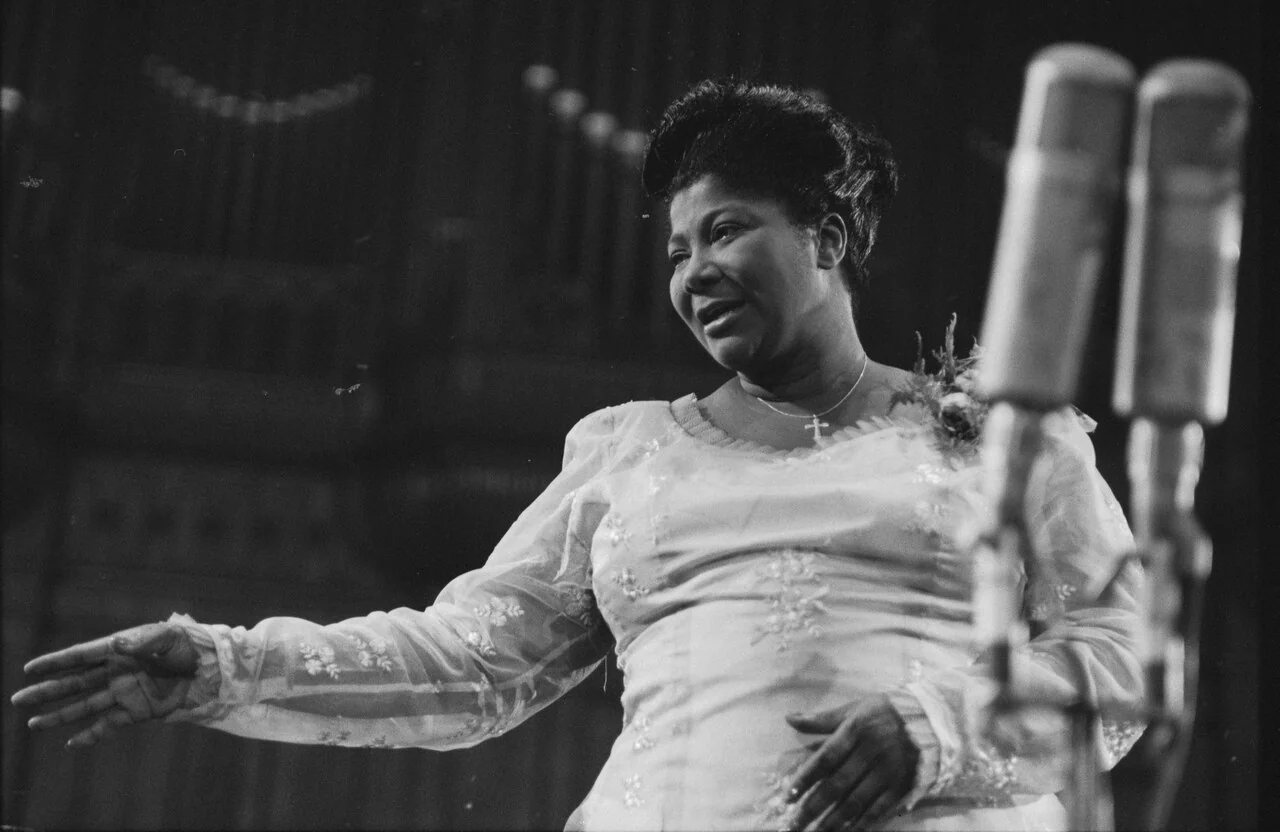
She was offered fortunes to sing the blues and turned every one of them down. Record companies pushed, nightclubs pushed, Duke Ellington and others asked her to come sing jazz, and the answer was always no: blues were the songs of despair, she said, and she would sing only the songs of hope. The Queen of Gospel kept to that line her entire life, and it cost her real money before it made her any.
Her break came in 1947 with ‘Move On Up a Little Higher,' which sold in such quantities that record stores could not keep it in stock – the best-selling gospel record anyone had made, and proof the music could fill a bank account as well as a church. Before it, she had run a beauty salon to pay the rent.
She also marched. A close friend of Martin Luther King, she sang at the March on Washington in August 1963, just before he spoke. As he worked through his prepared text, she called to him from a few feet away – ‘Tell them about the dream, Martin’ – having heard him improvise on that theme before. He pushed his notes aside and began the part everyone now knows by heart. It is among the most consequential pieces of stage direction in American history, and it came from the gospel singer standing behind him.
Bill Monroe
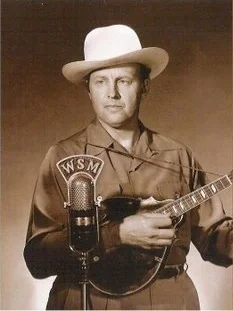
Not many people invent a whole genre of music, and fewer still name it without meaning to. The genre was bluegrass, and it took its name from his band, the Blue Grass Boys, who took theirs from the grass of his native Kentucky. On the mandolin, with a high keening tenor he called the high lonesome sound, he fused old-time fiddle music, gospel harmony, and the blues into something faster and harder than any of them.
The classic version of the band came together on the Grand Ole Opry stage in December 1945, with Lester Flatt on guitar and a young Earl Scruggs playing a three-finger banjo roll that left audiences slack-jawed. That lineup is still called the original bluegrass band, the moment the form snapped into focus.
Then a kid in Memphis got hold of one of his songs. Monroe had cut ‘Blue Moon of Kentucky’ as a slow waltz; in 1954 Elvis Presley sped it up into a clattering 4/4 rocker and stuck it on the B-side of his first single. Monroe could have taken offense. Instead he gave the cover his blessing and, telling on himself a little, went back into the studio and re-recorded his own waltz at the faster tempo. He was a purist about everything except, it turned out, that.
Jelly Roll Morton
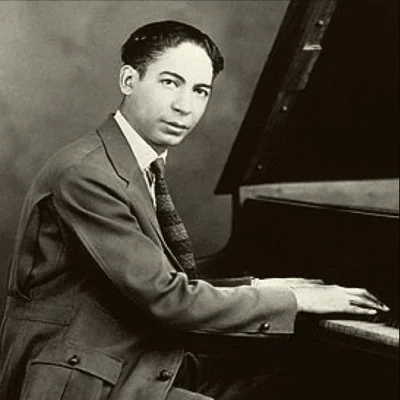
His business card identified him as the originator of jazz, stomps and swing, and in 1938 he published a piece in Down Beat under the headline that he, not W.C. Handy, had invented jazz in 1902. He was not a modest man. He wore a half-carat diamond set into a front tooth, and when it was pawned off in leaner years, you could chart his decline by its absence.
The bluster obscured the fact that the boasts were half true. His ‘Jelly Roll Blues,' published in 1915, is often called the first jazz composition ever printed, and the records he cut in Chicago with his Red Hot Peppers disciplined the new music with written arrangement while leaving room for the players to improvise – which became, more or less, how jazz works.
By the late 1930s swing had buried him, and the folklorist Alan Lomax found him playing a shabby Washington club. Over several weeks in 1938 Lomax sat him at a piano in the Library of Congress and recorded more than eight hours of him playing and talking, because, Morton said, he wanted to correct the history of jazz. He died in Los Angeles in 1941, broke, just as a revival of the old New Orleans music was getting underway – the revival that would have proved he had not merely been bragging.
Charles Brown
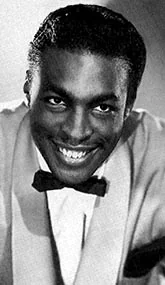
He trained as a chemist and taught school before he ever made a living at a piano, which may account for the unhurried precision of everything he played. Moving to Los Angeles in the 1940s, he became the smooth, mellow voice of West Coast ‘club blues’ – a quiet, after-hours, cocktail-lounge style a world away from the shouting going on in Chicago. With Johnny Moore’s Three Blazers he sang ‘Driftin’ Blues,' a number one R&B hit in 1946, then went solo and stacked up more, irritated that the guitarist who led the trio took top billing without writing or singing a note.
Two of his records you have heard whether you know his name or not. ‘Merry Christmas Baby’ and ‘Please Come Home for Christmas’ pour out of every store and coffee shop from Halloween to New Year, covered by everyone from Elvis to the Eagles to Bon Jovi.
The galling part is what it earned him. Disputes over the writing credits, a ruinous gambling habit, and a style too urbane for the rock crowd left him broke and largely forgotten for thirty years, reduced to giving piano lessons. Then in 1990 Bonnie Raitt put him on tour as her opening act, a new audience found him, and he spent his last decade, at last, as the somebody he had always been.
Bob Wills & His Texas Playboys
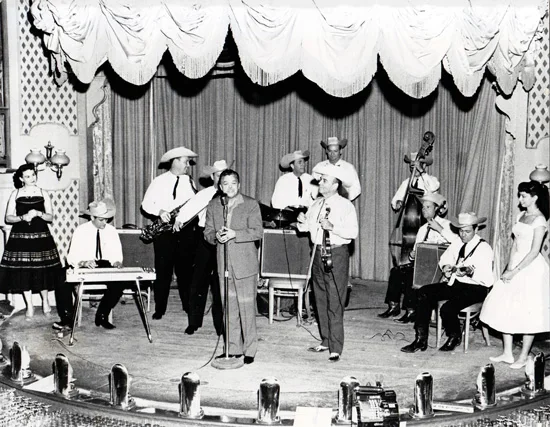
He could not keep quiet during his own songs. All through a Bob Wills record you can hear him hollering encouragement at the band – ‘Take it away, Leon!' – and punctuating the choruses with a high, delighted ‘Ah-haa!,' a habit he picked up doing comic patter in a traveling medicine show. He had been a barber for a while too, before the fiddle won out.
What he and his Texas Playboys built was Western swing, which amounted to dragging a jazz dance band into a cowboy hat: twin fiddles and a steel guitar up front, a swinging rhythm section behind, and a singer, Tommy Duncan, who could croon over the top of it. They filled dance halls across the Southwest through the 1930s and 1940s with ‘New San Antonio Rose’ and the rest, and were among the first to put drums and amplified steel where country audiences had never heard them.
By his own telling he once rode fifty miles on horseback as a boy to hear Bessie Smith sing, and you can hear that too – the blues running underneath the hoedown. Merle Haggard called him the best fiddle player who ever lived and was making a record with him in 1973 when a stroke came. The Hall inducted Wills, Duncan, the steel man Leon McAuliffe, and the rest of the Playboys together in 1999. By then half of country music was quietly his.
Nat King Cole
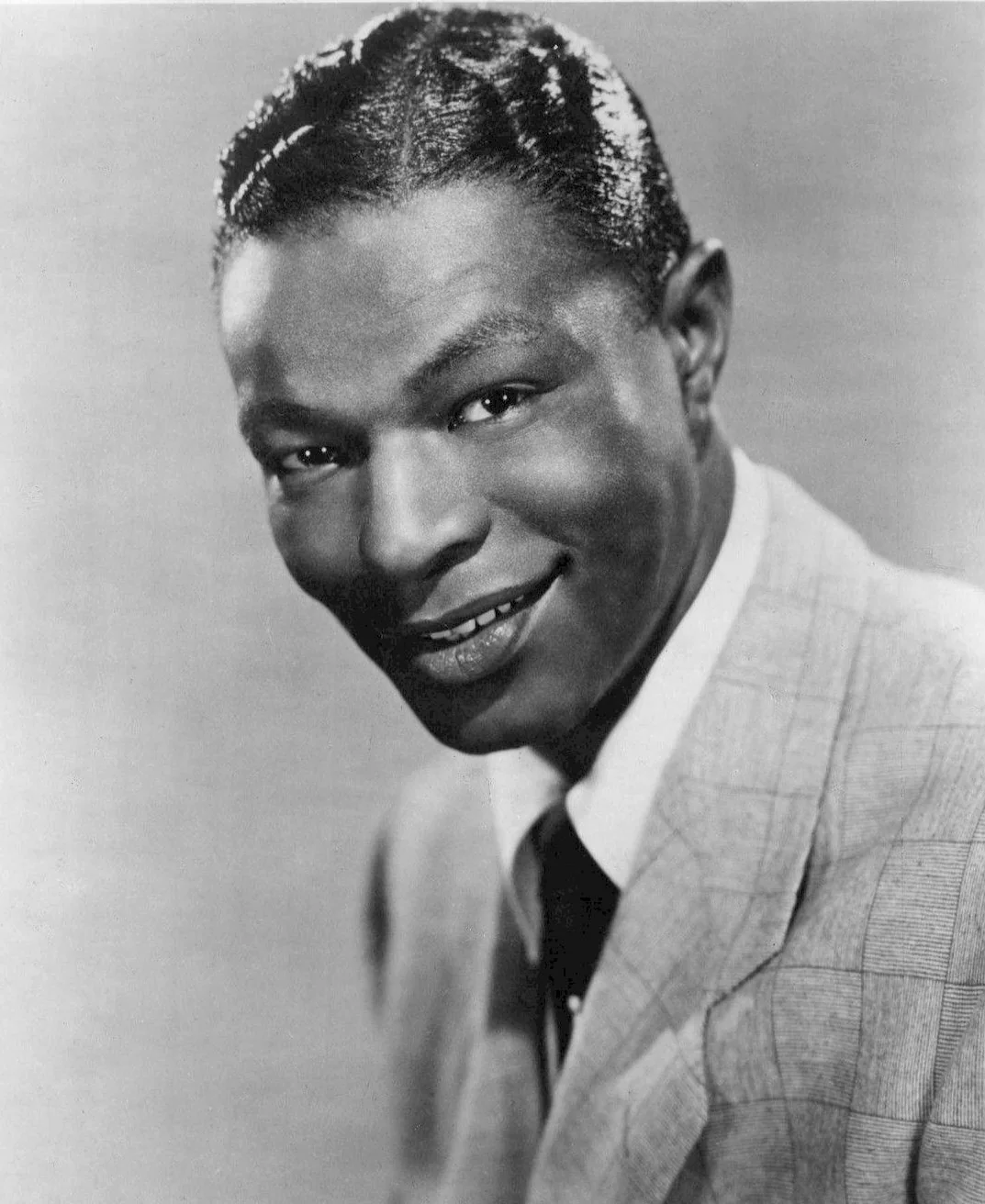
In 1956 he became the first Black American to host his own national network television program, and it was dead inside a year because no sponsor would buy the time. Companies were afraid of how the South might react to a Black man in America’s living rooms every week. Cole’s verdict on the people who would not back him was characteristically dry: Madison Avenue, he said, was afraid of the dark.
What most people forget is that the velvet baritone came second. He had made his name first as a jazz pianist of the first rank, leading the King Cole Trio, before that soft, immaculate voice carried him into a different career entirely – ‘Mona Lisa,' ‘Nature Boy,' ‘Unforgettable,' records that made him the only male singer of his era fit to stand beside Sinatra.
The dignity he carried did not protect him. In 1956, the same year as the television show, a handful of white supremacists rushed the stage and attacked him mid-song in Birmingham. He kept smoking three packs a day, partly because he believed it kept his voice low, and it killed him at forty-five in 1965. A quarter century on, his daughter Natalie spliced her voice onto his old recording of ‘Unforgettable’ and gave him one last number one he never got to hear.
Billie Holiday
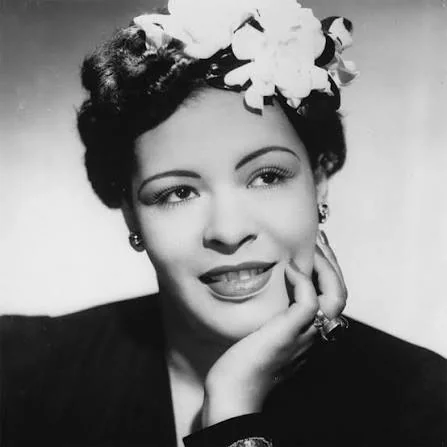
There was one song she would sing only last, and only on her own terms. The waiters stopped serving, the room went dark but for a single light on her face, and when she finished there was no encore – she simply walked off. The song was ‘Strange Fruit,' a stark account of a lynching written by a Bronx schoolteacher, and her own label, Columbia, was too frightened of the South to release it. She recorded it in 1939 for a tiny jazz label instead, and it sold a million copies.
Singing it made her a marked woman. Harry Anslinger, the racist who ran the Federal Bureau of Narcotics, set out to destroy her, using her heroin addiction as the lever. In 1947 she was convicted of narcotics possession and jailed for a year; on release she lost the cabaret card she needed to perform in New York clubs.
The voice itself was unlike anyone’s – light, frayed, phrasing behind the beat like a horn, a gardenia in her hair. Lester Young, her closest friend, named her Lady Day, and she named him Prez. She kept singing ‘Strange Fruit’ for twenty years. In 1959, dying in a New York hospital of everything her life had done to her, she was placed under arrest in her bed, narcotics agents posted at the door. She was forty-four.
Wanda Jackson
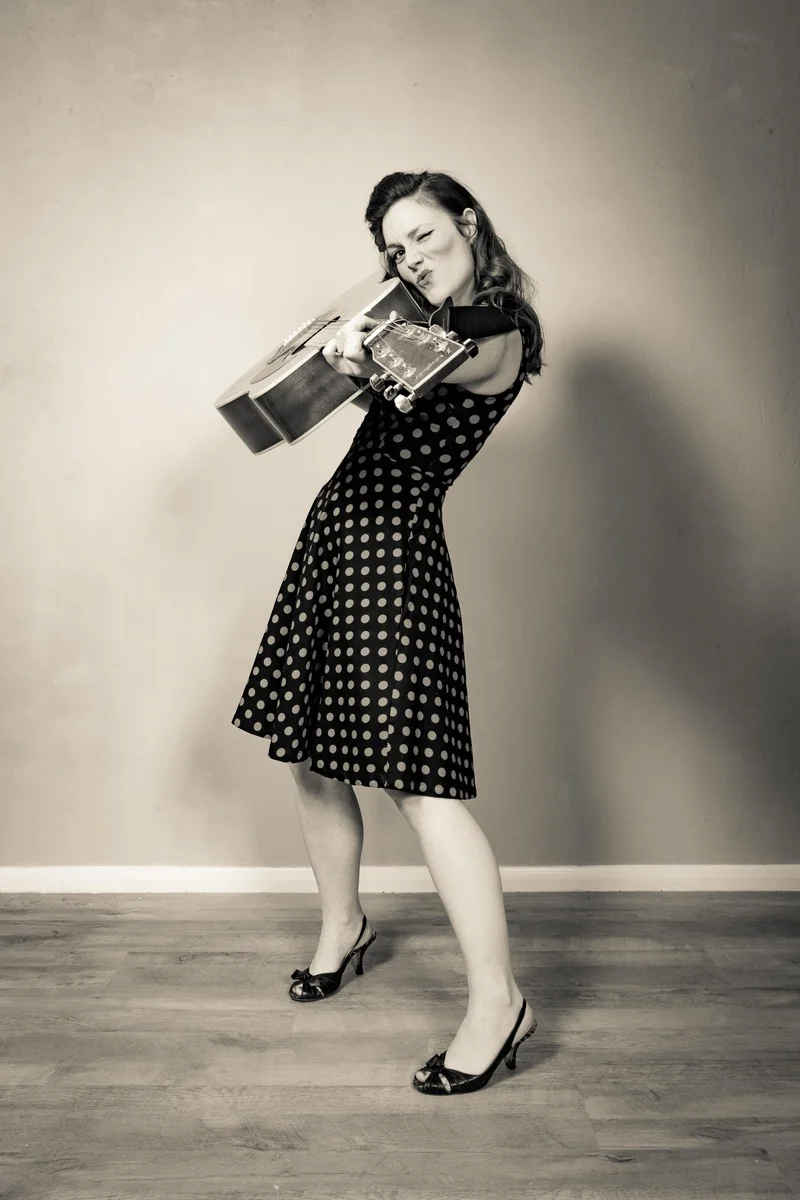
She was a teenage country singer until the boy she was touring with talked her into something louder. The boy was Elvis Presley, whom she dated for a spell in the mid-1950s – he gave her a ring; she kept it – and who, along with her father, kept telling her that the future was this fast new thing called rockabilly. She listened. What came out of her was a growl and a hiccup and a snarl that gave away nothing to the men, which had not been heard from a young woman in a form-fitting dress before.
‘Fujiyama Mama’ went to number one in Japan in the late 1950s and sent her touring there. ‘Let’s Have a Party’ sat ignored for two years until an Iowa disc jockey dusted it off in 1960 and turned it into her one big pop hit, after which she named her band the Party Timers. She wrote ‘Mean Mean Man’ herself.
A religious turn pushed her toward gospel in the 1970s, and the rockabilly world moved on without her. Then, in 2011, at seventy-three, she made an album called ‘The Party Ain’t Over’ with Jack White of the White Stripes producing, and a new generation discovered the Queen of Rockabilly howling and swiveling as if no time had passed at all. The title was not wrong.
Freddie King
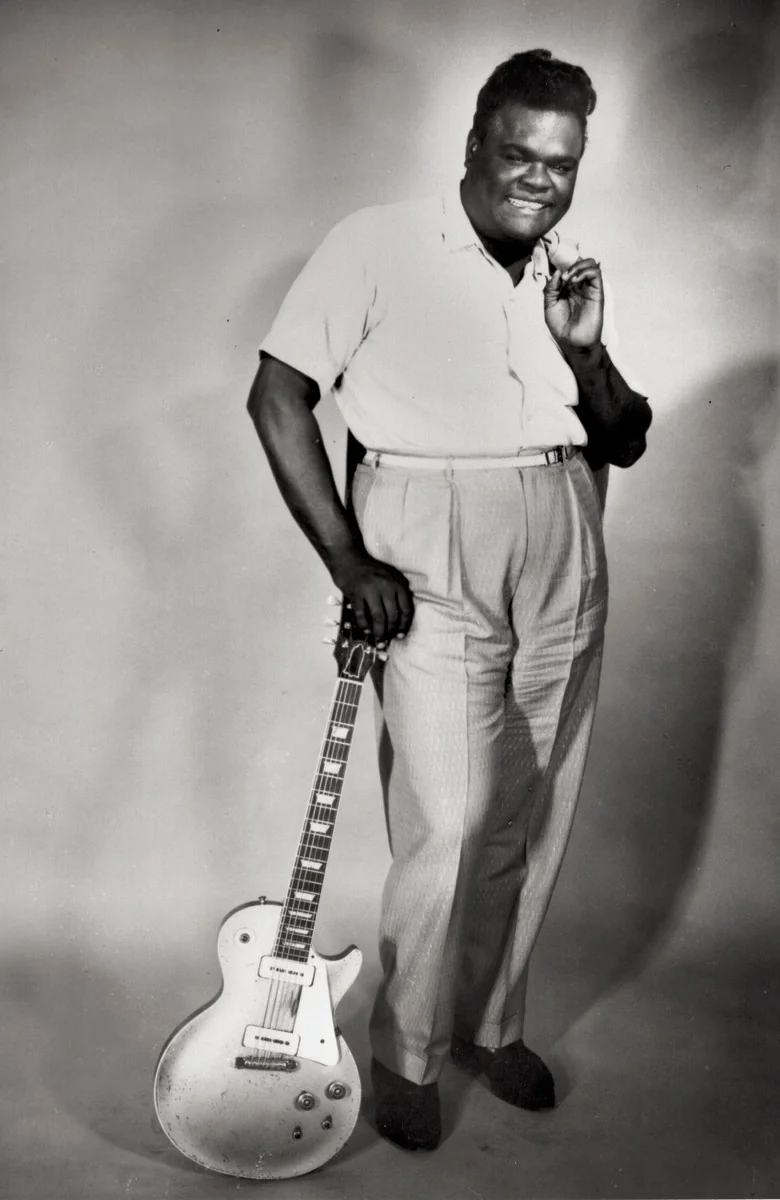
There were three Kings of postwar blues guitar, none of them related, and he was the youngest, the least famous, and arguably the one the rock guitarists robbed most enthusiastically. B.B. King had the singing tone and Albert King had the heavy bends, but Freddie King had ‘Hide Away,' and ‘Hide Away’ is where a generation of guitar players learned their trade. He cut the instrumental in 1961 at a single Cincinnati session that also produced several other standards, named it after a Chicago club, and watched it climb to number five on the R&B chart and onto the pop chart too, which a guitar instrumental was not supposed to do.
It became the thing you played to prove you could play. Eric Clapton put it on the 1966 album he made with John Mayall, the record every British guitarist studied, and from there the song was everywhere – a rite of passage, the blues equivalent of scales.
King ran himself into the ground earning it, touring better than three hundred nights a year, the Texas Cannonball playing towns most headliners skipped. Grand Funk Railroad name-checked an all-night poker game with him in a hit single. The schedule did what schedules like that do. He died of heart failure in 1976, at forty-two, the last of the three Kings to reach the Hall and, by then, the one whose fingerprints were on the most records.
The ‘5’ Royales
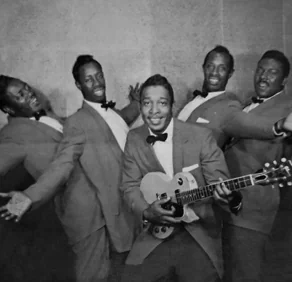
The guitarist wore his instrument on a strap so long it hung down around his knees, and he would swing it behind his back and carry on playing, which audiences in the early 1950s had not seen a man do. Lowman Pauling was the engine of the ‘5’ Royales – he played the guitar, sang the bass parts, and wrote nearly all the songs – and his playing, overdriven and biting through a cranked amplifier, pointed straight at the rock guitar that had not arrived yet.
The group came out of a Winston-Salem gospel quartet, the Royal Sons, and carried the church into rhythm and blues so completely that some historians mark them as the first clear sign of soul. Their own hits were brief, mostly crammed into a year or so around 1952.
The songs, though, had long lives in other hands. Pauling wrote ‘Dedicated to the One I Love,' which became a pop standard for the Shirelles and again for the Mamas and the Papas. He wrote ‘Think,' which James Brown turned into a hit and built a stage act around – Brown modeled his first group on the ‘5’ Royales outright. Ray Charles took ‘Tell the Truth.' You have almost certainly sung a Lowman Pauling song without once hearing the man sing it himself.
Sister Rosetta Tharpe
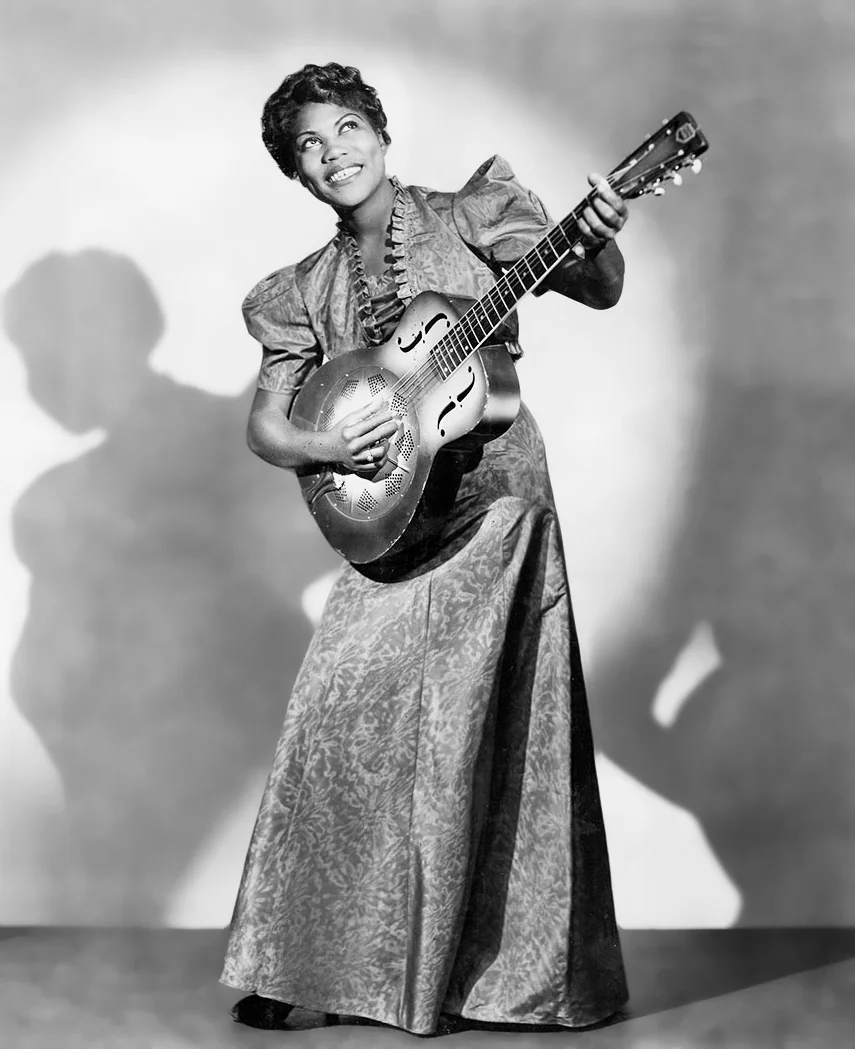
In 1951 she got married in a baseball stadium, in front of twenty-five thousand people who had each paid for a ticket, and then played a concert in her wedding dress while fireworks went off. The spectacle was pure Sister Rosetta Tharpe, who had been carrying the gospel into places it was not supposed to go for fifteen years. She sang about Jesus, and she did it with a loud, distorted electric guitar, which nobody else in church music was doing and almost nobody in any music was doing in the late 1930s.
Her 1944 record ‘Strange Things Happening Every Day’ crossed from the gospel world onto the Billboard race chart, the first gospel record to manage it, and it is one of the records people point to when they argue about what the first rock and roll song was. The argument has merit. The hammered, ringing guitar lines are the thing Chuck Berry, Elvis Presley, and Little Richard would each build careers on.
She played nightclubs and scandalized the faithful, toured with the singer Marie Knight, who was also her lover, and drove a Cadillac. Then rock and roll arrived, made by young men who had taken what she invented, and the woman who got there first spent decades being left off the list. The Hall finally added her in 2018. She had been dead forty-five years.
Kraftwerk
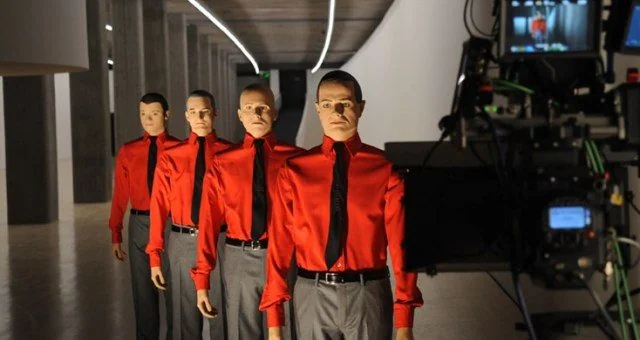
Everyone else in this part of the Hall came out of a church, a juke joint, or a tent show. These four came out of a laboratory in Düsseldorf. They built their own instruments, sang through a vocoder that chopped a human voice into something mechanical, and stood onstage as four men in matching outfits doing as little as possible, on the theory that the machines were the point and the musicians ought to disappear behind them.
The breakthrough was ‘Autobahn’ in 1974 – a twenty-two-minute electronic evocation of a drive down the German motorway, with a slamming car door and an engine turning over, cut down to a single that somehow reached the American Top 40. From there came the robots and the man-machine, the notion that pop could be made by people pretending to be appliances.
What looked at the time like a novelty turned out to be a blueprint. In 1982 Afrika Bambaataa built ‘Planet Rock,' a foundation stone of hip-hop, out of two Kraftwerk tracks; Detroit techno grew directly from their records; and synth-pop, new wave, and most of what came out of a drum machine afterward traces back to their Kling Klang studio. Bambaataa said they probably had no idea how big they were among Black listeners. In a Hall full of bluesmen and gospel singers, the German robots may have predicted the most.
Charley Patton
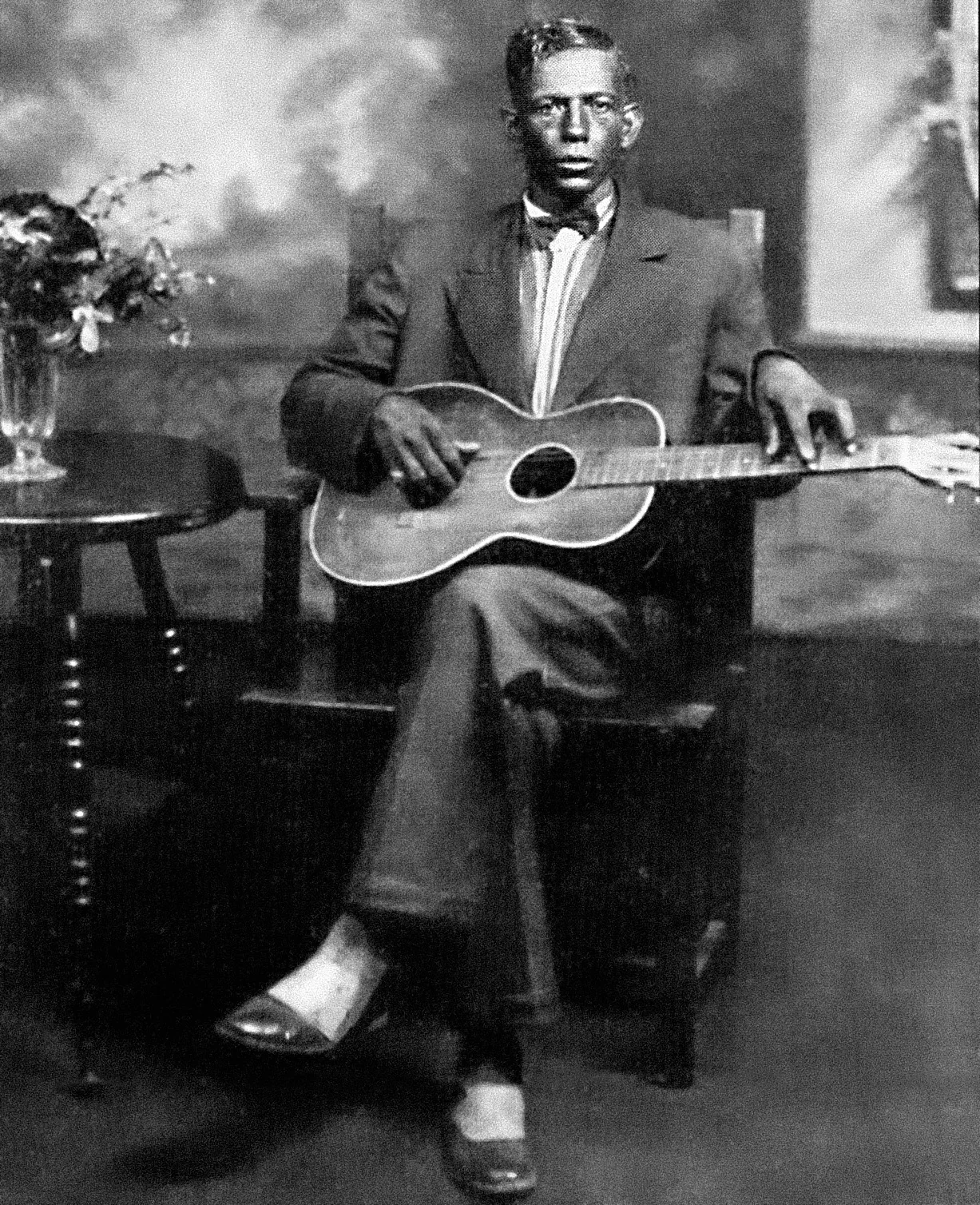
The Delta blues can be traced, about as far as anything so diffuse can be traced, to one cotton plantation in Mississippi. Dockery Farms, near Ruleville, is where a sharecropper’s son named Charley Patton became the first great star of the music, and where most of the men who carried it forward came to learn from him. He taught Son House. He mentored a young Chester Burnett, who grew up to be Howlin’ Wolf. The scene around Dockery and his playing partner Willie Brown pulled in a teenage Robert Johnson too. If the Delta blues has a single fountainhead, it is this small, hard-living man.
He stood about five foot five and weighed maybe a hundred and thirty pounds, and he had a voice that witnesses swore carried five hundred yards without any help. He was also a born showman, playing the guitar between his knees and behind his head and knocking on the body like a drum, decades before anyone thought to call such things rock and roll.
He recorded fourteen sides in a single day in 1929, ‘Pony Blues’ among them, and cut only a few dozen more before his heart gave out in 1934, at around forty-three. Half of what he put on record was not even blues – gospel, ballads, ragtime, whatever a Saturday-night crowd wanted – because that was the work. Everyone who came afterward had been drinking from his well.
Gil Scott-Heron
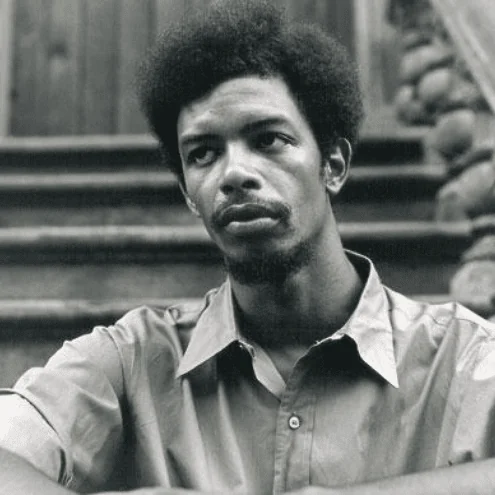
Almost everyone can quote the title, and almost no one has it right. ‘The Revolution Will Not Be Televised,' the spoken-word piece he recorded in 1971 over a spare funk beat, is generally taken to mean the uprising won’t be broadcast live. That is not what he meant, and it irritated him for the rest of his life. The point was the opposite: that no screen would hand you the change you wanted, that you would have to get up and make it, in the street and in your own head.
He delivered it half-sung and half-spoken, in a voice like a furious newsreader, and laid down a template that rap would pick up a few years later – which is why he gets called the godfather of the form, a title he found beside the point, since he thought of himself as a bluesologist. With the musician Brian Jackson he made records like ‘Pieces of a Man’ and ‘The Bottle’ that Chuck D would later describe as a kind of CNN for Black neighborhoods.
Addiction and prison swallowed much of his later life. He surfaced again in 2010 with a stark, haunted album called ‘I’m New Here,' and died the next year. The line he is reduced to is still chanted at protests, usually by people who have it backwards.
Harry Belafonte
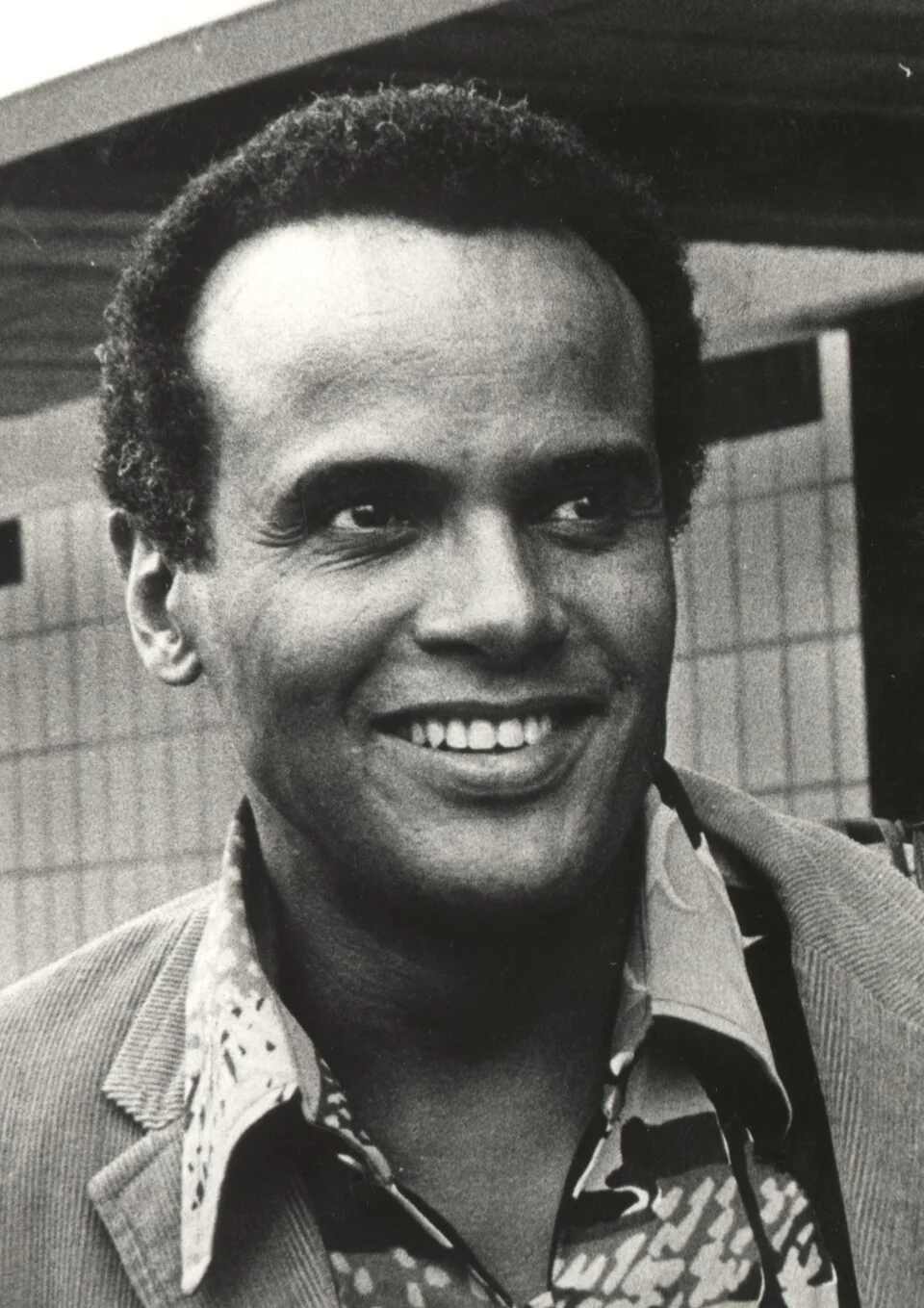
His 1956 album ‘Calypso’ was the first record by a single artist to sell a million copies, and it put a Jamaican work song called ‘Day-O’ into kitchens across white America, where people who had never seen a banana boat happily sang the chorus. He was crowned the King of Calypso, a title he wore without much enthusiasm. The money and the fame were, to him, mostly a means.
What he did with them is the part worth remembering. He had befriended Martin Luther King in 1956 and became one of his closest confidants and quietest bankrollers – putting up bail to get King out of the Birmingham jail, raising funds to free other jailed protesters, financing the Freedom Rides and the young organizers of SNCC, helping to plan the 1963 March on Washington. He did much of it without a press release. In 1959 he became the first Black performer to win an Emmy.
Bob Dylan made his recording debut blowing harmonica on a Belafonte track and later called him the best balladeer in the land. The calypso craze faded, as crazes do. The movement he helped pay for changed the country. Belafonte kept at the activism until he died in 2023, at ninety-six, having long since settled which of his careers had mattered more.
Elizabeth Cotten
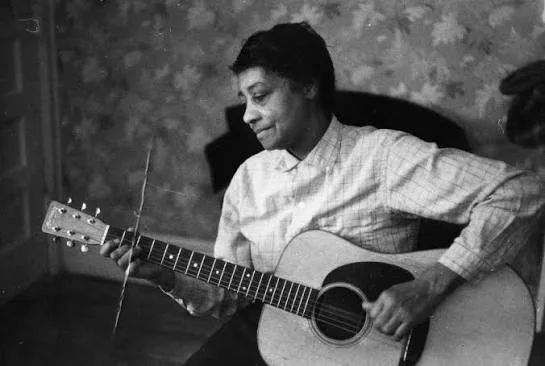
For years she was the family housekeeper, and the family had no idea the woman cleaning the house had written a song that millions of people would one day sing. The family was the Seegers – the folklorist Charles Seeger and his musical clan – who had hired her and only later discovered their housekeeper played guitar like almost no one alive.
She was left-handed and entirely self-taught, and as a girl she had simply turned a right-handed guitar upside down and worked out her own way to play it, fretting with her right hand and picking the bass with her thumb and the melody with her fingers, backwards from how it is normally done. The style became known as Cotten picking. The song was ‘Freight Train,' which she wrote as a child of about eleven, sitting near the railroad tracks in North Carolina, long before anyone thought to write it down.
Peggy Seeger carried ‘Freight Train’ to England, where it became a skiffle hit, and the wider folk revival eventually came looking for the woman who had made it. Cotten did not perform in public or make a record until she was past sixty. She kept at it for the rest of her long life and won a Grammy in her nineties, two years before she died. The housekeeper, it turned out, had been the headliner all along.
DJ Kool Herc
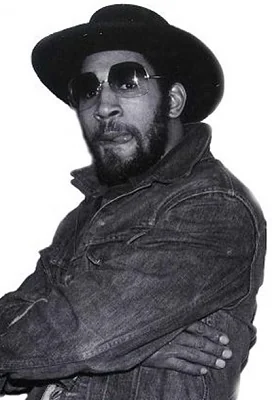
On August 11, 1973, an eighteen-year-old named Clive Campbell spun records in the rec room of 1520 Sedgwick Avenue in the Bronx so that his sister Cindy could raise money for back-to-school clothes. Admission ran 25 cents for women and 50 cents for men. That party is now formally celebrated as the birthplace of hip-hop, which makes it the most consequential school-clothes fundraiser in American history.
Campbell, who had arrived from Kingston, Jamaica, in 1967 and performed as Kool Herc, had noticed that dancers saved their best moves for a record’s drum break. His solution was to buy two copies of the same record and switch between them, stretching a few seconds of percussion into whole minutes. He called the technique the merry-go-round. Every producer who has looped a beat in the half century since has been elaborating on it.
Herc never released a hit record; the genre itself is his discography. LL Cool J inducted him at Barclays Center in Brooklyn on November 3, 2023 – fifty years and twelve weeks after the party – and retold the Sedgwick Avenue story from the podium. Herc stood at the microphone with Cindy beside him, said, “I got tears in my eyes,” thanked his parents, and then handed his sister the mic. She had organized the party, after all. It seemed only fair.
Link Wray
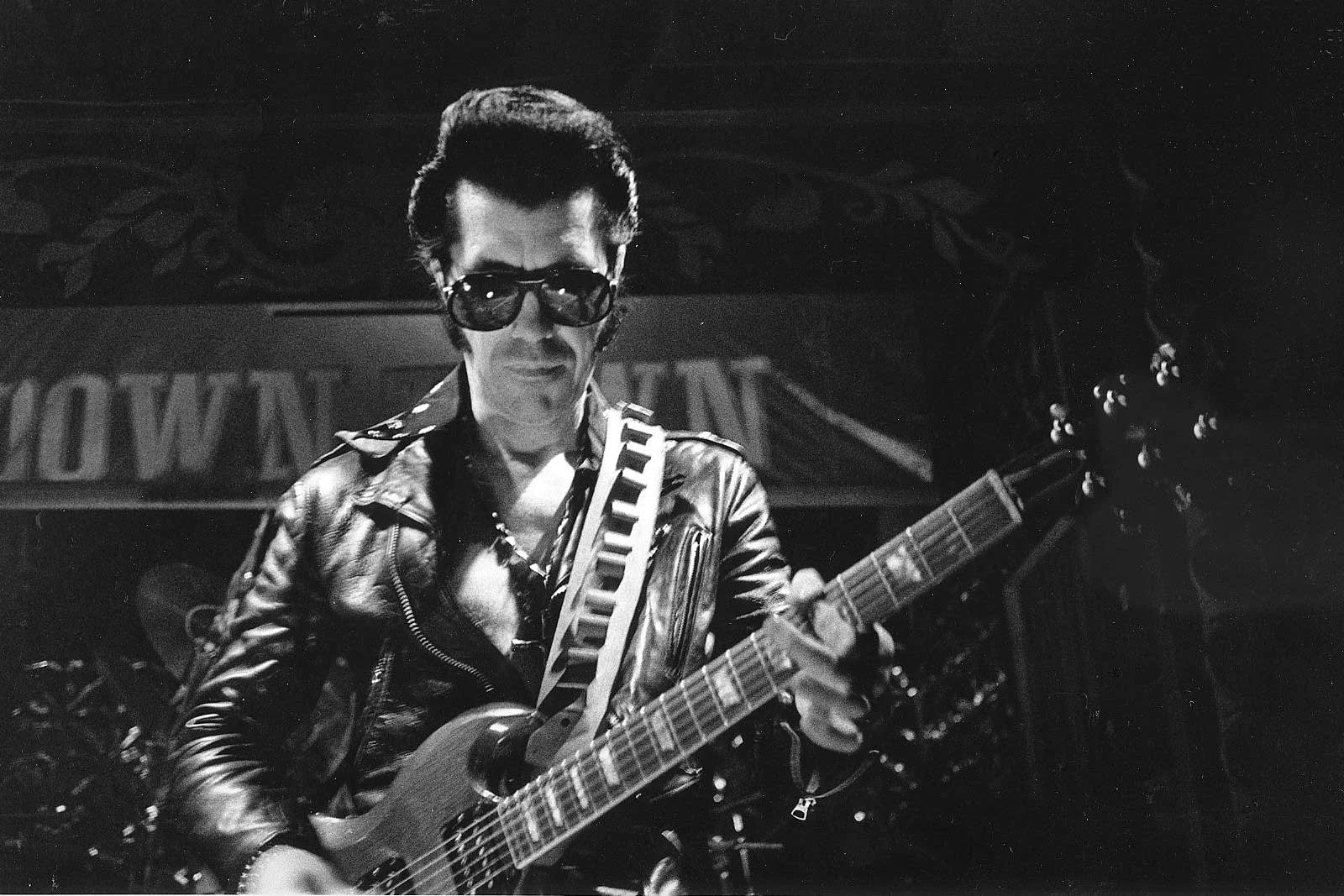
“Rumble” is the only instrumental ever banned from American radio. Stations in New York and Boston refused it in 1958 on the theory that two and a half minutes of menacing guitar, with no words at all, might incite gang violence. It reached number 16 on the pop chart anyway. Link Wray got the snarling tone by poking a pencil through the speaker cone of his amplifier, and his label boss, Archie Bleyer, hated the record so much that he released it only because his stepdaughter loved it.
Wray came to instrumentals the hard way. Tuberculosis contracted during Korean War-era Army service cost him a lung and a year in hospital, and doctors predicted he would never sing again. The guitar carried the weight from then on, and he used it to drag the power chord and deliberate distortion into rock and roll. Pete Townshend said that without Link Wray and “Rumble” he would never have picked up a guitar. Bob Dylan called it the best instrumental ever.
The son of a Shawnee mother, born in North Carolina in 1929, Wray married a Danish student in the 1980s and settled in Denmark, where he died in Copenhagen in 2005 at 76. The Hall had passed him over as a Performer nominee in 2014 and 2018. When this award finally brought him in, Jimmy Page walked onstage and played “Rumble” himself. It took 65 years.
Alexis Korner
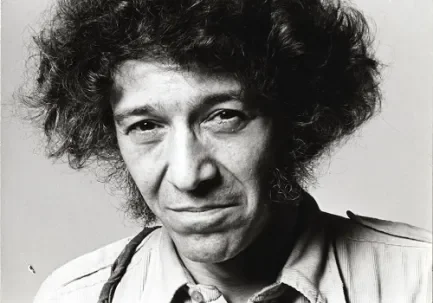
A German air raid made Alexis Korner a bluesman. Sheltering in London during the Second World War, he heard a record by the Chicago boogie-woogie pianist Jimmy Yancey and decided, by his own account, that playing the blues was all he ever wanted to do. Yancey reached this category of the Hall of Fame thirty-eight years before the man he converted – which seems fitting, since Korner spent his whole career pushing other people toward the spotlight.
Born in Paris in 1928 to an Austrian father and a mother of Greek, Turkish, and Austrian descent, Korner formed Blues Incorporated with the harmonica player Cyril Davies in 1961 and launched a rhythm-and-blues night at the Ealing Jazz Club in March 1962. The regulars and sit-in players included Mick Jagger, Keith Richards, Brian Jones, Charlie Watts, Jack Bruce, Ginger Baker, Rod Stewart, and Jimmy Page – very nearly the whole cast of the coming British blues boom, funneled through one suburban club by one man’s enthusiasm. Korner’s biggest commercial moment arrived later, with the band CCS, whose cover of “Whole Lotta Love” ran as the Top of the Pops theme for eleven years.
Lung cancer killed him on New Year’s Day 1984, at 55. At the 2024 ceremony the tribute came from Keith Richards on film, remembering the days when Korner ran the only blues gig in London worth wanting.
John Mayall
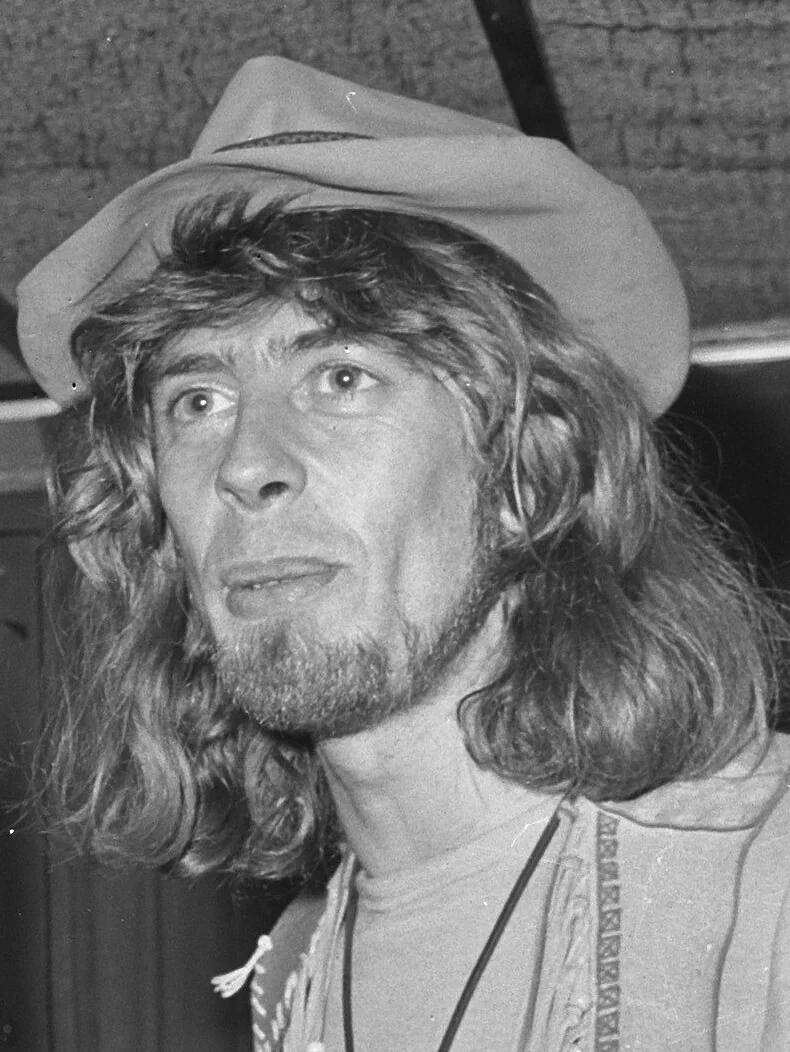
Eric Clapton, Peter Green, Mick Taylor, John McVie, and Mick Fleetwood all put in time with John Mayall’s Bluesbreakers, which makes the band less a band than a staff college for British rock. Clapton signed on in April 1965, fresh from quitting the Yardbirds; the album they cut in 1966, Blues Breakers with Eric Clapton – the Beano album, so called because Clapton is reading the comic on the cover – remains the founding document of British blues-rock. Green replaced Clapton, then left to start Fleetwood Mac with McVie and Fleetwood, two more Mayall men. Taylor departed in 1969 for the Rolling Stones. Mayall auditioned the next guitarist and carried on.
He carried on for six decades. Born in Macclesfield in 1933, he settled eventually in California, was appointed OBE in 2005, and toured hard into his late eighties while bands stocked with his former sidemen entered the Hall of Fame year after year. His own phone stayed quiet.
It finally rang on April 21, 2024, when the Hall announced his induction. Three months and a day later, on July 22, he died at his California home at 90. The award went ahead posthumously in Cleveland that October. Nobody else in the Hall had trained so many of the people already in it.
Big Mama Thornton
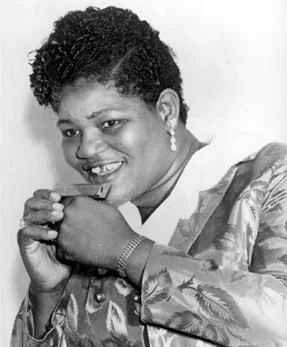
Five hundred dollars. That was Willie Mae Thornton’s entire payment for “Hound Dog”, which she recorded in Los Angeles on August 13, 1952, and which spent seven weeks at number one on the Billboard R&B chart the following year while selling more than half a million copies. Jerry Leiber and Mike Stoller, then teenagers, wrote it in roughly fifteen minutes after watching her rehearse. When Elvis Presley cut the song in 1956, it sold in the millions and became his signature. Thornton never saw another dime from it.
She was considerably more than one record. Having run off from Alabama as a teenager to tour with Sammy Green’s Hot Harlem Revue, she taught herself drums and harmonica and spent decades working the chitlin circuit. She also wrote “Ball and Chain”, the song Big Brother and the Holding Company, with Janis Joplin out front, tore through at the Monterey Pop Festival in 1967 – a performance so startling that the film crew, having missed it the first night, persuaded the band to play it again the next day for the cameras.
Thornton died in a Los Angeles boarding house on July 25, 1984, at 57. The Hall inducted her forty years later. The five hundred dollars stands as one of the worst transactions in American music.
Salt-N-Pepa
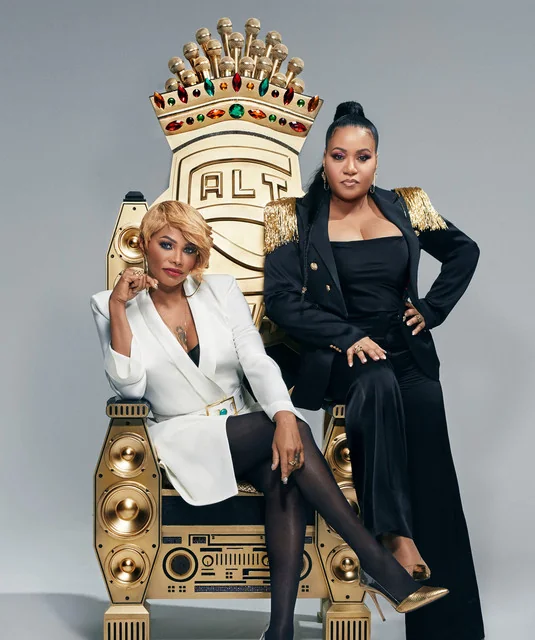
Salt-N-Pepa began in the lunchroom of a Sears in Queens, where Cheryl James and Sandra Denton – nursing students at Queensborough Community College working the phones between classes – were recruited by a co-worker named Hurby Azor to rap on a 1985 single called “The Show Stoppa”. It did well enough to finish off the nursing plans. Azor renamed the duo Salt-N-Pepa after a line in that record, and their 1986 debut Hot, Cool & Vicious went on to sell more than a million copies, making them the first female rap act certified gold and then platinum.
The song that carried it there, “Push It”, was originally a B-side. It climbed to number 19 on the Hot 100 and earned a nomination at the first Grammy ceremony ever to offer a rap award, in 1989 – a ceremony Salt-N-Pepa boycotted, along with LL Cool J and DJ Jazzy Jeff and the Fresh Prince, because the new category would not be televised. They won one outright six years later, for “None of Your Business”.
Missy Elliott inducted the group in Los Angeles in November 2025, and with them Deidra Roper – DJ Spinderella – who that night became the first female DJ ever inducted into the Hall. Accepting, James dedicated the honor to every woman who picked up a microphone after being told she couldn’t. Forty years on from that Sears lunchroom, the dedication covers a lot of people.
Warren Zevon
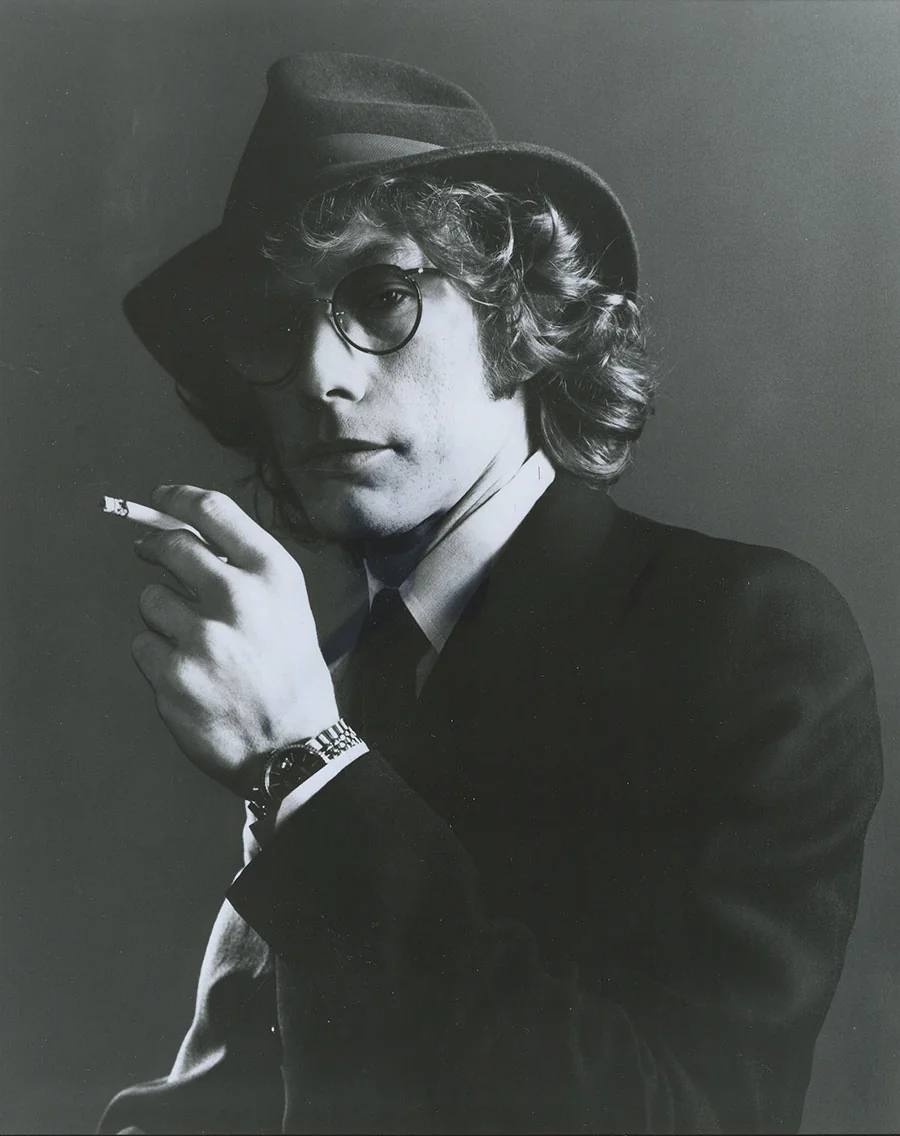
When Warren Zevon made his final television appearance, in October 2002, David Letterman gave him the entire Late Show hour. Zevon had been diagnosed with pleural mesothelioma, a cancer of the lining of the lung, and when Letterman asked what he understood now that the rest of us didn’t, he answered, “Enjoy every sandwich.” He died on September 7, 2003, two weeks after the release of his farewell album The Wind and not long after meeting his newborn twin grandsons. The record collected five Grammy nominations and won two.
Commercial success had otherwise kept its distance. “Werewolves of London”, cut with Fleetwood Mac’s own rhythm section of Mick Fleetwood and John McVie, reached number 21 in 1978 and stands as the only Top 40 hit of Zevon’s career – a ridiculous statistic for the writer of “Excitable Boy” and “Roland the Headless Thompson Gunner”. The Hall’s voters had passed him over as recently as 2023, when he made the Performer ballot but not the class.
The committee fixed it in 2025, and the induction speech fell, inevitably, to Letterman, who told the room that everyone has considered the sandwich advice and that nobody manages to hang on to it daily. Then he produced the guitar Zevon had handed him at the end of that 2002 taping and passed it to the Killers’ Dave Keuning, and the band answered with “Lawyers, Guns and Money”. The guitar, at least, made it back onstage.
Frequently Asked Questions
Who are the most recent Early Influence inductees?
Salt-N-Pepa and Warren Zevon, honored on November 8, 2025, at the Peacock Theater in Los Angeles. Theirs was the last class to receive the honor under its temporary name, and Salt-N-Pepa’s induction made them the first female hip-hop group admitted to the Hall in any category.
Who is getting the Early Influence Award in 2026?
Queen Latifah, Celia Cruz, Fela Kuti, MC Lyte, and Gram Parsons. Announced on April 13, 2026, during a live American Idol broadcast, they are honorees rather than inductees until the 2026 ceremony, which tapes on November 14 in Los Angeles and airs in December. They will be the first recipients under the Early Influence name since 2022.
How are Early Influence inductees chosen?
By a Hall of Fame committee, not the ballot that elects Performers. The category originally honored artists whose music predated rock and roll entirely. Plenty of its members got in only after the main ballot failed them – Kraftwerk was nominated six times as a Performer before the committee waved them through in 2021.
Who were the first Early Influence inductees?
Robert Johnson, Jimmie Rodgers, and Jimmy Yancey, all honored at the Hall’s inaugural induction dinner in January 1986. None of the three had ever played a note of rock and roll, and all three were dead before Elvis Presley first walked into Sun Studio – which was, at the time, precisely the point of the award.
How many women have received the Early Influence Award?
Ten. Bessie Smith, Ma Rainey, Dinah Washington, Mahalia Jackson, Billie Holiday, Wanda Jackson, Sister Rosetta Tharpe, Elizabeth Cotten, and Big Mama Thornton were inducted as individuals, and Salt-N-Pepa arrived as the roster’s only all-female group. The first eight were spread across thirty-three years; the last two came in back-to-back ceremonies.
What is the longest gap between Early Influence inductions?
Eight years. After Billie Holiday and Nat King Cole went in with the class of 2000, the committee left the category empty until Wanda Jackson broke the silence in 2009. Skipped years are normal here – the award has always been an occasional instrument rather than an annual obligation.
Who were the last Early Influence inductees before the name changed?
Harry Belafonte and Elizabeth Cotten, in 2022. Cotten was honored 35 years after her death, while Belafonte, then 95, became one of the Hall’s oldest living inductees. When the category next surfaced, in 2023, the plaque read differently – making the 2022 pair the bookend of the award’s first era.
- Rock & Roll Hall of Fame – The Rock & Roll Hall of Fame Reveals 2026 Inductees (press release)
- Rock & Roll Hall of Fame – Inductees, Class of 1999
- Library of Congress – Today in History: Jelly Roll Morton
- Rolling Stone – LL Cool J Praises ‘Larger Than Life’ DJ Kool Herc at Rock Hall Induction
- Variety – John Mayall, British Blues-Rock Legend and 2024 Rock and Roll Hall of Fame Inductee, Dies at 90
- Variety – David Letterman Offers a Full Sandwich of a Speech Inducting Warren Zevon Into Rock & Roll Hall of Fame
- BlackPast – Charley Patton (1891-1934)
- Democracy Now! – Remembering Harry Belafonte