Every Charter Member of the Pro Football Hall of Fame (1963)
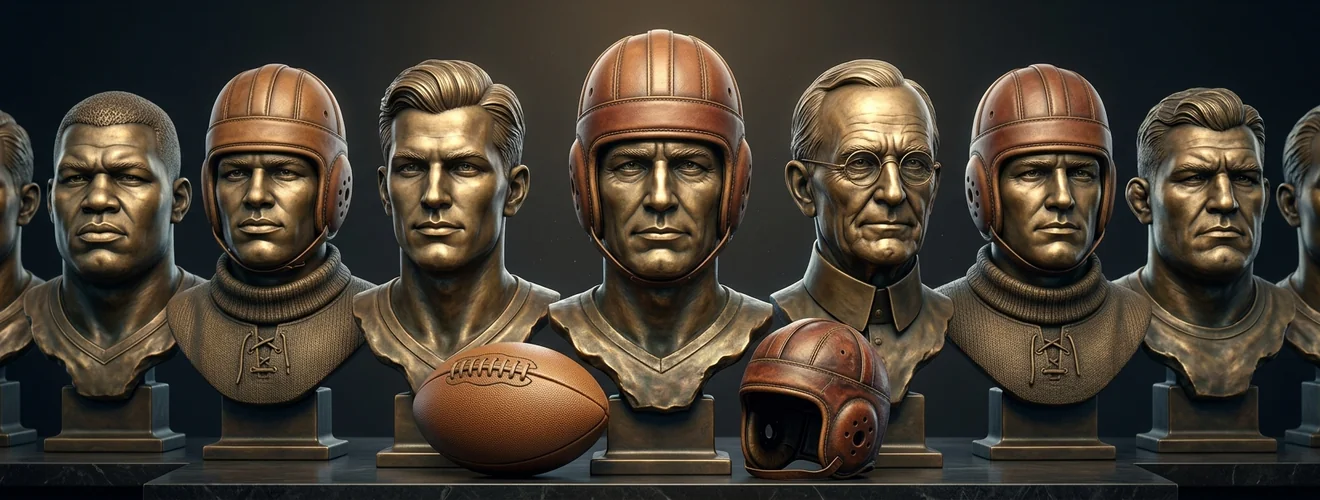
When the Pro Football Hall of Fame first opened its doors, five of the seventeen men it was enshrining were not alive to see it. Joe Carr had been dead twenty-four years; Jim Thorpe, Tim Mara, Bert Bell, and Pete Henry had all gone in the decade before the building was finished. Carr’s bust was accepted on his behalf by a stand-in. The class had been chosen the previous December, in a New York hotel, the day before the 1962 league championship game – and the men doing the choosing were not voting on athletes alone.
That is the part most people miss about the charter class. A hall of fame is supposed to be a building full of great players, and eleven of these seventeen were exactly that. The other six were the people who had kept professional football from quietly going under. The sport they inherited in the 1920s was a disreputable, half-broke affair played before small crowds in towns like Canton and Decatur and Green Bay, where teams folded between seasons and college players took the field under invented names. The men honored here turned it into something permanent: a bookmaker who bought a New York team almost sight unseen, a former sportswriter who ran the league for eighteen years, a near-blind tailback, and a fullback whose surname became American shorthand for running straight through people.
What follows is the complete charter class, in the order its members were born – from the Columbus newspaperman born in 1879 to the Texan born in 1914, who would outlive all sixteen of the others by decades. Some built the league. Some merely terrorized it on Sundays. A few managed both.
The Pro Football Hall of Fame’s charter class numbered seventeen men, enshrined at the Hall’s opening in Canton, Ohio, on September 7, 1963: eleven players and six team founders, owners, and executives. It stood as the largest class in Hall history until the twenty-member Centennial Class of 2020.
Joe Carr
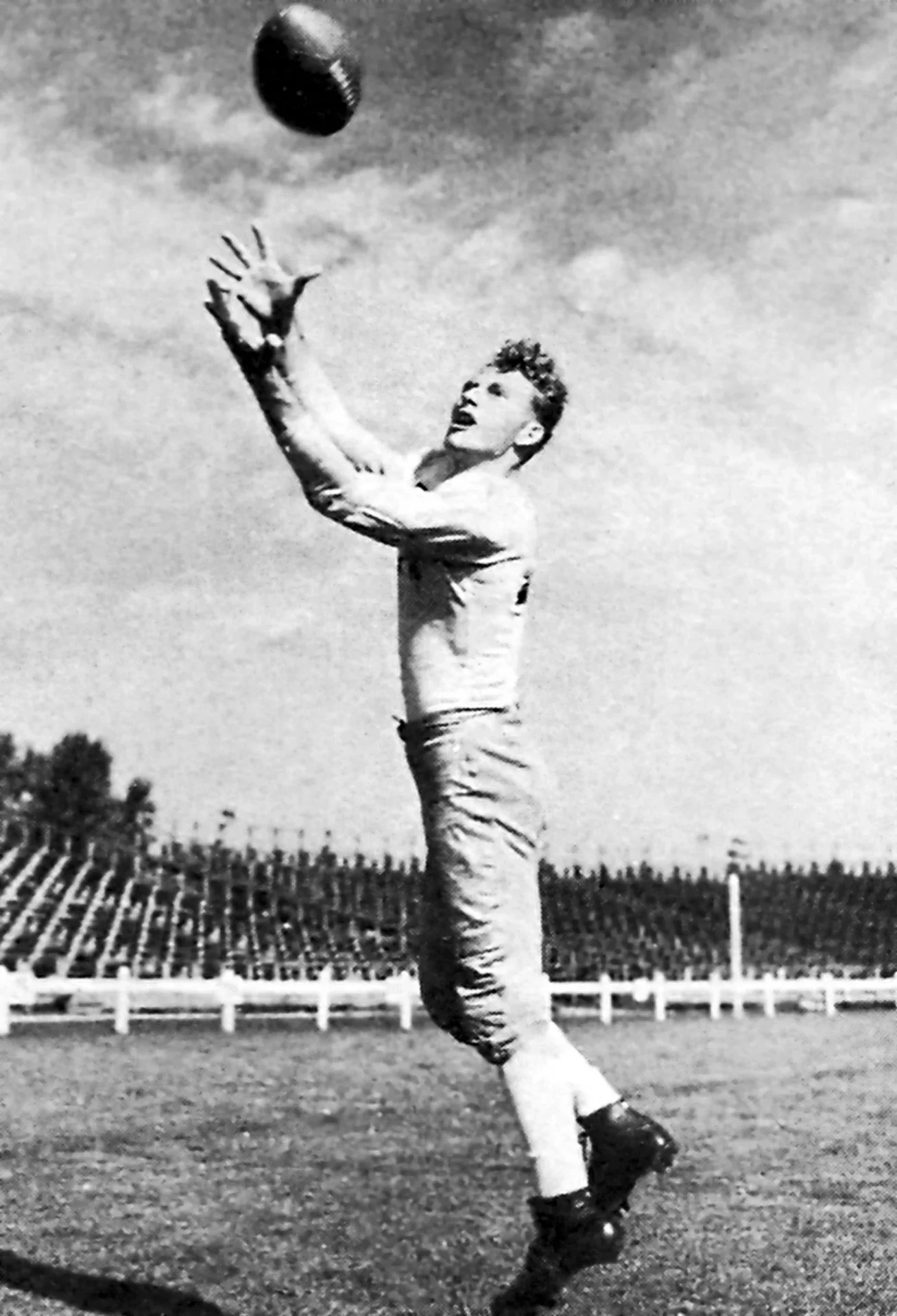
The Green Bay Packers were thrown out of professional football after the 1921 season for using players who still had college eligibility. The man who expelled them was Joe Carr, and a few months later he let Curly Lambeau buy the franchise back for fifty dollars – which tells you something about the going rate for a football team in 1922, and something about Carr’s preference for order over grudges.
Carr was a Columbus sportswriter and the manager of a railroad-workers’ team, the Columbus Panhandles, when the league organized in 1920. Its first president was Jim Thorpe, chosen because he was the only name in the sport the public recognized. Within a year it was clear the league needed someone who would do the actual work, and the owners handed the job to Carr, who kept it for eighteen years. He copied baseball’s standard player contract, outlawed the habit of college men appearing under aliases, and went hunting for moneyed owners in big cities – which is how a New York bookmaker named Tim Mara ended up buying a team in 1925.
He ran the league until the day he died, in 1939, and a biography published seventy years later gave him the title that stuck: the man who built the National Football League. His Panhandles had travelled to games as a team of mechanics riding railway passes. What he handed on would, in time, run on a great deal more.
Jim Thorpe
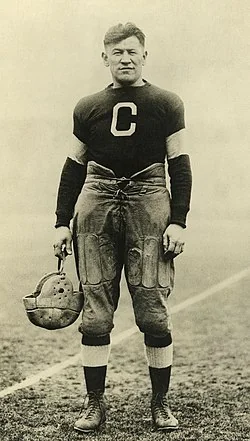
The Oorang Indians existed to sell dogs. For two seasons, in 1922 and 1923, the National Football League fielded a team out of the tiny town of LaRue, Ohio, bankrolled by the Oorang Airedale kennels, whose owner had worked out that an all-Native-American squad starring Jim Thorpe was a superb way to advertise puppies. At halftime the players ran dog-handling demonstrations and what the programs billed as Indian dances. The team was terrible. The kennel did splendidly.
Thorpe was the reason it drew anyone at all. A decade earlier, at the 1912 Stockholm Olympics, he had won gold in both the pentathlon and the decathlon, and the King of Sweden told him to his face he was the greatest athlete in the world. The medals were gone within a year, stripped after a newspaper revealed he had earned a few dollars a game in minor-league baseball in 1909 and 1910 – which college players did constantly, except they hid behind aliases and Thorpe had used his own name. The committee that disqualified him missed its own thirty-day deadline to do so by about six months.
The medals came back in 1983, thirty years after he died, and he was not restored as the sole champion until 2022, a hundred and ten years after he won. Mauch Chunk, Pennsylvania, renamed itself Jim Thorpe in 1954 for the right to bury him – which it did, in a town he had never once visited.
Tim Mara
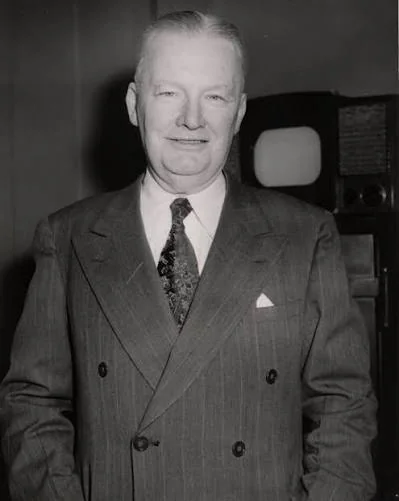
Five hundred dollars bought Tim Mara the New York Giants in 1925. Mara was a bookmaker – a legal profession at the time – who had barely watched a football game when the league’s president turned up in New York looking for somebody to underwrite a team. Told the franchise cost five hundred dollars, Mara decided that a New York franchise to operate anything at all was worth that much, and wrote the check.
It looked like a poor bet for most of the first season. New Yorkers loved college football and ignored the professional kind, and the Giants lost money even as they won games. Red Grange rescued them. When Grange and the Chicago Bears arrived that December on their barnstorming tour, close to seventy thousand people jammed the Polo Grounds to see him, and Mara’s share of that single gate – a reported one hundred and forty-three thousand dollars – ended the argument over whether New York would carry a professional team.
The Giants won the league championship in 1927, and the Mara family has held a piece of the team ever since. Tim Mara died in February 1959, four years before the Hall opened. It remains one of the more profitable things anyone has ever done on a hunch, by a man who bought a football team roughly the way other people buy a raffle ticket.
George Halas
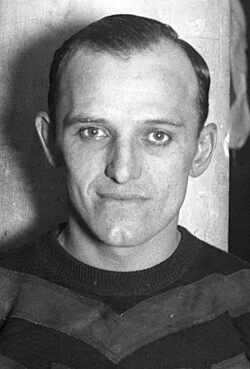
On July 24, 1915, the Chicago Tribune printed a list of Western Electric workers missing and presumed dead in the Eastland disaster, and one of the names on it was G. S. Halas. The company had chartered the steamer to ferry employees to a picnic; it capsized at its mooring in the Chicago River and drowned eight hundred and forty-four people. George Halas was supposed to be on it. He was not.
He went on to nearly everything else. He played twelve games in the Yankees’ outfield in 1919 before a hip injury ended his baseball career – the next year New York acquired Babe Ruth to play right field. Halas then represented a club called the Decatur Staleys at the 1920 meeting that organized professional football, moved the team to Chicago, renamed it the Bears, and ran it for the next sixty-three years. As a coach he won six league titles and was first to do a long list of things that now look obvious: holding daily practice, studying film of opponents, putting his team’s games on the radio.
His 1940 Bears beat Washington 73-0 for the championship, still the most one-sided result the league has ever produced, behind a T-formation he had spent years perfecting. He outlived the Eastland by sixty-eight years, dying in 1983, by then the last of the league’s founders still running a team of his own.
Bert Bell
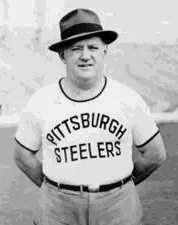
Bert Bell invented the device that rewards the worst team in football, and he invented it because he owned the worst team in football. His Philadelphia Eagles went 1-11 the season he coached them and could not sign good players, because the best college men joined the established clubs that paid more. In 1935 Bell proposed the remedy that still runs the sport: let the teams that finish last choose first. The owners agreed, and the inaugural draft was held in a Philadelphia hotel in 1936, with Bell working as master of ceremonies.
He had not wanted to be in football at all. Talked round by his future wife, a Ziegfeld Follies star who lent him the money, he bought the Frankford Yellow Jackets in 1933 and named them the Eagles after the blue eagle on National Recovery Act posters. He later took a share of the Pittsburgh Steelers, and in 1946 the owners made him commissioner, a post he held until his death. He recognized the players’ union over the other owners’ objections and wrote the league’s first serious anti-gambling rules.
On October 11, 1959, against his doctors’ orders, Bell went to watch the Eagles play the Steelers – the team he had founded against the team he had owned – at Franklin Field. He suffered a heart attack in the stands late in the fourth quarter and was dead by that afternoon. He had often said he would sooner go that way than in bed.
George Preston Marshall
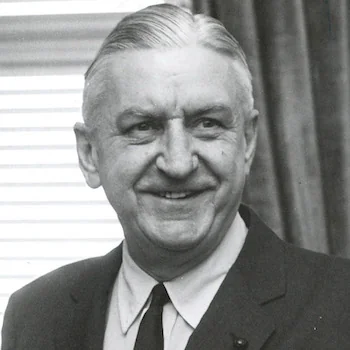
The first marching band in professional football belonged to George Preston Marshall, and so did the first fight song. He approached the sport as show business, which in the 1930s it sorely needed. His Boston team – which he moved to Washington in 1937 – took the field to a brass band and a number called ‘Hail to the Redskins’ while most clubs were still playing to half-empty stands. With Bears owner George Halas, he also pushed through the 1933 rule changes that opened the game up, allowing a forward pass from anywhere behind the line and moving the goalposts onto the goal line to encourage field goals.
He was also the last owner in the league to put a Black player on his roster, and he did it only when the federal government forced him. Marshall had built his following across the segregated South and would not integrate. In 1961 the Kennedy administration’s interior secretary, Stewart Udall, informed him that the team could not use its new, federally owned stadium unless it complied. Marshall spent his 1962 first-round pick on Ernie Davis, then traded him to Cleveland for Bobby Mitchell, who became Washington’s first Black player.
Between the rest of the league integrating in 1946 and Marshall’s death in 1969, his teams managed three winning seasons. His critics did not consider the timing a coincidence.
Pete Henry
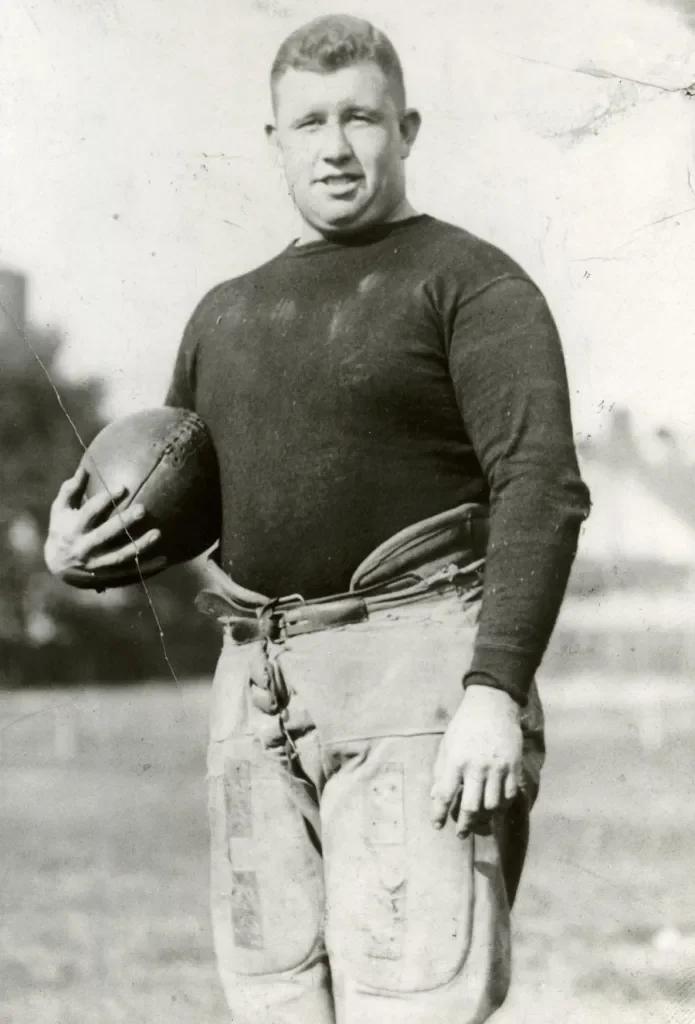
The day Pete Henry signed with the Canton Bulldogs, the local paper ran his name across the top of the front page and put the founding of the National Football League back on page three. This was September 17, 1920; the two events happened in the same town on the same afternoon, and the Canton Repository judged that a 245-pound tackle everyone already knew was a bigger story than a roomful of men trying to organize a league nobody yet cared about. It is hard to argue the editor got it wrong.
Henry was nicknamed ‘Fats,' looked soft, and was nothing of the sort – he could run a hundred yards in close to eleven seconds at a weight that drifted between 235 and 250 pounds. He had been a consensus All-American at Washington and Jefferson, a small college in Pennsylvania, and for the Bulldogs he did a great deal more than block. He punted, place-kicked, and dropkicked, and in 1923 he boomed a punt of ninety-four yards that stood as the league record for the next forty-six years.
He anchored the line on the Canton teams that won the first two league championships, in 1922 and 1923, then spent most of his remaining life as athletic director back at Washington and Jefferson, where he had started. He died in February 1952. Canton honored him eleven years later, a short walk, more or less, from the spot where its newspaper had once filed his entire league under page three.
Curly Lambeau
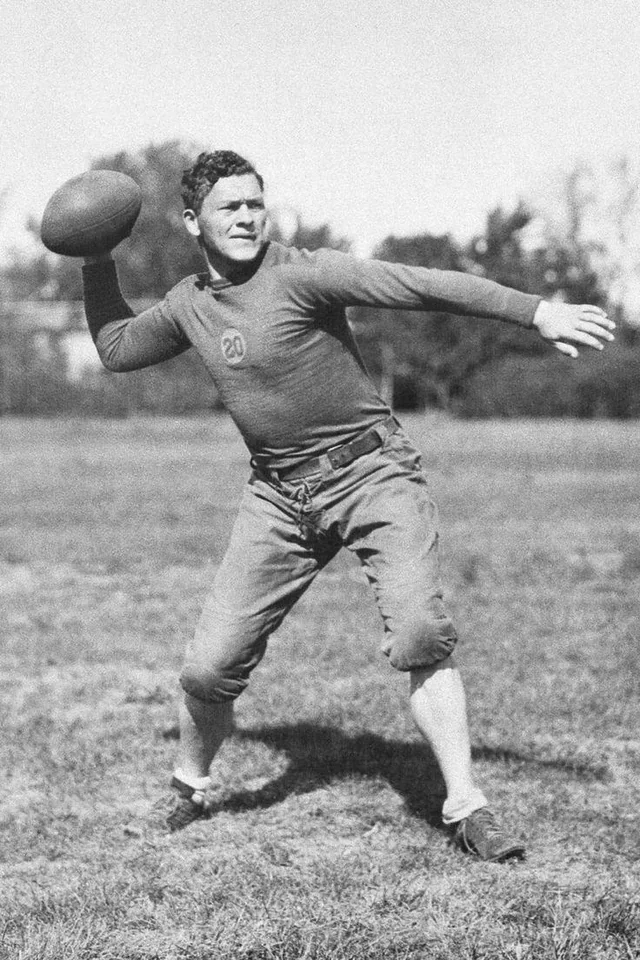
The Green Bay Packers are named after a meatpacking company that no longer exists. In 1919 a former Notre Dame player named Curly Lambeau persuaded his employer, the Indian Packing Company, to put up five hundred dollars for jerseys and the use of a field, and the team wore the company’s name onto the gridiron and kept it for a century after the company itself had vanished.
Lambeau had played a single season at Notre Dame, on Knute Rockne’s first team as head coach, before illness sent him home to Wisconsin, where he started the Packers and then coached them from 1919 to 1949. He believed in throwing the ball at a time when most coaches treated the forward pass as an act of desperation, and his pass-minded Packers won six championships, including three straight from 1929 to 1931 – the first such run in the league’s history.
Green Bay is still the smallest city in American major-league sport, a town of barely a hundred thousand people putting a team on the field against cities many times its size, and it is there for one reason: Lambeau happened to grow up there. The Packers play in a stadium called Lambeau Field. He belongs to the rare class of founder who got to keep his own name on the front of the building.
Cal Hubbard
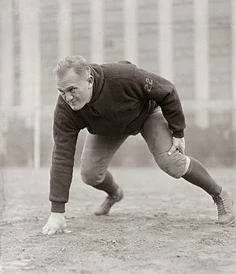
Cal Hubbard is the only man enshrined in both the Pro Football Hall of Fame and the Baseball Hall of Fame. He earned the first as a 250-pound tackle for the New York Giants and the Green Bay Packers across the late 1920s and 1930s, a lineman dominant enough that opposing teams designed plays specifically to avoid him. He earned the second, years later, in an entirely different uniform.
Hubbard had umpired minor-league baseball during his football off-seasons, and when his playing days ended he turned it into a career – sixteen years as an American League umpire, then seventeen more as the league’s supervisor of umpires. Cooperstown inducted him for that work in 1976. He is in the College Football Hall of Fame as well, which leaves him a member of three national halls of fame across two sports, a collection nobody else has assembled. He stood six foot four at a time when that was genuinely imposing, on the field and behind the plate alike.
He died in 1977, the year after the last of his three halls admitted him. Given how thoroughly both games have specialized since – football players who never see a baseball, umpires who never played a down – it is a fair guess no one will ever match him. The most decorated man in the room at Canton was the one nobody thought to look for behind home plate.
Ernie Nevers
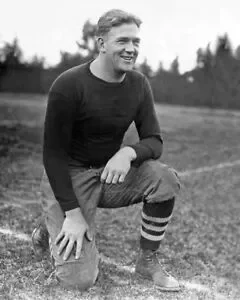
The oldest record in the NFL belongs to a fullback who has been dead since 1976. On Thanksgiving Day in 1929, Ernie Nevers scored all forty points in the Chicago Cardinals’ 40-6 win over the Bears – six rushing touchdowns and four extra points, every one of them his. Almost a century and tens of thousands of games later, no one has matched it.
Nevers came to the Cardinals from the Duluth Eskimos, a traveling team that in 1926 played twenty-nine games, twenty-eight of them on the road, with Nevers on the field for all but a handful of the season’s 1,740 minutes. Before that he had been a Stanford star: in the 1925 Rose Bowl, on two ankles he had broken earlier that season, he played all sixty minutes against Notre Dame and outgained the entire Four Horsemen backfield by himself. His coach, Pop Warner, called him a player without a fault.
He also pitched summers for baseball’s St. Louis Browns, where his contribution to history was less heroic: in 1927 he gave up two of the sixty home runs Babe Ruth hit that year. So the man who holds the most unbreakable record in pro football also turns up, twice, in the box score of baseball’s most famous season – on the wrong end of it.
Red Grange
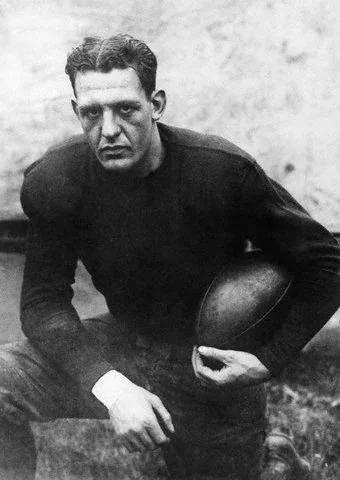
Red Grange scored four touchdowns in the first twelve minutes of a game against Michigan in 1924. He took the opening kickoff ninety-five yards, then broke off scoring runs of sixty-seven, fifty-six, and forty-four yards before the first quarter was over, at the dedication of Illinois’ new Memorial Stadium, in front of sixty-seven thousand people. By the time he left college he was as famous as Jack Dempsey, which in the 1920s was about as famous as a person got.
What he did next mattered more to this list. The day after his final college game in 1925, Grange signed with the Chicago Bears and went straight out on a barnstorming tour – nineteen games in sixty-seven days, coast to coast – with his agent, a movie-theater promoter named C. C. Pyle, taking a cut of every gate. Professional football at the time was a disreputable business that drew small crowds and less respect. Grange drew sellouts in city after city, and the sport has never looked back.
His knee gave out in a pileup in 1927, and when he returned he was, by his own flat assessment, ‘just an ordinary halfback.' It was not true. But it tells you something that the man who did more than anyone to sell professional football spent the rest of his life refusing to be impressed by himself.
John ‘Blood’ McNally
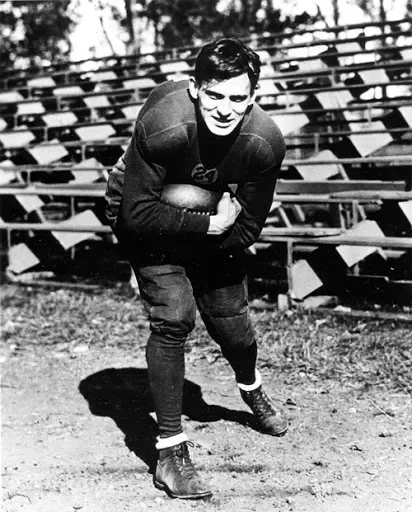
There was never a Johnny Blood on any birth certificate. The name belonged to John Victor McNally, who in 1922 was riding a motorcycle to a tryout for a Minneapolis semi-pro team – under a fake name, to protect the college eligibility he might someday use – when he passed a theater showing the Rudolph Valentino film Blood and Sand. He turned to the friend on the back of the bike and said he would be Blood and his friend could be Sand. The name stuck for the rest of his life.
As Johnny Blood he played fourteen seasons for five teams and was one of the best receivers in football before the position quite existed, contributing to four Green Bay championship teams. He was also, by wide agreement, the least governable man in the league. He hopped freight trains to training camp, which earned him the title the Vagabond Halfback, and once scaled a hotel fire escape and leaped a six-foot air shaft to reach his coach’s window and ask for an advance on his pay.
When Curly Lambeau tried to curb his drinking by offering a raise to a hundred and ten dollars a game if he stayed dry after each Tuesday, Blood made a counteroffer: he would take an even hundred and keep Wednesdays. He took the hundred.
Dutch Clark
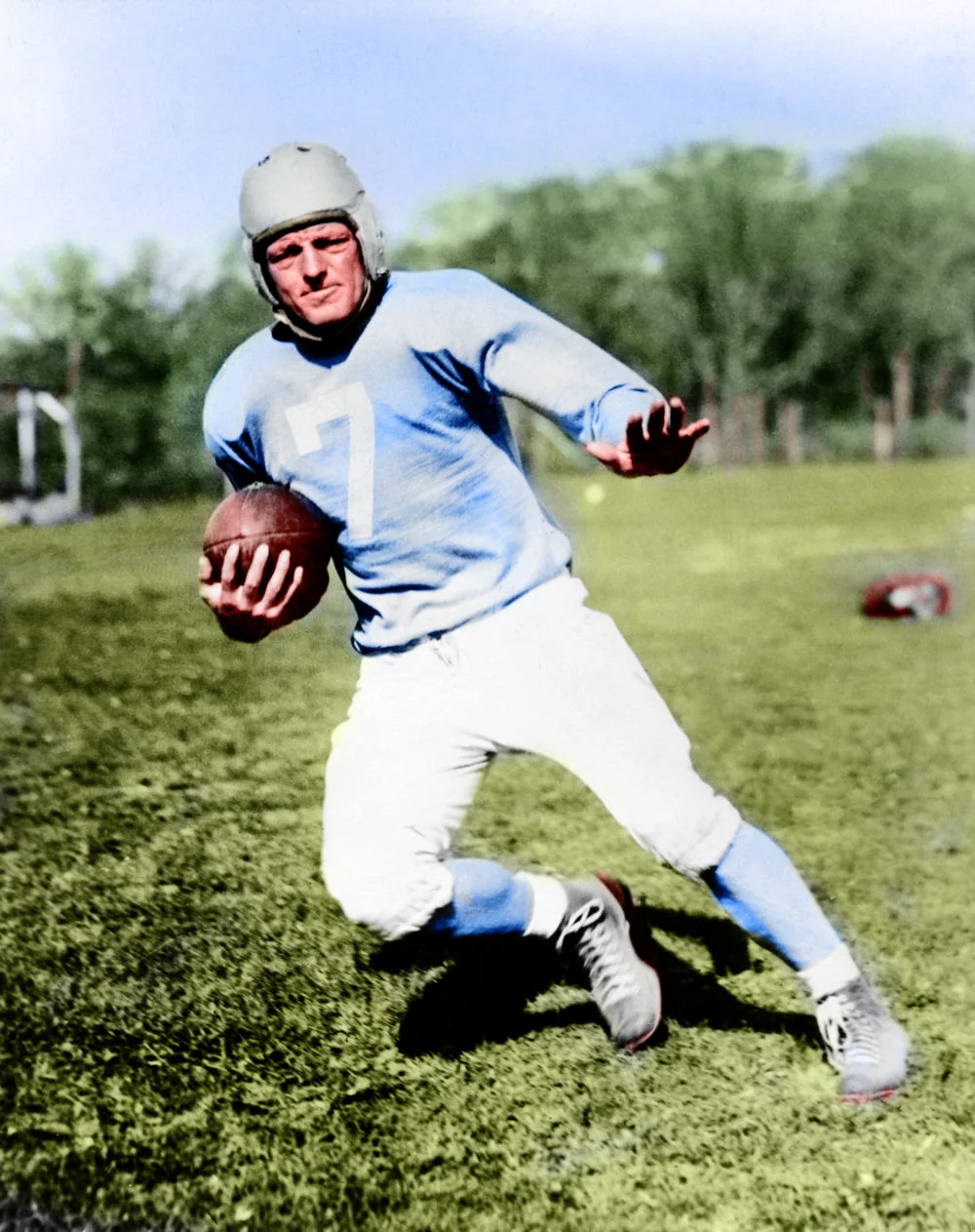
The player the Associated Press would later name the best of the entire 1930s could barely see the far end of the field. Earl ‘Dutch’ Clark’s eyesight was around 20/200 in one eye – the threshold for legal blindness – and not much better in the other, a fact he turned into a running joke by claiming numbers far worse than the real ones. It never seemed to matter. Clark led the NFL in scoring three times and made All-Pro in six of his seven seasons.
He was the last of the true triple-threat backs – a runner, passer, and kicker out of tiny Colorado College, where he became one of the first All-Americans west of the Mississippi. In 1935 he captained the Detroit Lions to their first championship, a 26-7 win over the Giants. He had a habit of vanishing, too: by one account he missed the first postseason game in league history, the famous 1932 indoor playoff, because he had taken an off-season coaching job he could not get out of.
In 1937 Clark drop-kicked a nine-yard field goal against the Chicago Cardinals. It was the last drop-kicked field goal the NFL would see for decades, a skill that died out with his generation. The man who kept it alive longest could not have told you, from across the field, exactly where the posts were.
Bronko Nagurski
The story of how Bronko Nagurski reached college is that a Minnesota coach, lost on a back road near International Falls, stopped to ask a teenager plowing a field for directions, and the teenager lifted the plow and pointed with it. Whether it happened that way or not, Minnesota signed him, and from 1927 to 1929 he became the only player ever named All-American at two positions – fullback and tackle – in the same season.
As a Chicago Bear he ran the way a truck runs. The most famous story about him, almost certainly embellished, has him scoring a touchdown, bouncing off the goalposts, and cracking the brick wall at Wrigley Field, then returning to the huddle to remark that the last tackler had hit him rather hard. He put his own method more plainly: if somebody got in his way, he ran through them. He helped the Bears to titles in 1932 and 1933, then quit in 1937 after one too many salary fights with George Halas and became a heavyweight wrestler.
In 1943, with the wartime Bears short of men, Nagurski came back at thirty-five, held together with tape, and helped them win one more championship. Today the award for the best defensive player in college football is the Bronko Nagurski Trophy. The name had become the thing it described.
Mel Hein
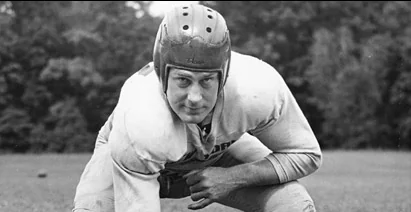
In fifteen seasons of professional football, Mel Hein called for exactly one timeout. It came in 1941, so the Giants’ trainer could reset his broken nose, after which he went back in and finished the game. Hein played every minute of every game – offense and defense both, in the years before substitution – for a decade and a half, and was still doing it at thirty-six in his final season.
The Giants nearly never got him. In 1931, before the draft existed, Hein wrote to three NFL teams from Washington State offering his services. Providence answered first, at a hundred and thirty-five dollars a game; Hein signed the contract and mailed it back. Then he learned the Giants would pay a hundred and fifty, so he wired the postmaster in Providence, described his own letter, and asked him to pull it from the mail before it was opened. The postmaster did, against regulations, and Hein tore the contract up.
In 1938 he was named the league’s Most Valuable Player – the only offensive lineman ever to win it, then or since. The trophy was the Joe F. Carr Trophy, named for the league president who opens this list. No interior lineman has taken the award in the nearly ninety years since, which is a long time for a record held by a man who left the field exactly once.
Don Hutson
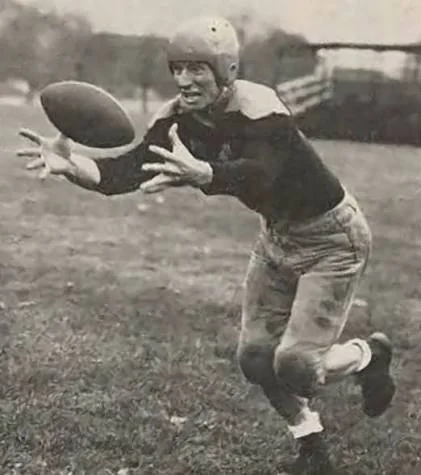
The first ball ever thrown to Don Hutson in a professional game travelled eighty-three yards for a touchdown and beat the Chicago Bears 7-0. It was the first of ninety-nine touchdown catches, a record that would stand for forty-four years. Hutson played eleven seasons for Green Bay, all of them at left end, and when he retired in 1945 he held eighteen NFL records and had caught nearly two hundred more passes than the man in second place.
He more or less invented the job. Before Hutson, ends ran downfield and hoped; he built a repertoire of cuts and fakes – the Z-out, the buttonhook, the hook-and-go – that receivers still run today, and he was the first player defenses found they had to cover with two men, then three. In one quarter of a 1945 game against Detroit, he caught four touchdown passes and kicked five extra points: twenty-nine points in fifteen minutes, a mark no one has come close to.
He had been an All-American at Alabama, where his less-celebrated teammate at the other end was a young man named Bear Bryant. Bryant became the most famous coach in the college game. Hutson, who quietly rewrote the rules of his own position, is the reason the modern passing game has any geometry at all.
Sammy Baugh
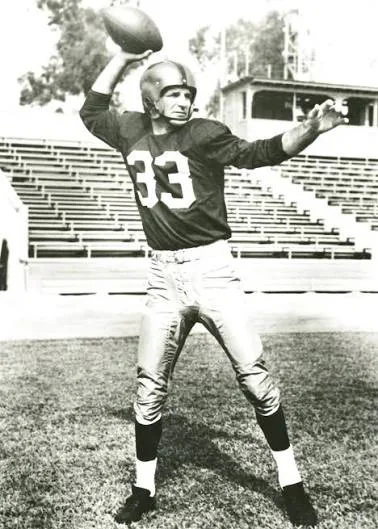
Only one man has ever led the National Football League in passing, in punting, and in interceptions in the same season. Sammy Baugh did it in 1943 – topping the league in something his offense did, something his special teams did, and something his defense did, all at once. In one game that year, against Detroit, he threw four touchdown passes and picked off four of Detroit’s.
Baugh arrived from Texas Christian in 1937 as Washington’s first-round pick and changed what a quarterback was for. When he came into the league the forward pass was something you tried in desperation near midfield; by the time he left, sixteen seasons later, it was the center of the game. He won six passing titles. He was also the finest punter the league had seen – his 51.4-yard average in 1940 stood as the record for eighty-two years – because he genuinely believed in kicking the ball away, a conviction already going out of fashion.
After the Bears beat his Redskins 73-0 for the 1940 championship, a reporter asked whether it might have been closer had a teammate not dropped an early touchdown pass. ‘Yeah,' Baugh said. ‘It would have made it 73-7.' He retired in 1952 and outlived them all, dying in Texas in 2008 at ninety-four – the last man alive from a Hall of Fame that had opened, forty-five years before, with five of its members already in the ground.
Frequently Asked Questions
Is anyone enshrined in both the Pro Football Hall of Fame and the Baseball Hall of Fame?
Cal Hubbard is the only one. He earned his football enshrinement as a punishing 250-pound tackle for the New York Giants and Green Bay Packers in the late 1920s and early 1930s, then spent sixteen years as an American League umpire and seventeen more as the league’s supervisor of umpires, entering Cooperstown in 1976.
Why do the Green Bay Packers share their name with a meatpacking company?
In 1919 Curly Lambeau talked his employer, the Indian Packing Company of Green Bay, into funding the team’s first jerseys and field rental for five hundred dollars. The company itself folded within a few years, but the Packers kept its name, and Green Bay remains the smallest city in major American professional sports.
What is the oldest individual record in NFL history?
Ernie Nevers holds it: forty points in a single game, all his own, when the Chicago Cardinals beat the Chicago Bears 40-6 on Thanksgiving Day, November 28, 1929. His six rushing touchdowns that afternoon were tied by New Orleans’ Alvin Kamara in 2020, but nobody has matched the four extra points that push Nevers to forty.
Has any player ever led the NFL in passing, punting, and interceptions in the same season?
Sammy Baugh did, and it happened just once, in 1943. Playing every down for Washington that season, Baugh topped the NFL in pass completions, punting average, and interceptions simultaneously, a feat that touches offense, special teams, and defense, and that nobody has repeated since.
Were Jim Thorpe’s Olympic medals ever restored?
Yes, in stages. The IOC stripped his 1912 pentathlon and decathlon gold medals in 1913, ruling him a professional over a few dollars a game of minor league baseball years earlier. Replicas went to his family in 1983, thirty years after his death, but the IOC did not name him the sole champion of both events again until 2022.
Who was the last NFL owner to integrate his roster, and why did he finally do it?
George Preston Marshall was the last, and only because the government forced him. His Washington franchise stayed all white until 1961, when Interior Secretary Stewart Udall told him he would lose the lease on the team’s new, federally owned stadium unless he complied; Marshall drafted Ernie Davis in 1962 and immediately traded him for Bobby Mitchell.
Is the Bronko Nagurski Trophy still awarded today?
Yes. The Football Writers Association of America began giving its college defensive player of the year award in 1993 and named it for Bronko Nagurski in 1995. Handed out every December in Charlotte, North Carolina, it honors the Chicago Bears fullback who anchored two 1930s championship teams and returned, at thirty-five, to help win a third in 1943.