Every Scientist Killed by the Volcano They Were Studying
Volcanologists die close to the summit. When Sarah Brown and her colleagues at the University of Bristol worked through the world’s recorded volcanic deaths from 1500 to 2017, they found 67 volcanologists, other field scientists and the people supporting their work among them, and 49 of those, 73 per cent, had been in or near the crater, within 1 km of it. It was not, on the whole, the great eruptions that killed them. Most, the paper found, died in small ones, and the commonest identified cause was a rock thrown out of the vent.
Brown’s count is not quite the same as this list. Her 67 include the crew of a Japanese survey ship, two volunteer volcano watchers at Mount St. Helens and two people who fell into thermal features, and her database starts in 1500, which leaves out Pliny the Elder. Go back to the Japanese records and the ship’s survey party turns out to have numbered nine. Sorting the scientists from everyone else who died beside them is most of the work.
What follows is every incident in which a scientist, a geology student on fieldwork or a member of a volcano’s monitoring staff was killed by the volcano they were working on, from a Roman admiral on a beach at Stabiae to a conservation worker at a crater lake in the Kermadec Islands, in the order it happened. Eight of the dead go unnamed in every source this list reached: three observers at Kelut, three of the Myojin-sho survey party and two officers at Awu. The rest have names, and in most cases the readings they went up to take are here too.
Thirty-nine scientists and volcano-monitoring staff are known to have died in eruptions of a volcano they were studying, in 17 incidents. The first was Pliny the Elder at Vesuvius in 79 AD and the most recent was Mark Kearney, taking water temperatures at Raoul Island, New Zealand, on 17 March 2006.
Pliny the Elder (Vesuvius, 79)
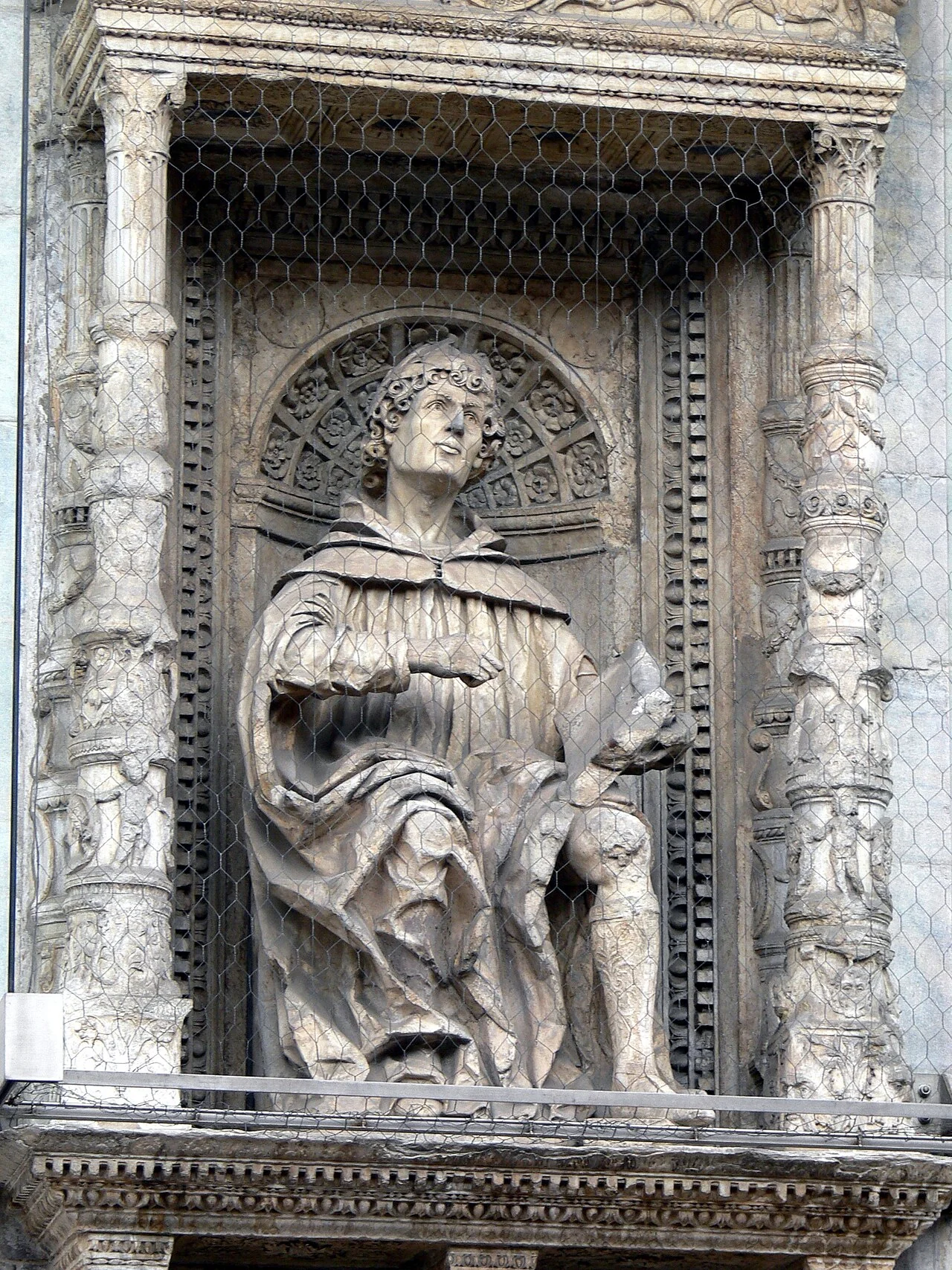
A closer look was all the first scientist on this list set out to get. At about one in the afternoon, by his nephew’s account, Pliny the Elder was shown a cloud shaped like a pine tree, and as commander of the Roman fleet at Misenum he could do something about his curiosity. He ordered a light vessel made ready. Then a note arrived from a woman called Rectina, whose villa sat at the foot of Vesuvius with no way out except by sea, and the field trip became a rescue. He sailed toward the danger, dictating observations as pumice dropped into the ships, and when the pilot suggested turning back he answered, ‘Fortune favours the brave; steer to where Pomponianus is.’
At Stabiae he bathed, dined and slept so soundly that attendants outside heard his heavy breathing. By morning the courtyard was filling with ash, the party went out with pillows tied to their heads with napkins, and Pliny, lying on a sailcloth on the beach, rose with the help of two slaves and ‘instantly fell down dead.’ Whether vapour, as his nephew guessed, or his heart or lungs killed him has never been settled.
His 37-book Natural History found room for the toppled Colossus of Rhodes, a statue of Helios, the sun god counted among the Titans of Greek mythology. Its survey of the world’s burning mountains, as the classicist Roy Gibson has noted, left out Vesuvius.
Miura Sojiro and Nishiyama Sokichi (Azuma, 1893)
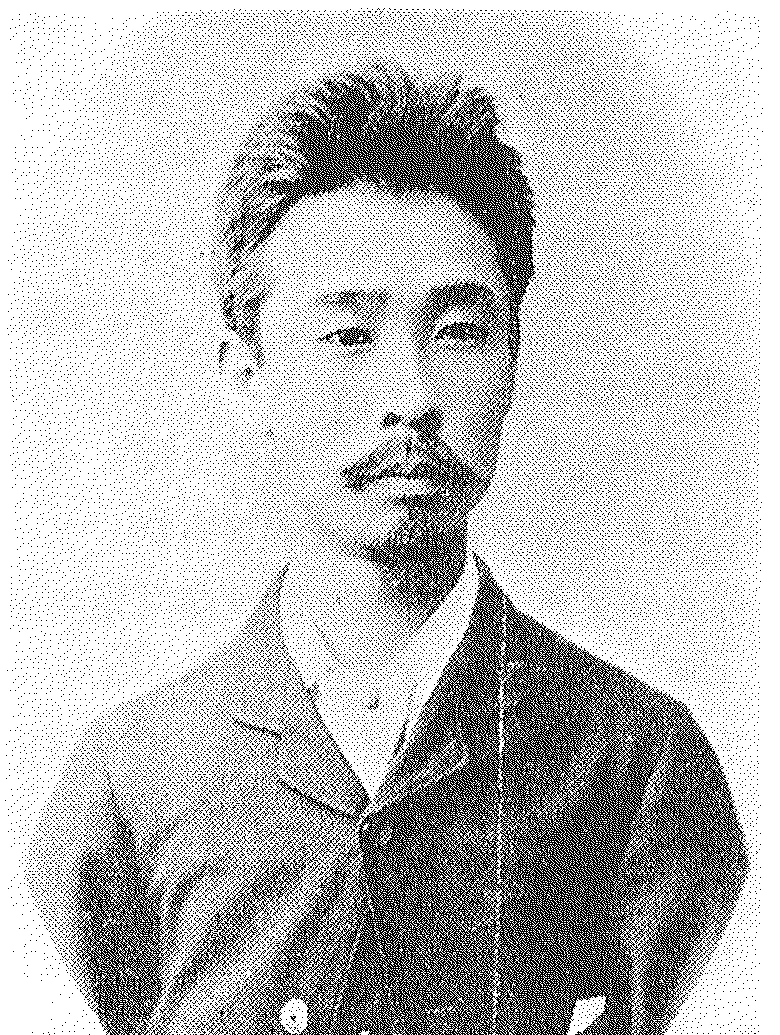
Miura Sojiro got close enough to be useful. At about ten in the morning of 7 June 1893 he and Nishiyama Sokichi of Japan’s Geological Survey were within about 20 ken of the Tsubakurozawa crater row on Azumayama, in Fukushima, a few dozen metres, when it exploded. Two Tokyo Imperial University students, Hiki Tadashi and Nishiwada Hisashi, had stopped a couple of hundred metres back, and lived. Miura, 31, a geology graduate who had already mapped the survey sheets for Akita, Oga and Nagoya, took wounds to the head, side and right hand, a falling stone driven through his cap. He was still talking afterwards. He said he could not walk and asked to rest a while. Nishiyama answered one call and then no more, and a second large explosion followed at about half past twelve.
A police party under Inspector Kirihara Hikokichi climbed at midnight and found Miura’s body just after 4 am. Nishiyama they found by a little hair showing in the mud, and dug him out from under a large rock while stones were still flying. He had been a Survey field hand since at least 1880, had travelled with the Survey’s foreign adviser, Dr Naumann, and by the Survey’s own account was promoted to technician on the day he died.
Two memorial stones went up in October 1916, paid for by an Osaka man who mined sulphur on the mountain. Miura’s was placed nearer the crater. The two men had died the other way round.
Roeslan (Papandayan, 1924)
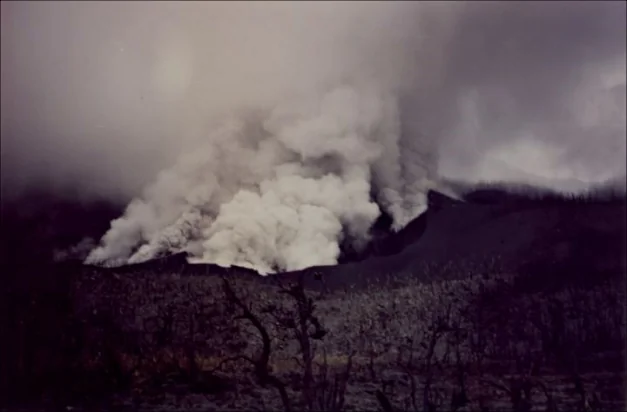
With the thermometer in his hand: that, said the Netherlands East Indies Volcanological Survey in its statement of 23 December 1924, was how Roeslan died. It had happened on 18 December, on the footpath along the crater rims of Papandayan, in West Java, a path always walked to take the temperature readings the Survey required. On 16 December the volcano had produced the strongest blast of its 1923-25 series, throwing blocks 600 metres and stripping the leaves from every tree within 500 metres. What killed Roeslan was quieter. The gas was first taken for carbon dioxide, but tests showed hydrogen sulphide, which the Survey’s engineer, N. J. M. Taverne, warned a Batavia audience the next year smells sharply when weak and loses its smell when strong. Two of the labourers who helped bring the body out fainted.
The Dutch press could not settle on his spelling or his rank, calling him surveyor, mantri and overseer by turns, and no source reached gives him a second name. His funeral at Garut drew every native civil servant in town and four Europeans. Afterwards the Survey moved its camp and dug a tunnel under the new one, stocked with provisions, with the seismograph inside.
A gas-filled hollow on the mountain kept his name. In 1928 the Hawaiian Volcano Observatory’s Volcano Letter, relaying the Survey’s bulletin, reported suffocating gases ‘abundant in the Roeslan Valley.’ Samples taken there between October 1927 and January 1928 ran as high as 20 per cent hydrogen sulphide.
Bardi (Merapi, 1931)
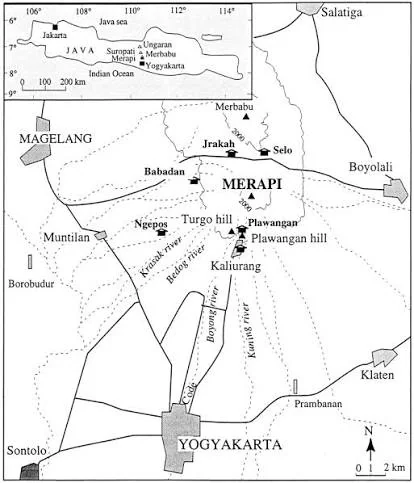
Bardi Kartodihardjo survived the glowing cloud and died anyway, 26 days later. A mantri of the colonial Volcanological Survey, he was sent at the end of November 1930 to the observation post at Maron, 6 km from the summit of Merapi, where an Omori seismograph had stood since 1927. The instrument did its job, catching the first significant quake five hours before the detonations began. The eruption turned out far larger than expected. Bardi watched the first hot flow run past his post, and on the afternoon of 19 December he arrived at the village of Gedjoegan having run for about an hour ahead of another, with nothing but the clothes he wore. He spent the evening there with his European supervisor, F. Ecoma Verstege, in the village head’s house. At 7:30 pm glowing ash clouds came into the house.
Verstege heard the villagers outside praying, and then he did not. Around 11:30 pm the survivors set off with their burned feet wrapped in strips of bedsheet and puttees, Bardi carried by coolies for the last stretch, and reached the military hospital at Magelang. Days before the end he was still expected to recover. He died there at 1 pm on 14 January 1931.
The Survey put its next post at Babadan, with a concrete tunnel the staff could reach in 15 seconds. When its seismograph raised the alarm on 17 November 1934, the villagers in the danger zone got out in time, and no lives were lost.
Steinthor Sigurdsson (Hekla, 1947)
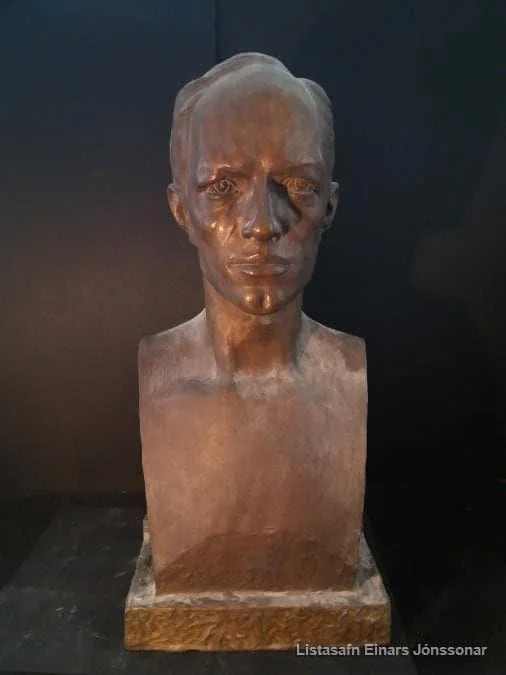
The scientist Iceland lost to Hekla was trained as an astronomer. Steinthor Sigurdsson took his degree at Copenhagen in 1929, one of the first Icelanders to graduate with astronomy as the main subject, and by 1947 he was director of the country’s State Research Institute. When Hekla broke out at 6:41 on the morning of 29 March 1947, after a repose that Edinburgh’s Tephrabase puts at 102 years, nobody had felt a tremor beforehand, although the farm animals probably had. Sigurdsson became one of the handful of scientists who studied the eruption, and Sigurdur Thorarinsson, who led the work, later named him among four colleagues who had ‘taken an equal part in the investigations.’
The eruption went on for 13 months. On 2 November 1947, while he was filming the edge of a lava flow, a glowing piece of rock fell on him from its front. ‘He died instantly and with him Iceland lost one of his ablest scientists and a most enthusiastic investigator,’ Thorarinsson wrote. The following month Polar Record published a paper the two men had written together on watching Iceland’s glacier-covered volcanoes, with Sigurdsson’s surname misspelled.
A bust of him by the sculptor Einar Jonsson is dated 1948. He was the only person the eruption killed, and Iceland’s own hazard scientists count just two eruption deaths in the whole of the 20th century. He is the first of them.
Three volcano observers (Kelut, 1951)
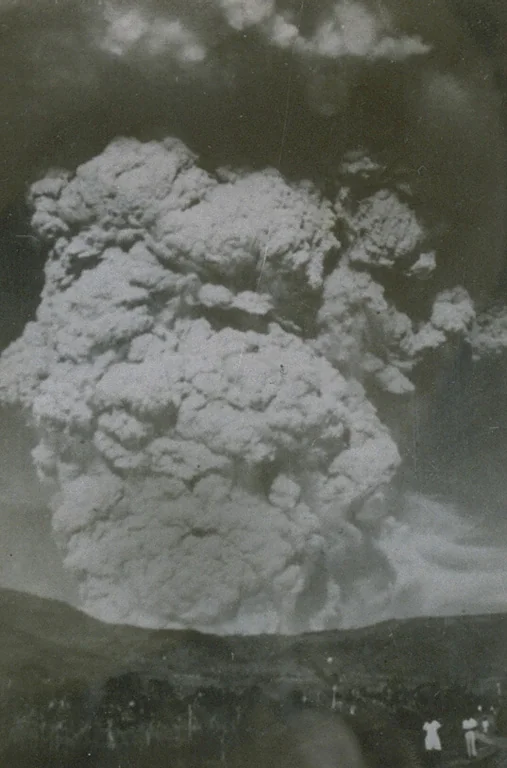
Late on the evening of 30 August 1951 the observer at the Kelut observation post spoke by telephone to the head of the post office at Kediri and reported nothing special. Nobody had seen anything coming. At about half past six the next morning Kelut, in East Java, erupted after a repose of 32 years, and the post, about 1.5 km from the crater, was overrun. Three staff of the Volcanological Survey were there, and no source reached gives their names. Reports put one body beside the post’s telephone, 5 metres down, or in a partly collapsed shelter tunnel. The escape tunnel had lost at least three metres of its north exit and was packed with still-hot debris.
The Survey itself was founded after 1919, when Kelut’s crater lake came down the mountain as mud and killed 5,110 people. Engineers then drained the lake through tunnels and a siphon until only 1.8 million cubic metres were left, and in 1951 no lahar formed. Seven people died instead of thousands, four of them rattan collectors from the hamlet of Wates.
Within two weeks members of parliament were asking whether the observers had died for want of a proper shelter and a seismograph. The Survey’s Dr A. L. Simons answered that a volcanologist is no doctor who can be called to a patient’s bedside. When President Sukarno handed over Rp 46,000 for the relief of the eruption’s victims, Rp 6,000 of it was set aside for the families of the three observers.
The Kaiyo-maru No. 5 survey party (Myojin-sho, 1952)

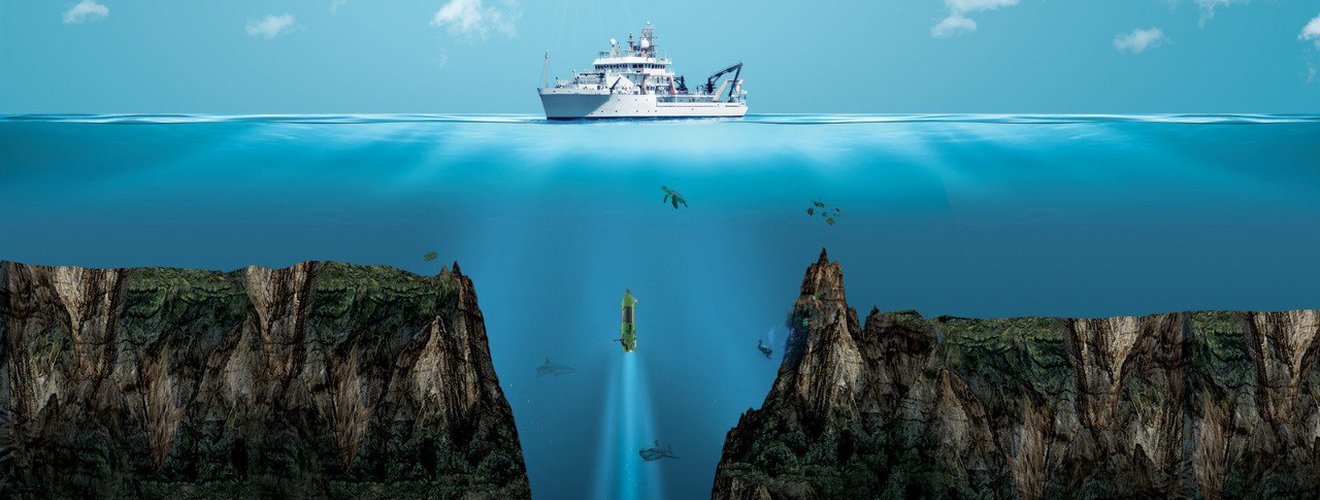
A fishing boat gave this volcano its name. The No. 11 Myojin-maru, out of Yaizu, discovered the undersea eruption on the morning of 17 September 1952, and the new reef became Myojin-sho. Seven days later the Hydrographic Department’s 211-ton survey ship Kaiyo-maru No. 5, which had no radar, was working over it, carrying a survey party of nine led by the geologist Tayama Risaburo and 22 crew. The 30 m island it had been sent to measure had blown itself away the day before. Another research ship reported that within about 30 minutes of that blast the crater had filled with deep-blue Kuroshio water and flying fish were skimming over it.
Nobody saw what happened next. A tide gauge at Hachijojima recorded a 0.9 m wave at 12:53 on 24 September, a US Navy hydrophone in California picked up an explosion, and the loss was fixed at about 12:20. No survivor, body or hull was ever found, only drifting wreckage and a lifebuoy bearing the ship’s name. All 31 aboard died, among them Mita Ryoichi, a 26-year-old geographer who had concluded in a 1949 report that the shoal was the top of a cone on a caldera with a history of violent eruptions, and had warned mariners about it.
The Hydrographic Department called it the biggest disaster in the history of Japanese oceanographic research. It then built an unmanned, radio-controlled survey boat, Manbou, so that nobody would have to sail over an active submarine volcano again.
Two volcano officers (Awu, 1966)

Almost nothing is known about the two people this entry exists for. Indonesia’s geological agency counts two volcano officers among the 39 people killed when Awu, at the northern end of Great Sangihe Island, erupted on 12 August 1966, and the peer-reviewed history of the volcano by Bani and colleagues in 2020 calls them simply two officials. No source reached names them, says where they were or what they were doing, and every count of them traces back to the same agency record.
The eruption is far better documented than its victims. It began at 08:20 with thick smoke that the agency’s account likens to the cloud of an atomic bomb, a stronger blast followed about an hour later, and pyroclastic flows ran about 5 km from the crater while lahars reached the coast 7 km away. The summit crater lake, 1 km wide and 172 m deep in 1922, was largely thrown out. A 1991 agency note says no seismograph had been installed, so no earthquake records exist from before the eruption.
Awu has form. It killed about 3,000 people in 1711, 2,806 in 1856 and 1,532 in 1892, many of the last inside churches, and its 1892 eruption was once proposed, and later dropped, as the cause of the red sky in Munch’s The Scream. Against that record 1966 was a small disaster, and the two officers in it remain a number.
Probably Andrei Ivanov (Klyuchevskoy, 1978)
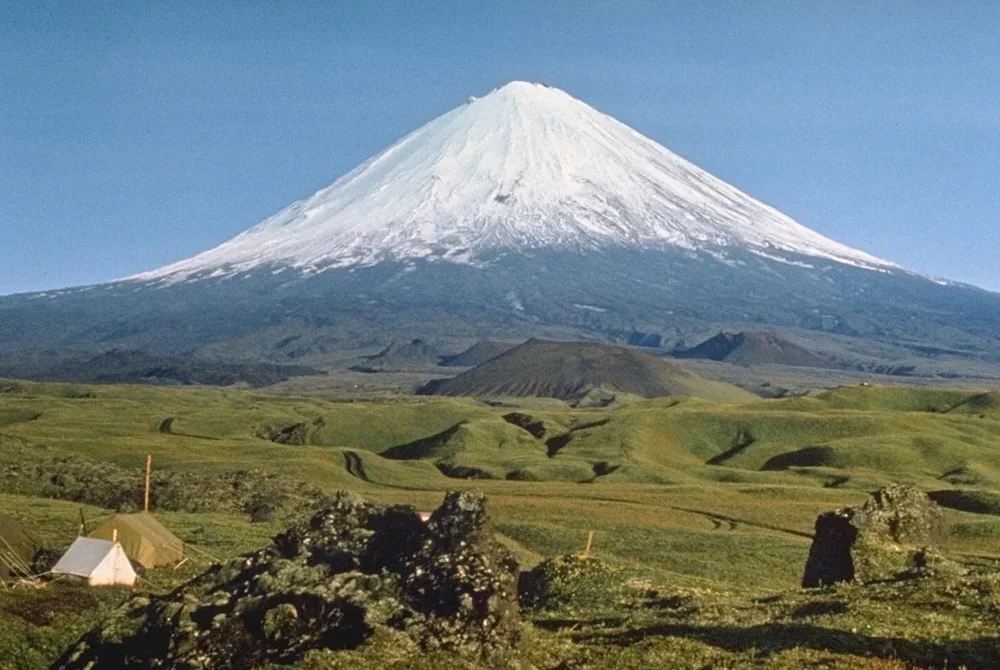
This entry rests on two records that nobody has formally joined. Brown and colleagues list an unnamed glaciologist, camped near the summit of Klyuchevskoy, who was killed by a single bomb from a strombolian eruption, filed under 1977, the year the eruption began, with no source given. The Institute of Volcanology’s memorial page names Andrei Lvovich Ivanov, glaciologist, born 17 November 1952 and died 23 August 1978, whose last season of fieldwork ended on Klyuchevskoy, where, it says, ‘a tragic accident’ cut his life short. Same job, same volcano, and a death date inside the same eruption. The match is a strong inference, not a documented fact.
Ivanov was 25. He had joined the institute’s glaciology group in December 1974, and in about four years there, the memorial says, he took part in observing practically every major eruption in Kamchatka. He led a party on the crater of Plosky Tolbachik in 1976, made the first observations of winter runoff from the Kozelsky glacier, drew well, liked modern music and climbed mountains. The memorial page keeps 44 of his drawings.
Klyuchevskoy, 4,754 m in the Smithsonian’s record, is the highest and most active volcano in Kamchatka, and NASA calls it Eurasia’s tallest active volcano. Its eruption of August 1977 ran until March 1980. Colleagues later froze a memorial plaque for Ivanov into the Kozelsky glacier, the one the glaciologists called their home glacier.
Rob Cooke and Elias Ravian (Karkar, 1979)

The blast came at about 1:25 in the morning of 8 March 1979, and it went sideways. Karkar, a forest-covered island volcano in Papua New Guinea, threw hot gas and rocks up to a metre across south-east over the rim of its inner caldera, stripping a crescent of rain forest and waking most of the island’s 23,000 people. The Rabaul Volcanological Observatory’s camp sat just inside the western tip of that crescent. Rob Cooke, 40, the observatory’s senior volcanologist, and Elias Ravian, 34, a volcanological assistant, were on their turn of duty there with a voice radio, due to be relieved within days. When the camp went silent on the radio, a ground party climbed to the rim. The two men were found under about 15 cm of ash.
Cooke was an Australian geophysicist who had measured gravity across parts of Australia and Antarctica before joining the observatory in 1971, and had led it since 1972. His colleague R. W. Johnson remembered him as ‘a persistent researcher, tenacious in argument, and disciplined in the writing of reports.’ He had taken his manuscripts up to the camp, and they came back badly charred. Ravian, a Tolai from Tavui No. 1 village near Rabaul, had worked at the observatory for nine years.
Cooke was buried in Rabaul and Ravian in his village. In 1981 the Geological Survey of Papua New Guinea published a memoir of papers in their joint names, and one of them describes the eruption that killed them.
David Johnston (Mount St. Helens, 1980)
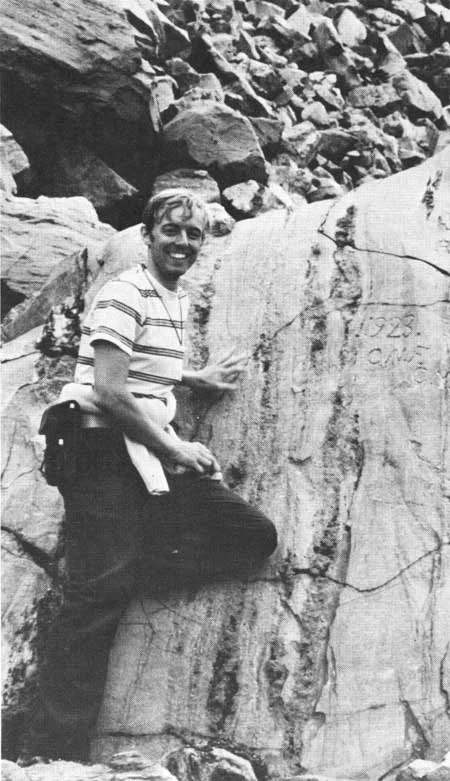
Harry Glicken had the ridge first. The geology student had spent most of the time since 1 May at Coldwater II, a U.S. Geological Survey observation post 5.7 miles north-northwest of the summit of Mount St. Helens, and on the evening of 17 May he left for a required college field trip. David Johnston, 30, a USGS volcanic-gas specialist whose doctorate was on Augustine Volcano in Alaska, took over. Earlier that day the two of them had been flown by helicopter onto the bulge swelling out of the mountain’s north side, where Johnston crouched at a fumarole collecting gas.
At about 7:00 the next morning Johnston sent his last laser measurements of the bulge to Vancouver. At 8:32 a.m. an earthquake of about magnitude 5.1 brought the north flank down, and the lateral blast came straight for the ridge. ‘Vancouver, Vancouver, this is it!’ he shouted into his radio. A second message was garbled by the eruption’s own interference, and then there was nothing. His body was never found, according to later accounts, and 57 people died that day.
Glicken spent the afternoon in a rescue helicopter looking for a post that no longer existed. On 18 May 1982, two years to the day later, the USGS office at Vancouver was formally named the David A. Johnston Cascades Volcano Observatory, and the ridge where he died is Johnston Ridge.
Salvador Soto Pineda (El Chichon, 1982)
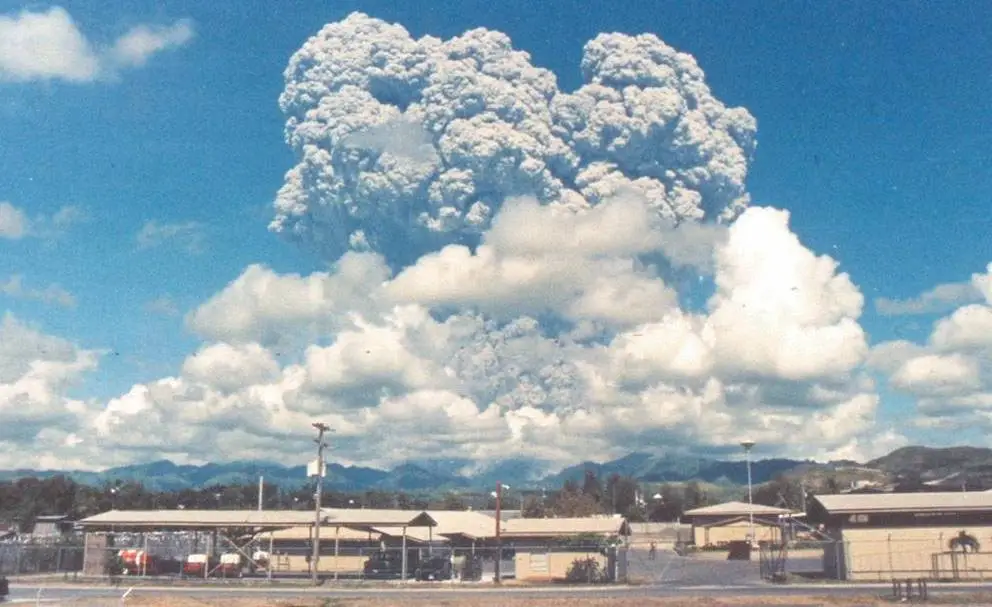
Mexico’s state electricity company had been studying El Chichon as a possible geothermal field, and two of its geologists had already felt the mountain stir. In a September 1981 internal report Rene Canul and Victor Rocha had warned that ‘in this zone exists a high volcanic risk that must be considered if one wishes to develop a geothermal field.’ The report went only to the company’s office in Morelia. The volcano, forest-covered and no taller than the non-volcanic peaks beside it, had no known historical eruptions, and when it exploded near midnight on 28 March 1982 it came, in the words of the USGS volcanologist Robert I. Tilling, as ‘an almost total surprise.’
The Comision Federal de Electricidad sent a scientific team on 30 March to advise the army, which was evacuating more than 22,000 people. On 2 April the team’s chief scientist told officials there was ‘no reason for evacuation.’ The two deadliest eruptions came on 3-4 April. Pyroclastic surges destroyed the village of Francisco Leon, about 5 km from the volcano, leaving a single church wall standing, and killed a geologist from the team whom Tilling, writing in 2009, names as Salvador Soto Pineda. No independent source reached gives his name.
About 2,000 people died in what Tilling calls the worst volcanic disaster in Mexico’s recorded history. The Mexican general Galvan-Lopez offered the moral to the Seattle Times: ‘don’t depend on one person and do more of the thinking yourself.’
Katia Krafft, Maurice Krafft and Harry Glicken (Unzen, 1991)

Only three of the 43 people killed or left missing by Unzen’s pyroclastic flow of 3 June 1991 were volcanologists. Many of the rest had come to report on the volcano, or had driven the people who did. Japan’s Cabinet Office counts 20 who died while newsgathering, 16 newspaper, publishing and broadcast staff and 4 taxi drivers, and says no natural disaster before or since has killed so many media workers. Police, firefighters and residents made up most of the remainder. At 16:08 a collapse of the summit dome sent a flow larger than any before it down the Mizunashi River, and an ash-cloud surge broke away from it and ran on. Every casualty was inside the evacuated zone.
Katia and Maurice Krafft, French volcanologists and filmmakers from Alsace, she a geochemist and he a geologist, had married in 1970. They were 49 and 45. ‘It will kill me one day, but that does not bother me at all,’ Maurice says in Fire of Love, Sara Dosa’s documentary about the couple, which premiered at Sundance in January 2022 and was nominated for an Academy Award. Harry Glicken, 33, an expert on volcanic debris avalanches working from Tokyo Metropolitan University, was the geology student who had handed Coldwater II over to David Johnston 11 years earlier.
After 3 June Unzen got Japan’s first legal warning zone in an inhabited area. The large flows of 8 June and 15 September 1991 injured nobody.
Six scientists (Galeras, 1993)
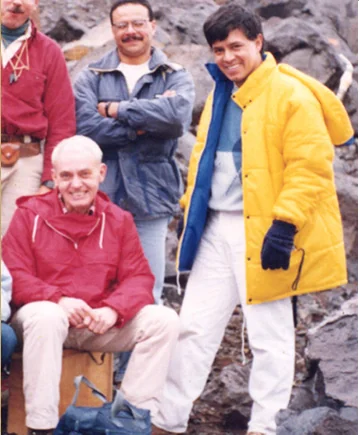
Five U.S. Geological Survey scientists missed the field trip because the American Embassy in Bogota would not let them travel. The workshop in Pasto in January 1993 drew more than 90 scientists to Galeras, a Decade Volcano with some 400,000 people on its flanks, and on 14 January a party went into the crater. At about 1:40 p.m. a small explosion threw out hot rocks for about 15 minutes. Six scientists died: Geoff Brown of the Open University, who had spent the morning mapping gravity on the rim; Igor Menyailov of Russia’s Institute of Volcanology, on his first trip to South America, sampling a fumarole; and four Colombians, the Pasto observatory geochemist Jose Arles Zapata, the geophysicist Fernando Cuenca, the industrial chemist Nestor Garcia and Carlos Trujillo, a Pasto community college teacher who liked to use the volcano as a classroom. Three others died with them.
Stanley Williams, who led the excursion, lay on the slope with a fractured skull for up to two hours until Marta Calvache, then running the Pasto observatory, reached him. Only two of the men had worn hard hats. One, the Los Alamos chemist Andy Adams, escaped relatively unhurt. ‘We were the only ones who thought about safety before going in,’ he said.
In 2001 Williams’s Surviving Galeras and Victoria Bruce’s No Apparent Danger, which accused him of ignoring the warning signs, appeared within weeks of each other. ‘I let myself become known as the only survivor,’ Williams acknowledged. The Los Angeles Times counted seven.
Victor Hugo Perez and Alvaro Sanchez (Guagua Pichincha, 1993)

Victor Hugo Perez and Alvaro Sanchez had been warned. At 10:30 on the morning of Friday 12 March 1993 a radio message, based on the seismic readings, told them activity was possible on Guagua Pichincha, the volcano that rises about 12 km west of Quito, and for reasons no report explains they were still on its central dome more than an hour later. At 11:46 a small phreatic explosion hurled rocks and ash onto them and killed them both instantly. The blast registered on the instruments at the Instituto Geofisico in Quito, where they worked. Their bodies were found near the dome’s crater rim at about 07:30 the next morning.
They had gone up to document the explosions of the previous days; the volcano had been relatively calm for more than a decade, and a guard had watched one on 9 March drop up to 10 cm of ash. Perez, 31, was a geological engineer who studied the country’s tectonic faults, married with two daughters. Sanchez, 25, had just graduated in geological engineering, processed seismic data, hoped to take a postgraduate degree in Japan and was president of the Polytechnic’s mountaineering club.
It was two months after Galeras, and Stanley Williams would later point out that the two Ecuadorians had died wearing hard hats. Thirty years on, in an article warning people away from active craters, the Instituto noted that help for an accident in one takes at least 2 hours to arrive.
Asep Wildan and Mukti (Semeru, 2000)
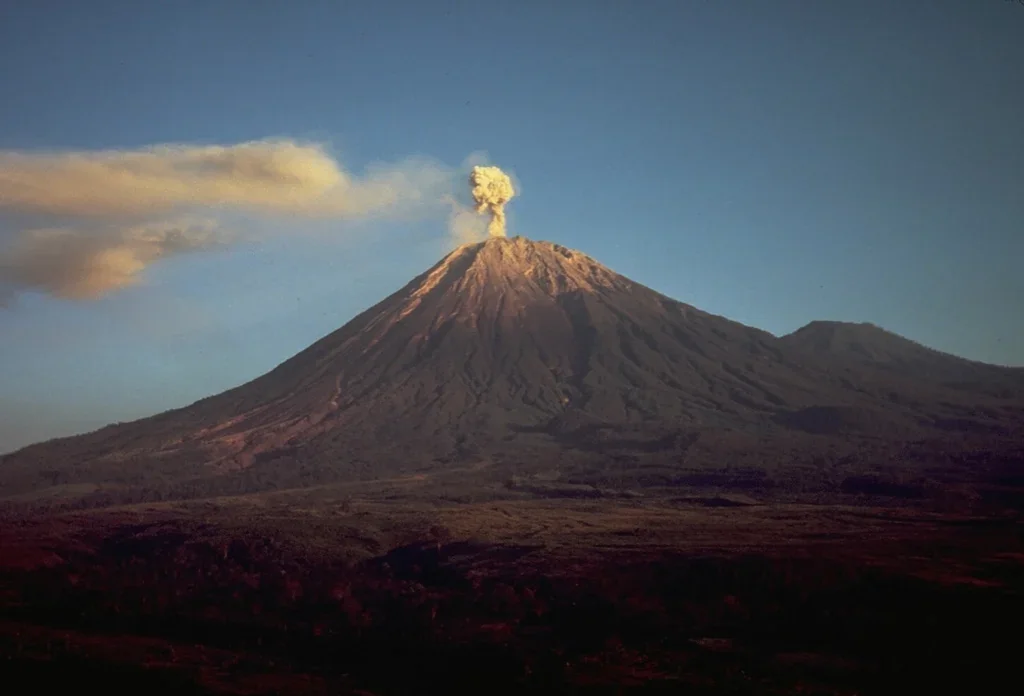
Someone at the crater called after the three men heading back up the ridge: ‘Thanks for leaving, guys – now we’ve got a clear shot.’ It was early on 27 July 2000 on Semeru, Java’s highest volcano, and about 20 people had reached the summit for sunrise, among them a five-member team from the Volcanological Survey of Indonesia and foreign scientists fresh from a conference in Bali. At about 07:06 two closely spaced explosions went off from separate vents near the north-east rim of the active crater, Jonggring Seloko, and the second threw ballistic clasts out a few hundred metres. Asep Wildan and Mukti were killed by blows to the head.
Wildan, a physics graduate of the Institute of Technology Bandung, had worked for the Survey since 1993 as a geophysicist studying East Java’s volcanoes. He left a wife and young daughter. Mukti, from Banyuwangi, had been a volcano observer posted at Semeru since 1990, and left a mother. Five others were hurt, among them Lee Siebert and Paul Kimberly of the Smithsonian Institution, co-authors of its catalogue Volcanoes of the World. Michael Ramsey, a University of Pittsburgh volcanologist and former Grand Canyon river guide, stitched Kimberly’s shoulder with a first-aid kit he had nearly left in his tent, having learned sutures on ‘a big slab of roast beef.’
With cloud and rain keeping helicopters away, villagers carried Kimberly down on a gurney slung from a pole. The bodies of the two Indonesians could be retrieved only on 31 July.
Mark Kearney (Raoul Island, 2006)
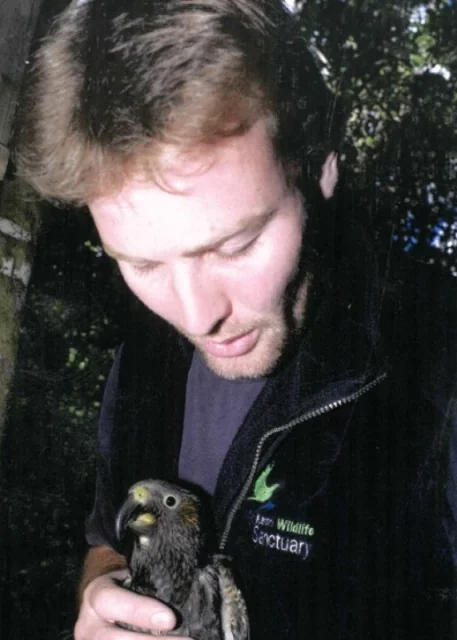
The Green Lake check on Raoul Island was usually done once a week, on a Wednesday. After an earthquake swarm began on 12 March 2006, GNS Science asked the Department of Conservation to make it daily, and so on Friday 17 March Mark Kearney, 32, walked up alone to take the temperature of the crater lake. He had insisted on doing the work himself, his team leader Jim Livingstone later told the inquest, to keep the readings consistent. At 08:21 the lake erupted, flattening mature trees out to about 200 m and leaving mud and ash up to 5 m deep. Livingstone felt a vibration underfoot that lasted about 5 seconds. When he reached the ridge above the crater, he said, he knew Kearney was dead.
Raoul is the largest and northernmost of the Kermadec Islands, and Kearney’s five colleagues were back in New Zealand that night. A helicopter search found nothing, and when a boat arrived with police and volcanologists on 21 March, the lake had risen 6 to 8 metres. His body was never found. His father said Mark had been ‘basically sitting on a bomb when it exploded.’ In 2007 the coroner, Michael Cooney, ruled that he died by incineration, and a GNS scientist told the inquest that nothing like it had been recorded in 170 years of New Zealand volcano history.
In 2016 the department named the track from the island’s hostel to Denham Bay, his favourite place on Raoul, Kearney’s Crossing.
Frequently Asked Questions
Who was the first scientist killed by a volcano?
The earliest case in the record is Pliny the Elder, the Roman naturalist and fleet commander who died at Stabiae in the eruption of Vesuvius in 79 AD. Nobody else qualifies until 1893, at Azuma in Japan. Plinian eruptions, though, are named after his nephew, Pliny the Younger, whose letters described the eruption.
Which volcano killed the most scientists at once?
The submarine volcano Myojin-sho, in Japan, where the Japanese survey vessel Kaiyo-maru No. 5 was destroyed on 24 September 1952 with a survey party of nine and 22 crew aboard. On land the worst was Galeras, Colombia, where six scientists died on 14 January 1993 during a field excursion from an international workshop.
Has a volcanologist been killed by a volcano since 2006?
No later case has been recorded. The last on the list is Mark Kearney, a Department of Conservation worker lost on Raoul Island in 2006. Visitors and guides have died since, including 22 people at Whakaari/White Island in 2019, 19 of them tour customers, and 23 climbers on Marapi in 2023.
Are amateur volcanologists included?
No. The list counts working scientists, students on fieldwork and monitoring staff. That leaves out Robert Kaseweter and Beverly Wetherald, volunteer watchers killed at Mount St. Helens in 1980; Vivianne Clavel, lost at Lokon-Empung in 1991, whom the Brown database calls an amateur; and two Britons killed on Sangay in 1976, whose party Brown’s scientist table leaves out.
Did the deaths change how volcanologists work?
Yes. In 1994 an IAVCEI sub-committee, prompted by the number of volcanologists lost in the line of duty, issued safety recommendations calling for a safety plan for every research programme, no visits to hazardous areas by very large groups, and the rule that ‘protective helmets (hard hats) with chin straps are essential.’
Were any women killed?
Katia Krafft is the only woman named on the list. Born Katia Conrad in Alsace in 1942, she was killed with her husband Maurice by the pyroclastic flow at Unzen on 3 June 1991, aged 49. Several victims are unnamed in every source reached, so the number of women cannot be settled.
Sources
- Brown, Jenkins, Sparks, Odbert and Auker (2017), Volcanic fatalities database: analysis of volcanic threat with distance and victim classification, Journal of Applied Volcanology 6:15
- Brown et al. (2017), Table 7: Incidents in which volcanologists or field scientists died
- U.S. Geological Survey, The Volcano Letter (Hawaiian Volcano Observatory), 1928 issues
- Smithsonian Institution Global Volcanism Program, Bulletin of the Global Volcanism Network: Semeru, July 2000
- Aramaki, Barberi, Casadevall and McNutt (1994), Report of the IAVCEI Sub-Committee for Reviewing the Safety of Volcanologists
- Cabinet Office of Japan, Expert Panel on Passing On Disaster Lessons: the 1990-1995 Unzen Fugendake Eruption, Chapter 3 (Japanese)
- Bani, Kristianto, Kunrat and Syahbana (2020), Insights into the recurrent energetic eruptions that drive Awu, among the deadliest volcanoes on Earth, Natural Hazards and Earth System Sciences 20
- Tilling (2009), El Chichon’s ‘surprise’ eruption in 1982: Lessons for reducing volcano risk, Geofisica Internacional 48(1)