All 37 Cut Pokemon Designs From Red and Green
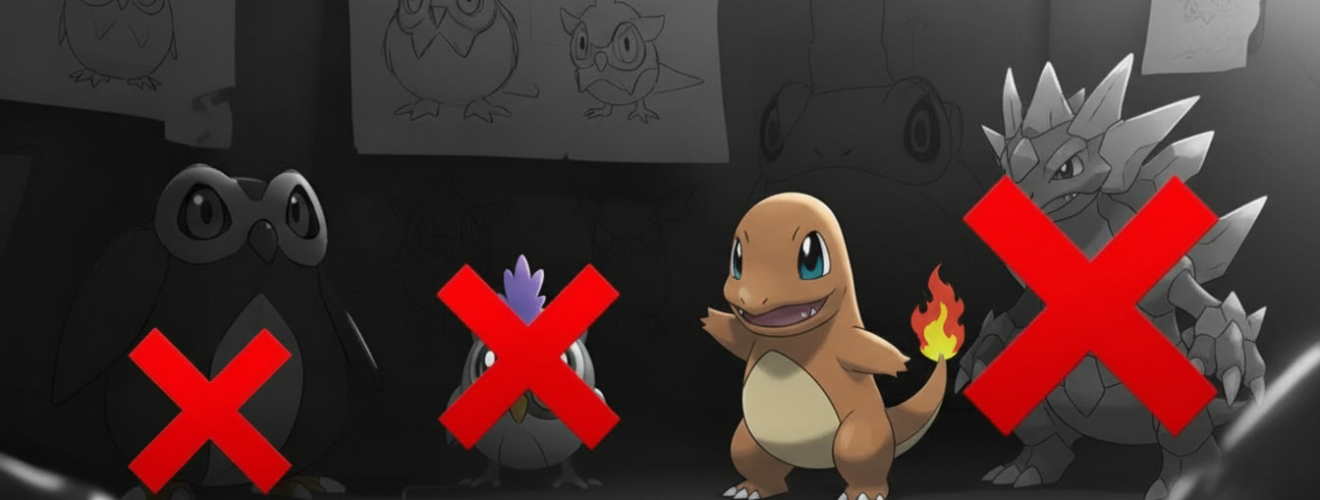
The Pewter Museum of Science keeps two skeletons behind glass, and in the code both of them are Pokemon. The Kabutops fossil and the Aerodactyl fossil hold index slots 182 and 183, one along from the ghost that stalks Pokemon Tower at 184, because the game needed somewhere to file a picture and the Pokemon table was where pictures went. Neither skeleton is a creature. Neither belongs with the Fossil Pokemon and the real prehistoric animals behind them, which are catchable and alive, and the confusion is why almost every article on this subject counts two museum exhibits and a ghost among the casualties.
Strip those three out and what remains is unusually exact. The games reserve 190 index slots, fill 151, and leave the rest as the placeholder MissingNo. Most of what has been recovered from those gaps is a back sprite and nothing else. Game Freak later changed how it stored front-facing artwork and the originals stopped existing, so a typical cut design survives as a rear view of a creature nobody outside the studio ever saw properly. The front-facing images circulating online are fan reconstructions, several invented during a chaotic livestream in 2019 and quietly withdrawn afterwards.
Nintendo does not usually leave this kind of trail. When Masahiro Sakurai discusses the characters Sakurai publicly considered and rejected for Smash, he is choosing to. This record surfaced because somebody broke into a server. What follows walks the index in order, from the slot Mew took to the last creature anybody drew.
Thirty-six Pokemon designs were cut from Pokemon Red and Green before its Japanese release on 27 February 1996, each leaving an empty slot in the games’ internal index of 190 entries. A thirty-seventh, Omega, is documented outside that count because Mew was coded into its slot late in development.
Omega
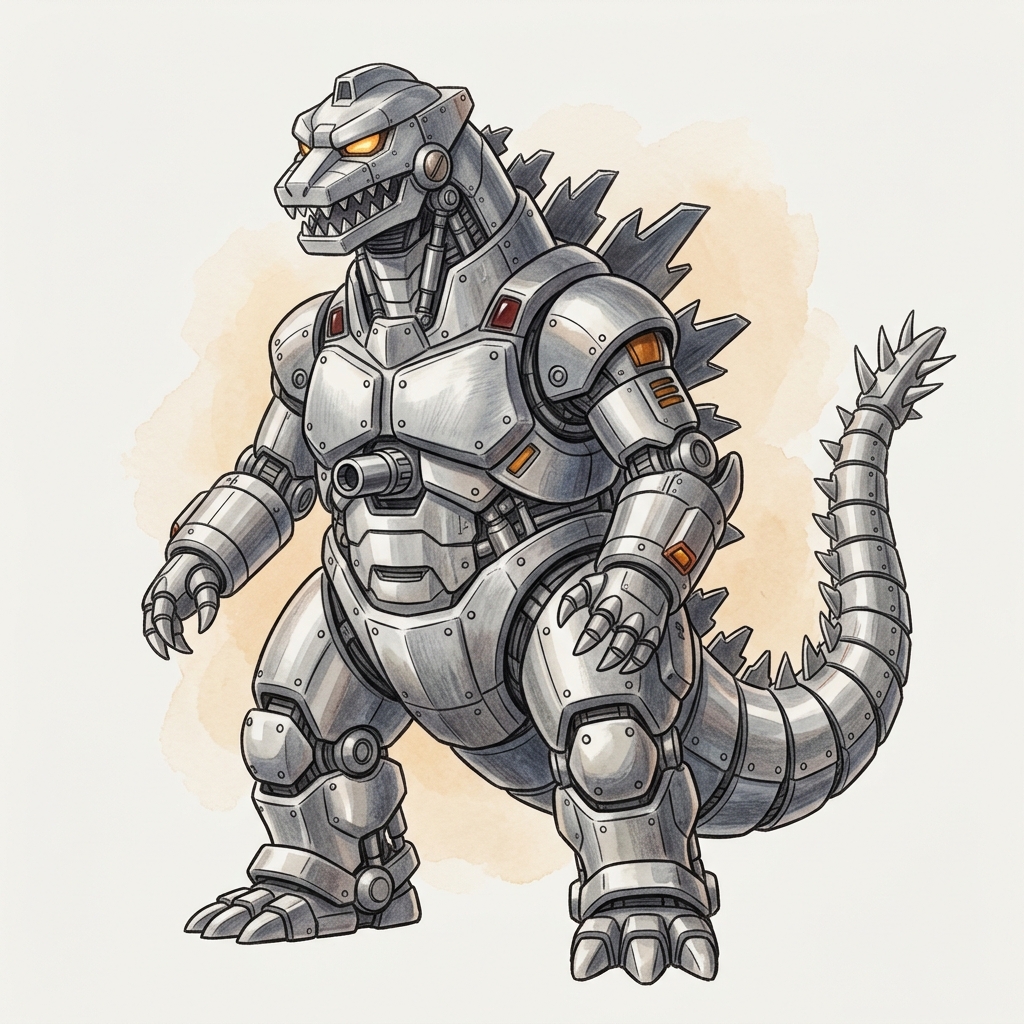
Every other entry here is a slot that shipped empty. This one is a slot that shipped full, which is why it needs explaining before anything else. Index 21 belongs to Mew in every cartridge ever sold, and the design that occupied it beforehand was deleted rather than revised, so the address was refilled by an unrelated creature rather than inherited by a finished version of itself. That is the difference between a cancellation and a redraft, and it is the reason Omega counts.
The evidence sits on Game Freak’s own Capsule Monsters pitch sheet, broadcast on NHK in December 2018, where each drawing carries a small handwritten index number and this one reads 21. A robotic kaiju, drawn along Mechagodzilla lines. It is also the only creature in this whole list anybody has seen from the front, because the picture is a pitch document rather than a recovered sprite.
The name appears twice more: struck through with a single line on the staff ballot in Satoshi Tajiri’s biographical manga, and in the prototype cry list, where it is the one entry with no shipped Pokemon to attach it to.
Handle the identification with some care. Bulbapedia carries no Omega entry at all, so this rests on one research group’s reading of one broadcast document, and even they will not say whether it lasted until the final cull.
Gyaoon
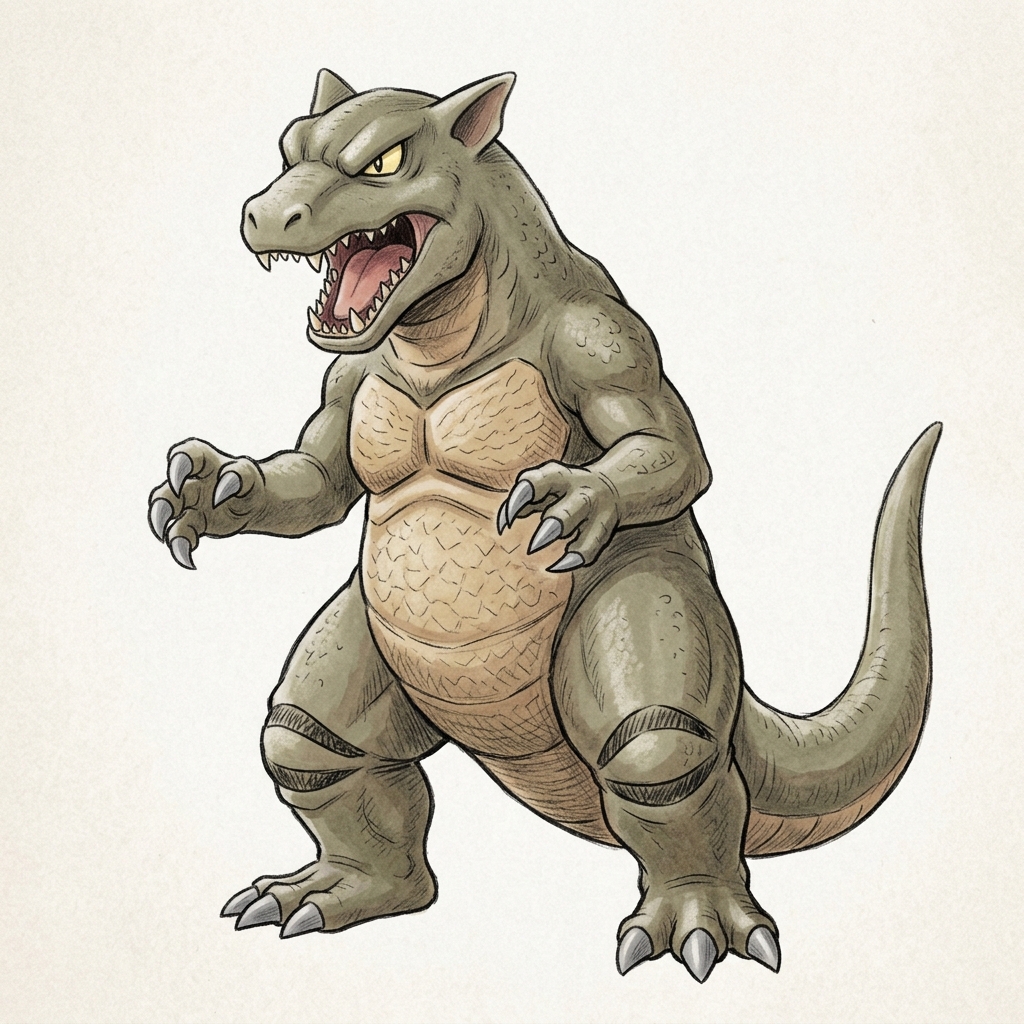
The name is the noise. Gyaoon is roughly what a monster roars in Japanese, which tells you what Game Freak thought it was building in 1990, back when the project was called Capsule Monsters and the creatures were kaiju rather than pets. It appears on the Capumon sprite sheet and again on the staff ballot in the Tajiri manga, where the name is written Gyaasu with the final characters scratched out. Someone changed their mind halfway through a vote.
For a while it held Ivysaur’s cry. First-generation cries are assembled from a base waveform and then tuned by two further settings, so a creature that has been deleted still leaves an audible fingerprint in whatever inherited them, and researchers were reading those fingerprints long before any sprite surfaced.
Helix Chamber raises a possibility about slot 31 that is worth sitting with: another design may have occupied it first, been replaced by a newer Gyaoon, and then been deleted in turn. If that is right, one empty slot in this list is standing in for two lost creatures, and the count of thirty-six is a floor rather than a total. They cannot prove it. Nobody can, which is roughly the condition of the whole subject.
Nidorino Lookalike

Two horns run down the back of the creature at slot 32, the way they do on Nidorina, above a body shaped like Nidorino’s. Helix Chamber calls it, carefully, probably an earlier spot for Nidorino, and then immediately doubts itself in print: maybe Nidorino and Nidorina were once a single design, but how would that even work?
The question is sharper than it looks. Nidoran is the only Pokemon in the first generation split into male and female versions with separate entries, separate evolutions and separate sprites, which is an expensive thing to do on a Game Boy cartridge. A design that reads as both at once, sitting in a slot that shipped empty, suggests the split arrived later than the creature did.
What settles it as a cut design rather than an early draft is where Nidorino actually ended up. It ships at index 167, in a late block alongside Rattata, Raticate and Nidorina, nowhere near 32. Whatever was drawn here was deleted outright and the slot left hollow, while the Nidoran family was coded somewhere else entirely. That is the difference between revising a Pokemon and losing one, and it is the whole test this list runs on.
Barunda
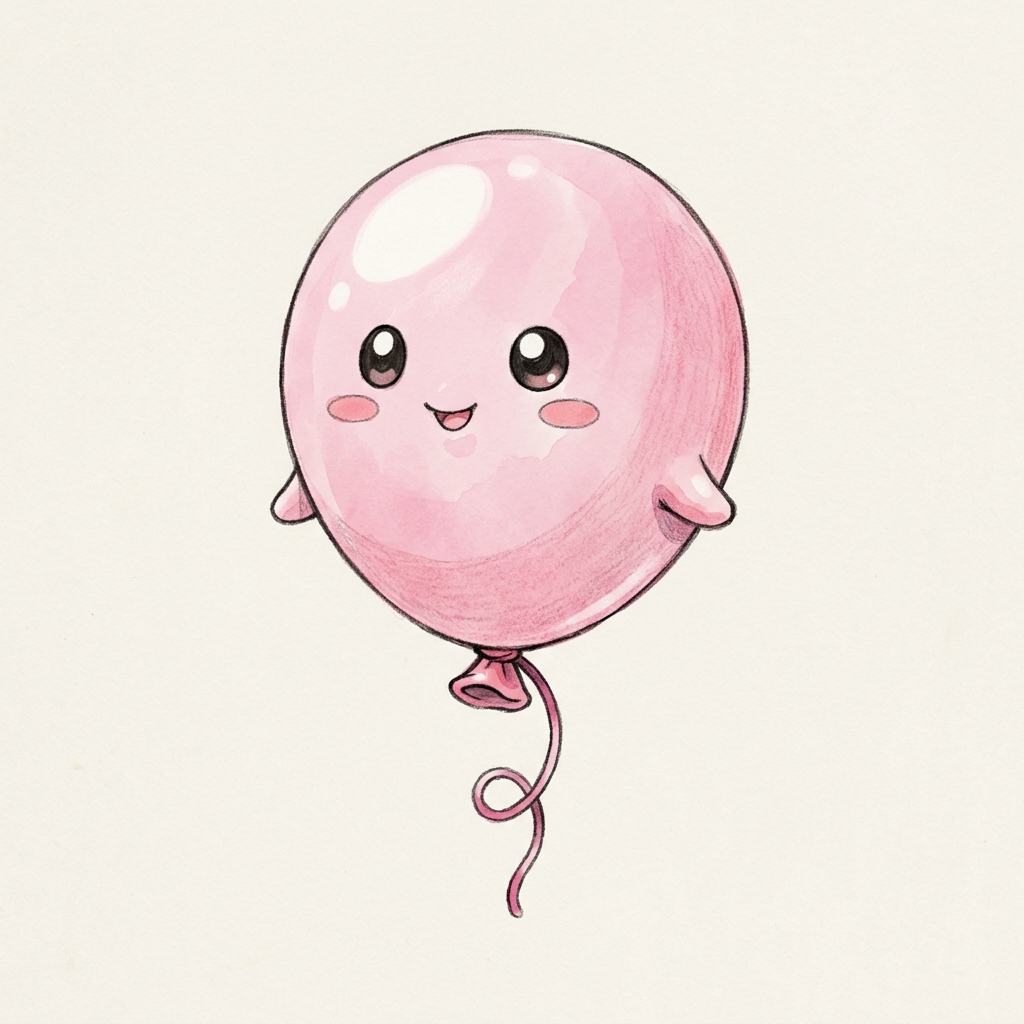
Two drafts of Barunda went to a vote. It appears on the staff popularity ballot in Tajiri’s biographical manga as a balloon-shaped creature in competing versions labelled (a) and (b), which means the studio could not settle on which drawing of it to keep, of a design it would shortly abandon anyway. Helix Chamber’s reading is that Jigglypuff was probably the rival on that ballot. Jigglypuff is still here.
Bulbapedia files it under the English rendering Balloonda; other write-ups drop a letter and make it Baloonda. Neither spelling comes from a Japanese source, so both are conveniences rather than translations.
There is a stranger legacy. Helix Chamber suggests Barunda may be tangled up in the disappearance of a whole elemental type: the first generation was built with a Bird type that no Pokemon ever used, and a flying creature that was demonstrably not a bird could plausibly have been the thing that broke the distinction. The Bird type is genuinely in there, sitting unused in the shipped cartridge as MissingNo.’s coded primary type, which is a verifiable oddity. The causal link to Barunda is Helix Chamber’s own hedge and not a finding. Even so, a design that lost a popularity contest and possibly took an entire type down with it has done more than most.
Buu

Look at what surrounds slot 52 and a plan appears. Its neighbours in the index are the creatures that shipped as Electabuzz and Magmar, whose Japanese names, Eleboo and Boober, share a syllable with the name recorded here. Three creatures, three related names, and a set of elemental punching moves that all arrived in the same game.
Helix Chamber writes it as 52 (Buu?), question mark included, because the name comes from the manga ballot while the back sprite comes from a separate leak, and joining the two is inference rather than evidence. Their working nickname is the Ice Punch Yokai, and they suspect the design drew on Woo, a yeti-like kaiju from Ultraman.
Follow that logic and it lands somewhere uncomfortable. Jynx shipped as the only ice-typed humanoid in the roster, with no counterpart, and its design history has been contested ever since in ways that have nothing to do with game balance. If something was built to stand opposite it, the first generation kept one half of a pair and lost the other.
The moves all survived. Ice Punch, Thunder Punch and Fire Punch are in the shipped game and remain in the series today. Of the creatures the studio appears to have arranged around them, two reached shops and this one did not.
Deer

Whatever was wrong with the deer, somebody had already spotted it. Its entry on the internal design poll reproduced in Satoshi Tajiri’s biography carries a triangle, the notation used there for a design needing improvement, and a correction to one of its antlers is sketched on the same sheet. The studio had a fix in mind. Then it dropped the creature instead.
Its sound data was never filled in at all, which is the ordinary condition for these gaps and still worth noticing: the design got far enough to occupy a numbered place in the roster, and nowhere near far enough for anyone to settle what it said.
Fans reliably point at Stantler, the antlered Pokemon that arrived in the second generation, and the resemblance is easy to want. No source above the level of speculation supports it, and Game Freak has never said so. The honest version is duller and rather better than the theory: a deer was designed for the original 151, marked for revision by its own colleagues, made it far enough to occupy a numbered slot, and was removed so completely that the only trace is a rear view and a gap where the improvement was going to go.
Elephant
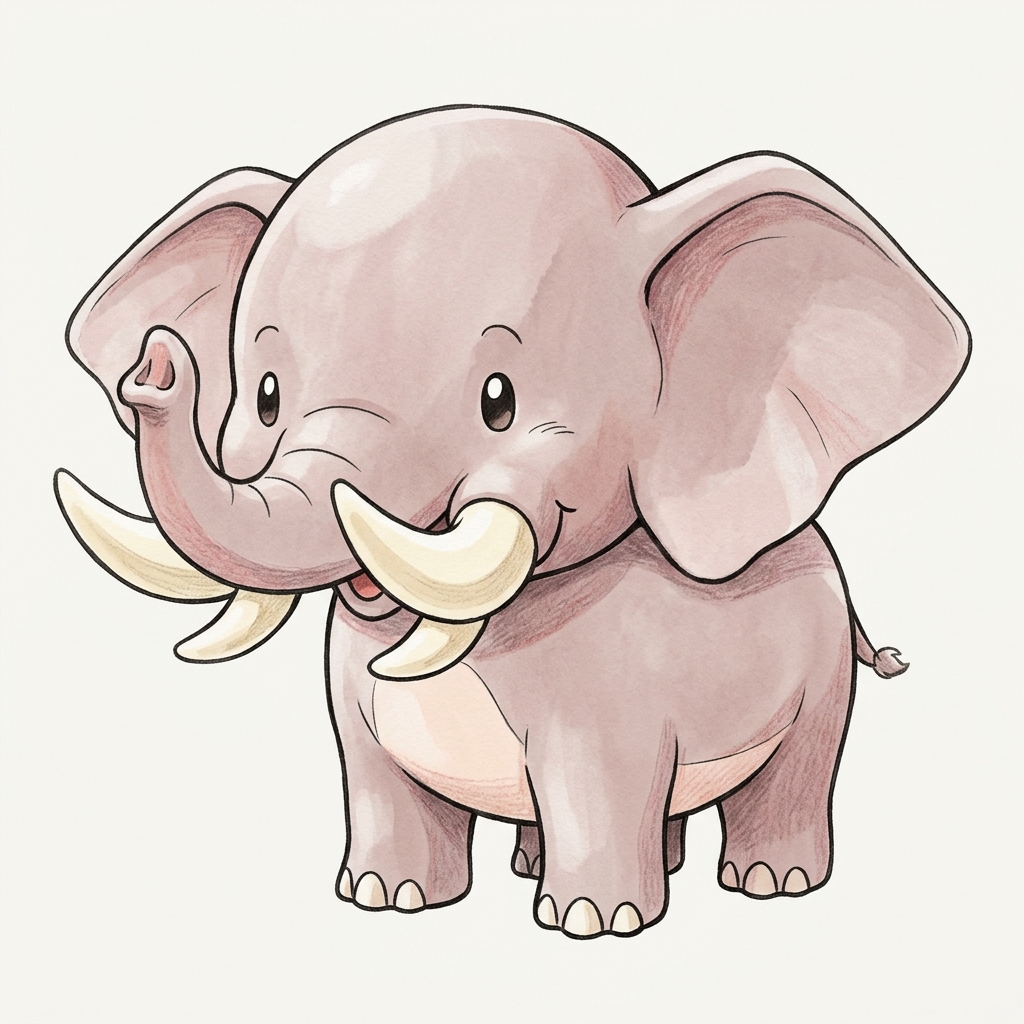
Nobody knows what this one was called because the page was cut off. The elephant appears on the ballot in Tajiri’s manga with what may be two pairs of tusks and a name whose final characters read ko or ro, the rest of it lost to the edge of a printed panel. Thirty years of research have not recovered the beginning of a word.
Its index number is inferred rather than read. Bulbapedia places it most likely at 61, on the grounds that it sits behind Crocky at 62, and hedges the number in exactly that language, which is a level of caution worth borrowing. Helix Chamber assigns 61 more confidently. The disagreement is small and unresolved and it is the sort of thing that gets flattened into false certainty everywhere else.
There is a quiet irony in the shortage. Elephants are not exactly obscure animals, and the first generation shipped without one; the franchise waited until Phanpy and Donphan in the second generation to fill the gap. An elephant was drawn, numbered, put to a staff vote and deleted, and the single most basic fact about it, the thing you would put on a name tag, is the part that did not survive.
Crocky
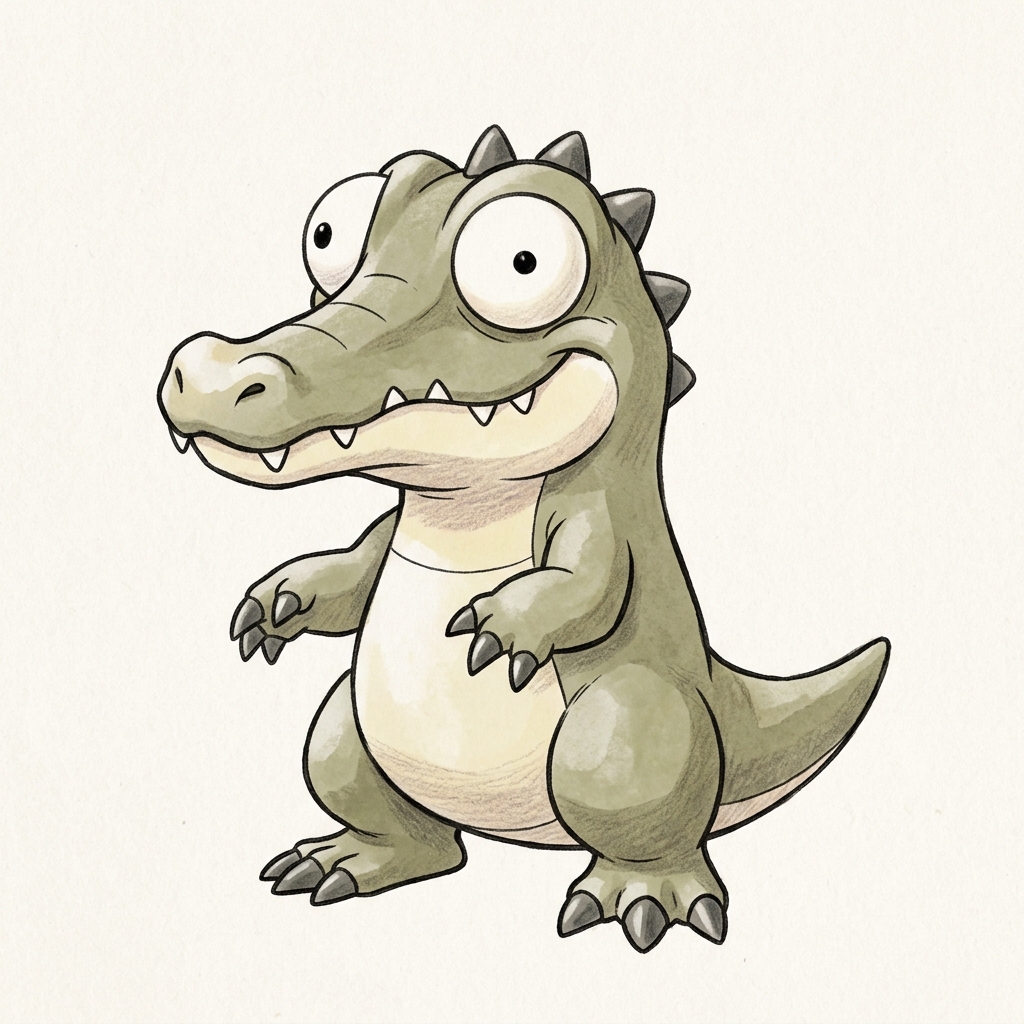
Crocky was still being worked on when it was cancelled. In the Tajiri manga ballot it is a crocodile with large eyes and long hair. In the back sprite recovered from Game Freak’s own files, the hair is gone and a row of spikes has taken its place. Somebody sat down, revised the design, committed the revision to code, and then the creature was cut anyway.
That sequence is rarer than it sounds. Most entries on this list exist in one state only, a single drawing frozen at whatever moment it was abandoned. Crocky exists in two, which makes it one of the few cut designs with a visible development history rather than a single snapshot, and Helix Chamber states its identification plainly, with none of the question marks that hedge half the roster.
The obvious modern comparison is Totodile, the crocodile starter that opened the second generation, and the researchers who have looked at this sprite reject even the closest later lookalike as a lineage. What is not a joke is the timing. The first generation was built without a crocodile despite drawing one twice, and the studio then opened its next set of games with one. Some ideas take a while to survive.
Squid
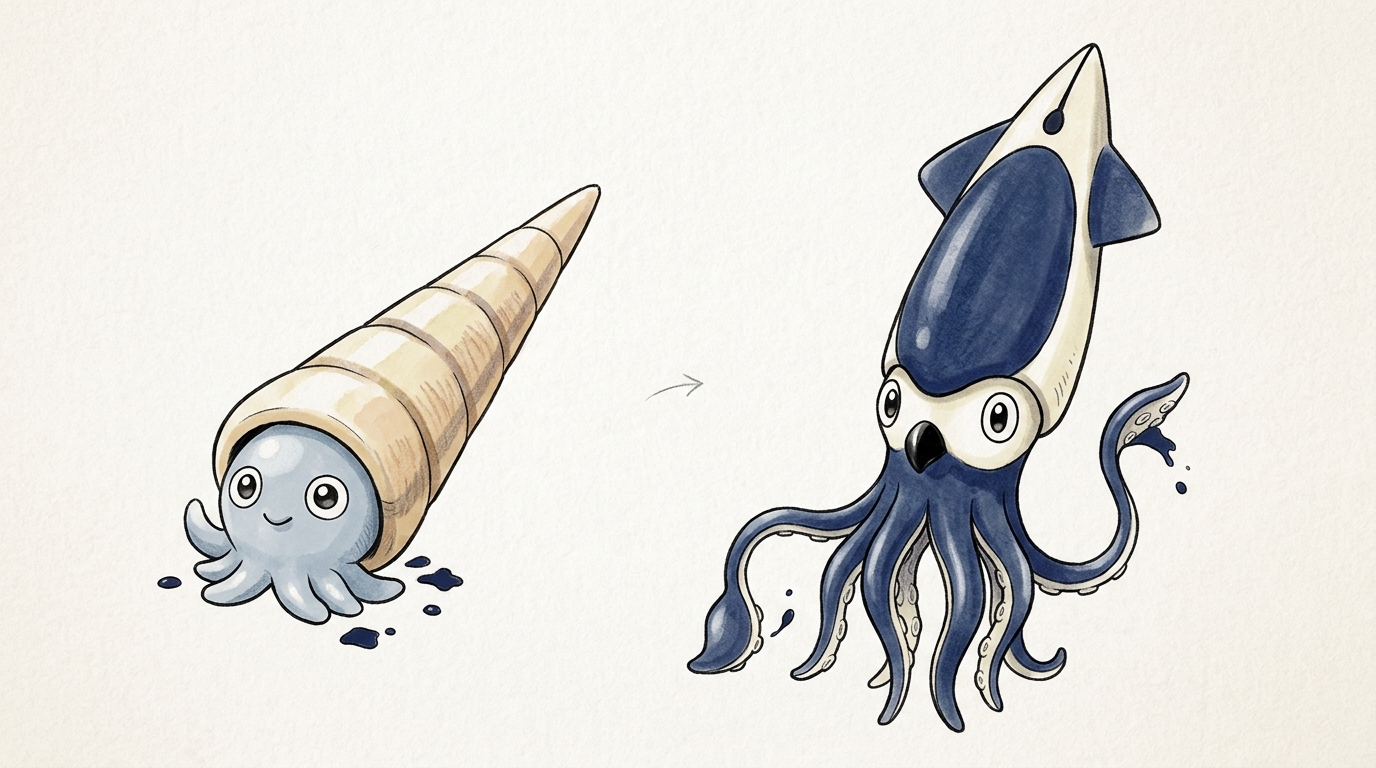
A move in Pokemon Red and Green was called Squid Ink before it was called Flash. There is no squid among the released 151, and no obvious reason to name an attack after one unless a squid was in the roster while the move was being written, which is the strongest circumstantial evidence that anything lived in this part of the index at all.
Bulbapedia has no entry for slot 63. Its list of unused designs runs straight from Crocky at 62 to Cactus at 67, skipping it, which makes this one of the corners of the subject where the reference works simply stop. The cry data is blank in both settings.
What exists is a back sprite that Helix Chamber says looks a little like Omanyte, a nickname that some writers have attached to it and that appears in no Japanese source, and a suspicion that it pairs with the second squid far down the index at 122. Helix Chamber ties the abandoned move most confidently to that later slot and only possibly to this one, which is a distinction most write-ups lose.
Two squid-shaped rear views, a hundred slots apart, and an attack named after ink. That is the whole file.
Cactus
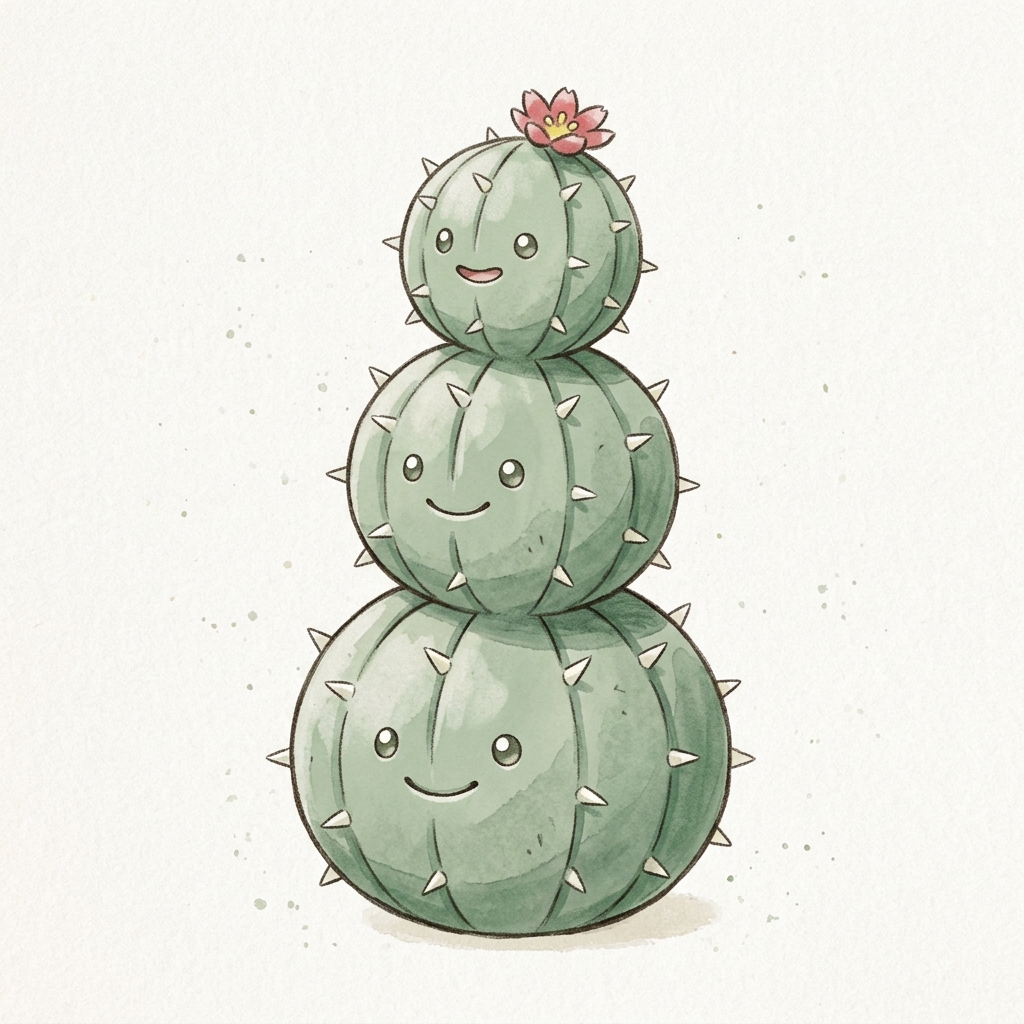
There is a sound in Pokemon Red and Green that belongs to nothing at all. The creature at slot 67 was given finished audio, tuned in both of the settings that shape a cry, while every empty slot around it sits blank. Somebody finished the audio for a creature that was already on its way out of the game.
The waveform it borrows is the one shared by Nidoran, Sandshrew, Sandslash and Nidorino, which is to say the small and spiky end of the roster, and that alone suggests the shape of the thing before you see a pixel of it. The ballot page in Tajiri’s biographical manga supplies the rest: a cactus, drawn well enough to reach an internal staff vote.
Helix Chamber wonders whether it lived in the desert visible in the concept art, then adds the necessary caveat, which is that nobody can confirm the desert ever got out of the concept stage either. A cut creature and a cut location, each attesting only to the other.
What makes this entry unusual is that the evidence is not stolen. Anyone who owned the cartridge in 1996 owned that cry. It sat in the sound bank the whole time, playable, indexed, attached to nothing, and it prompted theories long before anybody had a picture to match it to.
Jagg
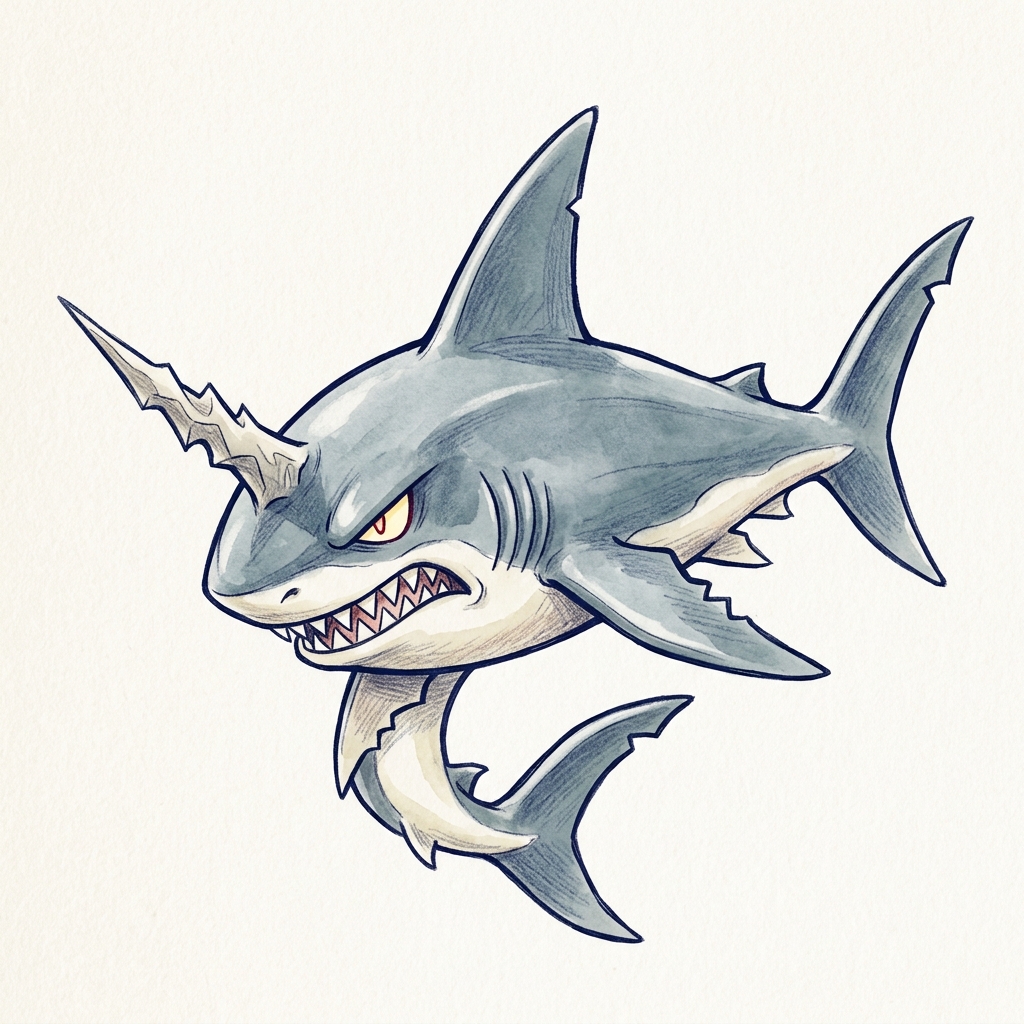
Sharks are difficult to draw from behind. The back sprite at slot 68 is largely a dorsal fin, which is both the least informative angle available and, as it happens, exactly the angle that makes a shark recognisable, so this is one of the rare cut designs where the missing front view costs almost nothing.
Helix Chamber, having spent whole paragraphs agonising over whether a smear of pixels is a topknot or a boxing glove, gets to the shark and writes: Jagg is Jagg, nothing wrong with that. It is the closest thing to relief in the entire dossier.
The name comes from that same manga ballot, where it sits alongside the deer, the elephant, the cactus and Crocky, in a cluster of designs that all seem to have been named for the animal they plainly were. Whoever was drafting names that week was not straining.
The first generation shipped with a fair amount of sea life and no shark, a gap the franchise did not close for two more generations. Fans have long connected Jagg to Sharpedo, which arrived in the third generation and looks the part, and no source does more than shrug at the idea. What is certain is narrower and stranger: Game Freak drew a shark, numbered it, and then went to market with Magikarp.
Zubat Pre-evolution
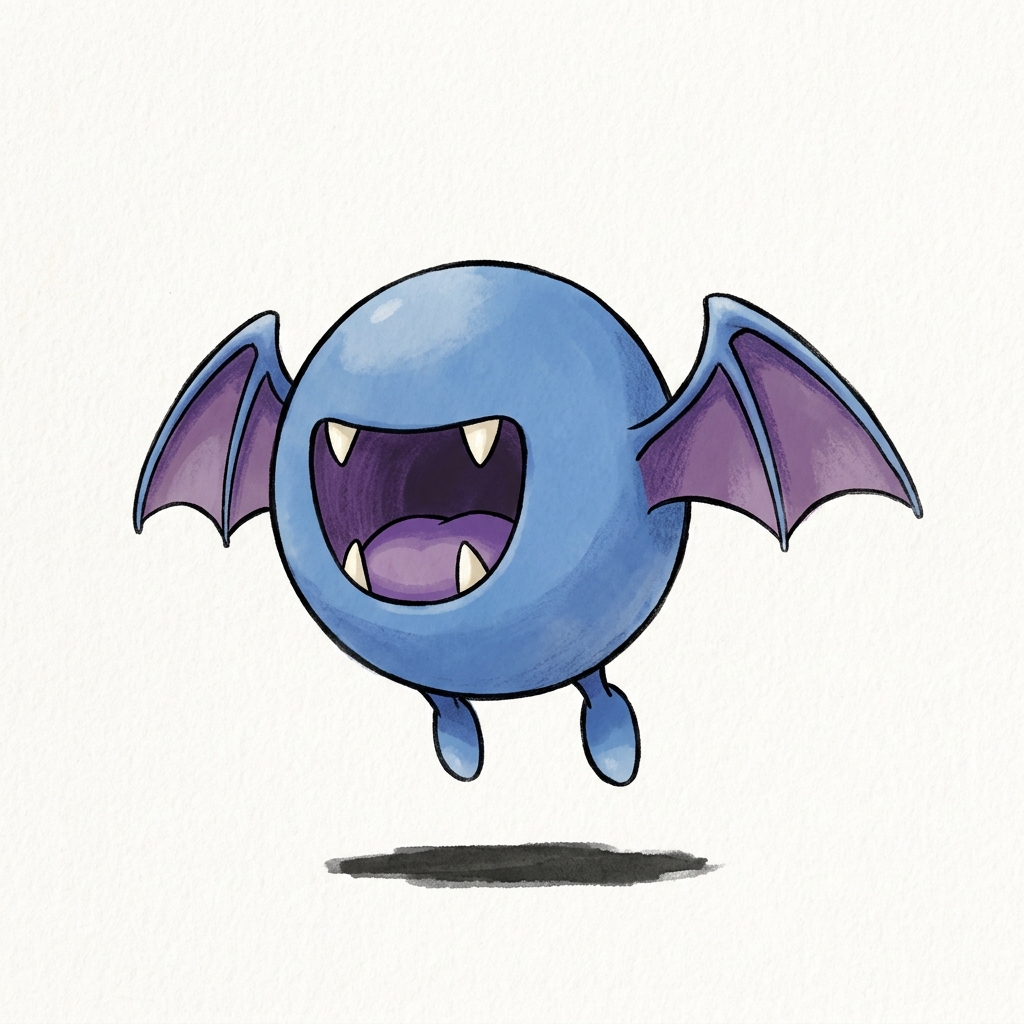
Zubat’s cry is not Zubat’s. It is an exact duplicate of the cry attached to slot 69, which means the creature everyone has spent thirty years swatting away in Mount Moon is walking around using a dead relative’s voice. That fact was recoverable from a retail cartridge, with no leak involved, and Helix Chamber published it in August 2018, roughly six months before any sprite appeared.
The movesets tell the rest. Slot 69 learns a spread of low-level attacks, the kit of a creature meant to be caught early in a cave, while Zubat itself was given the stronger, later moves typical of a middle evolution. When the baby was deleted, Zubat was demoted into the vacancy and had its move pool cut down to suit. The single most encountered Pokemon in the first generation is a downgrade.
The sprite is not much help. Helix Chamber suggests it may be close to nothing but a mouth, then adds that it is hard to tell, which for a creature with no eyes is arguably fitting. Of the pre-evolutionary stages cut from Red and Green, this is the one that was never revived: the Vulpix, Meowth, Goldeen and Ponyta babies all resurfaced at a trade show two years later and got a second hearing. Zubat’s did not, and nobody has ever explained why.
Flying Fish
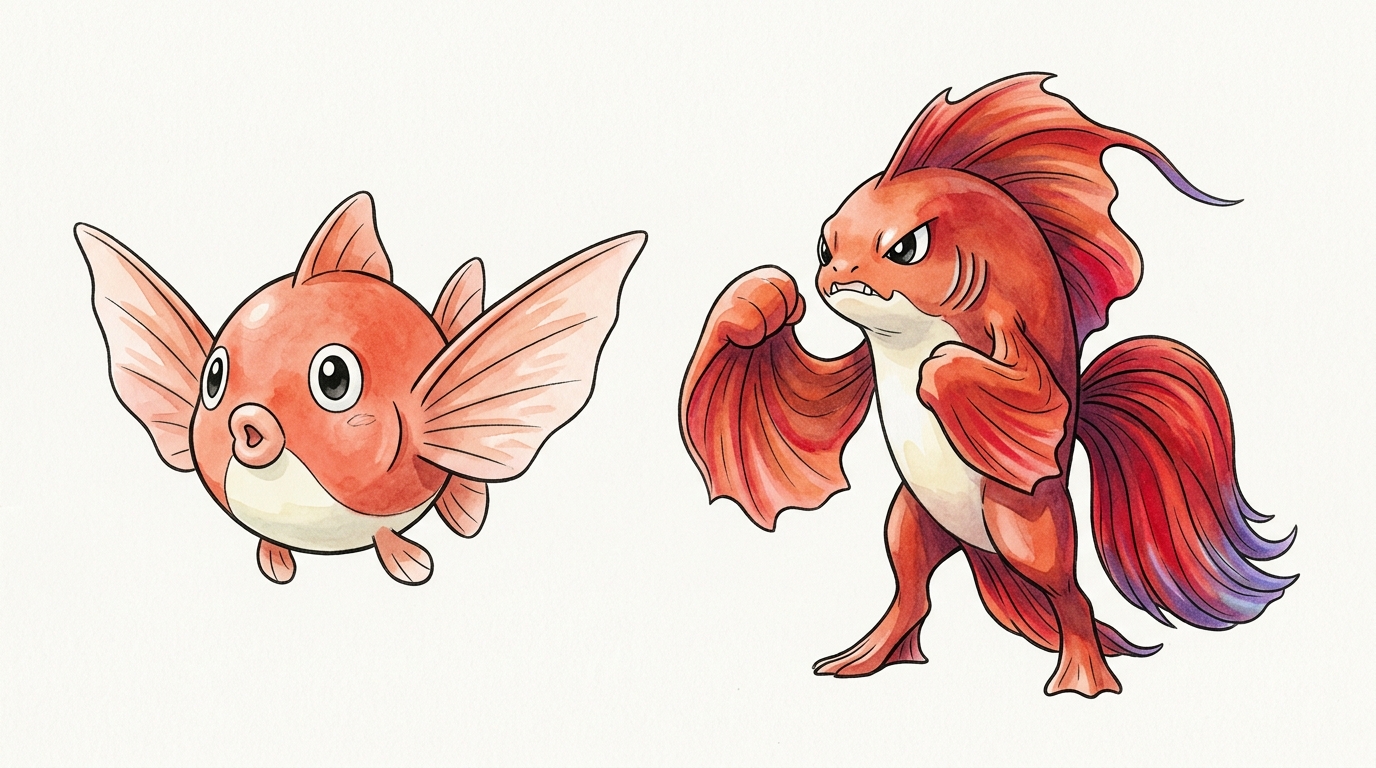
Slots 79, 80 and 81 sit in a row, three consecutive holes in the index, and then Vulpix. Three creatures were deleted back to back, which is either coincidence or the fingerprint of somebody clearing a block of the roster in one afternoon.
The first of them looks like a bird until you notice the fins. Helix Chamber lands on flying fish or betta fish, then floats the Cheep Cheeps from Super Mario Bros as an alternative, which sounds flippant until you remember what year this was and who Game Freak’s neighbours were.
Its moveset survives, and it is peculiar. Slot 79 shares a bird-based move with Pidgey and Spearow, suggesting a beak, and shares a run of Fighting-type and Water-type attacks with its twin at 80. Poliwrath was the only Water and Fighting creature that made it into the finished game, and it is a frog. A fish-bird built along the same typing would have looked nothing like it.
It also has a cry, listed among the small handful of empty slots whose sound data was ever finished. Its twin does not. Two creatures designed as a pair, coded as a pair, deleted as a pair, and only one of them was allowed to make a noise first.
Flying Fish’s Twin
Nothing is left of this one but a rear view and a list of attacks. The design at slot 80 has no cry data of any kind, no name, and no separate documentation, which puts it among the thinnest entries on a list where thin is the house condition. Bulbapedia’s table of finished cries includes its neighbours at 79 and 81 and skips it entirely.
What it does have is a moveset that overlaps almost exactly with slot 79’s, and that overlap is the entire argument for treating the two as an evolutionary pair rather than two unrelated fish. In a subject built on inference, a shared move pool is decent evidence. It is not proof, and Helix Chamber does not claim it is.
Here is the part worth holding onto. There is no reason to believe slot 80 was less finished than the creature beside it, or worse, or more expendable. It reached the same stage, was given the same attacks, and was cut on the same day. The only difference between the two, thirty years later, is that somebody at Game Freak got round to writing 79’s cry before the decision came down and did not get round to 80’s. Posterity is arbitrary about what it keeps.
Mikon
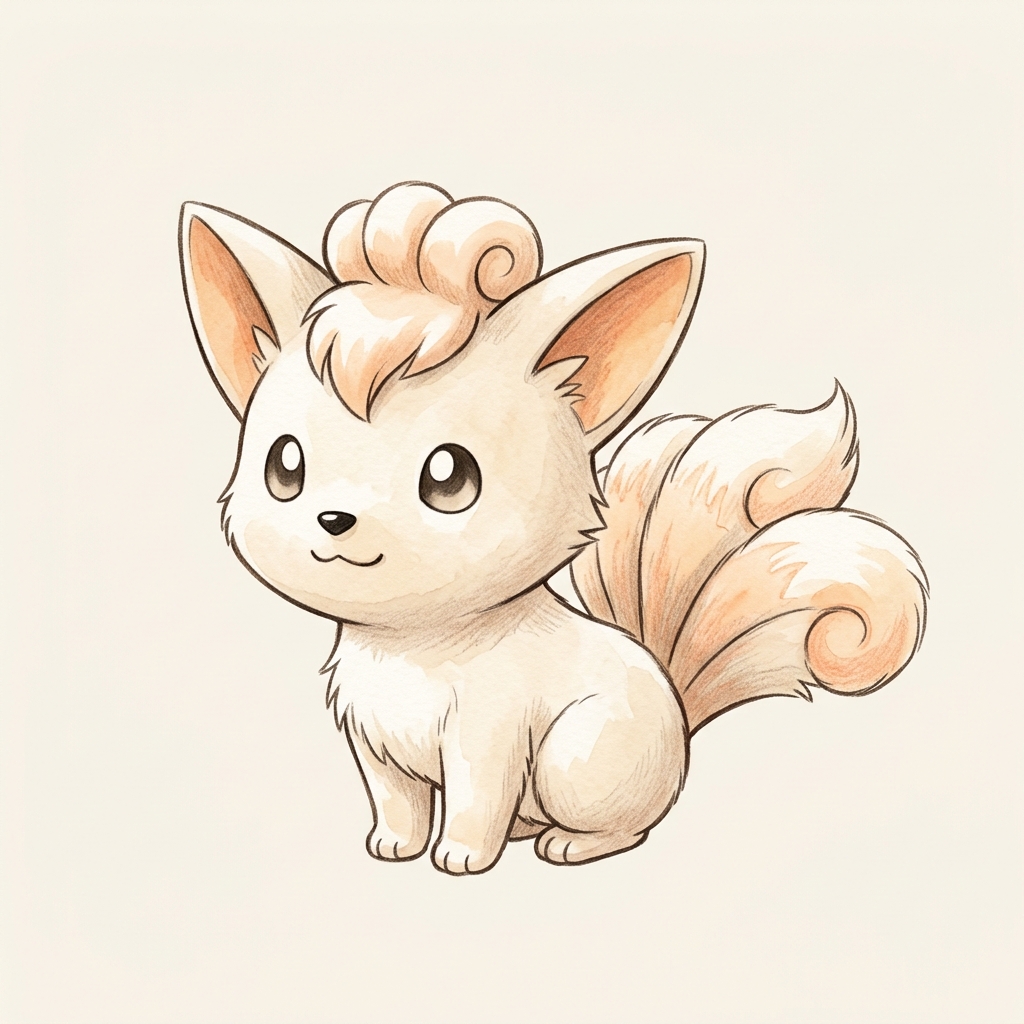
Read Vulpix’s first-generation Pokedex entry closely and it describes a Pokemon the games never let you have. At the time of birth, it has just one tail; the tail splits from its tip as it grows older. Vulpix, as encountered, already has six. The entry is describing a stage that was cut, and it shipped anyway, in every copy of the game, quietly wrong for twenty-three years.
The creature at slot 81 is that stage. Helix Chamber’s reaction on identifying it is worth quoting for tone alone: you were gonna have Mikon from the start, which explains the Pokedex entries being like that even in the first generation, but you cheekily dropped the ball, twice.
Twice, because it came back. The Vulpix baby resurfaced in the Gold and Silver demo shown at Space World in November 1997, where it was finally given the name Mikon and, apparently in error, the Water type despite evolving into a fire fox. Then it was cut again.
The name is worth being careful with. Mikon is what the design was called in 1997. The Red and Green files list their deleted slots by number and leave them unnamed, so every name in this part of the list is borrowed backwards from a game that also never shipped it.
Topknot Creature
Some of these can be identified. This one cannot. The back sprite at slot 86 is, in Helix Chamber’s own description, virtually only a head, with a mark on top that might be a topknot, and the people who have spent the most time with the raw data end their write-up by admitting these two really need some clarification.
The theories were tried and dropped in public, which is the useful part. Ninja crickets was floated and abandoned. A prototype of the Beedrill line was proposed and rejected. Sumo-wrestling frogs became the working favourite mainly because nothing beat it. A reader suggested the marks were boxing gloves rather than hair, and nobody took it up.
The one structural clue is where it sits. Slots 86 and 87 fall between Raichu and Dratini, in a stretch of the index near Ninetales, which is a kitsune, and Pikachu, whose name and shape both borrow from a Japanese rice cake. That neighbourhood is why researchers reached for a Japanese theme in the first place: the reasoning runs from the postcode rather than the picture.
It is a strange thing to state plainly and worth stating anyway. Two creatures were built for Pokemon Red and Green, given index numbers, and deleted, and nobody now living outside Game Freak knows what they were.
Topknot Creature’s Twin
Slot 87 is in the same condition as its neighbour and gets less attention, because when two mysteries are identical the second one feels redundant. It should not. These are two separate creatures that two separate people presumably designed, and the fact that their surviving pixels are equally unreadable is a fact about sprite compression, not about the designs.
The pairing itself is the strongest thing anyone can say. Adjacent index numbers in the first generation usually indicate a relationship, because the internal list mostly groups families together: Nidoran with its evolutions, Kabuto with Kabutops, Horsea with Seadra. Two consecutive empty slots almost certainly held two stages of one line, or two halves of one idea.
That pattern is easier to see a few slots along. Indices 88 to 97 run as five consecutive two-stage pairs, one after another, and the cut line at 94 and 95 is simply the third of the five. The index is not a random heap. It is organised, and its gaps are organised too.
Which leaves this. Somewhere in Game Freak’s offices in the early nineties, somebody drew a creature with something on its head, and then drew its partner. Both were approved far enough to be numbered. Neither has a name, a front, a type, a cry, or a single word of description.
Dragon
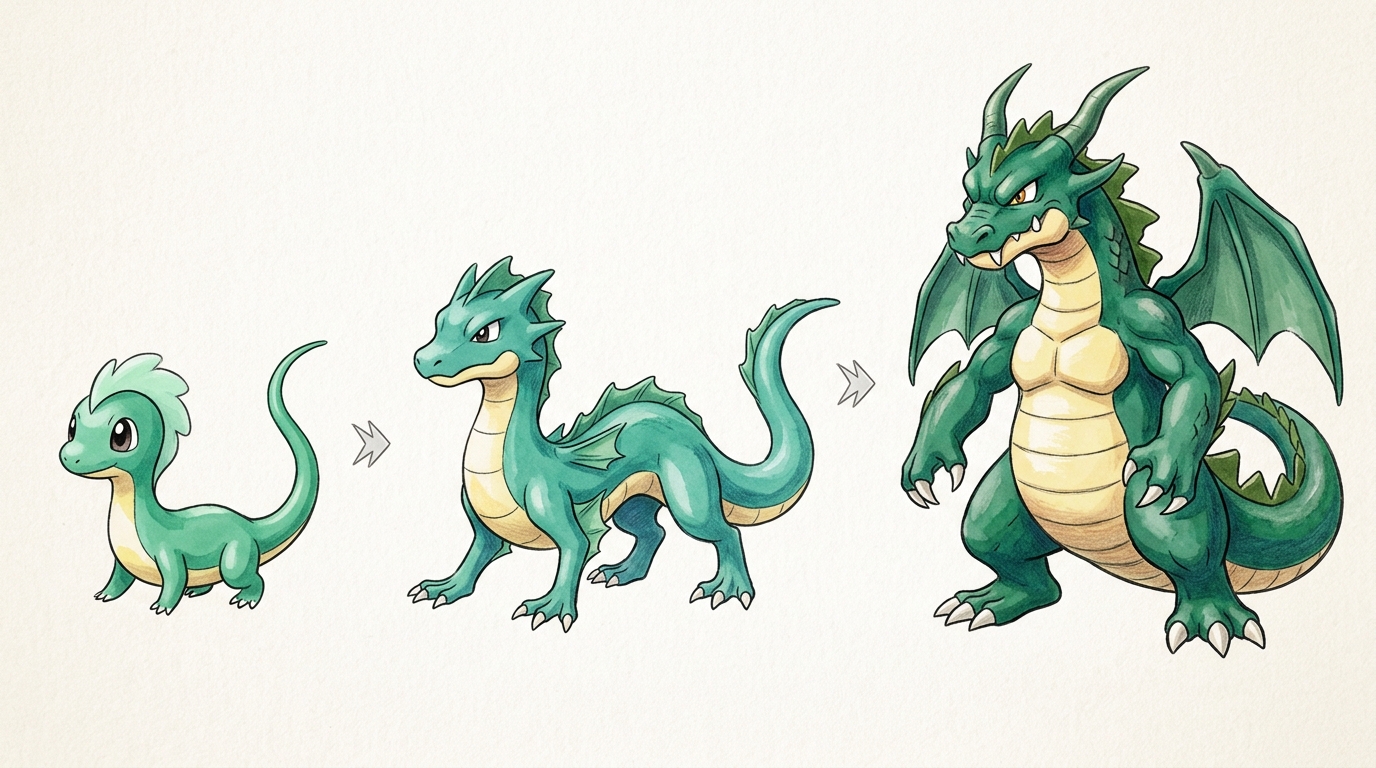
The pattern around slot 94 is almost too neat. Indices 88 to 97 hold five two-stage evolutionary pairs in a row – Dratini and Dragonair, Kabuto and Kabutops, Horsea and Seadra, then the gap at 94 and 95, then Sandshrew and Sandslash. Read the index and the deleted line announces itself simply by keeping the rhythm.
Both 94 and 95 carry their own finished cries, sharing a base waveform and differing in pitch, which is the audio signature of two stages of one creature rather than two unrelated ones. That is a hard fact from the shipped cartridge, and it is the load-bearing evidence that these two belong together.
Everything softer than that deserves suspicion. The description that circulates, that the line was based on Chinese water dragons, may not come from the data at all. A detailed critique published in February 2019 pointed out that all anyone actually has for slots 94, 95 and 174 is back sprites and move data, and that Helix Chamber’s reveal had been staged as a playable romhack in which invented front sprites, names and Pokedex text sat beside genuine recovered material. They withdrew the invented parts afterwards. Some of the atmosphere stayed in circulation, which is how a research finding turns into folklore.
Dragon’s Second Stage
Whatever this line was, its first two stages were done. Slot 95 has a completed cry built on the same waveform as slot 94 at a different pitch, sitting in the index exactly where a middle evolution belongs, immediately before Sandshrew closes out the run of pairs.
Compare that with the third stage at 174, added late and never given a cry at all, and the shape of the cancellation appears. Two stages were built and finished. A third was appended near the end of development and abandoned before anyone wrote its sound. The line was not scrapped in one decision; it ran out of road.
There is a real disagreement about the ordering that is worth flagging rather than smoothing over. Helix Chamber presents the line as 94, then 95, then 174. Bogleech’s review of the same material presents the sprites in reverse, calling 174 the first stage and 95 the final one. Both are reading the same handful of rear views. Neither can be checked against evolution data, because none survives.
So the honest summary is this: three designs, one family, cries on two of them, and no agreement among the people who have looked hardest about which end is the beginning.
Slot 115
Nothing. Whatever was here was gone. That is the entire published finding on slot 115, written by the researchers who had the raw files in front of them, and it remains the most complete statement anyone can make. No back sprite. No cry. No moveset. No evolution data. A reserved place in the roster with the contents scraped out.
The neighbours make the absence louder. Beedrill sits at 114 and Dodrio at 116, both perfectly ordinary, both shipped. Between them is a hole that was numbered and then emptied so thoroughly that even the salvage operation came back with nothing.
Guesses have been made and dropped. Before the files surfaced, Helix Chamber wondered whether it might be Crocky’s second stage, or a further evolution of Farfetch’d, and flagged the problem with its own Farfetch’d theory in the same breath. Afterwards the guessing got vaguer rather than sharper, because the data that was supposed to settle it arrived empty. The current position is that it may have been an evolution of something from the sixties or seventies of the index, which narrows the field to about a dozen shipped creatures.
There is a version of this list that quietly omits the three slots like this one. It would be a better read and a worse record. Somebody drew something, and it is gone, and that is a fact about Pokemon Red and Green.
Slot 121
The second blank is easier to overlook than the first, which is unfair to it. Slot 121 is in precisely the same condition as 115: no sprite recovered, no sound, no attacks, no evolution data, and a single line of published commentary noting that it is also missing and was likely an evolution too.
That guess is not arbitrary. Empty slots in this index tend to cluster with their families, and 121 sits immediately before the second squid at 122, which is why the pre-leak theory had 115, 121 and 122 forming one three-stage line together. The leak did not confirm it. When 122’s sprite came back looking like a squid rather than anything reptilian, the shared-line theory quietly lost its middle.
There is a small afterlife, of a sort. Generation II reused the same numbering scheme and put Kingdra at 121, so a glitch creature dredged out of this hole in the first game and carried forward through the Time Capsule arrives in the second one wearing a seahorse’s name. Nothing drawn here in 1995 had the slightest connection to seahorses. The number simply came round again, which is what happens to cancelled work: an empty address is the most useful thing a programmer can inherit, and Game Freak had thirty-six of them going spare.
Squid Evolution
Down at 122, fifty-nine slots and several years of development away from the first squid, a second one appears. Helix Chamber says it resembles a myriad of squid designs from other video games, which is a polite way of putting it, and pairs it with slot 63 on that basis.
They are careful about the limits, and state plainly that the recovered files record no relationship between the two designs whatsoever. What joins them is a resemblance and a move name. This is the slot Helix Chamber assigns the abandoned Squid Ink attack to most confidently, on the grounds that a creature this far down the list was likelier to be the one still in the roster when the move was named.
The distance between the two is the interesting part. Index position roughly tracks when a design entered the roster, so a pair separated by that much was probably not conceived together. One squid was drawn early. Another was drawn much later. Either the studio kept returning to the idea, or the second was meant to replace the first and nobody removed the first from the list.
Neither shipped. The franchise waited until Remoraid and Octillery in the second generation, at which point it made the fish into a cephalopod on evolution, which is its own kind of answer.
Psyduck Middle Evolution

There was a strange noise here long before anyone worked out what had made it. Slot 127 carries a real cry, built on the waveform Rhydon uses with its settings apparently entered in the wrong order, and in August 2018 Helix Chamber flagged the anomaly and guessed at a proto-Blissey or an evolution of Mr. Mime. Those guesses were wrong. The evolution data that surfaced the following February named the family outright, and it was Psyduck’s.
The arithmetic backs it up, and the arithmetic is unusually clean. Psyduck has a base stat total of 255 in the first generation and Golduck has 405, and the gap is not distributed unevenly the way most evolutions are. Every single stat rises by exactly 30. Five identical steps of thirty points, which is what a two-stage jump looks like when a stage has been removed and nobody rebalanced the ends.
The slot itself is among the better furnished on this list. It has a moveset and actual evolution data proving its place in the family tree, which puts it in the small group of cut designs that were implemented rather than merely drawn. The name people attach to it, Zuduck, is explicitly a hypothesis and its own proposers say so.
Psyduck is a duck with a permanent headache whose defining trait is that it does not understand its own powers. It turns out it also spent thirty years missing a chunk of its adolescence.
Konya
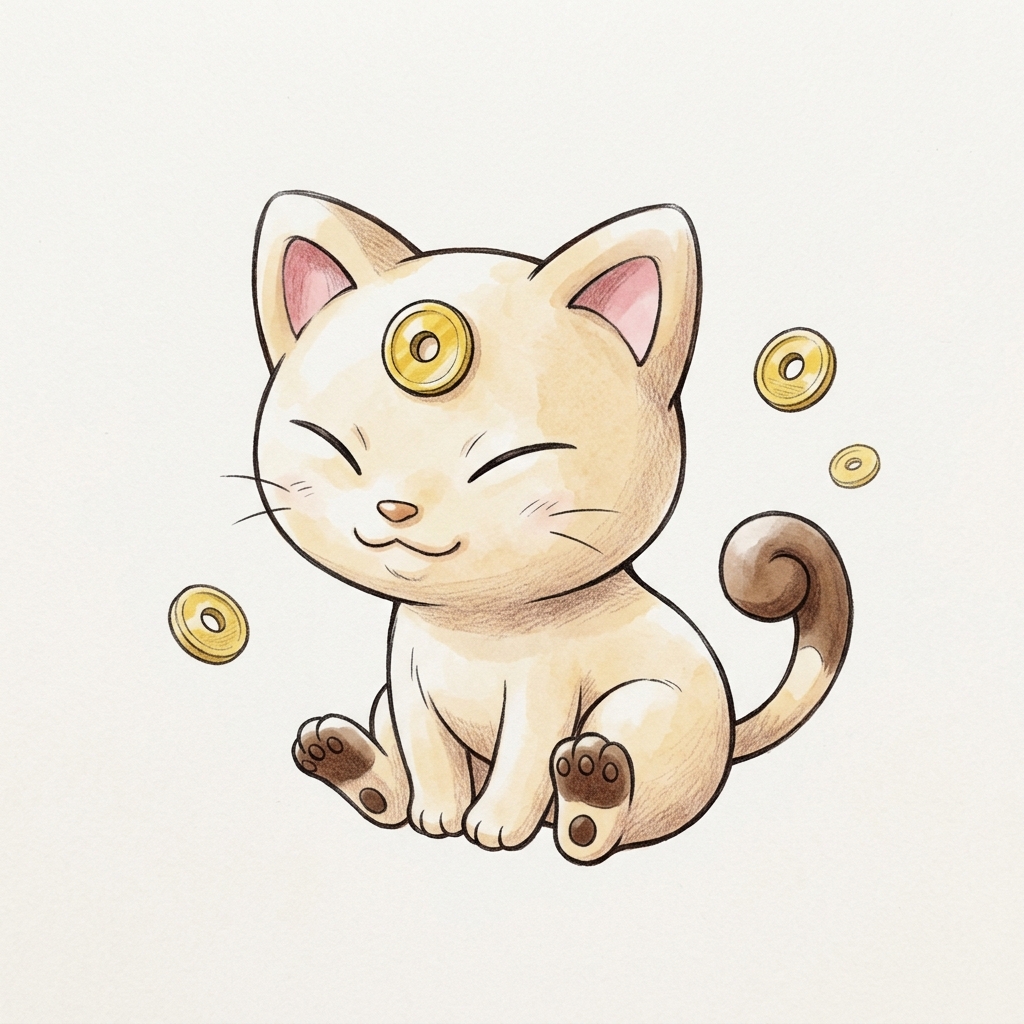
Between the version at slot 134 and the version shown to the public two years later, the cat stood up and its tail changed shape. Helix Chamber describes the earlier back sprite as standing, with a long straightened tail, against the Space World demo sprite from November 1997, which lies down with a short curled one. Two drafts of one Meowth pre-evolution, separated by a cancellation.
That is a rarer thing than it sounds. Most entries here exist as a single frozen drawing. This one can be watched being revised across two different games, neither of which shipped it, and that makes it close to unique on this page: a deleted creature with a documented second act.
The name arrived with the second act. At Space World the design finally acquired one, built from the word for child and the noise a cat makes, with a coin folded in for the Meowth family’s abiding obsession. In 1995 it had no name whatsoever, only a number.
Meowth went on to become one of the most heavily promoted creatures in the franchise, a talking mascot with a speaking part in hundreds of episodes of television. Its baby form was designed, dropped, redesigned, shown at a trade fair, and dropped again. The Pokemon that learned to talk could not get its own child on screen.
Slot 135
The only surviving image of slot 135 was broadcast on Japanese television on 30 May 2004, and it is out of focus. Game Center CX, in the eleventh episode of its first series, filmed a Game Freak booklet called the Pocket Monsters Kaiju Zukan, a printed catalogue of the original roster, and a camera passed over the page. That footage is the entire visual record. No back sprite was recovered for this slot. No cry, no moveset, nothing.
There is a further complication, and it is the honest one. Helix Chamber suspects 135 may not be a cut design at all. Several released Pokemon were shuffled to later slots during development, and they note that the blur seems to fit Weezing, which would make this an address a shipped creature moved out of rather than a grave. If that is right, the count on this page is one lower.
It is worth pausing on how thin the thread is. A researcher is squinting at a videotape of a television programme that pointed a camera at a booklet, in order to work out whether a number in a thirty-year-old cartridge represents a creature nobody ever finished or a Pokemon that simply changed address. That is the state of the evidence, and everyone involved says so out loud.
Baby Gyaoon
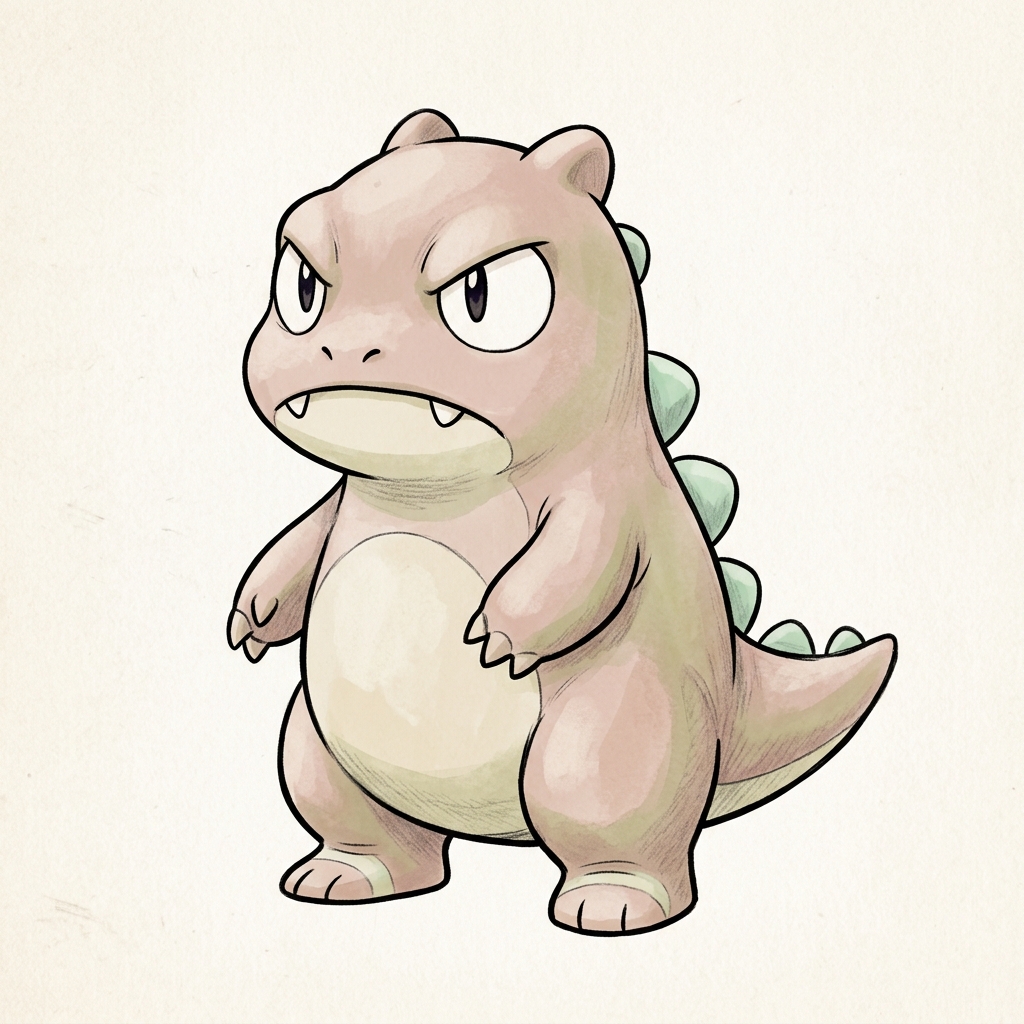
Slot 137 was identified by its sound. It carries a finished cry built on the waveform used by the Bulbasaur line, and Gyaoon, back at slot 31, had at one point been assigned Ivysaur’s cry, so the two deleted creatures are sitting on the same audio foundation. From that alone Helix Chamber concluded, in writing and with two exclamation marks, that it is probably Baby Gyaoon.
Probably is doing real work in that sentence. The name is a label the researchers coined to describe a relationship they inferred from a waveform, not a name anybody at Game Freak wrote down. Readers of their own article have proposed alternatives, and a separate write-up circulates the name Decilla and credits it to Helix Chamber, whose published text does not use it.
The suggestion underneath is the interesting one. If this was a pre-evolution of Gyaoon, it may have held slot 31 first and been displaced when the newer Gyaoon design took the space, which would mean two creatures were lost from a single address at different times.
There is something fitting about a kaiju having a baby form. Godzilla eventually acquired one and the films have never entirely recovered. Game Freak drew one, gave it a voice, filed it next to nothing in particular, and deleted it before anybody could hear the noise it made.
Magneton Variant
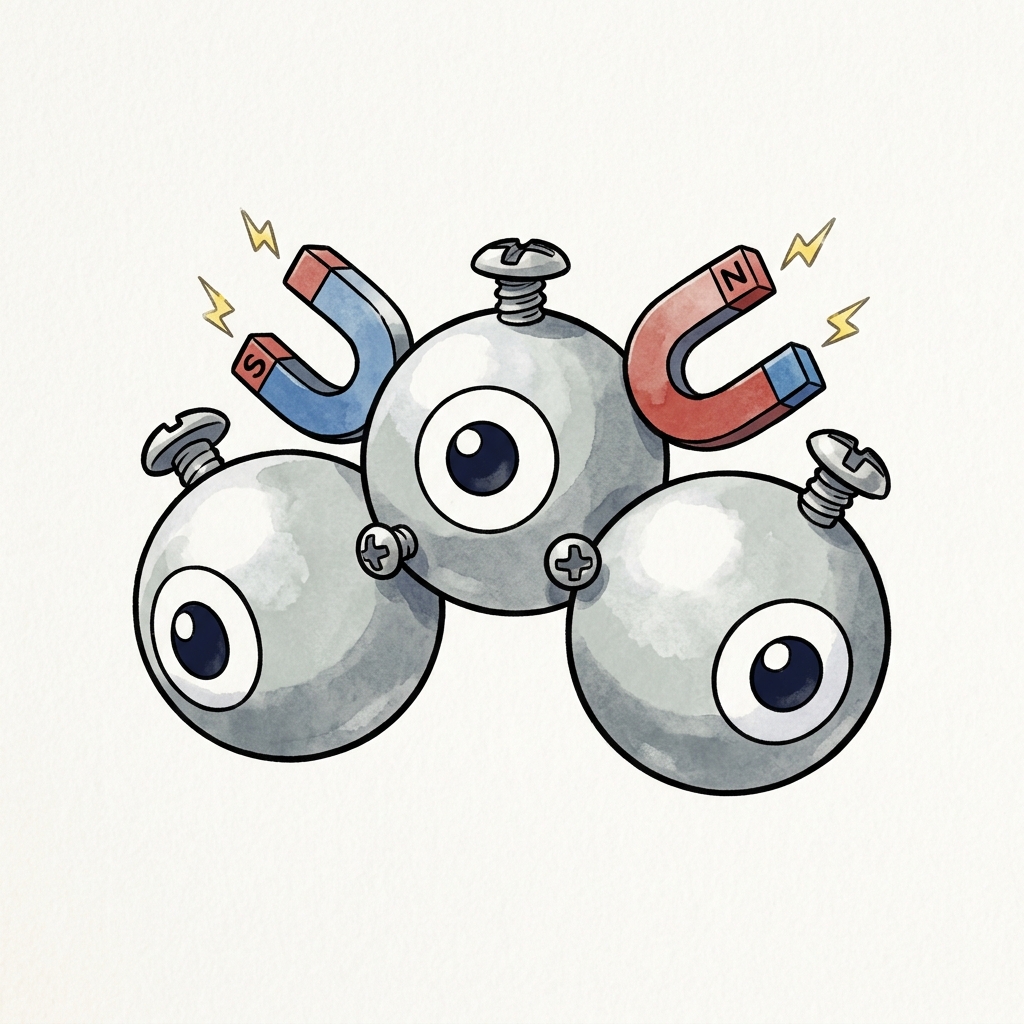
Helix Chamber titles this one with a question mark, and the question mark is the most accurate thing about it. The back sprite at slot 140 looks like Magneton with pieces missing, specifically the magnets on its outer orbs, and their conclusion is not that they have found a new Pokemon but that it just doesn’t seem to make sense as a standalone creature.
Their best reading is that somebody was experimenting. A Magneton with fewer magnets could be an early pre-evolution, or a middle stage between Magnemite and Magneton, or a discarded attempt at Magneton itself that got its own number while the studio decided. All three are guesses and they present them as guesses.
The slot still shipped empty, which is why it is on this list. Whatever the design was for, it was removed and its place left hollow, and that is the only test this page applies. A creature that was merely revised keeps its address; Weedle’s early drafts are not here, because Weedle is still sitting in Weedle’s slot.
It is a useful entry to end an argument with. Not every gap in Pokemon Red and Green represents a fully imagined creature with a name and a personality that the world was denied. Some of them represent a Tuesday afternoon when somebody tried something with magnets and it did not work.
Marowak Evolution

The oldest theory in Pokemon is that Cubone is a baby Kangaskhan. Generations of players noticed that Cubone wears a skull, mourns a mother it never names, and looks uncannily like the infant riding in Kangaskhan’s pouch, and Game Freak has never confirmed a word of it. Then a back sprite turned up at slot 146 showing a large Marowak-like creature apparently cradling a small Cubone-like one.
Helix Chamber calls this the find that shocked them most, and then does something more interesting than claiming vindication. Their reading is that the cut evolution is separate from Kangaskhan but shares its theme, so the theory came true in a twisted sort of way rather than straightforwardly. They also admit they cannot tell for sure what is going on in those pixels, and whether the larger creature is holding the smaller one or carrying it in a pouch is genuinely undecided.
The index placement is the clean part. Marowak shipped at 145 and the deleted design sits at 146, directly behind it, exactly where a third stage belongs.
So the family that the entire fandom built a mythology around, on the strength of a skull and a Pokedex entry about a dead mother, did once have another member. It was drawn with the child either held or carried, nobody can tell which, and then it was cut, which is arguably the bleakest available outcome for that particular story.
Gyopin
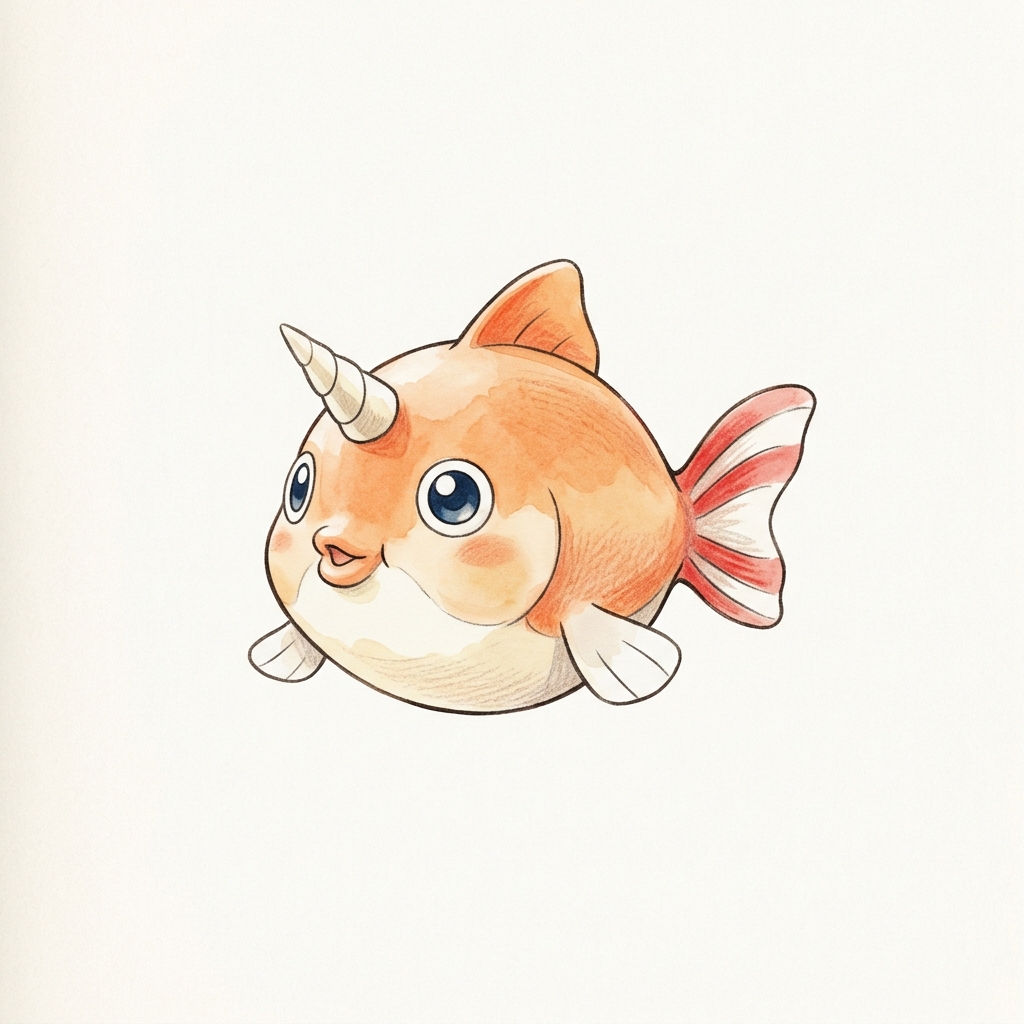
Look at where the index put it. Goldeen ships at 157 and Seaking at 158, and the deleted slot sits at 156, directly in front of them, which is what a cut pre-evolution looks like when nobody bothers to close the gap afterwards. The internal list is not a jumble. It files families together, and the holes in it are family-shaped.
This is also one of the few designs that got properly built rather than merely drawn. It has a moveset and evolution data, enough to have been playable, and the learnset changed measurably when the idea was dusted off while the sequel was in development. In the original files it picks up Supersonic at level 17 and Horn Drill at 19. At Space World it had been pushed back to Horn Drill at 28, which is the sort of adjustment a designer makes when a creature is being rebalanced rather than reconsidered.
Its later name comes from the Japanese word for goldfish, and it belongs to the group of pre-evolutions that were cut, kept in a drawer for two years, dusted off for a trade show and cut again.
Goldeen is mostly encountered by accident, on the end of a fishing rod, by players who wanted almost anything else. It nearly had a child.
Kotora
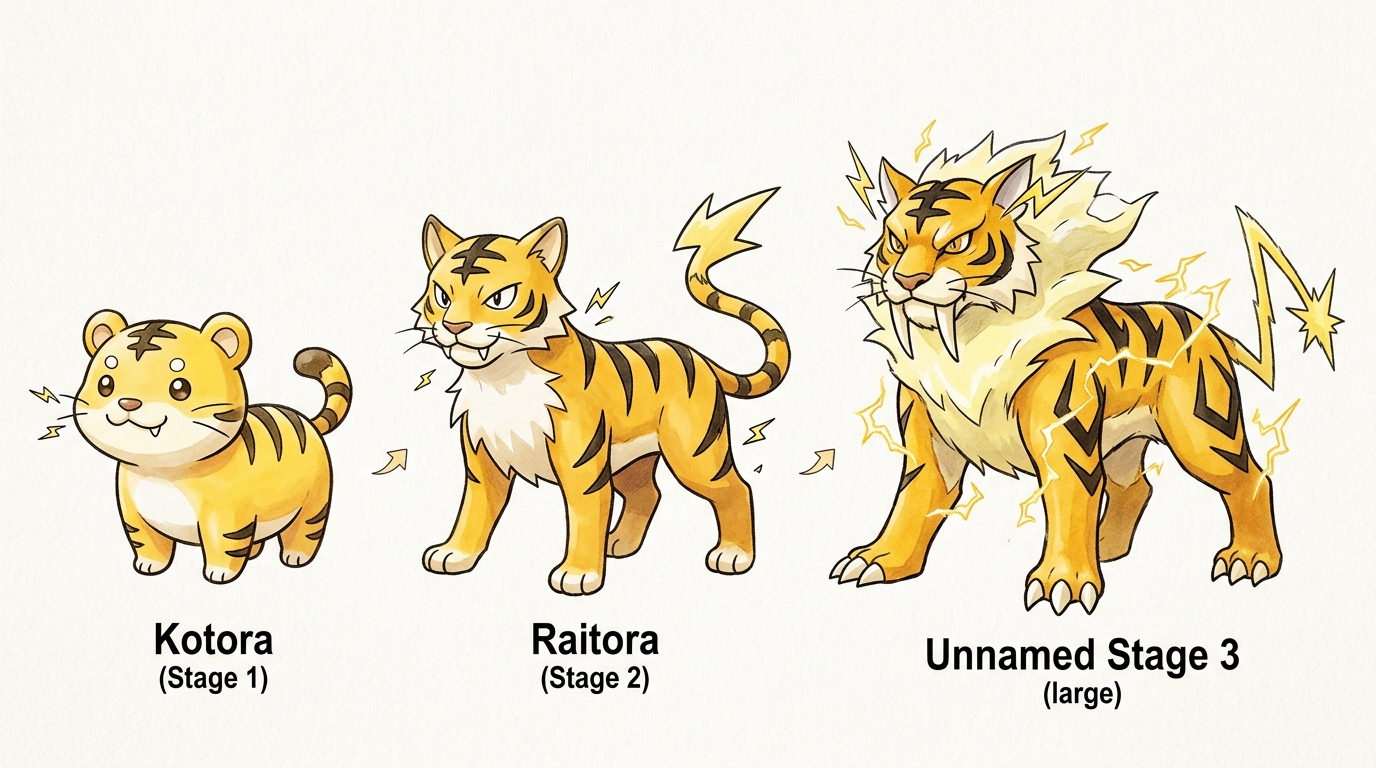
In August 2018, six months before anyone outside a small circle had seen the prototype files, Helix Chamber published the claim that slot 159 held an electric tiger cub. They had it from a printed Game Freak booklet, the Pocket Monsters Kaiju Zukan, catalogued on television years earlier and datable to somewhere between 1994 and early 1995 by the Super Game Boy screenshots inside it.
When somebody later offered them a trove of stolen assets, that published claim became the test. They asked to see slot 159. There it was, in full detail. A guess made in public, in advance, is the only thing in this entire field that functions as a control, and it is the reason the material underneath most of this page is taken seriously at all.
The cub resurfaced two years later at a Nintendo trade show, where it was finally given a name, and was dropped again before Gold and Silver reached shops. It was named at the trade show announcing the games that the eight Gym Leaders of Johto would headline, and it did not survive to meet any of them.
A tiger cub with published provenance, a printed booklet, a television broadcast and a stolen file all agreeing, and still nobody has ever been able to play as it.
Raitora
There were three tigers, and this is the middle one, though it did not start out that way. The recovered files show slots 159, 160 and 161 holding three related designs, and Helix Chamber’s reaction to finding a third was that they had not expected a three-stage line at all. Their reading is that the upper two were originally separate creatures, later folded together into one second stage while the sequel was being built.
Which means the design at 160 has an odd biography: drawn as one of two candidates for the same job, deleted along with everything else, then partially resurrected two years later as a merger of itself and its rival. It kept the name. Its counterpart at 161 did not.
None of the three carries evolution data, which matters more than it sounds. The whole three-stage structure is inferred from how similar the sprites look and how close together the numbers sit, and that is a weaker footing than the Psyduck line or the Goldeen line, where the family tree is written into the files.
What the shipped game got instead was Pikachu, Raichu, Magnemite, Voltorb and a handful of others, which is not a thin showing. The tigers were simply not among them.
Raitora’s Final Stage
Almost every account of this subject stops at two tigers. There is a third, and among the designs that left a recovered sprite it is the thinnest file of the lot. Bulbapedia, working from the Pokemon Blue source code that leaked in April 2020, records back sprites for three cut tiger-like Pokemon that appear to belong to one evolutionary line, and notes they all lack any evolution data.
Only the first two were ever named, at a trade show in 1997, two years after they had already been cut once. The third was not brought back and was never called anything. It exists as a rear view in a file and nothing else.
There is an unresolved conflict in the record worth stating rather than smoothing away. A 2019 report describes the third stage as having leaked with evolution data attached. Bulbapedia, citing the later source-code release, says the opposite. Both cannot be right, and nobody has reconciled them.
The pattern is hard to miss once you have noticed it. Two three-stage electric lines were drawn for this game and both were shortened to two, one of them belonging to the most famous rodent in the world, and the trimming in each case took the top of the line rather than the bottom. Whatever the reason was, it applied twice.
Puchicorn
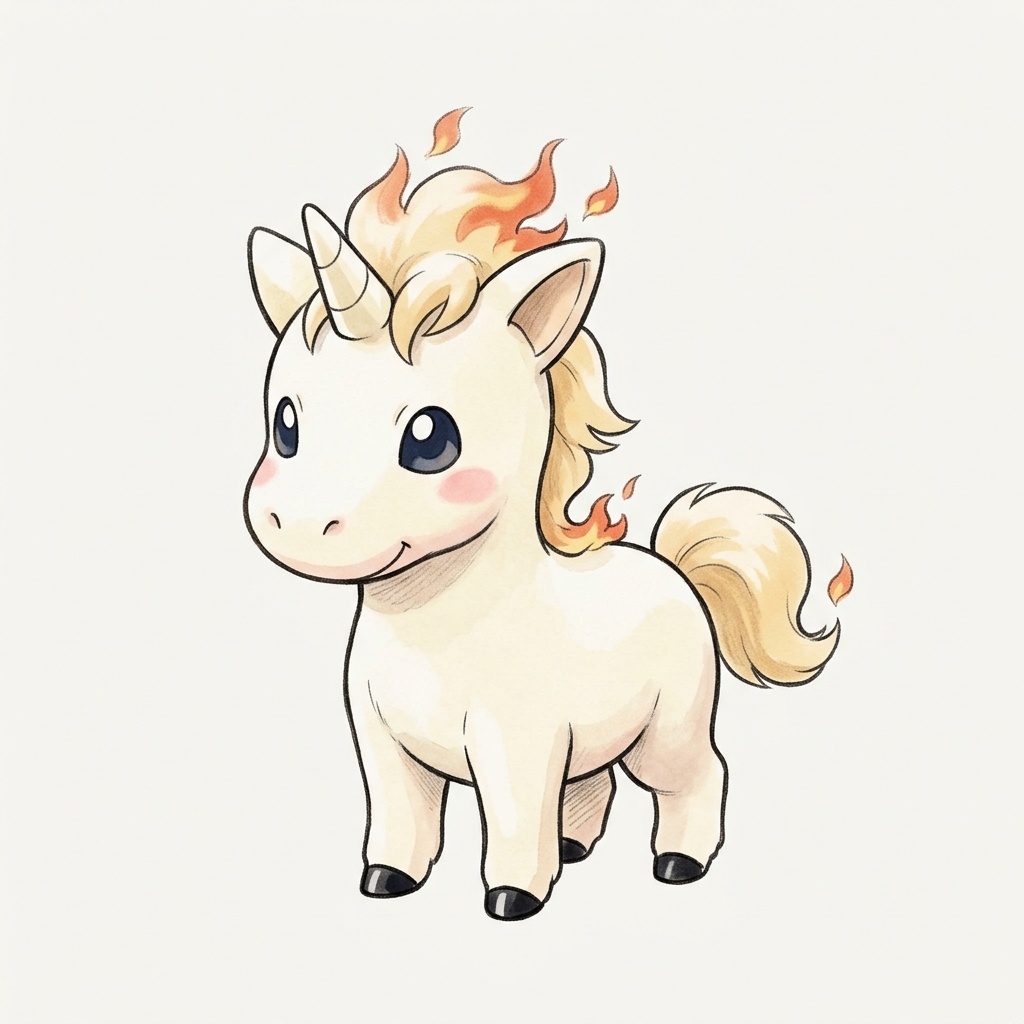
The claim attached to this one everywhere you look is that it explains a Pokedex mystery: Ponyta and Rapidash are described as having a flame that starts weak and strengthens with age, and a cut baby unicorn would account for it. It is a lovely piece of reasoning and the first-generation Pokedex does not say that.
Read the actual entries and they are about hooves. Ponyta’s concerns hoof hardness; Rapidash’s concerns running. The flame-grows-with-age motif does not turn up until generations later, which means the tidy explanation is being read backwards out of text written long after these games shipped.
What remains is still worth having. Slot 162 held a small horse, deleted before release, brought back for the 1997 demo and named there for the French word for small, then cut again. Helix Chamber suspects it formed a trio of baby Pokemon with the tiger cub and the goldfish, which the index placement supports.
The baby-Pokemon idea eventually arrived in the second generation with Pichu, Cleffa and Igglybuff, and the franchise has been adding them ever since. Game Freak had the concept working in 1995, built at least five of them, and shipped none. Nobody has said why, and the sensible guess is that a Game Boy cartridge only held so much.
Blastoise Pre-evolution
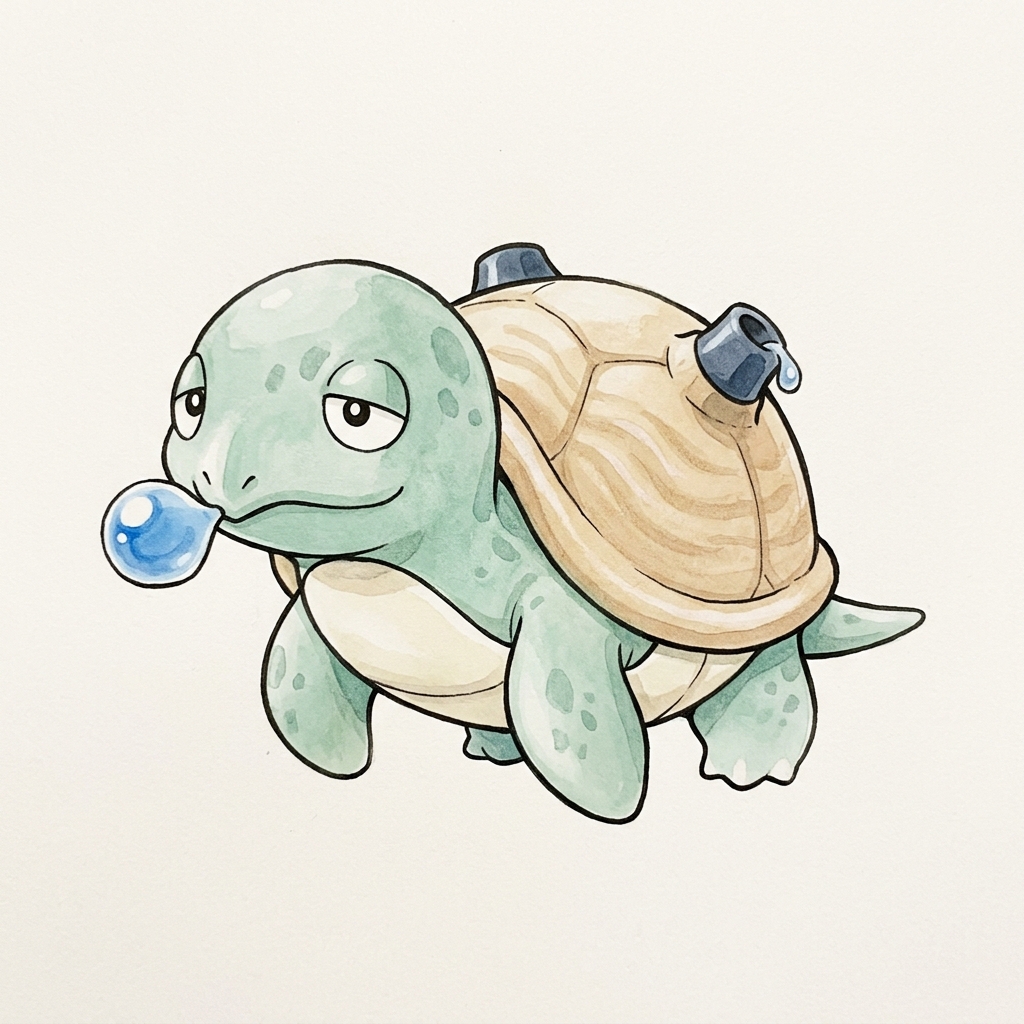
Nobody agrees what this is. Helix Chamber’s own heading carries a question mark, and their write-up is a record of changing their minds in public: they thought it was some sort of cow or pig initially, then worked out that a ring on its nose could be a bubble, at which point the objects on its back became bubble cannons. A reader replied that it looks more like a panda-type black and white tapir-like creature. Others have proposed a bear cub and a Snorlax precursor.
The disagreement is the honest content here. This is a single-sourced identification with no corroboration from Bulbapedia, resting on a rear view of a sprite drawn thirty years ago in a resolution that flatters nothing, and the people who made it are the ones most audibly unsure.
The theory that gives it weight is bigger than the creature. If the design at 181 was genuinely Wartortle’s final form, then Blastoise was not originally part of that line at all, and this slot may be the remains of the family Blastoise was grafted onto. That would rewrite the ancestry of one of the three starters.
It rests on a nose ring that might be a bubble. Reference works have been built on less, but not many.
Dragon’s Final Stage
It never got a cry. The design at slot 174 was added to the index near the very end of development and its sound data was never written, while the two stages ahead of it at 94 and 95 both carry finished, tuned audio. That contrast is readable straight out of the shipped cartridge, and it dates the cancellation precisely enough: this creature was appended late, and abandoned before anyone reached the stage of deciding what noise it made.
Helix Chamber’s description of the sprite is the most deflating sentence in their entire dossier. To be honest, they write, the third evolution looks like it belongs in Bubble Bobble or Kirby.
The ordering is disputed, which is worth repeating because most write-ups pick a side silently. Bogleech presents these three sprites in the opposite sequence, treating this one as the first stage and slot 95 as the last. With no evolution data in the files, both readings are guesses about which rear view is the biggest.
The first generation shipped one dragon family, Dratini into Dragonair into Dragonite, and made it the rarest and most coveted thing in the game. A second was drawn, given two working voices and a late third act, and thrown out.
Gorochu
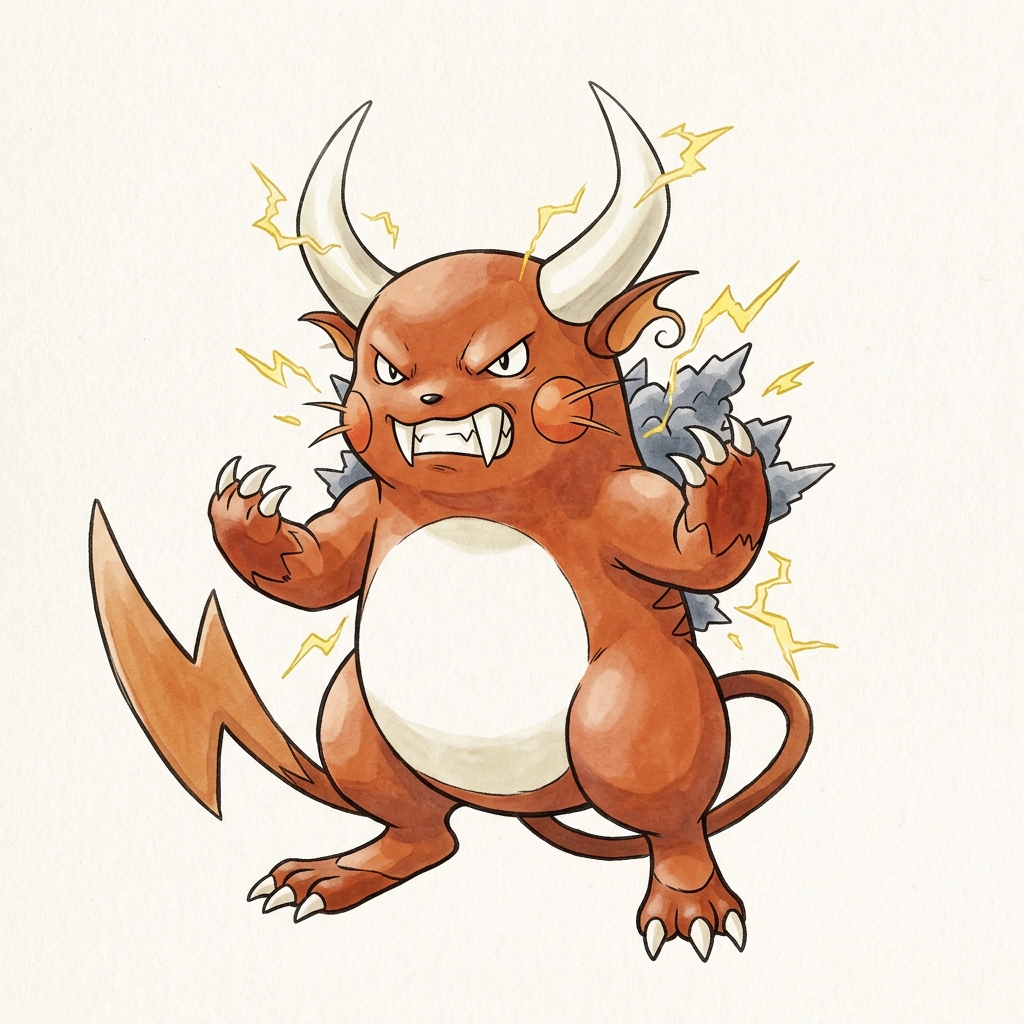
Atsuko Nishida designed Pikachu, and in May 2018 she told the Yomiuri Shimbun what came after Raichu. I was told to make its final form look strong, she said. That’s right, there was an evolved form after Raichu at the time. Its name was Gorochu. It had fangs and horns and looked like a god of thunder. The name comes from gorogoro, the Japanese for a low rumble of thunder, and the god in question is Raijin.
Two reasons for the cut are on the record from two different people. Koji Nishino pointed at the size of the game data. Ken Sugimori pointed at game balance, meaning a third stage would have made the company mascot frightening to play against.
The back sprite was matched to the interview because the prototype evolution table lists slot 175 as evolving from Raichu. Then Helix Chamber noticed the problem: the sprite has one horn, not two. The designer’s memory and the surviving file do not quite agree, which is exactly what you would expect from a recollection twenty-two years after the fact.
One correction is worth making, because it is repeated everywhere. Junichi Masuda did not reveal any of this. He discussed scrapped designs with GameSpot months afterwards, in general terms only. What was actually lost was a third-stage Pikachu, waiting at the end of the line in a game whose difficulty Kanto’s own eight Gym Leaders were built to measure.
Wartortle’s Original Evolution
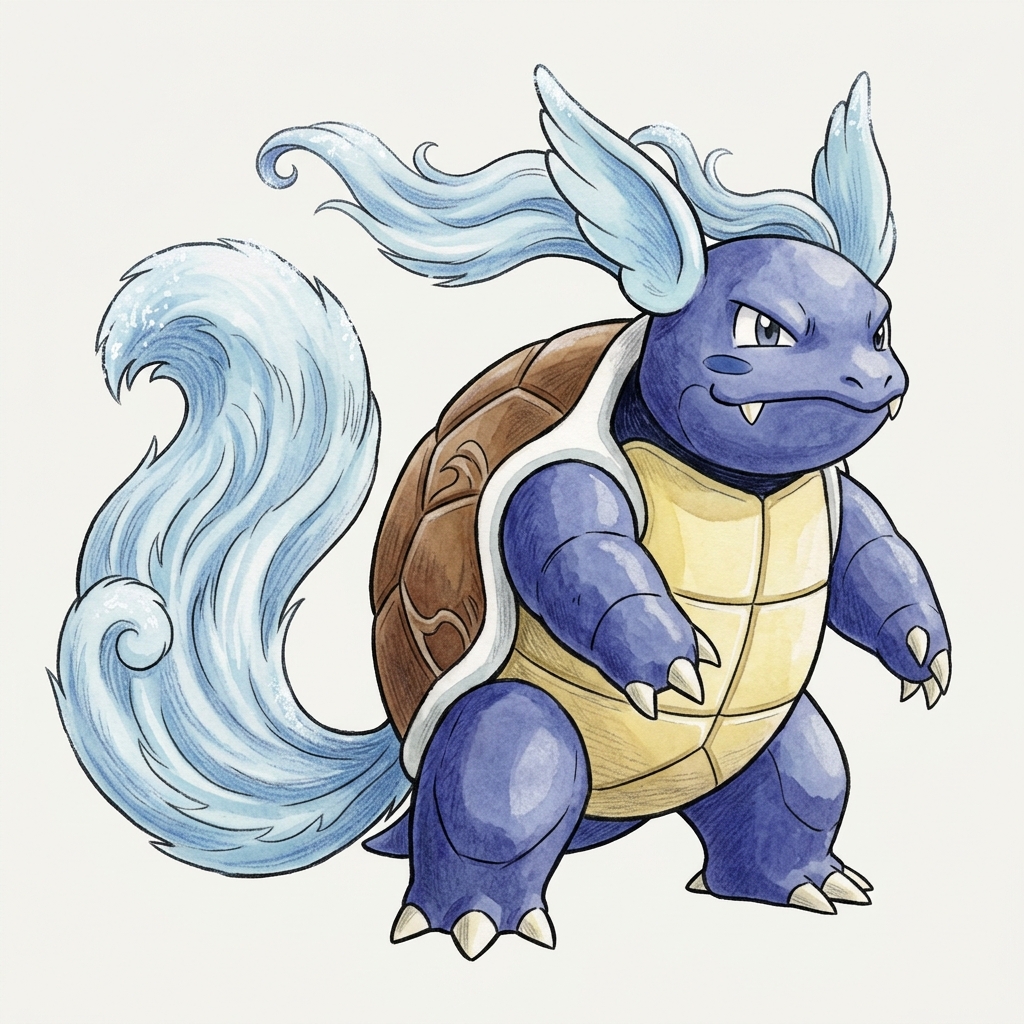
A pattern in the sound data gave this one away before anybody saw it. Charmeleon and Wartortle share a pair of cry settings applied to different base waveforms, and Charizard and the empty slot at 181 share a different pair the same way, which implied a final-stage water starter sitting in a hole in the index. The files, when they came, listed 181 in the evolution table as Wartortle’s evolution.
Treat that with the caution it deserves. Bulbapedia does not carry this design at all, so both the identification and the theory built on it rest on one research group.
It evolves at level 43, late enough that it had only one move left to learn, most likely Blizzard.
And then the index simply stops. Slots 182, 183 and 184 hold the two museum fossils and the Pokemon Tower ghost, which are pictures rather than creatures, and after them the roster resumes with Oddish and runs out at Victreebel. Helix Chamber’s conclusion is that 181 was probably the last Pokemon designed for Red and Green.
So the final creature anybody drew for the original 151 was a water starter that no longer exists, sitting one place before a pair of skeletons in a museum cabinet. Blastoise is what arrived instead, and it has spent thirty years being one of the three faces of the franchise, in a slot it may have been moved into.
Frequently Asked Questions
Was Godzillante a real Pokemon?
No. Godzillante appears in a 1990 Capsule Monsters pitch mockup, and the researchers who published it describe the creature as a placeholder monster in a mockup battle screen. Gorillaimo, Dragon4, Kabin, Papyo and Buhi come from the same kind of demonstration art. None of the six ever held an index slot.
How many Pokemon were designed for Red and Green in total?
Ken Sugimori has given two figures. He has said more than 300 designs were made and only 151 used, and separately that roughly a third of what the team created was cut. The numbers do not reconcile neatly, and no developer has ever published an exact total.
Have any cut Generation I Pokemon ever come back?
None has returned as itself. Junichi Masuda told GameSpot in October 2018 that scrapped designs from that era have not reappeared in later generations. Several scrapped ideas were looked at again in 1997 for the sequel and dropped a second time, which is as close as any of them came.
Is MissingNo. a cut Pokemon?
No. MissingNo. is what the games display when a player reaches an index number holding no creature, so it is the symptom rather than the subject. The Mew glitch is triggered by 36 specific Special stat values, and that list of 36 matches the empty slots on this page exactly.
Where did the cut Pokemon sprites come from?
They were stolen. Assets were taken off Nintendo’s internal network during an intrusion in March 2018 and reached the research group Helix Chamber, which published them in February 2019 with some fan-made material mixed in and later removed. Court records established the source, and separate code leaked in April 2020 matched.
Were these cut before Red and Blue or before Red and Green?
Before Red and Green, which reached Japanese shops on 27 February 1996. Red and Blue is the international edition of the same games, released in North America on 28 September 1998 with an identical roster of 151, so every design here had been gone for years before Western players saw the box.
- pret/pokered disassembly – constants/pokemon_constants.asm (the 190-slot index; 36 const_skip entries)
- pret/pokered disassembly – data/pokemon/names.asm (190 entries, 39 named MissingNo.)
- Bulbapedia – List of Pokemon by index number (Generation I)
- Bulbapedia – MissingNo.
- Helix Chamber – What Dreams May Come: Prototype Data for Pokemon Red and Green
- Helix Chamber – RG Proto Move Analysis, Part 2: Reversal
- Siliconera – Pikachu Originally Had A Second Evolution Called Gorochu (Yomiuri Shimbun interview, May 2018)
- PokemonDB – Vulpix Pokedex entries and Generation I base stats