Every Smash Bros Fighter Who Debuted on a Game Boy
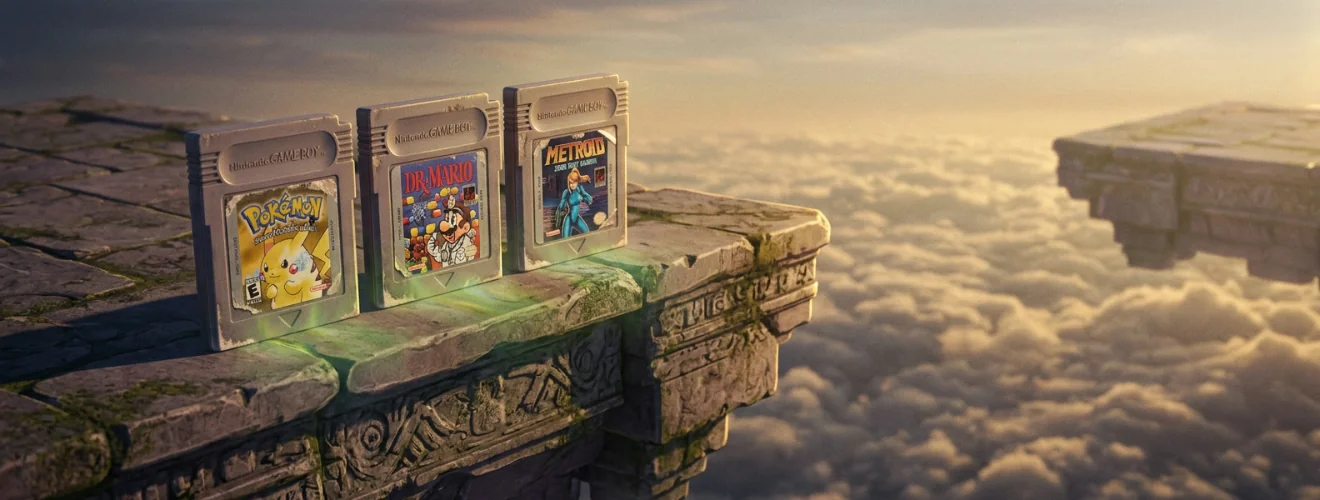
Around May 1990 a 19-year-old at HAL Laboratory named Masahiro Sakurai drew up a proposal for a small Game Boy game. He built it on a Twin Famicom fitted with a HAL trackball and no keyboard, entering enemy movements in hexadecimal by clicking a cursor, and one of his ideas was that the more damage the hero took, the farther a hit would send him, eventually clean off the screen. The idea was cut. The game became Kirby’s Dream Land, and by Sakurai’s own account he had forgotten the knockback mechanic completely by the time he reinvented it for a Nintendo 64 game called Super Smash Bros.
Smash has always looked like a living-room series, a thing of four controllers and one television. A good part of its cast, though, grew up on a screen that Nintendo’s own spec sheet describes as “monochrome, 4 gradations.” The Game Boy and Game Boy Color sold 118.69 million units between them, and the Game Boy Advance another 81.51 million, so a great many players first met a plumber’s greedy imitator, a pink puff and a yellow mouse on a screen that fit in a pocket.
The count here runs on Ultimate’s own fighter numbers, so Daisy counts as 13′ and the Pokemon Trainer’s three partners count as three. What qualifies a fighter is the thing it is named for: the persona, or in one case the suit, must have shipped first on a cartridge for some member of the Game Boy family, anywhere in the world. That rule is kind to a doctor who launched on two systems on the same day, and unkind to a Fire Emblem lord who turned up in Smash ahead of his own debut. The fighters below appear in the order their debut games came out.
Fourteen of Super Smash Bros. Ultimate’s 89 fighter numbers, echo fighters included, belong to characters who debuted in a Game Boy, Game Boy Color or Game Boy Advance game, judged by the persona or suit each fighter is named for. The earliest is Daisy, from Super Mario Land (1989); the latest is Lucas, from Mother 3 (2006).
Daisy
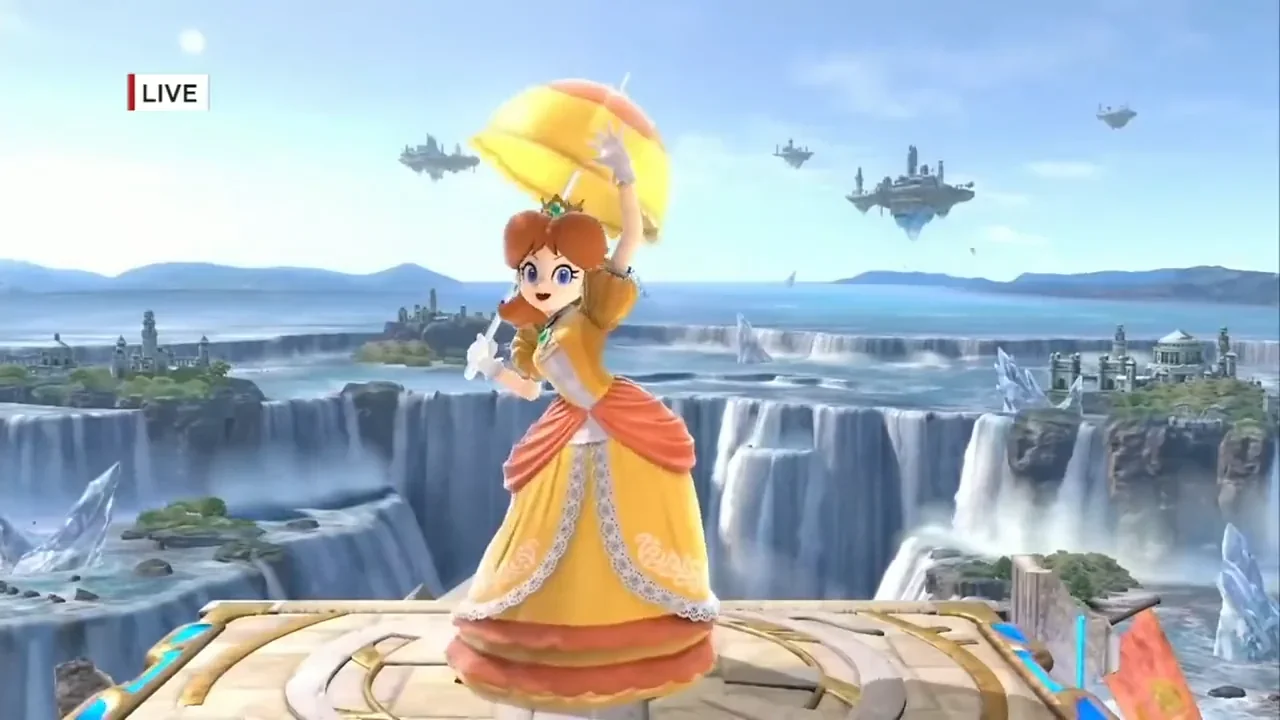
For most of Smash history, Daisy was a costume. Super Smash Bros. Melee (2001) gave Peach a yellow alternate outfit that was Daisy in all but name, with its own dress and gloves, different skin and hair, and a pink crown studded with daisy emblems. Brawl (2008) reduced it to a plain recolour. Daisy’s own Melee trophy, meanwhile, shipped with a third eye on the back of her head, hidden under her hair and visible only to players who zoomed in close. Later releases of the game quietly removed it.
She had been waiting since April 21, 1989, the day the Game Boy went on sale in Japan, because Super Mario Land was one of the original Game Boy launch titles, released the same day as the console itself. Nintendo R&D1 made it, with Gunpei Yokoi producing and Satoru Okada directing, and its manual cast her as the princess of Sarasaland, a four-kingdom realm conquered and hypnotised by an alien named Tatanga, who had carried her off to make her his bride. Nintendo’s own Japanese character page calls her a little tomboyish. Her next starring role did not come until Mario Tennis on the Nintendo 64, in July 2000.
Ultimate (2018) finally made her playable, as an Echo Fighter of Peach numbered 13′, and a Wii U trophy had already identified the main difference between the two princesses: ‘Unlike Peach, she’s only really been kidnapped once – in Super Mario Land.’
Dr. Mario
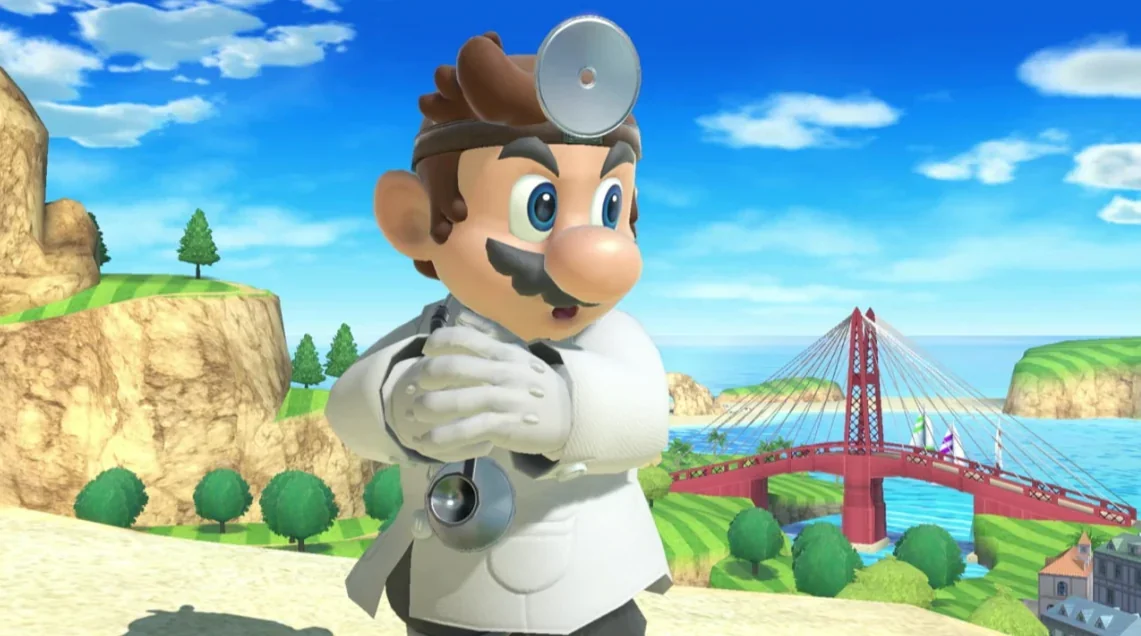
Dr. Mario came out twice on the same day. Nintendo released the puzzle game on the Game Boy and on the Famicom on July 27, 1990, and its own Japanese pages for the two versions carry the identical date, which is how a man in a lab coat qualifies for this list. The man inside the coat is, of course, Mario. The NES manual has him explain that he works in the virus research lab at the Mushroom Kingdom Hospital, alongside Nurse Toadstool, and has developed a new vitamin to stop an experiment gone out of control. Gunpei Yokoi produced the game for Nintendo R&D1, and Hirokazu Tanaka wrote the two tunes players choose between, Fever and Chill.
Sakurai put him into Super Smash Bros. Melee (2001) partly because, in his translated words, “I want to have Dr. Mario’s music in Smash.” He was a clone, throwing Megavitamins instead of fireballs, and Sakurai described the difference with some care: “the parts that aren’t different are the parts that are different.” Unlocking him took a no-continue run as Mario, or 100 VS matches, and Sakurai’s caption for a screenshot of the pair in combat offered a warning: “The ones on the ground are rumored to be unlicensed.”
Brawl (2008) dropped him, Smash for 3DS and Wii U brought him back in 2014, and Ultimate lists him as fighter 18, a full fighter rather than an Echo, which is generous treatment for someone Sakurai has described as “the same person as Mario.”
Kirby
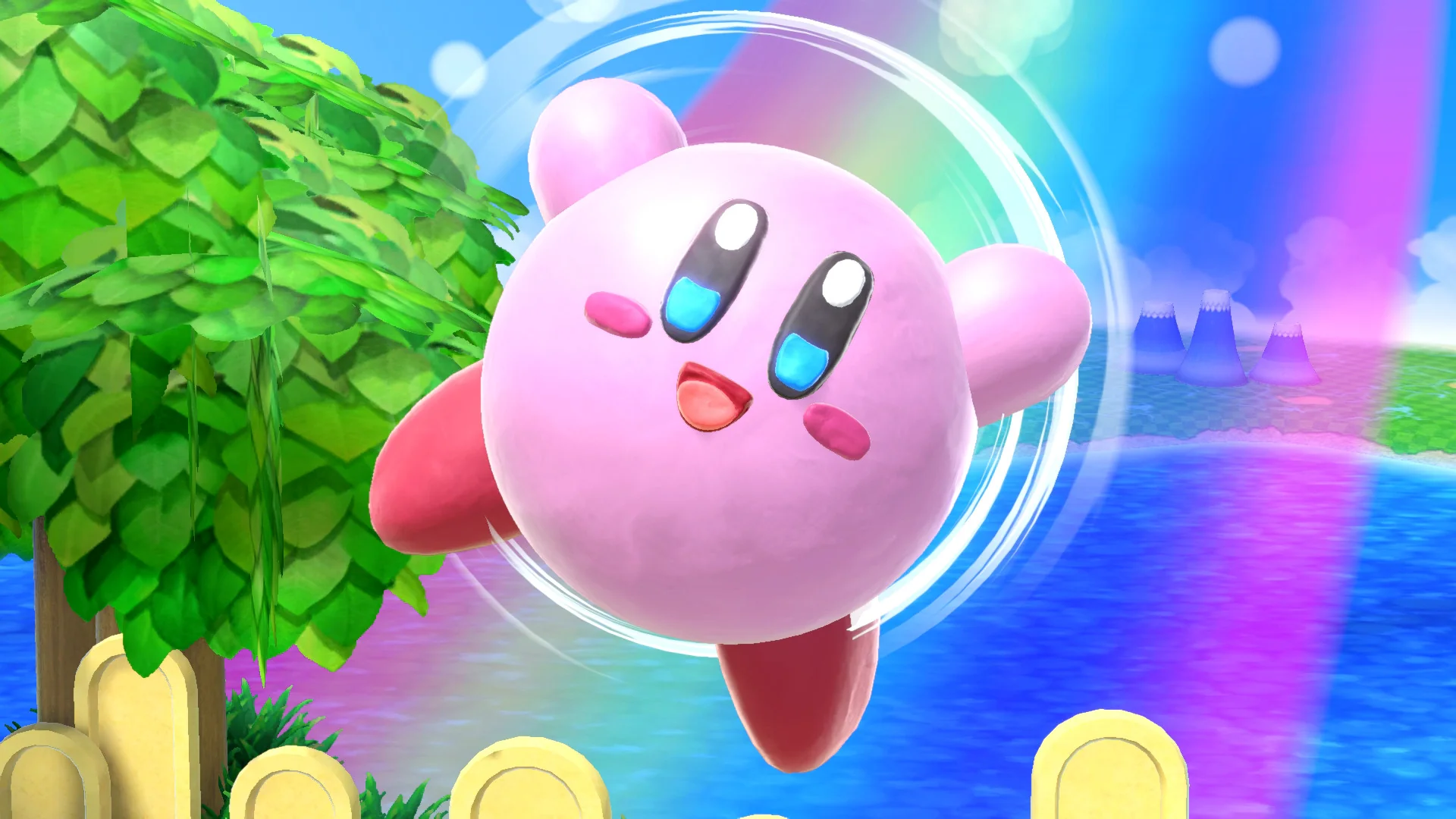
On the Western box of Kirby’s Dream Land, Kirby was white. The Japanese box showed him pink, and the two men best placed to explain the difference never quite agreed. Satoru Iwata told the Game Developers Conference in March 2011 that some people in the Western market said a soft pink character floating in the air would never be accepted, so the colour on the box was changed. Sakurai’s version is that overseas staff were simply misled by the Game Boy’s black-and-white screen. He has also said Shigeru Miyamoto assumed the hero was yellow, like Pac-Man.
He was not Kirby at first, either. The proposal called him Popopo, and late in 1991 HAL was still advertising the game as Twinkle Popo before Nintendo stepped in. Miyamoto later said the name came off a list and was chosen partly in connection with the lawyer John Kirby, but “it wasn’t named after him.” The game came out in Japan on April 27, 1992, and Nintendo’s own page calls it Kirby’s debut work, simple enough that beginners could reach the ending. He could not yet copy anyone. Nintendo’s Kirby site notes there were no copy abilities, so he spat out whatever he swallowed, a trick that waited for Kirby’s Adventure on the NES in 1993.
Kirby has been voiced in Smash by Makiko Ohmoto since 1999 and is Ultimate’s fighter 06. Nintendo of America, whose box once turned him white, introduces him on its own timeline as “the powerful pink puff.”
King Dedede
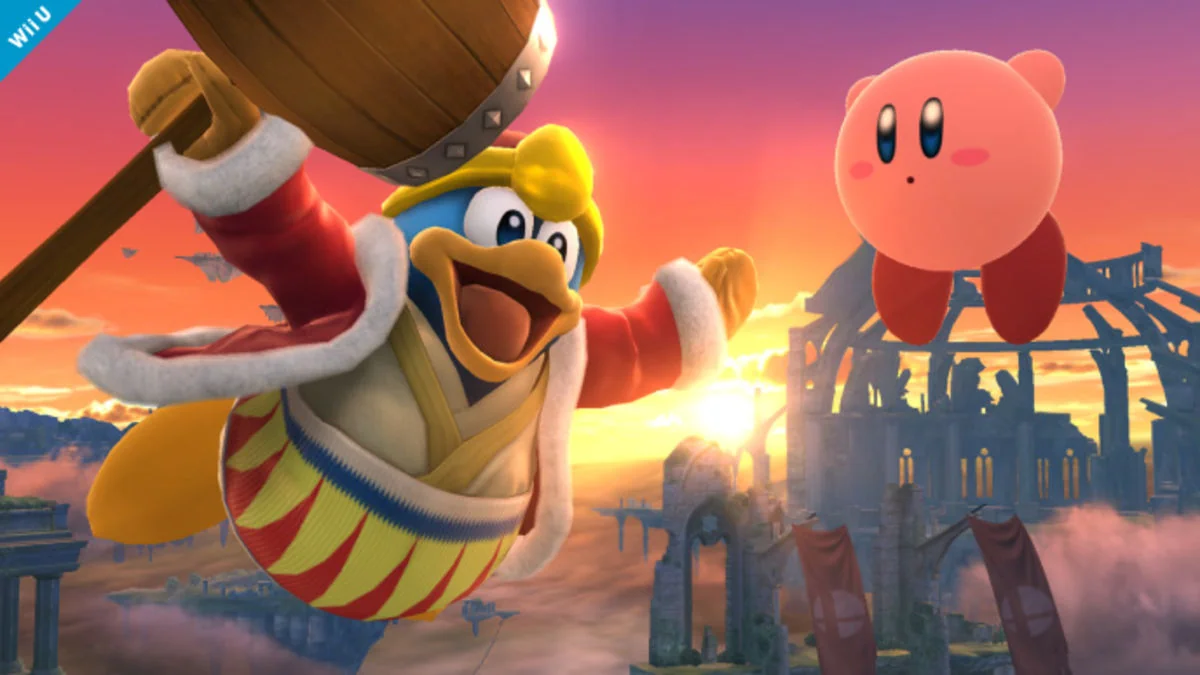
Forty-six votes is not much of a mandate, but it made King Dedede the clear favourite of his series. In a poll Sakurai ran on the Japanese Smash website through noon on May 31, 1999, asking who should appear if there were ever a Smash 2, Dedede finished fourth overall, behind Bowser on 169, Peach on 66 and Wario on 65, and comfortably first among Kirby characters, with Gooey on 17 and Meta Knight on 11. Sakurai’s note under the results, in translation, admitted that Bowser, Dedede and Mewtwo had actually been planned for the first game and cut for various reasons.
The king had been Kirby’s opponent since the beginning. He is the final boss of Kirby’s Dream Land, waiting in a wrestling-ring arena on Mt. Dedede, having stolen all of Dream Land’s food and its Sparkling Stars. The original Smash used him as background scenery on the Dream Land stage, and Melee (2001) gave him only a trophy. He became playable in Brawl (2008), announced on Nintendo’s Smash Bros. DOJO!! site on October 25, 2007 with “The self-proclaimed king of Dream Land formally joins the brawl!” Sakurai himself does the voice. In Ultimate the king is fighter 39 and his Final Smash, Dede-Rush, locks an opponent in a cage.
That Melee trophy remains the best summary of his reign: “While he says he’s king, Dedede performs no administrative functions and the citizens of Dream Land continue to live as they always have.”
Wario
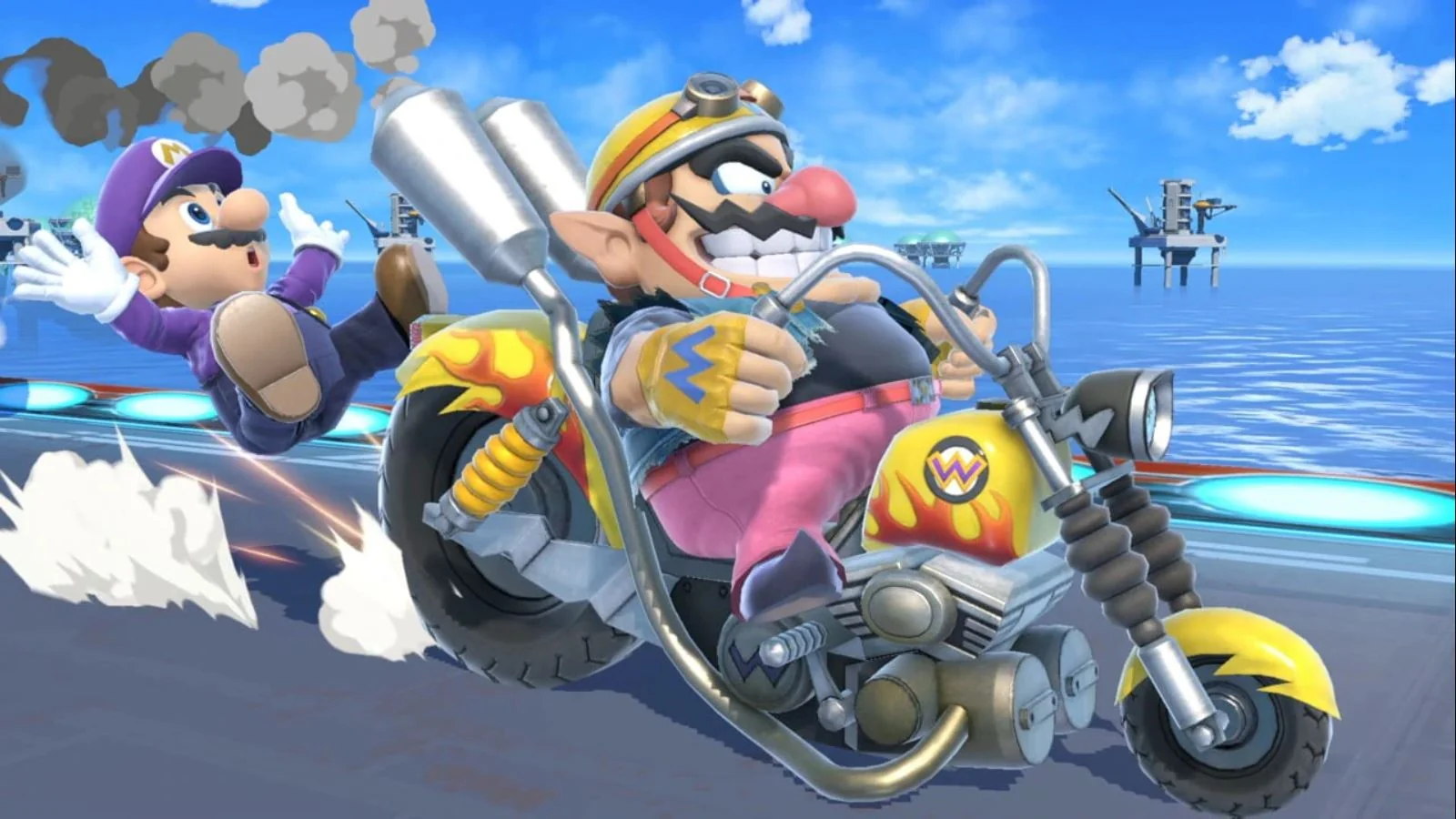
Wario’s first act in a video game was burglary. In Super Mario Land 2: 6 Golden Coins, released in Japan on October 21, 1992, Mario comes home from Sarasaland to find his castle taken and its six golden coins scattered around Mario Land. Nintendo’s manual has Mario name the culprit as a bad guy who copies his looks and had always wanted the place. Beaten at the end, Wario shrinks to Tiny Wario. The name joins Mario to the Japanese warui, meaning bad, and in a 1992 guidebook interview the designer Hiroji Kiyotake recalled the staff’s delight at flipping the M on Mario’s cap into a W.
Smash took its time. The original game and Melee let Mario wear a Wario-coloured palette, which is as close as Wario got, and Sakurai explained on the Melee website that fitting the real thing in would have meant cutting both Marth and Roy, or Mewtwo. Brawl (2008) finally signed him up, in his WarioWare costume. His return for Smash 4 then joined the Smash fighter reveals that leaked before the official announcement: on July 24, 2014, Super Smash Bros. for Nintendo 3DS surfaced in Wario’s own section of the 3DS eShop, months before Nintendo confirmed him that October. Ultimate numbers him 30.
His down special, the Wario Waft, is described by Nintendo’s own Brawl site with commendable directness: “he passes gas.” It grows stronger the longer he holds it in.
Ivysaur
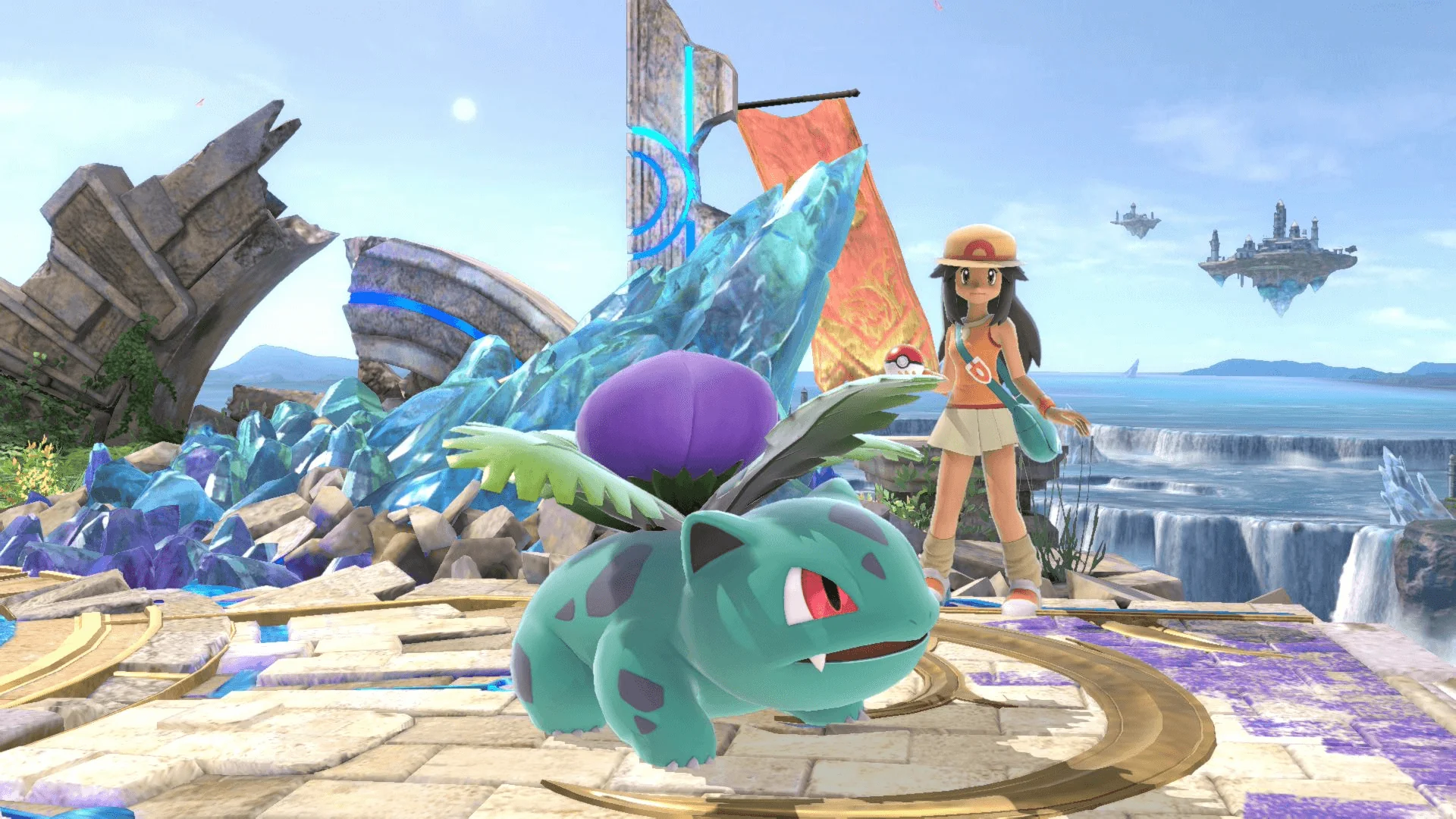
Super Smash Bros. Melee had trophies for Bulbasaur and for Venusaur. It skipped the one in between. Ivysaur turns up there only as a name inside the other two descriptions, and Super Smash Bros. Brawl (2008) was its first appearance in the series as anything more than a word.
It had been number 2 in the Pokedex since Pokemon Red and Green, a Grass and Poison type that evolves from Bulbasaur and becomes Venusaur at level 32. In Brawl it is the middle child of the Pokemon Trainer’s rotation, after Squirtle and before Charizard, and it fights with Bullet Seed, Razor Leaf and a Vine Whip that doubles as a grappling line back to the ledge, which is a lot of reach for something built like a potted plant. When the Trainer calls his Final Smash, Triple Finish, Ivysaur contributes the SolarBeam. In the Subspace Emissary story mode, the Trainer starts with Squirtle alone, picks up Ivysaur along the way, and until then the down special does nothing at all. Nintendo’s Brawl trophy flagged the one real hazard of its anatomy: “If the bud gets too big, the Pokemon can’t stand on two legs alone.”
The team was broken up for the 3DS and Wii U games in 2014 and reunited in Ultimate, where Ivysaur is fighter 34 and, among the Pokemon fighters on that roster, the only Grass type.
Charizard
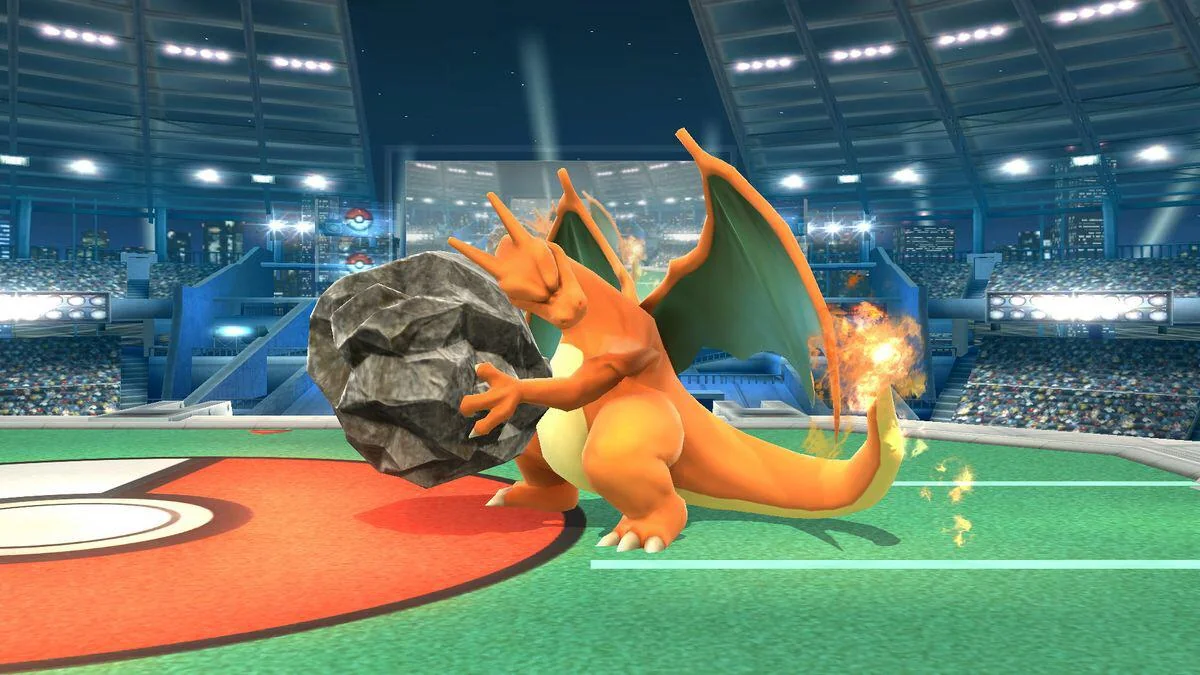
Atsuko Nishida drew Charmander, she later explained, “in such a way that Charizard would be unimaginable,” so that the evolution would come as a shock. Charizard went on to front the box of the Japanese Pocket Monsters Red, and Nishida named it her own favourite: “It looked so cool drawn in dots.” The Game Boy had no colour to give it, and Ken Sugimori has said each Pokemon received a single attribute colour only at the end of development, for players using the Super Game Boy.
Smash kept it on the bench for a long time. In the original Super Smash Bros. (1999) and again in Melee (2001), Charizard was a Poke Ball summon, there to be released rather than played. It became playable in Brawl (2008) as the heavyweight of the Pokemon Trainer’s team, with Flamethrower, Rock Smash and Fly. The trio did not survive the move to the 3DS. Sakurai’s Famitsu column, in a fan translation, called a fighter made of three characters impossible on the handheld, and Charizard went solo in 2014. Ultimate put it back on the team as fighter 35.
It is not, for the record, a Dragon type. Nintendo’s own list for Red and Green gives it Fire and Flying, and it only turns part dragon when it Mega Evolves into Mega Charizard X, which happens to be the form Smash used for its 2014 Final Smash.
Squirtle
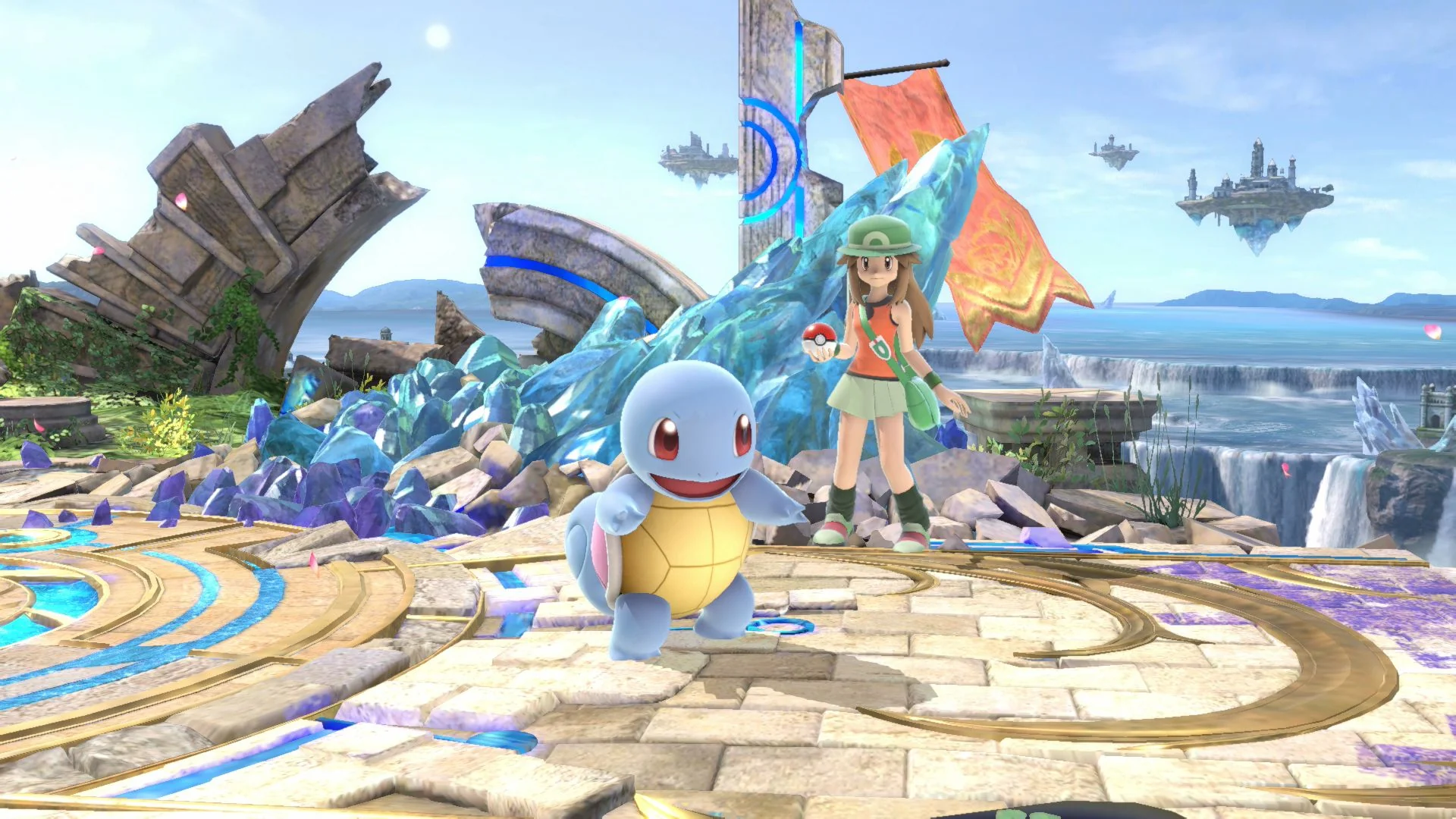
The Pokemon Trainer does not throw punches. He stands at the back of the stage, sending out Squirtle first, then Ivysaur, then Charizard, and Nintendo’s Ultimate roster gives him no fighter number of his own: the team occupies 33 to 35, and the small turtle at the front is 33. The Trainer is the hero of the original games, known as Red, although Red and Green let the player name him, which is why Brawl calls him simply Pokemon Trainer. Ultimate (2018) added the female Trainer, Leaf, from the Game Boy Advance remakes FireRed and LeafGreen, as an alternate costume.
Squirtle itself is number 7 in the Pokedex, the Water starter of Red and Green, which grows into Wartortle at level 16 and Blastoise at level 36. It was Sakurai’s choice for the small slot on the Trainer’s team. In a Famitsu interview, as translated by fans, he said he concluded that Squirtle would establish itself as a character better than its final form, which left Blastoise among the characters Sakurai publicly considered but rejected for Smash.
In Brawl (2008) Squirtle fights with Water Gun, Withdraw and Waterfall and supplies Hydro Pump for the Final Smash. Melee had already used it as scenery, as the first float on the Poke Floats stage, where fighters stood on its head and arms. Nintendo’s Brawl reveal of Withdraw asked the obvious question: “Is this the turtle’s so-called shell? It slides along the ground.”
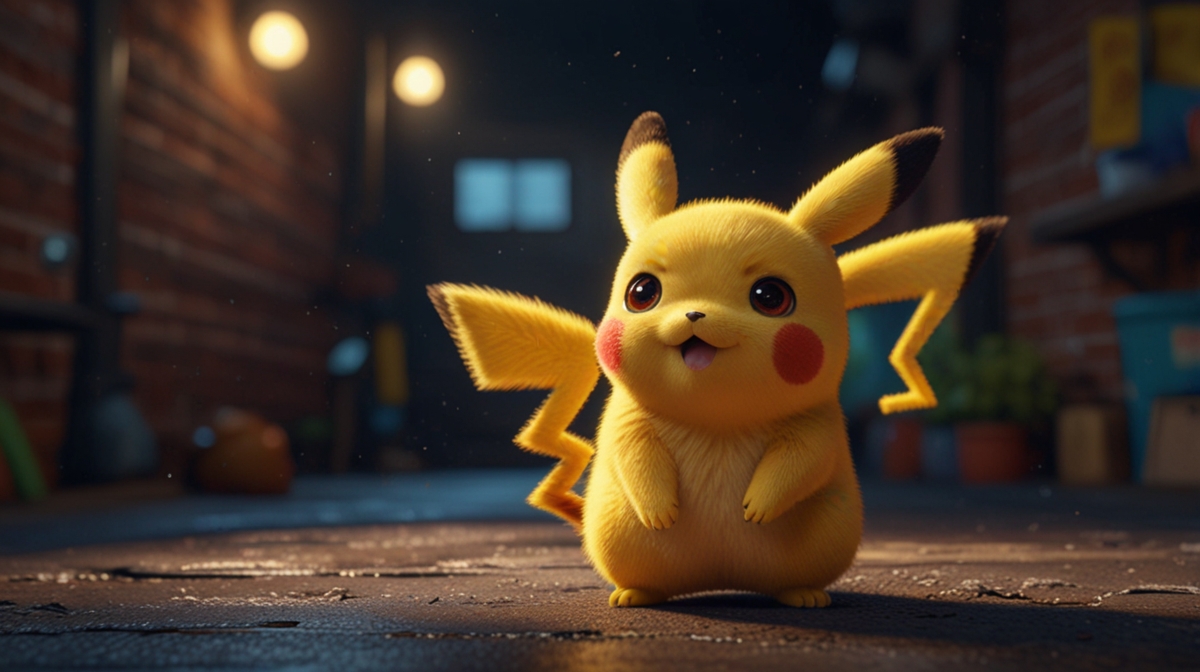
Pikachu
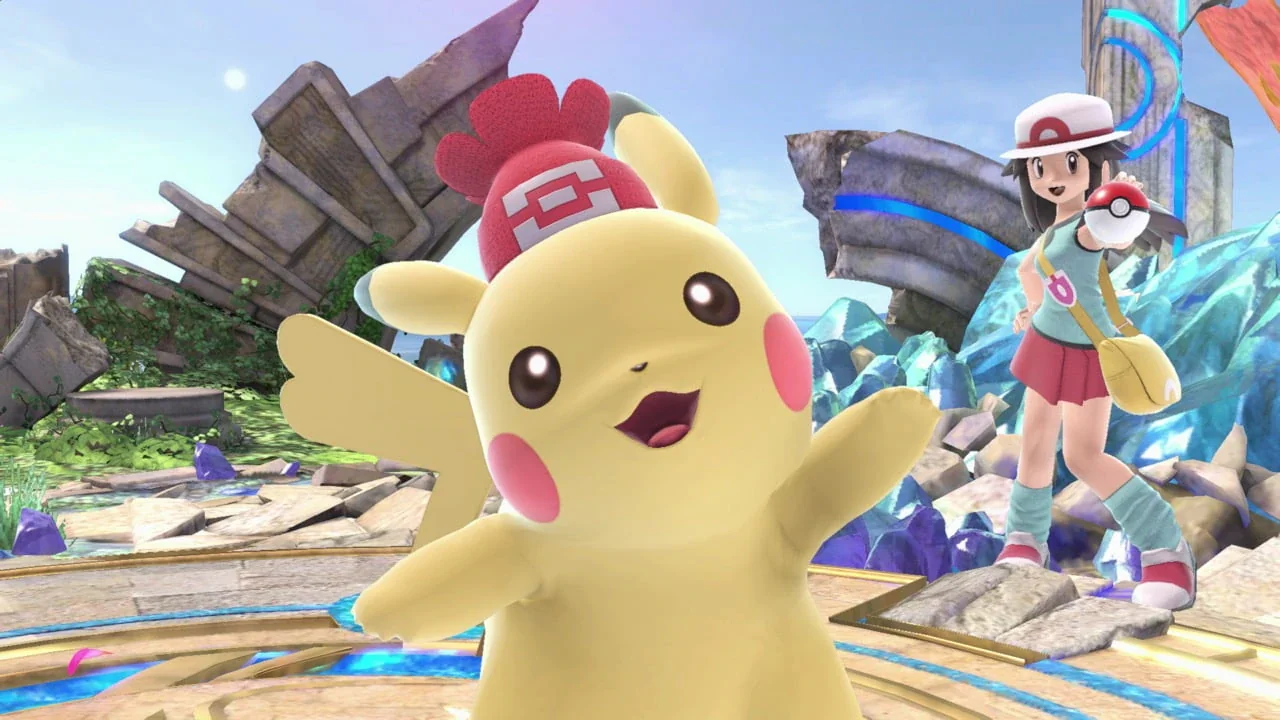
Nobody at Game Freak set out to draw a mouse. Atsuko Nishida, who designed Pikachu, has said “I actually hadn’t intended to make it a mouse,” and the name she gave it joins pika, the Japanese sound of a flash of light, to chu, a squeak. The decision to file it as a Mouse Pokemon came afterwards. So did the end of its family tree: Raichu was originally followed by a third stage called Gorochu, which in Nishida’s words “looked like a god of thunder,” and which was cut to save data space.
When Pokemon Red and Green went on sale in Japan on February 27, 1996, Pikachu was not even one of the three starters. Planner Koji Nishino loved it so much that he hid it in Viridian Forest at a low appearance rate. Players treated it as the first rare Pokemon, guidebooks explained how to catch it, and soon everyone had one. “My plan completely backfired,” he said. The anime that began on TV Tokyo in April 1997 gave it to Ash, and Pocket Monsters Pikachu followed on September 12, 1998, by which point the mouse was the mascot, intended or not.
Smash has had it from the very first game. Ikue Otani, its anime voice, does its voice there too, Volt Tackle has been its Final Smash since Brawl (2008), and Ultimate, where it is fighter 08, dresses one alternate costume as Pikachu Libre. Ken Sugimori has said its Pokedex number, 25, “doesn’t have any special meaning.”
Jigglypuff
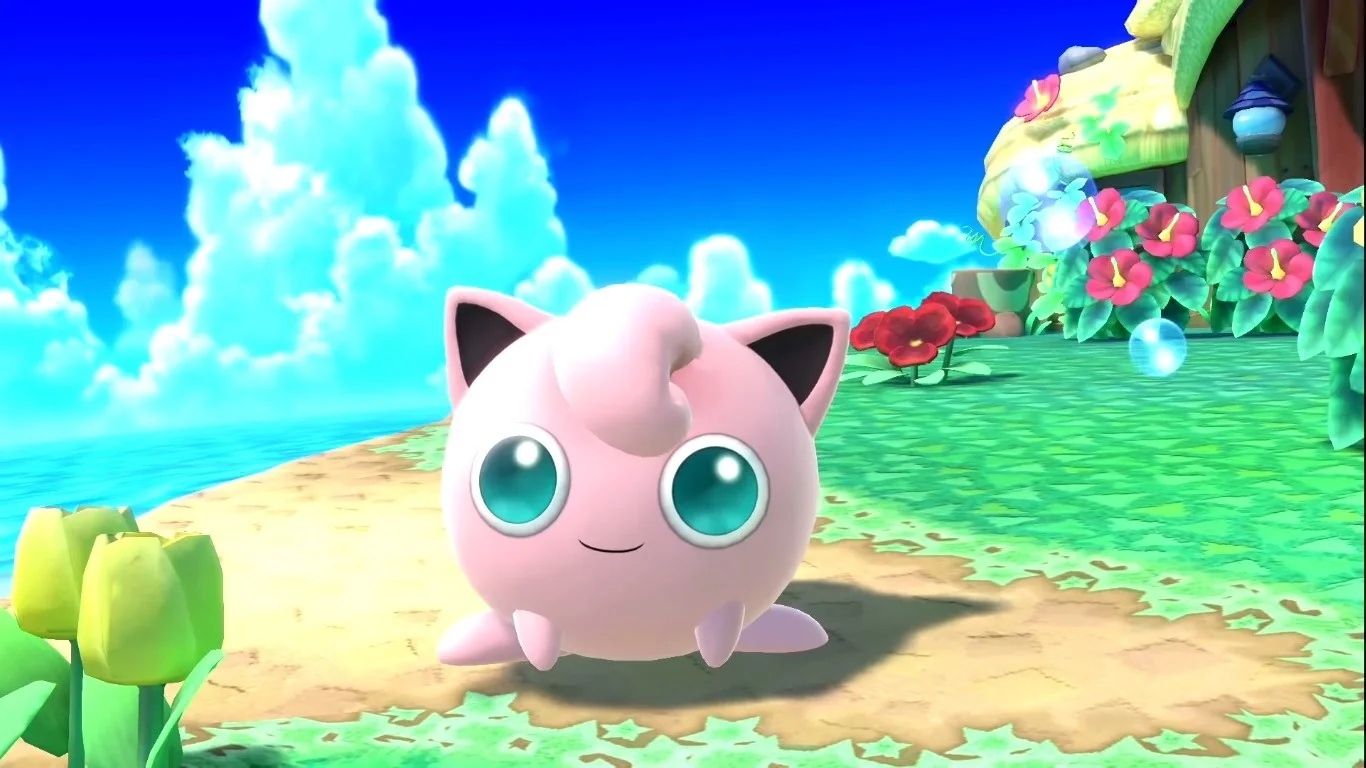
A shortage of candidates is what got Jigglypuff into Smash. Sakurai explained in The 64 DREAM in May 1999 that the original game’s hidden fighters were built on the skeletons of the base cast, Jigglypuff on Kirby’s, and that by the time he came to choose, the last two popular Pokemon left were Clefairy and Jigglypuff. He took Jigglypuff because, as a character, it seemed more of a natural punching bag.
It had been number 39 in the Pokedex since Red and Green, the Balloon Pokemon, a pure Normal type until the Fairy type was added in Generation VI, and its song sends anyone listening to sleep. In the first Super Smash Bros. (1999) it was one of the hidden fighters, and the price of admission was to clear the 1P Game and then beat Jigglypuff itself, which ranks among the gentler secret character unlock methods in Smash history. Its Rest puts Jigglypuff to sleep in exchange for one enormous hit. In Brawl (2008) its Final Smash, Puff Up, inflates it until it shoves fighters off the stage while shouting “JIGGLY!!!” Ultimate numbers it 12.
Sakurai joked in that same 1999 interview about a player on a winning streak who suddenly switches to Jigglypuff to lighten the mood. Hungrybox did not get the memo. On July 17, 2016 he won the Melee title at EVO with Jigglypuff, beating Armada in Grand Finals after a reset that ran the series to a full ten games.
Mewtwo
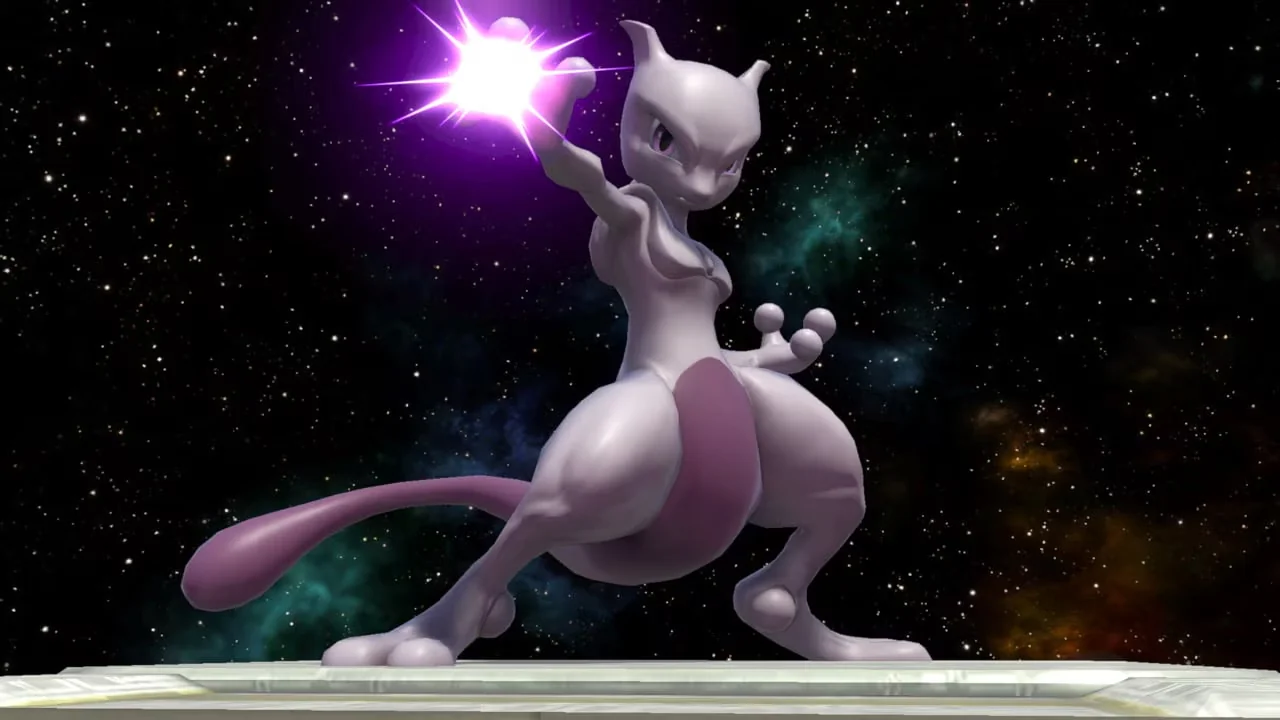
Sakurai began his Melee website page on Mewtwo with a spelling correction: “It’s not Mewto (just so you know).” Getting it at all meant 20 hours of VS play or 700 VS matches, though he pointed out that the hours were counted per player, so four controllers and five hours of leaving the machine running would do it. When Melee arrived in November 2001, Mewtwo, which had been cut from the first game, was finally in.
It had been number 150 in Pokemon Red and Green, a man-made Pokemon built, in Nintendo’s phrase, “from modified Mew DNA,” waiting in a cave that opens only after the player reaches the Hall of Fame. Brawl (2008) then dropped it to a trophy without explanation. Its return made history of a commercial kind: Mewtwo was the first of the paid DLC fighters ever added to Super Smash Bros., free from April 15, 2015 to players who had registered both the 3DS and Wii U versions, and on sale to everyone else on April 28 for $3.99, or $4.99 for both. Its Final Smash turns it into Mega Mewtwo Y for a Psystrike. Ultimate numbers it 24.
The diary pages in the first games’ abandoned Pokemon Mansion tell its origin in a few flat lines, and the English release ends them with an admission that turned out to be an accurate summary: “Mewtwo is far too powerful. We have failed to curb its vicious tendencies…”
Pichu
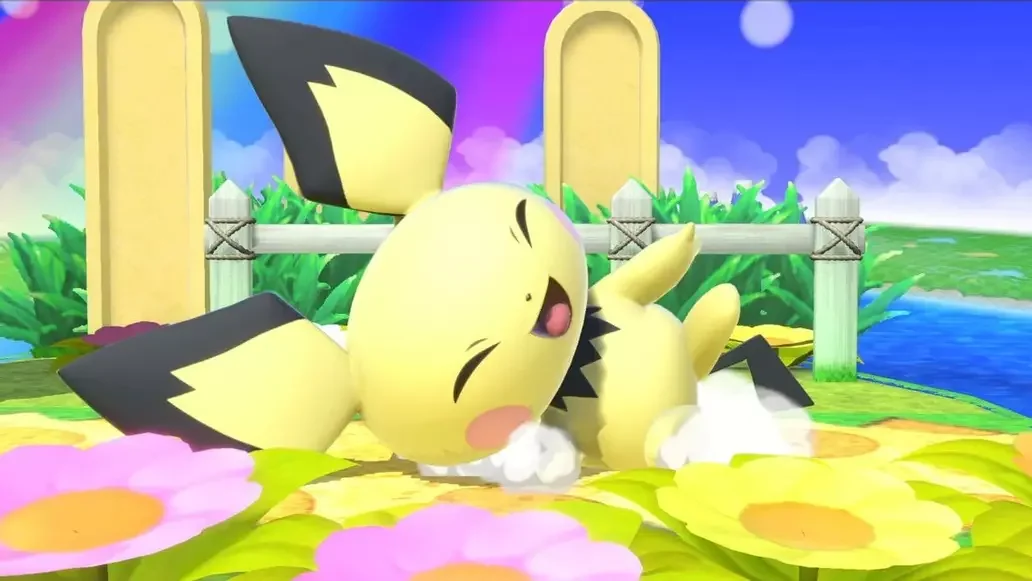
Sakurai did not oversell Pichu. “In this Smash, the honour of being the weakest is bestowed to Pichu,” he wrote on Melee’s official site in December 2001, in a translation of the Japanese page, and then listed the reasons: its electric attacks shock Pichu itself, it is the lightest character in the game, and its attacks are not powerful. The self-harm comes straight from the Pokedex, which says Pichu “is unskilled at storing electric power. Any kind of shock causes it to discharge energy spontaneously.”
Pichu arrived with Pokemon Gold and Silver, released in Japan on November 21, 1999, on cartridges that Nintendo’s own page says play on every Game Boy, enhanced for the Game Boy Color. It is number 172, a baby Pokemon and the pre-evolution of Pikachu, and in Gold and Silver the only way to get one is to breed Pikachu or Raichu. For Melee it was what Sakurai called a model swap, sharing Pikachu’s specials and motions to save time: “Based on Pikachu, we prepared Pichu.” Players unlocked it by clearing Event 37 or by playing 200 matches.
Brawl (2008) and Smash 4 (2014) left it out, and Ultimate brought it back as fighter 19 on December 7, 2018, with Spiky-eared Pichu, a variant from HeartGold and SoulSilver, among its costumes. Sakurai’s Melee page ended with a modest request: “If you see some brave warrior using this character in high level tournament matches, please applaud for them.”
Zero Suit Samus
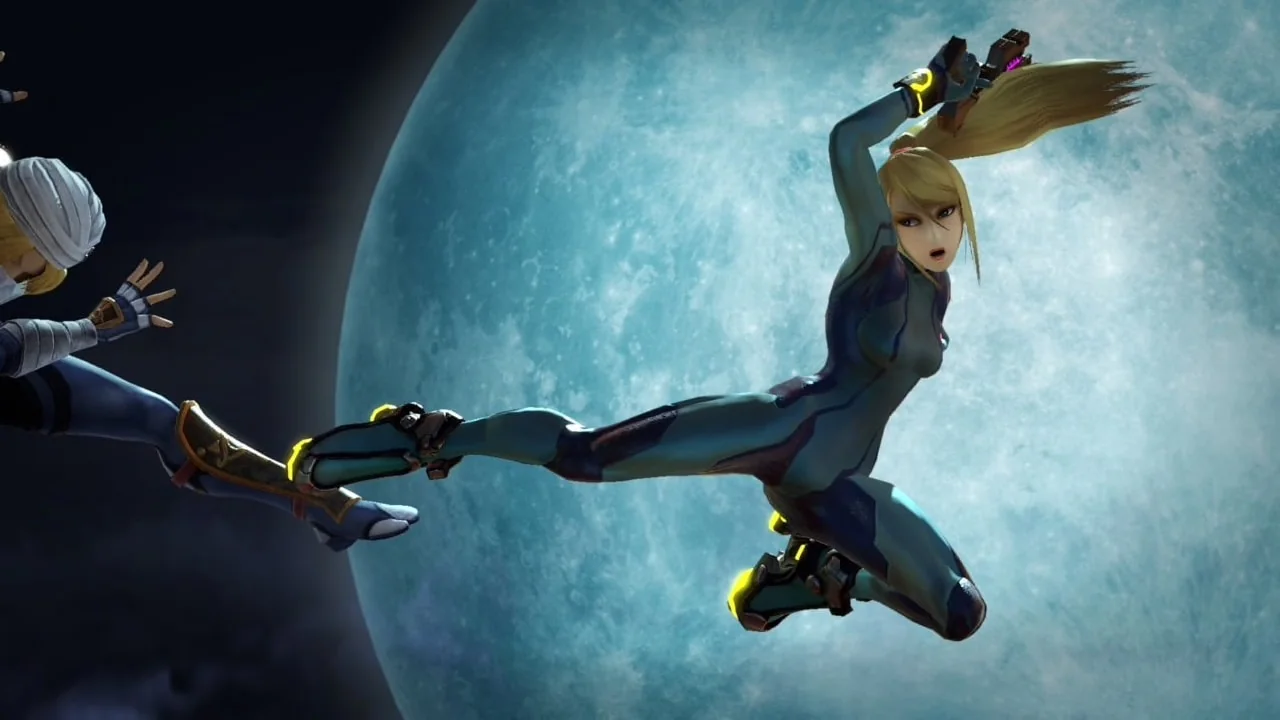
The Zero Suit had no name when it first appeared. Famitsu has pointed out that the term did not exist at the time of Metroid: Zero Mission, the Game Boy Advance remake of the first Metroid that reached North America on February 9, 2004 and Japan on May 27. Its second half begins after Mother Brain, when Space Pirates ambush Samus’s gunship, she crash-lands on Zebes, and she must sneak through the Pirate mothership without her Power Suit, armed with an emergency pistol. Samus had been seen out of her armour before, in the fast-finish endings of the 1986 original. What Zero Mission introduced was the suit, and Sakurai has said Zero Suit Samus debuts in her current form there.
The name came with Super Smash Bros. Brawl (2008), and so did a novel way of getting dressed down. Samus’s Final Smash, the Zero Laser, is so powerful that Nintendo’s Smash Bros. DOJO!! reported the result plainly: “All of her armor fell off! Now she’s just Zero Suit Samus.” The pistol became the Paralyzer, joined by a Plasma Whip, and her own Final Smash put the Power Suit back on. The 2014 games made her a standalone fighter, and Ultimate numbers her 29.
Sakurai, marking the anniversary of Zero Mission in May 2021, added a note on the character in translation: “Originally, Zero Suit Samus is not strong; fleeing and hiding are her main thing.” Smash gave her a whip and Jet Boots anyway.
Lucas
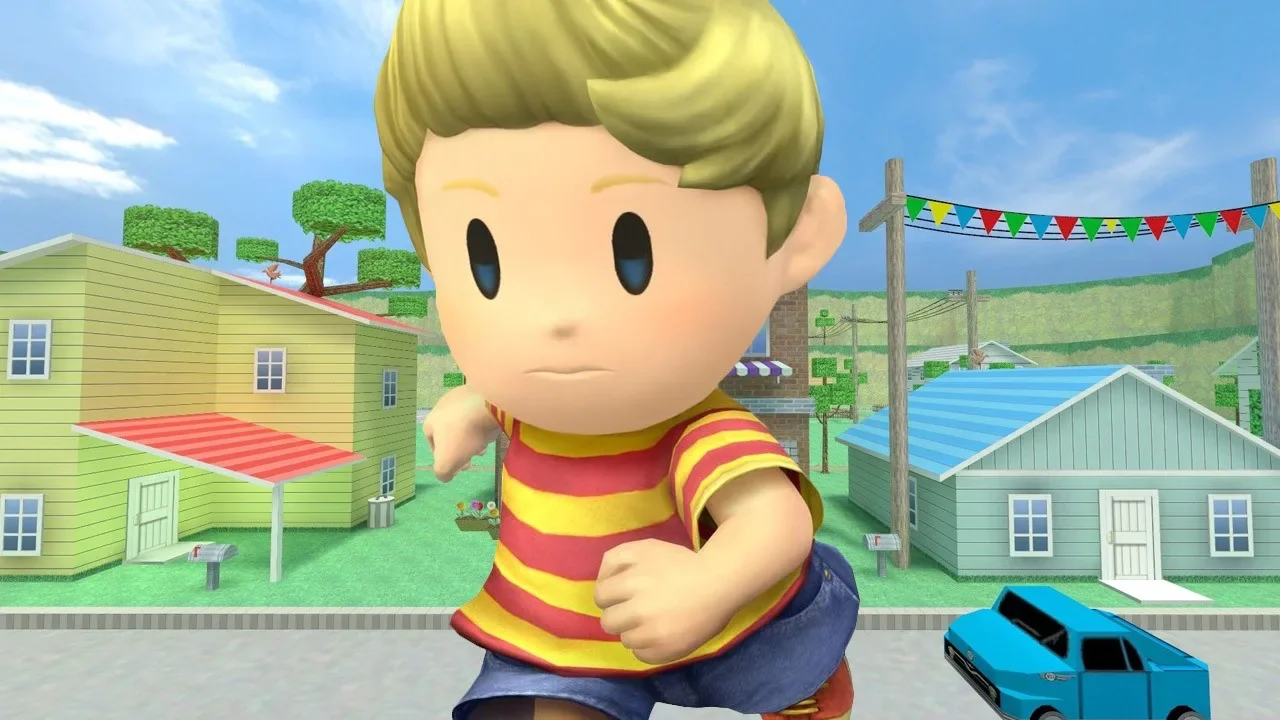
Mother 3’s hero was pencilled in for Smash a game early. In a July 2001 note on the Melee website, Sakurai wrote that he had at first planned to change Ness into the protagonist of MOTHER3, before, after various twists and detours, Ness went back into his sheath. The plan had a problem, which was that MOTHER3 kept failing to exist. Shigesato Itoi’s sequel had spent about six years moving from the Super Famicom to the Nintendo 64 disk drive to an ordinary N64 cartridge, and was cancelled in August 2000. In a roundtable published on Itoi’s own website, Satoru Iwata put the game at about 30 percent finished and Shigeru Miyamoto at more than 60, which tells you something about how hard unfinished games are to measure.
The project came back on the Game Boy Advance, announced in 2003, and Mother 3 finally reached Japanese shops on April 20, 2006, so Lucas first appeared in a finished game there. He is the younger of twin brothers from Tazmily Village in the Nowhere Islands, and the brother of Claus. Brawl’s DOJO introduced him in October 2007 as a fighter who “makes his anticipated debut from the Japan-only release MOTHER 3.” PK Starstorm became his Final Smash, Smash 4 sold him back to players as downloadable content in June 2015, and Ultimate numbers him 37.
Nintendo released Mother 3 in Japan only. An English version came from fans instead, in a translation the site Starmen.net released on October 17, 2008.
Frequently Asked Questions
Which game introduced the most Super Smash Bros. Ultimate fighters?
Pokemon Red and Green did. The 1996 Game Boy games are the debut of six Ultimate fighter numbers: Pikachu, Jigglypuff, Mewtwo and the Pokemon Trainer’s Squirtle, Ivysaur and Charizard. On Ultimate’s final roster no other single game accounts for more than three, so Red and Green introduced twice as many fighters as any rival.
Which Game Boy characters were in the original Super Smash Bros.?
Three of the original game’s 12 fighters debuted on the Game Boy: Kirby and Pikachu, who were among the eight characters playable from the start, and Jigglypuff, one of the four that had to be unlocked. Super Smash Bros. launched on the Nintendo 64 in Japan on January 21, 1999.
Why isn’t Roy on the list?
Roy reached Smash before his own game. Super Smash Bros. Melee came out in Japan on November 21, 2001, and Fire Emblem: The Binding Blade, his Game Boy Advance debut, followed on March 29, 2002. Sakurai has said that using Roy to promote the new Fire Emblem was his own suggestion, not a demand from Fire Emblem’s makers.
Why isn’t Toon Link included?
Toon Link is the Hero of Winds, who debuted in The Wind Waker on GameCube in Japan on December 13, 2002. The same cartoon style appears in A Link to the Past & Four Swords for Game Boy Advance, which reached North America on December 2, 2002, but an art style is not a character, so it does not count.
Does Lucario count as a Game Boy character?
No. Lucario first appeared in the film Lucario and the Mystery of Mew, released in Japan on July 16, 2005. Pokemon Mystery Dungeon: Red Rescue Team on Game Boy Advance only named it and showed it as a statue that November, and its first appearance as a Pokemon in a game was Diamond and Pearl, on the Nintendo DS.
Is Mr. Game & Watch a Game Boy character?
No. Game & Watch was Nintendo’s earlier line of LCD handhelds, which began with Ball on April 28, 1980, long before the Game Boy. Gunpei Yokoi created Game & Watch and his division later developed the Game Boy, and a Smash for 3DS trophy calls the series the father of the Game Boy before adding, “Or maybe an older sibling?”
Sources
- Super Smash Bros. Ultimate official site (Nintendo) – fighter roster
- SmashWiki – Fighter number
- Kirby official site – series history (Nintendo, Japanese)
- Nintendo – Masahiro Sakurai’s Smash Bros. update page on Pichu for Melee (Japanese)
- The Pokemon Company – corporate history
- Famitsu – Masahiro Sakurai on making the first Kirby (Japanese)
- Pokemon.com – The Creators of Pikachu (archived interview)