Every Person Who Has Reached the Bottom of the Mariana Trench
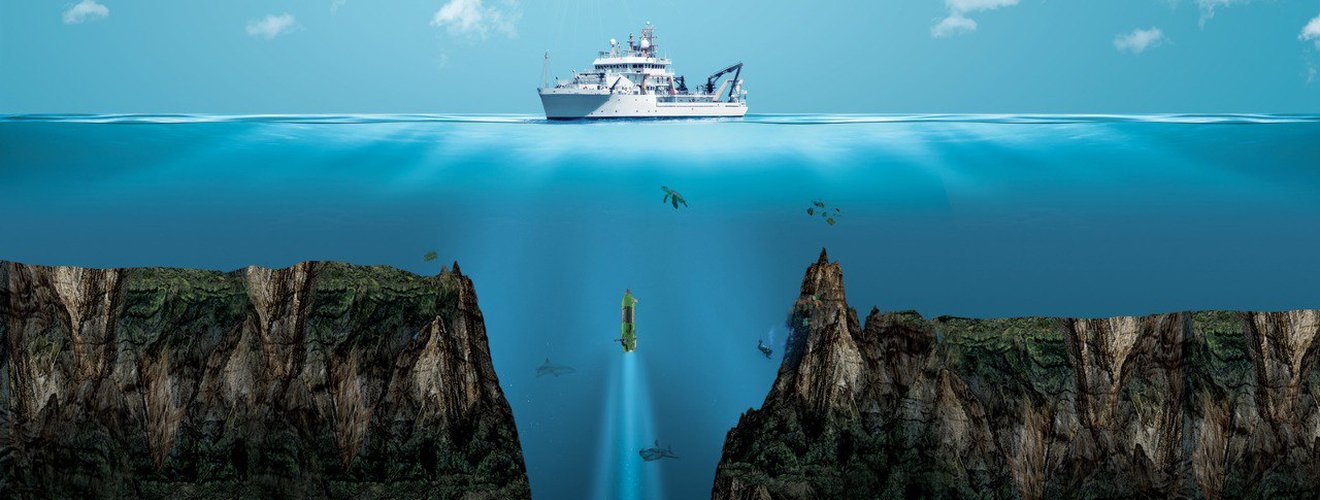
On March 23, 1875, the survey ship HMS Challenger paused over an unremarkable stretch of the western Pacific and lowered a weighted rope. It paid out 4,475 fathoms – 8,184 meters – before touching anything, and the navigators, fixing their position by the stars, were about 15 miles off the deepest spot in the ocean without knowing it. The deepest place on Earth is named for a ship that half-found it with a rope.
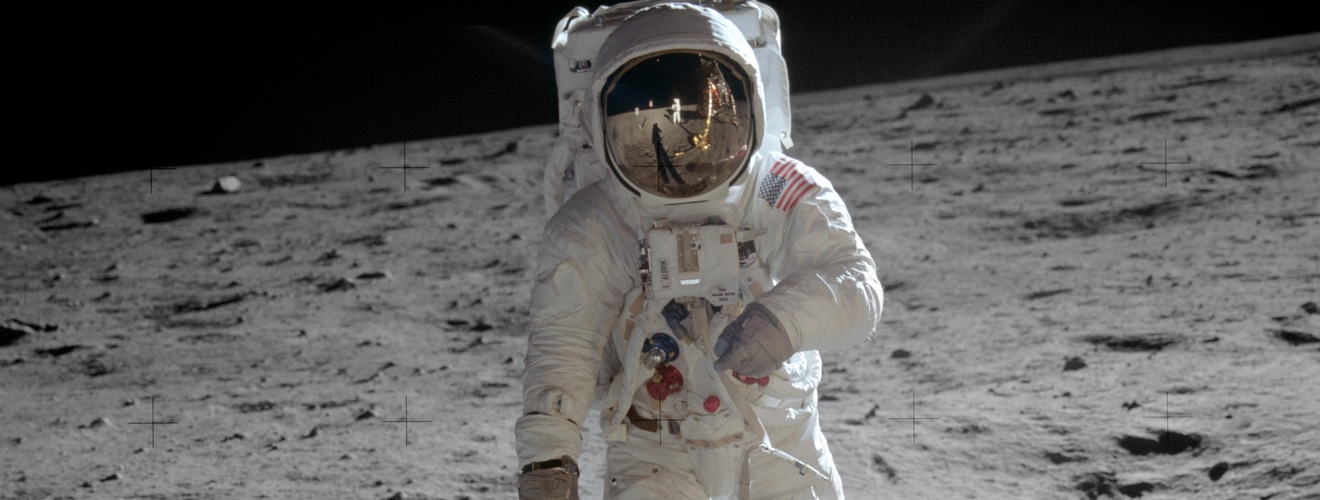
For decades the standard line was that more people had walked on the Moon than had reached the bottom of the sea, and for decades it was true. Then, between 2019 and 2022, a single private submersible and a Chinese state program took the roster from a lonely trio to a small crowd, and the old line quietly died. All 12 men who have walked on the Moon now trail the trench divers by a comfortable margin – and on May 20, 2026, more people summited Everest in a single day, 274 of them, than have ever sat on the floor of Challenger Deep. Spaceflight at least ran rehearsals: every animal that has been sent to space went up before the first pilots did. The trench offered no such courtesy. The first vehicle to go down carried two men, on its first try.
What follows is every named person who has made it, in the order they arrived – a Navy lieutenant, a Swiss engineer’s son, a filmmaker, two astronauts, a safety inspector who refused to certify a submarine he had not personally ridden to the bottom, and the designer who trusted his own mathematics enough to climb inside them. The roster is honest about its one gap: China’s Fendouzhe program has carried more people down than it has ever named, and those descenders are acknowledged here but cannot be listed. Nobody at all has been back since the summer of 2022, which makes this, for now, a complete account of one of the rarest things a human being has ever done.
33 named people have reached the bottom of Challenger Deep, the deepest point of the Mariana Trench and of any ocean, between January 23, 1960 and July 12, 2022. They rode four submersibles – the Trieste, the Deepsea Challenger, the Limiting Factor, and China’s Fendouzhe – and the roster counts pilots and passengers alike, current as of August 2026.
Jacques Piccard
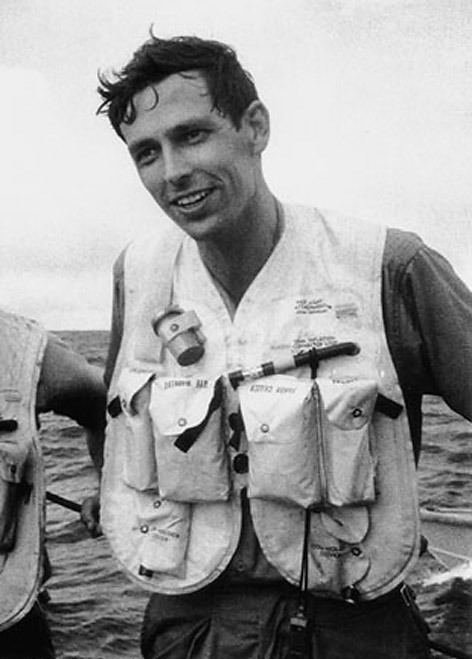
Jacques Piccard surfaced from the deepest dive ever made insisting he had seen a fish. Minutes after the bathyscaphe Trieste settled onto the floor of Challenger Deep on January 23, 1960, he reported a foot-long flatfish moving across the ooze – a sighting biologists have doubted ever since, since no true fish has been confirmed to survive below roughly five miles. He stuck to it.
The vertical life ran in the family. His father Auguste, who designed the Trieste on principles borrowed from his own balloon gondolas, had become the first person to enter the stratosphere on May 27, 1931, riding a hydrogen balloon to 15,781 meters. Father and son rehearsed together in 1953, taking the same vessel to 3,150 meters off Ponza, Italy, before Jacques took it seven miles down. One family thus held humanity’s records for highest and deepest, set in machines it had built itself.
Piccard stayed on the water for the rest of his life – leading the six-person crew of the Ben Franklin on its 1,444-nautical-mile drift up the Gulf Stream in 1969, then running a tourist submarine on Lake Geneva that carried 33,000 passengers. He died on November 1, 2008, at 86, at his home on the lake’s edge. A full-scale replica of the Trieste was unveiled in its namesake city in October 2025. The original sits in a museum in Washington. The fish remains at large.
Don Walsh
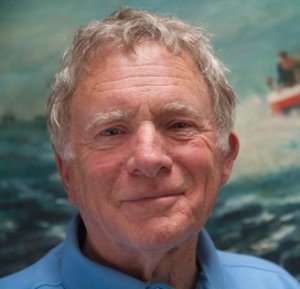
“I passed the Navy’s high standards for deep submersible pilot by being the only volunteer.” That was Don Walsh’s standing explanation of how he came to be aboard the Trieste in the first place. The lieutenant who raised his hand got the Trieste, and on the way down heard a crack loud enough to feel – “It was the big viewing port of the entry tube that cracked,” he said later – at roughly 32,000 feet, with a third of the ocean still below him. They kept going. Sediment billowed up on landing, and the two men spent their 20 minutes at the bottom staring into a cloud of it.
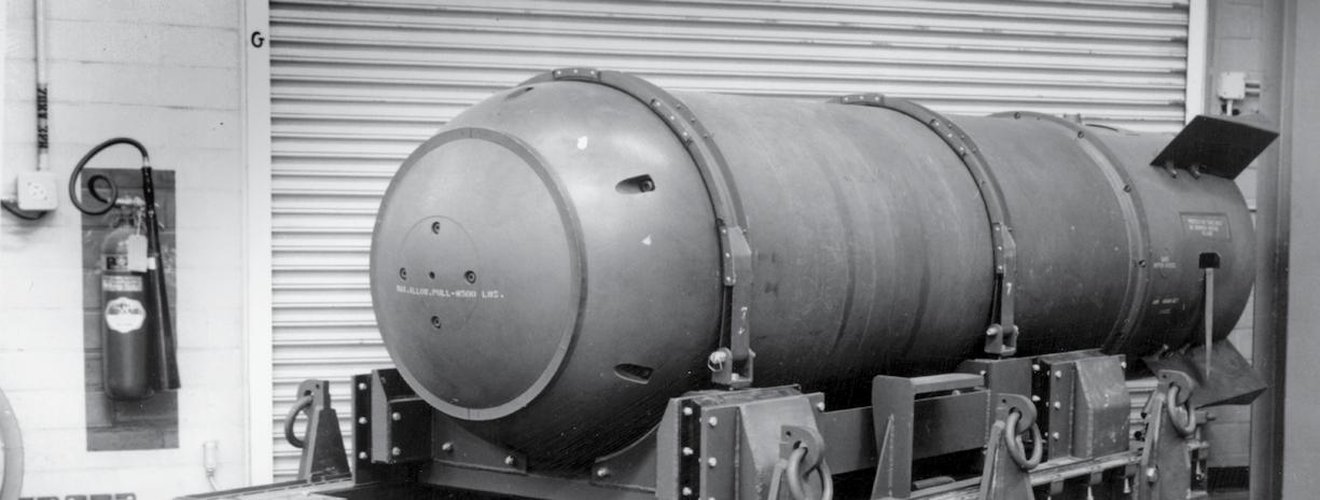
The Navy he served was still learning what the Pacific could take. Within a few years it contributed an entry to the ledger of nuclear weapons that were lost at sea and never recovered, when a hydrogen bomb rolled off the carrier Ticonderoga in December 1965 and settled into water three miles deep. Walsh, meanwhile, made the deep his career: a doctorate in oceanography, a professorship, a 2001 dive to the Titanic, and a place on the support ship for both Cameron’s 2012 descent and Vescovo’s 2019 expedition.
He died in Oregon on November 12, 2023, at 92. Fourteen months later the Navy announced that its newest ocean surveillance ship would be USNS Don Walsh – a permanent commission for the man who got the job because nobody else wanted it.
James Cameron
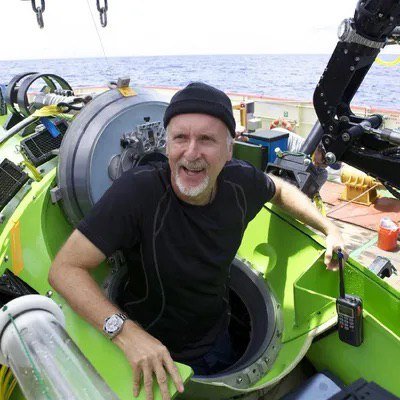
For seven years, the vehicle that would carry James Cameron to the bottom of the ocean sat in a workshop in Leichhardt, a Sydney suburb, between a plumbing-supply business and a furniture maker. “We were hiding in plain sight,” Cameron said of the secret build. “Our roller door was open all the time, and yet no one had a clue what we were doing.” The Deepsea Challenger emerged as a 24-foot torpedo painted a shade Cameron called Kawasaki-racing-green, built to fall nose-down with its pilot folded into a sphere 43 inches across.
Cameron rode it down on March 26, 2012, local time, becoming the third person to reach Challenger Deep and the first to arrive alone – 52 years after the Trieste, and after 33 dives to the Titanic wreck had already made him the most submerged filmmaker alive. The descent took 2 hours and 36 minutes. He had planned six hours on the bottom; a hydraulic leak disabled the manipulator arm and sent him up after roughly three, on an ascent that took just 70 minutes.
The sub went to the Woods Hole Oceanographic Institution in 2013, having survived the deepest water on Earth without complaint – and then caught fire on the back of a truck on Interstate 95 in Connecticut in July 2015. The section that burned was mostly buoyancy foam. The ocean never laid a finger on it. The Connecticut highway system came closer.
Victor Vescovo
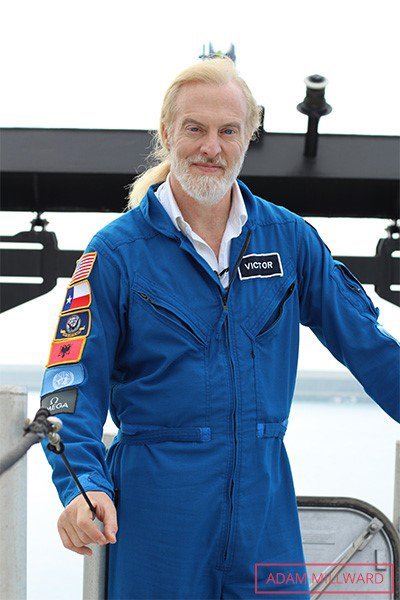
Fifteen times between April 2019 and July 2022, Victor Vescovo drove a submersible to the floor of Challenger Deep – a Guinness record for a single individual, set aboard a vehicle he paid for himself. A Dallas private-equity investor who had spent 20 years as a Navy Reserve intelligence officer, Vescovo commissioned the Limiting Factor at a cost CBS put at $48 million, then learned to pilot it rather than hire someone.
His first descent, solo on April 28, 2019, came with a depth claim of 10,928 meters – deeper than anyone before – which James Cameron publicly disputed, arguing the trench floor was too flat for anyone to have gone meaningfully deeper than he had. The quarrel over a few meters of mud between the only two living solo visitors remains one of exploration’s most specialized feuds. Vescovo simply kept diving: his Five Deeps Expedition reached the deepest point of all five oceans in under nine months, and Guinness credits him as the first person to visit Earth’s highest point – he summited Everest in 2010 – and its lowest.
He sold the whole system in 2022 and has since commissioned the Ocean Mapper, a 23-meter, largely uncrewed survey vessel intended to chart about two million square kilometers of seabed a year. Having run out of down, he has taken up breadth.
Patrick Lahey
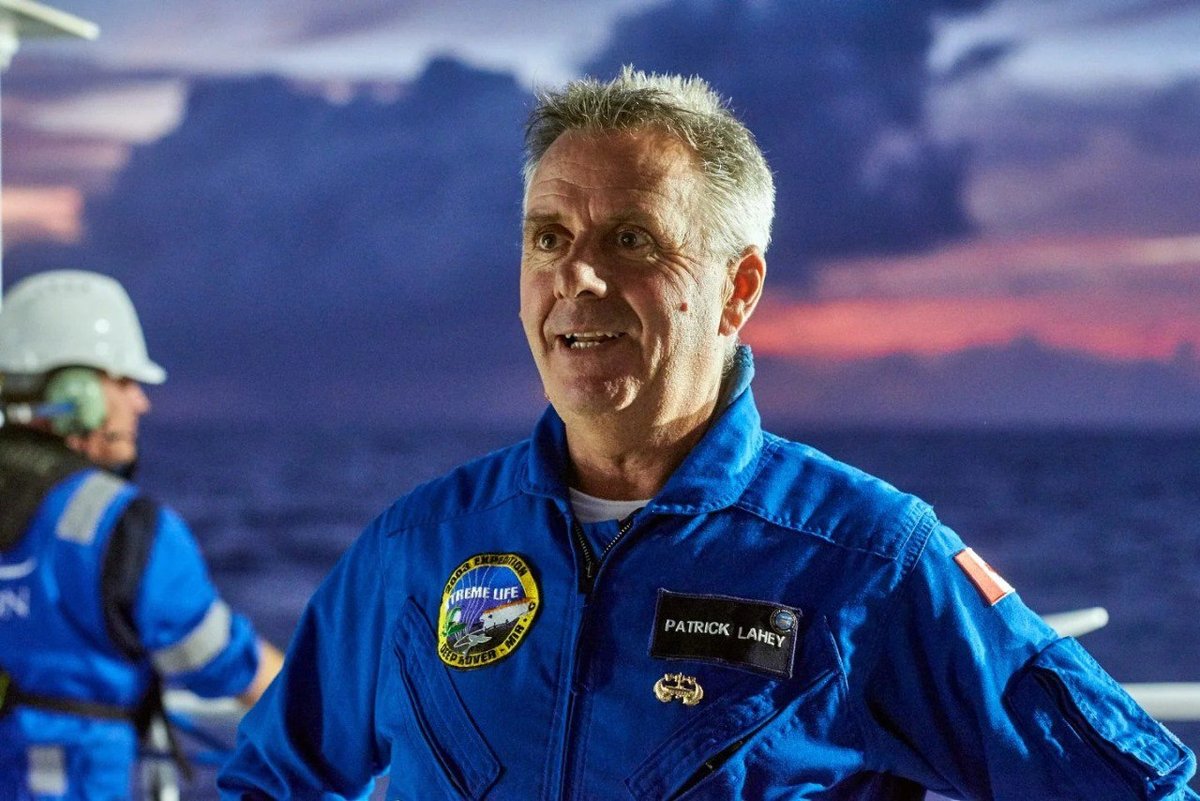
The deepest salvage operation ever attempted, as of 2019, was mounted to retrieve the expedition’s own equipment. In early May 2019 a scientific lander sat stuck in the silt of Challenger Deep, 10,927 meters down, and on May 3 Patrick Lahey piloted the Limiting Factor to the bottom, worked the manipulator arm, and freed it – ending the lander’s two and a half days on the seabed. His passenger that day spent the dive on an errand stranger still, which is the next entry’s story.
Lahey had been underwater most of his life by then. A commercial diver since 1975 and co-founder of Triton Submarines, he had a hand in designing, building, or testing more than 60 crewed submersibles before the one that finally took him to the bottom – a trip that made him the second person ever to dive Challenger Deep twice, and the second Canadian to get there at all. Canada formally noticed, appointing him to the Order of Canada in 2024 as “one of the world’s pre-eminent experts on submersibles.”
His answer to the 2023 Titan disaster was entirely in character: a mission to return to the Titanic in a certified Triton submersible rated to 4,000 meters, comfortably beyond the wreck’s depth, scheduled for the summer of 2026. The argument, made in titanium and paperwork, is that the deep is unforgiving but not unreasonable.
Jonathan Struwe
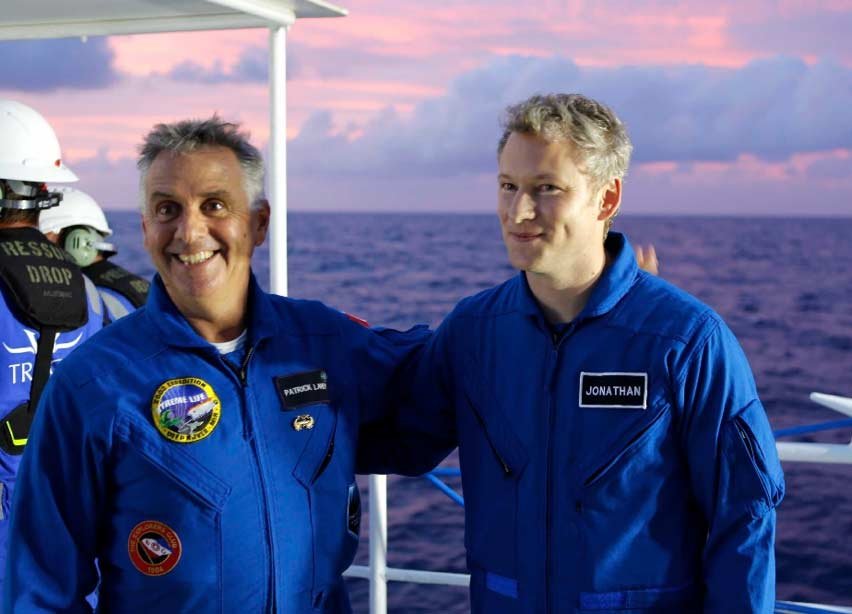
Somebody had to decide whether the Limiting Factor was safe enough to certify, and Jonathan Struwe concluded that the honest way to decide was from the inside. Struwe was the surveyor assigned by DNV GL, the Norwegian-German classification society whose stamp separates a working vessel from an experiment, and when the submersible made its certification run into the trench he rode along to inspect the machine he was judging, at a depth where any wrong answer would have been final.
The sub passed. Every previous vehicle to reach full ocean depth had been classed as experimental; this one left the trench as the first crewed submersible ever certified for commercial service. Struwe left it as the first German ever to visit the bottom of the sea – fitting, in a quiet way, since the GL in his employer’s name is the old Germanischer Lloyd of Hamburg, folded into the Norwegian DNV in a 2013 merger. The German half of a safety company got a German to the deepest point on Earth before Germany got around to it.
Patrick Lahey, who piloted him down, later gave Struwe the tribute that sticks: “That’s commitment right there, on his part. He could’ve said hey, listen, take some pictures when you get there. But no, man, he jumped in.” The inspection, it should be noted, found nothing wrong.
John Ramsay
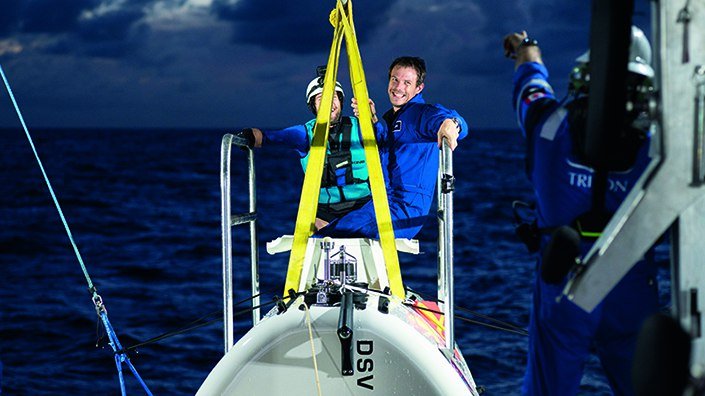
The pressure hull of the Limiting Factor is a 90-millimeter-thick titanium sphere machined to within half a millimetre of geometric perfection, and its two hemispheres are bolted together rather than welded because John Ramsay would not have it any other way. “We were determined from the start that we wouldn’t have any welding,” the sub’s principal designer explained, “because it introduces so many unknowns into the design.” At full ocean depth the seal is simply metal pressed against metal by the weight of the Pacific.
The sphere was proof-tested at the Krylov State Research Centre in St Petersburg, the only facility on Earth that could simulate 14,000 meters – considerably deeper than the ocean actually goes. Then, on May 5, 2019, Ramsay did what submarine designers essentially never do: he climbed inside his own hull and rode it to the bottom of Challenger Deep’s central pool, spending about three hours down there and becoming the first Briton to reach the deepest place on Earth.
The design’s real distinction is repeatability. The Trieste and the Deepsea Challenger each managed a single dive to full ocean depth; Ramsay’s sphere is certified to 11,000 meters an unlimited number of times, which turned the deepest water on the planet from a destination into a route. The mathematics held all the way down, and Ramsay came back up inside them.
Kathryn Sullivan
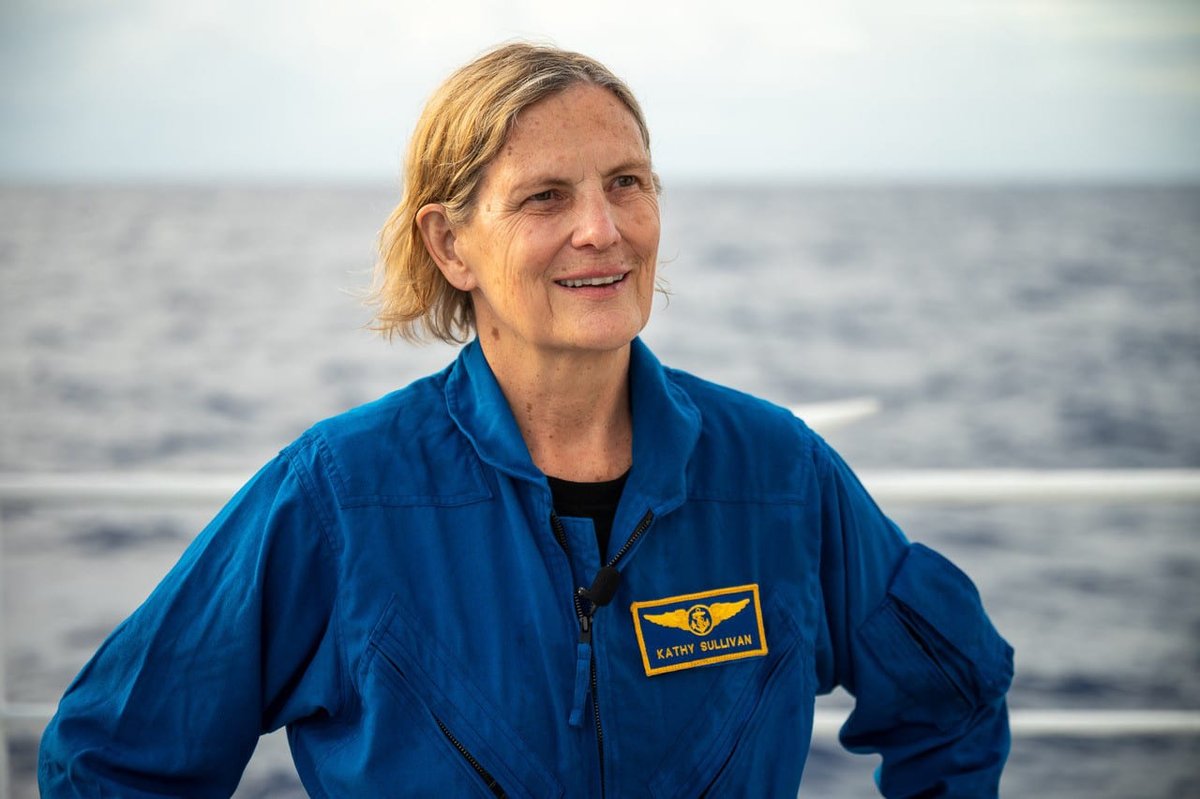
The first call Kathryn Sullivan’s expedition placed after she surfaced from Challenger Deep went to the International Space Station, where astronauts Chris Cassidy, Bob Behnken, and Doug Hurley took congratulations from a ship in the middle of the Pacific. The call made sense only because of who was on it: Sullivan’s dive on June 7, 2020, had just made her the first woman and the first astronaut to reach the bottom of the ocean, the eighth person overall, and the only human being ever to have both walked in space and sat on the seafloor’s deepest point.
The space half came first. On October 11, 1984, Sullivan became the first American woman to walk in space, spending three and a half hours outside the shuttle testing whether satellites could be refueled in orbit. She flew three shuttle missions in all, logged 532 hours, and helped deploy the Hubble Space Telescope in April 1990. A geology PhD ran underneath the whole career, and from 2014 to 2017 she directed NOAA as its Senate-confirmed administrator – which meant the oceans were, for a while, literally her department.
She has kept explaining the trench ever since, most recently in How to Dive to the Deepest Place on Earth, a children’s picture book published in 2026. No author has ever been more thoroughly qualified to write one.
Vanessa O’Brien
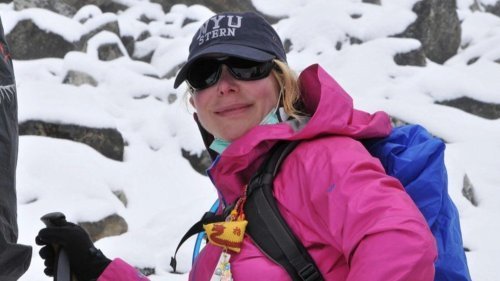
The 2008 financial crisis has exactly one alumna at the ocean’s deepest point. Vanessa O’Brien was a finance executive – Morgan Stanley, Bank of America, Barclays – whose career fell into a tailspin in the crash, and who took up mountaineering as what she expected to be a temporary hobby. It escalated with alarming discipline. Her first Everest attempt, in 2010, ended below Camp 1 with Sherpas helping her into her crampons; two years later she summited; and no American woman had climbed K2 until she did, in July 2017, at 52.
On June 12, 2020, she rode the Limiting Factor down and became the first woman to have stood on Earth’s highest point and reached its lowest. Two years on she flew Blue Origin’s NS-22 and closed out what Guinness calls the Explorers’ Extreme Trifecta – Everest, Challenger Deep, space – as the first woman to complete it, in 10 years and 77 days. Victor Vescovo, who had piloted her dive, beat her to the overall title by two months. She holds dual British-American citizenship, so two countries get to claim the achievement anyway.
She also brought something back up: water samples from her dive now sit in London’s Natural History Museum beside what the original Challenger expedition collected in 1875. Durdana Ansari, who carried them from Guam – refrigerating them en route – called the handover “the finest day of my life.”
John Rost
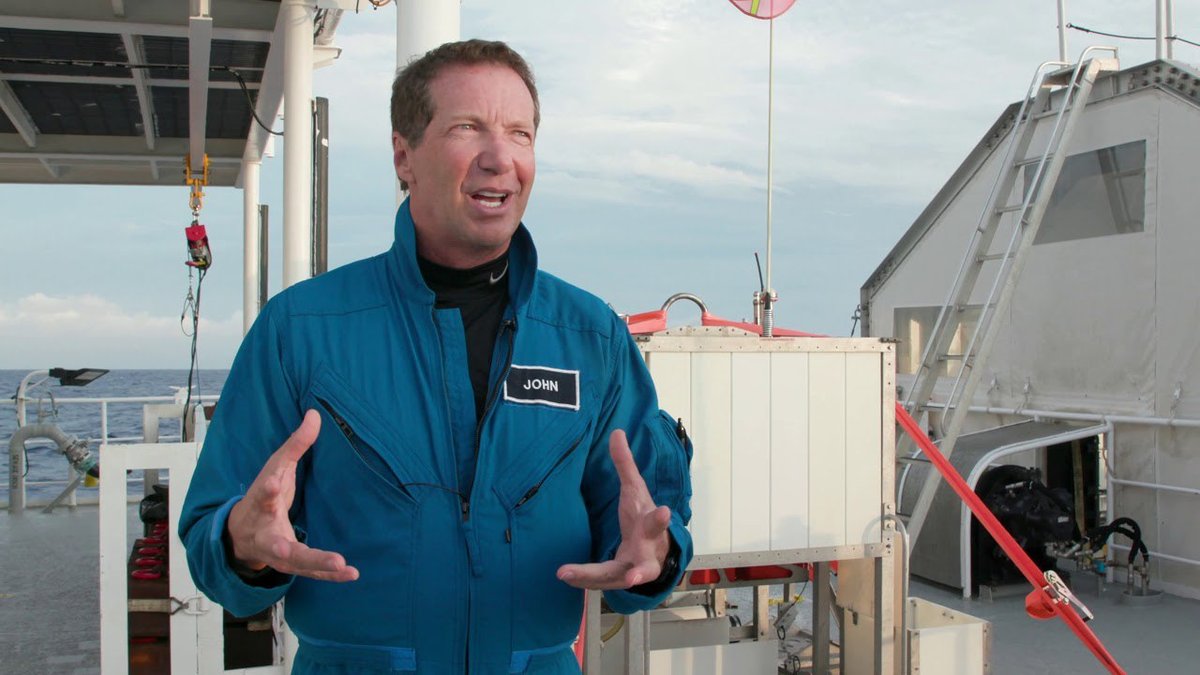
Nobody seems to know quite who John Rost is, which takes some doing for a man who once held a world record at the deepest place there is. On June 14, 2020, Rost rode the Limiting Factor down with Victor Vescovo and stayed on the bottom of Challenger Deep for 4 hours and 7 minutes – the longest any human had remained at full ocean depth on a single dive. The operators who took him describe him as “explorer John Rost” and leave it at that. No occupation, no hometown, no interviews of substance. Several unrelated John Rosts circulate online; none of them is confirmed to be him.
What the record does establish is impressive enough. Rost became the fourth American to get there and at the time only the third person to have both summited Mount Everest and dived to the bottom of the Mariana Trench – a combination that, at the time, put him in company of exactly two others, one of whom was sitting next to him piloting the sub.
His bottom-time record lasted less than nine months before a longer sit was logged in March 2021, and the encyclopedias have not been kind since: Wikipedia’s table misprints his time as 4.2 hours and cites his row to an article about somebody else’s dive. He sat on the seafloor longer than anyone before him, and went home to a privacy that has held up nearly as well.
Kelly Walsh
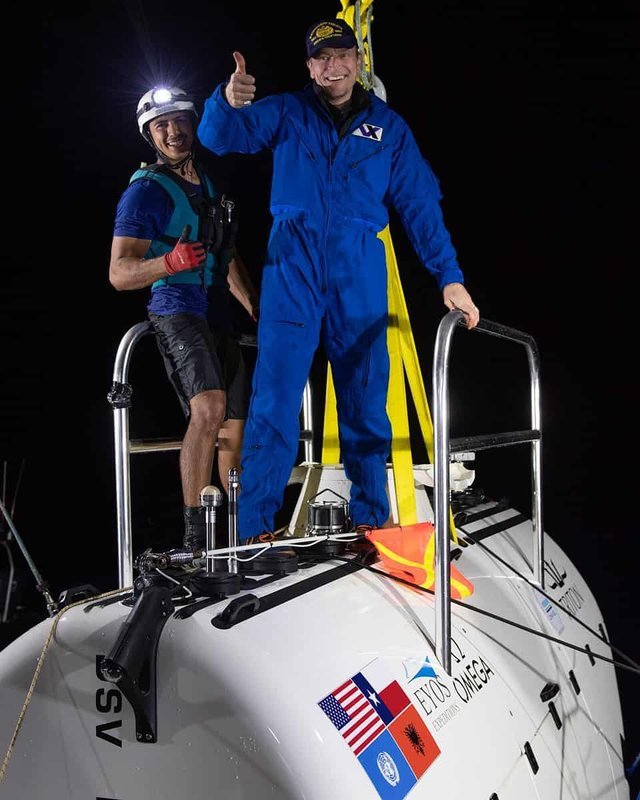
Sixty years separate the Walsh family’s two visits to the Western Pool of Challenger Deep. On June 20, 2020, Kelly Walsh, then 52, rode the Limiting Factor down to the same basin where his father Don had landed in the Trieste in 1960, making them the first father and son ever to make the trip – and making Kelly’s dive, on this list’s verified chronology, the first human return to that particular pool since his father stood watch over it.
The pool was the point. Other dives had gone east, where the water is slightly deeper and the records live; Kelly went west, to the family plot. The son’s summary of the generational upgrade is hard to improve on: “Dad spent 20 minutes on the bottom and could see very little. I spent 4 hours on the bottom with excellent lighting and a 4k camera running the whole time.” Don, then 89, watched the whole thing from the support ship, close enough to greet him on the surface.
The symmetry has kept compounding. In July 2026 Kelly appeared in Trieste – the Italian city, not the vehicle – for a documentary about the bathyscaphe, sharing the occasion with Bertrand Piccard, son of the man who rode beside his father in 1960. Sixty-six years on, the two families are still finishing each other’s story.
Ying-Tsong Lin
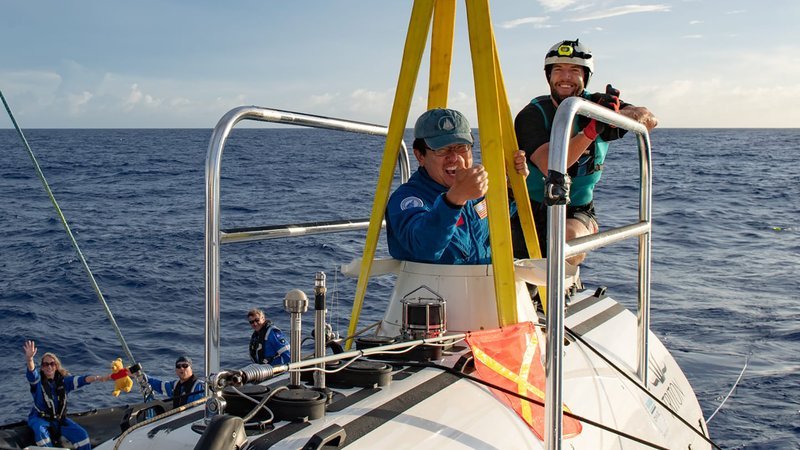
Ying-Tsong Lin went to the deepest water there is in order to listen to it. His dive on June 22, 2020 – into the Central pool, with Victor Vescovo piloting – was a working acoustics experiment: a NOAA hydrophone went to the seafloor to record the ambient sound of the deepest water on Earth while a speaker lowered from the support ship transmitted signals down through it, all to understand how sound bends under that much pressure. Better answers mean better communication and navigation for anything humans send that deep, which is why an ocean acoustician wanted the seat.
Lin, born in Taiwan and trained at National Taiwan University before two decades at Woods Hole, became the first person of Asian descent and the twelfth person overall to reach the bottom of Challenger Deep – and the first Woods Hole scientist to see it in person rather than through instruments. He has since moved to Scripps, where he holds an endowed chair in applied ocean science.
He surfaced with a scientist’s version of awe, writing that the sub was “a space-time capsule bringing us to another world, which has not been touched for millions years.” His explanation for how he got the seat was more economical. “I must have done something noble in my former life,” he offered, “such as saving millions of lives, to have the opportunity.”
Jim Wigginton
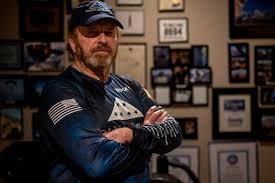
The plan was deliberately symmetrical: parachute from seven miles up, then dive nearly seven miles down. “I thought it would be cool and newsworthy for my wife’s Thyroid Cancer Fund,” Jim Wigginton told Guinness, “to be the only person to jump from 7 miles high and nearly 7 miles deep.” The fund is the heart of it. His wife Nancy – Punya, to those who knew her – was diagnosed with thyroid cancer in 2007 and died in 2013, and Wigginton, a Michigan private-equity investor, built an endowment in her name and then started performing feats to keep it funded.
The dive half came on June 26, 2020, when he touched down in Challenger Deep at 71 years and 124 days old – the oldest person ever to do it, a Guinness record that still stood when checked in August 2026. The jump half he keeps revising: a record tandem parachute jump over Antarctica in October 2019, then a higher one over Memphis in May 2024, which younger jumpers took back from him in 2025.
That is the quiet distinction of his collection. The skydiving marks turn over every couple of years, contested by professionals half his age. The ocean record has now held for six years, undefended, because nobody has been back down at all – and nobody older has ever gone.
Liu Yeyao
Every word that passes between Fendouzhe and the surface travels through equipment Liu Yeyao designed. The acoustic system he led at the Chinese Academy of Sciences’ Institute of Acoustics is the submersible’s only link from the bottom – voice, text, and images carried across 12.8 kilometers of seawater – and it is how China’s dives could be broadcast live to the nation. Liu started this work young: he was an aquanaut on the sea trials of China’s first deep submersible, Jiaolong, at 25, and designed the acoustics for its successor before Fendouzhe made him a record-holder.
He was aboard on October 27, 2020, when Fendouzhe broke 10,000 meters for the first time and settled onto the Challenger Deep’s western pool at 10,058 meters, and across the November 2020 trials he made three dives past 10,000 meters, with a personal maximum the Academy records as 10,902 meters – the trials’ paperwork does not say on which dive. On November 16 his crew relocated and retrieved three water samplers left on the seafloor in half an hour, a job he compared to fishing a needle from the seabed.
Liu has since said publicly that the 10,909-meter mark is “very unlikely to be broken again.” Coming from the man whose equipment would carry the news of any deeper dive, that amounts to an official forecast.
Zhang Wei
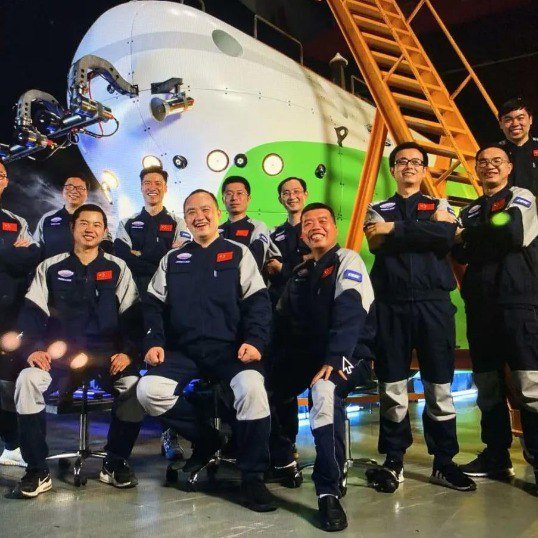
At about 4:50 on the morning of November 10, 2020, Fendouzhe dropped away from its mother ship with a crew that had been decided only the night before. It passed 10,000 meters at 7:42, and at 8:12 it settled onto the eastern pool of Challenger Deep at 10,909 meters – China’s crewed depth record, on the program’s dive number 027, with a 32-year-old main pilot named Zhang Wei at the controls. Zhang was not a career submariner but the deputy chief designer of the submersible’s electrical system, a senior engineer from the China Ship Scientific Research Center in Wuxi who happened also to be the man flying it.
He had already been tested. On an earlier dive, approaching 9,000 meters, a loud bang shook the cabin; as main pilot he had moments to decide whether to abort, checked every system, found nothing wrong, and kept descending. Only after surfacing did the team find a piece of buoyancy foam had cracked under pressure. Zhang has said the word “shock” was not enough for his first visit to 10,000 meters, recalling boulders, cliffs, and creatures the biologists aboard could not identify.
A month later, China gave him the Youth May Fourth Medal. Fendouzhe’s chief designer summed up the record more dryly: to break this number now, you would have to dig a hole.
Zhao Yang
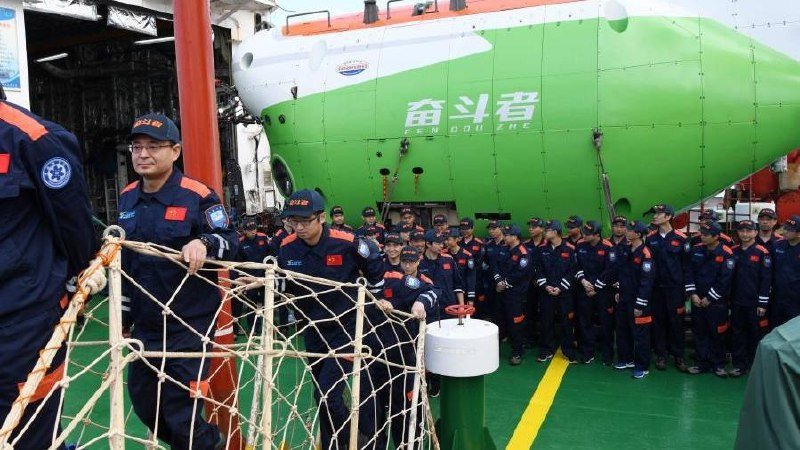
The one thing China’s sonar could not settle was which of Challenger Deep’s pools was deepest, so Fendouzhe went and checked in person. The sub worked the western basin first; the November 10 record dive was its first descent into the east, and Zhao Yang was aboard specifically to watch the machine’s nervous system perform – his seat title, formally, was starboard scientist test-pilot, and the control system under test was his own design. Zhao had come up through China’s whole submersible lineage, from hardware work on the 7,000-meter Jiaolong to chief systems designer of Shenhai Yongshi, before leading Fendouzhe’s nine-person control team.
The job had already cost him something: in early 2020, mid-sprint on the control system, overwork brought on sudden hearing loss in one ear, and he kept working against medical advice. On the way to the trench, the edge of Typhoon Nangka knocked a multi-ton ballast frame out of position on the support ship while his books and glasses case clattered off the shelves. From the bottom, he delivered a live broadcast to the country over the acoustic link.
His parents watched that broadcast with no idea their son was in the vehicle. His father guessed. His mother scoffed: “Nonsense – something this big, and our son wouldn’t have told us?” He had not, in fact, told them.
Wang Zhiqiang
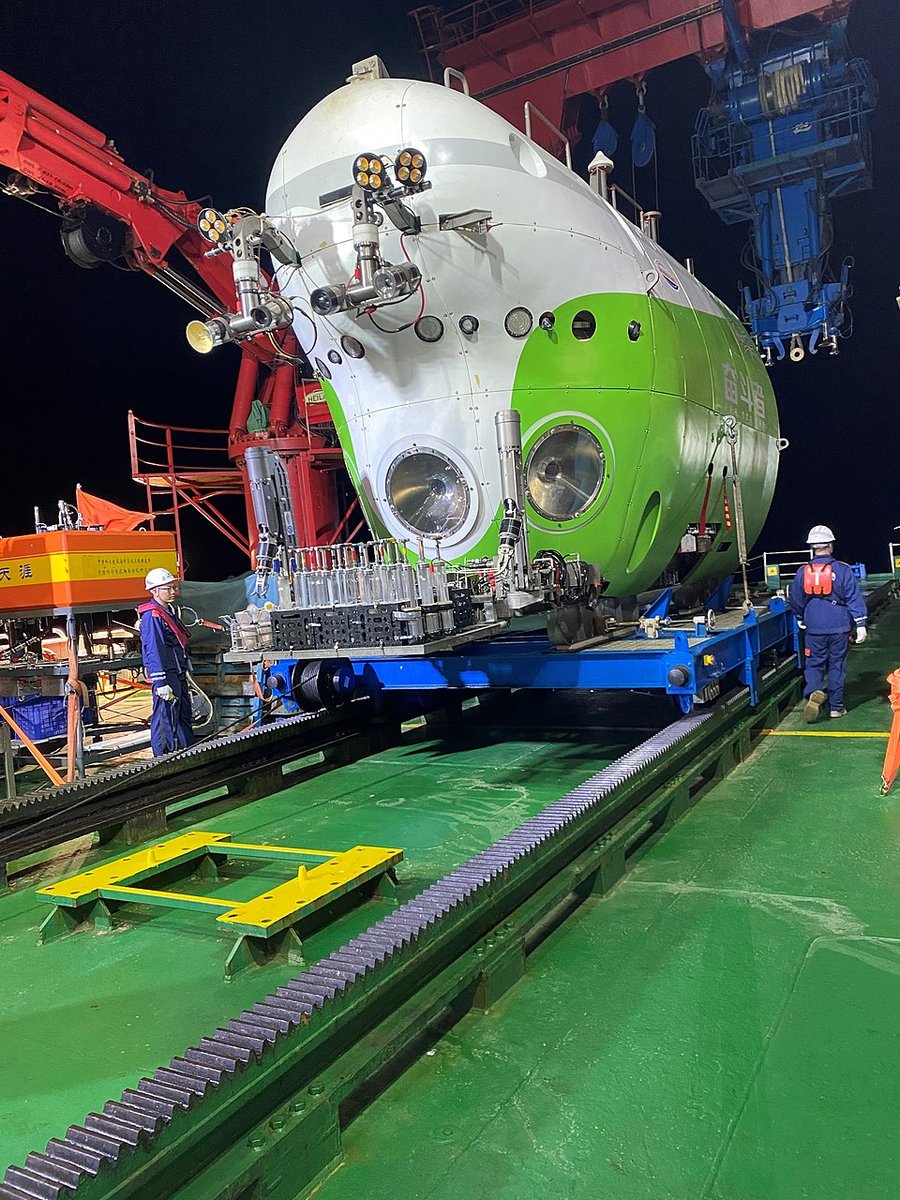
Of the three men on China’s record dive, Wang Zhiqiang is the professional. His crewmates were designers – an electrical engineer flying the sub, a control-systems chief watching his own handiwork – but Wang is a career submersible pilot with the Institute of Deep-sea Science and Engineering in Sanya, the branch of the Chinese Academy of Sciences that trains deep-sea crews roughly the way space agencies train astronauts. On November 10, 2020, he ran the port-side console on the descent that made China the second nation, after the United States, to put people on the seabed at full ocean depth.
Nine days later he was back at the bottom, co-piloting the November 19 dive that carried a deep-sea biologist to the floor of the trench – a story told two entries from now. Two trips to the deepest water on Earth inside nine days is a schedule no Western diver on this list ever attempted; at those depths the pressure is popularly rendered, in Chinese science reporting, as 2,000 African elephants standing on one person.
And that is very nearly everything the public record holds. His crewmates collected medals and profiles; Wang has no standalone profile anywhere in the Chinese press, and no source has named him since 2020. Fendouzhe had logged 453 dives by the end of 2025. The port-side seat on the only one everybody remembers belongs to a man nobody has interviewed.
Ye Yanying
The first live television broadcast from the bottom of the ocean included a moment of pure tourism: the pilot wiped his viewport clean with a tissue and photographed the camera filming him, using his personal phone. The pilot was Ye Yanying, and the camera was Canghai, a Chinese 4K video lander that had settled onto the seabed past 10,000 meters that morning, November 13, 2020. Ye flew Fendouzhe down after it, spent an hour and twenty minutes hunting for its lights in the dark, then parked squarely in front of its lens while the two machines photographed each other – the world’s first joint operation, and first live broadcast, from a 10,000-meter seabed, with the pictures traveling up Canghai’s fiber-optic tether to a national audience.
The precision was the message. Ye had lined the submersible up almost perfectly head-on, a maneuver his deputy chief designer pointed out on air as proof the vehicle went exactly where its pilot sent it. Ye, an IDSSE pilot, had also flown the sub’s very first breach of 10,000 meters seventeen days earlier – he was chief pilot on both.
His job description ran wider than the pressure sphere. Ye doubled as the frogman who secured the tow cables during rough-water recoveries, and once had to leap into a pitching rescue boat in force-7 winds to finish a hook-up. “I gritted my teeth and jumped,” he said. From him, that counts as a full account.
He Lisheng
“No matter how high-definition the camera or video recorder,” He Lisheng has said, “nothing replaces going down yourself to see, feel, and observe.” She has acted on the principle in every crewed submersible China owns – 6,200 meters in Jiaolong in 2016, then Shenhai Yongshi in 2019 – before Fendouzhe carried her to 10,902 meters on November 19, 2020, making her the first Chinese woman ever to touch the trench floor, and the first scientist of any kind on one of the sub’s trial dives.
She earned the view uncomfortably. For most of the three-hour descent the IDSSE deep-sea biologist knelt at a small porthole near the base of the 1.8-meter sphere, legs going numb, watching daylight give out around 200 meters down. The bottom repaid her: translucent sea cucumbers colored like the sediment, amphipods far larger than anything of their kind in shallow water, and the first polychaete worms ever recorded at 10,000 meters. Back on the mothership she processed her samples through the night, finishing around 3 a.m., because specimens hauled up from that pressure do not wait politely until morning.
Her team’s measurements carried a bleaker discovery: microplastics in the trench’s own sediment, at concentrations of 200 to 2,200 particles per liter, along with pollutants in the animals themselves. Humanity arrived at the trench floor decades after its garbage did.
Richard Garriott
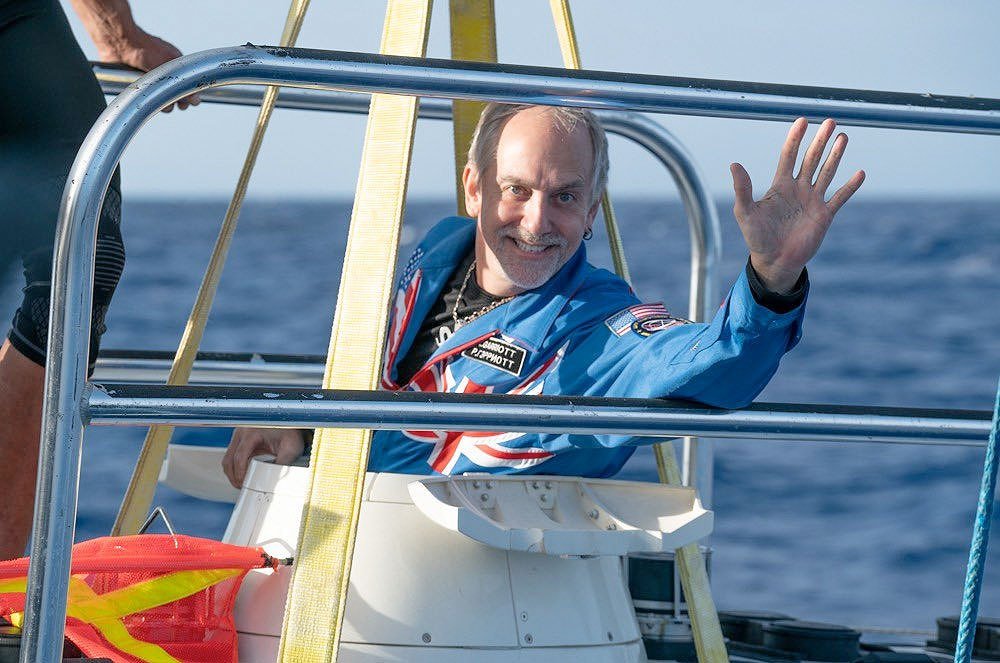
Three weeks into his term as president of The Explorers Club, Richard Garriott made his descent on March 1, 2021 – a piece of scheduling that made him the first person to have visited both poles, outer space, and the deepest point of the ocean. The space leg had come in 2008, aboard Soyuz TMA-13, for a reported 30 million dollars; since his father Owen had flown on Skylab in 1973, that flight also made him the first American to follow a parent into orbit. The family covered both directions eventually.
Before any of that, Garriott was the video-game designer behind Ultima – a franchise he began as a teenager with 1979’s Akalabeth and ran through Ultima Online in 1997, the game that helped drag role-playing massively online. In 1985 he borrowed the Sanskrit word avatar, a deity’s descent into physical form, to name the player’s character in Ultima IV, on the theory that people behave better when the figure on screen is really them. The word stuck to the entire internet.
There is a certain consistency in a man who spent decades building fantasy worlds deciding to verify the real one personally, descent by descent. The avatar business turned out to be excellent training. This time the deity-like figure going down into the world was him.
Michael Dubno
Beneath a Manhattan townhouse near Central Park is a thousand-square-foot machine shop, excavated at the cost of some 250,000 pounds of bedrock, where Michael Dubno builds things like a ceiling lamp with six illuminated tentacles that tracks people by computer vision. This is what a certain kind of Wall Street career buys. Dubno joined Goldman Sachs in 1985, helped build SecDB – the risk system that became the firm’s most valuable software – made partner in 2001, and served as chief technology officer before retiring at the top of the trade.
He has been putting screens where they did not previously belong since 1982, when he and his brother patented a restaurant tabletop terminal that let diners play video games and order food on one machine. The exploring came later, mostly alongside Richard Garriott: Nicaraguan lava pits, the North Pole in 2018 with Explorers Club flag number 61, and finally the Mariana Trench, where Dubno made his own dive on March 3, 2021, two days after his old traveling partner.
The pair engineered their souvenirs in advance, machining a hydroforming die that stamped a three-inch copper impression under full ocean pressure, plus a titanium geocache on a Kevlar line, left at the bottom for whoever comes next. It has been waiting since 2021. Nobody has been back to log it.
Hamish Harding
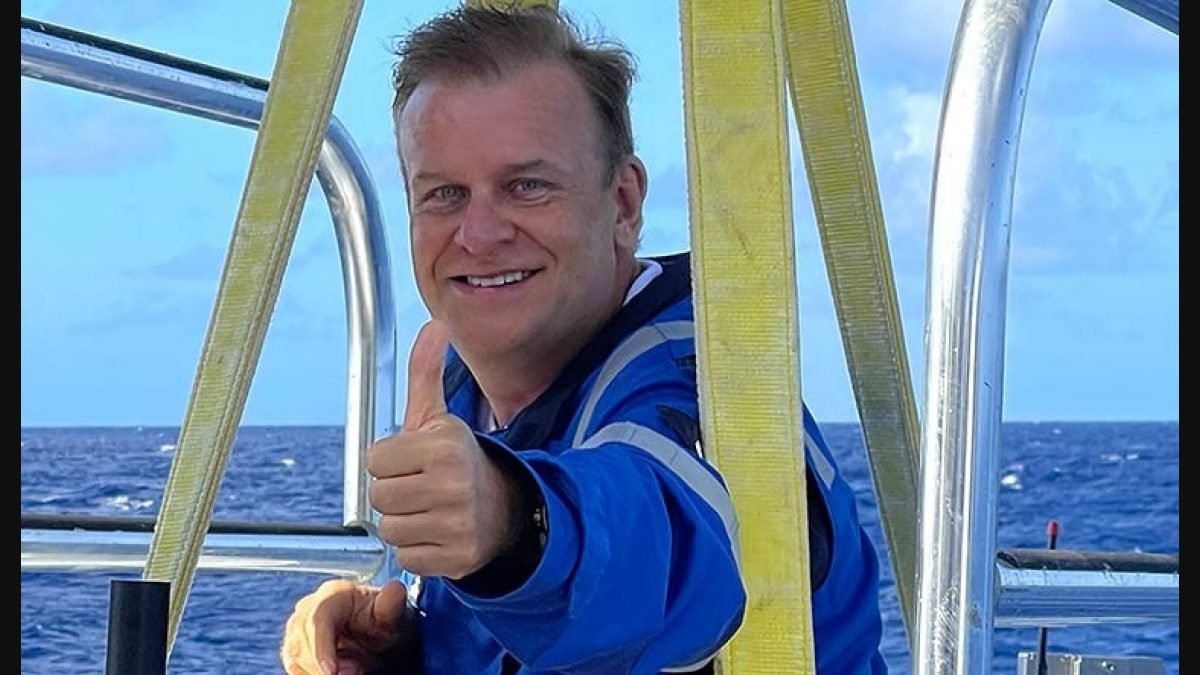
Nobody has spent longer on the ocean floor in a single visit than Hamish Harding. On March 5, 2021, he and Victor Vescovo logged 4 hours 15 minutes at full ocean depth and drove 4.634 kilometers across the floor of Challenger Deep – both records still standing – passing an unmapped plateau roughly the height of the Burj Khalifa and a scattering of shrimp-like creatures going about their business at 10,900 meters. Harding, a Dubai-based business-jet broker, collected extremes methodically: in 2019 he had piloted a Gulfstream around the Earth over both poles in a record 46 hours, 40 minutes and 22 seconds, and in June 2022 he flew to space on Blue Origin’s NS-21, sharing the capsule with the same Vescovo who had driven him along the trench floor.
On June 18, 2023, Harding boarded the OceanGate submersible Titan for a dive to the Titanic. Its hull imploded on descent, killing all five aboard. He died six days short of his 59th birthday – the only person on this roster to be lost exploring the deep.
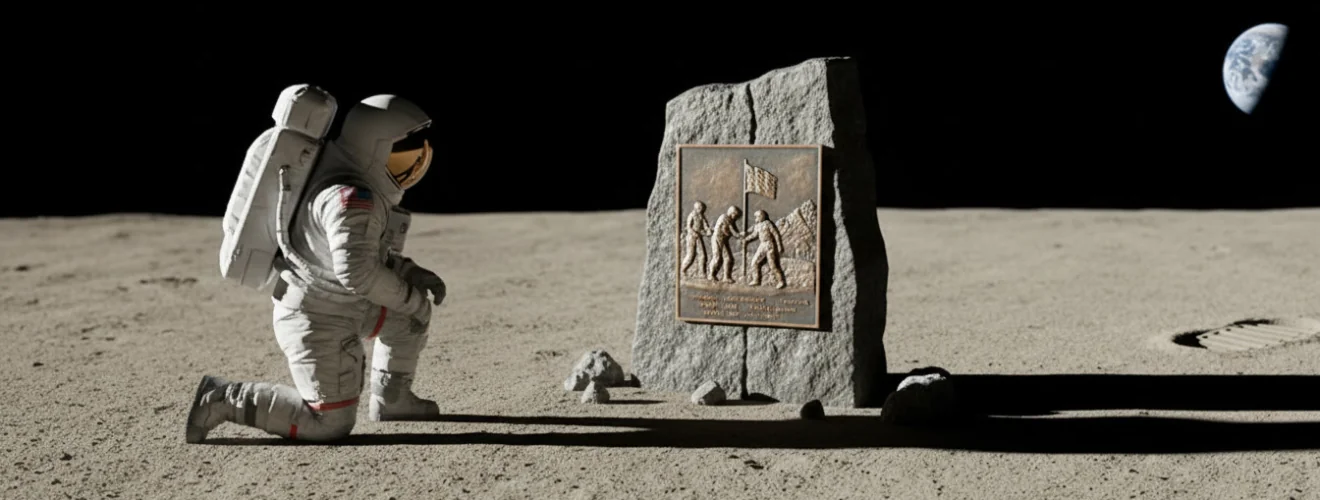
There is no monument in the trench and never will be; water at that depth keeps nothing legible. The Moon does better by its dead, carrying memorials to 15 people memorialized on the lunar surface, while the ocean’s explorers are remembered the only way the ocean allows: in records like his that no one has gone back to break.
Nicole Yamase

Aboard Nicole Yamase’s dive rode a Pohnpeian urohs skirt, a mwaramwar garland, a small wooden canoe carved by her father, and the flag of the Federated States of Micronesia. On March 11, 2021, all of it rode down through Challenger Deep with her, and she came up as the first Pacific Islander ever to visit the deepest point of an ocean her ancestors navigated by stars and swell. She was the fourth woman to make the trip and, at the time, a doctoral student – the trench she visited sits, after all, in her own corner of the Pacific.
The pressure she felt most was not the water’s. “The biggest weight I had on me was how to represent. All of us. How do I represent Pacific Islanders?” she said before the dive. What she saw below included cables and tether lines resting on the floor of a marine protected area, which is its own kind of answer about who had represented humanity down there so far.
Yamase finished her PhD in 2022, the first person from the Federated States of Micronesia to hold a doctorate in marine biology, and now directs impact at the reef-management group OneReef; in December 2025, Grist named her among its climate leaders. Her own summary of the dive needs no improving: “I felt like I was going home. I’m going to go visit a relative, but just underwater.”
Tim Macdonald
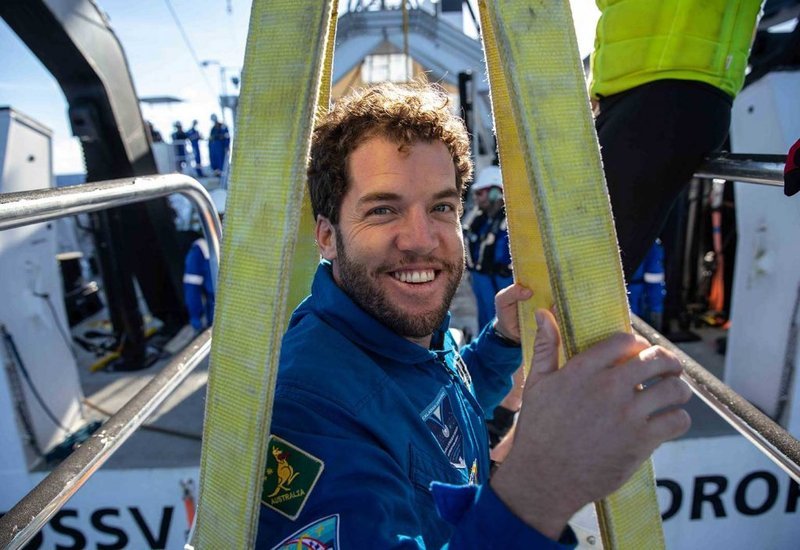
On April 8, 2021, somebody set the world record for the deepest Vegemite sandwich, and it seems unlikely ever to be contested. “It was a busy dive but we took the time to set a light-hearted world record; the world’s deepest ever vegemite sandwich, and Anzac biscuits; which is something only Australasian’s really understand,” said Tim Macdonald, who piloted that descent – the ANZAC dive – into the Western Pool and became the first Australian to sit at the lowest point of the Mariana Trench.
Macdonald is one of the few people on this list who reached the bottom on salary. A former dive instructor who studied marine engineering part-time at the Australian Maritime College, he joined Triton Submarines as a design and integration engineer on the Limiting Factor itself, spending four months in Barcelona pressure-testing the components he would later trust with his life, and became just the third person certified to pilot the sub. At Caladan Oceanic his title ran to Engineering and Operations Manager and Submersible Pilot, which is corporate language for the man who both fixes the machine and flies it.
He went back on July 5, 2022, piloting professor Jim Kitchen into the Eastern Pool, and calmly worked through an error message during the weight-release sequence on the way. Most names on this roster paid for the seat beside the pilot. Macdonald was the pilot.
Rob McCallum
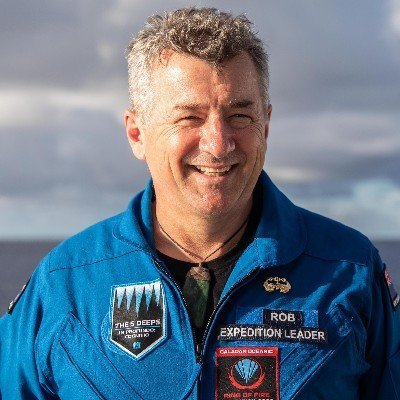
“In your race to Titanic you are mirroring that famous catch cry: She is unsinkable.” Rob McCallum sent that warning to OceanGate’s chief executive, Stockton Rush, in March 2018, five years before the Titan imploded. OceanGate’s lawyers threatened him; McCallum spent the years afterward quietly telling prospective passengers to call him first, and by his own account talked three dozen of them out of boarding. “We failed and five people died,” he said after the end. A Netflix documentary released in June 2025 put his warnings on the record for everyone.
McCallum knows what careful deep-sea operations look like because arranging them is his profession. A New Zealander who spent 23 years with his country’s Department of Conservation, he co-founded EYOS Expeditions, coordinated the test program for James Cameron’s 2012 solo dive, and served as expedition leader for the whole Five Deeps campaign – the man on the surface while everyone else on this list went down. On April 8, 2021, he finally took the passenger seat himself, riding to the bottom at 10,925 meters as the first New Zealander to reach it, on the same dive that produced the Vegemite record.
August 2026 finds him in East Greenland, positioning an expedition yacht under a total solar eclipse. He needed the bottom of the ocean once. Arranging the view for other people has always been the job.
Larry Connor
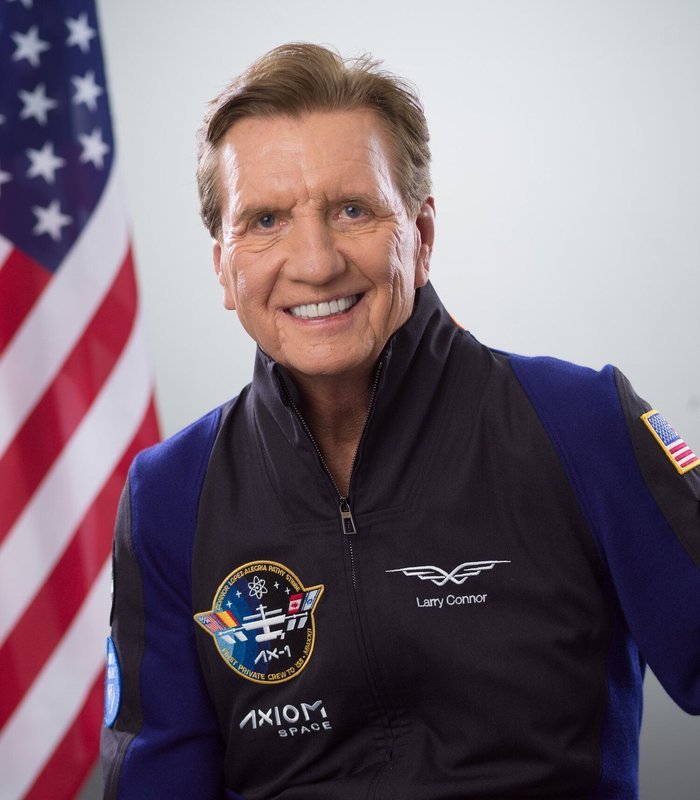
Ohio real-estate investor Larry Connor set himself a deliberately absurd itinerary: the ocean’s deepest point and low Earth orbit, roughly a year apart. He managed the first half in April 2021, riding the Limiting Factor down into Challenger Deep, and the second on April 8, 2022, when he served as pilot of Axiom Mission 1, the first all-private crew to reach the International Space Station. At 72, that launch made him the second-oldest person to have gone to orbit at the time.
He took the trench markedly less seriously than the rocket. Deep-sea missions, he told CNBC, require little formal training – “you really don’t” – whereas Axiom added two extra weeks onto its standard fifteen-week astronaut course. The dive still produced real science: on a run of three descents in five days piloted by Patrick Lahey, the pair captured the first live video ever taken of a Mariana snailfish, at about 7.6 kilometers down, which the expedition’s chief scientist called a genuine scientific first.
Connor built his fortune growing the Connor Group from roughly $100 million to about $4 billion in assets, and frames the whole enterprise in the vocabulary of a motivational poster: “Aim high. Never set limits. Never put a ceiling on what you can do.” Coming from a man who went seven miles down and then to space to prove there was no ceiling, the slogan is at least backed by the mileage.
Wu Tao
At 10,901.3 meters on November 5, 2021, seated at the bottom of the eastern pool, Wu Tao did something almost quaint: he took out paper and drew. The Zhejiang University geologist spent roughly six hours on the bottom, crossed the seafloor boundary where Pacific oceanic crust meets the Philippine Sea basin, and hand-sketched the area’s first geological cross-section – a pencil drawing of the deepest exposed slice of ocean crust anywhere on Earth. His stated goal was to date the trench’s rocks and work out how it formed, which requires being there, because the samples do not travel well and the context does not travel at all.
He rode Fendouzhe during the 53-day TS-21-2 cruise, one of six descents past 10,000 meters that voyage, part of a Chinese research push that treated the trench as a laboratory rather than a summit. The division of labor produced one nice irony: a three-million-year-old basalt sample was collected by a microbiologist on a separate night dive and handed to Wu Tao, the actual geologist, to analyze – a rock he dated but never personally picked up.
The cruise kept paying out for years. Microbial findings from the same 2021 campaign made the cover of Cell in March 2025, cataloguing 7,564 species, the overwhelming majority never recorded before. A hand-drawn map from the bottom of the world turned out to be only the beginning of the paperwork.
Xiao Xiang
When Fendouzhe touched the bottom in November 2021, the microbiologist aboard transmitted a recorded statement up through the water by acoustic link – the founding announcement of what became the Mariana Consensus. Xiao Xiang, of Shanghai Jiao Tong University, reached 10,909 meters on the TS-21-2 cruise as the convening scientist of MEER, the Mariana Trench Environment and Ecology Research project, a program built on a contrary premise: that earlier expeditions had wasted the trench by racing only for its single deepest point instead of surveying the whole of it.
The payoff arrived in March 2025, when Cell published MEER’s first results as a four-paper cover feature spanning the trench’s microbes, its amphipods, and its fish. The microbial haul alone came to 7,564 species-level genomes, nearly nine in ten new to science – a novelty rate the team said rivaled the entire previously known catalog of ocean microbial life. Decades of Xiao’s lab work had stalled on a stubborn puzzle: unlike most extreme-environment adaptations, pressure tolerance could never be pinned to a single gene.
The trench supplied the reason. A gene-knockout experiment tied deep-sea pressure adaptation to several hundred genes at once, upending the tidy one-gene-one-function model biology prefers. His student summed up the ambition as embroidering a seafloor version of a Song dynasty scroll – mapping the whole living width of the deepest place there is, rather than planting a flag at its lowest inch.
Wang Jian
One name on this roster earns its place on the strength of a phrase rather than a number. The Chinese Academy of Sciences states that Wang Jian, the BGI genomics billionaire, then 67, “reached the deepest point of global waters” aboard Fendouzhe in November 2021; People’s Daily’s English edition puts the dive at “over 10,000 meters”; and no source anywhere publishes the exact depth he reached. That gap is unusual on this roster, where most descents come with a figure to the meter, and it is the honest reason his entry carries a caveat the others do not.
What is not in doubt is the collection the dive completed. China’s state media reported that Wang became the first Chinese person to have surveyed the Antarctic and Arctic, summited Everest, and made it to the ocean floor – and the oldest person anywhere to hold all three. He is not a man who slows down: on May 21, 2024, at 70, he summited Everest a second time, from the north slope, fourteen years after his first ascent, becoming the oldest Chinese climber to reach the top.
He co-founded BGI in 1999 to join the Human Genome Project, and dives and climbs partly to collect biological samples from extremes. He has also said, amid criticism of his blunter public remarks, that by his own genetic reckoning he expects to live to 120 – a claim as unverifiable as his dive depth, and offered with rather more confidence.
Aaron Charles Newman
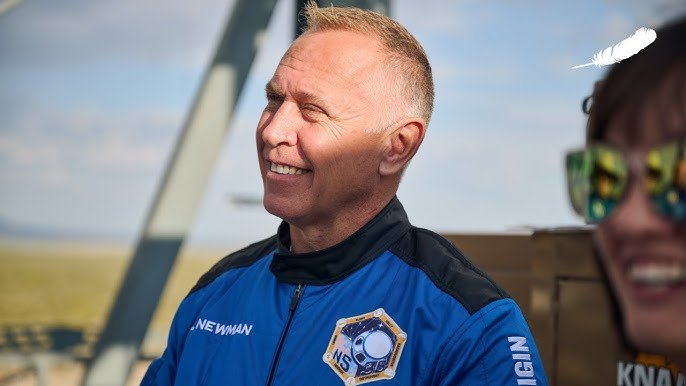
On July 3, 2022, Aaron Charles Newman rode the Limiting Factor into the Central Pool of Challenger Deep, Victor Vescovo at the controls, and then spent three years working on the other direction. On October 8, 2025, he crossed the Karman line aboard Blue Origin’s NS-36, adding the edge of space to the deepest point of the sea – the kind of vertical spread this roster keeps producing, because the people who can afford one extreme tend to want the matching set.
Newman came to it from software rather than finance or film. A US Army veteran of the first Gulf War, he founded six security companies over his career – the last, Cloud Storage Security, among them – and holds six patents, having funded his first startup by selling his house. He carries a Latin tattoo, Fortitudine Vincimus, “through endurance we conquer,” borrowed from Ernest Shackleton’s family motto, which for a man who has both dived the trench and attempted Everest is less slogan than resume.
The self-mythology has its limits, and they are charming ones. Asked what the launch was like, the serial founder and published author of two technical manuals reached for no eloquence at all: “The one word I said over and over and over again was wow.” He also smuggled a stack of company stickers into space aboard NS-36 and handed them out afterward at tech conferences, which is one way to expense the trip.
Jim Kitchen
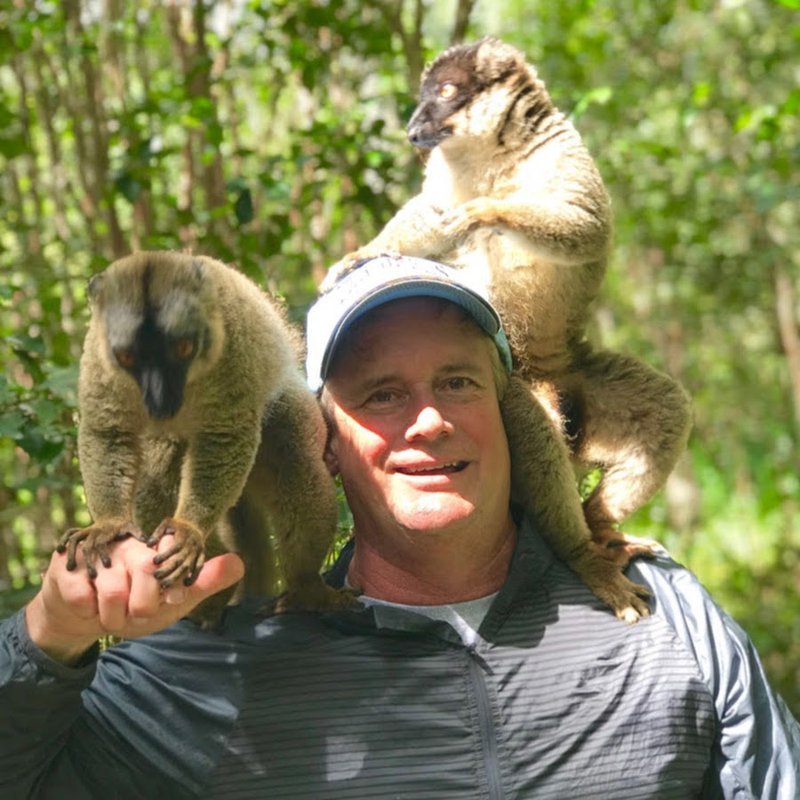
In the spring and summer of 2022, Jim Kitchen went to space and then to the bottom of the sea about fourteen weeks apart, which even on this roster is a brisk schedule. His NS-20 flight went up on March 31, then took the Limiting Factor down into the trench’s Eastern Pool on July 5, piloted by Tim Macdonald. Kitchen teaches entrepreneurship at UNC’s Kenan-Flagler Business School, and he arrived at both extremes already holding a rarer distinction: he has set foot in all 193 United Nations member states, finishing in 2019 when Syria became number 193.
He travels with props. For the spaceflight he packed the passports documenting those 193 countries and a flag marked “194,” since the trip up counted as the next destination, plus a basketball signed by Dean Smith and Michael Jordan that he meant to auction for student startups. His courses run on the same logic – students launch small businesses and donate the profits, funding among other things car giveaways for people leaving homelessness.
His sharpest instinct went unrecorded by any camera. In June 2023 Kitchen backed out of an OceanGate dive to the Titanic after a safety briefing revealed the submersible had never once completed the trip. “Everyone’s looking at me sideways,” he recalled of his questions, “thinking, hey, can you just give it a rest?” Days later the vessel imploded. He had given it exactly the right amount of rest.
Dylan Taylor
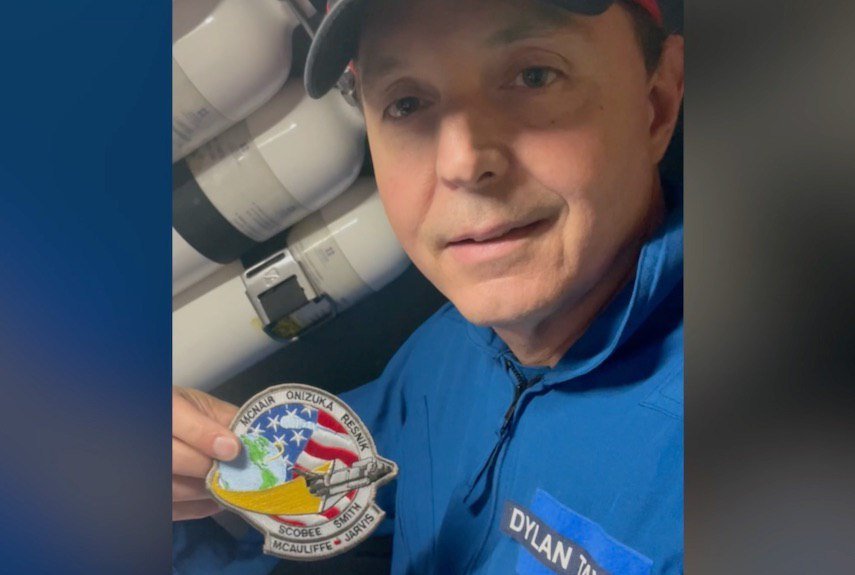
Dylan Taylor booked the two least compatible trips available to a human being and took them seven months apart. He rode Blue Origin’s NS-19 on December 11, 2021, then took the Limiting Factor to about 10,900 meters at the western edge of Challenger Deep’s Eastern Pool on July 7, 2022 – space and the ocean’s floor inside a single year. Taylor is chairman and CEO of Voyager Technologies, a space-infrastructure firm that went public on the New York Stock Exchange in June 2025, raising roughly $402.3 million, so his instinct for the vertical extremes is, in a sense, the day job.
He carried the right freight down with him. Into the trench went a patch from the Challenger Center and one from Space Shuttle Challenger’s final flight, both given to him by June Scobee Rodgers, widow of that shuttle’s commander – a quiet acknowledgment that “Challenger” has cost explorers dearly in more than one element. In 2017 he had already become the first private citizen to manufacture something in space, commissioning a 3D-printed gravity meter aboard the ISS.
His dive profile reads like a commute nobody would choose: four and a half hours down, two hours on the bottom, four and a half hours back up. That is the arithmetic of the deep, and the reason so few make the trip – most of a working day spent falling and rising through the dark, for a couple of hours at a place almost no one has stood.
Dawn Wright
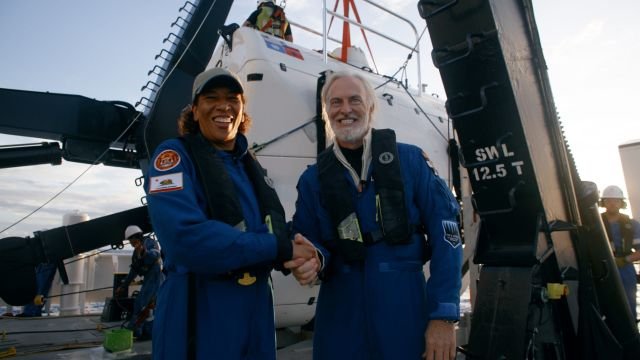
For four years now, the last person to touch the floor of Challenger Deep has been a geographer who went there to make a map. Dawn Wright, chief scientist at the mapping-software company Esri, descended into the Western Pool on July 12, 2022, with Victor Vescovo, and became the first Black person ever to touch the deepest seafloor there is. As of August 2026, nobody has followed her – the submersible that carried her was sold months later and renamed, and no operator has gone back.
Wright did not treat the trip as a summit either. She and Vescovo ran a side-scan sonar built to work at full ocean depth, a first, gathering high-resolution imagery of a place normally charted only in blurred outline, in support of the Seabed 2030 effort to map the entire ocean floor. A professor at Oregon State since 1995 and a member of both national academies, she had a personal reason aboard as well: her mother had died the previous December, and Wright said she “wanted to be able to live to see this, but she is watching from heaven.”
She has since turned the dive into an argument. In a February 2026 op-ed opposing new deep-sea mining leases near the Marianas, Wright drew on what she had seen at the bottom to call the practice “an unnecessary and reckless race to the bottom” – a phrase with unusual authority from the last person to have gone.
Frequently Asked Questions
How deep is Challenger Deep?
The best current figure is 10,935 meters, plus or minus 6, from a 2021 survey of the eastern pool built on repeated modern soundings. Pressure at that depth runs to about 1,086 atmospheres – roughly 16,000 pounds per square inch – which is much of the reason only four vehicles have ever carried people there.
How much does it cost to dive to Challenger Deep?
$750,000 per seat, when seats existed – Caladan Oceanic and EYOS Expeditions sold three per voyage during the tourist window. The price bought roughly four hours of descent, several hours on the bottom, and four hours back up. No operator currently sells the trip at any price.
Has anyone ever died diving to Challenger Deep?
No death has been reported on any crewed Challenger Deep descent across more than six decades. It is not a certified statistic – no official registry exists – but every documented dive came back up. The deep-sea fatalities that made headlines happened elsewhere in the ocean, at far shallower depths.
Is Challenger Deep a single spot?
No. It is three separate seafloor basins – an eastern, central, and western pool – about 320 km southwest of Guam, each deeper than 10,850 meters. The eastern pool holds the deepest confirmed point. Expeditions pick their pool, and several of the firsts on this list belong to one pool rather than the place.
Why has nobody been back since 2022?
The vehicle that carried most of the roster changed hands: the Limiting Factor was sold to Gabe Newell’s Inkfish in November 2022 and renamed Bakunawa, and its 2024 expedition worked the Nova Canton Trough instead. China’s Fendouzhe has likewise spent the years since diving other trenches.
Are there people who reached the bottom who are not on this list?
Yes – by China’s own arithmetic. State institutes reported 19 people carried to the ocean’s deepest point by October 2021, and 27 scientists by December 2021, but have published barely a third of the names. The unnamed majority are real and uncontested; they simply cannot be listed until China names them.
- US Navy – Bathyscaph Trieste
- Five Deeps Expedition – official Challenger Deep dive release (PDF)
- Caladan Oceanic – Ring of Fire Dive Series
- Guinness World Records – most times to visit the Challenger Deep
- Guinness World Records – oldest person to reach the Challenger Deep
- Woods Hole Oceanographic Institution – WHOI researcher dives to Challenger Deep
- Esri – Deep-sea Dawn dives Challenger Deep
- Britannica – Challenger Deep