
Every Act That Played Woodstock in 1969
Woodstock did not happen in Woodstock. The festival borrowed its name from the artists’ colony in Ulster County, New York, where Bob Dylan was living and where its four young promoters hoped to build a recording studio – but the town wanted no part of half a million visitors, and neither did Wallkill, the next candidate, which evicted the whole operation in July 1969. The event the world now calls Woodstock was held more than forty miles away, on a 600-acre dairy farm in Bethel owned by a conservative Republican named Max Yasgur, who rented it out for the weekend and was not thanked for it by his neighbours.
The lineup that became shorthand for a generation was shaped partly by who turned it down. Dylan, who actually lived in the town the festival was named for, passed. Led Zeppelin’s manager declined on the grounds that his band would have been just another act on the bill. The Jeff Beck Group was booked and then dissolved a week beforehand, Beck having decided he did not want the thing preserved. Iron Butterfly spent the weekend stranded at an airport, demanding helicopters that never came. Joni Mitchell was steered onto The Dick Cavett Show instead, watched the festival on television, and then wrote “Woodstock,” the most famous song about an event its author did not attend. The acts who did perform were, in large part, the ones who said yes or simply turned up.
What follows is every act that reached the stage, in the order it actually played – which is not the order most lists print. When the producers of Rhino’s fortieth-anniversary box set went back to the multitrack master tapes, they found that the running order everyone had agreed on for decades was wrong in places, and that several performers had misremembered their own sets. The weekend opened late on a Friday afternoon and did not end until nine o’clock the following Monday morning. They are listed here in the sequence the tapes give them, which is the closest thing to the truth anyone now has.
Thirty-two acts performed at Woodstock over the four days of August 15 to 18, 1969. Richie Havens went on first, Jimi Hendrix closed the festival to a thinned-out crowd on the final morning, and Country Joe McDonald played two of them, once on his own and once with Country Joe and the Fish.
Richie Havens
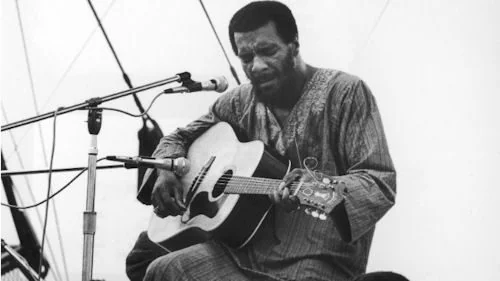
The festival was running three hours behind, the scheduled opening band was stuck somewhere on a gridlocked highway, and the only act that had already arrived – flown in by helicopter with a guitar and almost no equipment – was a folk singer from Bedford-Stuyvesant named Richie Havens. The organizers pushed him on stage at 5:07 p.m. on Friday and asked him to stall. He stalled for a long while.
Havens played in open tunings with a hard, percussive right hand, and the crowd kept calling him back for encores while the traffic untangled itself behind them. Eventually he ran out of songs. Still expected to fill time, he began vamping on a single word that kept surfacing as he looked out at the crowd – freedom – and built it into an improvised spiritual anchored to “Sometimes I Feel Like a Motherless Child,” which his grandmother had taught him. “Freedom” was composed on that stage and nowhere else, and it became the defining performance of his life and the unofficial overture to the weekend.
He always insisted the set ran close to three hours; the surviving tape is rather shorter, which takes nothing away from it. Havens died of a heart attack in April 2013. That August, on the forty-fourth anniversary of the festival’s final day, his ashes were scattered from the air over the field where he had opened it.
Sweetwater
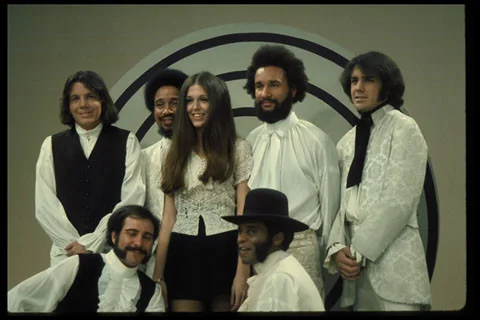
Sweetwater were the band actually booked to open Woodstock, a distinction that survived only until a police stop and the traffic jam intervened and Richie Havens went on in their place. They became the first full band to play the festival anyway: an eight-piece Los Angeles group built around the singer Nansi Nevins, with a lineup no rock band had any business using – cello, flute, congas, keyboards, and not one lead guitar. Flying in, a keyboardist asked the helicopter pilot what kind of crop he was looking at below. The pilot told him those were people.
They were early architects of a folk-jazz-rock fusion years before anyone had the term for it, and Woodstock should have launched them. It did the opposite, through no fault of the festival. On December 8, 1969, less than four months later, a drunk driver hit Nevins’s car on a California freeway at speed. She was twenty. She spent days in a coma, suffered a brain injury, and permanently lost the use of one vocal cord.
The band carried on, made two more albums with others on lead vocals, and broke up in 1971. Nevins recovered slowly across years of therapy and sang again eventually, in a voice that was no longer the one on the record. Sweetwater are remembered, when they are remembered at all, as the band that was booked to open the most famous concert in history and instead followed a folk singer who was never meant to precede them.
Bert Sommer
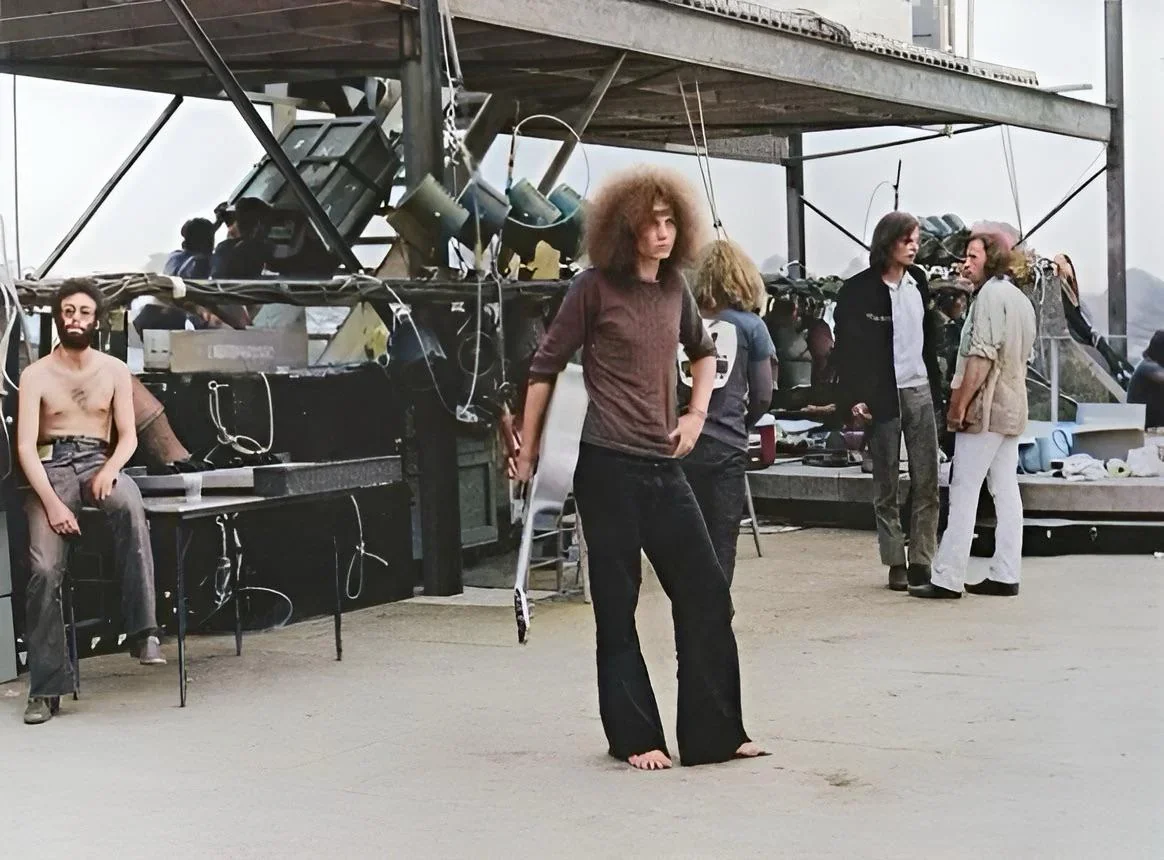
The first standing ovation of the entire weekend went to a twenty-year-old almost nobody remembers. Bert Sommer had just come off a run in the Broadway cast of Hair – that is his afro on the original show poster – when his producer, Woodstock co-organizer Artie Kornfeld, put him on the bill. He went on third on Friday evening with a guitar, a bassist, and Ira Stone, and played ten songs. His cover of Simon and Garfunkel’s “America” brought the crowd to its feet, and the announcer dubbed him “the rather magnificent Bert Sommer.”
Then the machinery of memory simply lost him. The 1970 documentary left him out. So did both soundtrack albums – reportedly because Sommer recorded for Capitol while the film and records were Warner Bros. products. When a memorial listing the performers was installed at the site, his name was not on it.
Sommer wrote a song about the festival, “We’re All Playing in the Same Band,” which scraped to number 48 in 1970 and stands as his only chart entry. He died of a respiratory illness in 1990, still bothered by the omission. Asked over the years about that famous ovation, he liked to wave it off by suggesting the crowd had only stood because they were on their way to the toilets. The full set finally surfaced in 2009, restored from the master tapes, forty years after the only people who heard it stood up.
Tim Hardin
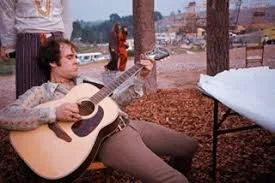
Tim Hardin lived in Woodstock, the town, which made him one of the very few performers with no possible excuse for arriving late. He wrote “If I Were a Carpenter,” a song so durable that Bobby Darin took it into the American top ten in 1966, Johnny Cash and June Carter charted with it, and the Four Tops, Bob Seger, and Robert Plant all recorded it later. His “Reason to Believe” became a hit for Rod Stewart. Other people made a great deal of money from Tim Hardin songs.
Hardin himself had exactly one charting single as a performer, and in a piece of symmetry almost too neat to be true, it was “Simple Song of Freedom” – a song written by Bobby Darin. He was a folk writer of rare gift and a famously unreliable stage act, hobbled by heroin and stage fright. Michael Lang had booked him hoping Woodstock would be the comeback that reintroduced him to the world.
It was not. Hardin took the stage on Friday night, opened solo with “How Can We Hang On to a Dream,” and spent the set unsteady on his feet, drifting, at one point bumping into the microphone. The crowd forgave him. He died of a heroin overdose in his Hollywood apartment in December 1980, at thirty-nine, remembered almost entirely through the records that other, steadier people made of his songs.
Ravi Shankar
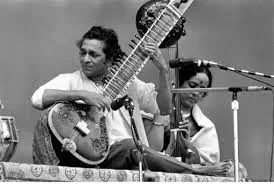
Playing the sitar to half a million rain-soaked strangers is not a recipe for serenity, and Ravi Shankar did not find any. He had played Monterey two years earlier and had become, through his pupil George Harrison, the most famous Indian musician on earth. He went on after midnight on Friday, played for roughly forty minutes through a worsening downpour, and cut the set short. He spent the rest of his life keeping a careful distance from the whole scene.
Shankar disliked the open drug use and felt the music had been incidental to the party. He compared the vast muddy crowd to the water buffalo back home in India, submerged in mud. Woodstock was the last festival of its kind he would ever play.
There is one final, very Shankar detail. Unhappy with how his set had sounded in the rain, he later re-recorded it in a studio for the 1970 live album At the Woodstock Festival, dubbing in stage announcements and crowd noise to disguise the substitution. The producer of the fortieth-anniversary box set, who had heard every master tape that survived, exposed the trick decades afterward. It remains one of the few Woodstock live recordings of which almost nothing was actually recorded at Woodstock.
Melanie
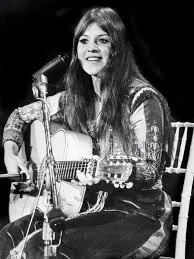
Candles had been handed out to the crowd earlier in the day, and as the rain fell on Friday night and a young folk singer played in the dark, the hillside began to flicker with thousands of small flames moving in time with the music. Melanie Safka was twenty-two and very nearly unknown. She was on the bill at all because the festival’s promoters happened to keep their offices in the same New York building she did, and she had asked.
She went on, by several accounts, only because the Incredible String Band refused to perform in the wet and the slot needed filling. She later said she suspected she was the only person on the property not on drugs. None of that is why anyone remembers the set.
The candles are. The image of that lit, rain-soaked field stayed with her, and she turned it into “Lay Down (Candles in the Rain),” recorded with the Edwin Hawkins Singers, which became a top-ten hit in the United States in 1970 and gave her the career Woodstock had only hinted at. She had arrived an unknown, asked to plug a gap left by a band that would not get wet. She left with the song that made her.
Arlo Guthrie
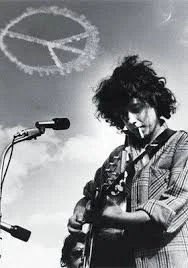
Arlo Guthrie is remembered at Woodstock chiefly for a single line – “the New York State Thruway is closed, man” – which gets quoted endlessly, is probably slightly garbled from whatever he actually said, and captures both the traffic situation and Arlo’s own condition with great economy. He was twenty-two, the son of Woody Guthrie, and by most accounts including the audience’s, comprehensively high.
He went on late on Friday night and played “Coming into Los Angeles,” a song fairly explicitly about smuggling, alongside “Walkin’ Down the Line” and “Amazing Grace,” wandering at one point into a rambling monologue that witnesses remember as having something to do with Moses. Two years earlier he had recorded “Alice’s Restaurant,” the eighteen-minute talking blues that made his name. He was, in other words, already famous mainly for talking.
The Thruway announcement was, for the record, broadly true: the roads into Bethel really had seized solid, and the state really had shut sections of the Thruway to cope. Arlo’s lasting contribution to Woodstock history is therefore a public-service traffic bulletin, delivered by a stoned folk singer to half a million people who were themselves the cause of the traffic and could do absolutely nothing about it.
Joan Baez
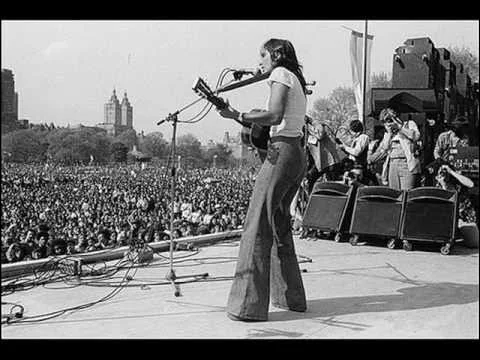
Six months pregnant, with her husband sitting in a federal prison cell, Joan Baez closed the first night of Woodstock at around three in the morning. She was the most established performer on the Friday bill by a wide margin – a folk star since the start of the decade and, at twenty-eight, already a veteran of the civil-rights and anti-war movements that the rest of the festival was busy discovering.
Her husband was David Harris, a draft-resistance organizer arrested that July for refusing induction, who would spend much of the next two years in prison. Baez spoke about him from the stage, told the crowd a story about the federal marshals who had taken him, and sang. She closed, as she so often did, with “We Shall Overcome,” a song she had by then made nearly her own.
She remembered the night fondly and without illusion. The big acts had their towering walls of equipment, she observed, and the organizers still let the small pregnant folk singer walk out alone with a guitar. It was an accurate snapshot of where folk music stood in August 1969. Baez sang to the largest audience of her life that night, and within a year the festival she had quietly closed belonged to the electric guitars that came after her.
Quill
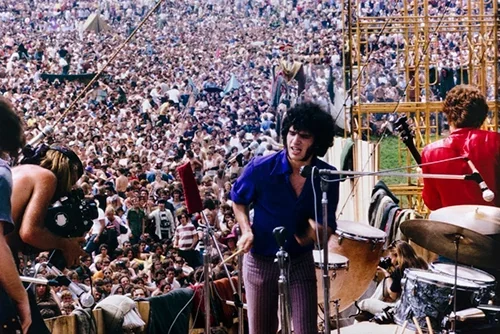
The deal to play Woodstock came with an unusual condition. To win over the locals – the festival was still planned for Wallkill at the time – Michael Lang had Quill, a Boston bar band, spend the week beforehand on a goodwill tour of nearby prisons, psychiatric hospitals, and halfway houses. They were one of only three acts at Woodstock without an album to their name; the others were Santana and Sha Na Na.
Quill opened the second day at 12:15 p.m., the first band up after the long, wet Friday night. They were five multi-instrumentalists who swapped guitars, horns, and keyboards mid-song, and their trademark trick was handing percussion instruments out to the audience so everyone could join in. This worked beautifully in clubs. Confronted with four hundred thousand people, the maracas and woodblocks vanished into the crowd to no obvious effect, and the four-song set landed politely and no better.
Then their luck turned cruel. A technical glitch left the audio and video of their set hopelessly out of sync, so Michael Wadleigh could not use a frame of them in the 1970 film. Without that exposure, Atlantic lost interest, their lone album went unpromoted, and Quill quietly dissolved by 1971. Drummer Roger North went on to invent a curved-shell drum kit. The band that did a prison tour to get to Woodstock was, in the end, the one Woodstock forgot to film.
Country Joe McDonald
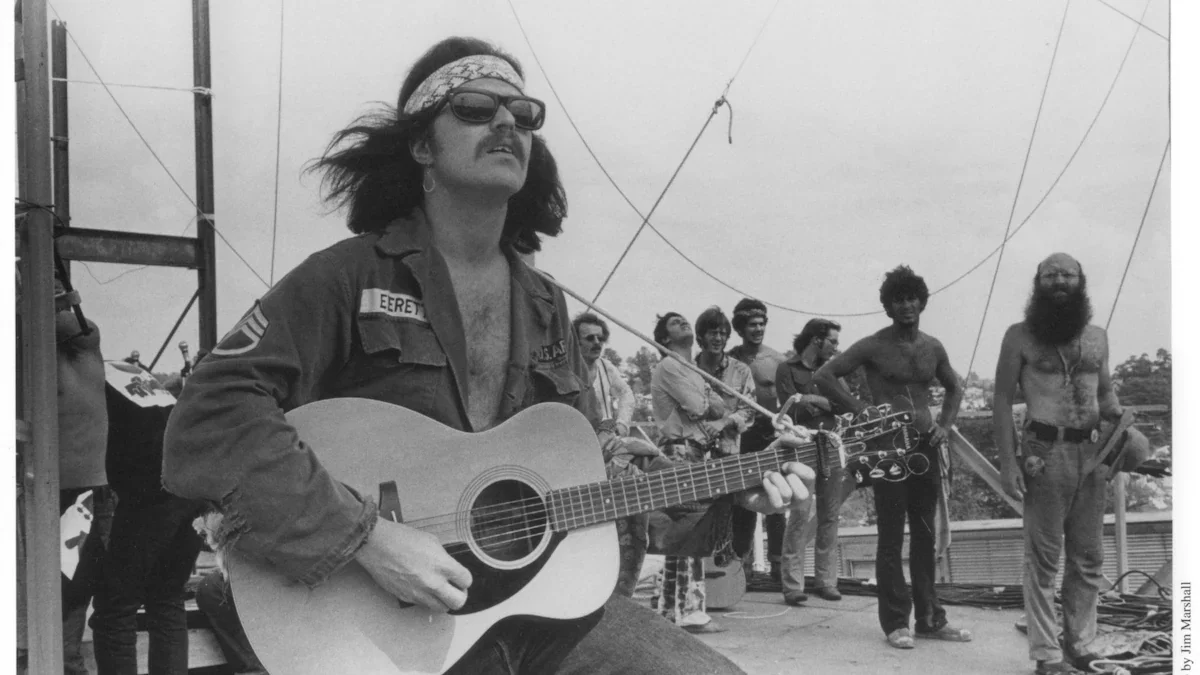
Country Joe McDonald’s Communist parents named him after Joseph Stalin – and the stage name Country Joe, pinned on him years later, happened to be one of Stalin’s wartime nicknames as well. By 1969 he fronted the Berkeley psychedelic band Country Joe and the Fish, and on Saturday afternoon he was sitting at the side of the stage, unscheduled, when the organizers asked him to fill time while Santana’s gear was set up. He had no guitar; one was found, and since it had no strap, somebody produced a length of rope.
He walked out in an army shirt with a name patch reading EVERETT and played nine songs to polite, distracted applause. Disheartened, he asked his road manager whether he should try the song planned for the full band the next day. The reply: nobody was listening anyway, so what did it matter. He launched into the call-and-response cheer – “Gimme an F” – and led four hundred thousand people in spelling out an obscenity, then into his anti-Vietnam anthem “I-Feel-Like-I’m-Fixin'-to-Die Rag.”
The crowd roared. When the film appeared the next year with the lyrics subtitled and a bouncing ball, McDonald had a solo career he had never planned. He came back on Sunday with the Fish for their scheduled set. The song that made him got him banned from civic auditoriums and never saw radio play; he carried it the rest of his life, which ended in March 2026, at eighty-four.
Santana
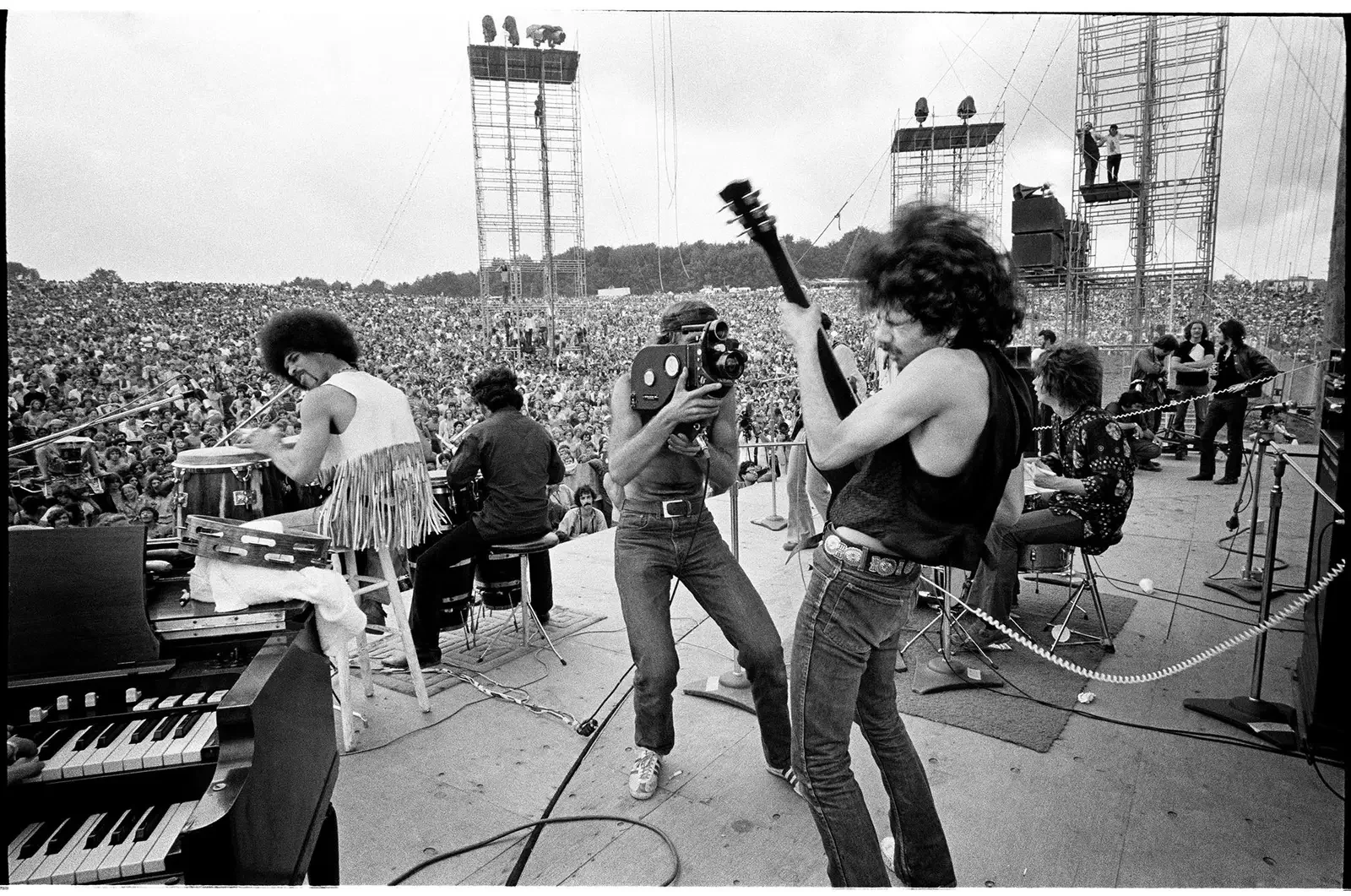
Expecting to play at two in the morning, Carlos Santana accepted a dose of mescaline from the Grateful Dead’s Jerry Garcia at around lunchtime on Saturday. Then he was told he was going on in an hour. He took the stage peaking, twenty-two years old, fronting a San Francisco band so new their first album had not yet come out. Their manager, the promoter Bill Graham, had muscled them onto the bill.
What followed should not have worked. Santana later said his guitar neck had turned into an electric snake that he had to hold down to stop it striking, and he played much of the set with his eyes shut, praying to stay in tune and on time. His drummer, Michael Shrieve, was twenty, one of the youngest musicians at Woodstock, and his solo on the closing instrumental “Soul Sacrifice” stopped the crowd cold.
The set was a sensation. The self-titled debut album appeared within days and rode the Woodstock momentum into the top ten, and Santana became one of the few careers the festival truly created on the spot rather than merely confirmed. A man convinced his instrument was a live snake had just delivered one of the defining performances of the weekend, which tells you something about either the snake or the man.
John Sebastian
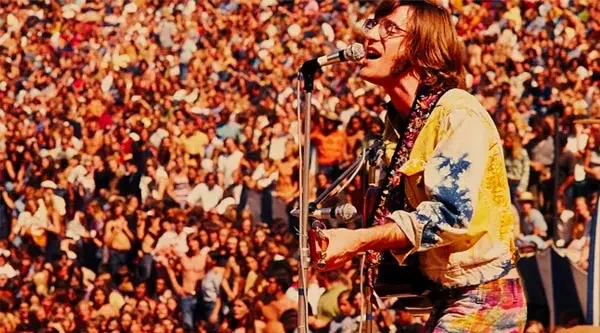
The most memorable unscheduled performance of the weekend came from a man who had turned up only to watch. John Sebastian, formerly of the Lovin’ Spoonful, had hitched a ride to Bethel on the helicopter ferrying the Incredible String Band and made himself useful around the site, at one point playing soft acoustic music with Rick Danko of the Band in the tent where people were recovering from bad acid.
After Santana’s set, the crew needed to sweep rainwater off the stage before they could safely set up amplifiers, and someone had to hold the crowd with an acoustic guitar in the meantime. Chip Monck pointed at Sebastian. He had not brought an instrument, so he borrowed one from his old Greenwich Village friend Tim Hardin and walked out in a denim jacket he had tie-dyed himself, pant legs rolled to the calf.
He played five songs, dedicated one to a baby reportedly born at the festival, and was, by his own cheerful admission, extremely high. The self-dyed denim jacket he wore that afternoon now hangs in the Rock and Roll Hall of Fame. At one point during the set he forgot the words to one of his own songs, and several hundred thousand people sang them back to him.
Keef Hartley Band
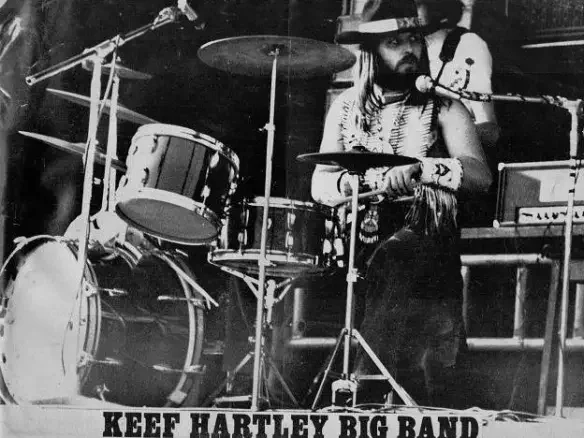
When Ringo Starr left Rory Storm and the Hurricanes to join the Beatles, the drummer hired to replace him was a young Lancastrian named Keef Hartley. He went on to play for John Mayall, and by 1969 he had a band of his own, which arrived at Woodstock for what was its first concert on American soil. The Keef Hartley Band were the first British act to play the festival.
They went on around 4:45 on Saturday afternoon, after Santana, and played a tight set built around a seventeen-minute blues medley; it is rumoured they borrowed some of Santana’s equipment to do it. The audience liked them well enough. Almost nobody else would ever get the chance to.
Their manager had demanded two thousand dollars in advance for the right to film and record the band, a fee the festival declined to pay, and so the cameras and tape machines simply left them alone. The result was total: the Keef Hartley Band appear nowhere in the 1970 film, nowhere on the soundtrack, and not even on the memorial marker later placed at the site. For half a century their Woodstock set existed only on a murky audience tape. A demand for two thousand dollars had cost them the one thing they came for.
The Incredible String Band
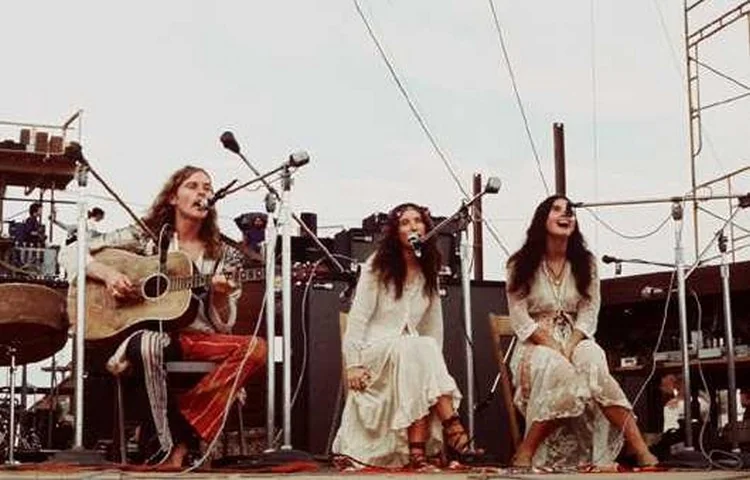
Plenty of acts played through the Friday rain – Ravi Shankar bent over a sitar in the downpour, Melanie alone with her guitar, Joan Baez closing the night soaked. The Incredible String Band would not. The Scottish quartet had been slotted into Friday’s folk lineup, but they refused to go on in the wet, so the stage manager bumped them to Saturday and gave their slot to Melanie.
It was a costly bit of caution. On Saturday the festival had turned electric, and the band found itself wedged between the Keef Hartley Band and Canned Heat, playing gentle, intricate psychedelic folk to a crowd that had come to hear loud blues. The lush, multi-layered sound of their records – they had four well-regarded albums behind them – thinned out badly with only four people on a vast stage. They opened with a spoken-word “Invocation” and played five songs nobody recognized. The applause was respectful and no more.
Their reward for staying dry was a graveyard Saturday slot and a polite, forgettable reception. It did not finish them – their late-sixties albums are now counted among the founding records of what later got called world music – but no band at Woodstock was more thoroughly punished for an act of good sense.
Canned Heat
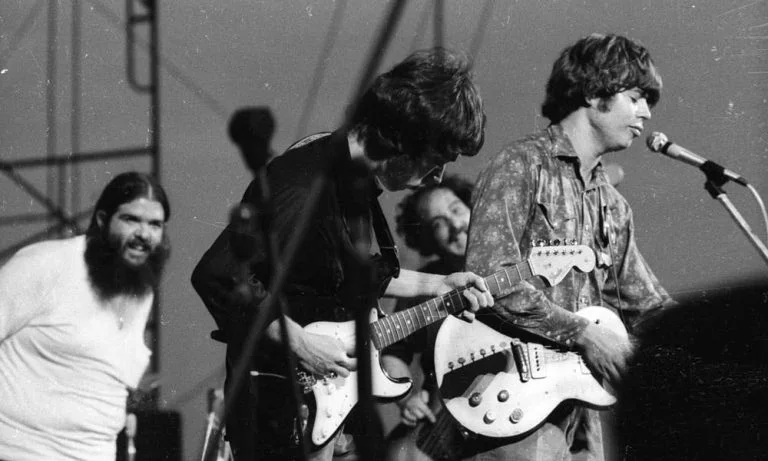
The name came from a 1928 blues record about a man so desperate he drank Sterno, the canned cooking fuel that poor people boiled down for its alcohol. Canned Heat suited it: the band were two obsessive blues collectors, Bob “the Bear” Hite, three hundred pounds of him, and Alan “Blind Owl” Wilson, so short-sighted behind his thick glasses that he could not recognize his own bandmates at two feet.
They went on as the sun set on Saturday and played their boogie-blues into the dark. Wilson sang their hit “Going Up the Country” in a high, reedy tenor, and the studio version went on to open the 1970 film and become the festival’s unofficial anthem – a song about a pilgrimage to the country that happened to describe exactly what half a million people had just done. Midway through a slower number, a fan wandered up onto the stage and asked the Bear for a cigarette. The Bear gave him one.
Wilson was the gentlest figure on the bill, an early environmentalist who preferred to sleep outdoors. Just over a year later, on September 3, 1970, he was found dead in a sleeping bag on the hillside behind Hite’s house, twenty-seven years old. He was the first of the Woodstock performers to die – two weeks ahead of Jimi Hendrix, four weeks ahead of Janis Joplin.
Mountain
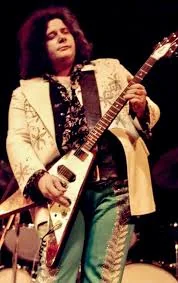
Mountain had played only about four concerts in their lives when they walked out in front of half a million people on Saturday night. The band had formed earlier that year around the enormous guitar tone of Leslie West and the bass and studio sense of Felix Pappalardi, who had produced Cream’s Disraeli Gears two years earlier. West had come up in a Long Island garage band called the Vagrants; the name Mountain was a nod to his size.
For a group barely out of the rehearsal room, they were remarkably assured. They debuted a brand-new song, untitled that night, that would be released as “For Yasgur’s Farm” in honour of the dairy farmer whose field they were standing in. They also played “Beside the Sea,” a number written by Bert Sommer – the same Bert Sommer who had drawn the festival’s first standing ovation two days earlier and then been forgotten.
And they played “Long Red.” The recording of that song from this era – West’s voice, a hard drum break – became one of the most sampled pieces of music in hip-hop, turning up decades later under JAY-Z’s “99 Problems” and Kanye West’s “Barry Bonds,” among hundreds of others. A band on roughly its fourth gig laid down a drum break that outlived nearly everything else played that weekend.
Grateful Dead
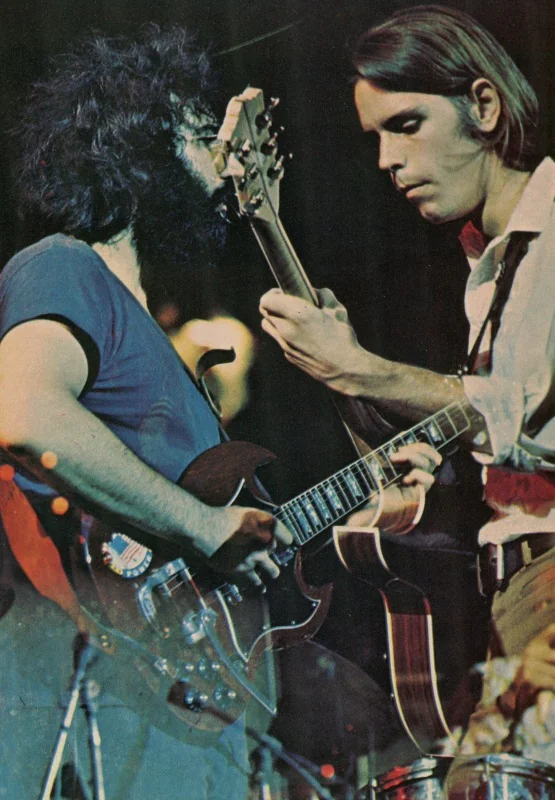
The moment Bob Weir touched his guitar and his microphone at the same time, a jolt of electricity big enough to knock him off his feet ran through him. This was not a metaphor. The Dead’s soundman was Owsley Stanley, the most prolific LSD chemist in America, and in the hours before the set he had decided the festival’s PA was inadequate and rewired the stage, removing the electrical ground in the process and leaving the whole rig live.
It went downhill from there. The band had taken a great deal of acid and seemed lost; the rotating stage had jammed under the weight of their equipment; Phil Lesh’s bass amp began picking up radio chatter from the helicopters overhead. They opened with “Saint Stephen,” ground through “Mama Tried,” and sank into a thirty-eight-minute “Turn On Your Lovelight,” during which a stranger wandered on stage to deliver a speech about a lake while the band played on around him.
Jerry Garcia summed it up later: “It was raining toads when we played.” The Grateful Dead, one of the finest live bands America ever produced and a group that prided itself on never playing the same show twice, regard their Woodstock set as the worst performance of their lives. From a band that played well over two thousand of them, that is a particular kind of achievement.
Creedence Clearwater Revival
The hottest band in America in the summer of 1969 is almost entirely missing from the Woodstock film, and the man responsible is its own front man. Creedence Clearwater Revival were the first act to sign on to the festival – John Fogerty has said that once they committed, the rest of the bill fell into place behind them – and they were riding three hit albums in a single year. Then they were booked to follow the Grateful Dead.
By the time the Dead finished their shambolic set, it was past midnight, and Creedence ran out to find most of the audience asleep in the mud. Fogerty described looking out at a field of naked, exhausted bodies piled together like a scene from Dante. They played anyway. After a few songs he stepped to the microphone, hoping for a sign that anyone was awake.
Stung by the dead-asleep reception, Fogerty later blocked the footage from the film and the soundtrack, and a band at the very height of its fame went all but unrecorded at the festival that defined it. He has never regretted the decision. What he does remember fondly is the one man, a quarter of a mile out in the dark, who flicked a lighter and called up that he was still with him – and for the rest of his big Woodstock set, John Fogerty played to that guy.
Janis Joplin
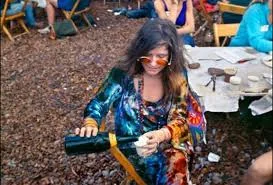
Most of Woodstock was high on marijuana or LSD. Janis Joplin spent her ten-hour wait backstage on heroin and bourbon. She had left Big Brother and the Holding Company and arrived with a new soul-and-horns outfit, the Kozmic Blues Band, eager to play – and then sat through hours of delay as contractually prioritized acts went on ahead of her, drinking and using to pass the time.
By the time she reached the stage, around two in the morning, she was, by several accounts, three sheets to the wind. Her voice came out hoarse and wheezy; she struggled to dance. The crowd had been expecting the raw rock of her Big Brother days, and instead got an unfamiliar band playing material from an album that had not yet been released. The set was ragged and full of effort, and she knew it was not her best. She was unhappy enough to keep it out of the 1970 film entirely.
She was a tremendous singer having a bad night, which is a sadder thing than a bad singer having one. In October 1970 she died of a heroin overdose in a Los Angeles hotel room, twenty-seven years old. The drug that had carried her through the long wait at Woodstock was the one that carried her off.
Sly and the Family Stone
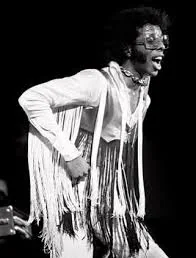
By half past three on Sunday morning, fifteen hours of music had worn the crowd down to a damp, flagging mass, and the stage had a fresh reputation for electrocuting the people who stood on it. Then Sly and the Family Stone came on and lifted the whole festival off the ground.
They were a band at their absolute peak, riding the album Stand!, and they were built differently from everyone else on the bill: the first major American group to put Black and white musicians, men and women, on the same stage. At the centre of the set, Sly Stone began a call-and-response on “I Want to Take You Higher,” coaxing a few hundred thousand exhausted people into chanting the word “higher” back at him in the dark until, as he put it, it felt like church.
It is remembered as the best performance of the weekend, and very likely the finest thing Sly Stone ever did, which is no faint praise. His years at the top proved short, and a long decline followed; he died in June 2025, at eighty-two. But for fifteen minutes at dawn he did something almost no one else has managed, which was to make half a million worn-out strangers feel, briefly, like a single thing.
The Who
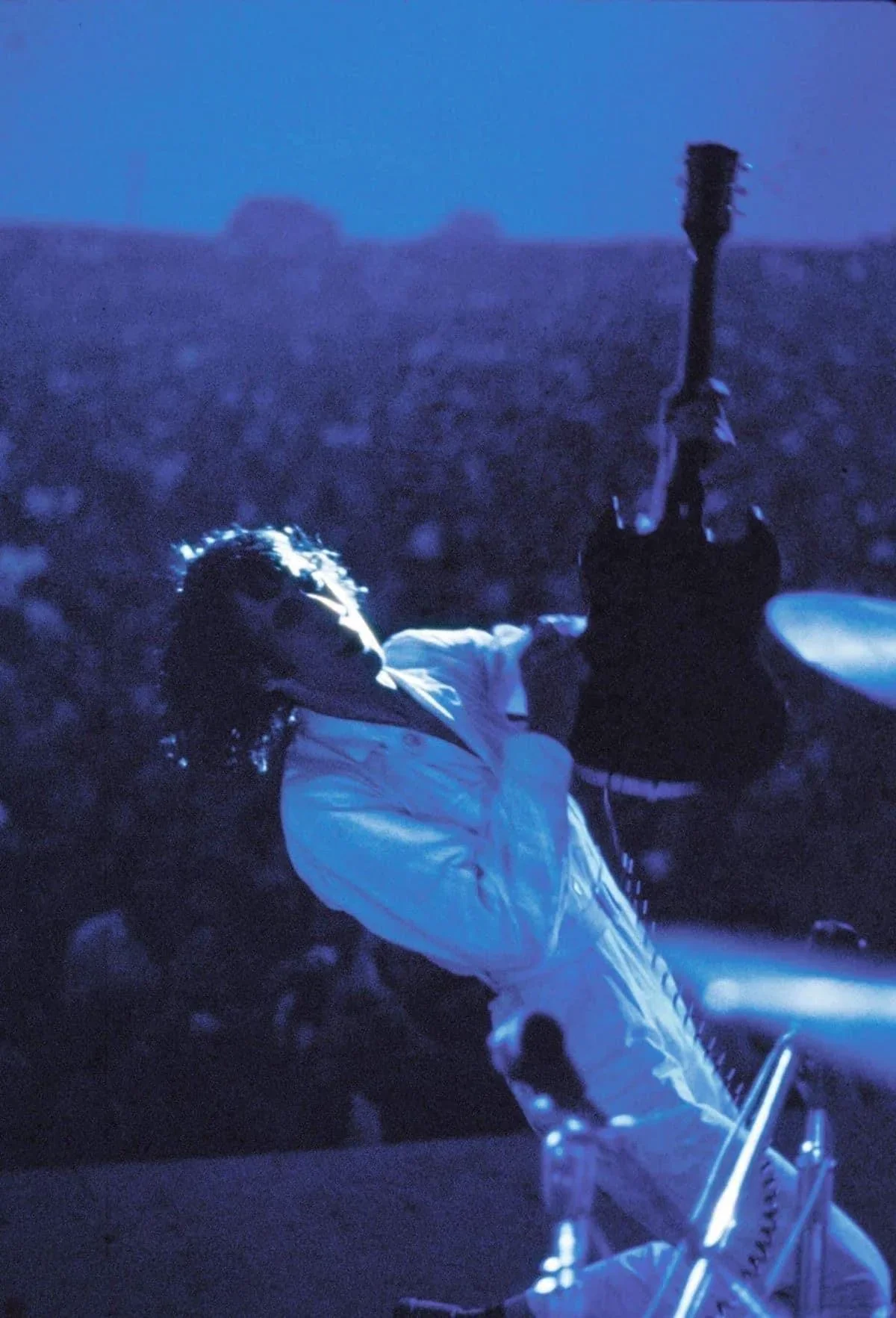
Halfway through Tommy, the activist Abbie Hoffman climbed onto the stage, seized a microphone to denounce the imprisonment of the radical John Sinclair on a marijuana charge, and Pete Townshend hit him with his guitar and sent him back into the pit. Townshend later said he regretted it, though not very much.
He was not in a forgiving mood that weekend. He had been spiked with acid, the mud appalled him, he was worried about his wife and baby at home, and he had spent hours waiting to go on. By the time the Who took the stage it was nearly dawn, and they played most of Tommy, their new rock opera, to a half-asleep field as the sky began to lighten. Roger Daltrey’s voice and Keith Moon’s drumming cut through the cold like a band with something to prove, which, in America, they had.
Then they reached “See Me, Feel Me.” The sun came up over the farm at almost exactly that moment, and Townshend stretched the closing refrain out to meet it, holding the band in the light. The footage of that sunrise, more than anything else, is what turned the Who from a respected British act into American superstars. Townshend, who hated nearly every other minute of Woodstock, never quite forgave it for that either.
Jefferson Airplane
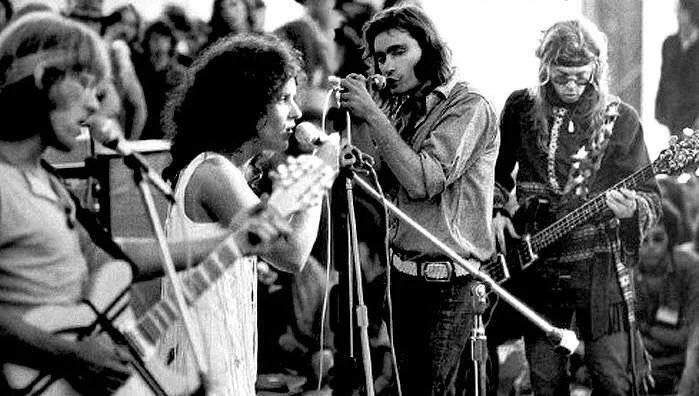
At eight o’clock on Sunday morning, with the field a cold swamp and the crowd wrecked, Grace Slick stepped up and promised everyone some “morning maniac music.” Jefferson Airplane were closing out a program that had begun at noon the day before and run, without ever really stopping, for close to twenty-two hours. They had been booked to headline Saturday night, the plum slot. The schedule had other ideas.
They were among the best-paid acts on the bill, taking home fifteen thousand dollars, second only to Hendrix. On piano sat Nicky Hopkins, the great session player who had been a member of the Jeff Beck Group – the band booked for Woodstock that Beck had broken up days before – and who had simply turned up with somebody else. The Airplane played two hours of “Somebody to Love,” “White Rabbit,” “Volunteers,” and songs from an album still months away, to a crowd too tired to fully take it in.
By that hour the film crew was as exhausted as everyone else, and the footage they shot of the Airplane came out too poor to use. So the band that closed the single biggest night in the festival’s history barely appears in the film of it. Somebody had to go on last, and somebody had to film it, and by dawn both jobs had simply worn out.
Joe Cocker
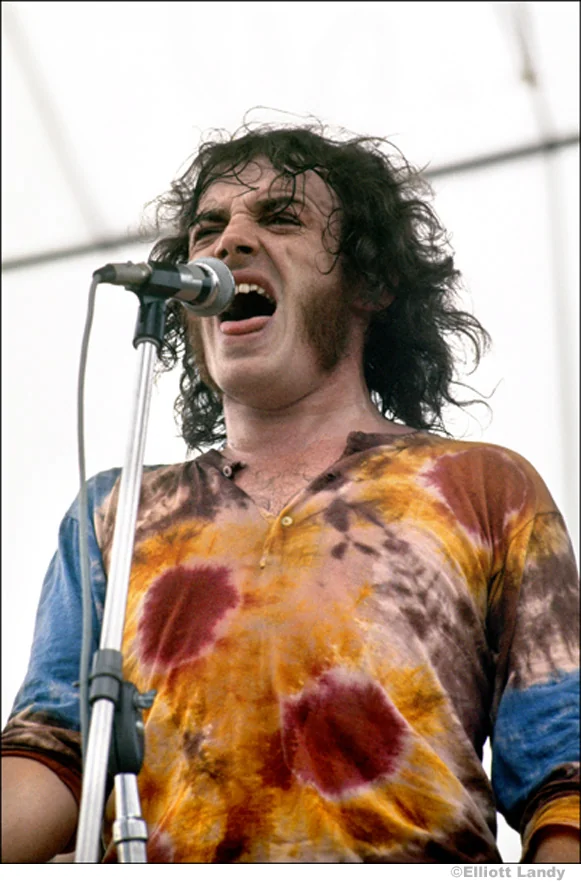
Joe Cocker’s day job, a few years before Woodstock, had been fitting gas pipes for the gas board in Sheffield. He sang in pubs at night in a voice that sounded like it had been dragged across gravel, and he had a gift that turned out to be worth more than any amount of original songwriting: he could take a famous song and make everyone forget the original.
He opened the third day of the festival on Sunday afternoon, backed by the Grease Band and still largely unknown to American audiences. He worked through a set of other people’s material – Dylan, Ray Charles, Traffic – and closed with the Beatles’ “With a Little Help from My Friends,” which he did not so much cover as dismantle and rebuild. Over eight heaving minutes he crooned, screamed, and flailed his arms like a man conducting a storm, and by the end the song belonged to him. It still does.
He never got his encore, though the crowd was roaring for one. Within minutes of his walking off, the western sky went black, the wind came up, and a thunderstorm broke over the field with such violence that the announcers cleared the towers and the whole festival shut down for hours. It was as though the weather had been waiting politely for him to finish.
Ten Years After
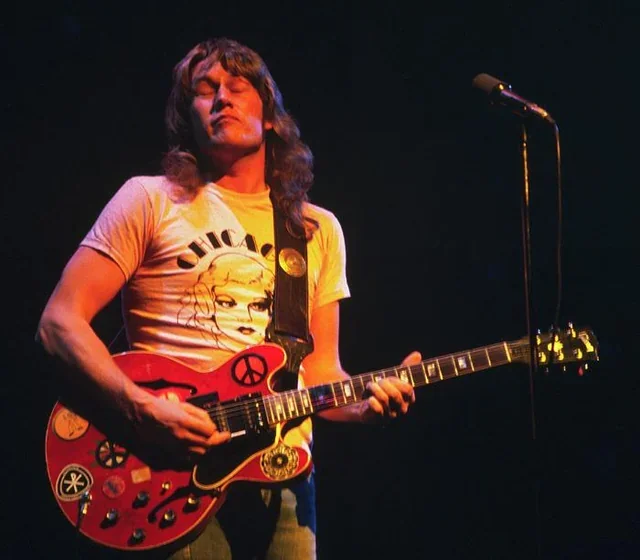
When the Woodstock film reached cinemas the following year, the guitar solo that made the whole audience sit up was not Jimi Hendrix’s. It belonged to a near-unknown Englishman named Alvin Lee, the frontman of a Midlands blues-rock band called Ten Years After, whose finger-blurring speed had earned him the nickname Captain Speedfingers.
They arrived at the festival a hard-working club act and left as international stars, on the strength of a single song. They closed their set with an eleven-minute version of “I’m Going Home,” a rock-and-roll showcase that let Lee fire off runs faster than almost any rock guitarist had played in 1969. The humidity kept breaking his strings, so the band had to stop and retune more than once, and the film crew managed to capture only that one closing number – which, as it turned out, was the only one they needed.
There is a strange footnote to the recording that made them famous. The sound on Ten Years After’s Woodstock tape was so poor that the drums were largely unusable – a microphone on Ric Lee’s kit had failed – and they had to be re-recorded afterward in a studio by a session drummer rather than by Lee himself. The percussion on the performance that launched the band was played by a man who had not been at Woodstock at all.
The Band
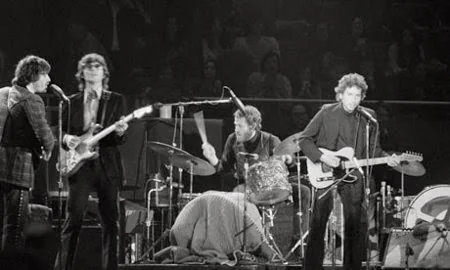
The festival called Woodstock was held in Bethel, in a hayfield roughly fifty miles from the actual town of Woodstock, New York. Only one act on the entire bill made its home in that town, and they were called, with some justice, the Band.
They had washed up there in the late sixties as Bob Dylan’s backing group, holed up in a pink house outside town and made Music from Big Pink, the strange and lovely record that was still their only album when they took the Woodstock stage around ten o’clock on Sunday night. They played a hushed, reverent set of what Robbie Robertson called mountain music, the five of them set up in a circle facing each other as though they were back in someone’s living room rather than in front of an exhausted, thinning crowd.
And they were not happy to be there. Robertson and drummer Levon Helm both later recalled disliking the whole affair, in part because they resented what a festival fifty miles away was about to do to the name and the quiet of the town they had made their home. Of everyone who played, the Band had the strongest claim to the word Woodstock and the least enthusiasm for what was being made of it.
Johnny Winter
In December 1968, a Rolling Stone writer described a then-unknown Texas guitarist as a hundred-and-thirty-pound cross-eyed albino with long white hair, playing – in the writer’s words – “the gutsiest blues guitar you have ever heard.” Within months a bidding war had broken out, and Columbia signed Johnny Winter for a reported six hundred thousand dollars, said to be the largest advance the label had ever paid.
So the man who walked on around midnight on the festival’s final night was no longer unknown, exactly, but he was still a curiosity. He played a little over an hour of ferocious Texas blues, then brought out his younger brother Edgar – also an albino, on keyboards and saxophone – for the back half of the set. By Winter’s own cheerful account, he barely registered the occasion: he had fallen asleep on a pile of garbage in a press trailer, woke up, wandered toward the stage to see what was happening, found that the scheduled act had not shown, and simply went on.
He does not appear in the 1970 film. His manager had passed on the movie deal, and besides, Winter said, the filmmakers told him his act was too strange to use. Too strange for Woodstock, a festival whose entire point was that nothing was.
Blood, Sweat & Tears
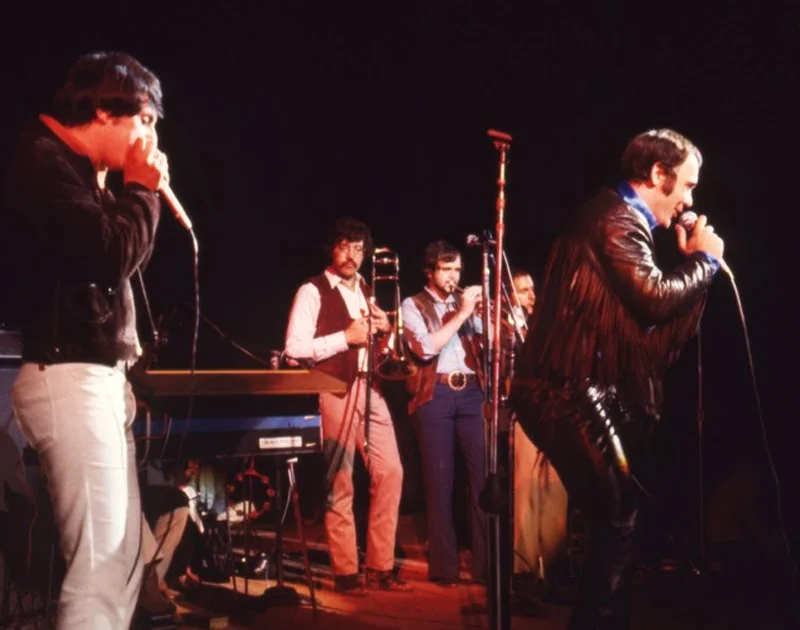
In 1969 the Grammy for Album of the Year went not to the Beatles’ Abbey Road, nor to Crosby, Stills & Nash, but to a brass-driven group from New York called Blood, Sweat & Tears. Their self-titled second album sat at number one for weeks, sold in the millions, and threw off three enormous hit singles. By the time they reached Woodstock they were, by the raw numbers, about the biggest band in America.
They went on at a quarter to two in the morning and played ten songs to a depleted, freezing crowd. You will not find them in the film: their manager had never cleared the cameras, which were reportedly ordered to stop rolling partway through the set. For a band at the dead centre of the pop mainstream, that absence would soon look like the least of their problems.
Within a year, Blood, Sweat & Tears became the first major rock band to tour behind the Iron Curtain, on a goodwill trip sponsored by the United States State Department – a deal cut, in part, to secure a visa for their Canadian singer. To a counterculture that had just crowned them at Woodstock, playing cultural ambassador for the Nixon government read as the purest treason, and the band never recovered its standing. They went from Woodstock to working for the Man in under twelve months.
Crosby, Stills, Nash & Young
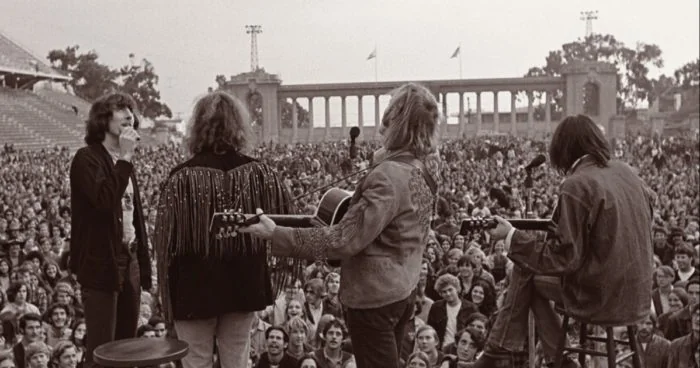
“We’re scared shitless,” Stephen Stills told the crowd after the first song. It was, he explained, only the second time the band had ever played in front of an audience. This was not stage fright of the ordinary kind. Crosby, Stills, Nash & Young had formed only that year out of the wreckage of the Byrds, the Hollies, and Buffalo Springfield, and their first-ever gig had been two nights earlier in Chicago.
What unnerved them was not the half-million people in the dark; it was the dozen or so in the wings. Hendrix and a crowd of their peers were standing just offstage, waiting to see whether four famous soloists could actually function as a band. So they played carefully, an acoustic set and then an electric one, around three in the morning, and pulled it off well enough to become, within a year, something close to the American Beatles.
One of them is barely visible in the film of it. Neil Young played the whole set but refused to let the cameras near him – he thought they had no business on a stage, and told the crew so in language that ended the discussion. The result is that Young can be heard all over the Woodstock movie and seen almost nowhere in it, which is roughly how he seems to have wanted things.
Paul Butterfield Blues Band
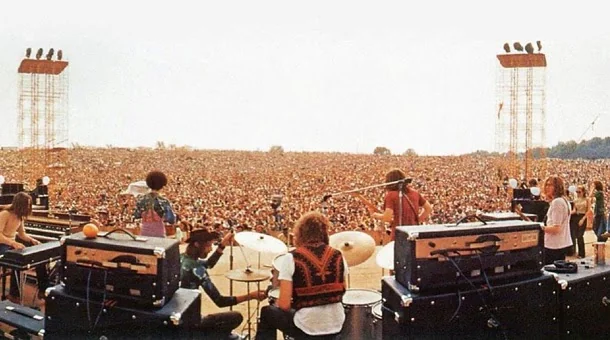
Paul Butterfield’s musical education was an unusual one. A white kid from Chicago’s North Side, he had talked his way into the Black blues clubs of the South Side as a teenager and ended up jamming with Muddy Waters and Howlin’ Wolf. The integrated band he went on to lead made two landmark electric-blues albums, the self-titled debut and East-West, in the mid-sixties.
By Woodstock the band had changed almost entirely – a horn section now, a soul-and-brass sound closer to Blood, Sweat & Tears than to the South Side. Among the saxophonists was a young David Sanborn, decades before he became a star in his own right. They went on around six in the morning on Monday, after Crosby, Stills, Nash & Young, and Butterfield opened with one of his own tunes, “Morning Sunrise,” as the actual sun came up over a field that was rapidly emptying.
It was a strange slot for one of the finest blues harmonica players who ever lived: dawn on the fourth day, the crowd drifting toward the highways and their Monday-morning jobs. He played beautifully to people who were mostly leaving. Of all the great musicians at Woodstock, Butterfield may be the one the festival’s legend has most completely forgotten was even there.
Sha Na Na
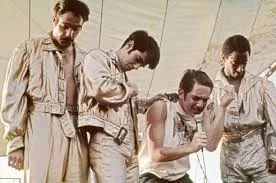
The second-to-last act at the defining festival of the counterculture was a 1950s nostalgia act in gold lamé. Sha Na Na were a dozen Columbia University students who had been together only a few months, performing tightly choreographed doo-wop in greased ducktails and rolled-up shirtsleeves – half tribute to fifties rock and roll, half send-up of it. They had taken their name from the nonsense syllables in the Silhouettes’ 1957 hit “Get a Job.”
How a campus oldies act came to play Woodstock at all is down to Jimi Hendrix. He had caught them at a small New York club that summer, liked them, and recommended them to the organizers; when he agreed to close the festival, he reportedly insisted that a few of the hangers-on, Sha Na Na among them, be given a slot. So at a quarter to eight on Monday morning, the guitarist Henry Gross, eighteen years old, led the band through half an hour of “At the Hop” and “Teen Angel” to the survivors.
That half hour, and “At the Hop” in particular, made the 1970 film. It turned a college lark into a career that ran for decades and included a hit television show. The single most out-of-place act on the entire bill became one of its most commercially durable, which is the sort of joke Woodstock kept playing on everyone.
Jimi Hendrix
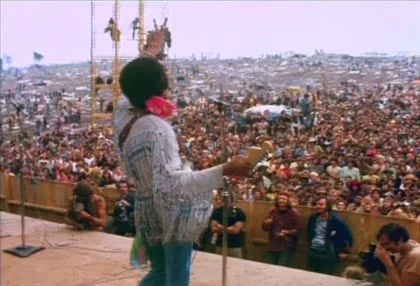
The most famous sound to come out of Woodstock was a white Fender Stratocaster imitating the noise of bombs, sirens, and screaming planes. It was Jimi Hendrix playing “The Star-Spangled Banner,” and far from a spontaneous outburst, he had been working the piece into his sets for about a year. When a bandmate suggested he try something newer, Hendrix said no, he was going to do the anthem.
He had insisted on closing the festival and was paid the largest fee of any act, around eighteen thousand dollars, to do it. But the schedule ran so late that the finale did not begin until nine o’clock on Monday morning, by which point the half-million had dwindled to perhaps thirty or forty thousand. The most celebrated performance in the festival’s history was played to a near-empty field of stragglers and rubbish.
Michael Lang had wanted the cowboy Roy Rogers to close the festival with “Happy Trails”; instead the country got its national anthem turned into the sound of a nation at war with itself. The expanded band Hendrix assembled for that morning, Gypsy Sun and Rainbows, dissolved within weeks. Within thirteen months Hendrix himself was dead in London, twenty-seven years old. The performance that almost nobody stayed to watch became the lasting image of the entire festival, which is the kind of thing that only ever looks inevitable afterward.
Frequently Asked Questions
Which act gave the best performance at Woodstock?
Sly and the Family Stone are widely regarded as the standout of the weekend. Around half past three on the Sunday morning they lifted a spent, mud-caked crowd off the ground, Sly turning “I Want to Take You Higher” into a call-and-response that had a few hundred thousand exhausted people chanting back in the dark.
Why is Creedence Clearwater Revival not in the Woodstock film?
John Fogerty kept them out of it. Booked to follow the Grateful Dead, whose set ran long and came apart on a rain-soaked stage, Creedence did not go on until past midnight and faced a field of people asleep in the mud. Stung, Fogerty blocked their footage from the 1970 movie and the soundtrack.
Was Jimi Hendrix’s “Star-Spangled Banner” at Woodstock improvised?
No. Hendrix had been folding the anthem into his live sets for about a year beforehand, and when a bandmate suggested he try something newer for Woodstock, he refused and played it anyway. The version that turned into sirens and dive-bombing planes was deliberate, not a spur-of-the-moment outburst.
Who was the first Woodstock performer to die?
Alan Wilson of Canned Heat, on September 3, 1970, at twenty-seven. An environmentalist who liked to sleep in the open air, he was found dead in his sleeping bag on a hillside behind bandmate Bob Hite’s Topanga home, two weeks before Jimi Hendrix and four before Janis Joplin.
Which acts became famous because of Woodstock?
Santana most of all. Carlos Santana was twenty-two and his band’s debut album had not yet been released when “Soul Sacrifice” won over the Saturday crowd; the album came out within days and shot into the American top ten. Ten Years After and Joe Cocker broke through on the strength of the 1970 film.
Which band was originally booked to open Woodstock?
Sweetwater, a Los Angeles band whose lineup ran to cello, flute and congas but no lead guitarist at all. A police stop and the highway gridlock left the group and its gear stranded, so Richie Havens – already on site by helicopter – opened the festival instead, and Sweetwater came second.
- Bethel Woods Center for the Arts: Jimi Hendrix – 50 Years of Peace & Music
- Bethel Woods Center for the Arts: Crosby, Stills, Nash & Young – 50 Years of Peace & Music
- The Official Jimi Hendrix Site: Encyclopedia, August 1969
- Rolling Stone: The Making of the ‘Woodstock’ Documentary
- Rolling Stone: Jimi Hendrix Breaks Down His ‘Star-Spangled Banner’ Woodstock Performance



I hope there will come a Woodstock festival like the first one.
LASZLO LHOTKA