Every Nuclear Power Source That Fell From Space
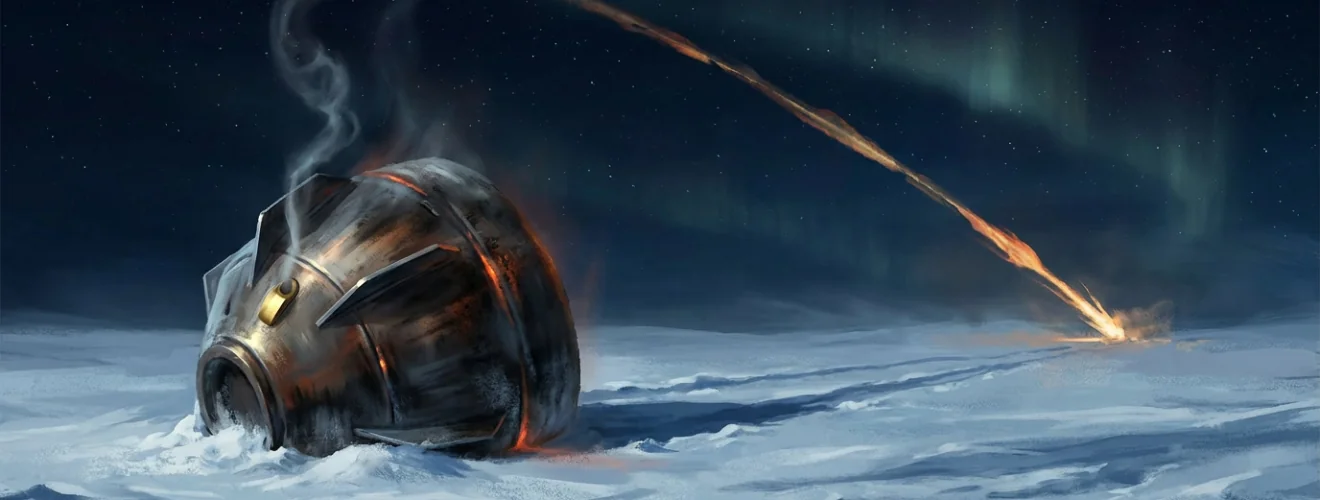
The first trace of a dead satellite’s plutonium showed up in balloon filters 33 kilometers over latitude 34 south, four months after the machine itself had come down unseen off southeastern Africa. Nobody witnessed the fall. The filters were not even looking for it – they were flying their usual sampling rounds, and the plutonium simply arrived.
Nuclear power in space has a better record than its press. Both Voyagers left Earth in 1977 with radioisotope generators aboard and are still returning data from beyond the planets, carrying the recordings on the Voyager Golden Record out toward whoever eventually finds them. The technology, in other words, works. This list is about the occasions when everything around it did not – rockets that failed, and machines that came home early with their fuel still aboard.
What follows is every reactor, generator, and radioisotope heater that has come back down to Earth, whether it burned up on the way in or reached the surface, recovered or not. Half were never recovered at all, which makes this a companion ledger to every nuclear weapon lost and never recovered. And the two entries that appear in nearly every other compilation of these accidents are missing here on purpose. They never carried anything nuclear in the first place – a decades-old copying error, taken apart in the FAQ.
Eight nuclear power sources have fallen back to Earth from space missions – three American and five Soviet or Russian, from the SNAP-9A burn-up of 1964 to Mars 96 in 1996. The set covers fission reactors, radioisotope generators, and radioisotope heater units, and counts launch failures as well as orbital reentries.
Transit 5BN-3
The Atomic Energy Commission knew where SNAP-9A would come down before it ever left the ground. A burnup trajectory analysis published in the open literature had already traced the arc, and when Transit 5BN-3 failed to reach orbit out of Vandenberg on 21 April 1964, safety engineer Dix could note that the agency had spotted in advance just where the generator would go down: the Mozambique Channel. It arced more than 1,000 miles high over the South Pole and reentered at a steep angle, precisely on script.
The script itself was the problem. SNAP-9A – part of the Systems for Nuclear Auxiliary Power program, flying so the Navy’s Polaris submarines could fix their position by satellite – was never meant to survive reentry. Under the burnup-dispersion philosophy of the early program, its 17 kilocuries of plutonium-238, roughly a kilogram of metal, were engineered to vaporize into fine particles if a mission failed. They did. The AEC’s own accounting later found the accident had nearly tripled the global plutonium-238 fallout recorded to that point, and that 85 percent of the Southern Hemisphere plutonium-238 fallout in its soil survey traced to this one device. Burnup was quietly retired in favor of intact reentry on every RTG that flew afterward.
5BN-3’s two predecessors had been announced in AEC press releases as the first and second satellites wholly powered by nuclear energy. The third got no headline – only a change in national reentry policy.
Nimbus B-1
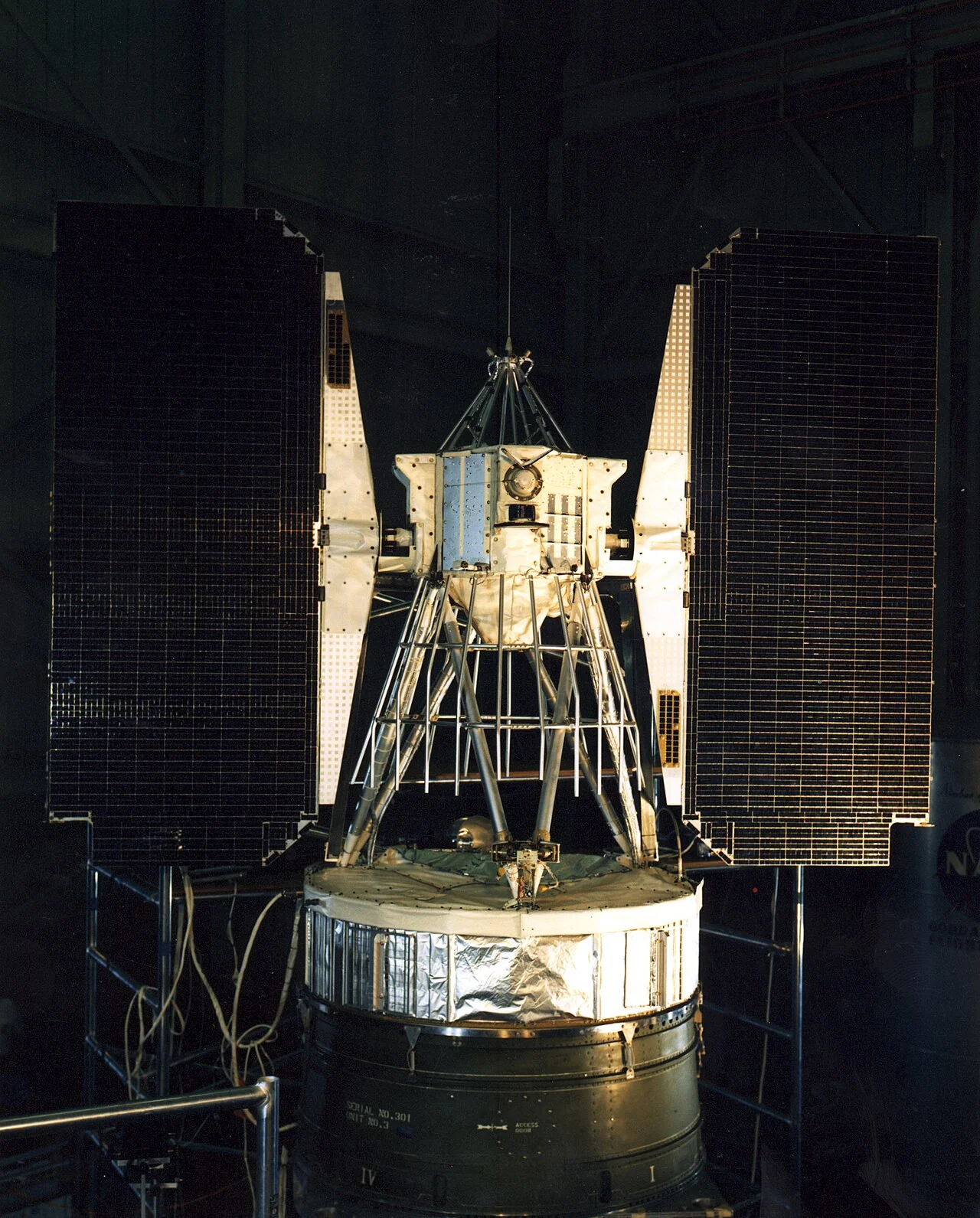
A dowel pin seated a fraction too deep put two plutonium generators on the floor of the Santa Barbara Channel. The pin marked the correct orientation of a guidance gyro; pushed through its mounting hole past its own length, it rotated the guidance signal 90 degrees without anyone noticing. Nimbus B-1 left Vandenberg on 18 May 1968, veered off course, and the range safety officer destroyed it about 120 seconds in, at roughly 100,000 feet. The weather satellite and its two SNAP-19B2 generators – 30 watts apiece, auxiliary power alongside the solar cells – never got anywhere near space.
The generators were built for a worse day than the one they got. After the SNAP-9A dispersal, the program had moved to capsules meant to hold their fuel through full reentry and impact; these two were spared the reentry, and the short fall from 100,000 feet never came close to testing them. They hit the water intact and settled into the channel a few miles north of San Miguel Island. A Sandia submersible already working nearby was diverted through the search coordinates and found them on 27 September 1968; recovery from about 300 feet of water took some two weeks, and the capsules came up exactly as drawn.
The fuel went back to Mound Laboratory, was refurbished, and flew again aboard Nimbus III in April 1969, NASA’s first successful RTG mission – powered by plutonium that had already been to 100,000 feet and the bottom of the sea.
Luna E-8 No.201
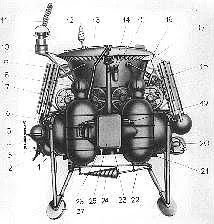
Fifty-one seconds into the flight, the brand-new payload shroud tore away under maximum aerodynamic pressure. Debris punctured the Proton rocket’s oxidizer tanks, the first stage exploded three seconds later, and pieces of the Soviet Union’s first Moon rover rained down about fifteen kilometers from the pad at Baikonur. It was 19 February 1969, the final lap of the Moon race, and the 756-kilogram machine – built to be driven from Earth by a team at television consoles – had been meant to scout a landing site and stand as a radar beacon for the cosmonaut who was supposed to follow it down.
Somewhere in the wreckage was the part that mattered: eleven kilograms of polonium-210, rated at up to 660 watts of heat, installed to keep the rover warm through the lunar night. Searchers combed the debris field intensively. They never found it. What NASA’s program histories record next, strictly as an unconfirmed rumor, is that soldiers at the Tyura-Tam complex located the missing package that bitter winter and used it to heat their barracks.
The design itself was fine. In November 1970 the second attempt reached the Sea of Rains as Lunokhod 1, the same polonium heater design warming it through every lunar night. The rover became a Soviet triumph. The rumor stayed a rumor; the polonium stayed lost.
Apollo 13
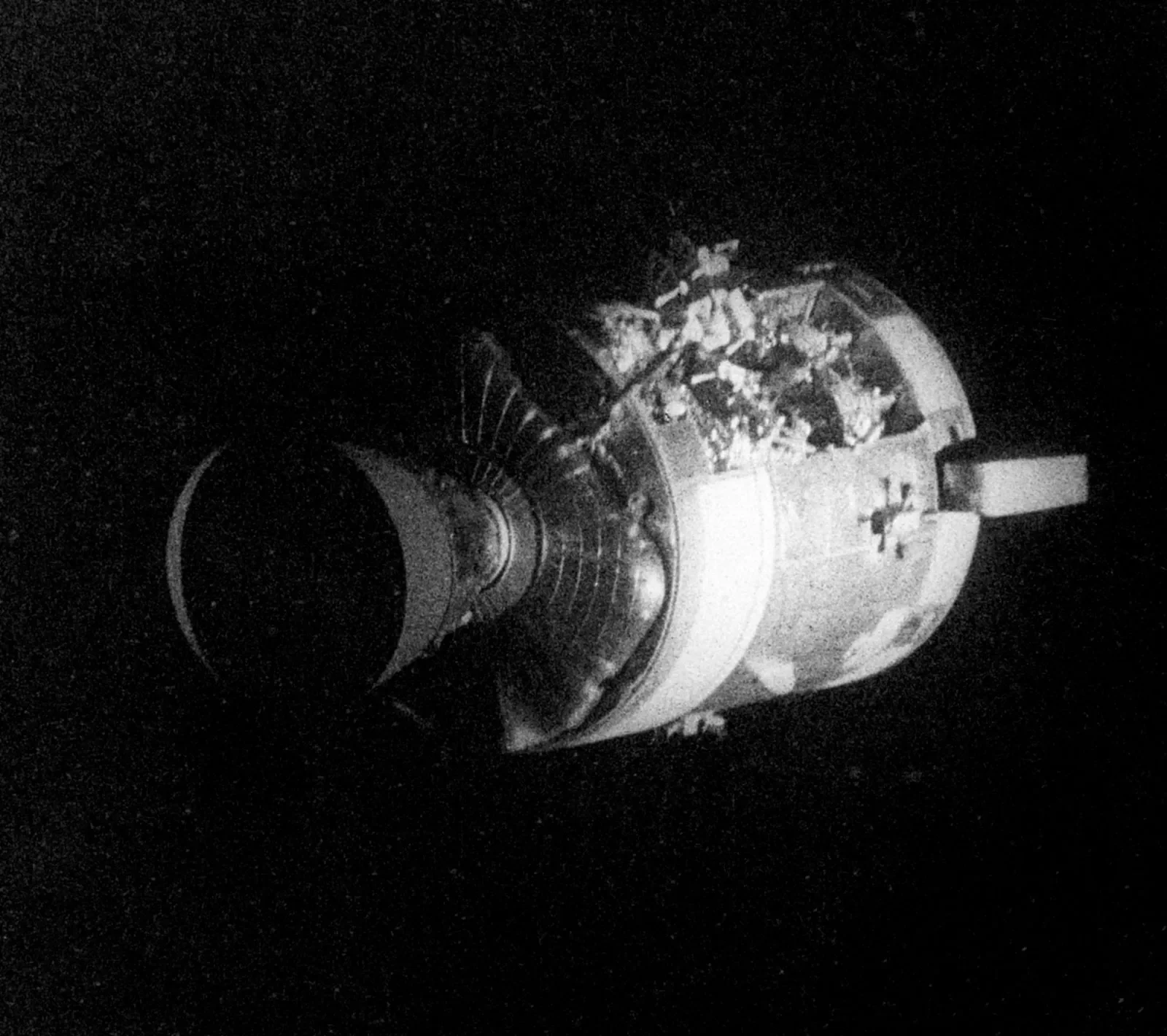
The lifeboat was carrying plutonium. When an oxygen tank explosion forced Apollo 13’s crew into the lunar module Aquarius in April 1970, the cask bolted to the lander’s side – graphite, built to a weight budget of 7 to 12 pounds – held 3,735 grams of plutonium-238 dioxide microspheres, some 44,500 curies of them, per the AEC’s own Mound Laboratory fuel report. The AEC had, in a sense, seen this coming: reviewing the SNAP-27 generator in 1968, an AEC-NASA safety panel had flagged that an aborted mission could bring a lunar module back into the atmosphere, and recommended the fuel ride in a cask built to survive reentry rather than burn up.
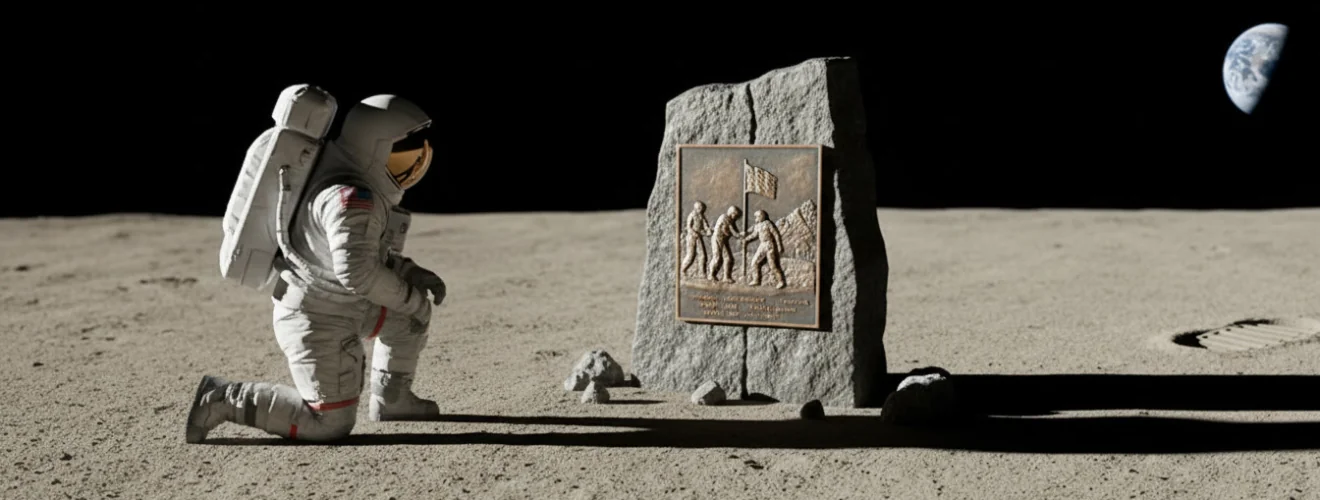
The generator was supposed to power a science station on the lunar surface. Its sibling units did exactly that, carried out and plugged in by the men who walked on the Moon across five other landings, every one exceeding its power and lifetime requirements. This one was jettisoned with Aquarius on 17 April 1970, survived the fireball as designed, and sank near the Tonga Trench, in water UNSCEAR’s accident registry puts at not less than 6,000 meters.
AEC air sampling over the impact area found nothing above the background already in the atmosphere. No recovery attempt appears anywhere in the record, and with plutonium-238’s half-life running 87.4 years, the cask will be warming the floor of the trench for centuries yet.
The 1973 RORSAT Launch Failure
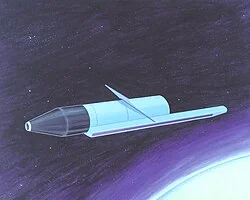
The Soviet Union never gave this satellite a name. It has no Kosmos number – Gunter’s catalog carries it only as a bracketed placeholder – and in the records it exists as 1973-F01, the F standing for failure. What is known: a Tsyklon-2 booster failed at Baikonur’s Site 90/19 on 25 April 1973, and the fifth satellite of the US-A ocean-surveillance program went into the Pacific carrying a genuine BES-5 nuclear reactor, inactive, its uranium unburned.
The US-A series needed reactors for an unglamorous reason. Its radar had to watch NATO ships from an orbit low enough for a useful return signal, where atmospheric drag would have shredded large solar arrays, and the BES-5 obliged with roughly 100 kilowatts of heat converted into some 3 kilowatts of electricity. American sniffer aircraft flew over the Pacific afterward, hunting radioisotope traces to learn what they could. Whether they detected anything has never been credibly established.
That December, Kosmos 626 flew the program’s first fully successful mission, with the British satellite tracker Geoff Perry puzzling over the mysterious series in his diary even as a CIA intelligence estimate correctly pegged it as ocean surveillance. The 1973 reactor, meanwhile, sits wherever it landed. After the single American overflight, the public record goes quiet and stays that way.
Kosmos 954
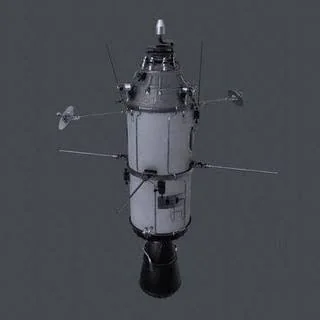
Six men wintering at Warden’s Grove on the Thelon River found the biggest piece. It was a spidery assembly of metal rods the recovery teams nicknamed the antlers, sitting in a small crater of melted snow – the work not of impact but of hot lithium hydride quietly reacting with the ice. The antlers had arrived courtesy of Kosmos 954, a Soviet radar ocean-surveillance satellite whose reactor failed to eject to a safe disposal orbit and instead came down across Canada’s Northwest Territories on 24 January 1978.
What followed was Operation Morning Light, a joint Canadian-American effort that searched roughly 124,000 square kilometers of subarctic Canada from reentry through the following October, in temperatures of minus forty and worse – cold enough that helicopter engines sometimes refused to restart. Among the recovered debris, by the Atomic Energy Control Board’s tally: four steel plates, 41 beryllium rods, six beryllium cylinders, a non-radioactive tube nicknamed the stovepipe, the antlers, and some 4,000 radioactive particles besides. The hottest fragment read 500 roentgen per hour near contact, a level the AECB described, with regulatory calm, as a potential hazard to life. By Health Canada’s arithmetic, everything collected came to about 0.1 percent of the power source.
Canada billed the Soviet Union $6,041,174.70, itemized down to the last seventy cents. Moscow settled in April 1981 for a flat 3 million, without ever formally acknowledging liability.
Kosmos 1402
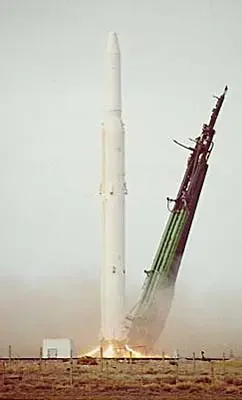
Western scientists worked out the odds like bookmakers: 70 percent the debris hit open sea, 15 percent the Soviet Union, 3 percent Canada, 2 percent the United States. For most of January 1983 the world simply waited. Kosmos 1402’s reactor had failed to boost itself into a disposal orbit at the turn of the year, the satellite had broken into three tumbling pieces, and emergency teams from Ottawa to Oman stood on alert while the Pentagon and Moscow published dueling reentry windows. Tass, for its part, dismissed the coverage as “a stream of impudent lies and slander.”
The fall came in installments. The main bus dropped into the Indian Ocean south of Diego Garcia on 23 January 1983. The reactor core – redesigned after Kosmos 954 precisely so it would shred into particles at altitude rather than reach the ground – held on alone for another two weeks, then came down over the South Atlantic near Ascension Island on 7 February, where it is believed to have burned up completely, exactly as the redesign intended.
Which is where scientists went looking for it. Balloon flights sampling the stratosphere later measured 44 kilograms of the core’s uranium-235, give or take 15, spread through the layer – the sky itself serving as the accident report. And in the months after the fall, strontium-89 from the core turned up in rain samples in Fayetteville, Arkansas, an ocean and a hemisphere away from where it burned.
Mars 96
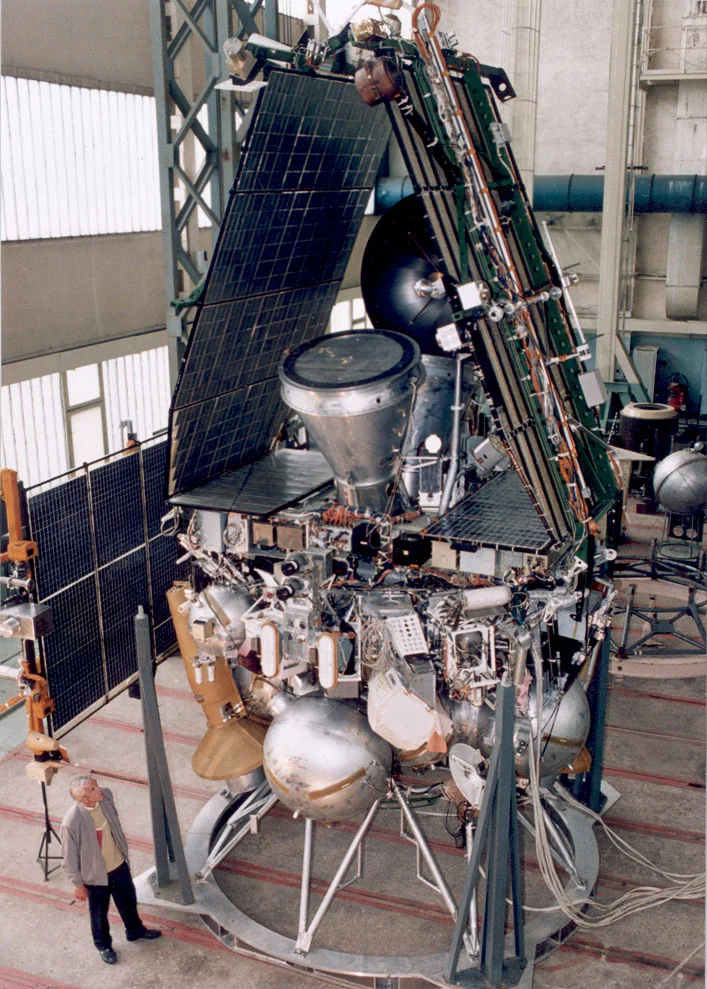
In November 1996 the President of the United States telephoned the Prime Minister of Australia to warn him that a Russian spacecraft carrying plutonium might be about to land on his country. John Howard convened his National Security Council and stood up a defense hotline for public sightings. Then the tracking was revised, and revised again – Indian Ocean, north-central Australia, the Timor Sea – and Australia went back to bed. The debris was headed for the other side of the Pacific.
Mars 96 had been Russia’s great post-Soviet hope: the heaviest interplanetary spacecraft yet launched, an orbiter carrying two landing stations and two ground-penetrators, and, distributed among the landers, about 200 grams of plutonium-238 in canisters the size of film cartridges. The fourth-stage burn that should have sent it to Mars after the 16 November launch never came off properly; telemetry dropped out at the critical moment, beyond the reach of Russian ground stations, and the review board could never settle where the fault actually lay. The probe assembly, nuclear cargo aboard, came down early on 17 November.
Where the plutonium landed is still, formally, a dispute. The White House said the Pacific near Easter Island. Chile filed a diplomatic note twelve days later saying its own territory, near Iquique. In March 1997, US Space Command conceded in writing that a land impact was reasonable after all, somewhere toward the Chile-Bolivia border. No search was ever mounted. Nobody has ever gone looking.
Frequently Asked Questions
Why aren’t Cassini and Galileo on this list?
Because their generators never came back to Earth. Galileo was deliberately deorbited into Jupiter’s atmosphere in 2003, and Cassini was flown into Saturn’s on 15 September 2017, its finale aimed partly so it could never contaminate the moons Enceladus or Titan. They fell, but onto other planets, and by appointment.
Did Kosmos 300 and Kosmos 305 scatter polonium over Earth in 1969?
No. Both were battery-powered Ye-8-5 lunar sample-return craft, and their reentries carried nothing nuclear. The whole polonium claim traces to a single hedged 1989 sentence by Gary Bennett guessing the payloads “may have been a Lunokhod” – and even the NRC review still repeating it flags its own row as speculative.
Was there a nuclear reactor on the January 1969 Soviet launch failure?
Almost certainly not a fueled one. The KB Arsenal design bureau’s own account and Astronautix both describe the payload as an unfueled mass model, and the specialist RORSAT chronologies omit the flight from their reactor lists entirely. The first live BES-5 reactor flew on Kosmos 367, launched 3 October 1970.
Has a falling space reactor ever been saved at the last moment?
Yes – Kosmos 1900, in 1988. After the satellite lost stabilization and its primary ejection system failed, an automatic backup fired on 30 September 1988 and boosted the reactor core to an orbit about 80 kilometers short of its intended disposal altitude. A miss, but a survivable one.
Is SNAP-10A still in orbit?
Yes. The only fission reactor the United States has ever orbited launched on 3 April 1965, ran for 43 days, peaked at 590 watts, and was silenced by a voltage-regulator fault unrelated to the reactor itself. It has been shedding traceable debris since 1979, and the NRC projects reentry in roughly 3,800 years.
How much uranium did Kosmos 954 actually carry?
Nobody’s numbers agree. Canada’s Atomic Energy Control Board worked backward from the recovered fission products and calculated at least 18 to 20 kilograms of highly enriched uranium; a US Department of Energy summary of the same operation said on the order of 50. The figures have never been reconciled.
What radioactive material fell with Fobos-Grunt in 2012?
Only a trace. Russia’s stranded Phobos probe reentered over the Pacific on 15 January 2012 carrying a small cobalt-57 calibration source inside its Mossbauer spectrometer – an instrument’s reference sample, not a power source, which is why it sits outside this list’s definition rather than on the roster.
Did all eight of these actually reach space?
No. The AEC’s own history says the Nimbus B-1 generators “had not left the Earth’s atmosphere”, and the February 1969 Proton failure came apart less than a minute after liftoff. Both count here because the scope follows the nuclear material, and theirs came back down all the same.