Every President Born on Louisiana Purchase Land
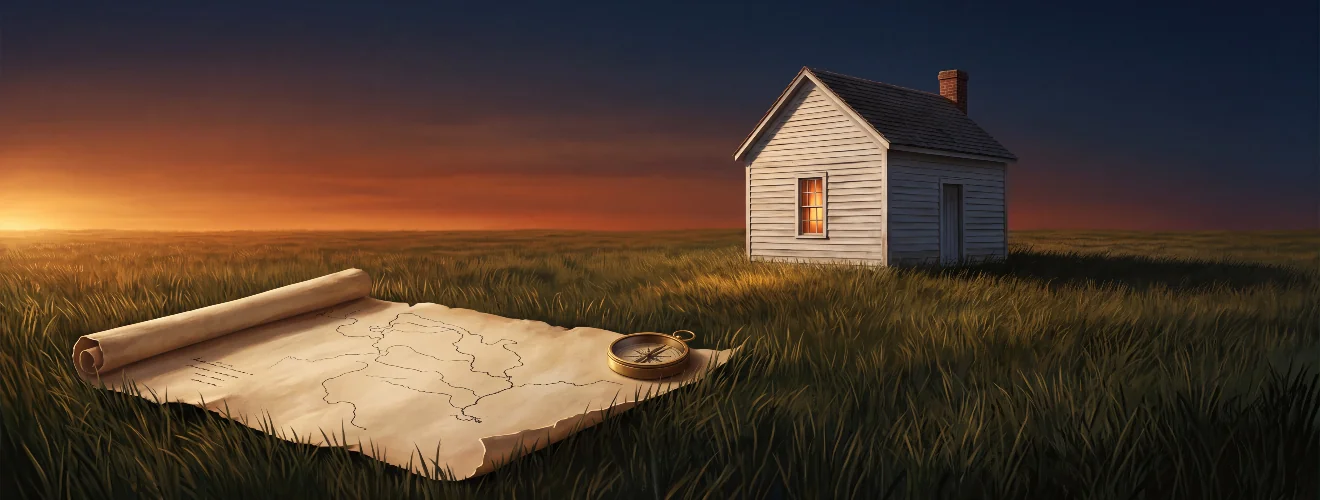
In the spring of 1803 the United States agreed to pay France $15 million for 828,000 square miles of North America, and nobody who signed the paperwork could say where the land stopped. The treaty, signed in Paris on April 30, 1803, described the goods only as Louisiana “with the Same extent that it now has in the hand of Spain, & that it had when France possessed it,” which is the diplomatic way of saying that France was not sure either. The State Department’s own historians put the haul at 530,000,000 acres. Which acres took the better part of two decades to settle.
Thomas Jefferson decided early in 1804 that his purchase ran all the way to the Rio Grande, which would have swept in most of what is now Texas. Spain, which owned Texas, declined to see it that way, and the argument sat unresolved until February 22, 1819, when the two countries signed a treaty running the line up the Sabine River, along the Red River and north to the Arkansas. Everything south and west of it stayed Spanish. Texas eventually reached the Union in 1845 by a different door entirely, as one of the states that were once independent countries, and that is why Dwight Eisenhower and Lyndon Johnson are missing from this list: both were born in Texas, on the far side of a line drawn while their birthplaces still belonged to Madrid.
Screen the birthplace of every U.S. president against that settled line and the result is short. Only eight presidents have been born west of the Mississippi at all, the two Texans and two Pacific births among them, and the ones who remain arrived in a cottage, a second cottage, a house with fifteen rooms and a hospital, in that order. What follows is each of them, with what the official sites say about the buildings and the odd details they tend to leave off the plaque.
Four presidents were born on Louisiana Purchase land: Herbert Hoover in West Branch, Iowa; Harry Truman in Lamar, Missouri; Gerald Ford in Omaha, Nebraska; and Bill Clinton in Hope, Arkansas. The count takes the Purchase as the 1819 treaty with Spain settled it, which leaves the two Texas-born presidents, Dwight Eisenhower and Lyndon Johnson, outside the line.
Herbert Hoover
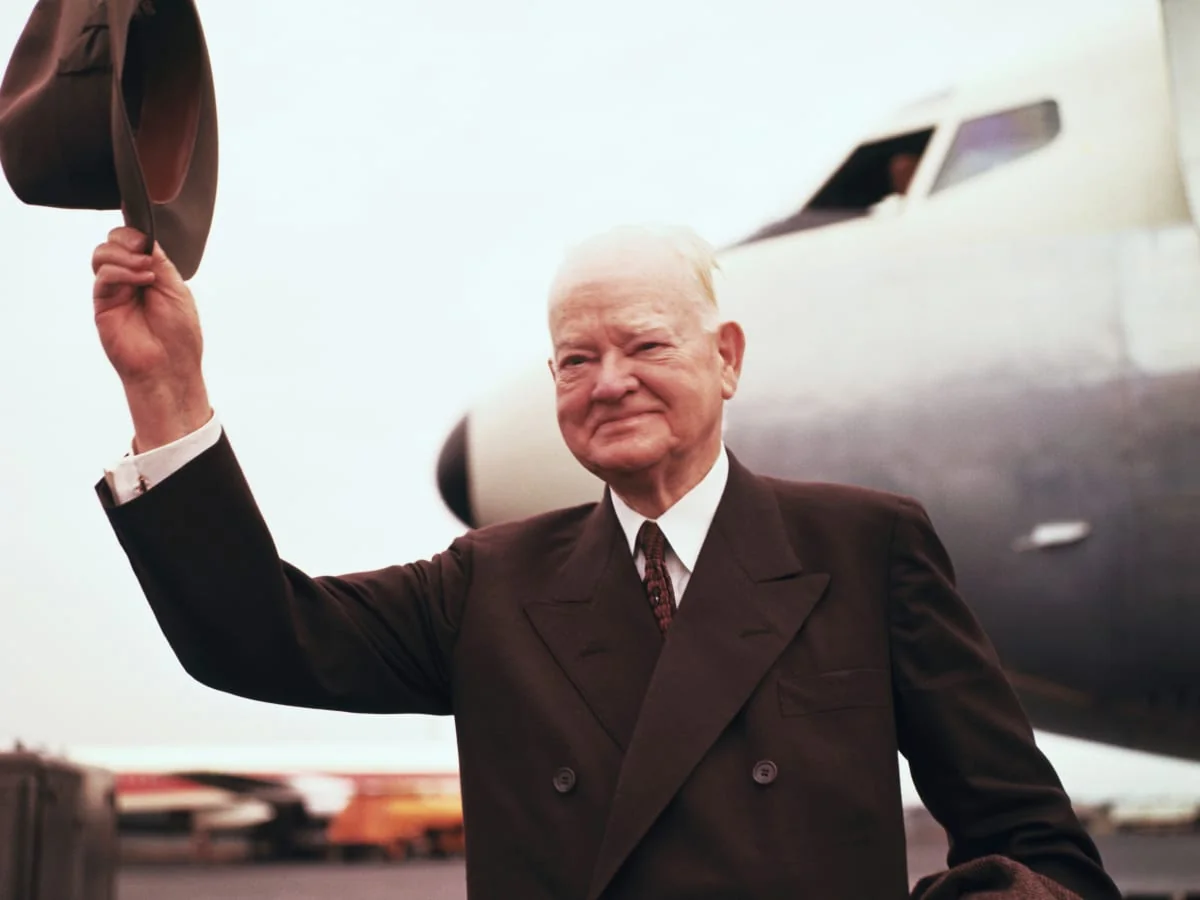
Herbert Hoover was born in a cottage with two rooms, or three, depending on whether you take the word of the National Park Service, which runs the place, or of Hoover, who was born in it. The Park Service counts two. Hoover’s memoirs call it a one-story, three-room cottage. It went up around 1871 in West Branch, Iowa, a Quaker settlement where his father Jesse worked as a blacksmith and his mother Hulda was a recorded minister in the Society of Friends. Hoover put it plainly himself: “mine was a Quaker family.”
The family did not last long in it. Jesse died in December 1880, Hulda in February 1884, and in November 1885 the orphan, then eleven, was sent to Oregon to live with an uncle, Dr. Henry John Minthorn. He did not come back to live. The cottage passed through other hands and spent decades hidden behind a two-story addition until the Hoovers got it back in 1935, and the restoration that began in 1938 stripped the addition away and, by the Park Service’s account, turned the building ninety degrees so that its door faced Downey Street again.
Hoover called the finished result “physical proof of the unbounded opportunity of American life,” which is the sort of thing a president says about a house with two rooms, or three. He is buried within sight of it, beside Lou, who died in 1944.
Harry S. Truman
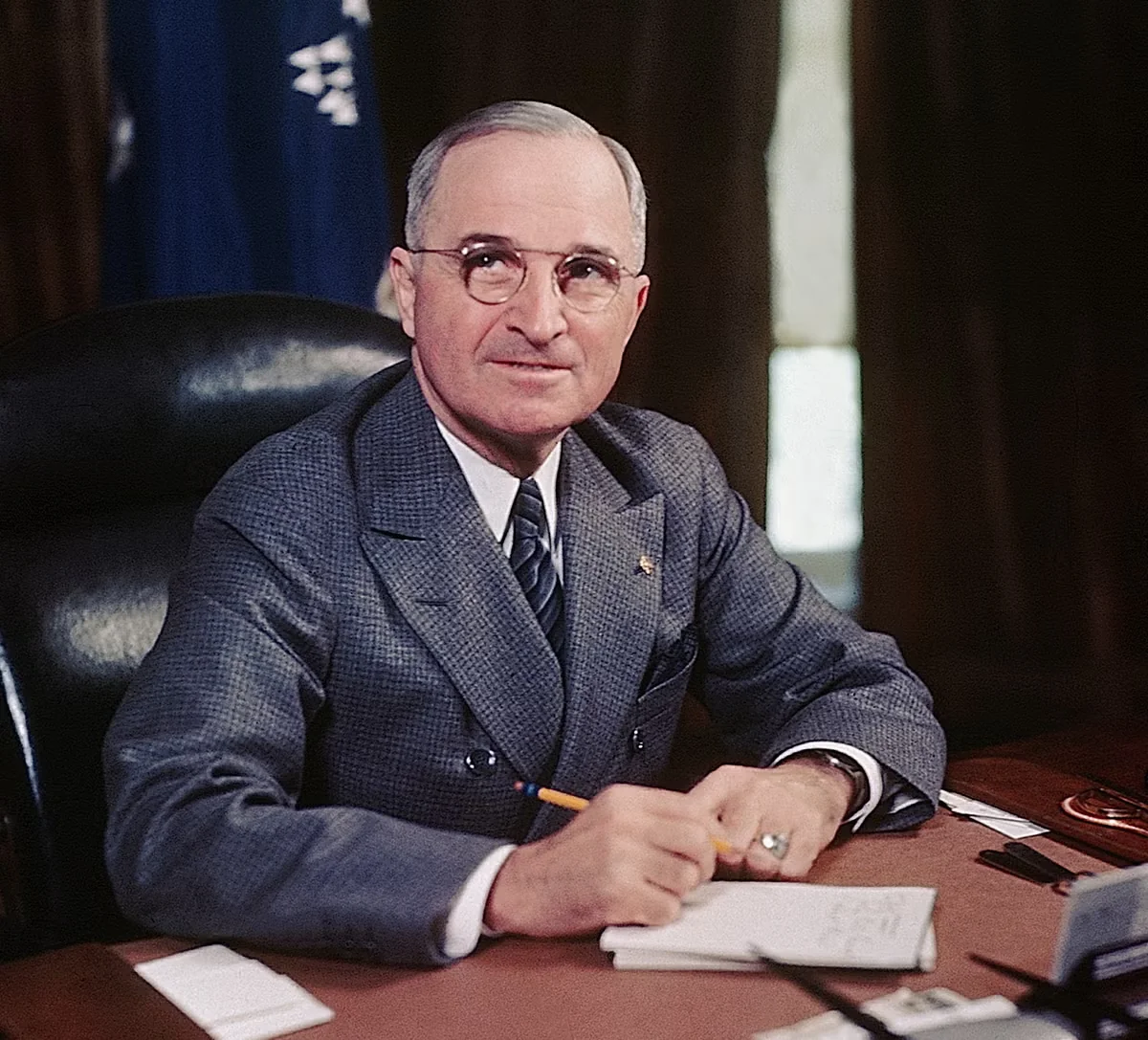
Lamar, Missouri, was laid out in 1856 and named for Mirabeau B. Lamar, the second president of the Republic of Texas, which means the only Missourian ever to serve as president was born in a town honoring the president of a country beyond the Purchase’s settled line. Nobody in Lamar appears to have found this awkward.
The house was a white frame cottage that cost $685 when it was new, and Harry arrived in its downstairs bedroom on May 8, 1884. The middle initial arrived with him and stood for nothing. The Truman Library describes the S as “a compromise between the names of his grandfathers, Anderson Shipp Truman and Solomon Young,” so he went through life with a middle name that was a peace treaty. He spent eleven months in Lamar before the family moved to a farm near Harrisonville in 1885, and from 1890 the town that counted was Independence. On April 12, 1945, 82 days after taking the vice-presidential oath, he joined the vice presidents who inherited the presidency when Franklin Roosevelt died.
Lamar got him back on April 19, 1959, a few weeks before his 75th birthday. The United Auto Workers had bought the cottage for $6,000 and handed the deed to the state of Missouri, and about 2,000 people turned out to watch it dedicated as a shrine. Truman’s verdict: “It’s like being buried and dug up while you’re still alive.” Then, grinning: “I’m glad they dug me up.”
Gerald Ford
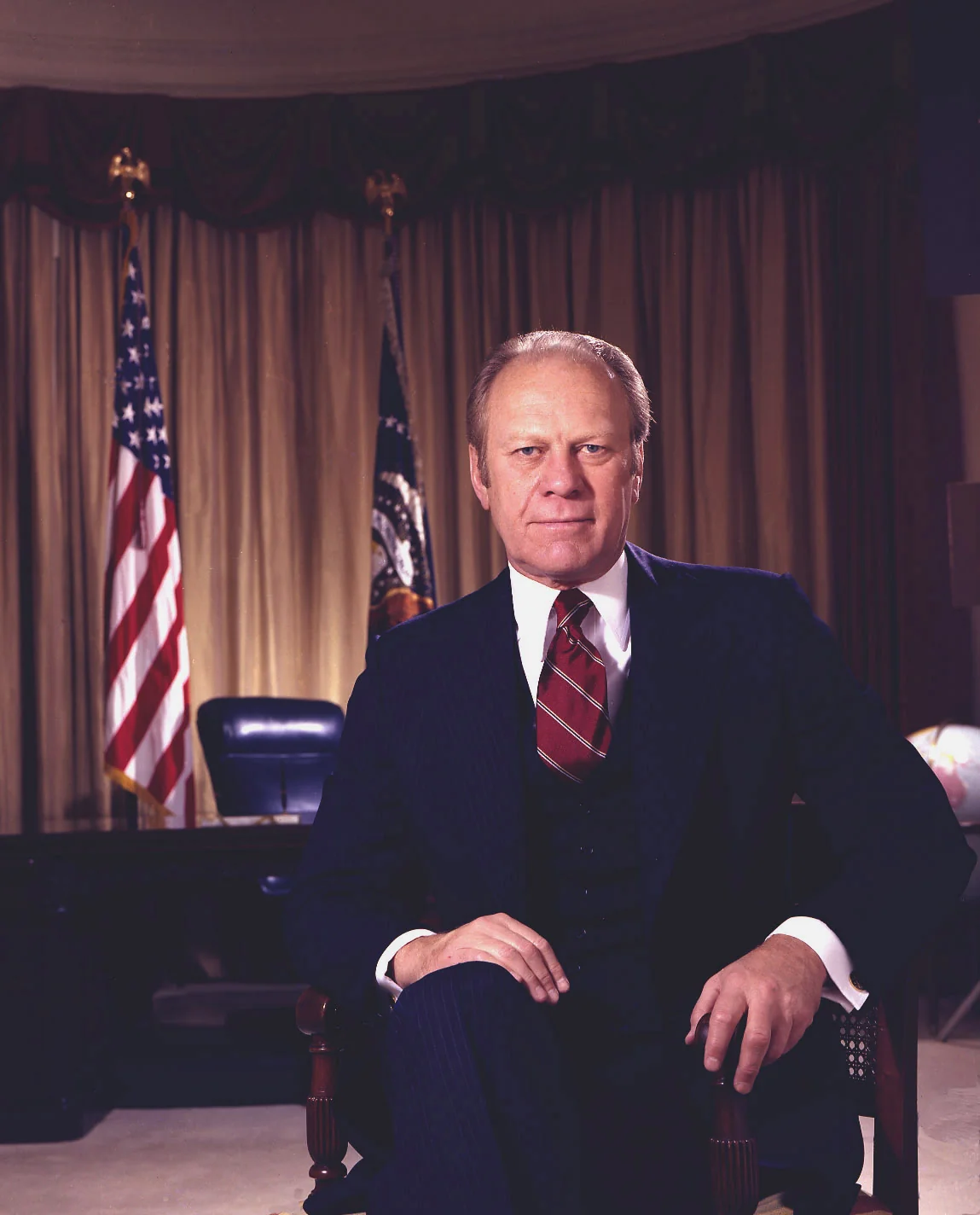
Gerald Ford spent roughly sixteen days in Omaha, under another name. He was born Leslie Lynch King Jr. on July 14, 1913, at 3202 Woolworth Avenue, in his paternal grandfather’s Victorian house, and within about two weeks his mother Dorothy had taken the baby and gone. The divorce was through by December 1913, King having been found guilty of extreme cruelty and ordered to pay $25 a month. Dorothy remarried in 1916, to a Grand Rapids paint salesman named Gerald Rudolff Ford, and the boy carried the new name informally until it became legal on December 3, 1935.
Irregular routes became a habit. Ford is the only president never elected to either the presidency or the vice presidency: appointed under the 25th Amendment in December 1973 after Spiro Agnew resigned, then sworn in on August 9, 1974 after Richard Nixon did.
Omaha, for its part, was used to losing things. It had been the territorial capital from 1854 until statehood in 1867, when the legislature moved the government south to a village it renamed Lincoln and Omaha joined the roll of state capitals that have been moved. One Omaha paper called the new seat “founded on fiat, no river, no railroad, no steam wagon, nothing.” The King house burned in 1971 and was razed. On September 21, 1977 Ford came back to dedicate what stands there now, a park and gardens with no house, to the people of Omaha. Sixteen days, it turned out, earned a garden.
Bill Clinton
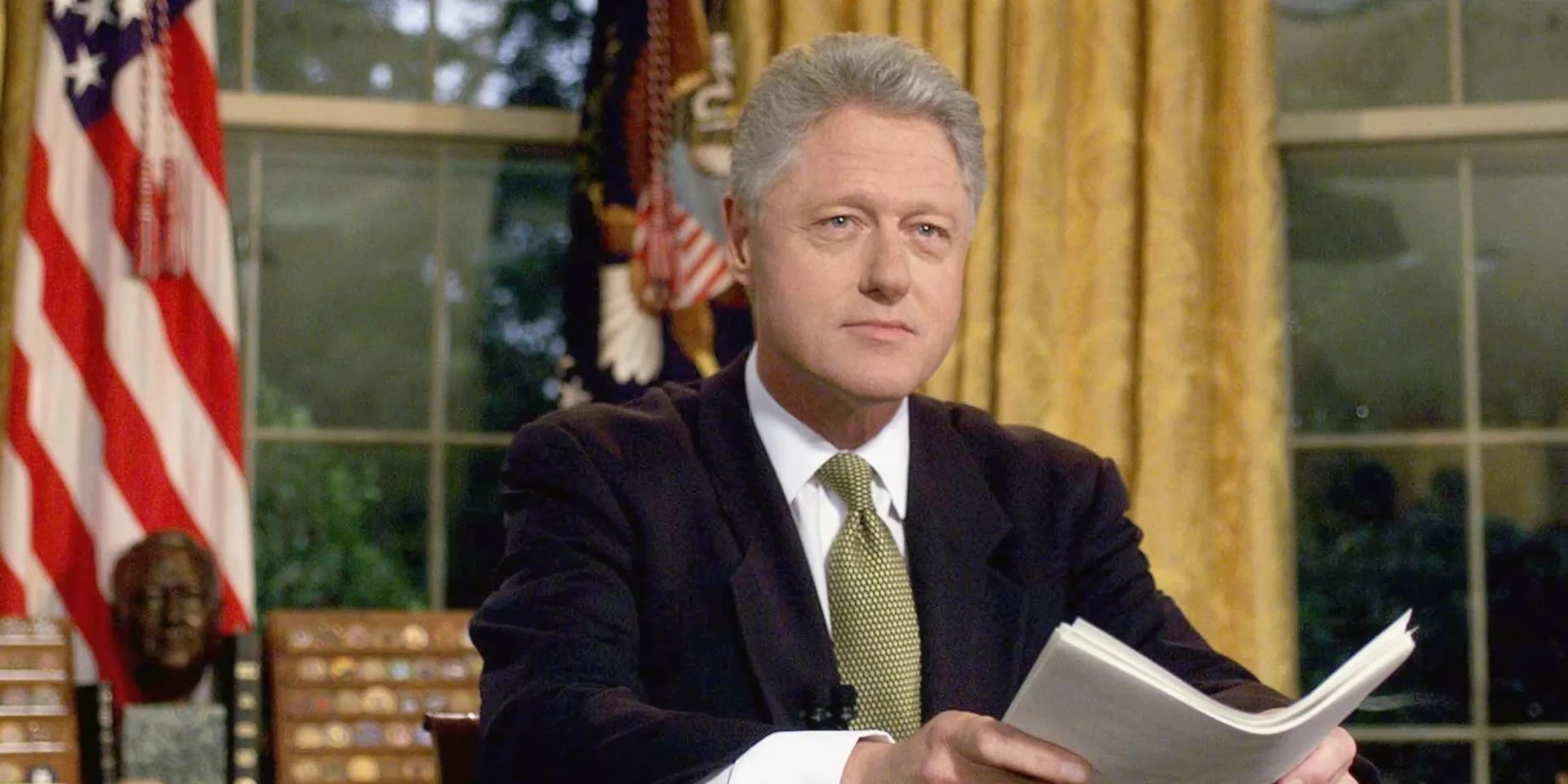
The name he was given in Hope, Arkansas, was William Jefferson Blythe III, and the father it honored had been dead for three months. William Jefferson Blythe Jr., a traveling salesman, was killed in May 1946 when his car veered off a wet road outside Sikeston, Missouri; the boy arrived on August 19, 1946, at Julia Chester Hospital. He spent his first four years in his grandparents’ house at 117 South Hervey Street, built in 1917 for a doctor, and the National Park Service now runs it as the President William Jefferson Clinton Birthplace Home, which is a generous name for a house he was not born in. The hospital that could make the claim no longer stands. A plaque marks where it was.
At the house’s dedication in 1999 he remembered it as the place where “I learned to walk and talk. I learned to pray. I learned to read and I learned to count by number cards my grandparents tacked on the kitchen window.” Virginia finished her nursing training, married a car dealer named Roger Clinton and moved the family to Hot Springs in 1953, when Bill was seven. He took his stepfather’s surname in high school.
The Birthplace Home burned on Christmas Day 2015, in a fire suspected to be arson, and reopened on July 30, 2016 after seven months of repairs, restored once more to a condition fit for a president not to have been born in.
Frequently Asked Questions
Was Dwight Eisenhower born on Louisiana Purchase land?
No. Eisenhower was born on October 14, 1890, in a rented house at Lamar and Day streets in Denison, Texas, south of the Red River. Texas begins at the river’s south bank, as the Supreme Court confirmed in Oklahoma v. Texas in 1923, so Denison lay on Spain’s side of the 1819 line. He left for Abilene, Kansas, in 1892.
Was Lyndon Johnson born in the Louisiana Purchase?
No. Johnson was born on August 27, 1908, in a farmhouse on the Pedernales River near Stonewall, Texas, and the family moved to Johnson City in 1913, when he was five. The Pedernales feeds the Colorado River of Texas, far south of the Red River line drawn in 1819, so Stonewall was Spanish ground when the boundary was fixed.
Who was the first president born on Louisiana Purchase land?
Herbert Hoover, born in West Branch, Iowa, on August 10, 1874. The National Park Service calls him “the first President born west of the Mississippi River,” and the Purchase, the Isle of Orleans apart, lies wholly west of that river. The Purchase finding itself is this list’s own screen of every birthplace.
Which presidents were born west of the Mississippi but not on Purchase land?
Four: Dwight Eisenhower (Denison, Texas), Lyndon Johnson (near Stonewall, Texas), Richard Nixon (Yorba Linda, California) and Barack Obama (Honolulu, Hawaii). The two Texans fall south of the 1819 treaty line. Nixon’s and Obama’s birthplaces were never part of Louisiana under any definition, however far Jefferson’s claim to the Rio Grande was stretched.
Has any president been born in Louisiana or New Orleans?
No. New Orleans sat on the Isle of Orleans, the one piece of the Purchase east of the Mississippi, bounded in the Library of Congress’s words “on the west by the Mississippi River, on the east by the Gulf of Mexico.” A screen of every president’s birthplace, Washington onward, finds none anywhere in Louisiana.
What counts as Louisiana Purchase land on this list?
Land west of the Mississippi, plus the Isle of Orleans, inside the Adams-Onis Treaty boundary: up the Sabine River to the 32nd parallel, north to the Red River, west to the 100th meridian, north to the Arkansas River and along it to its source at the 42nd parallel. Signed February 22, 1819, the treaty was proclaimed on February 22, 1821.
How many states came out of the Louisiana Purchase?
The National Archives says the territory “was eventually carved into 15 states or parts of states.” Four of them hold a birthplace here, one each: Missouri, a state since August 10, 1821; Arkansas, since June 15, 1836; Iowa, since December 28, 1846; and Nebraska, since March 1, 1867. No other state carved from the Purchase appears on this list.
- National Park Service – Herbert Hoover Birthplace Cottage
- Herbert Hoover Presidential Library and Museum – The Memoirs of Herbert Hoover, Volume 1 (PDF)
- National Archives – Louisiana Purchase Treaty (1803)
- Office of the Historian, U.S. Department of State – Louisiana Purchase, 1803
- Library of Congress – The Louisiana Purchase (European Explorations and the Louisiana Purchase)
- Avalon Project, Yale Law School – Treaty of Amity, Settlement, and Limits (Adams-Onis Treaty), 1819
- U.S. Reports – Oklahoma v. Texas, 260 U.S. 606 (1923)
- Harry S. Truman Library and Museum – Biographical Sketch of Harry S. Truman