Every Signer of the Declaration of Independence Who Lived to See the Louisiana Purchase
Matthew Thornton died at Newburyport, Massachusetts, on June 24, 1803, a New Hampshire physician of about 89 with his name on the Declaration of Independence. He had outlived the Louisiana Purchase treaty by 55 days. Nobody in Washington yet knew there was a treaty to outlive. It was dated April 30 in Paris. The news was still at sea. Thomas Jefferson did not learn that he had bought Louisiana until July 3, nine days after Thornton died.
What Jefferson had bought was 828,000 square miles for $15 million, though the buying took most of the year. He told Horatio Gates on July 11 that the territory “has more than doubled the area of the US.” The Senate did not ratify the treaty until October 20, by 24 votes to 7. The American flag did not go up at New Orleans until December 20, and the upper country, at St. Louis, did not change hands until March 1804. So living to see the Louisiana Purchase meant different things to different men. Samuel Adams was alive when the news reached Washington and dead before the Senate voted on it. George Walton saw New Orleans become American and missed St. Louis by a few weeks. Charles Carroll of Carrollton saw all of it and outlived the treaty’s date by 29 years.
The 56 signatures on the parchment belong to the men who signed the Declaration of Independence, and by the spring of 1803 the document had outlived most of them. The ones who remained are below, in the order they died. One of them had bought the territory himself. One was a Supreme Court justice about to be impeached for a speech he gave two days after the treaty’s date. One would be poisoned, and his own grandnephew tried for it. Several were simply old men on farms, which after the lives they had led was its own kind of achievement.
Nineteen of the 56 Declaration of Independence signers were alive on April 30, 1803, the date the Louisiana Purchase treaty bears. The first of them, Matthew Thornton, died that June; the last, Charles Carroll of Carrollton, died in November 1832. The other 37 had died before the treaty existed.
Matthew Thornton
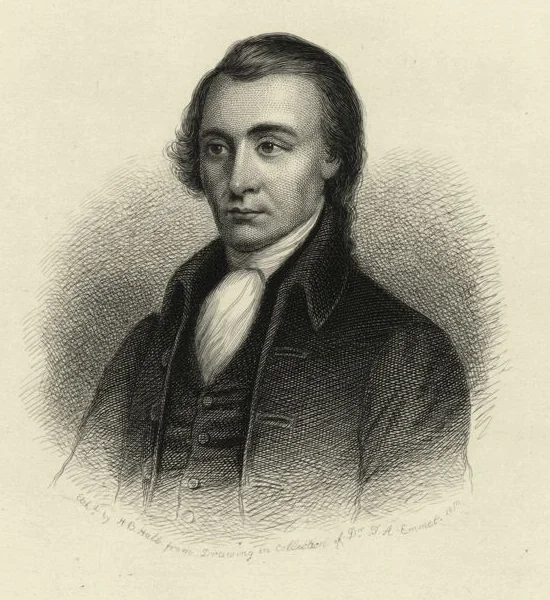
At Thornton’s Ferry, on the Merrimack River in New Hampshire, the original gravestone is inscribed “An Honest Man.” It marks a physician born in Ireland around 1714 who reached the Continental Congress so late that he missed the vote, the debate and July 4 entirely. Thornton took his New Hampshire seat on November 4, 1776, and was allowed to add his name to a parchment most of the others had signed months earlier. He was 62.
He sat on the state’s superior court from 1776 to 1782 and in the state senate by 1784, and then his life emptied out. His wife died in 1786, his son in 1787, and what a local biography calls “increasing infirmities” took him out of public life. He bought a farm and the rights to a ferry landing on the Merrimack, in 1780 by most accounts and 1789 by the town’s own heritage commission, and the village at the crossing is called Thornton’s Ferry to this day. The town of Thornton, granted to him and his family in 1768, was already named for him.
He died on June 24, 1803, at Newburyport in Massachusetts, at about 89. He is the first entry on this list by the technicality that matters: he was alive, on a farm by a river, on the day a treaty was dated in Paris, and that is the whole of his connection to Louisiana. It was enough.
Samuel Adams
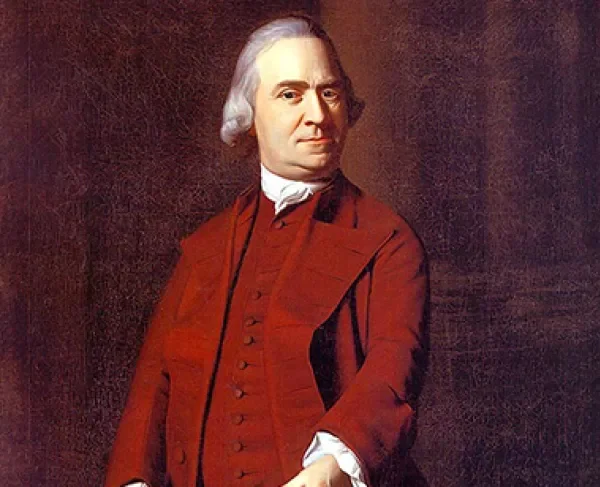
The Senate ratified the Louisiana Purchase treaty on October 20, 1803, by 24 votes to 7. Samuel Adams had been dead for less than three weeks. The National Archives and Britannica put his death on October 2, at Boston, aged 81; the Massachusetts Historical Society says October 3. The difference matters to nobody except the people who keep these tables, which is to say it matters here.
He had spent the mid-1790s as an executive. When John Hancock died in 1793 Adams took over the governorship of Massachusetts, was reelected to one-year terms three times, and left office in 1797. His last years were quiet. When Jefferson reached the presidency he wrote to the old agitator on March 29, 1801, that “the storm is over, and we are in port. the ship was not rigged for the service she was put on.” Adams replied that April. The two men had spent a quarter of a century pulling in the same direction, and the letter reads like one sailor thanking another for the crossing.
He is buried in the Granary Burying Ground in Boston. He died in the window between the news reaching Washington in July and the Senate voting in October, the only man on this list who did. For once in his life, it was an argument he sat out.
George Walton
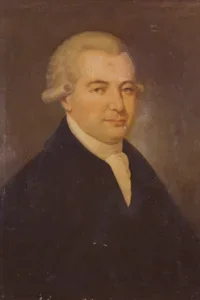
Nobody can say how old George Walton was when he died. The National Archives and the National Constitution Center have him born around 1741; the New Georgia Encyclopedia says 1749; the gap is wide enough that no age is printed here.
What can be said is where he was when the American flag went up over New Orleans on December 20, 1803: at Meadow Garden, the cottage he had built on confiscated Tory land outside Augusta while he was governor in 1789. He died there on February 2, 1804. That was 44 days after the flag-raising, and a few weeks before the flags changed again at St. Louis in March. He had been shot in the thigh and thrown from his horse when the British took Savannah in December 1778, and spent the better part of a year as their prisoner before an exchange in October 1779. After his 1789 term as governor he sat as a superior court judge.
He was buried first at Rosney, his nephew’s house, and moved in 1848 beneath the Signers’ Monument in Augusta, dedicated that July 4, where he lies in a crypt beside Lyman Hall. Georgia’s third signer, Button Gwinnett, was meant to join them, but his grave has never been found. The Daughters of the American Revolution bought Meadow Garden in 1900 and opened it as a museum on November 21, 1901. It is a modest house for a former governor, and the right size for a man of no fixed age.
Robert Morris
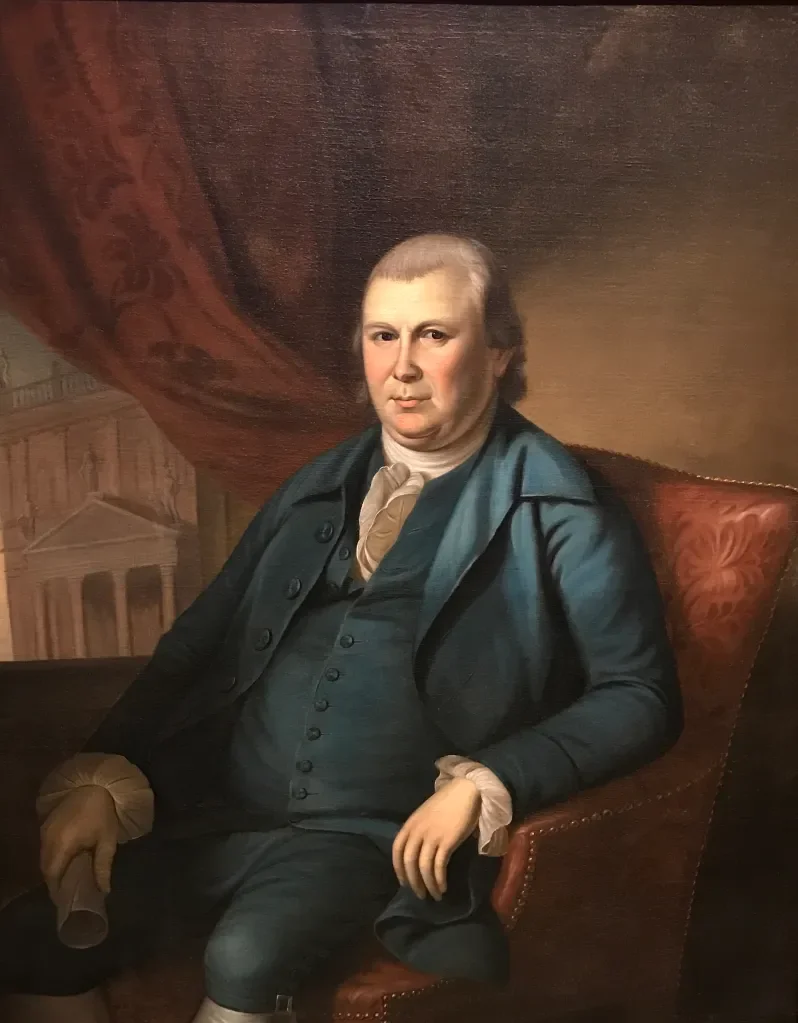
In August 1801 the man who had come to be considered the financier of the Revolution walked out of the Prune Street debtors’ prison in Philadelphia after three and a half years inside. Robert Morris had signed the Declaration, the Articles of Confederation and the Constitution, one of only two men to sign all three, with Roger Sherman of Connecticut. Then he bet everything on land, including tracts in the West and at the site of Washington, D.C. He lost.
His release came only after Congress passed the Bankruptcy Act of 1800, and by the time the Louisiana treaty was dated he was a private citizen in reduced circumstances, living on an annuity that Gouverneur Morris had arranged for him. The mansion Pierre Charles L’Enfant had begun for him on Chestnut Street in 1794 had been left unfinished when he was arrested for debt in 1798; Philadelphians called it Morris’s Folly. The country he had once kept solvent was borrowing $11,250,000 in stock to pay for Louisiana, and there is no sign anyone asked his opinion.
He died in Philadelphia on May 8, 1806, aged 72, and lies in a family vault behind Christ Church that he shares with Bishop William White. The National Constitution Center’s summary of his last years is hard to improve on: the man who had once owned the western half of New York State now owned little more than an old gold watch that had belonged to his father.
George Wythe
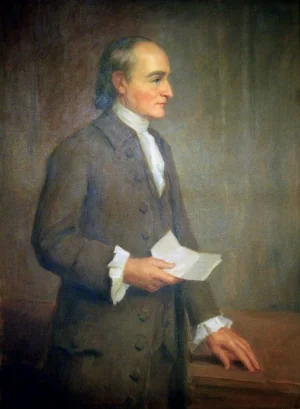
On April 20, 1803, George Wythe signed his will. The Louisiana treaty is dated April 30. He was Virginia’s sole chancellor and the first law professor in America: William & Mary created the chair for him on December 4, 1779, and he taught Thomas Jefferson, John Marshall, James Monroe, Edmund Randolph and Henry Clay. He had freed the people he enslaved, paid those who stayed to work for him, and by the end owned none. The will asked Jefferson to look after “the freed boy Michael Brown.”
On May 25, 1806, Wythe, Michael Brown and Lydia Broadnax, a free Black woman who kept his house, fell violently ill after the morning coffee, into which his grandnephew George Wythe Sweeney had allegedly put a powder. Wythe lasted 14 days. It was long enough to revise the will and cut Sweeney out. He died in Richmond on June 8. Brown is said to have died a few days before him. Sweeney was tried and acquitted on September 2, 1806. The witness who could have convicted him was Broadnax, and under Virginia’s laws she could not give testimony against a white person.
Jefferson wrote on June 14 that Wythe had been “my antient master, my earliest & best friend,” and that his death was “aggravated by the horror of his falling by the hand of a parricide.” Five days later he was asking the executor whether Michael Brown was the boy who had died. By then there was no boy to look after.
James Smith
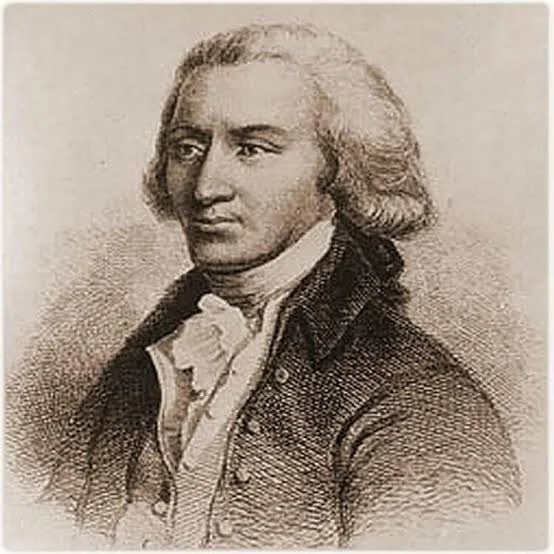
James Smith would not tell anyone how old he was, including his family. Sanderson’s 1848 biography of the signers says his birthdate “was a secret which he carried with him to the grave,” and the guesses run from 1713 to 1722. The National Archives makes him 87 when he died; the National Constitution Center says 86; his own gravestone in York, Pennsylvania, says 93. He was born in Ulster, crossed to Pennsylvania as a boy, and beyond that the record is thin for a reason: his law office in York burned in 1805, and his correspondence with Benjamin Franklin, Samuel Adams and other founders went with it.
He had retired from practice by 1800 or 1801, so the Louisiana year found him an old man of unknown vintage in a county-seat town, with nothing on the docket. His colleagues in Congress had known him as a wit, a good conversationalist and an eccentric, and remembered his “conviviality, lively wit and droll storytelling.” The stories did not survive the fire either. What survives is the signature, a churchyard, and a set of dates that do not agree with one another.
He died in York on July 11, 1806, the one date about him nobody disputes, and is buried in the churchyard of the First Presbyterian Church there, under a stone that overstates his age, or possibly states it. Nobody can check. He made sure of that.
Thomas Heyward Jr.
The British confiscated every enslaved person on Thomas Heyward’s plantations while he was their prisoner, and shipped 130 of them to the sugar plantations of Jamaica. Heyward had been captured when Charleston fell in 1780 and was held at St. Augustine, Florida, until July 1781 alongside two other signers, Edward Rutledge and Arthur Middleton. The story has been told that he passed the time reworking “God Save the King” into a patriotic song; the National Constitution Center calls it “God Save the Thirteen States.” Other accounts drop the number. That is about the certainty it deserves.
He was born on July 28, 1746, in St. Luke’s Parish, now Jasper County, and went back to the bench after the war, retiring from it in 1798 and withdrawing from public life the following year to rebuild his plantations. That is where the Louisiana Purchase found him, a retired planter with no office and no recorded opinion.
His death came in 1809; the National Archives says March 6, the Constitution Center says April. His Charleston townhouse at 87 Church Street, built in 1772, is the one the city rented for George Washington’s week-long stay in May 1791. The Charleston Museum opened it in 1930 as the city’s first historic house museum. Heyward is buried beside his father at Old House, in a family cemetery the state marks as a historic site, under a memorial stone and a bust. The 130 people the British took survive in the record as a number.
Samuel Chase

On May 2, 1803, two days after the date on the Louisiana treaty, Justice Samuel Chase stood before a Baltimore grand jury and delivered a charge against the Jefferson administration. The repeal of the Judiciary Act, he said, meant “the independence of the national judiciary, is already shaken to its foundation,” and a Maryland proposal for universal male suffrage would “certainly and rapidly destroy all protection to property, and all security to personal liberty” and produce “a mobocracy.” Jefferson wrote to Congressman Joseph Nicholson on May 13 asking whether such a “seditious & official attack on the principles of our constitution” ought “to go unpunished.”
It did not go unpunished, exactly. The House impeached Chase on March 12, 1804, by 73 votes to 32. The Senate tried him on eight articles. On March 1, 1805, it acquitted him on every one: a majority found him guilty on three, none reached the two-thirds required, and at least six of Jefferson’s own Republicans voted with the nine Federalists to let him go. He remains the only Supreme Court justice ever impeached.
He was a big man, well over six feet and around 240 pounds, with a complexion that earned him the nickname “Old Bacon Face.” He died on June 19, 1811, aged 70, still a sitting justice, and is buried at Old St. Paul’s in Baltimore. The Senate never did get him off the bench. That took ossification of the heart.
William Williams
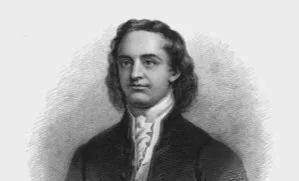
William Williams arrived in Philadelphia on July 28, 1776, too late to vote for independence, and signed the Declaration on August 2 as the replacement delegate for Oliver Wolcott, who had fallen ill and gone home to Connecticut. Williams had a habit of turning up with his own money. By one account he used his own assets to raise the money to send troops to Ticonderoga in 1775; by another, in 1779 he accepted worthless paper money for $2,000 in coin’s worth of military supplies, reasoning that if independence failed the loss would not matter. Whether those are two stories or one told twice, the man in them is the same.
He had married Mary Trumbull, daughter of Governor Jonathan Trumbull, on February 14, 1771, when he was nearly 40. In the Louisiana year he was 72. He was also still a working judge, probate judge for the Windham District from 1775 to 1809. 1803 was also the year he stepped down from the governor’s council and from the state’s Supreme Court of Errors. He was letting go of Connecticut’s business one office at a time.
He died on August 2, 1811, on the anniversary of the day he signed, and is buried in the Trumbull Cemetery about a mile east of Lebanon. His house there, his home from 1755 until his death, is a National Historic Landmark that, in the words of its nomination, “has never been restored.” That was, more or less, how Williams conducted his public life.
George Clymer
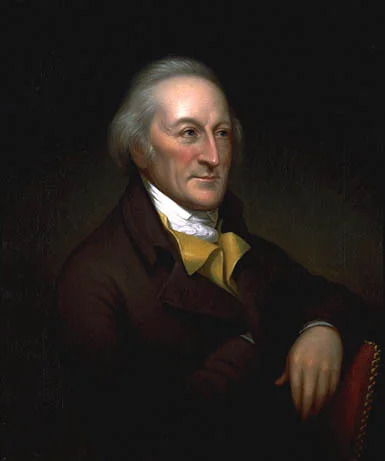
The year the United States bought Louisiana, George Clymer started a bank. The Philadelphia Bank was founded on September 8, 1803. Clymer was its first president. In 1805 he became the founding president of the Pennsylvania Academy of the Fine Arts, whose charter was signed by 71 men at Independence Hall. He had retired from federal service in 1796, after Washington made him head of Pennsylvania’s excise tax department and then a commissioner to the Cherokee and Creek Indians, and he spent his last years running institutions instead of governments, which may be the more durable line of work.
He is one of only six men who signed both the Declaration of Independence and the Constitution, and the British knew who he was. After the Battle of Brandywine in September 1777 their army made a detour to ransack the house in Chester County where he had moved his family for safety. In 1806 he bought a large Georgian house in Morrisville, Pennsylvania, and named it Summerseat, which means that during the Louisiana year, while he was founding the bank, he was living somewhere else entirely.
He died at Summerseat in January 1813, aged 73, after a brief illness, and is buried at the Friends Burying Ground in Trenton, New Jersey. The house passed to the Morrisville school district, which renovated it in 1935 and put it to educational use, a reasonable fate for the home of a man who spent his retirement founding things.
Benjamin Rush
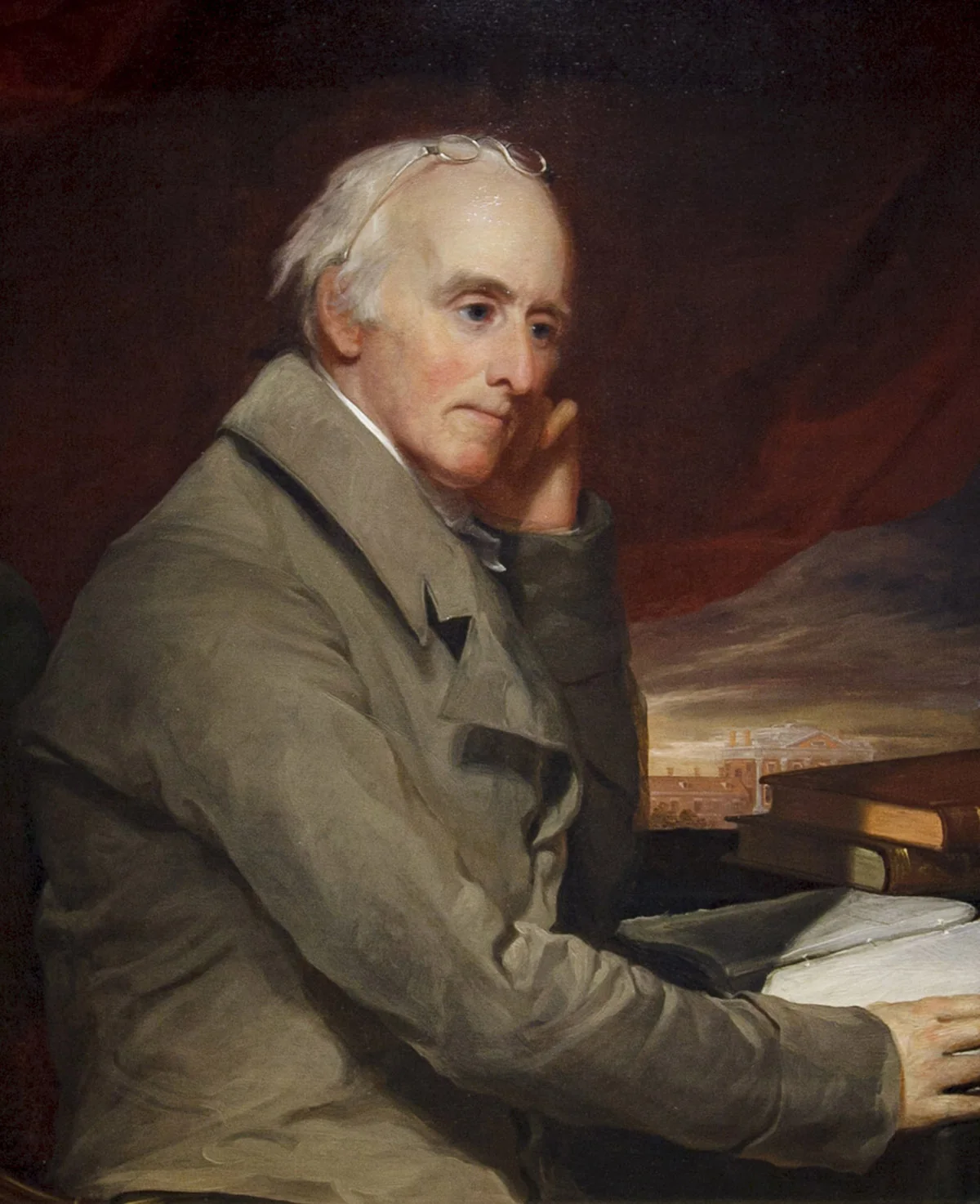
Meriwether Lewis spent the spring of 1803 in Philadelphia learning medicine from Benjamin Rush, at Jefferson’s request, before setting out for the Pacific. On May 17, 1803, Rush wrote out queries for him to put to the peoples he would meet: “What are the acute diseases of the Indians?” and “What Affinity between their religious Ceremonies & those of the Jews?” He also stocked the medicine chest with his own mercury-laced purgative, Dr. Rush’s Bilious Pills, which the men renamed Thunderclappers.
Rush was Treasurer of the United States Mint through the Louisiana year and until he died, and he had founded Dickinson College. His medicine was another matter. In the yellow fever epidemic of 1793 he bled Philadelphians with enthusiasm, writing of one case, “I have bled twice in many and in one acute case four times, with the happiest effect,” a treatment later judged to have made things worse.
His best prescription came late. Between February 1811 and February 1812 he wrote to John Adams and to Jefferson, who had been enemies since the election of 1800, urging them to “embrace each other! Bedew your letters of reconciliation with tears of affection and joy.” Adams had told him in 1809 that a dream of such a reconciliation “is not History. It may be Prophecy.” It was. Rush died in Philadelphia on April 19, 1813, aged 67. The two old men kept writing to each other. It is the one prescription of his nobody has criticized.
Robert Treat Paine

At the Boston Massacre trial in March 1770 the prosecution was Robert Treat Paine and the defense was John Adams, so two future signers of the Declaration argued opposite sides of the same case, and Adams won. Paine went on to become the first Attorney General of Massachusetts, from 1777 to 1790, and then an associate justice of the state’s Supreme Judicial Court from 1790 to 1804. He was still on that bench in the Louisiana year. He retired the year after.
His reputation in Congress had been settled by Benjamin Rush, whose character sketches say of him: “He seldom proposed anything, but opposed nearly every measure that was proposed by other people, and hence got the name of the objection maker in Congress.” The line is usually credited to John Adams. It was Rush’s.
His second son had been christened Thomas Paine, which by the 1790s was an awkward name for a Federalist household, and in 1801 the young man legally changed it to Robert Treat Paine Jr. He was a poet, wrote “Adams and Liberty” in 1798, and died on November 13, 1811, before his father did. Paine himself was born in Boston on March 11, 1731, and died there in May 1814, aged 83; the National Archives says the 12th, other sources the 11th. He lies in the Granary ground with Samuel Adams and John Hancock. For a man remembered for opposing nearly every measure proposed by other people, he ended up in remarkably agreeable company.
Elbridge Gerry
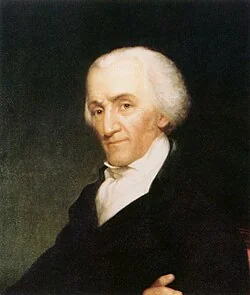
In 1812 Governor Elbridge Gerry of Massachusetts signed a redistricting bill that gave his Democratic-Republicans a state senate district shaped like a salamander, and on March 26, 1812, the Boston Gazette printed the cartoon that fused his name to the creature. The gerrymander helped his party keep the senate. It did not keep him in office: Caleb Strong beat him for governor that April, ending a term that had run from June 10, 1810, to June 5, 1812.
Strong had been beating him for years. In the Louisiana year Gerry held no office at all, having lost to Strong in 1800, 1801, 1802 and again in 1803, the last time by 30,619 votes to 14,247. He had refused to sign the Constitution in 1787, one of three delegates who did, and had been one of Adams’s envoys to France in 1797 in the mission that became the XYZ Affair. Four straight losses to the same man was, by his standards, a quiet stretch.
In 1813 he became Vice President in Madison’s second term, and he died in the job, in Washington, on November 23, 1814, aged 70. He is the only signer buried in the District of Columbia. His monument at Congressional Cemetery, 12 feet of Massachusetts marble by the brothers William and John Frazee, went up in 1823, topped by what its designers called a “towering and animated flame.” The word has done more for his name than the monument ever did.
Thomas McKean

Nobody signed the Declaration on July 4, 1776. That is Thomas McKean’s own account, to John Adams on January 7, 1814: “no persons signed it on that day,” and he signed only months later, after militia service. On July 10, 1781, Congress elected him its president, which placed him among the men who were president before George Washington, and he held the chair when Cornwallis surrendered at Yorktown that October. He served until November 4 and went back to being Chief Justice of Pennsylvania, a job he held for 22 years from July 28, 1777.
Then he became governor, from December 17, 1799, to December 20, 1808, so for the whole of the Louisiana year the state that contained Philadelphia was run by one of the signers. The Pennsylvania House impeached him in 1807. It was the second attempt: a motion in 1788, when he was chief justice, had “lost by a considerable margin,” and the 1807 effort failed too because, in the words of the state’s historical commission, “his friends prevented a trial for the rest of his term.”
He was born in Chester County on March 19, 1734, or 1735 by the National Archives’ count, to a family from Ballymoney, County Antrim, and died in Philadelphia on June 24, 1817, aged about 83, the same calendar date as Thornton at the top of this list. In 1843 he was moved to Laurel Hill. Impeached once, never tried, he kept a great many friends.
William Ellery
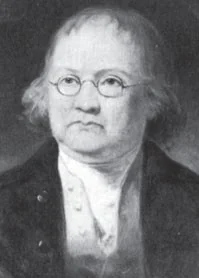
“I have been a clerk of the court, a quack lawyer, a member of Congress, one of the lords of the Admiralty, a judge, a loan officer, and finally a Collector of the customs.” That is William Ellery on William Ellery, and the last item is the one that matters here. Washington appointed him Collector of Customs for the Newport District in 1790, and he held the post for roughly 30 years, until his death in 1820, so every ship entering Newport in the Louisiana year cleared through a signer.
He had signed with some attention. By his own later account he placed himself beside the secretary, Charles Thomson, and watched each face as its owner wrote; his verdict, in American Heritage’s rendering, was “Undaunted resolution.” The British, when they took Newport in 1778, went looking for his house and burned it. His grandson was the Unitarian minister William Ellery Channing.
He was born in Newport on December 22, 1727, and died there on February 15, 1820, aged 92, one of three signers by the Constitution Center’s count to reach his nineties. By one account he was reading Cicero when he died. One week later his nephew Christopher wrote to Jefferson to announce “The death of my Uncle, William Ellery, one of those who signed the memorable declaration of independence,” and to ask for the customs post. Ellery lies in the Common Burying Ground on Farewell Street. The family had learned something from him about turning up for the job.
William Floyd
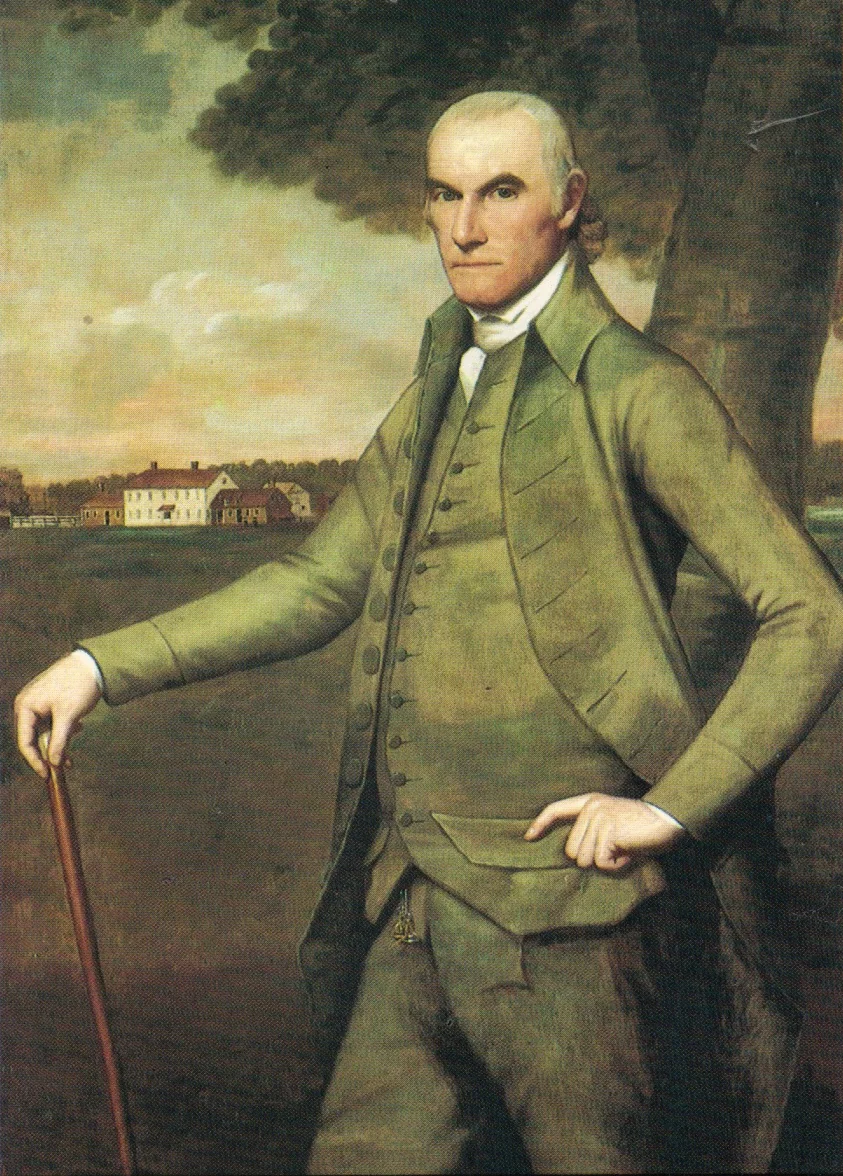
For seven years after the Battle of Long Island in 1776, British cavalry used William Floyd’s farm at Mastic as a base. He had signed for New York that summer. The house, built in 1774, is the one the Park Service runs as the William Floyd Estate on Fire Island National Seashore; the family gave it to the nation in 1975.
He was a presidential elector twice, in 1800 for Jefferson and Burr and in 1804 for Jefferson and George Clinton, so the Louisiana year fell between his two votes for the man who bought it. At some point he left Long Island for good, conveyed Mastic to his son and moved to a large tract on the Oneida County frontier at Westernville, where he built a second house. The Park Service dates the move to 1803, the National Constitution Center to 1794, and the two do not agree. Either way, a man born on December 17, 1734, was at Westernville in his late sixties while the country doubled to the west of him.
He died at Westernville on August 4, 1821, aged 86, and is buried in the cemetery there. The General William Floyd House went onto the National Register of Historic Places in 1971. The Park Service keeps the first house and the National Register the second: the one the British kept their horses in, and the one he built at an age when most men have stopped building.
Thomas Jefferson

Buying Louisiana was, by the buyer’s own reading of the Constitution, not allowed. Jefferson said so to Senator John Breckinridge on August 12, 1803: “the constitution has made no provision for our holding foreign territory, still less for incorporating foreign nations into our union.” He drafted an amendment on July 9 and was still revising it on August 31; his cabinet talked him out of it. The purchase, he decided, was like “the case of a guardian, investing the money of his ward in purchasing an important adjacent territory; & saying to him when of age, I did this for your good.”
He had opened the year by asking Congress, in a secret message on January 18, 1803, for $2,500 to send an expedition across the continent. James Monroe reached Paris on April 12, a day after the French offered Robert Livingston all of Louisiana. Jefferson enslaved more than 600 people, which puts him among the presidents who owned slaves while in office.
He died at Monticello on July 4, 1826, aged 83. In January 1827 his furnishings and 130 enslaved people were auctioned for his debts; in 1831 the house was sold. His self-written epitaph names him “Author of the Declaration of American Independence of the Statute of Virginia for religious freedom & Father of the University of Virginia,” chosen “because by these, as testimonials that I have lived, I wish most to be remembered.” The presidency, and Louisiana with it, did not make the cut.
John Adams
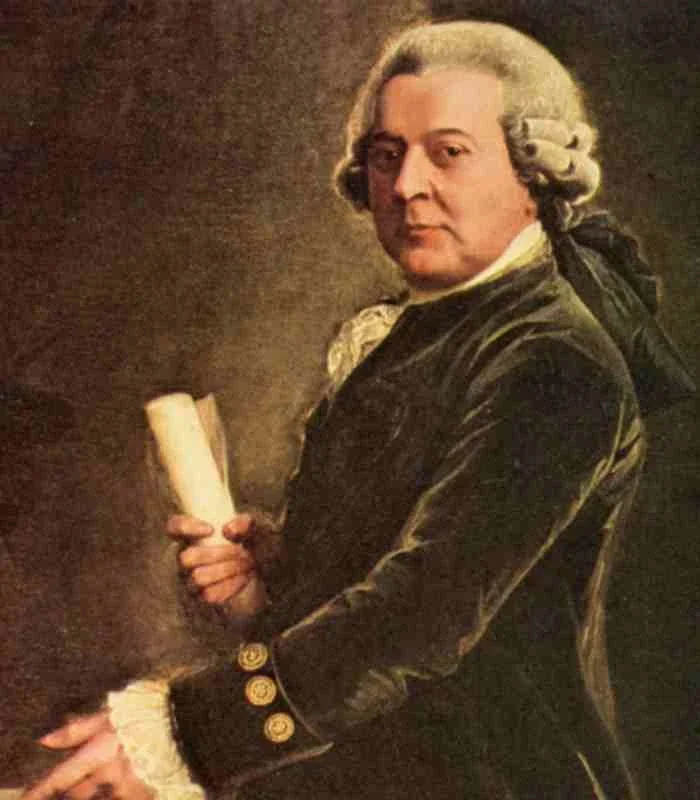
Quincy, Massachusetts, did not exist when John Adams was born in it. He was born on October 30, 1735, in Braintree; Quincy was split off in 1792. His is the second name on the list of every U.S. president, and when Louisiana was bought he had been out of the job since March 4, 1801, on the farm at Peacefield. He and the man who bought Louisiana had been, in Monticello’s phrase, “bitter enemies since the 1800 presidential election,” and were not writing to each other.
That changed on January 1, 1812, when Adams, prodded by Benjamin Rush, sent Jefferson a letter, and Jefferson wrote back on January 21 to thank him “before hand (for they are not yet arrived) for the specimens of homespun you have been so kind as to forward me by post.” The correspondence ran until both men died. By then John Quincy Adams had been inaugurated president, on March 4, 1825, so the old man died on July 4, 1826, aged 90, with his son in his old office.
According to the family, his last words were “Thomas Jefferson survives”; John Quincy recorded them in his diary weeks later, not having been at the bedside. Jefferson had died hours earlier. Adams is entombed beneath the United First Parish Church in Quincy with Abigail, John Quincy and Louisa Catherine, in what calls itself the Church of the Presidents. The town that did not exist when he was born ended up with two of them.
Charles Carroll of Carrollton
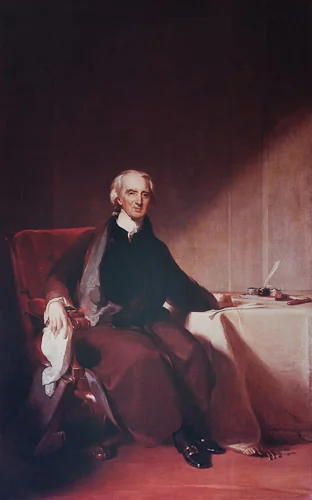
A 90-year-old man laid the first stone of the Baltimore and Ohio Railroad on July 4, 1828. It was Charles Carroll’s last public act; he sat on the railroad’s first board of directors, and he had been signing himself “of Carrollton,” after his estate, since at least a letter of September 15, 1765. The story that he added the suffix on the spot in 1776 is what Wikipedia calls “the apocryphal 1940s account.” He had been doing it for 11 years.
He was the only Roman Catholic to sign the Declaration, and his inheritance, in the National Constitution Center’s words, “made him the wealthiest man in the colonies.” He was one of Maryland’s first United States senators, from 1789 until he resigned on November 30, 1792, and sat in the Maryland Senate until 1800. By 1803 he had retired from both. The Maryland State Archives records his enslavement of over 350 people at Doughoregan Manor, his plantation at Ellicott City. Homewood, the house he gave his son as a wedding present, went up from 1801 and passed to Johns Hopkins University in 1902.
He died in Baltimore on November 14, 1832, aged 95, the last surviving signer of the Declaration, and was buried beneath the pavement beside the altar of his own chapel at Doughoregan after a national day of mourning. He had outlived the Revolution, the parchment’s other signers and, by a comfortable margin, the age of the horse.
Frequently Asked Questions
Did Benjamin Franklin live to see the Louisiana Purchase?
No. Benjamin Franklin died on April 17, 1790, aged 84, and John Hancock, whose signature leads the parchment, died on October 8, 1793, aged 56. Neither of the two signatures everyone recognizes belonged to a man who saw the nineteenth century, let alone the treaty that doubled the country in 1803.
Who was the last signer to die before the Louisiana Purchase?
Francis Lewis of New York, who died on December 30, 1802, by the National Archives’ table, or December 31 by other accounts, about four months before the treaty’s date. The death before his was Edward Rutledge of South Carolina, 26 when he signed, who died in office as governor on January 23, 1800.
Which signers of the Declaration became president?
Only two of the 56: John Adams, the second president, and Thomas Jefferson, the third. Both were alive for the Louisiana Purchase, Jefferson as the president who made it and Adams as a retired ex-president at Quincy, Massachusetts. George Washington, who was commanding the army, never signed the Declaration.
Which of the surviving signers still held office in 1803?
Jefferson was president. Samuel Chase sat on the Supreme Court, Thomas McKean was governor of Pennsylvania, George Wythe was Virginia’s chancellor, Robert Treat Paine sat on the Massachusetts Supreme Judicial Court, Benjamin Rush was treasurer of the Mint, William Ellery collected Newport’s customs and William Williams was a Connecticut probate judge. George Walton’s judgeship is too loosely dated to count.
Why does the list use April 30, 1803, as the cutoff?
Because that is the date written on the treaty, which closes “Done at Paris … the 30th of April 1803.” The signing may have finished on May 2, as Britannica and James Monroe’s account have it, but no signer died between the two dates, so the list is unchanged either way. A signer counts if alive on April 30.
Did John Adams and Thomas Jefferson really die on the same day?
Yes. Both died on July 4, 1826, the 50th anniversary of the Declaration they had signed, Jefferson at Monticello aged 83 and Adams at Quincy aged 90. Jefferson died first and Adams followed hours later; the exact clock times differ between accounts. After that day Charles Carroll of Carrollton was the last of the 19 still living.
- National Archives – Signers of the Declaration of Independence: Table of Facts
- National Constitution Center – Signers of the Declaration of Independence
- National Park Service – William Floyd, Fire Island National Seashore
- Maryland State Archives – Charles Carroll of Carrollton (MSA SC 3520-209)
- Pennsylvania Historical and Museum Commission – Governor Thomas McKean
- Massachusetts Historical Society – Samuel Adams
- New Georgia Encyclopedia – George Walton
- Britannica – Louisiana Purchase