Every Paid DLC Fighter Ever Added to Super Smash Bros
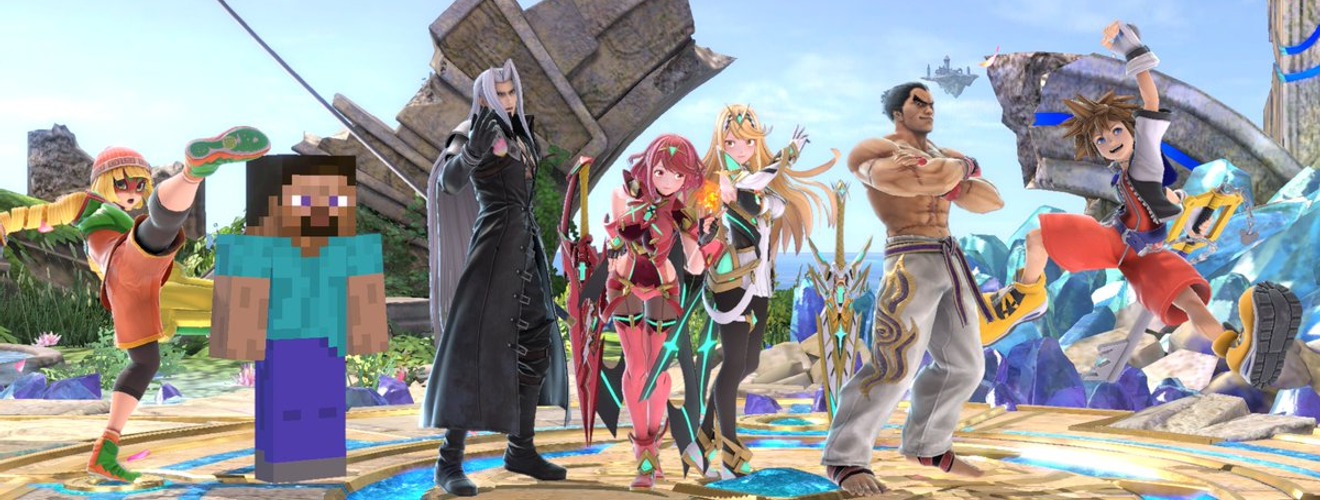
Masahiro Sakurai spent most of the 50-Fact Extravaganza on October 23, 2014 explaining mechanics, then closed it with a resurrection: Mewtwo would return to Super Smash Bros., and for the first time in the series’ history, a fighter would eventually carry a price tag. Nintendo announced the business model months before it had anything to sell. The store shelf stayed empty until the following spring.
The menu changed character along the way. Smash 4 sold its fighters a la carte, opening with returning veterans at pocket-money prices; Ultimate moved to season-pass economics, and the guest list drifted steadily away from Nintendo’s own catalog toward everyone else’s – Persona, Minecraft, Tekken, Kingdom Hearts. Most of the names below also appear among all 18 third-party characters ever added to Smash – a fair measure of where the priorities settled once the model proved out.
Below are all of them, in the order they went on sale – both games, both passes, and the one potted plant that belongs to neither. The sequence tells its own story: veterans first, then legends, then characters nobody would have believed Nintendo could license. By the end, belief had stopped being the obstacle. Money never was one.
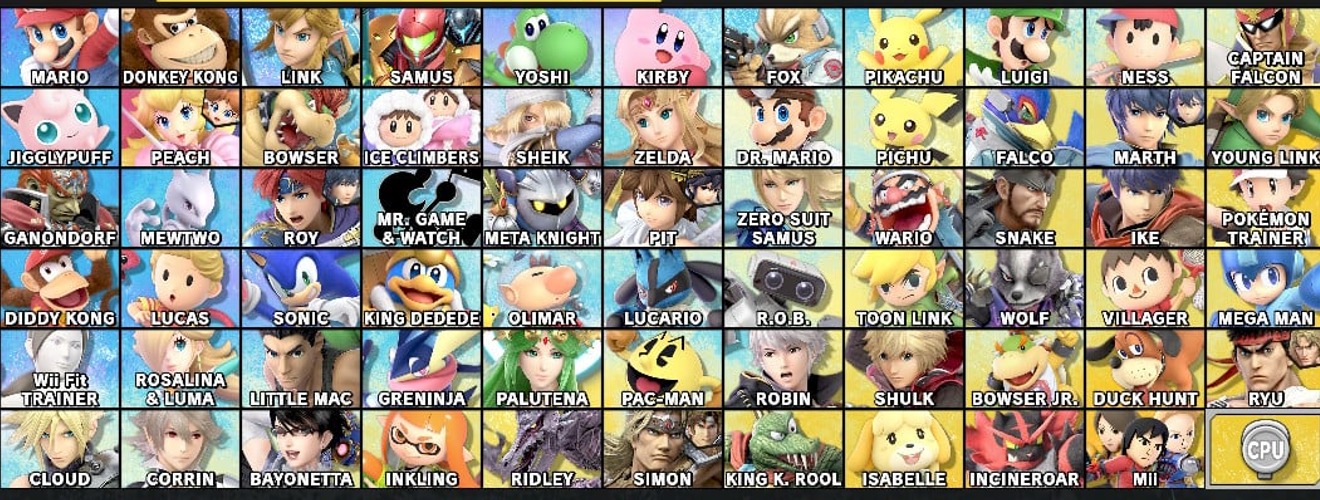
The Super Smash Bros. series has sold 20 paid DLC fighters across 19 separate purchases: 7 in Super Smash Bros. for Wii U and 3DS, then 13 in Super Smash Bros. Ultimate, where Pyra and Mythra share one Challenger Pack. The roster covers every fighter ever sold for money, from Mewtwo in April 2015 to Sora in October 2021.
Mewtwo
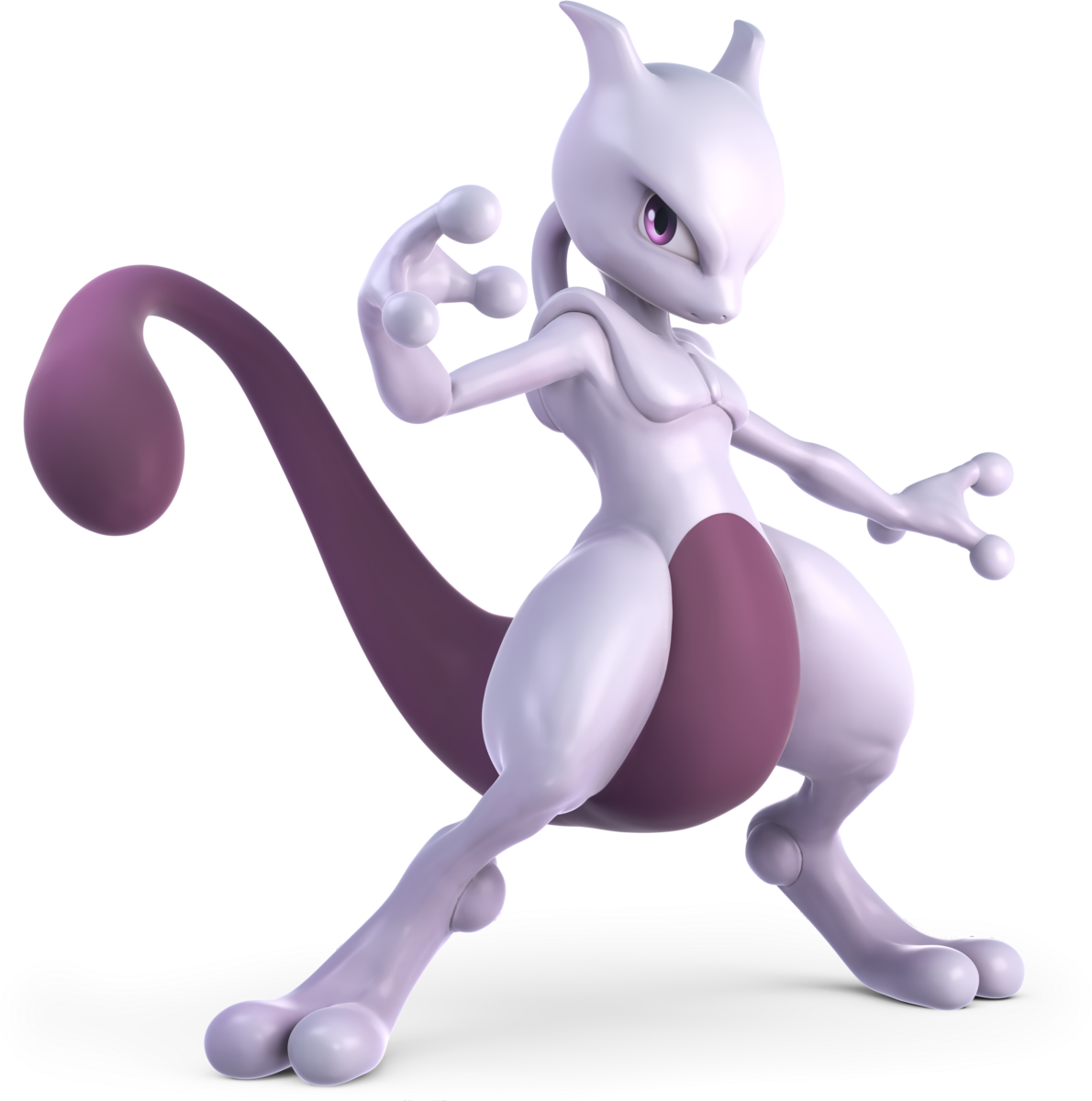
The first fighter Nintendo ever charged for had already been cut from the series once. Mewtwo was playable in Melee, skipped Brawl, and then turned up in Brawl’s shipped data anyway: datamines found his unused files sitting alongside Dr. Mario’s and Roy’s – a fighter built far enough to leave a shadow, then dropped. The full roll call of near-misses is its own subject, told among the 29 characters Sakurai publicly considered and turned away. Mewtwo is the rare one who eventually made it back, invoice attached.
The return happened in two stages. Players who registered both the Wii U and 3DS versions with Club Nintendo got Mewtwo free, with codes emailed from April 15, 2015. Everyone else waited until April 28, when he went on general sale at $3.99 for one version of the game or $4.99 for a code covering both. That put him in the cheapest tier Nintendo offered, reserved for returning veterans; newcomers and guests would run higher.
He was, in effect, a proof of concept: if people would pay for a psychic cat they had technically already owned in 2001, anything could be sold. The experiment stuck – every fighter below descends from that April.
Lucas
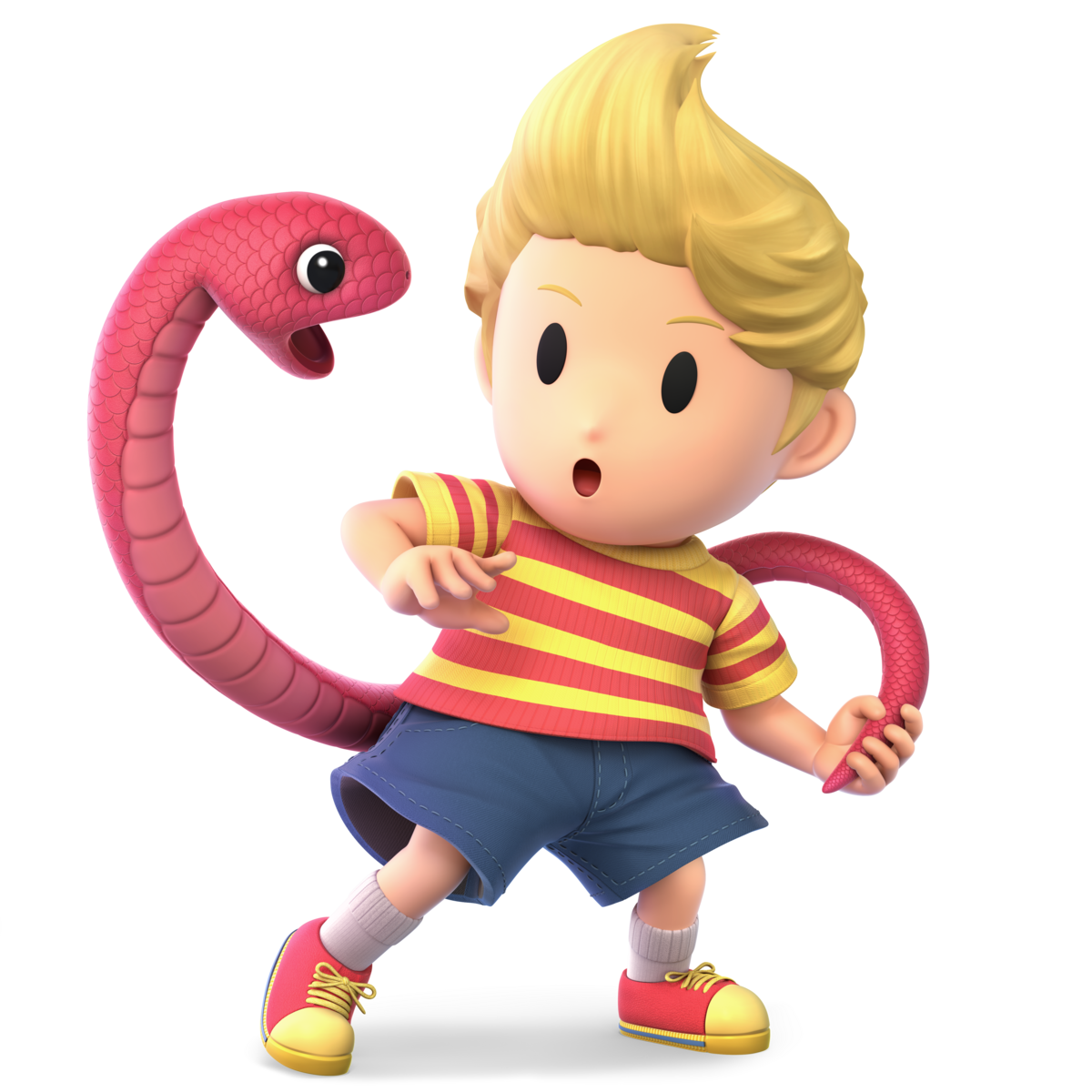
Appearing in Brawl earned Lucas nothing when the next roster was drawn up. He was dropped from Smash 4’s base game entirely, then sold back to players on June 14, 2015, in a three-fighter drop that also delivered Roy and Ryu in a single afternoon. Nintendo had confirmed his return during an April 1, 2015 Direct, so the only suspense was the wait.
His Brawl run explains some of the indifference. Short range, a weak grab, kill moves that rarely connected, and a vulnerability to chain-grabbing left him low on competitive tier lists. Smash 4 removed chain-grabbing from the engine altogether; the returning Lucas was a better fighter for reasons that had nothing to do with Lucas.
The stranger fact is that most of his audience has never met him at home. Lucas stars in Mother 3, a 2006 Game Boy Advance role-playing game Nintendo has never officially released in English, making Smash the only place most Western players have ever controlled him. Completists could also grab Fighter Bundle #1 at $17.96, packaging him with the other three fighters of that first wave – priced at exactly the sum of its parts, with no discount for buying the set. Nintendo’s arithmetic, unlike its localization schedule, left nothing out.
Roy
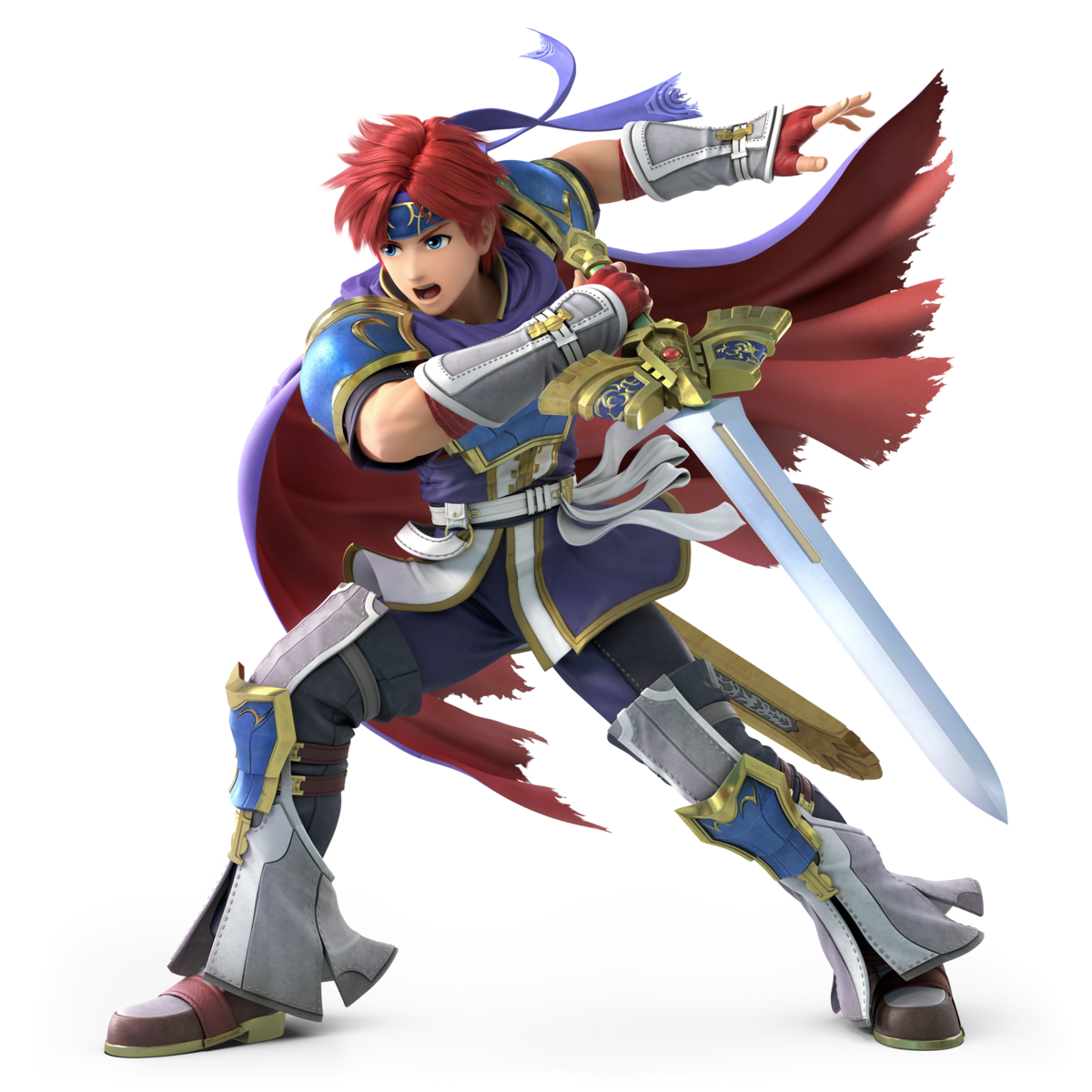
Nintendo planned a surprise for its June 14, 2015 Direct. Reddit got there first. Files pulled from a Wii U update datamine surfaced ahead of the broadcast, and they were not a stray filename: full video of Roy in action, official render art, even his alternate costume colors, all circulating before Nintendo had said a word. The company went ahead with the reveal, then released him the same day, making Roy and Ryu the only Smash 4 DLC fighters whose announcement and availability landed on the same date. The episode has plenty of company among the 22 Smash reveals that leaked before their official announcements.
Roy’s history made him an obvious target for the leak-hunters. He debuted in 2001’s Melee, sat out Brawl, and dataminers had long since spotted his name among that game’s leftover files, so everyone knew Nintendo kept him in mind. At $3.99, he returned as what he had always been: a Marth variant whose sword rewards close-quarters aggression, dealing its heaviest damage at the hilt where Marth’s favors the tip, just as he had back in Melee.
The wait ran from one console generation into a third. Roy spent years as a possibility and exactly one afternoon as an announcement.
Ryu
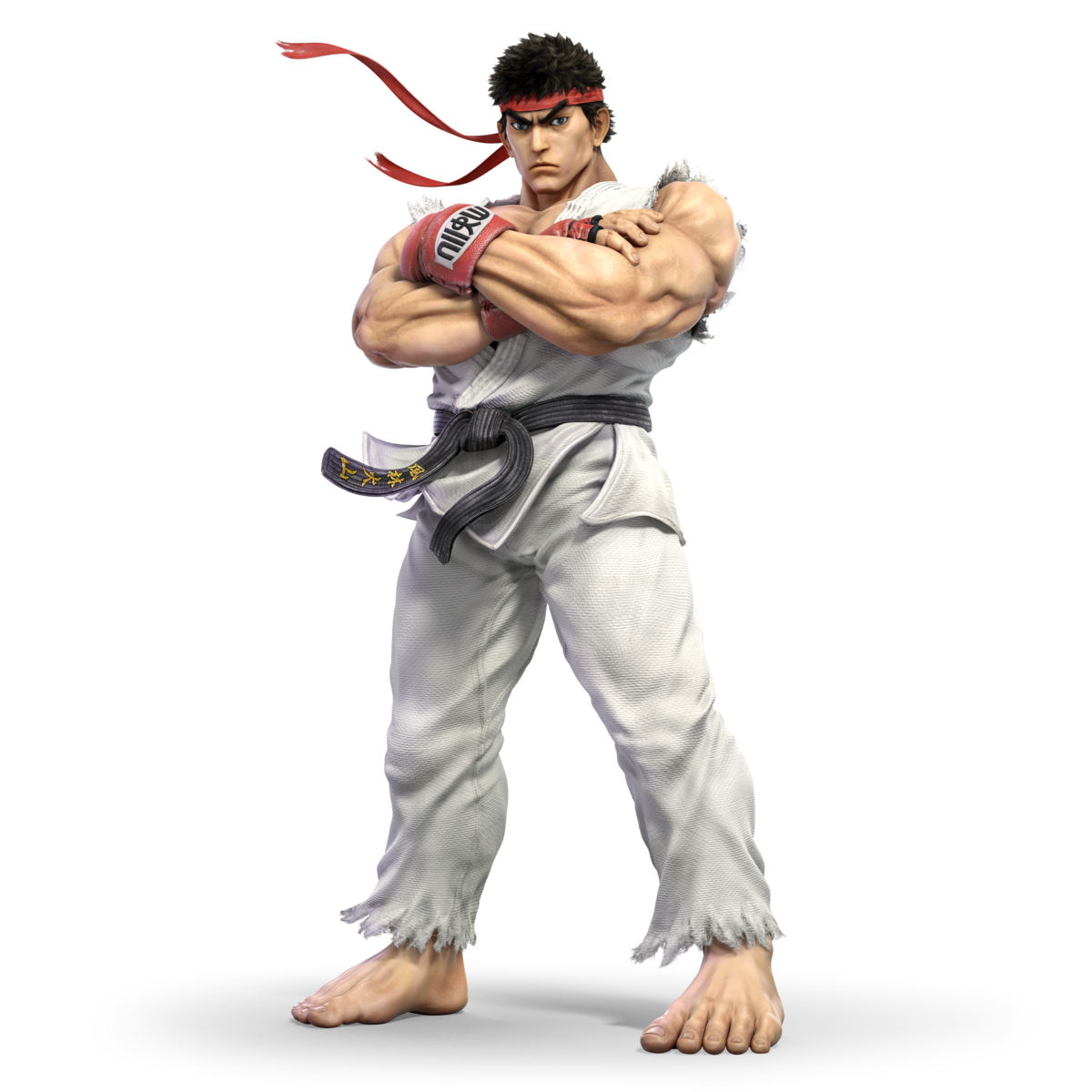
Ryu arrived speaking his native language. Where every other fighter’s specials map to a simple button press, Ryu answers to Street Fighter’s own command motions, and he borrows the original arcade game’s logic of tapping a button for a quick attack and holding it for a stronger one. No other Smash 4 fighter worked this way. Sakurai’s team even wrote him a one-character exception to the item rules: Ryu is the only fighter in Smash 4 who can still use his neutral special while holding a Smash Ball.
He was not Capcom’s first Smash character – Mega Man had joined the base roster in 2014 – but he was the first drawn from a dedicated fighting-game franchise, which felt overdue for a series that borrowed the genre’s vocabulary while politely ignoring its founders. His reveal trailer opened by imitating the character-select screen of Super Street Fighter II, a wink aimed at anyone who had ever spent lunch money in an arcade.
His files fell out of the same update datamine that spoiled Roy, so the June 14, 2015 announcement surprised nobody paying attention. He cost $5.99 rather than the veterans’ rate because Suzaku Castle came attached – a stage that could not be bought on its own, breakable signboard included.
Cloud Strife
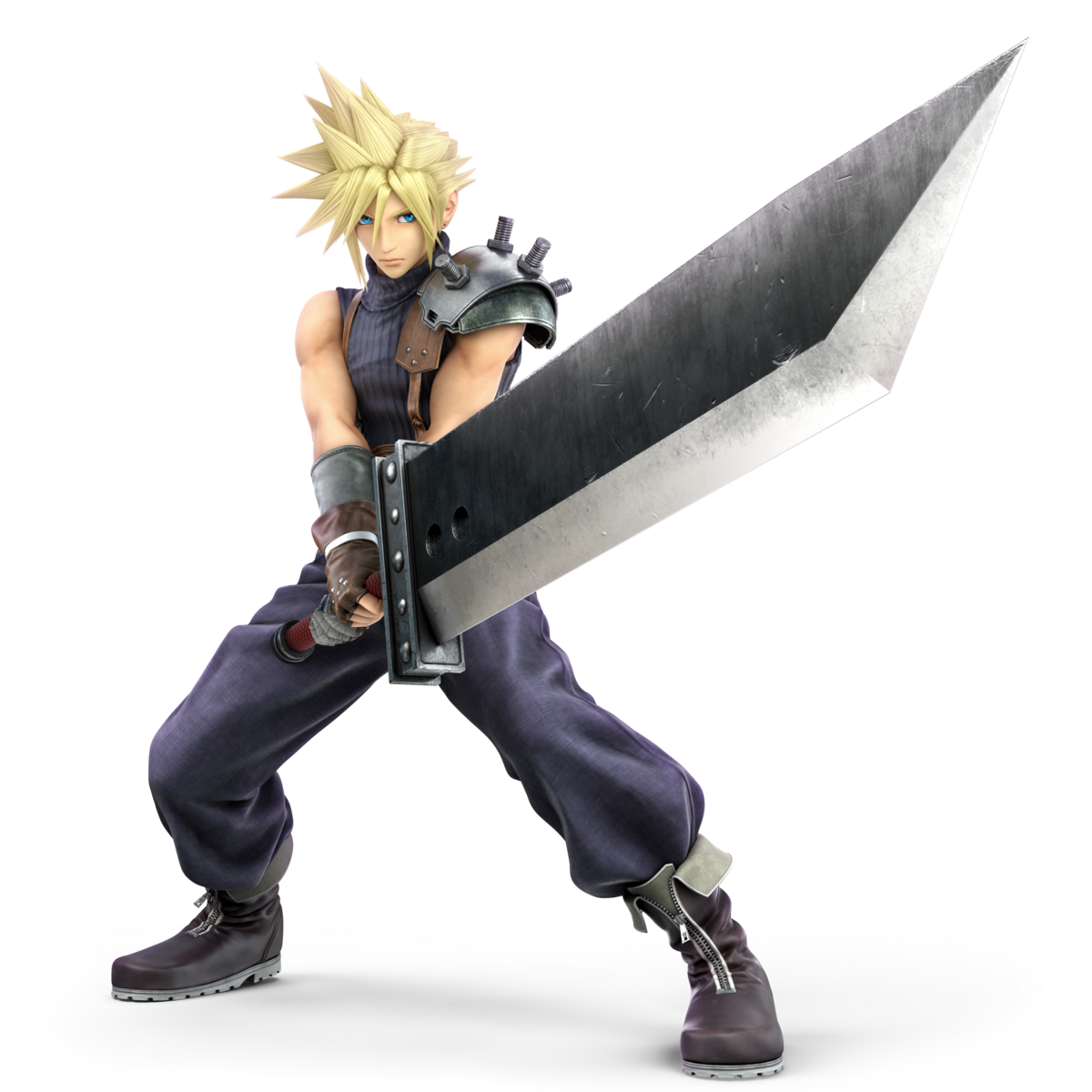
Final Fantasy VII launched on Sony’s PlayStation in November 1997 and did not touch a Nintendo platform until its Switch port arrived on March 26, 2019. Cloud, meanwhile, had been fighting in Smash since December 15, 2015. The fighter beat his own game to the platform by an entire hardware generation. His announcement, in a dedicated Direct on November 12, 2015, was improbable on its face.
Cloud was not a total stranger to Nintendo machines, just a marginal presence on them. His prior visits amounted to guest work: an optional boss fight in Kingdom Hearts: Chain of Memories on the Game Boy Advance in 2004, a rhythm-game slot in Theatrhythm Final Fantasy on the 3DS in 2012, an unlockable outfit in Final Fantasy Explorers. Smash was the first time Nintendo hardware had ever cast him in his actual leading role. He kept his longtime Japanese voice actor, Takahiro Sakurai, in every region – casting an English voice for a guest part proved impractical.
At $5.99 with the Midgar stage, Cloud embodied where the program was heading. Nothing advertised the crossover’s ambition like borrowing the most famous protagonist in the catalog of Nintendo’s old rival. Players did not care whose console a character came from. Neither, it turned out, did Nintendo.
Corrin
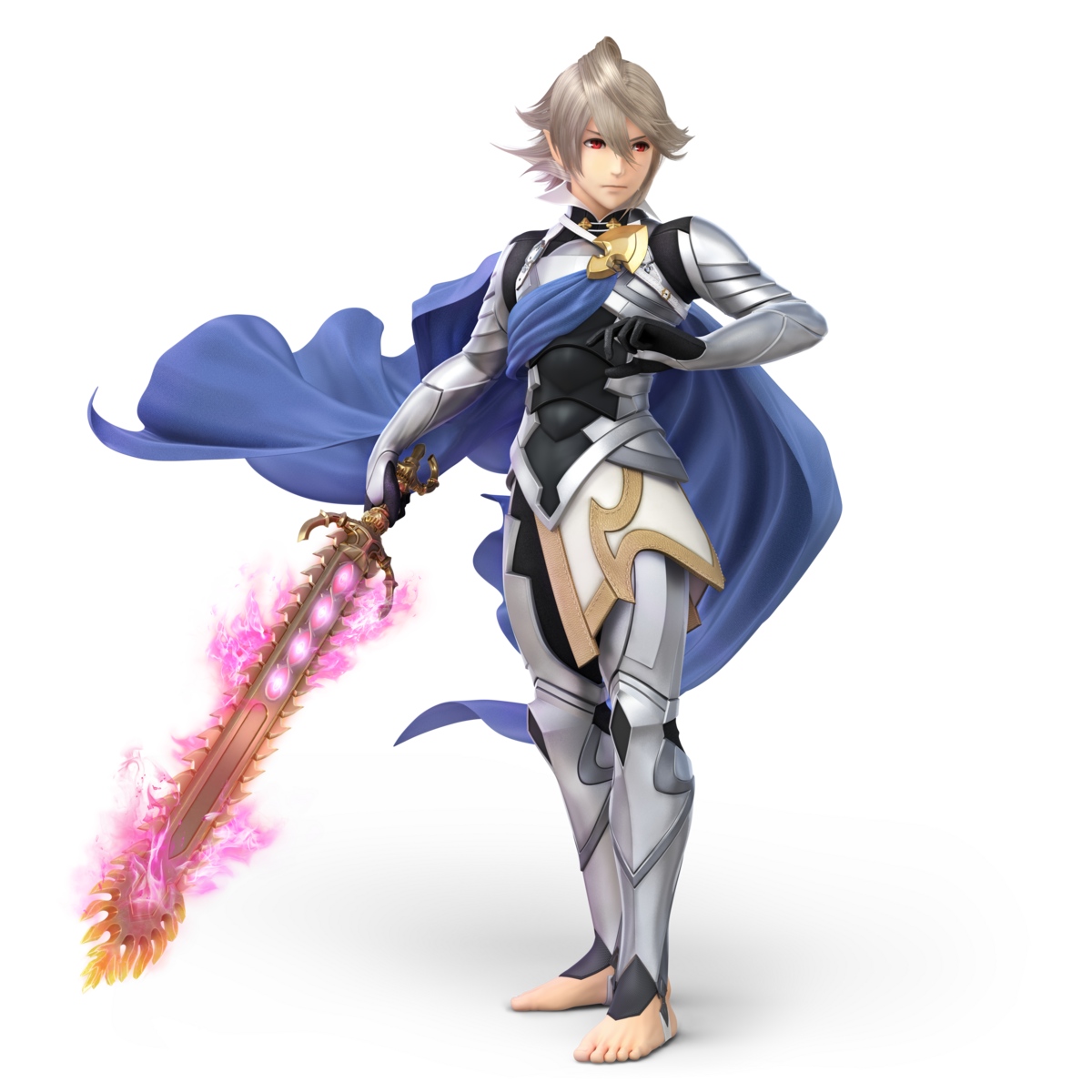
Nobody had asked for Corrin, and the internet said so at length. The announcement came on December 15, 2015, in the same broadcast as Bayonetta’s, and the contrast was unkind: one pick was a ballot favorite, the other a Fire Emblem protagonist whose game had not yet released outside Japan. Source Gaming, the site of record for Sakurai coverage, published a piece on December 21, 2015 plainly titled ’The Corrin Controversy,’ cataloging the objections.
Sakurai himself agreed with the premise. The case for Corrin was mechanical, and it was a real one: a protagonist who turns pieces of their own body into weapons mid-move, sprouting a dragon arm here and a tail there, with male and female versions both selectable. The defense was mechanical, not sentimental.
The timing, though, was commercial. Corrin released on February 3, 2016, at $4.99, in the same window Fire Emblem Fates reached North America, turning the fighter into a fairly elaborate advertisement for an upcoming cartridge. Players soon discovered Counter Surge could KO opponents at absurdly low percentages near the top of the screen, giving the unrequested newcomer a habit of winning arguments. Two amiibo followed, one per gender. The advertisement, at least, was thorough.
Bayonetta
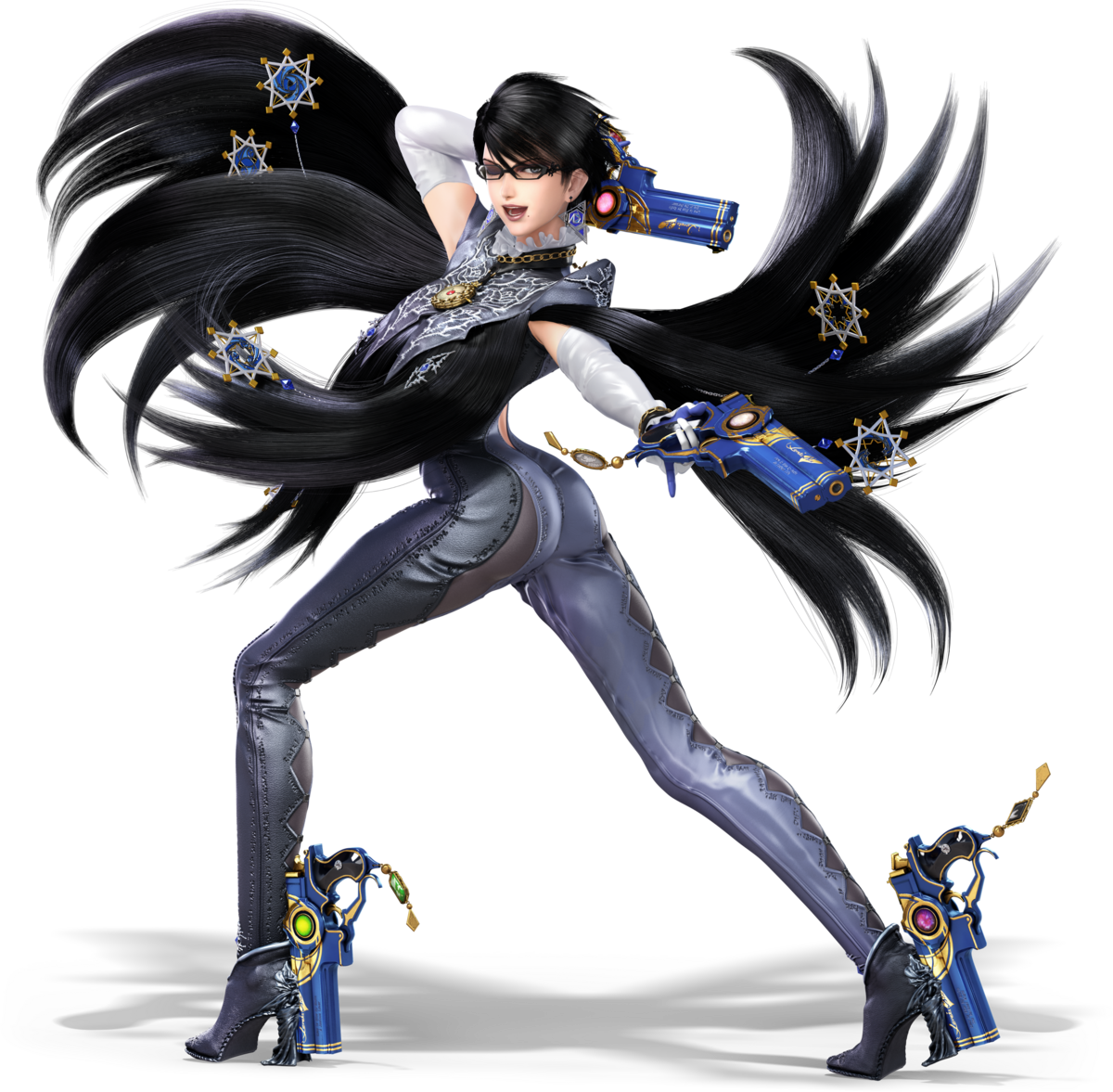
The Smash Ballot ran from April 1 to October 3, 2015, an open worldwide invitation to name any character at all, and that December Nintendo announced its verdict: Bayonetta, presented as the top pick worldwide among characters the company deemed negotiable and realizable. She had won Europe outright and placed in the top five in North America. The qualifier – realizable – was doing quiet, load-bearing work, and Nintendo declined for years to say how much.
She arrived February 3, 2016, priced at $5.99 with the Umbra Clock Tower stage, the last fighter Smash 4 would ever add, and immediately made the election look consequential in ways nobody intended. Bayonetta climbed to 1st out of 54 on the game’s final tier list, alone at the top, with combo routes that could carry an opponent from zero damage to a KO in a single sequence. The 1.1.6 balance patch nerfed her substantially. Players kept rating her the strongest in the game anyway.
Hideki Kamiya, her director at PlatinumGames, later said he had simply told Sakurai to ’do whatever he wanted’ with her. Sakurai did. Competitive Smash 4 spent its remaining years living with the consequences of a democratic election with one unusually capable winner.
Piranha Plant
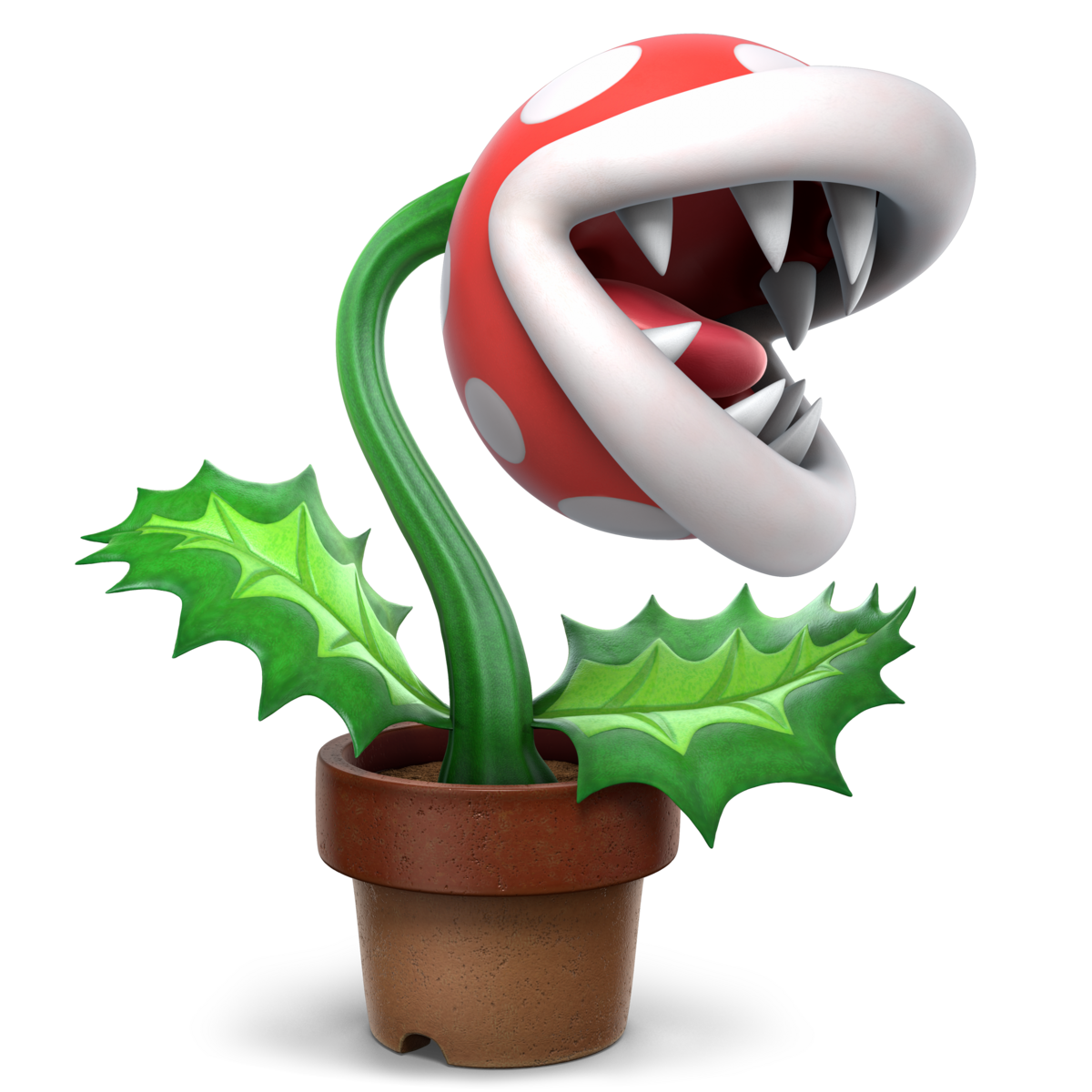
Every previous guest arrived with a resume. Piranha Plant arrived with a flowerpot. Revealed at the close of the November 1, 2018 Direct, Ultimate’s first announced DLC fighter was not a hero or a rival but a background hazard from the Mario games, the sort of thing players had spent decades jumping over without a second thought. Sakurai appeared sincerely delighted. Much of the audience assumed the whole segment was a joke.
The rollout was odd, too. Plant began as a loyalty reward: buy Ultimate and register it by January 31, 2019, and the character came free, with codes going out from January 29. On February 1, 2019, it went on open sale at $4.99 – a dollar under a Challenger Pack, with no stage and no spirits in the box – and it belongs to neither Fighters Pass, a floating oddity in the program’s structure. Its arrival in update 2.0.0 coincided with scattered reports of corrupted save files, which Nintendo said it could not reproduce after extensive testing. The timing did the plant’s reputation no favors.
The reputation recovered. In May 2025, at the 399-entrant 95 Kings of Fields 5 major in Eaubonne, France, the pro Sparg0 won the entire event using Piranha Plant for most of his run – a major title for a character sold without so much as a stage.
Joker
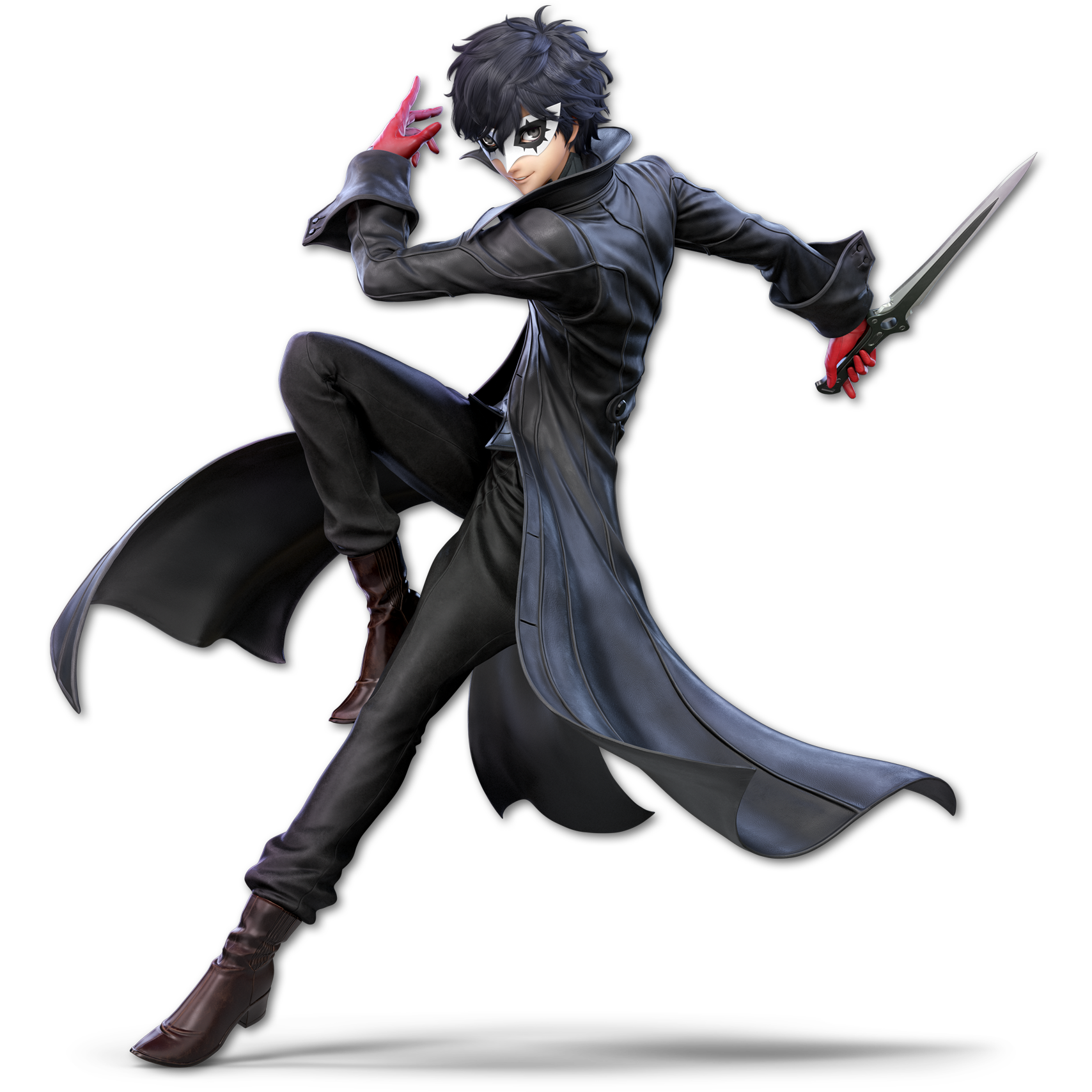
For its biggest DLC gamble yet, Nintendo went to someone else’s show. At The Game Awards on December 6, 2018, the first fighter of Ultimate’s Fighters Pass Vol. 1 turned out to be Joker, the phantom-thief protagonist of Persona 5 – a game that had never appeared on a Nintendo console. The closest the character had come to Nintendo hardware was a 3DS spinoff, Persona Q2. Buying the $24.99 pass meant paying for five fighters sight unseen, and Nintendo’s opening argument was a character its own machines could not run.
Joker released on April 17, 2019, as Challenger Pack 1, and brought his source material’s theatrics with him. His Rebellion Gauge fills as he takes damage; once full, he summons the Persona Arsene, a winged shadow-self that amplifies his attacks and upgrades his specials. Rebel’s Guard, the move that feeds the gauge, halves incoming damage while it charges – a defense that doubles as an investment.
The gamble aged well. Joker settled at 14th on the Ultimate tier list, the highest placement of anyone in the first pass, and became a signature pick of top players MkLeo and Zackray. The reveal’s shock drew comparisons to Solid Snake’s original Smash announcement, with one difference: Snake’s publisher had decades of Nintendo history. Persona 5’s amounted to one 3DS dungeon crawler.
Hero
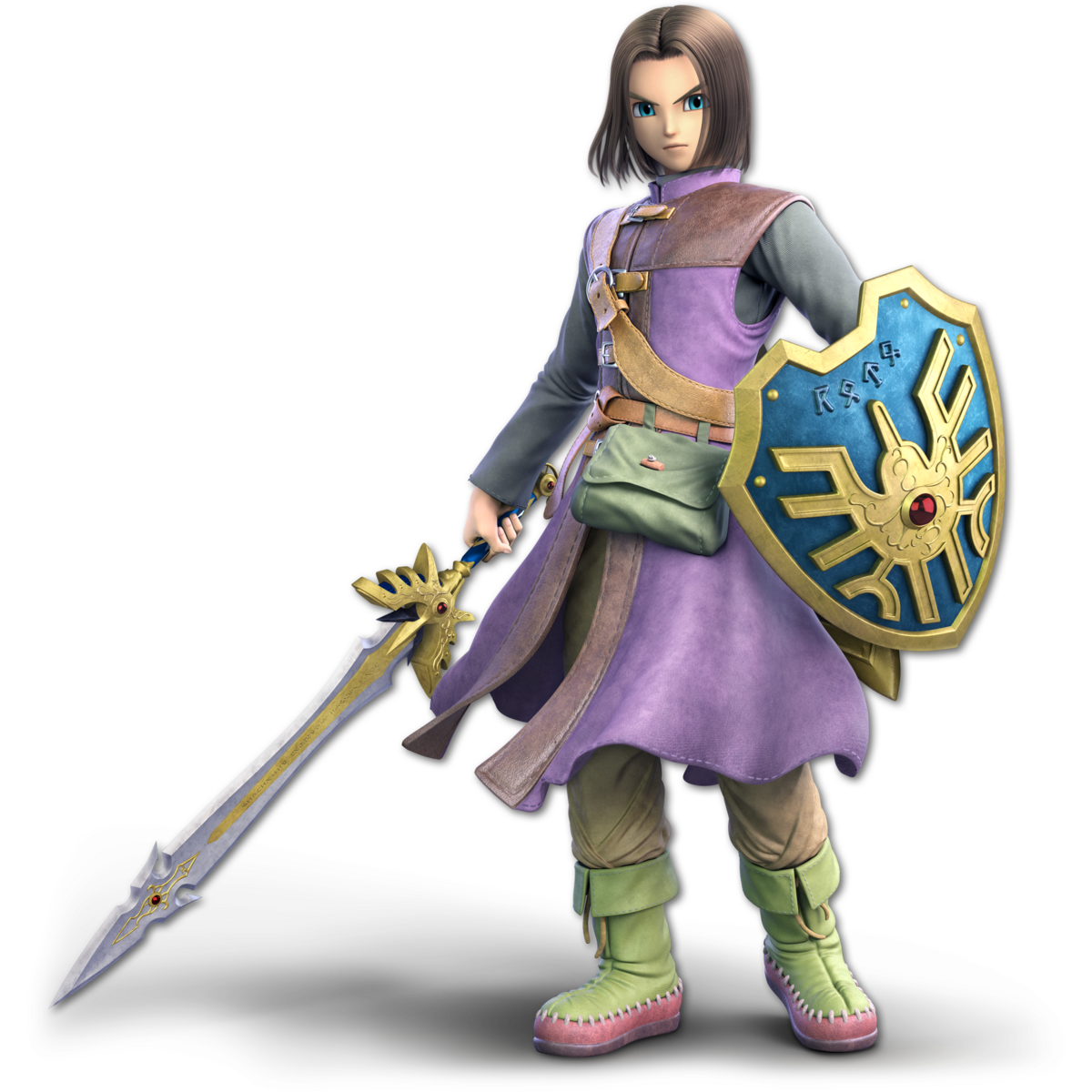
When Sakurai asked Square Enix for the Hero of Dragon Quest, producer Noriyoshi Fujimoto’s opening counteroffer was a Slime – the series’ gelatinous mascot enemy, in place of its swordsman. That detail surfaced in a February 21, 2025 interview. The swordsman went in anyway.
What arrived on July 30, 2019, as Challenger Pack 2 was really four fighters in a trench coat: the default Luminary from Dragon Quest XI, plus Erdrick, Solo, and Eight from III, IV, and VIII, all selectable skins of one moveset. And that moveset runs on honest randomness. Smash attacks carry a 1-in-8 chance of a critical hit, and his spells draw down an MP Gauge that maxes at 100 points and regenerates a single point per second – an RPG resource bar bolted onto a platform fighter, ticking quietly away while everybody else just presses buttons.
Competitive organizers reacted the way accountants react to dice. South Australia Smash Central banned Hero outright by August 15, 2019, ruling a kit this dependent on chance unreasonable in tournament play. He settled at 21st on the tier list regardless, which suggests the dice were never really the problem. Somewhere in the multiverse, the Slime version of this paragraph is much shorter.
Banjo & Kazooie
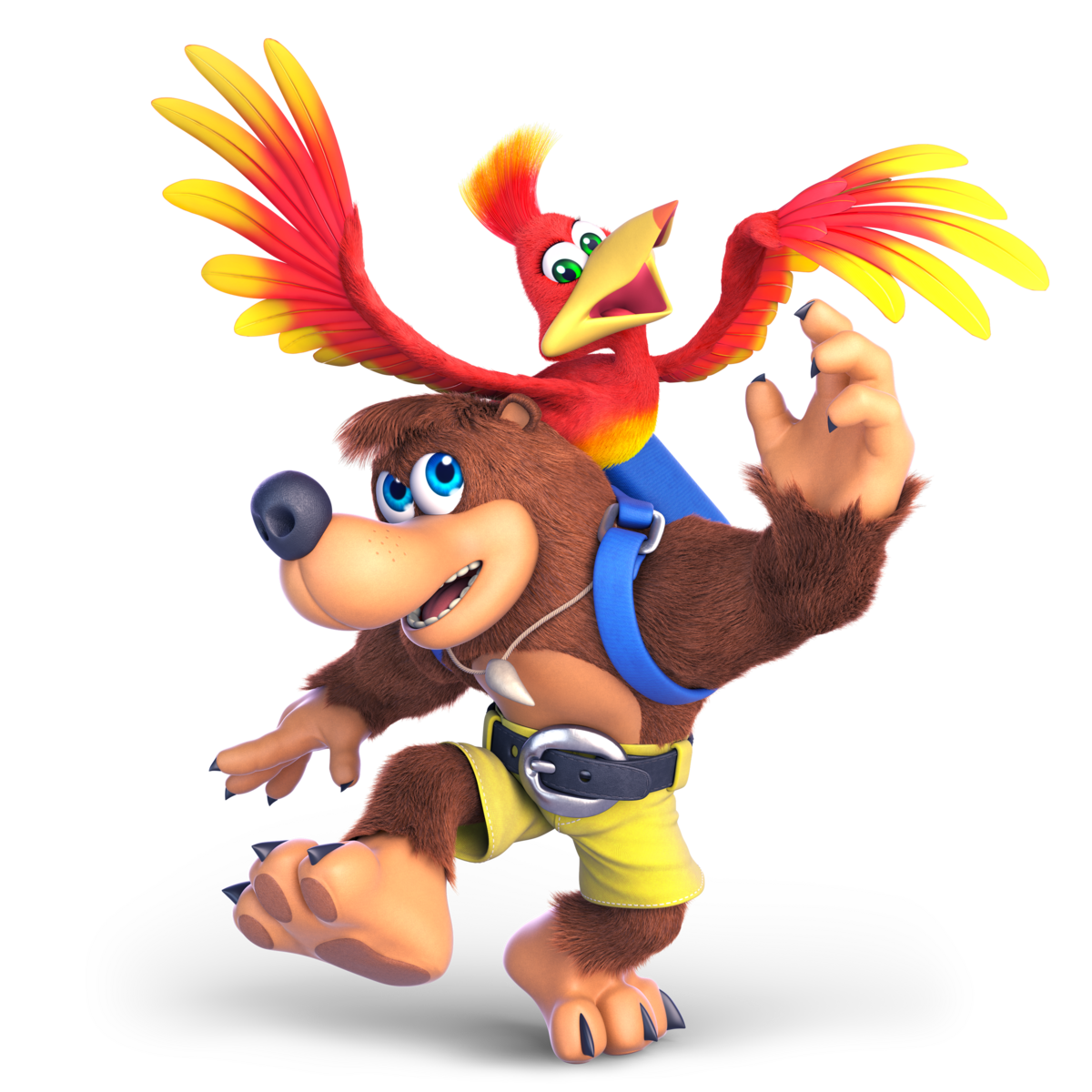
The bear and bird belonged to Microsoft, which is precisely why nobody expected them. Rare’s duo had become the textbook example of characters stranded on the wrong side of a console rivalry – and then Xbox chief Phil Spencer kept telling interviewers, as far back as March 2018, that he had ’always been open to’ Banjo appearing in Smash. He meant it. When the reveal came at Nintendo’s E3 Direct on June 11, 2019, Spencer told reporters no executive summit had been required.
The pair released on September 4, 2019, as Challenger Pack 3, and the fan service ran deep. Chris Sutherland, who voiced both characters in the 1998 original, returned to grunt and squawk anew; the music pack carried ten tracks, seven of them fresh arrangements, including Grant Kirkhope reworking his own Spiral Mountain theme. Wonderwing, the invincible charge from the old game, kept its old scarcity: five uses per stock, no more.
Mechanically they fight as one unit under one roster number, Kazooie firing eggs and extending jumps from inside Banjo’s backpack. The same update that delivered them quietly restored the Home-Run Contest mode to Ultimate. For a certain kind of late-nineties Nintendo kid, September 4, 2019 fixed two childhood grievances in a single download.
Terry Bogard
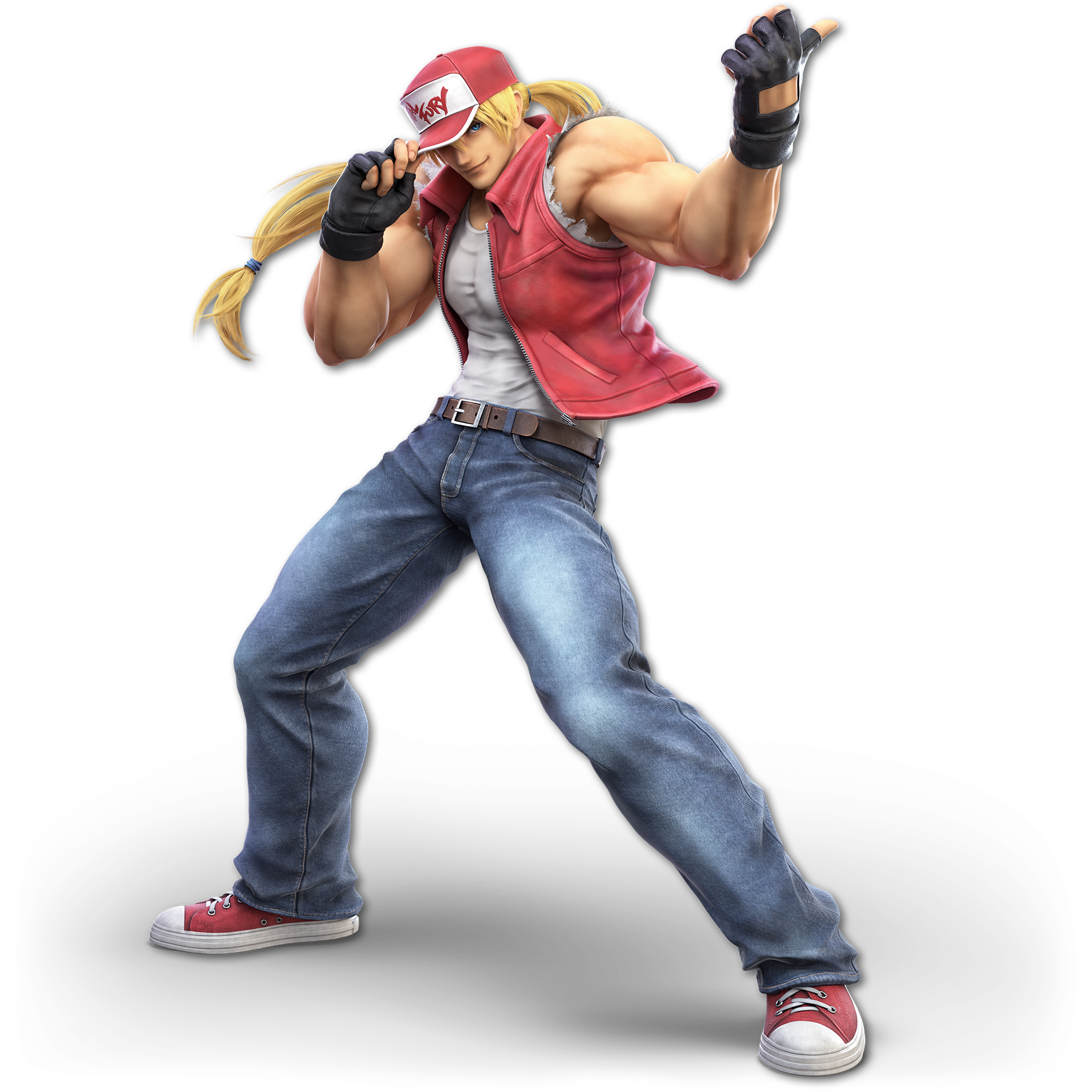
SNK approved all of it. When Sakurai’s team assembled roughly 50 music tracks spanning King of Fighters, Fatal Fury, Metal Slug, Psycho Soldier, and Samurai Shodown, they expected the licensor to trim the list to a polite ten or twenty. SNK cleared the entire thing, and Terry Bogard arrived on November 6, 2019 carrying most of a company’s arcade history in his Challenger Pack.
Terry represents Fatal Fury, the brawler SNK first shipped on its Neo Geo arcade hardware on November 25, 1991, and his implementation treats fighting-game convention as scripture. He automatically faces his opponent in one-on-one matches, so hitting behind him demands a reversed input Ultimate had never used. He became the first fighter with five basic specials rather than four, adding distinct forward and back commands. And at 100% damage a GO indicator appears, unlocking Power Geyser and Buster Wolf – desperation moves, available exactly when you are desperate, just as Fatal Fury always handled it.
The presentation announcing his November 6, 2019 release ran to Sakurai’s usual obsessive length, and its most quoted moment concerned a character who was not included. Mai Shiranui, Sakurai explained, was out because ’Super Smash Bros. Ultimate is for good boys and girls of many different ages so we decided not to feature her, please forgive us.’ The apology outlived the patch notes.
Byleth
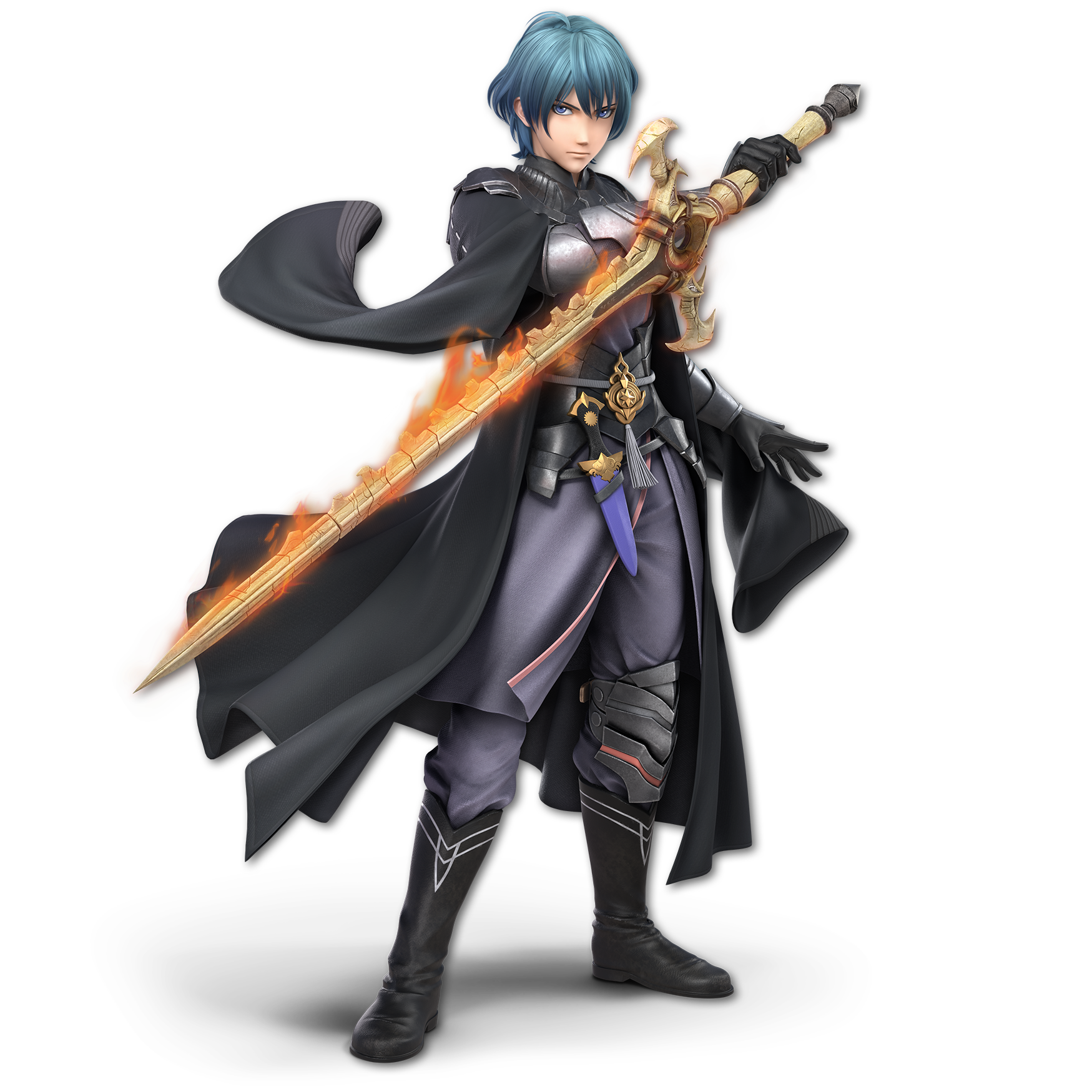
By 1:30 in the afternoon Eastern time on reveal day, January 16, 2020, the announcement video had collected roughly 33,000 dislikes against 58,000 likes – the most negative reception any Ultimate DLC reveal had drawn to that point. Byleth’s crime was context. The previous four newcomers had been Joker, Hero, Banjo, and Terry, a run of outside guests that made the pass feel like a tour of gaming at large. Then the finale turned out to be the protagonist of Fire Emblem: Three Houses: the eighth Fire Emblem fighter in the game, and another person holding a sword.
The kit deserved more curiosity than it got. Byleth wields four of Three Houses’ Heroes’ Relics at once – the whip-jointed Sword of the Creator, the lance Areadbhar, the axe Aymr, and the bow Failnaught – each mapped to a different direction, trading speed for reach and heft. Released January 28, 2020, as Challenger Pack 5, Byleth closed out Fighters Pass Vol. 1.
The retired pro ZeRo called Byleth ’by far the worst received newcomer out of all of them in Smash,’ which was measurable and true. Sakurai’s own postmortem was drier. ’Like it or not,’ he noted later, ’it’s not up to me whether another sword fighter goes in the game.’ Marketing decisions have authors; they are just rarely the person on camera.
Min Min
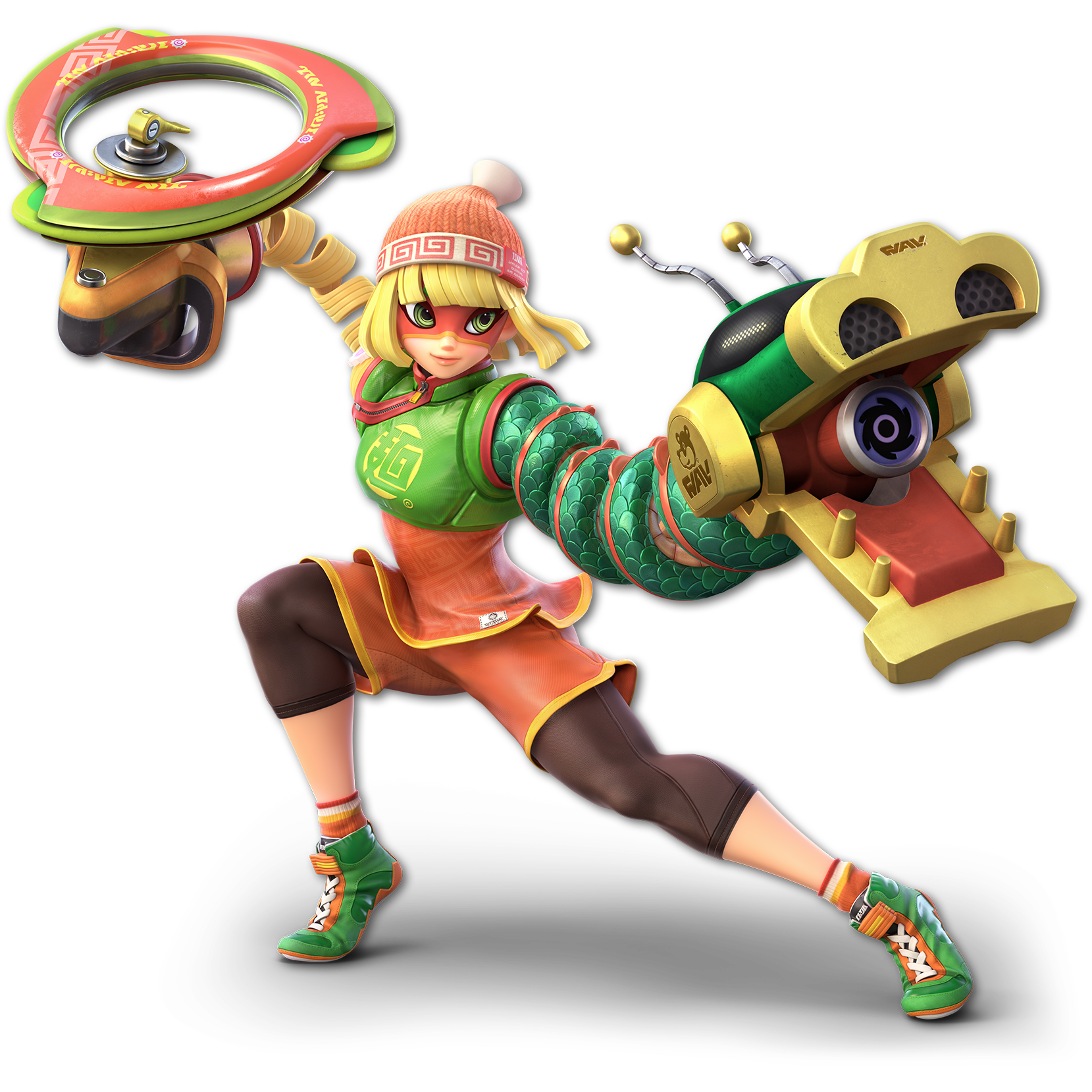
Her own trailer opens with someone else winning. Spring Man, the mascot of ARMS, takes a match at Spring Stadium and looks every inch the incoming fighter – then Ribbon Girl flattens him, the Smash invitation envelope sails past, and Min Min, mid-training at her family’s noodle restaurant, gets the callup. Spring Man was folded into the game as an Assist Trophy. The mascot lost his own audition.
The selection was an inside job. Nintendo had confirmed an unnamed ARMS fighter in its March 26, 2020 Direct Mini, leaving fans to argue for months until the June 22, 2020 broadcast settled it. Sakurai explained the choice with unusual bluntness: ’To be honest, it’s because Mr. Yabuki, the producer of ARMS, said, “I want Min Min.”’ In a 2025 interview he added that he had been weighing the ninja Ninjara himself before deferring to the producer’s pick.
Released June 29, 2020, as Challenger Pack 6, she opened the six-pack Fighters Pass Vol. 2 and imported her home game’s logic wholesale: attack and special buttons control her left and right arms independently, the left permanently the laser-charging Dragon, the right swappable between the quick Ramram and the slow, punishing Megawatt. Haruna Takatsu, her voice since ARMS launched in 2017, reprised the role. Yabuki asked; the roster answered.
Steve
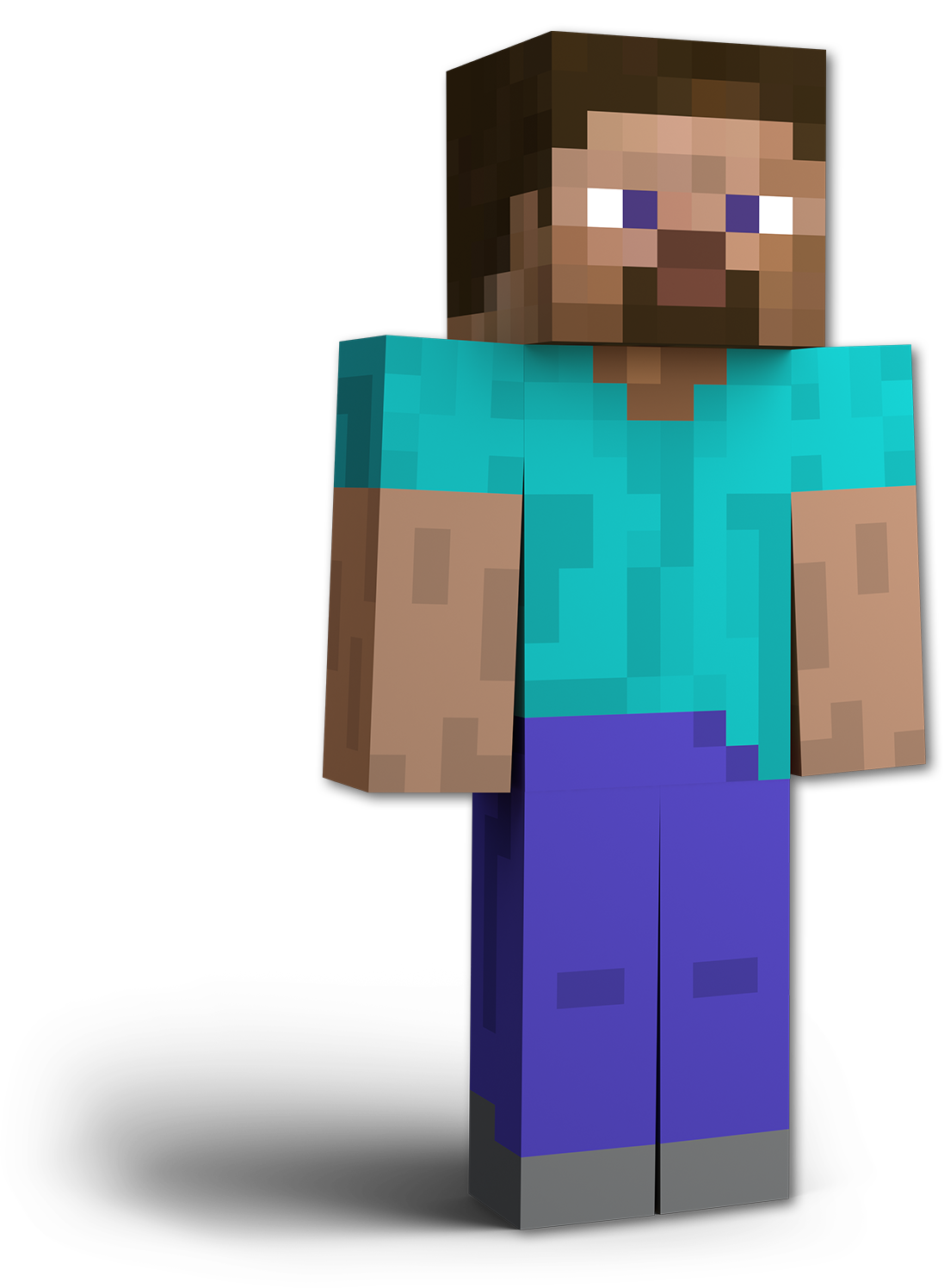
On October 1, 2020, the reveal was widely reported to have knocked Twitter over, and Sakurai acknowledged the outage in a follow-up message. The idea had been in motion far longer than the internet knew: Daniel Kaplan, a former Mojang business developer, said talks about putting Steve in Smash began ’at least five’ years before the announcement.
The delay had an engineering explanation. Minecraft’s defining verb is placing blocks, and Smash stages were never built to accept them. ’Plus, we have to rework all our existing stages so that blocks can be placed in them,’ Sakurai said of the undertaking. The finished fighter, released October 13, 2020, as Challenger Pack 7, mines the ground he stands on, crafts tools that upgrade from wood to iron to diamond mid-match, and wears them out through use – resource management in a genre built on reflexes. The Minecraft World stage guarantees harvestable stone and wood in every biome so the kit never goes hungry. Alex, Zombie, and Enderman ride along as alternate skins.
The corporate logic was unanswerable. Mojang announced on October 16, 2023 that Minecraft had passed 300 million copies sold, behind only Tetris, whose licensed versions total more than 520 million. Smash had spent years courting gaming royalty. This was the commoner who outsold all of them.
Sephiroth
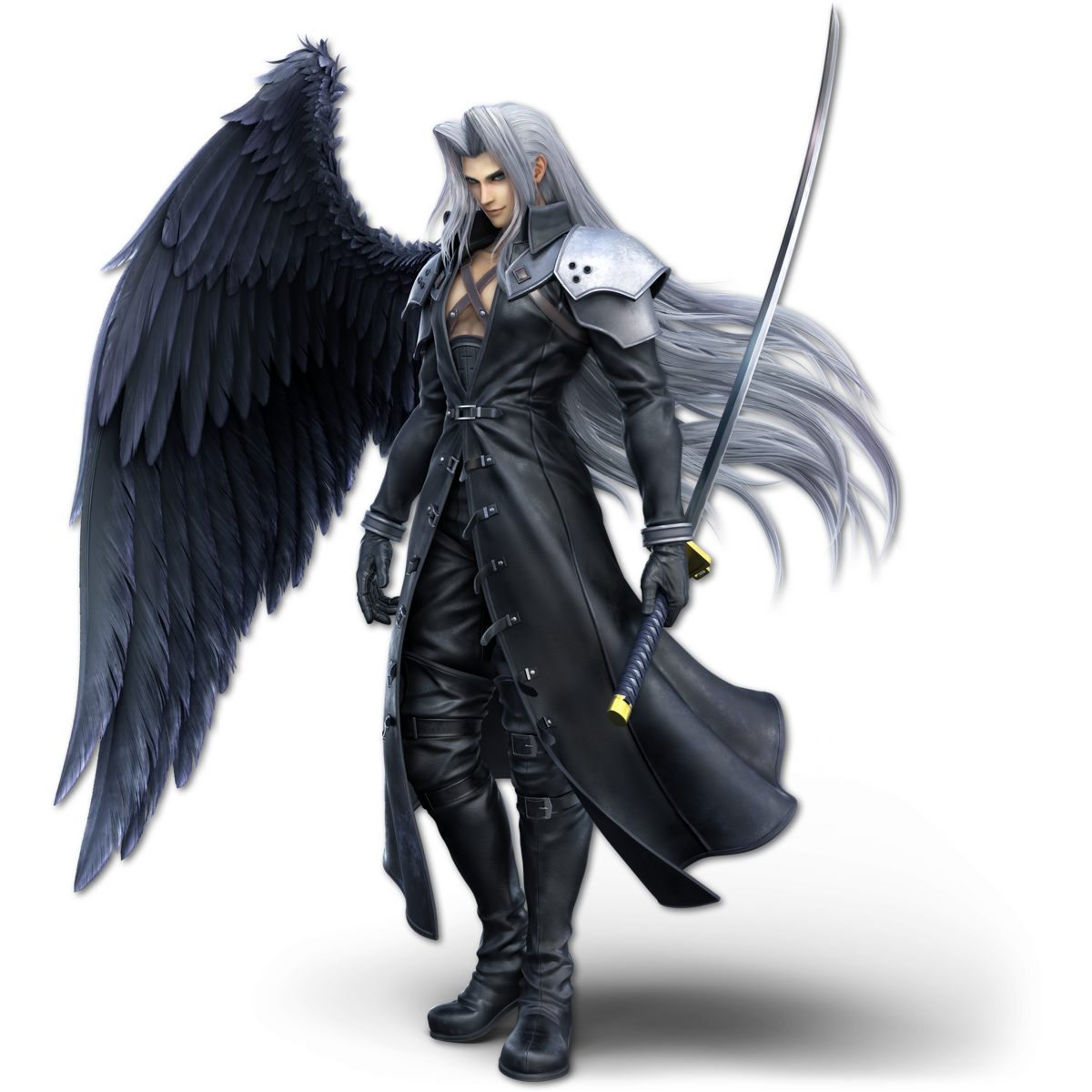
For five days, December 17 to 22, 2020, the only way to play Sephiroth early was to beat him: Fighters Pass Vol. 2 owners could battle him as a limited-time boss, with the fighter unlocking only on a win. Nintendo turned a release date into a duel, then opened the doors to everyone on December 22. The reveal had come at 2020’s Game Awards on December 10, in a trailer that let the one-winged silhouette speak for itself.
Sephiroth is fighter number 78 and the third Square Enix entry on the roster, following Cloud and Hero, so Final Fantasy VII alone supplies Ultimate with both a hero and his murderer. Sakurai personally illustrated the design document of his attack poses, and noted that the Masamune – a blade six to eight feet long – gets wielded one-handed. The sword’s reach is the whole thesis: enormous range, thin margins. His comeback mechanic sprouts the single black wing at high damage, boosting his damage 1.3x and adding a third jump until the stock ends.
The character’s future employer keeps him busy. Final Fantasy VII Revelation, the third part of the remake trilogy, is scheduled by Square Enix for Spring 2027, with Sephiroth once again at the center of it. Smash got the villain between apocalypses. He arrived, as ever, sword-first.
Pyra & Mythra
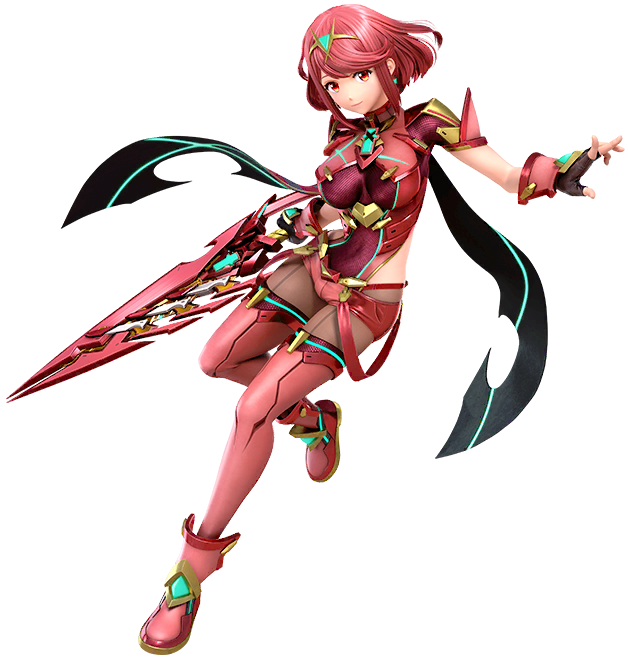
Challenger Pack 9 is the only one that hands over two fighters. Pyra and Mythra, the twin Aegis blades of Xenoblade Chronicles 2, occupy a single character-select slot and swap into each other mid-battle, yet Nintendo’s official numbering counts them separately – Pyra is fighter 79, Mythra is fighter 80. Every count dispute about Smash DLC eventually routes through this pack.
The original plan was stranger. Sakurai’s team first considered adding Rex, the game’s actual protagonist, fighting alongside Pyra – and abandoned it because independently controlling two characters at once proved unworkable. So the hero stayed home, and his swords got the invitation; the reveal trailer, from the February 17, 2021 Direct, shows Rex searching for Pyra while she is off having a Smash career. The pair split cleanly: Pyra for power and range, Mythra for speed and combos. The down-special swap grants brief intangibility from frame 6, with no cooldown – unlike Pokemon Trainer’s enforced rotation, you may flicker between them as fast as you can press the button.
They released March 4, 2021, and the arrangement never stopped paying. When the Switch 2 Edition of Xenoblade Chronicles 2 arrived digitally on July 30, 2026, both received new outfit designs that carry into the game’s cutscenes.
Kazuya Mishima
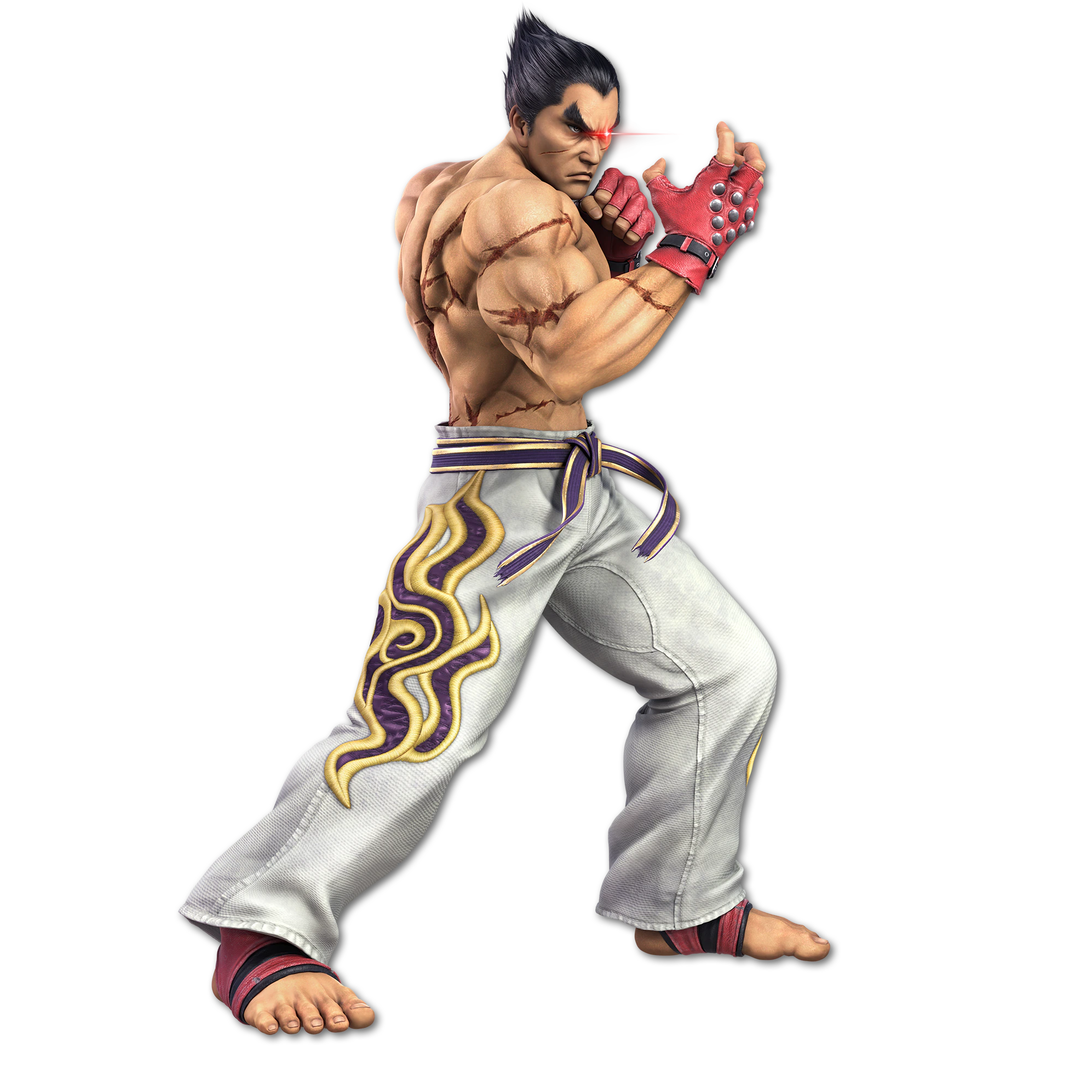
Kazuya’s reveal trailer is a list of assaults. He spends it hurling Ganondorf, Captain Falcon, Pit, Min Min, and Marth into a volcano – then picks up Kirby, reconsiders, and lets him go. Sparing Kirby, in that company, counts as restraint.
The volcano is a citation, not invention: Tekken 2 ends with Heihachi hurling his unconscious son into one and leaving by helicopter as it erupts. Revealed June 15 and released June 29, 2021 – June 30 for anyone outside the Americas – as Challenger Pack 10 and official fighter number 81, Kazuya plays like a Tekken cabinet wheeled onto a Smash stage, right down to a Rage mechanic lifted from Tekken 7: take enough damage and all of his attacks gain a 1.1x boost until he spends it on the cinematic Rage Art. It is the rare crossover import that arrives carrying its own economy rather than just its own animations.
Harada helped shepherd the character into somebody else’s fighting game, then walked away from his own. At the close of 2025, after 31 years with Tekken, he confirmed his departure from Bandai Namco on X. Kazuya remains in Ultimate, still throwing people toward lava, quietly outlasting the man who made him.
Sora
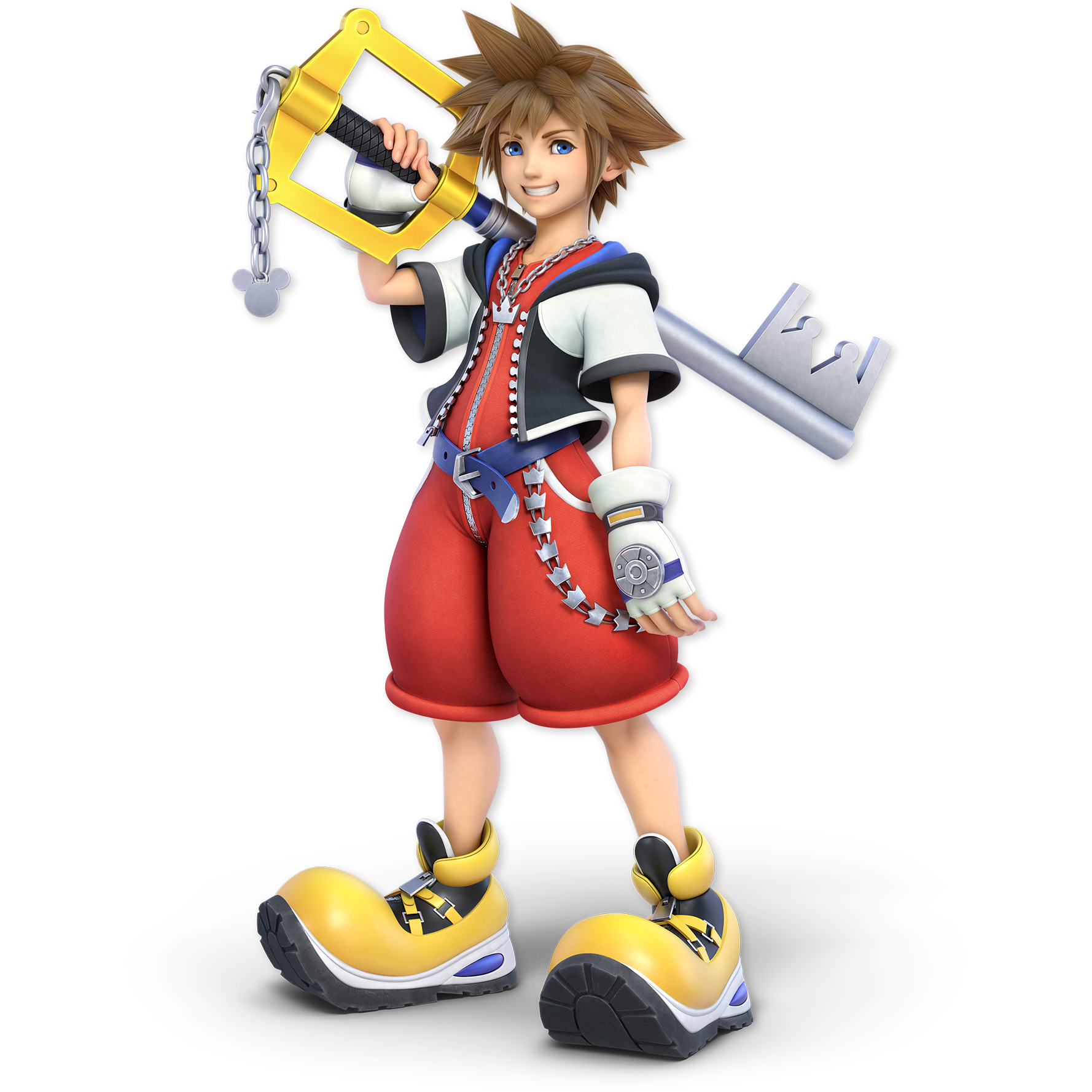
Buried in the 2015 ballot results was a name Nintendo declined to read out. When Sakurai announced Bayonetta as the winner among realizable picks, he left one thing unsaid until 2021: Sora, the Keyblade-carrying lead of Kingdom Hearts, had been ’the most requested new fighter’ of the entire worldwide vote. The obstacle was that Sora is half Disney property, and Disney’s Japanese branch had already declined. The deal that finally happened traces to a chance meeting – Sakurai ran into a Disney representative at an awards venue, the conversation went well, and the impossible license got signed. Nintendo expanded Fighters Pass Vol. 2 from five planned characters to six to fit him.
Revealed October 5, 2021, in The Final Mr. Sakurai Presents and released October 18 as Challenger Pack 11, Sora arrived with Disney’s fingerprints in the negative space: no Donald, no Goofy, his stage stripped of their imagery, one Mickey-shaped charm on the Keyblade as the sole surviving mouse reference.
He is fighter number 82, the last name on the roster, and his arrival closed the program for good. Nobody who bought him had to do anything else – no trial, no hidden match – none of the rituals cataloged in every secret character unlock method in Smash history. The series spent its whole life making players earn fighters. It ended by taking requests.
Frequently Asked Questions
Will there be more Smash DLC fighters?
None have been announced. Ultimate’s paid roster has not changed since Sora arrived, and as of August 2026 Nintendo has announced no successor game and no further fighters. Sakurai said in interviews published through July 2026 that fan requests for new fighters ’never seem to stop’ and that any sequel would need his personal involvement.
Can you still buy the Smash 4 DLC fighters?
No – not on Wii U or 3DS. The eShop for both consoles stopped accepting new purchases on March 27, 2023, which took all 7 Smash 4 fighters off sale permanently. Nintendo has confirmed that previously purchased DLC remains redownloadable, so existing owners keep access to the fighters they bought.
How much did Super Smash Bros. Ultimate cost with all of its DLC?
The complete package totals $119.96: the $59.99 base game plus both Fighters Passes and the standalone Piranha Plant. That figure comes from Nintendo’s own eShop pricing, and it means the fighter DLC, taken together, cost about as much as the game that contained it.
Which Super Smash Bros. games had no DLC fighters?
The first three: Super Smash Bros. on the Nintendo 64 (1999), Melee (2001), and Brawl (2008) sold no characters at all. Every fighter in those games shipped on the cartridge or disc, with hidden ones earned through play, and paid fighters only began once the Wii U and 3DS storefronts made selling them practical.
Do Mii Fighter costumes count as DLC fighters?
No. The costumes, sold for $0.75 each since 2019, are cosmetic outfits for the customizable Mii Fighter types rather than playable additions to the roster, so every count of paid Smash fighters excludes them by definition. Buying one changed a wardrobe, not a roster.
- Nintendo official Super Smash Bros. Ultimate fighter data
- Super Smash Bros. for Wii U and 3DS – Official DLC page
- Nintendo – Kazuya Mishima release announcement
- SmashWiki – Downloadable content (Super Smash Bros. Ultimate)
- SmashWiki – Downloadable content (Super Smash Bros. 4)
- Source Gaming – The Corrin Controversy
- Nintendo Life – Piranha Plant goes on sale as paid DLC
- VGC – Byleth draws the most divisive DLC reveal reaction