Every Trial Captain and Island Kahuna in Pokemon Generation 7 (Alola)
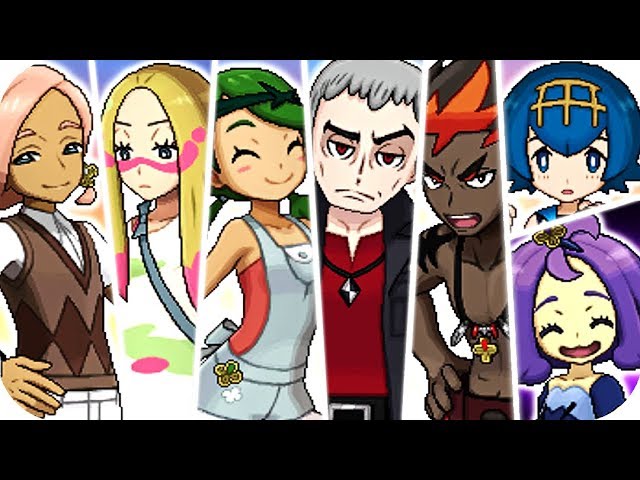
Pokemon Sun and Moon arrived in November 2016 with no Gym in them anywhere. No badges, no row of buildings each holding a puzzle and a specialist and a handshake, nothing resembling the circuit that all eight of Kanto’s original Gym Leaders had been running since the series began. TechCrunch, reviewing three days before release, called the removal of Gyms the most startling change for longtime Pokemon fans.
What went in instead has a genuinely odd feature at its centre. A captain designs a trial and walks the trial-goer through it, but the thing waiting at the end is a Totem, a wild Pokemon swollen and stat-boosted and inclined to shout for reinforcements. The captain is usually a guide rather than an opponent. The kahunas are the opponent, one to an island, and each of them was handed the job by that island’s guardian deity rather than by anybody who could be argued with.
So Alola’s authority runs in two grades over four islands and four games, and what follows is everyone who carried a title while the player was in the region: a captain who went a whole game pair with no trial to preside over, a kahuna who accepted one appointment and flatly refused another, and nine others. The man who had already handed his captaincy on before the story starts is a separate case, and the FAQ deals with him.
Eleven people hold a title in Alola’s island challenge across Pokemon Sun, Moon, Ultra Sun, and Ultra Moon: seven trial captains, each attached to one type and one trial site, and four island kahunas, one to each of the region’s main islands.
Ilima
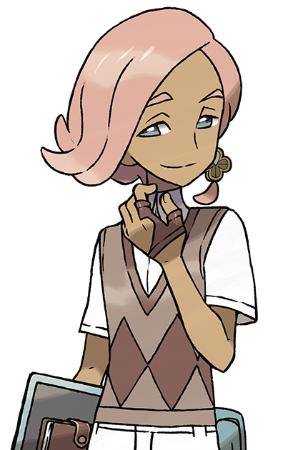
Which Pokemon guards Ilima’s trial depends not on whether you bought an Ultra version but on whether you bought Sun or Moon. Verdant Cavern’s Totem is a Gumshoos in Sun and in Ultra Sun, and an Alolan Raticate in Moon and in Ultra Moon, and that Raticate is a Dark type as well as a Normal one, which quietly undercuts the premise of a Normal-type trial. Both turn up at level 12 holding a Pecha Berry, with an aura that raises their Defense a stage.
Ilima is the Normal-type captain of Melemele Island and a graduate of the Trainers’ School, where the students still talk about him. A Pokemon Company announcement three weeks before launch described him as a graduate considered a hero by the students of his former school. His mother, an actress he travelled the world with as a boy, puts it less delicately: Ilima gained the captainship because he exudes pure skill. Captainship appears in no other trainer title the English localisation has ever written.
Then there is the bug nobody ever fixed. In Moon and Ultra Moon, every time Totem Raticate appears on screen, the game plays Gumshoos’s cry instead of its own. A remake later, Ilima’s Totem still opens its mouth and makes the wrong animal’s noise.
Lana
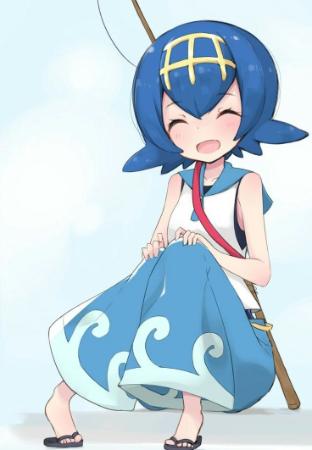
Kyogre lives in Brooklet Hill, Lana tells the player in Sun and Moon. Take the bait and she lets it sit a beat before adding: It was only a joke. You’re rather trusting, aren’t you? This is the Water-type captain of Akala, and she opens with a lie to see what you do with it.
The trial itself changed shape between releases. In Sun and Moon it happens entirely inside the Totem’s Den, where a School Form Wishiwashi at level 20 rears up out of one small fish and calls in an Alomomola that knows Water Gun, a move Alomomola cannot otherwise learn. The Ultra pair spreads the whole thing across the hillside: the player drives Wishiwashi downstream out of two lakes, and just as they gather to school, an Araquanid arrives and scatters them. Araquanid also sits on Lana’s own team in every version, which makes the substitution feel less like a redesign than an inside job.
She hands over a Waterium Z, a fishing rod she made herself, and ten Dive Balls. Every other captain in Alola keeps their Pokemon in Ultra Balls; Lana uses Net Balls. Then, with the trial finished and nothing whatever riding on it, she asks whether the player knew she once reeled in a red Gyarados.
Kiawe
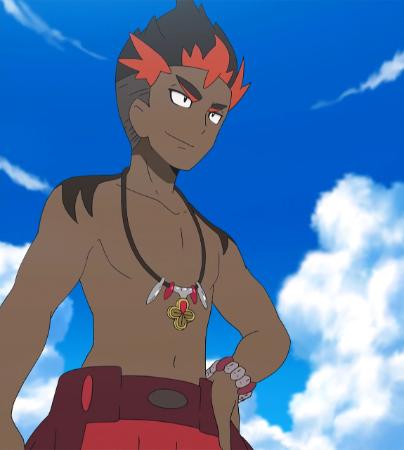
There is no way through Kiawe’s trial without being attacked. Three Alolan Marowak dance at Wela Volcano Park, three times over, freezing at the end of each performance while the player points at whichever dancer broke the pattern. Whoever gets pointed at then attacks, correct or not. Being right buys you nothing except the next dance.
Ultra Sun and Ultra Moon kept the dance and swapped the monster at the end of it, producing a tidy piece of symmetry. The Salazzle that used to be the Totem is now summoned as backup by the Alolan Marowak that replaced it. That puts two unrelated Alolan Marowak in Kiawe’s orbit at once, because he has raised one of his own, and his carries a Firium Z.
He is the Fire-type captain of Akala, based in Paniola Town, billed on the official Japanese site as the reticent dancer. He has also been saving to leave Alola and study fire dancing abroad, and in a post-game scene that only Sun and Ultra Sun players ever see, his boss at the Thrifty Megamart lets him go from his part-time job. By the Ultra pair he is sizing up a hiker named David as his replacement. David would rather dance.
Mallow
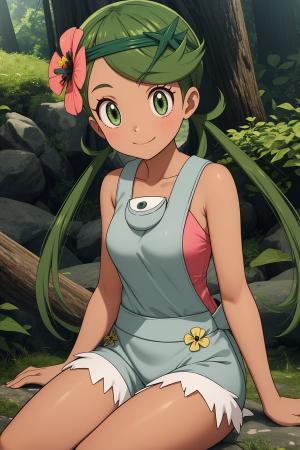
Somewhere between Sun and Ultra Sun, Mallow’s signature dish got a promotion. In Sun and Moon she sends the player after four ingredients – a Mago Berry, a Tiny Mushroom, a Revival Herb and a Miracle Seed – and cooks the Mallow Special, whose smell draws Totem Lurantis out of Lush Jungle. The Ultra pair cuts the recipe to three, a Mago Berry, honey and a Big Root, and renames the result the Super Mallow Special. Fewer ingredients, grander title.
Lana and Kiawe assist, though not with ingredients. Kiawe lends a Thick Club for pounding, in every version; in Sun and Moon, Lana turns her Rocky Helmet upside down and uses it as a pot. Lurantis never changes across the four games – level 24, a Power Herb, an aura worth two stages of Speed – and only the Pokemon it calls for help are different.
Mallow runs Akala’s Grass-type trial, and she is also the sole source of the one institutional fact everybody repeats about Alolan captains. Asked whether she thinks about the future, she says she has it planned out, because we have to move on from being captains when we turn 20 anyway. That is the entire evidence for the retirement age. It is one line, from one captain, in Pokemon Moon.
Sophocles
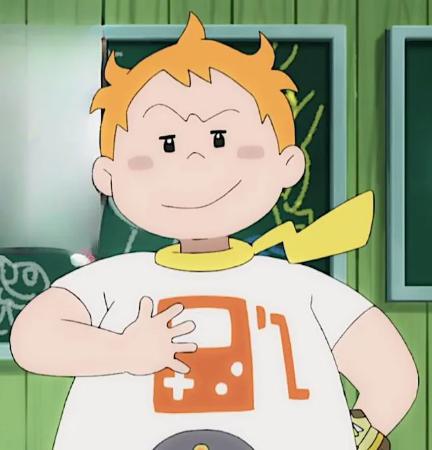
Molayne held the Ula’ula captaincy before Sophocles did, and he handed it on himself. Usually it’s the island kahuna who appoints the captains, he says, in all four games. But there are some, er, unusual circumstances here on Ula’ula. The unusual circumstance is that he gave the post to his own cousin, and once the trial is over he tells Sophocles as much: I’m sure that I made the right choice in naming you captain. Even if you are my cousin.
Sophocles is an inventor, and in Sun and Moon his trial runs on a machine of his own devising that promptly blows a fuse and locks him behind a security door. Getting him out means answering four audio questions about sounds. Answering one wrong costs the player nothing whatsoever, because the shock goes to Sophocles, stuck on the far side, who notes that he is going to be an Electric type by the time he gets out of there.
Ultra Sun and Ultra Moon binned the quiz and replaced it with a puzzle about lining up nine Charjabug. What survives both versions is Sophocles’ own summary of his career. I was really nervous, he says, the moment the Totem goes down. So somehow I ended up captain.
Acerola
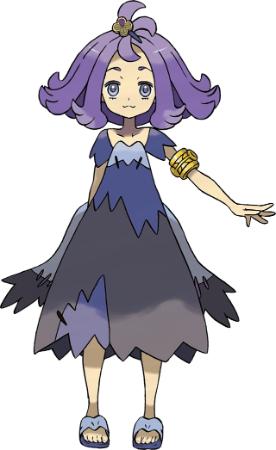
Acerola is a trial captain who is never once fought as a trial captain. Her trainer data carries the captain class with a note attached saying it is never used in battle, because by the time the player is in any position to fight her she is sitting third in Alola’s Elite Four, and that is the class the game hands her instead. No other captain in the region holds a League chair as well.
She holds it because Nanu did not want it, a substitution she explains to challengers herself, cheerfully, as something she will simply have to battle hard enough to make up for.
Her trial is in a wrecked supermarket, and the wreckage has a cause. The Thrifty Megamart was built on ground sacred to Tapu Bulu, and Tapu Bulu destroyed everything standing on it. Inside, the player photographs three ghosts with the Rotom Pokedex, each of which attacks the camera, while something shaped like a Pikachu keeps darting ahead into the next room. It is a Mimikyu, wearing the costume because Pikachu merchandise is popular and it would like, very much, to be liked. Afterwards Acerola hands over the Ghostium Z and remarks that the building never had a back room. Go back inside and the door is gone.
Mina

In Sun and Moon, the only person in Alola who ever calls Mina a captain is Mina. She introduces herself at Vast Poni Canyon with I’m Mina. I’m the captain, then undercuts it in the same breath: I actually just wander around doing my art, so I don’t have an actual trial or anything. At the Poni Gauntlet she offers the player a battle against Captain Mina, referring to herself in the third person. Nobody else in the script ever obliges. The first character who says it out loud is Lillie, and only in the remakes.
Nor does anything establish who made her a captain. Kahunas appoint captains, and Poni Island did not have one. The record simply notes that Mina does not mention who selected her, and leaves the question sitting there.
A trial arrived at last with the remakes, and it is the oddest in the region. The player fights Mina for a pink petal, then tours the rest of Alola collecting a differently coloured one from each captain still standing at their post, or from whoever is covering for them, and brings all seven back so she can press them into a Rainbow Flower and summon a Ribombee. It is Alola’s only Fairy-type trial, and the type itself was barely a generation old, having arrived with Kalos and its eight Gym Leaders, home of the series’ first Fairy Gym.
Hala
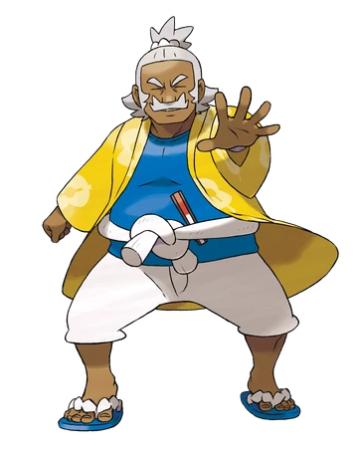
The first Pokemon the player owns in Sun and Moon is handed over by Hala, in Iki Town, before anybody has explained what an island challenge is. The remakes rearranged the scene so that Professor Kukui does the handing over on Hala’s behalf, and the Pokemon still technically belong to Hala, which rather raises the question of what Kukui thinks he is doing.
He is Melemele’s Fighting-type kahuna and the first grand trial anybody faces. In Sun and Moon he fields a Mankey, a Makuhita and a Crabrawler carrying his Fightinium Z; the remakes swap the Mankey for a Machop and nudge every level up by one. Beating him earns the first stamp on the Trainer Passport, which does the work a badge does elsewhere: traded Pokemon obey up to level 35. He also sat on Alola’s Elite Four in Sun and Moon, until Molayne took the chair in the remakes and left Hala to be challenged again back home.
His grandson Hau tags along for the entire game. His son never appears at all, being a strong trainer who by report hated being a kahuna’s son and left the region. One generation later the series put the buildings back, giving ten Gym Leaders who ran Galar’s stadiums the sort of audience Hala never had. Hala heals your team, then referees his own grandson in a village square.
Olivia
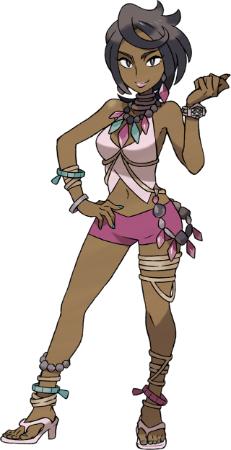
Serebii is sending trainers to the wrong island, on both of its grand trial pages, as of this writing. After the three Akala trials, they say, Lillie asks to be taken to the Ruins of Hope, where Olivia issues her challenge. The Ruins of Hope are on Poni Island and belong to Tapu Fini. Olivia’s grand trial is at the Ruins of Life, on Akala, which is where Bulbapedia’s own battle data and Pokemon Database both put it.
The live version of this very list used to get a second thing wrong about her. Her Lycanroc is in Midnight Form in every battle she fights across the four games, grand trial and Elite Four and rematch alike, without a single exception. The Midday Form belongs to a different Olivia in a different continuity.
She is Akala’s Rock-type kahuna, and she keeps a jewellery shop at the crossroads in Konikoni City with her bedroom above it. For the remakes she rebuilt most of her grand trial team, and the Nosepass and Boldore of Sun and Moon gave way to an Anorith and a Lileep, two fossils. Her Elite Four seat, unlike Hala’s, survives all four games. The official blurb notes she was chosen young and still insists she is perfectly ordinary.
Nanu
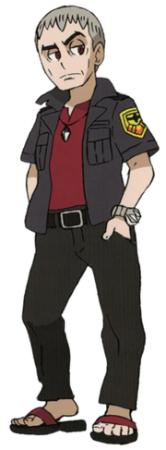
Nanu was given one job he could not turn down and offered another he could. The guardian deity Tapu Bulu made him kahuna of Ula’ula; Professor Kukui later offered him a seat on the Elite Four, and Acerola relays the answer: he said maybe he can’t refuse a tapu choosing him to serve as kahuna, but he’d be darned if he had to serve as one of the Elite Four just because some guy asked him.
He lives on Route 17, in the Po Town Police Station, next door to Team Skull’s headquarters, in a house full of Alolan Meowth. His stated reason is financial. The rent’s real cheap, he says, and no one else is crazy enough to stay this close to Team Skull. His grand trial is not held there. It happens elsewhere on the island, in Malie City.
Before any of this he was an elite officer of the International Police, codename 000, and outranked both of the officers now working the Alola case. He also covered Poni Island’s grand trials through the years it had no kahuna of its own, and no source names who assigned him the duty. Beat him and he becomes a standing lunch date: order the right set at Malie City’s sushi restaurant once a day and Nanu will sit down opposite the player and pay for both meals.
Hapu

Only one kahuna in Alola is appointed where the player can see it happen. At the Ruins of Hope, with Lillie standing there as well, Tapu Fini gives Hapu a Sparkling Stone, brown where the player’s own is white or black, and Poni Island has a kahuna again. Hala, Olivia and Nanu are all long since installed by the time anyone meets them; only this one arrives on screen.
The vacancy was her grandfather’s doing, in the sense that dying tends to create one. He died suddenly some years back, she says, and we were left without a kahuna on Poni. That is the whole of what the games specify. He is never named, no number of years is ever given, and Serebii’s line that he passed recently sits awkwardly against the script.
She fights with four Pokemon where the other three kahunas bring three, hers is the one grand trial that relocates between releases, from Vast Poni Canyon to Exeggutor Island, and it pays out more than any other. The island challenge is a fixed route walked island by island in order, which is what makes Paldea’s eight Gym Leaders, whose badges can be taken in any order, two generations later, feel like a different sport. Hapu’s first day in the job is somebody else’s last.
Frequently Asked Questions
Was Molayne ever a Trial Captain in Pokemon Sun and Moon?
Yes, but never while the player is there. He held the Ula’ula captaincy first and passed it to his cousin before the story begins, saying so outright in all four games: he was the captain once. This list counts the people holding the title during the story, so he is not on it.
How many trials are there in the Alola island challenge?
Seven in Sun and Moon, eight in Ultra Sun and Ultra Moon, the extra one being Mina’s. One of them, at Vast Poni Canyon, has no captain whatsoever. The Dragonium Z sits at the end of it regardless, and nobody in the region appears to have thought this strange.
What replaced Gym Badges in Alola?
Stamps on a Trainer Passport, awarded by the four kahunas, plus a Z-Crystal from every captain and kahuna. Alola was the first core-series region set in the modern day to run its whole circuit without a Gym, a Gym Leader or a badge anywhere in it, and the only one so far to hand out jewellery instead.
Is there an island kahuna for Aether Paradise?
No. Alola has four main islands, each with one guardian deity, and each deity picks that island’s kahuna. Aether Paradise is artificial and has no guardian of its own. It is the Aether Foundation’s headquarters, run by a president rather than by anybody the tapu had a say in choosing.
How did trainers finish the island challenge before Alola had a Pokemon League?
They climbed Mount Lanakila and fought all four kahunas back to back, in the manner of an Elite Four, to become an island challenge champion. Kahili, who now sits on the actual Elite Four, is on record as having done exactly that before the League building existed.
What is a Totem Pokemon?
The wild Pokemon waiting at the end of each trial, scaled up and given an aura that raises its stats, and able to call another Pokemon in mid-battle to fight alongside it. It is what a trial-goer actually fights. The captain who set the trial usually just watches.
- Bulbapedia: Trial Captain (roster of all seven captains, trial sites and Totem Pokemon)
- Bulbapedia: Island kahuna (roster of all four kahunas and how they are chosen)
- Official Pokemon Sun and Moon site (Japan): character index, with the Captain and Island King / Island Queen titles
- Pokemon.com: Alola Impresses with New Activities (on Mina taking her captain duties more seriously)
- Serebii: Pokemon Sun and Moon trial captains
- Serebii: Pokemon Sun and Moon grand trials
- Pokemon Database: Sun and Moon kahunas and Elite Four
- Pokemon Database: Ultra Sun and Ultra Moon kahunas and Elite Four