Every Third-Party Character Ever Added to Super Smash Bros
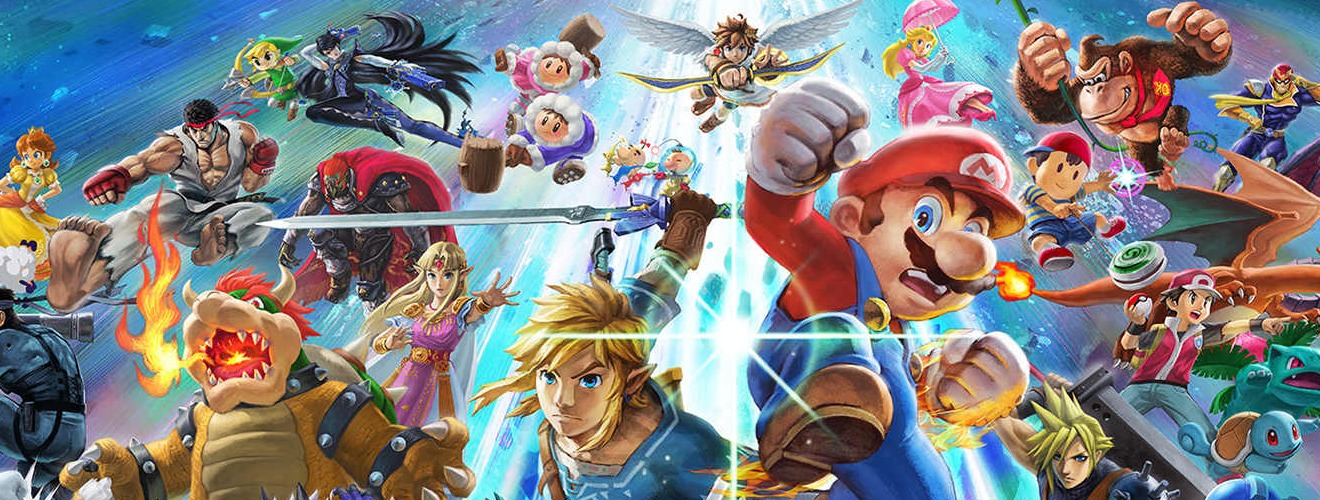
Shigeru Miyamoto closed an after-hours Nintendo event on May 10, 2006 with a trailer for a Wii game called Super Smash Bros. Brawl, and at the end of it stood Solid Snake – Konami’s gravel-voiced stealth operative, a man from an M-rated series about nuclear deterrence, waiting politely in a lineup of Nintendo mascots. The series had never let an outsider in before. It has rarely stopped letting them in since.
For two entire games the roster was a company picnic. Super Smash Bros. on the Nintendo 64 in 1999 and Melee in 2001 drew from Nintendo’s own catalog and nowhere else, and the notion of borrowing a rival’s mascot for a crossover fighter read as legal fantasy. Brawl broke the seal with two guests, and the arrangement matured from favor into product line: every paid DLC fighter Smash ever sold includes most of the names below, each with a launch date, a price tag, and a trailer of their own.
The wall stayed down for good. By the time the last download arrived, the span from Snake’s reveal to the final guest ran just over 15 years, and the outsiders had developed their own class system: some franchises sent fighters, while Bomberman and Shovel Knight settled for places among all 59 Assist Trophies in Ultimate – in the building, never on the card. What follows is every outside character who made the actual roster, in the order each one arrived.
The Super Smash Bros series has added 18 third-party characters: fighters owned by a company other than Nintendo at the moment of their addition, echo fighters included. The run opens with Brawl in 2008, closes with Ultimate’s final download in 2021, and draws on owners ranging from Konami to Disney.
Solid Snake
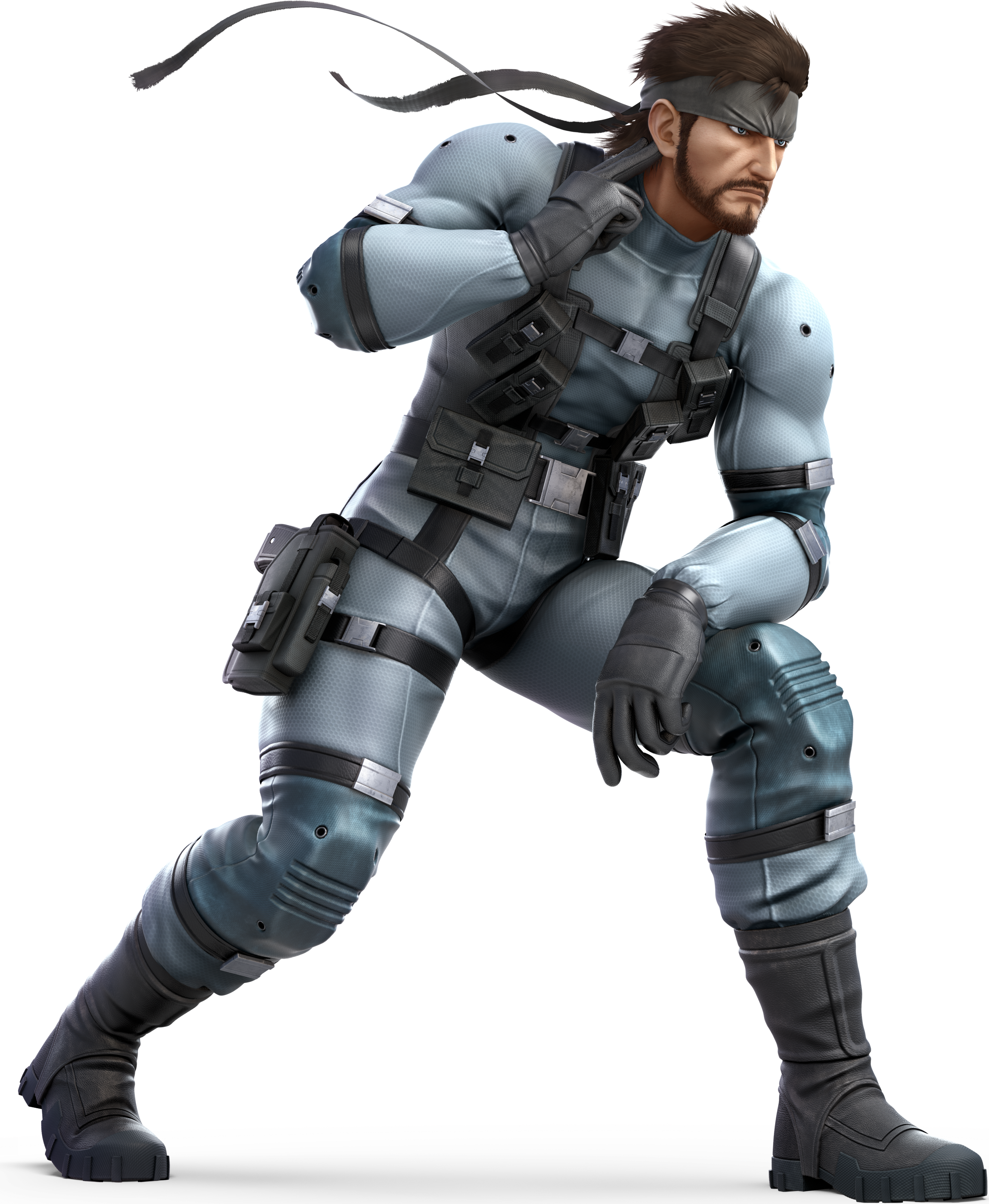
Hideo Kojima wanted this badly enough to ask in person. Around the time Melee was being completed, the Metal Gear director approached Masahiro Sakurai – a friend – with a request Sakurai later recorded in his own book: ’Please put Snake in!’ It was too late for Melee, so the favor rolled forward a full console generation and came due in Brawl. SmashWiki records a second motive besides friendship: Kojima’s son wanted to see Snake in the game.
By the time Brawl reached shelves – January 31, 2008 in Japan, March 9, 2008 in North America – Snake had been public knowledge for nearly two years, yet the game still treated him as a secret. He is an unlockable fighter, not a starter, which means the first outside guest in series history had to be earned. David Hayter and Akio Otsuka, his English and Japanese voices from the Metal Gear Solid games, both reprised the role, and the sneaking suit lost nothing in translation.
Then he vanished. Smash for 3DS and Wii U shipped without him, Kojima publicly hoped for a comeback, and the ’Everyone is Here!’ announcement of June 12, 2018 delivered one. Snake entered on a personal favor, sat out a game, and returned by acclamation. Somewhere in there, Kojima’s son presumably got his match.
Sonic the Hedgehog
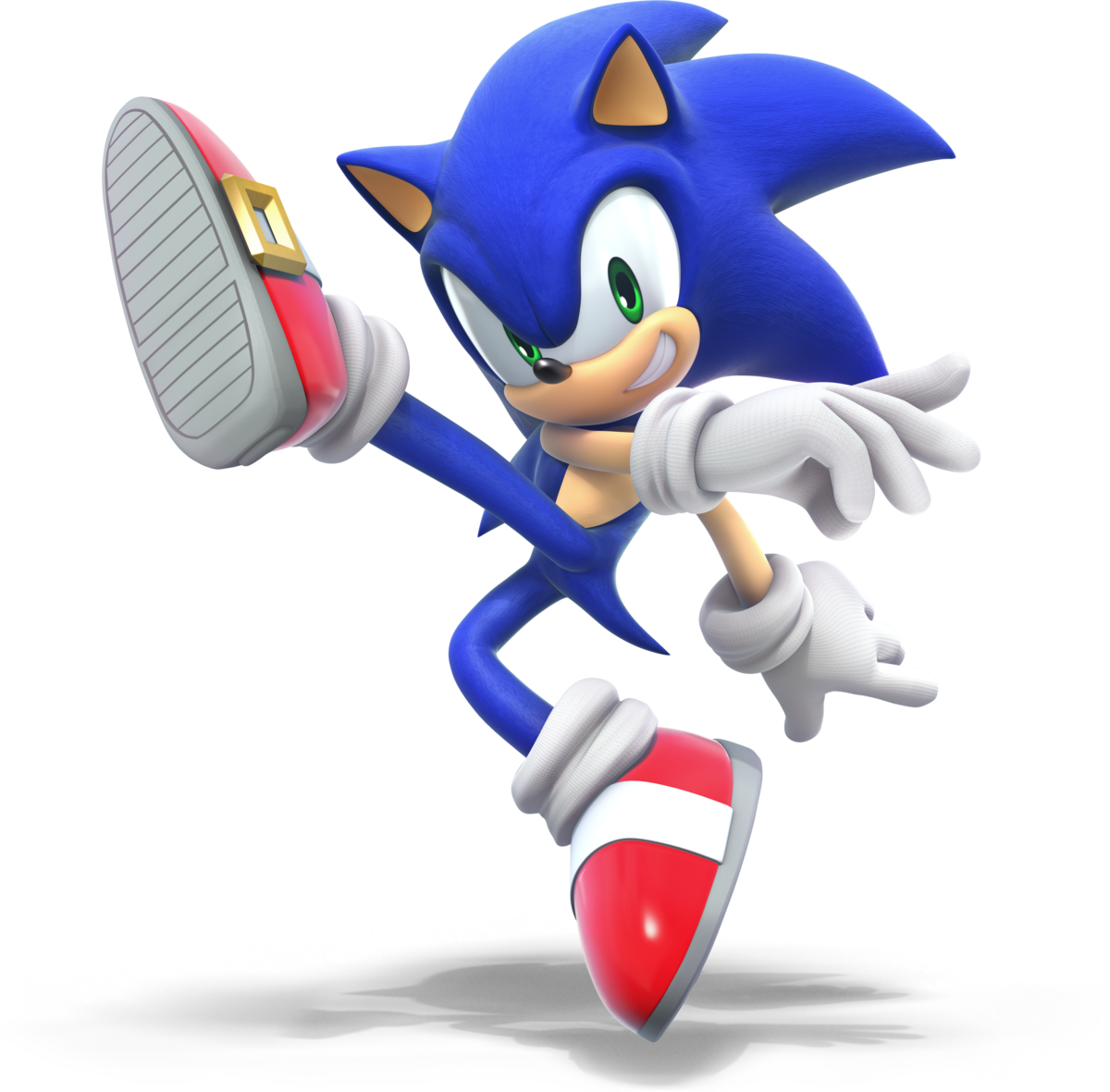
Sonic the Hedgehog spent the 1990s trying to put Nintendo out of business. Nintendo held roughly 90 percent of the American market in 1990; by 1993, Sega and its hedgehog had dragged their own share past the halfway mark. The rivalry ended the way console wars end – Sega folded its last machine, the Dreamcast, in 2001 – and seven years later its mascot walked into the enemy’s party game.
He nearly arrived sooner. Yuji Naka, then running Sonic Team, buttonholed Sakurai at E3 and asked him to put Sonic into the GameCube entry, but development was too far along and the pitch was shelved – an episode that puts Sonic in the company of every character Sakurai publicly weighed and turned down, with the difference that his rejection came with a rain check. Naka says Sakurai’s own motive was blunter: he wanted to settle ’who would win in a fight between Mario and Sonic.’
The rain check cleared on October 10, 2007, seventeen months after Snake’s reveal, when a trailer confirmed Sonic for Brawl. SEGA Europe’s president called it amazing ’after all these years’ to see the two finally compete. Fan polls on the official Japanese site had made Sonic the most requested guest of the era. Nobody at Sega argued.
Mega Man
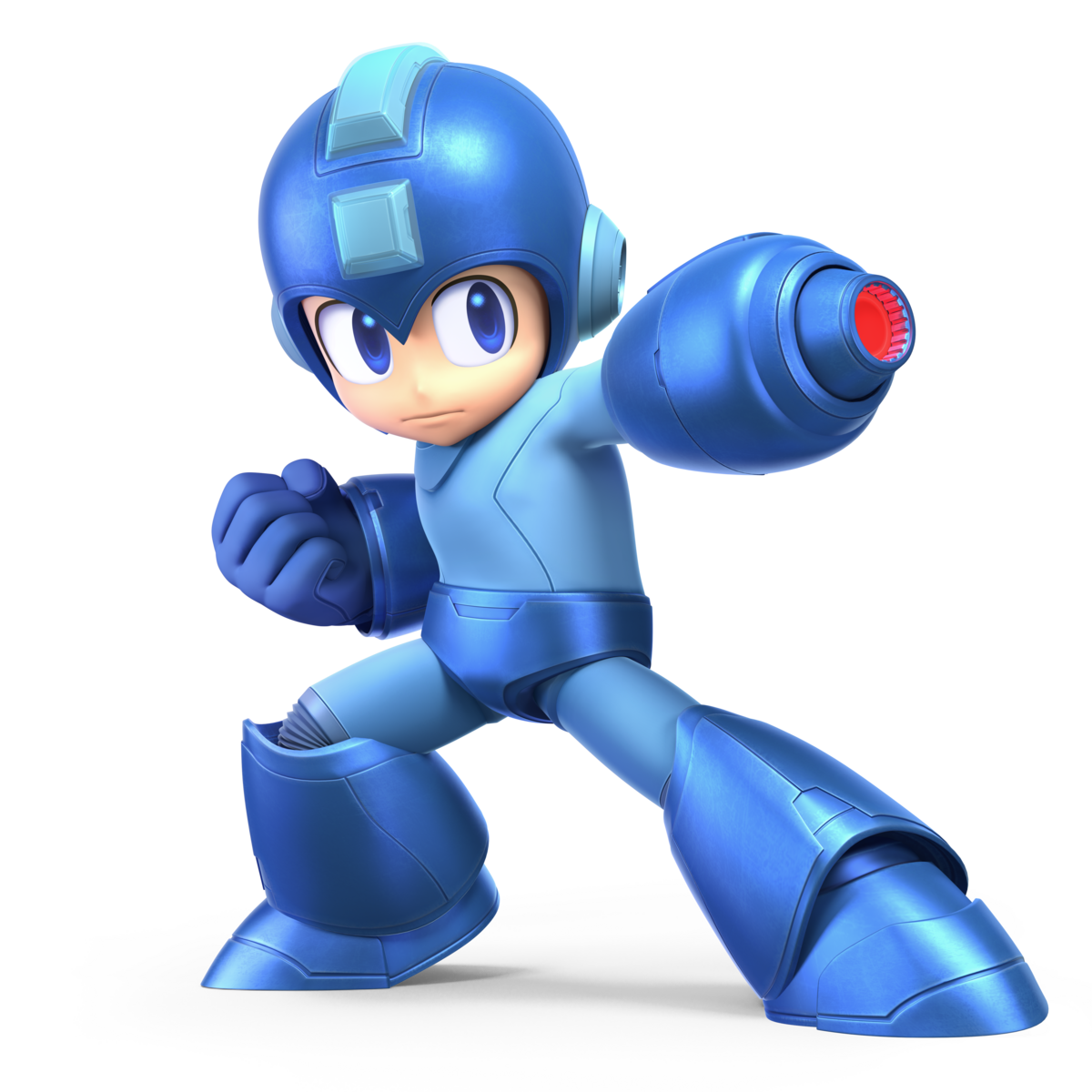
The trailer that introduced Smash 4 to the world on June 11, 2013 doubled as a resurrection. Mega Man walked out mid-video – the first new guest since Brawl – barely two years after Capcom cancelled Mega Man Legends 3 on July 19, 2011, with a statement explaining only that the project had not ’met the required criteria.’ Nintendo’s crossover, it turned out, had criteria Mega Man could meet.
Sakurai treated the character less like a design job than a restoration. Handled as an ordinary brawler, he admitted, Mega Man ’probably would have ended up with standard punches and kicks.’ Instead the moveset is a museum of Robot Master weaponry with the sources on the placards: Metal Blade from Metal Man, Crash Bomber from Crash Man, Leaf Shield from Wood Man, Hard Knuckle from Hard Man. Sakurai kept the NES-era proportions, kept the blank expression, and let him fire the Mega Buster while walking, because that is what Mega Man does.
Fighter 46 shipped with the base game in 2014. Capcom officially has no mascot, but a senior manager once explained that the company treats Mega Man as one anyway, for ’best embodying the spirit of the company.’ It took Nintendo’s fighting game to put the company spirit back to work.
Pac-Man
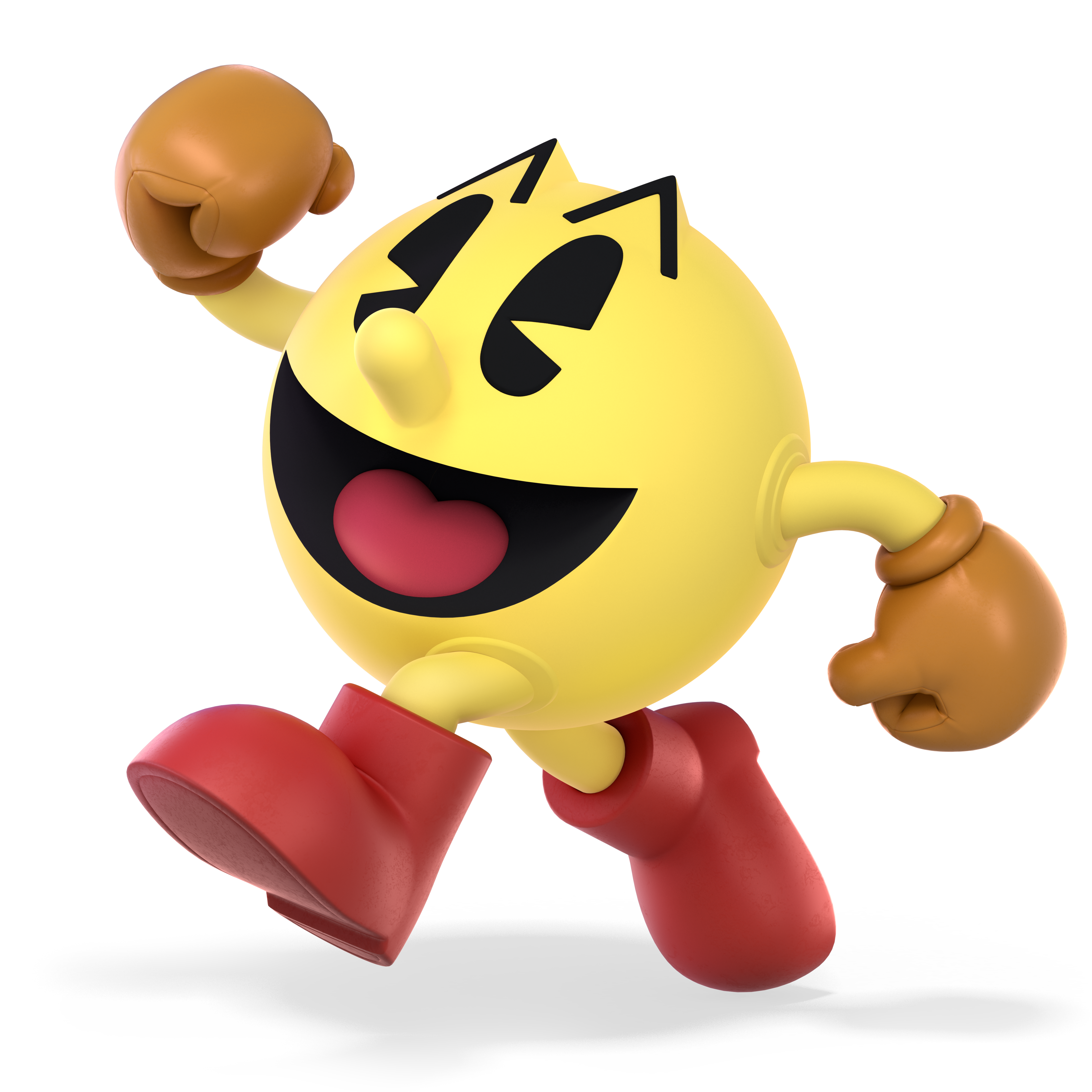
Sakurai was prepared to cut Pac-Man entirely. Bandai Namco – co-developer of Smash 4 itself – had spent recent years pushing a CGI redesign from the Disney XD series Pac-Man and the Ghostly Adventures, and Sakurai wanted no part of it. If his push for the classic look had failed, he wrote in his Famitsu column, ’I thought about dropping Pac-Man altogether.’ The 1980 original won. His co-developer’s own television mascot lost.
The character Sakurai fought for fronts the oldest third-party universe in Smash; only Nintendo itself reaches further back, and barely. The encyclopedias date Pac-Man’s Japanese arcade debut to May 22, 1980 – Bandai Namco’s own history page calls that day a focus test, with the public release in July 1980 – while Nintendo’s Game & Watch line began with Ball on April 28, 1980. Either way his moveset is an arcade museum: a Boss Galaga tractor beam serves as his grab, and his taunt cycles sprites from Galaga, Dig Dug, and Xevious.
Guinness World Records named him the most recognizable video game character in the United States in 2009, with 94 percent recognition. He was announced for Smash on June 10, 2014, and he arrived without a voice actor – his sounds are recycled from the original arcade cabinet. He never needed lines.
Ryu
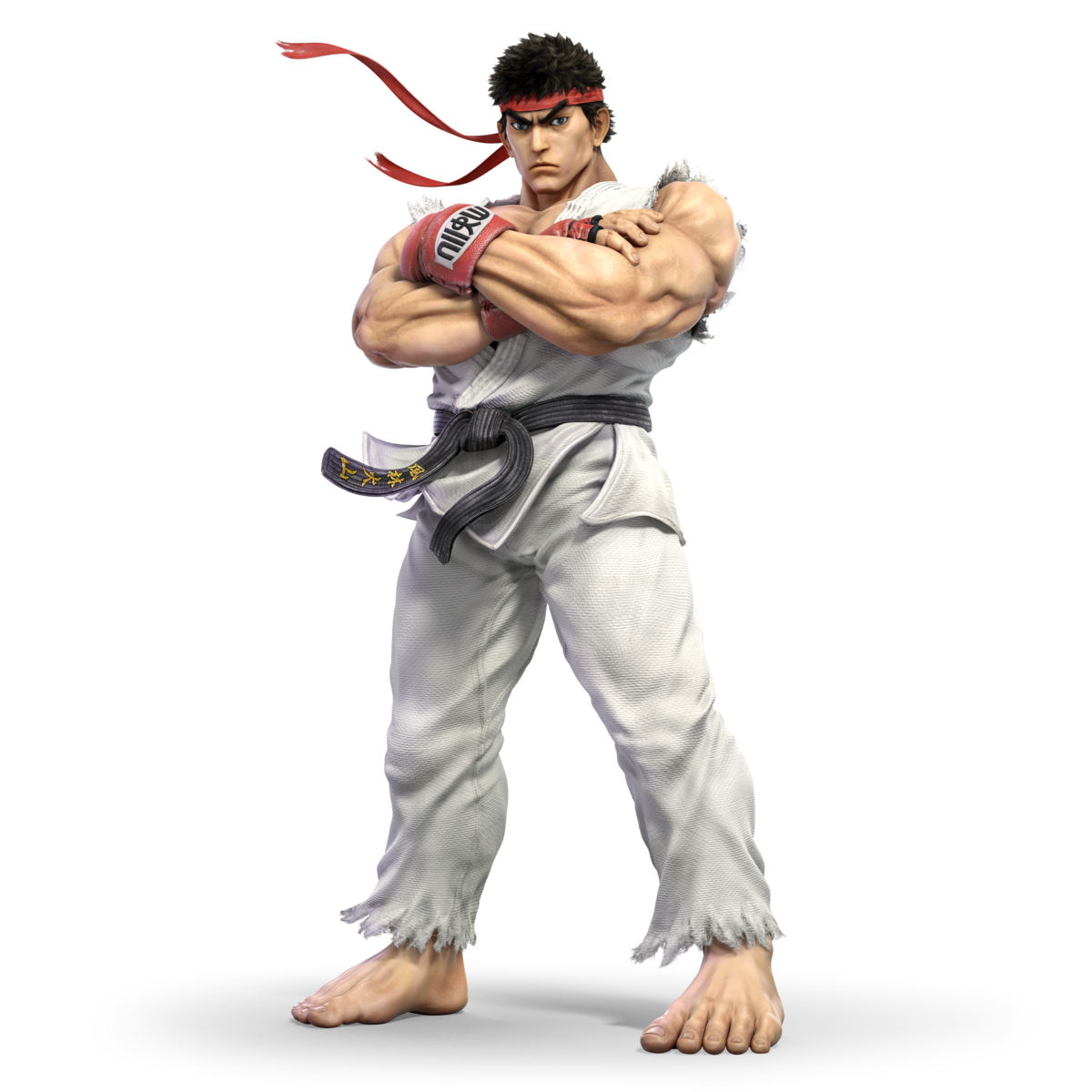
Nintendo announced Ryu on June 14, 2015 and sold him the same afternoon – generous-looking, until you know the surprise had already been ruined twice. On April 15, 2015, a Reddit user named shinyquagsire23 pulled apart update 1.0.6 of the 3DS version and found sound files carrying Ryu’s Street Fighter II themes, a find the homebrew developer crediar confirmed the same day. Then on June 13, 2015 – one day before the Nintendo Direct – actual gameplay footage of Ryu and Roy escaped from update 1.0.8. His place among the fighter reveals that leaked before Nintendo could announce them was secure before Sakurai said a word. The same-day release reads less like showmanship than surrender.
The fighter himself is a delivery mechanism for Street Fighter’s rules. Tapping or holding the attack button produces light, medium, and heavy versions of his attacks, and the old command inputs still work: a quarter-circle Hadoken comes out stronger than the simplified button press, and a half-circle produces the Shakunetsu Hadoken instead.
Ryu also brought the series its first double Final Smash – Shin Shoryuken at point-blank range, Shinku Hadoken from anywhere else – an arrangement Ken would later inherit wholesale. Kyle Hebert and Hiroki Takahashi, his voices since Street Fighter IV, came along too. Smash bent its own rules to fit him in. The rules stayed bent.
Cloud Strife
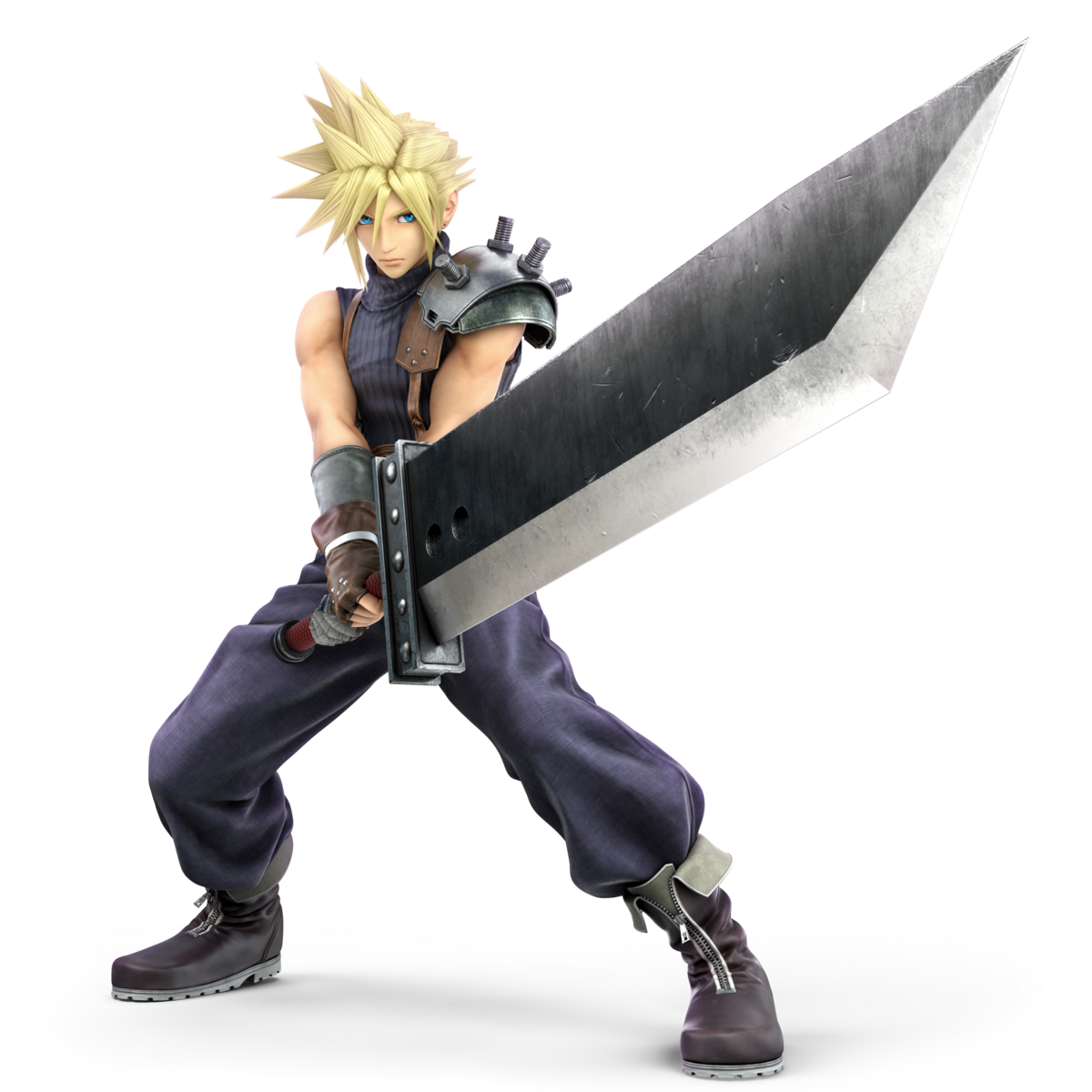
Final Fantasy VII is the game that ended Square’s relationship with Nintendo. The Nintendo 64’s cartridges could not hold it, so Square took the series to Sony’s PlayStation in 1997, and no core Final Fantasy VII release touched Nintendo hardware again until Switch ports arrived in 2019. That history made November 12, 2015 a strange broadcast: a Nintendo Direct announcing Cloud Strife, the face of the defection, as a Smash fighter – on consoles his own game had never visited.
Even Square Enix found it odd. Tetsuya Nomura, Cloud’s designer, remembered asking Sakurai, ’are you sure you’re okay with Cloud? He’s not a character from a new game, after all.’ Sakurai was sure. By his own accounting, a quarter to a third of every fan request for a Final Fantasy character named Cloud specifically. Nintendo of America handled the announcement with appropriate gravity: ’Grab your ridiculously oversized sword!’
Cloud arrived on December 15, 2015, bundled with a stage set in Midgar. And there was a twist in the fine print: while his own game stayed away, the man himself had sneaked back twice, as a Game Boy Advance boss in Kingdom Hearts: Chain of Memories in 2004 and a playable lead in Theatrhythm Final Fantasy on the 3DS in 2012. The prodigal son had been visiting on weekends the whole time.
Bayonetta
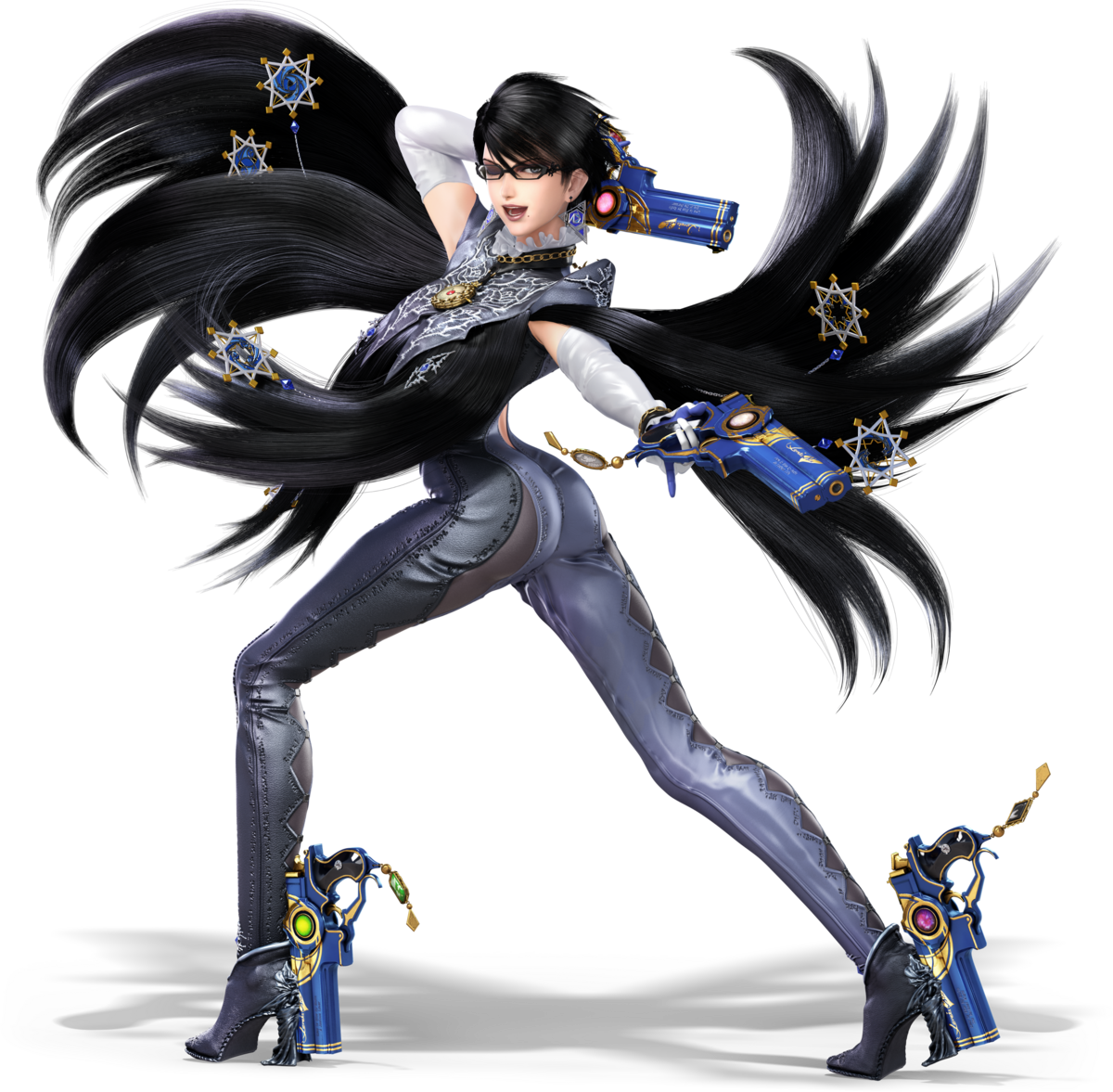
Smash 4’s final fighter was chosen by election, and the election came with footnotes. Nintendo had run a worldwide Fighter Ballot, and on December 15, 2015 Sakurai announced its winner: Bayonetta, ’the number one choice in Europe,’ among the top five in North America, and – here is the load-bearing clause – the ’overall number one choice worldwide’ among the ’negotiable and realisable’ characters. Candidates Nintendo could never license had been quietly removed before the counting began.
She released on February 3, 2016 in North America and February 4, 2016 in Europe, bundled with the Umbra Clock Tower stage at $5.99, closing Smash 4’s DLC program as its seventh and final downloadable fighter. Her paperwork, meanwhile, still confuses people a full decade on. PlatinumGames develops her, and Nintendo has published the series since Bayonetta 2 in 2014. Sega has owned the character throughout. Publishing a sequel does not transfer a soul.
In 2019, Sakurai completed the footnote: veterans like Snake had drawn more raw ballot votes than Bayonetta all along, and her number one standing held only inside the licensable pool. None of this was her doing. She campaigned on nothing, won on a technicality, and has held the seat without apology ever since.
Simon Belmont
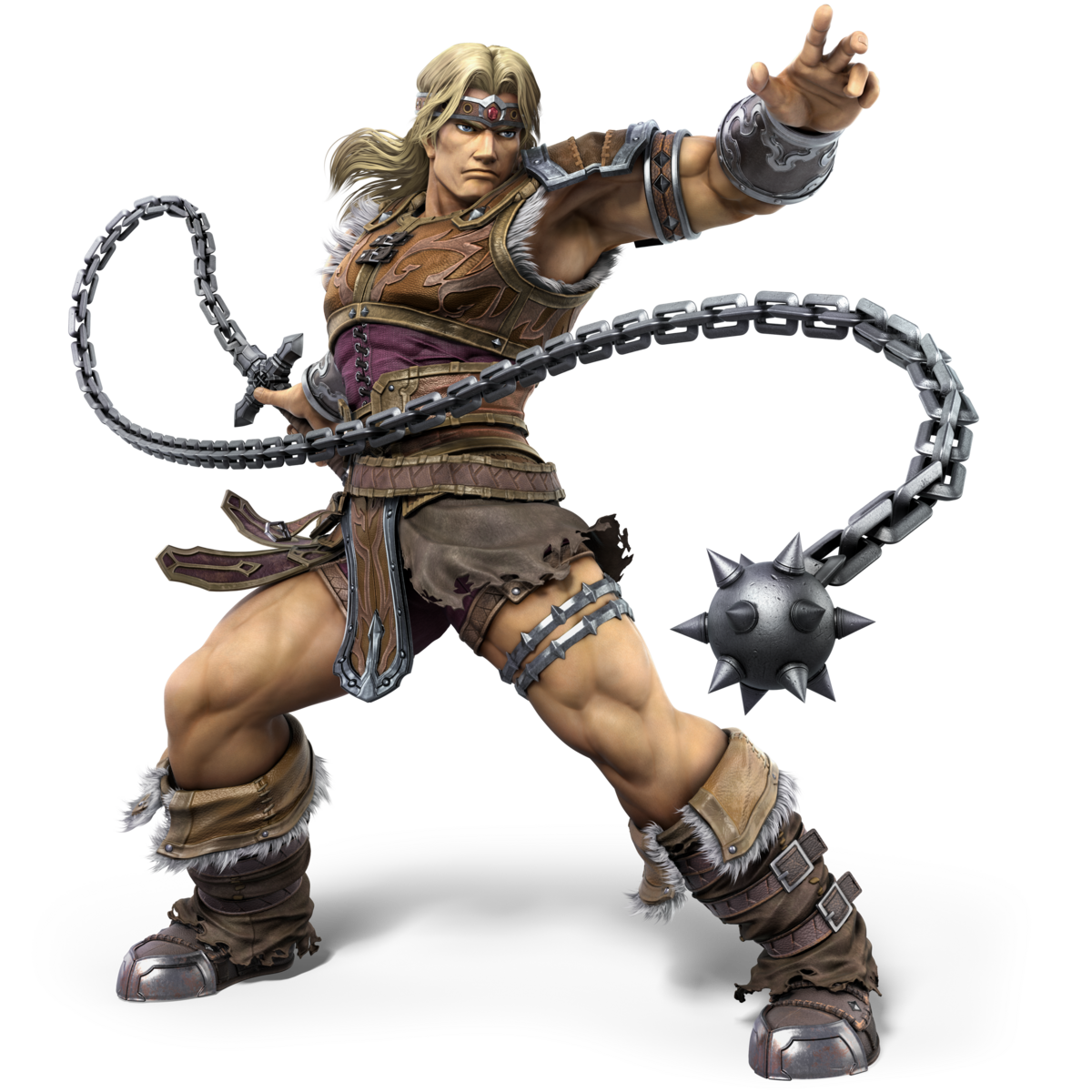
Konami very nearly named him Peter Dante. The hero of Castlevania carried that working name before the studio settled on Simon Belmont for Akumajo Dracula, released on the Famicom Disk System on September 26, 1986 and delivered to North America as Castlevania on May 1, 1987. Director Hitoshi Akamatsu patterned the signature whip on Indiana Jones’s in Raiders of the Lost Ark, and it swings like it.
Smash took thirty-two years to call. Simon was announced as fighter 66 in the Ultimate Direct of August 8, 2018 – the same broadcast that revealed Richter, Chrom, Dark Samus, and King K. Rool – and shipped with the base game on December 7, 2018. Konami sent the whole castle along with him: a Dracula’s Castle stage with destructible candlesticks, Alucard moonlighting as an Assist Trophy, and 34 Castlevania music tracks, 13 of them new remixes – the third-largest soundtrack any franchise has brought to its Smash debut, behind only Mega Man and Fatal Fury.
The man himself plays exactly as advertised: a wall of leather and whip range, hurling axes and holy water at the entire modern roster. His Final Smash, Grand Cross, seals opponents inside a coffin and launches it skyward. A vampire hunter likes to finish the job properly.
Richter Belmont
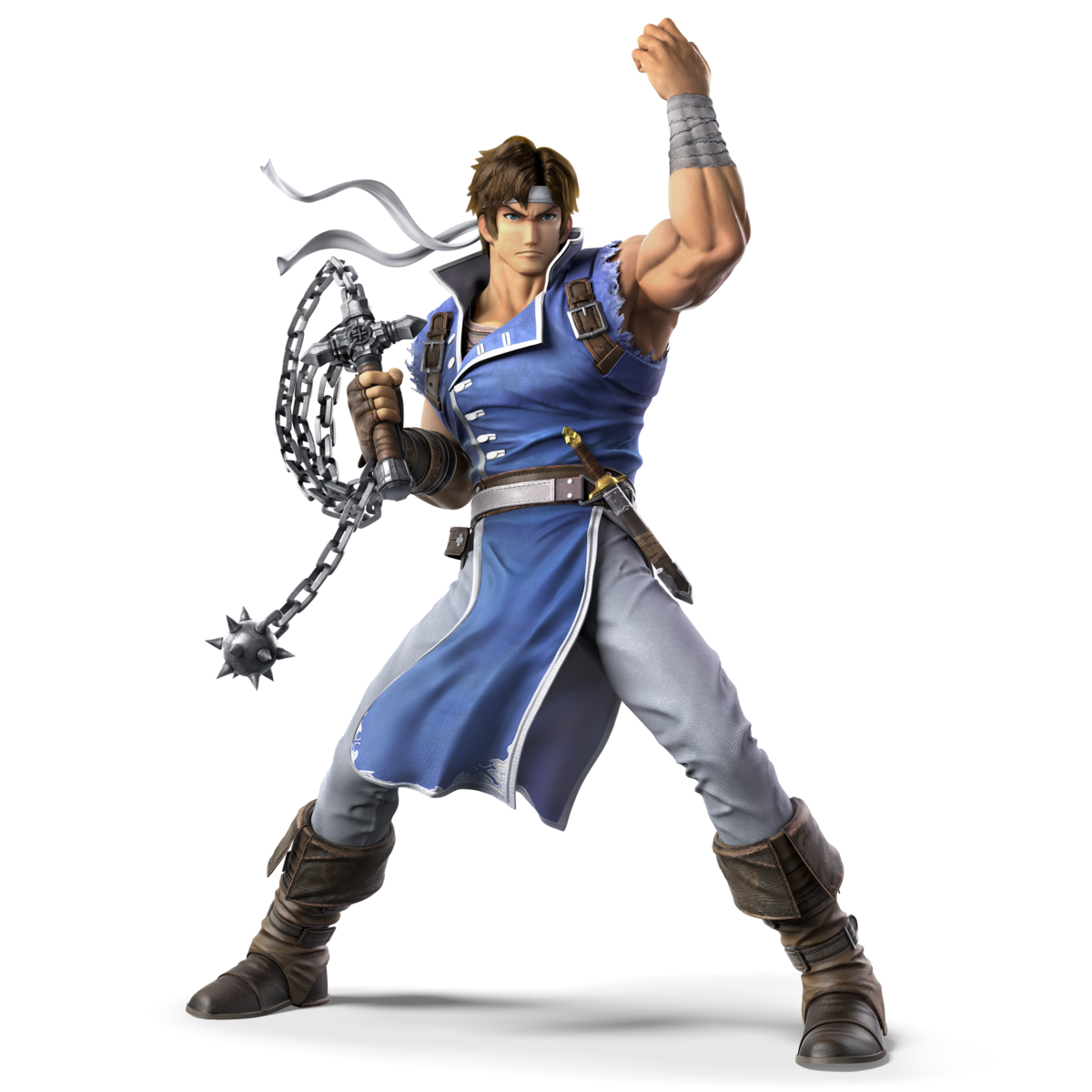
The echo outranks the original, at least in Castlevania lore. Richter Belmont is the hero of Rondo of Blood, released on October 29, 1993 for the PC Engine Super CD-ROM2 and kept exclusive to Japan for years; in its original form it did not officially reach North America until a Wii Virtual Console release on March 15, 2010. Symphony of the Night, released in 1997, begins with him: its playable prologue remakes Rondo’s final battle, and how well Richter fights Dracula determines the bonuses Alucard starts the real game with.
In Ultimate he is Simon’s Echo Fighter – fighter 66 with an epsilon after it, in Nintendo’s own numbering – announced in the same August 8, 2018 broadcast. The designation runs backwards, though. Much of the pair’s shared moveset comes from Richter’s games rather than Simon’s: Grand Cross debuted as an Item Crash in Rondo of Blood, and Simon only picked it up later, through the fighting game Castlevania: Judgment.
The differences Nintendo did permit are wonderfully small. Richter shouts ’Take this!’ where Simon merely grunts, and his Holy Water burns blue with aura instead of fire – so it cannot detonate bombs, but it can, uniquely, injure Red Pikmin, who are fireproof. Somewhere in Kyoto, a designer was paid to settle that question.
Ken Masters
Ken began his career as a literal palette swap. The 1987 Street Fighter arcade cast was trimmed to two fighters by budget and scheduling, so designer Takashi Nishiyama shipped a recolor of Ryu with identical moves and identical hitboxes. Thirty-one years later, Nintendo billed him as an Echo Fighter. As job titles go, it is historically impeccable.
He had long since earned his own wardrobe. Street Fighter II in 1991 gave him the dyed-blond hair and the red sleeveless keikogi, and his Ultimate moveset draws on his Super Street Fighter II Turbo self: a flaming, multi-hit Shoryuken, a multi-hit Tatsumaki Senpukyaku, the Inazuma Kick, and command kicks Ryu simply does not have. Nintendo’s own website makes the arrangement explicit – Ken’s fighter page sits at the address 60e.html, filed one notch behind Ryu’s 60.html.
Revealed on November 1, 2018 in the final Direct before launch, Ken shipped with Ultimate’s base roster on December 7, 2018, making him the only third-party echo whose parent had arrived in an earlier game entirely – Ryu joined as Smash 4 DLC on June 14, 2015. There is a neat irony available here: Street Fighter II refused to let two players pick the same character. Smash finally lets Ken and Ryu settle things properly.
Joker
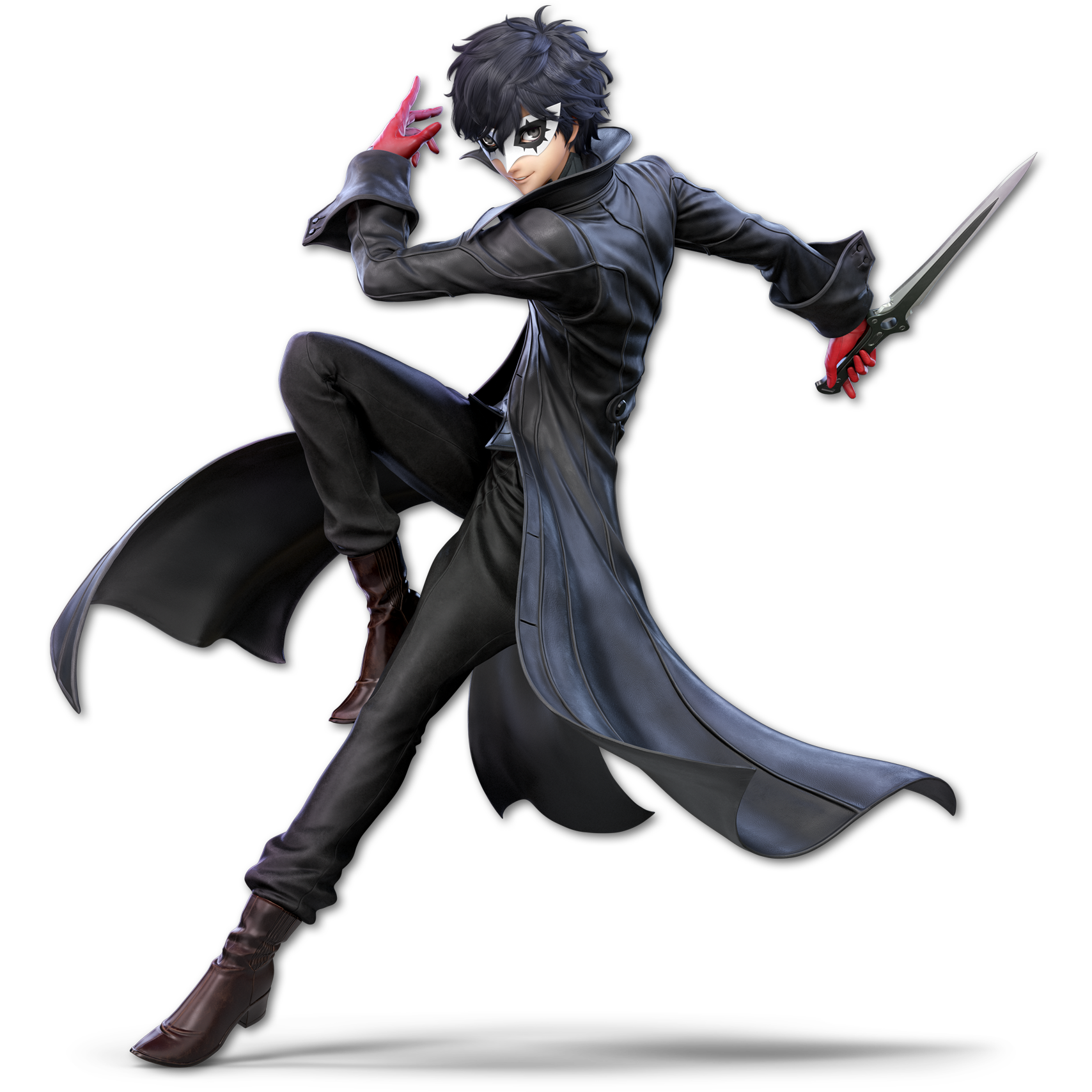
One day before Ultimate itself launched, the theater lights at The Game Awards cut out, a calling card appeared, and Reggie Fils-Aime revealed the game’s first Fighters Pass character. It was December 6, 2018, and the choice was baffling on paper: Joker, hero of Persona 5 – a PlayStation 3 and PlayStation 4 exclusive that had reached the West on April 4, 2017 and had never touched a Nintendo platform.
The corporate paperwork ran deeper than the console line. Atlus, which makes Persona, has been a Sega property since 2013, when Sega bought Atlus’s parent Index Corporation out of bankruptcy for 14 billion yen. Smash’s guest list is full of these quiet arrangements; the flashy phantom thief answers to the same landlord as a certain blue hedgehog.
Joker arrived in playable form on April 17, 2019 as Challenger Pack 1, alongside a Mementos stage with a mood-ring gimmick: it turns red for Persona 5 music, yellow for Persona 4, and blue for Persona 3. His Rebellion Gauge must fill before his Persona, Arsene, appears to multiply his power. Persona 5 Royal finally reached the Switch on October 21, 2022 – meaning that for years, a Nintendo owner’s best access to Persona 5’s hero was punching Mario with him.
Hero
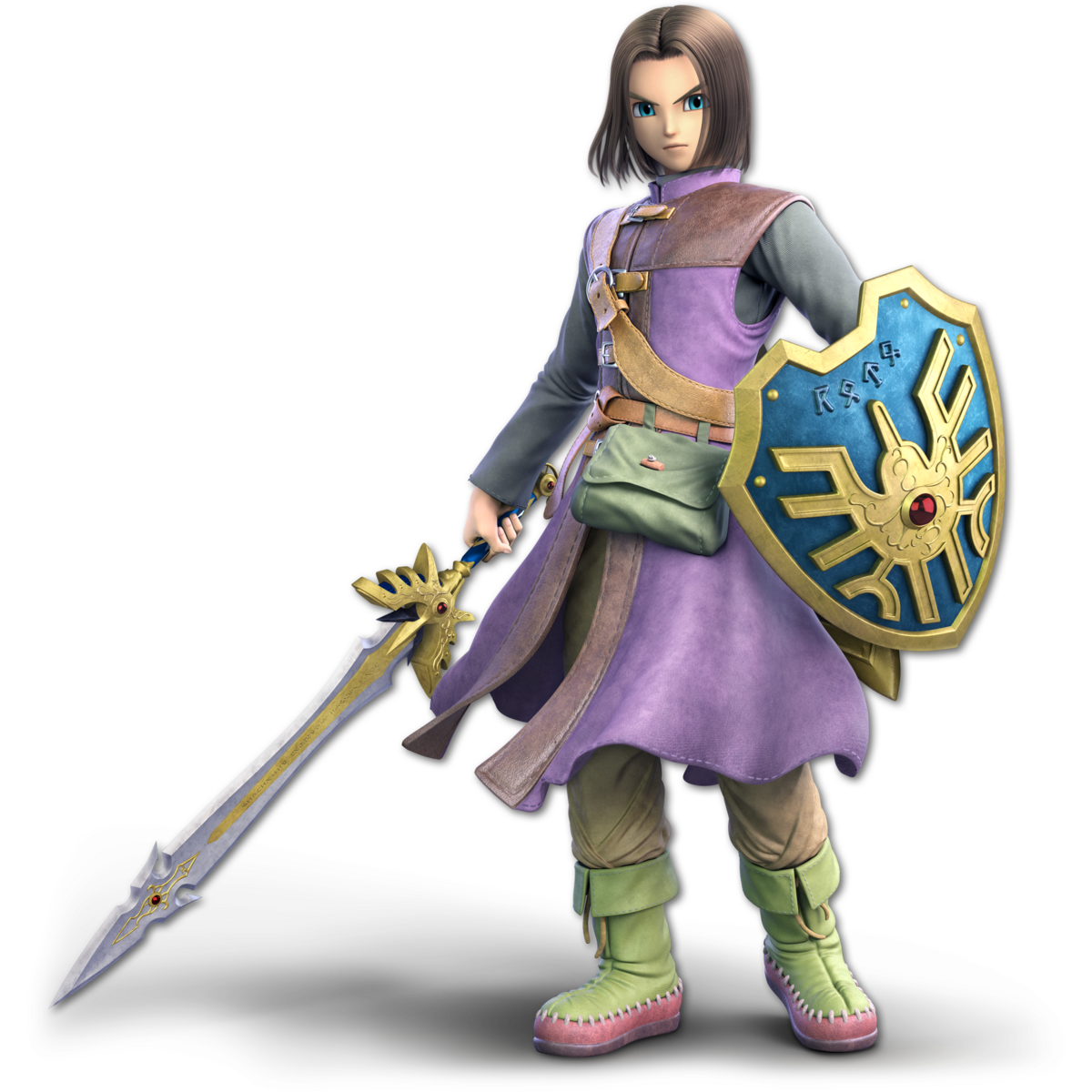
Four different protagonists share this one roster slot, and the game simply calls them all Hero. The default is the Luminary of Dragon Quest XI; the alternate costumes are Erdrick of Dragon Quest III, Solo of Dragon Quest IV, and Eight of Dragon Quest VIII, and picking among them is a choice with genuine generational politics attached, because Dragon Quest is not merely popular in Japan.
When Dragon Quest III launched on February 10, 1988, it sold 1.1 million copies in a single day, and the resulting chaos ran to some 300 reported truancy arrests. The legend that Japan then passed a law confining Dragon Quest releases to weekends is a myth – producer Yu Miyake has explained that Enix simply arranged with Nintendo to ship on Saturdays as a special exception. The fix was voluntary. The chaos was real.
Announced at E3 on June 11, 2019 and released that July 30, Hero plays like an RPG that wandered onto the wrong shelf: his down special opens an actual command menu, four spells drawn at random, usable for up to 480 frames while his MP regeneration politely waits. One option, Kamikazee, costs 1 MP, detonates for heavy unblockable damage, and kills him instantly. A French tournament banned all of this in September 2019; Nintendo overturned the ban in about two days. The menu stays.
Banjo & Kazooie
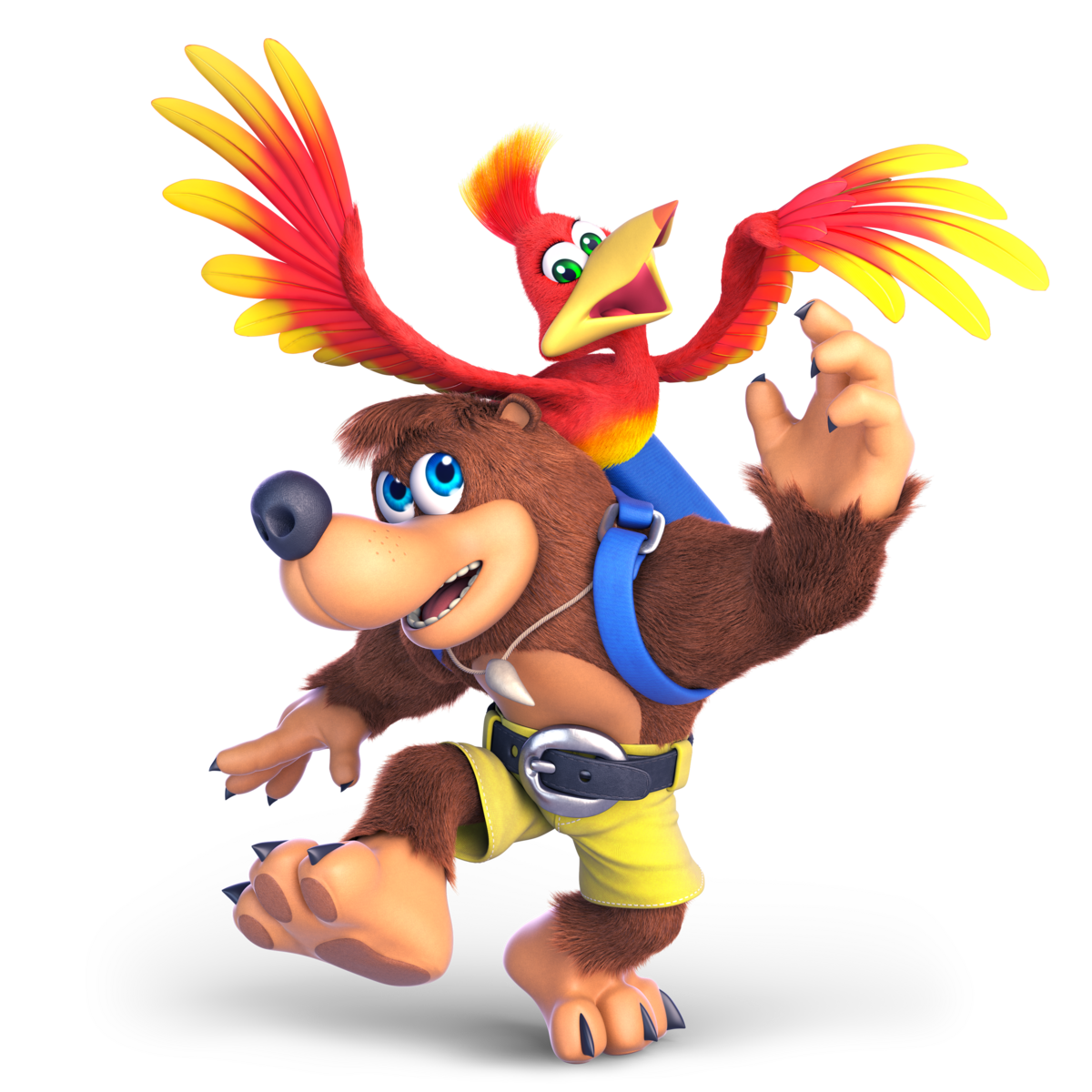
Microsoft’s problem is that some of its best-loved characters were born at Nintendo. Banjo-Kazooie debuted on the Nintendo 64 on June 29, 1998, built by Rare when Rare was the most trusted outside studio in Nintendo’s orbit – then Microsoft bought Rare outright on September 24, 2002 for $375 million, and the bear and bird spent seventeen years as Xbox property with no Nintendo passport.
The reunion was predicted by the buyer. On April 3, 2015, Xbox chief Phil Spencer tweeted, ’I think it would be cool if Banjo was in the next SSB DLC. We’ve worked with Nintendo on Rare IP before, no issues.’ When it finally happened – announced June 11, 2019, released September 4, 2019 – Spencer said the negotiation was so smooth that ’there wasn’t anything kind of CEO-to-CEO that had to happen.’
The reveal trailer plays the homecoming as farce: Donkey Kong, Diddy, and King K. Rool spot a familiar silhouette at the cabin window, which turns out to be Duck Hunt’s dog in a bear costume before the real pair arrives. Nine days after release, Rare’s Sea of Thieves added a Bear and Bird ship bundle in return. The pair’s last game of their own remains 2008’s Nuts & Bolts; a guest slot in someone else’s fighter is the biggest thing they have done in a generation.
Terry Bogard
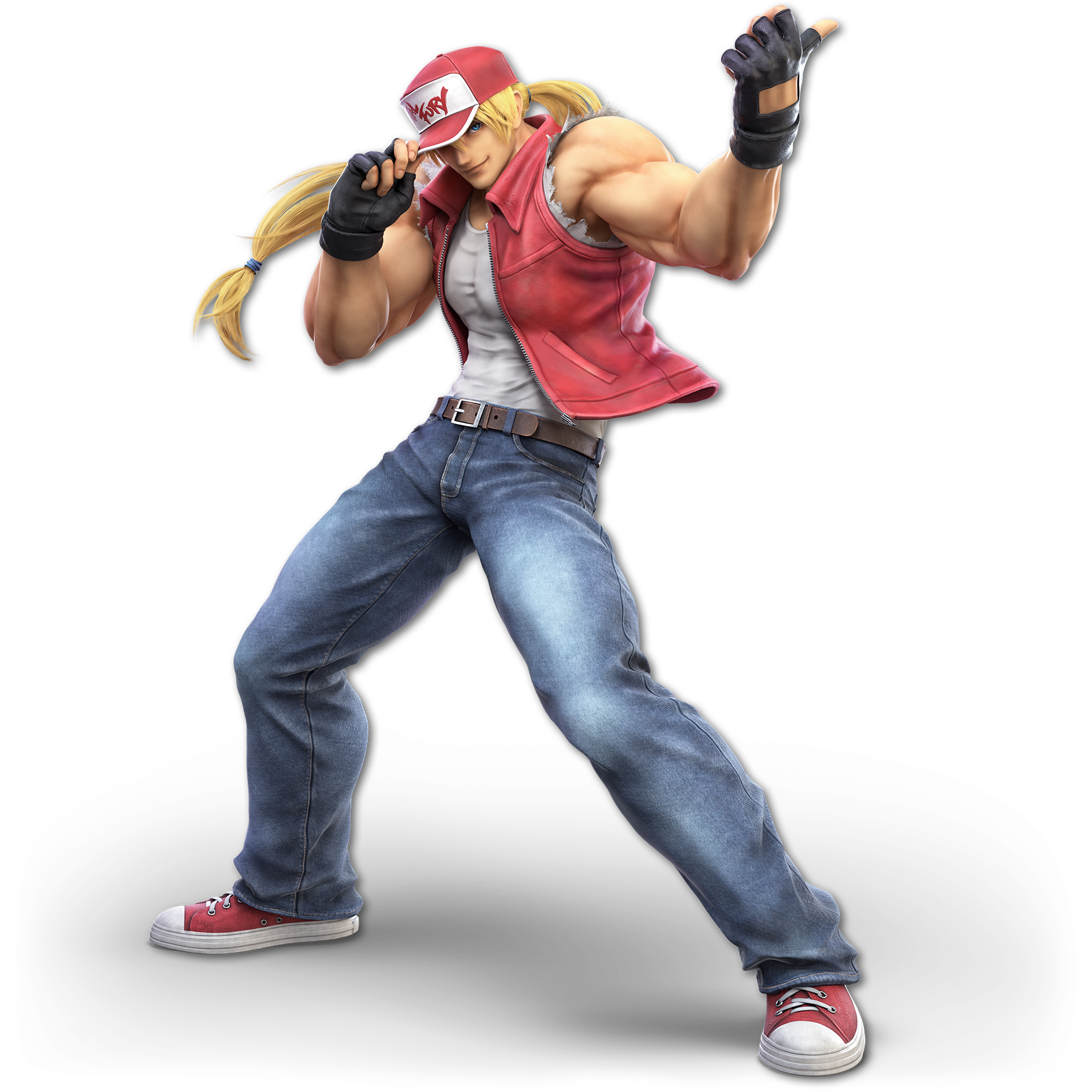
No reveal in Ultimate’s run demanded more homework. Terry Bogard’s presentation was billed at 45 minutes and ran to nearly 49 – the longest character presentation the game had yet aired – because Sakurai declined to introduce the man without also introducing the entire Neo Geo. ’I want to talk about Terry using a lot of SNK lingo,’ he warned viewers on November 6, 2019, conceding that ’the younger generations may feel a little out of the loop.’
The lingo was earned. Terry debuted in 1991’s Fatal Fury: King of Fighters, SNK’s arcade answer to Street Fighter II, hunting the crime boss Geese Howard, who murdered his adoptive father. SNK’s own character page still bills him as the Hungry Wolf of South Town – corporate canon, and no accident: the franchise’s Japanese title, Garou Densetsu, translates as Legend of the Hungry Wolf. His Buster Wolf finisher, delivered after a cheerful ’Are you okay?’, entered the canon in 1999’s Garou: Mark of the Wolves under the working title ’God Geyser Twin.’
His Challenger Pack brought the King of Fighters Stadium, a stage with no side blast zones – only breakable invisible walls, exactly like an old SNK arcade screen – and 50 music tracks pulled from SNK’s back catalog. In 2024, Capcom borrowed him for Street Fighter 6. Thirty-three years after his arcade debut, Terry is still touring.
Steve
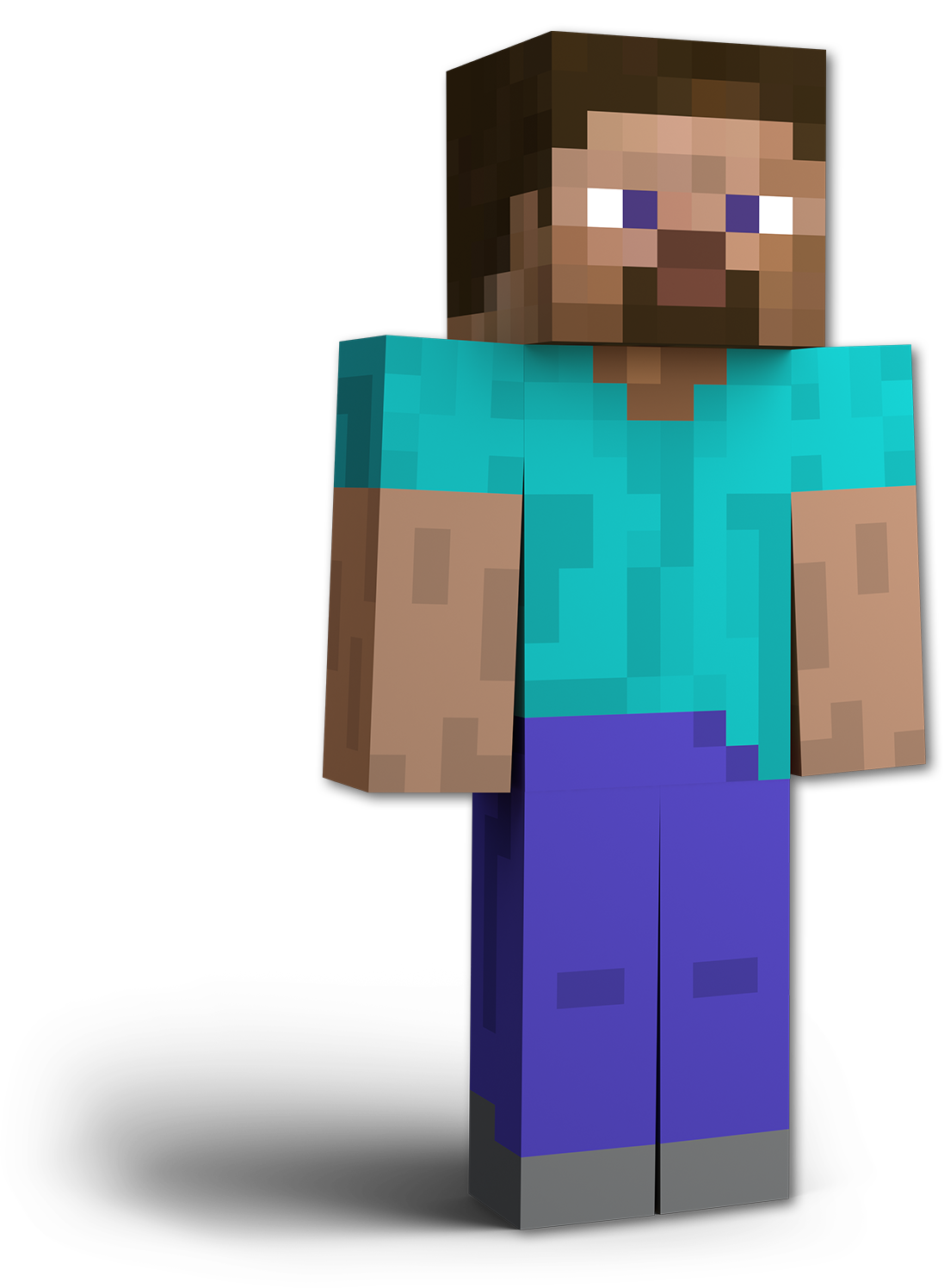
Minecraft has sold over 350 million copies – the best-selling video game there has ever been, a record Guinness re-certified in April 2025 – and its hero walked into Smash with no face worth mentioning and arms that do not bend. Nintendo announced Steve on October 1, 2020 and shipped him on October 13, 2020, with Alex, a Zombie, and an Enderman as alternate skins.
The engineering behind the blocky exterior was enormous. Steve mines the stage for resources, crafts better tools mid-fight, and places blocks in open air – and Sakurai admitted the cost of that last trick in his own presentation: ’Plus, we have to rework all our existing stages so that blocks can be placed in them.’ Every arena in the game was rebuilt for one character. The oft-repeated claim that the deal itself took five years of talks traces not to Sakurai but to former Mojang employee Daniel Kaplan, who tweeted on October 6, 2020 that negotiations had started at least five years earlier.
Mojang has been Microsoft property since a $2.5 billion deal announced September 15, 2014 – so Steve arrived as the roster’s second Microsoft representative in thirteen months. His Final Smash is called House of Boom. Minecraft has never been accused of overcomplicating a name.
Sephiroth
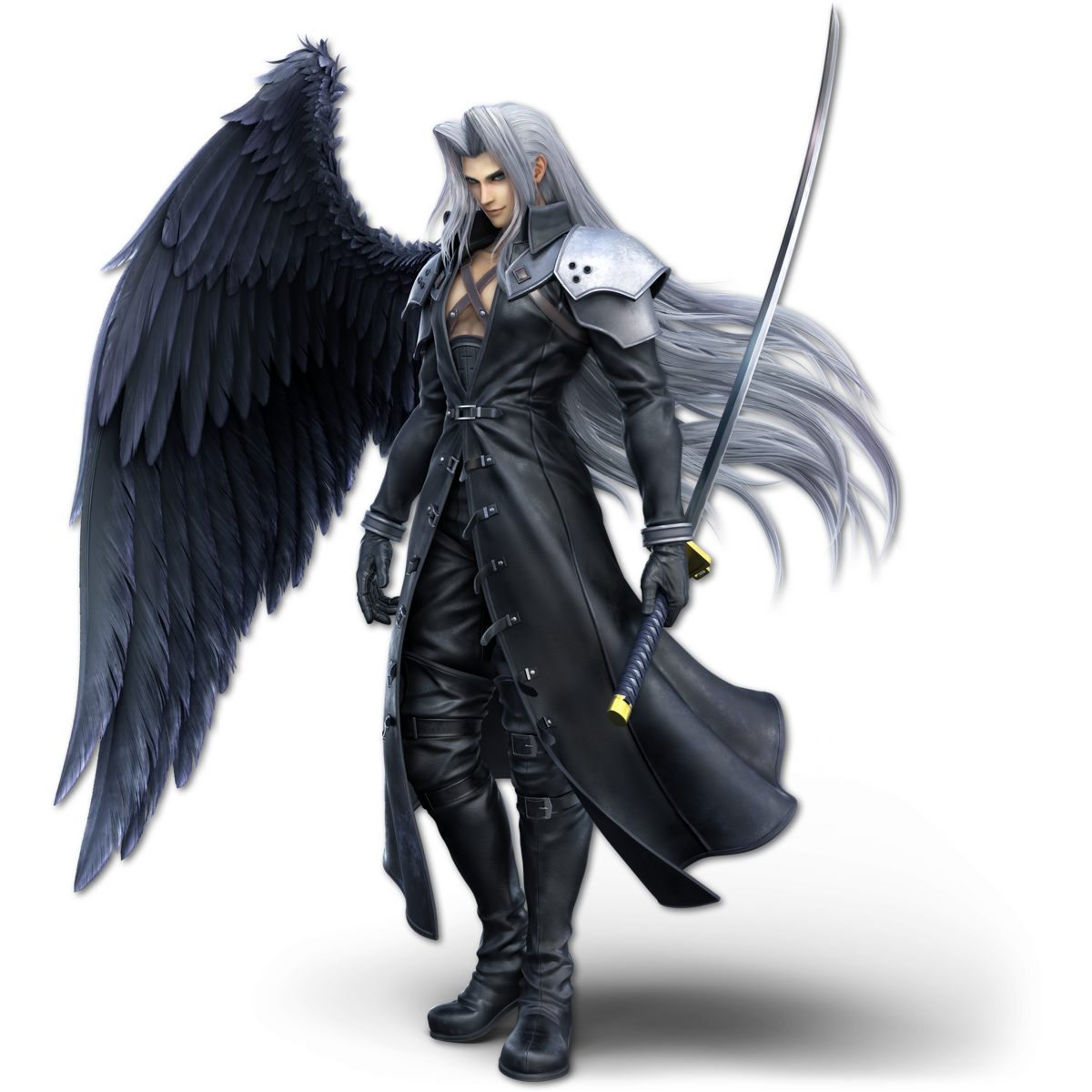
For two years, every villain on Ultimate’s roster answered to Nintendo – Ganondorf, Ridley, King K. Rool, the house monsters. Then the orchestra at The Game Awards struck up One-Winged Angel on December 10, 2020, and Final Fantasy VII’s silver-haired executioner drifted down into the game as its first outside villain, five years after Cloud arrived without him.
His launch came with a dare. From December 17 to December 22, 2020, anyone who pre-purchased could enter the Sephiroth Challenge: beat Sephiroth himself in a one-on-one stamina battle and unlock him early. On the hardest setting he carried 200 HP to your 150. Sakurai’s team had originally planned to allow exactly one attempt, then relented and made it freely retriable, which was probably wise.
In play he is all reach and menace, a Masamune long enough that no official measurement exists – and yet his in-game weight is 79, the same fragile class as Pikachu and Kirby. Menace, apparently, weighs about as much as an electric mouse. Win a match against a losing Cloud, though, and his victory line can be ’I will never be a memory’ – his exact farewell from Advent Children, delivered by Toshiyuki Morikawa, his film voice, in every region.
Kazuya Mishima
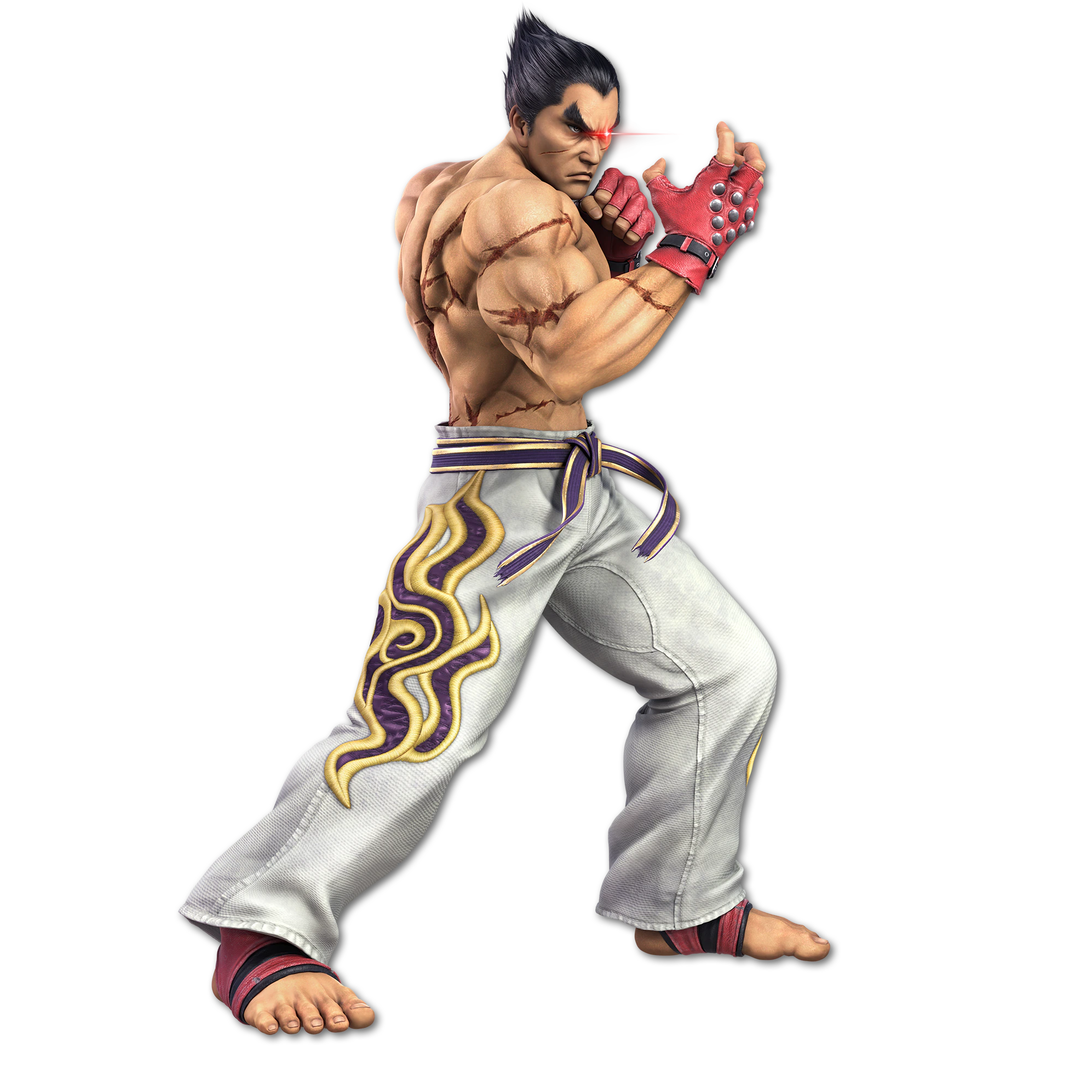
The reveal trailer opens with Ganondorf being hurled into an active volcano, followed in short order by Captain Falcon, Pit, Min Min, and Marth. This is not random cruelty but a citation: Tekken 2 ends with Heihachi Mishima dropping his son Kazuya into a volcano from a helicopter. Kazuya announced himself in June 2021 by doing unto others what his father did unto him.
Sakurai had been circling Tekken for years and kept bouncing off its patriarch. ’Implementing Heihachi’s movement in Smash would be difficult,’ he wrote back in 2015; in 2021 he explained the tiebreaker plainly – the Devil Gene. ’Heihachi does not have it.’ Kazuya’s demon form gave Sakurai, in his words, ’a sort of all-purpose device’ for wiring Tekken’s grounded martial arts into what he called ’a game of location.’
The transplant refuses assimilation. Kazuya carries more than 30 named attacks from Tekken 7’s command list, roughly triple the standard kit, including a 10-Hit Combo dealing 38 percent that ends in an unblockable uppercut, plus a Rage buff at 100 percent damage. Released June 29, 2021, he is Bandai Namco’s second fighter after Pac-Man – in a game Bandai Namco itself co-develops. When he wins, the victory theme is replaced by Tekken’s own announcer. He never moved in. Smash built him an embassy.
Sora
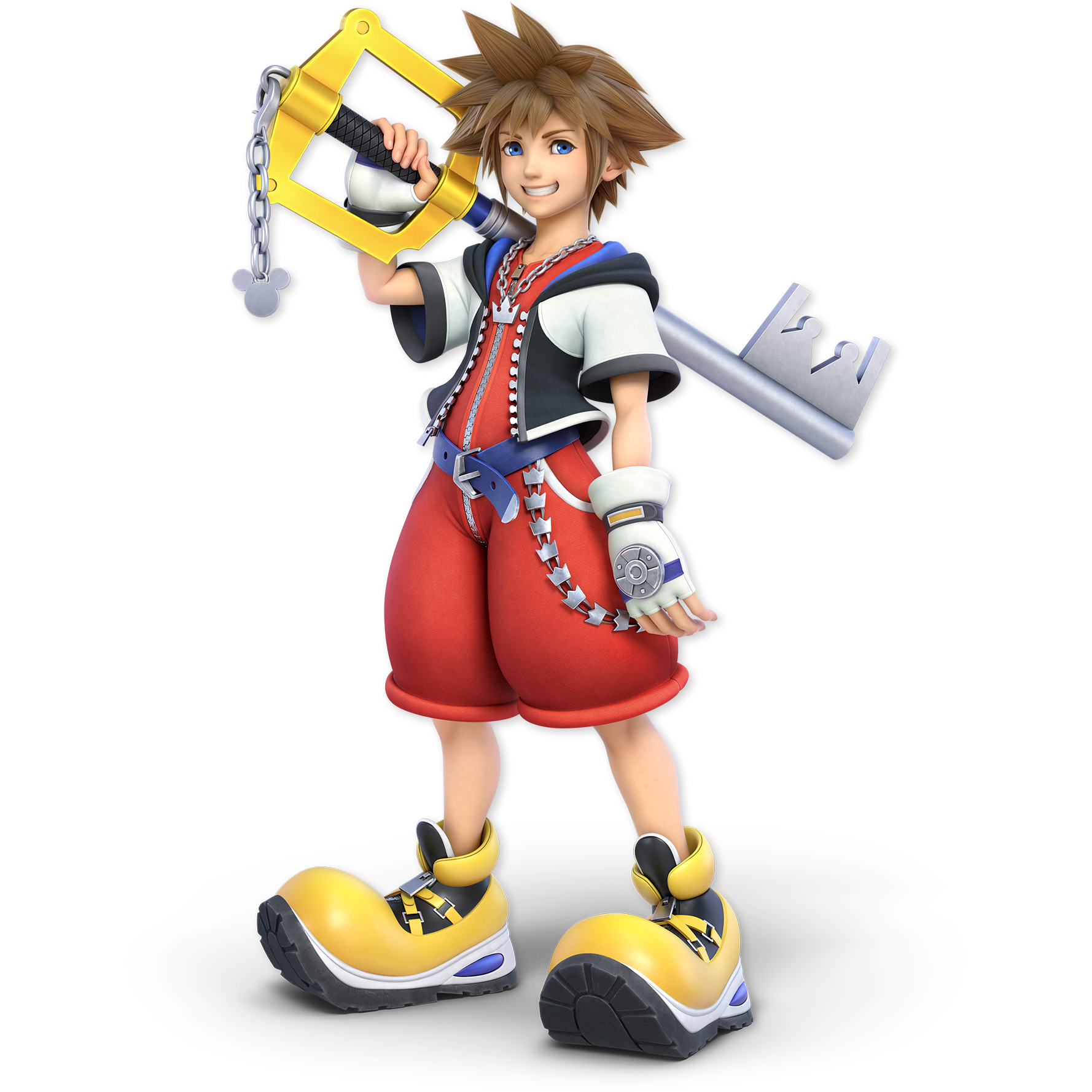
Smash’s roster ends, of all places, at Disney. Kingdom Hearts belongs to the House of Mouse – when Tetsuya Nomura pitched the crossover around 2000, Disney agreed on the condition that every original character it produced would be fully Disney-owned – so the boy with the Keyblade required sign-off from Nintendo, Square Enix, and Disney at once. Cloud and Sephiroth had needed only Square Enix’s blessing.
The deal began as an accident. ’I happened to meet a Disney rep at an award ceremony,’ Sakurai later recounted, and the pitch he made on the spot turned into years of three-way negotiation, with the reveal trailer itself produced under supervision from both Square Enix and Disney. The result, announced in The Final Mr. Sakurai Presents on October 5, 2021 and released on October 18, 2021, was fighter number 82 – the 89th and final playable character the series has ever added.
Even afterward, Sora’s own games kept their distance: Kingdom Hearts reached the Switch in February 2022 only as cloud-streamed versions, with native ports not due until the Switch 2 in October 2026. The broadcast that introduced him is also the one where Sakurai wrapped up more than two decades of roster-building and told his audience, ’Please let me say goodbye.’ He gave the last word to somebody else’s character. That was rather the whole idea of Smash.
Frequently Asked Questions
Who actually won the Super Smash Bros Fighter Ballot?
Sora won the Fighter Ballot, which ran from April 1 to October 3, 2015. Nintendo sat on the full results for six years, worried that publishing them would send fans after the rights holders of runner-up characters, and only confirmed his first-place finish on the day of his reveal.
Why was Steve banned from major Smash tournaments?
A movement exploit reported in March 2023 let Steve recover faster than any other character and react before attack animations finished, and major events including Hungrybox’s Coinbox series barred him. He hardly needed the help – a survey of 71 professional players had already rated him top tier.
Why do no Pokemon characters count as third-party?
Because Nintendo is a direct owner. The Pokemon Company was founded in April 1998 as a joint venture of Nintendo, Game Freak, and Creatures, with Nintendo holding a 32 percent stake and sole ownership of the Pokemon trademark outside Japan. Co-ownership is still ownership, so every Pokemon fighter stays first-party.
Why don’t Fire Emblem characters count as third-party?
Nintendo owns and publishes Fire Emblem outright. The confusion comes from the developer: Intelligent Systems is an independently run studio, but it works almost exclusively with Nintendo, and developing a franchise is not the same as owning one. That test keeps all 8 of the series’ Fire Emblem fighters on Nintendo’s side of the ledger.
Which company owns the most third-party fighters in Smash?
It is a four-way tie. Counted by parent company – with Sora filed under Disney, which owns Kingdom Hearts – Konami, Capcom, Square Enix, and Sega each hold 3 fighters; Sega’s trio spans Sonic, Bayonetta, and Joker via its Atlus subsidiary. Microsoft and Bandai Namco hold 2 apiece; SNK and Disney supply one each.
- Nintendo official Super Smash Bros. Ultimate fighter data
- SmashWiki – Fighter number
- Source Gaming – Solid Snake Joins the Brawl (Sakurai translation)
- Microsoft News – Microsoft Acquires Rare Ltd (2002)
- Capcom – Mega Man Legends 3 statement (2011)
- Nintendo – Kazuya Mishima joins Super Smash Bros. Ultimate
- Guinness World Records – Best-selling video game
- Britannica – Pac-Man