All 14 Men Who Were Actually President Before George Washington
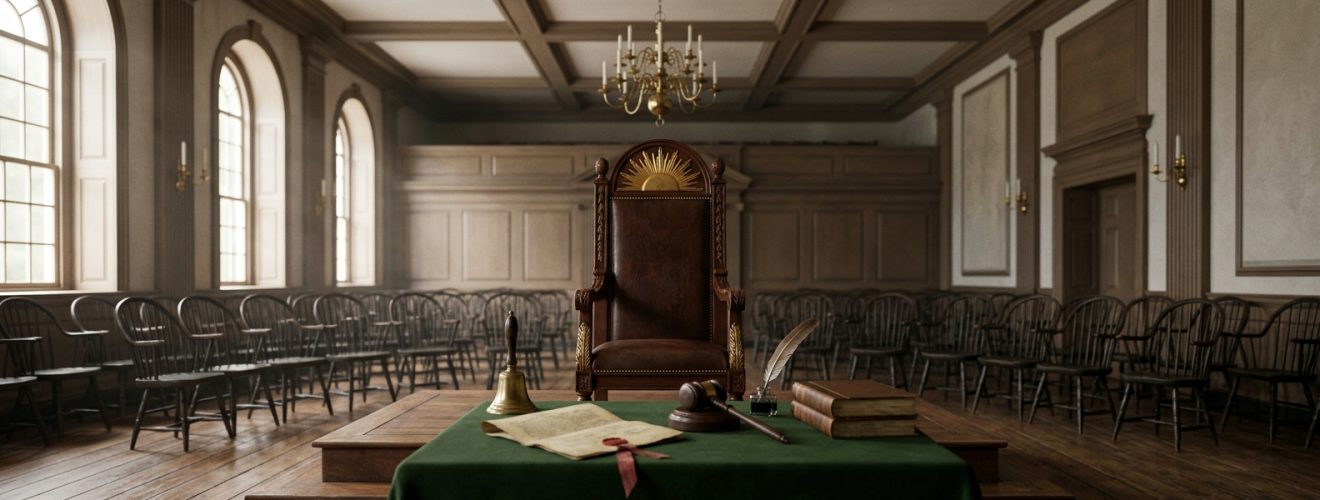
The title ‘President of the United States in Congress Assembled’ appears in official records from years before George Washington swore an oath to anything. The office it named chaired the Continental Congress and then its successor, the Congress of the Confederation – a post that sounds enormous and was not. Its holder managed the correspondence, kept order in the debates, received the dignitaries, and was, in Wikipedia’s dry summary, ‘a neutral discussion moderator.’
It was not a job that made men famous, and the fifteen-year parade of its holders shows it: lawyers, planters, merchants, a future chief justice, and one man the British would lock in the Tower of London. Most of them went on to grander things, or arrived from them. What the office did have was history happening around it – independence, a war, a peace, and the slow failure of the government it presided over.
Washington took the oath that ended the era on April 30, 1789, at Federal Hall in New York City, with Chancellor Robert R. Livingston administering it. What follows is every man who actually held the chair, in presiding order – the elected-but-never-served are a footnote here, not a roster spot – and every American president who followed inherited a title these men wore first.
Fourteen men presided over the Continental Congress and the Congress of the Confederation between 1774 and 1789, each holding the title of president before George Washington took office. The tally counts distinct men who actually presided: repeat terms fold into a single entry, and an election that never led to service does not count.
Peyton Randolph
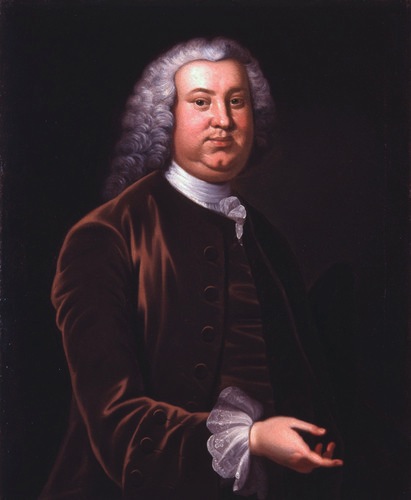
Peyton Randolph gave up the chair of the Continental Congress on October 22, 1774, and died exactly one year later to the day. The stroke came at dinner in Philadelphia – Thomas Jefferson was at the table, by Jon Meacham’s account – on October 22, 1775.
Randolph was the Virginia establishment in a single person: the colony’s King’s Attorney, then Speaker of the House of Burgesses from 1766 to 1775. When the First Continental Congress convened, the delegates elected him president on September 5, 1774, its first day, and when the Second Congress met in May 1775 they promptly elected him again. Both times he left the chair for the same reason, to go home and preside over the Burgesses; the second departure, on May 24, 1775, handed the presidency to John Hancock.
Congress shut down for his funeral on October 24, 1775, with the full body in attendance – a state honor for a man who had left its chair back in the spring. Losing a presiding officer cost the Congress nothing but the funeral; every president who died in office would later show what the executive version of that loss could do. Randolph’s remains eventually went home to Williamsburg, where they rest beneath the chapel of the College of William and Mary.
Henry Middleton
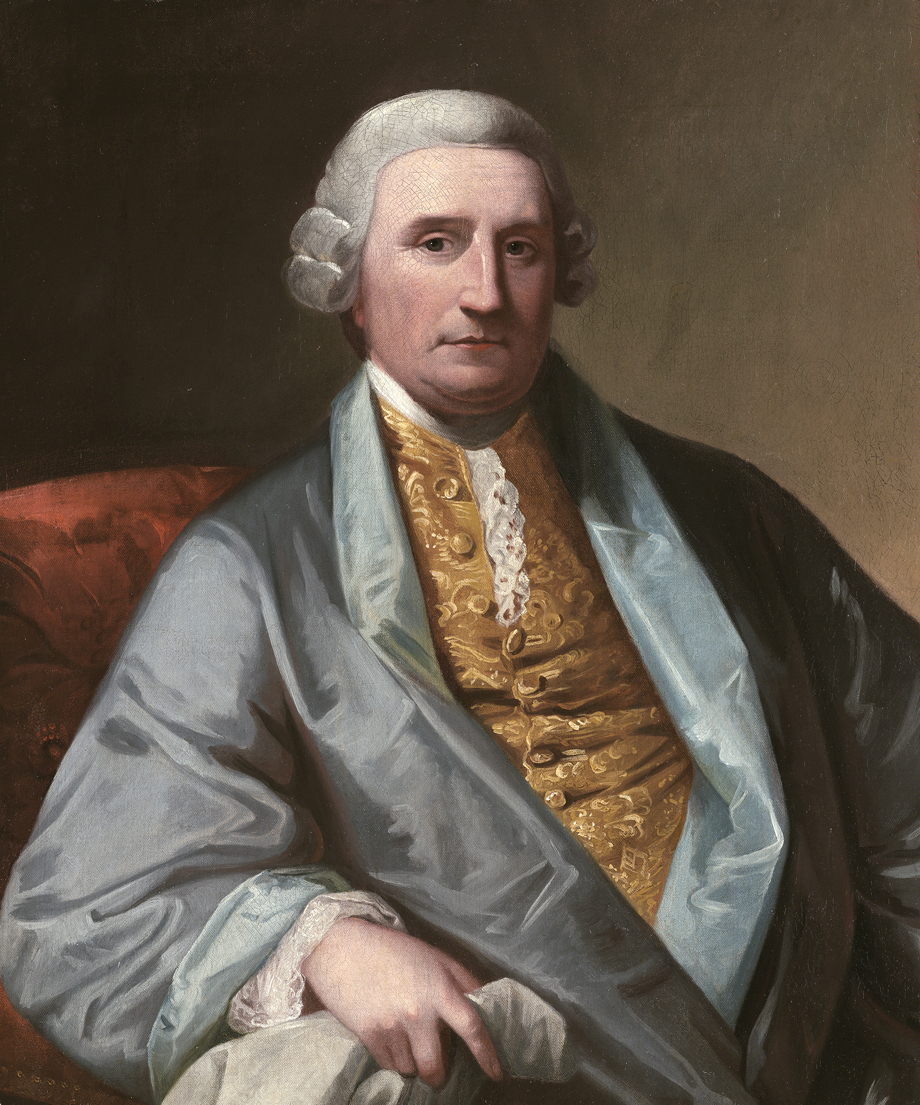
Four days. That is the entire span of Henry Middleton’s presidency of the Continental Congress: he took the chair from Peyton Randolph on October 22, 1774, presided while the First Continental Congress finished its business, and was out of the job on October 26, when the body adjourned.
He was a wealthy South Carolina rice planter, with estates that included The Oaks and Middleton Place, and he had spent years as Speaker of the colony’s commons house before Philadelphia ever called. The revolutionary credentials in the family ultimately belonged to his son: Arthur Middleton signed the Declaration of Independence in 1776, by which point Henry had left Congress for good.
The father’s war ended differently. After the British captured Charleston in May 1780, Henry Middleton accepted the protection of the Crown – a quiet accommodation, made six years after he had presided over the body coordinating resistance to it, and one that cost him no property. He died in Charleston on June 13, 1784. Middleton Place, the family seat on the Ashley River, was declared a National Historic Landmark in 1971 and now operates as a house museum and garden, open to anyone. The gardens, unlike the politics, have held up beautifully.
John Hancock
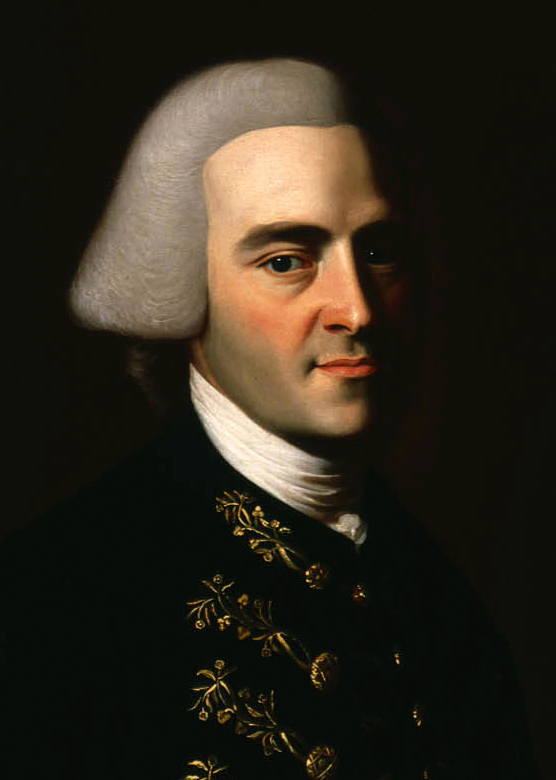
The signature came first, and it was enormous. On August 2, 1776, John Hancock – president of Congress, and the first of every founding father who signed the Declaration of Independence to put pen to the engrossed parchment – wrote his name in strokes so large and bold that ‘John Hancock’ still means a signature.
He had missed the First Continental Congress entirely, staying behind in Massachusetts in 1774, then rose fast in the Second: when Peyton Randolph went home, Hancock took the chair and held it from May 24, 1775, to October 31, 1777, a stretch that covered independence itself. His papers at the Library of Congress still include transcripts, made by Hancock and his secretary, of letters from George Washington, Philip Schuyler, and Benedict Arnold, and separately of letters Hancock wrote while president – the office was, among other things, the war’s mail room. Massachusetts then made him its first elected governor in 1780.
The office tried to have him back. Congress elected Hancock president a second time on November 23, 1785, and he never presided for a single day of it – he resigned the following May, citing illness, without once taking the chair. The first name on the Declaration ended as the presidency’s most famous no-show.
Henry Laurens
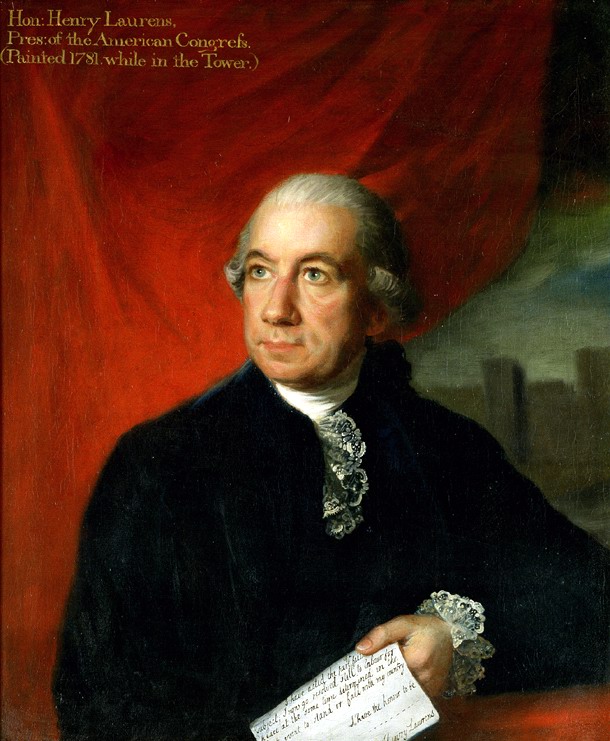
Henry Laurens was sailing for Europe to negotiate a Dutch loan when the Royal Navy caught his ship on September 3, 1780. The British carried him to London and put him in the Tower of London, where the former president of Congress spent fifteen months before the two sides settled on an exchange: Laurens for Lord Cornwallis, released on the last day of 1781.
Laurens had presided from November 1, 1777, to December 9, 1778. The fortune that made him a public man had the darkest possible source: he was a partner in Austin and Laurens, the Charleston firm that became the largest slave-trading house in North America and oversaw the sale of more than 8,000 enslaved Africans in the 1750s alone.
Release came at a price the war kept collecting. Laurens reached the American commissioners in Paris in time to sign the preliminary Treaty of Paris on November 30, 1782. He arrived to worse news as well: his son John, a lieutenant colonel, had been killed that August at the Battle of the Combahee River, one of the war’s last engagements, only months after his father walked out of the Tower. Laurens declined every public office offered to him afterward, including a seat at the 1787 Constitutional Convention, and withdrew to his Mepkin plantation, where he died on December 8, 1792.
John Jay
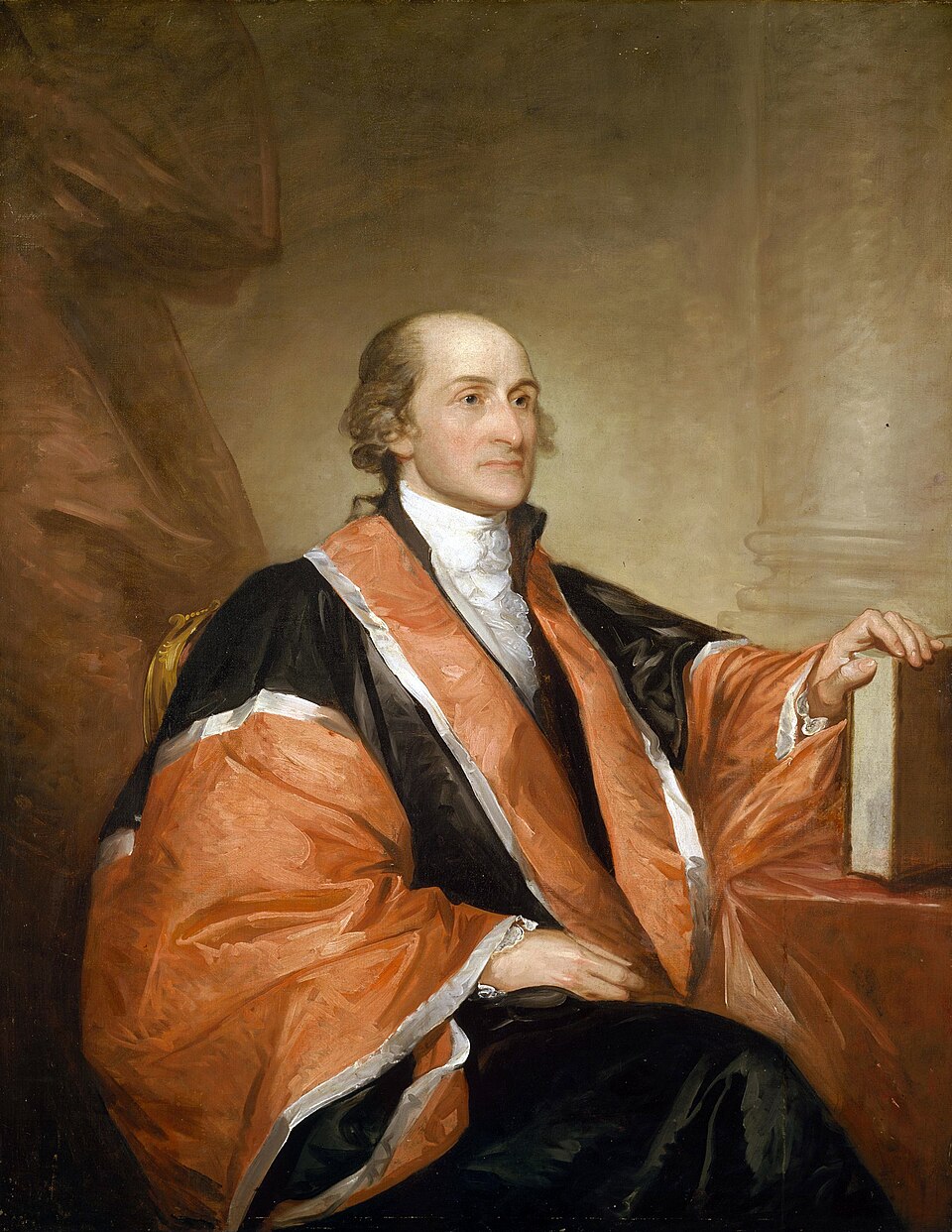
A feud did the electing this time. The Deane-Lee affair – the dispute over commissioner Silas Deane’s conduct in France – had split Congress into rival camps, and when Henry Laurens resigned the chair in the middle of it, the job went to John Jay on December 10, 1778. Columbia University’s Jay archive describes him, with scholarly delicacy, as ‘the beneficiary of the tussle.’
He was 32, and already chief justice of New York – a post he resigned that December to take the chair. He was hardly neutral in the fight that elevated him, either: Jay had personally defended Deane before Congress, and Deane had just taken the feud public, publishing his address to ‘the Free and Virtuous Citizens of America’ in the Pennsylvania Packet on December 5, 1778, five days before Jay’s election.
Congress solved the problem of Jay by promoting him out of it, appointing him Minister Plenipotentiary to Spain on September 27, 1779 – the same date its own records give for the end of his term. The rest of the career runs like a relay of firsts. Washington made him the first Chief Justice of the United States in 1789; he negotiated the treaty with Britain that still carries his name while sitting on the bench; he served two terms as Governor of New York. Then he turned down both reelection and a second appointment as Chief Justice, and retired for good.
Samuel Huntington
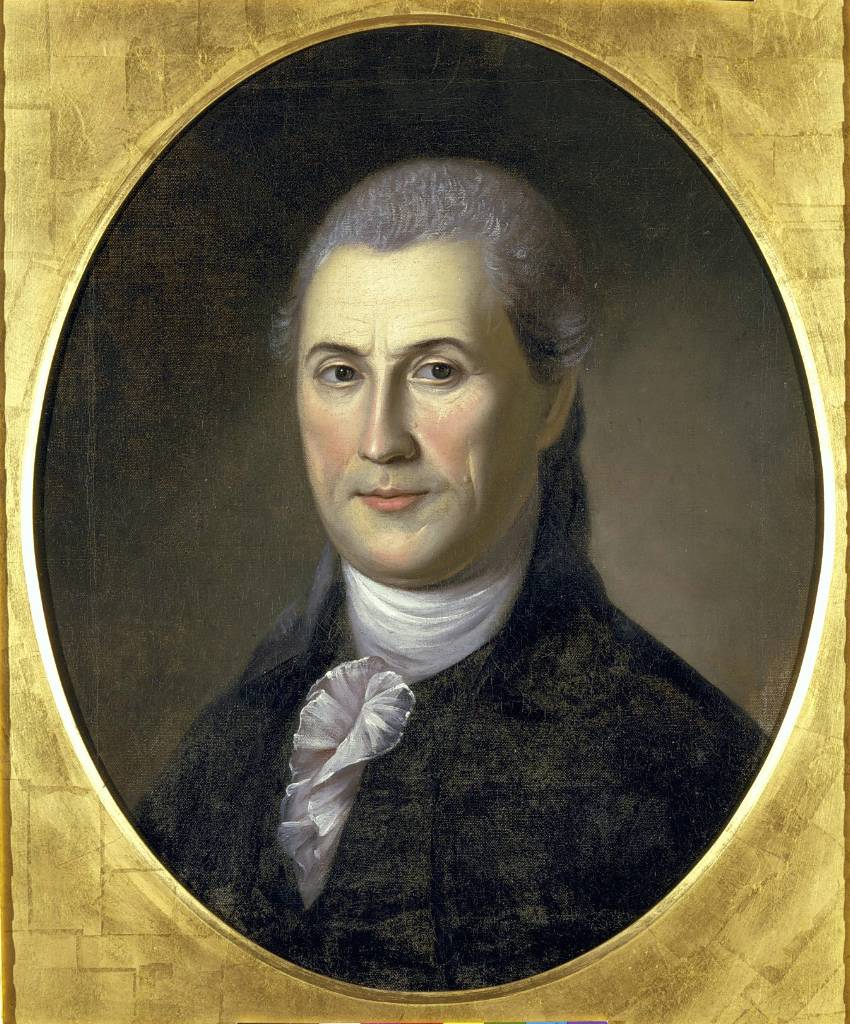
On March 1, 1781, the Articles of Confederation took effect and the United States got a new frame of government; the presidency of Congress changed underneath the man sitting in it. Congress held no new election. Samuel Huntington, presiding since September 28, 1779, simply kept the chair, and the Continental Congress he had been elected to lead became the Confederation Congress around him.
By ratification day he had already been presiding for roughly seventeen months, longer than the one-year term the new Articles allowed, and the workload was telling. Connecticut’s signer of the Declaration of Independence and a former associate judge of its Superior Court, Huntington lasted until July 1781, when his health gave out; the House’s own records say he resigned owing to an ‘ill state of health.’
Connecticut took him back and kept promoting him. He was chief justice of the state’s supreme court in 1784, lieutenant governor in 1785, governor in 1786 – the whole ladder in three years. After that, Connecticut simply re-elected him governor every year until he died in office on January 5, 1796. The folklore fights over the ‘real’ first president never seem to reach him at all, which suggests the argument was never really about who was sitting in the chair.
Thomas McKean
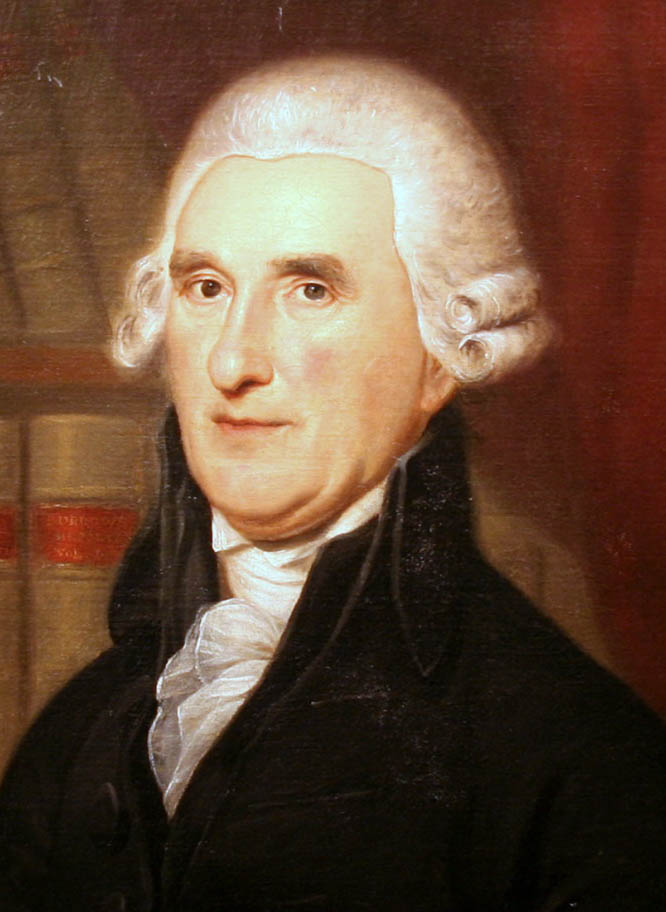
Thomas McKean ran the national legislature and the Pennsylvania courts at the same time. He had been Chief Justice of Pennsylvania since 1777, and he did not resign the bench when Congress elected him president on July 10, 1781 – he simply did both jobs, while technically sitting in Congress as a delegate from Delaware. One man, two states, two branches of government.
History handed his short term the biggest news of the war. Cornwallis surrendered at Yorktown on October 19, 1781, while McKean held the chair – and then the journey made him wait for it. Unofficial word reached Philadelphia’s legislators quickly, but the official dispatch from Washington, carried by Lieutenant Colonel Tench Tilghman, arrived early on the morning of October 24. The war effectively finished on his watch. He resigned within weeks to stay on the Pennsylvania bench, and Congress did not elect John Hanson until November 5.
It was that kind of career. McKean had already served one month as Delaware’s chief executive in 1777, after the British captured its president; over his life he signed three founding documents – the Continental Association, the Declaration of Independence, and the Articles of Confederation – and he finished with nine years as Governor of Pennsylvania, from 1799 to 1808.
John Hanson
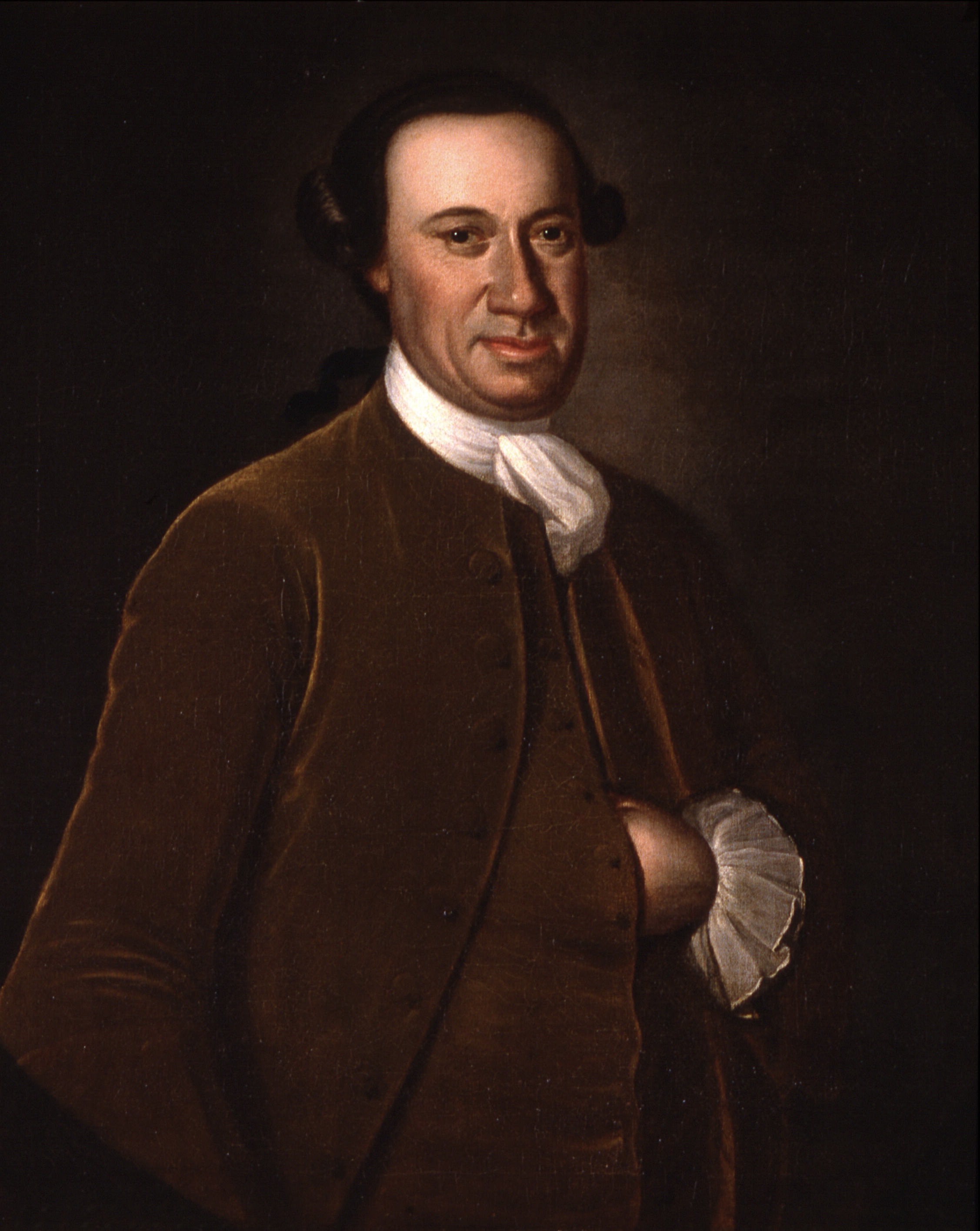
A durable piece of American folklore holds that John Hanson, not George Washington, was the real first president of the United States. Hanson descendants and biographers spent years building the case, and the internet finished the job. The truth is narrower, and better.
Hanson was elected on November 5, 1781, and served to November 3, 1782, which made him the first president elected under the ratified Articles of Confederation to serve the full one-year term they prescribed – and that is the whole superlative. He was not the first president under the Articles: Maryland, his own state, had been the last to ratify them, holding out until January 1781 over western land claims, and by the time they took effect that March, two other men would preside under them before Hanson ever did. The historian Richard B. Morris, considering which president of Congress could most plausibly be called the first, wrote that ‘a stronger case could be made for Peyton Randolph of Virginia’ – or for John Hancock.
Hanson himself found the largely ceremonial chair unfulfilling after his hands-on years financing Maryland’s war effort, retired from politics at the end of his term, and died a year later, on November 15, 1783. The myth-making never stopped: he has since also been mistaken for America’s first Black president, through confusion with a nineteenth-century Liberian senator who shared his name. For a man who found the office dull, he has had a remarkably lively afterlife.
Elias Boudinot
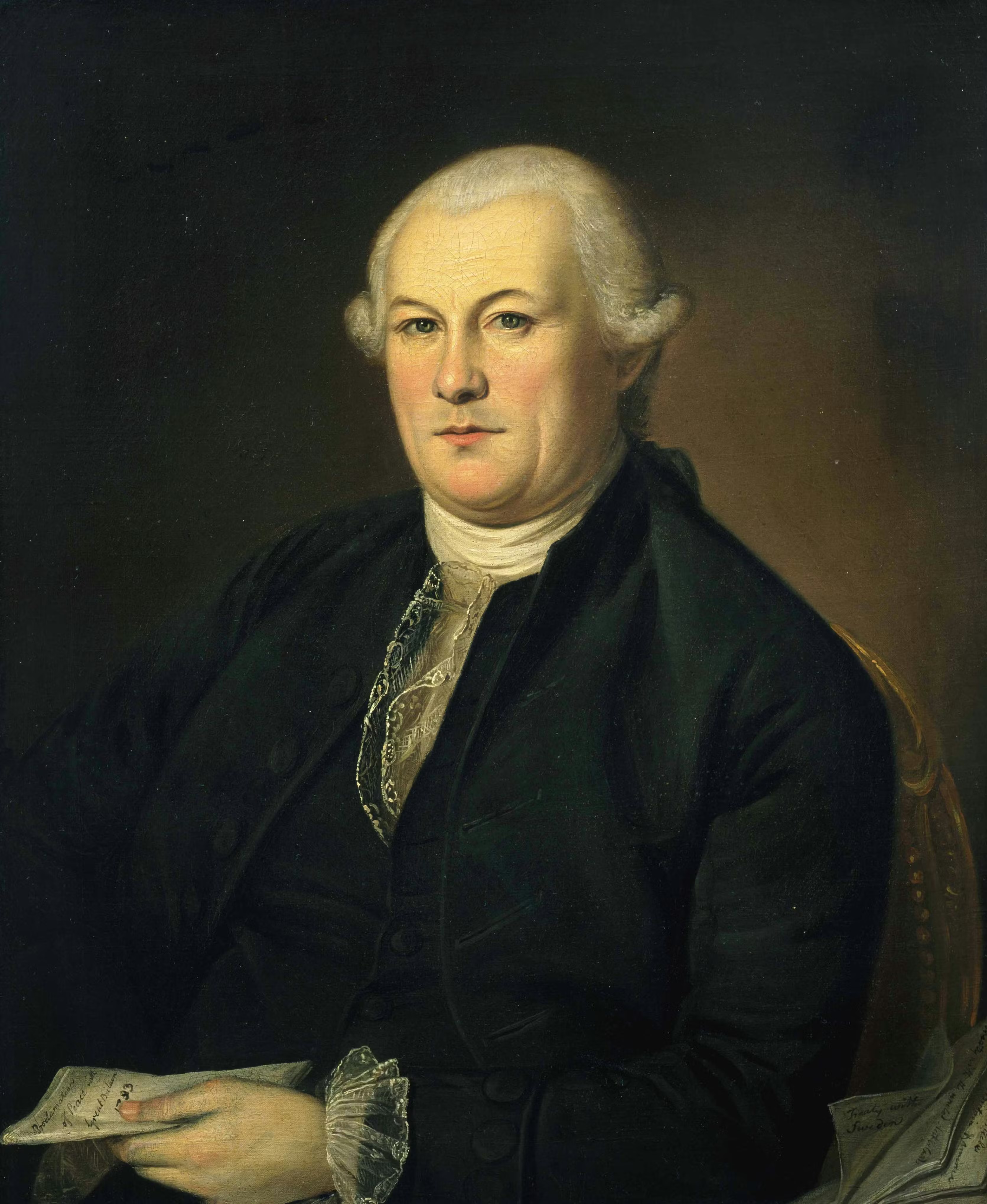
About four hundred mutinous Pennsylvania militiamen surrounded the State House in Philadelphia on June 21, 1783, demanding their back pay from the Congress inside. The trouble had started the day before, when about 80 Lancaster officers and militia broke ranks and began marching on the city. That evening a quorum of Congressmen met at the residence of the president, Elias Boudinot, and directed Washington to send loyal troops; on June 22, Boudinot announced that Congress would abandon Philadelphia altogether and reconvene in Princeton, New Jersey, on June 26.
The government never really stopped moving after that. Princeton was one stop in a wander that ran through every city that has served as the U.S. capital. It was Boudinot’s presidency – November 4, 1782, to November 3, 1783 – that set the wandering going. His term caught the war’s actual end, too: the American commissioners in Paris wrote to him personally on September 10, 1783, a week after the definitive Treaty of Paris was signed, to report that ‘Definitive Treaties were concluded.’
Boudinot’s own favorite office came much later. He became the first president of the American Bible Society in 1816, and called that appointment ‘the greatest honor that could have been conferred on me this side of the grave.’ Presiding over the United States, apparently, ranked second.
Thomas Mifflin
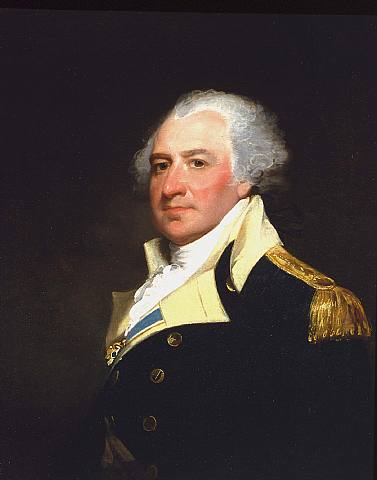
At noon on December 23, 1783, in the Senate Chamber of the Maryland State House at Annapolis, George Washington handed over his commission as commander in chief and left public life – he thought – for his farm. The president of Congress who accepted it was Thomas Mifflin, a Philadelphia merchant’s son whom the war had made a major general, and the general resigning to him would later head the roster of every U.S. president who was also a general. In December 1783, the soldier bowed to the chair.
The room understood what it was watching. Washington declared he would ‘retire from the great theatre of Action’; James McHenry recorded that his voice ‘faultered and sunk,’ David Howell reported ‘a most copious shedding of tears,’ and Mifflin, McHenry added, replied ‘without shew of feeling, tho’ with much dignity.’ The previous evening’s send-off had drawn about 200 dinner guests and thirteen toasts fired under cannon, followed by a ball some six hundred strong.
Mifflin had been elected in absentia on November 3, 1783 – a chairman presided until he arrived – and his Congress ratified the definitive Treaty of Paris on January 14, 1784, in the same Annapolis State House. He finished as the first Governor of Pennsylvania under its 1790 constitution, serving to 1799, and was succeeded in that office by Thomas McKean, who had sat in the same congressional chair two years earlier.
Richard Henry Lee
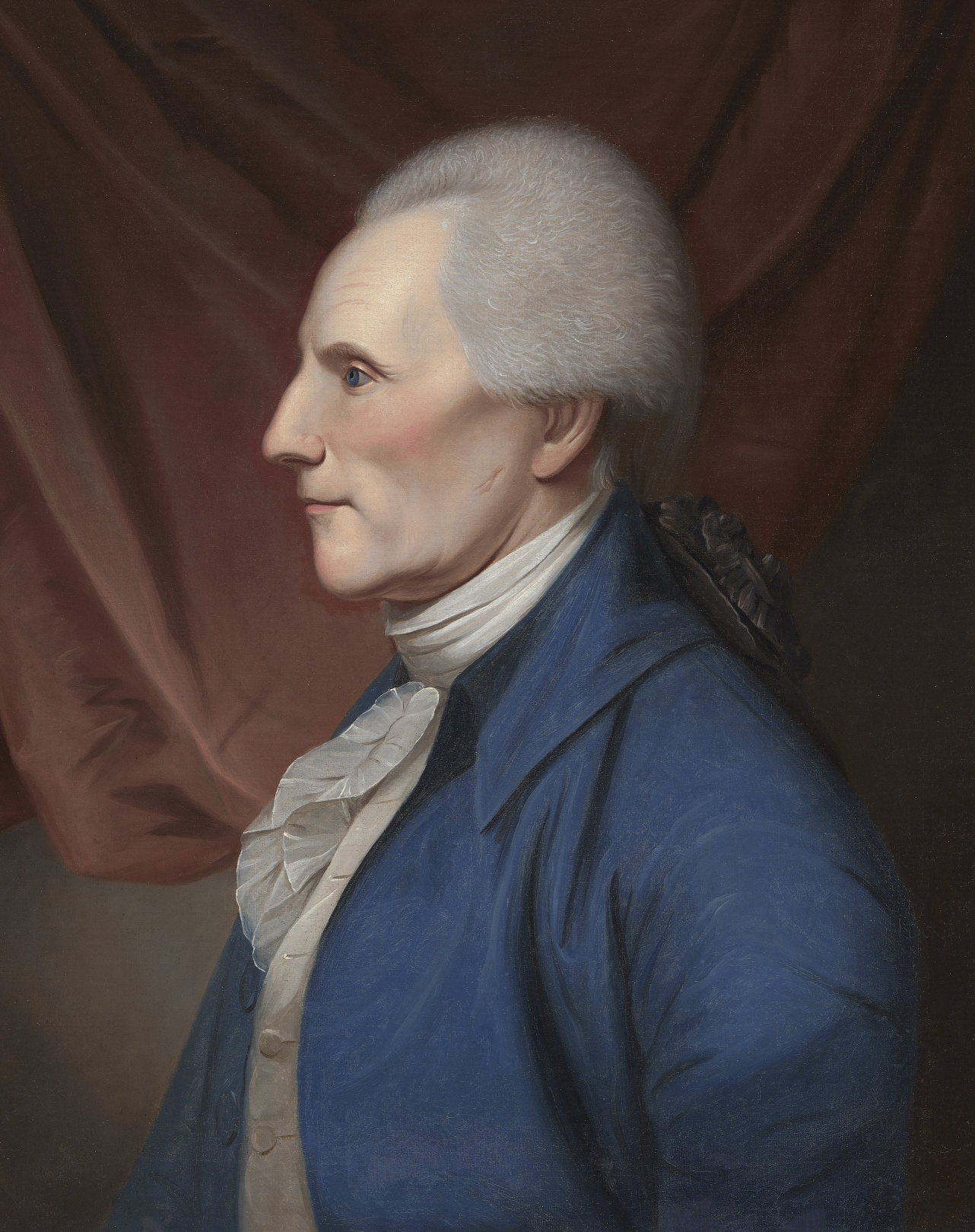
Before he ever presided over the government, Richard Henry Lee had moved to create it. His resolution of June 7, 1776, in the Second Continental Congress was the motion for American independence itself, and no later office – his own included – ever quite measured up to the sentence.
The presidency came on November 30, 1784, when the delegates elected him at the French Arms Tavern in Trenton, before Congress moved in January 1785 to what house.gov calls its ‘permanent home’ in New York’s old City Hall. Lee used the chair to push a specific idea: fund the war debt by selling western land rather than taxing an exhausted public, writing to Samuel Adams that a well-managed land fund could relieve ‘that state of oppression and distress that an indebted people must invariably feel.’ The Land Ordinance of 1785, passed that May, put the idea on the books during his term.
His later career ran on principled contradiction. Lee fought ratification of the Constitution, objecting that it built a ‘consolidated’ government with no bill of rights – then served in it anyway, as one of Virginia’s first senators, from 1789 until 1792. He died at Chantilly, his Westmoreland County home, in 1794. Modern scholarship has been chipping away at his most famous protest work: a 2025 study argues Elbridge Gerry is the far more likely author of the ‘Letters from the Federal Farmer.’ History keeps editing Richard Henry Lee; the motion of June 7 is safely his.
Nathaniel Gorham
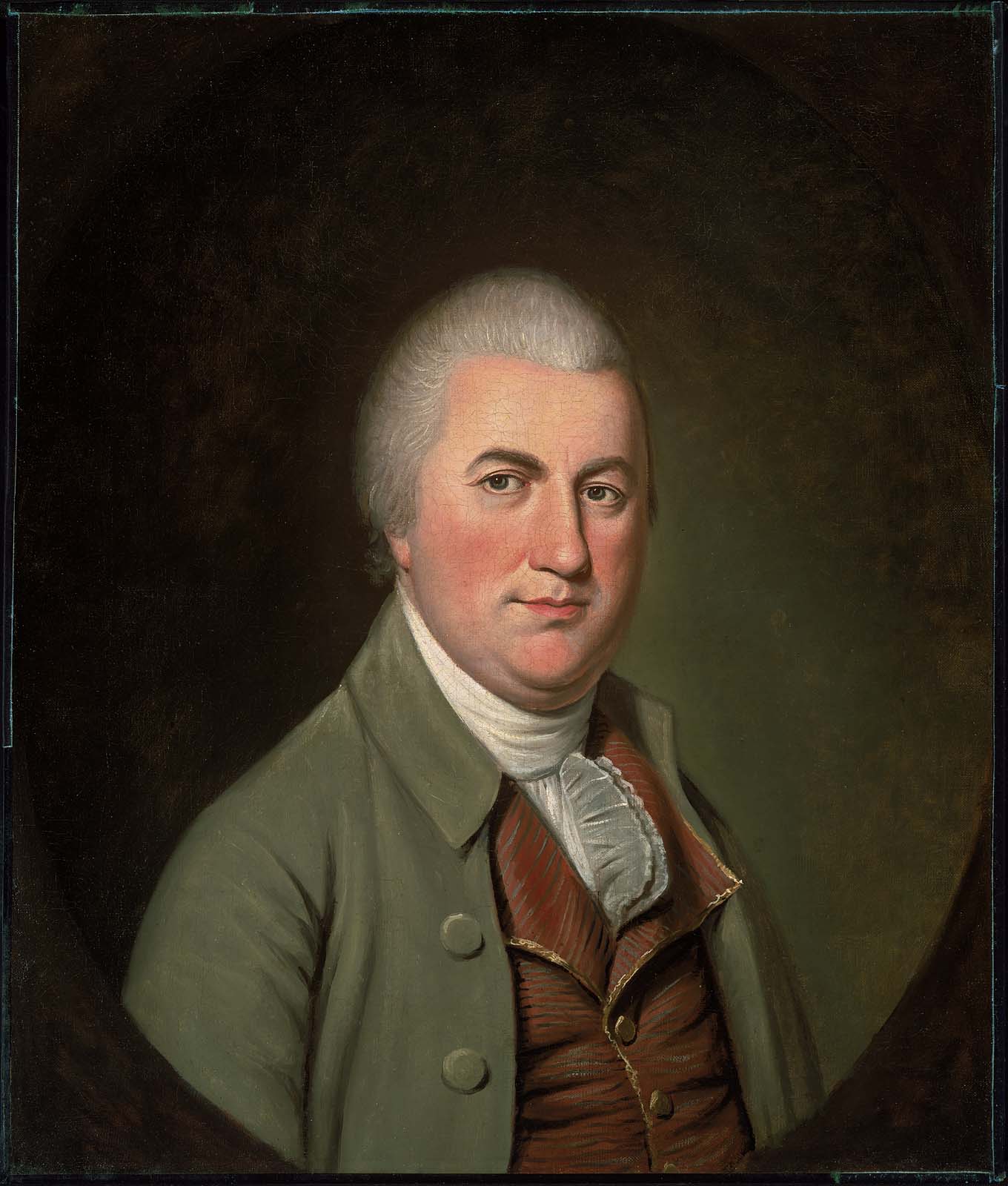
According to a story Rufus King told decades later, in the 1820s, Nathaniel Gorham corresponded secretly with Prince Henry of Prussia in 1786 about whether the prince might be available, should the United States decide to try monarchy. What survives is a single draft reply from Henry – unsent, and addressed not to Gorham but to Baron von Steuben. The story of the republic’s presiding officer shopping for a king is either the Confederation’s best anecdote or nothing at all; the evidence points to the second.
The verifiable career is impressive enough. A Charlestown merchant apprenticed to a trader at about 15, Gorham had already been filling John Hancock’s empty chair as chairman since May 15, 1786, when Congress made it official and elected him president on June 6; he served to February 2, 1787. At the Constitutional Convention he was chosen, on May 30, 1787, to chair the Committee of the Whole – replacing George Washington in the chair for the debates that produced the Constitution he then signed.
Then came the land. In 1788 Gorham and Oliver Phelps contracted to buy six million acres of western New York from Massachusetts for $1 million in state scrip; by 1790 they could not make the payments, and the National Archives records the result as insolvency and ‘a fall from the heights of Boston society and political esteem.’ He died in Charlestown in 1796, having briefly out-chaired George Washington and briefly contracted for six million acres. Neither lasted.
Arthur St. Clair
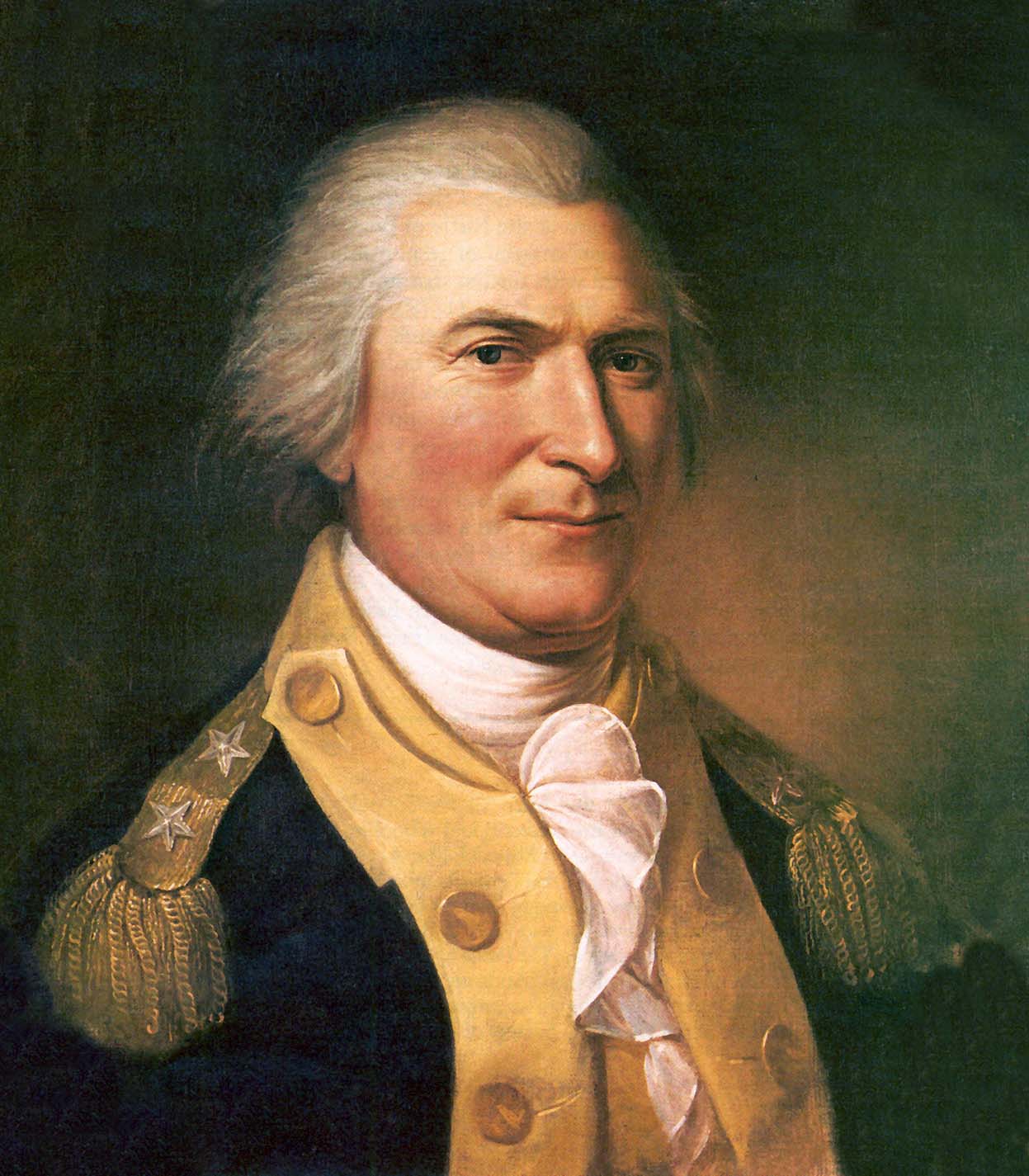
Congress scraped together a quorum amid the alarms of Shays’ Rebellion and, on February 2, 1787, elected Arthur St. Clair president. He was a Scot from Thurso who had bought an ensign’s commission in the British army in 1757 and fought at Louisbourg and Quebec before settling in Pennsylvania and changing sides – and, if you accept a claim Wikipedia rests on a single book, the only foreign-born ‘president’ the United States has ever had.
The Northwest Ordinance was adopted on July 13, 1787, on his watch, and Congress promptly matched the man to the map: the day his presidency ended, October 5, 1787, it elected him governor of the Northwest Territory, the first the territory ever had. He took up the post at Marietta in July 1788 and held it until 1802.
The governorship is also where the story darkens. As the U.S. Army’s senior officer from March 1791, St. Clair led the expedition that ended on November 4, 1791, in the disaster still known as St. Clair’s Defeat – which the Army’s own published history calls its ‘greatest battlefield loss by Native American forces,’ with over 900 soldiers, women and children killed or wounded; roughly 1,400 soldiers had made camp on the Wabash the night before. St. Clair, wounded himself, lost his command. He returned in the end to the iron business in the Ligonier Valley, and died near his home, Hermitage, on August 31, 1818.
Cyrus Griffin
The last president of the old Congress presided, toward the end, over almost nobody. Cyrus Griffin took the chair on January 22, 1788, and the government dissolved under him not by decree but by attendance: the Confederation Congress managed its final quorum on October 10, 1788, and after that the delegates simply stopped coming.
Griffin was a Virginia lawyer trained at Edinburgh and London’s Middle Temple, and his household was the most unexpectedly aristocratic in American politics: in 1770 he had eloped with Lady Christina Stuart, eldest daughter of the 6th Earl of Traquair, whom he met as a law student in Scotland. Letters preserved at Traquair House record ‘the President’ hosting congressional dinners for as many as twenty-two guests, and describe Lady Christina as ‘sociable & agreeable.’
The end, when it came, was almost silent. The Confederation Congress held its final session on March 2, 1789, attended by exactly one member – Philip Pell of New York, who adjourned the fifteen-year-old body sine die, two days before its constitutional replacement convened in the same building. The first American government did not fall; it failed to make quorum. Washington put Griffin on the new federal bench within the year, and he served there until his death at Yorktown in 1810. He ended as a judge of the government that had replaced his own, and outlasted it by two decades.
Frequently Asked Questions
What could the President of the Continental Congress actually do?
Very little, on his own authority. house.gov’s history is specific: the president ‘could not appoint Delegates to committees, take actions independent of the Congress, or control the voting process.’ He chaired debate, managed official correspondence, and received foreign dignitaries as the first member of Congress – a chairman’s job carrying a president’s title.
Who was the last president before George Washington?
Cyrus Griffin of Virginia, who had spent 1780 to 1787 as a judge of the Continental Congress’s Court of Appeals in Cases of Capture before taking the chair. The office lapsed with the old Congress in 1789, and no one ever held it again; Washington’s presidency, created by the Constitution, was a different job entirely.
Was John Hancock elected president of Congress twice?
Yes, but he served only the first time. On the second term, house.gov’s record is blunt: Hancock ‘never served as president’ ‘because of illness and resigned on May 29, 1786.’ His name still appears on both election rolls, which is one reason different sources disagree about this list’s length.
Why do some lists count 15 or 16 presidents before Washington?
Because two near-presidents are sometimes included. Samuel Johnston of North Carolina was elected on July 9, 1781, and declined the next day – NCpedia says he returned home ‘for family and business reasons.’ David Ramsay of South Carolina served only as chairman, from November 23, 1785, to May 15, 1786, and was never elected president.
- U.S. House of Representatives, History, Art & Archives: Presidents of the Continental and Confederation Congresses
- Journals of the Continental Congress, 1774-1789 (Library of Congress, A Century of Lawmaking for a New Nation) – the ground-truth record behind every house.gov term date cited here
- National Archives: George Washington’s First Inauguration, April 30, 1789
- Biographical Directory of the United States Congress: Nathaniel Gorham
- U.S. Army: St. Clair’s Campaign of 1791
- National Park Service: The Constitutional Convention, May 30, 1787
- U.S. Senate, Art & Artifacts: General George Washington Resigning His Commission
- Britannica: Peyton Randolph