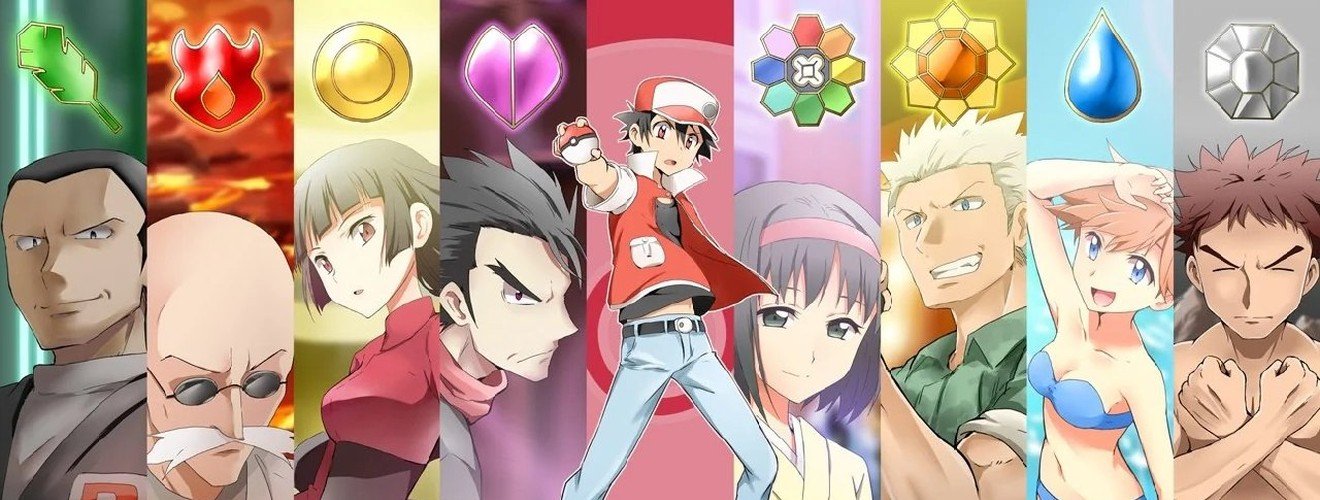
Every Gym Leader in Pokemon Generation 1 (Kanto)
Pokemon Red and Green were meant to be a Christmas release. Game Freak had the code finished in October 1995 and the launch was set for December 21 that year, then it slipped, because the tie-in merchandise was not ready to go on sale beside the games. They reached Japanese shops on February 27, 1996, with an opening sequence that still carries a 1995 copyright date.
The pair that arrived in the West in 1998 were not those games. Red and Blue took their Pokemon distribution from Red and Green, but their graphics, script and sprite designs came from a third Japanese release, Pocket Monsters Blue – a version that could not be bought in a shop at all. It went out by mail to readers of CoroCoro Comic who sent in an order form, distributed from early December 1996 into January 1997 to mark a million sales, and mailed out again in 1997 when the combined total reached four million. It did not reach a Japanese shop shelf until October 10, 1999.
Kanto’s structure became the template: a gym to a town, a badge for beating the person in charge of it. Alola eventually dispensed with the whole arrangement, retiring gyms in favour of island trials and grand trials fought against trial captains and island kahunas. What follows is every leader who held a Kanto gym post in the original games, in badge-case order, and what each of them actually put in a challenger’s way.
Eight Gym Leaders run the Kanto badge circuit in Pokemon Red, Green, Blue and Yellow: Brock, Misty, Lt. Surge, Erika, Koga, Sabrina, Blaine and Giovanni. Each holds one gym, built around one type, and each awards one of the badges a trainer must collect before the Indigo Plateau will admit them.
Brock
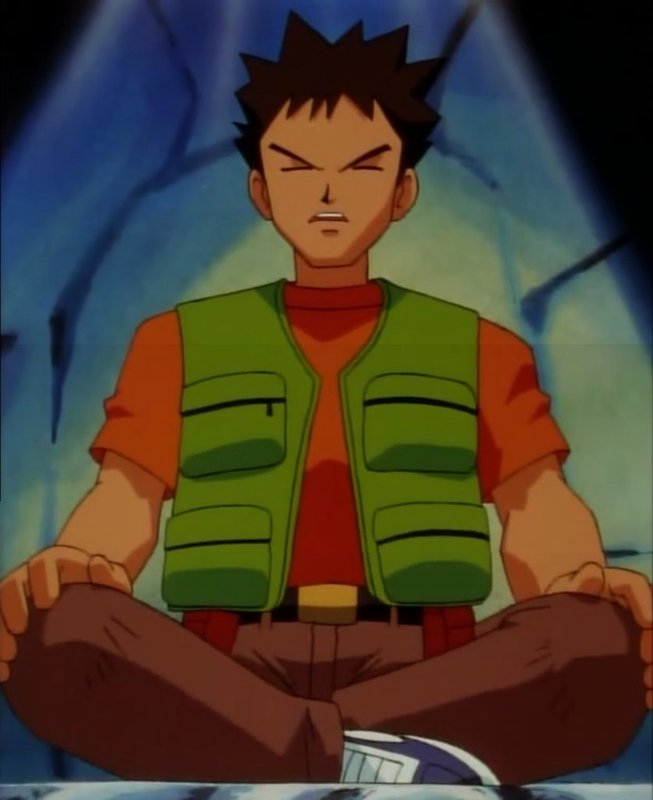
“Charmander’s Fire-type powers won’t make a dent in Brock’s two Rock-type Pokemon,” the official Nintendo Power guide warned American players in 1998. Yellow made the problem worse. Its starter is Pikachu, and Geodude and Onix are both part Ground-type, which means the mascot’s electricity does not merely underperform in the first gym of its own game. It does nothing at all.
Yellow is also the version where that gym came down. Brock’s Geodude drops from Level 12 in Red and Blue to Level 10, his Onix from Level 14 to Level 12, and the single trainer standing between the door and the leader has his Diglett and Sandshrew reduced from Level 11 to Level 9. Every level in the room fell for the one version whose mascot cannot hurt anything in it.
The 1998 Blue instruction manual saw it coming and said so in character. Tucked into its pages is an “Oak’s Memo” tip advising that Fire-type Pokemon need higher experience levels than other types before taking on Brock’s Rock-types – a warning printed in the box the game shipped in, addressed to players who had not yet lost to an Onix and did not know they were about to.
Beating him earns TM34, Bide, and permission to use Flash outside battle, along with the Boulder Badge, which raises the player’s Pokemon by 12.5 percent in Attack. Not Defense. The most defensive gym in Kanto pays out in hitting power.
Misty
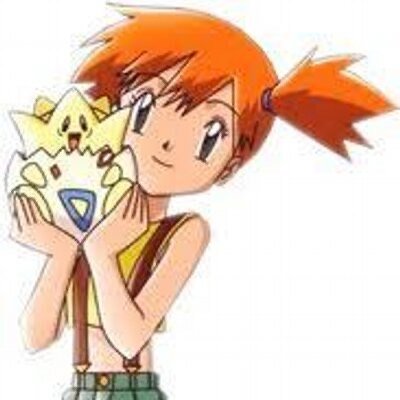
Misty opens with a Staryu and closes with a Starmie, and the gap between them is where Red and Blue stop being generous. The Starmie arrives at Level 21, three levels above the Staryu, carrying a base Special stat of 100 at a point when most players are still travelling with something unevolved and sentimental. The specialist retrospective Pokemaniacal calls it “one of the game’s more obvious difficulty spikes,” and it is the first battle that punishes a trainer for having a favourite rather than a plan.
She runs the Cerulean Gym on a Water-type ticket and hands over the Cascade Badge with TM11, BubbleBeam. Her species and levels do not shift at all between Red, Blue and Yellow, which makes her a fixed point in a generation that fiddled with nearly everything else. Her city is less settled. North of the gym, Nugget Bridge lines up five trainers to fight one after another before a disguised Team Rocket grunt hands over a Nugget; back in town, a house sits sealed behind a policeman because a grunt has stolen TM28 and will not be caught for hours yet.
Bulbapedia translates her Japanese in-game title as “The Tomboyish Mermaid.” Her pre-battle line in Yellow ends, in English, on “Are you ready, sweetie?” The Japanese script ends it somewhere else entirely, on “Ikuwayo! Mai Sutedi!” – Go! My Steady! – the catchphrase of her counterpart in the cartoon, word for word. The English localisation swapped it for an endearment and moved on.
Lt. Surge
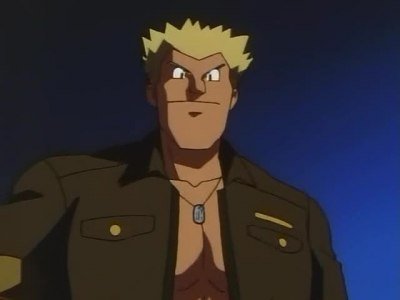
Fifteen trash cans stand in the main room of the Vermilion Gym, three rows deep and five across, and two of them hide the switches that open the door to the room where Lt. Surge is waiting. The game offers no clue at all. The player opens bins.
Bulbapedia’s breakdown of the underlying code has the first switch picked from 8 of the 15 cans in a checkerboard pattern spreading out from the corners, the second always in a can orthogonally beside it, and a bug that lets the top-left can serve as a valid second switch even when it is nowhere near the first. Guess the second one wrong and the traps reset, and the search begins again.
Surge holds Voltorb at Level 21, Pikachu at 18 and Raichu at 24 in Red and Blue. A sign in Vermilion City introduces him as “The Lightning American!”, and he is the only Kanto leader who mentions a war. “Electric Pokemon saved me during the war!” he says. “They zapped my enemies into paralysis! The same as I’ll do to you!” Nothing else in Red or Blue explains what war he means. English demoted him, too: he is a Major in the Japanese, Chinese, German and French versions, and German and French players know him as Major Bob.
The Blue manual’s entire official comment on beating him is that the Thunder Badge raises your Pokemon’s speed a little and permits Fly outside battle.
Erika
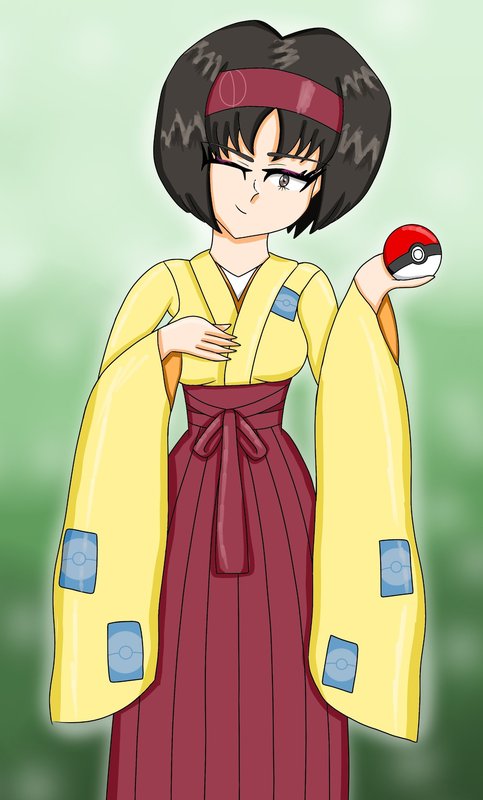
“Oh dear… I must have dozed off,” Erika says, greeting a challenger who has just walked into her gym. She is the fourth stop on the Kanto circuit, she specialises in Grass-types, and she is asleep at work.
Celadon Gym fields seven trainers before her, and every one of them is female: two Lasses, three Beauties, and a Jr. Trainer and a Cooltrainer that the game’s own data flags female. An old man loitering outside the building puts it less delicately. “Heheh! This Gym is great! It’s full of women!”
Her original sprite carries a mistake almost nobody outside Japan would have caught. Erika’s kimono in Red and Blue crosses right over left, the fold reserved for dressing the dead at Japanese funerals, which is a striking thing to hang on a woman who greets you by admitting she was unconscious. Game Freak redrew her for Yellow with the collar the correct way round, and changed her team while they were at it, from Victreebel, Tangela and Vileplume to Tangela, Weepinbell and Gloom.
In every battle Erika has ever fought, in any generation, at least one of her Pokemon knows a move that puts the opponent to sleep. The leader who apologises for nodding off runs a team built to do it to you.
Koga
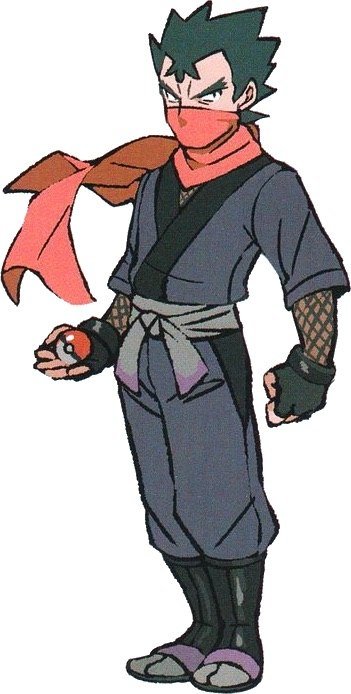
Four white spots at the corners of each wall are the only warning the Fuchsia Gym gives. The walls themselves are invisible on the hardware most players owned in 1996; anyone who came back to the same cartridge later on a Game Boy Color or a Game Boy Advance found them simply drawn in, the whole maze exposed by a palette.
Nintendo Power’s Yellow guide had dealt with it the analogue way, printing a map with arrows on it and telling readers they could “follow the arrows on this map to find the direct route to Koga.” Koga specialises in Poison, which in Red and Blue means two Koffing at Level 37, a Muk at 39 and a Weezing at 43. Yellow replaces all four with three Venonat at Levels 44, 46 and 48 behind a Venomoth at 50. Beating him earns the Soul Badge, permission to use Surf, and TM06, Toxic, which he introduces as “a secret technique over 400 years old!”
He does not stay. Between the first games and the sequels Koga is promoted to the Elite Four at the Indigo Plateau, where challengers arrive only once Johto’s eight Gym Leaders have been beaten, and his daughter Janine takes the Fuchsia post behind him.
The Kanto Safari Zone sits just north of his gym, which lets a trainer spend an afternoon catching rare Pokemon a few minutes’ walk from the man who poisons them for a living.
Sabrina
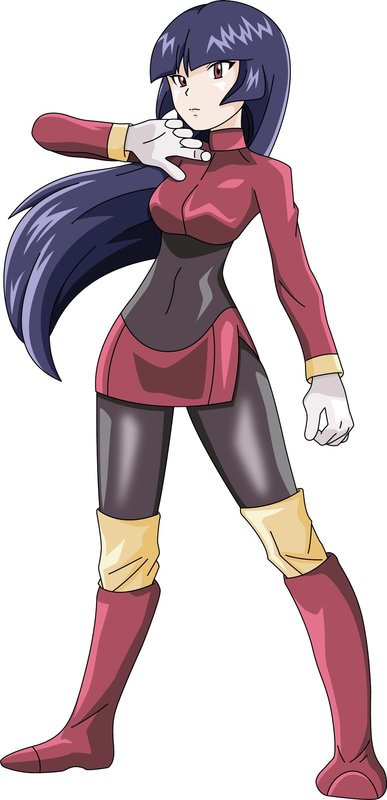
Saffron City has two gyms and one badge. Before the games begin, both Sabrina’s Psychic gym and the Karate Master’s Fighting Dojo claimed official league standing, and a unification match settled it. The Dojo lost. Serebii’s Kanto walkthrough still counts “nine gyms and eight badges.” The Dojo stays open and accepts challengers. It simply has nothing left to award.
Its master gives no name in the original games, only a job description: “Grunt! I am the Karate Master! I am the Leader here! You wish to challenge us? Expect no mercy! Fwaaa!” The name Koichi was not attached to him until FireRed and LeafGreen, two generations later. Bulbapedia blames type advantage, Psychic over Fighting; neither Nintendo Power guide of the period explains it.
Sabrina keeps the badge, defending it in Red and Blue with Kadabra at Level 38, Mr. Mime at 37, Venomoth at 38 and Alakazam at 43, behind nine rooms joined by warp panels rather than doors. Generation I ran offence and defence through one Special stat, so a strong psychic was automatically a durable one, and Alakazam’s base Special of 135 trailed only Mewtwo’s 154 in the entire game. Beat her and she gives up the Marsh Badge and TM46, Psywave.
One of her own psychics gives the flaw away, after you have beaten him. “Psychic Pokemon fear only ghosts and bugs!” he says in English Red and Blue, when Generation I Psychic-types were flatly immune to Ghost moves. By Yellow somebody had quietly cut the ghosts.
Blaine
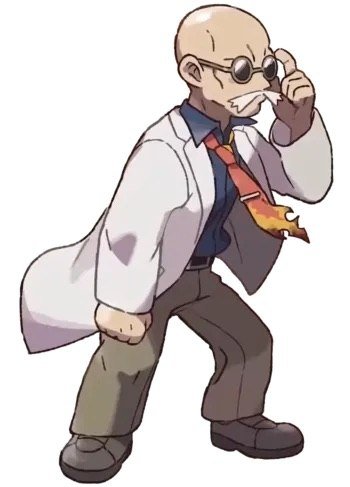
Getting to Blaine requires burgling a burnt-out mansion. The Cinnabar Gym is locked, and the Secret Key that opens it lies on the basement floor of the Pokemon Mansion across the island, in the same building as a scattered run of diary entries left by whoever worked there. “MEW gave birth. We named the newborn MEWTWO,” reads the third one. The fourth: “MEWTWO is far too powerful. We have failed to curb its vicious tendencies…” The player pockets the key and goes to fight a man about a fire badge.
The gym is a quiz. Six trivia consoles double as locked doors, and a correct answer opens the next one without a fight while a wrong answer puts a Burglar or a Super Nerd in front of you immediately. The questions test material the player has been absorbing all game anyway – “Are thunder moves effective against ground element-type Pokemon?” No, they are not.
Blaine fields four Fire-types in Red and Blue, finishing with an Arcanine at Level 47, and hands over TM38, Fire Blast, which at 120 power was the heaviest fire move in the game. His gym does not stay put, either. The volcano takes Cinnabar in Generations II and IV, and he reopens for business in a cave in the Seafoam Islands.
Answering correctly opens the door. It does not remove the Burglar standing behind it, who stays exactly where he is, available at the player’s convenience. The quiz is a courtesy, not an exemption.
Giovanni
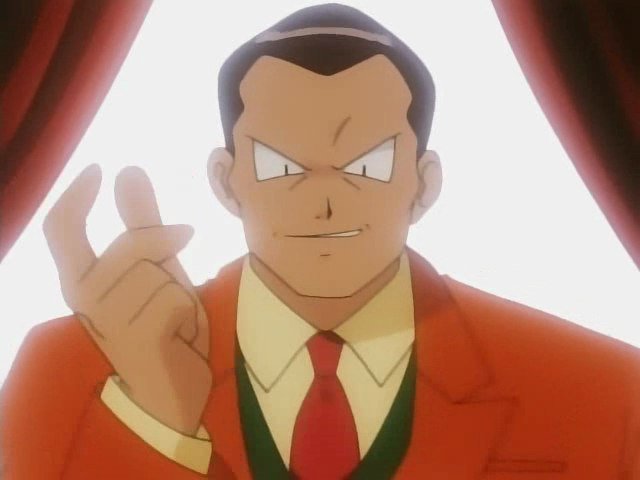
The Viridian Gym is the first building the player walks past and the last one they get into. It stands in the first town north of home, shut, and the Blue instruction manual’s map key puts it about as plainly as a manual can: “You can’t get in here yet because it’s closed.”
By the time it opens, the player has beaten the man inside twice without knowing him, once beneath the Celadon Game Corner and once at Silph Co., where losing only made him leave. Giovanni is the boss of Team Rocket, and Kanto’s final gym is his own hideout. His gym guide has no idea. “Even I don’t know Viridian Leader’s identity!” he says on the way in, then manages “Blow me away! Giovanni was the Gym Leader here?” on the way out. The statues by the entrance had the name on them the whole time.
He fields Rhyhorn at Level 45, Dugtrio at 42, Nidoqueen at 44, Nidoking at 45 and Rhydon at 50, then surrenders the Earth Badge and TM27, Fissure, and announces that Team Rocket is finished forever. Speak to him once more and he is gone for good.
Five of Kanto’s eight gyms can be tackled in almost any order, give or take the Surf requirement that puts Koga ahead of Blaine. Viridian is not one of them, and the series kept that fixed final door for years, until Paldea let trainers face all eight Paldea Gym Leaders in whatever order suited them.
Frequently Asked Questions
Who takes over the Viridian Gym after Giovanni?
Blue takes the post, but not until Generation II, and again in Generations IV and VII. In Gold, Silver and Crystal the Viridian Gym becomes number 16 of a sixteen-badge circuit and drops its single-type specialty entirely. Throughout Red, Green, Blue and Yellow, Giovanni is the only leader Viridian ever has.
What do the Kanto gym badges actually do?
Four of the eight raise the level at which traded Pokemon obey you: no badges caps obedience at 10, the Cascade Badge lifts it to 30, the Rainbow Badge to 50, the Marsh Badge to 70 and the Earth Badge to 100. Five badges unlock a hidden machine for use outside battle.
Are the Gym Leaders the same in Pokemon Yellow?
Yes. The same eight people hold the same eight posts in Yellow; what changes is what they bring. Sabrina is the clearest case, swapping her mixed Red and Blue lineup for Abra, Kadabra and Alakazam, all sitting at Level 50, with the Abra knowing nothing but Flash.
Which Kanto Gym Leader has the smallest team?
Lt. Surge in Pokemon Yellow, where he brings one Raichu at Level 28 and nothing behind it. Bulbapedia records it as the only time a Kanto Gym Leader uses a single Pokemon, and attributes the choice to Yellow following the cartoon. The same leader fields three in Red and Blue, and Giovanni closes the circuit with five.
Are the Elite Four Gym Leaders?
No. Lorelei, Bruno, Agatha and Lance occupy a separate rank above the gyms and award no badges at all. A trainer reaches them only after collecting all eight badges, which Generation I verifies at a run of check gates on the road to the Indigo Plateau rather than in one go at the door.
When did the Kanto games come out in North America?
Pokemon Red and Blue arrived in North America on September 28, 1998, well over two years after Red and Green had reached Japan. Yellow took longer still, landing on October 18, 1999, more than a year behind its own Japanese release in September 1998.
Can you play the original Kanto games on Nintendo Switch?
Not the originals. For the thirtieth anniversary Nintendo released FireRed and LeafGreen digitally on February 27, 2026, and those are the Generation III remakes of Kanto rather than the 1996 games. Red, Blue and Yellow have not been added to the Switch Online Game Boy library.
- Bulbapedia – Gym Leader
- Serebii – Pokemon Red and Blue Gyms
- Serebii – Pokemon Yellow Gyms
- Pokemon Blue instruction manual, 1998 scan (Internet Archive)
- Nintendo Power official Pokemon Red and Blue Player’s Guide, 1998 (Internet Archive)
- Nintendo of America product page for Pokemon Red Version (Wayback Machine, 2016)
- Bulbapedia – Pokemon Red and Blue Versions
- PokemonDB – Starmie