Every Country That Participated in World War II
Among the things Roosevelt, Churchill and Stalin settled at Yalta in February 1945 was a smaller question than most: who would be asked to found the United Nations. The answer went into the protocol. Invitations to San Francisco would go to “the United Nations as they existed on the 8th February, 1945” and to those “Associated Nations” that had “declared war on the common enemy by 1st March, 1945.” Governments that had sat out the war now had a few weeks to join it, and a remarkable number discovered that they had been belligerents all along.
That deadline is also the best clue to an awkward fact, which is that nobody ever drew up an official list of the countries that fought in World War II. The nearest thing is a signature list. The Declaration by United Nations, dated at Washington on 1 January 1942, carried 26 names, and 21 more governments adhered to it before the war in Europe ended; the name itself, the UN notes, was coined by Franklin Roosevelt. When the time came to found the organisation, the UN’s own library records, participation “was determined by virtue of having signed or adhered” to the Declaration, “or as approved at the Conference.” The other side had its own paperwork, the Tripartite Pact of 27 September 1940 between Germany, Italy and Japan, which five more countries later joined as Axis powers.
This list follows the paperwork rather than the battlefield. Some of the countries below fought for six years and lost millions; others sent a note, a squadron or a shipload of copper. Three of them, Argentina, Finland and Thailand, are here because they declared war without signing either document. What they share is that each, at some point, committed itself to the war in writing. The National WWII Museum puts the war’s dead at 15,000,000 in battle and 45,000,000 civilians, and warns that “Worldwide casualty estimates vary widely in several sources.” On paper, at least, the world went to war one country at a time.
Fifty-eight countries formally entered World War II: 48 on the Allied side and 10 with the Axis. The count includes every state that subscribed to the 1942 Declaration by United Nations, joined the Tripartite Pact, or declared war on either side. It excludes neutrals, and any occupied country, colony, puppet or unrecognised regime that signed neither document.
China
Nobody declared anything when Japan invaded the rest of China on 7 July 1937, an event the United States Holocaust Memorial Museum describes as “initiating the war in the Pacific.” The State Department’s historians file the fighting of 1937 to 1941 under “undeclared war,” and it took Pearl Harbor to change the paperwork: on 8 December 1941 Chiang Kai-shek told the American ambassador in Chungking that his government “has decided to declare war against Japan,” and on 9 December 1941 China declared war on Japan, Germany and Italy. When the Declaration by United Nations was signed on 1 January 1942, Foreign Minister Tse-Vung Soong’s name stood among the four at its head.
Nanjing, the Nationalist capital, fell in December 1937, and the massacre that followed killed people in the hundreds of thousands. The government retreated up the Yangtze to Chungking, some 700 miles from the coast, and was supplied along the Burma Road, 715 miles of truck route from Lashio to Kunming, until Japan’s conquest of Burma closed it in May 1942. After that everything came by air over the Himalayas. In July 1945 the Air Transport Command flew 71,042 net tons across the Hump.
The National WWII Museum’s table puts China’s dead at 20,000,000 and notes that civilian deaths alone “might well be more than 50,000,000.” The United Nations Charter lists the Republic of China first among the permanent members of the Security Council. The order is alphabetical, but the seat had been paid for in advance.
Poland
The most valuable gift Poland gave the Allies was delivered in July 1939, before there were any Allies to give it to. The Polish Cipher Bureau had been reading German Enigma traffic since 1932, and at a secret meeting outside Warsaw, GCHQ records, it handed British and French codebreakers its methods and, by the CIA’s account, two copies of the machine it had built.
The war arrived on 1 September 1939: 60 German divisions and nearly 1.5 million men crossed the border, and the battleship Schleswig-Holstein opened fire on the Westerplatte depot, held by about 200 men for seven days. On 17 September 1939 the Soviet Union invaded from the east and the Polish government left the country the same day. Poland, the National WWII Museum notes, “never formally surrendered.” A government-in-exile formed in France on 30 September 1939 and moved to London in June 1940, and its ambassador, Jan Ciechanowski, signed for Poland at 12:15 on 2 January 1942, as an original signer of the Declaration. In the Battle of Britain No. 303 Squadron claimed 126 German aircraft in 42 days, the highest claim in Fighter Command, though the RAF Museum’s later estimate is about 79.
At home the Germans killed at least 3 million Jewish citizens of Poland and between 1.8 and 1.9 million non-Jewish civilians. Poland had no delegation at San Francisco and signed the United Nations Charter late, on 15 October 1945: the country whose invasion began Europe’s war was the last founder to sign.
United Kingdom
At 11:15 on the morning of 3 September 1939 Neville Chamberlain broadcast from the Cabinet Room that no reply had come to Britain’s ultimatum “and that consequently this country is at war with Germany.” A reply was, in fact, on its way. The Foreign Office had heard at 10:50 that the German answer was coming, and at 11:20 Joachim von Ribbentrop handed Ambassador Nevile Henderson an 11-page refusal, by which point it was of historical interest only.
The Battle of the Atlantic had started a day early. The first Atlantic convoy sailed on 2 September 1939, and the Imperial War Museums call the campaign that followed the longest of the war. At Dunkirk, between 26 May and 4 June 1940, the Royal Navy brought off 338,226 soldiers when the government had hoped to save 30,000 to 45,000. Nearly 3,000 RAF airmen then fought the Battle of Britain, Churchill’s “so few,” and the Blitz that followed killed 40,000 civilians between September 1940 and May 1941, almost half of them in London.
The National WWII Museum puts British military deaths at 383,600 and total deaths at 450,700. Churchill signed the Declaration by United Nations second, after Roosevelt, on 1 January 1942. His verdict on Dunkirk, given to the Commons on the day the evacuation ended, is the most British sentence of the war: “We must be very careful not to assign to this deliverance the attributes of a victory.”
France
Charles de Gaulle’s most famous broadcast was heard by hardly anyone in France. He spoke on the BBC on the night of 18 June 1940, British engineers did not record it, and he gave it again on 22 June, the day France signed its armistice in the Forest of Compiegne, in the same railway carriage in which Germany had signed in 1918. The second version survives: “the flame of French resistance must not be extinguished and will not be extinguished.”
France had been at war since 5 p.m. on 3 September 1939, the hour its ultimatum to Germany expired. Its offensive into the Saarland on 7 September 1939 foundered within days, and the army waited behind the Maginot Line until Germany attacked on 10 May 1940. The Germans entered Paris on 14 June. More than 1.5 million French servicemen went into captivity, and the government that settled at Vichy declared itself neutral. De Gaulle’s Free French were a movement, not a state, and France is counted once here.
Paris was liberated on 25 August 1944 by General Leclerc’s French 2nd Armored Division. When a young French officer burst into the room of the German commander, General von Choltitz, and demanded “Do you speak German?”, Choltitz replied, “Probably better than you.” France formally adhered to the Declaration by United Nations only on 26 December 1944, with Paris already free, and was handed a permanent seat on the Security Council regardless.
India
When war came on 3 September 1939, the Viceroy, Lord Linlithgow, simply proclaimed “that war has broken out between His Majesty and Germany,” and nobody asked India. That October a member of the House of Commons conceded that “India was never consulted and asked whether she would join in the war.” The Congress ministries in eight provinces resigned. In August 1942, after the Quit India resolution, Gandhi, Nehru and about 20 other Congress leaders were arrested.
The army grew from around 240,000 men to 2.5 million, all volunteers, which is why the National Army Museum calls it “the largest volunteer army in world history.” At Keren in 1941 Subedar Richpal Ram of the Rajputana Rifles won a posthumous Victoria Cross. At Kohima in April 1944 the two sides were at one point separated by the width of a tennis court. The Bengal famine of 1943 killed about 1.5 million people, by the Famine Inquiry Commission’s estimate.
India put its own name to the Declaration on 2 January 1942, though not without an edit. Sir Girja Shankar Bajpai first wrote “The Government of India, by,” then telephoned to say his instructions were to sign merely “India,” and the words “Government of” were erased. He remarked that he was signing for four hundred million people. India became an original member of the United Nations in October 1945 and an independent state in August 1947, which is the wrong way round by most definitions.
Australia
Finland, Hungary and Romania received what the National Archives of Australia calls the first declaration of war Australia ever made separately from Britain, an odd choice, with no prospect of Australian troops fighting any of them. Lord Gowrie signed it on 8 December 1941, a gesture the Archives calls largely symbolic. At 9.15 pm on 3 September 1939 Robert Menzies told the nation that it was his “melancholy duty” to report that Britain had declared war “and that, as a result, Australia is also at war.” Its minister was also first in line when the smaller Allies lined up in Washington to sign the Declaration, at 11:07 on 2 January 1942.
Between April and August 1941 around 14,000 Australians held Tobruk against Rommel; Lord Haw-Haw called them rats, and they adopted the name with pleasure. Singapore fell in February 1942 with the loss of an entire Australian division, and of the 22,376 Australians the Japanese captured, some 8,031 died in captivity. On 19 February 1942 Japanese bombs fell on mainland Australia for the first time, when 188 aircraft struck Darwin in the first of two raids that day. On the Kokoda Trail later that year approximately 625 Australians were killed.
The Australian War Memorial counts 39,000 Australian lives lost in the war. After the Darwin raid a Tiwi Islander named Matthias Ulungura captured a crash-landed Japanese pilot, Sergeant Toyoshima Hajime, on Melville Island, the first Japanese prisoner captured on Australian soil. Toyoshima died in the Cowra breakout in August 1944.
New Zealand
The instrument by which New Zealand went to war was backdated. The instrument states that a state of war “has existed from 9:30 p. m., New Zealand standard time, on the third day of September, 1939,” which was the very minute Britain’s ultimatum ran out in London, although, by one official account, the Governor-General’s cable to London went at 1.55 a.m. on 4 September. Unlike Australia, New Zealand declared war in its own right. On 5 September Michael Savage, recovering from surgery, broadcast the line that defined the country’s war: “Where she goes, we go. Where she stands, we stand.”
About 140,000 New Zealanders went overseas, 104,000 of them with the 2nd New Zealand Expeditionary Force under Bernard Freyberg. On Crete in May 1941, 671 were killed and 2,180 captured, the largest haul of New Zealand prisoners in any single battle of the war. The 28th (Maori) Battalion, of which Freyberg said “no infantry battalion had a more distinguished record,” lost 649 dead. Frank Langstone signed the Declaration for New Zealand at 11:56 on 2 January 1942. Charles Upham became the only combat soldier ever to win the Victoria Cross twice, for Crete and for Ruweisat Ridge in July 1942, and when King George VI wondered aloud whether a second award was justified, Howard Kippenberger told him Upham had “won the VC several times over.”
It ended with the highest death rate in the Commonwealth: 6,684 killed per million people, from a population of about 1,600,000.
South Africa
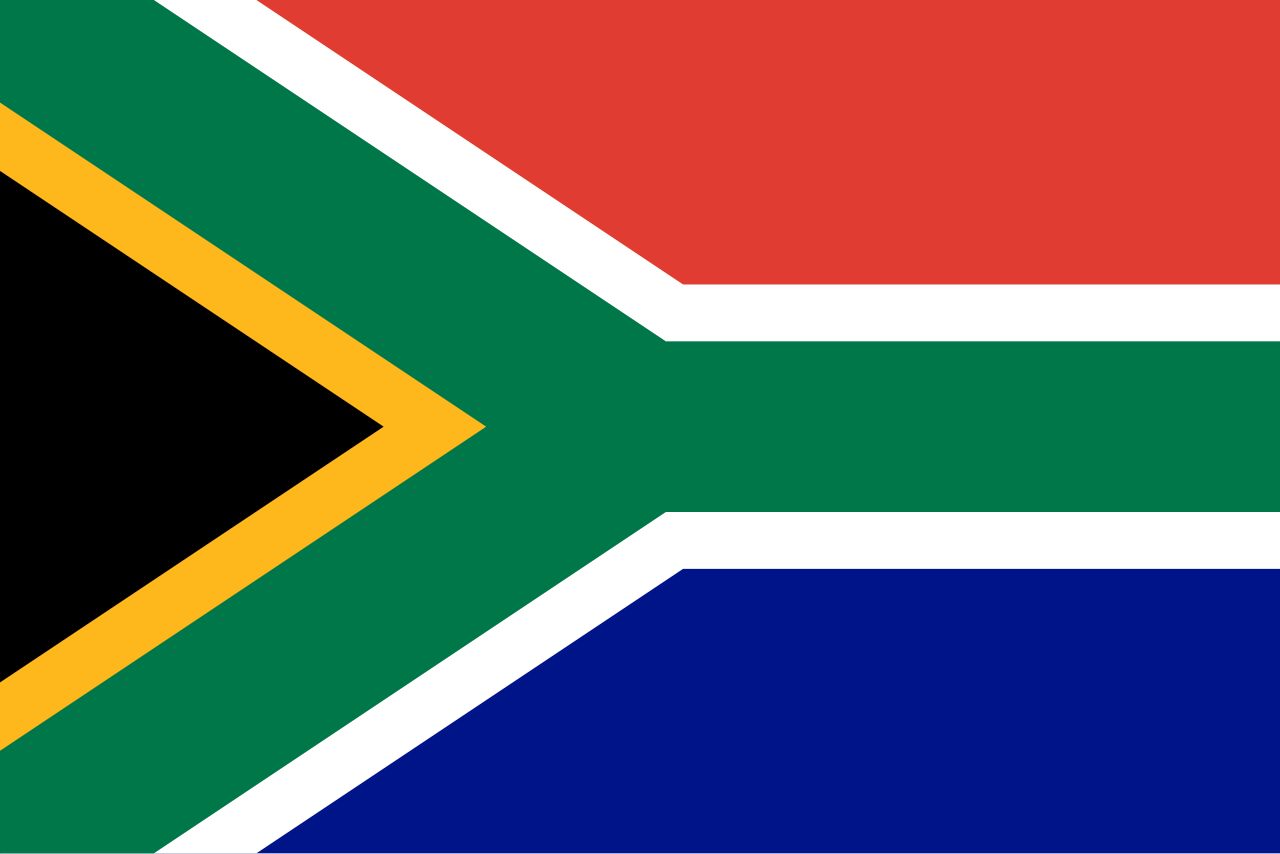
A vote of 80 to 67 decided South Africa’s war. In September 1939 Prime Minister J.B.M. Hertzog asked Parliament to keep the Union neutral, and lost. The Governor-General, Sir Patrick Duncan, refused him a dissolution, Hertzog resigned, and Jan Smuts formed the government that declared war on Germany on 6 September 1939.
The 1912 Defence Act was vague about fighting abroad, so nobody was sent overseas who had not volunteered. From 29 March 1940 men took the Africa Service Oath to serve anywhere in Africa for as long as the war lasted, and on that basis South Africans helped finish off Italian East Africa, where the Duke of Aosta surrendered on 19 May 1941. The worst day came on 21 June 1942, when the garrison of Tobruk, built around the 2nd South African Division, surrendered to Rommel and some 10,500 South Africans went into captivity. The 6th South African Armoured Division entered Florence on 19 August 1944, and the Union’s minister in Washington had signed the Declaration at 12:50 on 2 January 1942.
One prisoner from Tobruk did better than most. Lance Corporal Job Maseko of the Native Military Corps blew up a German cargo ship in the harbour with a makeshift bomb, escaped from an Italian camp and walked 545 kilometres to El Alamein, where he rejoined the army as a stretcher-bearer and was awarded the Military Medal.
Canada
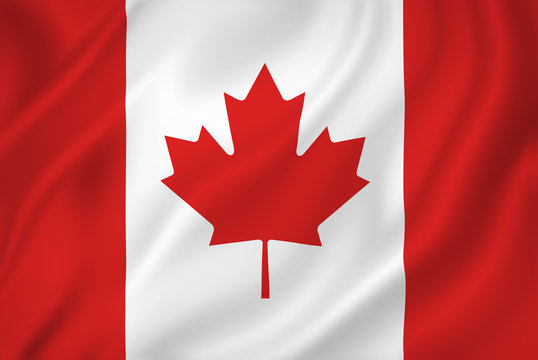
A week went by between Britain’s declaration of war and Canada’s, which was the whole point. Britain declared on 3 September 1939; Canada’s Parliament debated, approved an address to the King on 9 September and declared war on 10 September 1939, a decision taken for itself, as a sovereign dominion under the Statute of Westminster. The paperwork took longer. The King’s approval arrived by telegram, without a minister’s signature, and the formal submission, dated back to 10 September, was signed by King George VI on 27 November 1939.
In September 1939 the Royal Canadian Air Force had fewer than 20 modern combat aircraft. By 1945 the British Commonwealth Air Training Plan, run largely on Canadian soil, had graduated 131,533 aircrew, 72,835 of them Canadians, and Roosevelt had called the country “the aerodrome of democracy.” The fighting was costlier. At Hong Kong in December 1941, 290 Canadians were killed. At Dieppe on 19 August 1942, of 4,963 Canadians who embarked only 2,210 came back, and 916 died. On D-Day 340 were killed at Juno Beach. Of 13,000 home-defence conscripts sent overseas in 1944, 69 died in battle; otherwise Canada’s war abroad was fought almost entirely by volunteers. Veterans Affairs Canada counts more than 45,000 Canadian dead.
On 2 January 1942 Canada was also the last of the 22 smaller countries to sign the Declaration by United Nations, at 2:05 in the afternoon, after Ottawa authorised it by telephone. By then waiting for Ottawa was a national tradition.
Soviet Union
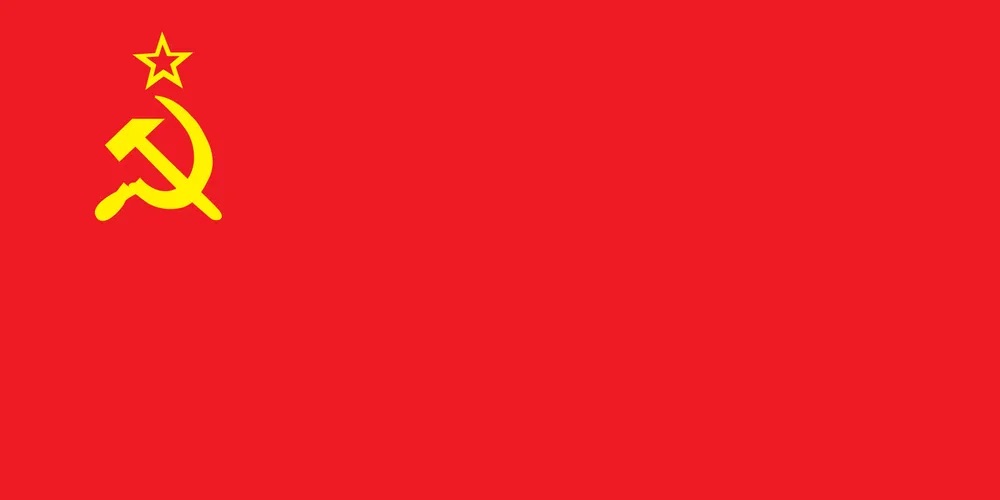
“The Polish state and its government have virtually ceased to exist,” the Soviet note explained on 17 September 1939, as the Red Army crossed into eastern Poland to share it with Germany along a line, fixed in the secret protocol of 23 August 1939, running “approximately by the line of the rivers Narew, Vistula, and San.” On 30 November 1939 the Soviet Union attacked Finland, and on 14 December 1939 the League of Nations expelled it, which was as far as the League’s resistance went.
On 22 June 1941 Germany turned on its partner with more than three million soldiers in what the Holocaust Memorial Museum in Washington calls “the largest military operation in the history of warfare.” Leningrad was besieged for 872 days, and 650,000 of its people died in 1942 alone. At Stalingrad a quarter of a million German soldiers were killed or captured before the survivors gave up between 31 January and 2 February 1943. By then Ambassador Maxim Litvinoff had added the Soviet signature, third after Roosevelt and Churchill, to the Declaration at the White House on 1 January 1942.
Nobody knows the full cost. Mikhail Gorbachev gave a figure of 26.6 million dead in 1990; the National WWII Museum puts it at 24,000,000. Having kept its neutrality pact with Japan through the entire war in Europe, Moscow declared war on Japan on 8 August 1945, effective “from tomorrow, that is from Aug. 9,” which turned out to be just enough time.
Norway
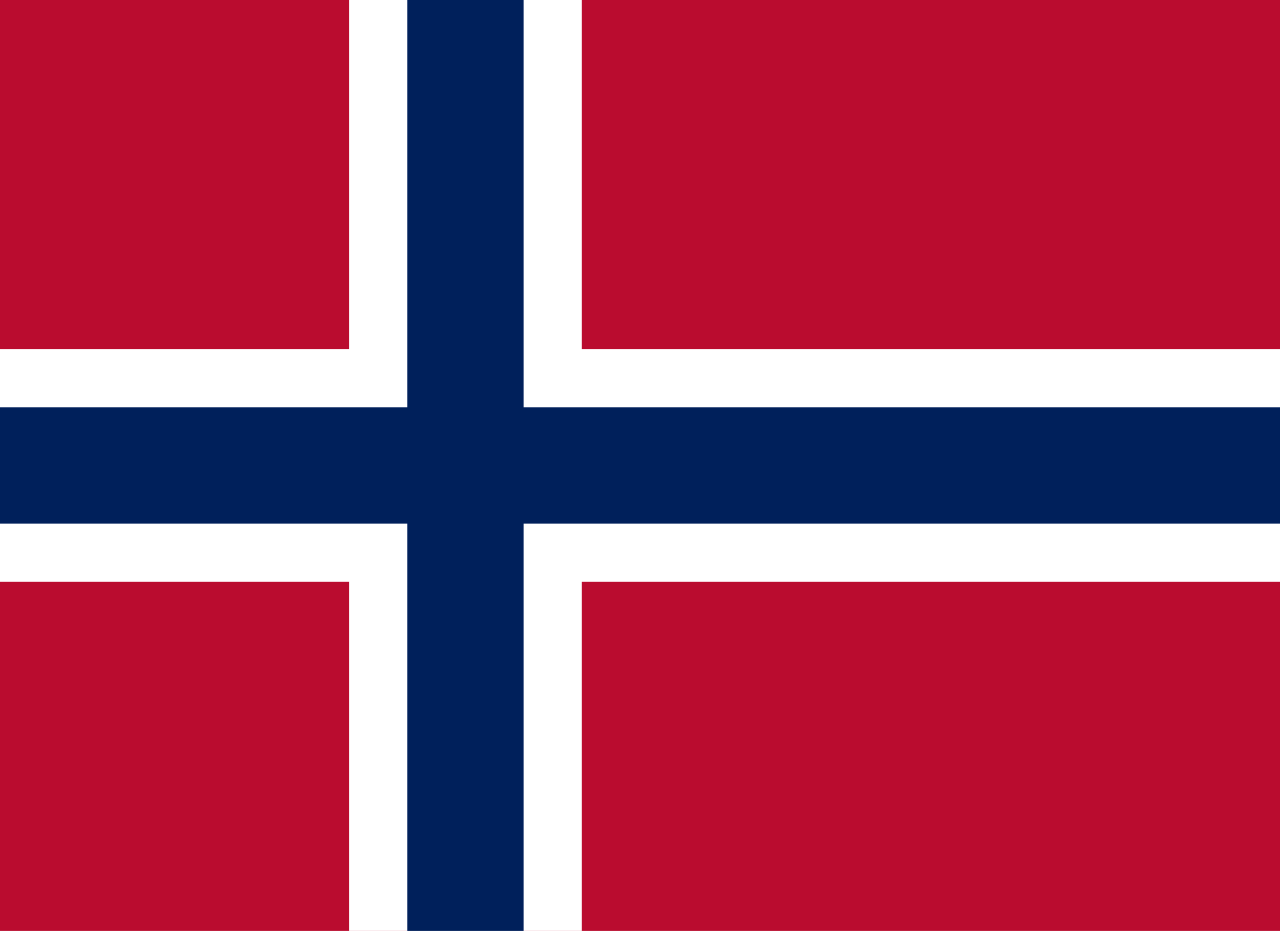
Two old Krupp coastal guns nicknamed Moses and Aaron, with a torpedo battery, sank the cruiser Blucher in the Oslofjord on the morning of 9 April 1940, as it led the German force sent to seize Oslo. The fortress commander, Colonel Birger Eriksen, is said to have remarked that he would end up either court-martialled or a war hero, then ordered fire. The delay let King Haakon VII and his government escape the capital.
The next day, at Elverum, the German envoy Curt Brauer asked the King to make Vidkun Quisling prime minister. Haakon said he could not, and that if his government wanted it he would have to abdicate first. Quisling had already proclaimed himself head of a government by radio, and on 19 April 1940 The Times observed that “He has added a new word to the English language.” The King went to London, and the government took the merchant fleet with it: about a thousand ships and 30,000 sailors, requisitioned from what had been the world’s fourth-largest shipping nation in 1939. On 27 February 1943 nine Norwegian commandos blew up the heavy-water cells at the Vemork plant near Rjukan, and 500 kilograms of heavy water went down the drain without a man captured or killed. Norway’s minister had signed the Declaration in Washington at 12:07 on 2 January 1942.
Quisling was shot at Akershus Fortress on 24 October 1945. The King had come home on 7 June 1945, five years to the day after he left.
Belgium
Glider troops landing on its roof took Fort Eben-Emael, the fortress guarding the Albert Canal, on 10 May 1940, the morning Germany invaded the Low Countries. Little more than two weeks later King Leopold III, the army’s commander-in-chief, surrendered it, on 28 May 1940, against the wishes of his own government, which went to London to carry on the war without him.
Leopold stayed, and the decision followed him for the rest of his reign. He did not stay throughout: on 7 June 1944, the day after D-Day, the Germans deported him and his family to Germany and then Austria, where American troops freed them on 7 May 1945. The argument at home over whether he should return, known as the Royal Question, ended with his abdication in favour of his son Baudouin in 1951. In the occupied country, nearly 25,000 Jews were deported to Auschwitz and fewer than 2,000 of them survived. Its exiled government was a signatory of the 1942 Declaration, its man in Washington signing at 11:33 on 2 January.
Belgium’s most consequential contribution sat in New York. In 1940 Edgar Sengier of Union Miniere shipped about 1,200 tons of uranium ore from the Shinkolobwe mine in the Belgian Congo to a warehouse on Staten Island, where it sat unused for more than two years. The Congolese mine went on to supply about two-thirds of the uranium in the bomb dropped on Hiroshima.
Netherlands
Rotterdam was bombed while its defenders were negotiating its surrender. Germany had invaded on 10 May 1940, and on 14 May, by the Holocaust Memorial Museum’s account, the Germans tried to call off the raid, but the order went astray, and the bombs killed more than 700 people and left almost 80,000 homeless. General Henri Winkelman signed the capitulation in a school building south of the city. Queen Wilhelmina had already gone to London, where her broadcasts on Radio Oranje became, in the Anne Frank House’s phrase, “the voice of the Netherlands at war,” and her minister in Washington added the Netherlands to the Declaration’s signatories at 12:20 on 2 January 1942.
After 425 young Jewish men were rounded up in Amsterdam, the city stopped work on 25 February 1941 in the February Strike, the trams standing still until the Germans opened fire. Anne Frank’s hiding place at Prinsengracht 263 was discovered on 4 August 1944, and she died at Bergen-Belsen aged 15. By the Holocaust Memorial Museum’s reckoning, “Less than 25 percent of Dutch Jewry survived the Holocaust.” In September 1944, to help the airborne assault on Arnhem, the exiled government called a railway strike; 30,000 railway workers walked out, and the Germans retaliated by blocking food for six weeks. The Hunger Winter that followed killed about 20,000 people.
Relief, when it came, arrived from the air. On 29 April 1945, under a truce with the Germans, Allied bombers dropped 510 tons of food over the starving western provinces.
Luxembourg
Asked in a census of 10 October 1941 to state their nationality, mother tongue and ethnicity, the people of an annexed country answered “Luxembourgish” three times over, around 93 percent of those sampled, by the Luxembourg City Tourist Office’s count. The Resistance, the same office says, had supplied the slogan: “Draimol Letzebuerg!” Three times Luxembourg.
Luxembourg had been invaded on 10 May 1940, with the Netherlands and Belgium, and Grand Duchess Charlotte went into exile, speaking to her people over the BBC 14 times; her government’s minister signed the Declaration for Luxembourg at 12:05 on 2 January 1942. The Germans forbade French greetings and even berets, and on 30 August 1942 Gauleiter Gustav Simon announced that young Luxembourgers would be conscripted into the Wehrmacht. The country answered with a general strike from 31 August to 2 September 1942, beginning in Wiltz; 21 strikers were sentenced to death. More than 13,000 young men and women were conscripted all the same, and 2,906 did not survive the war or are listed as missing. Charlotte came home on 14 April 1945.
The US 5th Armored Division liberated the capital on 10 September 1944, and during the Battle of the Bulge the city held General Omar Bradley’s advanced headquarters. George S. Patton, whose Third Army fought across the country that winter, is buried at the American cemetery at Hamm, just east of the city, at the head of the graves of his soldiers.
Egypt
Italian divisions crossed into Egypt on 13 September 1940, which left the British official historians to record what they called “the curious fact” that Egypt and Italy were not at war. Egypt had broken off relations with Italy on 12 June 1940, and that suited London. Churchill told the Commons in February 1945: “We did not press the Egyptian Government at any time to come into the war, and indeed upon more than one occasion in the past our advice has been to the contrary.”
So Egypt became the battlefield of a war it was not in. Its army patrolled the western frontier, guarded the railway to Matruh and furnished nine battalions against sabotage, while Britain used the country as its base and, on occasion, its property. On the night of 4 February 1942 British troops surrounded the Abdin Palace in Cairo, and the ambassador, Sir Miles Lampson, arrived with a letter of abdication for King Farouk, who chose instead to accept the prime minister Britain wanted. El Alamein was fought on Egyptian soil.
Egypt finally declared a state of war with Germany and Japan, by its own account, on 26 February 1945, and joined the Declaration’s adherents the next day. The prime minister who carried it, Ahmad Maher, had been shot dead minutes after reading the royal decree to the Chamber of Deputies, by a 26-year-old lawyer named Mahmud Issawi. Issawi had been released from detention the previous autumn on Maher’s own order.
Greece
At 3 a.m. on 28 October 1940 the Italian minister in Athens handed General Ioannis Metaxas a note demanding that Italian troops be allowed to occupy unnamed strategic points in Greece, starting at 6 a.m. Count Ciano had written in his diary on 22 October, as the British official history quotes him, that it was “a document that allows no way out for Greece.” Metaxas found one. He refused, the Italians invaded from Albania, and within days the Greek army had pushed them back into the Albanian mountains. The Greek minister in Washington, the State Department noted, was “very eager to sign” the Declaration, and did so at noon on 2 January 1942.
Germany came to Mussolini’s rescue in April 1941, and by June Greece was divided three ways. Germany took Salonika, the area around Athens and the strategic islands, Bulgaria took western Thrace, and Italy took most of the rest. Then came the hunger. In the first winter of occupation, 1941 to 1942, no less than 30,000 people died, mostly in the cities. In Salonika, home to about 43,000 Jews, the Germans deported over 40,000 to Auschwitz-Birkenau between 20 March and 19 August 1943, and virtually all were murdered on arrival.
The famine left one legacy that most people never connect with Greece. In 1942 a group in Oxford founded the Oxford Committee for Famine Relief to get food through the Allied blockade to starving women and children in occupied Greece. It shortened its name to Oxfam.
Ethiopia
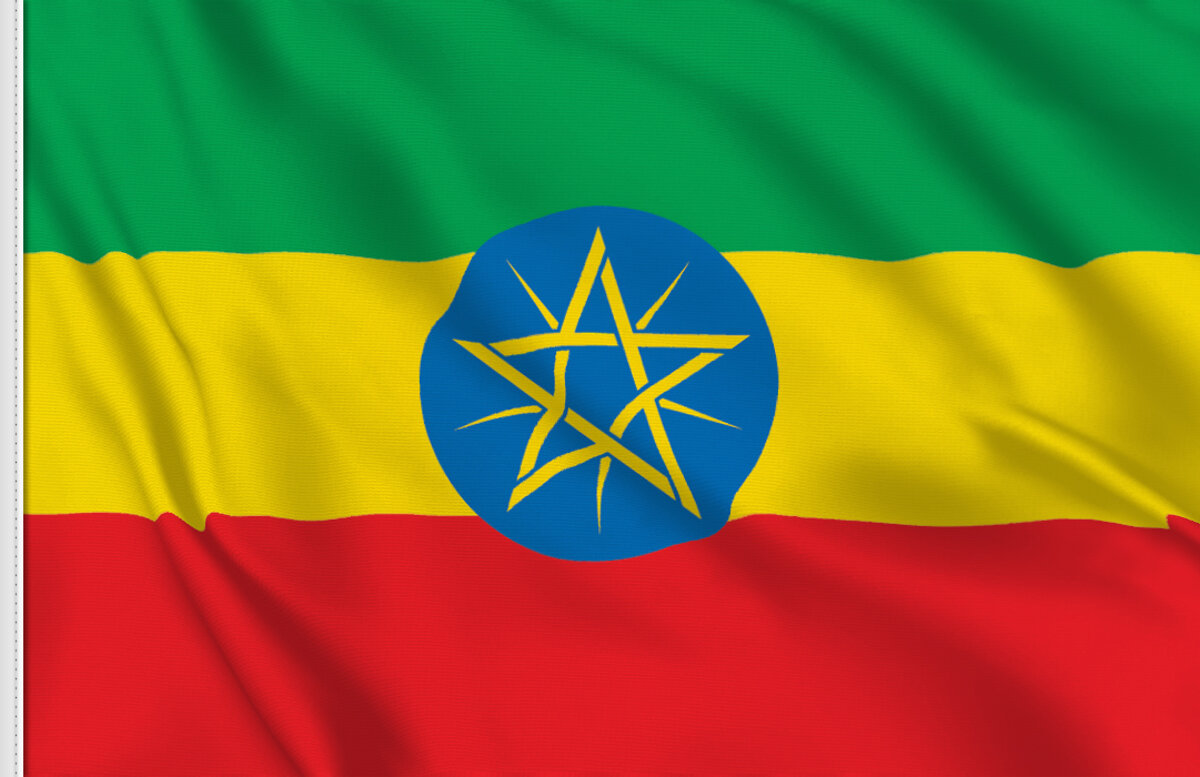
Haile Selassie re-entered Addis Ababa on 5 May 1941, exactly five years after Italian troops had taken the city on 5 May 1936. It was the end of an argument he had started in Geneva in June 1936, when he told the League of Nations, “There is no precedent for a Head of State himself speaking in this assembly,” and warned the delegates, “God and history will remember your judgment.” Ethiopia then spent five years as part of Italian East Africa.
The way back began in January 1941, when the Emperor crossed into his country from the Sudan with Orde Wingate’s Gideon Force, a column that, as the British official history notes, “had no artillery at all.” His presence was the point. The Patriots told one British officer that when the judge came no one would be afraid, “but until he comes who will not be afraid?” Commonwealth armies did most of the conquering, and Mogadishu and Asmara fell first, but the Emperor’s return made it a restoration.
Ethiopia joined what the Emperor called the United Nations pact on 28 July 1942 and declared war on Germany, Italy and Japan on 1 December 1942. Roosevelt welcomed it as “the first state to regain its territory after temporary occupation by an Axis aggressor.” Haile Selassie had put it better the year before: “It was fitting that the first victim of the Axis greed should be the first to be delivered.”
Yugoslavia
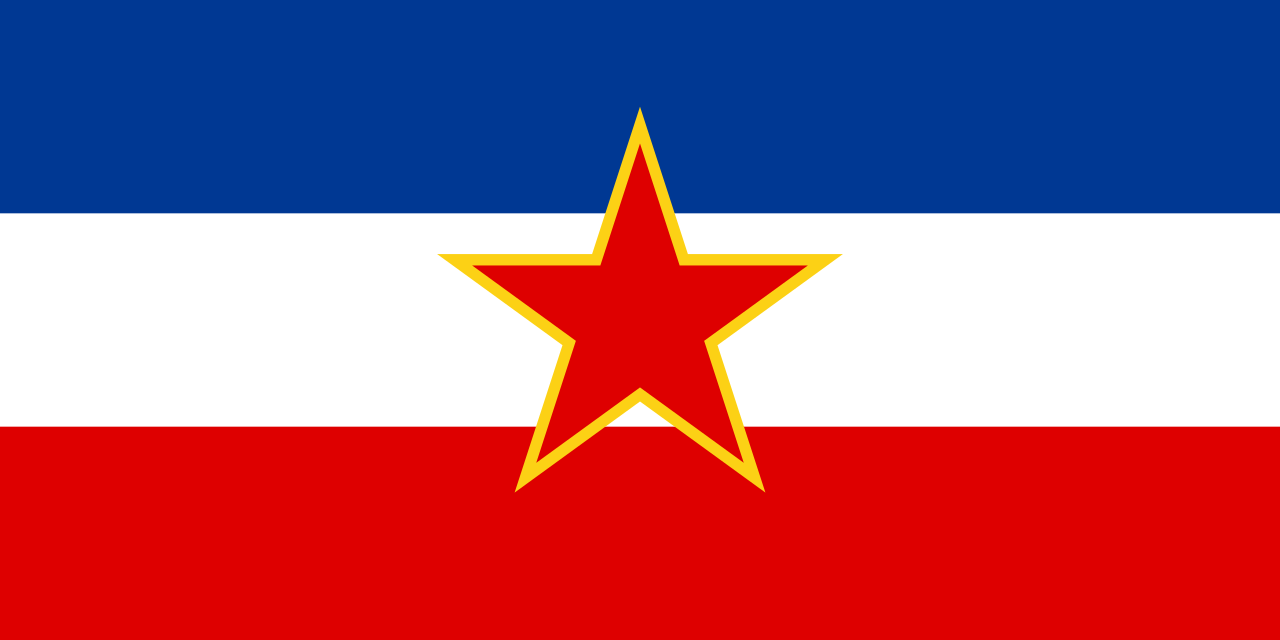
Belgrade was under bombs for almost an hour and a half on the morning of 6 April 1941, by the US Army’s official account, as 150 German bombers and dive-bombers came over in three waves. The death toll is disputed. A US Army study says “more than 17,000 inhabitants lay dead under the debris,” while the Historical Archives of Belgrade give an official figure of 2,271 for the week of raids. German incendiaries also burned the National Library and its 350,000 books.
The raid was revenge. On 27 March 1941 Serb officers had overthrown the regency and put the 17-year-old King Peter II on the throne, and Hitler ordered the same evening that the blow against Yugoslavia be carried out “with the utmost violence” and its military destruction effected “with lightning speed.” The armistice was signed on 17 April 1941, the Germans took some 254,000 prisoners, and the country was carved up among Germany, Italy, Hungary, Bulgaria and a new Croatian puppet state. The government escaped to London, and its minister in Washington added Yugoslavia’s name to the Declaration at 12:08 on 2 January 1942.
Resistance began within months, from Tito’s Partisans and Mihailovic’s Cetniks, and Hitler answered it by ordering 100 hostages shot for every German killed. Not every occupier obeyed Berlin. Italian officials refused to hand over Jews in their zone and gathered refugees on the island of Rab, and after Italy surrendered in 1943 the Partisans got some 3,000 Jews off the island before the Germans arrived.
Iraq
Churchill told the House of Commons on 7 May 1941 that Britain was “not at war with Iraq,” which would have surprised the men at Habbaniya. At 5 a.m. on 2 May 1941, the British official history records, the RAF flying school there had sent 33 aircraft, plus eight Wellingtons from Shaibah, against the Iraqi troops camped on the plateau above the airfield, and the Iraqis replied by shelling it. Churchill said Rashid Ali, who had seized power in Baghdad that April, had attacked the cantonment. The official history says the fighting began “on the initiative of the British.”
The school’s aircraft were mostly trainers and obsolete biplanes, but it held on, and Germany’s help for Rashid Ali proved slight. Its liaison officer, Major Axel von Blomberg, was killed on 12 May 1941 when Iraqis opened fire on his aircraft as it approached Baghdad. The Luftwaffe detachment that followed, Fliegerfuhrer Irak, lost fourteen Me 110s and five He 111s and achieved little. An armistice was signed on 31 May 1941. As the Regent returned, Baghdad’s Jews were attacked in the Farhud of 1 and 2 June, in which the Holocaust Memorial Museum says between 150 and 180 were murdered.
Iraq put itself at war with the Axis powers from midnight on 16 to 17 January 1943, and Prime Minister Nuri al-Said’s logic, in the American minister’s summary, was admirably clear. Joining the United Nations required a state of war; “therefore Iraq has declared war in order to join United Nations.”
Iran
As many as 3,000 German nationals living in Persia supplied the official reason for invading it. When the Shah would not expel them, Britain and the Soviet Union, by the State Department’s account, delivered parallel notes on 16 August 1941, found the reply unsatisfactory, and invaded on 25 August 1941. All resistance ceased on 28 August. Occupied Iran then became the corridor through which American supplies reached the Soviet Union.
On 11 September 1941 the British minister, Sir Reader Bullard, demanded Reza Shah’s removal, and on 16 September he abdicated in favour of his son, Mohammad Reza Pahlavi, and went into exile; he died in Johannesburg in 1944. A treaty signed in January 1942 promised that the occupiers would leave within six months of the war’s end. On 9 September 1943, at 9:34 in the morning, the young Shah signed the decree declaring war on Germany, and the Majlis approved it by 73 votes out of 77; Iran’s adherence to the Declaration followed on 10 September 1943. A country occupied by two Allies thus joined the Allies, which had at least the merit of simplicity.
At the end of 1943 Roosevelt, Churchill and Stalin met in Tehran and signed a declaration in favour of “the maintenance of the independence, sovereignty and territorial integrity of Iran.” The British and Americans left in January 1946. The Soviets left that May, “only after the United Nations applied pressure.”
United States
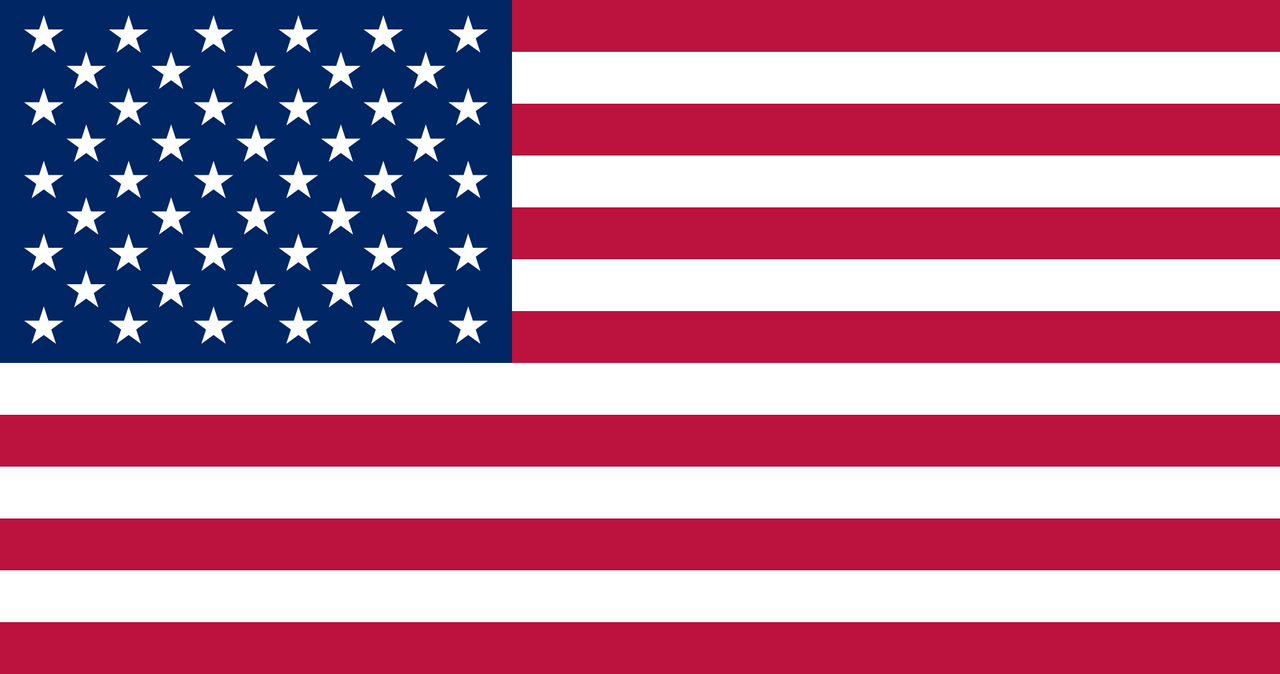
Jeannette Rankin of Montana cast the only vote in the House of Representatives against war with Japan on 8 December 1941, and, the House’s own historians record, refused even to vote present. “As a woman I can’t go to war,” she said, “and I refuse to send anyone else.” It cost her the seat. The Senate voted 82-0, and Franklin Roosevelt signed the declaration at 4 p.m., having told Congress at 12:30 that the day before had been “a date which will live in infamy.” His typed draft had said “world history.” He crossed it out by hand.
The attack on Pearl Harbor had begun at 7:55 a.m. on Sunday 7 December 1941, and killed 2,403 Americans, 68 of them civilians. Germany and Italy declared war on the United States on 11 December, and Congress answered both that afternoon, at 3:05 and 3:06 p.m. By 1945 the armed forces numbered 12,209,238, up from 334,473 in 1939, and 16 million Americans served in all. The National WWII Museum counts 407,316 killed. On Christmas Eve 1943 Roosevelt announced that Dwight D. Eisenhower would be Supreme Commander of the Allied Expeditionary Force, the appointment that made him, eventually, one of the generals who became president.
Roosevelt’s had been the first signature on the Declaration by United Nations, put there on New Year’s Day 1942. He did not see the end. He died of a cerebral hemorrhage at Warm Springs, Georgia, on 12 April 1945, with the war in Europe weeks from finished.
Panama
A proclamation of emergency is not a declaration of war, and Panama was careful about the difference. On the evening of 7 December 1941 its government announced that “The Panama Canal is the center of American defense,” interned the Japanese on the Isthmus, banned the export of their gold and censored the cables. The National Assembly then did the legal part on 8 December 1941, voting a resolution “declaring state of war exists between Japan and Panama,” and because the constitution wanted a proper law in three readings, it passed that too on 10 December. Germany and Italy followed by decree on 12 December 1941.
Panama’s real contribution was land. In May 1942 it leased the United States defense sites outside the Canal Zone, eventually 134 of them, from searchlight posts to the air base at Rio Hato. The president who had first granted them, Arnulfo Arias, was by then gone, deposed in 1941 in a coup that Britannica says was “probably encouraged by the United States.” On 2 January 1942 the Panamanian minister in Washington “got up from a sick bed to sign” the Declaration, at 12:35.
The sites outlasted the war, and Washington wanted to keep some. In December 1947, with an estimated 10,000 women and children marching against the new agreement, the National Assembly rejected it, and the United States announced the evacuation of every site outside the Canal Zone. Panama had lent its land for one war and declined to lend it for the next.
Philippines
Manuel Quezon, with his army besieged on Bataan, proposed to Franklin Roosevelt in February 1942 that the United States and Japan both recognise Philippine independence and both take their armies home. His message, relayed by Douglas MacArthur on 8 February 1942, said the United States “has in effect condemned the sixteen millions of Filipinos to practical destruction.” Roosevelt said no.
The Philippines had been at war since 8 December 1941, when 108 Japanese bombers escorted by 84 Zeros left Formosa and caught the American B-17s on the ground at Clark Field, hours after Pearl Harbor. On 9 April 1942 Major General Edward King surrendered the Luzon Force of 78,000 men on Bataan, and on the march that followed, roughly 2,500 Filipinos and 500 Americans died; at Camp O’Donnell another 26,000 Filipinos and 1,500 Americans followed. Corregidor surrendered on 6 May 1942. Quezon set up a government in exile, which signed on to the Declaration on 10 June 1942 for a country that was then a Commonwealth of the United States, not yet independent. He died at Saranac Lake, New York, on 1 August 1944.
MacArthur had promised “I came through and I shall return,” and on 20 October 1944 he did, at Leyte, where the Navy fought what its historians call “the largest naval battle of World War II.” The recapture of Manila in February 1945 cost an estimated 100,000 Filipino civilian lives. On 4 July 1946 the United States recognised the independent Republic of the Philippines.
Costa Rica
An extraordinary session of Congress, called for 7 a.m. on 8 December 1941, gave Costa Rica its war with Japan by 11 o’clock that morning. The Foreign Minister cabled Cordell Hull that his government “has today at 11 o’clock declared the state of war between Costa Rica and Japan,” and the vote, the State Department’s Bulletin recorded, was unanimous, taken in front of the American minister and the British charge d’affaires. In Washington, Roosevelt did not reach Congress until 12:30.
On Germany and Italy, President Rafael Calderon Guardia was more precise still. On the morning of 11 December he told the American minister he was “only awaiting official word from me that a state of war exists between the United States and Germany and Italy,” got it, and signed the decree that day. German radio sets were sequestered, German firms expropriated and auctioned, and German nationals shipped to internment in the United States. On 16 January 1942 Costa Rica signed a Lend-Lease agreement, and it gave the Rubber Reserve Company exclusive rights to all its exportable rubber. Costa Rica’s signature went on the Declaration at 11:42 on 2 January 1942.
After its civil war of 1948 the country gave up the whole business. Article 12 of its constitution reads: “The Army as a permanent institution is proscribed.”
Dominican Republic
With the exception of the tiny Dominican Republic, the Holocaust Memorial Museum notes, no country at the Evian Conference of 1938 was willing to accept more refugees. Three years later, by the State Department’s records, the same government was promising concentration camps. On 10 December 1941 the Dominican foreign minister told the American minister that Germans and Italians on the United States’ suspect list would be taken into custody and placed in camps, while the “large numbers of Jewish refugees here of German nationality” would merely be kept under “very close surveillance.” The most dangerous were later deported to the United States.
The country had moved fast. Congress was convened for 9 p.m. on 7 December 1941, the night of Pearl Harbor itself, and the declaration against Japan was dated 8 December, with Germany and Italy following within days. The American minister was assured that the Dominican Republic was an ally “both in word and deed.” The Dominican signature on the Declaration came at 11:44 on 2 January 1942.
Washington’s complaint came later. The State Department’s 1945 memorandum on the country called the Dominican government’s “repeated refusal” to vest or force the sale of certain enemy interests the principal weakness in its record; the government replied that security did not require it. Locking up the owners, it seems, had been easier than taking their property.
El Salvador
By the American ambassador’s own report, a tank that the United States had supplied to El Salvador under Lend-Lease came down the street during a revolt on 3 April 1944, fired, and stopped at the door of the American embassy, where the ambassador happened to be meeting the diplomatic corps. A rebel officer, Colonel Tito Calvo, came in and asked for asylum. The ambassador refused, on the grounds that the United States did not recognise the doctrine, and so did every Latin American diplomat in the room. It was that sort of revolution.
El Salvador had declared war on Japan at 1 p.m. on 8 December 1941, by a unanimous vote of the National Legislative Assembly, after President Maximiliano Hernandez Martinez cabled Roosevelt that the attack on Hawaii and Manila was “absolutely unjustified.” It declared war on Germany and Italy on 13 December 1941, and its envoy put El Salvador’s name on the Declaration at 11:50 on 2 January 1942. Martinez had ruled since December 1931. A general strike in May 1944, started by university students and joined by doctors, lawyers, banks and the railway, brought him down.
Its best-remembered act of the war was unofficial. The consul general in Geneva, Jose Castellanos, with a businessman named George Mandel-Mantello, handed out Salvadoran nationality certificates to Jews in occupied Europe, papers that, by The Guardian’s estimate, “helped to save 25,000 Jews.” Neither man had the authority to issue them.
Guatemala
Jorge Ubico did not wait for Washington. On 7 December 1941, the day of the attack, the Guatemalan dictator cabled Roosevelt to confirm “the sentiments of solidarity of the Government and people of Guatemala,” and that night he personally got in touch with every port and strategic point in the country to guard against sabotage. The National Assembly declared war on Japan in special session on 8 December 1941, though a later State Department memorandum gives the 9th, and on Germany and Italy on 11 December 1941. By 11:49 on 2 January 1942 Guatemala’s name was on the Declaration too.
Guatemala had a great deal of German property to deal with, much of it farmland, and it dealt with it thoroughly. In May 1945 the Proclaimed List, Washington’s blacklist, carried 382 names for Guatemala, against 28 for the Dominican Republic, and the government was, in the State Department’s words, “in the midst of an extensive expropriation program” that would eventually take in every listed farm. Many owners had been interned in the United States or repatriated to Germany.
Ubico had ruled since 1931, and been rewarded for his friendship with Washington with tariff reductions and armaments. In June 1944 the American ambassador reported that the opposition was “largely inspired by recent successful revolutions in Salvador and Ecuador,” and on the morning of 1 July 1944 Ubico resigned in favour of a military junta. The war against dictatorship had found a local application.
Haiti
The Library of Congress gives Haiti’s war a single sentence: it “played no role in the war except for supplying the United States with raw materials and serving as a base for a United States Coast Guard detachment.” That is true, and it misses the rubber. President Elie Lescot declared Haiti at war with the Japanese on 8 December 1941, with the unanimous approval of the National Assembly, and Germany and Italy were added on 12 December 1941. Haiti signed the Declaration at 11:45 on 2 January 1942.
In October 1942 a Haitian government agency called SHADA contracted with the American Rubber Reserve Company to plant 100,000 acres of Cryptostegia, a vine whose sap could be tapped for latex. It became Lescot’s personal crusade. By mid-1944 about $6,500,000 had been spent, in a country whose entire annual budget was $8,000,000, and in 1943 the scheme employed some 50,000 people, more than all of Haiti’s agricultural employment at any earlier time. It also pushed thousands of peasants off their land. In April 1944 Lescot, who had gone out into the countryside to address meetings for it, pressed for emphasis “on a reduced program rather than upon a total discontinuance.” In May the Americans cancelled it anyway.
Time magazine later called it an “ill-starred, U.S.-financed rubber-production scheme, which fizzled out in Haiti before war’s end.” Lescot lasted a little longer than the vine. After strikes and an army revolt, he resigned on 11 January 1946.
Honduras
Fonseca Bay was on offer within a day. Honduras’s Congress declared war on Japan at 11:25 on the morning of 8 December 1941, by Decree No. 2, the State Department’s records show, and on 9 December President Tiburcio Carias Andino tendered the United States “any facilities on the Atlantic coast as well as Fonseca Bay and also the use of these waters for naval bases or any other purposes.” Germany and Italy followed on 12 December 1941, “unanimously and by acclamation,” at 10:45 in the morning.
Carias had held office since 16 November 1932, a stretch the Library of Congress calls “the longest period of continuous rule by an individual in Honduran history.” Axis firms were frozen within days and later auctioned off; nine listed persons were deported. A Lend-Lease agreement was signed on 28 February 1942, and a contract executed on 31 July 1942 gave the Rubber Reserve Company the right to buy all of Honduras’s exportable rubber. Honduras had signed the Declaration back on 2 January 1942, at 11:46. The war reached its shipping too: the freighter Ceiba was sunk by U-124 off the American coast on 17 March 1942, its six survivors picked up by an American destroyer on 19 March.
The bigger damage was economic. Wartime shipping shortages left bananas, coconuts and copra piling up on the docks, and unemployment followed. Carias, having helped defend democracy abroad, stayed in office until 1949.
Cuba
Heinz August Luning, a German agent arrested in Havana in 1942, was executed on 10 November 1942, as the Associated Press reported, “for sending radio and code letter reports on the movement of Allied ships.” According to Warfare History Network, he is buried in Havana’s Colon Cemetery, and Graham Greene later read his file and put him to work in Our Man in Havana.
Cuba’s own war began on the evening of 9 December 1941, when both houses of Congress voted unanimously for war with Japan; a second evening session on 11 December 1941 added Germany and Italy. Fulgencio Batista, then the elected president, had cabled Roosevelt invoking the Habana Conference. On 2 January 1942 Cuba’s representative signed at 11:40, the earliest of the nine American republics invited to sign as a group. The island’s most valuable weapon was sugar. On the night of 27 January 1942 Batista signed the decree selling the bulk of the 1942 crop to the United States, which got, by one newspaper’s reckoning, “more than half its yearly needs” from it.
The Cuban navy got its moment late. On 15 May 1943 Cuban Submarine Chaser 13, working with American Kingfisher floatplanes of squadron VS-62, sank the German submarine U-176 off the Cuban coast, two days after the same U-boat had sunk the Cuban tanker Mambi. By 1945 the American mission in Havana could report that the German assets left in Cuba were “quite insignificant in amount.”
Nicaragua
Two men made up the entire Japanese population of Nicaragua in December 1941, and both went to jail. The American minister reported on 8 December that “orders have been given to confine the two Japanese nationals in the country,” and the Associated Press told its readers that Nicaragua had followed up its declaration of war “by immediately jailing the country’s entire Japanese population.”
The declaration took longer than the arrests: the constitution required five days of preliminary sessions. Anastasio Somoza Garcia’s government declared a state of war “de hecho” in the meantime, and on 9 December 1941 both chambers approved Resolution No. 35, which announced, retroactively, that “Desde el dia ocho del corriente, existe el estado de guerra entre la Republica de Nicaragua y el Imperio del Japon.” A second decree on 11 December took in Germany and Italy. Somoza offered the United States the use of his territory and up to 10,000 men, noting that a Nicaraguan soldier would cost “not over half the cost for an American soldier.” Nicaragua signed the Declaration at 11:48 on 2 January 1942.
Somoza did well out of the war. The Library of Congress records that “the government confiscated German properties and then sold them to Somoza Garcia and his family at ridiculously low prices,” and that by the war’s end he was worth an estimated US$60 million. When he took power, a human rights commission later noted, he “had little more than a coffee estate in a very run down condition.”
Czechoslovakia
A state that had ceased to exist declared war from London on 16 December 1941, by the State Department’s record. President Edvard Benes’s government in exile proclaimed that the Czechoslovak Republic “is in a state of war with all countries which are in a state of war with Great Britain, the U.S.S.R., or the United States of America.” The country itself had been dismantled in stages: the Sudetenland went to Germany at Munich in September 1938, Slovakia declared its independence on 14 March 1939, and German troops marched into Bohemia and Moravia the next morning. At the signing of the Declaration, at 11:10 on 2 January 1942, the Czechoslovak minister was “so nervous that he could not sign for some minutes.”
Czechoslovak pilots flew in the Battle of Britain, and the motto of No. 312 Squadron was “Not Many but Much.” On 27 May 1942 two parachutists, Jozef Gabcik and Jan Kubis, ambushed Reinhard Heydrich in Prague; Gabcik’s Sten gun jammed, Kubis’s bomb burst against the back of the car, and Heydrich died of septicemia on 4 June. The reprisal fell on Lidice, which was razed and its 173 men and boys shot, with, in the Holocaust Memorial Museum’s words, “no real evidence connecting the people of the town with the assassins.”
Prague rose on 5 May 1945 and threw up more than 1,600 barricades. The airmen who had flown for it from Britain, the RAF Museum notes, later watched helplessly as their country was taken over by the communists.
Mexico
Twenty-eight survivors of a torpedoed American freighter owed their rescue on 9 April 1942, the US Navy’s official chronology records, to a Mexican ship called the Faja de Oro. A few weeks later a U-boat sank her too. She was the second Mexican tanker lost in May 1942, after the Potrero del Llano went down on 13 May, and the two sinkings, as the Mexican foreign minister complained, came “under identical circumstances.”
On 1 June 1942 President Manuel Avila Camacho declared, in his foreign minister’s words, “that since the 22d of May, 1942” Mexico had been at war with Germany, Italy and Japan. The declaration came on 1 June; the war, legally, began on 22 May. Its name went on the Declaration’s list of adherents on 5 June 1942. In August 1942 the two governments signed the agreement on Mexican farm workers that became the Bracero Program, which by 1964 had issued 4.6 million contracts.
The country also sent a fighter squadron to war, the only Mexican military unit, by the National WWII Museum’s account, ever to fight outside the country’s borders. Escuadron 201, the Aztec Eagles, flew P-47 Thunderbolts with the American 58th Fighter Group over Luzon and on to Formosa in 1945, flying nearly 800 sorties, under a mascot borrowed from Disney’s The Three Caballeros. It lost seven or eight pilots, depending on whose count is used. When the squadron came home, President Avila Camacho told it, “You return with glory, having complied brilliantly with your duty.”
Brazil
An army sent to fight fascism in Italy came home in 1945 and removed Brazil’s own dictator. In October 1945 the generals forced Getulio Vargas to resign, and by the account in Gale’s Encyclopedia of Latin American History it was the Brazilian Expeditionary Force’s artillery commander, Oswaldo Cordeiro de Farias, who delivered their ultimatum, on 29 October. Its chief of operations, Humberto Castello Branco, became president in 1964.
The war had reached Brazil in one night. On the night of 15 to 16 August 1942 a U-boat torpedoed five Brazilian passenger ships off the coast of Sergipe, one carrying pilgrims to a Eucharistic Congress and another, the Baependy, carrying 120 soldiers being moved between garrisons. Roosevelt cabled that he was “outraged by the criminal sinking of the five Brazilian vessels,” and on 22 August 1942 Brazil recognised “a condition of belligerency” with the two European Axis powers. The Declaration acquired Brazil as an adherent on 8 February 1943. Its northeastern bulge, around Natal and Recife, became the airbridge to Africa, and the Brazilian navy escorted 3,164 ships in 575 convoys; 1,456 Brazilians died at sea.
The expeditionary force of 25,334 men and women deployed from July 1944 and fought under American command in Italy, where it attacked Monte Castello four times without success and took it at the fifth attempt on 21 February 1945; afterwards the searchers found 17 Brazilians lying together in a semicircle, preserved by the snow. The force lost 451 dead. Its emblem was a smoking snake.
Bolivia
Cordell Hull was not sure Bolivia was at war. President Enrique Penaranda’s government issued a decree on 7 April 1943 putting the country at war with the Axis, but the memorandum that accompanied it described the step as merely a move toward active belligerency, and on 16 April Hull asked for a “definite statement.” The foreign minister obliged on 19 April: Bolivia was at war, he wrote, “with the nations of the Axis.” Its adherence to the Declaration is dated 27 April 1943, and Congress ratified the whole business on 26 November 1943.
What Bolivia gave the war was tin. Under a contract of 4 November 1940 the Metals Reserve Company agreed to buy 18,000 tons a year at 48 1/2 cents a pound, and by May 1942 the price was 60 cents, one American official noting that the need for tin made it desirable “to err on the side of an overpayment.” In 1942 government troops killed striking miners and their families at a Patino mine at Catavi, and a joint labour mission was sent to look into conditions.
Penaranda did not last the year. On 20 December 1943 a coup put him in prison, and Hull publicly wondered “whether outside influence unfriendly to the Allied cause played any part.” The American ambassador soon reported the rumour spreading in La Paz that the old government had “sold out Bolivia’s metals, rubber and quinine to the United States for nothing.”
Colombia
It took a schooner to bring Colombia into the war. The Ruby was shelled by a German submarine in November 1943, and four of her crew were killed. Colombia’s note called it “assassination.” The US Navy, examining the fragments, could not say which submarine had done it.
Colombia’s answer was carefully chosen. The Senate approved, 33 to 13, at 1:30 in the morning of 27 November 1943, a resolution dated the night before, recognising that Germany had put itself in a state of belligerency with Colombia. It was not a declaration of war. The acting president, Dario Echandia, explained to the American ambassador that a declaration of war “would mean the enactment of martial law and suspension of constitutional guarantees.” Hull welcomed “the virile action taken by the Colombian Government” anyway, and on 22 December 1943 its adherence to the Declaration brought the United Nations, by Hull’s count, to 34.
The country had been looking after the Panama Canal for some time already. In 1940 President Eduardo Santos insisted on a 51 percent government share in Avianca, the airline that replaced SCADTA, because the government “must control all Colombian aviation.” In March 1944 at least fifty Germans were interned at a hotel in Fusagasuga, as a precaution rather than a punishment. When belligerency was declared, the American ambassador reported “no flags flying nor are there any public demonstrations,” and the consul at Cali noted “a surprising lack of interest.”
Liberia
Franklin Roosevelt dropped in on Liberia in January 1943, on his way home from Casablanca. He landed at Roberts Field, about 50 miles from Monrovia, lunched with President Edwin Barclay in the officers’ mess, reviewed the American engineers by jeep, and toured the Firestone rubber plantation, 69,000 acres with some 18,000 African employees, where he “took great interest in the explanations” of how rubber was made.
Liberia’s own declaration came a year later, from a new president. William Tubman asked the Legislature on 26 January 1944 for authority to declare war on Germany and Japan, received it on 27 January, and proclaimed a state of war the same day. He had asked Washington first for warships to protect eight Liberian ports against German submarines, and proceeded without waiting for the answer, which was that a commitment of naval vessels was “considered undesirable.” The Liberian note of adherence to the Declaration bore the date 26 February 1944. Its army, the Frontier Force, was enlarged with American money to patrol its borders.
Relations with the American garrison were not always easy. In May 1943 Liberia protested that the soldiers behaved like “an army of occupation rather than an army of collaboration.” When a Liberian labour law of the same year set a minimum wage and fined racially abusive language, Harvey Firestone Jr. warned it would “create chaos.” Assistant Secretary Adolf Berle was unmoved: “the Firestone people are crying before they are hurt.”
Ecuador
“We are legalizing our belligerency,” Ecuador’s ambassador explained at the signing ceremony on 14 February 1945. The declaration his government had issued on 2 February 1945 announced that Ecuador “from December 7, 1941” had been at war with Japan, a date President Jose Maria Velasco Ibarra had chosen himself. He had also asked what Ecuador would be expected to contribute, and was told nothing further would be needed.
It had contributed already. In 1941 Ecuador gave permission for American bases on the Galapagos Islands and at Salinas, guarding the Pacific approach to the Panama Canal, and four B-17s reached Salinas on 16 January 1942. The islands, the ambassador said, “constitute a perfect bastion of defense.”
The formal declaration came at the end of a gentle campaign from Washington. Roosevelt had written personally in January 1945 to the six American presidents whose countries had broken with the Axis without joining the Declaration, and the State Department noted with some satisfaction that Ecuador “decided to take this step before the receipt of President Roosevelt’s letter.” The government had thought of timing it for 3 February, the 150th anniversary of the birth of Antonio Jose de Sucre, Ecuador’s liberator, and settled for the day before. Ecuador’s note of adherence followed on 7 February 1945.
Paraguay
Much greater dignity, in the State Department’s opinion, would attach to Paraguay’s going to war if it included Germany. Washington had offered a choice of Germany, Japan or both to make the step “as easy as possible,” Acting Secretary Joseph Grew explained on 26 January 1945, but a country “which does not front on the Pacific” should include Germany. By a decree-law in early February 1945 it declared war on the Axis, and on 12 February its note announced “a state of war with the Axis powers” and asked to be counted among the Declaration’s signatories.
It was a delicate decision for Higinio Morinigo’s government, which had a sizeable German community. An American legal attache estimated 26,000 Germans in a population of 1,000,000, and in 1941 German and Italian firms handled 20 to 30 percent of the commerce of Asuncion. In May 1944, under American pressure, four leading Germans were sent to internal exile at San Pedro, among them the head of the Nazi Party organisation in Paraguay and two heads of Mennonite schools and churches in the Chaco. The American ambassador described the government’s compliance as “reduced to an absolute minimum.”
Paraguay’s ambassador signed in Washington on 14 February 1945, with three other republics, bringing the total, Grew announced, to 40 nations. The war gave Paraguay Lend-Lease equipment worth $1,612,358.92, including two Beechcraft aircraft acquired on assurances of military use only. By 1945 the American ambassador noted that the Paraguayan air force was “principally engaged in commercial aviation activities.”
Peru
No vote in Congress preceded Peru’s war. On 4 February 1945 Peru’s foreign minister told the American ambassador that a meeting of Congress was “impossible in view of local political situation,” so the government proposed a statement modelled on Colombia’s. The State Department redrafted its last paragraph, and on 11 February 1945 Peru declared that “a state of effective belligerency has been produced between Peru on the one side and Germany and Japan on the other.” The Peruvian embassy confirmed that this was “equivalent to the expression at war” in the Declaration by United Nations, to which Peru adhered the same day.
Peru had been more forthcoming in other ways. It broke relations with Germany, Italy and Japan on 24 January 1942, the day after the Rio conference recommended it, and in April 1942 agreed to an American air base at Talara, in the northern oil fields, on land owned by a Canadian oil company. The United States pledged $29 million in Lend-Lease armaments, which a federal commission later called “the largest pledge to a Latin American state.”
The darkest part of Peru’s war happened to its own residents. In early 1942 approximately 1,000 Japanese, 300 Germans and 30 Italians were deported from Peru to the United States, and over 700 more Japanese followed in 1944. Of the roughly 2,300 Japanese Latin Americans interned in the United States, over eighty percent came from Peru. None, the commission found, had been issued a warrant, given a hearing or indicted.
Chile
A formula drafted in Washington took Chile into the war. On 10 February 1945 the State Department reported that the Chilean ambassador, Marcial Mora, after consulting it fully, had prepared a statement in which the President “recognizes the fact of existing belligerency between Chile and Japan,” with a private note confirming that this was “equivalent to war,” so that it would be “sufficiently similar to the Colombian action” to qualify. Chile’s note of 12 February 1945 used the formula, and Mora put Chile’s name to the Declaration on 14 February 1945. The war was with Japan only. Congress caught up on 11 April 1945, when President Juan Antonio Rios promulgated Ley 8.109, a law authorising him “para reconocer la existencia del estado de guerra entre Chile y el Japon.”
Chile broke relations with the Axis on 20 January 1943, after the Interior Ministry handed the American embassy a list of 1,114 Axis nationals to be arrested at once. Its war contribution was copper, and Washington counted every ton: in January 1943 Cordell Hull complained that Chilean exports of copper and copper manufactures were running about 1,000 tons a month over a 20,000-ton annual goal still under negotiation, “a serious loss to United Nations military requirements.”
Two German spy rings were broken in Chile during the war, and both cases, the American ambassador complained, were allowed to disintegrate for lack of proper legal procedure. Raiding the second, in March 1944, the police found 20,000 American dollars buried in a garden.
Venezuela
“It means a declaration of war,” President Isaias Medina Angarita told the American ambassador on 1 February 1945, when handed Roosevelt’s personal letter. “I have no power to declare war, only the Congress can do that.” Acting Secretary Joseph Grew had already warned Caracas: “April may well be too late. Invitations will have to go out some six weeks before conference convenes.”
Venezuela solved it the Colombian way. On the evening of 15 February 1945, by the reckoning of the American charge’s next-day telegram, the Ministry of Foreign Relations announced that “the National Government recognizes the existence of a state of belligerency” with Germany and Japan. Washington, which wanted a statement that Venezuela was “at war” before its ambassador could sign, got one, and Diogenes Escalante added Venezuela’s signature to the Declaration on 20 February 1945.
The country’s real contribution was oil. The tankers that carried Venezuelan crude to the refineries on Aruba and Curacao were, the Naval History and Heritage Command notes, priority targets for U-boats. Venezuela, in its own declaration, listed what it had done: it had fortified the island of Patos, opened its ports to friendly belligerents and seized the Axis ships interned in its harbours. Medina did not see the war’s aftermath in office. On 18 October 1945 a barracks revolt broke out in Caracas, and the next day he and his cabinet left the house of the Minister of Public Works “to surrender.”
Uruguay
Carnival got in the way. On 6 February 1945 President Juan Jose Amezaga told the American ambassador he could not get a vote through Congress by 14 February, “since most Congressmen are in the interior and February 12 and 13 are carnival holidays.” The war would have to wait for a special session already called for 19 February to discuss the budget. On 19 February Grew spelled out the stakes in a cable to Montevideo: “For Uruguay to be invited to the San Francisco Conference it should act by March 1. This is in accordance with a decision taken at Yalta.”
After a stormy sitting that ran “from 11 p.m. to 7 a.m.,” the Chamber of Deputies approved the bill 62 to 19, and the Senate 21 to 7. Ley 10.602, titled simply “Declaracion de Guerra,” was promulgated on 22 February 1945, authorising the executive to put Uruguay at war with the two Axis powers and to sign the Declaration; Uruguay’s adherence is dated 23 February.
Uruguay’s most famous moment of the war had come years earlier. On 17 December 1939 the German warship Graf Spee, cornered in Montevideo after a fight with three British cruisers, sailed out and was blown up by her own crew. The American minister cabled: “Graf Spee blown up 7:55 o’clock, 7 miles off shore, both magazine groups exploded.”
Turkey
A treaty of friendship with Germany, signed at Ankara on 18 June 1941 and valid for 10 years, committed Turkey to respect “the integrity and inviolability” of German territory four days before Germany invaded the Soviet Union, an event the treaty’s negotiators had, the American ambassador reported, very much in mind. Turkey was also Britain’s ally, by a treaty of 19 October 1939.
What Germany wanted from Turkey was chrome, and for years it got a great deal of it. Between November 1943 and February 1944 Turkish deliveries to Germany ran at 5,180, 6,926, 11,294 and 6,752 tons a month. Under Allied pressure the foreign minister, Numan, announced on 20 April 1944 that all chrome shipments to the Axis would stop at 7 o’clock that evening, repudiating, as the American ambassador put it, an obligation “to deliver over 100,000 tons of chrome to Germany,” already paid for with tanks and aircraft. The German ambassador, Franz von Papen, reportedly asked whether he should pack his bags.
Then came the invitation. On 19 February 1945 Washington told its ambassador in Ankara that the British were raising with Turkey and Egypt “the possibility that they might qualify for attendance at the San Francisco Conference,” and on 23 February 1945 the Grand National Assembly voted unanimously, 401 deputies present, to go to war with Germany and Japan and to join the Declaration, in a single resolution. Turkey’s charge d’affaires signed the Declaration on 28 February 1945, alongside Egypt’s minister.
Syria
At 7:30 on the evening of 29 May 1945 an American vice consul in Damascus reported heavy machine-gun and rifle fire from the direction of the French barracks, and half an hour later a French aircraft “had just dropped bombs on and machine-gunned city.” Anthony Eden told the Commons that the centre of Damascus “was subjected to the heaviest and most concentrated shell fire yet directed upon it.” Syria’s president cabled Washington that the French were bombing his cities “with Lend-Leased munitions which were given for use against our common enemies.”
Syria’s independence had been promised before it existed. When Free French and British troops invaded the Vichy-held mandate on 8 June 1941, General Catroux proclaimed: “I come to put an end to the regime of the mandate and to proclaim you free and independent.” A first president was inaugurated at Damascus on 27 September 1941, with French troops still in the country. In February 1945 President Quwatli asked the American minister how Syria might join the United Nations pact, and whether a declaration of war was “essential.” It was. Syria’s declaration of war followed on 26 February 1945, its adherence to the Declaration on 1 March, and its signature on 12 April 1945.
In June 1945 some 60 British tanks and armoured cars moved into Damascus. French and British troops finally completed their departure in April 1946, and the celebrations in Damascus hailed the end of “five centuries of foreign domination.”
Lebanon
Charles Malik, signing the Declaration for Lebanon on 12 April 1945, explained that his country regarded its greatest contribution to the war “to lie in the moral and intellectual spheres.” He also counted “Thousands of our children, or of their immediate descendants,” in the Allied armies. Lebanon’s declaration of war, dated 27 February 1945, came just ahead of the cut-off for an invitation to San Francisco, and it knew the move might not work: the British, a Foreign Office official told Washington, had “warned both governments beforehand that they had not been among the countries listed in the Yalta Communique.” On 28 March the four sponsoring powers invited Syria and Lebanon anyway, France proposing it.
Lebanon’s own struggle in those years was with France. At four o’clock on the morning of 11 November 1943, French marines and Senegalese troops arrested the newly elected president, Beshara el-Khouri, and his entire cabinet. Demonstrators were killed. On 22 November the prisoners were released and the president reinstated; the American minister reported that “in 10 minutes perhaps half Beirut was in streets cheering.”
The French were slow to leave. In March 1946 they still had 7,500 troops in the country, down to 2,600 by the end of June. The last of them, a liquidation staff, were withdrawn that December, and on 30 December 1946 Prime Minister Riad Solh told the Chamber the undertakings to withdraw had been “carried out without the slightest default.”
Saudi Arabia
Islam’s holy shrines stayed neutral. When King Abdul Aziz ibn Saud declared war on Germany and Japan, in a message from Jidda dated 28 February 1945, he added a clause: “We exclude from this declaration the zone of the Holy Shrines. Because of their sanctuary we should preserve complete neutrality for them.” The state of war was to begin on 1 March 1945, the last day that counted.
That timing was not an accident. Moscow had approved Saudi Arabia’s joining the Declaration, and its attendance at San Francisco, “on condition that she declare war against Germany by March 1st.” On 14 February 1945 the King had met Roosevelt aboard the cruiser USS Quincy in the Great Bitter Lake on the Suez Canal, a conversation recorded in Arabic, signed by the King, and in English, signed by Roosevelt the next day. Syria and Lebanon, the King told him, were of deep concern. Roosevelt promised them “all possible support short of the use of force.”
The war had touched the kingdom in October 1940, when Italian bombers sent from Rhodes against the refinery on Bahrain also dropped bombs on the American oil camp at Dhahran. Roosevelt had declared in February 1943 that “the defense of Saudi Arabia is vital to the defense of the United States,” which made the kingdom eligible for Lend-Lease two years before it went to war. On 12 April 1945 Saudi Arabia, Syria and Lebanon signed the Declaration together in Washington, “making a total of 47 signatories.”
Argentina
Thirty-one votes to four admitted Argentina to the San Francisco conference on 30 April 1945, after Vyacheslav Molotov had made what the American delegation called “a long speech against the seating of Argentina.” The awkward fact was that Argentina had missed the deadline. Under the Yalta formula, only the United Nations and the associated states that had declared war by 1 March 1945 were to be invited, and Argentina declared war too late, by Decree No. 6.945 of 27 March 1945, which declared “the state of war” against Germany and Japan.
The decree was the price of readmission to the hemisphere. At a meeting at Blair House on 15 March 1945 American ambassadors agreed that Argentina would be recognised once it had “Declared by decree” a state of war and signed the Final Act of the Mexico City conference, which it did on 4 April. A later checklist added, among other things, that “The interned crew members of the Graf Spee have been made prisoners of war.” The American charge reported that, “In discussing to whom the buck could be passed,” they considered a plebiscite, a Congress that did not exist, and a “Council of Notables.”
Argentina never put its name to the Declaration; it reached San Francisco by the conference’s own invitation. It later became a refuge of another kind. Adolf Eichmann reached Argentina and lived there as Ricardo Klement until Israeli agents abducted him in 1960.
Japan
The note handed to Cordell Hull on 7 December 1941 was no declaration of war. Roosevelt told Congress the next day that it arrived “one hour after Japanese air squadrons had commenced bombing in the American Island of Oahu,” and that it “contained no threat or hint of war or of armed attack”; it said only that agreement was “impossible to reach” through further negotiation. Japan’s Imperial Rescript declaring war was issued the following day, in Tokyo.
Japan’s own war had begun much earlier, on 7 July 1937, when it invaded the rest of China, the moment the Holocaust Memorial Museum identifies as the start of the war in the Pacific. On 27 September 1940 it signed the Tripartite Pact at Berlin with Germany and Italy, and in December 1941 struck Pearl Harbor, Malaya, Hong Kong, Guam and the Philippines within a day. At 0815 on 6 August 1945 the first atomic bomb used against a target exploded over Hiroshima; the second fell on Nagasaki three days later. The Emperor’s recorded broadcast of 15 August conceded, in one translation, that “the war situation has developed not necessarily to Japan’s advantage.” The surrender signed in Tokyo Bay on 2 September 1945 placed the authority of the Emperor “subject to the Supreme Commander for the Allied Powers.” The National WWII Museum counts 2,120,000 Japanese military dead.
Not everyone heard. Lieutenant Hiroo Onoda kept fighting in the jungle of Lubang, in the Philippines, until he surrendered on 9 March 1974.
Germany
On the night of 31 August 1939 SS men staged an “attack” on the German radio station at Gleiwitz, on the Polish border, and left behind a body: as the National WWII Museum tells it, Franciszek Honiok, a local farmer known to be sympathetic to Poland, whom the Gestapo had arrested, drugged and shot. By the morning of 1 September Hitler was citing the incident to justify the invasion of Poland.
In between, Germany signed the Tripartite Pact with Italy and Japan at Berlin on 27 September 1940, and, with its allies and collaborators, murdered, in the words of the Holocaust Memorial Museum, “six million Jewish men, women, and children,” about 2.7 million of them in the killing centres at Chelmno, Belzec, Sobibor, Treblinka and Auschwitz-Birkenau. The National WWII Museum puts German military deaths at 5,533,000.
Germany surrendered twice. The first time was at Reims at 0241 on 7 May 1945, in a document describing itself as “without prejudice to, and will be superseded by any general instrument of surrender.” The second signing, in Berlin, came on 8 May, with hostilities to stop at 2301 hours, Central European time, which is why Soviet forces announced their “Victory Day” on 9 May. On 5 June 1945 the four Allies declared that “There is no central Government or authority in Germany” and took power themselves. The final peace settlement waited for a treaty signed at Moscow on 12 September 1990.
Slovakia
Four countries, by the State Department’s later count, took part in the partition of Poland in the autumn of 1939: the Soviet Union, Lithuania, Germany and Slovakia. Slovakia’s share was modest. By the close of the first day of the invasion, 1 September 1939, Slovak and German units had taken villages north of the Slovak frontier, and a German-Slovak treaty of 21 March 1940 returned 586 square kilometres of territory Poland had taken in 1920, 1924 and 1938.
The Slovak diet declared independence on 14 March 1939, the day before the Germans occupied the Czech lands, and German troops garrisoned the new satellite state from 15 March. Its president was a Catholic priest, Monsignor Jozef Tiso. Slovakia joined the Tripartite Pact on 24 November 1940, sent troops into the Soviet Union in 1941 and declared war on Britain and the United States that December. The Holocaust Memorial Museum calls it “the first Axis partner to consent to the deportation of its Jewish residents”: between March and October 1942 the Slovak authorities handed some 57,000 Jews to the SS. In the autumn of 1942 Tiso hesitated, and then refused, to deport the remaining 24,000.
On 29 August 1944 the Slovak National Uprising broke out against his regime as the Red Army approached. The Germans crushed it, and Banska Bystrica fell on 27 October. A Library of Congress study adds that the Soviet government, “regarding the Slovak resistance as politically suspect, failed to inform the Slovaks of a change in Soviet strategy.”
Finland
One minute after midnight, Greenwich Mean Time, on 7 December 1941, Britain went to war with Finland. The United States never did, and as the Library of Congress puts it, “there were no hostilities between these countries and Finland.” Finland fought the Soviet Union, and at the end Germany.
The first round began on 30 November 1939, when the Soviets attacked “without a declaration of war,” and ended with the Moscow peace of March 1940. The second, which the Finns call the Continuation War, began when Finland announced that it was again at war with its eastern neighbour, on 26 June 1941, and Finland fought it alongside German troops without ever signing the Tripartite Pact. That produced what the Library of Congress calls “a strange paradox”: Finnish Jews served in the Finnish army on the side of Hitler, with a field synagogue in a tent, according to Helsinki’s Jewish community, right under the Germans’ eyes. Despite heavy German pressure, the Finnish government refused to touch the civil rights of its Jewish citizens.
Finland signed an armistice with the Soviet Union on 19 September 1944 and then had to expel the Germans, who burned Rovaniemi as they went. The settlement cost Finland reparations worth US$300 million in 1938 dollars and some 400,000 people evacuated from ceded land. The Library of Congress counts approximately 86,000 Finns killed in its wars. Its verdict on the outcome: although Finland had been defeated a second time, “it had managed to avoid occupation by the Soviets.”
Italy

On 10 June 1940, the day Italy declared war on Britain and France, Franklin Roosevelt told graduates at the University of Virginia that “the hand that held the dagger has struck it into the back of its neighbor.” The British reply came in the House of Commons the next day from Clement Attlee, who said Mussolini used “the argument of the jackal which scents the possibility of getting some scraps from another beast’s kill.”
Italy put its name to the Pact with Germany and Japan in September 1940, and joined the attack on the Soviets in June 1941. On 25 July 1943 King Victor Emmanuel III announced Mussolini’s resignation and appointed Marshal Pietro Badoglio prime minister. Badoglio’s government signed an armistice on 3 September 1943 that was kept secret until Eisenhower announced it on 8 September, and on 13 October 1943 the King declared war on Germany. “By this act,” Badoglio told Eisenhower, “all ties with the dreadful past are broken.” The National WWII Museum counts 457,000 Italian dead.
Mussolini was caught by partisans while fleeing Italy and shot by a firing squad in a village on Lake Como on 28 April 1945. The armistice signed in Sicily stayed formally in force until 15 September 1947, when the peace treaty took effect.
Hungary
Aircraft with Soviet insignia bombed the Hungarian town of Kassa in June 1941, Britannica records, and on 27 June 1941 Prime Minister Laszlo Bardossy, “using it as a pretext,” took Hungary to war with Moscow. Hungary had been the first state to join the Tripartite Pact after its founders, on 20 November 1940, beholden to Germany and Italy for the slices of Czechoslovakia and Romania they had handed it. Its previous prime minister, Pal Teleki, unable to prevent Hungary’s part in the invasion of Yugoslavia, a country with which he had signed a treaty of eternal friendship in December 1940, had taken his own life on 3 April 1941.
In January 1943 the Red Army annihilated Hungary’s Second Army in the Soviet counterattack around Stalingrad, killing an estimated 40,000 Hungarians. On 19 March 1944 Germany occupied the country, and between 15 May and 9 July 1944 approximately 437,000 Jews were deported from Hungary on 147 trains, most to Auschwitz-Birkenau, where about 330,000 were murdered on arrival. In October the regent, Horthy, announced a ceasefire and was deposed in favour of the Arrow Cross.
Its armistice, concluded in Moscow on 20 January 1945, came from a provisional government that had already declared war on Germany and promised the Allies “not less than eight infantry divisions.” The fighting went on regardless. As the Holocaust Memorial Museum puts it, “Hungary never surrendered. The war ended for Hungary in early April 1945.”
Romania
About 30 percent of Romania’s territory and population was lost in the summer and autumn of 1940, according to the Holocaust museum in Washington. The Soviet Union took Bessarabia and northern Bukovina on 28 June 1940 after an ultimatum; Germany and Italy awarded northern Transylvania to Hungary on 30 August; southern Dobruja went to Bulgaria in September. King Carol II abdicated, General Ion Antonescu took power, and on 23 November 1940 Romania joined the Tripartite Pact, a step that, according to one Romanian statement reported at the time, “took place today outwardly and formally” but had long ago “taken place inwardly.”
Romania joined fully in the German invasion of its eastern neighbour in June 1941. After its troops took Odessa on 16 October 1941, Romanian authorities killed at least 25,000 to 30,000 Jews in the city and its suburbs, and between 150,000 and 250,000 Romanian and Ukrainian Jews died in Romanian-run Transnistria. Ploiesti, by the Army Air Forces’ estimate, produced 60 per cent of Germany’s crude oil, and on 1 August 1943 177 American B-24s attacked its refineries; the Army Air Forces history records 54 planes and 532 airmen lost.
On 23 August 1944 King Michael had Antonescu arrested and changed sides. The armistice, signed in Moscow on 12 September 1944, recorded that “As from August 24, 1944, at four a.m.,” Romania had stopped fighting the Soviet Union and would put at least twelve divisions into the field against Germany and Hungary. Antonescu was executed on 1 June 1946.
Bulgaria
War with Britain and the United States, but never with the Soviet Union: that was the line Tsar Boris III drew, and he held it. Bulgaria rejected the Tripartite Pact in November 1940, signed it in Vienna on 1 March 1941 once Germany offered it Greek Thrace, and went to war with the Americans on 13 December 1941. It kept up diplomatic relations with Moscow. A State Department memorandum of 1944 noted that Bulgaria had “not, like Hungary and Rumania, participated in the war against Russia.”
What it did do was occupy its neighbours. In April 1941, with German permission, Bulgaria took most of Greek Thrace, Yugoslav Macedonia and Pirot County in Serbia, and in the first half of March 1943 its military and police deported 11,343 Jews from those territories to German custody; virtually all were killed at Treblinka. Protests led by the deputy Dimitur Pesev persuaded the tsar to halt the planned deportations of Bulgarian Jews, and in 1945 the Jewish population of Bulgaria was still about 50,000. Boris died suddenly on 28 August 1943, shortly after a stormy interview with Hitler; whether of a heart attack or assassination is uncertain.
The end came quickly. The Soviet Union declared war on Bulgaria on 5 September 1944, and on 8 September, by the Soviet record, Bulgaria declared war on Germany. Its armistice followed, in Moscow, on 28 October 1944. Of all its wartime gains, Bulgaria kept only southern Dobruja.
Croatia
A deputy on the radio proclaimed the Independent State of Croatia on 10 April 1941. Slavko Kvaternik made the announcement because, the Croatian Encyclopedia records, Vladko Macek had refused a German offer to proclaim it, and because Ante Pavelic, the head of the fascist Ustasa movement, was not yet in the country; he arrived on 15 April. The new state was an Axis satellite carved out of occupied Yugoslavia, and it formally joined the Axis on 15 June 1941, though the Croatian Encyclopedia dates its accession to the Tripartite Pact to July.
Italy wanted a king for it and chose Prince Aimone, Duke of Spoleto, who took the name Tomislav II and is remembered in Croatia’s national encyclopedia as its “uncrowned” king. By the Treaties of Rome of 18 May 1941 Pavelic handed Italy most of the Dalmatian coast and its islands, which caused, the encyclopedia notes, considerable bitterness. The Ustasa regime’s real work was murder. It killed, the Holocaust Memorial Museum estimates, between 320,000 and 340,000 Serbs in Croatia and Bosnia-Herzegovina, and at the Jasenovac camp complex on the Sava it is presently estimated to have murdered between 77,000 and 99,000 people from 1941 to 1945, among them Serbs, Jews, Roma and Croat opponents.
The state lasted as long as its patrons. Pavelic left Zagreb on 6 May 1945, and on 15 May the main body of the soldiers and civilians who had fled with him was forced by British forces at Bleiburg to surrender to the Yugoslav army.
Thailand
Contempt was the official American answer to Thailand’s declaration of war: Roosevelt wanted it treated “with the contempt” it deserved. The declaration took effect “as from noon of 25th January” 1942 and reached Washington through the Swiss consul at Bangkok. Cordell Hull had already approved, a memorandum of 28 January records, “the policy of ignoring the matter,” and Roosevelt “cordially agreed.” On 7 February 1942 the State Department told the British: “It is not the present intention of the Government of the United States to declare war on Thailand.” Britain, at war with Thailand from 5 a.m. GMT on 25 January, took a sterner view.
Thailand had been invaded first. At 2 a.m. by Bangkok clocks on 8 December 1941, Japanese forces landed at Songkhla, Pattani and other points in the south; the Thai government ordered firing stopped at 7:30 a.m., and at noon it signed an agreement letting the Japanese Army through. On 21 December 1941 Phibun’s government concluded an alliance with Japan, and Japanese engineers later drove the Burma-Thailand Railway through the country, on which 2,646 Australian prisoners of war died. According to the Library of Congress, the Thai minister in Washington, Seni Pramoj, refused to deliver the declaration of war, and went on to organise the Free Thai movement.
On 16 August 1945 Thailand announced that it had disavowed its declaration of war against the United States and Britain. A war the United States had ignored was formally withdrawn by the country that declared it.
Frequently Asked Questions
Why isn’t Denmark on the list?
Denmark never declared war and signed neither wartime document. German troops crossed the border on 9 April 1940, and after a few hours of fighting and 16 Danish soldiers killed, the government surrendered. It became a founding member of the United Nations only because the San Francisco conference itself invited “newly-liberated Denmark.”
Did Mongolia fight in World War II?
Mongolia declared war on Japan on 10 August 1945, according to State Department records, but it is not counted here because its sovereignty was not then generally recognised. China recognised its independence on 5 January 1946, after a plebiscite, and the United States did not do so until 27 January 1987.
Was Yugoslavia part of the Axis?
Only on paper, and only briefly. Yugoslavia joined the Tripartite Pact on 25 March 1941, and Serbian officers overthrew the government that had signed it almost at once. Germany invaded on 6 April 1941, and the exiled government joined the Declaration, so Yugoslavia appears once on this list, on the Allied side.
Which countries stayed neutral in World War II?
Portugal, Spain, Sweden and Switzerland were on Anthony Eden’s list of neutrals, given to the Commons on 16 February 1943, and never entered the war; Ireland, left off because Eden excluded the Dominions, stayed neutral too. Most of Eden’s other neutrals later declared war. Spain sent the Blue Division to fight for Germany while remaining formally outside the war.
Did Vichy France ever declare war on the Allies?
No. The Vichy government declared itself neutral, and even when American troops landed in French North Africa in November 1942, Pierre Laval called it “an act of aggression” and treated diplomatic relations as severed rather than declaring war. France therefore appears once on this list, as an Allied power.
Was Nepal neutral in World War II?
Yes, on paper. Anthony Eden included Nepal among the countries that “remain neutral” in a written Commons answer of 16 February 1943. No Nepalese declaration of war appears in the British or American record. Yet more than 110,000 men served in 40 Gurkha battalions, and nearly 30,000 of them were killed or wounded, according to the National Army Museum.
Why aren’t Japan’s puppet governments counted?
Because they were creations of Japan rather than sovereign states, even when they declared war. Wang Jingwei’s Nanjing regime declared war on the British and Americans in January 1943, Ba Maw’s Burma followed that August, and the Second Philippine Republic’s president, Jose Laurel, issued his own declaration in 1944, according to a State Department memorandum.
Why does this list start in 1937 rather than 1939?
Because the war in Asia began first. Chinese and Japanese forces clashed at the Marco Polo Bridge near Beijing on 7 July 1937, as the State Department’s Office of the Historian records, and Japan then invaded the rest of China. China and Japan are therefore the first entries on each side.
- Avalon Project (Yale Law School): Declaration by United Nations, 1 January 1942, with adherents
- Avalon Project (Yale Law School): Three-Power Pact Between Germany, Italy, and Japan, 27 September 1940
- Office of the Historian, U.S. Department of State: Foreign Relations of the United States, 1942, Vol. I, Document 18
- Office of the Historian, U.S. Department of State: Foreign Relations of the United States, 1945, Vol. IX, Document 319 (Argentina)
- Dag Hammarskjold Library, United Nations: Founding Member States
- United States Holocaust Memorial Museum, Holocaust Encyclopedia: Axis Powers in World War II
- The National WWII Museum: Research Starters – Worldwide Deaths in World War II
- Encyclopaedia Britannica: Laszlo Bardossy