Every Roman Emperor Who Was Assassinated
Augustus died in his bed at Nola on 19 August AD 14, in the same room as his father, and his last words, Suetonius says, were to his wife: “Live mindful of our wedlock, Livia, and farewell.” Rome’s gossips decided she had poisoned him anyway. Dio passes on the story that Livia smeared poison on figs still hanging on a tree from which Augustus liked to pick fruit with his own hands, ate the clean ones herself and left him the rest. When Tiberius died at Misenum in 37, Tacitus reported that he had been suffocated under a pile of bedclothes. In imperial Rome, even dying in bed looked suspicious.
Suspicion was a reasonable habit. F. P. Retief and L. Cilliers, who worked through the causes of death of all 77 emperors between 27 BC and AD 476, found that reigns grew sharply shorter: emperors before 193 reigned an average of 12.7 years, and those after it just 6.0. Four of the American presidents who died in office were assassinated, between 1865 and 1963. Rome lost three emperors to their own people in the single year 238.
The men below were murdered by their guards, cut down by their own troops, poisoned, the sources say, by a wife, or executed by the rivals who replaced them, and they appear in the order they died. Where the sources leave real doubt that a man was killed at all, his entry says so at the start. The emperors who fell in battle, took their own lives or were never accepted at Rome are in the questions at the end.
Forty-five Roman emperors recognised at Rome were killed by other Romans, from Caligula in AD 41 to Julius Nepos in 480 – not in battle and not by their own hand. The count includes eight whose deaths the sources dispute and defeated emperors executed by their conquerors.
Caligula

At about the seventh hour on 24 January 41, Caligula could not decide whether to get up for lunch. His stomach, Suetonius says, was still disordered from overeating the day before. His friends talked him into it, and on the way he stopped in a covered passage of the palace to watch some well-born boys, summoned from Asia, rehearsing a performance. That was where the Praetorian tribunes caught him alone.
Their leader, Cassius Chaerea, had a personal grievance. Caligula liked to taunt the ageing tribune as effeminate, and whenever Chaerea asked for the watchword he was given “Priapus” or “Venus.” Suetonius offers two versions of the first blow – Chaerea cutting into his neck from behind, or Cornelius Sabinus splitting his jaw – but agrees on the ending: thirty wounds, with “Strike again” as the general signal. The German bodyguard arrived in time to kill several of the assassins and some senators who had nothing to do with it.
The body was half burned on a hasty pyre in the Lamian gardens and buried under a light covering of turf; his sisters, back from exile, later dug him up and cremated him properly. He had been warned. An oracle told him to beware of Cassius, and Suetonius says he ordered the death of Cassius Longinus, the proconsul of Asia, “forgetting that the family name of Chaerea was Cassius.”
Claudius
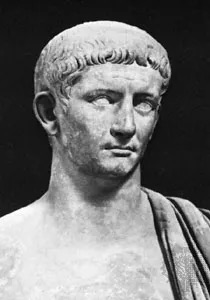
The ancient sources agree that Claudius was poisoned and agree on very little else. Suetonius calls it “the general belief” and then concedes that when it was done, and by whom, is disputed. In one version his food taster, the eunuch Halotus, did it; in another Agrippina served the poison with her own hand in a dish of mushrooms, of which her husband was extravagantly fond. Tacitus credits the mushroom to unnamed writers of the time and adds that when the first dose failed, the physician Xenophon was supposed to have put a poisoned feather down his throat.
The aftermath is better documented than the crime. Claudius died on 13 October 54, and the palace spent the morning pretending he hadn’t. Vows were offered for his recovery and comic actors were brought in, on the pretence that the patient had asked to be entertained. Tacitus has the body wrapped in blankets and warm applications while the Senate recited prayers, and Agrippina holding Britannicus in her arms. At noon her son Nero, sixteen years old, went out to the Praetorians and came back an emperor.
Some modern historians think Claudius simply died, and DIR records the doubt. Nero never seems to have shared it. He later called mushrooms “the food of the gods,” since Claudius, by means of a mushroom, had become one.
Galba
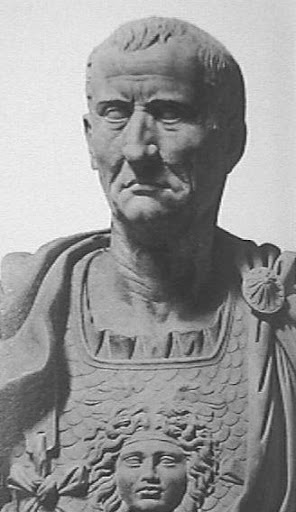
Galba’s killers had a practical problem: he was bald. The soldier who cut off his head on 15 January 69 could find no hair to grip, so he tucked it under his robe and then, Suetonius says, “thrust his thumb into the mouth” to carry it to Otho. Otho’s camp followers set it on a lance and paraded it around the camp, chanting “Galba, thou Cupid, exult in thy vigour!” – a jab at his reported boast that his strength was still unimpaired.
He had been lured into the Forum by false news that the rebels were beaten. That morning he had put on a linen cuirass while remarking that it would give little protection against so many swords, and he was half right. Tacitus says the armour covered his breast, so the soldiers hacked at his arms and legs instead, after his frightened bearers tipped him out of the litter near the Lacus Curtius. Tacitus could not say who struck the fatal blow and offers three candidates: Terentius, Lecanius, and Camurius of the 15th legion.
His adopted heir, Piso, was dragged from the temple of Vesta and killed the same day. The head was sold for a hundred pieces of gold to a freedman of Patrobius, a man Galba had executed, and thrown down where Patrobius had died. Galba’s steward buried what remained in the old man’s private gardens on the Aurelian Road.
Vitellius
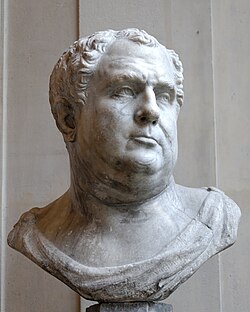
With a girdle full of gold pieces strapped around him, Vitellius hid in the doorkeeper’s lodge of the palace, tied a dog outside and pushed a couch and a mattress against the door. As last stands go it lacks something, and Dio’s version is worse: a dark room where the dogs were kept, which bit him before the soldiers found him covered in rubbish and blood.
The Flavian army had taken Rome in December 69. The tribune Julius Placidus dragged Vitellius out with his hands bound behind his back and his robe in tatters, and he was marched down the Sacred Way with a sword point held under his chin so he could not look down. The crowd pelted him with dung and called him glutton and incendiary. The Capitol, temple of Jupiter included, had recently burned, and Suetonius says Vitellius watched it from a feast in the house of Tiberius. Tacitus has him forced to look at his own statues falling and at the spot where Galba was slain.
They killed him at the Gemonian stairs, where the corpse of Flavius Sabinus had lain, and Suetonius says the body was dragged off to the Tiber with a hook. Before the end a tribune insulted him, and Vitellius made the one dignified remark anyone recorded of him: “Yet I was your Emperor.”
Domitian
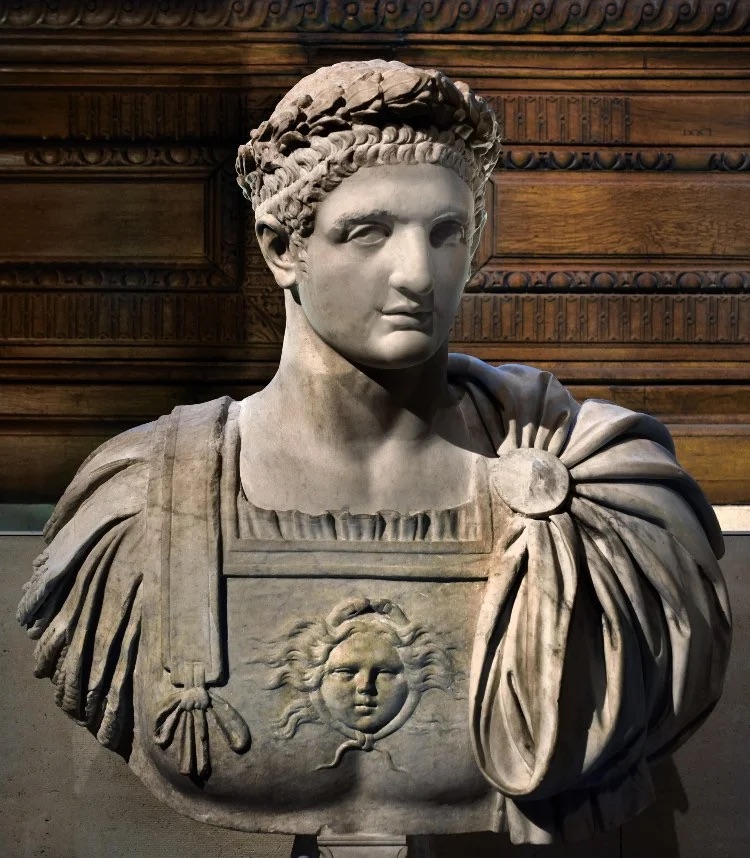
The day before he died, Domitian ordered some apples kept until the next day and added, “If only I am spared to eat them.” He had been expecting this. For eight months lightning had kept striking, his own bedroom included, and he had dreamed that Minerva – the Roman Athena, one of the Greek gods of war – came out of her shrine to say she could no longer protect him, “since she had been disarmed by Jupiter.” Domitian honoured Minerva above every other god and kept her statue in his bedchamber.
He feared the fifth hour of 18 September 96, so his staff announced the sixth. Relieved, he was heading for the bath when his chamberlain Parthenius steered him to the bedroom to meet a visitor. This was Stephanus, a steward accused of embezzlement, who had worn his left arm in woollen bandages for days, pretending an injury, with a dagger hidden inside. He stabbed the emperor in the groin while Domitian read a paper he had handed him. Domitian wrestled him to the floor, clawing at his eyes. The sword he always kept under his pillow had been quietly relieved of its blade.
The Senate called for ladders, tore down his shields and images and decreed his name erased everywhere. Dio reports a tradition that his wife Domitia knew of the plot. On brick stamps of AD 123 she was still calling herself his wife.
Commodus
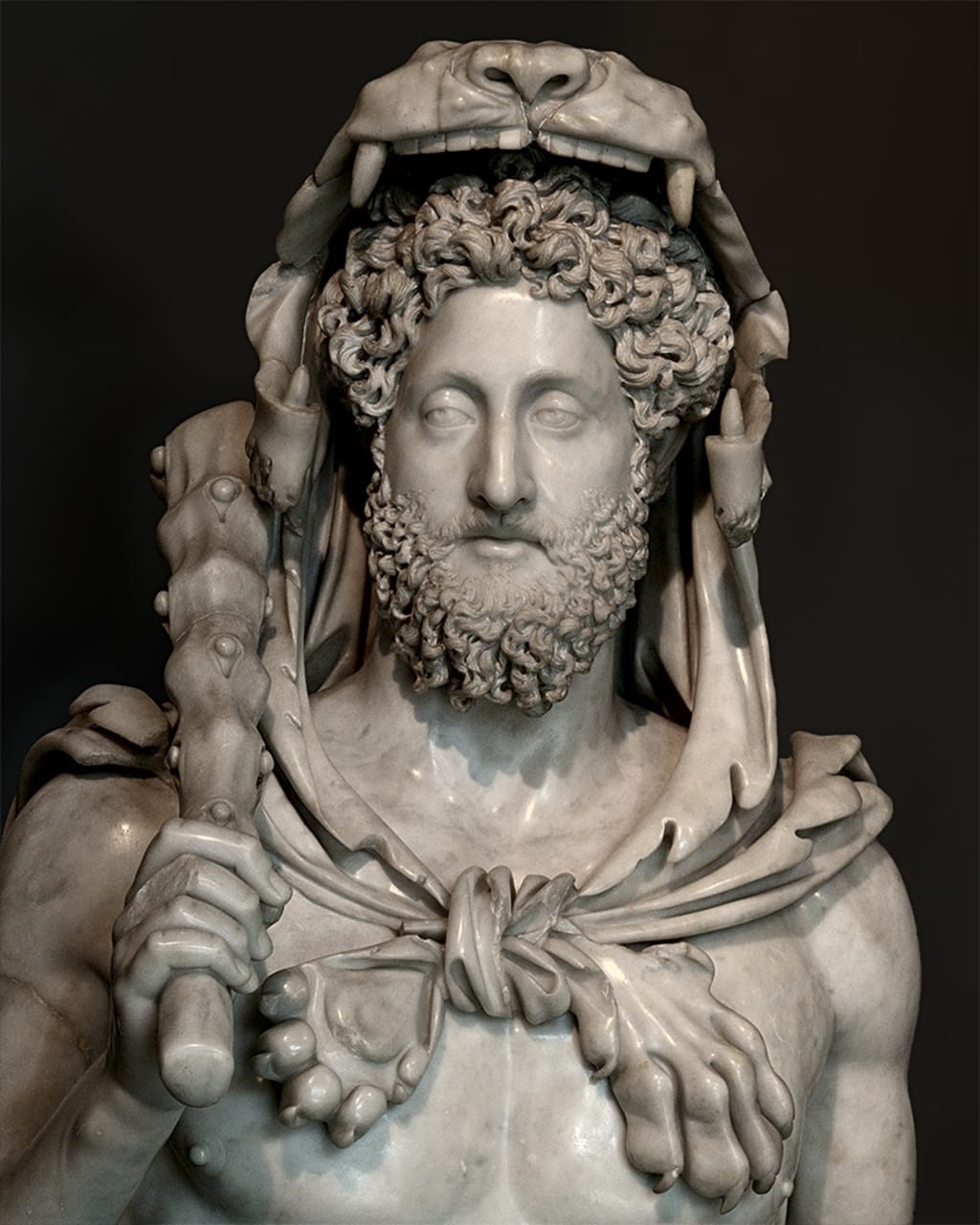
Marcia tried poison first. On the last night of 192, while Rome was busy with the holiday, Commodus’s mistress gave him the dose – in some beef, says Dio; in the cup of wine she mixed for him after his bath, says Herodian – and he threw it up. So the conspirators sent in Narcissus, an athlete, who strangled him while he was taking a bath.
Herodian explains the hurry. Commodus had written a death list on a wax tablet and left it lying about, and a small boy of the household called Philocommodus picked it up as a toy. Marcia’s name headed the list, followed by the prefect Laetus and the chamberlain Eclectus. “See what a party we are to enjoy tonight!” she told Eclectus. Commodus, for his part, had been planning to kill both consuls and appear on New Year’s Day as consul and as a secutor, setting out from the gladiators’ quarters.
The conspirators wrapped the body in bed linen and sent it out of the palace as laundry, past the dozing guards, and announced that he had died of apoplexy. The Senate, where Dio and the men sitting near him had once chewed laurel leaves to keep a straight face while Commodus brandished an ostrich’s head at them, now chanted “More savage than Domitian, more foul than Nero” and demanded that his body be dragged with the hook. Septimius Severus later had him declared a god.
Pertinax
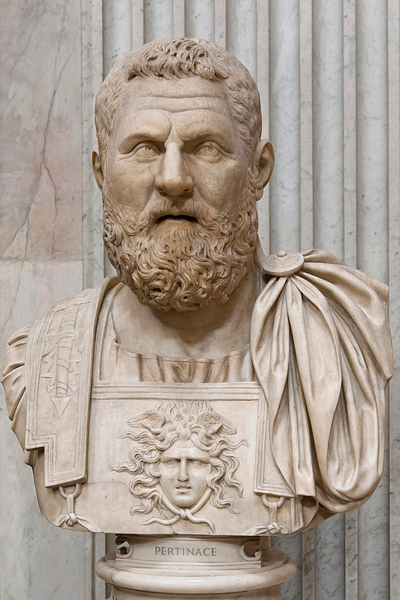
When two hundred Praetorians – three hundred in the Historia Augusta – came to the palace with drawn swords on 28 March 193, Pertinax could have locked the gates or hidden. Dio, a senator who had been given the praetorship by him, says he did neither. He went out to talk to them, and for a moment it worked: the soldiers kept their eyes on the ground and sheathed their swords. Then one man leapt forward shouting “The soldiers have sent you this sword,” and the rest joined in. Eclectus the chamberlain, alone of the household, fought beside him and wounded several attackers before dying with him.
Pertinax was the son of a freedman, a former grammar teacher who had come late to the army, and he was emperor for eighty-seven days. He spent a good deal of them auctioning off Commodus’s gladiatorial kit, chariots and favourites to refill a treasury in which, Dio says, only a million sesterces could be found. The Historia Augusta names a Tungrian called Tausius as the man who hurled a spear at his breast; Dio names nobody, and the Historia Augusta is the less trustworthy witness.
The soldiers fastened his head on a spear, glorying in the deed, and went back to their camp. Then they shut the gates and sent men with the loudest voices up onto the walls to announce that the empire was for sale. Pertinax had been selling off Commodus’s belongings. The soldiers sold his job.
Didius Julianus
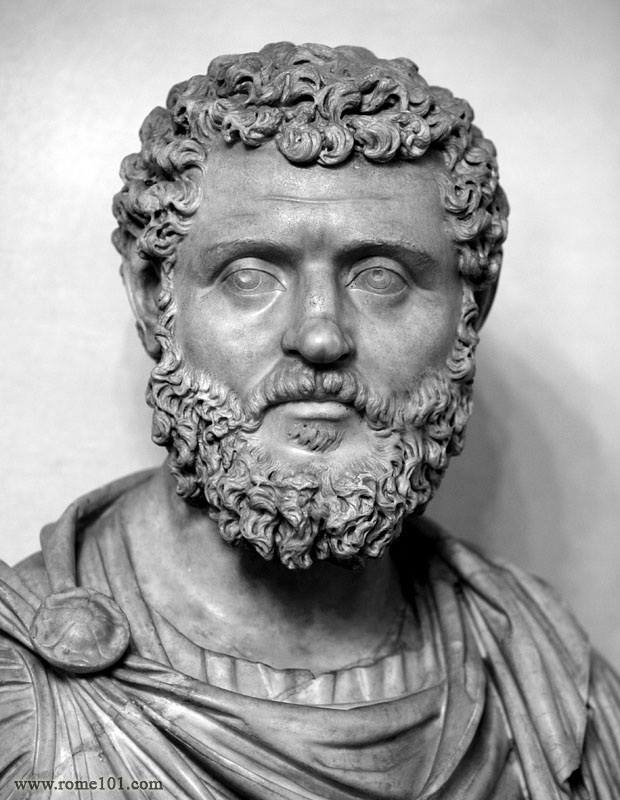
In 193 the Praetorian Guard put the Roman Empire up for sale, and Didius Julianus was at dinner when he heard. Herodian says his wife, his daughter and his parasites talked him off his couch and down to the camp, where the guards, refusing to open the gates until they knew how much he would pay, hauled him up the wall by a ladder. Inside, Pertinax’s father-in-law Sulpicianus was bidding too.
Dio has the two men raising their offers until Sulpicianus reached 20,000 sesterces per soldier. Julianus then jumped the price by 5,000 at a stroke, shouting the figure and holding up his fingers to show it, and the empire was his. He told the Senate “I am here alone,” having surrounded the building with soldiers. The crowd called him stealer of the empire and refused his money, shouting “We don’t want it! We won’t take it!” Offered a gold statue, he asked for bronze, on the grounds that the gold and silver statues of earlier emperors had all been destroyed. The bronze one was destroyed after his fall.
With Septimius Severus advancing on Rome, the Praetorians abandoned their purchase, the Senate sentenced Julianus to death, and he was killed in the palace after sixty-six days, by Dio’s count. Dio also gives his only words: “But what evil have I done? Whom have I killed?” For a man who had paid for the job in cash, it was a fair question.
Geta
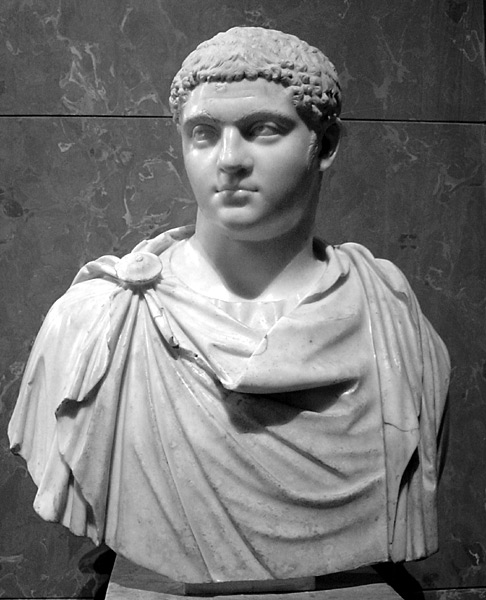
“Mother that didst bear me, mother that didst bear me, help! I am being murdered.” Those, in Dio’s account, were Geta’s last words, and his mother could do nothing. In late December 211 his brother Caracalla, having failed to kill him at the Saturnalia, induced Julia Domna to summon both sons to her apartment, unattended, to reconcile them. Centurions burst in, and Geta died clinging to her, so covered in his blood that she took no notice of the wound in her own hand.
She was then forbidden to mourn. Caracalla ran from the palace through the city to the Praetorian camp, shouting that he had escaped grave danger, and told the troops: “Rejoice, fellow-soldiers, for now I am in a position to do you favours.” Geta, by Dio’s reckoning, was twenty-two years and nine months old, and had ruled jointly with his brother since their father died on 4 February.
Then came the erasing. Dio says anyone who wrote or spoke the name Geta was put to death, and poets stopped using it even in comedies. It was chiselled out of inscriptions all over Rome, and on the Arch of the Argentarii his figure was cut from the relief. The Severan Tondo in Berlin, painted around AD 200, shows Septimius Severus, Julia Domna and Caracalla looking calmly out at the viewer. Geta’s face has been scratched away.
Caracalla
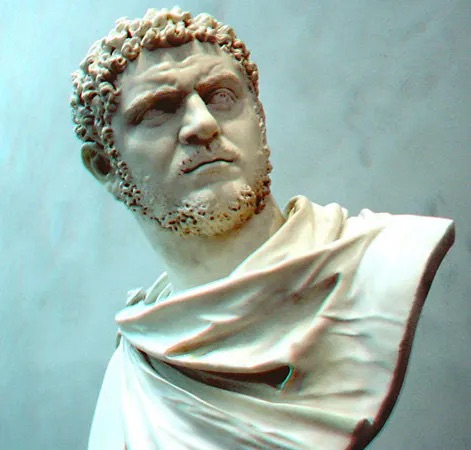
The warning that might have saved Caracalla went to his mother. A seer had predicted that the prefect Macrinus and his son would rule, and the letter reporting it was diverted to Antioch, where Julia Domna was handling the emperor’s correspondence. A second letter went straight to Macrinus, who, as Dio drily notes, read his in good season. Macrinus moved quickly.
On 8 April 217, riding from Edessa to Carrhae, Caracalla dismounted to relieve himself and sent his escort off to a respectful distance. Julius Martialis came up as though to say something and stabbed him with a small dagger. Martialis had a grievance – in Dio’s version, Caracalla had refused to make him a centurion – and he might have got away had he thrown the weapon down. One of the emperor’s Scythian guards recognised it and killed him with a javelin. Macrinus reached the body first and, Herodian says, wailed convincingly.
Caracalla was twenty-nine and had ruled alone for a little more than five years since the murder of his brother. The omens of his last weeks, as Dio collected them, included his dead father appearing in a dream with a sword and saying, “As you killed your brother, so will I slay you.” His pet lion, Rapier, which shared his table and his bed, seized him as he set out and tore his clothes. Herodian says the new emperor sent the ashes to Julia Domna in an urn.
Macrinus
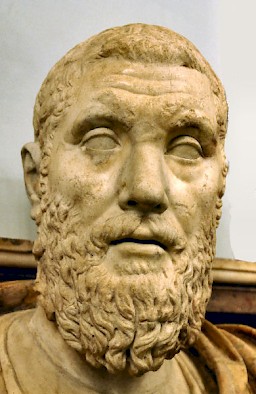
Fourteen months as emperor, and Macrinus spent every one of them in the East. He was, as DIR puts it, the first emperor who was neither a senator nor of a senatorial family when he took power – a Moor from Caesarea, Dio says, with one ear bored in the fashion of his people – and the Senate, which voted him the usual honours from a distance, never got a look at him.
The army that made him unmade him. On 8 June 218 his troops lost a battle outside Antioch to the supporters of a fourteen-year-old pretender, Elagabalus, and Dio says the rebels would have broken had Macrinus not fled first. He shaved his head and beard, threw a dark cloak over his purple robe and drove across Asia Minor posing as an army courier. Herodian has him within reach of Byzantium before the wind drove him back. Then he wrote to a procurator asking for money, was recognised, and was arrested at Chalcedon.
Hauled back toward Antioch like a common criminal, he heard that his son had been caught and threw himself from the carriage, breaking only his shoulder. Shortly afterwards a centurion named Marcianus Taurus killed him, and Dio says the body lay unburied until Elagabalus, passing through, had gloated over it. Herodian’s epitaph is the kindest available: he died trying to get to Rome, where he should have gone in the first place.
Diadumenian
A silver denarius struck for Diadumenian Augustus is much of the case that the boy was ever really emperor. When his father Macrinus took power in 217 the Senate voted the boy Caesar and Princeps Iuventutis, and the Historia Augusta, Herodian and Aurelius Victor call him nothing more. But DIR and Livius say that when Elagabalus rebelled, Macrinus promoted his son to co-emperor, probably in May 218, and Dio says Macrinus termed him “both Caesar and emperor.”
He was about nine when he was made Caesar, and his father gave him the name Antoninus – partly to please the troops and partly, Dio says, as an excuse to promise them three thousand sesterces more. The Historia Augusta claims he was born with a band around his head like a diadem, so strong that it could not be broken, which is how he came by his name. The Historia Augusta claims a great many things.
After the defeat outside Antioch, Macrinus sent him east toward the Parthian king. A centurion named Claudius Pollio arrested him riding through Zeugma, the same town where he had been declared Caesar, and he was put to death. No source names the man who killed him or gives the day. Dio spares him a single line: “And his son, too, perished after him.” Elagabalus later sneered to the Senate that Macrinus had made his five-year-old son emperor, which was wrong about the age and right about everything else.
Elagabalus
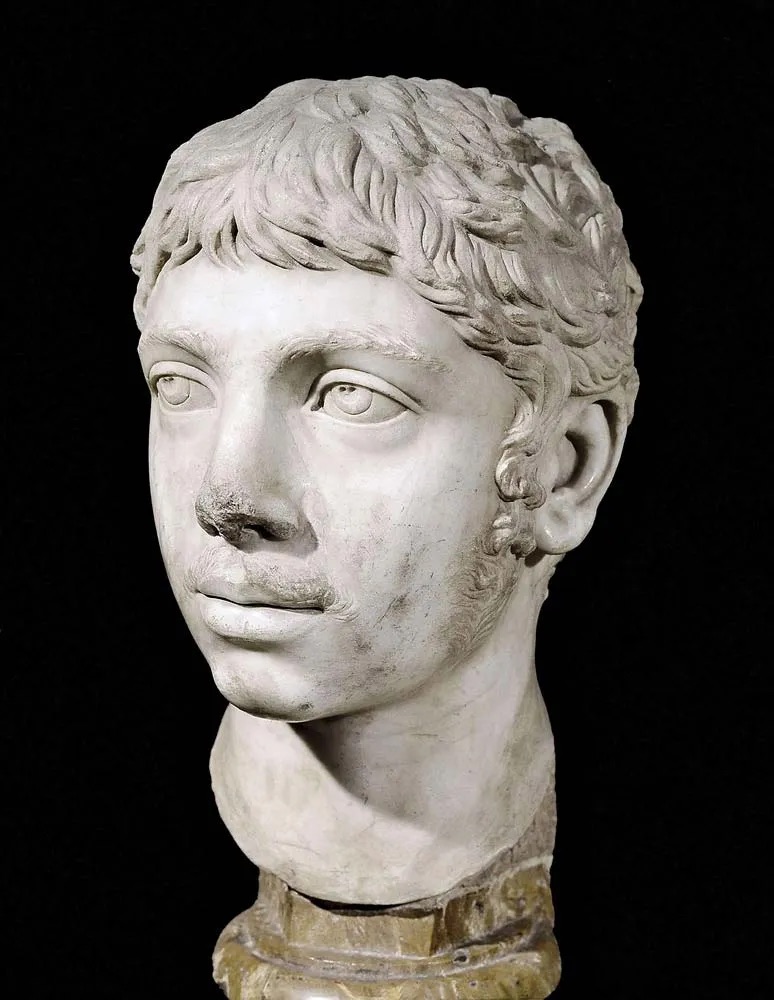
Once a year Elagabalus ran backwards through Rome in front of a six-horse chariot carrying his god, holding the reins and facing the passenger, while the road ahead was paved with gold dust so that he would not trip. The god was a huge black conical stone from Emesa in Syria, which the Phoenicians, Herodian says, believed had come down from Zeus. Its high priest had been made emperor at fourteen, and Rome’s objection, as Dio frames it, was less that he brought in a foreign god than that he put it above Jupiter.
DIR names three wives, one of whom he married twice, and one of whom, Aquilia Severa, was a Vestal Virgin. Dio, who loathed him, implies several more. At the games for his first wedding, to Cornelia Paula, an elephant and fifty-one tigers were killed, which Dio records as more than had ever been despatched at one time.
What finished him was his cousin. Elagabalus tried to get the soldiers to kill Severus Alexander, and the Praetorians turned on him instead. On 11 March 222 they caught him trying to escape – hidden in a chest, according to Dio; in a latrine, according to the Historia Augusta – and killed him with his mother, Julia Soaemias, who clung to him. He was eighteen, says Dio. Their bodies were dragged through the city, his went into the Tiber, and the Senate struck the name Antoninus from the records. Dio refers to him afterwards as Tiberinus.
Severus Alexander
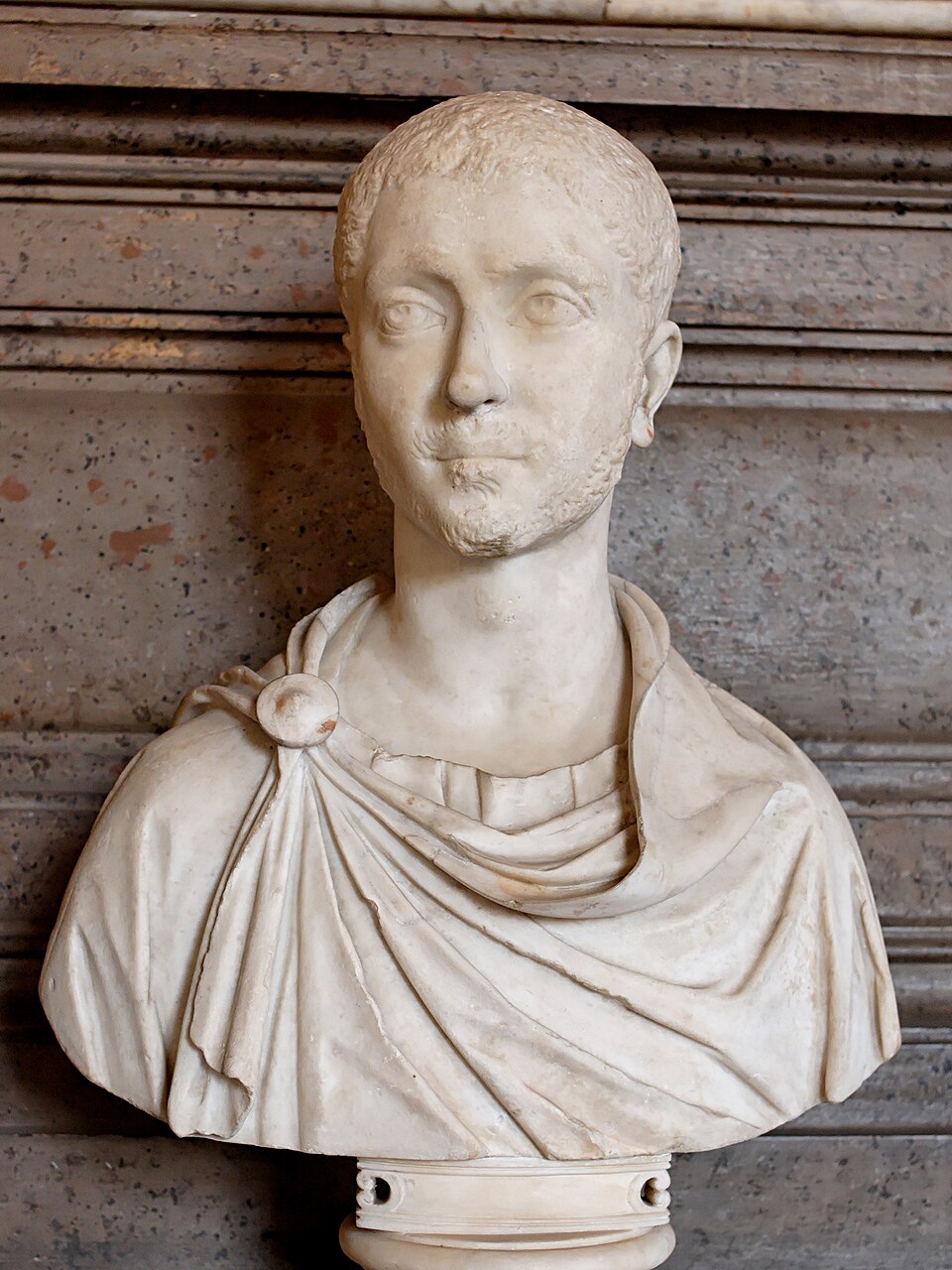
Herodian says that when the army turned on him, Severus Alexander clung to his mother and complained that she was to blame for his death. It was not an unreasonable complaint. Julia Mamaea had run his government since he was a boy, and DIR describes his reign as the first time in its imperial history that Rome was, de facto though not de iure, governed by women – first his grandmother Maesa, then his mother.
The army’s objections were more specific. Camped at Mainz in March 235, Alexander sent envoys offering the Germans money for a truce rather than fight them, and his soldiers watched him fill the time with chariot racing and luxurious living. The recruits training under Maximinus, a Thracian officer, despised him as a mother’s boy, and they called on his men to desert “the miserly woman and the timid, mother-dominated youth.” The Epitome adds that Mamaea had the half-eaten leftovers from his table served again. When the troops hailed Maximinus, he sent a tribune and several centurions to the imperial tent, and they killed the emperor and his mother together.
Alexander was twenty-six and had been emperor, DIR notes, for almost precisely half his life. The Senate deified him. Herodian’s verdict is that his reign might have won renown for its perfection had his mother’s petty avarice not disgraced it, which is a hard thing to put on a man’s monument, and harder on his mother’s.
Maximinus Thrax
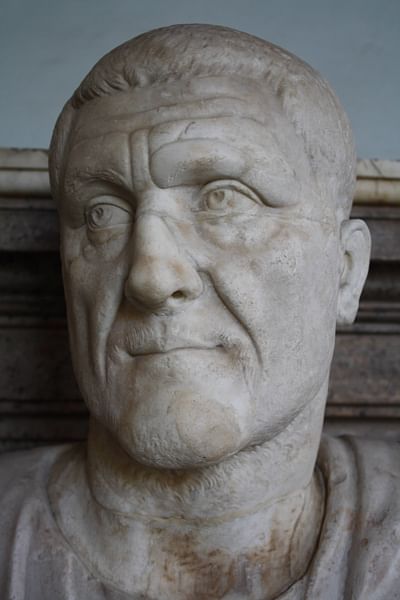
The men who killed Maximinus Thrax had left their wives and children at the foot of Mount Alba, near Rome, and they were tired of the siege. In 238 the emperor’s army was stuck outside Aquileia, short of supplies and getting nowhere, while the city’s defenders, with no way of burying their dead, threw the bodies into the river. About noon one day, soldiers from the legion based near Rome walked to the imperial tent, tore Maximinus’s portraits from the standards, and, when he came out with his son to talk, killed them both.
He had been quite a sight. Herodian says he was drafted into the cavalry for his size and strength; the Historia Augusta, citing a writer called Cordus, puts him at six inches over eight feet and says he wore his wife’s bracelet as a ring on his thumb. DIR, more cautiously, calls him physically imposing. He was the first of the soldier-emperors, in DIR’s phrase, and spent all three years of his reign on campaign, while the Senate, the Historia Augusta says, prayed that he should never see the city of Rome.
His head and his son’s went to Ravenna and then to Rome, where they were raised on a spear for the crowds; the bodies were left for the birds and dogs. Meanwhile the Aquileians, who had kept the gates shut against him, set up a market on the walls and sold his former soldiers whatever they needed.
Pupienus
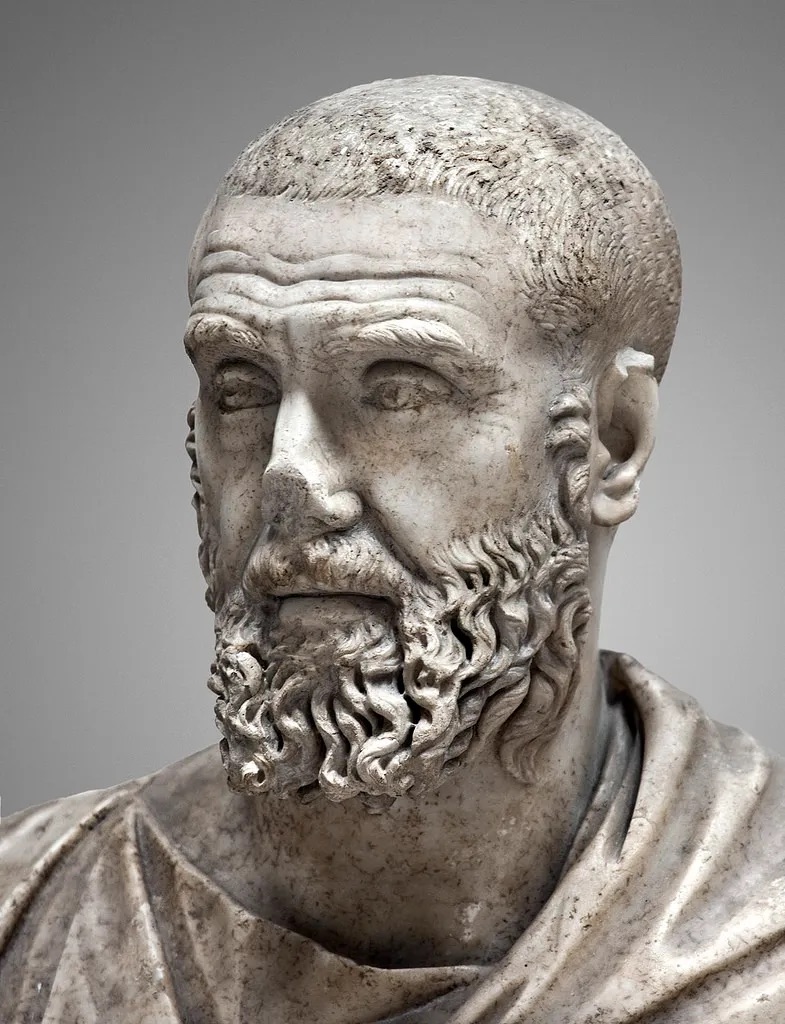
Rome had six emperors in 238, and Pupienus was the one the Senate chose to deal with the first of them. Gordian I and Gordian II, proclaimed in Africa that March, were dead after twenty days; on 22 April the Senate named two of its own, Pupienus and Balbinus, to fight Maximinus. Pupienus was the soldier of the pair – a former chief centurion, twice consul, victorious over the Sarmatians and the Germans – and so stern, says the Historia Augusta, that he earned the name of gloomy. As prefect of the city he had governed too strictly for the crowd’s taste, and the crowd had not forgotten.
He went north and fought no battle, because Maximinus’s own troops saved him the trouble. At Aquileia he took over the dead man’s army with an amnesty and lavish gifts of money, telling them, in Herodian’s version, that “The empire is the personal property of no man.” The Praetorians had their own view of whose property it was.
During the Capitoline Games, with the city busy at the shows, they came for him. Pupienus wanted to send for the German guard; Balbinus, suspecting a ruse to use the Germans against him, refused. The Praetorians stripped both men, dragged them naked from the palace, pulled at their beards and eyebrows, and killed them on 29 July, after ninety-nine days. Then they proclaimed the year’s sixth emperor, Gordian III, aged about thirteen, because there was nobody else to hand.
Balbinus
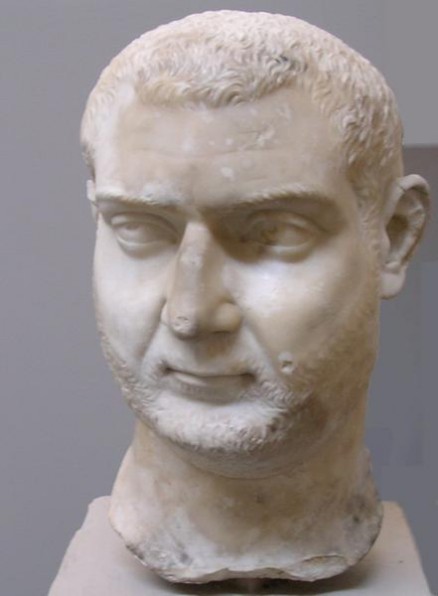
A thousand edicts, the Historia Augusta says, and nobody listened to any of them. Balbinus had stayed in Rome while Pupienus went north, and Rome promptly came apart: after two unarmed soldiers were murdered in the Senate, the city erupted in rioting between the Praetorians and the people, and his appeals for a truce persuaded neither side. The soldiers set fire to houses with wooden balconies, and Herodian says the part of Rome that burned was greater in extent than the largest intact city in the empire.
He was the aristocrat of the partnership: nobly born, twice consul, governor of a long list of provinces, rich by inheritance and richer by legacies, and ranked, the Historia Augusta adds, among the leading poets of his time. It calls him “a somewhat mild man.” Earlier, one riot had only ended when the boy Gordian, dressed in purple, was perched on the neck of a very tall man and shown to the crowd. When Maximinus’s head reached Rome, Balbinus, whom the same source describes as trembling at the very name, celebrated by sacrificing a hecatomb.
His coins show a heavily jowled, short-bearded man, and the joint coinage of the two emperors carried clasped hands to advertise their cooperation. They despised each other – Balbinus thought Pupienus low-born, Pupienus thought Balbinus a weakling – and died together. The Historia Augusta says that long afterwards Balbinus’s house in the Carinae was shown to visitors, large and impressive and still in the possession of his family.
Gordian III
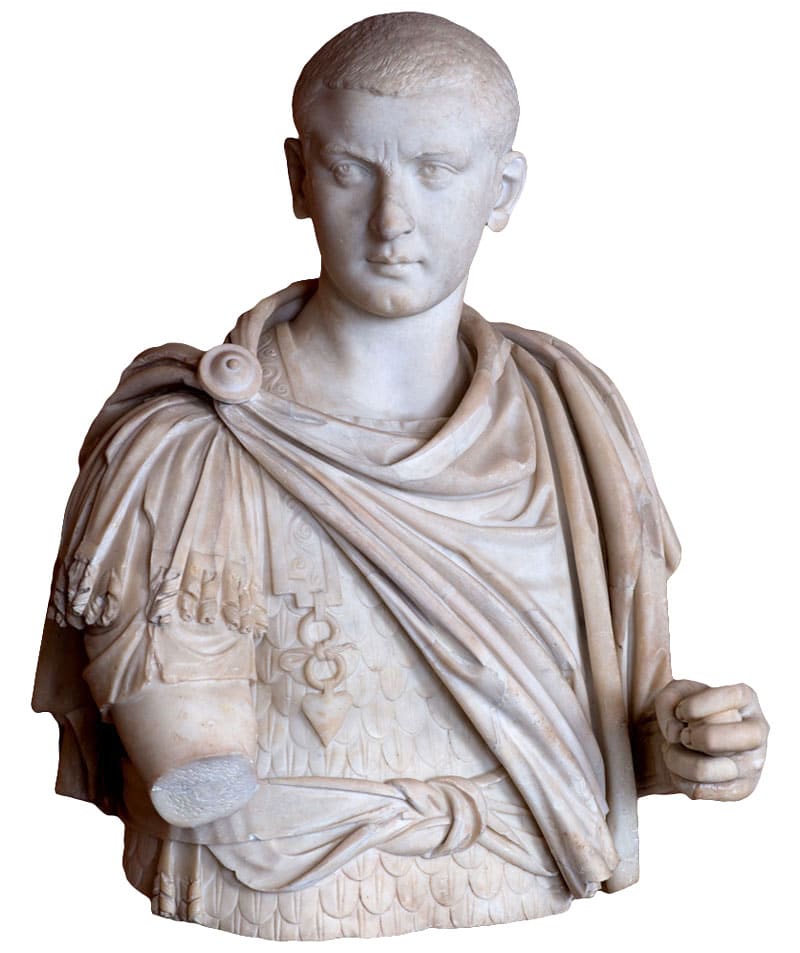
How Gordian III died is disputed, and the dispute is carved in stone. At Naqsh-i-Rustam in modern Iran, Shapur’s trilingual inscription says the young emperor was killed in a great battle at Misiche, near modern Fallujah. Roman sources never mention the battle. They blame his praetorian prefect, Philip the Arab, who in their telling cut off the army’s supplies, turned the soldiers against the emperor and had him killed near Circesium on the Euphrates early in 244. Philip, for his part, wrote to Rome that Gordian had died of a disease.
He was nineteen. He had come to the throne as a boy in 238, after the murder of Pupienus and Balbinus, and DIR doubts that the battle at Misiche killed him, whatever did. The Historia Augusta adds a scene of the emperor bargaining for his life a step at a time – to share power, then to be Caesar, then to be Philip’s prefect, and finally just to be made a general and allowed to live – after which Philip “had him carried, shouting protests, out of their sight and then despoiled and slain.” Like most of the Historia Augusta, it is easier to enjoy than to believe.
The same source says Philip never took down his statues and always called him divine. The soldiers raised a tomb near the frontier, and the historian Ammianus, marching east with the emperor Julian, saw it at Zaitha, conspicuous from afar.
Philip II
From the age of five, says the Epitome de Caesaribus, nothing anyone tried could make the younger Philip laugh. At the Secular Games of 248, held for the thousandth birthday of Rome, his father laughed too loudly in public and the boy, still very young, turned his face away in disapproval. It is about the only personal detail the sources preserve about him, and it makes him sound like the most sensible person in the imperial family.
He had been named Caesar within six months of his father’s accession and was made Augustus and co-ruler in the summer of 247, when, DIR says, he was probably not yet ten. The Historia Augusta claims that Gordian III’s menagerie, collected for a Persian triumph that never happened, was presented or slaughtered by his father at those anniversary games, thirty-two elephants included.
In 249 the army in Moesia proclaimed Decius, and the two armies met outside Verona in late summer. When news reached Rome that the elder Philip was dead, the son was killed in the Praetorian camp, according to Aurelius Victor and the Chronicle of 354. No ancient text actually names the Praetorians as his killers – that is DIR’s reading – and Zosimus has father and son die together in battle. The Epitome says the boy was in his twelfth year. Eutropius adds that both Philips were afterwards ranked among the gods.
Trebonianus Gallus
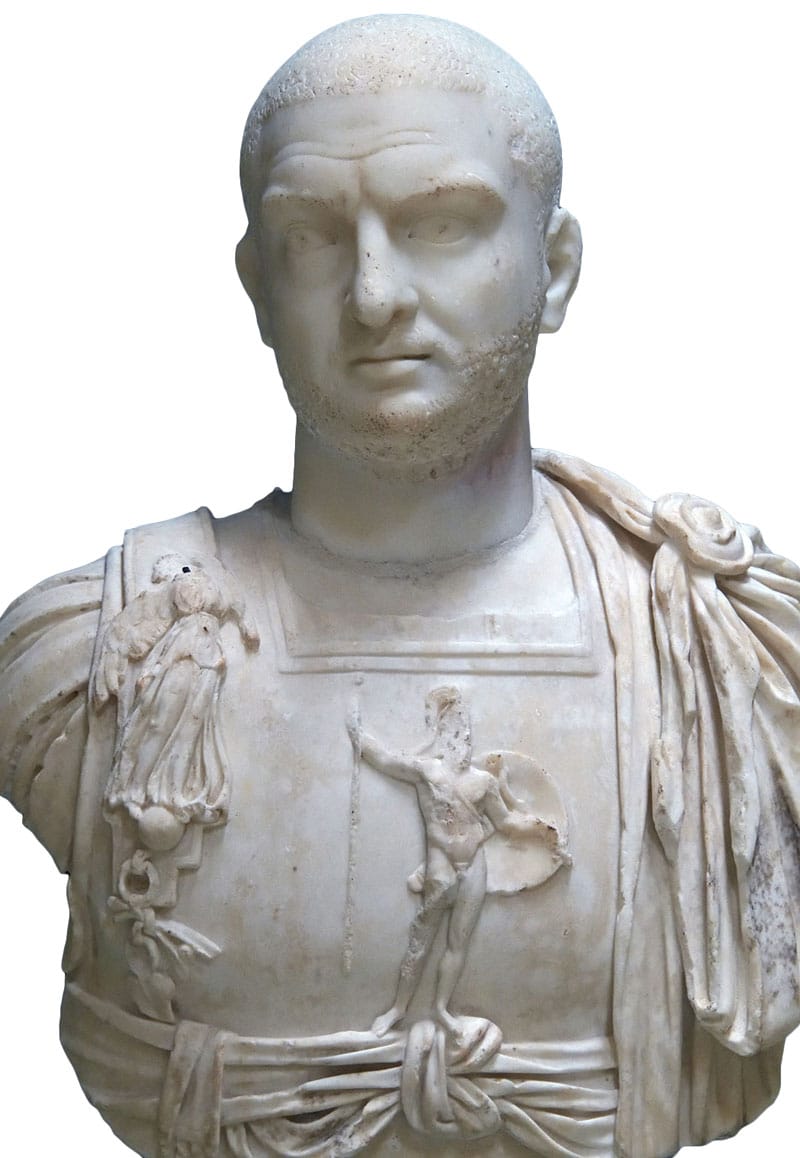
Peace with the Goths came with an annual bill, and the bill is what killed Trebonianus Gallus. After Decius fell fighting them at Abritus in June 251, Gallus, eager to get to Rome, let the Goths go home with their plunder and, Zosimus says, “all the noblest captives,” most of them taken at Philippopolis, and agreed to pay them a sum of money every year.
Rome, when he got there, was in the grip of plague. Hostilian, the surviving son of Decius, whom Gallus had adopted as co-emperor, caught it and died in July 251; Zosimus later accused Gallus of having him killed, a charge DIR declines to endorse. Gallus and his son won some popularity by seeing that even the poorest victims were properly buried. Eutropius remembers the reign for the plague and almost nothing else.
Then Aemilianus, his governor in Upper Moesia, stopped the payments, and his army made him emperor and marched on Italy. Gallus’s army had only reached Interamna by August 253, and his soldiers, judging themselves outmatched and their emperor, in Zosimus’s words, “a negligent indolent man,” killed him and his son and went over to the other side. Aurelius Victor says they did it for the hope of a bigger reward. The Metropolitan Museum has a bronze statue catalogued as Gallus, in heroic nudity, though some scholars suspect it is simply an athlete.
Volusianus
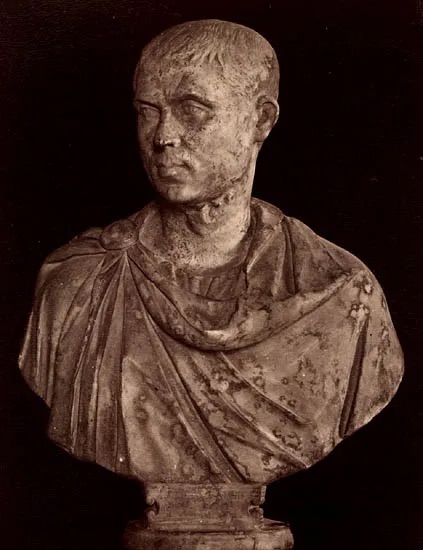
On his own coins Volusianus is an emperor. A silver coin struck at Rome in his name reads IMP CAE C VIB VOLVSIANO AVG, and its reverse carries PAX AVGG, the doubled G announcing two Augusti, father and son. The Senate had started him more modestly: Aurelius Victor says the senators decreed Volusianus, the son of Gallus, a Caesar, and DIR dates that to June 251. When the young co-emperor Hostilian died of plague a month later, Gallus promoted his own son into the vacancy.
What the two of them did with the next two years is a matter of some brevity. Eutropius says they achieved nothing at all notable, and the Chronographer of 354, which gives the joint reign as 2 years, 4 months and 9 days, adds that they handed out a largess of 250 denarii. No source records Volusianus’s age.
He died beside his father in August 253, when their own troops turned on them as Aemilianus came down through Italy. The place is disputed – Interamna, say Victor and Eutropius; the Forum Flaminii, says the Chronographer – and John of Antioch’s word for the killers, domestici, suggests to DIR that father and son had fled with only a small guard. The irony was in the post. Gallus had summoned Valerian to bring the Rhine legions to their rescue, and Valerian arrived in time to become emperor instead.
Aemilianus
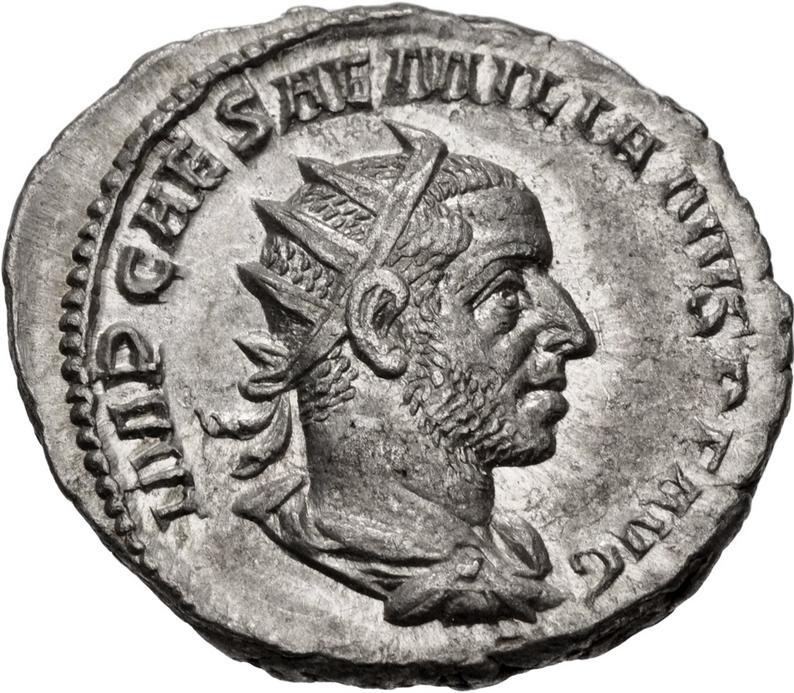
Born in obscurity, as Eutropius puts it, Aemilianus reigned in greater obscurity and was snuffed out in his third month. DIR suspects the jibe about his birth is defamation of a failed usurper. The Epitome makes him a Moor, born on the island of Meninx, now Djerba.
He was governor of Upper Moesia in 253 when he refused to go on paying the Goths the tribute Gallus had promised them, defeated them when they invaded, and was proclaimed emperor by his troops. He beat Gallus’s army in Italy, wrote politely to the Senate – “I leave the realm to you, and I strive in every way as your general” – and was rewarded, Aurelius Victor says, by senators who first called him a public enemy and then, once his rivals were dead, called him Augustus.
He did not keep the title long. Valerian was coming with a stronger army, and Aemilianus’s soldiers, seeing in Zosimus’s words that “his conduct was more like that of a private sentinel than of an emperor,” killed him rather than fight. The Chronographer of 354 allows him 88 days and says he was killed at the Sanguinarian bridge; the Epitome places it near Spoletium or at a bridge said to be named after his destruction. Aurelius Victor, alone, says he died of illness. Afterwards his name was erased from inscriptions, which may be why John of Antioch says simply that he disappeared from mankind.
Gallienus
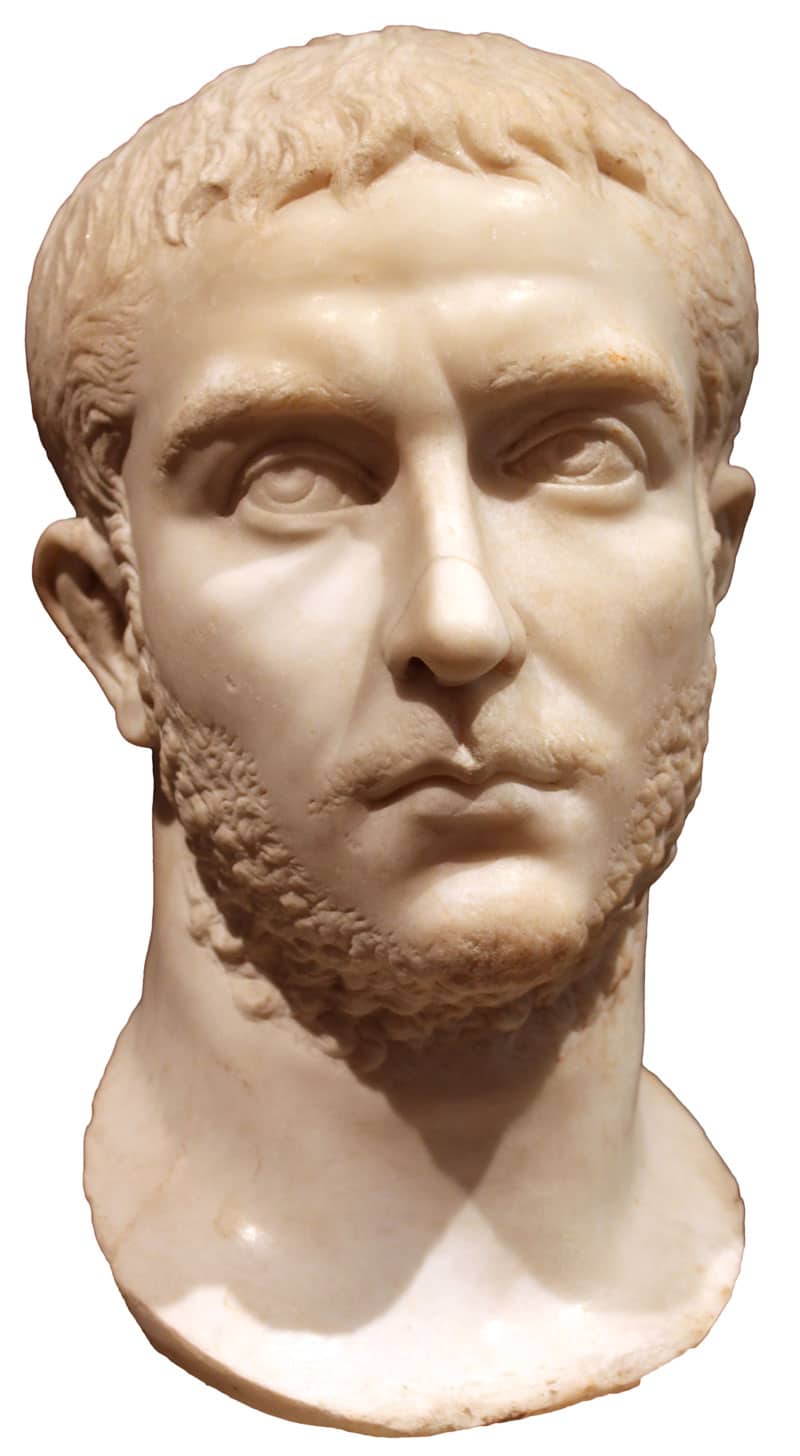
Somebody at supper told Gallienus that Aureolus and his army were close at hand. It was the summer of 268, Gallienus had the rebel Aureolus shut up inside Milan, and the news, which was false, was the plot. He called for his horse and armour and rode out without waiting for his guard, and Zosimus says the captain of the Dalmatian cavalry, finding him alone, killed him. The Historia Augusta names the spearman as Cecropius, the Dalmatians’ commander; Aurelius Victor says it happened in darkness, by a hand nobody could identify.
The conspirators included his praetorian prefect Heraclianus, and DIR, Victor and Magie name two future emperors, Claudius and Aurelian, among them; Zosimus, Eutropius and the Historia Augusta leave Aurelian out. His brother Valerian and young son Marinianus were murdered too. The troops were angry until, the Historia Augusta says, each man was promised twenty aurei, after which they entered him in the public records as a usurper.
The Senate had its own grievance: Victor says Gallienus was the first to bar senators from army commands. He was also the emperor who befriended Plotinus and listened to the philosopher’s plan to rebuild a ruined town in Campania as Platonopolis. The Senate ordered his kinsmen and hangers-on thrown down the Gemonian Stairs. Then Claudius made it deify him, which, DIR suggests, was mostly about making Claudius look legitimate.
Aurelian

A forged list of names killed Aurelian. His secretary – Eros in Zosimus, Mnestheus in the Historia Augusta – had reason to fear an emperor who was cracking down on corrupt officials, so he drew up a list of officers marked for execution, mixing men Aurelian was angry with and men he was not, and wrote it, says Zosimus, in a counterfeit of the emperor’s own hand. The Historia Augusta adds that he put his own name on it too. The frightened officers did the rest.
Aurelian called himself the restorer of the world, and his coins said so. In the winter of 271 he began the great Aurelian Walls around Rome, which were finished under Probus. In the autumn of 275 he stopped at Caenophrurium, a station on the road between Perinthus and Byzantium, and the conspirators struck there. The blow was Mucapor’s, says the Historia Augusta, and Aurelius Victor calls Mucapor a commander. The clerk, in the Historia Augusta, was later exposed to wild beasts at a stake.
When the army asked the Senate to choose a successor, Victor says, the senators handed the choice back, and the two went back and forth. Zosimus adds that Probus later invited surviving murderers to a feast and had them cut down, a story DIR doubts. The Historia Augusta’s verdict on Aurelian, who had killed his own sister’s child, was “a prince who was necessary rather than good,” which by its standards counts as a compliment.
Tacitus
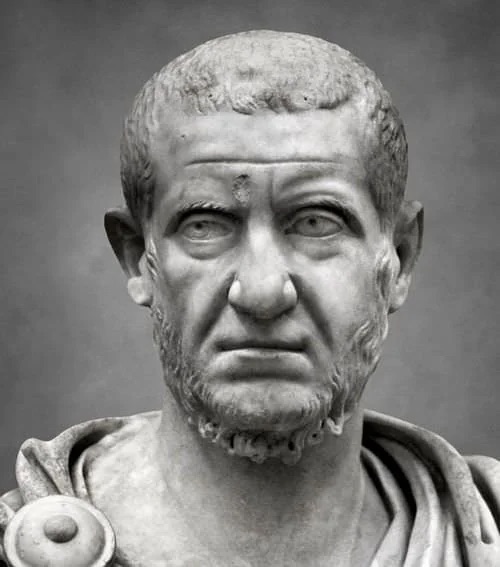
The sources dispute how Tacitus died, and the Historia Augusta manages to take both sides in a single sentence: in the sixth month of his rule he was slain, “according to some, by a plot among the troops, though according to others he died of disease.” The Epitome prefers disease, a fever at Tarsus on the two hundredth day of his reign. Zosimus prefers murder, and gives it a context: soldiers who had killed Tacitus’s kinsman Maximinus, the governor of Syria, were in league with the men who had murdered Aurelian, and they caught Tacitus as he set out and killed him too.
He was a senator chosen by the army after Aurelian’s death, while he was at Interamna, and confirmed at Rome by the Senate. His first act as emperor, according to the Historia Augusta, was to put to death all who had killed Aurelian. Tradition made him 75, though DIR notes there is no way to confirm it, and the Historia Augusta’s portrait – an old man who could read very tiny letters, who renamed September after himself – is built, DIR says, from forged documents and bogus names.
He died in June 276, at Tyana or Tarsus or somewhere in Pontus, depending on whom you read. The Historia Augusta says the people of Interamna put up two thirty-foot marble statues of Tacitus and his brother Florianus. Lightning struck them and broke them into fragments, which, given what happened to both men, was a little on the nose.
Florianus
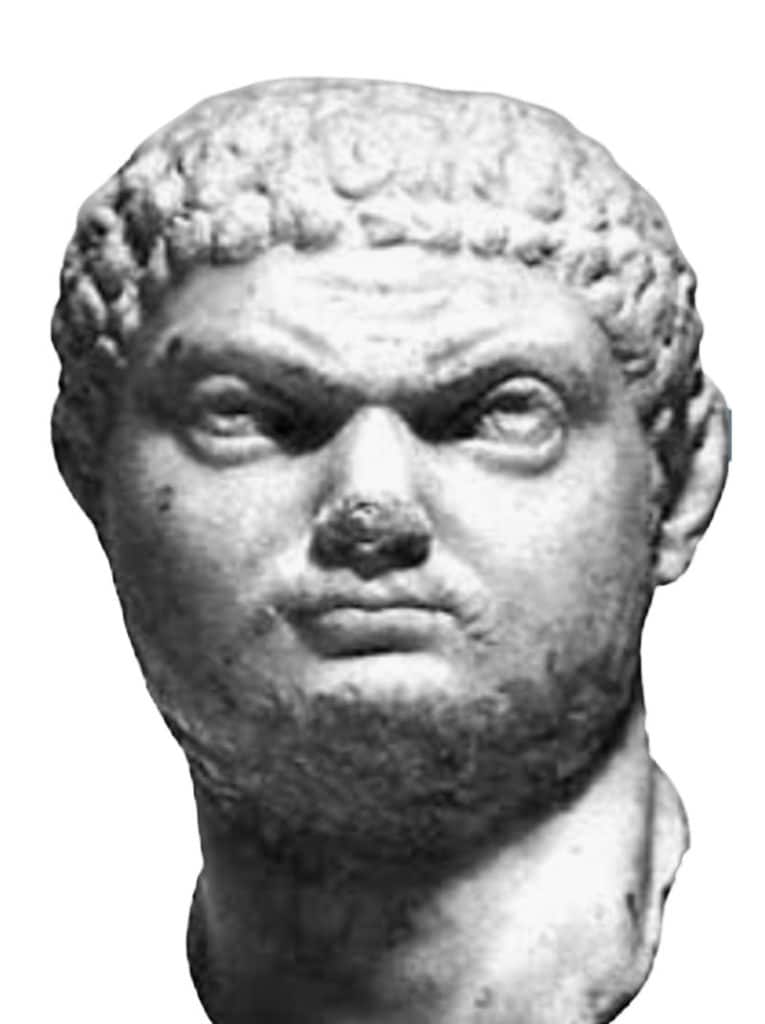
Eighty-eight days, says the Chronographer of 354; the sixtieth day, says the Epitome; scarce two months, says the Historia Augusta – and the manner of Florianus’s death is as disputed as its date. He was Tacitus’s brother, or half-brother, and when Tacitus died in 276 he took the throne without, Aurelius Victor complains, any decree of the Senate or the army, although, the Historia Augusta says, Tacitus had sworn to leave it to some excellent man rather than his own family. DIR points out that his coins carry the SC of senatorial authority, and that Rome, Gaul, Spain, Britain and Italy accepted him.
The East did not. Phoenicia, Palestine, Syria and Egypt declared for Probus, and Florianus marched into Cilicia with an army of mostly European troops, who, Zosimus says, began to sicken in the heat. After a few weeks of skirmishing his own men turned on him. The Historia Augusta says the soldiers killed him at Tarsus when they heard that Probus had the whole army behind him. Zosimus says he was deposed, restored, then killed by his own soldiers when Probus’s envoys arrived. The Epitome alone says that, exhausted by the contest, he cut open his veins and bled to death.
Probus later pardoned his followers on the ground that they had backed the brother of their emperor, not a mere pretender. Eutropius allows Florianus a single line, noting that he did nothing worth remembering.
Probus
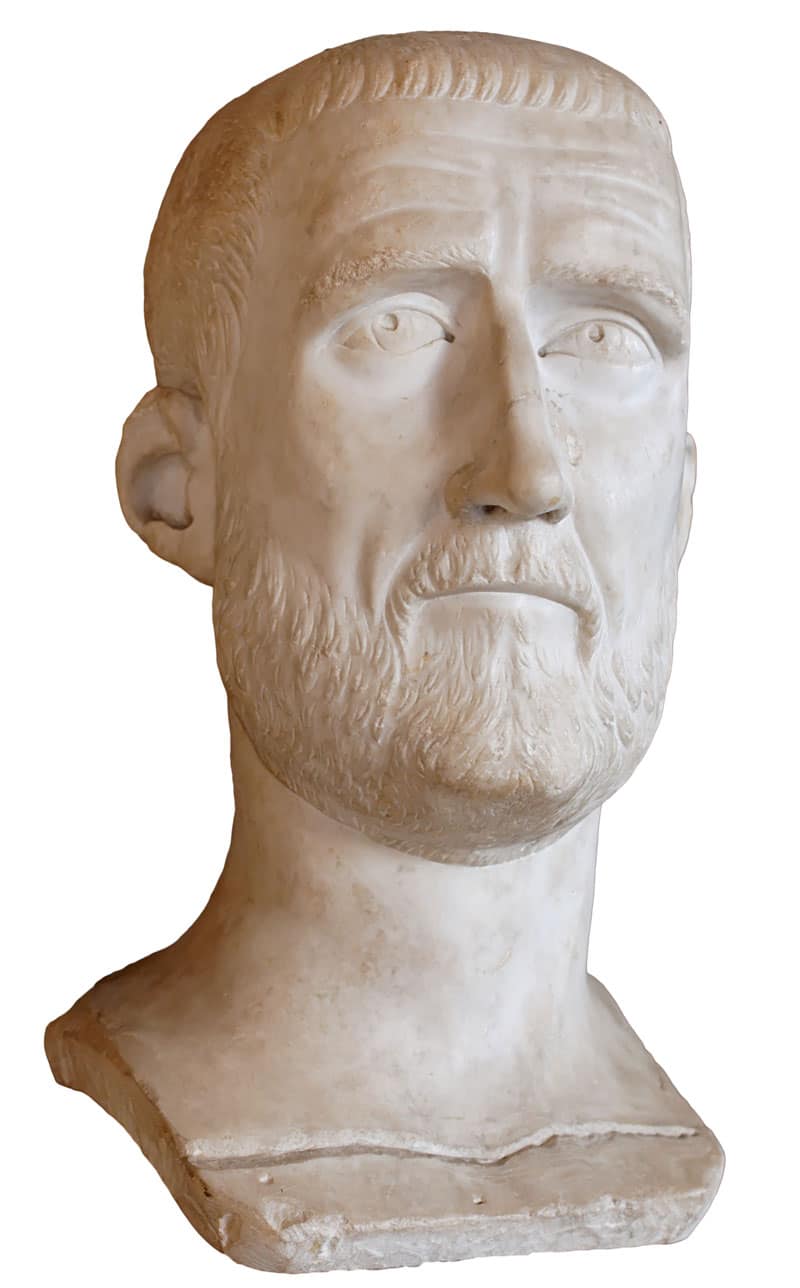
“Soon,” he said, “we shall have no need of soldiers.” The Historia Augusta reports this remark as one cause of Probus’s murder, and Aurelius Victor, more cautiously, says he is said to have said it. The soldiers, who were already being made to work for their bread, took it badly.
Probus did not believe in idle troops. He had them plant vineyards on Mount Alma near Sirmium and build bridges, temples, porticos and basilicas, and in 282, at Sirmium, his own birthplace, he set thousands of them to draining a marsh and digging a canal toward the Save. Victor says the work made them more irritated. That autumn they mutinied, and Probus fled to an iron-clad tower he had built himself as a look-out, where they killed him. The Greek tradition, followed by DIR, tells a different story in which the troops of his praetorian prefect Carus rebelled and Probus’s own remaining soldiers then killed him; the Historia Augusta knows the rumour that Carus was behind it and rejects it.
The soldiers were sorry afterwards. The Historia Augusta says they all together built him a mighty tomb on a lofty mound, inscribed “Here lies Probus, the Emperor, a man of probity indeed, the conqueror of all barbarian nations, the conqueror, too, of pretenders.” Aurelius Victor saw his death as a turning point, after which the Senate lost the right to choose the emperor and the army simply took it.
Numerian
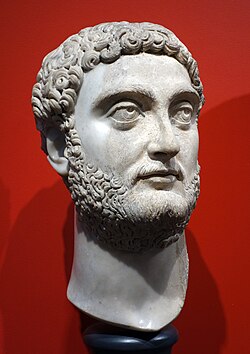
For several days early in November 284 the army marching back from Persia was told that its emperor could not come out of his closed litter because of an inflammation of the eyes – and whether Numerian was murdered inside it or simply died of illness is disputed. Tradition blames his father-in-law, the praetorian prefect Aper, who kept assuring the anxious soldiers that the emperor must protect his weakened eyes from the wind and the sun. Then, the Historia Augusta says, the stench of his body revealed the facts.
DIR thinks Numerian had in all likelihood succumbed to illness and that his officers hid it to keep the army steady. Diocletian, who emerged from the episode as emperor, preferred the murder. At his first address to the troops he drew his sword, swore he had known nothing of Numerian’s fate and had not wanted the throne, and ran Aper through on the spot, telling the army, in the Historia Augusta’s version, “It is he who contrived Numerian’s death.”
Numerian had been a poet and orator, honoured, the Historia Augusta says, with a statue in the Ulpian Library as the most powerful orator of his time. But the Historia Augusta’s best line belongs to Diocletian. A Druidess in a tavern had once told him he would become emperor when he had killed a boar – aper, in Latin – and after running the prefect through he said, “At last I have killed my fated Boar.”
Carinus
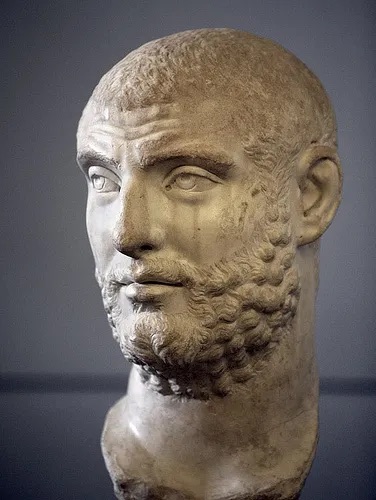
There are three accounts of how Carinus died in 285, and they are disputed in everything except the river. All agree that he met Diocletian’s army at the Margus, near modern Belgrade. Eutropius says he lost a great battle there, betrayed or at least deserted by an army larger than the enemy’s. The Historia Augusta has him simply defeated and killed in the fight. Aurelius Victor says he was winning – pressing the beaten enemy – when his own officers killed him, because he had been pursuing their wives, and the husbands had postponed their anger until victory looked safe. The Epitome names the killer as a tribune whose wife he was said to have violated.
The Historia Augusta’s portrait of him is unforgettable and probably untrustworthy: nine wives, some divorced while pregnant, one of his doorkeepers made prefect of the city, banquets at which he swam about among apples and melons, and a complaint about a tepid bath, “This is water for a woman.” DIR warns that the view was no doubt generated by Diocletian, who needed the man he replaced to look unfit.
DIR thinks the desertion story is made more plausible because Carinus’s praetorian prefect Aristobulus kept his job under Diocletian – which could, DIR concedes, equally mean Aristobulus betrayed him. The Historia Augusta, writing long after, summed up the family’s fall with satisfaction: after Carus and his sons, “the gods gave us Diocletian and Maximian.”
Severus II
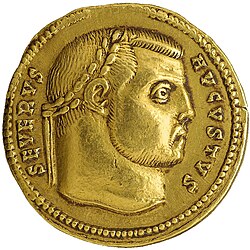
In 307 Severus II surrendered at Ravenna on a promise of safety, and what happened next is disputed. He had been made Caesar by Galerius on 1 May 305 and Augustus the next year, after Constantius I died, and when Maxentius seized Rome he marched south with several legions of Moors to deal with him. Maxentius bribed them. The soldiers went over at a pre-arranged signal, and Severus shut himself up in Ravenna, where Maxentius’s father, Maximian, persuaded him out, the Anonymus Valesianus says, with a false oath.
Lactantius, the earliest writer, says Severus gave back the purple and was granted only the grace of an easy death: he was compelled to open his veins. The Anonymus Valesianus says he was held in a state villa on the Appian Road, thirty miles from Rome, until Galerius invaded Italy, and then had his throat cut. Zosimus says he was taken by a stratagem at Tres Tabernae and immediately executed. The Chronographer of 354 says he killed himself at the third milestone of the Via Latina.
Galerius did invade, but his army wavered and, Lactantius says, he turned back dreading a fate like that of Severus. The body was laid to rest in the tomb of Gallienus on the Appian Way – nine miles from the city, in the Epitome’s version, while the Anonymus Valesianus makes it the eighth milestone. Even his grave has two locations.
Licinius
Constantia begged her brother for her husband’s life, and Constantine agreed. It was September 324. Licinius, the eastern emperor, had been beaten by land and sea, at the Hebrus on 3 July and at Chrysopolis on 18 September, and had surrendered at Nicomedia. The Anonymus Valesianus says that Licinius, now a private citizen, was entertained at a banquet by his brother-in-law. Then he was sent to Thessalonica under house arrest.
He had come a long way to get there. DIR says he was of peasant origin from Dacia, a close friend of Galerius, who made him Augustus at Carnuntum on 11 November 308, and he had married Constantia at Milan in what DIR calls a union of convenience. The Epitome, which hated him, says he called literature a poison and a public pestilence and called the palace eunuchs and courtiers “worms and vermin of the palace.”
In 325, or possibly late 324, Constantine had him killed at Thessalonica. Eutropius says it was done against the sanctity of an oath, and Zosimus adds tartly that breaking oaths was usual with Constantine. The Anonymus Valesianus offers the official reasons: fear that Licinius might take up the purple again, and soldiers mutinously demanding his death. The Epitome says his throat was cut. Eutropius notes that for the first time the Roman state now had one Augustus and three Caesars, all of the Caesars Constantine’s sons.
Constans I
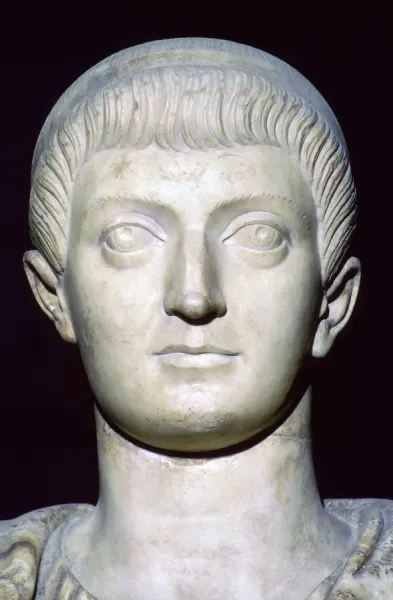
On the night of 18 January 350, at a feast in Augustodunum, the general Magnentius rose from the table, left the room, and came back, says Zosimus, “as it were in a drama,” wearing an imperial robe. The occasion was a birthday party thrown by Marcellinus, one of the plotters. The emperor Constans was not there. He was off hunting, which was the whole idea: Zosimus says the court guards, seeing how addicted he was to the chase, had thrown in their lot with the plotters.
Constans had shared Constantine’s empire with his brothers since 337, ruling Italy, Africa, Illyricum, Macedonia and Achaea, and in 340 he had seen off his brother Constantine II, who died in battle near Aquileia. By 350 the sources had turned against him: Eutropius says his early vigour and justice gave way, through bad health and worse friends, to grave vices, and the Epitome says he was disabled in the feet and hands by a disease of the joints.
He fled south toward Helena, a small town near the Pyrenees, with almost no one. A band of picked men under Gaiso caught him there and, DIR says, dragged him out of a temple where he had taken refuge and killed him. He was twenty-seven, according to the Epitome, or in his thirtieth year, according to Eutropius. DIR records that some years earlier, when mutinous soldiers had been about to kill Magnentius, Constans had intervened to save him.
Gratian
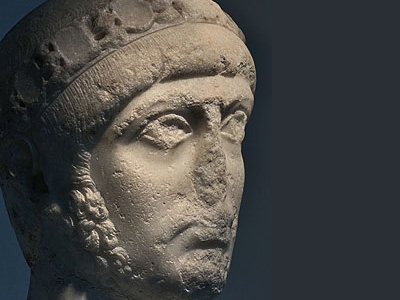
The litter coming up the road was carried by mules, and Andragathius’s guards had spread the word that it held the emperor Gratian’s wife. The general Andragathius was hidden inside, Socrates says, and that was the end of Gratian, on 25 August 383, at Lyon – or, in Zosimus’s quite different account, at the bridge of Singidunum, modern Belgrade, after a flight through the Alps with three hundred horsemen.
Magnus Maximus had been proclaimed in Britain that year and crossed into Gaul. Near Paris, DIR says, the two armies skirmished for five days until Gratian’s Moorish cavalry deserted and the rest followed. Zosimus blames his favour toward the Alans, whom he showered with presents while treating his own soldiers as of little value, and the Epitome says he would do nothing day or night but practise archery, which he thought “a thing of supreme pleasure and divine skill.” He had been made co-Augustus at eight and died, Socrates says, in his twenty-fourth year.
In 382, at Ambrose’s urging, Gratian had removed the Altar of Victory, and he refused the sacred robe of the pagan high priesthood as a garment unlawful for a Christian. Andragathius later threw himself into the sea rather than face Theodosius. But the last word belongs to the pagan priests, whose chief, Zosimus says, remarked as they carried the rejected robe away: “If the emperor refuses to become Pontifex, we shall soon make one.”
Magnus Maximus
In Welsh legend he is Macsen Wledig, and the medieval tale that bears his name begins by calling him “a comelier man, and a better and a wiser than any emperor that had been before him.” The Roman record is less flattering but takes him seriously. Magnus Maximus was a Spaniard who had served under the elder Theodosius and commanded in Britain, where his troops proclaimed him emperor in 383. By the end of August Gratian was dead, and Maximus went on to hold Britain, Gaul, Spain and Africa.
For a few years he ran a working government. He struck coins and issued laws, and in 384 Theodosius recognised him as Augustus and, Zosimus says, had his statue shown to the people of Alexandria while privately preparing for war. Maximus also executed the heretic Priscillian, which displeased the pope. In 387 he invaded Italy and drove out the young Valentinian II, and Theodosius came west.
After defeats at Siscia and Poetovio Maximus was cornered at Aquileia, and Zosimus says he “was torn from his imperial throne while in the act of distributing money to his soldiers,” stripped of his robes, reproached by Theodosius, and handed to the executioner. DIR gives the date as 28 August 388, Socrates as 27 August, Hydatius as late July; summer 388 is as precise as the sources allow. Socrates adds that the orator Symmachus, who had once delivered a panegyric to Maximus in person, was afterwards impeached for high treason.
Flavius Victor
Nobody recorded how old Flavius Victor was. DIR calls him the infant son of Magnus Maximus, the Epitome says he was made Augustus while still an infant, and Zosimus, who calls him only a Caesar, refers to him as “the youth.” What everyone agrees on is that he was a political instrument. In 384, DIR says, Maximus made the boy his imperial colleague and stopped recognising Valentinian II, copying the way Valentinian I had promoted Gratian and Theodosius had promoted Arcadius.
His coins carry the legend SPES ROMANORUM, the hope of the Romans, which was a lot to ask of a small child. When Maximus invaded Italy in 387 he left his son behind at Trier as emperor in Gaul, under the care of the generals Quintinus and Nannienus.
Then Maximus was executed at Aquileia, and Theodosius sent his general Arbogast north. A few days later, says the Hydatian Fasti, the boy was dead in Gaul, and Zosimus says Arbogast “deprived the youth both of his dignity and life.” The Epitome puts the order on Theodosius himself, and Marcellinus, the outlier, has Victor fall with his father at Aquileia. No source gives the day or describes the killing. Theodosius then left that same Arbogast in Gaul to watch over the young Valentinian II, a decision that would not age well.
Valentinian II
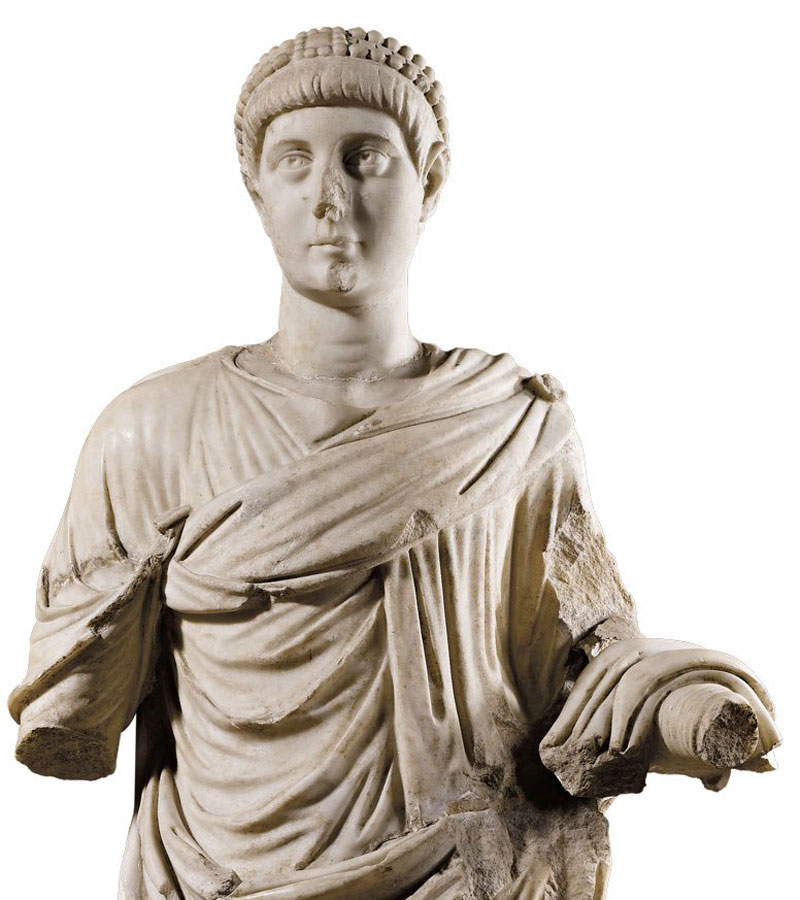
Ancient writers could not agree whether Valentinian II killed himself at Vienne in 392 or was killed by his general Arbogast, and his death is disputed. Zosimus says Arbogast struck him down while he was amusing himself with the soldiers. Socrates says bribed eunuchs strangled him in his sleep. Orosius and Philostorgius have him strangled and then hung up to look like a suicide. DIR thinks the murder charge was probably propaganda, invented later to justify Theodosius’s war on Arbogast’s new emperor.
The motive, if it was suicide, is not hard to find. Valentinian had been proclaimed Augustus by the army in 375 at the age of four, and by 392 Arbogast, the sources agree, was in complete control of him. When the young emperor handed him a written dismissal, Arbogast read it and replied, Zosimus says, “You neither gave me the command, nor can deprive me of it,” then tore it up. Philostorgius has Valentinian, in his twentieth year, saying he was about to lay violent hands on himself because, although he was emperor, he was not allowed to do everything that he pleased.
Shortly before he died, Ambrose says, Valentinian wrote asking the bishop to come and baptise him. He died first, on 15 May according to DIR, or on the Ides of March according to Marcellinus. Augustine, writing later, chose his words with great care: Valentinian was “slain by secret assassination, or by some other plot or accident.”
Eugenius
“There was in the Western regions a grammarian named Eugenius,” Socrates begins, “who after having for some time taught the Latin language, left his school, and was appointed to service at the palace.” That is more or less his whole qualification for empire. On 22 August 392, three months after Valentinian II was found dead, the general Arbogast proclaimed the former schoolmaster emperor instead. Zosimus says Eugenius needed persuading.
Theodosius in the East never recognised him, and the new regime leaned on the old gods. Eugenius reluctantly restored the Altar of Victory and paid the pagan subsidies out of his own pocket, and his supporters set up statues of Jupiter with golden thunderbolts in the Alps against Theodosius. The armies met on the river Frigidus on 5 and 6 September 394. Sozomen, Orosius and Augustine all describe a tremendous wind that blew into the faces of Eugenius’s men, turning their own arrows back on them and tearing the shields from their hands. Zosimus, characteristically, has an eclipse instead.
Eugenius was captured in his camp, threw himself at the feet of the emperor and begged for his life, and, Sozomen says, “while in the act of offering up these entreaties, a soldier struck off his head.” Arbogast stabbed himself rather than test the victor’s mercy. Augustine adds that Theodosius cheerfully gave the golden thunderbolts to his couriers, who joked that they would be happy to be struck by such thunderbolts.
Constantine III
Picked, Sozomen says, on account of his name, Constantine III was the army in Britain’s third attempt at an emperor in quick succession. The soldiers had tried a man called Marcus and then a townsman called Gratian, whom they killed; in 407 they settled on Constantine, whom Orosius describes as “a man from the lowest ranks of the soldiery,” on the theory that a Constantine might do great things. He crossed into Gaul, and his son Constans, who had been a monk, was made Caesar and sent to take Spain.
For a while it worked. In 409, with Alaric’s Goths loose in Italy, the emperor Honorius recognised him and sent him an imperial robe, partly, Zosimus says, to protect two of his own relatives who were Constantine’s prisoners. Zosimus adds: “But his care for his relations was in vain, they having been put to death before this embassy.”
By 411 Honorius’s general Constantius had him besieged at Arles. Constantine cast off the purple, took refuge in a church and was ordained a priest on a solemn promise that his life would be spared. He was sent toward Italy and murdered on the road – thirty miles from Ravenna, according to Photius’s summary of Olympiodorus – and his head arrived on a pole, recorded by the Fasti on 18 September 411. Honorius rewarded Constantius with the hand of his own sister. Their son grew up to be Valentinian III.
Ioannes
A chief notary is not the usual raw material for an emperor, but when Honorius died on 15 August 423, Ioannes, head of the imperial secretaries, was acclaimed at Rome. He moved his court to Ravenna and was accepted in Italy, Gaul and Spain, though not in Africa. Constantinople was less accommodating. When he sent envoys asking to be recognised as a colleague, Theodosius II had them arrested.
The East sent an army instead, and luck ran both ways. A contrary wind blew the eastern general Ardaburius into Ioannes’s hands, and Ioannes treated him kindly, hoping for a deal; Ardaburius used the time to talk some of his officials into treachery. Meanwhile Aspar reached Ravenna across the marshes. Socrates says an angel disguised as a shepherd led the troops through a lake that no one had ever been known to ford before.
Betrayed by his own people, Ioannes was taken to Aquileia in 425, and the accounts grow ugly. Philostorgius says his right hand was cut off and he was soon beheaded. Procopius says he was paraded on an ass in the hippodrome, mocked by the stage performers, and then put to death, all in the name of Valentinian III, who was a small child. Procopius, oddly, has kind words for him: gentle, sagacious, deaf to slanderers. Three days after the execution his general Aetius arrived with, by Philostorgius’s count, about sixty thousand hired barbarians. He was, by any measure, late.
Valentinian III
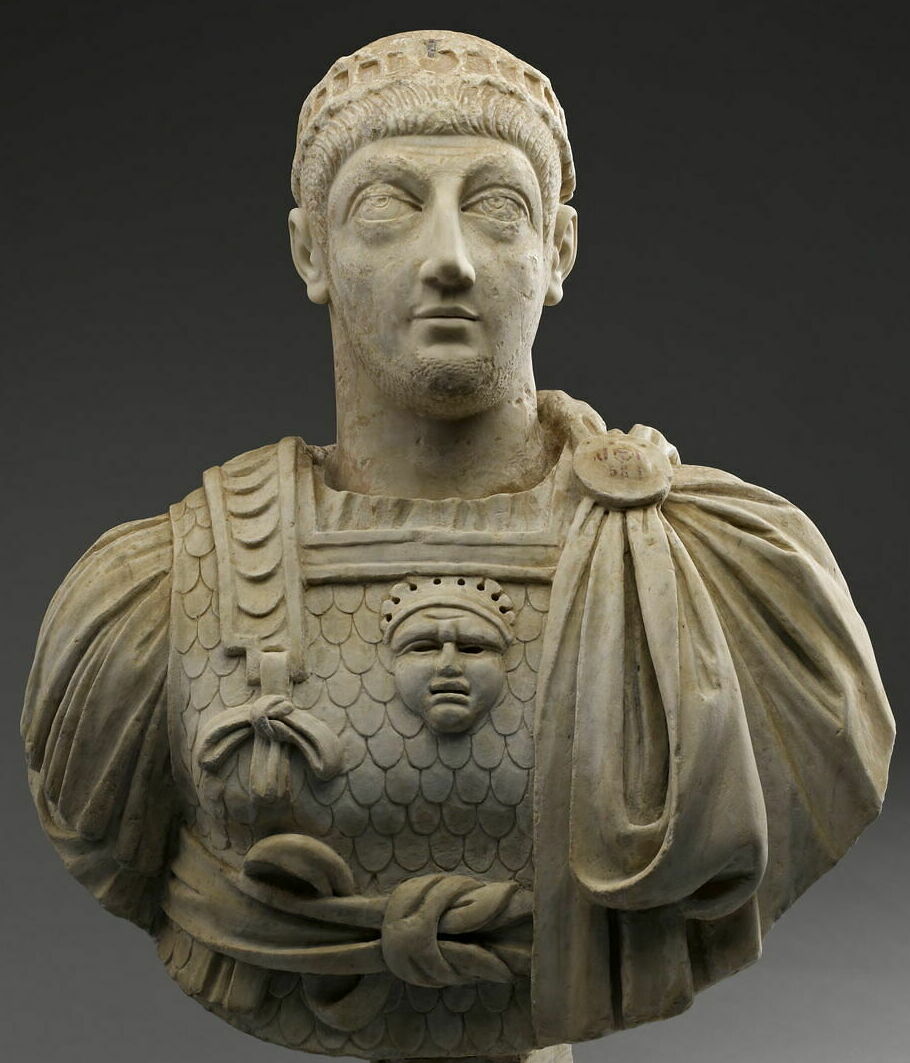
With a cry, the emperor jumped up from his seat and went for the head of Aetius. John of Antioch’s account of the killing of the general Aetius, in the palace, has Valentinian III attacking alongside the eunuch Heraclius, who had brought a cleaver under his cloak. Afterwards, John says, Valentinian asked someone whether it had been well done, and got the answer: “Whether well or not I do not know, but I do know that you have cut off your right hand with your left.” Marcellinus put it more grandly: with Aetius fell the western kingdom.
Valentinian had been emperor since 425, when he was a small boy, and DIR is unsparing about the result: spoiled, pleasure-loving, influenced by sorcerers and astrologers, with little aptitude for rule. John of Antioch also reports the grudge that killed him. Valentinian, he says, coveted the wife of the senator Petronius Maximus, won Maximus’s ring from him at dice, and used it as a forged summons to bring the woman to the palace.
On 16 March 455, on the Campus Martius, Valentinian dismounted to practise archery, and two of his bodyguards, Optila and Thraustila, former followers of Aetius, attacked. Optila struck him on the temple and then the face; Thraustila killed Heraclius. Hydatius says he was in his thirty-sixth year. Petronius Maximus took the throne the next day, and Prosper says that far from punishing the murderers, he “even received them in friendship.”
Petronius Maximus
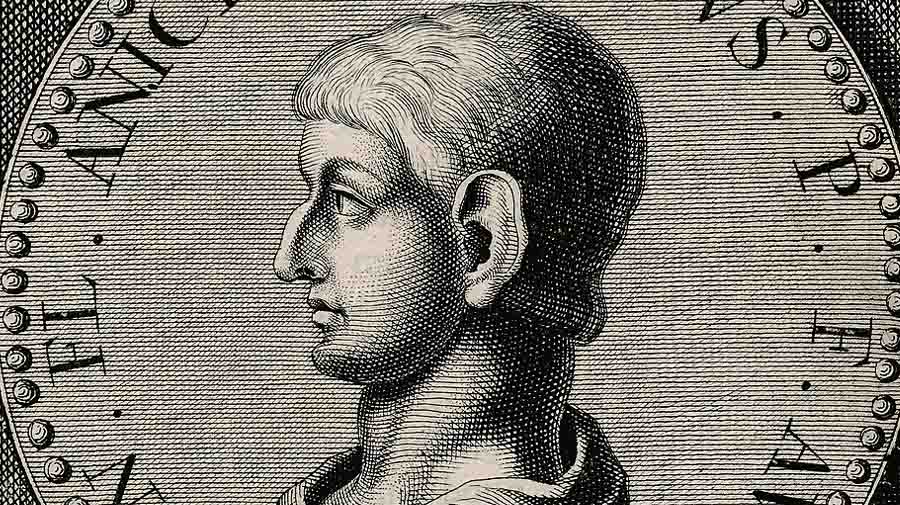
“Ah, happy Damocles! It was only for one banquet’s space that you had to endure the necessity of reigning.” Petronius Maximus said this often, according to a friend who heard him, which is remarkable in a man whose reign lasted, by Sidonius’s reckoning, a little over two months. Sidonius describes a senatorial career so orderly that his hours were measured out by water-clock: two consulships and a patriciate. Then, on 17 March 455, the day after Valentinian III’s murder, he was acclaimed, and Sidonius says he groaned before twilight that his wishes had come true.
He forced Valentinian’s widow, Eudoxia, to marry him. Procopius says that when he told her he had done it all for love of her, she sent to Carthage asking the Vandal king Gaiseric to avenge her husband. Gaiseric came. As the Vandal fleet approached, Maximus tried to flee and was killed – by the imperial slaves, says Prosper; by a Roman soldier called Ursus, says Jordanes; by a stone-throwing crowd, says Procopius. His body was torn apart and thrown into the Tiber, and he was denied burial. Prosper dates it 31 May.
The sources give his reign as 70, 75 or 77 days. Three days later the Vandals entered Rome and spent fourteen days stripping it, carrying off half the gilded bronze roof of the temple of Jupiter Capitolinus. Procopius, surveying this whole stretch of western emperors, decided not to bother: “though I know their names well, I shall make no mention of them whatever.”
Avitus
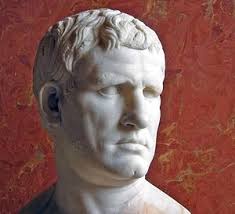
Nobody can say how Avitus died, and the surviving versions are disputed in every particular. John of Antioch says he was starved to death, or perhaps strangled; the Gallic Chronicle of 511 says Majorian killed him at Piacenza; Gregory of Tours says he died on the road to the shrine of St Julian at Brioude; Hydatius says only that he lost his life, filing it under 457. Nobody even agrees on the year.
He was a Gallic senator from the Auvergne and father-in-law of the poet Sidonius Apollinaris, whose panegyric preserves his rise. The Visigothic king Theoderic II urged him on to the throne, with a line Sidonius gives him: “With you as leader, I am a friend of Rome; with you as Emperor, I am her soldier.” The Gallic lords set him on a mound and crowned him with a soldier’s neck-torque in 455.
Rome liked him less. There was famine, the city resented his Gothic allies, and when he paid them off, John of Antioch says, he did it by selling the bronze fittings of public buildings to merchants, “for there was no gold in the royal treasuries.” Majorian and Ricimer took him prisoner at Piacenza on 17 October 456, spared his life and, in one chronicler’s phrase, changed him from an emperor into a bishop – of Piacenza, of all places. Gregory says he was buried at the feet of the martyr at Brioude, where he had been heading with many gifts.
Majorian
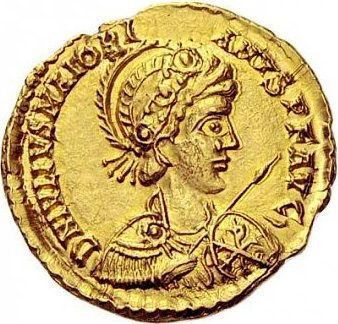
Procopius tells a story in which the emperor dyed his hair, famous for being as fair as pure gold, a dark colour, and went to the Vandal court disguised as his own ambassador to look over the Vandals. In the armoury, the story goes, the weapons shook of their own accord. DIR calls it fanciful, which it is, but legends like that do not usually attach themselves to dull men.
He was a soldier, proclaimed in 457 after the fall of Avitus, and an unusually serious legislator. His law of 11 July 458 forbade the destruction of Rome’s ancient public buildings – issued, DIR notes, from Ravenna, since Majorian is not known ever to have visited Rome. At a dinner at Arles in 461 the emperor teased Sidonius about an anonymous satire; Sidonius replied that he had heard the same rumour, and the emperor laughed.
His great project was the reconquest of Africa, and it failed when the Vandals, helped by traitors, seized his fleet near Cartagena in Spain in 460. On his way back, at Dertona, Ricimer had him arrested, and John of Antioch says they stripped him of his purple robe and diadem, beat him and beheaded him. The Fasti date the deposition to 2 August 461 and the killing to 7 August, at the river Ira. Procopius thought he surpassed in every virtue all who had ever been emperors of the Romans, and then had him die of dysentery, which DIR politely calls erroneous.
Anthemius
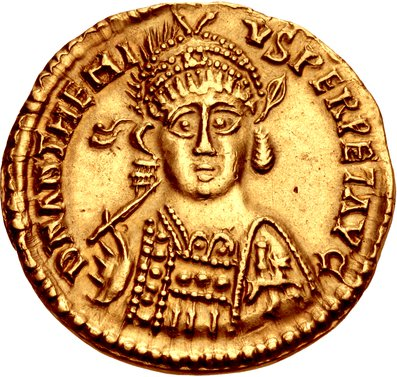
Sidonius dated one of his letters from the wedding of the patrician Ricimer, after which, he wrote, the wealth of both empires had been blown to the winds. The bride was Alypia, the only daughter of the emperor Anthemius, and the match was meant to bind the western strongman to a new emperor sent from Constantinople. Anthemius later said he had given his daughter “to the skin-clad Goth” for peace. It bought him five years.
He was an easterner, an aristocrat born in Constantinople and married to the daughter of the emperor Marcian, and the eastern emperor Leo sent him west in 467, when he was acclaimed on 12 April. Westerners mocked his Greek origin. The Vandal expedition of 468 ended in disaster, and his Visigothic campaigns went no better. By 472 he and his son-in-law were fighting a civil war inside Rome itself, and for five months Ricimer cut off the districts by the Tiber and starved them out. Leo’s message to Anthemius – “you also must kill your son-in-law Ricimer” – was intercepted.
On 11 July 472 the city fell. Anthemius hid among the beggars at the church of the martyr Chrysogonus, says John of Antioch, and was beheaded by Ricimer’s nephew Gundobad; Malalas puts him in St Peter’s, pretending to be ill; others say Ricimer killed him. Ricimer did not live to enjoy it. The Fasti record his own death on 18 August 472, and that of his new emperor, Olybrius, on 23 October.
Julius Nepos
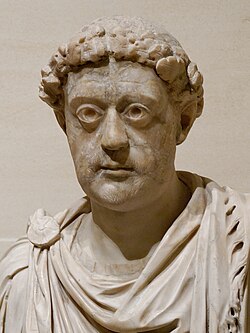
In 480, near Salona on the Dalmatian coast, Julius Nepos was killed in his own villa by two of his own companions, Viator and Ovida. Marcellinus is the only source to name them, and the chronicles cannot even agree on the day: 25 April, 9 May and 22 June are all recorded, and DIR leans toward the first. Retief and Cilliers say instead that house slaves killed him, in 475.
By 480 he had been an emperor in exile for five years. Nepos was acclaimed at Rome in June 474 after pushing out Glycerius, whom he made a bishop – of Salona, as it turned out, which would later look careless. In 475 his own Master of Soldiers, Orestes, a man whose chief claim to fame was having once been a secretary to Attila the Hun, marched on Ravenna, and Nepos took ship for Dalmatia. Orestes made his own son, Augustulus, emperor instead. In Dalmatia, Nepos never stopped calling himself emperor, and the eastern emperor Zeno never quite stopped agreeing; he told the western envoys that they had “received two men from the eastern Empire and had driven one out, Nepos, and killed the other, Anthemius.”
Malchus, as DIR reports, implicates Glycerius in the murder. Ovida held on to Dalmatia until Odoacer came for him with an army and killed him. DIR calls Nepos the rightful last western Roman emperor, and notes that his death, which ended the long line of them, “passed with scarcely an acknowledgement.”
Frequently Asked Questions
Was Julius Caesar a Roman emperor?
No. Julius Caesar was dictator for life, not emperor, and he died before the empire began: on 15 March 44 BC the conspirators surrounded him at a meeting of the Senate and cut him down with twenty-three stab wounds. The imperial system dates from 13 January 27 BC, when Augustus’s first constitutional settlement founded the principate.
Why aren’t Nero and Otho on the list?
Because both killed themselves. Nero drove a dagger into his throat on 9 June 68, helped by his secretary Epaphroditus, having said again and again “What an artist the world is losing!” Otho stabbed himself under the left breast on 16 April 69. Maximian, cornered after plotting against Constantine in 310, strangled himself, Lactantius says, and is left out too.
Did any Roman emperors die in battle?
Yes, and they are not on this list. Retief and Cilliers count five battlefield deaths, among them Decius, who fell fighting the Goths at Abritus in 251 and whose body was never recovered. Maxentius drowned at the Milvian Bridge in 312, and Valerian died a captive of the Persian king Shapur, who used him as a stepping-stool.
Why are the Gallic emperors left out?
Because Rome never recognised them. Postumus, Marius and Victorinus ruled a breakaway Gallic empire, and all three were murdered – Postumus by his own troops for refusing to let them sack Mainz – but Retief and Cilliers exclude the Gallic emperors of 260 to 274, and this list follows the same rule of recognition at Rome.
Why aren’t Saloninus and Nepotianus included?
Saloninus was only a Caesar, an heir rather than an emperor: when Postumus’s rebels besieged Cologne in 260, the garrison surrendered him to be killed. Nepotianus declared himself emperor at Rome in 350 but was never recognised; he was cut down on the twenty-eighth day, and his head was carried through the city on a lance.
Which assassinated emperor reigned the longest?
Valentinian III, emperor of the West from 425 until two of his bodyguards killed him on the Campus Martius on 16 March 455. A chronicle continuing Prosper gives his reign as 30 years; Hydatius has him killed in the thirty-first year of his reign. He came to the throne as a small child, which helps.
What happened to the Praetorian Guard?
Constantine abolished it. After the battle at the Milvian Bridge, Zosimus says, he “abolished the praetorian troops, and destroyed the fortresses in which they used to reside,” and Britannica dates the disbanding to 312. Britannica holds the Guard responsible for the murders of Pertinax, Elagabalus, Balbinus and Pupienus, among others on this list.
What source is this list based on?
The base is Retief and Cilliers’s study “Causes of death among the Caesars (27 BC-AD 476),” which surveys 77 emperors and names 38 of them as killed, though its own totals count 39. This list adds defeated rivals the paper leaves out, such as Magnus Maximus and Eugenius, and follows De Imperatoribus Romanis for each death.
- Retief and Cilliers, “Causes of death among the Caesars (27 BC-AD 476),” Acta Theologica Supplementum 7 (African Journals Online)
- De Imperatoribus Romanis: An Online Encyclopedia of Roman Rulers (Loyola University Chicago)
- Cassius Dio, Roman History, Book 74 (LacusCurtius)
- Zosimus, New History, Book 2 (tertullian.org)
- Mommsen, Chronica Minora, vol. 1: the late Roman chronicles (Internet Archive)
- Praetorian Guard (Encyclopaedia Britannica)
- Julius Nepos (Livius.org)