Every Player on the First Baseball Hall of Fame Ballot Who Never Got In
On February 2, 1936, the Baseball Writers’ Association of America announced the results of the first Hall of Fame election, and the arithmetic turned out to be brutal. 226 ballots had come back, and a name needed to appear on 170 of them, 75 percent, to get in. Ty Cobb was on 222. When the counting stopped there were just five players elected to the first Baseball Hall of Fame class, and Walter Johnson, the last of them, had reached the line with 189.
In all, 2,231 votes were spread across 47 names, and the ballot carried no rule barring a man the game had thrown out. Such a man could be named as easily as any other, and two were. Shoeless Joe Jackson, banned since 1921, drew 2 votes. Hal Chase, whom the major leagues had never formally banned but had simply stopped hiring, drew 11. Everyone else who got a vote that winter eventually got a plaque, most of them as players and two of them as managers.
That leaves seven, and this list is all of them, in the order of the votes they drew, from Chase’s 11 down to three men who got exactly one. They were named on a ballot cast before the museum existed; the building in Cooperstown did not open until June 12, 1939, and football would wait until 1963 to enshrine the charter members of the Pro Football Hall of Fame. Each of the seven was, for one winter at least, somebody’s idea of a Hall of Famer. Several of them had a case.
Seven of the 47 players who received votes on the 1936 ballot, the Hall of Fame’s first BBWAA election, were never given a plaque in any capacity: Hal Chase, Johnny Kling, Lou Criger, Joe Jackson, Bill Bradley, Kid Elberfeld, and Nap Rucker. Everyone else on that ballot was eventually inducted as a player or a manager.
Hal Chase
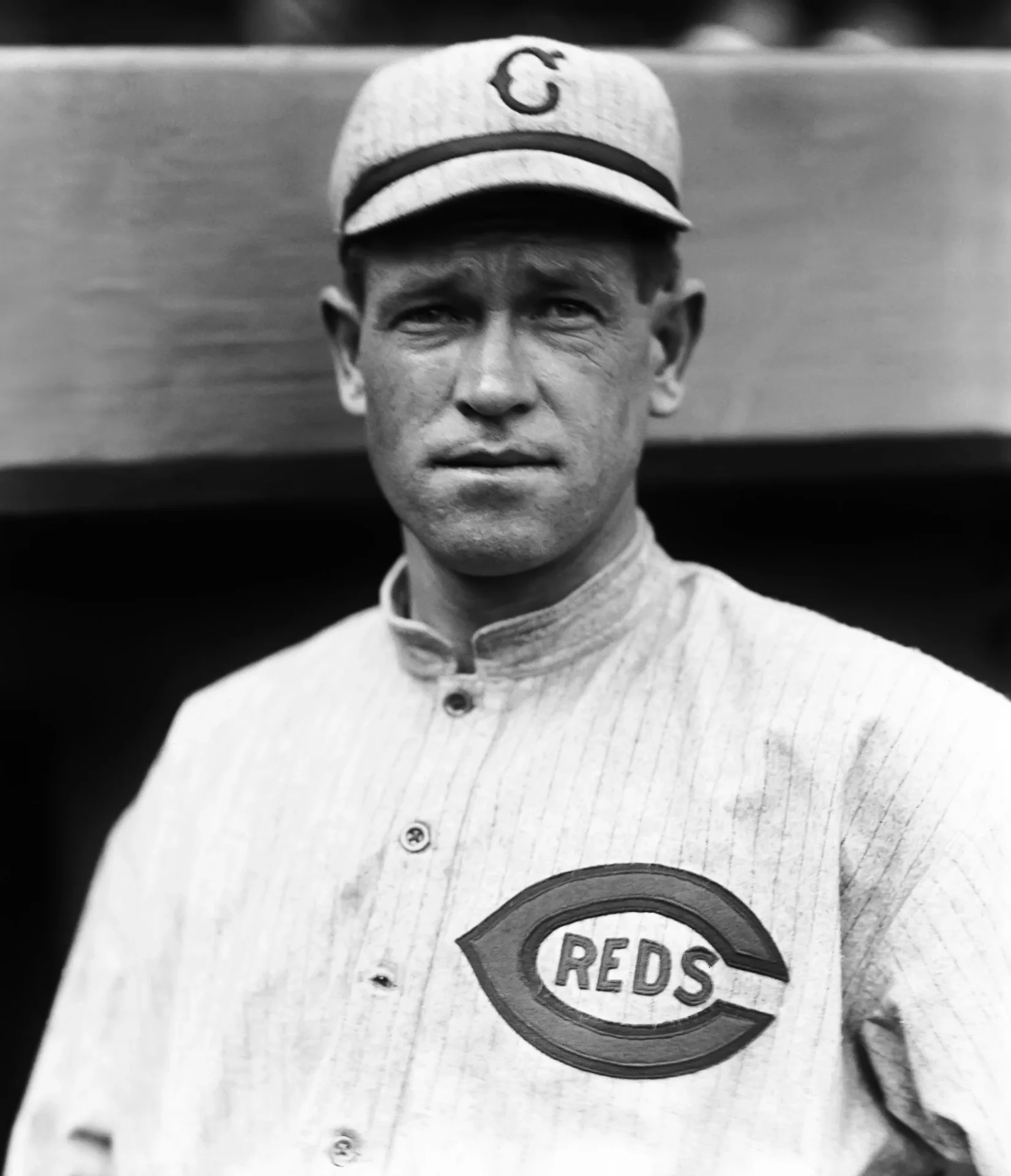
The men who watched Hal Chase play first base, Babe Ruth, Ed Barrow, and Cy Young among them, called him the best they had ever seen at the position, and the record they were weighing was this: a .291 hitter with a batting title in 1916, and a suspension in August 1918 from his own manager, Christy Mathewson, on a charge of offering bribes to teammates. The case went before the National League president in 1919, and with Mathewson still in France with the army, John Heydler let him go.
It set a pattern. Chase was indicted in the Black Sox case in October 1920 and, because California would not extradite him, never tried. Commissioner Landis never formally banned him. The only formal bans he ever received came in his native state, where the Pacific Coast League barred him from its parks in August 1920, after he was accused of trying to bribe a Salt Lake City pitcher, and two other California leagues barred him as well. Organized baseball simply stopped hiring him, which worked about as well as a ban.
When Major League Baseball cleared 17 dead men from its permanently ineligible list in May 2025, Chase’s name was not among them, because it had never been on the list. He spent his last years with his sister in Williams, California, and died in Colusa in May 1947, leaving, in SABR’s phrase, two shattered marriages and an estranged son. Prince Hal, they had called him.
Johnny Kling
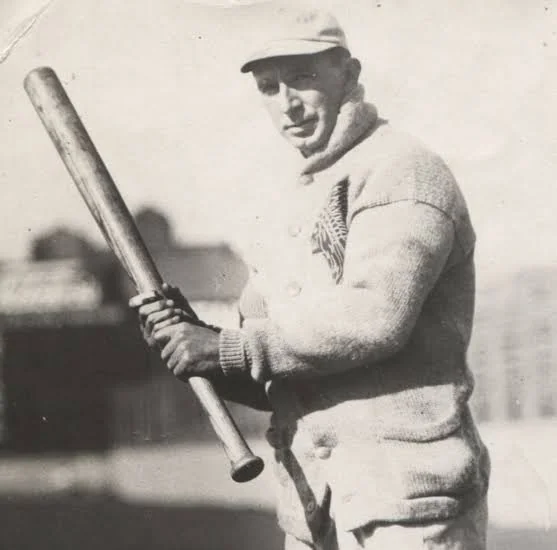
Johnny Kling caught for the Chicago Cubs when they won the World Series in 1907 and again in 1908, and the franchise would not win another until 2016. Known as Noisy for the chatter he kept up behind the plate, he did something in early 1909 that no catcher on a champion had any business doing. He stayed home. He had put about $50,000 into a billiard hall in Kansas City, and he told the Cubs he would not be reporting.
The Cubs went 104-49 without him and finished second, their first season without a pennant since 1905. Kling also won the world pocket billiards championship somewhere in this stretch, beating Charles “Cowboy” Weston at his own hall, and did not hold it long. When he applied to return he was found in breach of a valid contract, fined $700, and reinstated at $4,500, exactly his 1908 salary. He was back behind the plate in 1910 and out of the majors after 1913.
In 1933 he bought the Kansas City Blues of the American Association and promptly did away with segregated seating at Muehlebach Field, the park the Negro Leagues’ Monarchs also called home, a policy that held until he sold the club in 1937. Eight writers voted for him in 1936. Pool, on the whole, took him more seriously than Cooperstown did.
Lou Criger
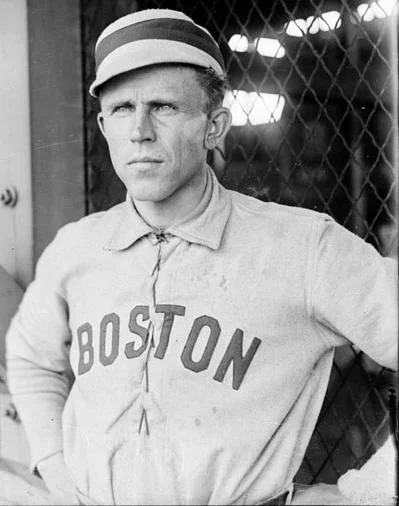
A .221 career hitter does not usually get a Hall of Fame vote, but Cy Young won 283 games with Lou Criger catching most of them. Criger caught Young in Cleveland, St. Louis, and Boston, a dozen seasons from 1897 to 1908, and he was behind the plate at the Huntington Avenue Grounds on May 5, 1904, when Young retired every Philadelphia Athletic he faced, an afternoon with its own entry among every perfect game in major league history.
The year before, he had caught every inning of the first modern World Series, and before it began a gambler had offered him $12,000 to call soft pitches for Pittsburgh. He refused. How quickly he told anyone is disputed: one account has him going straight to American League president Ban Johnson, while SABR and others say he kept it to himself for years and disclosed it only when he believed he was dying of tuberculosis. Both accounts credit Johnson with a pension for him; the first says league funds paid it for years.
Tuberculosis did come for him, SABR records, in the left knee in 1914, and the leg was taken off above it the following year. He drew 7 votes on the writers’ ballot in 1936 and 1 more on the old-timers ballot, the only man on this list named on both. He died in Tucson in May 1934, a good-field, no-hit catcher in SABR’s phrase, and the one Cy Young kept looking in at for the sign.
Joe Jackson
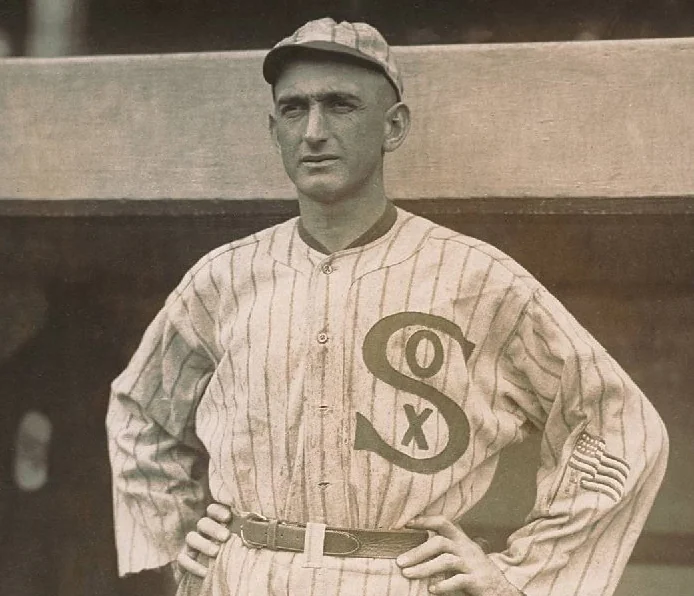
Two writers voted for Shoeless Joe Jackson in 1936. He had been banned from baseball since 1921, and nothing in the rules stopped them. He had hit .408 as a rookie in 1911, which SABR calls a major league rookie record, and finished with a career average of .356, a number not in dispute, unlike nearly everything else about him.
The 1919 World Series is where the argument has lived ever since. Jackson batted .375 with 12 hits, and his defenders point out that a man throwing games does not usually lead them in hitting; the record also shows he drove in no runs in the first five games, four of which the White Sox lost. A Chicago jury acquitted him and seven teammates in August 1921. Commissioner Landis issued the statement that ended their careers the next day, and Jackson, who had signed his first professional contract with an X, never played in the majors again.
He died in Greenville, South Carolina, in December 1951. The ban outlived him until May 13, 2025, when the commissioner decided that a lifetime ban ends with the life and took 17 dead people off the list, Jackson among them. That makes him eligible for an Era Committee ballot; it does not put him on one, and a plaque needs 12 of a committee’s 16 votes. Two writers thought he belonged in 1936. Whether they were right has been an open question for longer than the Hall of Fame has had a building.
Bill Bradley
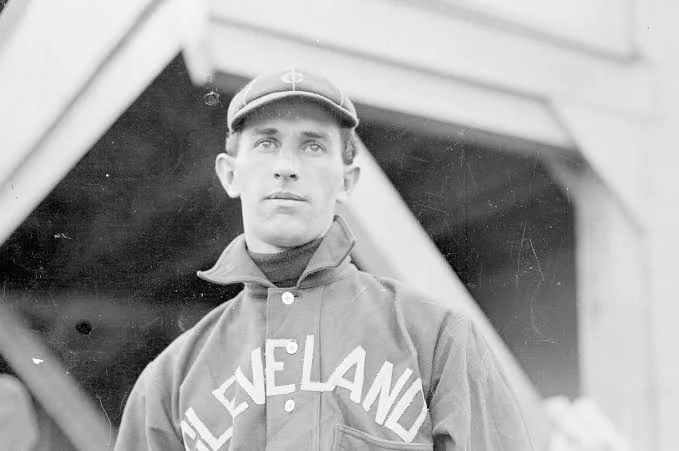
On September 24, 1903, Cleveland’s third baseman came to the plate five times against Washington and hit, in order, a home run, a triple, a double, a second double, and a single. Five hits, 12 total bases, a 12-2 win, and the first reverse natural cycle any American League player is known to have hit. Bill Bradley had already had a three-triple, 10-total-base game that July. He beat it himself in September.
He played third for Cleveland through the American League’s first decade. In 1902 he hit .340 and homered in four consecutive games in May, the first player to do so by SABR’s reckoning. Then his body gave out in stages, a stomach ailment doctors called autotoxicity in 1905, a wrist broken by a Bill Hogg pitch in 1906 that cost him half a season. He adapted. In 1908, the first season the sacrifice fly was counted under its own rule, he gave himself up 60 times, a total the American League had never seen.
He managed Brooklyn’s Federal League club, the Tip-Tops, to a .500 season in 1914, sued the league when it let him go, and then scouted for Cleveland from 1928 through 1945, recommending Tommy Henrich, Ken Keltner, and Gene Woodling. One writer voted for him in 1936. Cleveland put him in the team’s own Hall of Fame after his death, which is the version of the honor a franchise gives a man the writers did not.
Kid Elberfeld
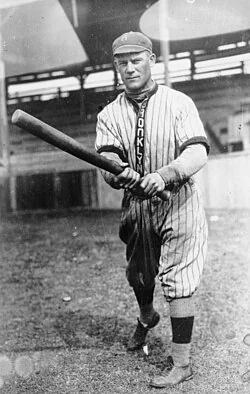
A sportswriter named Sam Crane called Norman Elberfeld the Tabasco Kid, and the name did the work of a scouting report. He stood 5-foot-7, weighed 158 pounds, and in 1911, playing for Washington, he was hit by 25 pitches, an American League record that stood until Don Baylor took 35 in 1986. Nobody has ever suggested it was an accident.
He fought umpires as readily as pitchers. On August 8, 1906, denied first base on a hit-by-pitch call, he went for umpire Silk O’Loughlin, with a bat in hand by SABR’s account; on September 3 the two clashed again, in what the New York Times called one of the most disgraceful scenes ever witnessed on a baseball field, and together the incidents cost him a suspension of eight games. The Highlanders made him their manager anyway in 1908. They went 27-71 and finished last, the only major league managing job he ever held.
One writer gave him a Hall of Fame vote in 1936, by which time the second act was well under way. At Montgomery in 1912 he took a young outfielder named Casey Stengel in hand and taught him to place a hit, and as manager at Little Rock in 1921 he scouted and signed Travis Jackson, a shortstop who did end up in Cooperstown. Five of his six children were daughters, and they barnstormed the South as a basketball team. The temperament, it appears, was hereditary.
Nap Rucker
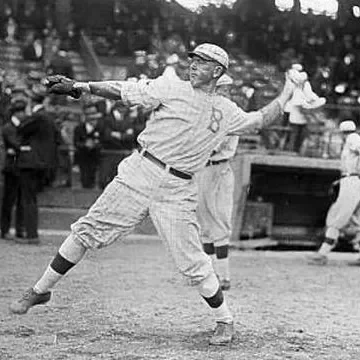
Nap Rucker won 134 games and lost 134, all of them for Brooklyn, and SABR worked out what that even record was worth: with Rucker getting the decision the Superbas played .500 ball, and without him they played .430 and lost 175 more games than they won. The New York Herald, as SABR quotes it, put the same thing less mathematically, calling the Rucker appendage “the only thing that has kept Brooklyn in the league.”
The stuff was real. On September 5, 1908, at Washington Park, he no-hit the Boston Doves, striking out 14 and walking nobody, and on July 24, 1909, in the second game of a doubleheader against St. Louis, he struck out 16 Cardinals in a 1-0 two-hitter, tying the modern record and holding a share of it until Dizzy Dean fanned 17 Cubs in 1933.
His one World Series appearance was two innings of relief in Game Four in 1916, with the game already gone. He went home to Roswell, Georgia, where he owned the wheat mill, invested in the bank, scouted for the Dodgers, and was elected mayor unopposed, serving in 1935 and 1936. He got the town its first running water, then served as its water commissioner for years afterward, which for a man who had spent a decade keeping a bad team afloat was a change of subject only in the strictest sense. One writer remembered him in 1936. Roswell got the better deal.
Frequently Asked Questions
Why aren’t John McGraw and Connie Mack on this list?
Because both have plaques. McGraw drew 4 votes on the 1936 writers’ ballot and 17 more on that year’s separate old-timers ballot; Mack drew 1. Neither was elected as a player, but in 1937 both were inducted as managers, chosen by the Centennial Committee, and this list counts a plaque in any capacity as getting in.
How many votes did it take to make the Hall of Fame in 1936?
170, which was 75 percent of the 226 ballots cast, with the fraction rounded up. Cobb, Ruth, Wagner, Mathewson, and Johnson cleared it, and nobody else did. The 75 percent line is written into the Hall’s rules for the writers’ vote, and 1936 was its first outing.
Is Shoeless Joe Jackson eligible for the Hall of Fame?
Yes, since May 13, 2025, when Major League Baseball ruled that permanent ineligibility ends at death and struck 17 deceased people from its list. Eligibility is not induction: his route runs through the Classic Baseball Era Committee, a 16-member panel that elects on 12 votes, and a candidate drawing fewer than 5 is left off its next ballot.
Can a dead player be elected to the Hall of Fame?
Yes, and it happened in the very first election. Christy Mathewson had died at Saranac Lake, New York, on October 7, 1925, and the writers put him on 205 of their 226 ballots in 1936 regardless. He is the only one of the first five electees who was not alive to be elected.
Why isn’t Jake Daubert on this list?
Because his lone 1936 vote is a disputed one. Baseball-Reference records Daubert’s single vote on the separate old-timers ballot, which this list does not count; the Hall of Fame’s own archived table records it on the writers’ ballot instead. Daubert has no plaque either, so if the Hall’s table is right, this is a list of eight.
Did the first Hall of Fame ballot include 19th-century players?
No. The writers were asked for up to 10 names from players who starred from 1900 forward, and the older stars went to a separate old-timers ballot voted the same winter. That ballot drew 78 ballots, needed 59 votes to elect, and elected nobody, which is why the first class is five modern players and not one 19th-century star.
- Baseball-Reference: 1936 Hall of Fame Voting
- National Baseball Hall of Fame: Hall of Famers by Election Method
- Major League Baseball: Policy decision on permanent ineligibility status after death (May 13, 2025)
- SABR BioProject: Nap Rucker
- Retrosheet: Box score of Cy Young’s perfect game, May 5, 1904
- New Georgia Encyclopedia: Nap Rucker
- Encyclopedia of Arkansas: Travis Calvin Jackson
- Pro Football Hall of Fame: Hall of Famers by Year